• support@madhedgefundtrader.com
  • Member Login
Mad Hedge Fund Trader
  • Home
  • About
  • Store
  • Luncheons
  • Testimonials
  • Contact Us
  • Click to open the search input field Click to open the search input field Search
  • Menu Menu

Tag Archive for: (GLD)

Mad Hedge Fund Trader

The Second American Industrial Revolution

Diary, Newsletter

Circulating among the country’s top global strategists this year, visiting their corner offices, camping out in their vacation villas, or cruising on their yachts, I am increasingly hearing about a new investment theme that will lead markets for the next 20 years:

The Second American Industrial Revolution.

It goes something like this.

You remember the first Industrial Revolution, don’t you? I remember it like it was yesterday.

It started in 1775 when a Scottish instrument maker named James Watt invented the modern steam engine. Originally employed for pumping water out of a deep Shropshire coalmine, within 32 years it was powering Robert Fulton’s first commercially successful steamship, the Clermont, up the Hudson River.

The first Industrial Revolution enabled a massive increase in standards of living, kept inflation near zero for a century, and allowed the planet’s population to soar from 1 billion to 7 billion. We are still reaping its immeasurable benefits.

The Second Industrial Revolution is centered on my own neighborhood of San Francisco. It seems like almost every garage in the city is now devoted to a start-up.

The cars have been flushed out onto the streets, making urban parking here a total nightmare. These are turbocharging the rate of technological advancement.

Successes go public rapidly and rake in billions of dollars for the founders overnight. Thirty-year-old billionaires wearing hoodies are becoming commonplace.

However, unlike with past winners, these newly minted titans of industry don’t lock their wealth up in mega mansions, private jets, or the Treasury bond market. They buy a Tesla Plaid for $150,000 with a great sound system and full street-to-street auto-pilot (TSLA), and then reinvest the rest of their windfall in a dozen other startups, seeking to repeat a winning formula.

Many do it.

Thus, the amount of capital available for new ideas is growing by leaps and bounds. As a result, the economy will benefit from the creation of more new technology in the next ten years than it has seen in the past 200.

Computing power is doubling every year. That means your iPhone will have a billion times more computing power in a decade. 3D printing is jumping from the hobby world into large-scale manufacturing. In fact, Elon Musk’s Space X is already making rocket engine parts on such machines.

Drones came out of nowhere and are now popping up everywhere.

It is not just new things that are being invented. Fantastic new ways to analyze and store data, known as “big data” are being created.

Unheard new means of social organization are appearing at breakneck, leading to a sharing economy. Much of the new economy is not about invention, but organization.

The Uber ride-sharing service created $50 billion in market capitalization in only five years and is poised to replace UPS, FedEx, and the US Postal Service with “same hour” intracity deliveries. Now they are offering “Uber Eats” in my neighborhood, which will deliver you anything you want to eat, hot, in ten minutes!

Airbnb is arranging accommodation for 1 million guests a month. They even had 189 German guests staying with Brazilians during the World Cup there. I bet those were interesting living rooms on the final day! (Germany won).

And you are going to spend a lot of Saturday nights at home, alone if you haven’t heard of Match.com, eHarmony.com, or Badoo.com.

“WOW” is becoming the most spoken word in the English language. I hear myself saying I every day.

Biotechnology (IBB), an also-ran for the past half-century, is sprinting to make up for lost time. The field has grown from a dozen scientists in my day 40 years ago, to several hundred thousand today.

The payoff will be the cure for every major disease, like cancer, Parkinson’s, heart disease, AIDS, and diabetes, within ten years. Some of the harder cases, such as arthritis, may take a little longer. Soon, we will be able to manipulate our own DNA, turning genes on and off at will. The weight loss drugs Wegovy and Ozempic promise to eliminate 75% of all self-inflicted illnesses.

The upshot will be the creation of a massive global market for these cures, generating immense profits. American firms will dominate this area, as well.

Energy is the third leg of the innovation powerhouse. Into this basket, you can throw in solar, wind, batteries, biodiesel, and even “new” nuclear (see NuScale (SMR)).  The new Tesla Powerwall will be a game changer. Visionary, Elon Musk, is ramping up to make tens of millions of these things.

Use of existing carbon-based fuel sources, such as oil and natural gas, will become vastly more efficient. Fracking is unleashing unlimited new domestic supplies.

Welcome to “Saudi America.”

The government has ordered Detroit to boost vehicle mileage to an average of 55 miles per gallon by 2030. The big firms have all told me they plan to beat that deadline, not litigate it, a complete reversal of philosophy.

Coal will be burned in impoverished emerging markets only, before it disappears completely. Energy costs will drop to a fraction of today’s levels, further boosting corporate profits.

Coal will die, not because of some environmental panacea, but because it is too expensive to rip out of the ground and transport around the world, once you fully account for all its costs.

Years ago, I used to get two pitches for venture capital investments a quarter, if any. Now, I am getting two a day. I can understand only half of them (those that deal with energy and biotech, and some tech).

My friends at Google Venture Capital are getting inundated with 20 a day each! How they keep all of these stories straight is beyond me. I guess that’s why they work for Google (GOOGL).

The rate of change for technology, our economy, and for the financial markets will accelerate to more than exponential. It took 32 years to make the leap from steam engine-powered pumps to ships and was a result of a chance transatlantic trip by Robert Fulton to England, where he stumbled across a huffing and puffing steam engine.

Such a generational change is likely to occur in 32 minutes in today’s hyper-connected world, and much shorter if you work on antivirus software (or write the viruses themselves!). And don’t get me started on AI!

The demographic outlook is about to dramatically improve, flipping from a headwind to a tailwind in 2022. That’s when the population starts producing more big spending Gen Xers and fewer over-saving and underproducing baby boomers. This alone should be at least 1% a year to GDP growth.

China is disappearing as a drag on the US economy. During the nineties and the naughts, they probably sucked 25 million jobs out of the US.

With an “onshoring” trend now in full swing, the jobs ledger has swung in America’s favor. This is one reason that unemployment is steadily falling. Joblessness is becoming China’s problem, not ours.

The consequences for the financial markets will be nothing less than mind-boggling. The short answer is higher for everything. Skyrocketing earnings take equity markets to the moon. Multiples blast off through the top end of historic ranges. The US returns to a steady 5% a year GDP growth, which it clocked in the recent quarter.

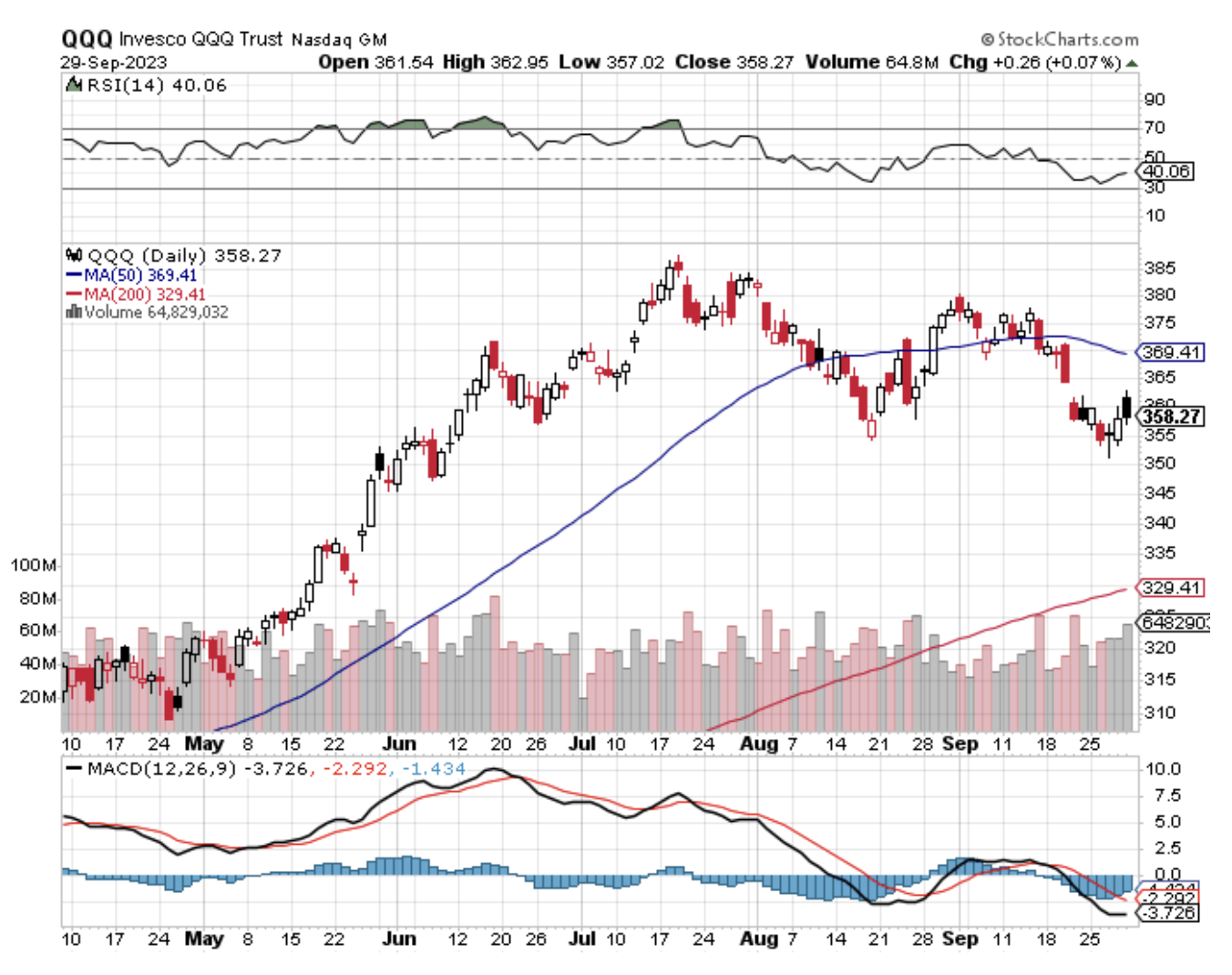
What am I bid for the Dow Average (INDU), (SPY), (QQQ) in ten years? Did I hear 240,000, a seven-fold pop from today’s level? Or more?

Don’t think I have been smoking the local agricultural products from California in arriving at these numbers. That is only half the gain that I saw from 1982 to 2000, when the stock average also appreciated 17-fold, from 600 to 10,000.

They’re playing the same movie all over again. Except this time, it’s on triple fast forward.

There will also be commodities (DBA) and real estate booms. Even gold (GLD) gets bid up by emerging central banks bent in increasing their holdings to Western levels as well as falling interest rates.

I tell my kids to save their money, not to fritter it away day trading now because anything they buy in 2020 will increase in value tenfold by 2033. They’ll all look like geniuses like I did during the eighties.

What are my strategist friends doing about this forecast? They are throwing money into US stocks with both bands, especially in technology (XLK), biotech (IBB), and bonds (JNK).

This could go on for decades.

Just thought you’d like to know.
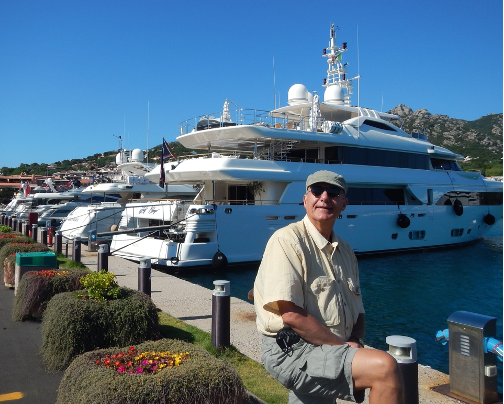
 

It’s Amazing What You Pick Up on These Things!

https://www.madhedgefundtrader.com/wp-content/uploads/2022/06/john-thomas-yatch.png 404 504 Mad Hedge Fund Trader https://madhedgefundtrader.com/wp-content/uploads/2019/05/cropped-mad-hedge-logo-transparent-192x192_f9578834168ba24df3eb53916a12c882.png Mad Hedge Fund Trader2023-11-02 09:04:452023-11-02 12:14:52The Second American Industrial Revolution
Mad Hedge Fund Trader

October 27, 2023

Diary, Newsletter, Summary

Global Market Comments
October 27, 2023
Fiat Lux

Featured Trade:

(SIX REASONS WHY GOLD WILL CONTINUE RISING),
($GOLD), (GLD), (IAU), (NEM), (GOLD), ($TNX),
(A CONVERSATION WITH THE BOOTS ON THE GROUND)

https://madhedgefundtrader.com/wp-content/uploads/2019/05/cropped-mad-hedge-logo-transparent-192x192_f9578834168ba24df3eb53916a12c882.png 0 0 Mad Hedge Fund Trader https://madhedgefundtrader.com/wp-content/uploads/2019/05/cropped-mad-hedge-logo-transparent-192x192_f9578834168ba24df3eb53916a12c882.png Mad Hedge Fund Trader2023-10-27 09:06:452023-10-27 16:25:03October 27, 2023
Mad Hedge Fund Trader

Six Reasons Why Gold Will Keep Rising

Diary, Newsletter

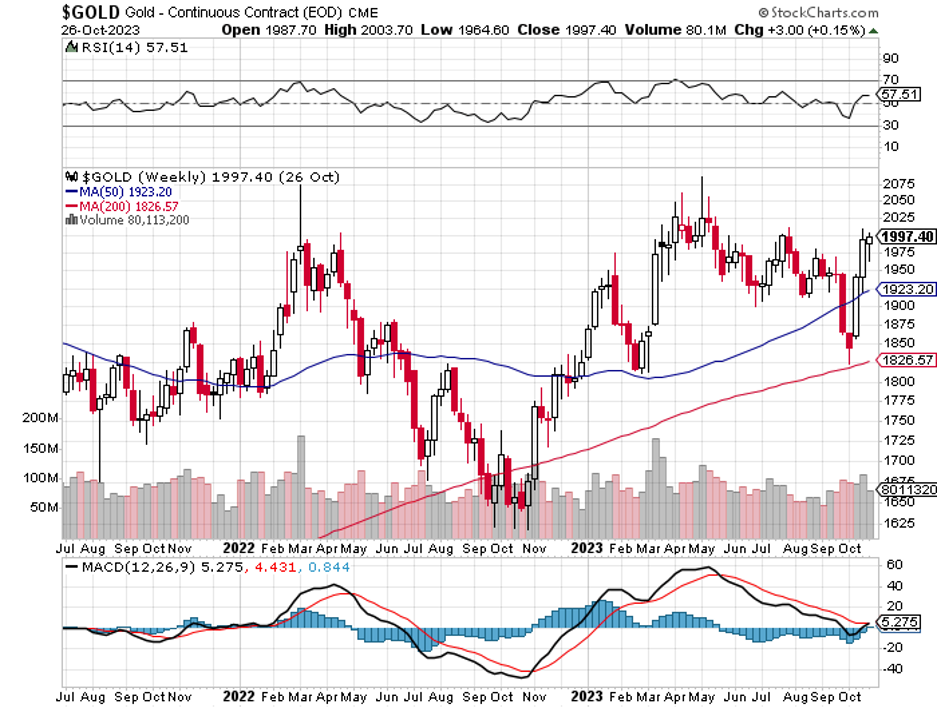
If you are a current gold investor, you have to love the latest monthly statistics just published by the World Gold Council.

After years of a death by a thousand cuts inflicted by endless redemptions of gold ETFs and ETNs, recent reports showed a sudden influx into the barbarous relic.

North American ETFs led the charge, with some 28.8 metric tonnes valued at $1.3 billion pouring into the funds.

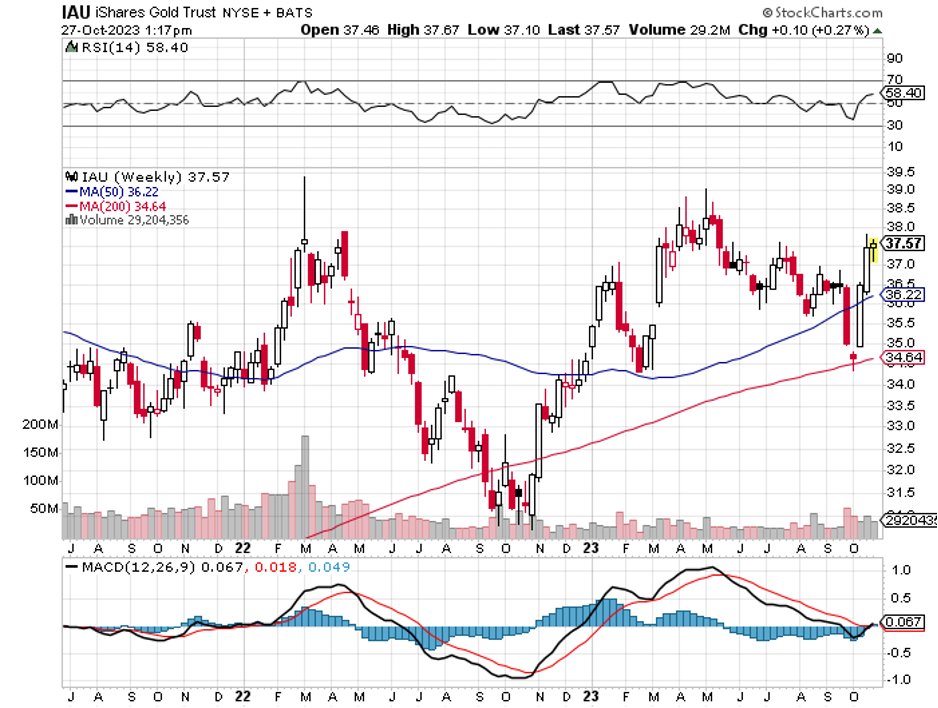
The SPDR Gold Shares (GLD) took in the most, 22.4 tonnes worth $1.03 billion, followed by the IShares Gold Trust (IAU), which added 4.6 tonnes worth $266 million.

Europe followed with 6.4 tonnes worth $321 million.

Asia was a net seller of 2 tonnes worth $80 million as investors pulled money out of precious metals and placed it in Bitcoin, Ethereum, and other cryptocurrencies.

Global gold-based ETFs collectively hold 2,295 metric tonnes of gold valued at and have picked up 143.5 tonnes so far this year.

For those used to using American measurements of precious metals, there are 32,150.7 troy ounces in one metric tonne.

The figures augur well for continued cash inflows and higher gold prices.

My experience is that sudden directional shifts of fund flows like this are NOT one-offs. They continue for months, if not years.

Of course, the trigger for these large inflows was the yellow metal’s decisive breakout on big volume from a two-year trading range.

Not only did now longs pile into the market, there was frantic short covering as well.

Too many options traders had gotten comfortable selling short gold call options just above the $1,800 level.

Once key upside resistance was shattered, gold tacked on another $50 very quickly. Bearish traders were smartly spanked.

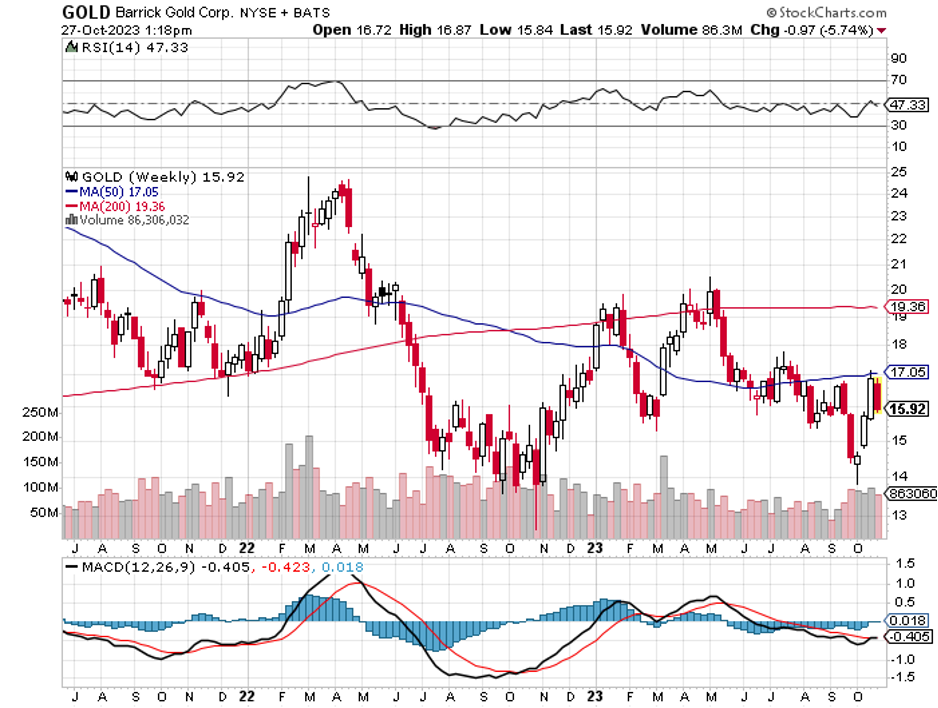
Gold plays that did well, including Van Eck Vectors Gold Miners ETF (GDX), Barrick Gold (ABX), Newmont Mining (NEM), and Global X Silver Miners ETF (SIL), turned profitable.

There are six reasons why gold has gone off to the races.

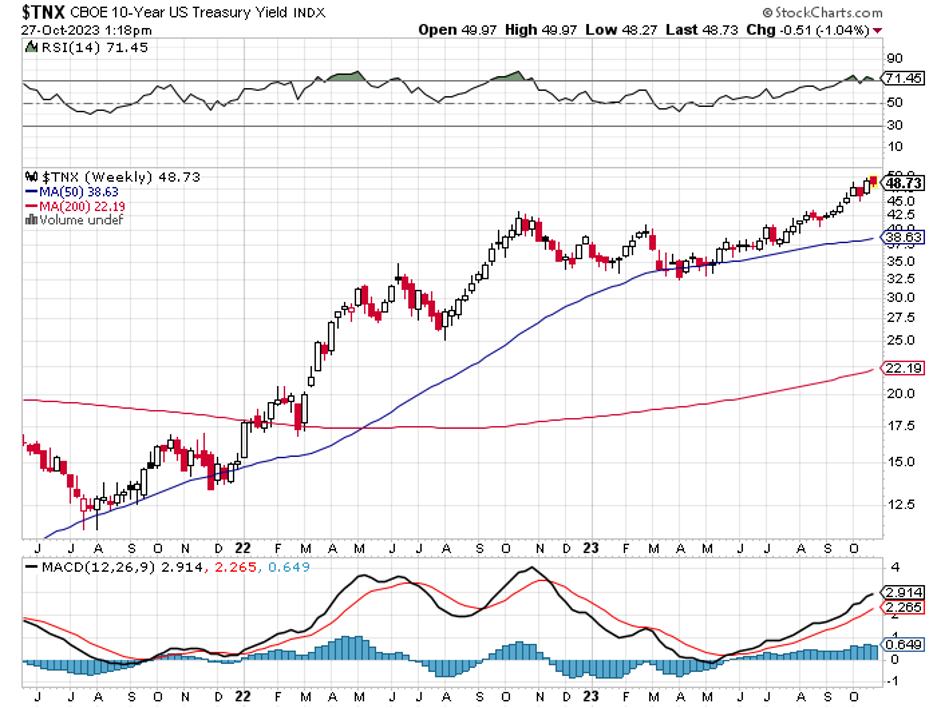
1) Ten-year Treasury bond yields are peaking out at 5.0%. The opportunity cost of holding gold is about to drop sharply.

2) Falling interest rates guarantee a weaker US dollar, another big pro gold development.

3) The last of the pandemic stimulus is fading fast.

4) The new conflict in the Middle East has poured the fat on the fire.

5) General concerns about the increasing instability in Washington have driven nervous investors into EVERY flight to safety play.

6) The collapse of trust in crypto has propelled a lot of assets back into gold.  

Inflation has historically been the great driver of all hard asset prices.

After such a meteoric move, I would expect gold to consolidate here around this level for a while to digest the recent action. It may drift sideways, or fall slightly.

That’s when I’ll pick up my next basket of longs.


bullish on gold

https://madhedgefundtrader.com/wp-content/uploads/2019/05/cropped-mad-hedge-logo-transparent-192x192_f9578834168ba24df3eb53916a12c882.png 0 0 Mad Hedge Fund Trader https://madhedgefundtrader.com/wp-content/uploads/2019/05/cropped-mad-hedge-logo-transparent-192x192_f9578834168ba24df3eb53916a12c882.png Mad Hedge Fund Trader2023-10-27 09:04:402023-10-27 16:25:23Six Reasons Why Gold Will Keep Rising
april@madhedgefundtrader.com

October 2, 2023

Diary, Newsletter, Summary

Global Market Comments
October 2, 2023
Fiat Lux

Featured Trade:

(MARKET OUTLOOK FOR THE WEEK AHEAD, or BACK IN BUSINESS)
(TLT), (GLD), (SLV), (XLU), (IWM), (EEM), (FXA), (FXE), (FXB), (USO), (UUP), (AMZN), (TSLA), (F)

https://madhedgefundtrader.com/wp-content/uploads/2019/05/cropped-mad-hedge-logo-transparent-192x192_f9578834168ba24df3eb53916a12c882.png 0 0 april@madhedgefundtrader.com https://madhedgefundtrader.com/wp-content/uploads/2019/05/cropped-mad-hedge-logo-transparent-192x192_f9578834168ba24df3eb53916a12c882.png april@madhedgefundtrader.com2023-10-02 09:04:192023-10-02 14:51:40October 2, 2023
april@madhedgefundtrader.com

The Market Outlook for the Week Ahead, or Back in Business

Diary, Newsletter

It’s a good thing I don’t rely on my Social Security Check to cover my extravagant cost of living, which is the maximum $4,555 a month. For it came within hours of coming to a halt when an agreement was passed by Congress to renew funding for another 45 days. It was almost an entirely Democratic bill, passing 335 to 91 in the House and the Senate by 88 to 9.

Unfortunately, that does put me in the uncomfortable position of delivering humanitarian aid to Ukraine right when $6.2 billion in US assistance is cut off. That was the price the Dems had to pay to get the Republicans on board needed to pass the bill. Better a half a loaf than no loaf at all. Still, I am going to have some explaining to do next week in Kiev, Mykolaiv, and Kherson. It’s a big win for Vladimir Putin.

Funding now ends on November 17, when the next crisis begins. The big question is when the markets will deliver a sigh of relief rally on Congress hitting the “snooze” button, or whether it will focus on the next disaster in November.

We’ll have to wait and see.

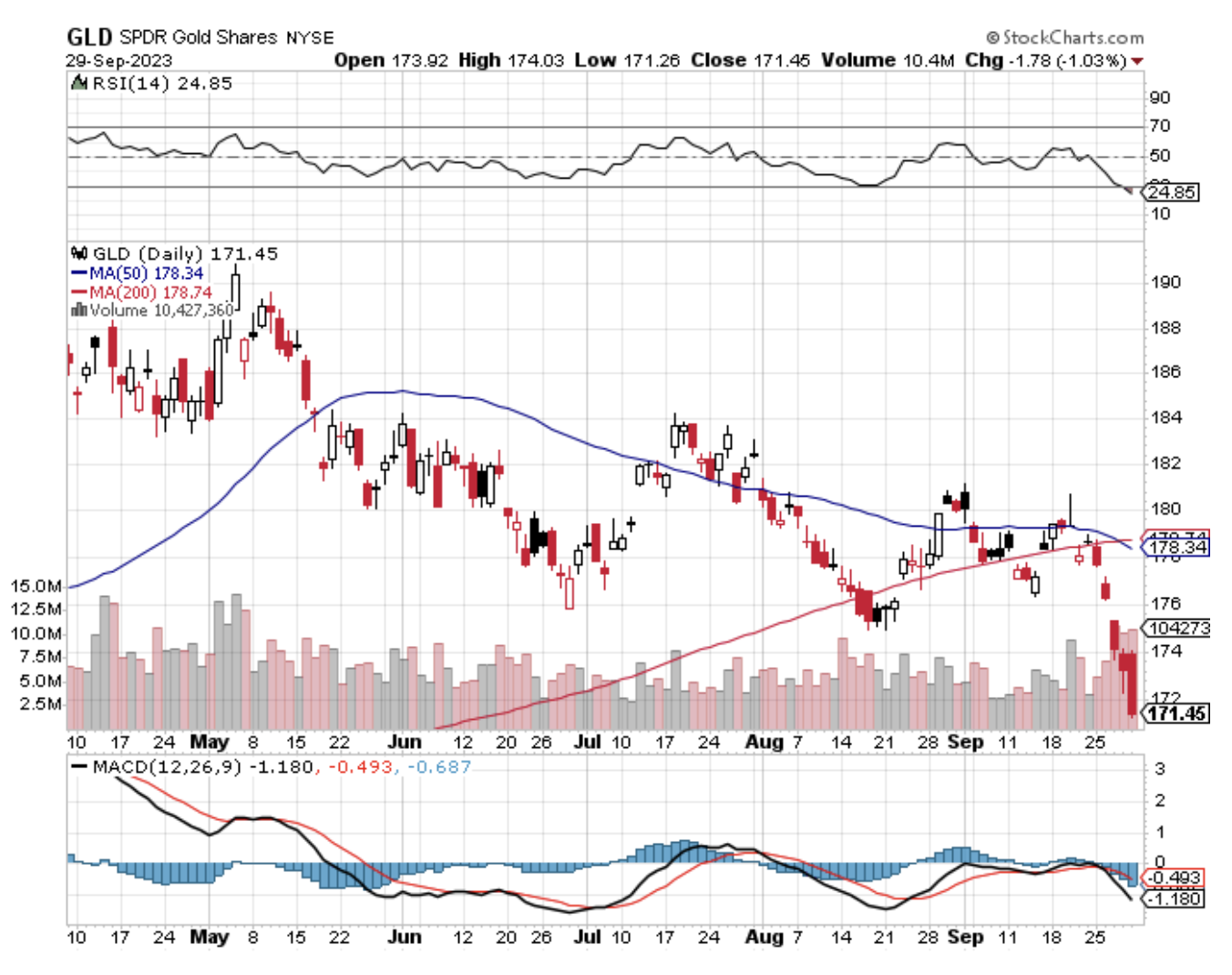
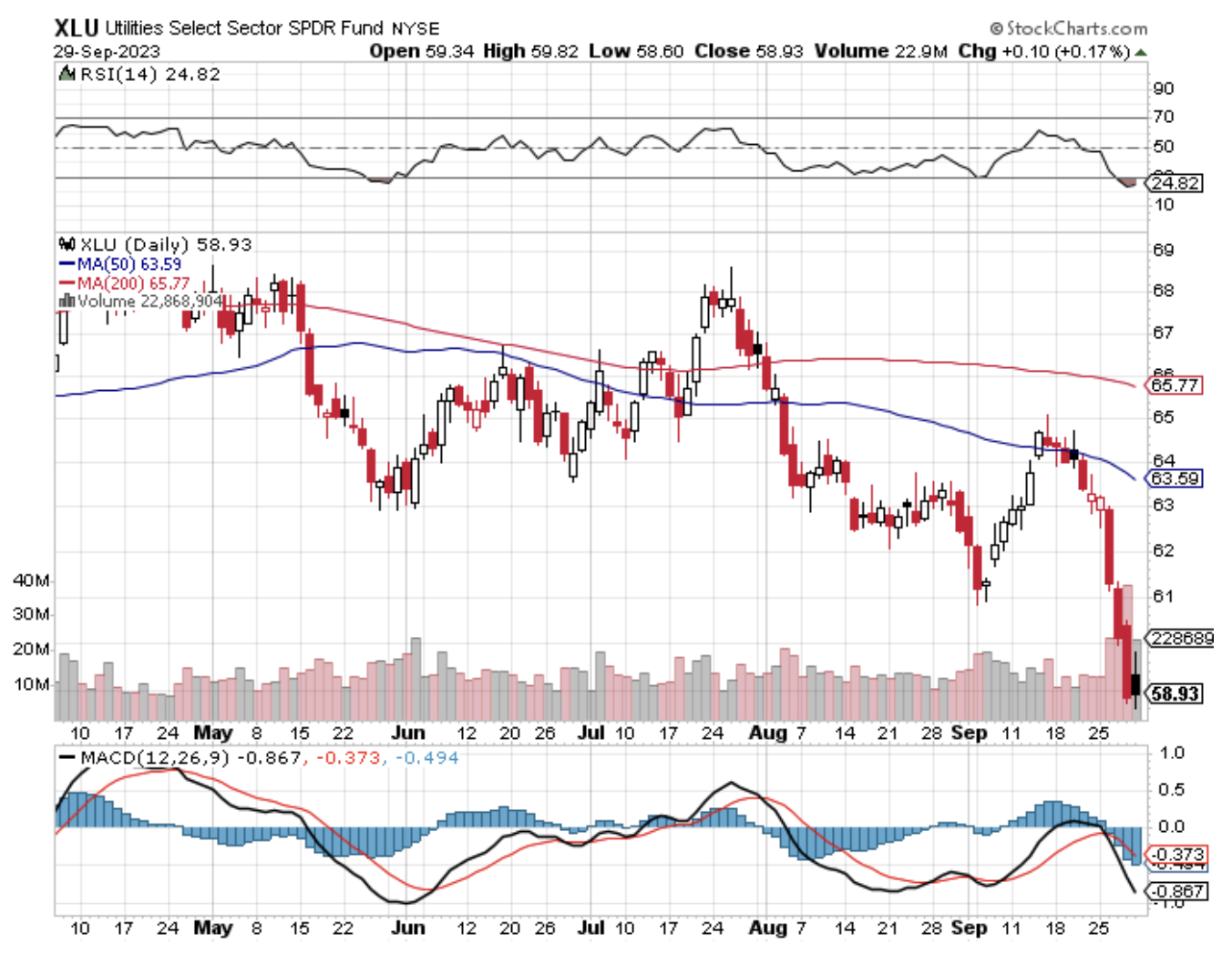
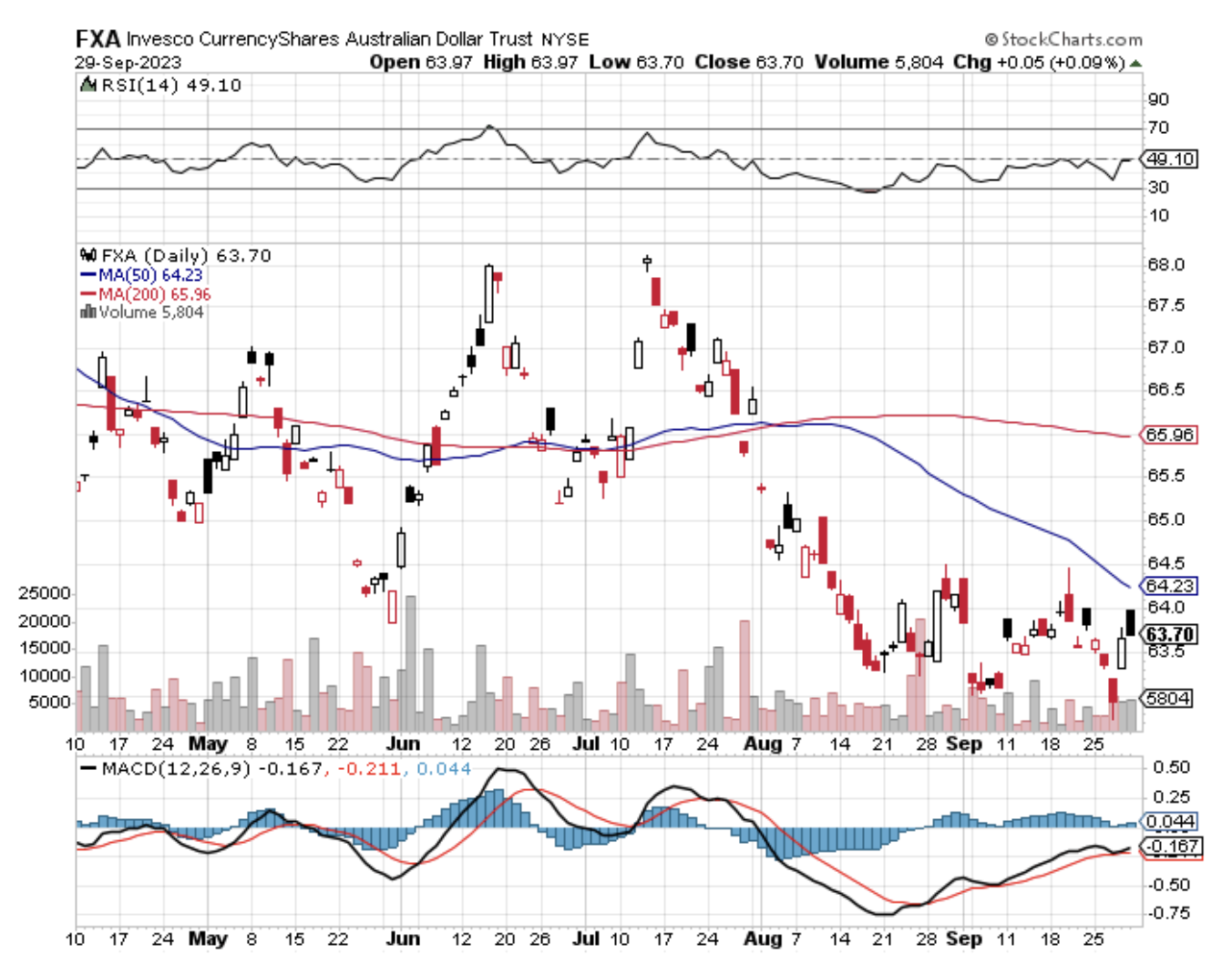
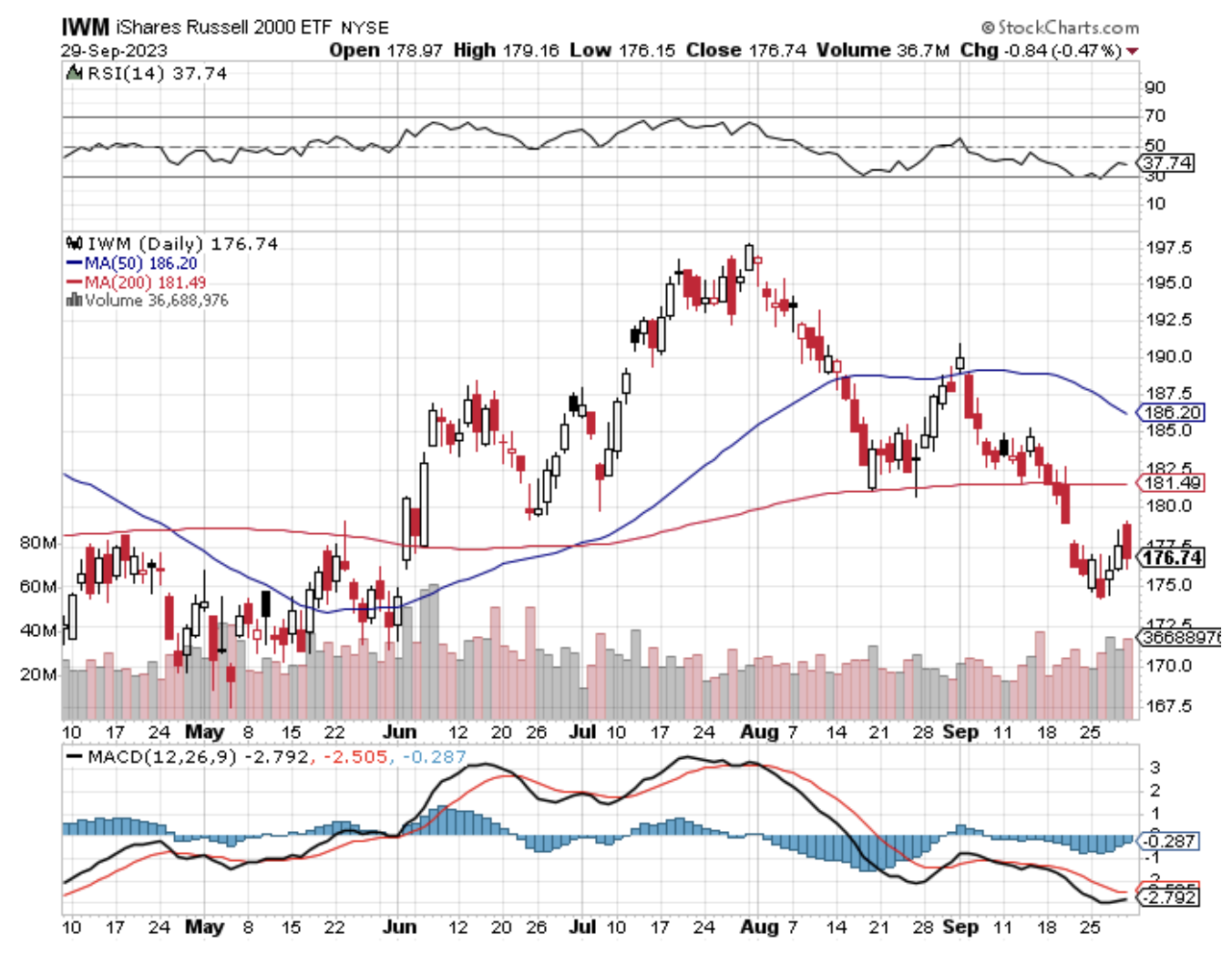
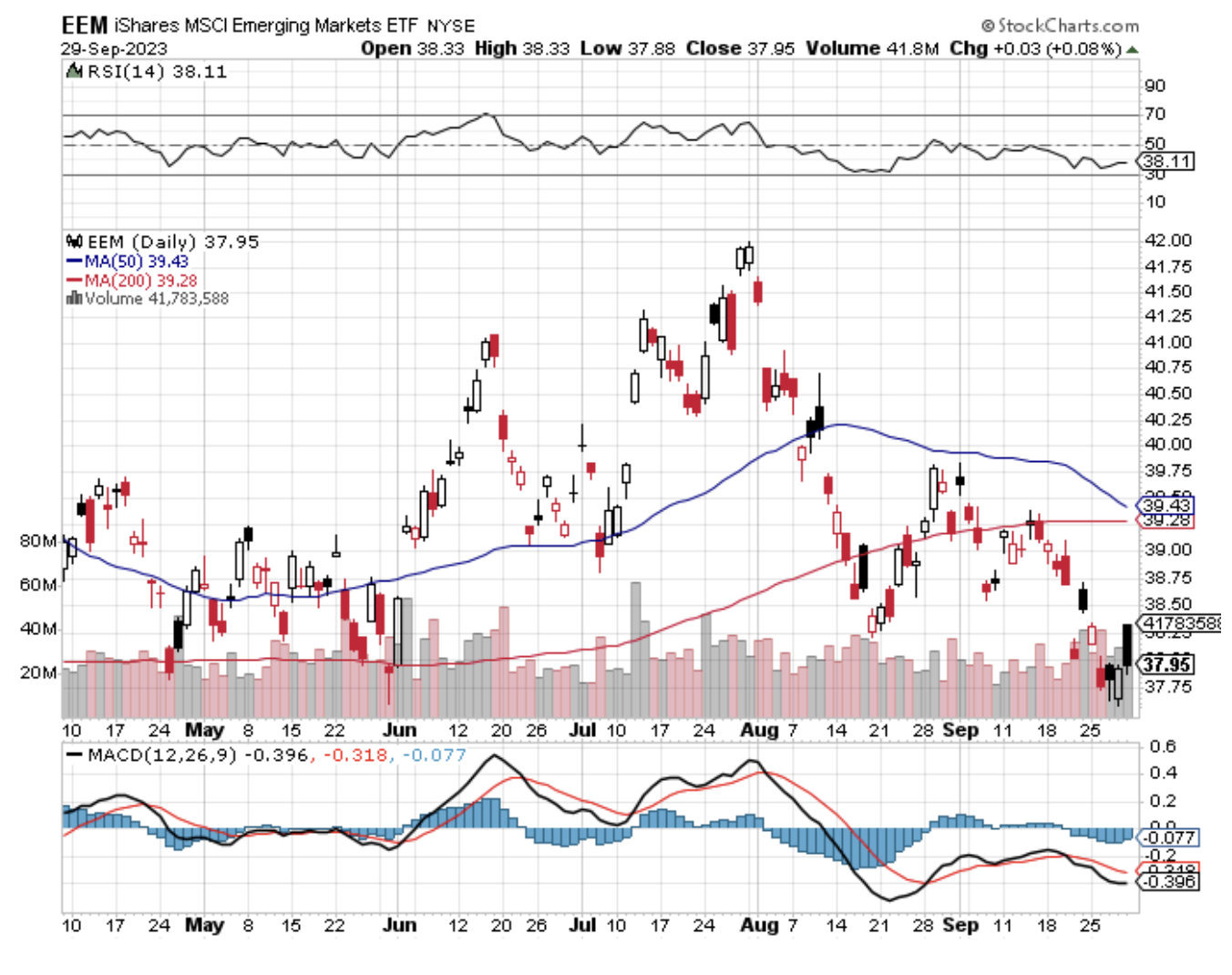
In the meantime, all eyes are on the market’s leading falling interest rate plays, which continue to go from bad to worse. Those include bonds (TLT), precious metals (GLD), (SLV), utilities (XLU), small-cap stocks (IWM), emerging markets (EEM), and foreign currencies (FXA), (FXE), (FXB).

Consider this your 2024 shopping list.

Ten-year US Treasury bond yields reached a stratospheric 4.70% last week a 17-year high and up a monster 0.90% since the end of June. Summer proved a fantastic time to take a vacation from the bond market.

They could easily reach 5% before the crying is all over. Perhaps this is why my old friend, hedge fund legend David Tepper, said his best investment right now is a subprime six-month certificate of deposit yielding 7.0%.

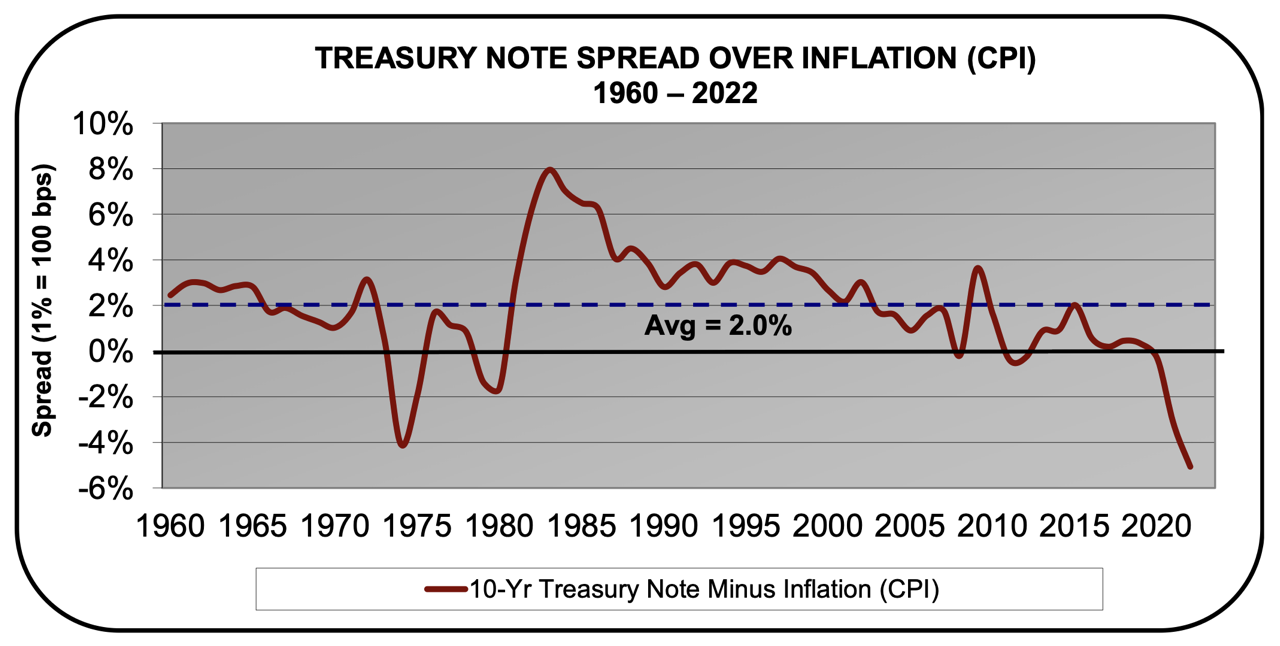
What we might be witnessing here is a return to the “old normal” when bonds spent most of their time ranging between 2%-6%. The 60-year historic average bond yield is 2% over the inflation rate (see chart below). That alone takes us to a 5.0% bond yield.

Interest rates have been kept artificially low for 15 years because no one wanted a recession in 2008 and no one wanted a recession during the pandemic in 2000. It all melded into one big decade-and-a-half period of easy money. Pain avoidance wasn’t just the universal American monetary policy, it was the global policy.

Now it’s time to pay the piper and unwind the thousands of business models that depended on free money. There will be widespread pain, as we are now witnessing in commercial real estate and private equity. Perhaps it is best to take the 5.5% bribe 90-day Treasury bond yield is offering you and stay out of the market.

While Detroit remains mired by the UAW strike, EVs have catapulted to an amazing 8% of the new car market. They have been helped by a never-ending price war and generous government subsidies. EV sales are now up a miraculous 48% YOY and are projected to account for a stunning 23% of all California sales in Q3. 

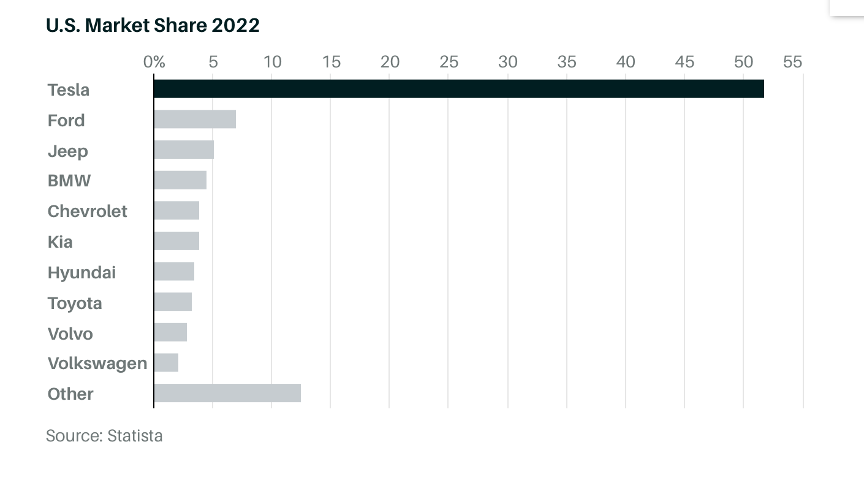
Tesla is the overwhelming leader with a 52% share in a rapidly growing market, distantly followed by Ford (F) at 7% and Jeep at 5%.

However, a slowdown may be at hand, with EV inventories running at 97 days, double that of conventional ICE cars. This could create a rare entry point for what will be the leading industry of this decade, if not the century. Buy more Tesla (TSLA) on bigger dips, if we get them.

Hedge Funds are Cutting Risk at Fastest Pace Since 2020, when the pandemic began. From retail investors to rules-based systematic traders, appetite for equities is subsiding after a 20% rally this year that’s fueled by euphoria over artificial intelligence. Fast money investors increased their bearish wagers to drive down their net leverage — a gauge of risk appetite that measures long versus short positions — by 4.2 percentage points to 50.1%, according to Goldman Sachs Group Inc.’s prime brokerage. That’s the biggest week-on-week decline in portfolio leverage since the depths of the pandemic bear market.

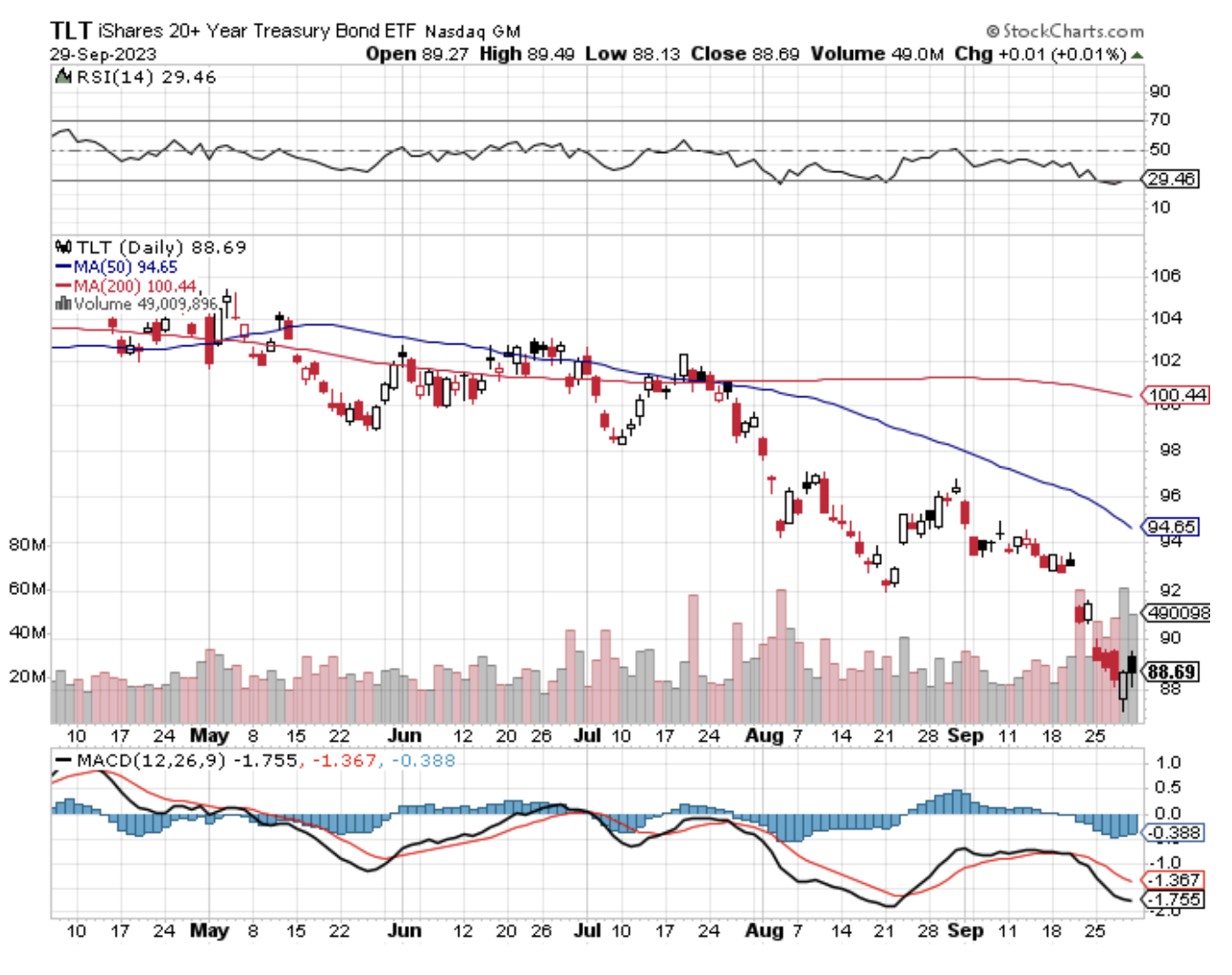
The Treasury Bond Freefall Continues, as long-term yields probe new highs. New issue of $134 billion this week didn’t help. Nothing can move on the risk until rates top out, even if we have to wait until 2024.

Oil (USO) Hits $95, a one-year high, as the Saudi/Russian short squeeze continues. $100 a barrel is a chipshot and much higher if we get a cold winter. Inventories at the Cushing hub are at a minimum.

The US Dollar (UUP) Hits New Highs, as “high for longer” interest rates keep powering the greenback. The buck is also catching a flight to safety bid from a potential government shutdown. It should be topping soon.

Moody’s Warns of Further US Government Downgrades, in the run up to the Saturday government shutdown. The shutdown lasts, the more negative its impact would be on the broader economy. Unemployment could soar. It would also render all US government data releases useless for the next three months.

ChatGPT Can Now Browse the Internet, according to its creator, OpenAI. Until now, the chatbot could only access data posted before September 2021. The move will exponentially improve the quality and effectiveness of AI apps, including my own Mad Hedge AI

Amazon (AMZN) Pouring $4 Billion into AI, with an investment in Anthropic, a ChatGPT competitor. (AMZN) is racing to catch up with (MSFT) and (GOOGL). Its chatbot is caused Claude 2. Amazon’s card to play here is its massive web services business AWS. The AI wars are heating up.

Hollywood Screenwriters Guild Strike Ends, after 150 days, which is thought to have cost the US economy $5 billion in output. The hit was mostly taken by Los Angeles, where 200,000 are employed. The Actor’s union is still on strike. Talk shows should be offering new content in a few days.

S&P Case Shiller Rises to New All-Time High, for the sixth consecutive month as inventory shortages drove up competition. In July, the index in increased 0.6% month over month and 1% over the last 12 months, on a seasonally adjusted basis. July’s movement reached a new high for the nationwide home index, surpassing the record set in June 2022. Chicago (+4.4%), Cleveland (+4.0%), and New York (+3.8%) delivered the biggest gains. The median home price for existing homes rose to 1.9 to $406,700 according to the National Association of Realtors (NAR). The robust housing market suggests that while some buyers pulled back due to high borrowing costs, demand continues to outweigh supply.

This is the Unit I Will be Joining at the Front in Ukraine, as made clear by their YouTube recruiting video. They asked me to assist with mine removal on territory formerly occupied by Russia. I really don’t know what I’m getting into. Improvision is key. It’s better than playing golf in retirement. Polish up your Ukrainian first.

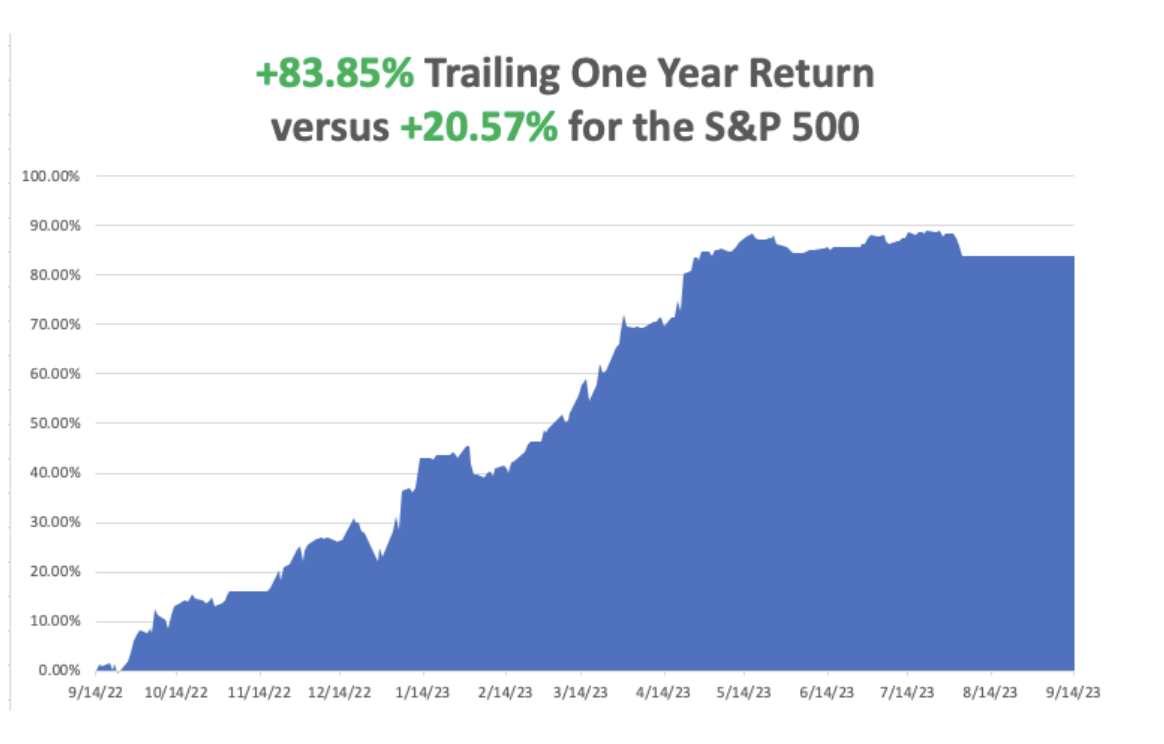
So far in August, we are down -4.70%. My 2023 year-to-date performance is still at an eye-popping +60.80%. The S&P 500 (SPY) is up +17.10% so far in 2023. My trailing one-year return reached +92.45% versus +8.45% for the S&P 500.

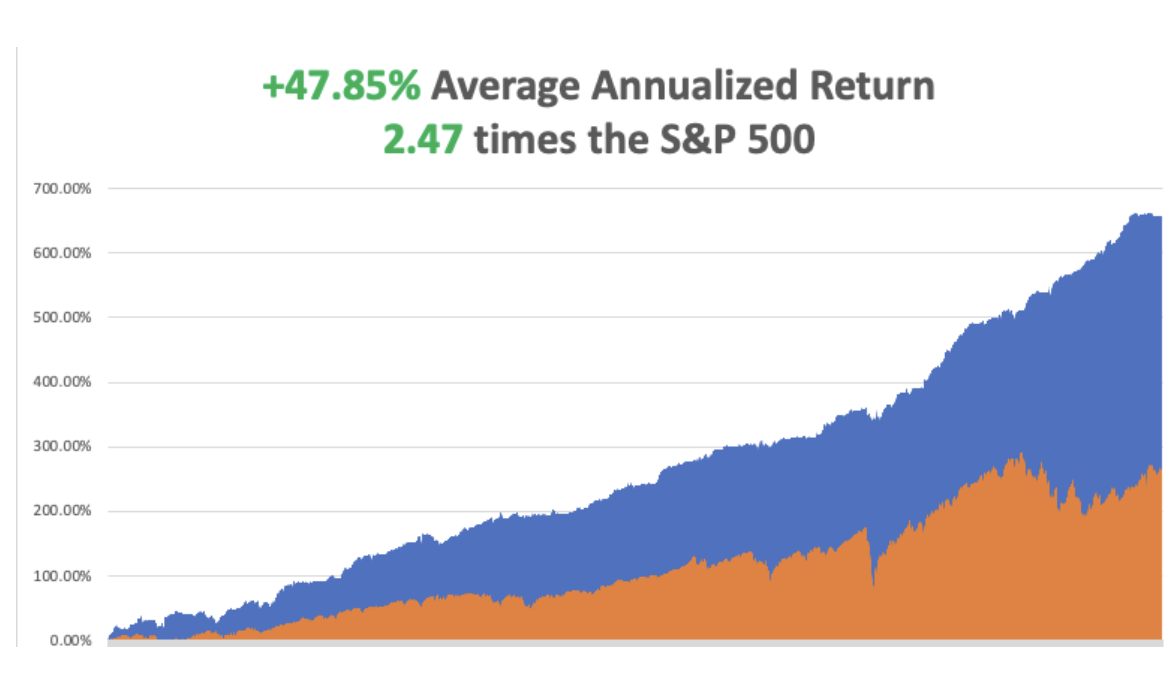
That brings my 15-year total return to +657.99%. My average annualized return has fallen back to +48.15%, another new high, some 2.50 times the S&P 500 over the same period.

Some 41 of my 46 trades this year have been profitable.

My Ten-Year View

When we come out the other side of the recession, we will be perfectly poised to launch into my new American Golden Age, or the next Roaring Twenties. The economy decarbonizing and technology hyper accelerating, creating enormous investment opportunities. The Dow Average will rise by 800% to 240,000 or more in the coming decade. The new America will be far more efficient and profitable than the old.

Dow 240,000 here we come!

On Monday, October 2, at 8:30 PM EST, the ISM Manufacturing PMI is out.

On Tuesday, October 3 at 8:30 AM, the JOLTS Job Openings Report is released.

On Wednesday, October 4 at 2:30 PM, the ISM Services Report is published.

On Thursday, October 5 at 8:30 AM, the Weekly Jobless Claims are announced.

On Friday, October 6 at 2:30 PM the September Nonfarm Payroll Report is published. At 2:00 PM the Baker Hughes Rig Count is printed.

As for me
, I will try to knock out a few memories early this morning while waiting for the Matterhorn to warm up so I can launch on another ten-mile hike. So I will reach back into the distant year of 1968 in Sweden.

My trip to Europe was supposed to limit me to staying with a family friend, Pat, in Brighton, England for the summer. His family lived in impoverished council housing.

I remember that you had to put a ten pence coin into the hot water heater for a shower, which inevitably ran out when you were fully soaped up. The trick was to insert another ten pence without getting soap in your eyes.

After a week there, we decided the gravel beach and the games arcade on Brighton Pier were pretty boring, so we decided to hitchhike to Paris.

Once there, Pat met a beautiful English girl named Sandy, and they both took off to some obscure Greek island, the ultimate destination if you lived in a cold, foggy country.

That left me stranded in Paris with little money.

So, I hitchhiked to Sweden to meet up with a girl I had run into while she was studying English in Brighton. It was a long trip north of Stockholm, but I eventually made it.

When I finally arrived, I was met at the front door by her boyfriend, a 6’6” Swedish weightlifter. That night found me bedding down in a birch forest in my sleeping bag to ward off the mosquitoes that hovered in clouds.

I started hitchhiking to Berlin, Germany the next day, which offered paying jobs. I was picked up by Ronny Carlson in a beat-up white Volkswagen bug to make the all-night drive to Goteborg where I could catch the ferry to Denmark.

1968 was the year that Sweden switched from driving English style on the left side of the road to the right. There were signs every few miles with a big letter “H”, which stood for “hurger”, or right. The problem was that after 11:00 PM, everyone in the country was drunk and forgot what side of the road to drive on.

Two guys on a motorcycle driving at least 80 mph pulled out to pass a semi-truck on a curve and slammed head-on to us, then were thrown under the wheels of the semi. The motorcycle driver was killed instantly, and his passenger had both legs cut off at the knees.

As for me, our front left wheel was sheared off and we shot off the mountain road, rolled a few times, and was stopped by this enormous pine tree.

The motorcycle riders got the two spots in the only ambulance. A police car took me to a hospital in Goteborg and whenever we hit a bump in the road bolts of pain shot across my chest and neck.

I woke up in the hospital the next day, with a compound fracture of my neck, a dislocated collar bone, and paralyzed from the waist down. The hospital called my mom after booking the call 16 hours in advance and told me I might never walk again. She later told me it was the worst day of her life.

Tall blonde Swedish nurses gave me sponge baths and delighted in teaching me to say Swedish swear words and then laughed uproariously when I made the attempt.

Sweden had a National Health care system then called Scandia, so it was all free.

Decades later a Marine Corps post-traumatic stress psychiatrist told me that this is where I obtained my obsession with tall, blond women with foreign accents.

I thought everyone had that problem.

I ended up spending a month there. The TV was only in Swedish, and after an extensive search, they turned up only one book in English, Madame Bovary. I read it four times but still don’t get the ending. And she killed herself because….?

The only problem was sleeping because I had to share my room with the guy who lost his legs in the same accident. He screamed all night because they wouldn’t give him any morphine.

When I was released, Ronny picked me up and I ended up spending another week at his home, sailing off the Swedish west coast. Then I took off for Berlin to get a job since I was broke. Few Germans wanted to live in West Berlin because of the ever-present risk of a Russian invasion so there we always good-paying jobs.

I ended up recovering completely. But to this day whenever I buy a new Brioni suit in Milan they have to measure me twice because the numbers come out so odd. My bones never returned to their pre-accident position and my right arm is an inch longer than my left. The compound fracture still shows up on X-rays.

And I still have this obsession with tall, blond women with foreign accents.

Go figure.


Brighton 1968


Ronny Carlson in Sweden


Stay Healthy,
John Thomas
CEO & Publisher
The Diary of a Mad Hedge Fund Trader


https://madhedgefundtrader.com/wp-content/uploads/2019/05/cropped-mad-hedge-logo-transparent-192x192_f9578834168ba24df3eb53916a12c882.png 0 0 april@madhedgefundtrader.com https://madhedgefundtrader.com/wp-content/uploads/2019/05/cropped-mad-hedge-logo-transparent-192x192_f9578834168ba24df3eb53916a12c882.png april@madhedgefundtrader.com2023-10-02 09:02:222023-10-02 14:52:17The Market Outlook for the Week Ahead, or Back in Business
Mad Hedge Fund Trader

August 25, 2023

Diary, Newsletter, Summary

Global Market Comments
August 25, 2023
Fiat Lux

Featured Trades:


(THE NEXT COMMODITY SUPERCYCLE HAS ALREADY STARTED),
(COPX), (GLD), (FCX), (BHP), (RIO), (SIL),
 (PPLT), (PALL), (GOLD), (ECH), (EWZ), (IDX)


CLICK HERE to download today's position sheet.

https://madhedgefundtrader.com/wp-content/uploads/2019/05/cropped-mad-hedge-logo-transparent-192x192_f9578834168ba24df3eb53916a12c882.png 0 0 Mad Hedge Fund Trader https://madhedgefundtrader.com/wp-content/uploads/2019/05/cropped-mad-hedge-logo-transparent-192x192_f9578834168ba24df3eb53916a12c882.png Mad Hedge Fund Trader2023-08-25 09:04:382023-08-25 13:41:24August 25, 2023
Mad Hedge Fund Trader

The Next Commodity Supercycle Has Already Started

Diary, Newsletter

When I closed out my position in Freeport McMoRan (FCX) near its max profit earlier this year, I received a hurried email from a reader if he should still keep the stock. I replied very quickly:

“Hell, yes!”

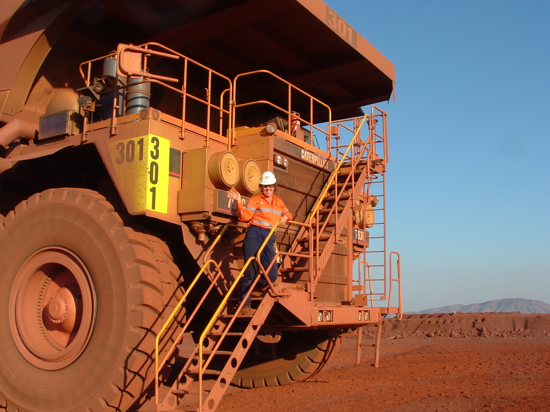
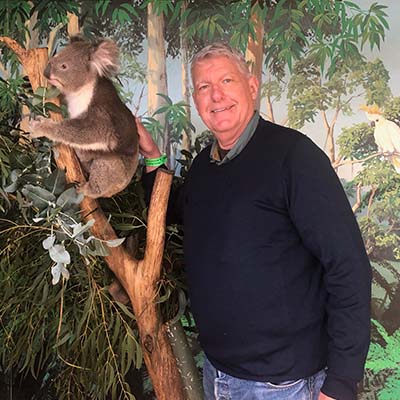
When I toured Australia a couple of years ago, I couldn’t help but notice a surprising number of fresh-faced young people driving luxury Ferraris, Lamborghinis, and Porsches.

I remarked to my Aussie friend that there must be a lot of indulgent parents in The Lucky Country these days. “It’s not the parents who are buying these cars,” he remarked, “It’s the kids.”

He went on to explain that the mining boom had driven wages for skilled labor to spectacular levels. Workers in their early twenties could earn as much as $200,000 a year, with generous benefits.

The big resource companies flew them by private jet a thousand miles to remote locations where they toiled at four-week on, four-week off schedules.

This was creating social problems, as it is tough for parents to manage offspring who make far more than they do.

The Next Great Commodity Boom has started and, in fact, we are already years into a prolonged supercycle that could stretch into the 2030s.

China, the world’s largest consumer of commodities, is currently stimulating its economy on multiple fronts, to break the back of a Covid hangover.

Those include generous corporate tax breaks, relaxed reserve requirements, government bailouts of financial institutions, and interest rate cuts. Get triggers like the impending moderation of its trade war with the US and it will be off to the races once more for the entire sector.

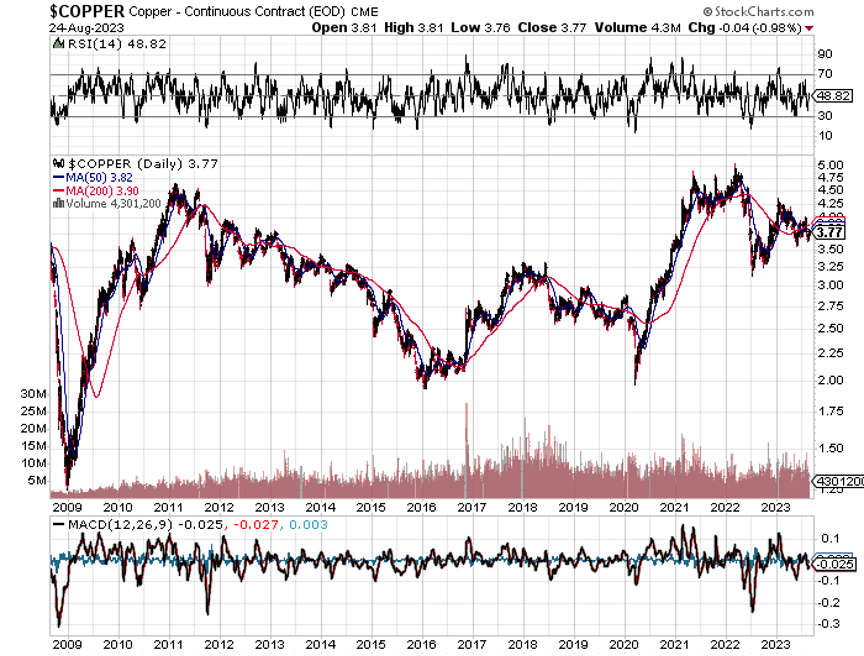
The last bear market in commodities was certainly punishing. From the 2011 peaks, copper (COPX) shed 65%, gold (GLD) gave back 47%, and iron ore was cut by 78%. One research house estimated that some $150 billion in resource projects in Australia were suspended or cancelled.

Budgeted capital spending during 2012-2015 was slashed by a blood-curdling 30%. Contract negotiations for price breaks demanded by end consumers broke out like a bad case of chicken pox.

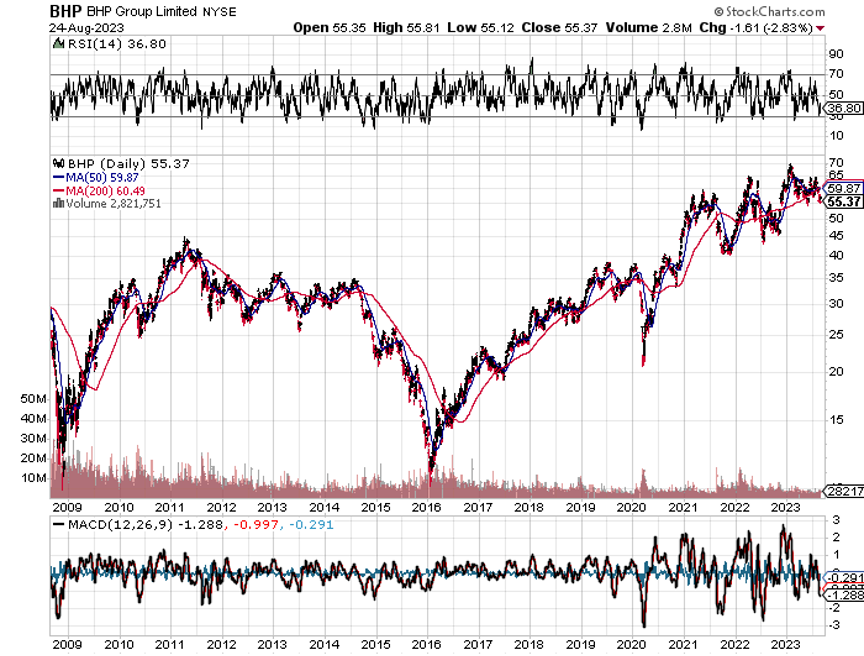
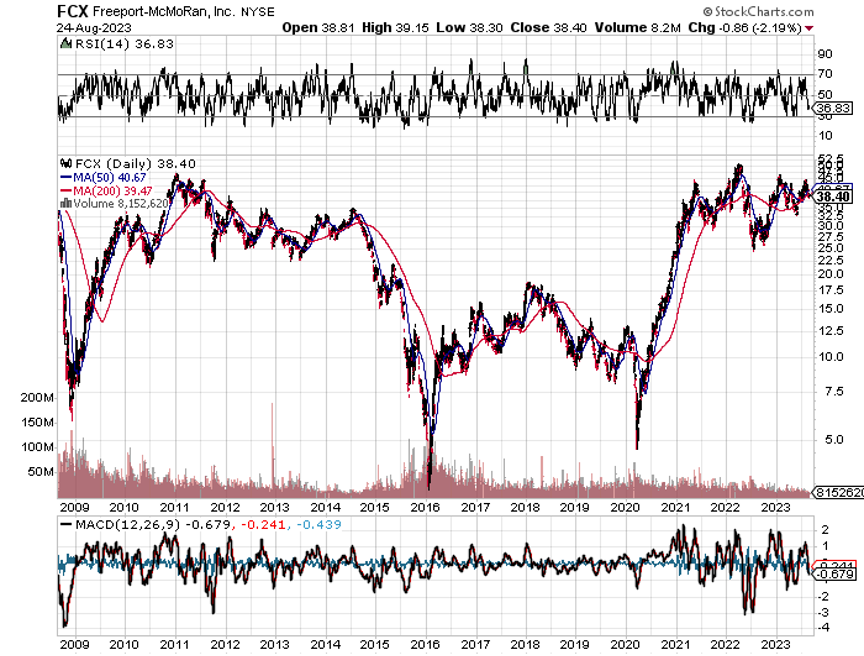
The shellacking was reflected in the major producer shares, like BHP Billiton (BHP), Freeport McMoRan (FCX), and Rio Tinto (RIO), with prices down by half or more. Write-downs of asset values became epidemic at many of these firms.

The selloff was especially punishing for the gold miners, with lead firm Barrack Gold (GOLD) seeing its stock down by nearly 80% at one point, lower than the darkest days of the 2008-9 stock market crash.

You also saw the bloodshed in the currencies of commodity-producing countries. The Australian dollar led the retreat, falling 30%. The South African Rand has also taken it on the nose, off 30%. In Canada, the Loonie got cooked.

The impact of China cannot be underestimated. In 2012, it consumed 11.7% of the planet’s oil, 40% of its copper, 46% of its iron ore, 46% of its aluminum, and 50% of its coal. It is much smaller than that today, with its annual growth rate dropping by more than half, from 13.7% to 3.50% today.

What happens to commodity prices when China recovers even a fraction of the heady growth rates of yore? It boggles the mind.

The rise of emerging market standards of living will also provide a boost to hard asset prices. As China goes, so does its satellite trading partners, who rely on the Middle Kingdom as their largest customer. Many are also major commodity exporters themselves, like Chile (ECH), Brazil (EWZ), and Indonesia (IDX), who are looking to come back big time.

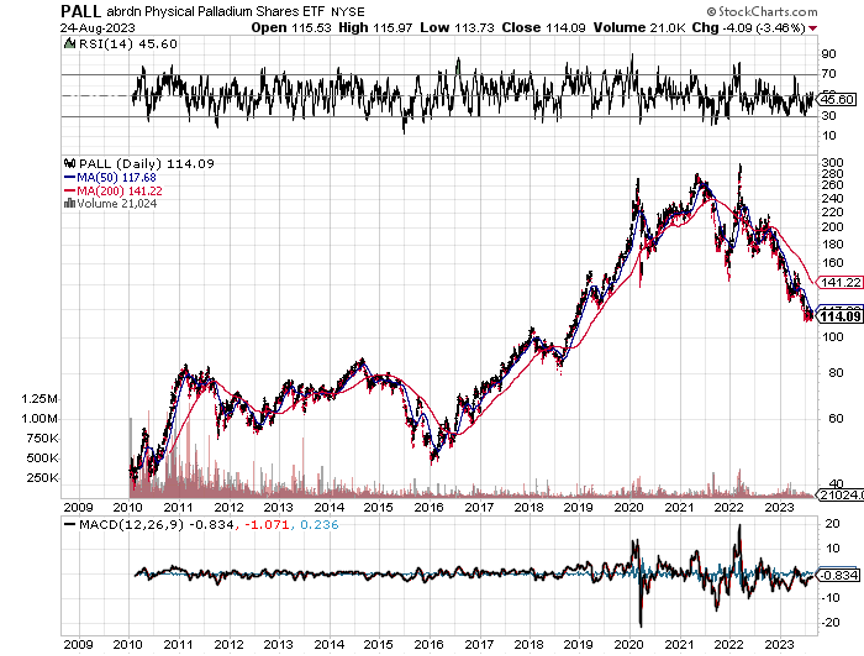
As a result, Western hedge funds will soon be moving money out of paper assets, like stocks and bonds, into hard ones, such as gold, silver (SIL), palladium (PALL), platinum (PPLT), and copper.

A massive US stock market rally has sent managers in search of any investment that can’t be created with a printing press. Look at the best-performing sectors this year and they are dominated by the commodity space.

The bulls may be right for as long as a decade thanks to the cruel arithmetic of the commodities cycle. These are your classic textbook inelastic markets.

Mines often take 10-15 years to progress from conception to production. Deposits need to be mapped, plans drafted, permits obtained, infrastructure built, capital raised, and bribes paid in certain countries. By the time they come online, prices have peaked, drowning investors in red ink.

So a 1% rise in demand can trigger a price rise of 50% or more. There are not a lot of substitutes for iron ore. Hedge funds then throw gasoline on the fire with excess leverage and high-frequency trading. That gives us higher highs, to be followed by lower lows.

I am old enough to have lived through a couple of these cycles now, so it is all old news for me. The previous bull legs of supercycles ran from 1870-1913 and 1945-1973. The current one started for the whole range of commodities in 2016. Before that, it was down from seven years.

While the present one is short in terms of years, no one can deny how business cycles will be greatly accelerated by the end of the pandemic.

Some new factors are weighing on miners that didn’t plague them in the past. Reregulation of the US banking system is forced several large players, like JP Morgan (JPM) and Goldman Sachs (GS) to pull out of the industry completely. That impairs trading liquidity and widens spreads— developments that can only accelerate upside price moves.

The prospect of falling US interest rates is also attracting capital. That reduces the opportunity cost of staying in raw metals, which pay neither interest nor dividends.

The future is bright for the resource industry. While the gains in Chinese demand are smaller than they have been in the past, they are off of a much larger base. In 20 years, Chinese GDP has soared from $1 trillion to $14.5 trillion.

Some 20 million people a year are still moving from the countryside to the coastal cities in search of a better standard of living and improved prospects for their children.

That is the good news. The bad news is that it looks like the headaches of Australian parents of juvenile high earners may persist for a lot longer than they wish.

Buy all commodities on dips for the next several years.


https://www.madhedgefundtrader.com/wp-content/uploads/2019/09/john-and-girls.png 322 345 Mad Hedge Fund Trader https://madhedgefundtrader.com/wp-content/uploads/2019/05/cropped-mad-hedge-logo-transparent-192x192_f9578834168ba24df3eb53916a12c882.png Mad Hedge Fund Trader2023-08-25 09:02:392023-08-25 13:41:06The Next Commodity Supercycle Has Already Started
Mad Hedge Fund Trader

August 3, 2023

Diary, Newsletter, Summary

Global Market Comments
August 3, 2023
Fiat Lux

SPECIAL PRECIOUS METALS ISSUE

Featured Trades:
(WHAT’S UP WITH GOLD?),
(GLD), (UGL), (PPLT), (PLAT), (WPM)
(THE ULTRA BULL CASE FOR GOLD)


CLICK HERE to download today's position sheet.

https://madhedgefundtrader.com/wp-content/uploads/2019/05/cropped-mad-hedge-logo-transparent-192x192_f9578834168ba24df3eb53916a12c882.png 0 0 Mad Hedge Fund Trader https://madhedgefundtrader.com/wp-content/uploads/2019/05/cropped-mad-hedge-logo-transparent-192x192_f9578834168ba24df3eb53916a12c882.png Mad Hedge Fund Trader2023-08-03 09:06:292023-08-04 10:01:59August 3, 2023
Mad Hedge Fund Trader

June 23, 2023

Diary, Newsletter, Summary

Global Market Comments
June 23, 2023
Fiat Lux

Featured Trades:

(JUNE 21 BIWEEKLY STRATEGY WEBINAR Q&A),
(AAPL), (ABNB), (GLD), (BA), (CAT), (DE), (X), (PYPL), (SQ), (MSFT), (GD), (GE), (INDA), (META) (GOOGL), (CCI), (NVDA), (ABNB), (SNOW), (PLTR), (TSLA)


CLICK HERE to download today's position sheet.

https://madhedgefundtrader.com/wp-content/uploads/2019/05/cropped-mad-hedge-logo-transparent-192x192_f9578834168ba24df3eb53916a12c882.png 0 0 Mad Hedge Fund Trader https://madhedgefundtrader.com/wp-content/uploads/2019/05/cropped-mad-hedge-logo-transparent-192x192_f9578834168ba24df3eb53916a12c882.png Mad Hedge Fund Trader2023-06-23 09:04:472023-06-23 15:54:01June 23, 2023
Mad Hedge Fund Trader

June 21 Biweekly Strategy Webinar Q&A

Diary, Free Research, Newsletter
bringing back the gold standard

Below please find subscribers’ Q&A for the June 21 Mad Hedge Fund Trader Global Strategy Webinar, broadcast from Lake Tahoe, NV.

Q: When do we buy Nvidia (NVDA) and Tesla (TSLA)?

A: On at least a 20% dip. We have had ballistic moves—some of the sharpest up moves in the history of the stock market for large stocks—and certainly the greatest creation of market caps since the market was invented under the Buttonwood Tree in 1792 at 68 Wall Street. Tesla’s almost at a triple now. Tripling one of the world's largest companies in 6 months? You have to live as long as me to see that.

Q: Is it a good time to invest in Bitcoin?

A: No, absolutely not. You only want to invest in Bitcoin when we have an excess of cash and a shortage of assets. Right now, we have the opposite, a shortage of cash and an excess of assets, and that will probably continue for several years.

Q: Should I short Apple (APPL)?

A: Only if you’re a day trader. It’s hugely overbought for the short term, but still in a multiyear long-term uptrend. I think we could see Apple at $300 in the next one or two years.

Q: Is it better to focus on single stocks or ETFs?

A: Single stocks always, because a single stock will outperform a basket that's in an ETF by 2 to 1 or even 3 to 1. That's always the case; whenever you add stocks to a basket, it diversifies risk and dilutes the performance. Better to just own Tesla, and if you want to diversify, diversify to Nvidia, but then I live next door to these two companies. That's what I tell my friends. You only diversify if you don’t know what is going to happen, which is most investors and financial advisors.

Q: Is the bottom of the housing market in, and are we due for a spike in home prices when interest rates can only go lower?

A: Yes, absolutely. In fact, we will enter a new 10-year bull leg for housing because we have a structural shortage of 10 million homes and 82 million millennials desperately trying to buy them at any price. I just got a call from my broker and she is panicking because she is running out of inventory. Even the lemons are starting to move.

Q: When do you think energy will rise?

A: Falling interest rates could be a good key because it sets the whole global economy on fire and increases energy demand.

Q: Outlook for the S&P 500 (SPY) second half of the year?

A: We hit 4,800 at least, maybe even higher. That's about a little more than 10% from here, so it’s not that much of a stretch, not like it was at the beginning of the year when it needed to rise 25% to reach my yearend target.

Q: Best time to invest from here on?

A: Either a 10% pullback in the market, or a sideways move of 3 months—that's called a time correction. It usually counts as a price correction because of course, over 3 months, earnings go up a lot, especially in tech.

Q: I’m seeing grains (WEAT) in rally mode.

A: Yes, that's true. They are commodities, and just like copper’s been rallying, and it’s yet another signal that we may get a much broader global commodity rally in everything: iron ore, coal, energy, gold, silver, you name it.

Q: Will inflation drop to 2%, causing stocks to go on another epic run?

A: The answer is yes, I do see inflation dropping to 2% —maybe not this year, but next year; not because of any action the Fed is doing, but because technology is hyper-accelerating, and technology is highly deflationary. The tech product you bought two years ago is now half the price, and they offer you twice as much functionality with an auto-renew for life. So, that is happening across the entire technology front and feeds into the inflation numbers big time, including labor. There's going to be a lot of labor replacement by machines and AI in the coming years.

Q: Is Airbnb (ABNB) a good stock to buy?

A: Well, if we’re going into the most perfect travel storm of all time, which is this summer, and which is why I’m going to remote places only like Cortina, Italy. Airbnb is the perfect stock to own. It’s a well-run company even in normal times.

Q: Should I buy gold here on the pullback?

A: Yes, you should. Gold is also highly sensitive to any decline in interest rates, and by the way: buy silver, it always moves 2.5x as much as the barbarous relic. 

Q: How can inflation not go up if commodities and wage demands are going up due to state and federal unions? What about farm equipment and truck supplies? Costs keep rising, should we buy John Deere (DE)?

A: There are three questions here. Inflation will not go up because, though commodities will rise, they are only 0.6% of the $100 trillion global economy, or $660 billion in 2022. That will be more than offset by technology cutting prices, which is 30% of the stock market. You have to realize how important each individual element is in the global picture. And regarding wage demands going up caused by state and federal unions, less than 11.3% of the workforce is now unionized and that figure has been declining for 40 years. Most growth in the economy has been in non-unionized technology firms which largely depend on temporary workers, by design. What IS unionized is mostly teachers, the lowest paid workers in the economy, so incremental pay rises will be small. Unions were absolutely slaughtered when 25 million jobs were offshored to China during the Bush administration. Buy farm equipment and trucks? Absolutely, buy John Deere (DE) and buy Caterpillar (CAT) on the next dip. I was actually looking at Caterpillar for the next LEAPS the other day, but it’s already had a big run; I'm going to wait for a pullback before I get CAT and John Deere. So, again, people see headlines, see union wage headlines—I say focus on the 89% and not on the 11% if you want to make good decisions.

Q: Is Boeing (BA) a buy on the dip?

A: Yes, they got 1,000 new aircraft orders and the stock hasn't moved. So yes, if you get any kind of selloff down to $200, I'd be hoovering this thing up.

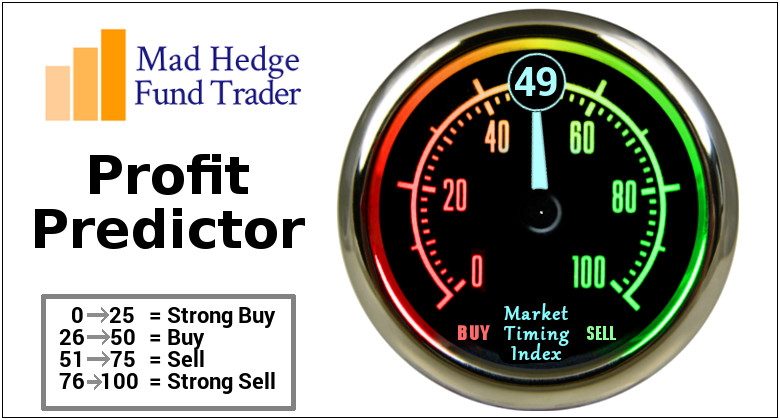
Q: Can you please explain how the profit predictor works?

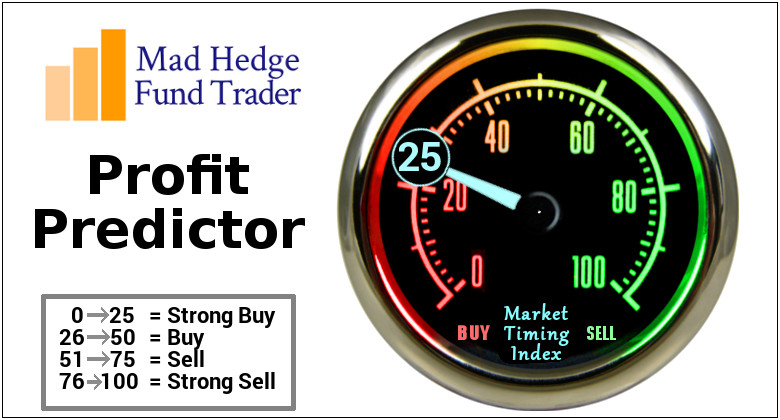
A: It’s a long story; just go to our website, log in and do a search for “profit predictor,” and you’ll get a full explanation of how it works. It’s actually where Mad Hedge has been using artificial intelligence for 11 years, which is why our performance has doubled. Just for fun, I'll run the piece next week.

Q: Gold (GLD) is having a hard time going up because Russia is being squeezed by other governments. Since they need cash, they may be either selling their gold or stop buying new gold.

A: That is a good point, but at the end of the day, interest rates are the number one driver of all precious metals—period, end of story. We’re long gold too, I’ve got lots of gold coins stashed around the world in various safe deposit boxes, and I'm keeping them. I’ve got even more silver coins, which take up a lot of space.

Q: Do you like India (INDA) long term?

A: Yes, it’s the next China. But as Apple is finding out it is very difficult to get anything done there. A radical reforming Prime Minster Modi may be changing things there with his recent Biden visit and (GE) contract to build jet engines.

Q: What do you think of General Dynamics Corp (GD)?

A: I like General Dynamics because I think defense spending is in a permanent long term upcycle as a result of the Ukraine war. And it won’t end with the Ukraine war—the threat will always be out there, and the buying is done by not only us but all the other countries that think Russia is a threat.

Q: Do you like MP Materials Corp (MP)?

A: Yes, I do. The whole commodities space is ready to take off and go on fire.

Q: What about Square (SQ)?

A: The only reason I’m not recommending Square right now is huge competition in the entire sector, where all the stocks including PayPal (PYPL) are getting crushed. I will pass on Square for now, especially when I can buy US Steel (X) at close to its low for the year.

Q: If you had to pick one: Nvidia (NVDA), Tesla (TSLA), Microsoft (MSFT), Meta (META), and Google (GOOGL), which is the best to buy for next year?

A: All of them. Diversify. If I have to pick the top performer, it’s going to be either Tesla or Nvidia, probably Nvidia. But you need at least a 10% correction before you do anything. Actually, the split-adjusted price for our first (NVDA) recommendation eight years ago was $2 a share.

Q: Do you like Crown Castle International (CCI)?

A: Yes, I like it very much—it has very high dividend yield at 5.5%. The reason it hasn’t moved yet is that as long as interest rates are high, any REIT structure will suffer, and (CCI) has a REIT structure. Sure, it’s in a great sector—5G cell towers—but it is still a REIT nonetheless, and those will start to recover when interest rates go down; that’s why we did a 2.5-year LEAPS on CCI. For sure interest rates are going to go down in the next 2.5 years, and you will double your money on (CCI). That’s why we put it out.

Q: Which mid cap will do best over the long term: Airbnb (ABNB), Snowflake (SNOW), or Palantir (PLTR)?

A: That’s easy: Snowflake. They have such an overwhelming technology on the database and security front; I would be buying Snowflake all day long. Even Warren Buffet owns Snowflake, so that’s good enough for me.

Q: Could you comment on the pace of EV adoption/potential for (TSLA) robot fleet acceleration and implications for oil investments in holding pattern till the eventual collapse to near 0?

A: Yes, oil may collapse to near zero, but it may take twenty years to do it—that’s how long it takes to transition an energy source. That’s how long it took the move from horses and hay to gasoline-powered cars at the beginning of the 20th century. A national robot fleet of taxis with no drivers at all is a couple of years off. There are about 1,000 of them working in San Francisco right now, but they still have more work to do on the software. When it gets foggy, they often congregate at intersections causing traffic jams. Suffice it to say that eventually Tesla shares go to $1,000 and after that, $10,000—that’s my bet. By the way, my Tesla January 2025 $595-$600 LEAPS are starting to look pretty good.

To watch a replay of this webinar with all the charts, bells, whistles, and classic rock music, just log in to www.madhedgefundtrader.com , go to MY ACCOUNT, click on GLOBAL TRADING DISPATCH or TECHNOLOGY LETTER, then WEBINARS, and all the webinars from the last 12 years are there in all their glory.

Good Luck and Stay Healthy,

John Thomas
CEO & Publisher
The Diary of a Mad Hedge Fund Trader


bringing back the gold standard

2018 in Australia

https://www.madhedgefundtrader.com/wp-content/uploads/2019/07/john-thomas-03.jpg 400 400 Mad Hedge Fund Trader https://madhedgefundtrader.com/wp-content/uploads/2019/05/cropped-mad-hedge-logo-transparent-192x192_f9578834168ba24df3eb53916a12c882.png Mad Hedge Fund Trader2023-06-23 09:02:392023-06-23 15:53:43June 21 Biweekly Strategy Webinar Q&A
Page 19 of 47«‹1718192021›»

Legal Disclaimer

There is a very high degree of risk involved in trading. Past results are not indicative of future returns. MadHedgeFundTrader.com and all individuals affiliated with this site assume no responsibilities for your trading and investment results. The indicators, strategies, columns, articles and all other features are for educational purposes only and should not be construed as investment advice. Information for futures trading observations are obtained from sources believed to be reliable, but we do not warrant its completeness or accuracy, or warrant any results from the use of the information. Your use of the trading observations is entirely at your own risk and it is your sole responsibility to evaluate the accuracy, completeness and usefulness of the information. You must assess the risk of any trade with your broker and make your own independent decisions regarding any securities mentioned herein. Affiliates of MadHedgeFundTrader.com may have a position or effect transactions in the securities described herein (or options thereon) and/or otherwise employ trading strategies that may be consistent or inconsistent with the provided strategies.

Copyright © 2026. Mad Hedge Fund Trader. All Rights Reserved. support@madhedgefundtrader.com
Scroll to top