• support@madhedgefundtrader.com
  • Member Login
Mad Hedge Fund Trader
  • Home
  • About
  • Store
  • Luncheons
  • Testimonials
  • Contact Us
  • Click to open the search input field Click to open the search input field Search
  • Menu Menu

Tag Archive for: (ORCL)

Mad Hedge Fund Trader

The New Salesforce

Tech Letter

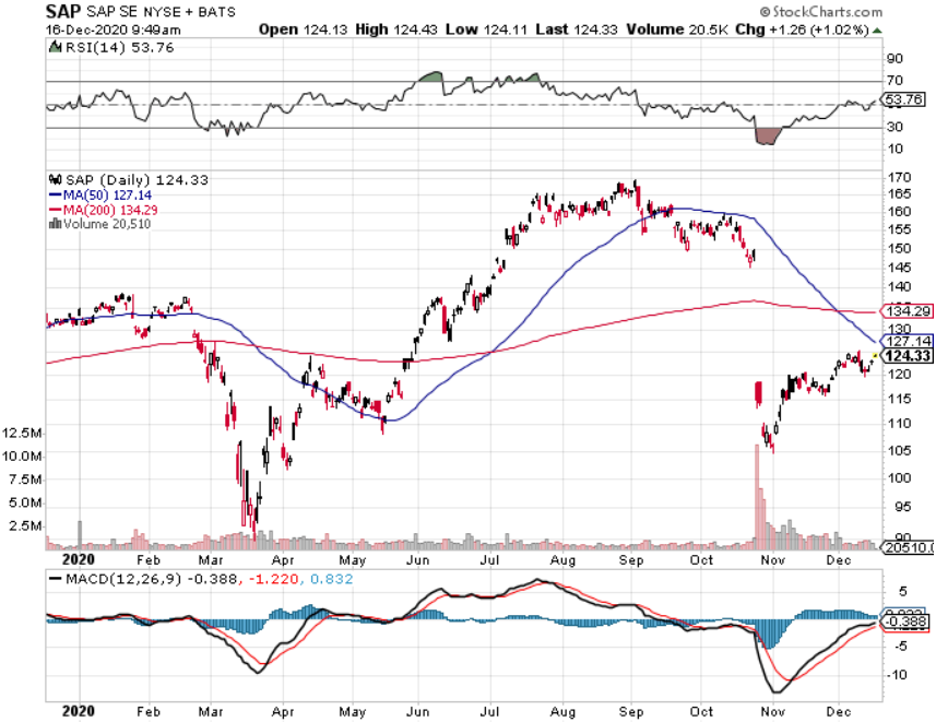
During Bill McDermott’s leadership as CEO, German software firm SAP's market value increased from $39 billion to $156 billion.

No doubt that this experience at SAP paved the way to become one of the fastest-growing major cloud vendors in 2020.

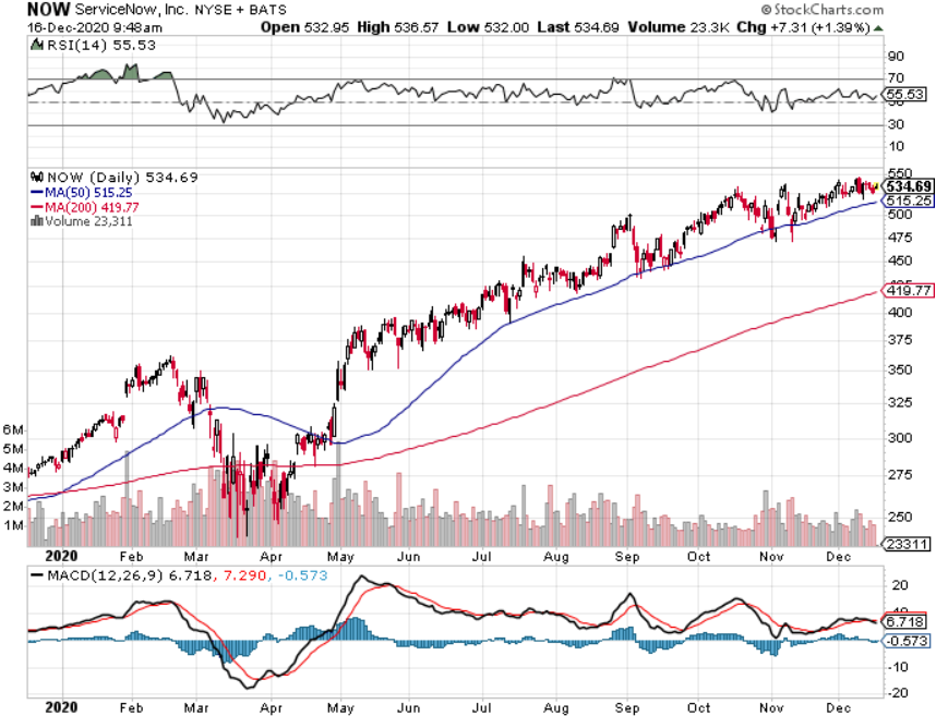
McDermott is now CEO of ServiceNow (NOW), a company that offers specific IT solutions. It allows you to manage projects and workflow, take on essential HR functions, and streamline your customer interaction and customer service. It does all of this, thanks to a comprehensive set of ServiceNow web services, as well as various plug-ins and apps.

Their market value has doubled to $100 billion and this is just the beginning.

ServiceNow almost doesn’t exist after numerous attempts to be acquired, like the time it was almost sold to VMware for $1.5 billion.

Company founder Fred Luddy, who is now chairman, and the board of directors were intrigued by the VMware offer, but venture-capital firm Sequoia Capital argued that $1.5 billion wasn’t a premium at that time let alone market rate for this burgeoning cloud player.

Then-CEO Frank Slootman was eventually replaced by former eBay Inc. (EBAY) CEO John Donahoe in February 2017, who took the company to $3.46 billion in annual 2019 sales.

Donahoe then bolted for Nike Inc. (NKE), and McDermott joined from SAP, locking in the firm for a new era of meteoric growth.

ServiceNow is now on its way to become the defining enterprise-software company of the 21st century and if you look at their position in the market today, they’re the only born-in-the-cloud software company to have surpassed $100 billion market cap without large-scale M&A.

This underdog cloud company whose automation software is deployed to improve productivity is leading to what is known as a “workflow revolution.”

Their set of software tools fused with the sudden emphasis on digital tracking of employees and business systems — has played into ServiceNow’s strengths.

The seismic shift is accelerating: By 2025, most of the millennial generation will work from home permanently, based on internal company reports.

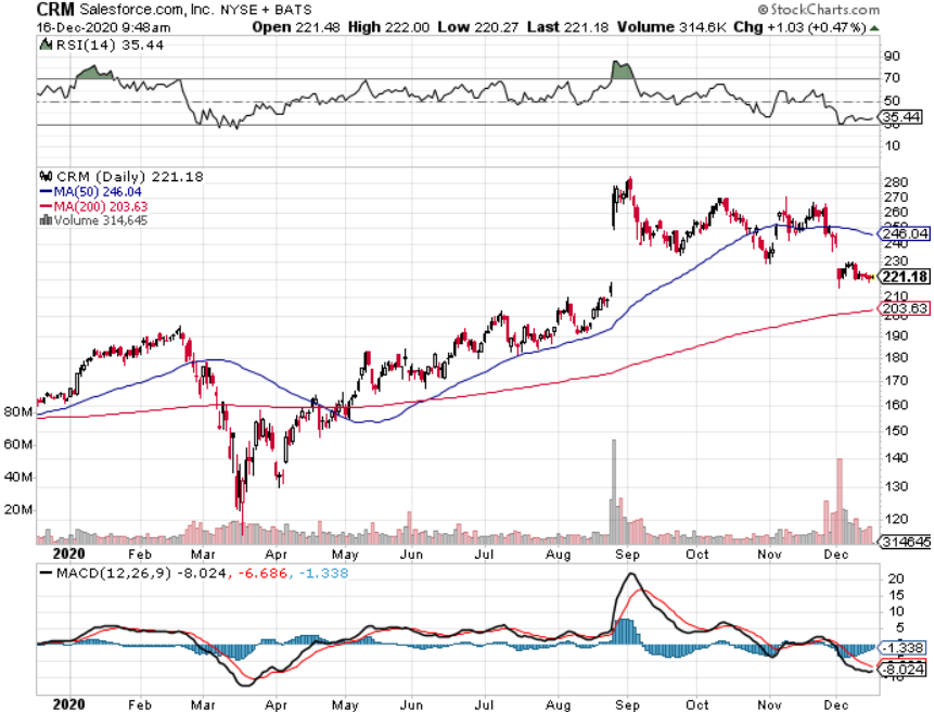
It expects revenue of $4.49 billion in fiscal 2020 and still has a mountain to climb with revenue of just 20% of Salesforce, one-sixth of SAP, and one-ninth of Oracle Corp. (ORCL).

But ServiceNow is catching up as corporations and government agencies pour billions of dollars into their digital infrastructures.

So far, more than $3 trillion has been invested in digital transformation initiatives. Yet only 26% of the investments have delivered meaningful returns on investment.

This is launching the workflow revolution, where ServiceNow is the missing cog that can integrate systems, silos, departments, and processes, all in simple, easy-to-use cross-enterprise workflows.

A demand surge for “workflow automation” technology went parabolic in 2020 and is part of the puzzle helping ServiceNow sustain 25%-plus revenue growth.

ServiceNow most recently raised its full-year guidance after disclosing it has 1,012 customers with more than $1 million in annual contract value, up 25% year-over-year.

That included 41 such transactions in the third quarter, with new customers such as the U.S. Senate and New York City’s Mount Sinai Hospital.

ServiceNow raised guidance for the full year on subscription-revenue range to between $4.257 billion and $4.262 billion, up 31% year-over-year in constant currency.

The company has detailed a goal of $10 billion in annual sales as something feasible in the mid-term and its bevy of strategic relationships will help, like in July, Microsoft Corp. (MSFT) expanded its relationship with ServiceNow; shortly thereafter, Accenture (CAN) and IBM created new business units in partnership with ServiceNow to develop new opportunities.

In March, ServiceNow added a new computing platform, Orlando, that added artificial intelligence and machine learning that lets the MGM Macau casino resort, for example, use a virtual agent to automate and handle repetitive requests.

The integration of virtual agents will supplement casino employees with 24/7 support experiences when human staff is unavailable.

After hitting the $100 billion market cap, McDermott has identified M&A as the catalyst to take NOW higher with the CEO squarely looking at artificial intelligence targets.

ServiceNow has enabled firms to unite front, middle and back office functions, increasing productivity during this time period when speed and simplicity matter the most to digital customers.

I would describe NOW as a baby brother to Salesforce and its entrance into the first and most likely continuous acquisition cycle will most probably result in higher share prices.

ServiceNow turns out to be placed in the perfect position benefitting from Americans moving their careers online with the added effect of the broad-based secular digital migration to remote work.

As long as this firm is generating revenue in the mid-20% annually, it will be a constant buy-the-dip candidate for the foreseeable future regardless of whether there is a pandemic or not.
servicenow

https://madhedgefundtrader.com/wp-content/uploads/2019/05/cropped-mad-hedge-logo-transparent-192x192_f9578834168ba24df3eb53916a12c882.png 0 0 Mad Hedge Fund Trader https://madhedgefundtrader.com/wp-content/uploads/2019/05/cropped-mad-hedge-logo-transparent-192x192_f9578834168ba24df3eb53916a12c882.png Mad Hedge Fund Trader2020-12-16 12:02:122020-12-18 23:18:13The New Salesforce
Mad Hedge Fund Trader

September 23, 2020

Tech Letter


Mad Hedge Technology Letter
September 23, 2020
Fiat Lux

Featured Trade:

(THE HOT CLOUD IPO OF FALL 2020)
(SNOW), (ZM), (ORCL)

https://madhedgefundtrader.com/wp-content/uploads/2019/05/cropped-mad-hedge-logo-transparent-192x192_f9578834168ba24df3eb53916a12c882.png 0 0 Mad Hedge Fund Trader https://madhedgefundtrader.com/wp-content/uploads/2019/05/cropped-mad-hedge-logo-transparent-192x192_f9578834168ba24df3eb53916a12c882.png Mad Hedge Fund Trader2020-09-23 10:04:002020-09-23 10:22:25September 23, 2020
Mad Hedge Fund Trader

The Hot Cloud IPOP of Fall 2020

Tech Letter

The good news is that investors are thirsting for new cloud IPOs boding well for tech firms like Airbnb who plans to go public later this year.

The long-term health of the U.S. tech sector is on solid footing.

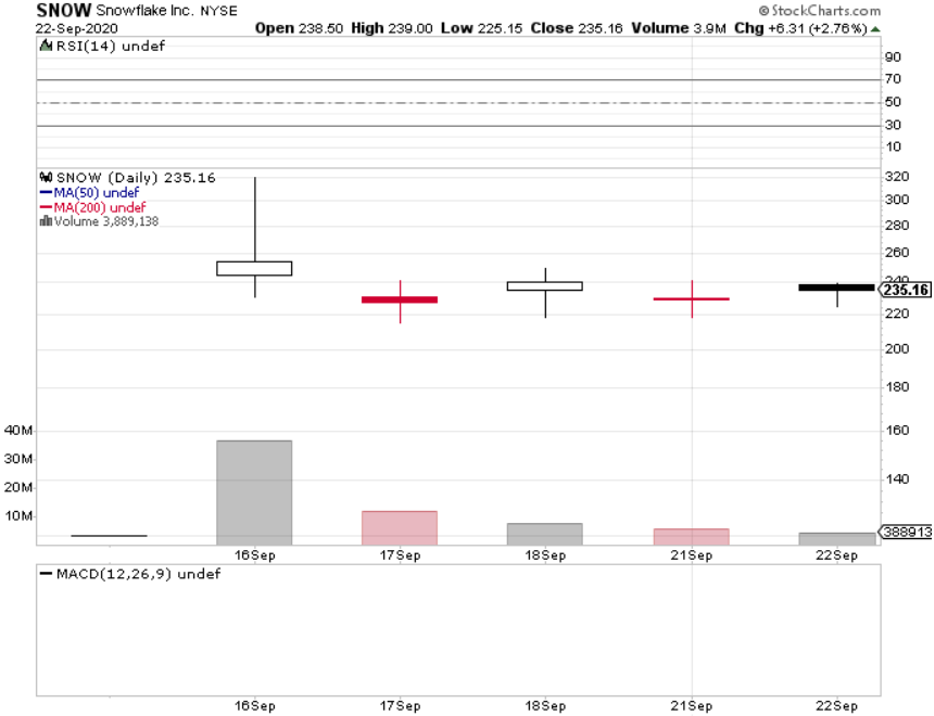
Most recently we had Snowflake (SNOW) who is a cloud provider and has an impressive enterprise business.

The public cloud is the data storage unit which literally everyone stores their operations on that has benefited from a massive wave of digital migration.

Many of the cloud-targeted tech firms of recent years have been 10-baggers and have dominated the overall market's returns.

Typically, these companies trade at high premiums, and rightly so, because of the corresponding growth trajectories and Snowflake is no different.

The stock has doubled after less than half a month as a tradable market-moving instrument.

Even by the standards of the most expensive software companies on the Nasdaq index, Snowflake is not cheap, although it’s a growth monster.  

Snowflake was valued at $12.4 billion in February and even has investor Warren Buffett, the Oracle of Omaha, among its investors.

Buffett dove headfirst into tech investments in Apple and even some Indian fintech firms as well.

Snowflake is the largest software IPO on record and the largest since Uber's $8.1 billion IPO in May 2019.

The firm was striving for a valuation of $20 billion. In total, Snowflake has raised $1.4 billion from investors including Sequoia and Iconiq Capital.

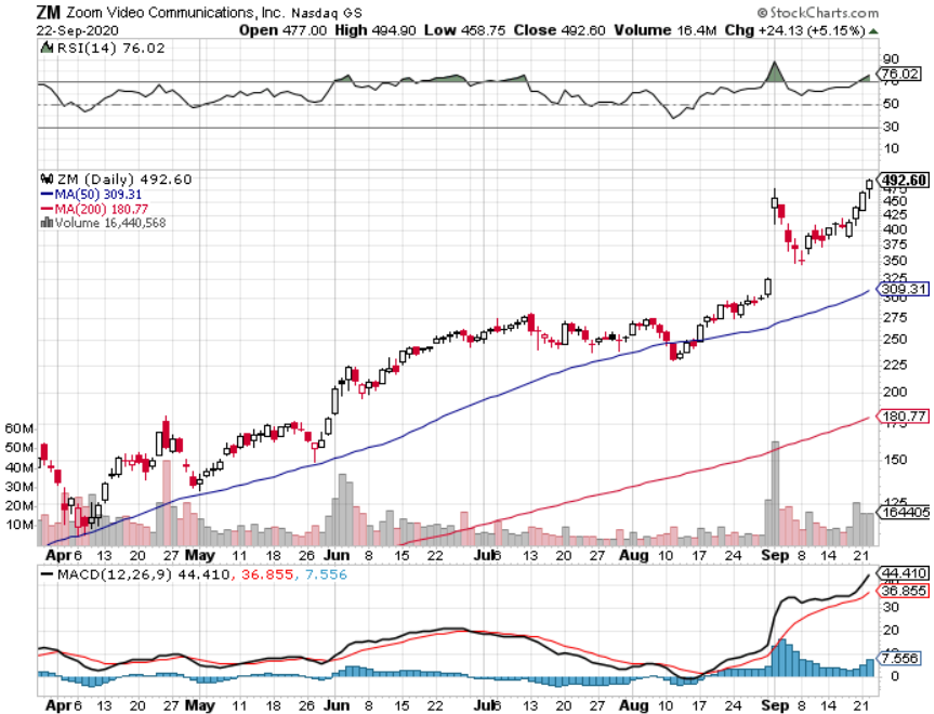
Snowflake even makes the high-flying Zoom (ZM) Video Communications look cheap which is hard to do.

Zoom is growing three times faster than Snowflake, but trades at roughly half of Snowflake's price-to-sales ratio.

Zoom is also profitable, whereas Snowflake is a huge loss maker and that is a staple of many tech startups. This is an economic environment that is more conducive to profit drive companies instead of the tech model of promising future growth.

Snowflake is over four times more expensive than cloud company Datadog.

Snowflake's market is thought to be bigger than most other niche software applications, and therefore it may have a longer runway. In the regulatory filing, Snowflake claimed its total addressable market was around $81 billion.

Along with many other growth companies, Snowflake's ultimate margin potential is still hard to fathom and more passengers are starting to arrive in the sector than drivers.

Even worse, Snowflake not only competes with legacy data warehouse companies such as Oracle (ORCL) and Dell but also with products from the cloud infrastructure company it collaborates with.

Since shares have already doubled, I do believe that investors will need to wait for a pullback to put money to work in Snowflake.

The company said it had about 3,100 customers, including 56 clients that contributed about $1 million in a 12-month period.

Even with the pricey valuations, Snowflake is the pre-eminent cloud listing of the second half of 2020 and its enterprise business is sustainable.

If a broader sell-off drags this name down into the $180s, pull the trigger and start wading into this one.

The stock is currently priced as such that it represents flawless execution quarter after quarter for many years, and they would have to live up to lofty expectations to grow into its valuation.

While the management is stellar and is known for its execution, the odds of Snowflake's stock faltering are high because of the high bar.

Keep this one on your hot list because with all the variables waiting to pull down the market, there will be a time when the price is right in Snowflake.

snowflake


snowflake

https://madhedgefundtrader.com/wp-content/uploads/2019/05/cropped-mad-hedge-logo-transparent-192x192_f9578834168ba24df3eb53916a12c882.png 0 0 Mad Hedge Fund Trader https://madhedgefundtrader.com/wp-content/uploads/2019/05/cropped-mad-hedge-logo-transparent-192x192_f9578834168ba24df3eb53916a12c882.png Mad Hedge Fund Trader2020-09-23 10:02:592020-09-23 19:02:59The Hot Cloud IPOP of Fall 2020
Mad Hedge Fund Trader

August 31, 2020

Tech Letter


Mad Hedge Technology Letter
August 31, 2020
Fiat Lux

Featured Trade:

(WALMART’S QUEST TO BECOME THE NEXT AMAZON)
(WMT), (MSFT), (ORCL), (GOOGL), (AMZN)

https://madhedgefundtrader.com/wp-content/uploads/2019/05/cropped-mad-hedge-logo-transparent-192x192_f9578834168ba24df3eb53916a12c882.png 0 0 Mad Hedge Fund Trader https://madhedgefundtrader.com/wp-content/uploads/2019/05/cropped-mad-hedge-logo-transparent-192x192_f9578834168ba24df3eb53916a12c882.png Mad Hedge Fund Trader2020-08-31 11:04:502020-08-31 17:09:12August 31, 2020
Mad Hedge Fund Trader

Walmart's Quest to Become the Next Amazon

Tech Letter

U.S. tech is about to hit a 10-bagger when TikTok is set to choose between the Microsoft (MSFT)-Walmart hybrid offer or one from Oracle (ORCL) in the next 48 hours.

The network effect that will result from this purchase will be staggering and still underhyped in the mainstream media.

I am on record saying that Walmart is the new Fang, and their ambitions prove it.

Walmart (WMT) wanted to be the majority owner of TikTok, but the U.S. government wanted a technology company to be the lead investor.

I am not sure how that makes sense in an age where every company is a tech company.

Walmart was originally in a consortium with Google (GOOGL) before moving over in recent days to partner with Microsoft (MSFT) when it became clear the retailer would not be able to lead the deal.

Walmart is validating my thesis that it is a hybrid ecommerce company with its last earnings report 2 weeks ago.

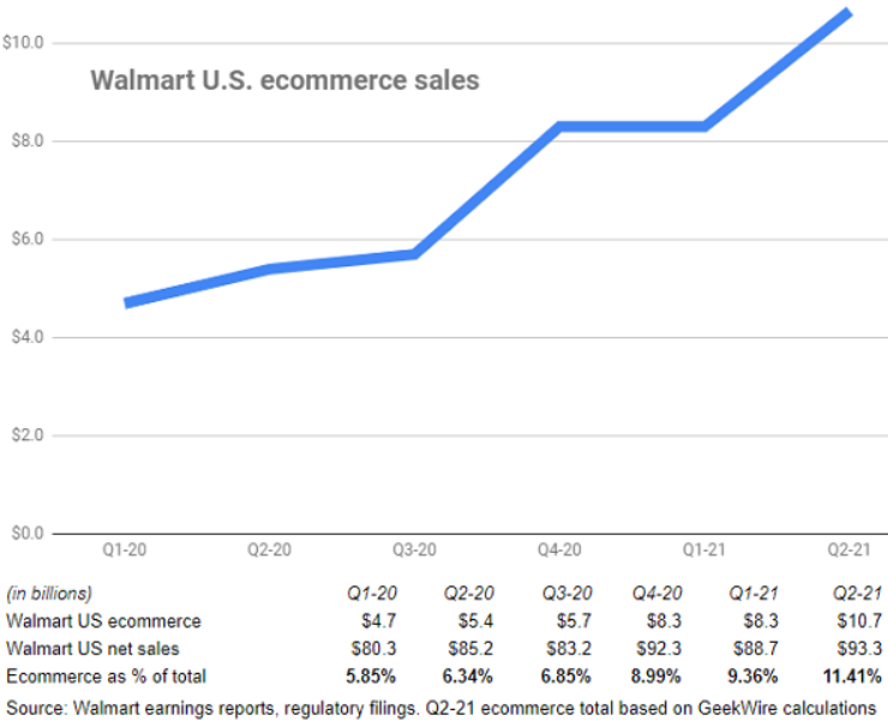
In the company’s Q2 earnings, Walmart reported its U.S. ecommerce sales were up 97% — an increase attributed to more customers shopping online during the pandemic, stocking up on household supplies and shopping for grocery items online.

The TikTok deal first started with Walmart negotiating with SoftBank Chief Operating Officer Marcelo Claure.

SoftBank’s Claure believed Walmart’s all-American image and Google’s cloud computing infrastructure backbone could be a way in for the Japanese technology company.

The deal structure would have had Walmart as the lead buyer, with SoftBank and Alphabet acquiring minority stakes. One or two other minority holders held talks to join too but this ultimately was nixed by the U.S. government.

Walmart’s goal is to become the exclusive e-commerce and payments provider for TikTok and have access to user data to enhance those capabilities.

U.S. national security hawks need to save face by having a thoroughbred U.S. tech company lead the deal to show that this isn’t just about underhanded economic mercantilism.

Google could face significant antitrust opposition if it acquired TikTok’s U.S. assets.

Amazon is out of the picture too for anti-trust worries.

These concerns caused the consortium to crumble last week and led Walmart, which had become increasingly convinced that TikTok fits into its strategy, to partner with Microsoft on a bid instead.

TikTok is pondering which way to go – either the Microsoft-Walmart bid or a rival offer from Oracle. A deal, which is set to value TikTok’s U.S. operations in the $20 billion to $30 billion range, could be completed in the next 48 hours.

What does this mean for Walmart?

Walmart is hellbent on directly competing with Amazon prime for that same ecommerce market.

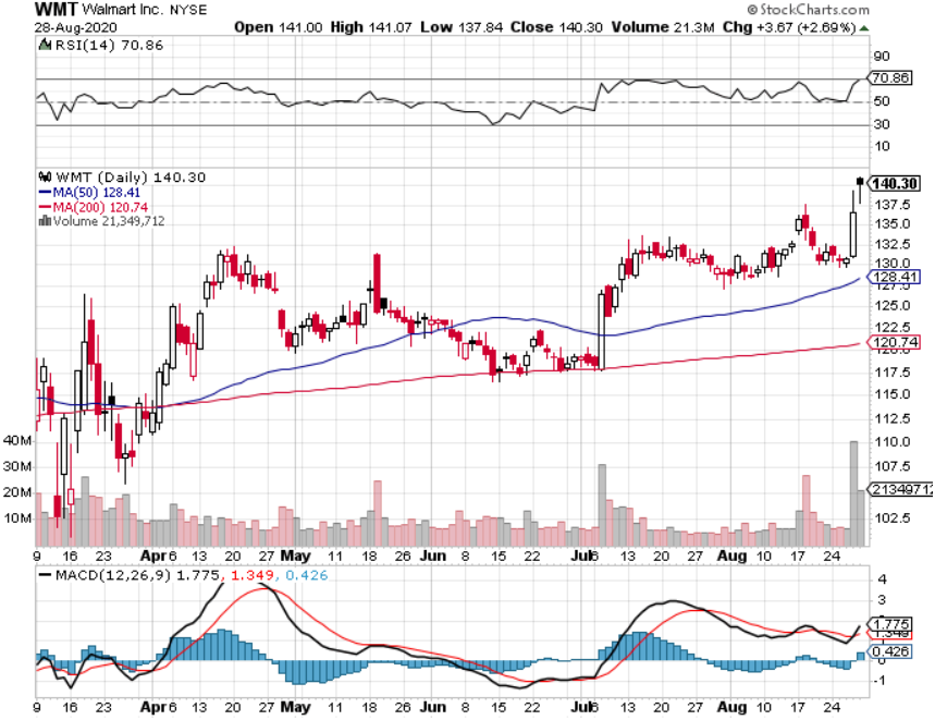
Walmart ecommerce sales now total more than $10 billion in quarterly U.S. ecommerce sales, exceeding 11.4% of the retail giant’s overall U.S. net sales for the first time.

The achievement reflects the ongoing shift toward online shopping amid the pandemic, and the increasingly fuzzy line between online and physical retail sales. It is also an example of the pandemic accelerating the shift to digital commerce at traditional brick-and-mortar retailers.

The timing isn’t a coincidence with Walmart on the verge of rolling out its own Amazon Prime service dubbed Walmart+.

Walmart’s new membership program is expected to cost $98/year, competing with Amazon’s $119/year Prime membership.

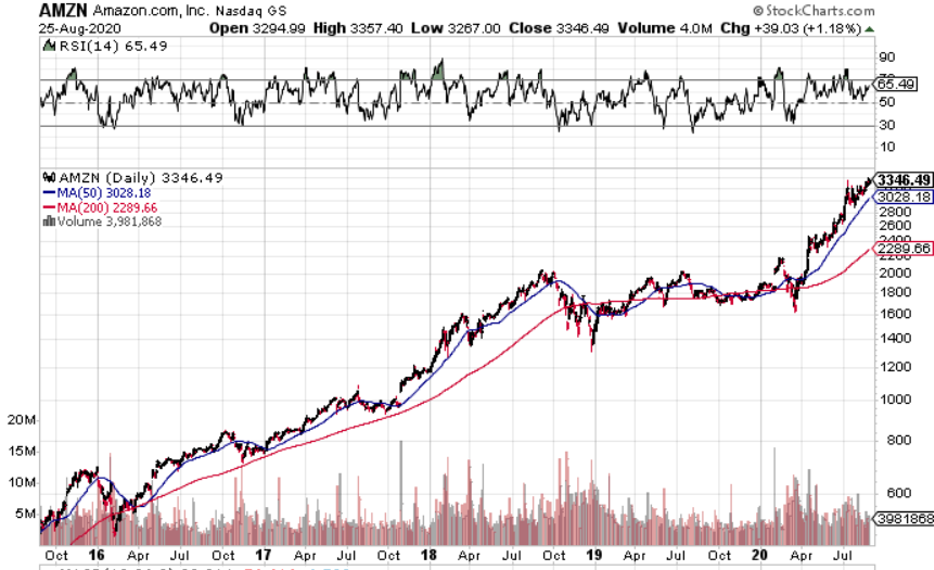
Amazon’s global online sales are 4.5X larger than Walmart’s at $45.9 billion for the quarter, up nearly 50%, and its physical retail sales were $3.8 billion, down 13% from the same period a year ago.

Walmart has significant headway to make before it comes close to Amazon Prime but there are fertile pastures in front of them, meaning I believe Walmart is a conviction buy at these levels.

At the bare minimum, this is a conspicuous sign of intent for Walmart that has successfully turned around the titanic and is a real time player in ecommerce.

They will be on the prowl for other tech purchases in the future as well as they certainly have the cash flow to pull the trigger on adding more tech talent to the lineup.

If Walmart reels in TikTok, I recommend long-term investors to buy Walmart as a tech growth asset and it is easily a $200 stock.

walmart ecommerce


https://madhedgefundtrader.com/wp-content/uploads/2019/05/cropped-mad-hedge-logo-transparent-192x192_f9578834168ba24df3eb53916a12c882.png 0 0 Mad Hedge Fund Trader https://madhedgefundtrader.com/wp-content/uploads/2019/05/cropped-mad-hedge-logo-transparent-192x192_f9578834168ba24df3eb53916a12c882.png Mad Hedge Fund Trader2020-08-31 11:02:002020-08-31 22:03:52Walmart's Quest to Become the Next Amazon
Mad Hedge Fund Trader

August 26, 2020

Tech Letter


Mad Hedge Technology Letter
August 26, 2020
Fiat Lux

Featured Trade:

(THE EMPTY PIPELINE OF TECH INNOVATION)
(AAPL), (FB), (AMZN), (GOOGL), (NFLX), (TSLA), (SNAP), (MSFT), (ORCL), (TWTR)

https://madhedgefundtrader.com/wp-content/uploads/2019/05/cropped-mad-hedge-logo-transparent-192x192_f9578834168ba24df3eb53916a12c882.png 0 0 Mad Hedge Fund Trader https://madhedgefundtrader.com/wp-content/uploads/2019/05/cropped-mad-hedge-logo-transparent-192x192_f9578834168ba24df3eb53916a12c882.png Mad Hedge Fund Trader2020-08-26 11:04:292020-08-26 12:21:49August 26, 2020
Mad Hedge Fund Trader

The Empty Pipeline of Tech Innovation

Tech Letter

The oligarchical regime of Northern Californian tech companies stopped innovating because they don’t have to.

When you have a monopoly – you have one objective – to crush anything that remotely resembles competition.

That has been happening for years now by the Silicon Valley oligarchs and the government still hasn’t taken their finger out to do much about it.

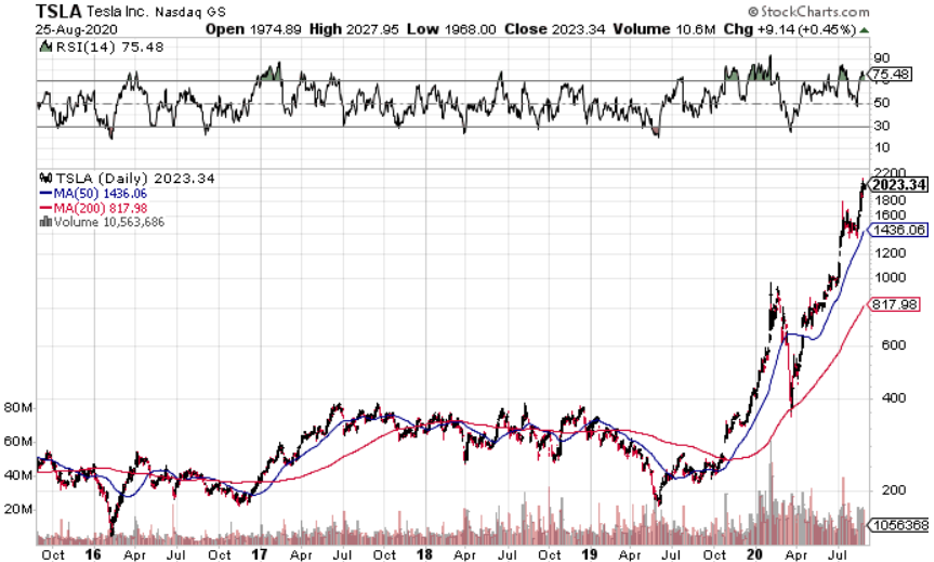
Honestly, my bet is that most of U.S. Congress own stock portfolios and these portfolios are spearheaded by the likes of Apple (AAPL), Facebook (FB), Amazon (AMZN), Google (GOOGL), Netflix (NFLX), and possibly even Tesla (TSLA), if they want a little growth.

It’s a direct conflict of interest, but that's not surprising for politics in 2020, is it?

The government likes to jawbone to the public saying they will make competition a level playing field, but actions show they are doing the opposite.

The Silicon Valley oligarchs are whispering in the ear of Congress and they listen.

Who would want Congress to lose money in their retirement portfolios, right?

Well, what now?

Fast forward to the future - mid-September, TikTok — the Chinese-owned, video-sharing phenomenon — MUST sell its U.S. operations.

Given the app’s 100 million U.S. users, this forced divestment by President Trump has triggered a delirious auction now pitting tech giants Microsoft (MSFT), Oracle (ORCL), and Twitter (TWTR) against one another.

The White House and Big Tech are boiling the free for all down to a combined story of national security and opportunistic capitalism amid unfortunate geopolitical tension between the U.S. and China.

But the ultimatum to ByteDance, TikTok’s owner, is more accurately understood as a dark window into Silicon Valley’s utter failure to innovate, and a warning signal of its transformation into a mere protector of long-established turf.

Silicon Valley has long adhered to the motto, “Move fast and break things” – but that was long ago when Steve Jobs was busy making the first iPhone.

The truth is Silicon Valley couldn’t be more corporate than it is now, and they use the corporate machine to serve the ends they desire.

Big Tech is just in love with buybacks like the rest of corporate America and the only reason they avoid it now is to appear as if they are in tune with public discourse and not tone deaf.

Huawei, another punching bag of the Trump administration’s tech war with China, best foreshadowed the optics.

In remarks to reporters in March 2019, Chinese politician Guo Ping said, “The U.S. government has a loser’s attitude. They want to smear Huawei because they can’t compete with us.”

ByteDance produced the hottest new social media platform on a global scale, and Facebook, in typical fashion, responded by brazenly copying TikTok, adding a feature called Reels to Instagram.

Don’t forget that Mark Zuckerberg has been attempting to destroy Snapchat (SNAP) for years after CEO Evan Spiegel refused to sell it to Zuckerberg.

The rest of the tech ecosphere has turned a blind eye to the anti-trust violations because they don’t want to be the next takeout target.

Make no bones about it, Silicon Valley, with the help of the Trump administration, is about to do a smash and grab job on China’s best tech growth asset.

This cunning maneuver alone has the knock-on effect of not only extending the tech rally in U.S. public markets but increasing the scarcity value and emboldening the Silicon Valley oligarchs.

I’m all about good deals and robbing Chinese tech in broad daylight is overwhelmingly bullish for the U.S. tech sector.

Imagine adding another Instagram to the appendage of an already mammoth tech company.

So why innovate? Why deploy capital into research and development when you can just nick a foreign company's crown jewel?

Even if you hate Silicon Valley at a personal level, it is literally impossible to short them, and now they are resorting to stealing companies, what other passes will government, society, and corporate America give American tech?

In either case, it’s not for me to judge, and as a technology analyst - I am bullish U.S. tech.

Silicon Valley tech


https://madhedgefundtrader.com/wp-content/uploads/2019/05/cropped-mad-hedge-logo-transparent-192x192_f9578834168ba24df3eb53916a12c882.png 0 0 Mad Hedge Fund Trader https://madhedgefundtrader.com/wp-content/uploads/2019/05/cropped-mad-hedge-logo-transparent-192x192_f9578834168ba24df3eb53916a12c882.png Mad Hedge Fund Trader2020-08-26 11:02:272020-08-26 19:29:16The Empty Pipeline of Tech Innovation
Mad Hedge Fund Trader

May 23, 2019

Tech Letter

Mad Hedge Technology Letter
May 23, 2019
Fiat Lux

Featured Trade:

(ANOTHER 5G PLAY TO LOOK AT)
(EQIX), (CSCO), (GOOGL), (MSFT), (ORCL)

https://madhedgefundtrader.com/wp-content/uploads/2019/05/cropped-mad-hedge-logo-transparent-192x192_f9578834168ba24df3eb53916a12c882.png 0 0 Mad Hedge Fund Trader https://madhedgefundtrader.com/wp-content/uploads/2019/05/cropped-mad-hedge-logo-transparent-192x192_f9578834168ba24df3eb53916a12c882.png Mad Hedge Fund Trader2019-05-23 04:04:392019-07-11 13:03:02May 23, 2019
Mad Hedge Fund Trader

Another 5G Play to Look At

Tech Letter

One of the seismic outcomes from the upcoming rollout of 5G is the plethora of generated data and data storage that will be needed from it.

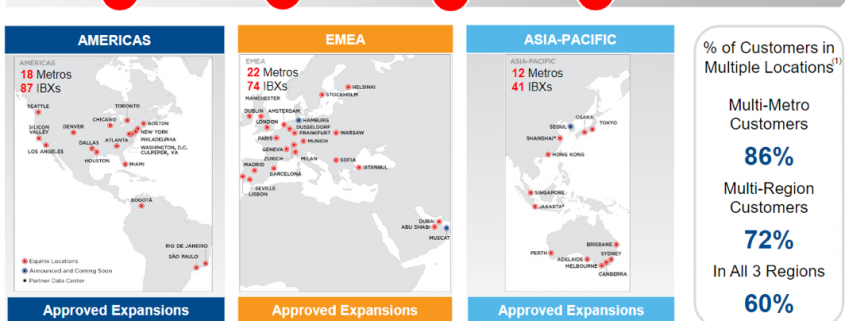
If you are a cloud purist and want to bet the ranch on data being the new oil, then look no further than Equinix (EQIX) who connects the world's leading businesses to their customers, employees, and partners inside the most-interconnected data centers.

On this global platform for digital business, companies come together worldwide on five continents to reach everywhere, interconnect everyone and integrate everything they need to reap a digital windfall.

And whether we like it or not, the future will be more interconnected than ever because of the explosion of data and the 5G that harnesses the data will allow business to reach across the globe and expand their addressable audience.

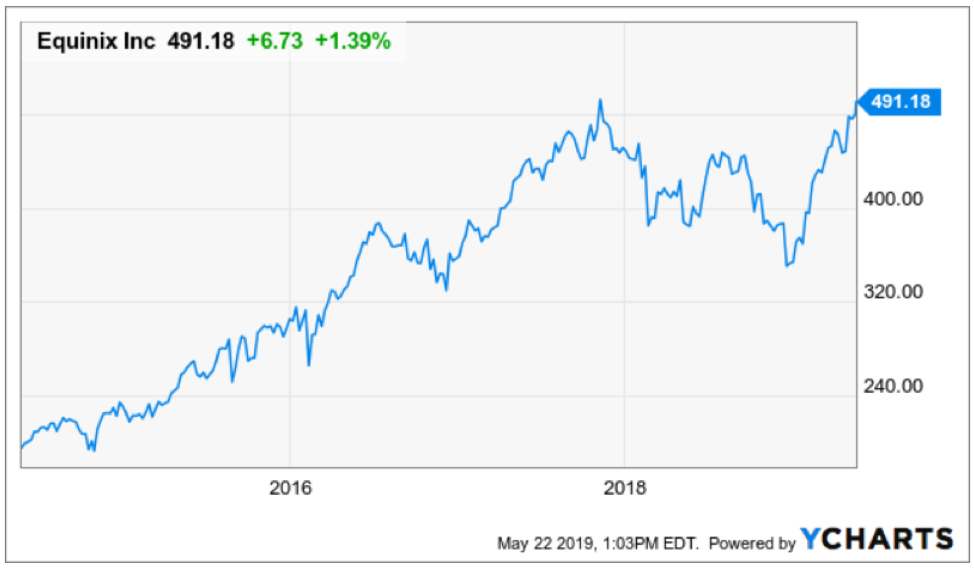
The stock has reacted like you would have thought with a victorious swing up after a tumultuous last winter.

The cherry on top was the positive earnings report earlier this month.

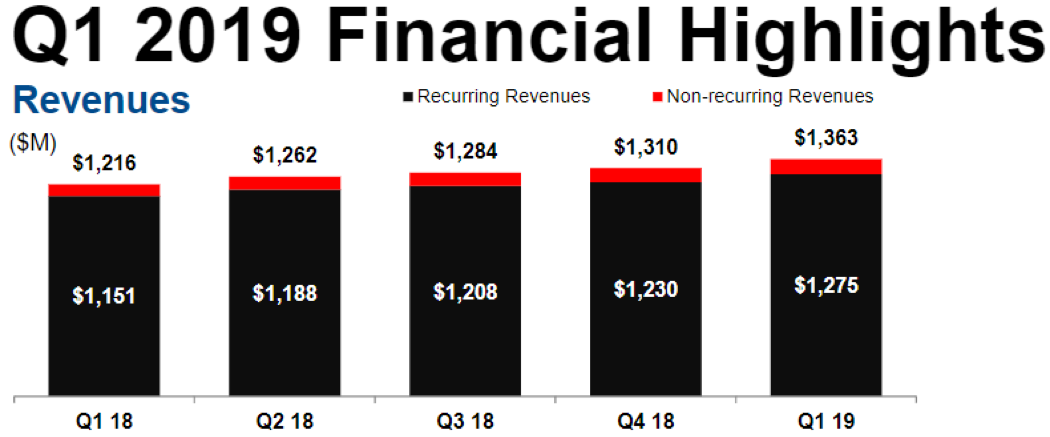
The highlights were impressive and plentiful with revenues for Q1 coming in at $1.36 billion, up 11% year-over-year meaningfully ahead of management expectations.

Equinix’s market-leading interconnection franchise is performing well, with revenues continuing to outpace colocation, growing 12% year-over-year, as the cloud ecosystem continues to scale.

Penetration in “lighthouse accounts” or early adopters increased nearly 50% from the Fortune 500 and 35% from the Global 2,000 demonstrating the expanding opportunity as Equinix unearths more value from the enterprise industry.

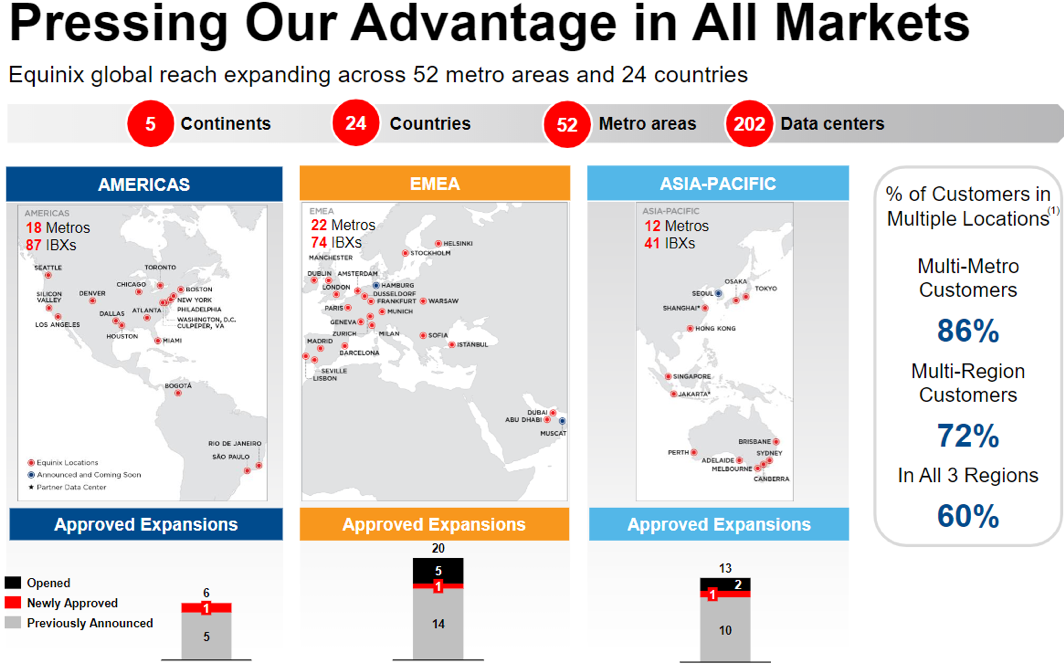
Equinix is now the market leader in 16 out of the 24 countries in which they operate, and they’re expanding its platform with 32 projects announced across 27 markets, with Q1 openings in Frankfurt, Hong Kong, London, Paris, and Shanghai.

Equinix’s network vertical experienced solid bookings led by strength in Access Point (AP), which is a hardware device or a computer's software that acts as a communication hub for users of a wireless device to connect to a wired LAN.

APs are important for providing heightened wireless security and for extending the physical range of service a wireless user has access to and driven by major telecommunication companies, mobile operators, and NSP resale.

Expansions this quarter include Hutchison, a leading British mobile network operator upgrading their infrastructure to support 5G and cloud services, as well as a leading Asian communication provider, migrating subsea cable notes and connecting to ECX Fabric for low latency.

Equinix’s financial services vertical experienced record bookings led by Europe, the Middle East and Africa (EMEA) and rapid growth in insurance and banking.

New contracts include a fortune 500 Global insurer transforming IT delivery with a cloud-first strategy, a top three auto insurer transforming network topology while securely connecting to multiple clouds, and one of the largest global payment and technology companies optimizing their corporate and commercial networks.

Demand in the social media sub-segment as providers are hellbent on improving user experience and expanding the scope of their business models.

Equinix’s gaming and e-commerce sub-segment grew the fastest year-over-year led by customers, including Tencent, neighbor, and roadblocks.

Cloud and IT verticals also captured strong bookings led by SaaS as the cloud diversifies towards a hybrid multi-cloud architecture.

A robust pipeline can be rejoiced around as cloud service providers continue to push to new frontiers and roll out additional services.

Developments include a leading SaaS provider expanding to support growth in new markets and with the Federal Government as well as an AI-powered commerce platform upgrading to enhance user experience support a rapidly growing customer base.

As digital transformation accelerates, the enterprise vertical continues to be Equinix’s sweet spot led by healthcare, legal and travel sub-segments this quarter and main catalysts to why I keep recommending reader into enterprise software companies.

The chips are being counted with new contracts from Air Canada, a top five North American airline deploying a hybrid multi-cloud strategy, Space X deploying infrastructure to interconnect dense network and partner ecosystems and one of the big four audit firms regenerating networks and interconnecting to multi-cloud to improve the user experience for both employees and clients.

Channel bookings also registered continued strength delivering over 20% of bookings with accelerated growth rates selling to Equinix’s key cloud players and technology alliance partners, including Cisco (CSCO), Google (GOOGL), Microsoft (MSFT), and Oracle (ORCL).

New channel wins this quarter includes a win with Anixter for a leading French transportation and freight logistics company deploying mobility platform, as well as a win with AT&T for a top-five U.S. Bank accessing our network and cloud provider.

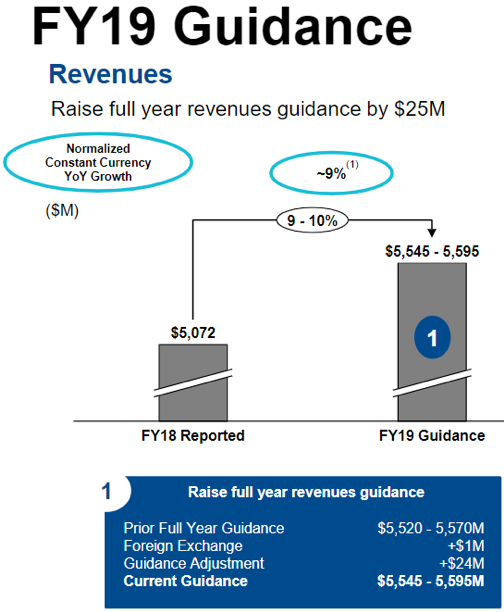
Management signaled to investors they are expecting a great year with full-year revenue guidance of $5.6B, a 9-10% year-over-year boost and a $25M revision from the previous guidance.

Equinix can boast 65 consecutive quarters of increasing revenues, which eclipses every other company in the S&P 500, and it anticipates 8%-10% in annual revenue growth through 2022.

This is an incredibly stable yet growing business and the 2.17% dividend yield, although not the highest, is another sign of a healthy balance sheet for a profitable company.

If you had any concerns about this stock, then just take a look at its 3-year EPS growth rate of 73% which should tell you that the massive operational scale of Equinix is starting to allow efficiencies to take hold dropping revenue straight down to the bottom line.

If you are searching for a company that cuts across every nook and cranny of the tech sector by taking advantage of the unifying demand and storage requirements of big data, then this is the perfect company for you.

This company will only become more vital once 5G goes online and being the global wizards of the data center will mean the stock goes higher in the long-term.


https://www.madhedgefundtrader.com/wp-content/uploads/2019/05/equinix-advantage.png 672 1064 Mad Hedge Fund Trader https://madhedgefundtrader.com/wp-content/uploads/2019/05/cropped-mad-hedge-logo-transparent-192x192_f9578834168ba24df3eb53916a12c882.png Mad Hedge Fund Trader2019-05-23 04:02:052019-07-11 13:03:16Another 5G Play to Look At
Mad Hedge Fund Trader

May 16, 2019

Tech Letter

Mad Hedge Technology Letter
May 16, 2019
Fiat Lux

Featured Trade:

(WHY YOU SHOULD AVOID INTEL)
(INTC), (QCOM), (ORCL), (WDC)

https://madhedgefundtrader.com/wp-content/uploads/2019/05/cropped-mad-hedge-logo-transparent-192x192_f9578834168ba24df3eb53916a12c882.png 0 0 Mad Hedge Fund Trader https://madhedgefundtrader.com/wp-content/uploads/2019/05/cropped-mad-hedge-logo-transparent-192x192_f9578834168ba24df3eb53916a12c882.png Mad Hedge Fund Trader2019-05-16 01:04:432019-07-11 13:12:19May 16, 2019
Page 4 of 7«‹23456›»

tastytrade, Inc. (“tastytrade”) has entered into a Marketing Agreement with Mad Hedge Fund Trader (“Marketing Agent”) whereby tastytrade pays compensation to Marketing Agent to recommend tastytrade’s brokerage services. The existence of this Marketing Agreement should not be deemed as an endorsement or recommendation of Marketing Agent by tastytrade and/or any of its affiliated companies. Neither tastytrade nor any of its affiliated companies is responsible for the privacy practices of Marketing Agent or this website. tastytrade does not warrant the accuracy or content of the products or services offered by Marketing Agent or this website. Marketing Agent is independent and is not an affiliate of tastytrade. 

Legal Disclaimer

There is a very high degree of risk involved in trading. Past results are not indicative of future returns. MadHedgeFundTrader.com and all individuals affiliated with this site assume no responsibilities for your trading and investment results. The indicators, strategies, columns, articles and all other features are for educational purposes only and should not be construed as investment advice. Information for futures trading observations are obtained from sources believed to be reliable, but we do not warrant its completeness or accuracy, or warrant any results from the use of the information. Your use of the trading observations is entirely at your own risk and it is your sole responsibility to evaluate the accuracy, completeness and usefulness of the information. You must assess the risk of any trade with your broker and make your own independent decisions regarding any securities mentioned herein. Affiliates of MadHedgeFundTrader.com may have a position or effect transactions in the securities described herein (or options thereon) and/or otherwise employ trading strategies that may be consistent or inconsistent with the provided strategies.

Copyright © 2026. Mad Hedge Fund Trader. All Rights Reserved. support@madhedgefundtrader.com
Scroll to top