Below please find subscribers’ Q&A for the March 8 Mad Hedge Fund Trader Global Strategy Webinar, broadcast from Incline Village, CA.
Q: Do you think the US dollar will drop this year?
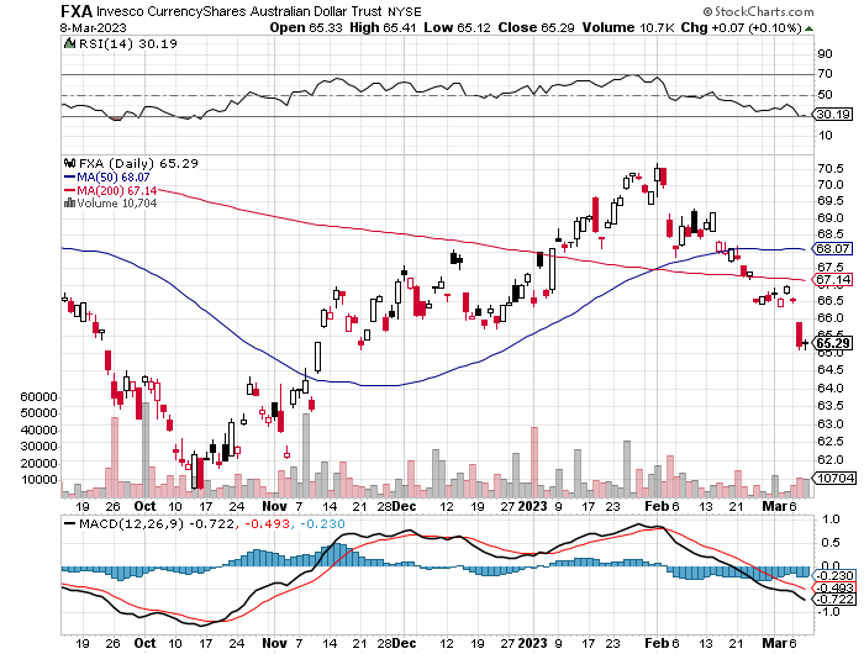
A: Absolutely it will drop; in fact, the drop started in October last year. We’re actually six months into a bear market for the US dollar (UUP), and bull market for the yen (FXY), the British pound (FXB), the euro (FXE), and the Australian dollar (FXA). However, the rate-cutting scenario is on vacation, and when it comes back from that vacation, then we will see very sharply dropping interest rates, soaring bond prices, and a weak dollar. That scenario is certain to happen by year-end, probably by 10 or 20% —quite a lot. If you just want to buy the basket for foreign currencies, you can sell short the Invesco DB US Dollar Index Bullish Fund (UUP).
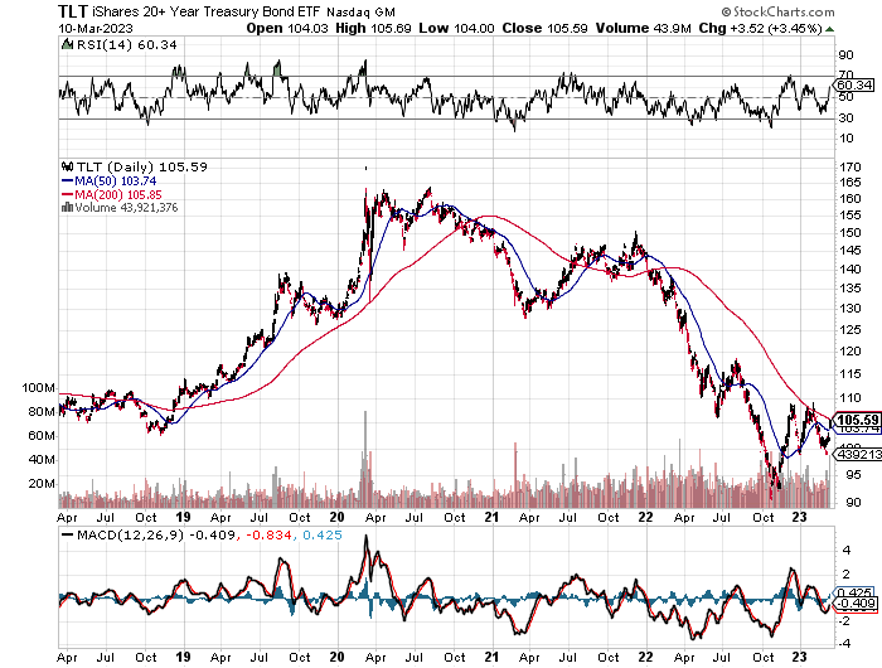
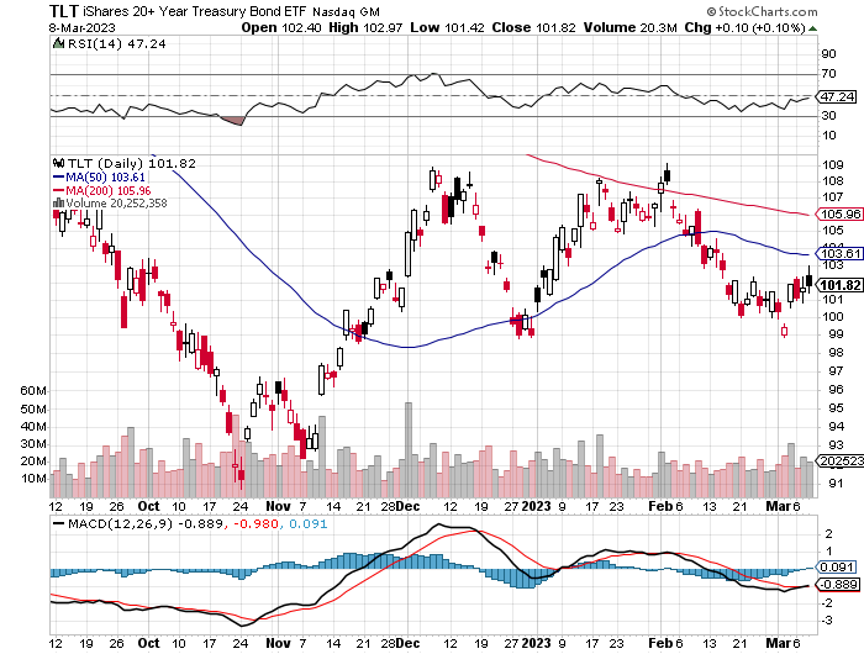
Q: Can stocks (SPY) and bonds (TLT) go up at the same time?
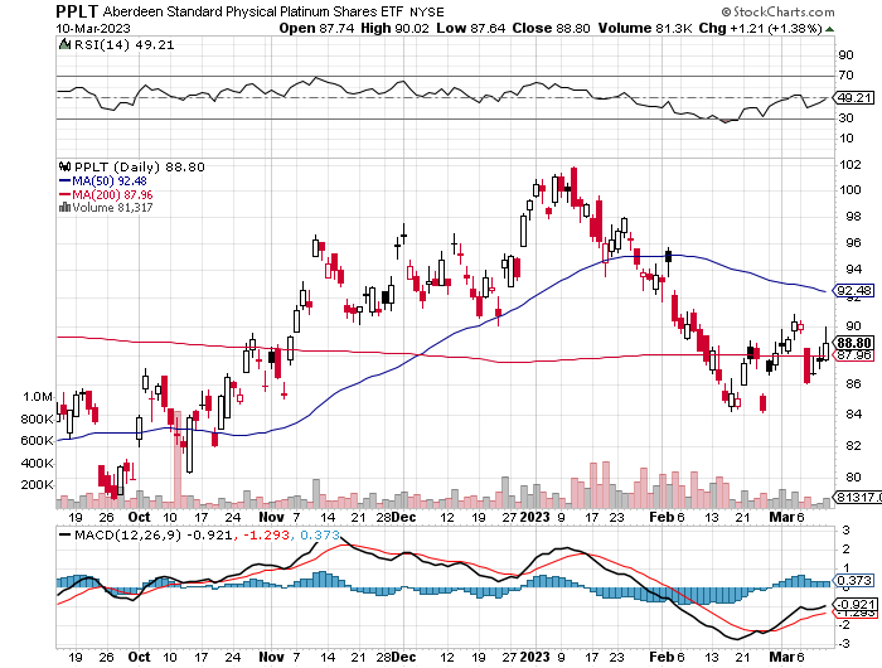
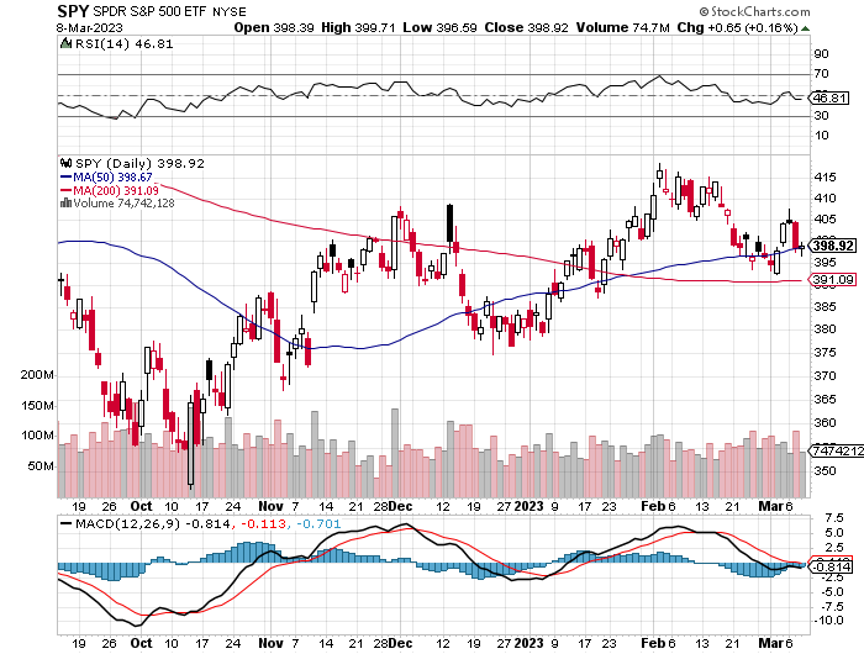
A: Well, they shouldn’t, and usually they don’t. But this time it’s different now because we’re all beholden to the interest rate decisions of the Fed. All asset classes are moving together like synchronized swimmers, which means that on days when the market believes that Powell is finished raising rates, you get big bull moves in stocks, bonds, commodities, precious metals, and beanie baby collectibles. And on the bad days like yesterday, where Powell really reiterates how tough his stance is on inflation is unchanged, everything falls in unison. It’s really become a liquidity/confidence/inflation on-off type market. We have been playing that like a maestro for the last six months and have made a ton of money. I hope it continues that way. “If it’s working, don’t fix it” is my philosophy on trading, which is constantly changing.
Q: Do small caps underperform or overperform in a rising rates era?
A: They always do poorly because small caps have fewer cash reserves, more leverage, and more exposure to interest rates, as opposed to large caps which, in the tech area, don’t borrow at all. They’re actually net creditors to the system so they make more money when interest rates go up. I imagine the interest income at Apple this year has to be absolutely gigantic. That said, small caps always lead recoveries because of their excess leverage, so that's why people are piling into small caps on dips right now. Going from terrible to just bad often generates the best stock returns.
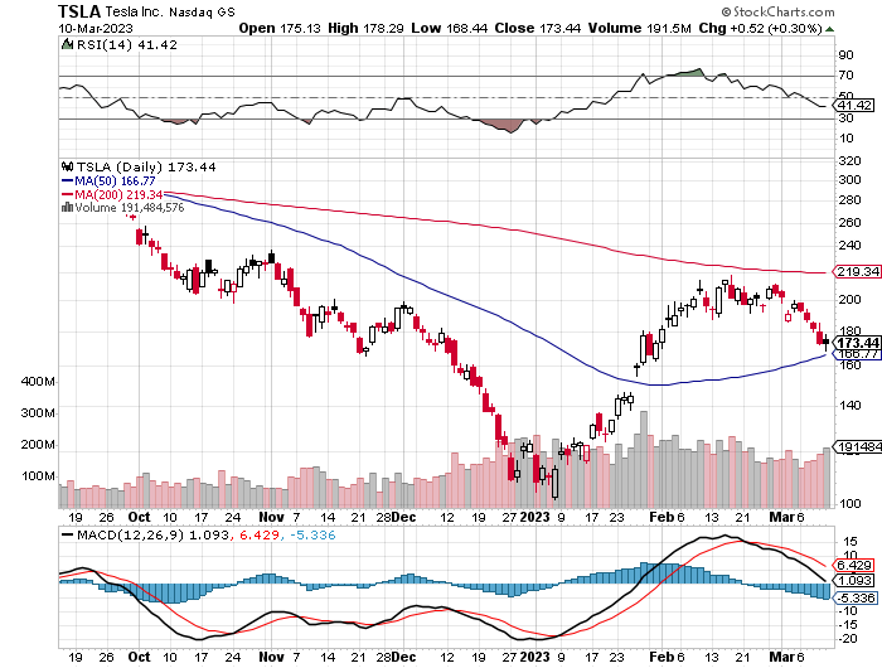
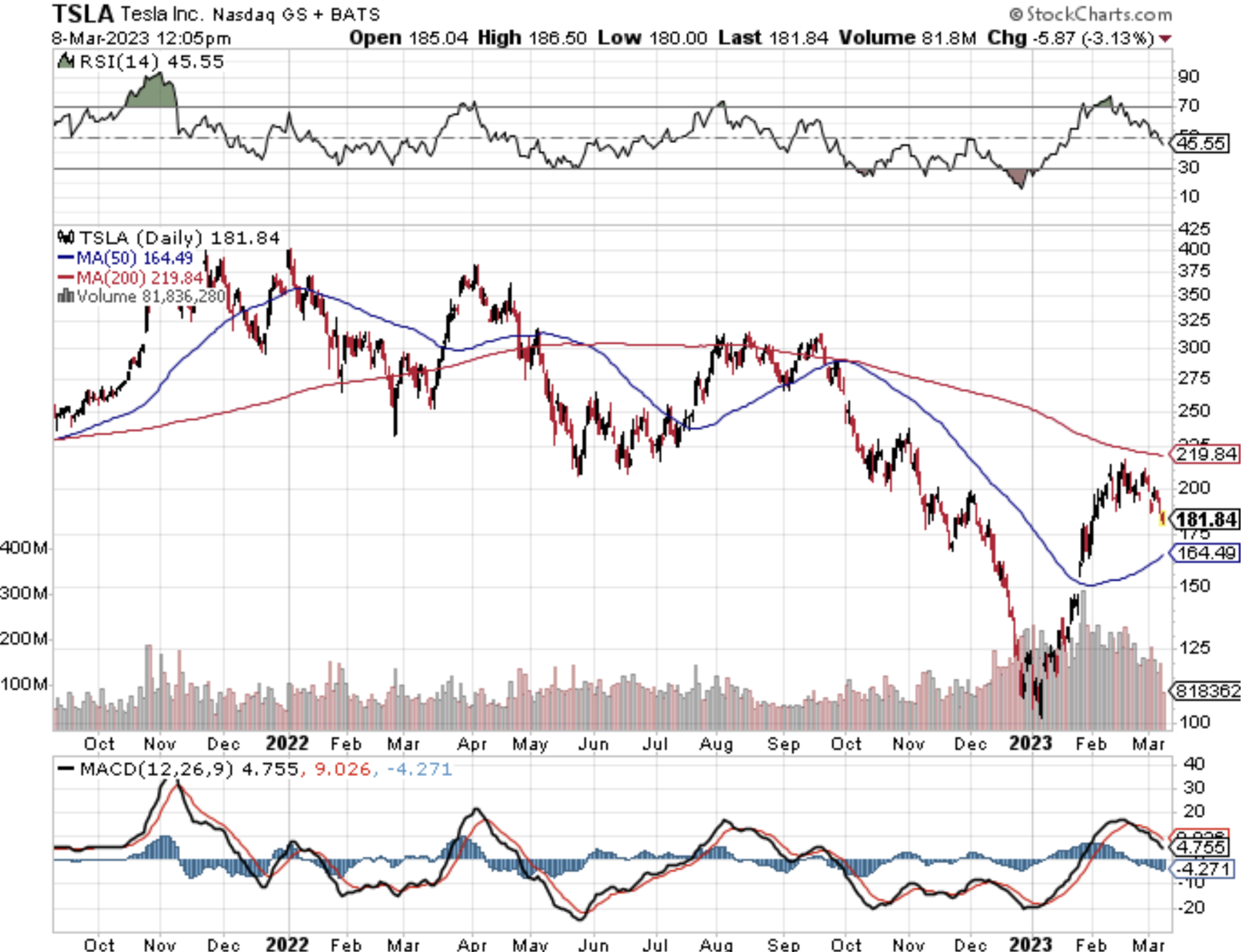
Q: How long will “steering wheel falling off” news tank Tesla?
A: Well, it was worth a $6 dollar drop today in an otherwise weak market. First of all, if there are any actual problems with Tesla, they fix them immediately for free, and most of the fixes can be done with a software upgrade which they do at midnight the day of the recall. Second, a lot of these stories about Tesla problems are false, planted there by the oil industry, trying to head off their own demise. Third, when you go from making several thousand to several million cars a year, scaling up to mass production always uncovers some sort of manufacturing flaws. Tesla can fix them faster than anyone else. I remember when the first Model S came out 13 years ago, we had a hot day and all the sealants on the windows melted. They said they didn’t know because it doesn’t get that hot in Fremont California where they build the cars. They sent out a truck the next day and installed all new sealants on our windows. So that is part of living with Tesla, which seems bent on taking over the world. And I’m working on a major update on Tesla report. I listened to the whole 3.5-hour investors day, and I'll get that out when I get all the snow shoveled. Full disclosure: Elon Musk personally gave me a free $12,800 Tesla Powerwall three years ago. It’s the red one.
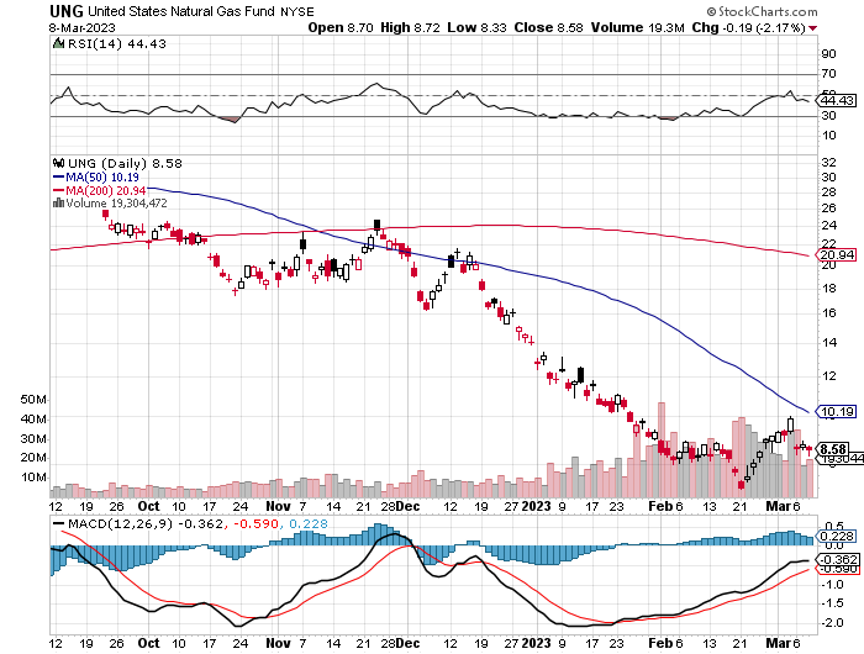
Q: I just bought the United States Natural Gas Fund (UNG) 14/15 2025 LEAP for $0.20 with UNG down 3%.
A: I’m going to share that LEAPS with all the Global Trading Dispatch members tomorrow. So far, only the Mad Hedge Concierge members have seen it. We’ll go into great detail in tomorrow’s letter about why you want to buy natural gas here and how you want to play it.
Q: It seems the Fed won’t be happy unless there’s a recession; am I reading this wrong?
A: I think Powell is striving for perfection—killing off inflation and lowering interest rates without a recession. I actually am hoping for a recession myself, even if it’s just for one quarter because that greatly increases market volatility and makes my bond long look like a stroke of genius. And let’s see if he can pull it off. He’s coming facing so many unprecedented challenges to the economy, like the pandemic, the end of liquidity, and the extreme worker shortage. It’ll be really interesting to see what happens. Multiple PhD theses in economics begging to be addressed in there.
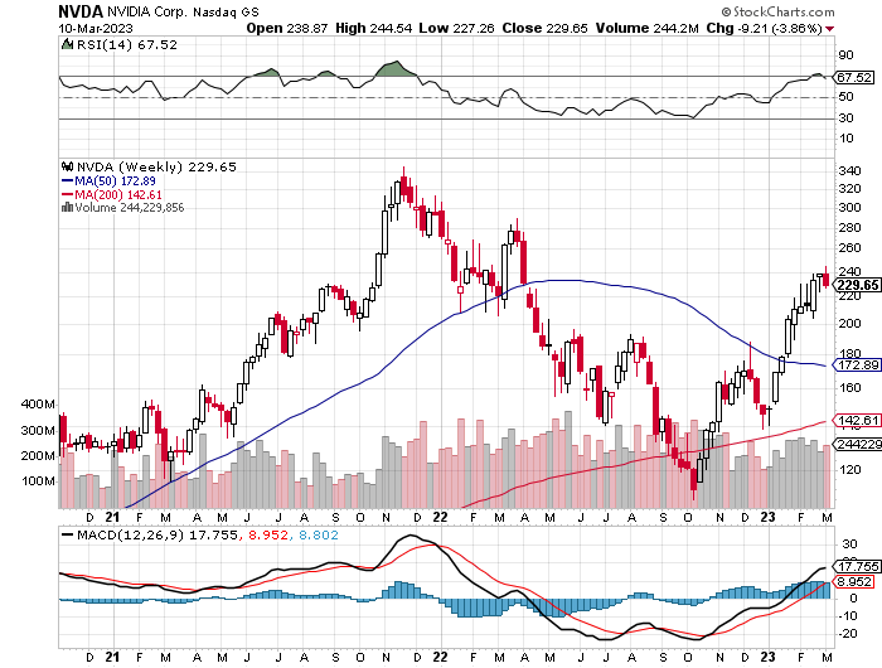
Q: Will artificial intelligence cause another bubble?
A: Absolutely, yes. And if you’ve been in the market long enough, you become a bubble collector like me. Just off the top of my head, 3D printing, cold fusion, bitcoin, portfolio insurance, Nifty 50, eyeballs,—if I spent more time, I could come up with an endless list. And this is how Wall Street makes their money—they create bubbles by manufacturing compelling, irresistible stories that can be sold to the masses. Some of these like cold fusion, I know immediately won’t work for 20 years because of my physics background, and definitely not now. Some of these other ones are just flashes in the pan and never work. You just get used to an endless series of bubbles. AI is new only if you haven’t been watching. The share prices of Google, Amazon, Apple, have already had gigantic moves in the last 20 years, largely because of their use of artificial intelligence. So those are your plays—those and (NVDA), which provides the essential chips for artificial intelligence, and we’re active in all of these, both on the long and short side.
Q: Is climate change a hoax or a bubble?
A: If you think it’s a hoax, will you please come over to Incline Village and get the 12 feet of snow off my damn roof before the house collapses. I already can’t close any doors in the house because the weight of the snow is buckling the house and bending the door frames. If you finish the roof, then you can get to work on my deck which also has about 8 ft of snow and is at risk of collapsing, like many in town already have. This has never happened before. The climate has changed.
Q: How come there’s never mention of demographic shift in other parts of the world when there is in the US?
A: The US is the only country in the world where you can earn enough money to retire early. If you live on the coasts, you can sell your house for cash, move inland and never work again, no matter your age. There is no other country where you can do that. Maybe there will be in the future, but definitely not right now. People who complain about how awful the economy is here forget that this is the best economy in the world and has been so for a very long time. I go with the Warren Buffet outlook on this, which is “Never bet against America.”
Q: How about an Entry point for Freeport McMoRan (FCX)?
A: It’s lower. You don’t want to touch it while the entire commodity sector is selling off in fears of higher interest rates in a recession. Once that’s over it goes to $100.
Q: What is the best way to play Natural Gas?
A: I’ll send an extended report tomorrow, but the short answer is United States Natural Gas Fund (UNG) and ProShares Ultra Bloomberg Natural Gas (BOIL), which is a 2x long day trading NatGas ETF.
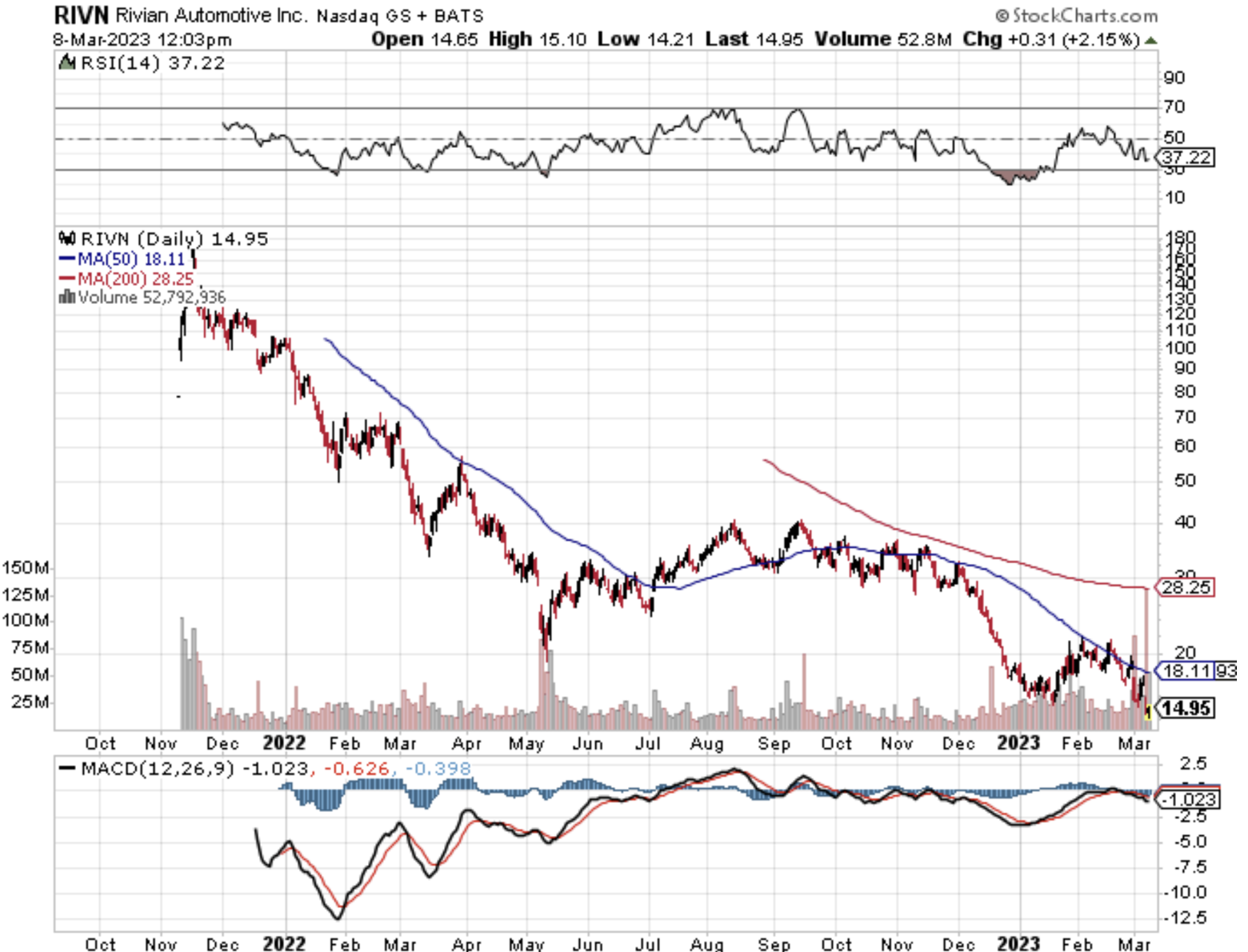
Q: Are we entering LEAPS territory for Rivian (RIVN)?
A: Yes, just wait for the current selloff to end and then go to the longest possible expiration. This thing will have a multiple move 2x, 3x, or a 10x out the other side of any recession. The CEO is brilliant and people love the cars.
Q: What happens to housing prices when interest rates on mortgages are at 7%?
A: Well, they should go down 10-20%. What they’re actually doing is going sideways, and they’re still going up in the cheaper neighborhoods because of the structural shortage of 10 million houses in the US. The all-cash buyers are still out there buying. There is tremendous inventory shortage in the housing market now; every broker I know got cleaned out of all their inventory in January when we had a brief 100 basis point dip in rates back then, which has since gone away. I think we go sideways in housing until the end of the year, and then big interest rate cuts will be obvious by then, and the market takes off and we have another 10-year bubble. If you think housing is expensive now, go visit Sydney Australia or Shanghai, China and you’ll see how expensive housing can really get.
Q: How how high would Fed funds have to get to cause a real recession?
A: My guess is 6%. We might actually get there in the second quarter. That might trigger enough of a recession to start unemployment rising just enough to let them cut interest rates. My attitude is: rip the Band-Aid off, raise by 75 basis points on March, and get it over with. But Jay Powell is a very gradualist type of guy, even though he’s brought the sharpest interest rate rise in history.
Q: Should I chase Apple (AAPL) here at $150 a share?
A: In this kind of market, you never chase anything. Only buy Apple at $150 if you think happy days are here again and you think we’re going up forever. To me on the chart it looks like we’re double topping and may actually get a lower low, which you then buy. You may even want to do a LEAPS on Apple if we get down into the $130s or $120s again.
Q: Isn’t it hard for the economy to really tank when seniors and savers are now generating income again for their retirement, giving them more income to spend?
A: Well not only that but workers have had 10-20% pay increases also, and they have more money to spend. It’s really hard to see a severe recession in any kind of scenario, barring another pandemic, and that’s why we’re saying buy the dips—we are in fact in a new bull market that started in October. When you get these market reversals, you often don’t get confirmation on the charts for up to a year, and we’re in one of those periods now. That's why there are still a lot of non-believers in the bull scenario and no confidence.
Q: Would you buy Tesla LEAPS?
A: Yes, under $150 on Tesla shares. And, given its record of volatility, we may actually get there, because this is a $1,000 stock easily in 5 years. I'll send you a report giving you all the details of why. Detroit is basically screwed, someday it’ll just be reduced to building Teslas under license from Tesla and painting them different colors and giving them different names or something like that.
Q: What’s a buy-on-dip?
A: Sorry, but no easy answer here. It’s unique to every stock depending on the historic volatility and ranges of the stock. It’s going to be 1% for a stock, it can be 10% for an option, it could be 20% for a stock like Tesla. It’s vague but it really is unique to every single stock. A good rule of thumb is that after you execute a trade and then throw up on your shoes you’ve just done a great trade.
Q: I see from your pictures that you lost weight? How do you do it?
A: I got COVID last May. I lost 20 pounds in two weeks because I couldn’t eat while I was sleeping 20 hours a day. I just woke up long enough to send out trade alerts. All of a sudden, a 40-year collection of expensive designer pants fit. My kids now call me Captain Fancy Pants. When I go through airport security now and take my belt off they fall down so I’m always careful to wear my best underwear, the ones with the dollar sing all over them.
Q: What’s the best way to play obesity drugs?
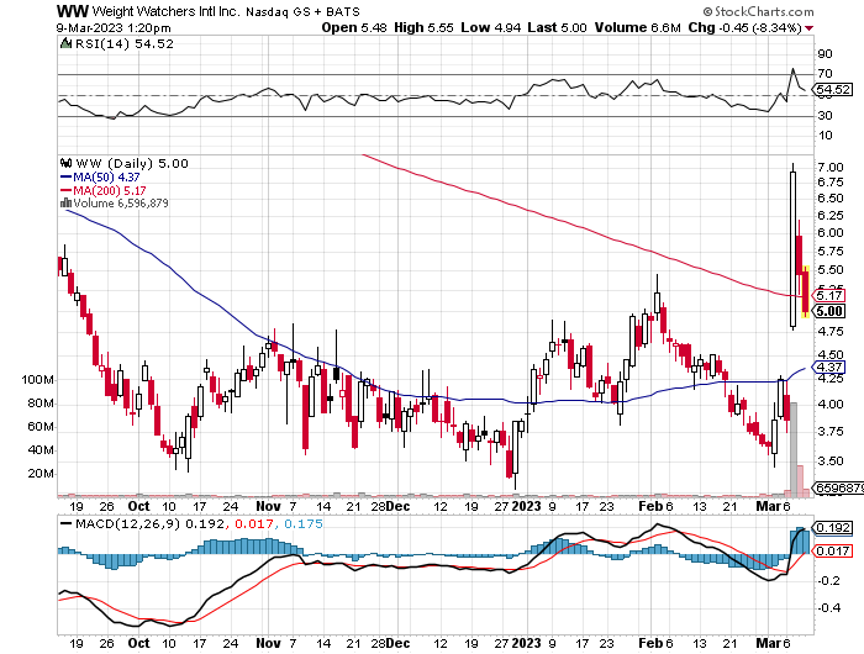
A: Unfortunately, There is no pure play on obesity drugs. It will be a $150 billion market that will grow very quickly. I will talk about it at length next week in the summit at the Biotech & Health Care webinar, which you’ll get registration links for tomorrow. Weight loss drugs are small pieces of very large drug companies, so the effect gets diluted by everything else they’re doing. The purest play may be Weight Watchers (WW). If you just need to go to Weight Watchers just to get a shot, that could be really good for them. The stock just doubled in one day on this.
Q: Commodity-based foreign stocks are the best bet on inflation protection; should I get involved?
A: Yes, use the current selloff to get into the whole commodity space (except for maybe food) because not only are they a commodity play, they’re a weak dollar play and that way you get a combined double leverage effect on prices, which I've seen happen many times in my life. So yes, look at foreign-type commodity stocks, and of course, the biggest one out there is Broken Hill Proprietary (BHP), which I always watch very closely. It’s the largest stock in Australia owned by virtually everybody in Australia who has any money, with great volatility, and which has recently just had a selloff.
To watch a replay of this webinar with all the charts, bells, whistles, and classic rock music, just log in to www.madhedgefundtrader.com, go to MY ACCOUNT, click on GLOBAL TRADING DISPATCH, or TECHNOLOGY LETTER, then WEBINARS, and all the webinars from the last 12 years are there in all their glory.
Good Luck and Stay Healthy,
John Thomas
CEO & Publisher
The Diary of a Mad Hedge Fund Trader

2015 in Ouarzazate Morocco
https://www.madhedgefundtrader.com/wp-content/uploads/2023/03/john-thomas-morocco.png620630Mad Hedge Fund Traderhttps://madhedgefundtrader.com/wp-content/uploads/2019/05/cropped-mad-hedge-logo-transparent-192x192_f9578834168ba24df3eb53916a12c882.pngMad Hedge Fund Trader2023-03-10 09:02:522023-03-10 10:26:57March 8 Biweekly Strategy Webinar Q&A
With the US 10-year Treasury yield sitting today at around 4%, there simply isn’t a rapacious appetite to invest in unproven EV stocks.
This is how the cookie crumbles when lending terms are tight.
The 4% yield today is about 8X higher than it was in July 2020 when the 10-year yielded half of a percentage point.
Funding and borrowing billions for tech startups is part and parcel of developing a new tech company.
However, the incremental interest payments from the extra 8X yield are exorbitant enough for investors to refrain from pulling out their wallets.
A lot of investor roadshow presentations are now getting shelved permanently.
It has to be a slam dunk otherwise venture capitalists are pouring their capital down a black hole which is essentially why the venture capitalist movement is frozen.
So we must turn a suspicious eye when unproven EV company Rivian announces a plan to sell $1.3 billion in bonds to shore up capital.
It couldn’t have come at a worse time as debt markets are expensive to tap with rates surging.
I suspect the yield on this debt to be anywhere from 11-15%.
Even more laughable, they labeled this return to the capital markets as the “green” debt offering.
Rivian says it intends to sell $1.3 billion worth of “green” convertible senior notes due in 2029, with the option to grant an additional $200 million worth of convertible notes to the original purchasers.
Rivian explained to us that it intends to use the capital it raises for “green” or environmental purposes. I believe these statements are a sign that upper management is becoming too woke.
RIVN just needs to stay in their lane and make damn good EVs, and by that, I mean better than Tesla, and not tell everyone how “green” they are. Nobody cares about their greenwashing.
EV makers are also big polluters and many studies show that they accrue a bigger carbon footprint than the production of combustible engine cars.
Of course, the EV makers sponsored research that says the complete opposite and I believe the truth lies somewhere in the middle.
Lithium mining is a source of pollution and can have negative environmental impacts. Used of damaged Lithium Ion batteries pollute as well.
Rivian said these projects could include activities tied to clean transportation, renewable energy, circular economy (i.e., recycling batteries/metals), energy efficiency, and pollution prevention.
Is this just a ruse to mask investors from its adjusted EBITDA loss of $5.22 billion in 2022?
Hard to say, yet I do know it is convenient to leverage its “green” image to wash the losses from their backs to get more time to figure out how to make the numbers work.
The company is forecasting another adjusted EBITDA loss of $4.3 billion for 2023 and that’s the real reason they need to tap the debt markets.
This EV maker is a cash-burn machine, and looking for someone to be the sugar daddy.
This is all happening while Rivian is developing its next factory in Georgia, where its next-generation R2 vehicles will be built. Rivian says production of that vehicle will start in 2026.
Ultimately, this company does make a good product, and reviews of the EV have been positive, but the management is doing a poor job with the financials.
They might run out of money before the Georgian factory is finished and I believe desperately seeking funding at the worst time in history has to do more with shoddy management and botched accounting.
In short, the stock has gone from $130 to $15 today and much of the negative news has been discounted into the price.
It’s been a constant sell-the-rally stock for quite some time, but I think that will finally reverse itself when RIVN gets into single digits and from that point, it has a good chance to bounce to $20 per share.
Long term, I would stay away for now until we get some confirmation of their balance sheet improving. Tech companies with woefully mismanaged balance sheets aren’t the place to hide right now because tech stocks are too volatile.
https://madhedgefundtrader.com/wp-content/uploads/2019/05/cropped-mad-hedge-logo-transparent-192x192_f9578834168ba24df3eb53916a12c882.png00Mad Hedge Fund Traderhttps://madhedgefundtrader.com/wp-content/uploads/2019/05/cropped-mad-hedge-logo-transparent-192x192_f9578834168ba24df3eb53916a12c882.pngMad Hedge Fund Trader2023-03-08 17:02:432023-03-28 16:16:57What's Up With Rivian
Since we have a hefty 50% weighting in long bond options, it’s time to review how to handle options called away.
The higher the yield on a security, the greater the call away risk. With ten-year US Treasury yields now at 4.00%, the call away risk is heightened.
Let’s say you call away an option the day before the ETF goes ex-dividend. That enables you to collect an entire quarter’s 88 basis point payout in a day. A measly 88 basis points may not be much for you, but it is a lot for a highly leveraged hedge fund. That places the March expirations at greatest risk of a call away when dividends are paid out. While our longest expiration is currently February 17, it’s still best to become fluent in the call away process now.
In the run-up to every options expiration, which is the third Friday of every month, there is a possibility that any short options positions you have may get assigned or called away.
The first notice you may get of options called away is a shocking out-of-the-blue margin call of $1 million or more.
If that happens, there is only one thing to do: fall down on your knees and thank your lucky stars. You have just made the maximum possible profit for your position instantly.
Most of you have short option positions, although you may not realize it. For when you buy an in-the-money vertical option spread, it contains two elements: a long option and a short option.
The short options, which are owned by somebody else, can get “assigned,” or “called away” at any time, as it is owned by a third party, the one you initially sold the put option to when you initiated the position.
You have to be careful here because the inexperienced can blow their newfound windfall if they take the wrong action, so here’s how to handle it correctly. I’ll use a previous trade as an example.
Let’s say you get an email from your broker telling you that your call options have been assigned away. I’ll use the example of the Microsoft (MSFT) December 2019 $134-$137 in-the-money vertical BULL CALL spread.
For what the broker had done in effect is allow you to get out of your call spread position at the maximum profit point 8 days before the December 20 expiration date. In other words, what you bought for $4.50 last week is now $5.00!
All have to do is call your broker and instruct them to exercise your long position in your (MSFT) December $134 calls to close out your short position in the (MSFT) December $137 calls.
This is a perfectly hedged position, with both options having the same expiration date, the same amount of contracts in the same stock, so there is no risk. The name, number of shares, and number of contracts are all identical, so you have no exposure at all.
Calls are a right to buy shares at a fixed price before a fixed date, and one option contract is exercisable into 100 shares.
To say it another way, you bought the (MSFT) at $134 and sold it at $137, paid $2.60 for the right to do so, so your profit is 40 cents, or ($0.40 X 100 shares X 38 contracts) = $1,520. Not bad for an 18-day limited risk play.
Sounds like a good trade to me.
Weird stuff like this happens in the run-up to options expirations like we have coming.
A call owner may need to buy a long (MSFT) position after the stock market close, and exercising his long December $134 call is the only way to execute it.
Adequate shares may not be available in the market, or maybe a limit order didn’t get done by the market close.
There are also thousands of algorithms out there which may arrive at some twisted logic that the puts need to be exercised.
Many require a rebalancing of hedges at the close every day which can be achieved through option exercises.
And yes, options even get exercised by accident. There are still a few humans left in this market to blow it by writing shoddy algorithms.
And here’s another possible outcome in this process.
Your broker will call you to notify you of an option called away, and then give you the wrong advice on what to do about it. They’ll tell you to take delivery of your long stock and then post additional margin to cover the risk.
Either that or you can just sell your shares on the following Monday and take on a ton of risk over the weekend. This generates a boatload of commission for the brokers but impoverishes you.
There may not even be an evil motive behind the bad advice. Brokers are not investing a lot in training staff these days because as soon as someone learns something useful, they take a job elsewhere for more money. It doesn’t pay. In fact, I think I’m the last one they really did train.
Avarice could have been an explanation here but I think stupidity and poor training and low wages are much more likely.
Brokers have so many legal ways to steal money that they don’t need to resort to the illegal kind.
This exercise process is now fully automated at most brokers but it never hurts to follow up with a phone call if you get an exercise notice. Mistakes do happen.
Some may also send you a link to a video of what to do about all this.
If any of you are the slightest bit worried or confused by all of this, come out of your position RIGHT NOW at a small profit! You should never be worried or confused about any position tying up YOUR money.
Professionals do these things all day long and exercises become second nature, just another cost of doing business.
If you do this long enough, eventually you get hit. I bet you don’t.
Calling All Options!
https://www.madhedgefundtrader.com/wp-content/uploads/2018/11/Call-Options.png345522Mad Hedge Fund Traderhttps://madhedgefundtrader.com/wp-content/uploads/2019/05/cropped-mad-hedge-logo-transparent-192x192_f9578834168ba24df3eb53916a12c882.pngMad Hedge Fund Trader2023-03-07 11:02:132023-03-07 12:22:31A Note on Assigned Options, or Options Called Away
Who is responsible when artificial intelligence harms someone?
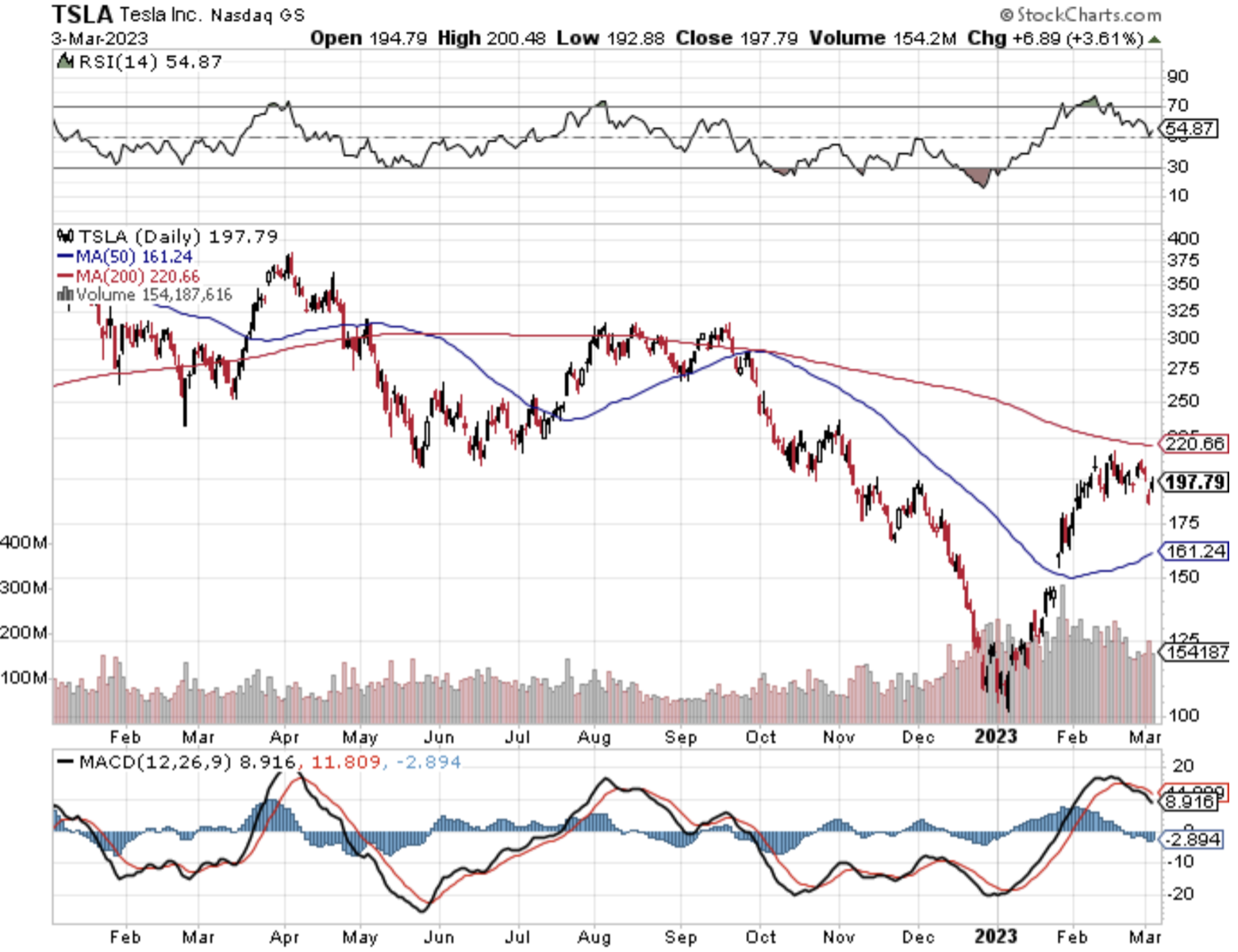
The California jury may soon have to make a decision. In December 2019, a man driving a Tesla (TSLA) with an AI navigation system killed two people in an accident. The driver faces up to 12 years in prison.
These events were bound to happen as teething pains are quite common with new technology especially one that is ambitious enough to transport machines in a human world.
Multiple federal agencies are investigating Tesla crashes, and The California Department of Motor Vehicles is investigating the use of AI-controlled driving functions.
Our current liability system, used to determine liability and compensation for injuries, is not AI-friendly.
Liability rules were designed for a time when humans caused most injuries.
But with AI, errors can occur without direct human intervention. The liability system must be adjusted accordingly. Poor accountability won't just stifle AI innovation. It will also harm patients and consumers.
It's time to start thinking about accountability as AI becomes ubiquitous but remains under-regulated. AI-based systems have already contributed to injuries.
The right accountability approach is critical to unlocking the potential of AI. Uncertain regulations and the prospect of costly litigation will deter investment, development, and deployment of AI in industries ranging from healthcare to autonomous vehicles.
Currently, liability claims typically begin and end with the person using the algorithm. Of course, if someone abuses the AI system or ignores its warnings, that person should be held accountable.
But AI errors are often not the user's fault. Who can blame an emergency doctor for letting an AI algorithm miss papilledema — a swelling of part of the retina?
AI's failure to detect the disease could delay care and potentially cause the patient to lose their eyesight. Papilledema is difficult to diagnose without an ophthalmologist.
AI is constantly self-learning, which means it takes in information and looks for patterns in it. This is a "black box" that makes it difficult to understand which variables affect the outcome.
The key is to ensure that everyone involved - users, developers, and everyone else in the chain - has been vetted to keep AI safe and effective.
First, insurers should protect policyholders from AI injury litigation costs by testing and validating new AI algorithms before deploying them.
Car insurers have also been comparing and testing cars for years. An independent security system can provide AI stakeholders with a predictable system of accountability that adapts to new technologies and practices.
Second, some AI errors should be challenged in courts that specialize in uncommon cases. These tribunals may specialize in particular technologies or topics.
Third, proper regulatory standards from federal agencies can offset the excessive liability of developers and users. For example, some forms of medical device liability have been superseded by federal regulations and laws. Regulators should focus on standard AI development processes early on.
Regulation can make or break AI in the upcoming years and I definitely lean towards the laissez faire attitude of deregulation.
Too many regulations will stifle the development and bring about undue costs.
No company will continue with loss-making operations unless they see a light at the end of the tunnel.
If allowed to develop with light regulation, AI will be that supercharger to tech stocks that investors dreamed of.
Transportation-based tech stocks such as Uber and Lyft will be one of the largest winners from the widespread implementation of driverless technology.
Also, throw in there the food delivery companies like DoorDash (DASH).
Another group with immense expense-saving possibilities is all the airlines around the world because theoretically, self-driving technology will become good enough to deploy in short and long-haul flights.
Getting to the point of consumers and regulators fully trusting self-driving technology is still a long and windy path, but I do believe we will arrive there.
When we do get there, the tech companies exposed to these great benefits will feel a 10X boost to their share price.
https://madhedgefundtrader.com/wp-content/uploads/2019/05/cropped-mad-hedge-logo-transparent-192x192_f9578834168ba24df3eb53916a12c882.png00Mad Hedge Fund Traderhttps://madhedgefundtrader.com/wp-content/uploads/2019/05/cropped-mad-hedge-logo-transparent-192x192_f9578834168ba24df3eb53916a12c882.pngMad Hedge Fund Trader2023-03-06 16:02:202023-03-28 15:01:56Dealing With a Black Box
In 1942, after the First Marine Division won the battle of Guadalcanal and my Uncle Mitch won his Medal of Honor, they were shipped to Melbourne, Australia for six months of rest and relaxation.
Since their uniforms were in rags and many men were barefoot, they were handed scratchy WWI surplus wool uniforms. That’s all the Aussies had, as their army was off fighting Rommel in North Africa.
All 8,000 men lived in the Melbourne Cricket Ground, and the government delivered a truckload of beer barrels every day. Whenever the men went outside, they were invited by local families off the street to have dinner. After four months, they were fat and happy.
Then one day, they were placed on a train with full battle gear, taken 50 miles out of town, and told to walk back with no food and a canteen of water. They were retraining for the next battle, which would be in New Guinea.
When economic data flip-flops, so does the market.
The red-hot January Nonfarm Report with the Unemployment Rate at a 50-year low of 3.5% gave the bulls every reason to buy stock. So stocks can’t fall.
But a strong jobs market means the Fed will keep interest rates higher for longer gives plenty of fodder for the bears. So stocks can’t rise.
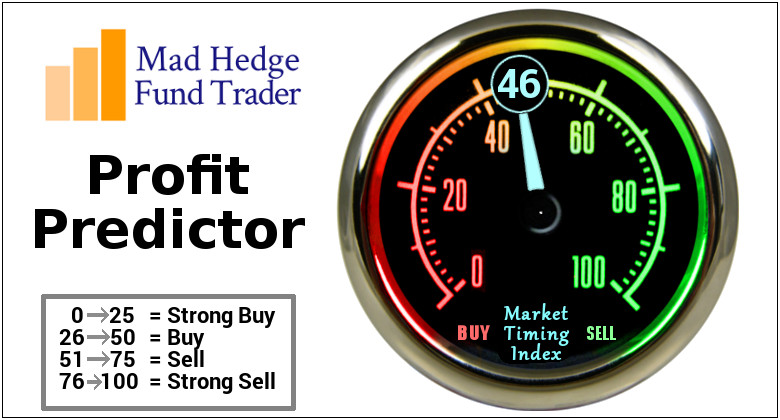
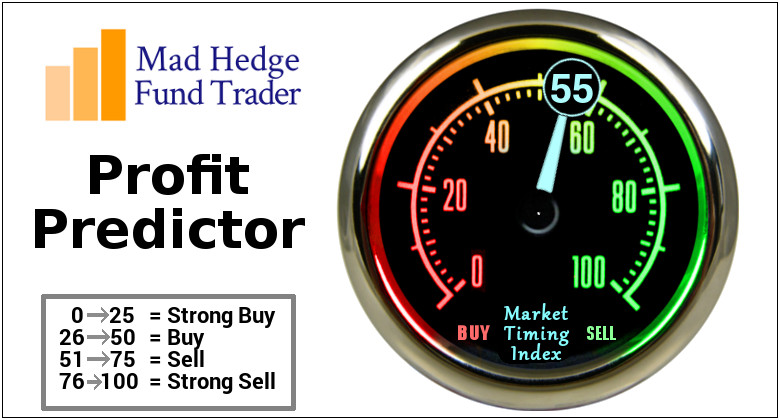
My Mad Hedge Market Timing Index is equally confused at 55. You can’t get any closer to 50, which means you should do absolutely nothing.
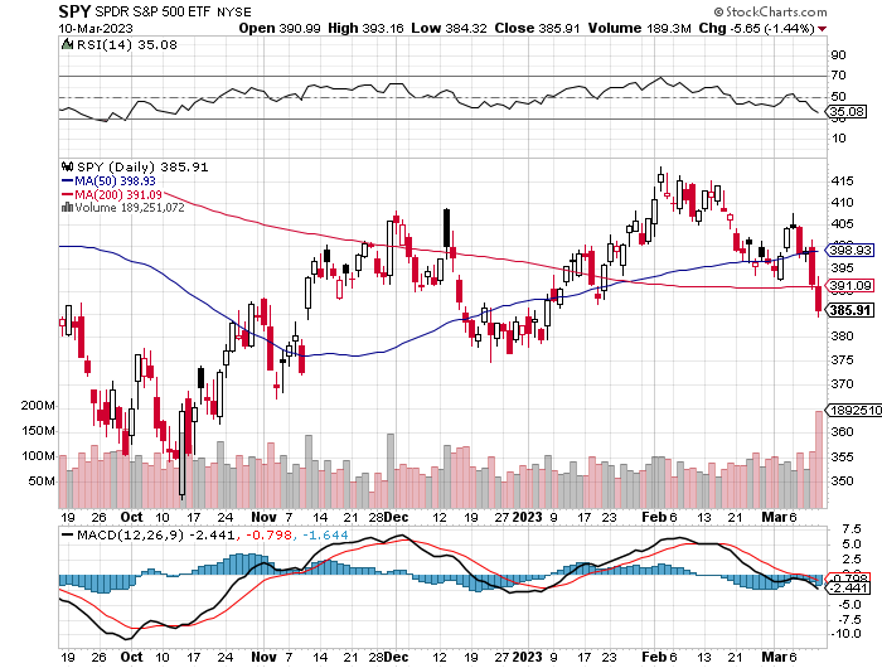
Notice that the S&P 500 (SPY) bounced off the 200-day moving average at $390.95 to the penny and rallied, a perfect symptom of this disease. When the fundamentals are confused, technicals win.
At this late age, the only one I take orders from is named Mr. Market. Ignore his instructions at your own peril and expense. Everyone else can get lost.
That leaves us nothing to do but to wait for the next events of market consequence, the March 14 CPI and the December 22 Fed interest rate decision. We might as well twiddle our thumbs and watch the clock until then.
So I will stick to my market-neutral strategy as long as I must take in enough money to keep the lights on. I keep doing this knowing full well that the last time I do will lose money.
This could go on for months.
In the meantime, I will keep researching the long term, which continues to look better and better. The dross ends in months. It’s the next decade we need to focus on now.
It's time to polish our armor, sharpen our weapons, and get back in shape, just as the First Marine Division did 81 years ago.
Remember that we are in the “what’s next” business. Whatever you buy now has to be discounting the following coming trends:
Falling interest rates
A weak dollar
Rising commodity prices
Rising energy prices
Reaccelerating tech earnings
A new boom in real estate
Precious metals going to record highs
Strong emerging markets
A Ukraine win leading to global peace
America’s principal adversary is rendered impotent
A second peace dividend ensues
Every trade alert I send you this year will be taking of one or more of these trends. It’s just a matter of time before they begin if they haven’t already.
We had a really great last two days of February, pushing me back in the green for February, taking me up +3.41% on the month. March has so far come in at +0.80%.
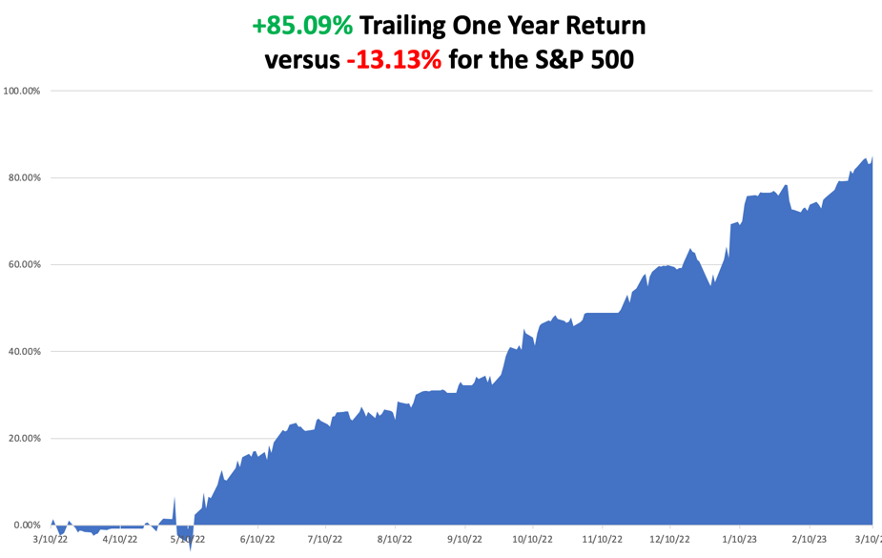
My 2023 year-to-date performance is still at the top at +26.56%. The S&P 500 (SPY) is up +6.36% so far in 2023. My trailing one-year return maintains a sky-high +85.51% versus -5.66% for the S&P 500.
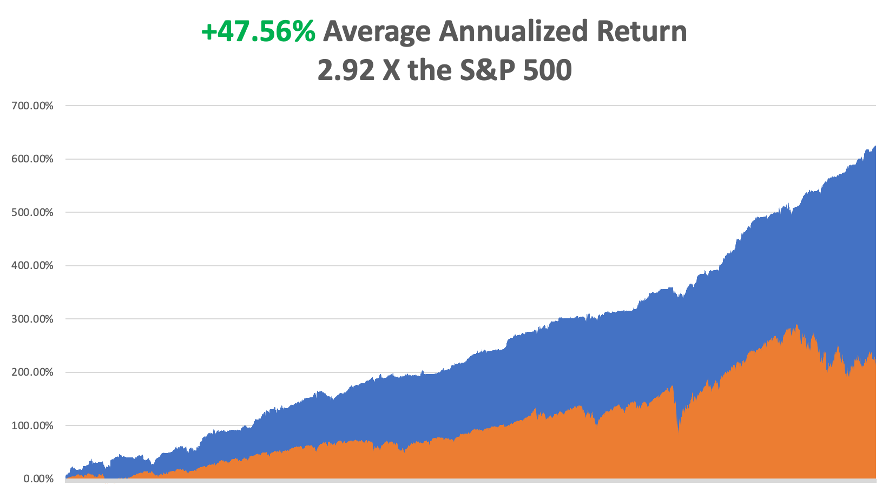
That brings my 15-year total return to +623.75%, some 2.72 times the S&P 500 (SPX) over the same period. My average annualized return has recovered to +47.37%, still the highest in the industry.
Nothing Happens Until March 14, at 8:30 AM EST when the next big inflation read, the Core CPI comes out. It’s all about inflation right now. Look for a flat line until then. That’s why it’s a good time to run short strangles and own lots of cash. A dollar at a market bottom is worth $10 at a market top.
S&P Case Shiller Gains 5.7% in December, YOY according to its National Home Price Index. That’s a quarter of the gains seen a year ago. Miami (15.9%), Tampa (13.9%), and Atlanta (10.4%) showed the biggest gains. High mortgage interest rates are still a big drag and will continue for another six months.
Pending Home SalesSoar 8.7% in January on a signed contract basis. It is the second straight month of gains and the biggest in 2 ½ years. See what a 1.5% drop in mortgage rates can do? While rates are back up now it shows how much demand is building up in the residential real estate market. I think this market explodes to the upside by yearend.
Mortgage Rates Jump to 6.65%, snuffing out the green shoots that briefly appeared in January. Mortgages are still maintaining an unprecedented 200 basis point premium to 30-year Treasury bond rates, which should disappear by yearend. The seeds of the next housing boom are germinating.
Tesla Tanks Semiconductor Shares, after Elon Musk announced that he plans to cut silicon carbide chips by 75%. Improved new designs will also slash the number of chips needed for EVs, whose supply and prices are notoriously volatile. New chip designs will appear in the $25,000 model 2 due out in 2025.
Ark’s Dirty Little Secret. Cathy Woods’ ARK Innovation Fund (ARKK) is one of the top-performing funds so far in 2023, up 24%. But strip out the performance of Tesla (TSLA) and the five-year return has been precisely zero. Good thing (TSLA) is up 110% this year. Maybe its cheaper just to buy (TSLA) and skip the dross and high management fees at Ark? Elon Musk thinks it’s going to $1,000 a share and so do I. Oh, and they just dropped the price of their top end Model X by $20,000.
Stellantis (STLA) Buys a Copper Mine, taking a 14.2% stake in Argentina’s McEwen Copper mine. Gee, do you think the owner of the Chrysler brand is going into EVs? They also laid off 2,000 because with 80% fewer parts EVs require far less workers. Buy Copper and Freeport McMoRan (FCX) on dips. The global copper shortage is imminent.
China Manufacturing PMI Hits 11-Year High, at 52.6 in a surprising comeback from the end of covid lockdowns. The news hit the bond market, worried about rising inflation prospects. Supply chain problems in the US should ease as a result.
Wheat Prices Crash, seeing a 6% dive in February. What always follows a food shortage? A food glut, as farmers overplant to cash in on generous government subsidies, creating a bumper crop. It’s only a 100-year cycle. Prices will stay low as long as Ukraine can keep exporting.
My Ten-Year View
When we come out the other side of the recession, we will be perfectly poised to launch into my new American Golden Age, or the next Roaring Twenties. The economy decarbonizing and technology hyper accelerating, creating enormous investment opportunities. The Dow Average will rise by 800% to 240,000 or more in the coming decade. The new America will be far more efficient and profitable than the old.
Dow 240,000 here we come!
On Monday, March 6 at 7:00 AM EST, US Factory Orders are out.
On Tuesday, March 7 January 31 at 7:00 AM EST, the Federal Reserve Governor Jerome Powell testifies in front of congress. On Wednesday, March 8 at 7:00 AM EST, the JOLTS Job Opening Report is released. On Thursday, March 9 at 8:30 AM EST, the Weekly Jobless Claims are announced.
On Friday, March 10 at 8:30 AM EST, the Nonfarm Payroll Report for February is released.
As for me, while I was in Hawaii the other week, I took the opportunity to meet up with my old friend, David, who reminded me of the week to end all week 25 years ago.
I first met David at a Tokyo karate dojo in 1974 when he was 16 and his dad was the Associated Press Bureau Chief.
As we were about the same size, Higaona Sensei paired is off as sparing partners. But to fight, David had to take off his glasses. It wasn’t long before I saw my front teeth flying across the room and skittering across the teak floorboards.
I next met David at Morgan Stanley when I was a London director, and he was a junior trader in Tokyo. After that, I took off to start my own hedge fund.
When Morgan ordered him to meet with their traders in Zurich, Switzerland, I saw the perfect excuse for an adventure. Starting in London, we first dropped off our wives for a week of shopping in Paris, flying my twin Cessna 340.
I used my old trick of getting permission to fly over the center of Paris so I could waggle my wings at the tourists as we passed the top of the Eiffel Tower.
In Zurich, I got in a fight with the tower because they ordered me into a parking stand that was still under construction. I left David to his meetings, thus enabling us to bill the entire trip to Morgan Stanley, aviation fuel, five-star hotels, three-star restaurants, and all. If you did that today at (MS) you’d probably get fired.
I then flew off to pick up a couple of cases of first-growth French wines from the owners in Bordeaux to kill time.
When I picked up David the next day, we headed south. It was a clear day, so I thought it might be a good time to visit the Matterhorn summit. As we circled, the day’s successful climbers waved their ice axes. Then it was up the Rhone River Valley, threading an Alpine valley.
When I realized that I couldn’t climb fast enough to escape the valley, I executed a quick Immelman turn. You’re never supposed to do this in a twin because there is a risk of entering a flat spin (watch the Top Gun movie to see what this is).
But I had my British Aerobatics license, my Swiss Alpine license, plenty of speed, and an oversupply of confidence, so I figured we’d be OK. I performed the first half of a loop, then at the top, I flipped the plane 180 degrees, thus righting it and heading in the opposite direction. But I think we singed the rear ends of a few mountain goats on the way.
Needless to say, this caught David’s attention.
When I popped out of the top of the Alps, I was immediately intercepted by a Mirage fighter from the Swiss Air Force. I was now in military air space. He took a few runs at me at just under Mach 1, using me for target practice. Once I was identified he went on off his merry way.
Now I was lost.
All the maneuvering put me too low to intercept any European navigational aids. So we just looked out the window. Eventually, we noticed that to roof tiles of the city below us were red, which meant we had to be over Italy. I correctly identified it as Bolzano. From there I calculated a direct track to the airfield at St. Moritz in Switzerland.
We stayed at the legendary Badrutt’s Palace Hotel. The next day, we took a cable car to the highest peak. While American ski resorts offer cheeseburgers or pizza, Swiss ones have Michelin Three Star Restaurants. We enjoyed the meal of a lifetime.
When the Tokyo stock market crashed, Morgan Stanley let go of most of its Tokyo staff. David landed on his feet, taking over as the head of trading at Lehman Brothers. He later moved on to a hedge fund, cashing in its Lehman stock well before he went under.
David later retired to the North Share of Oahu in Hawaii, and I visit whenever I’m in town. He is very proud of his tropical fruit orchard. When the 50-foot waves crash at nearby Waimea Bay, the ground shakes.
Whenever I see David, he reminds me of our “lost week” over the Alps. It was the most exciting week of his life. And I always respond, “But David, every week is like that for me.”
When I visit Bolzano this summer to research the battles there in WWI in which my great uncle perished, I’ll ask the residents if they noticed a lost airplane overhead 25 years ago.
Good Luck and Good Trading
John Thomas
CEO & Publisher
The Diary of a Mad Hedge Fund Trader

The First Marine Division in the Melbourne Cricket Ground in 1942
Higaona Sensei in 1974
Badrutt’s Palace Hotel in St. Moritz
Refueling my Cessna 340 in 1988
https://www.madhedgefundtrader.com/wp-content/uploads/2023/03/higaona-sensei.jpg255160Mad Hedge Fund Traderhttps://madhedgefundtrader.com/wp-content/uploads/2019/05/cropped-mad-hedge-logo-transparent-192x192_f9578834168ba24df3eb53916a12c882.pngMad Hedge Fund Trader2023-03-06 09:02:352023-03-07 11:05:27The Market Outlook for the Week Ahead, or A Week with John Thomas
Legal Disclaimer
There is a very high degree of risk involved in trading. Past results are not indicative of future returns. MadHedgeFundTrader.com and all individuals affiliated with this site assume no responsibilities for your trading and investment results. The indicators, strategies, columns, articles and all other features are for educational purposes only and should not be construed as investment advice. Information for futures trading observations are obtained from sources believed to be reliable, but we do not warrant its completeness or accuracy, or warrant any results from the use of the information. Your use of the trading observations is entirely at your own risk and it is your sole responsibility to evaluate the accuracy, completeness and usefulness of the information. You must assess the risk of any trade with your broker and make your own independent decisions regarding any securities mentioned herein. Affiliates of MadHedgeFundTrader.com may have a position or effect transactions in the securities described herein (or options thereon) and/or otherwise employ trading strategies that may be consistent or inconsistent with the provided strategies.