While the Diary of a Mad Hedge Fund Trader focuses on investment over a one week to the six-month time frame, Mad Day Trader, provided by Bill Davis, will exploit money-making opportunities over a brief ten minute to three-day window. It is ideally suited for day traders, but can also be used by long-term investors to improve market timing for entry and exit points.Read more
https://madhedgefundtrader.com/wp-content/uploads/2019/05/cropped-mad-hedge-logo-transparent-192x192_f9578834168ba24df3eb53916a12c882.png00Mad Hedge Fund Traderhttps://madhedgefundtrader.com/wp-content/uploads/2019/05/cropped-mad-hedge-logo-transparent-192x192_f9578834168ba24df3eb53916a12c882.pngMad Hedge Fund Trader2019-02-07 10:32:352019-02-07 10:32:35February 7, 2019 - MDT Alert (RRC)
While the Diary of a Mad Hedge Fund Trader focuses on investment over a one week to a six-month time frame, Mad Day Trader, provided by Bill Davis, will exploit money-making opportunities over a brief ten minute to three-day window. It is ideally suited for day traders, but can also be used by long-term investors to improve market timing for entry and exit points.Read more
https://madhedgefundtrader.com/wp-content/uploads/2019/05/cropped-mad-hedge-logo-transparent-192x192_f9578834168ba24df3eb53916a12c882.png00Mad Hedge Fund Traderhttps://madhedgefundtrader.com/wp-content/uploads/2019/05/cropped-mad-hedge-logo-transparent-192x192_f9578834168ba24df3eb53916a12c882.pngMad Hedge Fund Trader2019-02-07 09:22:432019-02-07 09:22:43February 7, 2019 - MDT Pro Tips A.M.
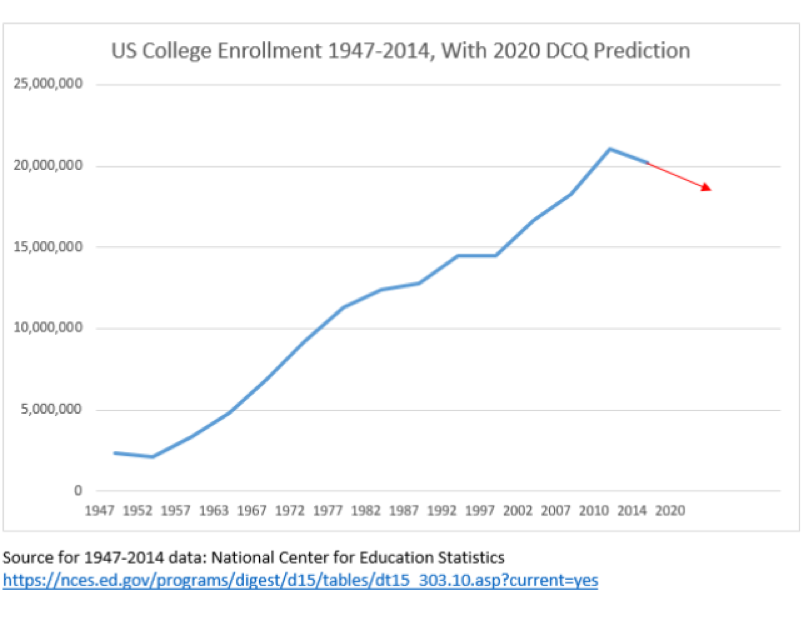
If you’re an educator not at a top 25 American university, you might want to stop reading right now.
Disruption.
You’re either on the right or wrong side of it.
I’ve detailed numerous subsets of the economy and society that have been transformed by sharp shifts in technological innovation.
But the one industry that has stealthily moved into the heart and center of technological disruption is education.
For centuries, universities and higher learning institutions had a stranglehold on critical information required to successfully perform in the cutting-edge knowledge economy of those times.
Then on September 15, 1997, a mere 21 years ago, Google search launched its free services to the world and grabbed the monopoly of information away from the college system.
This website effectively caused the cost of information to crater to zero and its free website is ranked #1 as of February 2019 with over 4.5 billion monthly active users.
The ensuing 21 years has been a renaissance in the ability to distribute information propelled by this one platform, and the result is that billions have the ability to study and read up on what they want and when they want.
The ability to learn for free combined with a tight labor market is a promising landscape for job seekers, with analysts forecasting more opportunities for professionals without a degree.
Job-search site Glassdoor amassed a list of various employers no longer bound by requiring applicants to possess a 4-year bachelor’s degree.
These firms aren’t your second-rate companies either made up of gold standard workplaces such as Google, Apple, and IBM.
In 2017, IBM's vice president of talent Joanna Daley confided that about 15% of IBM’s new hires don't have a four-year bachelor qualification.
She emphasizes hands-on experience through coding boot camp or industry-related vocational classes as explicit criteria to get hired.
This development bodes poorly for the future of universities and boosts the prospects of alternative education.
Online college offers working adults ample flexibility in furthering their education.
According to the most recent federal statistics from 2016, roughly one out of every three, or 6.3 million college students learned online.
Even though online courses are becoming more widespread, the best and brightest aren’t attending these schools.
However, it did hijack the marginal student that was on the fence for a 4-year university and brought them into the orbit of for-profit online courses and the revenues that came with it.
That was the first stage of online forces imposing financial pressure on the education marketplace.
Now analysts are discovering the second major trend with higher rated students opting out of the university system altogether.
In many cases, a 4-year university degree is a bad value proposition.
Why is that?
Costs.
In a capitalistic economy that lives and dies by the mantra of buy low and sell high – universities seem to be getting sold short lately.
The exorbitant costs to obtain a 4-year degree has led to an outsized student debt bubble and removed the mystique of this once treasured qualification.
A growing chorus of bipartisan voices has pigeonholed student debt as a major problem across the country.
In the previous presidential election, Democratic candidate Bernie Sanders called this situation “outrageous” as national student debt has spiraled out of control to the amount of $1.5 trillion.
This has been a terrible commercial for the younger generations to follow in the footsteps of the indebted Millennial generation.
And with Generation Z tech savvy at building stand-alone firms buttressed by Instagram and YouTube platforms, why go to college anymore?
Or to nail one of those jobs developing iPhones in Cupertino, why not take a few coder boot camps and self-develop a portfolio impressive enough to score an Apple interview?
The bottom line is that there are workarounds for a fraction of the price.
And because tech firms have outpaced analog companies in salaries and hiring for the past two decades, there is an outsized bias on compiling technical skills that will lead a candidate down a path to a salary of over $100,000 quicker than a 4-year degree can.
Not many other industries can claim the same.
The cracks are beginning to reveal themselves in the overall university apparatus.
Universities had years of record revenue that they reinvested into the system to enhance programs, staff, buildings, stadiums, and infrastructure.
The financial catalyst was the rise of the Chinese college student.
The latest statistics nailed the number of Chinese nationals in America studying for 4-year degrees at over half a million.
Many of those were trained up with engineering-related degrees and bolted back home to find jobs at Baidu (BIDU), Tencent, or Alibaba (BABA) powering Chinese Inc.
However, the drop off in demographics from young Chinese and Americans are forcing universities to fight for a shallower pool of candidates with less attractive degrees relative to the value of degrees of past generations.
The second-tier universities are hardest hit with examples galore.
Alcorn State University in Mississippi saw a dramatic 69.45% decrease in applications in 2018 and its rural location didn’t help either.
Alabama State University is feeling the pinch with a 33.06% drop in application in recent years.
If you thought the University of New Orleans was clawing its way back to relevancy after Hurricane Katrina, you are mistaken with its 38.23% drop in applications.
Military schools haven’t been spared either with applications to The United States Air Force Academy crashing 28.12% over the past ten years.
A confluence of deadly trends is about to beset the university system and schools will likely go bust.
Technology is giving a reason for students to bypass the system while also speeding up the financial timebombs many universities are about to confront.
Then we must ask ourselves, will universities even exist in the future?
Probably, but perhaps just the top 25 elite schools that are still worth the high costs.
IS IT STILL WORTH IT?
https://www.madhedgefundtrader.com/wp-content/uploads/2019/02/University-college.png449972Mad Hedge Fund Traderhttps://madhedgefundtrader.com/wp-content/uploads/2019/05/cropped-mad-hedge-logo-transparent-192x192_f9578834168ba24df3eb53916a12c882.pngMad Hedge Fund Trader2019-02-07 04:06:362019-02-07 03:53:54The Death of the College Degree
Hey John and the MAD Team, here's a late Happy New Years!
You really nailed and keep nailing great reversals and trends that are just beginning to deserve a watchful eye.
I'm still a bit stuck on futures, but I realize the safety in your spreads is a lot smarter...Thx for all you know and for all you do.
Rod
Alberta, Canada
https://madhedgefundtrader.com/wp-content/uploads/2019/05/cropped-mad-hedge-logo-transparent-192x192_f9578834168ba24df3eb53916a12c882.png00Mad Hedge Fund Traderhttps://madhedgefundtrader.com/wp-content/uploads/2019/05/cropped-mad-hedge-logo-transparent-192x192_f9578834168ba24df3eb53916a12c882.pngMad Hedge Fund Trader2019-02-07 03:06:462019-02-07 03:15:27Testimonial
The Five Most Important Things That Happened Today
(and what to do about them)
1) The Volatility Index (VIX) Hits $15. The market is more overbought than any time since July. Is the “fear gauge” signaling that happy days are here again? I doubt it. Don’t whistle past the graveyard. Click here.
2) The Mad Hedge Market Timing Index is Entering Danger Territory, with a reading of 67 for the first time in five months. Better start taking profits on those aggressive leveraged longs you bought in early January. Your best performers are about to take a big hit. Click here.
3) Australian Dollar Crashes on Rate Fears. You mean the Reserve Bank of Australia might actually raise rates? Better pay for that American vacation now! This should prick the property bubble big time. Click here.
4) ISM Non-Manufacturing Index Craters, to 56.7. Should we be worried? Hell, yes! Why are we getting so many negative data points and stocks keep rising? Click here.
5) Snow Hits San Francisco for the First Time in Two Decades, with temperatures plunging into the mid-twenties. Is Global warming really global weirding? It is 120 degrees in Australia today.
Published today in the Mad HedgeGlobal Trading Dispatch and Mad Hedge Technology Letter:
(MY 20 RULES FOR TRADING IN 2019)
(ALPHABET WOWS THEM AGAIN),
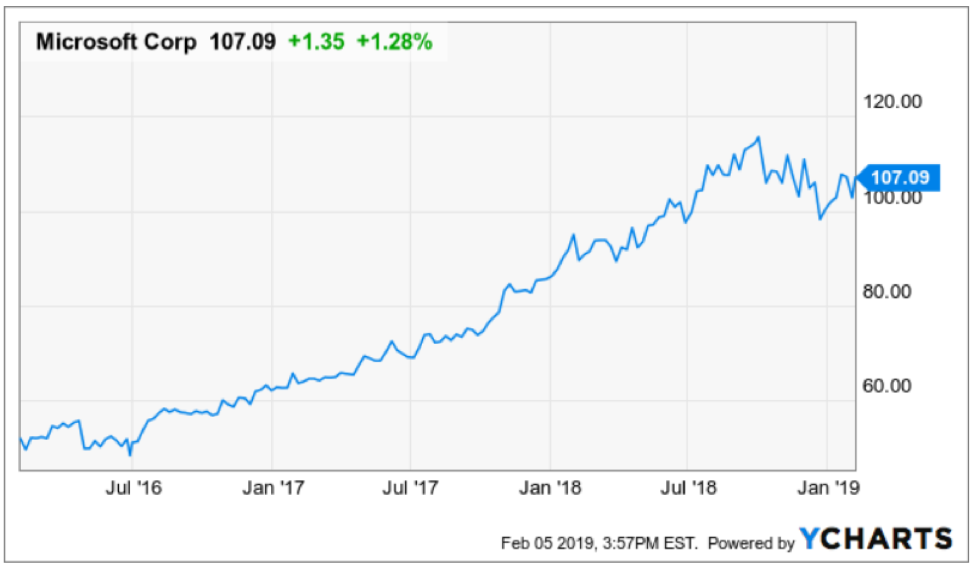
(GOOGL), (AMZN), (AAPL), (MSFT)
https://madhedgefundtrader.com/wp-content/uploads/2019/05/cropped-mad-hedge-logo-transparent-192x192_f9578834168ba24df3eb53916a12c882.png00Mad Hedge Fund Traderhttps://madhedgefundtrader.com/wp-content/uploads/2019/05/cropped-mad-hedge-logo-transparent-192x192_f9578834168ba24df3eb53916a12c882.pngMad Hedge Fund Trader2019-02-06 11:30:092019-02-06 11:30:09Mad Hedge Hot Tips for February 6, 2019
While the Diary of a Mad Hedge Fund Trader focuses on investment over a one week to a six-month time frame, Mad Day Trader, provided by Bill Davis, will exploit money-making opportunities over a brief ten minute to three-day window. It is ideally suited for day traders, but can also be used by long-term investors to improve market timing for entry and exit points.Read more
https://madhedgefundtrader.com/wp-content/uploads/2019/05/cropped-mad-hedge-logo-transparent-192x192_f9578834168ba24df3eb53916a12c882.png00Mad Hedge Fund Traderhttps://madhedgefundtrader.com/wp-content/uploads/2019/05/cropped-mad-hedge-logo-transparent-192x192_f9578834168ba24df3eb53916a12c882.pngMad Hedge Fund Trader2019-02-06 09:04:552019-02-06 09:04:55February 6, 2019 - MDT Pro Tips A.M.
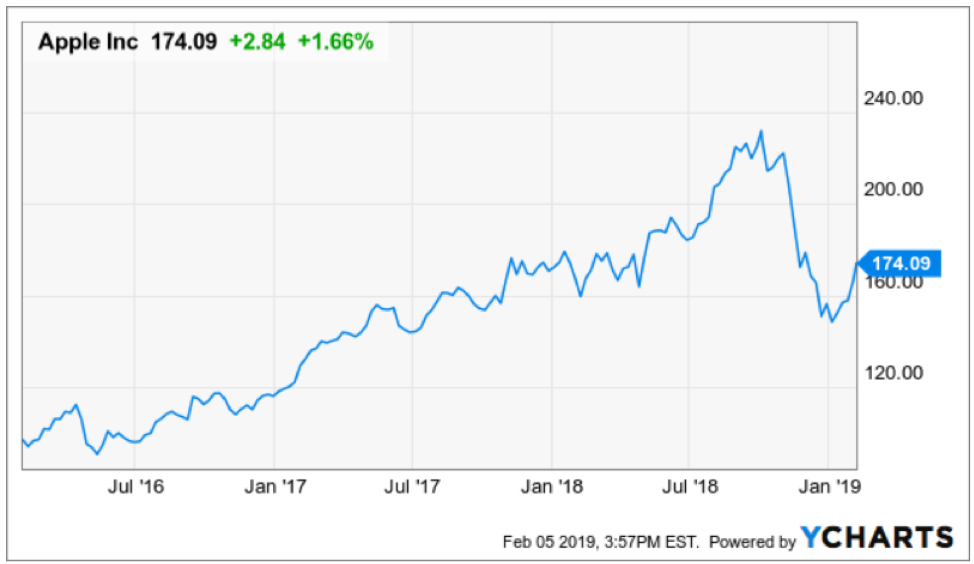
Alphabet (GOOGL) is entangled in the same imbroglio as Apple (AAPL), that is why I have held back on issuing any trade alerts on this name.
The stalwart is still grinding out a respectable 20% of revenue growth in their core business but the underlying conundrum is that their hyper-growth segments are 5 times or more diminutive than their bread and butter of digital ads.
Apple is addressing the same type of strain in attempting to flip high octane revenue drivers into a bigger piece of the pie – the services business trails the hardware business by a large margin.
This phenomenon highlights how investors demand tech companies to grow at elevated rates and a maturing business model isn’t given any free passes.
Investors simply migrate towards higher growth names period.
That being said, Alphabet’s digital ad business is one of the premier tech divisions in all of technology and the American economy.
How powerful is it?
They did $32.6 billion in sales last quarter.
If you look at that number without context, it is quite impressive, but there are several lurking impediments.
This 20% QOQ growth is flatter than a pancake offering evidence that the best days are behind them.
No investors like to hear the dreaded “P word” thrown into a company’s business trajectory – peak.
In respect to revenue growth rates, I expect Google’s digital ad business to gradually decline relative to competition.
This segment also battles with the law of large numbers.
It’s simply difficult to accelerate revenue rates at a 25% YOY clip when revenues are already over $30 billion per quarter. Again, this is another Apple problem and a side effect of being overly successful in one part of the business model.
If investors' tepid reaction about these aspects of the core business telegraph dissatisfaction, then discovering further ancillary problems might be the final dagger in the heart.
Google search’s price per click cratered 29% YOY indicating that variables in the current marketing environment have significantly blunted Google’s pricing power.
Traffic Acquisition Cost (TAC) represents the cost for a company to acquire internet traffic onto their assets.
Alphabet faced a 15% YOY rise in TAC costs last quarter to $7.44 billion illustrating the difficulty in keeping these high costs down.
The bulk of the $7.44 billion stems from a widely known agreement with Apple contracting Google search as its default search engine on Apple devices.
This TAC expense has been surging the past few years and Alphabet has little negotiating power.
Expect an annual 15-20% rise in TAC expenses as long as Alphabet’s digital ads are expanding the standard vanilla 20% most investors expect them to grow.
As a whole, TAC costs soaked up 23% of the digital ad revenue which was in line with analysts’ expectations.
However, I expect this number to surpass 25% before winter because I believe Google search’s ad business will confront ceaseless growth problems.
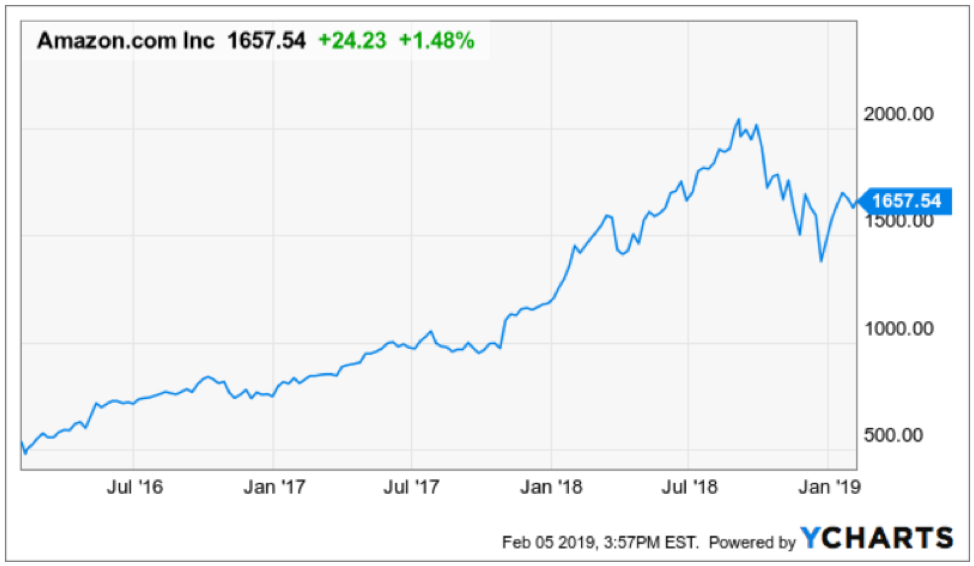
Amazon’s (AMZN) new-found digital ad business is an influential factor in this story.
New marketing dollars aren’t being showered on Google as they once were, over 50% of product searches populate from Amazon.com today boding poorly for the future of Google search.
This optionality could be a large reason in driving the cost per click downwards.
CEO of Amazon Jeff Bezos refused to enter the digital ad game for years but his recent change of heart will correlate to subduing Google digital ad model.
Consumers are finding less incentive to search on Google for products when they just can smartly and efficiently search on Amazon directly.
Clearly, this only affects product searches and not searches on other informative content such as widely popular searches including “top 10 places to travel in Europe” or “best Thanksgiving recipes.”
Google’s “other revenues” is chugging along nicely with 31% YOY growth headed by Google’s cloud business and hardware division.
This is what Alphabet needs to focus on going forward similar to Microsoft and Amazon web services.
Yes, Google is the 3rd biggest cloud player but miles behind the top two.
Being in catch-up mode is no fun and is part of the reason capital expenditures exploded and came in $1.38 billion higher than expected.
Alphabet simply isn’t doing a good job at executing relative to Amazon and Microsoft frittering away more capital in the name of growth but not curating the type of growth that current expenses justify.
Higher costs damaged operating margins coming down 2% YOY to 21%.
Even more worrisome is that there has been no material progress on the Waymo business.
This is the year that Alphabet expected the technology to roll out to the masses.
However, this broad-based integration will not happen as fast as they would like.
I blame regulation and consumers' hesitation to quickly adopt this new technology.
Alphabet is reliant on this business to carry them to the next level of growth and I believe it can become a $100 billion per year business in a $2 trillion addressable market.
But when you peruse through the “Other Bets” category which houses Alphabet’s other companies such as health venture Verily, the $154 million in revenue was a huge miss against the $187.4 million expected.
Estimates aside, the pitiful fact that Waymo only brings in revenue of less than 1% of total revenue is disappointing.
Summing things up, Alphabet is a great company and is a long-term buy and hold stock even with short term transitory headaches.
In the near term, there is uneasiness about the decreasing profitability, exploding expense factors, a heavy reliance on weakening core business revenue, and a lack of top-line contribution of “other revenues” relative to their core business.
Long term, Alphabet’s game-changing investments have yet to show signs of life in terms of real revenue expansion even though Alphabet is the global leader of artificial intelligence and self-driving technology.
Investors would like to see actionable steps to incorporate this best of breed technology that funnels down to the top and bottom line.
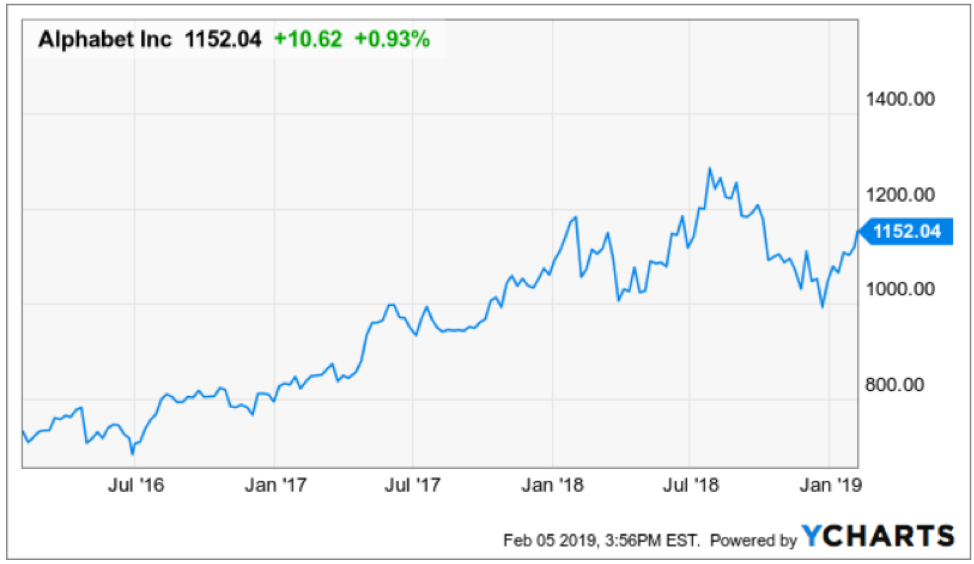
Investors are stuck with a stale digital ads business that has locked the stock into a holding pattern essentially trading sideways for the past year until they prove they are ready to take the next step up.
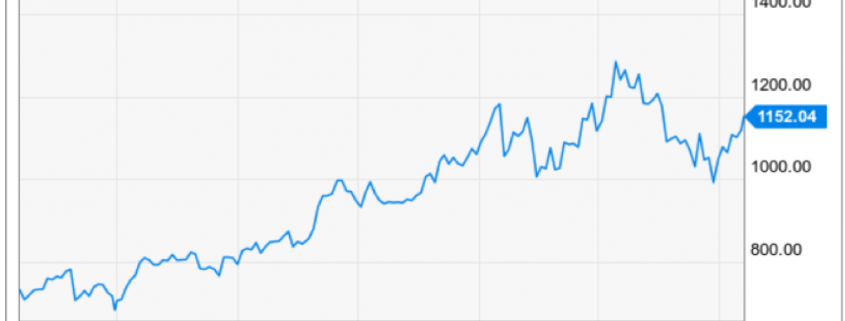
Looking at Alphabet’s chart, the stock has iron-clad support at $1,000 which it tested in April 2018 and December 2018.
Using this entry point as the lower range would be sensible as I don’t foresee any demonstrably negative news blindsiding the stock, and I surmise that investors will start receiving positive news on Waymo’s roll out towards the middle of the year.
https://www.madhedgefundtrader.com/wp-content/uploads/2019/02/ALPHABET-feb6.png564974Mad Hedge Fund Traderhttps://madhedgefundtrader.com/wp-content/uploads/2019/05/cropped-mad-hedge-logo-transparent-192x192_f9578834168ba24df3eb53916a12c882.pngMad Hedge Fund Trader2019-02-06 08:06:492019-02-06 08:05:39Alphabet Wows Them Again!
Legal Disclaimer
There is a very high degree of risk involved in trading. Past results are not indicative of future returns. MadHedgeFundTrader.com and all individuals affiliated with this site assume no responsibilities for your trading and investment results. The indicators, strategies, columns, articles and all other features are for educational purposes only and should not be construed as investment advice. Information for futures trading observations are obtained from sources believed to be reliable, but we do not warrant its completeness or accuracy, or warrant any results from the use of the information. Your use of the trading observations is entirely at your own risk and it is your sole responsibility to evaluate the accuracy, completeness and usefulness of the information. You must assess the risk of any trade with your broker and make your own independent decisions regarding any securities mentioned herein. Affiliates of MadHedgeFundTrader.com may have a position or effect transactions in the securities described herein (or options thereon) and/or otherwise employ trading strategies that may be consistent or inconsistent with the provided strategies.