
"There is no more powerful thing than a free market that changes its mind," said Art Cashin, UBS Director of Floor Operations.


"There is no more powerful thing than a free market that changes its mind," said Art Cashin, UBS Director of Floor Operations.
Mad Hedge Biotech and Healthcare Letter
September 13, 2022
Fiat Lux
Featured Trade:
(A CROWN JEWEL SCORES A GOAL)
(REGN), (BAYRY), (RHHBY), (SNY), (ALNY), (NTLA)

A stock with high margins offers a better buffer to face adversity and increased expenses.
Suppose a business’s revenue cost is substantial and leaves minimal room for the top line to maneuver and cover overhead and other operating fees. In that case, it can be challenging to stay in the black.
A recent example is Amazon (AMZN), which reports that its cost of sales typically comprises 80% or more of its revenue. When it struggled with the rising expenses in the past quarter, this e-commerce giant posted its first-ever loss in years.
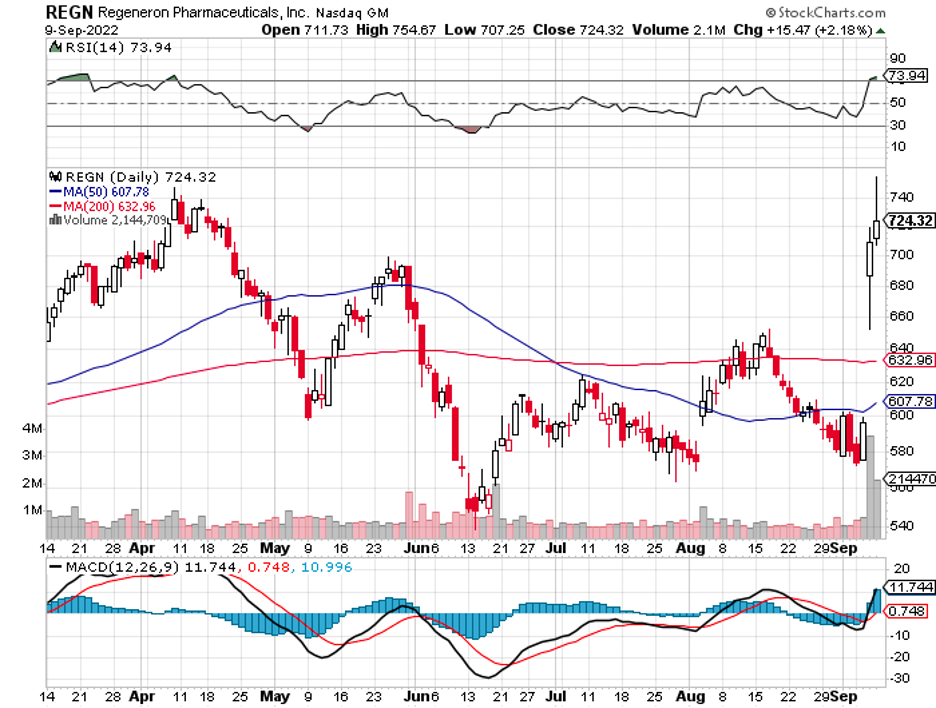
Only a handful of companies manage to stick with this principle. In the biotechnology and healthcare sector, one business that doesn’t have this issue and enjoys gross profit margins of at least 80% or better is Regeneron Pharmaceuticals (REGN).
Regeneron was recently spotlighted following a significant 19.2% jump in its price, translating to a more than $12 billion rise in market capitalization.
The catalyst for this double-digit climb is none other than Regeneron’s crown jewel: Eylea.
The anti-blindness treatment, jointly developed with Bayer (BAYRY), delivered excellent results in two late-stage trials.
This is a huge deal because it supports the application of Eylea at higher doses and longer-lasting intervals.
Previously, Eylea was only permitted to be administered in 2 mg every 8 weeks. The recent trial results proved that the medication can be given at a higher concentration of 8 mg in a more extended period of 16 weeks and can still be effective at battling the disease. Plus, it shows a similar safety profile as the currently approved dosage.
This is a timely development for Eylea, which is set to lose its patent exclusivity soon, bringing anxiety to shareholders.
For context, Eylea accounts for $3.13 billion of Regeneron’s sales in the first 6 months of 2022. In the year's second quarter alone, it generated $2.49 billion in sales, recording a 9% year-over-year increase in its global profits.
In 2021, this eye medication reported $9.4 billion in sales worldwide.
These recent developments are eyed as potential solutions to Eylea’s impending franchise exclusivity loss as it attempts to eliminate a key overhang.
This move could slam the door shut on any talks or fears of potential copycats for at least a few years. It could also make it more competitive against rising competitors in the same space like Roche’s (RHHBY) Vabysmo.
The new data is expected to be used to defend the franchise from biosimilars, generic, and branded competitors. This is because patients are now offered an option for a treatment that needs fewer injections.
Most importantly, this could establish a firmer competitive moat for Regeneron and Bayer. After all, Eylea is projected to rake in more than $6 billion in sales in the US annually in 2023 and 2024.
Looking at their timeline and progress, the new Eylea dosage should be submitted for approval by the end of 2022 and launched by early 2023.
Other than Eylea, Regeneron has also been active in the oncology space.
Leveraging its roughly $6.2 billion sales from its COVID-19 treatment, Regeneron acquired several assets to expand its oncology segment.
Recently reported deals are its $900 million payment to Sanofi (SNY) to acquire non-small lung cancer drug Libtayo and the purchase of Checkmate Pharmaceuticals, which granted it access to promising melanoma candidates.
While these deals may not be as massive as other acquisitions in the industry, adding Libtayo and Checkmate Pharmaceuticals represent critical steps toward the right direction.
On top of these, Regeneron has existing partnerships and collaborations that would last for years. One is with Alnylam (ALNY), which involves treating liver cancer, ocular conditions, and diseases targeting the central nervous system.
Meanwhile, Regeneron expanded its deal with Intellia Therapeutics (NTLA) to give more rights to their in vivo therapeutic candidate developed via CRISPR/Cas9 gene-editing technology and additional targets, particularly for hemophilia A and B.
Overall, Regeneron has been proving to be a noteworthy investment in biotechnology and healthcare. At this point, though, the recent clinical trial results have been added to its share price.
While it isn’t exactly cheap, it’s not an outlandish valuation either. In short, I suggest that you wait and buy the dip.
Mad Hedge Bitcoin Letter
September 13, 2022
Fiat Lux
Featured Trade:
(BITCOIN GETS DROPKICKED)
(BTC), (CPI)

The proof is in the pudding, and this is yet more evidence that it’s impossible to extinguish a forest fire with a bottle of water.
That’s the analogy I would like to trot out as another white-hot inflation number pierces the hearts of team transitory.
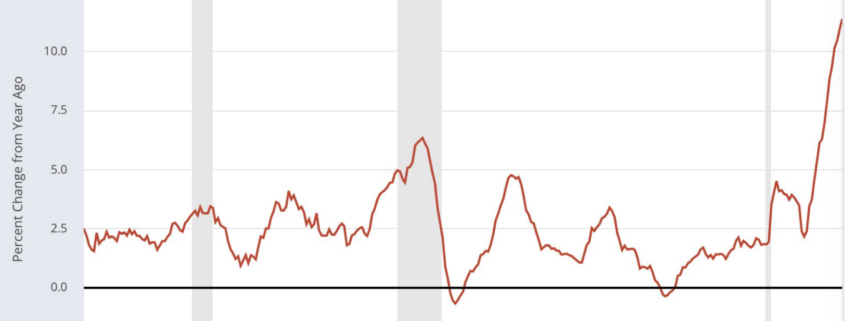
Inflation staying at 8.3% year over year is highly negative for the price of Bitcoin, cryptos, and risk assets in general.
Crypto was supposed to be the savior of inflation, but at the time of this writing, the price of Bitcoin (BTC) is down 6% this morning and underperforming the broader Nasdaq market by two times.
Everyone knew that inflation would still come in high, but the 8.3% is highly disappointing as the inflation naysayers had already started to spread the deflation narrative or that inflation has “peaked.”
We are currently stuck in a vicious feedback loop where elevated inflation cannot be contained with the current Central Bank policies.
A low Fed Funds rate of 2.5% cannot crack inflation over 8% and it’s killing the price of crypto and literally destroying the digital coin industry.
At these accommodative rates, the job market is holding up quite well which is what the Fed doesn’t want. Job seekers who lately have gotten cut from technology firms are reappearing with higher paying jobs and better benefits in different parts of the economy.
There is no hope for Bitcoin until the US Central Bank finally tames inflation.
The consumer price index (CPI) rose 8.3% in August from a year earlier, a mild slowdown from the 8.5% reported for July.
Gas prices came down, but other sectors offset those price decreases and caused overall inflation to remain elevated. Health insurance, for example, rose a blistering 24.3% year-over-year, the largest increase ever.
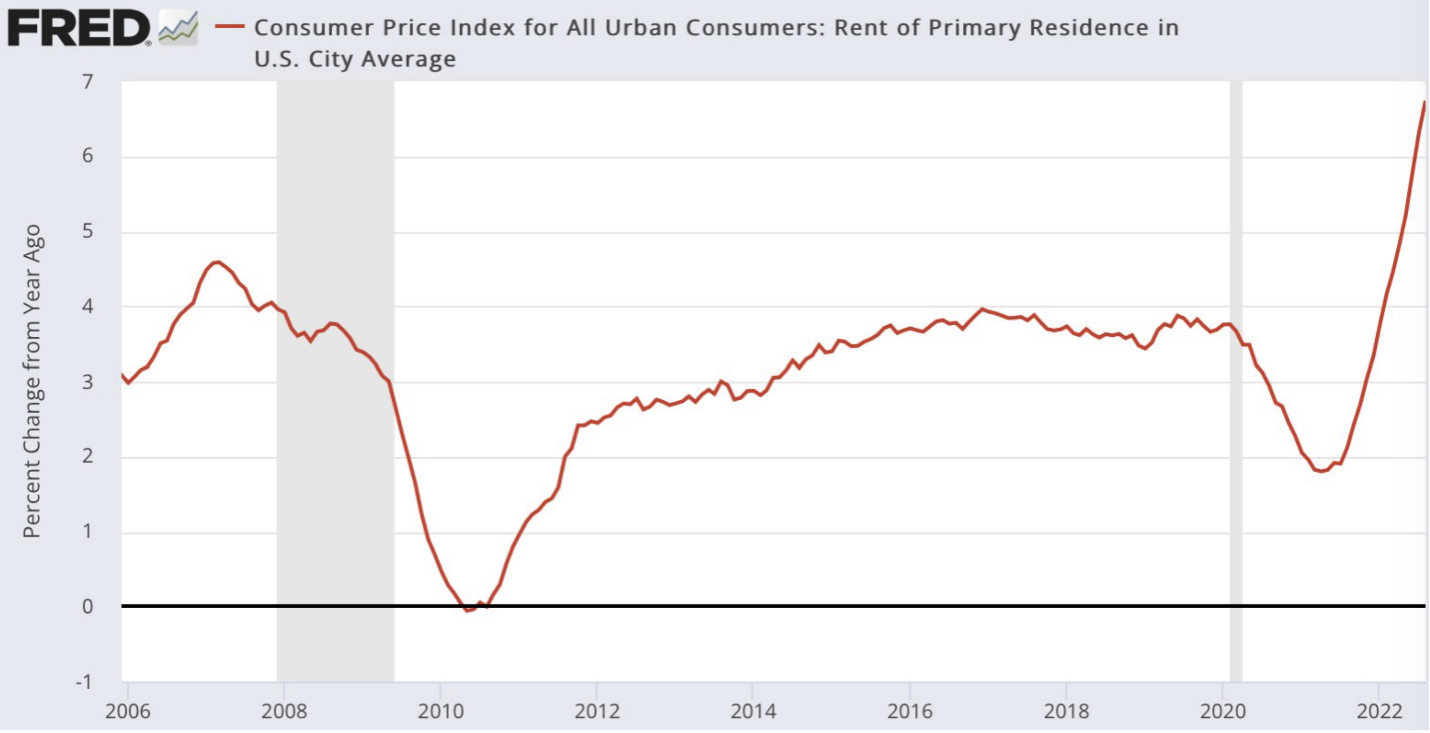
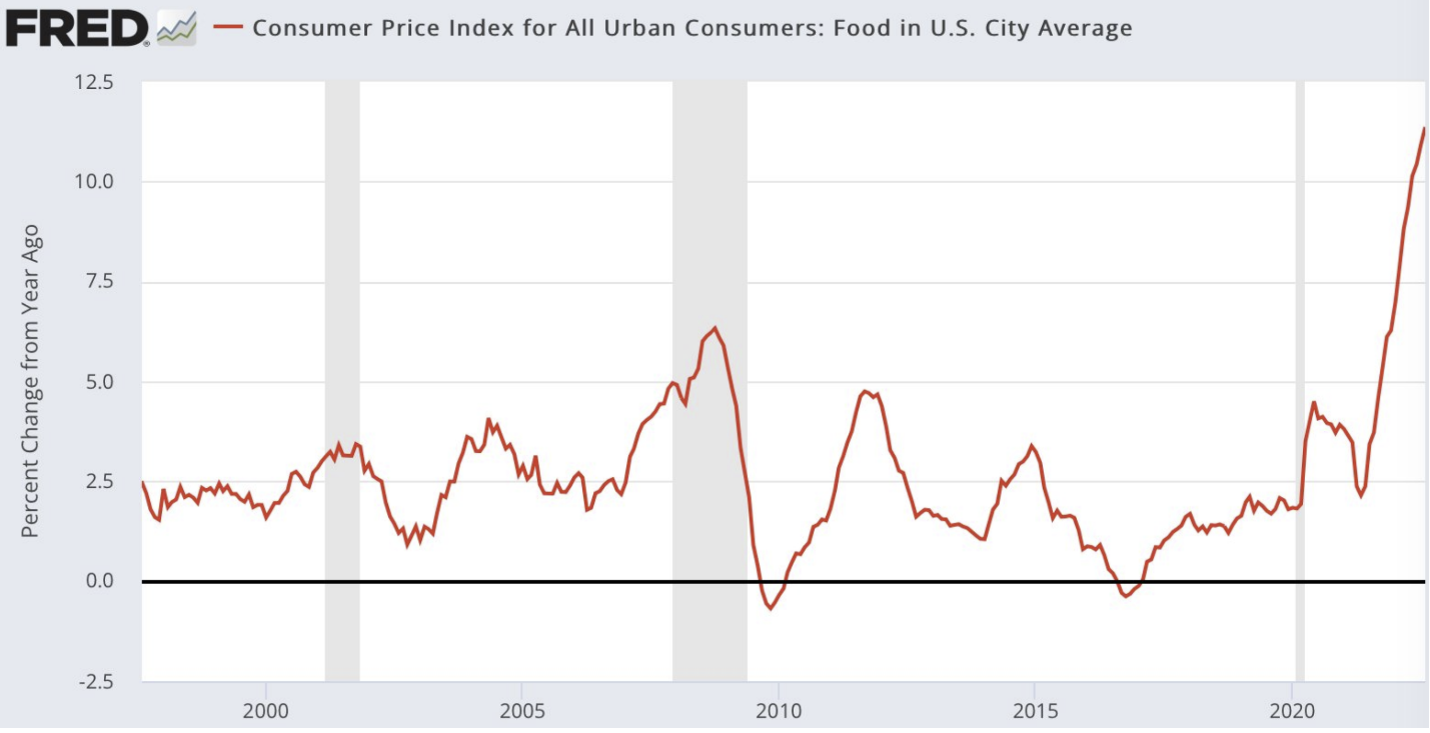
Food at home and rent prices were also one of the main drivers this month, up 13.5% and 15.8%, and services inflation rose above 6%.
The result of all this is that a Bitcoin reversal will be delayed as crypto investors wait for inflation to decrease.
I can’t imagine Bitcoin getting over the $25,000 per coin hump until there is more progress on the inflation front.
This is also negative for crypto infrastructure that is holding on for dear life until the next bull market comes.
Anything bullish in crypto has been effectively pushed back.
The inflation report means that US consumers will deal with a cost-of-living crisis longer than expected which will supersede any crisis in terms of what currency they want to store wealth in.
The larger risk is that the US Central Bank risks losing control of inflation completely as the negative feedback loop can accelerate to the downside which might force the Fed to raise rates to unprecedented levels.
It sure appears that this is morphing into a whack-a-mole phenomenon.
It’s clear that the Fed is being way too generous to equity holders by casually increasing rates at a pedestrian pace. If they lose control of inflation, Bitcoin could go to $10,000 per coin.
The fact is that the US Federal government is the biggest beneficiary of low-interest debt which is now about to touch $31 trillion.
The Fed is doing everything it can to not raise rates more than is needed because it makes servicing the debt and those interest payments too onerous.
The Fed will need to raise rates to keep the Federal government solvent if the risk of hyperinflation increases.
Ultimately, this new inflation report means that inflation will persist longer than expected which will cause the Fed to raise short-term rates faster and higher than expected.
Today was a sucker punch to Bitcoin – the digital is down and out for the time being.

“In the end, a vision without the ability to execute it is probably a hallucination.” – Said Former CEO of AOL Steve Case

Global Market Comments
September 13, 2022
Fiat Lux
Featured Trade:
(THE NEXT COMMODITY SUPERCYCLE HAS ALREADY STARTED),
(COPX), (GLD), (FCX), (BHP), (RIO), (SIL),
(PPLT), (PALL), (GOLD), (ECH), (EWZ), (IDX)

Mad Hedge Technology Letter
September 12, 2022
Fiat Lux
Featured Trade:
(CATHIE WOOD URGES ACTION)
(ARKK), ($COMPQ)

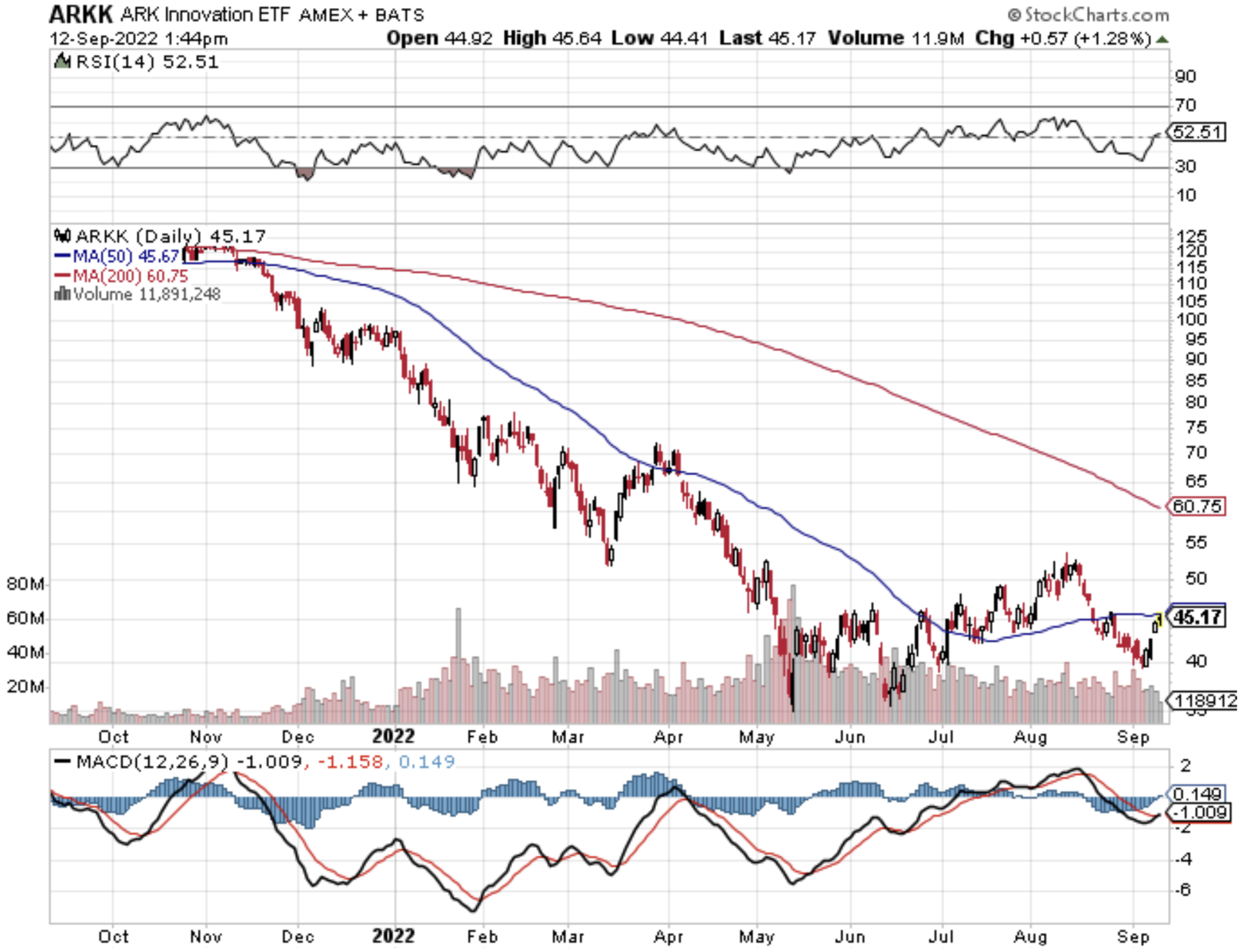
CEO of Ark Invest and infamous creator of the ARK Innovation ETF (ARKK) Cathie Wood defiantly said that “innovation solves problems, and the world is facing many more problems today than two years ago. Innovation is key to real growth!”
She likes to keep on banging on about innovation being the panacea to the tech industry when the big tech titans are doing absolutely zilch regarding innovation.
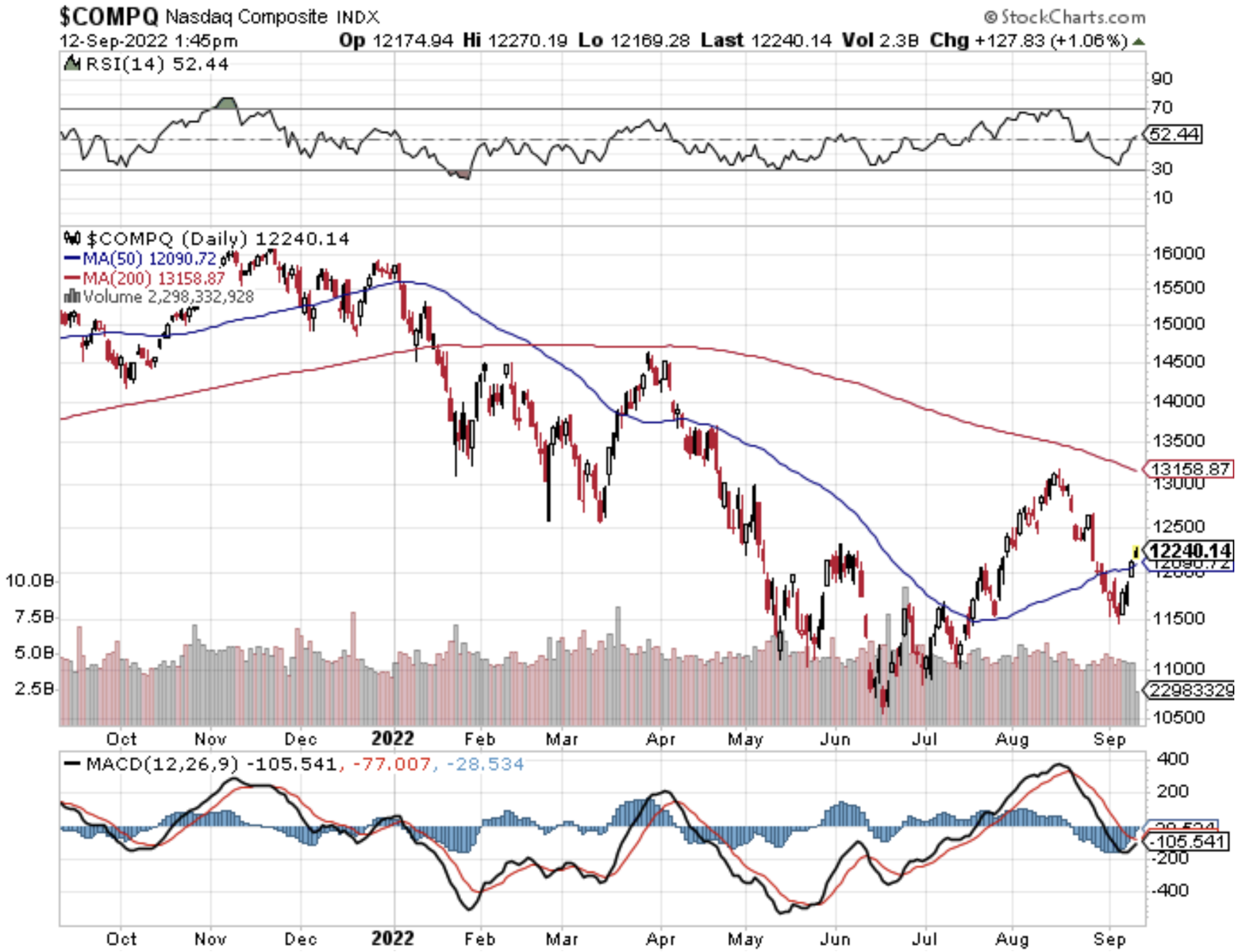
Offering new personalized lock screen designs doesn’t move the needle, but that doesn’t mean that tech stocks ($COMPQ) will go down and shareholders will lose money.
Quite the opposite for the tech cash cow business models.
She later goes on to complain that “The Fed seems to be responding to COVID-related supply shocks spanning 15 months the same way that Volcker battled inflation that had been brewing and building for 15 years. I would not be surprised to see a significant policy pivot in the next three to six months.”
First, Fed Central Bank governor Jerome Powell is nowhere close to the Volker era which saw short-term U.S. interest rates raised to 20% in 1981.
Powell is the antithesis of former Fed chair Paul Volcker and that’s why these bear market rallies are strong and lasting.
Powell wants a “soft landing” – that’s his goal.
The Fed has continuously said they aren’t ready to pivot and by pivot, I mean going from raising rates to lowering rates.
Wood believes that raising rates does nothing to help supply side shocks and that the Fed should start to condition itself to soon lower rates.
The Fed deals solely participates in demand-side policies.
The Fed is on record saying they plan to raise Fed Funds rates to 4% by the end of 2023 and keep rates there for an extended period.
That timeline seems to clash with Wood’s idea of dropping rates in 3 months.
The reason Wood has little credibility is because she has been saying the economy is experiencing deflation every 2 weeks for the past 3 years.
She has the most to lose because her portfolio possesses speculative tech stocks that mostly execute unprofitable business models and need low rates to refinance their large debts just to survive.
She continued to say that the Fed should be looking at metrics like “gold and copper” which “are flagging the risk of deflation.”
It’s quite bizarre that gold would be selected as the leading indicator for monetary policy.
Last time I checked, people can’t eat or drink gold and gold doesn’t heat your shower or apartment, even if you can install golden toilets like Russian President Vladimir Putin. Consumers can’t drive gold either. Higher or lower gold prices don’t indicate that our discretionary budgets are crashing or bulging either.
She also says to completely ignore employment because it’s a “lagging indicator.” This last sentence is false as well as it seems she is confusing this with the unemployment rate being a lagging indicator.
Unfortunately for Wood, the Fed slowly raising rates means it will be longer until they lower them because rates are still highly accommodative.
The silver lining for Wood is that the Fed is more worried about breaking the stock market which could evaporate trillions of dollars in stock market wealth.
Bear market rallies are essential for a soft landing, and we are seeing them in full force.
The last thing investors need is a crashing stock market and impotent tech companies. Remember that Silicon Valley and the tech industry are still the drivers of the US economy.
The Fed will do what they need to do to engineer the result of a soft landing regardless of Cathie Wood.
“There are a lot of politicians who are just obstructionists.” – Said CEO of Salesforce Marc Benioff