
Global Market Comments
September 15, 2022
Fiat Lux
Featured Trade:
(ON EXECUTING MY TRADE ALERTS)


Global Market Comments
September 15, 2022
Fiat Lux
Featured Trade:
(ON EXECUTING MY TRADE ALERTS)
From time to time, I receive an email from a subscriber telling me that they are unable to get prices on trade alerts that are as good as the ones I get.
There are several possible reasons for this:
1) Markets move, sometimes quite dramatically so. That’s why I include a screenshot of my personal trading account with every trade alert to reliably source the price for the readers.
2) Your Trade Alert email was hung up on your local provider’s server, getting it to you late. This is a function of your local provider’s lack of adequate capital investment in their own network and is totally outside our control.
3) The spreads on deep-in-the-money options spreads can be quite wide. This is why I recommend that readers only place limit orders to work in the middle market. Make the market come to you. Never buy at market or pay the offered side of the market unless you are in a stop-loss situation.
4) Hundreds of market makers read Global Trading Dispatch and many have attached algorithms to my service. The second they see one of my Trade Alerts, they adjust their markets accordingly. You may be fast, but you’re not as fast as an algorithm.
This is especially true for deep-in-the-money options. A spread can go from totally ignored to a hot item in seconds. I have seen daily volume soar from 10 contracts to 10,000 in the wake of my Trade Alerts.
On the one hand, this is good news, as my Trade Alerts have earned such credibility in the marketplace, with a 95% success rate. It is a problem for readers encountering sharp elbows when attempting executions in competition with market makers.
5) Occasionally, emails just disappear into thin air. We use cutting-edge technology, and sometimes it just plain doesn’t work.
This is why I strongly recommend that readers sign up for my free Text Alert Service as a backup. Trade Alerts are also always posted on the website as a secondary backup and show up in the daily P&L as a third. So, we have triple redundancy here. To sign up for the text alert service, please email support@madhedgefundtrader.com and put Text Alert Service in the subject line.
6) Options trades are now executed on 11 different exchanges. With two-legged spreads, one leg can be filled on one exchange while the second is filled on another. As a result, one online broker can show a spread trading through your limit other, while at another, it is ignored. I know this can be frustrating, but it is a fact of modern life.
The bottom line for all of this is that the prices quoted in my Trade Alerts are just ballpark ones with the intention of giving traders some name-picking and directional guidance. I pick the name and the direction and that is the heavy lifting when picking winning trades.
You have to exercise your own judgment as to whether the risk/reward is sufficient with the prices you are able to execute yourself.
Sometimes it is better to pay up by a few cents rather than miss the big trend. The market rarely gives you second chances.
Good luck and good trading.
John Thomas

“We have the intelligence of a moss growing on a rock compared to nature as a whole…Don’t get hung up on your views of how things should be because you’ll miss out on learning how they really are,” said hedge fund legend Ray Dalio.
Mad Hedge Technology Letter
September 14, 2022
Fiat Lux
Featured Trade:
(JOB MARKET WORKING AGAINST TECH STOCKS)
(TWLO), (META), (NFLX)

As the tech job cuts go from bad to terrible, how does this shake out the tech sector?
Just this morning, Twilio (TWLO) announced a major purge sacking 11% of its workforce to focus on reducing operating costs and improving margins.
Is this the end of it for the mighty tech machine?
Hardly so.
Tech companies will get more lean, efficient, and cutthroat which many might argue they should have been like that in the first place.
It’s somewhat true that tech business models got somewhat bloated in the era of euphoria.
Some unnamed big tech companies almost became like adult daycare centers.
Like overshooting in terms of revenue, development, and achievements to the upside in tech, and I acknowledge there was a lot to celebrate, I believe that the same works in reverse.
Staff at tech companies will be disposed of ruthlessly, and tech companies will most likely overcut jobs as a way to get their points across and show shareholders that they will flesh out costs during tough times.
Tough times in the big tech world mean less than growth margins, but they are still doing better than any small business who are outright going bankrupt.
Tech companies are in an advantageous position because the technology they harness can be used to scale up using software.
Less staff that manufactures higher productivity is an executive’s dream.
This time around, I firmly believe that automation will start to reach further up the employment chain because automation gets better with each iteration.
Humans also complain, get sick, need bathroom and coffee breaks, ask for promotions and raises when software code doesn’t.
We aren’t to the point of one CEO and the rest bots and software, but that’s the direction we are headed.
The silver lining for many of these fired tech workers is that the labor market is on fire. Although the unemployment rate ticked up to 3.7% last month, it’s still hovering at a 50-year low. The data is there – there are about two job openings for every unemployed person.
More than 50,000 tech workers have been laid off since the beginning of this year.
These fired tech workers will be able to find new jobs rapidly and in many cases with a juicy promotion, higher wage, and better benefits like 100% remote work opportunities, because there is still a huge shortage of qualified workers. Skills are fungible too.
Many will be able to pivot into the financial world and find jobs on Wall Street, who for the past generation have been losing talent to tech.
As interest rates rise, banks become winners.
Lastly, the pedestrian interest rate rises executed by the US Central Bank means that the job market will stay a lot hotter than first expected.
Even if they do get to 4% in the Fed Funds rate by the end of 2023, 4% is still historically low and companies will still be hiring albeit with a more measured approach and lower wages.
The slow pace of rises hurt tech because it allows the fired workers more time and better opportunities to get entrenched in a new sector while job offers are still plentiful.
The net result is the opposite of what the Fed wants which is more inflation as fired tech workers rotate into better-paying jobs spending even more money on goods and services.
This feeds into the higher inflation problem.
In short, this is a death-by-a-hundred-cuts sort of reaction for tech stocks. Tech stocks won’t explode to the upside until the workers can’t just re-up to a cushy healthcare job or Wall Street job like now.
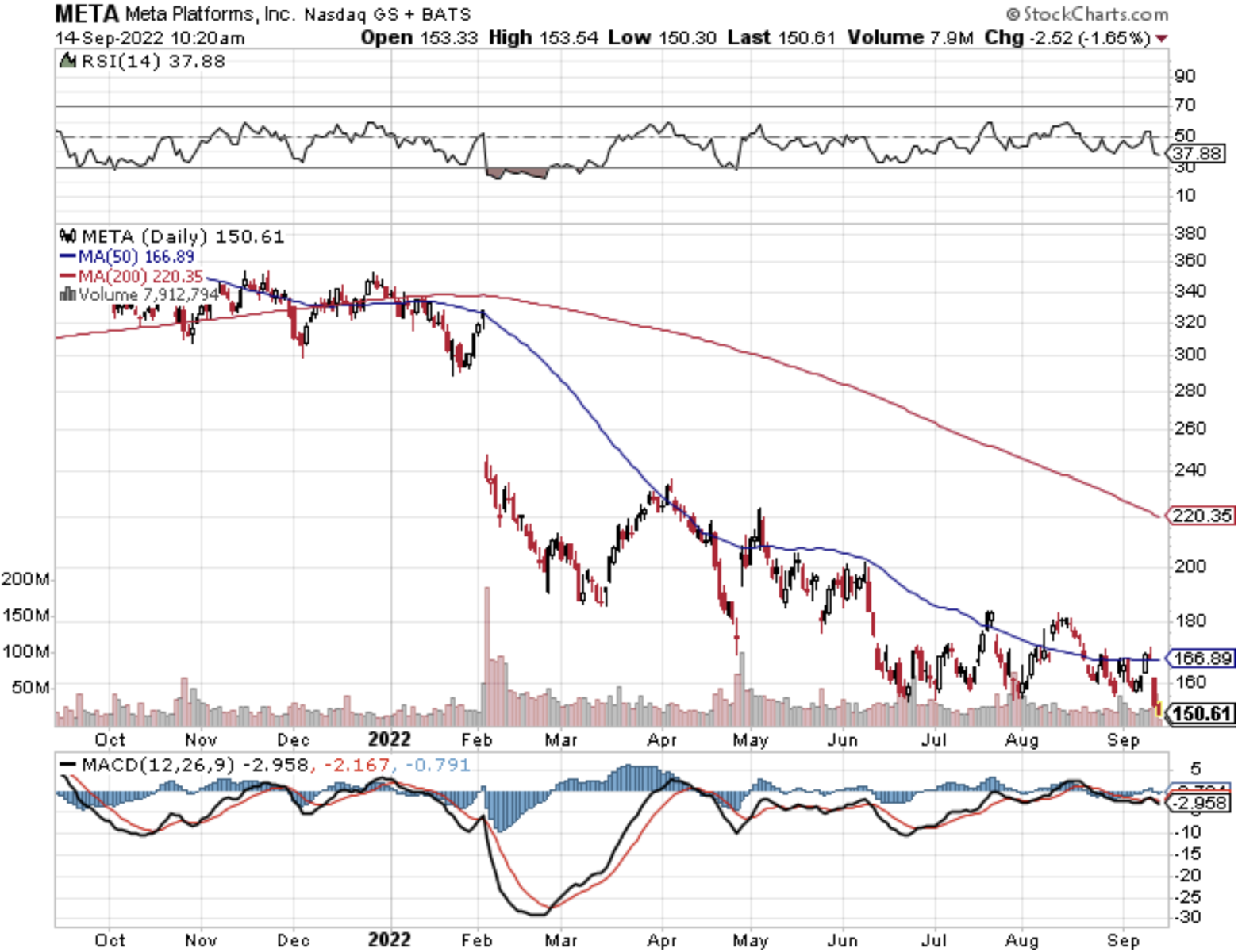
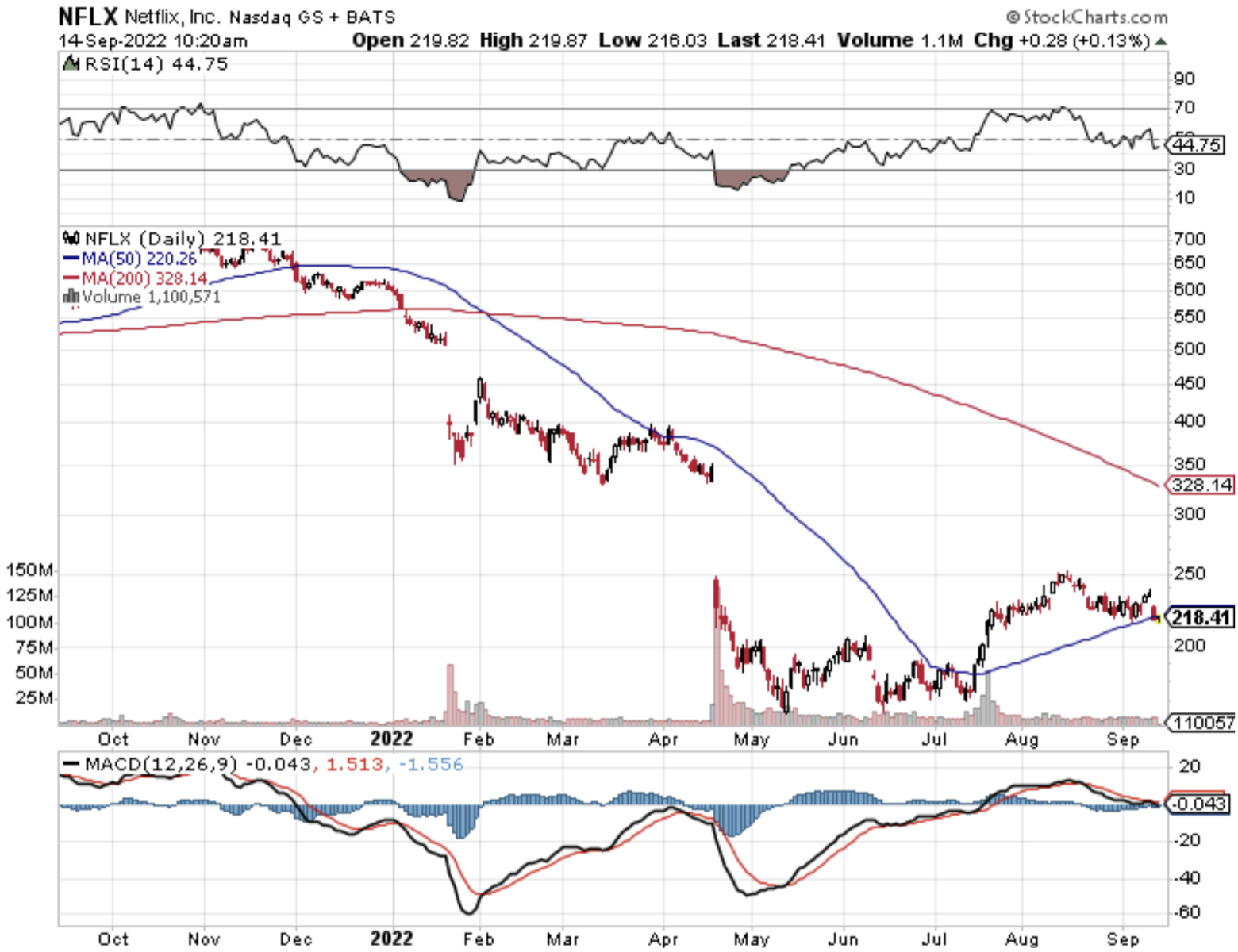
Short every rally in wounded tech stocks like Facebook (META) and Netflix (NFLX).

“Don't chase a girl, let the girl chase you.” – Said Founder and CEO of Softbank Masayoshi Son

When John identifies a strategic exit point, he will send you an alert with specific trade information as to what security to sell, when to sell it, and at what price. Most often, it will be to TAKE PROFITS, but, on rare occasions, it will be to exercise a STOP LOSS at a predetermined price to adhere to strict risk management discipline. Read more
When John identifies a strategic exit point, he will send you an alert with specific trade information as to what security to sell, when to sell it, and at what price. Most often, it will be to TAKE PROFITS, but, on rare occasions, it will be to exercise a STOP LOSS at a predetermined price to adhere to strict risk management discipline. Read more
Global Market Comments
September 14, 2022
Fiat Lux
Featured Trade:
(WHAT EVER HAPPENED TO THE GREAT DEPRESSION DEBT?),
($TNX), (TLT), (TBT)

When I was a little kid during the early 1950s, my grandfather used to endlessly rail against Franklin Delano Roosevelt.
The WWI veteran, who was mustard gassed in the trenches of France and was a lifetime, died in the wool Republican, said the former president was a dictator and a traitor to his class, who trampled the constitution with complete disregard.
Republican presidential candidates Hoover, Landon, and Dewey would have done much better jobs.
What was worse, FDR had run up such enormous debts during the Great Depression that, not only would my life be ruined, so would my children’s lives.
As a six-year-old, this disturbed me deeply, as it appeared that just out of diapers, my life was already going to be dull, brutish, and pointless.
Grandpa continued his ranting until a three pack a day Lucky Strike non-filter habit finally killed him in 1977.
He insisted until the day he died that there was no definitive proof that cigarettes caused lung cancer, even though during his war, they referred to them as “coffin nails.”
He was stubborn as a mule to the end. And you wonder whom I got it from?
What my grandfather’s comments did do was spark in me a lifetime interest in the government bond market, not only ours, but everyone else’s around the world.
So, what ever happened to the despised, future destroying Roosevelt debt?
In short, it went to money heaven.
And here I like to use the old movie analogy. Remember, when someone walked into a diner in those old black and white flicks? Check out the prices on the menu on the wall. It says “Coffee: 5 cents, Hamburgers: 10 cents, Steak: 50 cents.”
That is where the Roosevelt debt went.
By the time the 20 and 30-year Treasury bonds issued in the 1930’\s came due, WWII, Korea, and Vietnam happened, and the great inflation that followed.
The purchasing power of the dollar cratered, falling roughly 90%. Coffee is now $1.00, a hamburger at McDonald’s is $5.00, and a cheap steak at Outback cost $12.00.
The government, in effect, only had to pay back 10 cents on the dollar in terms of current purchasing power on whatever it borrowed in the thirties.
Who paid for this free lunch?
Bond owners who received minimal and often negative real inflation-adjusted returns on fixed income investments for three decades.
In the end, it was the risk avoiders who picked up the tab. This is why bonds became known as “certificates of confiscation” during the seventies and eighties.
This is not a new thing. About 300 years ago, governments figured out there was easy money to be had by issuing paper money, borrowing massively, stimulating the local economy, creating inflation, and then repaying the debt in devalued future paper money.
This is one of the main reasons why we have governments, and why they have grown so big. Unsurprisingly, France was the first, followed by England and every other major country.
Ever wonder how the new, impoverished United States paid for the Revolutionary War?
It issued paper money by the bale, which dropped in purchasing power by two thirds by the end of conflict in 1783. The British helped too by flooding the country with counterfeit paper Continental money.
Bondholders can expect to receive a long series of rude awakenings sometime in the future.
No wonder Bill Gross, the former head of bond giant PIMCO, says he will get ashes in his stocking for Christmas next year.
The scary thing is that eventually, we will enter a new 30-year bear market for bonds that lasts all the way until 2049. However, after last month’s frenetic spike up in bond prices and down in bond yields, that is looking more like a 2022 than a 2019 position.
This is certainly what the demographics are saying, which predicts an inflationary blow-off in decades to come that could take short term Treasury yields to a nosebleed 12% high once more.
That scenario has the leveraged short Treasury bond ETF (TBT), which has just cratered down to $23, double to $46, and then soaring all the way to $200.
If you wonder how yields could get that high in a decade, consider one important fact.
The largest buyers of American bonds for the past three decades have been Japan and China. Between them, they have soaked up over $2 trillion worth of our debt, some 12% of the total outstanding.
Unfortunately, both countries have already entered very negative demographic pyramids, which will forestall any future large purchases of foreign bonds. They are going to need the money at home to care for burgeoning populations of old age pensioners.
So who becomes the buyer of last resort? No one, unless the Federal Reserve comes back with QE IV, V, and VI. QE IV, in fact, has already started.
There is a lesson to be learned today from the demise of the Roosevelt debt.
It tells us that the government should be borrowing as much as it can right now with the longest maturity possible at these ultra-low interest rates and spending it all.
With real, inflation adjusted 10-year Treasury bonds now posting negative yields, they have a free pass to do so.
In effect, the government never has to pay back the money. But they do have the ability to reap immediate benefits, such as through stimulating the economy with greatly increased infrastructure spending.
Heaven knows we need it.
If I were king of the world, I would borrow $5 trillion tomorrow and disburse it only in areas that create domestic US jobs. Not a penny should go to new social programs. Long-term capital investments should be the sole target.
Here is my shopping list:
$1 trillion – new Interstate freeway system
$1 trillion – additional infrastructure repairs and maintenance
$1 trillion – conversion of our energy system to solar
$1 trillion – construction of a rural broadband network
$1 trillion – investment in R&D for everything
The projects above would create 5 million new jobs quickly. Who would pay for all of this in terms of lost purchasing power? Today’s investors in government bonds, half of whom are foreigners, principally the Chinese and Japanese. Notice that I am not committing a single dollar in spending on any walls.
How did my life turn out? Was it ruined, as my grandfather predicted?
Actually, I did pretty well for myself, as did the rest of my generation, the baby boomers.
My kids did OK too. One son just got a $1 million, two year package at a new tech startup and he is only 30. Another is deeply involved in the tech industry, and my oldest daughter is working on a PhD at the University of California. My two youngest girls became the first ever female eagle scouts.
Not too shabby.
Grandpa was always a better historian than a forecaster. But he did have the last laugh. He made a fortune in real estate, betting correctly on the inflation that always follows big borrowing binges.
You know the five acres that sits under the Bellagio Hotel in Las Vegas today? That’s the land he bought in 1945 for $500. He sold it 32 years later for $10 million.
Not too shabby either.
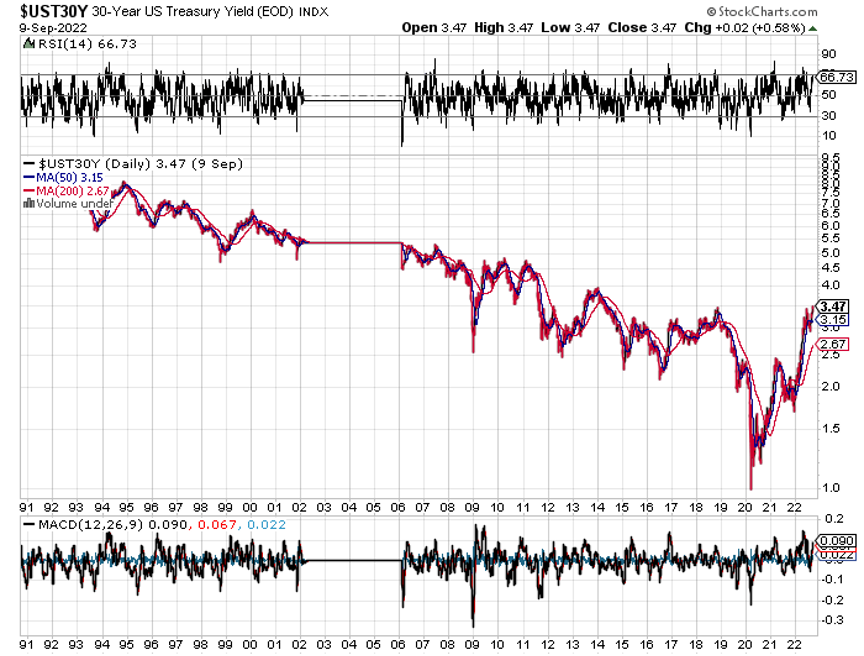
32 Years of 30-Year Bond Yields
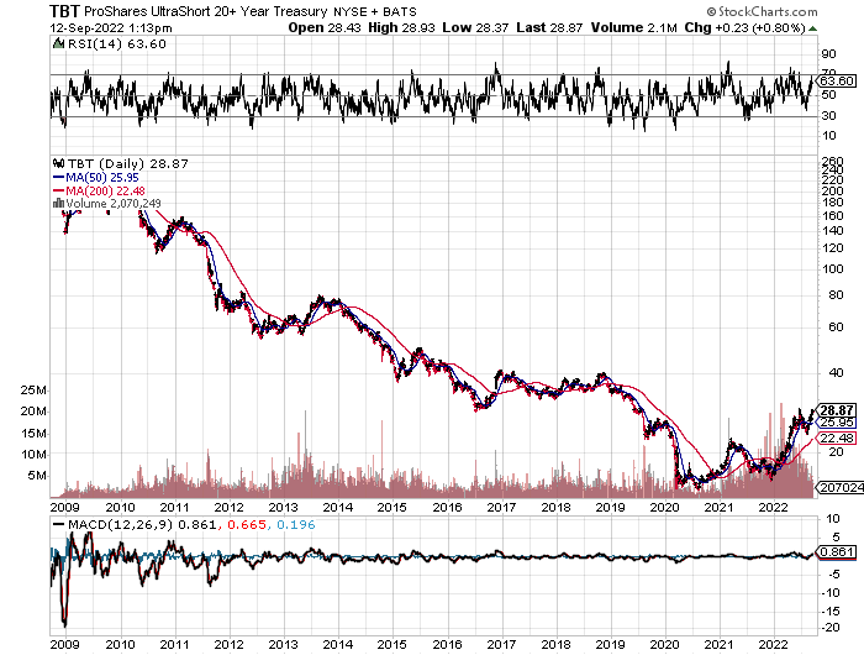

Not Too Shabby for $500
