
Global Market Comments
January 30, 2025
Fiat Lux
Featured Trade:
(THE MAD HEDGE DICTIONARY OF TRADING SLANG)


Global Market Comments
January 30, 2025
Fiat Lux
Featured Trade:
(THE MAD HEDGE DICTIONARY OF TRADING SLANG)
(SFTBY), (ORCL), (NVDA), (CEG), (NEE), (MSFT), (VST), (TSM), (AVGO), (GOOG)
At 5 AM, my phone lit up with texts from three hedge fund managers I know, all asking the same thing: "Is this Stargate thing for real?"
Honestly, I wasn’t even surprised. The messages rolled in just a day after Trump unveiled what could be the mother of all tech initiatives: a $500 billion AI infrastructure project dubbed "Stargate," with heavyweights like OpenAI's Sam Altman, SoftBank's (SFTBY) Masayoshi Son, and Oracle's (ORCL) Larry Ellison standing by his side.
But before we get carried away with the headlines, let's look at what really matters to us.
First, some context: The global AI infrastructure market was just $38.1 billion in 2023. That makes this initiative 13 times bigger than the entire current market.
If you're wondering why tech stocks popped on the news, there's your answer.
The semiconductor plays here are particularly compelling. NVIDIA (NVDA) is still trading at under 20X earnings despite 60% growth - a valuation that looks increasingly disconnected from reality given recent developments.
Morgan Stanley's latest channel checks show Blackwell chips are fully sold out for the next 12 months before production even begins, with "several billion dollars" in revenue expected in Q4 FY25 alone.
What's really getting my attention is the GB200 NVL72 system specifications.
It enables up to 72 GPUs to be connected via NVLink, acting as a single GPU with aggregate bandwidth of 259 terabytes per second - about 10 times higher than Hopper.
The implications for data center deployments are staggering.
Speaking of data centers, Oracle has already broken ground on their first Texas facility. It's a million square feet, and they're planning 20 more just like it.
Their stock jumped 8% on the announcement, but here's what most analysts missed: each facility requires approximately 1 gigawatt of power.
This is roughly equivalent to a mid-sized nuclear plant. That's not just a lot of power – that's "Back to the Future" DeLorean levels of energy consumption.
Looking at these numbers made me realize that the energy stocks might just be the sleeper opportunity here.
AI queries consume 3-36 times more energy than traditional searches, and current projections show AI consuming up to 19% of U.S. data center power by 2028.
This creates a compelling case for utilities positioned to serve this growing demand.
Constellation Energy (CEG) stands out in this space. They're already producing about 10% of the nation's emission-free energy, with CO2 emissions 4.5 times lower than NextEra (NEE).
Their recent 20-year Microsoft (MSFT) deal for data center operations is just the beginning. The $840 million government contract they just landed provides exactly the kind of revenue certainty I look for in utility plays.
Vistra Corp (VST) deserves more attention than it's getting. Their dominant position in the Electric Reliability Council of Texas (ERCOT) – where most of these new facilities will be built – puts them in prime position.
The ERCOT market is projected to see 5% annual demand growth through 2030. With their recent $6.8 billion Energy Harbor acquisition, they're now the second-largest nuclear operator in the country.
Meanwhile, Taiwan Semiconductor's (TSM) position here is crucial.
Reports project that we'll need 1.2 to 3.6 million additional wafers by 2030, requiring 3-18 new fabrication plants.
The strategic importance of this manufacturing capacity has already been seen - through Broadcom (AVGO), TSMC has secured manufacturing slots for OpenAI's first custom chip targeting 2026.
This semiconductor build-out is part of a larger global race for AI dominance. OpenAI's recent policy white paper estimates "$175 billion in global funds awaiting investment in AI projects."
Their warning is clear: if these funds don't land in U.S. projects, they'll flow to China-backed initiatives instead.
Now, let's talk about what could go wrong.
The infrastructure constraints are real - Texas's power grid can barely handle summer AC demand as it is.
Water usage for cooling these facilities is another major concern, especially given Texas's history with water scarcity.
We should also consider execution risk.
Trump's track record with big tech announcements is mixed - remember the 2017 Foxconn promise of a $10 billion Wisconsin factory that ended up as a scaled-down $672 million project?
This history of grand announcements versus actual delivery adds weight to current skepticism.
On top of these, Anthropic's CEO Dario Amodei called this plan "a bit chaotic" (tech exec speak for "What are they smoking?"), and Elon Musk took to X to throw shade at SoftBank's funding claims.
Still, the market seems to be ignoring these risks.
When I mentioned them to a tech CEO friend last night, he just shrugged and said "they'll figure it out." Maybe, but I'm watching the ERCOT capacity numbers like a hawk.
And before I forget, keep your eye on Broadcom too.
Their inference chip strategy, led by those Google (GOOG) TPU veterans, could be the dark horse here. While everyone's focused on training chips, the real volume play might be in inference.
For now, I'm holding steady with modest long positions in companies directly benefiting from this infrastructure buildout.
But in Texas, where everything is bigger, so are the opportunities—and the risks. The Volatility Index sitting at $12 tells me it's time to dig deeper.

When John identifies a strategic exit point, he will send you an alert with specific trade information as to what security to sell, when to sell it, and at what price. Most often, it will be to TAKE PROFITS, but, on rare occasions, it will be to exercise a STOP LOSS at a predetermined price to adhere to strict risk management discipline. Read more
Mad Hedge Technology Letter
January 29, 2025
Fiat Lux
Featured Trade:
(DIGITAL MIGRATION HITS THE U.K.)
(SKY), (BBC), (TIKTOK), (GOOGL)

If you thought that the cord-cutting trend is just confined to the United States – it’s not.
It’s happening at breathtaking speed throughout the world.
The biggest English language media base after the United States is also experiencing a huge step forward in digital migration.
How do know that?
Take a look at their linear flagship media company Sky.
They are drowning financially and have taken the hacksaw out to cut in large chunks.
Sky is planning to cut about 2,000 jobs in the UK in 2025, as the media group moves towards more internet-based services. They fired 1,000 people last year. BBC is also going through a similar type of change.
It is understood a significant number will be engineers, as fewer people require satellite dishes to be installed at home.
Sky currently employs about 26,000 people in the UK.
Sky has been shifting its strategy since it was bought by the US media giant Comcast for more than £30bn in 2018.
The British broadcaster wants digital revenues - which accounted for 27% of its total last year - to pass 50% by 2030.
It comes as Sky News tries to reverse a slump in audience due to the plummeting content quality of legacy media stations.
This has forced many subscribers to ditch Sky and go with higher-quality content platforms and channels.
Sky is racking up losses which total in the 100’s of millions pounds PER YEAR, and the hard question of what is the point of paying these high-profile personalities and expensive international assignments when they just drive the audience away?
The same could be said about CNN’s decision to demote media activist Jim Acosta who was unceremoniously downgraded to CNNs worst time slot yesterday.
He resigned instead announcing his resignation on air and clearly couldn’t accept a lesser role at his company.
With the losses in revenue staggering, for some reason, US media giant Comcast guaranteed to maintain the funding commitments until 2028.
Then there is the intense question of whether there will be a Sky after 2028, because at that point, who will be left watching it?
Comcast has already taken an $8.6bn write-down on its investment in Sky.
Staff at Sky News are preparing to unionize in protest against pay and working conditions.
It is understood that a group of employees at the channel have held preliminary talks with the National Union of Journalists (NUJ) about joining the group.
Attempting to unionize will cause the acceleration of firings from legacy media, but it demonstrates the extreme level of desperation at these dinosaur channels.
The future of Sky News, which is led by veteran Murdoch executive David Rhodes, is likely to be on the agenda amid ongoing budget discussions between Sky and Comcast.
Part of the massive changes the world is grappling with is how this new digital media fits into how we live everyday life.
Instead of corporate entities giving us what they think is the “truth,” media has fractured off into individuals doing their own version of media.
Much of this new media is accessed for free on platforms that only require a free signup.
Is it almost impossible for corporate media to compete with free content, especially when corporate media is one of the lowest forms of quality content available to the public?
If X.com was still a private company, then that is the best social media stock available. TikTok is a private company owned by the Chinese. YouTube is one of the platforms I am talking about, but that is part of a bigger company in Google.

“If you worry about financial Armageddon, it is indeed metaphorically the time to stock your bunker with guns, ammunition, canned food and gold bars.” – Said Economist Nouriel Roubini

(OPTION STRIKES: WHY WE CHOOSE A PARTICULAR STRIKE)
January 29, 2025
Hello everyone
What strikes do I choose and why
Strike prices refer to the specific price you can buy or sell an underlying stock when exercising an option contract. In other words, it’s the fixed price defined within an option that determines whether you can profit based on the current market price of the underlying asset, categorized as “in the money”, “at the money”, or “out of the money” depending on its relation to the current market price.
“In the Money”
If the current market price is higher than the strike price, the option is considered “in the money”. When putting your strikes “in the money” you are being more conservative.
“At the Money”
If the current market price is equal to the strike price. This is also a conservative stance.
“Out of the Money”
If the current market price is below the strike price, the option is considered “out of the money” and has no intrinsic value. When putting your strikes “out of the money” you tend to be more aggressive in your approach and taking on a bit more risk.
What is intrinsic value?
In options trading, “intrinsic value” refers to the immediate profit an option holder would gain if they exercised the option today, which is calculated by subtracting the strike price from the current market price of the underlying asset.
So, for example, if a stock is trading at $100, and a call option has a strike price of $90, the intrinsic value of that call option would be $10 ($100-$90).
Only options that are currently “in the money” have intrinsic value.
The total price of an option (premium) is made up of intrinsic value and time value (extrinsic).
Implied Volatility
IV is the level of volatility embedded in the option price. Generally speaking, the bigger the stock movements, the higher the level of implied volatility. Most stocks have different levels of implied volatility for different strike prices. John often uses this volatility in his option trading decisions. He often trades Tesla because of the high volatility and sends out “in the money” trade alerts.
If the stock has very low implied volatility, you should avoid going for “out of the money” option strikes.

PORTFOLIO UPDATE
Nvidia lost around $600b in value in one day this week. That’s a pretty hefty number. And it was all because of one headline that completely freaked investors out.
I would be looking to take some profits on this stock, as I don’t think it has found a bottom yet and could have further to fall.
We have done well on this stock, so it is wise to lock in some profits now.
Recommendation: Take at least 50% of profits on Nvidia stock.
MY AIRBNB EXPERIENCE IN THE U.S.
Last week I gave an insight into some of my experiences with Uber drivers in the U.S. and what their outlook was.
Today, I’m going to talk about Airbnb and my experience with this company, and the hosts I have encountered throughout the U.S.
Airbnb is not everyone’s cup of tea. Particularly if you are staying in a room in someone’s home. A myriad of rules are put before you as though you were staying in some sort of compound. For anything you break or ruin, there is always a dollar penalty. Loud noise or parties are out of the question. Not that I was indulging in any of that frivolity. But, at times it can seem a bit constricting and somewhat unsettling. Furthermore, at a couple of places I was not able to use the kitchen, so had to resort to prepared food, which was not always enticing.
My experience sharing the home with one family was quite interesting. This lady had a couple of her adult children living with her at home as well as one grandchild. Her adult children did not seem to work, and I didn’t ask why. She smoked and had a smoker’s cough. I noticed she had a tin of air freshener on a side table in the family room and often used it to attempt to hide the smell of smoke. At other times I witnessed her waving the smoke away with her arm. None of these worked.
She appeared quite disgruntled with the world and would talk to me for what seemed like a long time about the state of the U.S. She almost religiously listened to all sorts of political podcasts and watched programs focused on the possibility of extra-terrestrial beings. She was a staunch Democrat and had expressed her alignment by putting up large photos of the Democrat candidate – Kamala Harris - at the front of her home. This was a trend I saw throughout the neighbourhood. So, it became obvious which candidate each home supported as larger-than-life photos were erected in the front yard or just near their front door. (In Australia, we have photos of candidates erected in strategic locations on footpaths before an election, but I have never seen households expressing their support for one or the other candidate by putting up large photos in their front yard. We don’t hero-worship our leaders like the U.S. does. We are more concerned with the environment than putting a leader on a pedestal. To Australians, the Prime Minister has a job to do, so he should just get on with it and do it. No fanfare needed).
Anyway, at this home I was usually always the first person up in the morning. I emptied the dishwasher and washed up a pile of plates that sat in the sink. Then I made my morning cup of tea and went to work.
On occasion, I also cooked them some homemade treats, such as biscuits, and slices. They were all demolished in a very quick time, almost as though they had never tasted a home-cooked treat. I must say it was great to be able to use a kitchen to make my meals.
One conversation we had focused on the bookings she was getting for her Airbnb room. She said that bookings had begun to slow, and she didn’t know why. She almost answered her own question by arguing that the U.S. now had a variety of accommodations for visitors, that were not necessarily hotels, so this may impact Airbnb long-term.
At another Airbnb, where I had a room in a family home, the host was a Chinese lady. She had three bedrooms upstairs, and two were left for Airbnb visitors. Another room was for storage. This lady – let’s call her Kathy - chose to sleep on a mattress on the floor in a corner of her living area, which was sectioned off with a sheet or some cloth that was hanging from a partition. Her husband had died a few years ago, and this provided a good income for her. She owned a home back in China but said she was not likely to return. Her son had been educated at a private university in the U.S. and worked as an interpreter and commentator on U.S./China international affairs. He highlighted events happening in China, that many people were not aware of, and drew attention to human rights abuses that were commonplace throughout China. I met him once. He was very well-spoken and said he would never go back to China.
Kathy had a Green Card, but she didn’t hold a U.S. passport. She seemed anxious about life in general; she had a car but never used it, she said she didn’t ever travel. She had her groceries; fruit & vegetables delivered and never ate any fast food. At one sitting I saw her eat a bowl of mixed green leaves. No dressing. She drank water – no tea or coffee. She knew I liked tea, so she would boil the kettle when she heard me get up in the morning and would place a nice cup and saucer & teabag on the dining table for me to use.
She often talked to me about China and how restrictive it was. She commented that if you were heard to be making disparaging comments about China, the government, or the country’s policies in general, you were often called upon to visit a special government office and explain your comments to see if they could help you better understand your position, and how you should be thinking, in some way. Seems like you can’t trust your neighbours in China. And Kathy pointed out that fact. She said the Chinese were very distrustful of each other but were more likely to trust a foreign visitor. She said the freedoms in America were taken for granted.
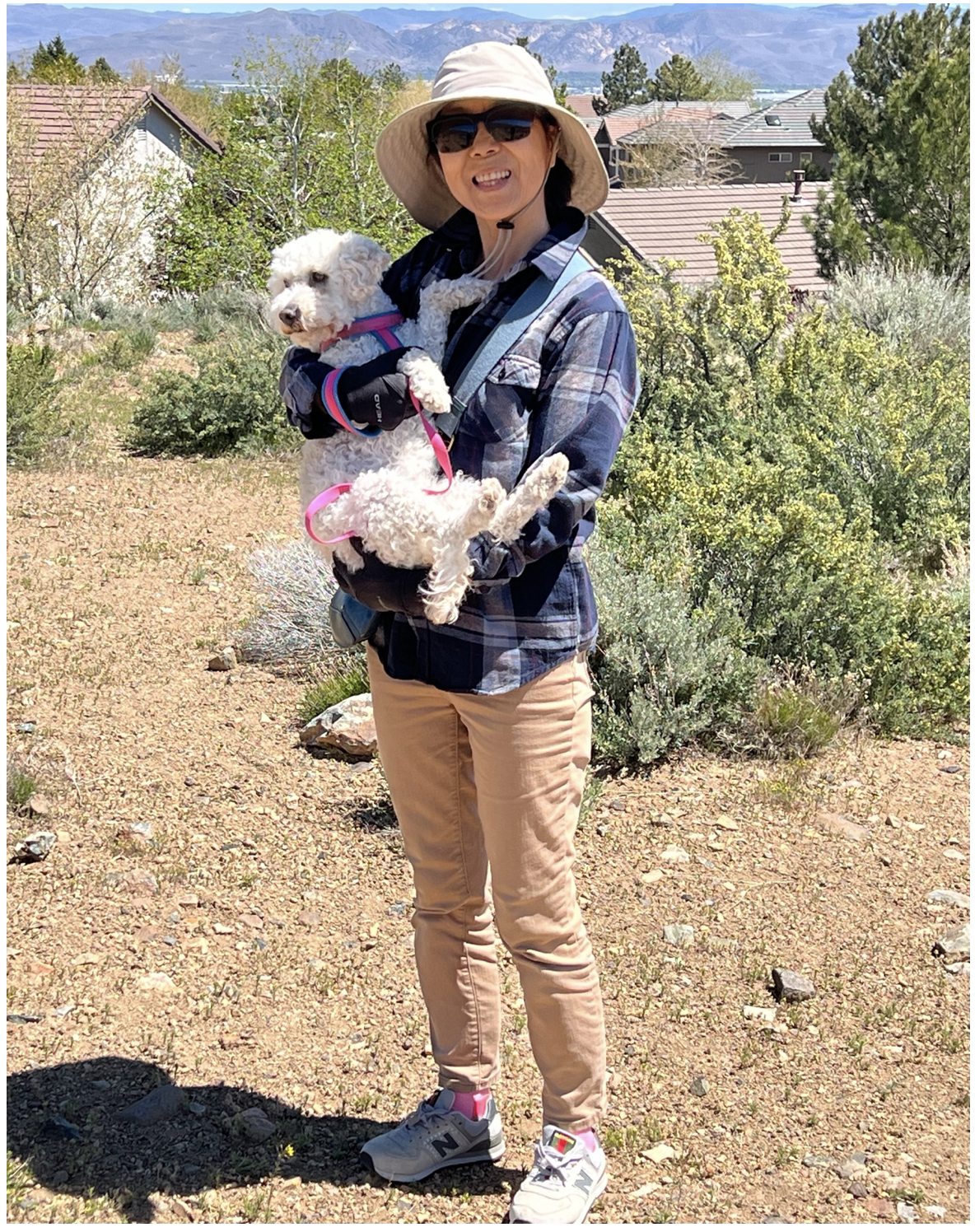
My Chinese Host
Anyway, I’ll end off here with a brief observation of and exchange with a hotel employee. He brought my luggage up to my room. I asked him about the hotel, and he described what was available at the hotel. I asked him how long he had been working at the hotel. He said a few years. He seemed very disillusioned with the world. His face looked drawn, and his non-verbal communication betrayed a brow-beaten experience. He had worked in the corporate world and called it a dog-eat-dog environment, where you have no friends. He was obviously well educated as he said he spoke a couple of languages. He was not in his later years, but he moved slowly and was looking forward to retirement on a ranch far away from suburbia. I gave him a tip and wished him luck.

Cheers
Jacquie
When John identifies a strategic exit point, he will send you an alert with specific trade information as to what security to sell, when to sell it, and at what price. Most often, it will be to TAKE PROFITS, but, on rare occasions, it will be to exercise a STOP LOSS at a predetermined price to adhere to strict risk management discipline. Read more
Global Market Comments
January 29, 2025
Fiat Lux
Featured Trade:
(WHY GLOBALIZATION WORKS)


Having been a vociferous supporter of globalization since its dawn, first during a decade spent as a reporter for The Economist magazine, and then as an investor, I can explain how our international trading system works, and especially why it works for the US.
While waiting for a flight at Miami Airport, there was a polyglot of travelers from all over the world.
Large groups of Chinese were led by flag-bearing guides. Italian Millennials mobbed the bars at night. English couples strolled the majestic limestone fortress walls soaking up the sunshine.
There was even the occasional American student backpacker repeating my own adventure from the 1960’s.
And you know what? This disparate international group shared many things in common.
Most of them spent much of the day glued to iPhones or Androids run by US-designed apps. Many were staying in accommodations organized by Airbnb (there were over 200 listings for the immediate Dubrovnik area).
They may have made the trip from the airport in an Uber cab. They wore Levis Strauss blue jeans. American pop music pulsed through their earbuds. Probably half of them arrived on a Boeing jet financed by the US Export-Import Bank.
In short, they were all sending enormous amounts of money to US companies and shareholders in more ways than they could possibly count, without realizing it.
You never used to see tourists from most countries, like Russia, Spain, Portugal, Italy, or Ireland.
They were too poor.
Rapidly rising standards of living created by globalization changed all of that, creating an enormous new market for American products, especially technology ones.
My Airbnb neighbors in Dubrovnik included a family from Malaysia and a young couple from South Korea.
You can see some of this impact in international balance of trade statistics. In 2024, the US ran a trade deficit with the world of $634 billion with consumer electronics, oil, clothes, and cars our largest imports.
Subtract our $294 billion surplus in services, which includes, financial services, education, patents, and other intellectual property, and that brings our current account deficit down by more than half to only $340 billion.
But that doesn’t tell the whole story.
Trade data completely misses the enormous number of products and services that are now given away FOR FREE in exchange for the chance of earning some uncertain revenue at some future date.
And I include none other than the esteemed Mad Hedge Fund Trader in this category. Something like 99% of the visitors to my site never pay anything.
The monetary market value of the research I have given away for free is probably worth tens of millions of dollars.
In a pre-Internet, pre-globalized world, a service covering so many asset cases and individual stocks in real-time might have cost $100,000, if not $1 million.
And you know what? It would have been worth it!
Multiply this effect on a global scale and you see what I am talking about.
Give up your name and email address, and you can obtain almost any kind of online service for nothing. And as far as I know, no government agency has any measurement of this whatsoever.
Needless to say, the United States is far and away the leader in this immeasurable field.
By the way, this might also be the reason why the published productivity data has been so poor, despite the fact that US GDP has grown by 20% since 2009. Everywhere I look productivity is skyrocketing, including my own.
It also might be the reason why Amazon continuously sports a nosebleed valuation. Much of what they provide is FREE, and therefore immeasurable.
Of course, globalization wrought havoc on your life if you went into it with the wrong job in the wrong industry and an inadequate skill set.
Blue-collar workers tied to textiles, shoes, toys, and other low-value-added manufacturing were toast, as their jobs fled offshore.
If you didn’t retrain, or adapt you became an angry, mostly white man.
As my friend, New York Times columnist Tom Friedman likes to say, “Average doesn’t cut it anymore.”
However, while the jobs are gone, the bulk of the profits stayed here in the US. American companies offshored the $ 2-an-hour jobs (mass assembly) but kept the $100 an hour ones (design and marketing).
As my friends in the Chinese government never fail to point out, if they build the iPhone for $100 and we sell it for $1,500, we are the big winners, not them.
They believe we are perpetuating 19th-century colonialism by making wage slaves of their workers.
They may be right.
Globalization enables the US dollar to continue as the world’s reserve currency, as almost all international trade is conducted in the buck.
That is one of the greatest free lunches of all time. It enables the US government to indirectly control the global economy through its own monetary policy. Some half of all US government debt is owned by foreigners.
When sanctions forced Iran to drop out of the international trading system what did they get? A Great Depression that cut their GDP by 25%. You can’t run a country of 80 million with oil barter deals, gold, and bitcoins alone.
There are also the huge defense benefits that globalization brings us.
Back in the early days, the main reason to steer a country into capitalism was to prevent it from going communist, and therefore becoming an enemy.
Grow your allies and shrink your enemies, and your defense costs shrink dramatically, raising our standard of living.
That is what has happened.
Increased trade also boosted foreign standards of living, therefore creating a growing market for American goods and services.
This was the whole point of the World Trade Organization, NAFTA, and the Trans-Pacific Partnership.
Humans rarely bite the hands that feed them. They are also highly unlikely to set fire to their paycheck or bomb the sources of income.
Make a foreigner a millionaire, and you turn him into a pacifist. I have seen this unfold time and again over the past half-century, be it in China, Russia, Vietnam, Cambodia, and most recently in Iran.
Create an embedded base of businessmen in any country who are getting rich off of you, and international relations invariably improve.
Any system based on greed is guaranteed to succeed.
A side benefit of all of this is that stock markets for up forever.
Since globalization started in earnest in 1951, the Dow Average has risen from $239 to $18,392, a prodigious gain of some 77-fold.
And you wondered why?
Globalization is the mechanism through which America is paid the dividend for all of the good deeds it has done and inventions it has created for the past century.
I am thinking about the construction of the Panama Canal, Lend Lease, and the Marshall Plan, as well as the transistor, memory chip, microprocessor, personal computer, Windows, the Internet, online commerce, the iPhone, and social media.
That is why globalization is a win-win-win for everyone.
There are really only two true communist countries left in the world, Cuba and North Korea, which never joined the international trading community. They also happen to have the planet’s lowest standard of living.
And Cuba will become totally capitalist within two years. Just give them a million iPhones, get them talking, and see what happens. Castro will become just another neighborhood in South San Francisco.
So why end a trading system from which America and its people have profited so mightily?
Exploring the Wonders of International Trade
