Featured Trade: (TUESDAY, JUNE 12, 2018, NEW ORLEANS, LA, GLOBAL STRATEGY LUNCHEON), (WHY YOUR FANG STOCKS ARE ABOUT TO DOUBLE IN VALUE), (FB), (AAPL), (NFLX), (GOOGL), (LMT), (ROKU), (HERE IS YOUR TOP-PERFORMING INVESTMENT FOR THE NEXT FIVE YEARS), (ITB), (PHM), (KBH), (DHI), (AVB), (CPS)
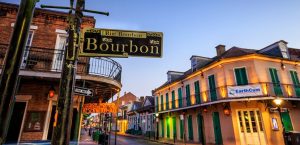
Come join me for lunch at the Mad Hedge Fund Trader's Global Strategy Update, which I will be conducting in New Orleans, LA, on Tuesday, June 12, 2018. An excellent meal will be followed by a wide-ranging discussion and an extended question-and-answer period.
I'll be giving you my up-to-date view on stocks, bonds, currencies, commodities, precious metals, and real estate. And to keep you in suspense, I'll be throwing a few surprises out there, too. Tickets are available for $268.
I'll be arriving at 11:30 AM, and leaving late in case anyone wants to have a one-on-one discussion, or just sit around and chew the fat about the financial markets.
The lunch will be held at an exclusive downtown restaurant. The precise location will be emailed with your purchase confirmation.
I look forward to meeting you and thank you for supporting my research.
To purchase tickets for the luncheon, click on our online store.
https://www.madhedgefundtrader.com/wp-content/uploads/2018/04/Bourbon-street-story-1-e1522701493927.jpg145300MHFTRhttps://madhedgefundtrader.com/wp-content/uploads/2019/05/cropped-mad-hedge-logo-transparent-192x192_f9578834168ba24df3eb53916a12c882.pngMHFTR2018-06-01 01:08:272018-06-01 01:08:27Tuesday, June 12, 2018, New Orleans, LA, Global Strategy Luncheon
The shares of FANGs are all about to double in value in the Silicon Valley if commercial real estate is any indication of the future growth rates.
The group is gobbling up office space at such a prodigious rate that only a vast expansion of their business would justify these massive long-term commitments.
Commercial real estate commitments are one of the most valuable leading indicators of stock performance out there. They show what the companies themselves think are their future prospects.
Apparently, the stock market agrees with me. Technology is virtually the only group of shares moving to new all-time highs in these otherwise dismal trading conditions.
Just this month Facebook (FB) signed a lease for the entire brand new 43-story Park Tower in downtown San Francisco, and that's just to house its Instagram business.
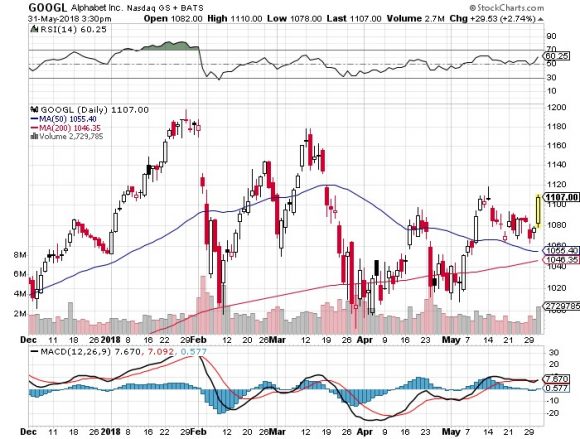
Google (GOOGL) is leasing 39% of the office space in Mountain View, CA. It is currently in negotiations with the nearby city of San Jose to build a skyscraper occupying an entire city block that will house 10,000 tech workers. It also is building another 1 million square feet near an old prewar dirigible landing strip in Moffett Park.
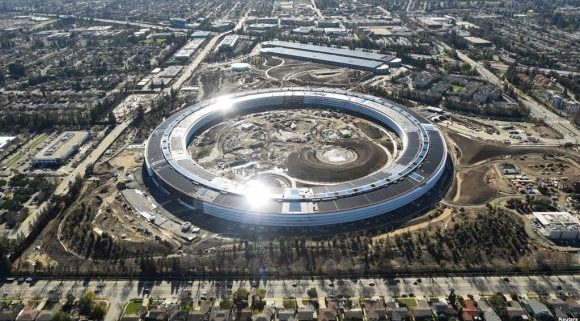
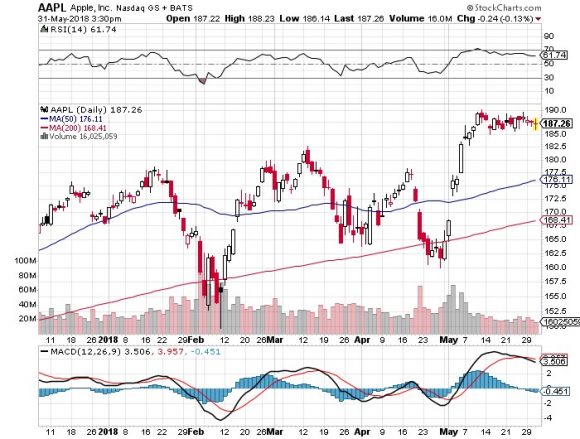
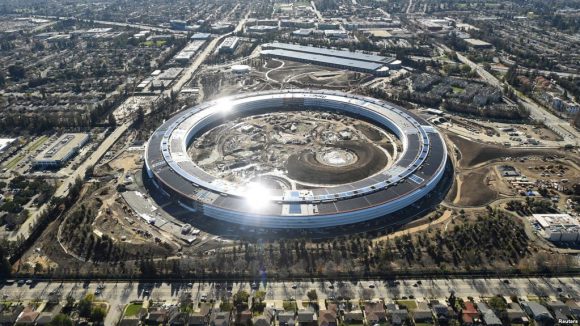
Apple (AAPL) is hogging some 69% of the office space in Cupertino, CA. It is just now moving into its new massive spaceship-inspired headquarters, where 10,000 workers will slave away. The world's largest company is currently on the hunt for a second headquarters location.
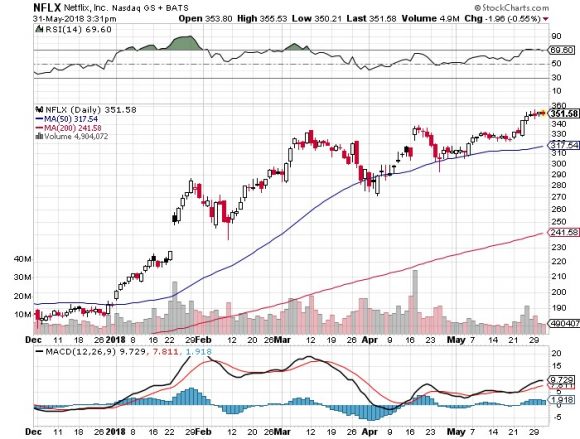
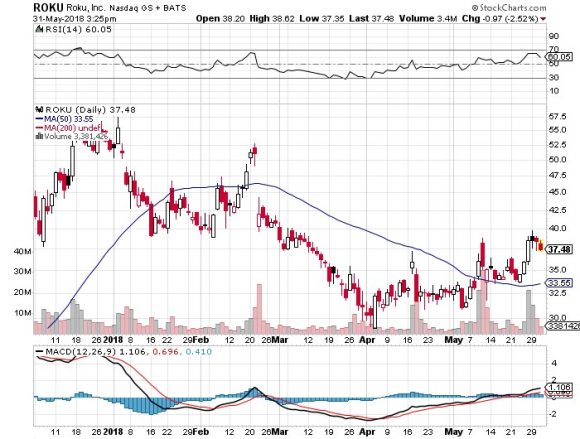
Netflix is slowly gobbling up Los Gatos, CA. It was recently joined by the set top device company Roku (ROKU), which is growing by leaps and bounds.
Fruit canning was the original industry of Silicon Valley at the turn of the 20th century, taking advantage of the surrounding peach, plum, and apricot groves. When I was a kid after WWII, defense firms such as Lockheed (LMT) took over, creating thousands of high-paying engineering jobs.
It didn't hurt that Stanford University was spitting distance away, and the University of California was just on the other side of the bay. These two schools supplied the manpower to fuel the hypergrowth ahead.
To say the growth has caused local headaches would be an understatement in the extreme. The San Francisco Bay Area now sports the world's most expensive residential housing. The median San Francisco home price has skyrocketed to $1,334,000 and requires an annual income of $334,000 to support it.
Small businesses such as dry cleaners, nail salons, restaurants, and barber shops have been driven out by soaring rents. It's not uncommon now to go out to dinner only to find a "closed" sign on your favorite nightspot. Your personal assistant now has to travel miles just to get your suits pressed.
As for traffic, forget about it. Rush hour has ceased to exist. Freeways are now jammed a nonstop 12 hours a day in the worst neighborhoods.
Success has its price, and this was never truer than in Silicon Valley.
The New Apple HQ
Where Instagram Now Lives
https://www.madhedgefundtrader.com/wp-content/uploads/2018/05/APPLE-HQ-story-2-image-6-e1527804149789.jpg326580MHFTRhttps://madhedgefundtrader.com/wp-content/uploads/2019/05/cropped-mad-hedge-logo-transparent-192x192_f9578834168ba24df3eb53916a12c882.pngMHFTR2018-06-01 01:07:092018-06-01 01:07:09Why Your FANG Stocks are About to Double in Value
Is gold your best performing asset for the next five years? Is it high-growth technology stocks? Energy stocks? Or maybe biotech shares?
How about French collectable postage stamps or vintage racing cars?
Nope, you're not even close. I'll give you a hint: You're probably sitting in it.
Yes, the best performing investment you will own for the next five years will most likely be the home you live in.
Psshaww you may say. Perhaps even balderdash! However, if you look at the crucial data that drives this long-ignored sector, my conclusions are unassailable.
If fact, you can pretty much count on your home to appreciate at a 3% to 4% annual rate until well into the next decade, and much more if you are fortunate enough to live on the red hot west coast.
Net out the copious tax breaks that still come with home ownership, and your take home will be even higher than that.
This beats the daylights out of stocks (SPY) (1.84% yield), 10-year Treasury bonds (TLT) (2.85%) and approaches junk bonds (HYG) (5.74%) in terms of the potential returns.
For a start, the Federal Reserve's go-slow policy on interest rate rises is hugely pro housing.
The conventional 30-year fixed home mortgage can now be had for a bargain 4.5%. And many finance their properties with the 5/1 ARMs that I have been recommending, which are currently going for only 3.25%.
Worried about what happens in five years when the interest rate is reset? Just refinance during the next recession, which will almost certainly happen well before then, and you'll probably get a lower rate than you can get now.
That is, assuming you still have a job.
The good news for those homeowners who rely on the floating rates of an adjustable rate mortgage is that this is not a low interest rate decade, but a low interest rate century.
Another positive is weekly jobless claims of 222,000 at 43-year low, and a decade low unemployment rate of 4.0%, meaning that a lot more people have the income with which to purchase homes, far more than only a couple of years ago.
Not only will this be a low interest rate century, it will be a low energy cost century as well. If solar energy costs continue their dramatic rate of improvement, around 50% every four years, it will nearly be free by 2030.
Not only will free energy provide a big underpinning under home values. It will also increase the value of suburban homes where commuting is a major factor.
It gets better.
You know that Millennial of yours who's been living in your basement since he graduated from college?
Go downstairs and take a look. Chances are he probably moved out when you weren't looking, turning his prodigious gaming skills into a high-paying coding job.
What's more, he's now dating a girl. You know, the one with the nose ring, the streak of purple hair, and tattoos up and down both arms?
That leads to family formation. And you know what? The most important trend affecting the economy that no one knows about is that THE UNITED STATES IS ABOUT TO ENJOY ANOTHER BABY BOOM!
That's why new household formations are likely to jump from the current 1.2 to 1.5 million a year in the coming decade.
However, only 1 million homes a year are being built, thanks to the halving of construction capacity in the aftermath of the Great Recession. Subtract from that 250,000 houses a year that get demolished.
Does anyone hear the words "short squeeze"?
That means 85 million Millennials will be chasing the homes of only 65 million Gen Xer's. Here in the San Francisco Bay Area they are showing up at weekend open houses and paying cash for beautiful $3 million homes with great views, writing the check right on the spot.
Americans aren't the only ones buying homes. Some 8% of all the real estate sold in the U.S. in 2017 was to foreign investors, largely Chinese and Hispanics, according to the National Association of Realtors. That is an all-time high. They view U.S. real estate as a great asset protection strategy.
Are you convinced now? Are you ready to jump into the real estate boom and participate more than just through your residence?
Fortunate, there are a number of ways you can achieve this.
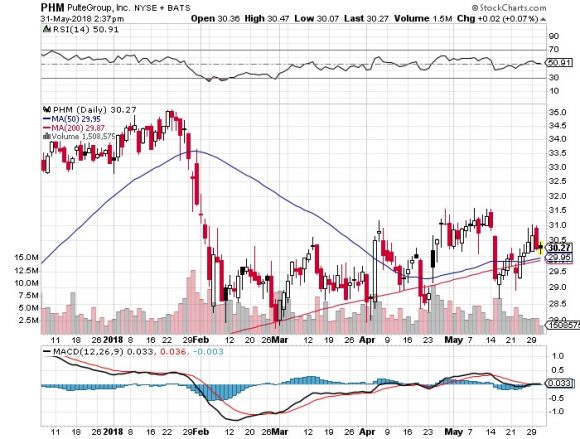
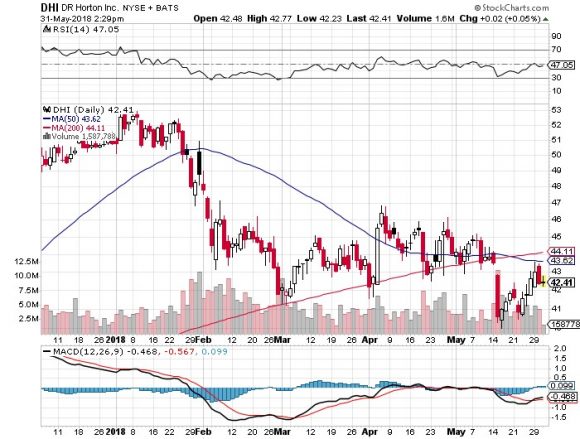
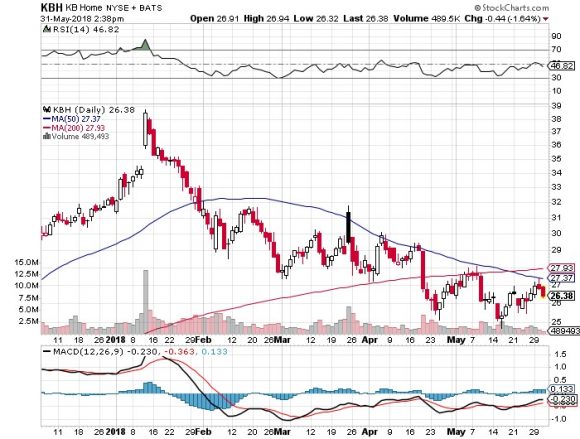
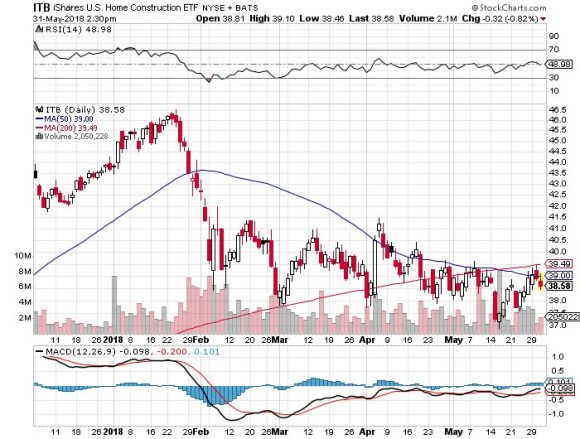
You can also go into traditional new homebuilders, such as KB Homes (KBH), Pulte Homes (PHM), and DH Horton (DHI). Another option is to take a basket approach by picking up the iShares U.S. Home Construction ETF (ITB).
See you at the next open house!
https://www.madhedgefundtrader.com/wp-content/uploads/2018/05/Open-house-story-3-image-5-e1527803775253.jpg199300MHFTRhttps://madhedgefundtrader.com/wp-content/uploads/2019/05/cropped-mad-hedge-logo-transparent-192x192_f9578834168ba24df3eb53916a12c882.pngMHFTR2018-06-01 01:06:222018-06-01 01:06:22Here is Your Top-Performing Investment for the Next Five Years
Featured Trade: (MONDAY, JUNE 11, 2018, FORT WORTH, TEXAS, GLOBAL STRATEGY LUNCHEON), (ARE WE SEEING "PEAK AUTO SALES"?), (GM), (TM), (F), (HMC), (TSLA) (NSANY), (TESTIMONIAL)
Come join me for lunch at the Mad Hedge Fund Trader's Global Strategy Update, which I will be conducting in Fort Worth, Texas, on Monday, June 11, 2018. An excellent meal will be followed by a wide-ranging discussion and an extended question-and-answer period.
I'll be giving you my up-to-date view on stocks, bonds, currencies, commodities, precious metals, and real estate. And to keep you in suspense, I'll be throwing a few surprises out there, too. Tickets are available for $248.
I'll be arriving at 11:30 AM, and leaving late in case anyone wants to have a one-on-one discussion, or just sit around and chew the fat about the financial markets.
The lunch will be held at an exclusive downtown private club. The precise location will be emailed with your purchase confirmation.
I look forward to meeting you and thank you for supporting my research.
https://www.madhedgefundtrader.com/wp-content/uploads/2018/04/Story-2-ONLY-PHOTO.jpg200300MHFTRhttps://madhedgefundtrader.com/wp-content/uploads/2019/05/cropped-mad-hedge-logo-transparent-192x192_f9578834168ba24df3eb53916a12c882.pngMHFTR2018-05-31 01:08:362018-05-31 01:08:36Monday, June 11, 2018, Fort Worth, Texas, Global Strategy Luncheon
"Without profits, the market can't go anywhere," said independent research consultant David Darst.
https://www.madhedgefundtrader.com/wp-content/uploads/2018/05/Tire-with-boot-quote-of-the-day-e1527717025912.jpg251300MHFTRhttps://madhedgefundtrader.com/wp-content/uploads/2019/05/cropped-mad-hedge-logo-transparent-192x192_f9578834168ba24df3eb53916a12c882.pngMHFTR2018-05-31 01:05:292018-05-31 01:05:29May 31, 2018 - Quote of the Day
Those planning a European vacation this summer just received a big gift from the people of Italy.
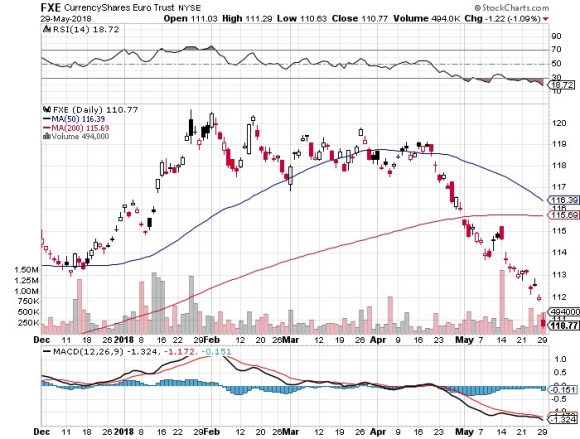
Since April, the Euro (FXE) has fallen by 10%. That $1,000 Florence hotel suite now costs only $900. Mille grazie!
You can blame the political instability on the Home of Caesar, which has not had a functioning government since March. The big fear is that the extreme left would form a coalition government with the extreme right that could lead to its departure from the European Community and the Euro. Think of it as Bernie Sanders joining Donald Trump!
In fact, Italy has had 61 different governments since WWII. It changes administrations like I change luxury cars, about once a year. Welcome to European debt crisis part 27.
I can't remember the last time markets cared about what happened in Europe. It was probably the first Greek debt crisis in 2011. This month, 10-year Italian bond yields have rocketed from 1% to 3%. But they care today, big time.
Given the reaction of the global financial markets, you could have been forgiven for thinking that the world had just ended.
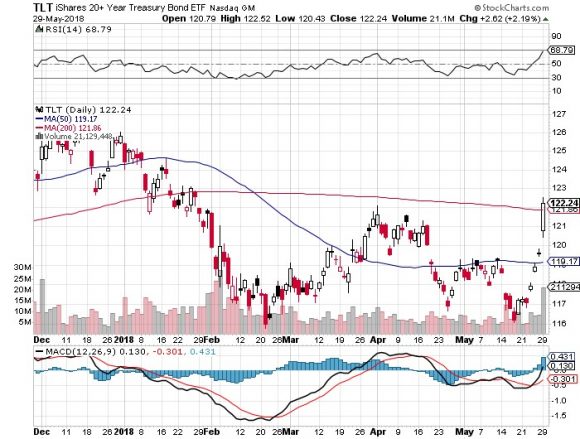
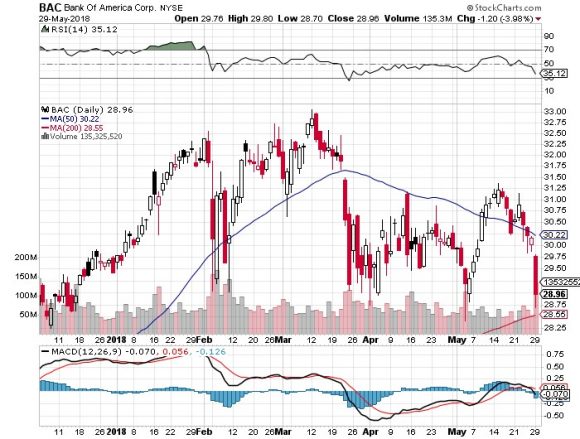
U.S. Treasury Bond yields (TLT) saw their biggest plunge in years, off 15 basis points to 2.75%. The Dow Average ($INDU) collapsed by $500 to $24,250, with interest sensitive banks such J.P. Morgan Chase (JPM) and Bank of America (BAC) delivering the worst performance of the day.
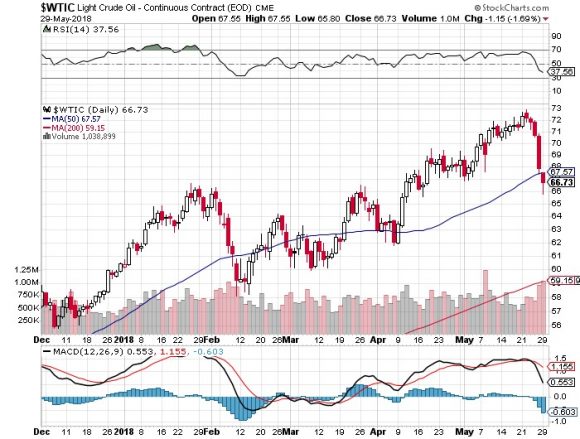
Even oil prices collapsed for an entirely separate set of reasons - so far, the best performing commodity of 2018. The price of Texas Tea pared 10% in a week.
Saudi Arabia looks like it is about to abandon the wildly successful OPEC production quotas that have been boosting oil prices for the past year, and there are concerns that Iran will withdraw from the nuclear non-proliferation treaty. The geopolitical premium is back with a vengeance.
So, if the Italian developments are a canard why are we REALLY going down?
You're not going to like the answer.
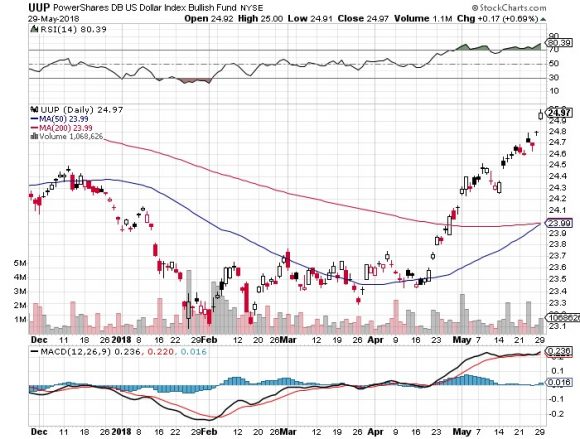
It turns out that rising inflation, interest rates, oil and commodity prices, the U.S. dollar, U.S. national debt, budget deficits, and stagnant wage growth are a TERRIBLE backdrop for risk in general and stocks specifically. And this is all happening with the major indexes at the top end of recent ranges.
In other words, it was an accident waiting to happen.
Traders are extremely nervous, global uncertainty is high, the seasonals are awful, and Washington is s ticking time bomb. If you were wondering why I was issuing so few Trade Alerts in May these are the reasons.
This all confirms my expectation that markets will remain in increasingly narrow trading ranges for the next six months until the mid-term congressional elections.
Which is creating opportunities.
If you hated bonds at a 3.12% yield from two weeks ago, you absolutely have to despise them at 2.75% today. That's why I added outright bond put options today to my model trading portfolio.
Stocks are still wildly overvalued for the short term, so I'll keep my short position there. As for oil (USO), gold (GLD), and the currencies, I don't want to touch them here.
So watch for those coming Trade Alerts. I'm not dead yet, just resting.
Waiting for My Shot
https://www.madhedgefundtrader.com/wp-content/uploads/2018/05/JT-playing-pool-story-1-image-6-e1527632226975.jpg239300MHFTRhttps://madhedgefundtrader.com/wp-content/uploads/2019/05/cropped-mad-hedge-logo-transparent-192x192_f9578834168ba24df3eb53916a12c882.pngMHFTR2018-05-30 01:07:092018-05-30 01:07:09Italy's Big Wake-Up Call
Legal Disclaimer
There is a very high degree of risk involved in trading. Past results are not indicative of future returns. MadHedgeFundTrader.com and all individuals affiliated with this site assume no responsibilities for your trading and investment results. The indicators, strategies, columns, articles and all other features are for educational purposes only and should not be construed as investment advice. Information for futures trading observations are obtained from sources believed to be reliable, but we do not warrant its completeness or accuracy, or warrant any results from the use of the information. Your use of the trading observations is entirely at your own risk and it is your sole responsibility to evaluate the accuracy, completeness and usefulness of the information. You must assess the risk of any trade with your broker and make your own independent decisions regarding any securities mentioned herein. Affiliates of MadHedgeFundTrader.com may have a position or effect transactions in the securities described herein (or options thereon) and/or otherwise employ trading strategies that may be consistent or inconsistent with the provided strategies.