Archive
Hot Tips

The Mad Hedge June Traders & Investors Summit is On!
Attend the Mad Hedge Traders & Investors Summit from June 2-5. Learn from 30 of the best professionals in the market with decades of experience and the track records to prove it. They are offering a smorgasbord of successful trading strategies. Every strategy and asset class will be covered, including stocks, bonds, foreign exchange, precious metals, commodities, energy, and real estate. Best of all, by signing up, you will automatically have a chance to win up to $100,000 in prizes. Listening to this webinar will change your life! To register, please click here.
It Out of Hardware, into Software Now,
with ballistic moves in Palo Alto Networks (PANW) and CrowdStrike (CRWD). Shares of several U.S. software stocks gained on Tuesday, as the industry attempts a comeback after being battered for much of the year on fears of disruption from artificial intelligence. The beleaguered sector's rebound coincided with a slide in chipmakers, which began to cool off following a blistering rally that took the Philadelphia SE Semiconductor Index (SOXX).
Goldman Sachs Gets SpaceX IPO Lead, certain to be the largest in history, with record fees. The stock jumped $32 on the news. The reusable rocket company could make its prospectus public as soon as Wednesday, after confidentially filing with the Securities and Exchange Commission last month. The offering is expected to bring in a record sum as SpaceX was most recently valued at $1.25 trillion by Musk, when he merged the company with xAI, his artificial intelligence startup, in February.
FOMC Minutes. Fed policymakers see rising inflation risks, with a rate hike possible. The April meeting saw four dissents, most since 1992, over policy direction. Economists’ expectations shift toward no rate cuts.
Financial markets price in rate hike as Fed's next move. The minutes for each regularly scheduled meeting of the Committee are generally published three weeks after the day of the policy decision. The descriptions of economic and financial conditions contained in these minutes are based solely on the information that was available to the Committee at the time of the meeting.
SpaceX (SPCX) and OpenAI Announce IPOs on the Same Day,
and the day after, a court ruled in favor of OpenAI CEO Sam Altman. Combined, the two new issues will take $3 trillion out of the market. (SPCX) is targeting June, while OpenAI is aiming for September. Both are rushing to raise money from the market before it crashes. This is like watching a movie, a financial thriller.
Bonds Yields Hit 20-Year High,
threatening to crash the stock market. The yield on 30-year Treasuries was higher by two basis points in early Tuesday trading in New York at 5.14% — just shy of their highest levels in almost two decades. Two-year and 10-year yields were up three basis points to 4.08% and 4.61%, respectively. Gigantic government budget deficits are the cause.
Commodities are the Big AI Play Here,
not AI stocks. The world is in the early stages of a commodity super cycle that may last another decade or more as the artificial intelligence buildout collides with chronic underinvestment in energy and materials capacity. The energy sector presents the biggest asymmetric trade in modern finance because oil companies are returning a 15.5% free cash flow yield while hyperscalers have none.
Home Depot Comes in Weak,
held back by a lackluster housing market. Home Depot’s business has been hit by elevated interest rates and high housing prices, which have sparked a pullback in home purchases and upgrade projects over the past three years. Instead of extensive remodels that require financing and large amounts of tools and materials, Americans are taking on smaller projects such as painting and gardening.
Markets are Looking at an Interest Rates Rise by July,
or so says the Fed funds futures market. That may have to be the first move by the new Fed governor, Kevin Warsh. If the government wants to take the National Debt to record highs, it is going to have to pay more for the privilege. In the meantime, America’s credit rating is sliding, thanks to the Iran War, which has scared off foreign buyers,
Pending Home Sales Rose 3.2% YOY,
and 1.4% in April on a signed contract basis. Sales only fell in the South. The 30-year fixed-rate mortgage just hit a one-year high at 6.75%. With inflation soaring, don’t expect any interest rate cuts soon. The monthly average payment for a new home loan has risen by $167 since the start of the war.
Kevin Warsh Becomes Fed Governor,
with a full plate. Inflation is at four-year highs and accelerating. But Warch got the job after promising Trump to cut rates. And half the Fed board is already against him, with Powell remaining on board. Better him than me.
Global Oil Stockpiles Approaching Record Lows.
Inventories were near a decade high at just over 8 billion barrels at the end of February. By the end of April, stockpiles fell to 7.8 billion barrels. Inventories will approach record lows of 7.6 billion barrels by the end of May if demand remains the same month over month. Billions of barrels in inventory may sound like a lot, but the reality is that only about 800 million barrels are available without straining the system. The rest is needed to keep pipelines and tanks filled at minimum levels so the supply chain operates efficiently. Some 7.6 billion barrels are enough to supply global oil demand for only 76 days, and the rate of reserve decline is alarming in the extreme.
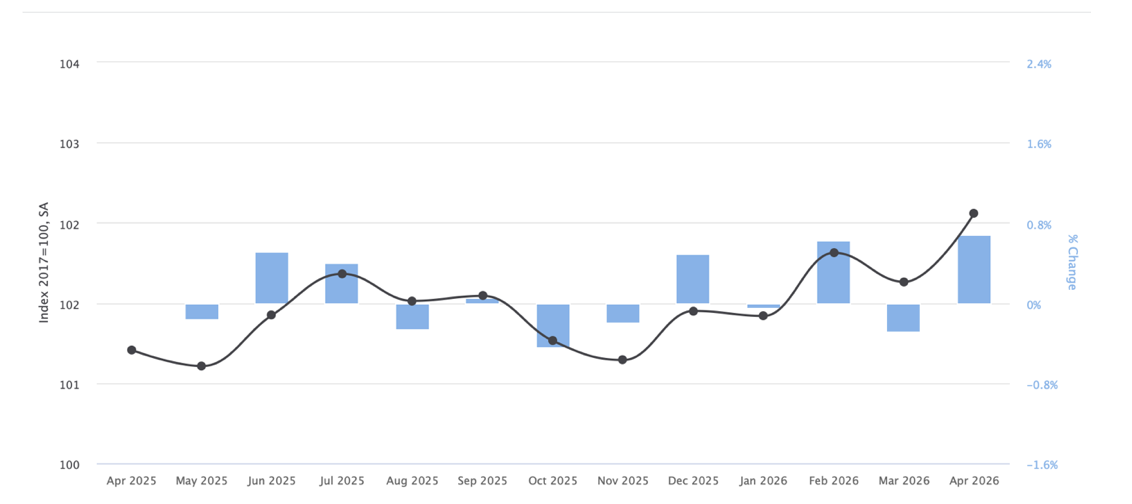
Industrial Production Rises,
as AI spending drags the economy forward, with much of it going nowhere.
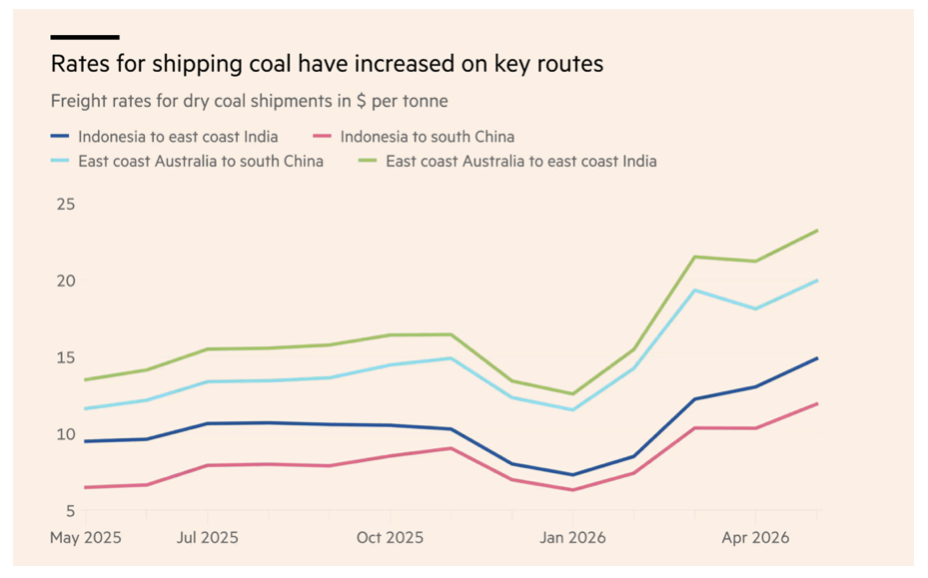
Coal is Booming,
as countries rush to fund gas alternatives. Coal shipments normally slow down in April and May when the heating season in the northern hemisphere nears an end. But in recent months, coal was the largest cargo by volume for medium-sized vessels, with freight rates as much as 50 per cent higher on average in May than in February. Global coal imports this month are expected to be 107mn tonnes, the third-highest monthly figure for May in records that go back to 2017. For any one metric tonne of gas, you can substitute it with two tonnes of coal.
Some $570 Billion Worth of Classic Cars are Changing Hands.
Some 12 million enthusiast vehicles will transfer to a new generation in the US over the next 15 years in estate plans or inheritances. The market for collectible cars — vehicles desirable for their heritage, performance, and design — has mushroomed over the past two decades. It encompasses more than 43 million vehicles in the US, representing an estimated $1 trillion in total insurable value. When I met the comedian Jay Leno at the Pebble Beach car show, he told me that his portfolio of classic cars has outperformed a portfolio of tech stocks for the last 35 years, and he was right.
The Bond Market Crashes,
sending ten-year US Treasury bond yields up 15 basis points in a day to 4.61%. Government bond markets tumbled around the world, sending yields surging from Japan to the US on intensifying fears that the war-driven price shock will force central banks to raise interest rates to contain the impact. It looks like the government’s ability to borrow is NOT unlimited after all.
Today is Jay Powell’s Last Day as Governor of the Federal Reserve.
He handled Trump attacks, a criminal investigation, and a pantomimic and will leave the office as one of the most respected Fed chairmen by both parties. Kevin Warsh takes over on Monday with orders from the president to cut interest rates when the markets are screaming for an increase. It’s no accident that bond markets had their worst day in years the day before he takes off. Warsh has spent the last decade arguing for higher rates, less spending, and a balanced budget. Good luck with that!
Jeff Bezos Blue Origin Weighs First External Fund Raise,
as part of a push by Jeff Bezos’s rocket venture to hit ambitious launch targets and tap investor appetite boosted by SpaceX’s upcoming initial public offering. The company would require outside investment if it were to significantly increase its launch schedule. It would take a lot of capital to achieve the number of rocket launches Blue Origin has targeted — more money than would be available with just one investor.
Inflation to Hit 6% in Q2.
The recent surge in inflation is likely to get worse over the next several months, according to a survey Friday from the nation's top economists. Consumer price inflation is projected to hit 6% for the first quarter, according to the Survey of Professional Forecasters, a blue-ribbon group that is polled each quarter by the Federal Reserve Bank of Philadelphia.
Boeing Scores Order for 200 Jets from China.
The order is just an accumulation of many orders over recent years and had nothing to do with the China visit, which was just a PR exercise. Buy (BA) on tips.
U.S. Retail Sales Increased,
for a third straight month in April, though part of the rise in receipts was due to soaring inflation amid the war with Iran. Rising price pressures were underscored by other data on Thursday showing imported inflation last month rose at its fastest pace in four years. Larger tax refunds this year, as well as a strong stock market performance, are providing a cushion for households against rampant inflation.
Business Inventories Soar,
in March, up 0.9%, the worst numbers in four years. Nobody’s buying anything in the retail stores. It’s another pre-recession indicator.
Ford Rockets on Rumors of an AI Tie-Up.
The shares climbed as much as 10% Thursday in New York, pushing the two-day gain to 25%, the most intraday since March 2020. The move turned Ford’s stock positive for the year. Ford is investing $2 billion to get into the energy storage business, which includes converting a factory in Kentucky from making batteries for electric vehicles to producing large energy cells for the storage business. US demand for grid batteries is expected to double by 2030 to more than 100 gigawatt-hours.
Business is Booming in California,
as the AI melt-up accelerates. California Governor Gavin Newsom unveiled a revised budget that shows no deficit for this year and next, as the state draws another boost from the technology and artificial-intelligence boom. The budget proposal released Thursday shows revenues that are $16.5 billion higher than projections. That improvement gives Newsom, a Democrat, more room to protect programs popular with the party’s voters as he prepares to leave office after the next election, as a potential contender for the presidency in 2028.
Cerebras IPO to Open at Double Issue Price.
Shares of Cerebras Systems were indicated to open 90% higher than their IPO price in the U.S. market debut on Thursday, as the chipmaker rides a wave of investor euphoria for companies that are at the heart of the artificial intelligence boom. The firm's IPO is the largest this year and comes as AI-linked stocks push broader markets to record highs despite challenges to global growth stemming from the Middle East conflict. In case you don’t know, Cerberus is the fearsome, multi-headed dog in Greek mythology that guards the entrance to Hades (the Underworld).