
• support@madhedgefundtrader.com
  • Member Login
Mad Hedge Fund Trader
  • Home
  • About
  • Store
  • Luncheons
  • Testimonials
  • Contact Us
  • Click to open the search input field Click to open the search input field Search
  • Menu Menu
april@madhedgefundtrader.com

January 29 Biweekly Strategy Webinar Q&A

Diary, Newsletter

Below please find subscribers’ Q&A for the January 29 Mad Hedge Fund Trader Global Strategy Webinar, broadcast from Salt Lake City, UT.

Q: Are AI stocks going to crash?

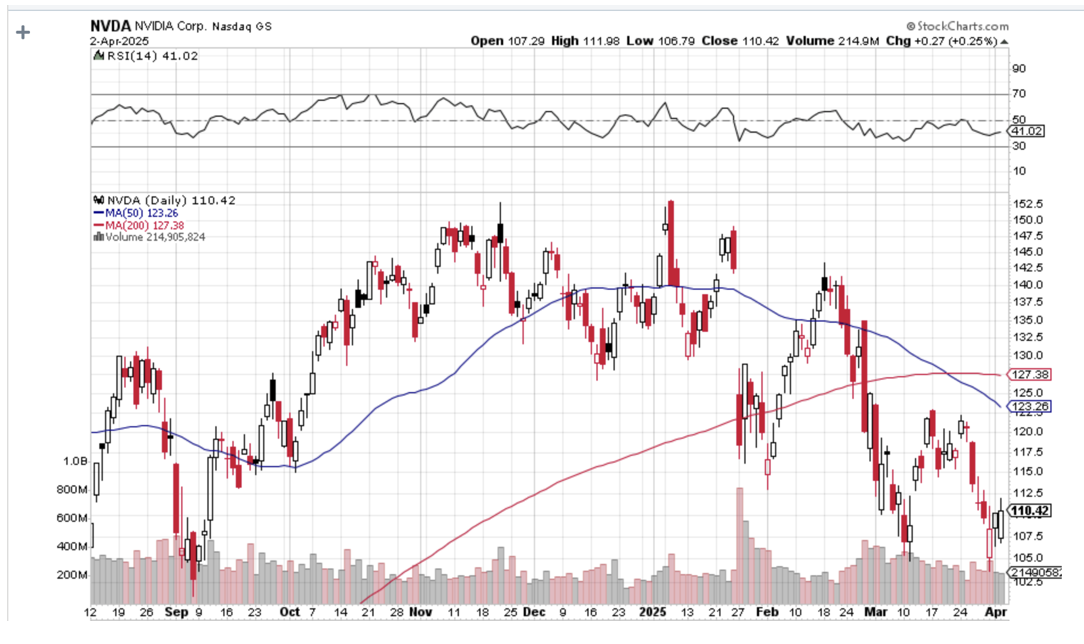
A: Some already have, and others haven’t. It’s really about single-stock-picking the chip area and the pure AI plays, which have been enormously overextended. If you boil it down to a single sentence, if you offer AI for free, AI users like (META) and (AMZN) do really well, while AI producers, like (NVDA) and (AMD) get crushed. I’ve been warning for months that these things were getting too high. The end result is that in two weeks the price earnings multiple for Nvidia has gone from 40 to 25. You know, at 25, it really is quite attractive. It'll be even more attractive at 20 or even 15 if we get that low. I'll show you where we hit that on the charts. Don't forget their earnings are still growing at tremendous rates—we'll talk about that in a second.

Q: What stocks are good to invest in now?

A: Watch the banks. Watch the financials. They’ve hardly sold off. I was begging for Goldman Sachs (GS) to tank. It didn't—we only got a $10 drop. It's just not letting people in, which means higher highs for all the banks and financials are coming. That has become the no-brainer one-way trade of 2025. You know, I had an enormous number of bank LEAPS expire in my personal account on the January 17 option expiration. I'm waiting to get back in now. So that is the play.

Q: What's happening with Starbucks (SBUX)? Are they investable?

A: Starbucks was a disaster area until the summer when they brought in new management, which has a fantastic track record. The stock has since gone up 30%. You're kind of late to get in on this one. I don't really follow the stock anyway. Selling cups of coffee is not a high-margin business. I'd rather stick with the Tesla’s (TSLA) and Nvidia’s (NVDA) of the world where the value added is very high

Q: What will happen with Bitcoin in the new administration?

A: It's the same with everything. Higher highs first, lower lows later. If you're a Bitcoin investor now at 100,000, the big question is what happens when Donald Trump leaves office in four years? Does it go back to 5,000? We really don't know so, why touch Bitcoin when you can get 10 to 1 returns on all these other great companies which make stuff that you can actually touch and feel? Plus, you can leverage up with the LEAPS, and no one's going to steal your account, which happens frequently with Bitcoin holdings.

Q: Do you think tariffs are a good idea for the economy?

A: No, tariffs shrink global trade, they shrink globalization. It's a race to see if we can make other countries more poor than they can make us. It's an economy-shrinking strategy. It was a major contributor to causing the Great Depression in the 1930’s. That's why we abandoned tariffs 80 years ago with the end of World War II. I mean, the last cause of the 1930’s tariffs was World War II. That was a major contributing factor. So do I like tariffs? No. It turns out it's a great defensive strategy. If someone's making a fortune off you, they tend not to blow you up. So I think that's a big mistake and I will be an anti-tariff person to my grave. There are special situations like Chinese EVs, for example, where they're using a huge cost advantage to flood the emerging markets with cheap EVs. If that happened to the US, it would crash the US economy. In that one case, I'm in favor of tariffs. By the way, their EVs are using technology they basically stole from Tesla.

Q: What are your thoughts on defense stocks? With so many wars occurring all over the world.

A: Don't touch defense stocks with a 10-foot poll if the government is in favor of cost-cutting, the largest cost after Social Security is defense. We had a defense budget of about $824 billion in 2024. We have a 2.8 million man military and that cutting there and running down our weapons stocks would mean that you don't want to buy Lockheed Martin (LMT), General Dynamics (GD), Raytheon (RTX), all the big suppliers of weapons to the Ukraine war, for example, which looks like it's going to get cut off completely. They cut off all humanitarian aid to Ukraine last week. And of course, I was personally involved in delivering some of that humanitarian aid to Ukraine in the recent past. Yeah, defense looks bad if people really get serious about cost-cutting.

Q: Do you see the Fed dropping interest rates later this year?

A: That is possible. I tend to think we don't go into recession this year. It's a next year or year after type of thing. But markets can discount recession in six months to a year in advance like they did in 2007 and 2008. I don't think we get any more interest rate cuts. We'll just have to see what policies the new government implements, and how inflationary they are. And if they are inflationary, interest rates are going up, not down. That is why everybody's sitting on their hands right now and doesn't know what to do. Uncertainty at an eight-year high. You know, the government often talks one game but does the opposite. So, there’s nothing to do but wait and see.

Q: Well, what happened to the US housing market in 2025?

A: Nothing, you know volumes are shrinking. The last two years were the lowest volume sales in housing market history since the numbers were collected, and higher interest rates for longer. It's just more bad news. You know, something like 40% of all of the sales now are all cash. Prices are still going up again on paper, but there's almost no trade happening at these higher prices. And of course, the Millennials have been almost completely shut out of the market—the largest generation in history by the way—because they don't have enough money. They can't earn enough money; especially when AI is wiping out all the entry-level jobs, as it has been doing for two years in Silicon Valley.

Q: Here's a good question. How much time do we need to spend researching a company before we make an investment there?

A: Well, not that much, really. You can spend an hour or two reading the annual report, browsing through the most recent financial statement, and doing some news searches and you'll have a better read than most individual investors are going to have on a single stock. Then you start to see trends on what makes a good company, what makes a bad company, and over time, you get a feel for a company—when to get in, when to get out. That's one way. Or you can listen to the Mad Hedge Fund Trader, who's been doing this for 55 years and watching the same stocks. You wonder why you always have the same stocks up here and it's because I've been following these guys for forever or more. So you really get a handle on when they're doing well and when they're doing awful.

Q: Should we sell Nvidia (NVDA) stock for now?

A: No, I was telling people to cut positions the next time it ran to $150, which it did a few weeks ago. Now we're probably entering buy territory more than sell territory. Nvidia will come back. I just don't know where the bottom is for now, and it depends on your own investing style. If you're a five-year investor, you can forget about all this volatility, if you're a day trader, yeah, you probably should sell Nvidia now because you could buy it back $10 cheaper.

Q: Do you expect a new high after the Fed meeting?

A: No, I don't. I think we're stuck in a range for the S&P 500 for the next six months. After that, we may get a move. Depending on what effect government policies have on the economy.

Q: What about an alert for Adobe (ADBE)?

A: I didn't put out the alert to buy Adobe. The Adobe alert is part of the Mad Hedge Technology Letter service, and if you want to get purely tech trade alerts, go to the Mad Hedge website, go to the store, and you can see the technology letter is offered for sale up there. Here is the link: https://hi290.infusionsoft.app/app/orderForms/techletter

Q: ​​What is the right size of account for doing this kind of trading?

A: We literally have college students trading with $500 accounts. We have lots of individuals trading with $5,000 accounts—that way you can buy 10 $400 positions and still have some room. We only recommend you put 10% of your cash in any one trade. A lot of retired people will keep a large portion of their money in an index like the S&P 500 (SPY) and take 10% of their money and use it to do our trade alerts, which then adds an extra return to the index position. So, the answer is different for different people.

Q: Do I see a meaningful correction like 20% or 30% in the next six months?

A: No, I really don't, but that could be 2026 business. When we get a big correction, we get a recession. Again, it's dependent on government policies and we have no idea what those are right now. People can only guess. I'm not in the guessing business. I'm in the sure thing business.

Q: Can you explain how to complete the trade alerts you send out?

A: What all the professionals do is they put out a spread of orders. If I put out an order to buy something at $9.00, you put in a bid at $9.00, $9.10, $9.20, $9.30, and $9.40. By the close, some or all of those will get done. Often they all get done by the end of the day when the high-frequency traders have to dump their positions because they're not allowed to carry overnight positions. You make them good-until-canceled orders. So if you get a low opening the next morning, you'll get entirely filled at the $9.00 level, and this is what my clients in Australia do. They only do overnight good-until-cancelled orders since the market's open from 11:30 PM until 6:00 AM  in the morning, Australia time. They tend to make more money than any of my other clients because they only enter overnight GTC orders. So, people trying to outsmart the market on an intraday basis generally don't do very well.

Q: Should I sell the Cameco Corporation (CCJ) stock I bought on the nuclear trade?

A: No, I think (CCJ) recovers. I was looking at it yesterday. Elimination of the electricity trade is complete nonsense. I think the nuclear thing is real. It'll come back. And in fact, I bought Vistra Energy (VST) yesterday, so use this extreme sell-off to get into the nuclear trade if you missed it the first time around.

To watch a replay of this webinar with all the charts, bells, whistles, and classic rock music, just log in to www.madhedgefundtrader.com, go to MY ACCOUNT, click on GLOBAL TRADING DISPATCH, TECHNOLOGY LETTER, or JACQUIE'S POST, then WEBINARS, and all the webinars from the last 12 years are there in all their glory.


Good Luck and Good Trading,

John Thomas
CEO & Publisher
The Diary of a Mad Hedge Fund Trader


https://www.madhedgefundtrader.com/wp-content/uploads/2025/01/john-thomas-guard.png 932 578 april@madhedgefundtrader.com https://madhedgefundtrader.com/wp-content/uploads/2019/05/cropped-mad-hedge-logo-transparent-192x192_f9578834168ba24df3eb53916a12c882.png april@madhedgefundtrader.com2025-01-31 09:02:132025-01-31 09:52:25January 29 Biweekly Strategy Webinar Q&A
Mad Hedge Fund Trader

January 31, 2025 - Quote of the Day

Tech Letter

“Jeff Bezos is opening a retail store and owns a newspaper. Turns out everything we thought about the Internet is wrong.” - Co-Founder and CEO of Box Aaron Levie

https://www.madhedgefundtrader.com/wp-content/uploads/2018/03/Aaron-Levie-e1521658165668.jpg 294 400 Mad Hedge Fund Trader https://madhedgefundtrader.com/wp-content/uploads/2019/05/cropped-mad-hedge-logo-transparent-192x192_f9578834168ba24df3eb53916a12c882.png Mad Hedge Fund Trader2025-01-31 09:00:282025-01-31 09:48:46January 31, 2025 - Quote of the Day
april@madhedgefundtrader.com

January 30, 2025

Biotech Letter

Mad Hedge Biotech and Healthcare Letter
January 30, 2025
Fiat Lux


Featured Trade:

(A CRITICAL PAIN POINT)

(VRTX), (AMZN)

https://madhedgefundtrader.com/wp-content/uploads/2019/05/cropped-mad-hedge-logo-transparent-192x192_f9578834168ba24df3eb53916a12c882.png 0 0 april@madhedgefundtrader.com https://madhedgefundtrader.com/wp-content/uploads/2019/05/cropped-mad-hedge-logo-transparent-192x192_f9578834168ba24df3eb53916a12c882.png april@madhedgefundtrader.com2025-01-30 12:02:362025-01-30 12:18:39January 30, 2025
april@madhedgefundtrader.com

A Critical Pain Point

Biotech Letter

Last week, while having dinner with an old friend who's an emergency room physician in San Francisco, I heard a story that stopped me cold. She had just lost another patient to an opioid overdose - the fourth one that month.

"We desperately need alternatives," she said, pushing away her plate. "Something that works without killing people."

She's not wrong. More than 80,000 Americans died from opioid overdoses in 2022 alone - that's about 75% of all drug overdose deaths in the country.

To put that in perspective, that's more than double the number of people who die in car accidents each year. In New York alone, opioid-related deaths have quadrupled between 2010 and 2020.

You can see where this is going. There's a massive market opportunity here for any company that can crack the code of non-addictive pain management.

We're talking about a potential market worth tens of billions of dollars. The holy grail? A drug that works as well as opioids without the devastating addiction potential.

Enter Vertex Pharmaceuticals (VRTX) and their sodium channel inhibitor VX-548, now known as suzetrigine. The company has been quietly plugging away at this problem, and I've been watching them like a hawk.

For those who've been following my previous coverage, you'll remember I wrote about their interesting (though modest) results in post-surgical patients a few months ago.

And here's where it gets fascinating. Vertex has been running multiple trials because - as any doctor will tell you - pain isn't just pain.

It comes in more flavors than Ben & Jerry's ice cream: acute, chronic, neuropathic, cancer-related, post-surgical, and don't even get me started on phantom limb pain.

Just before the holiday break, they dropped their latest results for suzetrigine in sciatica patients.

Now, I have to tell you something that might sting a bit. The drug worked - but so did the placebo. Both groups saw their pain decrease by statistically similar amounts.

Vertex argues the placebo response was unusually high and that a larger Phase III trial should smooth things out.

Maybe they're right - but I've seen enough clinical trials to know that placebo effects in pain studies can be trickier than a Wall Street hedge fund manager.

The FDA is expected to make a decision by the end of this month on suzetrigine for moderate-to-severe acute pain.

Despite the recent speed bump in the sciatica trial, I'm still keeping my eye on the bigger picture here. Vertex isn't a one-trick pony.

Their cystic fibrosis (CF) portfolio is absolutely crushing it. They just got FDA approval for Alyftrek ahead of schedule.

They've expanded Trikafta's approval down to patients as young as two years old, which is huge for their market potential. Plus, they’ve been aggressively pushing into international markets over the past months.

Now, let's talk numbers. Suzetrigine revenue is projected to hit $5 billion by 2035. That's not chump change, even if we hit some bumps along the way.

Trading at a P/S multiple of almost 10, Vertex isn't cheap - but then again, neither was Amazon (AMZN) in 1997.

Still, this biotech’s pipeline goes beyond pain management. We're looking at treatments for diabetic peripheral neuropathy, IgA nephropathy, type 1 diabetes, and even gene editing therapy.

So, here's the bottom line: Yes, the market got spooked by the Phase II data. Yes, there are risks. But remember - the FDA is under enormous pressure to approve non-opioid painkillers.

With 80,000 Americans dying yearly from opioid overdoses, they need solutions more than my trader friends need their morning coffee.

I'll keep watching this one closely. The pain management market is like a sleeping giant, and despite the recent hiccup, Vertex might just have the alarm clock.

or long-term investors, this could be one of those "I wish I bought it back then" moments.

Watch this space. The opioid crisis isn't going anywhere, but neither is Vertex's determination to solve it.

Sometimes the biggest opportunities come disguised as disappointments.


https://madhedgefundtrader.com/wp-content/uploads/2019/05/cropped-mad-hedge-logo-transparent-192x192_f9578834168ba24df3eb53916a12c882.png 0 0 april@madhedgefundtrader.com https://madhedgefundtrader.com/wp-content/uploads/2019/05/cropped-mad-hedge-logo-transparent-192x192_f9578834168ba24df3eb53916a12c882.png april@madhedgefundtrader.com2025-01-30 12:00:372025-01-30 12:18:19A Critical Pain Point
april@madhedgefundtrader.com

Trade Alert - (MSFT) January 30, 2025 - BUY

Tech Alert

When John identifies a strategic exit point, he will send you an alert with specific trade information as to what security to sell, when to sell it, and at what price. Most often, it will be to TAKE PROFITS, but, on rare occasions, it will be to exercise a STOP LOSS at a predetermined price to adhere to strict risk management discipline. Read more

https://www.madhedgefundtrader.com/wp-content/uploads/2016/02/Alert-e1457452190575.jpg 135 150 april@madhedgefundtrader.com https://madhedgefundtrader.com/wp-content/uploads/2019/05/cropped-mad-hedge-logo-transparent-192x192_f9578834168ba24df3eb53916a12c882.png april@madhedgefundtrader.com2025-01-30 10:41:362025-01-30 10:41:36Trade Alert - (MSFT) January 30, 2025 - BUY
april@madhedgefundtrader.com

January 30, 2025

Diary, Newsletter, Summary

Global Market Comments
January 30, 2025
Fiat Lux


Featured Trade:

(THE MAD HEDGE DICTIONARY OF TRADING SLANG)

https://madhedgefundtrader.com/wp-content/uploads/2019/05/cropped-mad-hedge-logo-transparent-192x192_f9578834168ba24df3eb53916a12c882.png 0 0 april@madhedgefundtrader.com https://madhedgefundtrader.com/wp-content/uploads/2019/05/cropped-mad-hedge-logo-transparent-192x192_f9578834168ba24df3eb53916a12c882.png april@madhedgefundtrader.com2025-01-30 09:04:172025-01-30 14:09:06January 30, 2025
Douglas Davenport

EVERYTHING IS BIGGER IN TEXAS

Mad Hedge AI

(SFTBY), (ORCL), (NVDA), (CEG), (NEE), (MSFT), (VST), (TSM), (AVGO), (GOOG)

At 5 AM, my phone lit up with texts from three hedge fund managers I know, all asking the same thing: "Is this Stargate thing for real?" 

Honestly, I wasn’t even surprised. The messages rolled in just a day after Trump unveiled what could be the mother of all tech initiatives: a $500 billion AI infrastructure project dubbed "Stargate," with heavyweights like OpenAI's Sam Altman, SoftBank's (SFTBY) Masayoshi Son, and Oracle's (ORCL) Larry Ellison standing by his side.

But before we get carried away with the headlines, let's look at what really matters to us.

First, some context: The global AI infrastructure market was just $38.1 billion in 2023. That makes this initiative 13 times bigger than the entire current market. 

If you're wondering why tech stocks popped on the news, there's your answer.

The semiconductor plays here are particularly compelling. NVIDIA (NVDA) is still trading at under 20X earnings despite 60% growth - a valuation that looks increasingly disconnected from reality given recent developments. 

Morgan Stanley's latest channel checks show Blackwell chips are fully sold out for the next 12 months before production even begins, with "several billion dollars" in revenue expected in Q4 FY25 alone.

What's really getting my attention is the GB200 NVL72 system specifications. 

It enables up to 72 GPUs to be connected via NVLink, acting as a single GPU with aggregate bandwidth of 259 terabytes per second - about 10 times higher than Hopper. 

The implications for data center deployments are staggering.

Speaking of data centers, Oracle has already broken ground on their first Texas facility. It's a million square feet, and they're planning 20 more just like it. 

Their stock jumped 8% on the announcement, but here's what most analysts missed: each facility requires approximately 1 gigawatt of power.

This is roughly equivalent to a mid-sized nuclear plant. That's not just a lot of power – that's "Back to the Future" DeLorean levels of energy consumption.

Looking at these numbers made me realize that the energy stocks might just be the sleeper opportunity here. 

AI queries consume 3-36 times more energy than traditional searches, and current projections show AI consuming up to 19% of U.S. data center power by 2028. 

This creates a compelling case for utilities positioned to serve this growing demand.

Constellation Energy (CEG) stands out in this space. They're already producing about 10% of the nation's emission-free energy, with CO2 emissions 4.5 times lower than NextEra (NEE).

Their recent 20-year Microsoft (MSFT) deal for data center operations is just the beginning. The $840 million government contract they just landed provides exactly the kind of revenue certainty I look for in utility plays.

Vistra Corp (VST) deserves more attention than it's getting. Their dominant position in the Electric Reliability Council of Texas (ERCOT) – where most of these new facilities will be built – puts them in prime position. 

The ERCOT market is projected to see 5% annual demand growth through 2030. With their recent $6.8 billion Energy Harbor acquisition, they're now the second-largest nuclear operator in the country.

Meanwhile, Taiwan Semiconductor's (TSM) position here is crucial. 

Reports project that we'll need 1.2 to 3.6 million additional wafers by 2030, requiring 3-18 new fabrication plants. 

The strategic importance of this manufacturing capacity has already been seen - through Broadcom (AVGO), TSMC has secured manufacturing slots for OpenAI's first custom chip targeting 2026.

This semiconductor build-out is part of a larger global race for AI dominance. OpenAI's recent policy white paper estimates "$175 billion in global funds awaiting investment in AI projects." 

Their warning is clear: if these funds don't land in U.S. projects, they'll flow to China-backed initiatives instead.

Now, let's talk about what could go wrong. 

The infrastructure constraints are real - Texas's power grid can barely handle summer AC demand as it is. 

Water usage for cooling these facilities is another major concern, especially given Texas's history with water scarcity.

We should also consider execution risk. 

Trump's track record with big tech announcements is mixed - remember the 2017 Foxconn promise of a $10 billion Wisconsin factory that ended up as a scaled-down $672 million project? 

This history of grand announcements versus actual delivery adds weight to current skepticism.  

On top of these, Anthropic's CEO Dario Amodei called this plan "a bit chaotic" (tech exec speak for "What are they smoking?"), and Elon Musk took to X to throw shade at SoftBank's funding claims.

Still, the market seems to be ignoring these risks. 

When I mentioned them to a tech CEO friend last night, he just shrugged and said "they'll figure it out." Maybe, but I'm watching the ERCOT capacity numbers like a hawk.

And before I forget, keep your eye on Broadcom too. 

Their inference chip strategy, led by those Google (GOOG) TPU veterans, could be the dark horse here. While everyone's focused on training chips, the real volume play might be in inference.

For now, I'm holding steady with modest long positions in companies directly benefiting from this infrastructure buildout. 

But in Texas, where everything is bigger, so are the opportunities—and the risks. The Volatility Index sitting at $12 tells me it's time to dig deeper.

https://madhedgefundtrader.com/wp-content/uploads/2019/05/cropped-mad-hedge-logo-transparent-192x192_f9578834168ba24df3eb53916a12c882.png 0 0 Douglas Davenport https://madhedgefundtrader.com/wp-content/uploads/2019/05/cropped-mad-hedge-logo-transparent-192x192_f9578834168ba24df3eb53916a12c882.png Douglas Davenport2025-01-29 16:45:332025-01-29 16:45:33EVERYTHING IS BIGGER IN TEXAS
april@madhedgefundtrader.com

Trade Alert - (CRWD) January 29, 2025 - BUY

Tech Alert

When John identifies a strategic exit point, he will send you an alert with specific trade information as to what security to sell, when to sell it, and at what price. Most often, it will be to TAKE PROFITS, but, on rare occasions, it will be to exercise a STOP LOSS at a predetermined price to adhere to strict risk management discipline. Read more

https://www.madhedgefundtrader.com/wp-content/uploads/2016/02/Alert-e1457452190575.jpg 135 150 april@madhedgefundtrader.com https://madhedgefundtrader.com/wp-content/uploads/2019/05/cropped-mad-hedge-logo-transparent-192x192_f9578834168ba24df3eb53916a12c882.png april@madhedgefundtrader.com2025-01-29 14:36:492025-01-29 14:36:49Trade Alert - (CRWD) January 29, 2025 - BUY
april@madhedgefundtrader.com

January 29, 2025

Tech Letter

Mad Hedge Technology Letter
January 29, 2025
Fiat Lux


Featured Trade:

(DIGITAL MIGRATION HITS THE U.K.)
(SKY), (BBC), (TIKTOK), (GOOGL)

https://madhedgefundtrader.com/wp-content/uploads/2019/05/cropped-mad-hedge-logo-transparent-192x192_f9578834168ba24df3eb53916a12c882.png 0 0 april@madhedgefundtrader.com https://madhedgefundtrader.com/wp-content/uploads/2019/05/cropped-mad-hedge-logo-transparent-192x192_f9578834168ba24df3eb53916a12c882.png april@madhedgefundtrader.com2025-01-29 14:04:162025-01-29 14:57:25January 29, 2025
april@madhedgefundtrader.com

Digital Migration Hits The U.K.

Tech Letter

If you thought that the cord-cutting trend is just confined to the United States – it’s not.

It’s happening at breathtaking speed throughout the world.

The biggest English language media base after the United States is also experiencing a huge step forward in digital migration.

How do know that?

Take a look at their linear flagship media company Sky.

They are drowning financially and have taken the hacksaw out to cut in large chunks.

Sky is planning to cut about 2,000 jobs in the UK in 2025, as the media group moves towards more internet-based services. They fired 1,000 people last year. BBC is also going through a similar type of change.

It is understood a significant number will be engineers, as fewer people require satellite dishes to be installed at home.

Sky currently employs about 26,000 people in the UK.

Sky has been shifting its strategy since it was bought by the US media giant Comcast for more than £30bn in 2018.

The British broadcaster wants digital revenues - which accounted for 27% of its total last year - to pass 50% by 2030.

It comes as Sky News tries to reverse a slump in audience due to the plummeting content quality of legacy media stations.

This has forced many subscribers to ditch Sky and go with higher-quality content platforms and channels.

Sky is racking up losses which total in the 100’s of millions pounds PER YEAR, and the hard question of what is the point of paying these high-profile personalities and expensive international assignments when they just drive the audience away?

The same could be said about CNN’s decision to demote media activist Jim Acosta who was unceremoniously downgraded to CNNs worst time slot yesterday.

He resigned instead announcing his resignation on air and clearly couldn’t accept a lesser role at his company.

With the losses in revenue staggering, for some reason, US media giant Comcast guaranteed to maintain the funding commitments until 2028.

Then there is the intense question of whether there will be a Sky after 2028, because at that point, who will be left watching it?

Comcast has already taken an $8.6bn write-down on its investment in Sky.

Staff at Sky News are preparing to unionize in protest against pay and working conditions.

It is understood that a group of employees at the channel have held preliminary talks with the National Union of Journalists (NUJ) about joining the group.

Attempting to unionize will cause the acceleration of firings from legacy media, but it demonstrates the extreme level of desperation at these dinosaur channels.

The future of Sky News, which is led by veteran Murdoch executive David Rhodes, is likely to be on the agenda amid ongoing budget discussions between Sky and Comcast.

Part of the massive changes the world is grappling with is how this new digital media fits into how we live everyday life.

Instead of corporate entities giving us what they think is the “truth,” media has fractured off into individuals doing their own version of media.

Much of this new media is accessed for free on platforms that only require a free signup.

Is it almost impossible for corporate media to compete with free content, especially when corporate media is one of the lowest forms of quality content available to the public?

If X.com was still a private company, then that is the best social media stock available. TikTok is a private company owned by the Chinese. YouTube is one of the platforms I am talking about, but that is part of a bigger company in Google.


https://madhedgefundtrader.com/wp-content/uploads/2019/05/cropped-mad-hedge-logo-transparent-192x192_f9578834168ba24df3eb53916a12c882.png 0 0 april@madhedgefundtrader.com https://madhedgefundtrader.com/wp-content/uploads/2019/05/cropped-mad-hedge-logo-transparent-192x192_f9578834168ba24df3eb53916a12c882.png april@madhedgefundtrader.com2025-01-29 14:02:462025-01-29 14:57:04Digital Migration Hits The U.K.
Page 177 of 2204«‹175176177178179›»

tastytrade, Inc. (“tastytrade”) has entered into a Marketing Agreement with Mad Hedge Fund Trader (“Marketing Agent”) whereby tastytrade pays compensation to Marketing Agent to recommend tastytrade’s brokerage services. The existence of this Marketing Agreement should not be deemed as an endorsement or recommendation of Marketing Agent by tastytrade and/or any of its affiliated companies. Neither tastytrade nor any of its affiliated companies is responsible for the privacy practices of Marketing Agent or this website. tastytrade does not warrant the accuracy or content of the products or services offered by Marketing Agent or this website. Marketing Agent is independent and is not an affiliate of tastytrade. 

Legal Disclaimer

There is a very high degree of risk involved in trading. Past results are not indicative of future returns. MadHedgeFundTrader.com and all individuals affiliated with this site assume no responsibilities for your trading and investment results. The indicators, strategies, columns, articles and all other features are for educational purposes only and should not be construed as investment advice. Information for futures trading observations are obtained from sources believed to be reliable, but we do not warrant its completeness or accuracy, or warrant any results from the use of the information. Your use of the trading observations is entirely at your own risk and it is your sole responsibility to evaluate the accuracy, completeness and usefulness of the information. You must assess the risk of any trade with your broker and make your own independent decisions regarding any securities mentioned herein. Affiliates of MadHedgeFundTrader.com may have a position or effect transactions in the securities described herein (or options thereon) and/or otherwise employ trading strategies that may be consistent or inconsistent with the provided strategies.

Copyright © 2026. Mad Hedge Fund Trader. All Rights Reserved. support@madhedgefundtrader.com
Scroll to top