
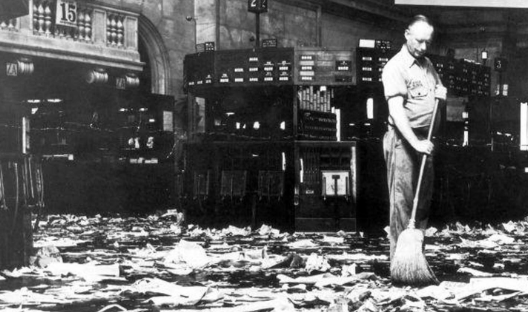
“Stock prices have reached what looks like a permanently high plateau,” said economist Irving Fisher….just before the 1929 stock market crash.

“Stock prices have reached what looks like a permanently high plateau,” said economist Irving Fisher….just before the 1929 stock market crash.
The reverberations through Wall Street were palpable as the first quarter of 2025 drew to a close. The Nasdaq 100, the bellwether index for the technology sector, had just concluded its most turbulent period in nearly three years, a dramatic downturn fueled by a confluence of economic anxieties and, most notably, escalating fears of an artificial intelligence (AI) bubble.
The sharp correction, which saw the index shed a significant percentage of its value, served as a stark reminder of the market's inherent volatility, even in the face of seemingly unstoppable technological advancement. The prior year's exuberant rally, driven by the promise of AI's transformative potential, had given way to a sobering reassessment of valuations and the sustainability of the AI-driven surge.
A Perfect Storm of Uncertainty
Several factors contributed to the Nasdaq 100's precipitous decline. Concerns over rising interest rates, persistent inflationary pressures, and geopolitical instability created a climate of widespread unease. However, it was the growing apprehension surrounding the AI sector that proved to be the most decisive catalyst.
The Impact on Tech Giants
The downturn had a particularly pronounced impact on some of the largest and most influential companies in the Nasdaq 100. Tech titans that had led the AI-fueled rally experienced substantial declines in their share prices.
Market Analysis and Investor Sentiment
Analysts pointed to a shift in investor sentiment, from unbridled optimism to cautious skepticism. The prevailing narrative had transitioned from "AI can do anything" to "at what cost, and when will we see returns?"
Looking Ahead: The Future of AI and the Nasdaq 100
The long-term implications of the Nasdaq 100's downturn remain uncertain. While the AI sector's potential remains undeniable, the market's recent correction underscores the importance of realistic valuations and sustainable growth.
Key Takeaways
The recent market correction serves as a potent reminder of the inherent volatility of financial markets and the importance of disciplined investing. As the AI sector continues to evolve, investors will need to carefully weigh the potential rewards against the inherent risks.
Mad Hedge Technology Letter
April 2, 2025
Fiat Lux
Featured Trade:
(THE TRUTH ABOUT TESLA THE BUSINESS MODEL)
(TSLA), (DOGE)

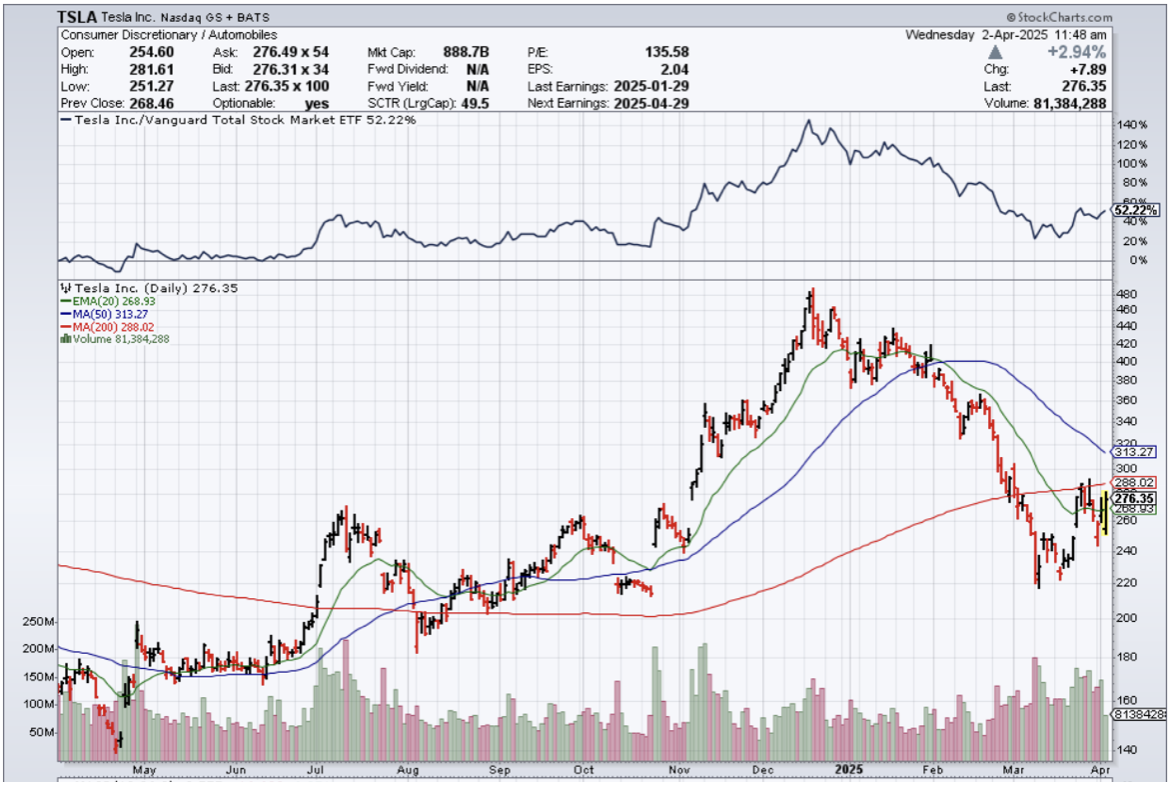
It is becoming more than obvious that Elon Musk’s venture into politics is hurting his business as Tesla dishes us some bad results from the latest quarter.
The amount of global deliveries failed to meet the mark and demand has been sapped for a variety of reasons.
Before getting more into it, I must say that European and American EV makers face an existential test against the Chinese and this challenge isn’t a decade or 2 off – it is right here and right now.
China has used its technological prowess to quickly rise up through the value-added supply chain and they now make a smartphone almost as high quality as an iPhone but for just a fraction of the price.
If we extrapolate this concept further out in terms of directional trajectory, the Chinese will most likely reproduce a similar outcome in aviation, humanoid robots, AI, semiconductor chips, automation and every leading tech sub-sector.
Musk certainly knows this which is why he is pivoting to robo-taxis and humanoid projects that are making headway, but not ready for commercial use.
The pie shrinking and the Chinese grabbing larger pieces of it is why Tesla only reported a paltry 336,681 deliveries versus 390,342 estimated.
This marks the worst quarter for deliveries since the second quarter of 2022.
The refreshed Model Y went on sale globally in March, which could be a reason for depressed demand for its top-selling vehicle.
Tesla sales have been stalling across most of its global territories. Earlier this week, Tesla registration data in key European regions fell in March, another sign that sales are continuing to slide in one of its key markets as Tesla's brand has also taken a backseat to Elon Musk’s political foray.
In France, only 3,157 Tesla EVs were registered, down 36.8% from a year ago. Norway saw only 2,211 registrations, down 63.9%. Sweden’s tally of 911 was only down 1%.
Tesla’s registrations are a close proxy for sales, which the company only reports quarterly and does not break out by region.
Another worrying trend that I must bring up is the rapid increase in political violence against Tesla products which is quickly muddying the prestigious brand.
Consumers simply won’t feel safe to buy or drive around in a Tesla if there is a good chance it will get blown up or vandalized.
It would be a good idea for Tesla if Musk clarified his role in running the Department of Government Efficiency (DOGE) and balancing his duties with Tesla.
Even if he does clarify his position, then it could all be for naught with politics quickly dissolving into a zero-sum game in almost every G20 country.
If we step back and look at the broader picture, it appears as if Tesla and Musk have run up to the extreme limit of his personal and political success in the short-term.
Any further meaningful progress will mean Musk “breaks the wall” and radically pivots into something new that will be the catalyst for another leg up in Tesla shares. He will also need federal government cooperation to do this which he didn’t have in the last administration.
Unfortunately, that transition process could become acutely painful for Tesla the business model in the short-term, and any trader looking for a quick mini-dip buy should avoid Tesla for now.
For long-term investors, this is a stock that hasn’t factored in robo-taxi or humanoid technology, and if anyone gets to deploy these two technologies, it will be Tesla and nobody else.
The risks to innovation can be sometimes existential while sting in the short-term, and Musk is finding that out in all its glory.
In the short-term, put on your seatbelt for heightened volatility, and long-term, buy and hold Tesla.

(THE TESLA BRAND IS ON THE NOSE)
April 2, 2025
Hello everyone
A brand-new updated Model Y is expected to arrive in Australia within weeks.
Is there a sense of excitement about this event?
I don’t think so.
Rather, there is a rising angry sentiment toward Elon Musk and his political movements.
We now see evidence of customer wrath as Tesla car yards are packed with current old stock that nobody wants. In addition to full car yards, there have been violent attacks on dealerships, cars set on fire, and mass demonstrations around the world.

The Tesla car has lost value, and customers aren’t coming back to buy again.
One Tesla Cyber truck owner has taken things a step further, putting the badge of rival electric vehicle maker Rivian RIVN on his electric truck.

People, who are selling stickers through Etsy, which show their discontent with Musk’s politics are making a fortune. Instead of selling their Tesla, customers are revealing their stance through stickers placed on their cars.
But many have sold their cars.
Celebrities who have ditched their Teslas
Arizonia Democrat, Sen. Mark Kelly.
Jason Bateman, who said, “owning a Tesla felt like driving around with a Trump sticker on the car.”
Sheryl Crow, who donated the money from the sale of her Tesla to NPR, which Musk has criticized and called to defund. NPR says it receives less than 1% of its funding directly from the federal government.
Joanne Wilson, and her venture capitalist husband, Fred Wilson, sold their Teslas in protest of Musk’s actions at DOGE.
In contrast, President Trump has bought two Teslas.
Tesla is facing more competition
Aside from the anger directed at the Tesla brand, which is facing falling sales, there is also increased competition from rival EV brands, such as BYD, which are showing rising sales and are equally techy and much more affordable.
Despite this competition, some analysts are still looking at Tesla as a stock to buy

Elon Musk needs to choose. Where does his loyalty really lie – is it with Tesla or with his political ambitions?
Please Note: This Post is not a recommendation to buy Tesla at this time.
What’s a better AI play than Nvidia?
Think Alibaba.
Many analysts believe shares in Alibaba are still very undervalued, even though the Chinese e-commerce platform has soared more than 56% in 2025.
Other reasons…
Chinese consumers are now spending again.
And Artificial Intelligence is an underappreciated growth driver for this technology giant.
The stock also boasts a healthy balance sheet.
While it does have some debt, the $235 billion company only holds around $28.8 billion in borrowings, and it has nearly twice that amount in cash and liquid assets. In addition, it has generated $14.5 billion worth of free cash flow in the past year.

We also may see an Alipay kind of announcement sometime this year.
If you’re interested in the Chinese market and AI, it’s a good time to scale into Alibaba here, as it has pulled back nicely.
Alibaba: $132.70


Cheers
Jacquie

When John identifies a strategic exit point, he will send you an alert with specific trade information as to what security to sell, when to sell it, and at what price. Most often, it will be to TAKE PROFITS, but, on rare occasions, it will be to exercise a STOP LOSS at a predetermined price to adhere to strict risk management discipline. Read more
Mad Hedge Biotech and Healthcare Letter
April 1, 2025
Fiat Lux
Featured Trade:
(HOW ONE SMUG DANE MADE ME EAT MY WORDS)
(NVO), (LLY), (ULIHF), (LXRX)

Back in 2008, I found myself in a private dining room at Copenhagen's Noma restaurant – then barely known outside culinary circles – seated next to a senior Novo Nordisk (NVO) executive who couldn't stop talking about their early-stage GLP-1 research.
"This will change diabetes treatment forever," he insisted between bites of moss and lichen. I nodded politely while thinking he'd had too much aquavit. Fast forward to today, and I've never been happier to have been dead wrong.
That same GLP-1 technology now powers Ozempic and Wegovy, creating a weight-loss revolution that's transformed both waistlines and balance sheets.
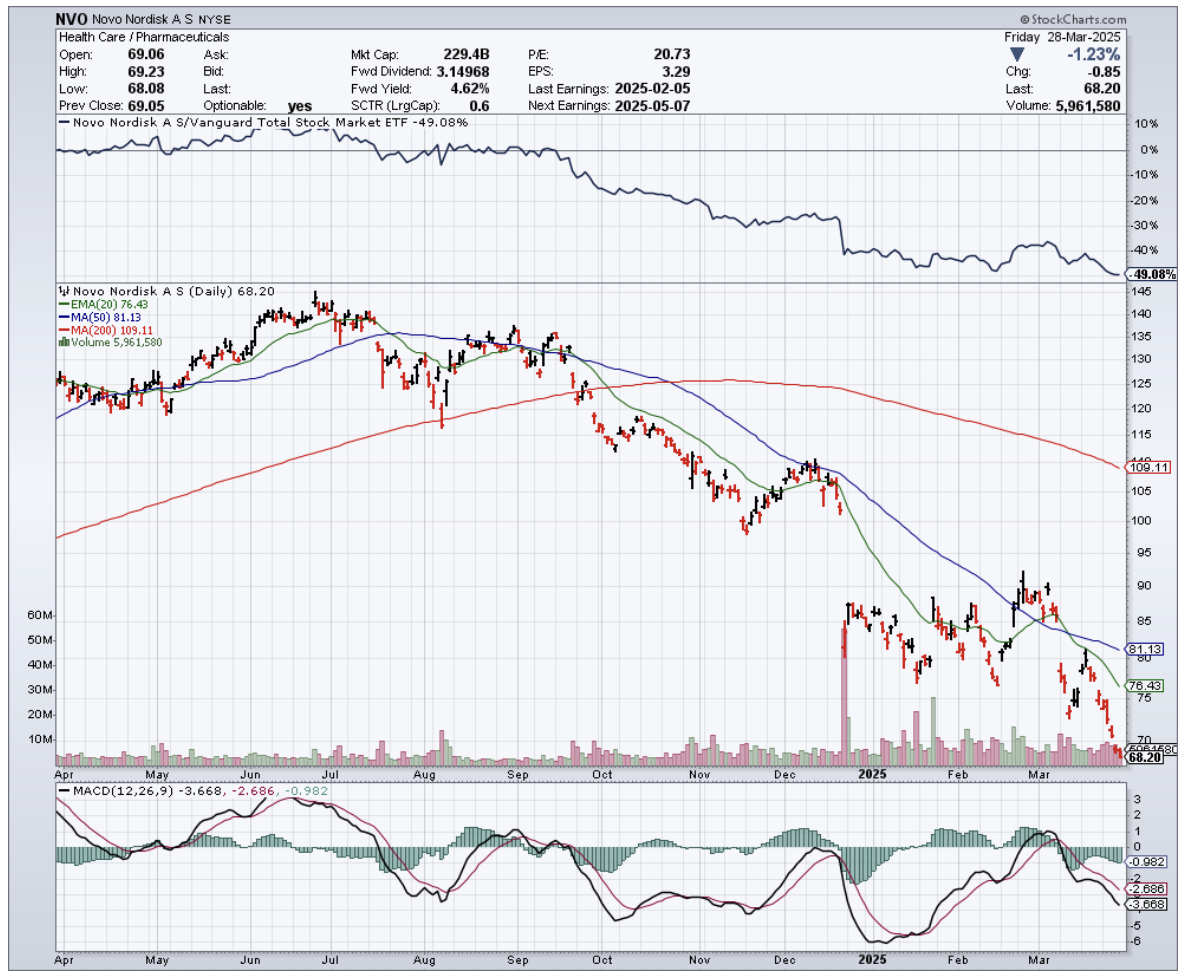
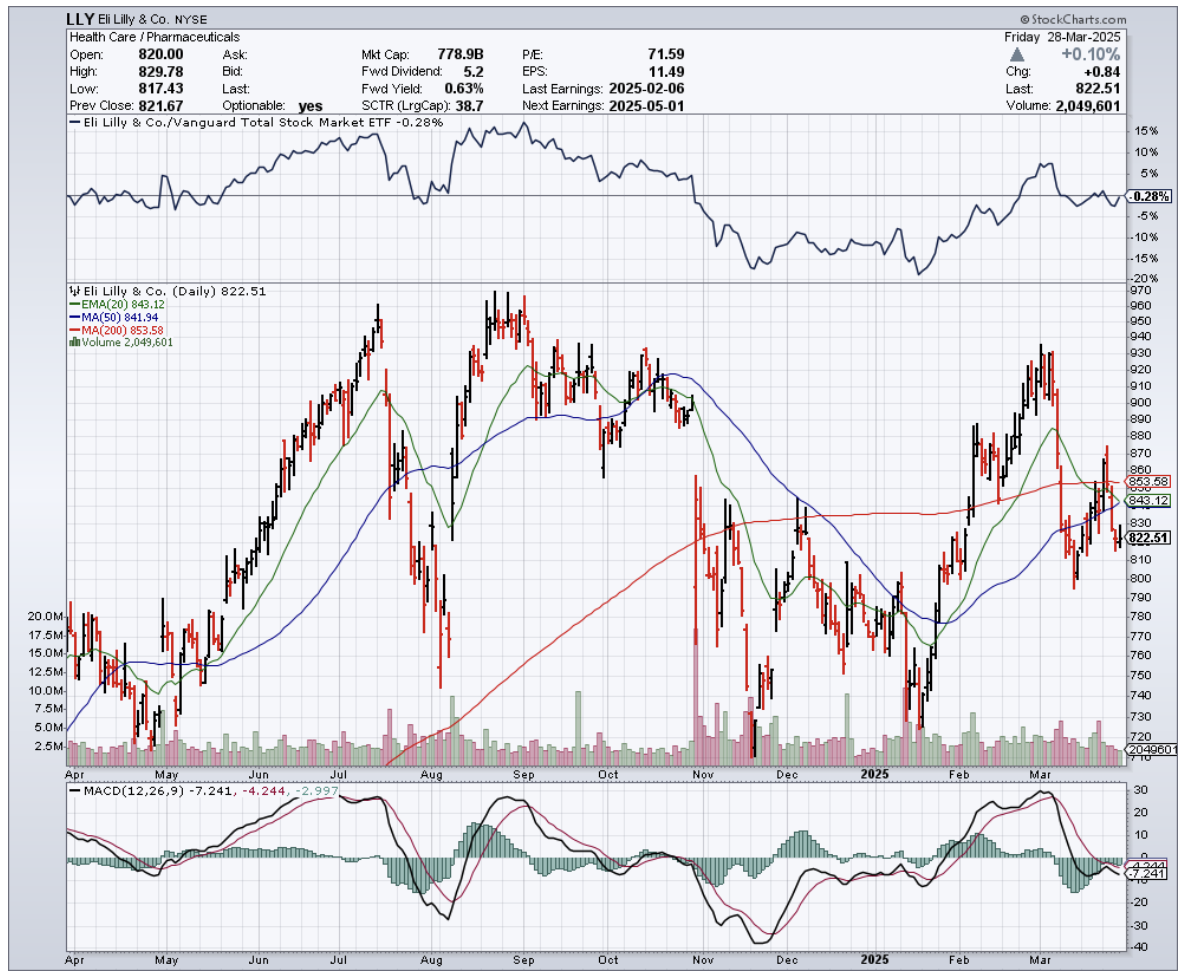
But here's what has me reaching for my trading account: Novo Nordisk's stock has somehow crashed 50% since last summer, creating what might be the buying opportunity of the decade in the pharmaceutical space.
Meanwhile, their American rival Eli Lilly (LLY) has remained relatively stable despite identical market challenges. Let's dissect this peculiar divergence.
The facts paint a compelling picture: Novo Nordisk remains the undisputed global leader in the GLP-1 segment with a commanding 55.1% market share.
Their quarterly revenue hit $11.95 billion, up 25.13% year-over-year – not quite matching Lilly's impressive 44.7% growth, but still exceptional by any standard.
What's particularly striking is the valuation disconnect. Novo now trades at just 17.9x forward earnings compared to Lilly's 35.4x multiple. That gives Novo a PEG ratio of 0.97 – catnip for value investors hunting growth at a reasonable price.
The Danish giant's financial position remains rock-solid with lower net debt ($10.6B vs. Lilly's $31B) and a superior debt/EBITDA ratio. Their EBIT margin stands at an impressive 48.2% versus Lilly's 38.9%.
The precipitous stock decline stems from two primary concerns: recent clinical trial results for their next-generation Cagrisema showed 22.7% weight loss versus their 25% target, and potential U.S. tariffs could pressure margins on European-manufactured drugs. Both fears seem drastically overblown.
For context, Novo's monthly RSI has dropped below 40 – a rare technical signal that has occurred only three times this century (2002, 2009, and 2016), with each instance preceding returns exceeding 500% before the next correction.
Historical patterns aren't guaranteed, but they certainly make me sit up straighter in my trading chair.
The company isn't standing still either. They've committed $4.1 billion to expand U.S. manufacturing facilities, reducing tariff exposure.
They've also signed deals worth up to $3 billion with United Laboratories (ULIHF) and Lexicon Pharmaceuticals (LXRX) to bolster their weight-loss drug pipeline, ensuring they remain competitive with Lilly's offerings.
Last month at a healthcare conference in Boston, I cornered a veteran endocrinologist who's been prescribing these medications since their approval.
"The competition between Lilly and Novo is creating better outcomes for patients," she told me. "But from a prescription perspective, we still reach for Novo's products first in most cases."
That kind of clinical preference creates a moat that's difficult to quantify on balance sheets but enormously valuable over the long term.
While Eli Lilly deserves its premium valuation with a more diversified therapeutic portfolio spanning oncology, immunology, and neurology, Novo's singular focus on diabetes and obesity has created unparalleled expertise in categories representing massive long-term growth markets.
The obesity treatment market alone is projected to grow at 22% annually, with GLP-1 drugs leading the charge. Approximately 25% of the world's population will be obese by 2035, and Western markets like the U.S. and Europe (Novo's primary territories) will see the highest rates.
Both companies will thrive in this expanding market, but at current prices, Novo represents a superior investment opportunity. Analyst consensus targets suggest 57% upside potential for Novo versus 23% for Lilly.
I've initiated a position in Novo Nordisk at these levels while maintaining a smaller holding in Lilly for diversification. After all, in pharma investing, sometimes the most profitable opportunities emerge when the market overreacts to short-term concerns.
As for that Danish executive from 2008? He retired to a villa overlooking the Øresund Strait last year. I sent him a congratulatory gift basket filled with moss and lichen – a reminder of where billion-dollar ideas sometimes begin.
Global Market Comments
April 1, 2025
Fiat Lux
Featured Trade:
(REVISITING THE FIRST SILVER BUBBLE),
(SLV), (SLW)
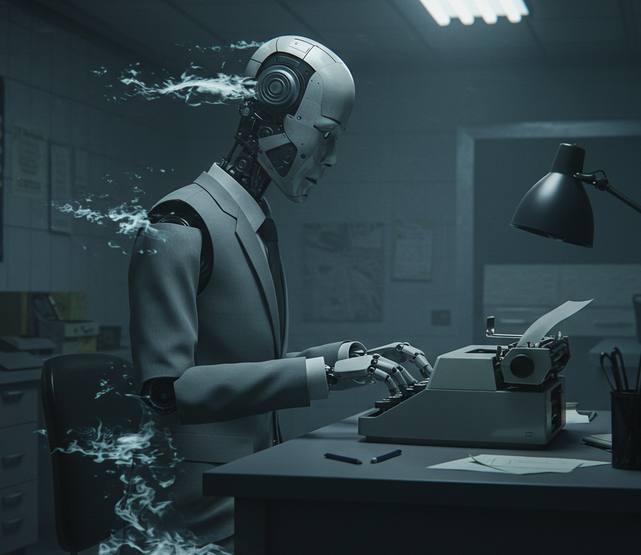
(INOD), (NVDA), (IBM)
A few months ago, I found myself trading shots of sake with the CTO of Japan's largest AI firm at 2 AM in a Tokyo back-alley izakaya – the kind of place where salarymen go to forget debugging nightmares.
After his fourth drink, he leaned in conspiratorially.
"You know what's funny?" he slurred, loosening his tie. "We just spent $20 million on Nvidia (NVDA) hardware, but our biggest expense isn't computing power – it's paying humans to teach our AI systems how to think." He tapped his temple knowingly.
"Everyone's obsessed with GPUs, but the real bottleneck is quality training data." I nearly choked on my yellowtail sashimi.
Here was one of Asia's most prominent tech executives confirming what I've suspected since watching IBM's (IBM) Deep Blue defeat Kasparov back in '97: the emperor's AI clothes aren't quite as autonomous as advertised.
The dirty little secret of artificial intelligence isn't very artificial at all.
Behind every "intelligent" system lurks an army of humans doing the intellectual piecework that machines still can't handle.
What most investors missed then (and still miss today): IBM spent thousands of hours having humans hand-code chess positions to make the machine appear "intelligent."
Nearly three decades later, the AI industry's dependence on human labor remains its least discussed vulnerability – and its most interesting investment opportunity.
Enter Innodata (INOD), a company that's quietly climbed 580% this year while everyone was fixated on Nvidia's trillion-dollar hardware empire.
INOD isn't building the next chatbot or revolutionary language model – they're providing the human foundation that makes those systems possible.
When ChatGPT reads "The sun is shining" and interprets this as a positive statement, it's because humans tagged thousands of similar phrases and taught the system to recognize their emotional tone.
This is the unglamorous reality of AI that no one at Silicon Valley cocktail parties wants to discuss.
I've been following INOD since they were a struggling document processing company trying to reinvent themselves.
Founded in 1988, they've transformed from a business outsourcing provider into what might be the most essential ingredient in AI development – the human intelligence that teaches machines how to think.
With 6,597 employees across 31 countries, they've infiltrated the supply chains of several "Magnificent 7" tech giants who publicly boast about their AI capabilities while privately depending on INOD's human workforce.
The financials tell a compelling story that most investors are missing. INOD delivered 100% year-over-year revenue growth, reaching $170 million in annual sales.
More importantly, they've transformed consistent losses into $28.66M in profit – a transition I've rarely seen executed so efficiently in the tech sector. Operating margins have improved from 14% to an estimated 21% by 2026, with Wall Street projecting 42% revenue growth in 2025.
Most AI investments suffer from what I call "someday syndrome" – a condition I diagnosed after sitting through hundreds of tech pitches featuring eye-watering valuations, massive cash burn rates, and vague promises about future profits.
INOD flips this script by generating actual earnings while providing a service the industry desperately needs right now.
Unlike many AI companies burning cash faster than a pyromaniac at a match factory, INOD operates debt-free – a quality I've come to appreciate after watching promising tech companies implode when funding markets tightened.
The bull case for INOD boils down to one premise I've observed repeatedly in my four decades of tech investing: the road to AI autonomy is much longer than optimists believe.
Just last week, I spent 15 minutes at a self-checkout trying to convince the machine I had placed my items in the bagging area. The system kept insisting I hadn't – a minor but telling example of AI's limitations when confronting the messy realities of the physical world.
What makes INOD particularly valuable is their expertise in specialized domains. They employ doctors who annotate medical imagery, lawyers who tag legal documents, and financial experts who label market data – creating custom training sets for specialized AI applications that general models struggle with.
As every industry develops its own specialized AI models, the demand for domain-specific training data grows exponentially.
Of course, I've been spectacularly wrong about technology timing before. In 1999, I bet heavily on early e-commerce platforms, only to watch most of them collapse when the infrastructure wasn't ready.
The bears have legitimate concerns about INOD: advances in self-supervised learning could reduce dependence on human annotation, real scalability challenges exist (they spent $3.6 million on recruiting for just one client in Q2), and a PE ratio of 55x isn't exactly what I'd call a value play.
The investment thesis ultimately comes down to timing – how long will AI need intensive human intervention?
If you believe, as I do after watching this space evolve since the early neural network days, that we're years away from fully self-sufficient AI, then INOD's current valuation might represent reasonable value.
By 2026, we're looking at a forward PE of 27x – quite reasonable for 20%+ annual growth in the AI sector.
For those with high risk tolerance and a 2-3 year horizon, INOD offers AI exposure without betting on which model architecture will dominate. They're selling picks and shovels in a gold rush, but their tools are human minds rather than silicon chips.
Don't expect a smooth ride – the stock has already soared, and the tension in their business model guarantees volatility.
While flying back from that Tokyo conference, I couldn't help but appreciate the irony: INOD is helping build systems that could eventually automate their own operations. They're training their replacements.
But having watched technology evolve over five decades, I've learned that disruption rarely follows a straight line. The human-powered company might just be the perfect AI stock for those who recognize that machines aren't ready to bootstrap themselves into superintelligence.
That, or I've just written words that an INOD contractor will eventually annotate to train the model that puts financial analysts out of work. After climbing Everest and flying a MiG-25 at the edge of space, being replaced by an algorithm I helped train would be a fitting final adventure.
