?If past history is all there was to the game, the richest people would be librarians,? said Oracle of Omaha, Warren Buffett.


?If past history is all there was to the game, the richest people would be librarians,? said Oracle of Omaha, Warren Buffett.
As a potentially profitable opportunity presents itself, John will send you an alert with specific trade information as to what should be bought, when to buy it, and at what price. Read more
As a potentially profitable opportunity presents itself, John will send you an alert with specific trade information as to what should be bought, when to buy it, and at what price. Read more
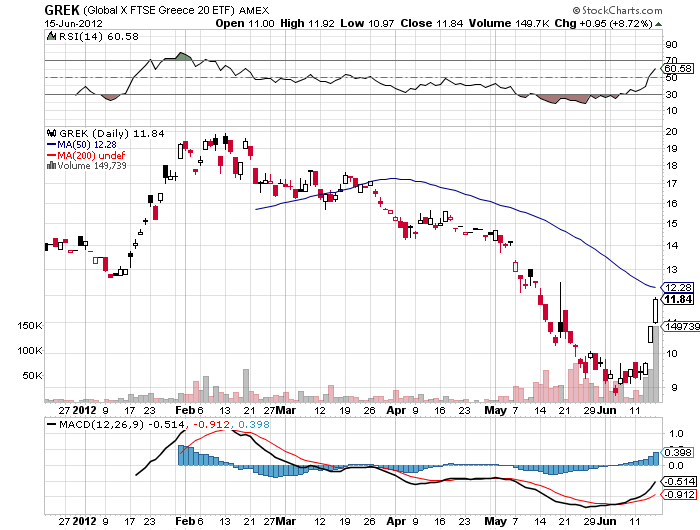
The victory of the centrist pro bailout New Democracy Party in the Sunday Greek elections sparked a furious rally in the overnight Asian markets, much of it driven by hedge fund short covering. The socialist, anti-bailout parties went down in flames. As I write this on Sunday night, the Dow futures are trading up 78 points from the Friday close and the Japanese yen is in free-fall. Too bad that I?m 110% long ?RISK ON? positions in my model portfolio.
That was no surprise as 70% of Greeks want to stay in the EC. The way is now paved for a more civilized workout of the country?s financial problems which spreads austerity out over many more years, making it more tolerable and digestible for its citizens.
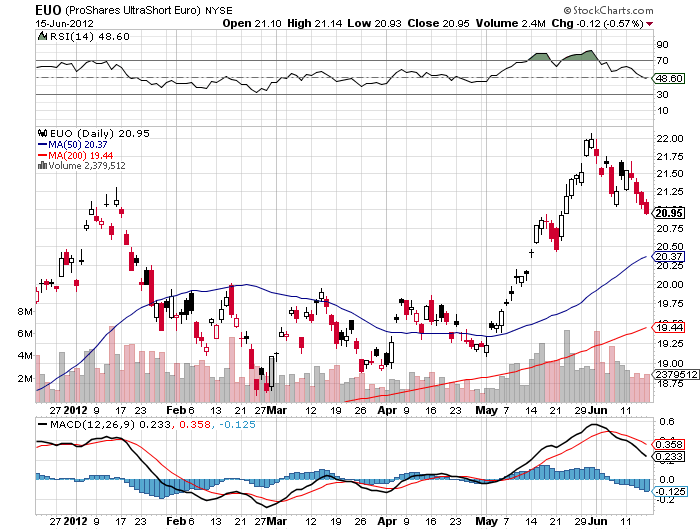
The latest Commitment of Traders report showed the Euro (FXE) (EUO) shorts in the futures hit yet another all-time high, and that the underlying was now worth $20 billion in the foreign exchange market. Shorts in the interbank cash market and ETF?s are thought to be much larger. On top of that, central banks have been seen unloading reserves denominated in Euros.
This witches brew of one-sided positions made up the perfect ingredients for the type of rip-your-face-off, snap back short covering rally that we have seen in past days. This is why I covered my own shorts three weeks ago when it pierced the $126 handle.
Keep in mind that the media has a lot of blood on its hands with its wild over exaggeration in its predictions of the imminent collapse of Greece and its withdrawal from the European Community that was never going to happen. It is focusing 99% of its attention on the Land of Socrates and Plato that accounts for 1% of European GDP. In the meantime, it is ignoring Germany which has 30% of GDP and is still growing, albeit at a slower 1% rate.
CNBC, in particularly, seems to be mercilessly beating this dead horse, holding it out as an example of what will happen to the US if it pursues similar high spending polices. This is why they send a Tea Party activist out to Athens at great expense every week to provide your coverage and to bait the Socialist candidates. They haven?t been this wrong since they reported that the Facebook issue was 30 times oversubscribed in Asia the night before it became the worst IPO in history.
But Greece has about as much in common with America as the US Treasury has with the bankrupt city of Vallejo, California. If anything, Greece is a perfect example of what happens when the wealthy get away with paying no taxes. Anyone with substantial means there stashes their dosh in Swiss bank accounts, leaving only the poor to cough up government revenues. Rich Greeks are just better at it than Americans. After all, they have been practicing for 5,000 years.
Greece is so small that it would be economic for Germany to just pay off half of its national debt just to maintain stability for its largest export markets. Should they spend $270 billion to protect $1.27 trillion in annual exports? It makes sense to me.
And let me give you a little back story here which you probably haven?t heard. Where did all this debt come from? Greedy unions? Careless bureaucrats? Spendthrift socialists? Expensive national health care?? A very big chunk was the result of the 2004 Athens Olympics where the government spent billions on huge sporting facilities and infrastructure that would only be used once and that it could never afford. Who constructed these massive edifices? German engineering firms. I know because I was there. There is always more to the story than the headline.
I hope my guests at my upcoming July 18 Frankfurt strategy luncheon don?t tar and feather me, or whatever they inflict on miscreants there, for expressing this opinion.
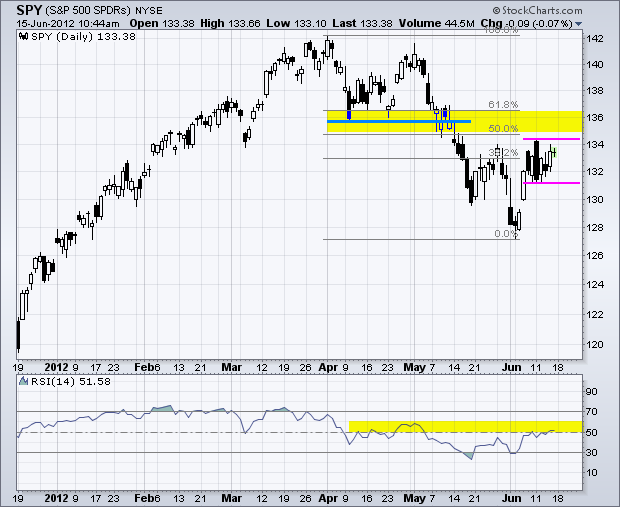
All of this is leading up to a great shorting opportunity for the beleaguered European currency. Given the current positive background, it could make it all the way back up to $127.80. That is a neat 50% retracement of the recent move down from $132.80 to $123.00. But be careful not to fall in love with it. The major trend in the Euro is still down, aiming for $1.17. And with a 0.50% interest rate cut by the European Central Bank imminent, that target could be hit sooner than later.

Don?t Fall in Love With the Euro

It seems that all you hear about these days is deflation. That is certainly what the bond market is telling us, with my screen blaring at me a miserable 1.58% yield for the ten year Treasury bond.
But there is a new definition for this economic malady that applies to we hapless consumers. In the new deflation, the value of our income falls, while the prices of things we need to buy are going through the roof. It is a particularly pernicious form of deflation, as it is burning our candles at both ends at the same time.
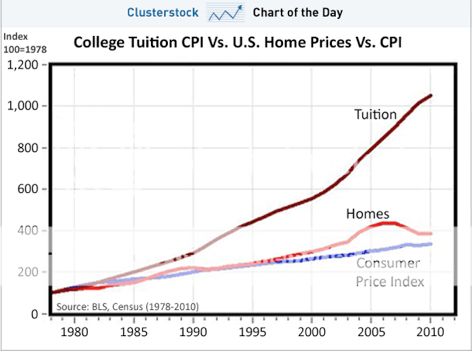
Take a look at the chart below, showing the cost of college tuition versus the consumer price index and home prices. This hits home particularly hard, as I have just put three kids through college, and am reduced to riffling through the sofa cushions looking for spare change or washing windshields at street corners on weekends in order to meet the bills. When I graduated from the University of California in the seventies the tuition was $3,000 a year. Today it is $16,000, and climbing at a 20% annual rate.
The saddest part of the story is that rampant wage deflation means that recent graduates have a grim choice between taking a poorly paid job, or no job at all. That leaves them woefully unable to repay the student loans they ran up to obtain their rapidly devaluing diplomas. The $1 trillion in outstanding student loans is begging to become the next subprime crisis.
And if you were planning on becoming a teacher, forget it, unless you want to move to Saudi Arabia, Russia, or South Korea. After watching tens of millions of jobs get shipped to China over the last decade, did you expect anything less? Just add this problem to the ever lengthening list of ways we are getting screwed.

Deflation Can Be a Bitch!
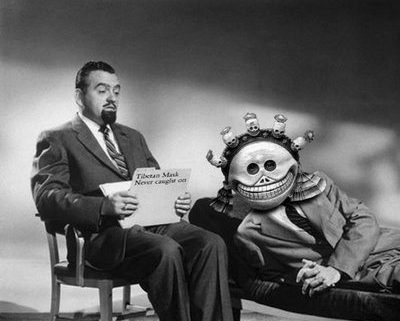
?For the last 20 days, I feel like I have played psychologist more than I have played money manager,? said financial talk show host, Kyle Harrington.
The wild whipsaw movements in the markets on Thursday reminded us once again how dependent they have become on monetary stimulus from central banks. As if we needed reminding. Almost simultaneously, officials from the US, Japan and the UK hinted at a coordinated move at this weekend?s G-20 meeting in Cabo San Lucas, Mexico.
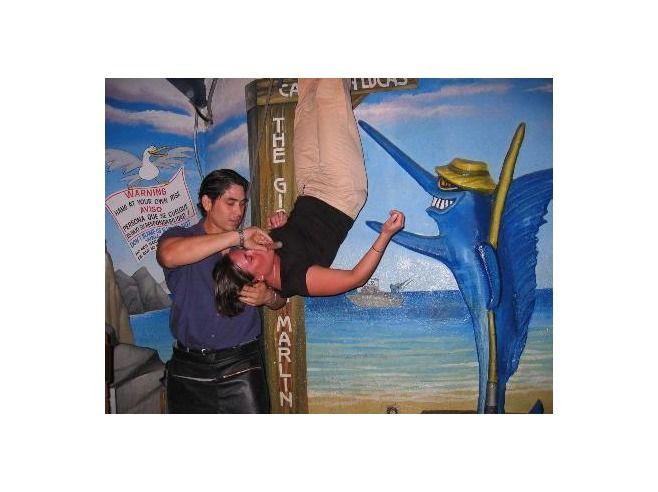
Let?s hope for the sake of global financial stability that no one eats a bad taco down there. And say ?Hello? to Miguel for me at the notorious drinking establishment, The Giggling Marlin. Just make sure he doesn?t pick your pocket when he hangs you upside down by your ankles with a block and tackle to give you a tequila shot.
The rumors were enough to cause me to cover my sole remaining short position in the S&P 500 (SPY) and bat out some additional shorts in the Japanese yen, which would go into free fall in such a scenario. If the rumors are true, they will take the (SPX) up to 1,400 and I will make a killing on my hefty long positions in (AAPL), (HPQ), (JPM), (DIS) and shorts in (FXY) and (TLT). If not, then the large cap index will revisit 1,290 one more time and I will be left looking like a dummy while posting an embellished resume on Craig?s List.
To see how closely risk assets are correlated with quantitative easing, take a look at the chart produced below by my friend, Dennis Gartman of The Gartman Letter. It graphically presents the market response to QE1, QE2, and Operation Twist, which are highlighted in green. In fact, quantitative easing has become the on/off switch of the financial markets. Hence, we get ?RISK ON?/?RISK OFF? gyrations in spades.
While on the topic of monetary policy, let?s consider the implications of a Romney win in the November presidential election. The former Massachusetts governor and son of a Michigan governor has said that he would fire Federal Reserve Governor, Ben Bernanke, on his first day in office.
Well, he actually can?t do that, although it is great fodder for the faithful on the hustings. What he can do is appoint and anti QE, pro-austerity replacement when Ben?s second four year term is up on January 31, 2014. At the top of the list of replacements are Stanford University?s John Taylor of Taylor Rule fame and sitting non-voting board member, president of the Dallas Fed, and noted hawk, Richard Fisher.
How would the financial markets react? Much of the recent buying of stocks and other risk assets has been on the assumption that the ?Bernanke Put? would kick in on any serious selloff. No Bernanke means no Bernanke put. I can already hear portfolio managers thinking ?What, you mean there is risk in these things?? and heading for the exits as quickly as possible. The resulting market crash could make 2008-2009 look like a cakewalk. Your 401k would rapidly shrink to a 201k, and your IRA would become DOA. So be careful what you wish for.
That is unless you are a reader of this letter and a subscriber to my Trade Alert Service. Such a market meltdown would be one of the great shorting opportunities of the century. But to follow the game you have to have a program.
 Time for Another Shot of Monetary easing
?This is not 2008 or 2009. People are getting overblown with this hysteria. We are only 10% off the highs and have only given back gains. It?s like your wife may have been expecting diamond earrings and now she got a blender,? said Alan Knuckman, chief trading advisor at onestopoption.com.

As a potentially profitable opportunity presents itself, John will send you an alert with specific trade information as to what should be bought, when to buy it, and at what price. Read more
As a potentially profitable opportunity presents itself, John will send you an alert with specific trade information as to what should be bought, when to buy it, and at what price. Read more