Through the vast whole spectrum of public markets, the U.S. stock market, and specifically technology stocks, are dominating versus their peers from other countries.
Heck, even Apple, just one company from a small suburb in California, is valued at a price that is greater than the entire German economy.
Does that speak to how bad the German economy is, or does it speak to the potency of public tech companies in America?
The truth is probably a bit of both.
Then, take a second and try to absorb the fact that Apple hasn’t even integrated AI into its own products yet.
The future is bright for many tech stocks, and the rally will broaden out to non-Magnificent 7 stocks.
More granularly, the US will continue to lead by market cap share as artificial intelligence benefits expand beyond a few large tech names that have dominated the market rally over the past year to companies in various industries.
Revenue production and margin improvement will be the critical levers of expansion.
The first will come from the money pouring into AI benefiting companies outside of Big Tech. This plays out as tech companies buy AI chips from the likes of Nvidia (NVDA), and as they need more power, these AI operators are forced to spend with companies in the Utilities (XLU) and Energy (XLE) sectors.
As AI makes companies more efficient and eliminates the simplest work, eventually cutting down costs, US corporates should get a boost to profit margins.
Global equity markets, including retirement allocations to equities, are basically leveraged to Nvidia.
A non-US tech company will rise over the next decade and unseat the large tech companies currently driving the US market share, like Apple (AAPL), Nvidia, Microsoft (MSFT), Amazon (AMZN), Alphabet (GOOGL), and Meta (META) are almost zero.
When we look at the revenue possibilities and understand that AI will directly cut expenses by creating efficiencies, it’s hard to see tech stocks do anything but go higher in the long term.
Even then, there will be some dips, and they should absolutely be characterized as buying opportunities.
Just look at a 3-month chart of Apple, and each month has presented a dip buying opportunity on August 6th, September 16th, and October 7th.
Apple stock is up 7.5% in the past 3 months.
When everyone complains that tech stocks are too expensive, well, they will get more expensive.
As long as leverage is able to be tapped, institutions will tap it and look for that asymmetric trade to the upside.
Tesla has also proved how hard it is to bet against tech and Elon Musk.
It usually is a terrible idea.
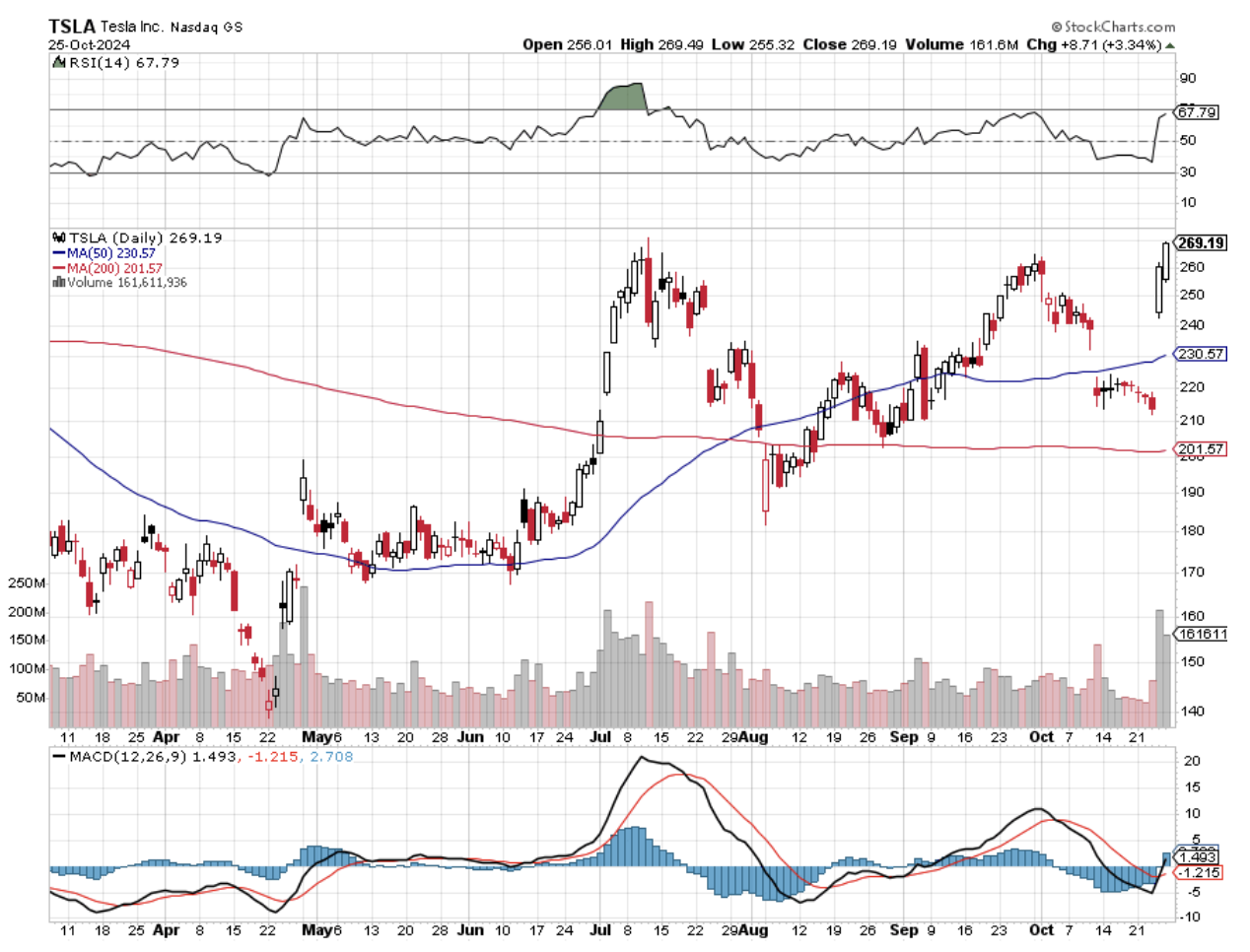
The setup to Tesla’s earnings meant a very low bar, and Musk jumped over it to the tune of a 22% pop in Tesla stock.
Tech is clearly in a secular bull trend, and trying to get artsy to squeeze in a microdip on the short side usually has meant a loss-taking event.
Why even try?
It’s my job to tell readers to bet on tech going to the upside, especially the quality companies that accelerate revenue by harnessing the superpowers of AI.
https://madhedgefundtrader.com/wp-content/uploads/2019/05/cropped-mad-hedge-logo-transparent-192x192_f9578834168ba24df3eb53916a12c882.png00april@madhedgefundtrader.comhttps://madhedgefundtrader.com/wp-content/uploads/2019/05/cropped-mad-hedge-logo-transparent-192x192_f9578834168ba24df3eb53916a12c882.pngapril@madhedgefundtrader.com2024-10-28 14:02:172024-10-28 15:42:32The Future Of Tech Stocks
Earnings:Visa, Chipotle Mexican Grill, First Solar, Caesars Entertainment, Advanced Micro Devices, McDonalds, Pfizer, Royal Caribbean Group, PayPal, D.R. Horton, Alphabet.
Wednesday, Oct 30
8:15 a.m. ADP Employment Survey (October)
8:30 a.m. GDP Chain Price first preliminary (Q3)
8:30 a.m. GDP first preliminary (Q3)
10:00 a.m. Pending Home Sales Index (September)
10:00 a.m. Pending Home Sales
Earnings:Microsoft, Meta Platforms, Starbucks, Kraft Heinz, Caterpillar, Eli Lilly, GE Healthcare Technologies, Clorox, Bookings Holdings.
Thursday, Oct. 31
8:30 a.m. Continuing Jobless Claims (10/19)
8:30 a.m. ECI Civilian Workers (Q3)
8:30 a.m. Initial Claims (10/26)
8:30 a.m. Core PCE Deflator (September)
8:30 a.m. PCE Deflator (September)
8:30 a.m. Personal Consumption Expenditure (September)
8:30 a.m. Personal Income (September)
9:45 a.m. Chicago PMI (October)
Earnings:Apple, Amazon.com, Norwegian Cruise Line Holdings, Uber Technologies, The Estee Lauder Companies, Mastercard, Generac.
Friday, Nov. 1
8:30 a.m. Jobs Report (October)
Previous: 254k
Forecast: 140k
9:45 a.m. S&P PMI Manufacturing final (October)
10:00 a.m. Construction Spending (September)
10:00 a.m. ISM Manufacturing (October0
Earnings:Exxon Mobil
It’s a data heavy week.Big Tech reports earnings, and expectations are high, but many analysts are still beating the table on these tech stocks, particularly Meta (META), Apple (AAPL) and Microsoft (MSFT) believing they have further room to run.
The employment report on Friday takes on additional significance ahead of next week’s FOMC meeting.Market participants will also closely monitor Q3 GDP estimates and PCE inflation figures throughout the week.These high impact releases could reshape market sentiment heading into the US election.In fact, any deviation from the recent streak of robust economic data could potentially lead to significant moves in the US dollar.
‘Toy’ Drones Could Be A ‘Real’ Tool for Terrorists
Britain’s streets could be transformed into chaos if Extremists use “toy drones”.This is the warning from the Government’s counter terrorism management team.
Current rules enforced by the Civil Aviation Authority (CAA) require people operating drones weighing more than 250g to be registered and pass a theory test. However, lighter devices are widely available and are not subject to the same rules.
The world’s biggest drone company DJI sells multiple models advertised as weighing 249g.
In the UK there is regulation affecting the use of drones and it includes some provision for licensing users, but the regulation does not apply to ‘toy’ drones.
The Gold Boom
We all know that gold’s value is driven by interest rates, inflation and geopolitical fears; it is the insurance of choice for investors seeking security.When interest rates fall and returns on some assets slide with them, gold can be a safe bet.When inflation erodes a currency’s purchasing power, the price of gold rises like everything else.Furthermore, it is also a haven commodity for investors, who are concerned about war and global tensions.
This boom seems a little different, particularly the drivers of the gold price.
Central banks of emerging nations have been the big buyers of the past couple of years.Many of these nations are hostile to the United States and see hoarding more gold as financial protection.Others just think that the days when the dollar was the dominant means of global exchange is waning.
That’s a big wake up call for the West.Mohamed El-Erian believes that we could be witnessing a fragmentation of the international financial system based on the dollar.And that would mean eroding US power.
Central bank gold buying hit a record high in the first three months of 2024, according to the World Gold Council.India, Uzbekistan, Qatar, Russia, Iraq, and Jordan were among the biggest purchasers.China has increased its buying too.
It appears many countries are calling time on America’s “weaponisation” of the dollar.Collectively, these countries may conclude that they might be better off with an alternative currency to use for international trade.And holding more gold could be a foundation for a new payments system.
Russian president Vladmir Putin has long envisioned the creation of a gold-backed alternative to the dollar, and last week he had a chance to push his agenda.At a three-day economic summit, which included the latest gathering of the BRICS group of emerging economies – Brazil, Russia, India, China and South Africa – Putin shared his vision for a BRICS currency.Egypt, Ethiopia, Iran, the United Arab Emirates, Turkey, Pakistan, Thailand, Venezuela, Senegal and Saudi Arabia are seen as potential members.
At the Summit, Putin showed a symbolic banknote, “The Unit” featuring the flags of BRICS countries.
Even if the BRICS members and their partners never find a way to circumvent the dollar, no one stocking up on gold appears to be losing money at this time.
MARKET UPDATE
S&P 500
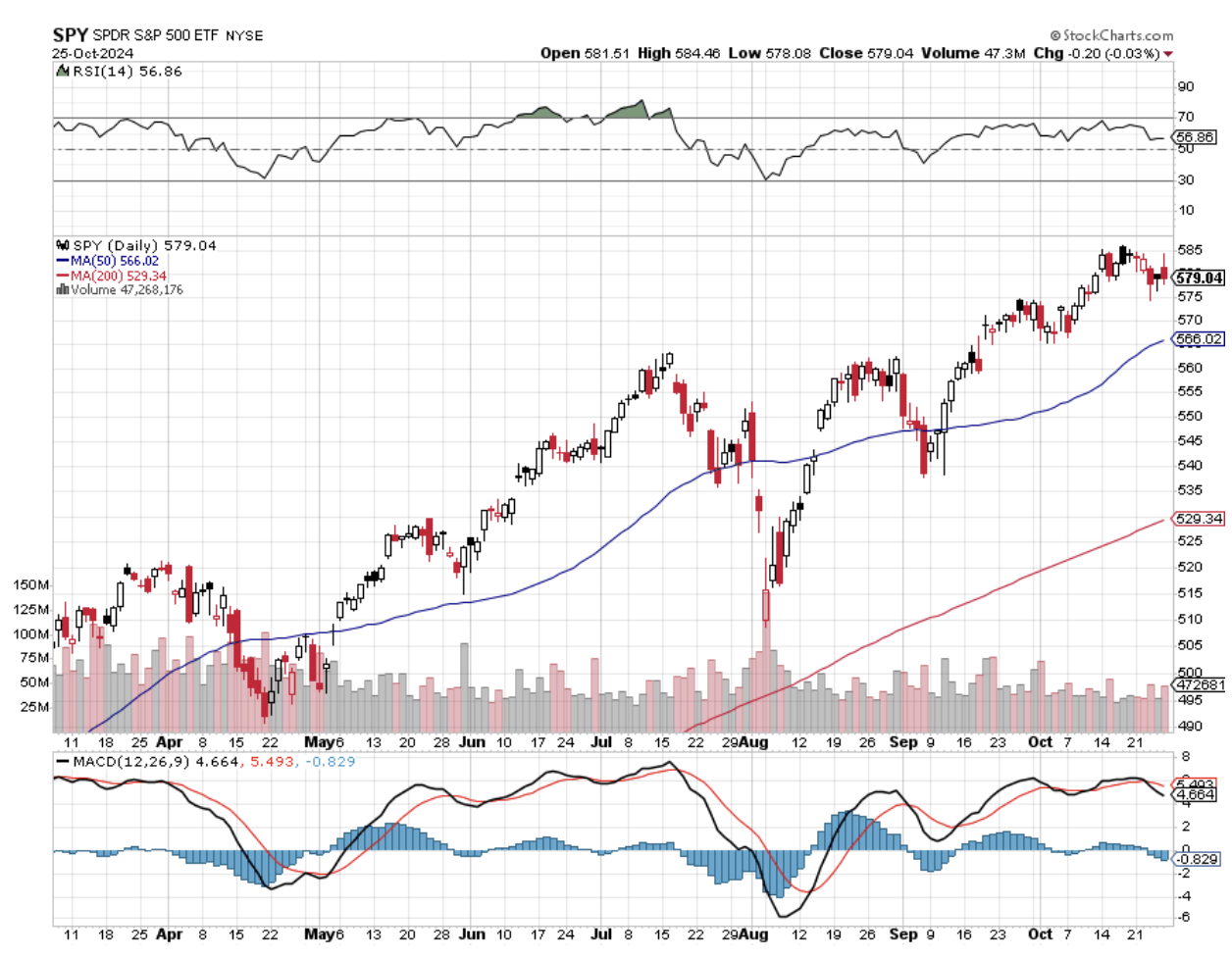
Uptrend intact. Could be a volatile week with Big Tech earnings out and the Jobs Report.
(MARKET OUTLOOK FOR THE WEEK AHEAD, or HERE IS YOUR POST-ELECTION PORTFOLIO
plus THE LAST SILVER BUBBLE)
(NVDA), (META), (CRM), (TLT), (JNK), (CCI), (DHI), (LEN), (PHM),
(GLD), (SLV), (NEM), (FXE), (FXB), (FXA), (TSLA), (JPM),(BAC), (GS)
The world was supposed to end at midnight on December 31, 1999 because computers would be unable to cope with the turnover of the new millennium. I remember making presentations to big hedge funds, predicting that Y2K was a big nothing burger and, worst case, somebody’s toaster wouldn’t work.
I spent that New Year’s Eve with my kids at Disneyland in Orlando, watching one heck of a fireworks display. What happened the next morning? Even the toasters worked.
I think we are setting up for another Y2K outcome, except that this time, it’s the presidential election that has everyone in a tizzy.
The polls are tied at 48%-48% with a margin of error of 4%. In fact, for the last 50 years, the opinion polls have been wrong by an average of 3.4%. One side already has that 3.4% and probably more, plus all seven battleground states, but we won’t know for sure until November 6.
As an investment manager, it is not my job to pick a side or impose my view upon you but to deliver the best possible investment returns for my clients.
And let me tell you how.
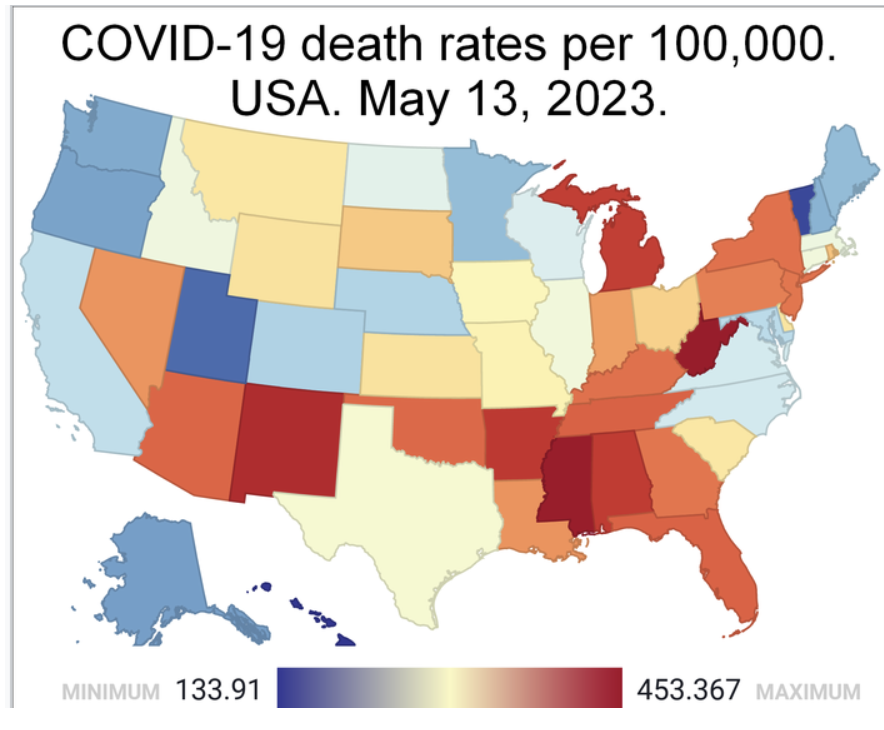
Remember the Pandemic? Four years after the event, we now have the luxury of copious hard data. Out of 103,436,829 cases, some 1,203,648 Americans died, or 1.3%. But, the death rate in red states was much higher than in blue states.
For example, California suffered only 101,159 deaths out of a population of 39,128,162 for a death rate of 0.26%. Florida saw 86,850 deaths out of a population of 22,634,867 for a death rate of 0.38%. Deaths in Florida were 68% higher in the Sunshine State than in the Golden State.
Florida, in effect, traded lives for business profits. Florida also had a Typhoid Mary effect in that by staying open for spring breaks and vacations; it increased the death rates in surrounding red states.
Assume that half of those who died were voters and apply this math to the entire country, and Republicans lost 393,059 votes to the pandemic compared to only 268,935 for Democrats. Some 124,125 more Republican voters died than Democrats. Is 124,125 votes enough to decide this election?
Absolutely!
In the 2020 presidential election, Biden won the three battleground states of Georgia by the famous 11,779 votes, Arizona by 10,457 votes, and Nevada by 33,596 votes. That’s 33 electoral college votes right there out of 270 needed.
The opinion polls have missed these numbers by a mile because their algorithms don’t take the pandemic into consideration. They are counting dead voters, while the actual election polls only count live ones. I predict that the opinion polls will be spectacularly wrong….again.
Of course, these are back-of-the-matchbook ballpark calculations. I’ll leave it to some future aspiring PhD candidate to research his thesis with more precise figures. I have better things to do.
So, how do we make money off of all this? I have never seen investors so underweight and cautious going into a major risk event like this election. They have been scared out of the market by the media. Therefore, I expect the stock market to rise by 10% after the election, taking the S&P 500 as high as 6,400.
Let the great chase begin!
Here is your model portfolio for the rest of 2024.
(NVDA), (META), (CRM) – Underweight fund managers will chase this year’s best performers so they can look good at yearend. Similarly, they will dump their worst performers in the energy sector. So will individual investors for tax loss harvesting.
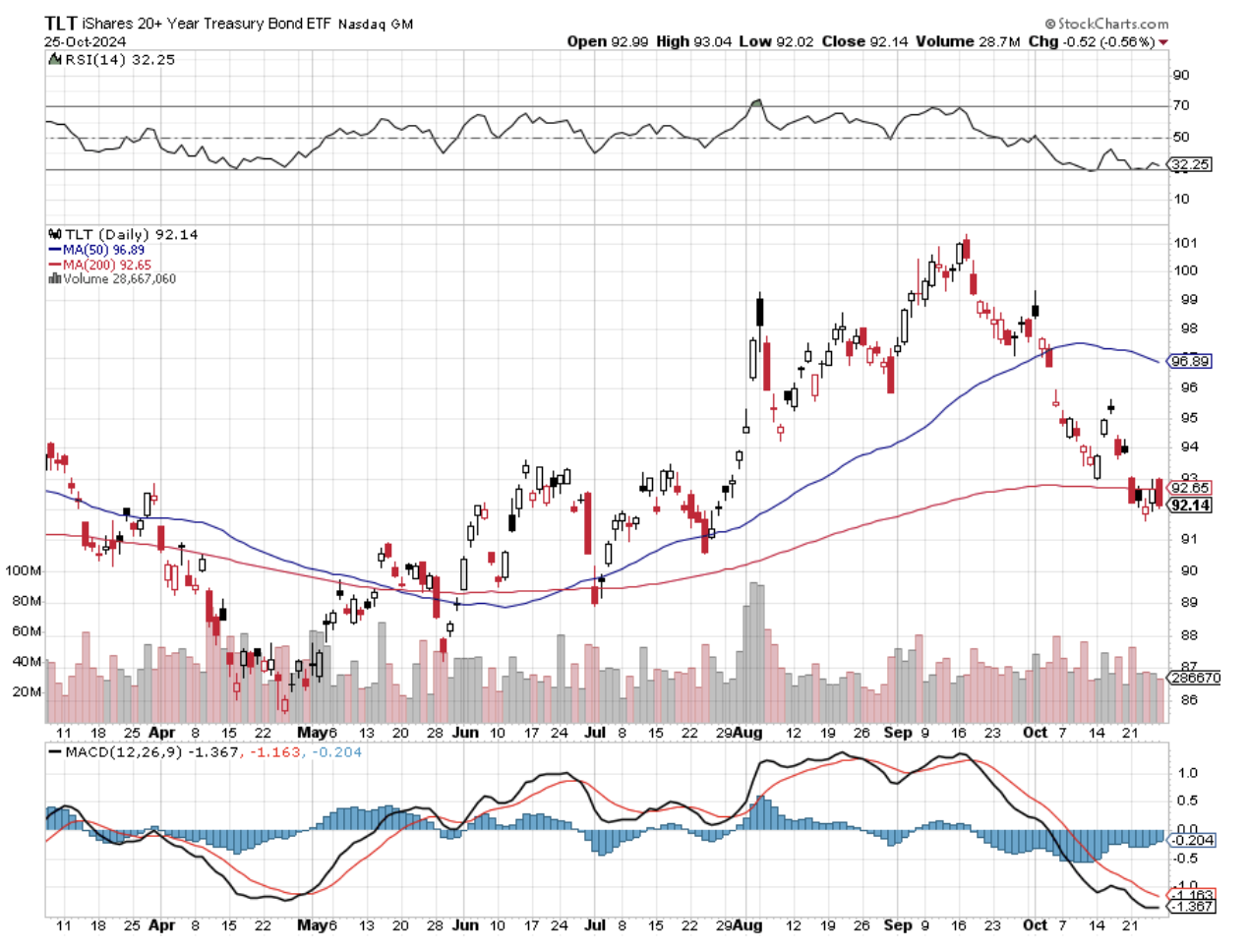
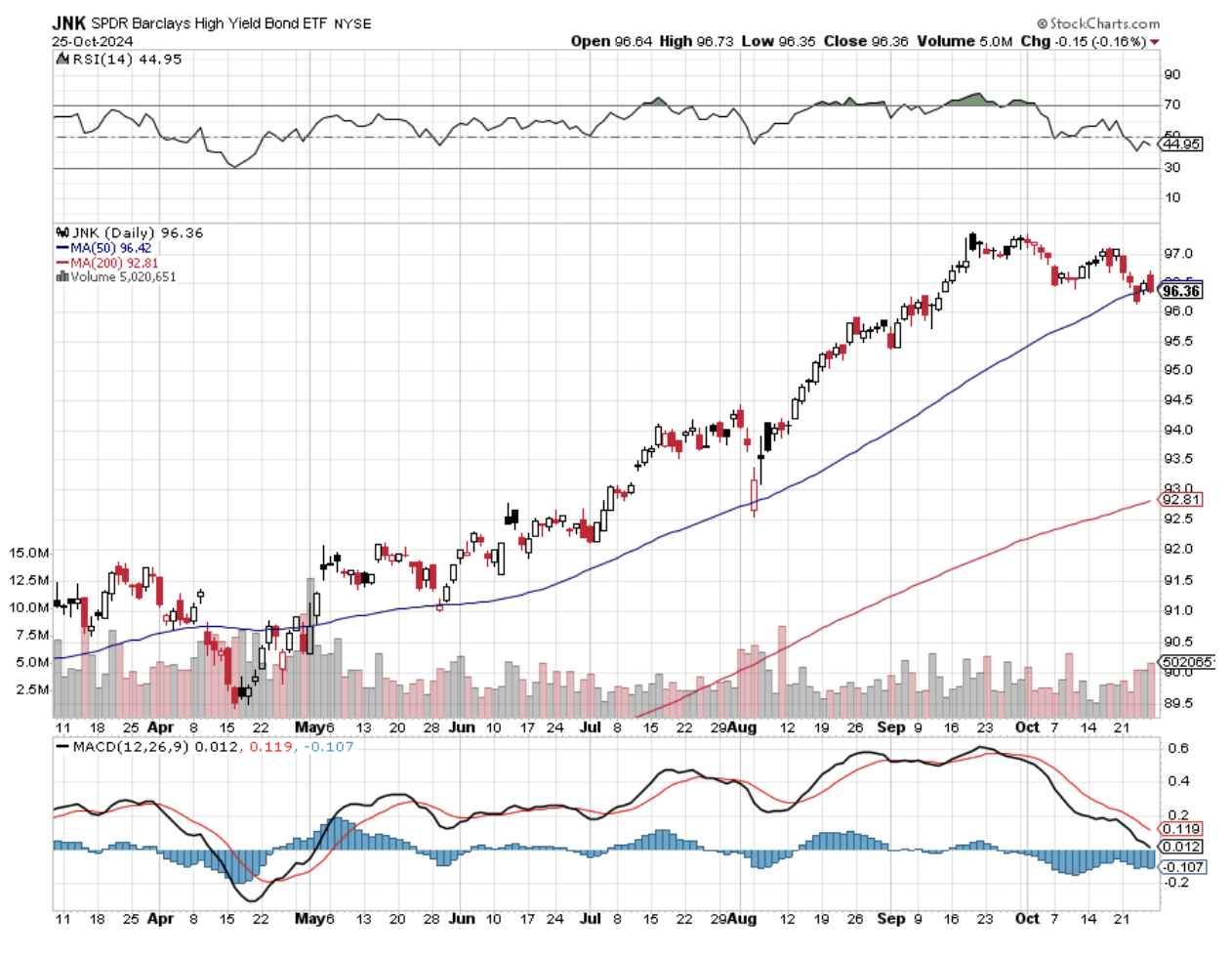
(TLT), (JNK), (CCI) – All interest rate plays make back recent losses as the threat of $10-$15 trillion in new borrowing by a future president, Trump, disappears.
(DHI), (LEN), (PHM) – There is no better interest rate play than new homebuilding. It’s tough to beat a structure shortage of 10 million homes.
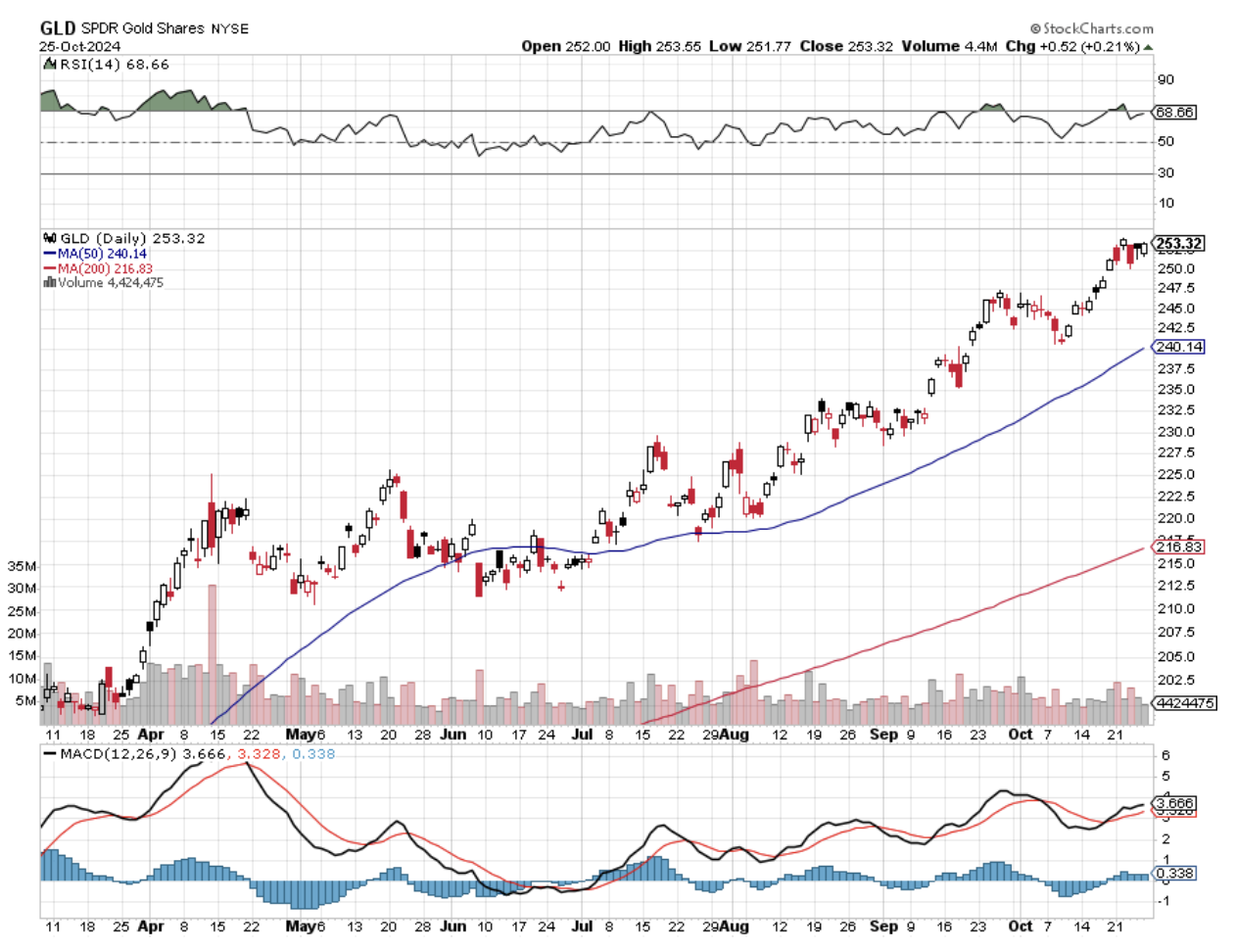
(GLD), (SLV), (NEM) – Precious metals also do very well as they have less yield competition from other interest rate plays. These have become the principal savings vehicle for Chinese individuals.
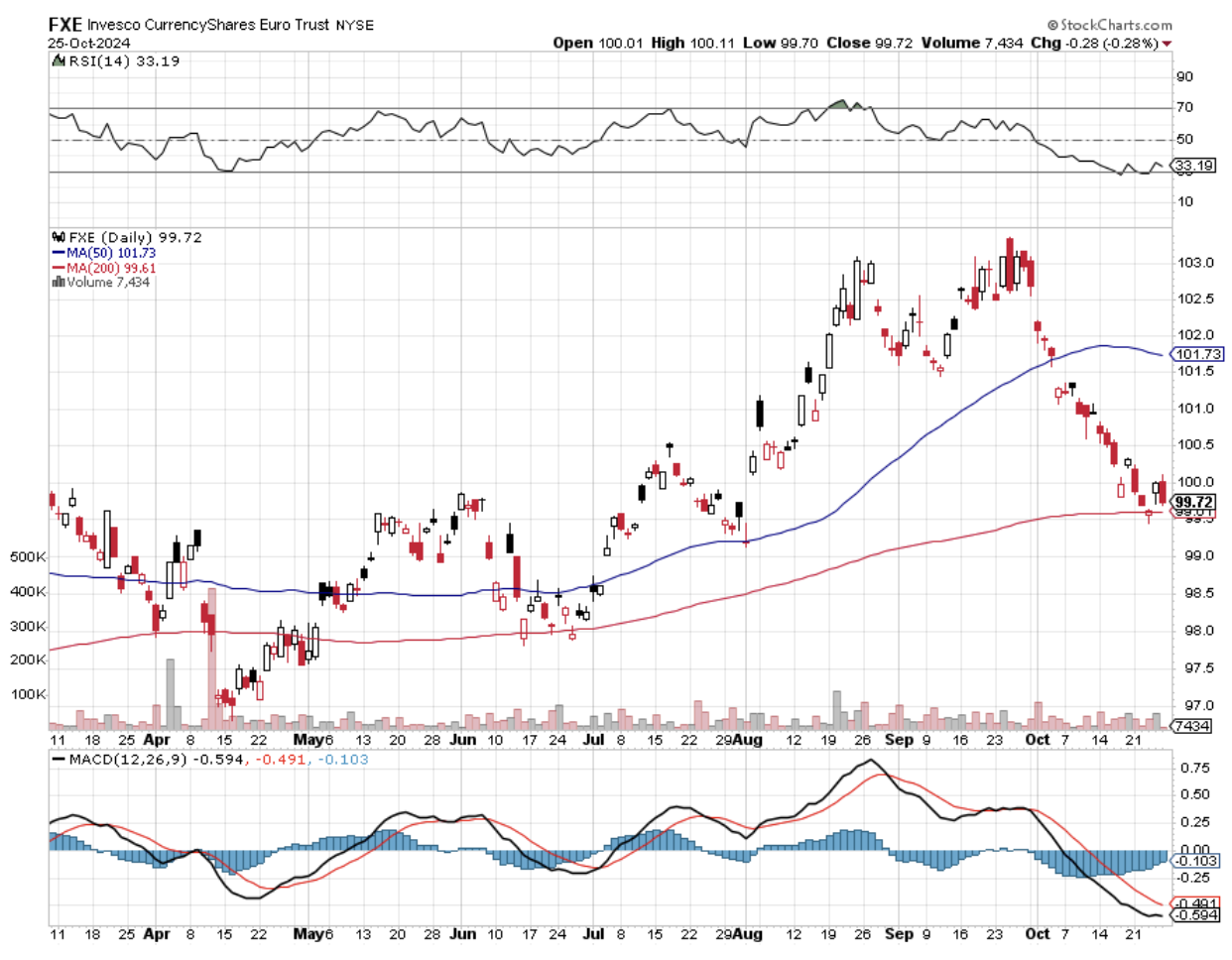
(FXE), (FXB), (FXA) – A falling interest rate advantage for the US dollar means you want to buy all the currencies.
(JPM), (BAC), (GS) – Banks also do exceedingly well in a falling interest rate environment, and brokers and money managers will cash in on exploding stock market volume.
Also, on November 6, your toaster will probably still work. And I will never understand why the Center for Disease Control never accepted my application out of college. So, I went to Vietnam instead.
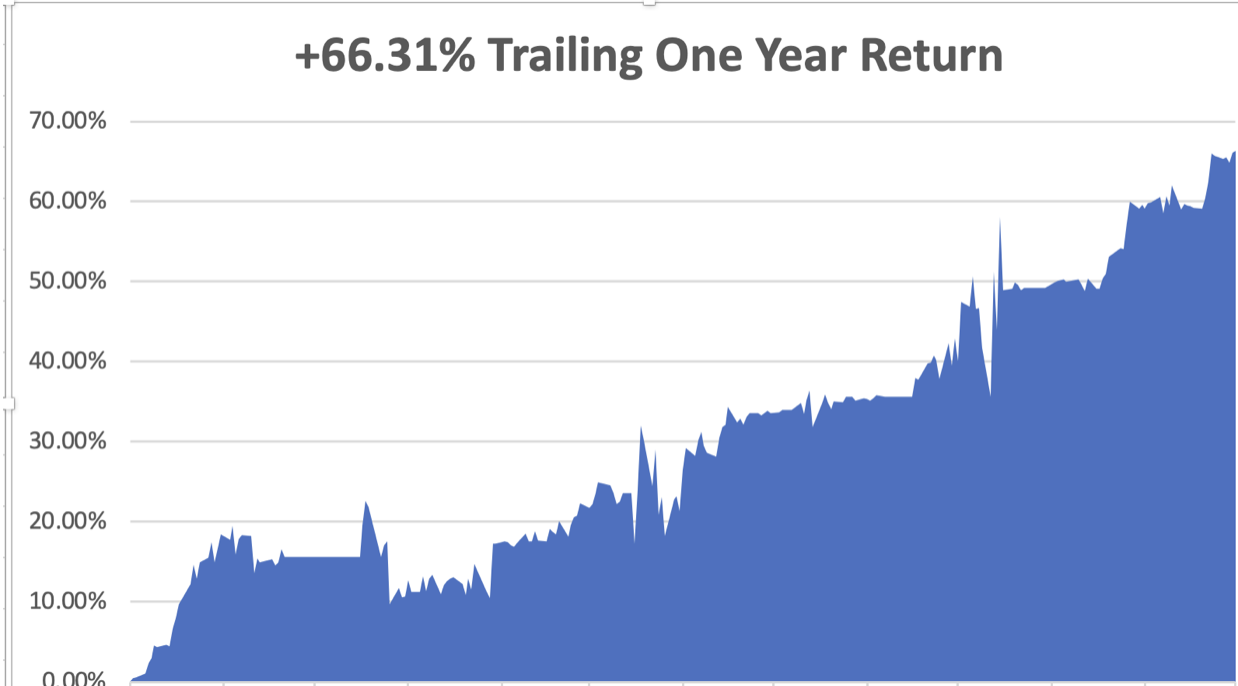
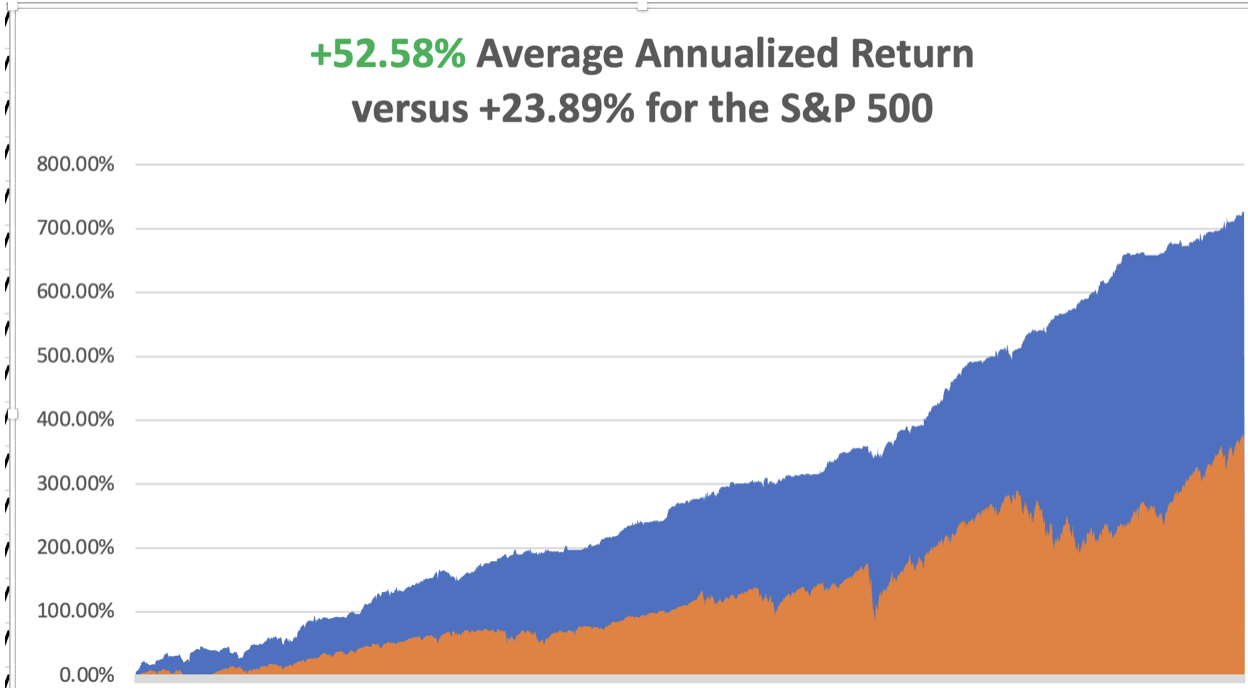
So far in October, we have gained a breathtaking +5.46%.My 2024 year-to-date performance is at an amazing+50.70%.The S&P 500 (SPY) is up +21.38%so far in 2024. My trailing one-year return reached a nosebleed +66.31. That brings my 16-year total return to +727.33%.My average annualized return has recovered to +52.58%.
I am remaining cautious with a 70% cash, a 20% long, and a 10% short. I maintained two longs in (GLD) and (JPM) that are well in the money. I sold short (TSLA) to take advantage of a massive 29% gain in two days off the back of blockbuster earnings.
Some 63 of my 70 round trips, or 90%, were profitable in 2023. Some 61 of 81 trades have been profitable so far in 2024, and several of those losses were really break evens. Some 16 out of the last 19 trade alerts were profitable. That is a success rate of +75.30%.
Try beating that anywhere.
New Home Sales Jumped 4.1% in September at 738,000 seasonally adjusted units on a signed contract basis. The median home price rose to 426,300. This despite a roller coaster month on interest rates, falling to 6.0% for the 30-year, then jumping back up to 7.0%.
Fusion is going Commercial in San Francisco, with a German company, Focused Energy, making a $65 million investment. The firm will draw heavily from staff from nearby Lawrence Livermore National Labs, which achieved a net energy gain for the first time in 2022. Focused Energy is one of eight companies given grants to accommodate a doubling of power demand by 2050. Commercial fusion will be the next big thing, where three soda cans of heavy hydrogen can power San Francisco for a day.
Money Market Funds See Massive Pre-Election Inflows, as investors see to avoid promised post-election violence. According to LSEG data, investors acquired a net $29.98 billion worth of money market funds during the week, posting their fourth weekly net purchase in five weeks. Personally, I think it is another Y2K moment.
Tesla Earnings Shock to the Upside, with both third-quarter profits and margins topping estimates. Elon Musk said that he expects 20% to 30% vehicle growth next year, sending the company's shares up 11% in post-market trading. The company still sees 2025 production of a cheaper model, maybe the Model 2. The Cybertruck has reached profitability for the first time and is reaching mass production. Tesla will see “slight growth” in deliveries this year. I am using the spike in the share price to take profits on my long to avoid election risk.
Apple iPhone Sales are Lagging, according to a leading analyst, with a drop in 10 million orders expected, down to 84 million units. The stock dropped 4% from an all-time high.
Boeing Reports $6 Billion Loss, a disastrous report from a dying company with awful management. This is going to be a very long-term workout. A strike resolution may market the bottom. Avoid (BAC) like a stalling airplane.
Newmont Mining Dives 7% after missing Wall Street expectations for third-quarter profit on Wednesday. Higher costs and lower production in Nevada took the shine away from a rise in total output. Newmont said that its costs rose due to planned maintenance at the Lihir project in Papua New Guinea — which it acquired following a $17 billion buyout of Newcrest — and higher expenditure for contract services across its portfolio. Buy (NEM) on dips.
McDonald's Kills Two in E.Coli Outbreak, linked to quarter pounders sold in Colorado and Nebraska. The stock dropped 10%. It’s clearly a supply chain problem. Given their vast size, with 45,000 stands in 100 countries, it’s amazing that this doesn’t happen more often. Avoid (MCD).
Bonds Plunge Anticipating a Trump Win, with the (TLT) down $10 from the recent high. If he does win, expect another $10 decline to $82. If Harris wins, expect a $10 rally. This is the best election trade out there.
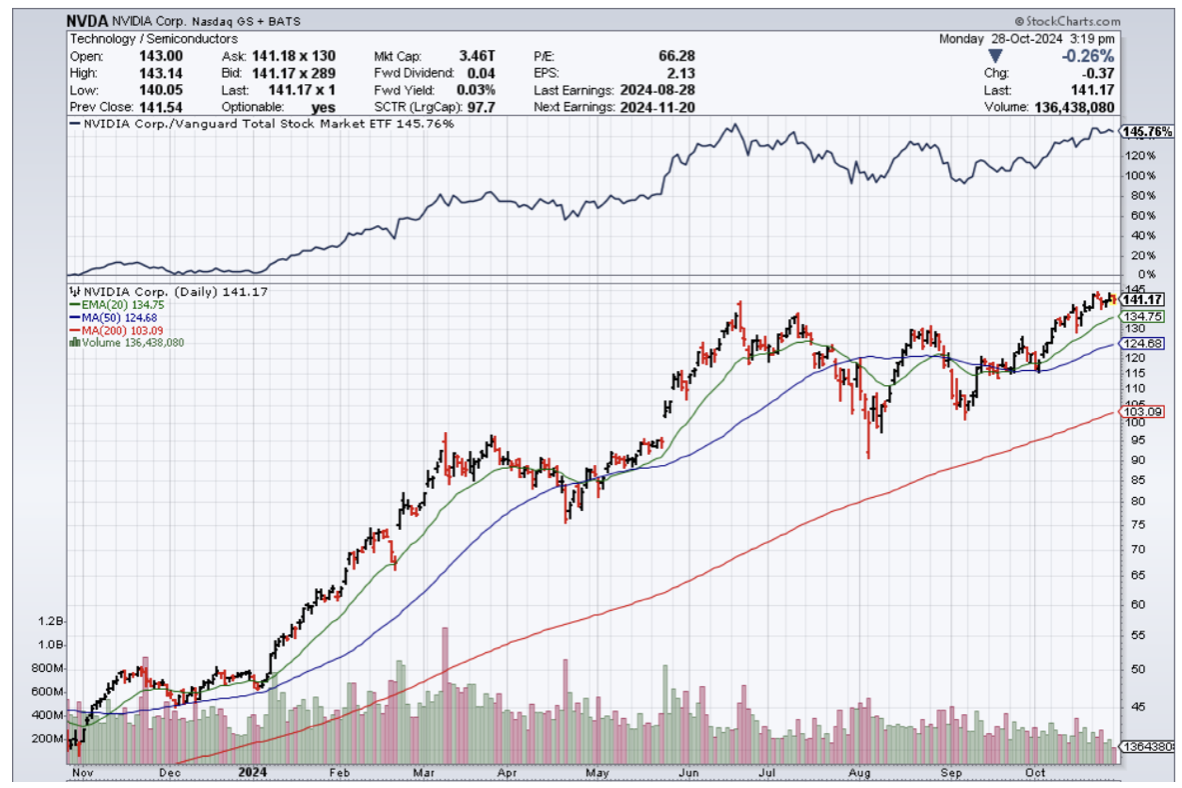
Nvidia Tops $3.5 Trillion, as the shares hit a new all-time high at $144.45. It looks like it’s on a run to $150, then $160. Earnings are about to double when reported on November 20. Before then, investors will get some insight into demand for Nvidia’s newest Blackwell chips with earnings reports from big technology companies, including Microsoft (MSFT) coming at the end of this month. Buy (NVDA) on dips.
Hedge Funds Pour into Technology Stocks, such as semiconductors and hardware, at the fastest in five months amid the start of the third-quarter earnings season, according to Goldman Sachs on Friday. Outside the U.S., diverging reports from chipmaker Taiwan Semiconductor Manufacturing (TSM) and chipmaking equipment supplier ASML Holding (ASML) in opposite directions while investors await semiconductor companies such as Advanced Micro Devices (AMD) and Nvidia (NVDA) to unveil their earnings as they seek a trend. They are betting on a big post-election move-up.
My Ten-Year View
When we come out the other side of the recession, we will be perfectly poised to launch into my new American Golden Age or the next Roaring Twenties. The economy is decarbonizing, and technology hyper accelerating, creating enormous investment opportunities. The Dow Average will rise by 600% to 240,000 or more in the coming decade. The new America will be far more efficient and profitable than the old.
Dow 240,000, here we come!
On Monday, October 28 at 8:30 AM EST, the Dallas Fed Manufacturing Index is published. On Tuesday, October 29 at 6:00 AM, the S&P Case Shiller National Home Price Index is out. We also get the US JOLTS Job Openings Report. Alphabet (GOOGL) and (AMD) report.
On Wednesday, October 30 at 11:00 AM, the ADP Employment Change Report is printed. (META) and (MSFT) report.
On Thursday, October 31 at 8:30 AM, the Weekly Jobless Claims are announced. We also get the US Core PCE Price Index. (AMZN) reports.
On Friday, November 1 at 8:30 AM, the October Nonfarm Payroll Report is announced. At 2:00 PM, the Baker Hughes Rig Count is printed.
As for me, with silver on fire once again and at 12-year highs, I thought I’d recall the last time a bubble popped for the white metal. I picked up this story from my late friend Mike Robertson, who ran the Dallas-based Robertson Wealth Management, one of the largest and most successful registered investment advisors in the country.
Mike is the last surviving silver broker to the Hunt Brothers, who in 1979-80 were major players in the run-up in the “poor man’s gold” from $11 to a staggering $50 an ounce in a very short time. At the peak, their aggregate position was thought to exceed 100 million ounces.
Nelson Bunker Hunt and William Herbert Hunt were the sons of the legendary HL Hunt, one of the original East Texas wildcatters and heirs to one of the largest Texas fortunes of the day. Shortly after President Richard Nixon took the US off the gold standard in 1971, the two brothers became deeply concerned about financial viability of the United States government. To protect their assets, they began accumulating silver through coins, bars, the silver refiner, Asarco, and even tea sets, and when it opened, silver contracts on the futures markets.
The brother’s interest in silver was well-known for years, and prices gradually rose. But when inflation soared into double digits, a giant spotlight was thrown upon them, and the race was on. Mike was then a junior broker at the Houston office of Bache & Co., in which the Hunts held a minority stake and handled a large part of their business.The turnover in silver contracts exploded. Mike confesses to waking up some mornings, turning on the radio to hear silver limit up, and then not bothering to go to work because they knew there would be no trades.
The price of silver ran up so high that it became a political problem. Several officials at the CFTC were rumored to be getting killed in their personal silver shorts. Eastman Kodak (EK), whose black and white film made them one of the largest silver consumers in the country, was thought to be borrowing silver from the Treasury to stay in business.
The Carter administration took a dim view of the Hunt Brothers’ activities, especially considering their funding of the ultra-conservative John Birch Society. The Feds viewed it as an attempt to undermine the US government. The proverbial sushi hit the fan.
The CFTC raised margin rates to 100%. The Hunts were accused of market manipulation and ordered to unwind their position. They were subpoenaed by Congress to testify about their motives. After a decade of litigation, Bunker received a lifetime ban from the commodities markets, a $10 million fine, and was forced into a Chapter 11 bankruptcy.
Mike saw commissions worth $14 million in today’s money go unpaid. In the end, he was only left with a Rolex watch, his broker’s license, and a silver Mercedes. He still ardently believes today that the Hunts got a raw deal and that their only crime was to be right about the long-term attractiveness of silver as an inflation hedge. Nelson made one of the greatest asset allocation calls of all time and was punished severely for it. There never was any intention to manipulate markets. As far as he knew, the Hunts never paid more than the $20 handle for silver and that all of the buying that took it up to $50 was nothing more than retail froth.
Through the lens of 20/20 hindsight, Mike views the entire experience as a morality tale, a warning of what happens when you step on the toes of the wrong people.
The white metal’s inflation-fighting qualities are still as true as ever, and it is only a matter of time before prices once again take another run to the upside.
Unfortunately, Mike won’t be participating in the next silver bubble. Suffering from morbid obesity, he died from a heart attack a decade ago.
Silver is Still a Great Inflation Hedge
Good Luck and Good Trading,
John Thomas
CEO & Publisher
The Diary of a Mad Hedge Fund Trader
https://www.madhedgefundtrader.com/wp-content/uploads/2024/10/man-with-glasses.png606468april@madhedgefundtrader.comhttps://madhedgefundtrader.com/wp-content/uploads/2019/05/cropped-mad-hedge-logo-transparent-192x192_f9578834168ba24df3eb53916a12c882.pngapril@madhedgefundtrader.com2024-10-28 09:02:442024-10-28 11:23:59The Market Outlook for the Week Ahead, or Here is your Post Election Portfolio
"We're always worried. As a financial advisor, you live your life worried," said David Zier of Convergent Wealth, the top financial advisor in Maryland.
https://www.madhedgefundtrader.com/wp-content/uploads/2013/03/Girl_Frightened.jpg261193Mad Hedge Fund Traderhttps://madhedgefundtrader.com/wp-content/uploads/2019/05/cropped-mad-hedge-logo-transparent-192x192_f9578834168ba24df3eb53916a12c882.pngMad Hedge Fund Trader2024-10-28 09:00:042024-10-28 11:23:37October 28, 2024 - Quote of the Day
If human consciousness were a Netflix series (NFLX), we've just entered season three with a plot twist that would make Christopher Nolan scratch his head.
Scientists are now telling us we're developing a new way of thinking - not inside our heads, but somewhere in the cloud, probably right next to your backed-up photos on Google Drive (GOOGL).
For years, psychologists have told us we have two thinking systems: the quick, intuitive part of your brain that knows exactly which Thai takeout to order on a Tuesday, and the slower, more analytical part that helps you decide whether to buy or sell Tesla (TSLA).
Now, thanks to AI, we're apparently getting a third system - like adding a very smart, slightly alien roommate to your mental apartment, courtesy of companies like Microsoft (MSFT) and their OpenAI partnership.
They're calling it "System 0," which sounds suspiciously like a startup that would appear on "Shark Tank."
Think of it as having a galactic-sized external hard drive for your brain, powered by the likes of NVIDIA's (NVDA) semiconductors and stored on Amazon's (AMZN) AWS servers.
Just as your iPhone (AAPL) doesn't bother remembering phone numbers anymore because it knows you've got them stored, our brains are entering a fascinating codependency with AI that's less "Ex Machina" and more "When Harry Met Siri."
Needless to say, this relationship is proving particularly lucrative for companies building the infrastructure of our new cognitive ecosystem.
The fascinating twist is that this System 0, unlike your human brain, doesn't actually understand what it's processing. It's like having the world's most efficient personal assistant - think Palantir (PLTR) for your mind - who can organize your entire life but doesn't get why you cry during dog food commercials.
The research, coming from Lenovo (LNVGY) and their Infrastructure Solutions Group, suggests that we've created a mental butler who can handle all the heavy lifting of data processing but still needs us to decide what it all means - sort of like having ChatGPT write your wedding vows but still needing to add the actual emotion yourself.
As for the risks? Well, imagine becoming so dependent on GPS that you forget how to read a map - except now we're talking about potentially forgetting how to think critically or innovate on our own.
It's like intellectual autopilot: convenient until you suddenly need to land the plane yourself.
There's also the small matter of synthetic data potentially warping our grip on reality, which is exactly what we needed in the era of deep fakes and Instagram filters. It's as if reality itself is getting a MetaFaceTune filter, and we're all trying to figure out if our thoughts are actually our thoughts or just really good AI suggestions.
Consequently, this cognitive shift is driving growth in AI safety and ethics platforms, benefiting companies like C3.ai (AI) and UiPath (PATH) that focus on responsible AI deployment.
Actually, the market opportunities could span across sectors, from chip makers like AMD (AMD) and Intel (INTC) to cloud providers like Amazon, Microsoft, and Google.
But what's truly fascinating isn't just the individual players - it's how these companies are weaving together to create something greater than the sum of their parts.
It's like watching the industrial revolution of the mind unfold in real-time, with each company carefully crafting its piece of our new cognitive infrastructure.
Some might find this prospect unsettling - the idea of outsourcing portions of our thinking to machines might send you planning an escape to an off-grid cabin in Montana. But before you panic, there's good news.
This System 0 could be humanity's power-up mushroom, helping us tackle problems that would normally make our brains feel like they're running Windows 95. Whether it's solving climate change or finally figuring out why your printer never works when you really need it, AI could be our cognitive superhero sidekick.
So, what’s the play here? Well, I suggest a balanced approach.
The smart money is spreading bets across established tech giants (let’s say around 40% exposure), semiconductor manufacturers (30%), pure-play AI companies (20%), and cybersecurity firms like CrowdStrike (CRWD) and Palo Alto Networks (PANW) that protect these systems (10%).
Essentially, this strategy is like building a cognitive portfolio that mirrors the very architecture of System 0 itself.
But just as we're carefully structuring our investments, researchers are reminding us to establish some ground rules for this new mental ménage à trois. Think of it as a prenup for our relationship with AI.
We should demand transparency, accountability, and digital literacy, which is a fancy way of saying we should probably know what we're getting into before we outsource our thinking to the cloud.
Like any good relationship, it's all about boundaries. We need to make sure this external brain remains our trusted advisor rather than becoming our thought overlord.
After all, we don't want to end up in a situation where Alexa isn't just choosing our playlist but deciding our life choices.
In the end, it seems the key to navigating this brave new world isn't about fighting the future - it's about making sure we're still the ones writing the script, even if AI is helping us with the spelling.
Now, if you'll excuse me, I need to ask my phone if I should be worried about any of this.
https://madhedgefundtrader.com/wp-content/uploads/2019/05/cropped-mad-hedge-logo-transparent-192x192_f9578834168ba24df3eb53916a12c882.png00Douglas Davenporthttps://madhedgefundtrader.com/wp-content/uploads/2019/05/cropped-mad-hedge-logo-transparent-192x192_f9578834168ba24df3eb53916a12c882.pngDouglas Davenport2024-10-25 16:52:272024-10-25 16:52:27THE EXTERNAL BRAIN IN YOUR POCKET
When John identifies a strategic exit point, he will send you an alert with specific trade information as to what security to sell, when to sell it, and at what price. Most often, it will be to TAKE PROFITS, but on rare occasions, it will be to exercise a STOP LOSS at a predetermined price to adhere to strict risk management discipline.Read more
One of the forgotten risks of AI is the energy capacity situation in the United States.
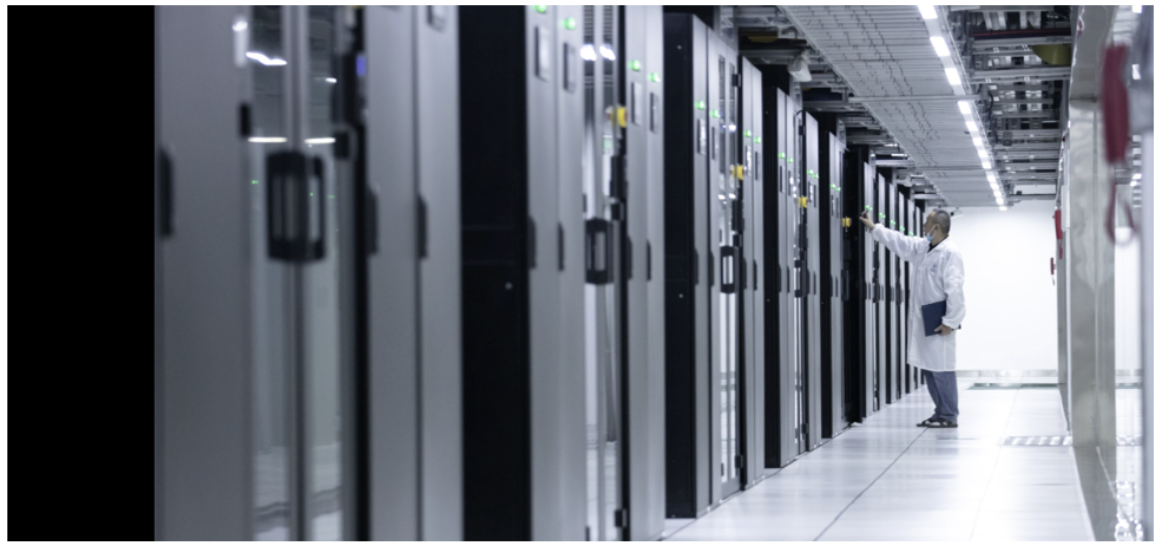
Many people forget that AI will require immense energy with a hoard of energy-guzzling data centers to facilitate the next tech revolution.
Many consumers have come to realize how the cost of energy has skyrocketed lately with no breaks in sight.
There is an increasingly real chance that Silicon Valley might not be able to afford AI simply because the costs of energy will deem the AI concept unworthy.
Green energy hasn’t developed as fast as many experts once thought, and the United States is still very much dependent on fossil fuels to facilitate tech and business in general.
A pressing question that is popping up is whether the United States can deliver the energy capacity that AI chips demand.
The question is hard to dissect because the situation is always changing.
Numbers need to make sense, just like how builders build when they think they can sell houses and apartments for a profit to the end buyer.
The military conflict in Eastern Europe has forced German manufacturing to deindustrialize because producing without that cheap Russian energy is loss-worthy. AI could follow a similar pattern.
The data grid will become strained, but by how much is the next most important matter?
A ChatGPT query, on average, requires almost 10 times as much electricity to process as a Google search does.
The rise of generative AI coincides with a heightening of other factors increasing energy demand, from the electrification of transportation and infrastructure to the on-shoring of US manufacturing. Adding yet another acute demand: AI systems need power all the time.
Critics of AI fanaticism point to potential wastefulness, and this could end up morphing into a government regulatory quagmire like so many industries that are overburdened by government agency overreach.
If, in the case, the energy demands spiral out of control with everyone going the AI route with every country building AI data centers, the exploding costs will mean that tech won’t be able to profit from AI as quick as it wants.
Many analysts are already raising the flag as to whether all these billions poured into AI investments will really pan out or not. AI isn’t free to produce, but shares of it are priced as such.
Much of this hot money is migrating into companies that haven’t proven anything or never even turned a profit. Look at OpenAI, it started out as a non-profit.
The issue I have is that generative AI is priced to have zero pushback of its revenue trajectory, and I do believe that is wrong.
When there is a pullback, it will be deep and sharp, even if not long.
I believe that would be a healthy event for AI because the stock shares of AI have gone parabolic.
In short, ride up the momentum until the wave crashes, but watch out for the canary in the coal mine, which will foreshadow a deep dip in AI shares.
https://madhedgefundtrader.com/wp-content/uploads/2019/05/cropped-mad-hedge-logo-transparent-192x192_f9578834168ba24df3eb53916a12c882.png00april@madhedgefundtrader.comhttps://madhedgefundtrader.com/wp-content/uploads/2019/05/cropped-mad-hedge-logo-transparent-192x192_f9578834168ba24df3eb53916a12c882.pngapril@madhedgefundtrader.com2024-10-25 14:02:062024-10-25 14:06:31Expensive Energy A Big Worry For The Future Of AI
There is a global derisking going on ahead of the U.S. elections.
All interest rate plays are selling off.Bonds are discounting a Trump win, stocks a Harris win.Watch for a melt-up in both post-elections.
We are unlikely to see a more than 5% drop in indexes for the rest of 2024 because of massive cash holdings.
US dollar touches a high for the year on rising rates.
Technology stocks have recovered, with (NVDA) at highs.
Energy gets dumped on global oversupply.
Buy stocks and bonds on dips, but now it’s ALL sectors.
THE GLOBAL ECONOMY – SLOWING
CPI comes in warm at 0.3% for September and 2.4% YOY.
Europe cuts interest rates by 25 basis points.
New Zealand cuts interest rates by 50 basis points.
US Retail Sales gained 0.4%, up from the unrevised 0.1% gain in August.
New York Empire State Manufacturing Index Plunges.It could be an election effect.
PPI comes in flat and up 1.8% YOY.
Social Security gets a 2.5% raise in 2025.
STOCKS – FROM STRENTH TO STRENGTH
Hedge Funds pouring into Technology stocks, such as semiconductors and hardware, at the fastest in five months amid the start of the third-quarter earnings season.
S&P500 Value Gain hits $50 trillion since the 1982 bottom.
Morgan Stanley announces blowout earnings, fuelling a 32% profit jump for the third quarter.
ASML plunges 16% on poor earnings.
Tesla gets approval to double Berlin Factory.
Global EV sales up 30% in September.
Delta warns of Presidential Election Travel dip, as fears of violence over the next two weeks keep travellers’ home.
BONDS – ELECTION PLAY
It’s a choice between Harris, who will increase the deficit by $2.5 trillion, or Trump, who will increase by $15 trillion.
Either way, the bond market loses.
Bond yields soar above 4.24% yield, on fears of massive deficit spending by a future Donald Trump presidency.Estimates of his deficits over four years go as high as $15 trillion.
US Budget Deficit tops $1.8 trillion in Fiscal 2024, which ends on October 30.
It’s the highest outside of the Covid era.
Interest on the federal debt exceeded $1 trillion for the first time, and spending grew for the Social Security retirement program, health care, and the military.
The deficit for the year ended Sept. 30 was up 8%, or $138 billion, from the $1,695 trillion recorded in fiscal 2023.
Buy (TLT), (JNK), (NLY), (SLRN), and (REITS) on this dip.
FOREIGN CURRENCIES – DOLLAR PEAK
Dollar hits two-month high on rising US interest rates.
Dollar gets a sudden new lease on life from interest rate spike.
Higher interest rates make the US dollar much more attractive to traders and investors.
This is a short-term rally only and may be the last chance to sell short the US dollar.
The long-term downtrend in the dollar is still intact.
There is no way the dollar can stand up to cuts down to 3.5% by next summer.
Buy (FXA), (FXE), (FXB), (FXC) and (FXY)
ENERGY & COMMODITIES – OIL CRASH
Chronic global oversupply finally overwhelms Middle East threats.
Air conditioning demand will rise by 280% by 2025, thanks to higher temperatures and rising incomes, according to the International Energy Agency.
The Nuclear Boom is on with Amazon Web Services announcing it has signed an agreement to explore the development of a small module nuclear reactor (SMR) as it expands its services into generative AI.
Rio Tino buys Arcadium for $6.7 billion in a bid to become one of the world’s largest lithium producers.
John’s Cameco (CCJ) trade alert went ballistic, up 25% in two weeks.
The nuclear trade is still on, with all plays hitting new highs.
PRECIOUS METALS – NEW HIGHS
Silver breaks out to the upside after a year’s long-range trade.
The white metal is a predictor of a healthy recovery and a solar rebound.
It’s a long overdue catch-up with (GLD).Buy (AGQ) on dips.
Money pours into Gold ETF’s, taking Gold up to new highs at $2,761 an ounce, as hedge funds pour in.
Seasonals for the barbarous relic are now the most positive of the year.
Gold holding up in the face of big interest rate rises shows it only wants to go up.
Escalation of Middle East war is very pro-gold.
Buy (GLD), (SLV), (AGQ), and (WPM) on dips.
REAL ESTATE – GRIND TO A HALT
Election has brought real estate markets to a complete halt.
Inventory is rising, and prices are falling, especially in Florida.
Single-family home builds are ticking up and are at a five-month high in September.
Permits for future construction rose only marginally, an excess supply of new homes on the market and prospective buyers holding out for lower mortgage rates.
We need lower interest rates to get more traction.
Weekly Home Mortgages Tank by 17% on the sudden rise in interest rates.
There is a very high degree of risk involved in trading. Past results are not indicative of future returns. MadHedgeFundTrader.com and all individuals affiliated with this site assume no responsibilities for your trading and investment results. The indicators, strategies, columns, articles and all other features are for educational purposes only and should not be construed as investment advice. Information for futures trading observations are obtained from sources believed to be reliable, but we do not warrant its completeness or accuracy, or warrant any results from the use of the information. Your use of the trading observations is entirely at your own risk and it is your sole responsibility to evaluate the accuracy, completeness and usefulness of the information. You must assess the risk of any trade with your broker and make your own independent decisions regarding any securities mentioned herein. Affiliates of MadHedgeFundTrader.com may have a position or effect transactions in the securities described herein (or options thereon) and/or otherwise employ trading strategies that may be consistent or inconsistent with the provided strategies.