
Global Market Comments
September 23, 2024
Fiat Lux
Featured Trade:
Featured Trade:
(MARKET OUTLOOK FOR THE WEEK AHEAD or THE DOCTOR JEKYLL AND MR. HYDE MARKET),
(NVDA), (MSFT), (GLD), (NEM), (TSLA). (CCJ), (DHI), (TLT)

Global Market Comments
September 23, 2024
Fiat Lux
Featured Trade:
Featured Trade:
(MARKET OUTLOOK FOR THE WEEK AHEAD or THE DOCTOR JEKYLL AND MR. HYDE MARKET),
(NVDA), (MSFT), (GLD), (NEM), (TSLA). (CCJ), (DHI), (TLT)
I have to tell you that every year I do this, calling the market gets easier and easier. That’s because when you go from year 62 to 63 in the market, you actually learn quite a lot.
What gets more frustrating every year is convincing people to execute my trades because they are increasingly out of consensus, as opposed to conventional wisdom, tradition-shattering, or downright Mad.
Nuclear stocks? Are you out of your mind? Haven’t you heard of Three Mile Island?
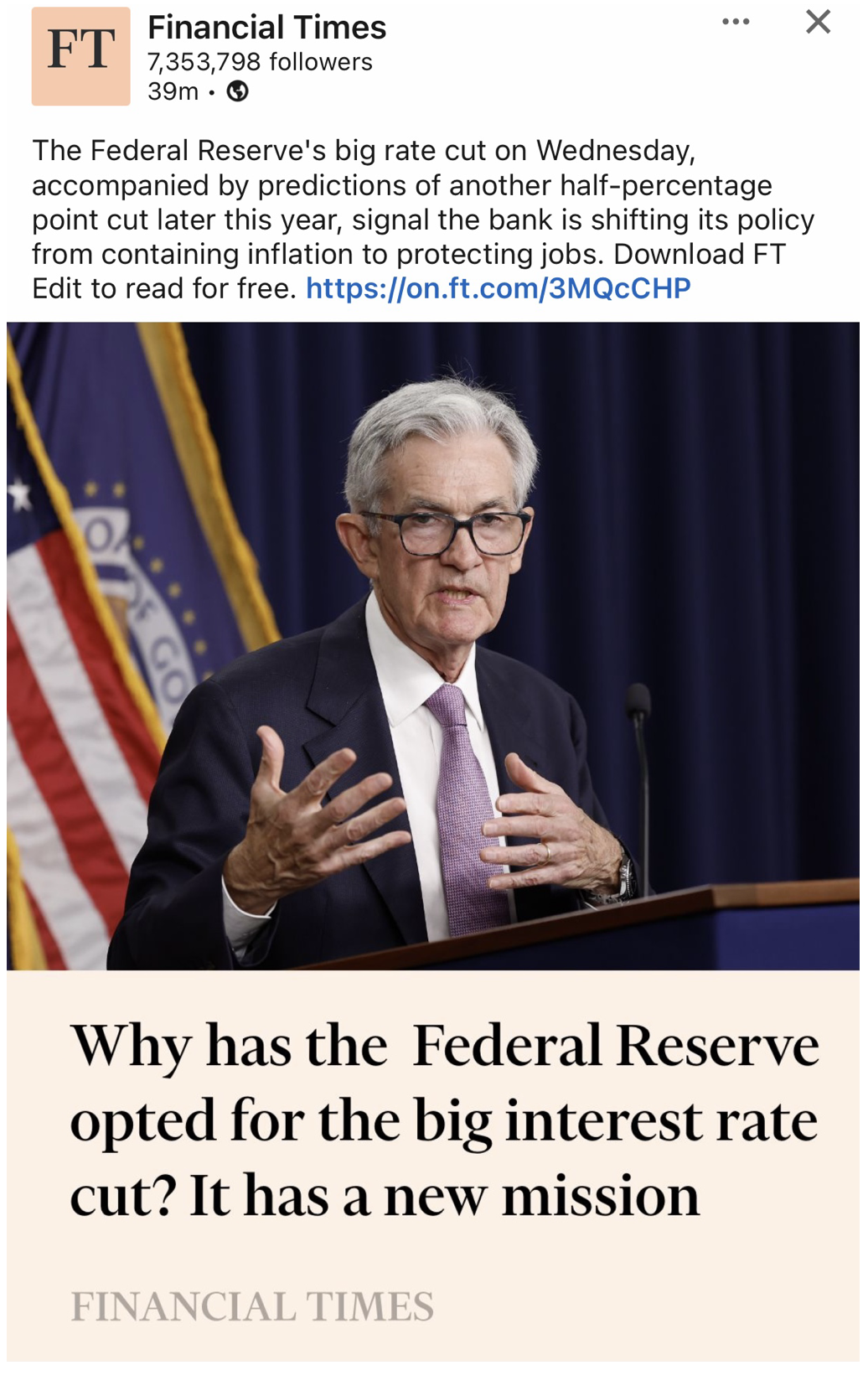
So, the Fed went with 50.
Initially, the stock reaction was “Oh my gosh, the free lunch is bigger than we thought!” By the close, this morphed to “Oh my gosh, the economy must be worse than we thought!” This opens the way to another possible 50 basis point rate cut in November, which happens to be the day after the presidential election. It only took 5 seconds for most investors to realize that they had way too much cash.
By acting so aggressively and out of character, Fed governor Jay Powell is admitting that he blundered, blew it, dropped the ball, and scored an own goal all at once by not lowering interest rates in July.
By doing his best impression of a deer frozen in the headlights in H1, all Powell got us were six more weeks of job losses, taking the headline Unemployment Rate up to 4.2%.
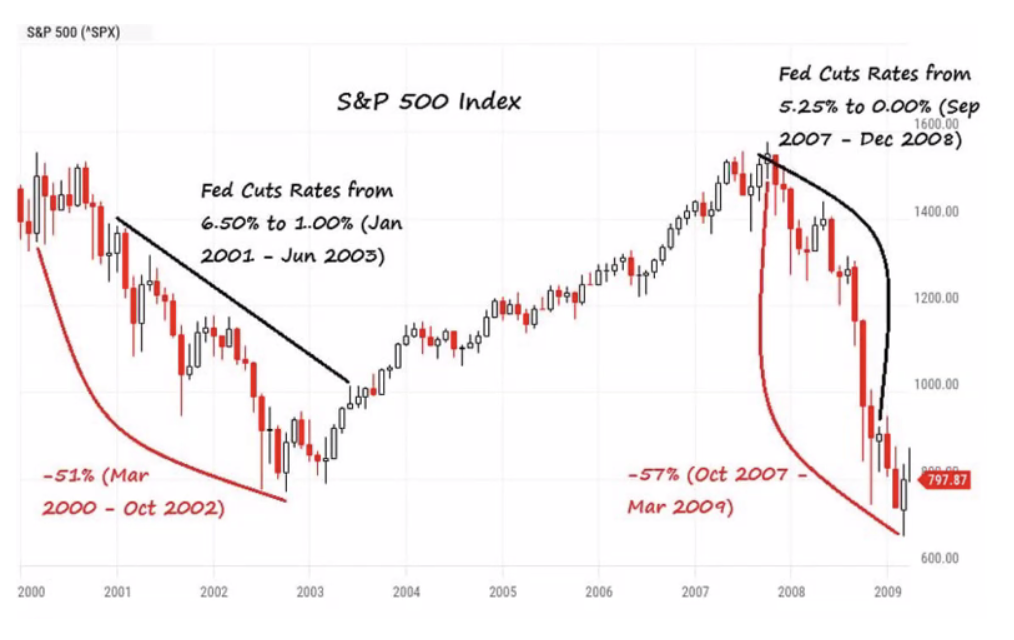
Don’t get too complacent though. Look at the chart below and you will see that when the Fed began an aggressive round of interest rate cuts in 2007, the market launched into a major crash of 57%.
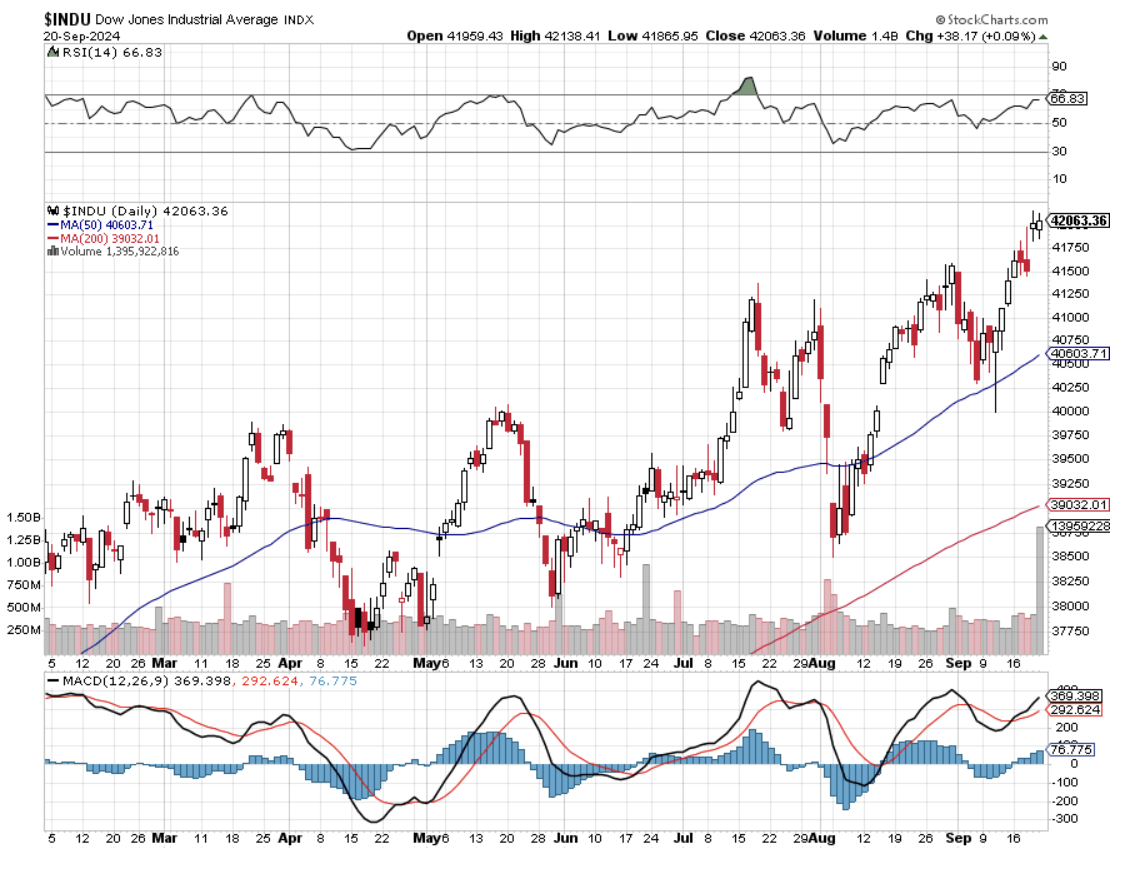
Dow 42,000.
It may seem commonplace and ordinary for mere mortals to see this number. But for those of us who remember when it was only 600 back in 1982 (and predicted to immediately plunge to 300 by the late Joe Granville), we are now in the realm of science fiction.
However, in Q3 this year, the character of the bull market suddenly changed, from a Dr. Jekyll to a Mr. Hyde. The Magnificent Seven has shrunk to the Pitiful Seven, with long boring sideways-range trades. In the meantime, growth and interest rate-sensitive value stocks that I have been pounding the table about for six months have begun trading like red-hot must-own biotech IPOs.
The choice is very simple. Do I buy a stock that has a single-digit price-earnings multiple that is flying like a bat out of hell, or do I choose an incredibly expensive tech stock with a PE multiple of 27X or worse that is stagnating?
I know what I’m going to do with my money, which reached new all-time highs almost every day this month. I’ll go with the former all day long.
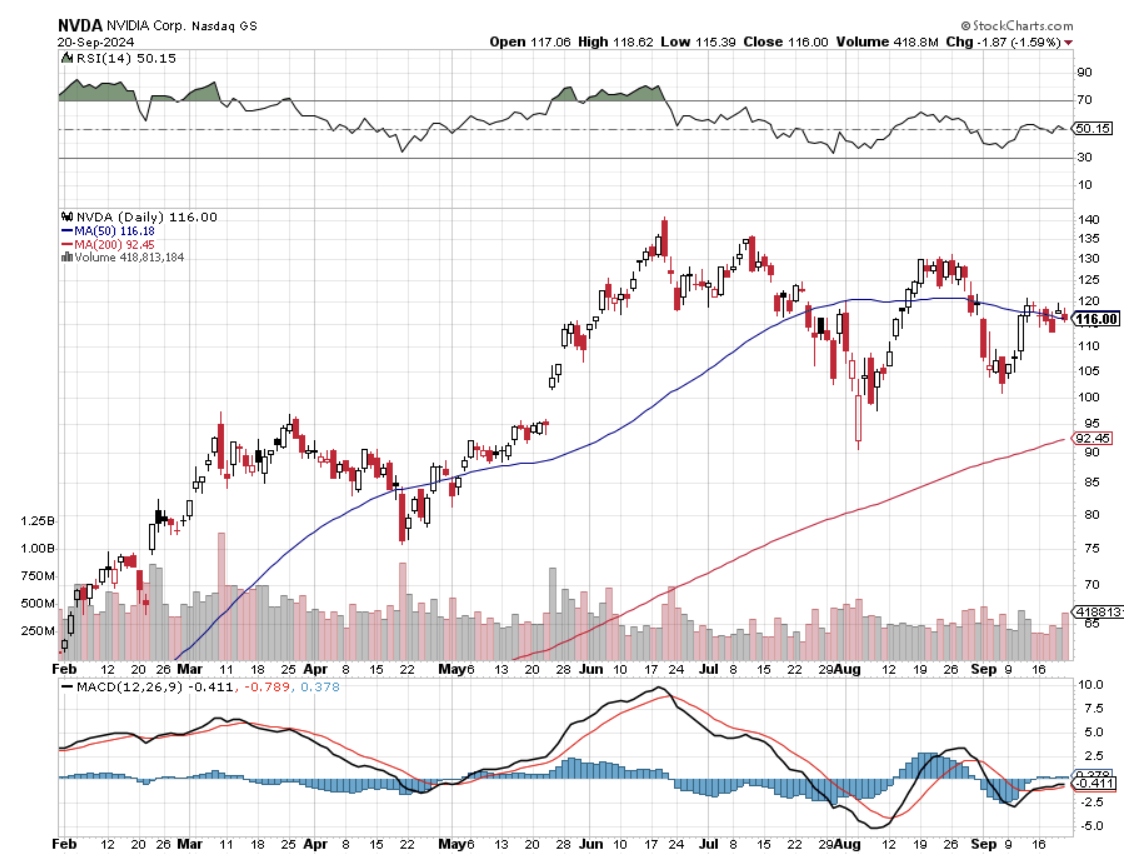
Don’t get me wrong. The Mag Seven aren’t going to stay out of favor for very long. It’s like holding a basketball underwater that keeps inflating. Their earnings are still growing at an explosive rate. Personally, I think Nvidia (NVDA) will hit $160 a share by early 2025.
If there is one common factor in all financial markets today, it is the vast underestimation of the potential of AI and the impact on stock prices, which keeps surreptitiously sneaking into our lives every day.
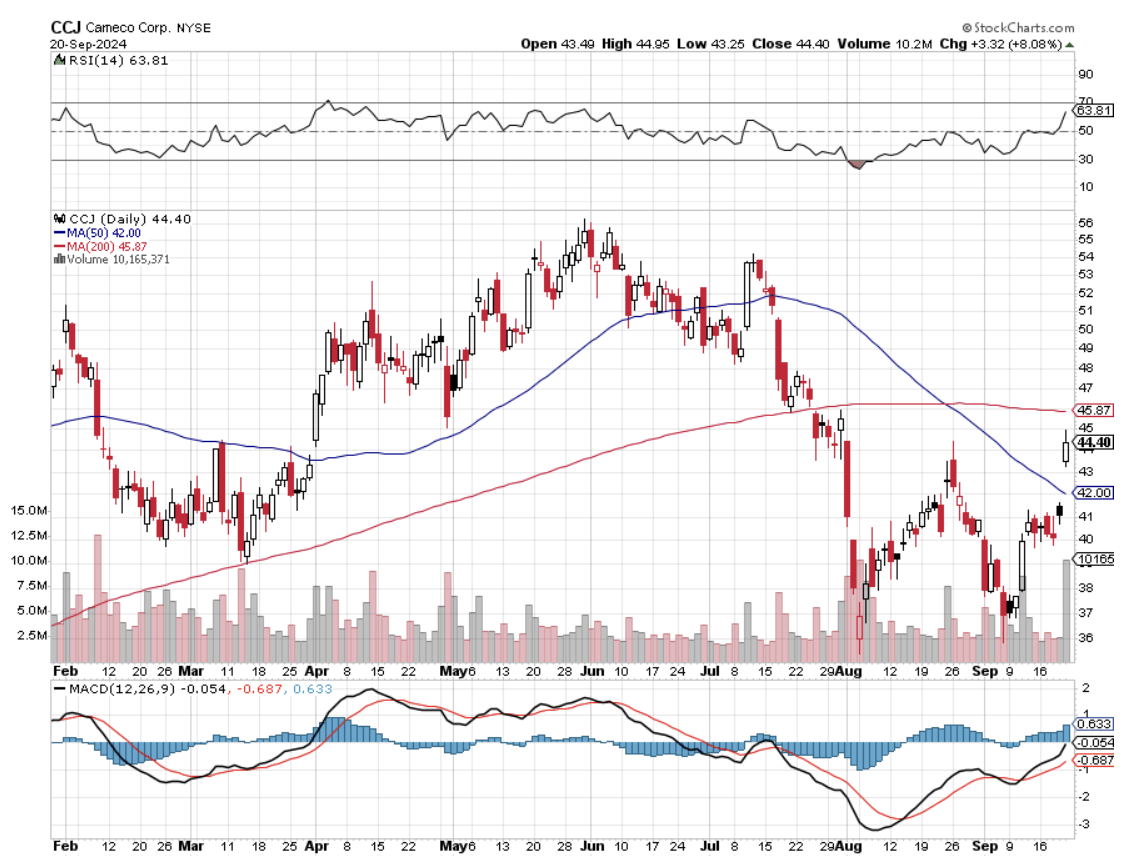
My Cameco (CCJ) trade alert came through in a week, immediately tacking on 10%. I have to tell you that reading my email, there is a lot of demand for positions that rise by 15% in a week. But that is better than the two-week wait for the Concierge clients who bought the 2026 $40-$42 LEAPS for only 75 cents. The consolation is that they will make a lot more money, potentially some 167% by expiration. The big money is always made with long-term trades.
I can honestly say that I put 54 years of work into this trade, dating back to when I started my work at the Atomic Energy Commission Nuclear Test Site in Nevada. While advanced nuclear power plant design and fuels (low enriched uranium oxide with an M5TM zirconium-based cladding) have been around for a long time, the industry had the kiss of death on it thanks to Three Mile Island (watch the movie China Syndrome), Chornobyl, and Fukushima.
It was going to take someone bold with deep pockets to restart this industry. Then out of the blue Microsoft (MSFT) announced the reopening of Three Mile Island, the site of the worst nuclear accident in US history in 1979.
Constellation Energy announced Friday that its Unit 1 reactor, which closed five years ago, is expected to be revived in 2028, dependent on Nuclear Regulatory Commission approval. Microsoft will purchase the carbon-free energy produced from it to power its data centers to support artificial intelligence.
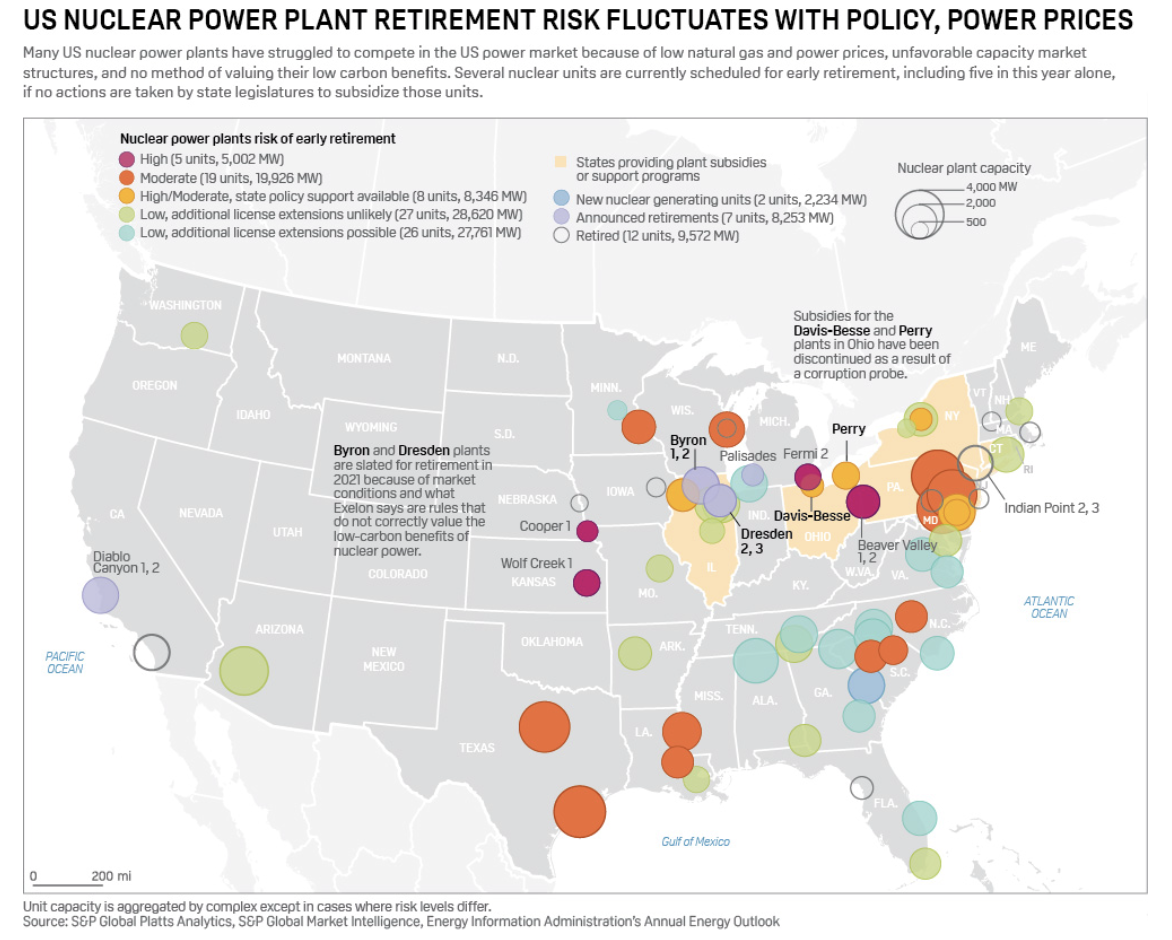
Twelve U.S. nuclear power reactors have permanently closed since 2012, with the most recent being Indian Point 3 on April 30, 2021. Another seven U.S. reactor retirements have been announced through 2025, with a total generating capacity of 7,109 MW (equal to roughly 7% of U.S. nuclear capacity).
I have a feeling that all of these will get reopened, which cost about $4 billion each to build and can be bought now for pennies on the dollar. In the meantime, the world’s largest uranium supplier, Kazakhstan, is cutting supplies. Buy all nuclear plays in dips.
I have to tell you that this was one of those weeks that by making 6.74% it makes all the barbarically early mornings and exhausting late nights worth it. While all my friends are working on their golf swings or improving their bowling scores, I am scoring the Internet search for the next original investment theme. Every customer I have spoken to lately is having a great year.
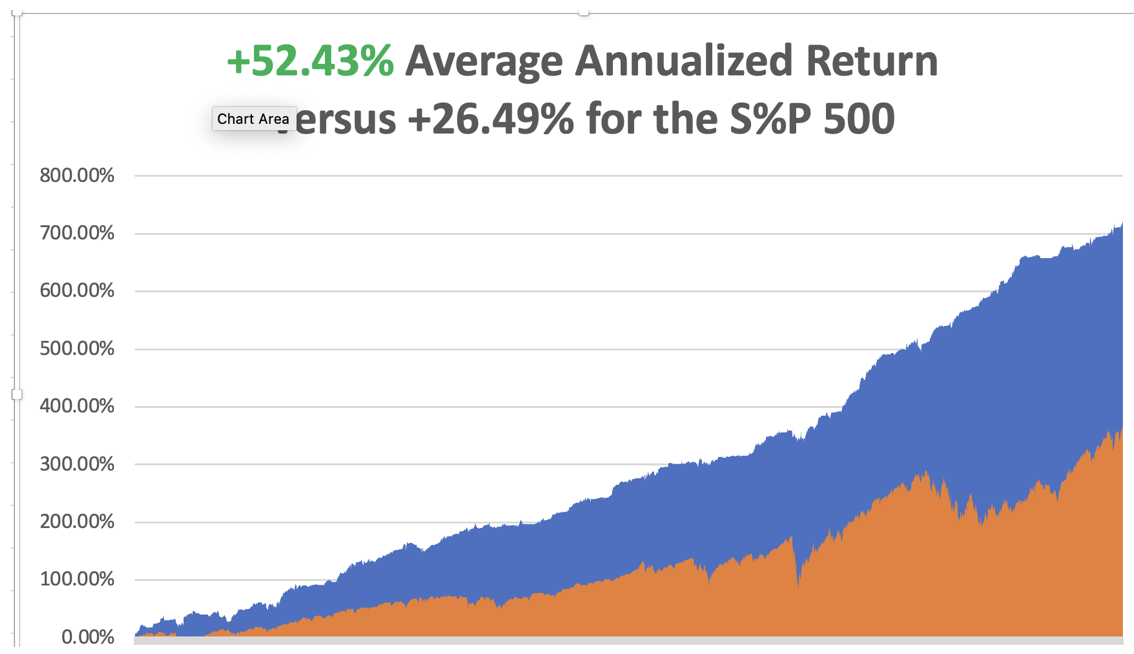
So far in September, we are up by a spectacular +9.67%. My 2024 year-to-date performance is at +44.36%. The S&P 500 (SPY) is up +19.08% so far in 2024. My trailing one-year return reached +63.00%. That brings my 16-year total return to +720.99%. My average annualized return has recovered to +52.43%.
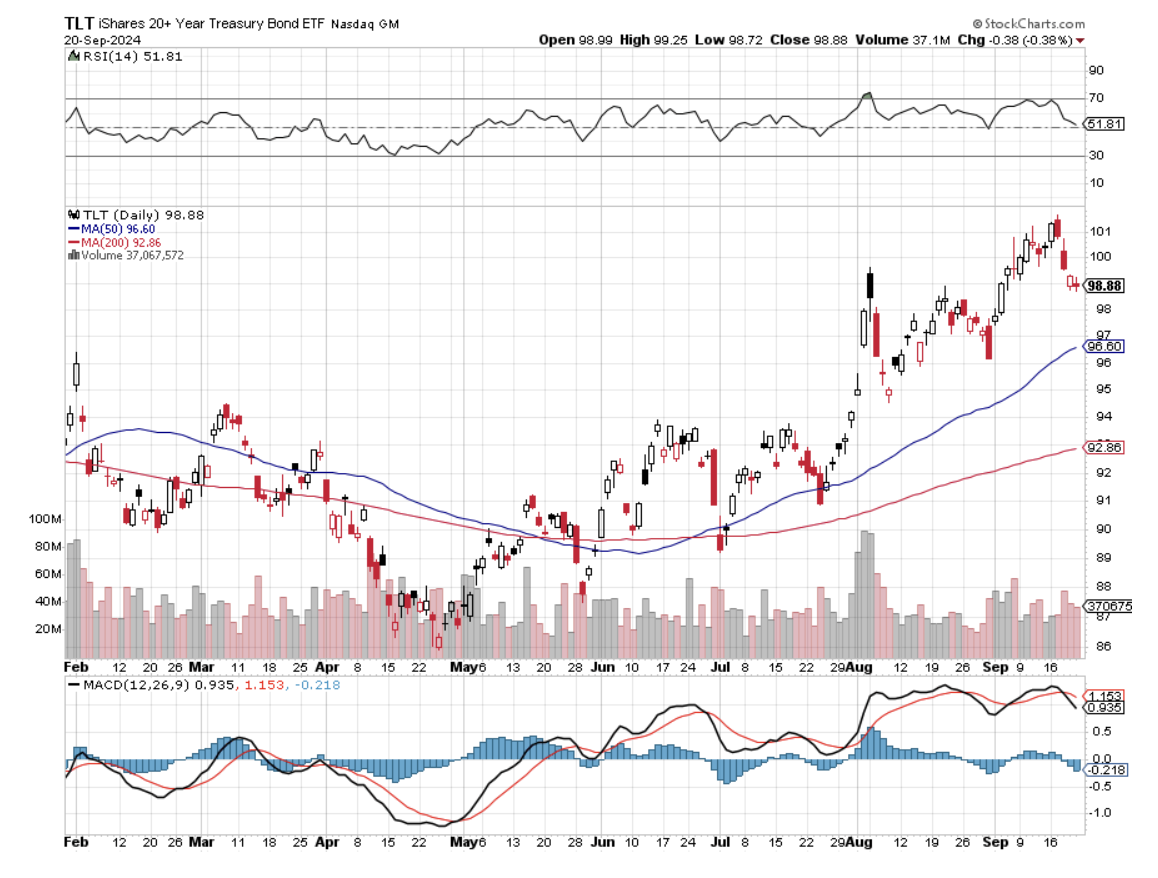
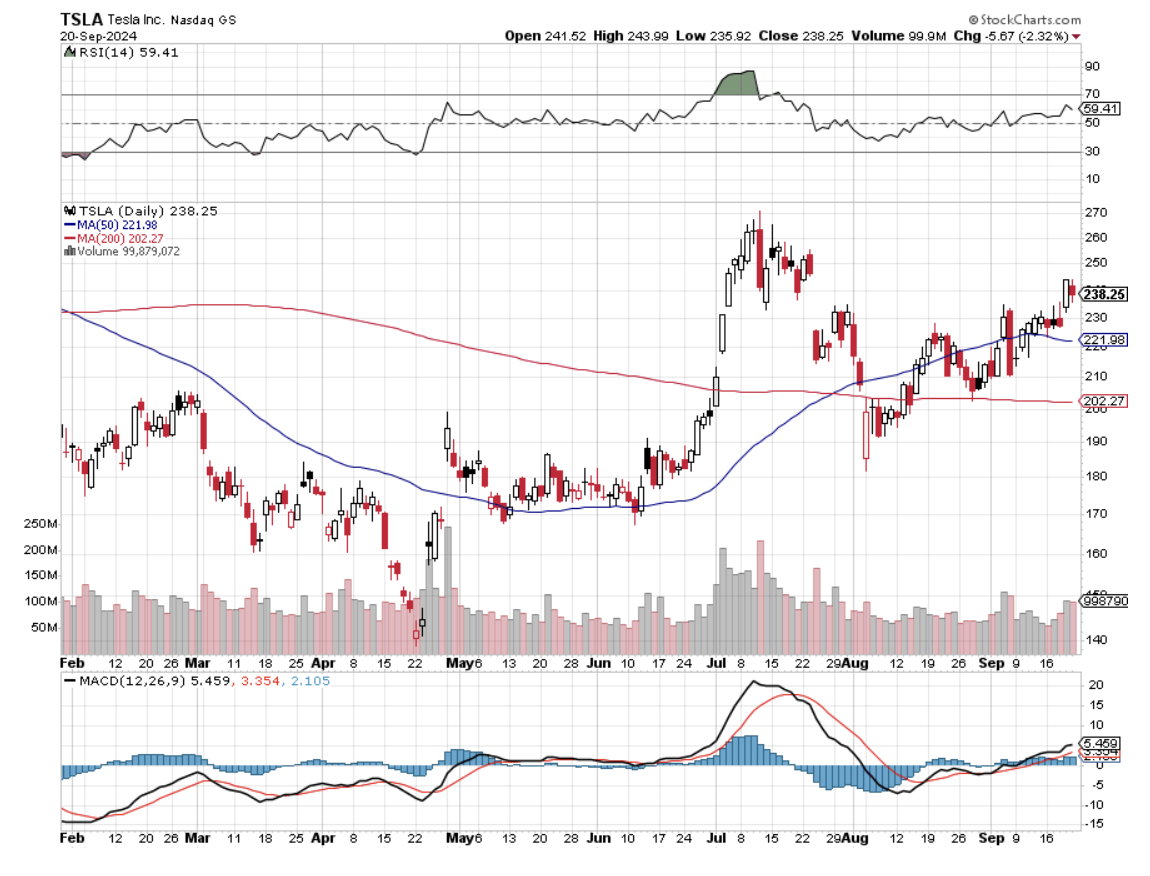
I front-ran the Fed move by adding positions in interest rate sensitives like (GLD), (NEM), and (TSLA). I added (CCJ) based on the arguments above. Once the Fed showed its hand, I added another interest rate sensitives with (DHI). I also added a short in (TLT).
My logic on (TLT) was very simple. I think it is safe to say that we won’t have any downside surprises in interest rates until the next Fed meeting on November 6. We don’t even get a Nonfarm Payroll Report until October 4.
In any case, the bond market has already fully priced in half of the 250 basis points worth of interest rate cuts now discounted by the June Fed futures markets. We have just witnessed a massive $20 rally off the (TLT) bottom. Upside surprises in prices from here should be nil.
If you couldn’t get into (TLT), you are not alone. As soon as the big hedge funds saw my trade alerts, they started hammering not only the options market but the underlying bond market as well with several large $100 million sales. That pushed the trade to near max profit almost immediately and made my trade alert impossible to execute.
At The Economist, they used to say that imitation is the sincerest form of flattery.
Some 63 of my 75 round trips, or 90%, were profitable in 2023. Some 57 of 75 trades have been profitable so far in 2024, and several of those losses were break-even. That is a success rate of +76%.
Try beating that anywhere.
FedEx Gets Crushed 10%, on disappointing earnings and guidance. Cost control is a big issue. Right now, investors are presented with the Dow Industrials at all-time highs and Transports barely positive for the year. Transports are up just 2.7% year to date, and a 13% drop in FedEx shares early Friday will likely drag it into the red for 2024. Buy (FDX) on dips, a great economic recovery play.
Existing Home Sales Drop 4.2%, in August to a seasonally adjusted annualized rate of 3.86 million units, according to the National Association of Realtors. There were 1.35 million units for sale at the end of August. That’s up 0.7% from July and up 22.7% year over year. median price of an existing home sold in August was $416,700, up 3.1% from August 2023, a new all-time high. Real estate should pick up once lower interest rates feed through.
Weekly Jobless Claims Hit 4 Month Low at 219,000. This flies in the face of yesterday’s 50 basis point rate cut by the Fed yesterday based on a weakening jobs market.
Alaska Airlines Takeover of Hawaiian Gets Approval, in a rare case of agreement from the government. The Feds have opposed the most concentration of industry. I think without the deal Hawaiian would have gone under. Expect prices to go and services to decline. Avoid the airlines.
Berkshire Hathaway Cash Approaches $300 Billion. Berkshire ended the second quarter with cash and equivalents (mostly Treasury bills) of $277 billion, up from $168 billion at year-end 2023, mostly due to heavy sales of Apple (AAPL). It highlights how much money is sitting on the sidelines waiting to come in on the next dip. It's also an indication that in the 75 years of Warren Buffet’s investing experience, stocks are expensive.
The Entire Energy Sector is About to Double, once the Chinese economy starts to recover. A recovering US economy powered by lower interest rates will also help. Everything from oil futures to master limited partnerships and stocks are on sale with the highest dividends in the market. It’s almost the only place Warren Buffet is buying.
Amazon Puts AI to Work, using it to plan new delivery routes which saves time and millions of gallons of gasoline. It’s a simple application with vast results. It all goes straight to the bottom line. AI is spreading throughout the economy far faster than most people realize. Buy (AMZN) on dips.
Foreign Direct Investment into China Collapses, down 31.5% in the first eight months of 2024 the Chinese Commerce Ministry said on Saturday. This could be a drag on the recovery of global commodity prices.
US Import Prices are in Free Fall, showing the biggest drop in eight months in August, driven by a broad decline in the costs of goods.
Ebbing price pressures give the Federal Reserve ample room to focus on the labor market which has slowed considerably from last year's robust job growth. Expectations of lower interest rates as well as slowing inflation results are making people feel better about the outlook for the economy.
Foreign Investors Pour $31 Billion into Emerging Markets in August. Fixed income funds ex-China accounted for $27.8 billion of inflows, with $1.4 billion funneled to Chinese debt, the data show. The net inflow to stocks stood at $1.7 billion despite a $1.5 billion outflow from Chinese equities. It’s all about falling US interest rates and a US dollar that is expected to be weak for years.
My Ten-Year View
When we come out the other side of the recession, we will be perfectly poised to launch into my new American Golden Age or the next Roaring Twenties. The economy decarbonizing and technology hyper accelerating, creating enormous investment opportunities. The Dow Average will rise by 600% to 240,000 or more in the coming decade. The new America will be far more efficient and profitable than the old.
Dow 240,000 here we come!
On Monday, September 23 at 8:30 AM EST, the S&P Global Flash PMI
is out
On Tuesday, September 24 at 6:00 AM, the S&P Case Shiller National Home Price Index is released.
On Wednesday, September 25 at 7:30 AM, New Home Sales are printed.
On Thursday, September 26 at 8:30 AM EST, the Weekly Jobless Claims are announced. We also get the final read on Q2 GDP.
On Friday, September 27 at 8:30 AM, we learn the Fed’s favorite inflation indicator, the Core PCE Price Index. At 2:00 PM EST, the 2:00 PM the Baker Hughes Rig Count is printed.
As for me, when the Cold War ended in 1992, the United States judiciously stepped in and bought the collapsing Soviet Union’s entire uranium and plutonium supply.
For good measure, my client George Soros provided a $50 million grant to hire every Soviet nuclear engineer. The fear then was that starving scientists would go to work for Libya, North Korea, or Pakistan, which all had active nuclear programs. They ended up here instead.
That provided the fuel to run all US nuclear power plants and warships for 20 years. That fuel has now run out and chances of a resupply from Russia are zero. The Department of Defense attempted to reopen our last plutonium factory in Amarillo, Texas, a legacy of the Johnson administration.
But the facilities were deemed too old and out of date, and it is cheaper to build a new factory from scratch anyway. What better place to do so than Los Alamos, which has the greatest concentration of nuclear expertise in the world?
Los Alamos is a funny sort of place. It sits at 7,320 feet on a mesa on the edge of an ancient volcano so if things go wrong, they won’t blow up the rest of the state. The homes are mid-century modern built when defense budgets were essentially unlimited. As a prime target in a nuclear war, there are said to be miles of secret underground tunnels hacked out of solid rock.
You need to bring a Geiger counter to garage sales because sometimes interesting items are work castaways. A friend almost bought a cool coffee table which turned out to be part of an old cyclotron. And for a town designing the instruments to bring on the possible end of the world, it seems to have an abnormal number of churches. They’re everywhere.
I have hundreds of stories from the old nuclear days passed down from those who worked for J. Robert Oppenheimer and General Leslie Groves, who ran the Manhattan Project in the early 1940s. They were young mathematicians, physicists, and engineers at the time, in their 20’s and 30’s, who later became my university professors. The A-bomb was the most important event of their lives.
Unfortunately, I couldn’t relay this precious unwritten history to anyone without a security clearance. So, it stayed buried with me for a half century, until now.
Some 1,200 engineers will be hired for the first phase of the new plutonium plant, which I got a chance to see. That will create challenges for a town of 13,000 where existing housing shortages already force interns and graduate students to live in tents. It gets cold at night and dropped to 13 degrees F when I was there.
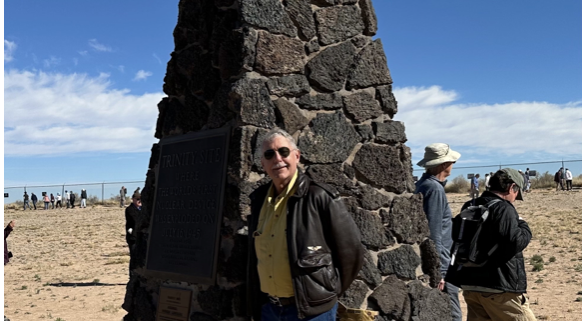
I was allowed to visit the Trinity site at the White Sands Missile Test Range, the first visitor to do so in many years. This is where the first atomic bomb was exploded on July 16, 1945. The 20-kiloton explosion set off burglar alarms for 200 miles and was double to ten times the expected yield.
Enormous targets hundreds of yards away were thrown about like toys (they are still there). Half the scientists thought the bomb might ignite the atmosphere and destroy the world but they went ahead anyway because so much money had been spent, 3% of US GDP for four years. Of the original 100-foot tower, only a tiny stump of concrete is left (picture below).
With the other visitors, there was a carnival atmosphere as people worked so hard to get there. My Army escort never left me out of their sight. Some 78 years after the explosion, the background radiation was ten times normal, so I couldn’t stay more than an hour.
Needless to say, that makes uranium plays like Cameco (CCJ), NextGen Energy (NXE), Uranium Energy (UEC), and Energy Fuels (UUUU) great long-term plays, as prices will almost certainly rise and all of which look cheap. US government demand for uranium and yellow cake, its commercial byproduct, is going to be huge. Uranium is also being touted as a carbon-free energy source needed to replace oil.
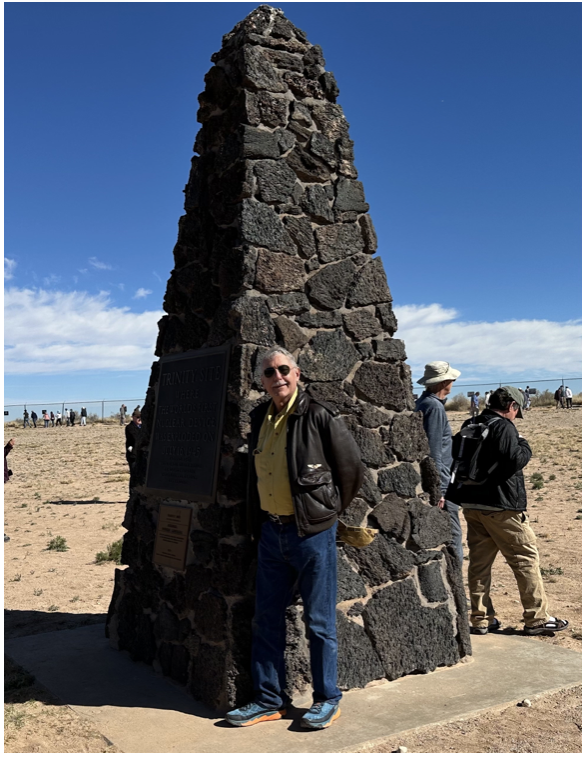
At Ground Zero in 1945
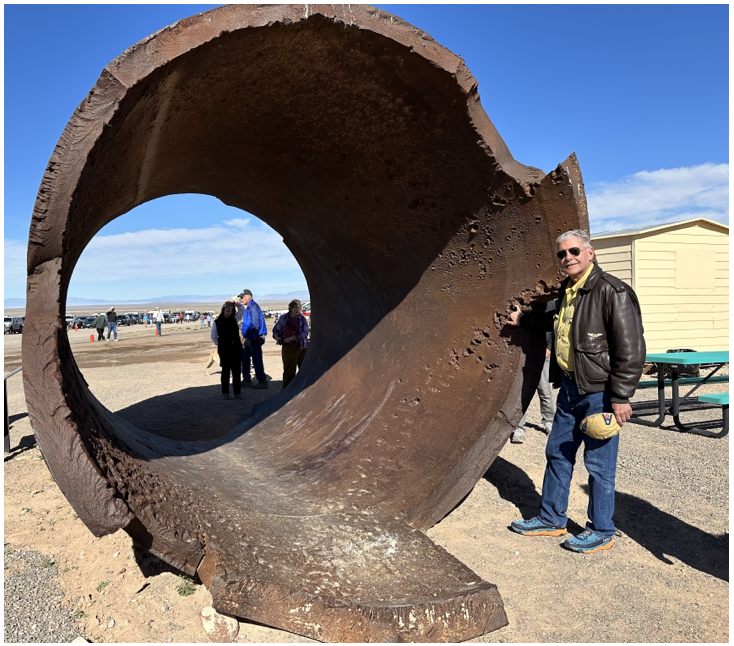
What’s Left of a Trinity Target 200 Yards Out
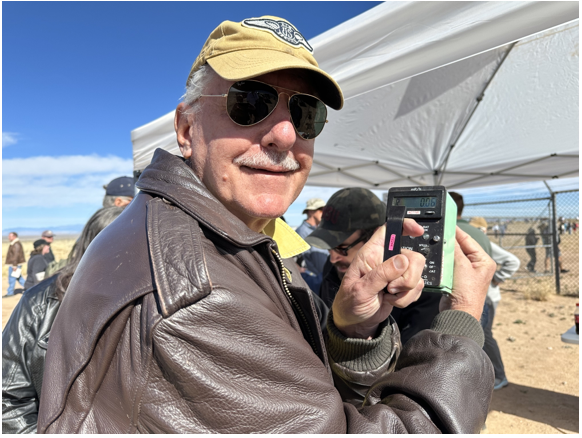
Playing With My Geiger Counter
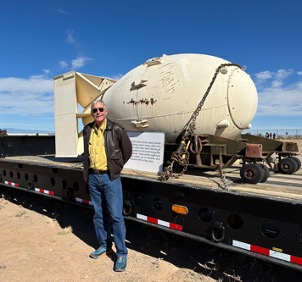
Atomic Bomb No.3 Which was Never Used in Tokyo
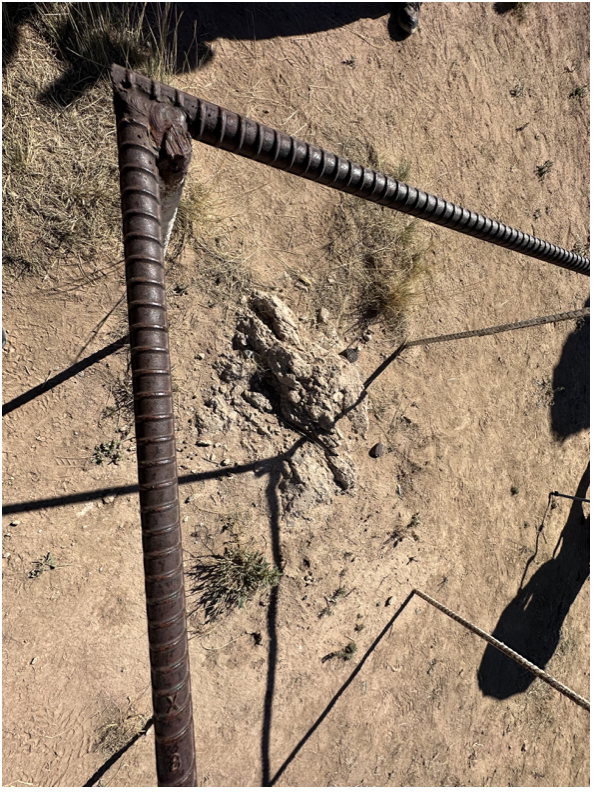
What’s Left from the Original Test
Stay Healthy,
John Thomas
CEO & Publisher
The Diary of a Mad Hedge Fund Trader

“All over the world, money managers are waiting for the signal that the Fed is going to end tightening. I think everyone is on a hair trigger,” said oracle of Omaha, Warren Buffett.
Mad Hedge Technology Letter
September 20, 2024
Fiat Lux
Featured Trade:
(TECH STOCKS RECEIVE A GIFT)
($COMPQ), (NVDA)
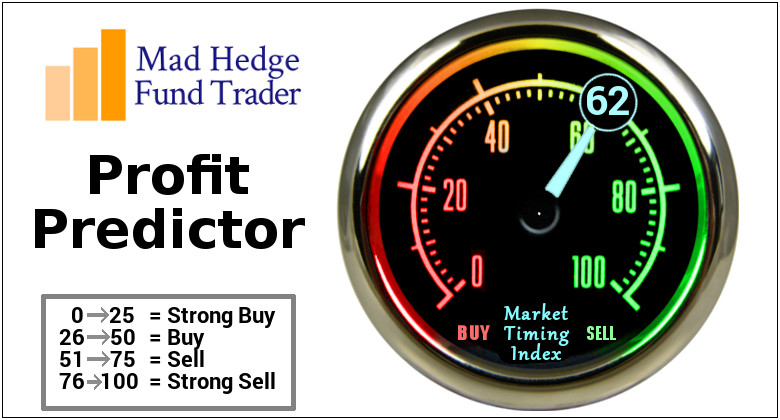
No recession – highly bullish for technology stocks ($COMPQ) in the short term.
That is my hot take from Jerome Powell’s and the Fed’s surprise 50-point basis interest rate cut.
Tech stocks will overwhelmingly outperform the rest of the equity market because that is where the profits and earnings are.
I don’t see a situation for the ‘catch up’ trade, or if it does transpire, it will be very transitory in nature.
There is no other subsector that is about to overtake technology in terms of prestige or growth, and that is where I take comfort in believing that technology will harvest the lions’ share of the gains from the Central Bank’s interest rate cut.
The cut was a jumbo one, which means even better projections for tech share prices in the short run.
It is hard not to take a look-in back at the Magnificent 7 for another winter rally that should take the Nasdaq quite a bit higher from here.
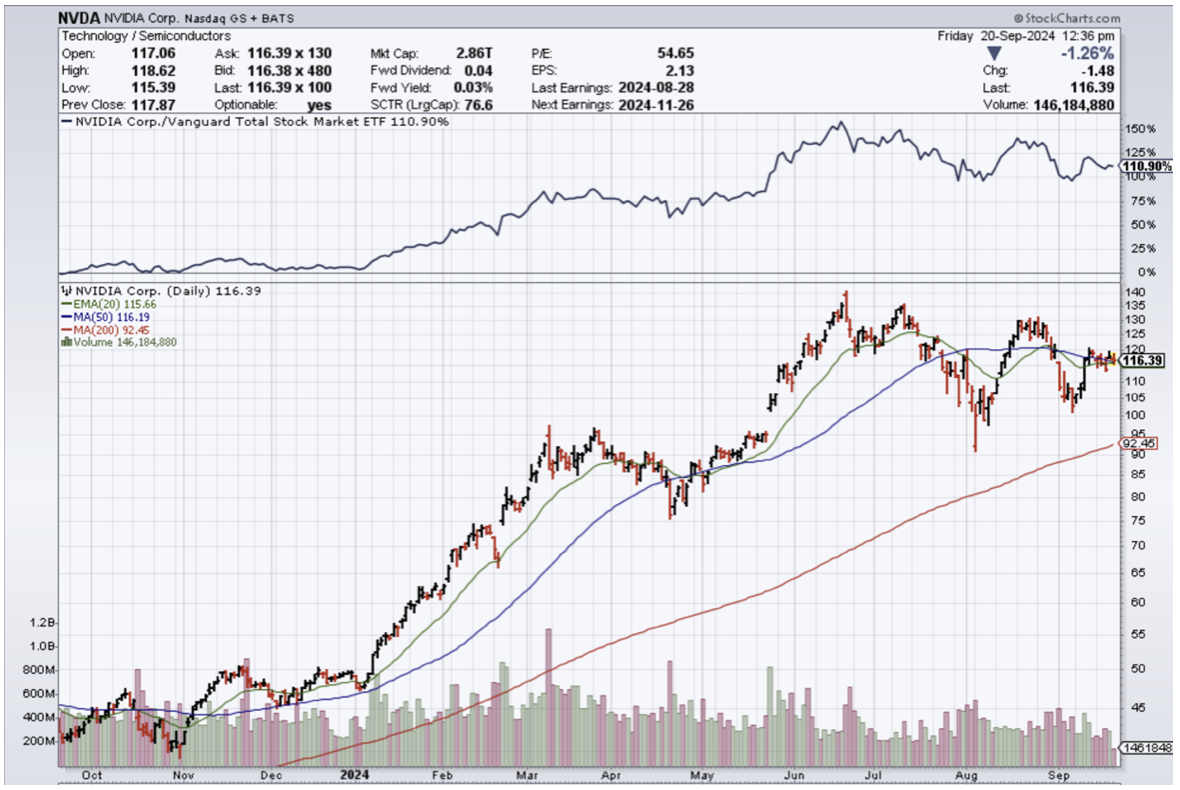
That is why I executed a deep-in-the-money call spread on chip behemoth Nvidia (NVDA) this morning.
The tech-weighted Nasdaq index hit an all-time high in 2024 around July, with prices trading around 18,700 points, and we are around 5% from that high.
Any pullback in quality tech firms will be brought up, and I urge readers to enjoy the rally because of the unexpected jumbo hike, the rally is now pulled forward.
Highlighting the hawkish cut was the FOMC vote was 11-1, with Governor Michelle Bowman preferring a quarter-point move.
Powell pushed through a half-point move instead and ironically told reporters that the economy was great.
Unemployment numbers of around 4.2% were once considered full employment back in the day.
A half-point cut into a strong economy to pre-empt a recession is an interesting move.
It is clear they don’t want to get behind the curve after they badly botched inflation on the way up.
In most normal cases, tech stocks would rocket higher, and bond yields would sink, but the 10-year yield has gone the other way, signaling that this hawkish cut could ignite another bout of higher inflation at the long end of the yield curve.
The Nasdaq index gained 3%, showing that it can power through no matter what bonds are doing, and that has been the case since 2020.
The Japanese yen also shot higher from the 140 level to the 144 to the US dollar today.
A weaker trending yen is a highly bullish signal for the trajectory of U.S. tech stocks.
The committee expects the long-run neutral rate to be around 3%, a level that has drifted higher as the Fed has struggled to get inflation down to 2%.
Gross domestic product has been rising steadily, and the Atlanta Fed is tracking 3% growth in the third quarter based on continuing strength in consumer spending. Moreover, the Fed chose to cut even though most gauges indicate inflation well ahead of the central bank’s 2% target. The Fed’s preferred measure shows inflation running around 2.5%, well below its peak but still higher than policymakers would like.
The current jobless level is 4.2%, drifting higher over the past year, though still at a level that would be considered full employment.
A 50 basis point rate cut into an economy growing 3% per year will surely get GDP moving closer to 4%.
Think about it in terms of housing and all the buyers waiting on the sidelines waiting to get into the housing market.
Inflation is sure to come back again in the long term, but in the short term, this nudges 3% GDP to 4%, and that is highly bullish for tech stocks. This also should help unemployment stick close to the 4.2% in, which the Fed is worried about, which is a victory for equity markets.
The tech rally is here, and don’t miss out on it!

“It takes 20 years to build a reputation and five minutes to ruin it.” – Said American Investor Warren Buffett

When John identifies a strategic exit point, he will send you an alert with specific trade information as to what security to sell, when to sell it, and at what price. Most often, it will be to TAKE PROFITS, but, on rare occasions, it will be to exercise a STOP LOSS at a predetermined price to adhere to strict risk management discipline. Read more

(NEW AUSSIE TECHNOLOGY WILL BE USED DURING DISASTERS)
September 20, 2024
Hello everyone
Well, the rate cut show is over.
The number was 0.5 basis points.
Some will think the Fed was late in its policy reaction.
The true ramifications of such a move probably won’t be seen until next year.
Then, a whole new pattern of events may show up.
But let’s concentrate on the near term first.
The market woke up Thursday morning with a spring in its step and decided the 0.5% number was a good policy move. Nearly every sector was on fire.
Surely smoother, more gradual rate cuts – starting earlier - would have been a better policy move than an initial big move with the probability of more to come this year. But what do I know. I’m not an economist.
Still, analysts are divided over the medium- and long-term view of where markets are going.
Some see storm clouds developing on the horizon, while others see clear air ahead with occasional turbulence.
We have more labour reports ahead and the U.S. election, which could well create some chop in the markets.
AUSTRALIAN CORNER
Technology to the rescue during a disaster
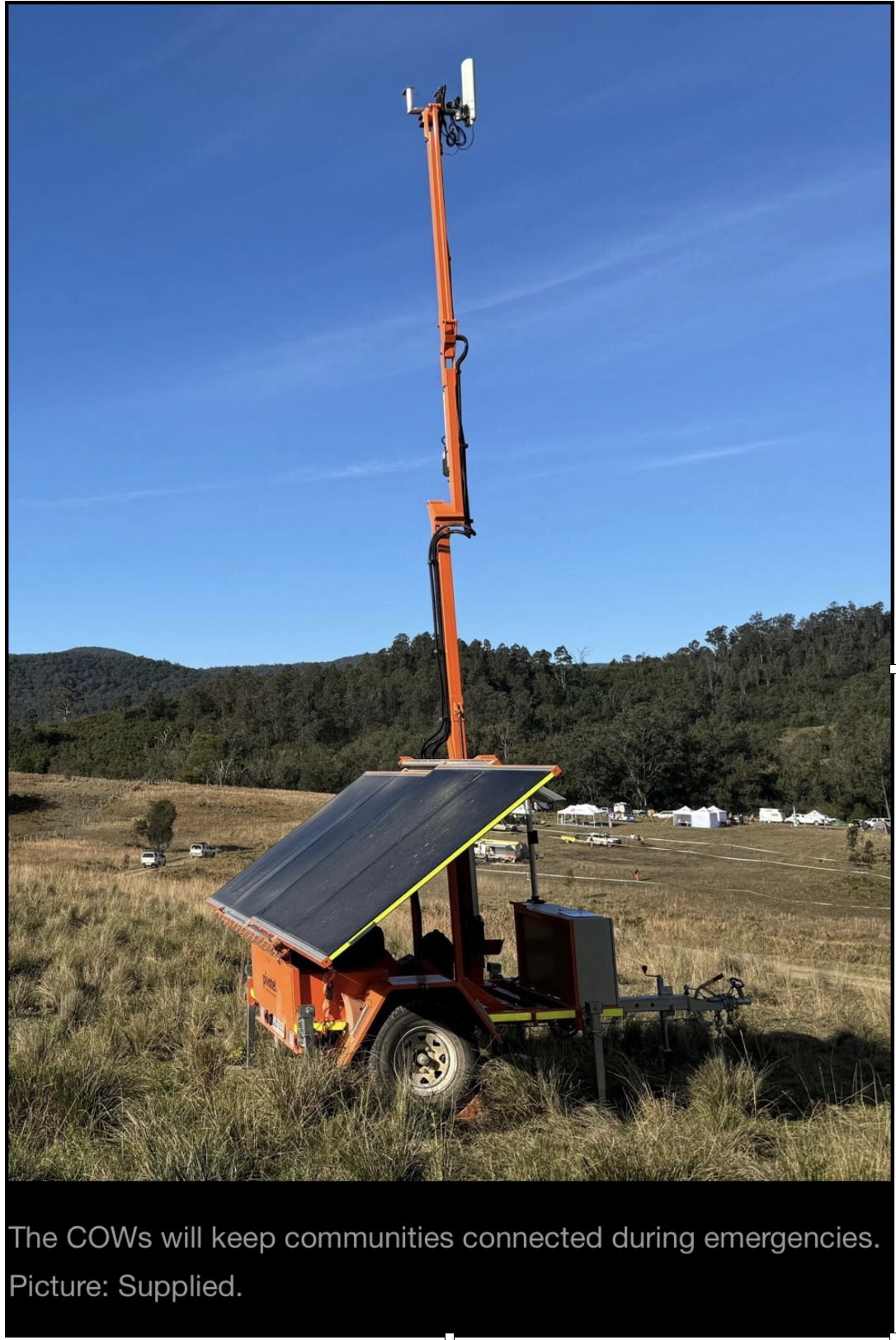
New technology to help keep Aussies safe and connected during emergency situations will be rolled out in disaster-ravaged towns from this summer.
The NSW government will have giant orange portable cell towers, called Cells on Wheels (COWs), ready to deploy to bushfire and flood-affected areas, which will allow residents and emergency service workers to stay in touch.
They will provide telecommunications backup when existing infrastructure is damaged or destroyed in natural disasters.
Communities will be able to connect to the COWs via Wi-Fi, enabling them to make data calls or to connect to the internet.
Additionally, the COWs are able to connect to each other to expand coverage.
As part of a $2 million contract. Communications company Pivotel is due to deliver four COWs, which will be available to be sent across the state in a matter of hours.
QI CORNER
SOMETHING TO THINK ABOUT

RECORDING OF JACQUIE’S POST AUGUST ZOOM MONTHLY MEETING
https://www.madhedgefundtrader.com/jacquie-munro-meeting-replay-august-2024/

Cheers
Jacquie
Global Market Comments
September 20, 2024
Fiat Lux
Featured Trade:
(THIS WILL BE YOUR BEST PERFORMING ASSET FOR THE NEXT 30 YEARS),
(IYR), (PHM), (LEN), (DHI), (TLT), (HYG), (MUB), (SPY)
Mad Hedge Biotech and Healthcare Letter
September 19, 2024
Fiat Lux
Featured Trade:
(THE KING’S SPEECH)
(ABT), (DXCM), (LLY), (NVO)
