Global Market Comments
August 29, 2024
Fiat Lux
Featured Trade:
(SEVEN TECH STOCKS TO BUY AT THE ENXT MARKET BOTTOM),
(AMZN), (AAPL), (NFLX), (AMD), (INTC), (TSLA), (GOOG), (META)


Global Market Comments
August 29, 2024
Fiat Lux
Featured Trade:
(SEVEN TECH STOCKS TO BUY AT THE ENXT MARKET BOTTOM),
(AMZN), (AAPL), (NFLX), (AMD), (INTC), (TSLA), (GOOG), (META)

Last weekend, I had dinner with one of the oldest and best-performing technology managers in Silicon Valley. We met at a small out-of-the-way restaurant in Oakland near Jack London Square so no one would recognize us. It was blessed with a very wide sidewalk out front and plenty of patio tables.
The service was poor and the food indifferent, as are most dining experiences these days. I ordered via a QR code menu and paid with a touchless Square swipe.
I wanted to glean from my friend the names of the best tech stocks to own for the long term right now, the kind you can pick up and forget about for a decade or more, a “lose behind the radiator” portfolio.
To get this information I had to promise the utmost in confidentiality. If I mentioned his name you would say “Oh my gosh!”
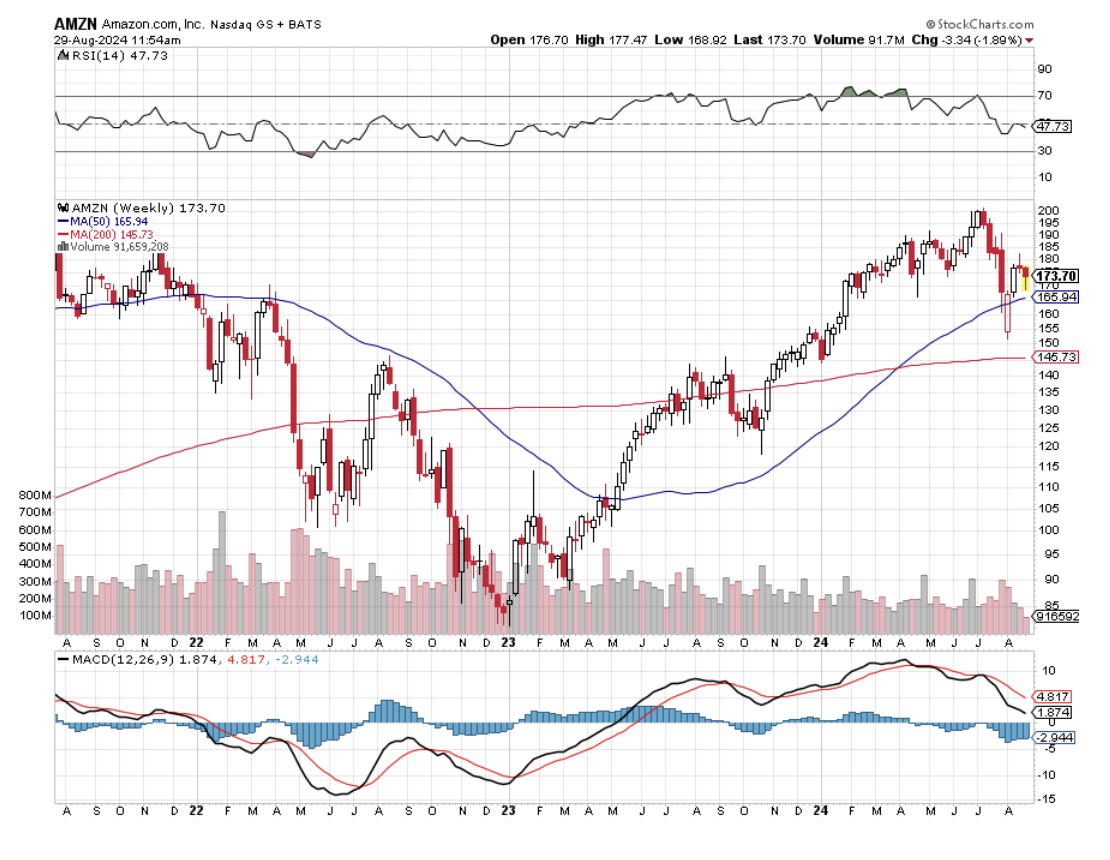
Amazon (AMZN) is now his largest holding, the current leader in cloud computing. Only 5% of the world’s workload is on the cloud presently so we are still in the early innings of a hyper-growth phase there.
By the time you price in all the transportation, labor, and warehousing costs, Amazon breaks even with its online retail business at best. The mistake people make is only focusing on these lowest-of-margin businesses.
It’s everything else that’s so interesting. While its profitability is quite low compared to the other FANG stocks, Amazon has the best growth outlook. For a start, third-party products hosted on the Amazon site, most of what Amazon sells, offer hefty 30% margins.
Amazon Web Services (AWS) has grown from a money loser to a huge earner in just four years. It’s a productivity improvement machine for the world’s cloud infrastructure where they pass all cost increases on to the customer, who once in, buys more services.
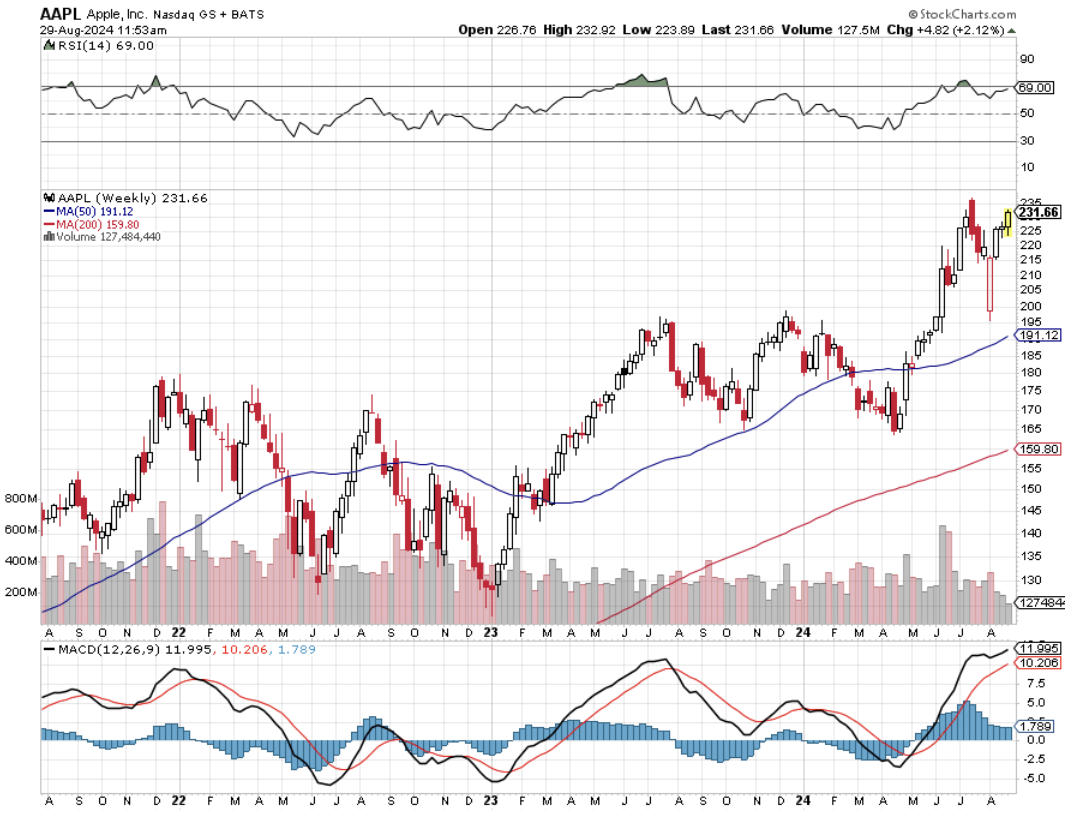
Apple (AAPL) is his second holding, the next AI stock. The company is in transition now justifying a massive increase in earnings multiples, from 9X to 25X over the last several years. The iPhone has become an indispensable device for people around the world, and it is the services sold through the phone that are key.
The iPhone is really not a communications device but a selling device, be it for apps, storage, music, or third-party services. The cream on top is that Apple is at the very beginning of an enormous replacement cycle for its installed base of over one billion phones. Moving from up-front sales to a lifetime subscription model will also give it a boost.
Half of these are more than four years old and positively geriatric in the tech world. More than half of these are outside the US. 5G will add a turbocharger.
Netflix (NFLX) is another favorite. The world is moving to “over-the-top” content delivery and Netflix is already spending twice as much on content as any other company in this area. This is why the company won an amazing 21 Emmys this year. This will become a much more profitable company as it grows its subscriber base and amortizes its content costs. Their cash flow is growing by leaps and bounds, which they can use to buy back stock or pay a dividend.
Generally speaking, there is no doubt that the pandemic has pulled forward some future technology demand with the stay-at-home trend. But these companies have delivered normal growth in a hard world. Tech growth will accelerate in 2021 and 2022.
5G will enable better Internet coverage for everyone and will increase the competitiveness of telecom companies. Factory automation will be another big area for 5G, as it is reliable and secure, and can be integrated with artificial intelligence.
Transportation will benefit greatly. Connected self-driving cars will be a big deal, improving safety and the quality of life.
My friend is not as worried about government-threatened breakups as regulation. There will be more restraints on what these companies can do going forward. Europe, which has no big tech companies of its own, views big American tech companies simply as a source of revenue through fines. Driving companies out of business through cutthroat competition is simply not something Europeans believe in.
Google (GOOG) is probably more subject to antitrust proceedings both in Europe and the US. The founders have both retired to pursue philanthropic activities, so you no longer have the old passion (“don’t be evil”).
Both Google and Meta (META) control 70% of the advertising market, which is inherently a slow-growing market, expanding at 5% a year at best. (META)’s growth has slowed dramatically, while it has reversed at (GOOG).
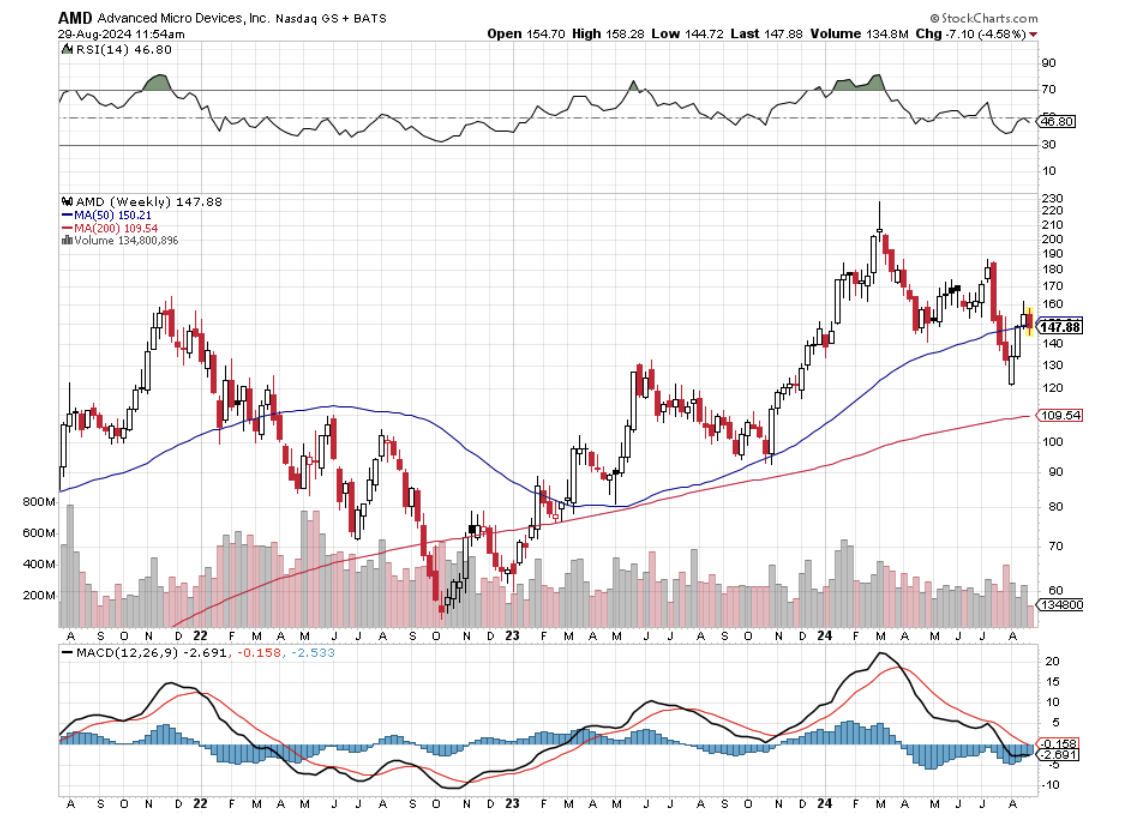
He is a big fan of (AMD), one of his biggest positions, which is undervalued relative to the other chip companies. They out-executed Intel (INTC) over the last five years and should pass it over the next five years.
He has raised the value of tech stocks from 15% to 30% of his portfolio. Apple used to be one of these. Semiconductor companies today also fall into this category. Samsung with 40% margins in its memory business is a good example. Selling for 10X earnings it is ridiculously cheap. It is just a matter of time before semiconductors get rerated too.
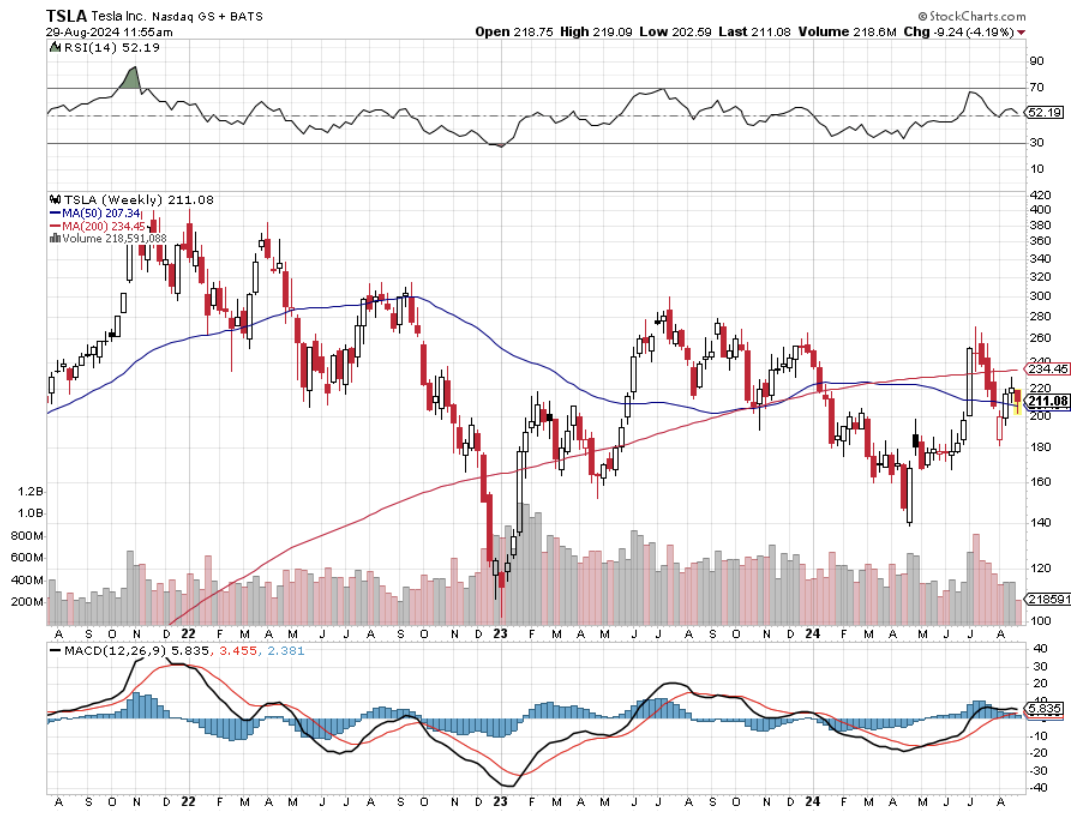
He was an early owner of Tesla (TSLA) back in the nail-biting days when it was constantly running out of cash. Now they have the opposite problem, using their easy access to cash through new share issues as a weapon to fight off the other EV startups. Tesla is doing to Detroit what Apple did to the cell phone companies, redefining the car.
Its stock is overvalued now but will become much more profitable than people realize. They also are starting to extract service revenues from their cars, like Apple has. Tesla will grow revenues by 30%-50% a year for the next two or three years. They should sell several million of the new small SUV Model Y. Most other companies bringing EVs will fall on their faces.
EVs are a big factor in climate change, even in China, the world’s biggest polluter. In Europe, they are legislating gasoline cars out of existence. If you can make money building cars in Fremont, CA, you can make a fortune building them in China.
Tech valuations are high, there is no doubt about it. However, interest rates are much lower. The Fed is forcing people to buy stocks, enabling these companies to evolve even faster.
When rates rise in a year or so tech stocks may have to come down. They have a lot more things going for them than against them. The customers keep coming back for more.
Needless to say, the above stocks should make up your shortlist for LEAPS to buy at the coming market bottom.

“The French have more fun in one year than the English do in ten,” said John Adams, America’s second president, and one-time ambassador to Paris and London.

In the ever-evolving landscape of big data analytics and artificial intelligence, Palantir Technologies Inc. (PLTR) has emerged as a prominent player, garnering significant attention from investors and tech enthusiasts alike. Founded in 2003 by a group of Silicon Valley veterans, including Peter Thiel, Alex Karp, Joe Lonsdale, Stephen Cohen, and Nathan Gettings, Palantir has carved a niche for itself by providing cutting-edge software solutions for data integration, analysis, and visualization to government agencies and large enterprises.
This comprehensive article aims to delve into the intricacies of Palantir's business model, its financial performance, the factors driving its stock trends, and the potential challenges and opportunities that lie ahead.
Company Overview:
Palantir's core mission revolves around helping organizations make sense of massive and complex datasets, enabling them to derive actionable insights and make informed decisions. The company's flagship platforms, Gotham and Foundry, are designed to address the unique needs of different sectors.
Gotham, primarily used by government agencies and intelligence communities, focuses on counterterrorism, fraud detection, and cybersecurity. Foundry, on the other hand, caters to commercial clients across various industries, including healthcare, finance, and manufacturing, empowering them to optimize operations, enhance customer experiences, and drive innovation.
Financial Performance:
Palantir's financial trajectory has been a subject of intense scrutiny, with investors closely monitoring its revenue growth, profitability, and cash flow. The company went public in September 2020 through a direct listing, bypassing the traditional initial public offering (IPO) process. Since then, its stock price has experienced significant volatility, reflecting the market's evolving perception of its growth potential and risk profile.
In recent quarters, Palantir has demonstrated impressive revenue growth, driven by a combination of new customer acquisitions, expansion within existing accounts, and the successful launch of new products and services. However, the company has yet to achieve consistent profitability, as it continues to invest heavily in research and development, sales and marketing, and infrastructure expansion.
Stock Trends and Analysis:
Palantir's stock price has been on a rollercoaster ride since its public debut, influenced by a multitude of factors, including:
Future Prospects:
Despite the inherent volatility and uncertainties, Palantir's long-term prospects appear promising, underpinned by several key factors:
Challenges and Risks:
While Palantir's future looks bright, it is not without its share of challenges and risks:
Conclusion:
Palantir Technologies Inc. is a company at the forefront of the big data analytics and AI revolution, with a compelling value proposition and a strong track record of delivering innovative solutions to complex problems. Its stock has experienced significant volatility since its public debut, reflecting the market's evolving perception of its growth potential and risk profile.
While the road ahead may be bumpy, Palantir's long-term prospects appear promising, underpinned by a large and expanding market opportunity, a strong customer base, technological innovation, strategic partnerships, and international expansion. However, the company also faces several challenges and risks, including achieving sustainable profitability, navigating a competitive landscape, managing customer concentration, and addressing regulatory and legal concerns.
Investors considering Palantir stock should carefully weigh the potential rewards against the inherent risks, conduct thorough due diligence, and adopt a long-term investment horizon. The company's success will ultimately depend on its ability to execute its growth strategy, maintain its competitive edge, and deliver consistent value to its customers and shareholders.
Mad Hedge Technology Letter
August 28, 2024
Fiat Lux
Featured Trade:
(NOT SUPER BY SUPER MICRO)
(SMCI), (NVDA)

This is the first blip in quite a while for the chip sector.
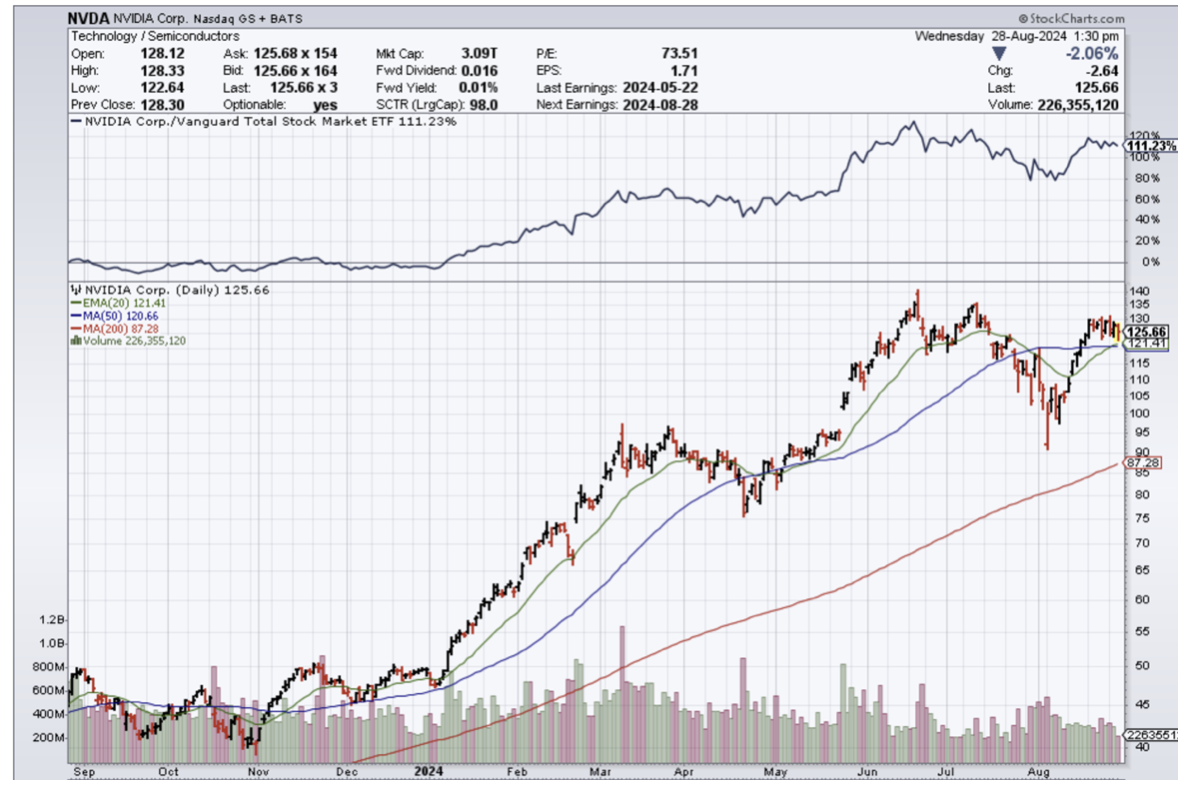
It has almost been perfect in the latest leg up in the tech market carried by heavy hitter Nvidia (NVDA).
I don’t think this will have a significant knock-on effect on the prospects of NVDA.
NVDA is an animal of its own and I do believe we will see great earnings and positive forward guidance that could mean the next gasp up in tech stocks.
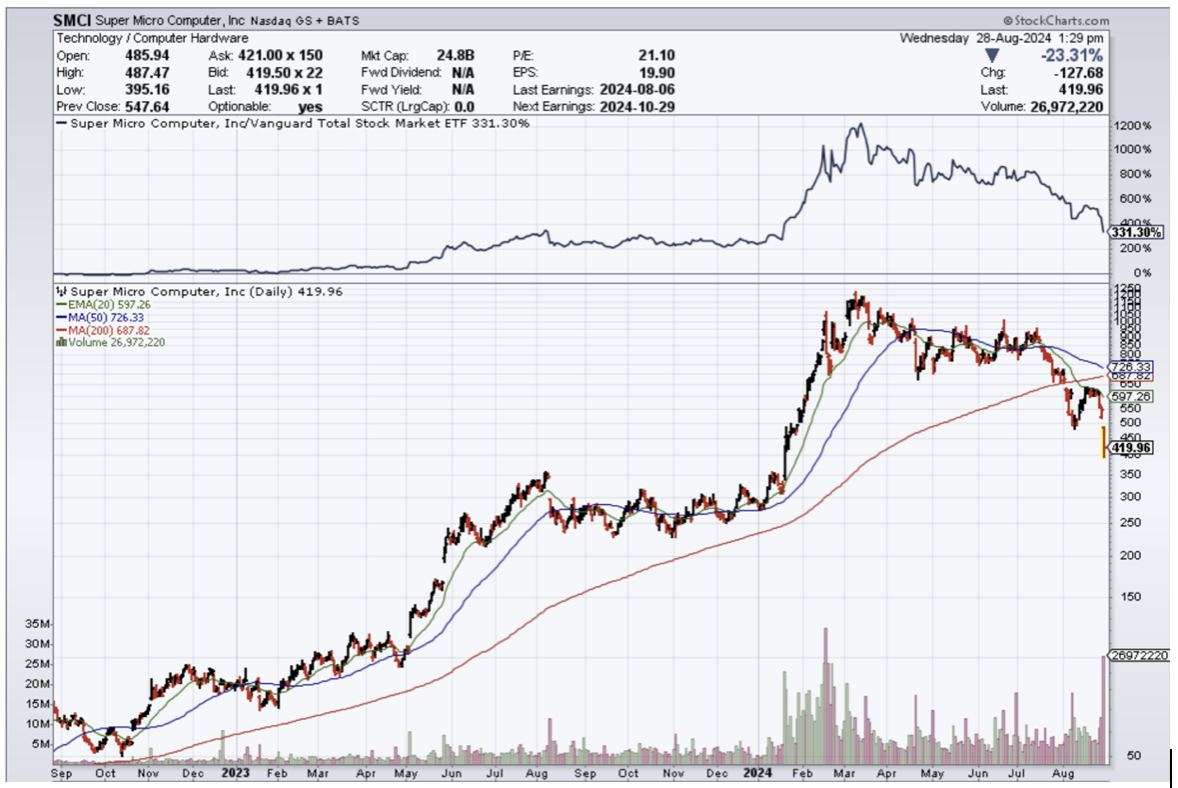
Today represents the first black eye for the AI generative movement when short seller Hindenburg research accused Super Micro Computer (SMCI) of “account manipulation.”
There was a three-month investigation and many former insiders were contacted.
Hindenburg research has a pretty good track record calling out tech frauds.
Most of their calls focus on public stocks helmed by predominately Chinese nationals.
SMCI stock crashed 25% on the day, and it is an ominous setup going into Nvidia earnings later today.
Hindenburg said it reviewed various instances that suggested there were ongoing bookkeeping issues within the $35 billion tech firm even after the SEC charged it with "widespread accounting violations" in 2020.
Workers within the company said they faced pressure to meet high sales quotas, even after the company was charged by regulators.
The high quotas incentivized some workers to ship defective products.
Some of Super Micro's partners appeared to do little business outside their relationship with Super Micro. Ablecom, one such partner, exported 99.8% of its product in the US to Super Micro, while Compuware, another partner, exported 99.7% of its product to Super Micro.
Hindenburg also said Super Micro also ramped up exports to Russia after Moscow invaded Ukraine, which violated US sanctions.
Hindenburg highlighted quality concerns among Super Micro's customers, some of whom have turned to alternative suppliers. Tesla and CoreWeave, two of Super Micro's major customers, have inked high-profile deals with Dell over the past year because they found SMCIs products inferior.
The tsunami of bad news for SMCI means it is time to avoid the stock.
The company faces a torrent of accounting, governance, and compliance issues and offers an inferior product and service now being eroded away by more impactful competition.
The accusations are quite structural and investors won’t be able to just turn a blind eye to all of this.
SMCI delayed reporting their earnings at the last second which tells an investor audience that much of the accusation has some truth to it.
There is a lot to solve internally and I don’t think investors should swoop in and buy the dip just yet.
If there is a bounce, it most likely will be a dead cat bounce.
Although not an existential problem, this short seller report will set back SMCI 5 years and that is a long time in the world of tech.
Readers should avoid this chip stock and head to higher ground.
There is a possibility that this is just the tip of the iceberg and the core could find out to be a lot more rotten than first thought.
Readers will be better off sticking with the likes of Nvidia, Broadcom, AMD, and Micron.
“If you can't tolerate critics, don't do anything new or interesting.” – Said Amazon Co-Founder Jeff Bezos


(THERE MAY BE LIGHT AT THE END OF THE TUNNEL AFTER A LONG “WINTER” FOR MINERS IN AUSTRALIA)
August 28, 2024
Hello everyone,
Some good news from BHP
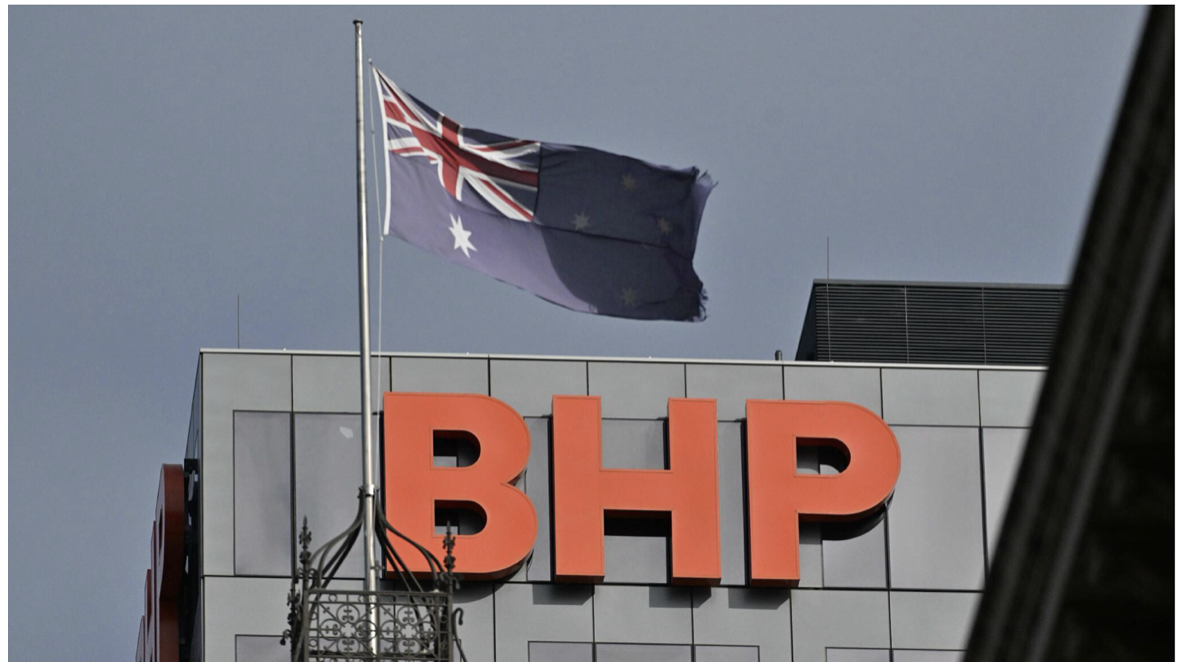
BHP has achieved a multi-billion-dollar profit, and it was all about China.
BHP shipped most of its iron ore off to China, but a hefty amount also went to Japan.
China’s insatiable demand for iron ore (and coal) drives prices, and BHP’s profits – last year, this year, and out into the 2030s.
Because of this trade, Canberra receives a sizeable tax from BHP as do the states from royalties. In the 2023-24 year, a not too shabby $US11bn ($16bn) changed hands.
The future of BHP, and indeed, Australia, remains all about China.
Despite China’s structural problems, BHP does not see Chinese demand for iron ore slipping, or even dramatically plunging, in the future.
And to counter all the negative narratives about BHP’s health in relationship to its main trading partner, BHP is actually planning to increase its production out of the Pilbara, from 260 million tonnes a year to 305 million tonnes; and has longer-term plans to go to 330m tonnes.
BHP is also increasingly about copper; and that is also mostly about China.
Worthy of note is the fact that 50% of copper produced in the world is consumed by China, as was pointed out on Tuesday by BHP’s CFO, Vandita Pant.
Copper contributed just under $US9bn, or nearly one-third of the group’s gross profit.
Interestingly, BHP’s CEO has stated that he expects a turnaround in China’s property sector in the year ahead.
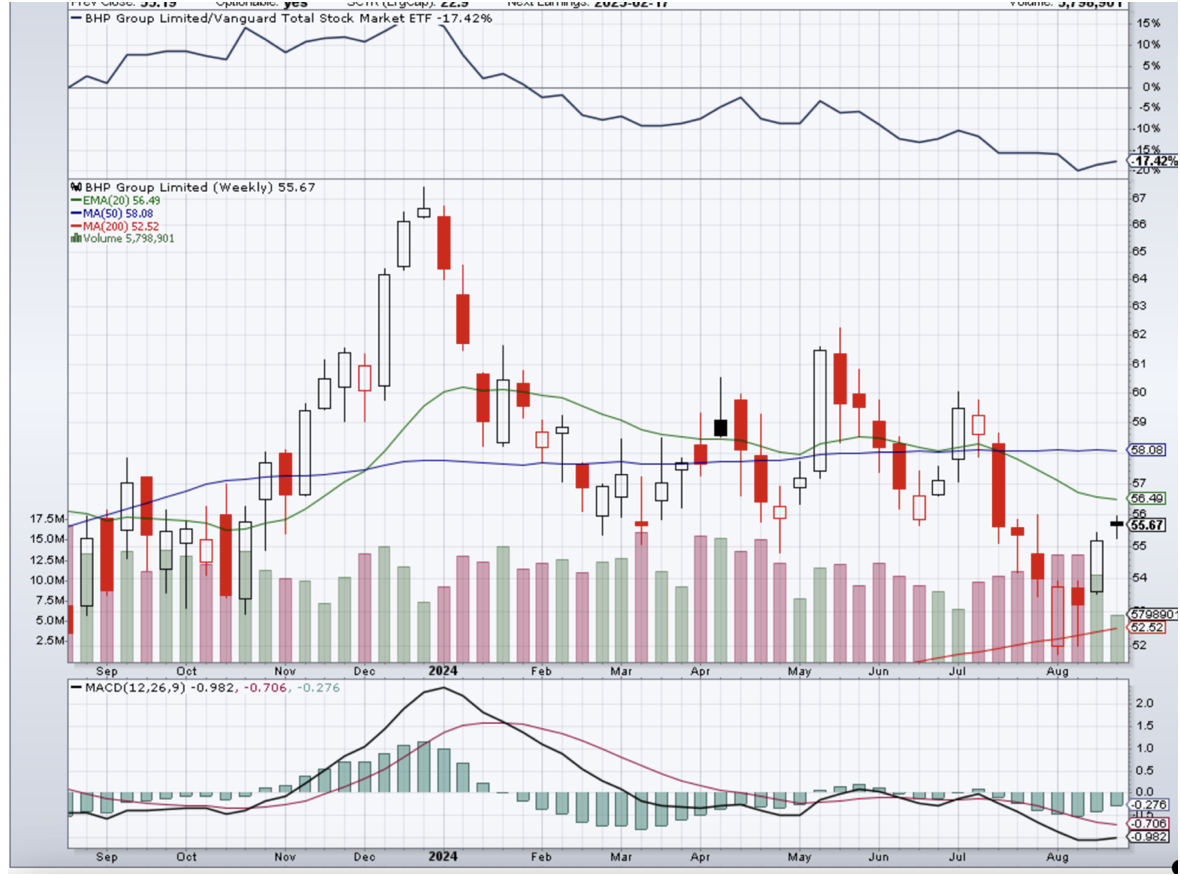
BHP WEEKLY CHART
QI CORNER


SOMETHING TO THINK ABOUT
Identity Theft is on the Rise

To protect your data, experts say freezing your credit should be a priority.
“Freezing your credit is the single most important thing you can do when you get a data breach notice,” James E. Lee, chief operating officer at the Identity Theft Resource Centre, a nonprofit working to minimize the risk of identity theft.
Freezing your credit is free and takes just minutes.
A credit freeze will limit access to your credit report and prevent the opening of new accounts in your name, either by you or other parties.
A credit freeze will last until you remove it.
To freeze your credit, you need to complete the process at all three major credit reporting agencies – Equifax, Experian, and TransUnion. Set up free online accounts with each agency. You can request a freeze by phone, mail, or online.
Monitor your free credit report to check the latest activity.
Other tips to keep your personal data secure.
Use complex and unique passwords for each website.
Use two-factor authentication or encryption.
Remove personal information on social media that can be used by identity thieves.
Set up alerts on accounts which will keep you up to date on the latest activity.

Cheers,
Jacquie

When John identifies a strategic exit point, he will send you an alert with specific trade information as to what security to sell, when to sell it, and at what price. Most often, it will be to TAKE PROFITS, but, on rare occasions, it will be to exercise a STOP LOSS at a predetermined price to adhere to strict risk management discipline. Read more
Global Market Comments
August 28, 2024
Fiat Lux
Featured Trade:
(THE GOVERNMENT’S WAR ON MONEY)
(TESTIMONIAL)