Global Market Comments
March 14, 2024
Fiat Lux
Featured Trade:
(The Mad MARCH traders & Investors Summit is ON!)
(TRADING FOR THE NON-TRADER),
(ROM), (UXI), (UCC), (UYG)


Global Market Comments
March 14, 2024
Fiat Lux
Featured Trade:
(The Mad MARCH traders & Investors Summit is ON!)
(TRADING FOR THE NON-TRADER),
(ROM), (UXI), (UCC), (UYG)

The Fed has stopped raising interest rates, inflation is falling, and tech stocks are on fire!
What should you do about it?
Attend the Mad Hedge Traders & Investors Summit from March 12-14. Learn from 28 of the best professionals in the market with decades of experience and the track records to prove it.
Every strategy and asset class will be covered, including stocks, bonds, foreign exchange, precious metals, commodities, energy, and real estate.
Get the tools to build an outstanding performance for your own portfolio.
Best of all, by signing up you will automatically have a chance to win up to $100,000 in prizes.
Usually, access to an exclusive conference like this costs thousands of dollars. You can attend for free!
Listening to this webinar will change your life! To register, please click here.


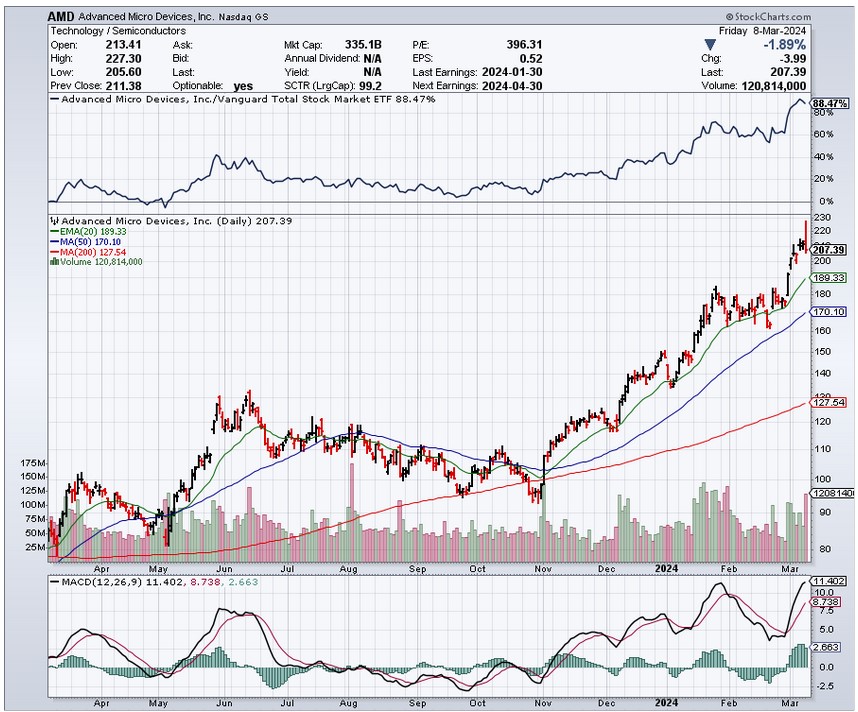
(AMD), (NVDA), (MSFT), (META)
Let me lay it out straight – the AI game is getting hotter by the minute, and while NVIDIA (NVDA) has been hogging the limelight with its fancy AI chips, Advanced Micro Devices (AMD) is quietly sneaking up with a strategy that might just give it a leg up. It's like the tortoise and the hare, but with an AI twist.
AMD has this new AI silicon, the MI300X, and while it's chalking up sales, the real cherry on top is its ROCm software platform. After all, it's not just about having the shiniest chip on the block; it’s the brains behind it that count.
Now, I've heard some folks whispering that AMD might be lagging in this race, especially when you stack it up against Nvidia’s CUDA software stronghold.
But, AMD’s last earnings call threw a curveball that’s got me tipping my hat to them. They’re not just in the game; they’re looking to shake things up with their "Instinct" AI accelerators and their software game.
Here’s why AMD might just be the dark horse in the AI derby.
First, it might be helpful to think of Nvidia and AMD’s head-to-head as the battle of the software: closed vs open source.
Think of Nvidia’s CUDA as the Fort Knox of software – closed, secure, and the gold standard for optimizing GPU performance. It’s been around the block, setting the pace since 2006.
Then, suddenly, here comes AMD, swaggering in with its ROCm software platform, and flipping the script by making it open source. They’re basically throwing open the doors and inviting every coder in the land to tinker with it.
This is a bold move from AMD, with the company aiming to democratize the space and maybe, just maybe, outmaneuver Nvidia’s grip on the market.
And what’s AMD’s ace? They’re betting big on avoiding that dreaded "vendor lock-in" – you know, when you’re so tied to one company’s tech that you can't so much as sneeze without asking their permission.
By making ROCm open source, AMD is playing the long game, aiming to win over those who value flexibility and hate being backed into a corner.
Now, let’s take a look at how generative AI is involved in AMD’s open-source gambit.
Reviewing their strategy, it’s clear that AMD’s not just throwing darts in the dark here. They’ve got their sights set on generative AI, and their open-source ROCm is the weapon of choice.
It seems as if AMD is building a playground and inviting all the cool kids (developers) to come play.
In fact, AMD’s vision has been manifested by Microsoft (MSFT) getting GPT-4 up and running on MI300X faster than you can say "AI revolution."
It also has partnerships with Hugging Face, one of the fastest-growing machine learning org, to get a slew of AI models running smoothly on AMD GPUs.
Even Meta’s (META) throwing its weight behind AMD’s MI300X.
The message is clear: AMD’s not just selling chips; they’re building ecosystems.
But before you start counting your chickens, remember that the tech world is fickle, and AMD’s strategy, while slick, isn’t without its hurdles.
NVIDIA’s not sitting on its laurels; its CUDA platform is a behemoth, with a developer community that’s growing faster than a weed in the spring.
And let's not forget the DIY crowd – big data center operators like Microsoft Azure who prefer rolling out their own chips and software.
AMD’s got its work cut out, but if they play their cards right, they could carve out a nice piece of the AI pie for themselves.
In the cutthroat tech world, AMD’s making a play that’s as bold as it is smart. By betting on open source and targeting generative AI, they’re not just aiming to catch up; they’re looking to set the pace.
Sure, the road’s going to be bumpy, and NVIDIA’s not exactly going to roll out the red carpet for them, but AMD’s strategy has got a certain flair that’s hard to ignore. So, here’s my two cents: Keep an eye on AMD. They might just surprise us all.
Mad Hedge Technology Letter
March 13, 2024
Fiat Lux
Featured Trade:
(COGNITION AI IS THE TALK OF THE TOWN)
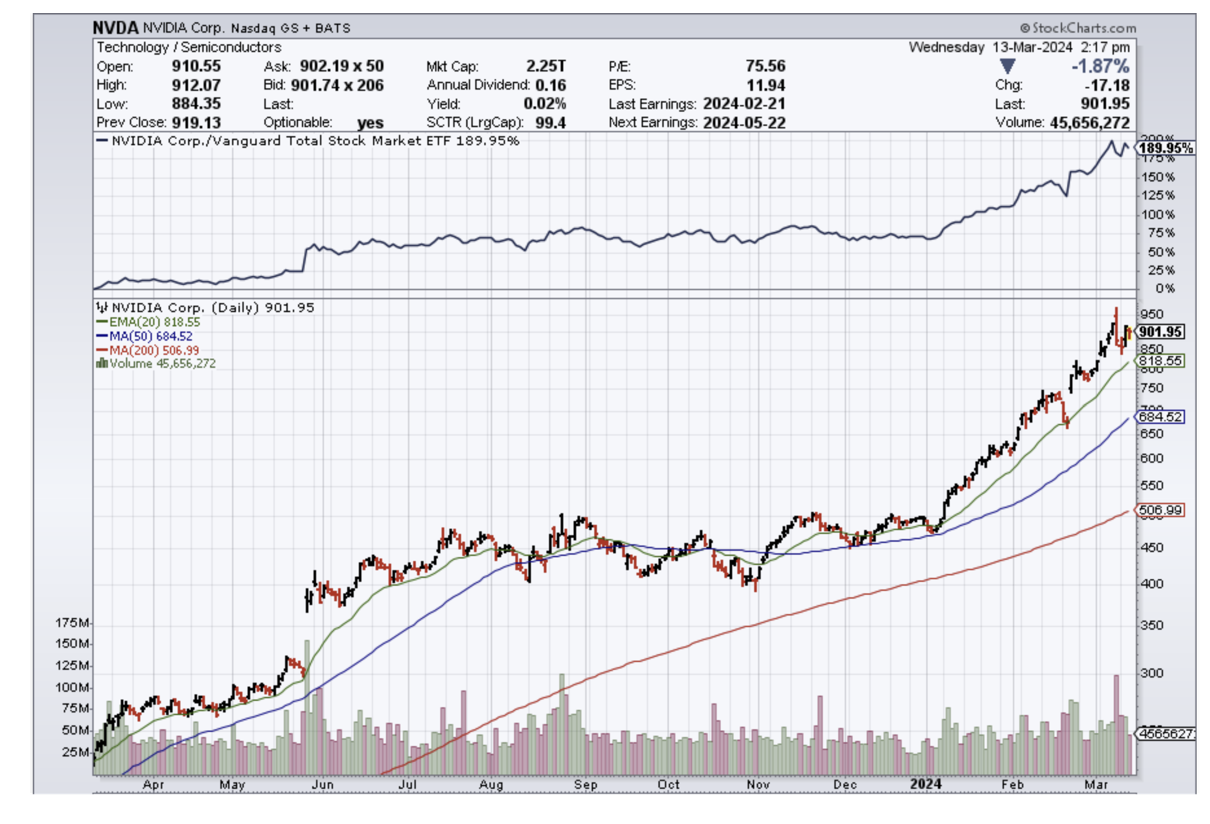
(AI), (NVDA)

The AI war is heating up thanks to the new kid on the block Cognition AI.
They have certainly one-upped the competition.
Cognition AI’s team has a new type of technology called Devin.
Devin is a software development assistant in the vein of Copilot, which was built by GitHub, Microsoft, and OpenAI, but, like, a next-level software development assistant.
Instead of just offering coding suggestions and auto-completing some tasks, Devin can take on and finish an entire software project on its own.
The technology can even create websites within seconds. No coder will ever be able to compete with this.
As it works, Devin shows all the tasks it’s performing and finds and fixes bugs on its own as it tests the code being written.
The founders of Cognition AI are Scott Wu, its chief executive officer; Steven Hao, the chief technology officer; and Walden Yan, the chief product officer.
One of the big breakthroughs claims they can force a computer to reason with stunning efficiency.
Reasoning in AI-speak means that a system can go beyond predicting the next word in a sentence or the next snippet in a line of code, toward something more akin to thinking and rationalizing its way around problems.
It’s possible to give Devin jobs to do with natural language commands, and it will set off and accomplish them.
As Devin works, it tells you about its plan and then displays the commands and code it’s using. If something doesn’t look quite right, you can give the AI a prompt to go fix the issue, and Devin will incorporate the feedback midstream.
Most current AI systems go haywire soon after it veers away from the script. Off-schedule variables usually are hard for current AI to stomach.
What does this mean for the tech sector and the future of work?
A naïve person would say this will free developers from the drudgery of mundane tasks and let them focus on more creative jobs.
However, the smart crowd understands this will be a great excuse to cut staffing costs to the bone.
This will allow many non-coders to join in the game and totally bypass going through software developers who more often than not lack common sense.
Remember when the Chinese consumer went from cash to paying with QR codes via smartphones, they skipped over the credit card and America is still stuck on the plastic card.
People will be able to create 1-man tech companies and do the job of 100 people in no time.
This certainly is a winner-takes-all scenario and the mid-term future is quite bleak for software developers.
It’s looking highly likely and I would say ironic that the software developers creating AI are about to do a disservice to their colleagues and rid the economy of 99% of software developers.
Of course, AI isn’t that good yet, but the path is being laid and the countdown has been initiated.
With a few years of furious development of high-quality AI, this will usher in a golden age of tech stocks, because they will finally be able to fire most of the staff.
The advancement of AI can guarantee higher tech shares no matter what and many might say stocks like Nvidia are cheap because this trend is still in the early innings.
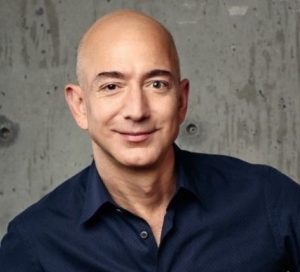
“There are a thousand ways to be smart.” – Said Founder of Amazon Jeff Bezos

(THE AI REVOLUTION IS CHANGING RURAL AMERICAN LANDSCAPES & CREATING BILLION-DOLLAR PARTNERSHIPS)
March 13, 2024
Hello everyone,
Data centres are the new warehouses.
I wrote several weeks ago about REITS and how data centres are featured in that list. Well, they will be popping up in rural America in big numbers in the future in response to the growing interest in AI.
Prologis, the $100 billion-plus real estate giant, could invest more than $25 billion into this sector in the coming years. Big tech companies and venture capitalists are pouring billions into generative AI efforts based on its potential to reshape our virtual realities.
The building boom reflects the physical infrastructure required to make that virtual world a possibility. And it’s having very real-world consequences. These data centres are being placed in rural America, which is impacting communities and changing the landscape both socially and culturally and putting added demands on utilities. The story of how this construction boom pans out and how it affects communities across America is ever-changing.
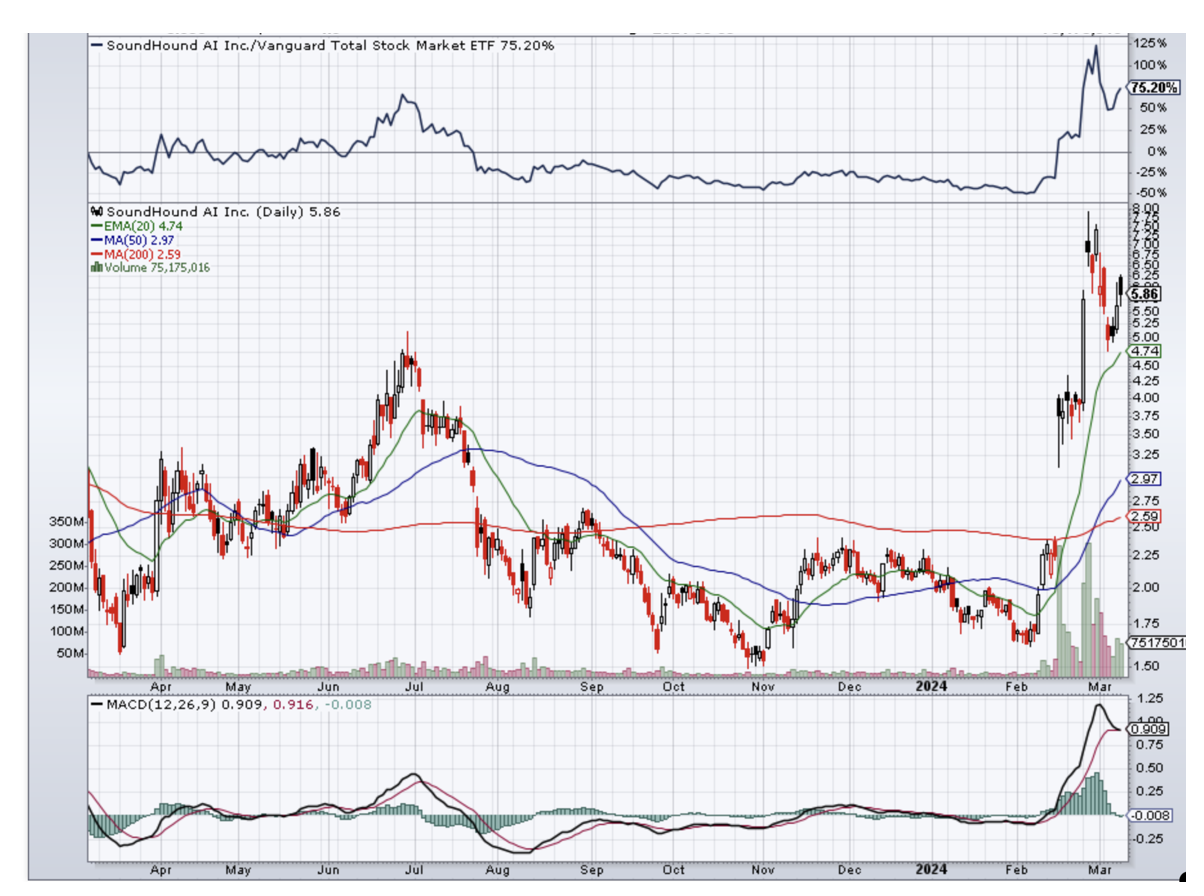
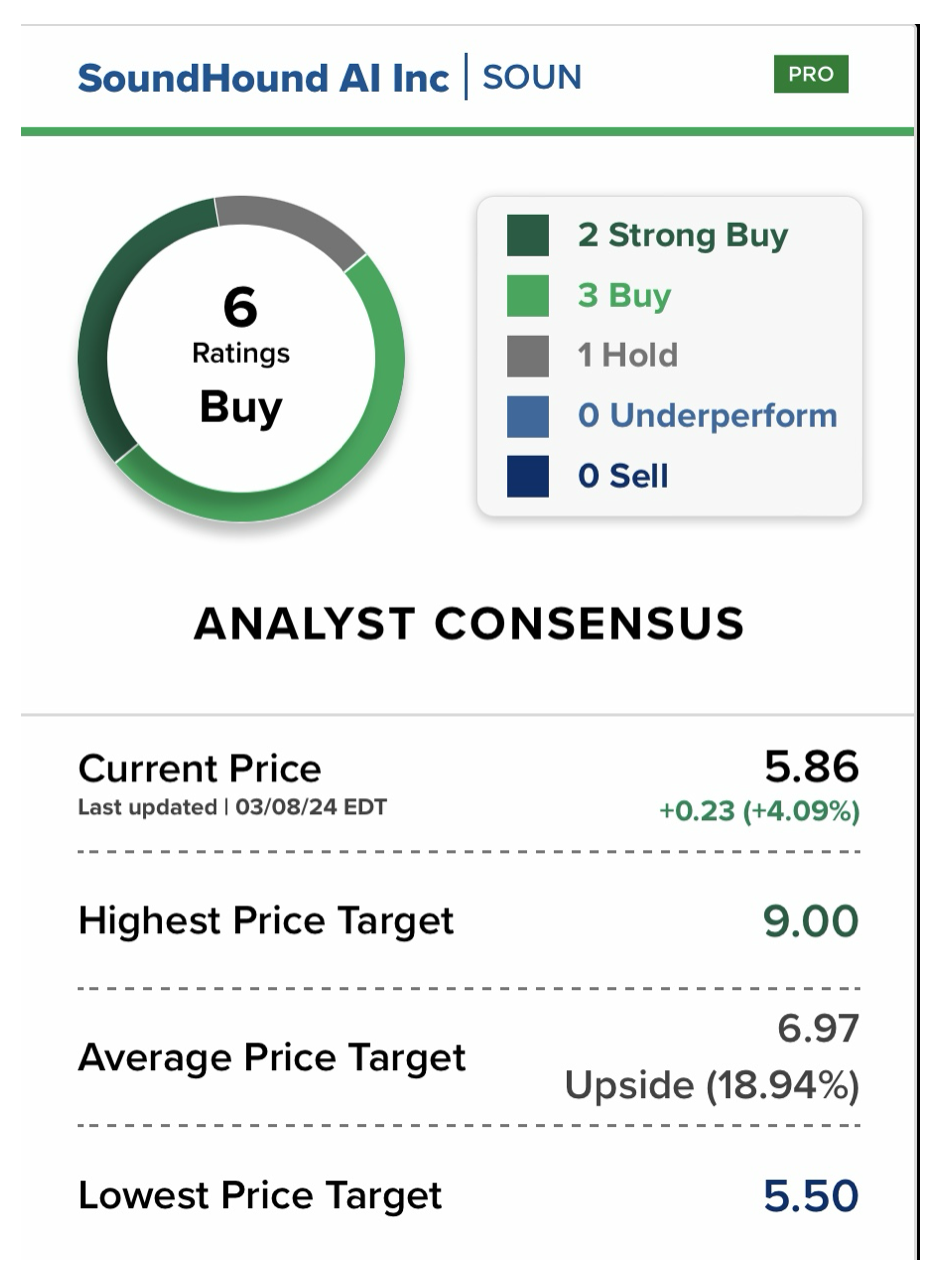
An AI stock that is gaining traction – SoundHoundAI (SOUN)
This artificial intelligence voice-and-speech stock has surged almost 170% this year and nearly 340% in February alone as investors bet on new applications for the booming technology trend that has taken Wall Street by storm. Last month, Nvidia (NVDA) revealed a $3.7 million bet on the stock in a securities filing, and management said on an earnings call that “demand is going through the roof.”
According to analysts, this stock is in a great position to capture the AI chatbot market demand wave with its technology providing more use cases going forward. Nvidia’s investment reinforces SoundHound’s value proposition and solidifies the company’s brand within the AI Revolution. Furthermore, it lays the foundation for a potential larger investment in the future.
The company sits at a roughly $1.7 billion market capitalization and has yet to attain profitability.
Nvidia is not the only notable partner in SoundHound’s world. It has been in the process of expanding its market by setting up partnerships with popular restaurant brands, automakers, and hospitality companies to provide AI voice customer solutions.
Voice-enabled units in the automobile sector are expected to grow to 70% of shipments by 2026, which represents a significant opportunity.
Analysts note that SoundHound has also made important headway within the restaurant industry, recently adding White Castle, Krispy Kreme, and Jersey Mike’s to its growing list of customers.
SoundHound’s expansion into other companies should continue to grow as major players such as McDonald’s, DoorDash, and Wendy’s hunt for ways to expand AI voice use. We could see an $11 billion market when we factor in immediate opportunities from quick-service restaurants and original equipment manufacturers.
In short, the future looks bright for SoundHoundAI.
But there could be some bumps in the road on the way to profitability. Uncertainty is often the case in the early stages of product adoption in relation to the pace of revenue growth and profitability.
But analysts believe that longer-term financial and operating benefits will outweigh profitability headwinds. The general recommendation is to continue accumulating SOUN shares ahead of stronger operating results.

Cheers,
Jacquie
Global Market Comments
March 13, 2024
Fiat Lux
Featured Trade:
(The Mad MARCH traders & Investors Summit is ON!)
(HOW TO BUY A SOLAR SYSTEM),
(SPWR), (TSLA)

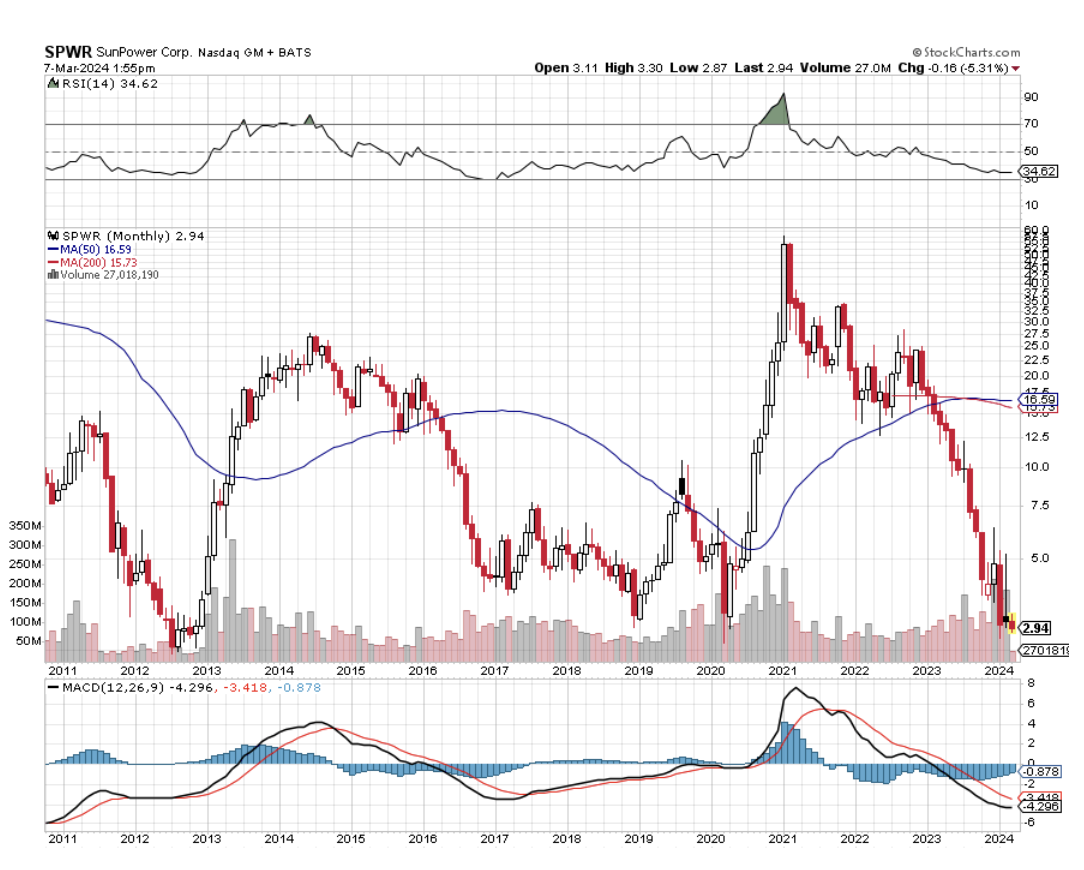
With California having cut the amount that PG&E has to pay for third-party home-generated solar energy by 75% this year, the price of solar panels has crashed. That’s why SunPower (SPWR) shares have just cratered from $50 to $3.
As a result, deals of the century are being offered almost everywhere in the US. This is fortuitous as the price of public utility-generated electricity is rocketing everywhere by up to 15% a year.
It’s just a question of how long it takes Moore’s law-type efficiencies to reach exponential growth in the solar industry.
Solar electricity accounts for 4.75% of total US power generation, up from 3.96% in 2022, and compared to 27.3% in California. That means we are only five doublings away from 100% when energy essentially becomes free.
The next question beyond the immediate trading implications is, “What’s in it for you?”
I should caution you that after listening to more than 20 pitches, almost all of the information you get from fly-by-night solar installation salesmen is inaccurate. Most don’t know the difference when it comes to a watt, an ohm, or a volt.
I think they were mostly psychology or philosophy majors if they went to college at all.
The promised 25-year guarantees are only as good as long as the firms stay in business, which for many poorly run operations will not be long.
Talking to these guys reminded me of the aluminum siding salesman of yore. It was all high pressure, exaggerated benefits, and relentless emailing.
I come to this issue with some qualifications of my own, as I have been designing and building my own solar systems for the past 60 years.
During the early 1960s, when solar cells first became available to the public through Radio Shack (RIP), I used to create my own simple sun-powered devices from scratch. But when I measured the output, I would cry, finding barely enough power to illuminate a flashlight bulb.
We have come a long way since then. For years, I watched my organic bean-sprout-eating, Birkenstock-wearing neighbors install expensive, inefficient arrays because it was good for the environment, politically correct, and saved the whales.
However, when I worked out the breakeven point compared to conventional power sources, it stretched out into decades. So, I held off.
It wasn’t until 2015 when solar price/performance hit the breakeven sweet spot acceptable for me, about six years. I actually earned my money back in only four years, thanks to PG&E’s rapid price increases. Thanks to global warming my solar system is also becoming more efficient, not less. Why, I can’t imagine although higher heat might be bringing greater output.
Then I launched into overdrive, attempting to get the best value for money and game the many financing alternatives.
The numbers are now so compelling, that even a number-crunching, blue state-hating Texas oilman should be installing silicon on his roof.
A lot are.
My effort was the father of the many solar research pieces and profitable Trade Alerts you have received since.
Here are my conclusions up front: Learn about “tier shaving” from your local utility, and buy, don’t lease. All electrical utility plans are local.
First, about the former.
Every utility has a tiered system of charging customers on a prorated basis. A minimal amount of power for a low-income family of four living in a home with less than 1,500 square feet, about 20% of the U.S. population, costs about 10 cents a kilowatt hour.
This is a function of the high level of public power utility regulation in the U.S., where companies are granted local monopolies. There are a lot of trade-offs, local politics, and quid pro quos that are involved in setting electric power rates.
My local supplier, PG&E (PGE) has five graduated billing tiers, with the top rate at 55 cents a kWh for mansion-dwelling energy hogs like me (one Tesla in the garage and a Cybertruck on the way).
In order to minimize your up-front capital cost, you want to buy all the power you can at the poor person rate, and then eliminate the top four tiers entirely. Do this, and you can cut the cost of your new solar system by half.
Your solar provider will ask for your recent power bills and will help you design a system of the right size.
Warning! They will try to sell you more than you need. After all, they are in the solar panel-selling business, not the customer-value-for-money delivery business.
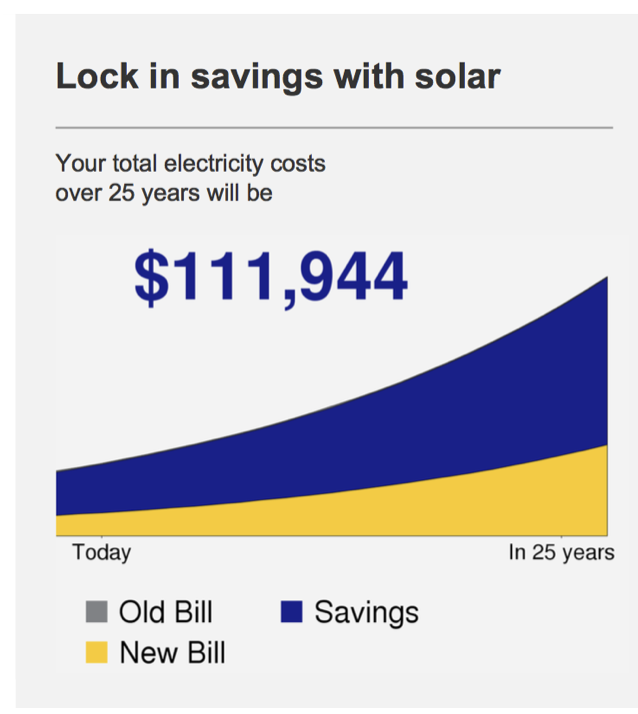
On the other hand, if you are a scientist or engineer, you can simply calculate these figures yourself. In my case, I use 18,000 kWh a year, but by installing only a 9,000 kWh/year system, my monthly power bill dropped from $500 to $50 a month.
This system cost me $32,000, or $22,400 net of the 30% alternative energy investment tax credit, giving me a breakeven point of four years and eight months.
Don’t focus too much on the panels themselves, as they are only 25% of a system’s costs. The big installers constantly play a myriad of panel manufacturers off against each other to get the cheapest bulk supplies.
The majority of the expense is for labor, the inverter needed to convert DC solar power to AC wall plug power, and permitting.
As for me, Mr. First Class All the Way, I specified only 19 of the best American-made, most efficient 335 kWh SunPower (SPWR) panels.
If I had settled for lower-cost 250 kWh imported panels and just bought more of them, I would have saved a few thousand bucks. That’s fine if you have the roof space.
One other frill I ordered was a top-of-the-line SunPower SPR-6000m inverter, which includes two 110-volt AC outlets. Many solar systems won’t work without access to the grid to run the inverter and software.
This will enable me to operate independently of the grid in case it is knocked out by an earthquake or storm, and power a few select appliances, such as my refrigerator, cell phones, laptop, and, of course, my car.
Once you get your connection notice from your utility, you enter electricity Nirvana, selling power at a premium during the day, and buying it back at a discount at night.
You are, in effect, using the grid as a giant storage device, or battery.
You can then log into your account online and measure how much your solar panels are generating in San Francisco, even from places as remote as Africa, as I did last summer.
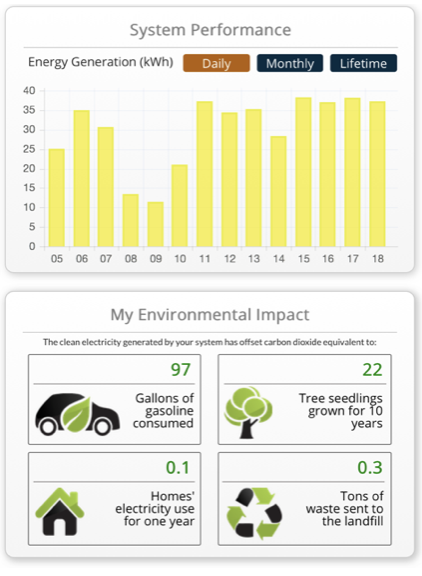
My statement is posted below, showing my roof is happily generating about 38 kW a day, or one full Tesla 100kW battery recharge every 2 1/2 days.
Since my system is in California, it also expresses the solar energy produced in terms of gallons of gasoline equivalent, tree seedlings grown over 10 years, an average home’s power consumption for one year, or the number of tons of waste sent to a landfill.
Call this “feel good” with a turbocharger.
At the end of every 12 months, the utility will then perform a “true up” calculation. If you produce more power than you used, the utility owes you a check.
Buzzkill warning!
PG&E has to pay me only its lowest marginal cost of power, or 4 cents/kWh for the excess power I produce. That is why it pays to underbuild your system, which for me costs $2.49/kWh to install, net of the tax credit.
This was the quid pro quo that enabled PG&E to agree to the whole plan in the first place. So, you won’t get rich off your solar system.
I am now protected against any price increase for electricity for the next 25 years!
PG&E has already notified me of back-to-back 7.5% annual rate increases for the next two years to pay for the replacement of their aging, dilapidated infrastructure, a problem that is occurring nationally.
Oh, and my $32,000 investment has increased the value of my home by $64,000, according to my real estate friend.
Now for the lease or buy question. If you don’t have $32,000 for a solar installation, (or $16,000 for a normal size house with no Tesla’s), or you want to preserve your capital for your trading account, you may want to lease from a company such as Solar City.
The company will design and install an entire system for you for no money down and lease it to you for 20 years. But after your monthly lease payment, Solar City will end up keeping half the benefit, and raise your cost of electricity annually.
In my case, my monthly power bill will have dropped from $450 to $250. And you don’t get any 30% investment tax credit. However, this is still cheaper than continuing to buy conventional power.
So if you can possibly afford it, buy, don’t rent.
This being Silicon Valley, niche custom financing firms have emerged to let you have your cake and eat it, too.
Dividend Solar (click here for their site) will lend you the money to buy your entire system yourself, thus qualifying you for the investment tax credit.
As long as you use the tax credit to repay 30% of your loan principal within 15 months, the interest rate stays at 6.49% for the 20-year life of the loan. Otherwise, the interest rate then rises to a credit card like 9.99%. A FICO score of only 690 gets you in the door.
There are a few provisos to add.
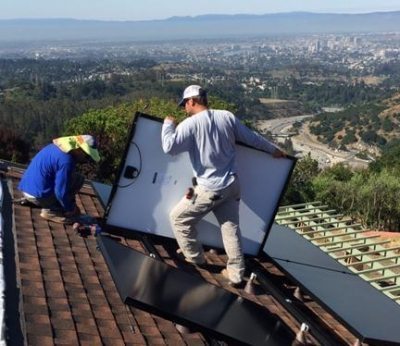
You can’t install solar panels on clay or mission tile roofs popular in the U.S. Southwest (where the sun is), or tar and gravel roofs, as the breakage or fire risk is too great. The racks that hold the panels down in hurricane-force winds simply won’t fit.
If you want to maintain your aesthetics, you can take the mission tiles off, install a simple composite shingle roof, bolt your solar panels on top, and then put back the clay tiles back around the edges. That way it still looks like you have a mission tile roof.
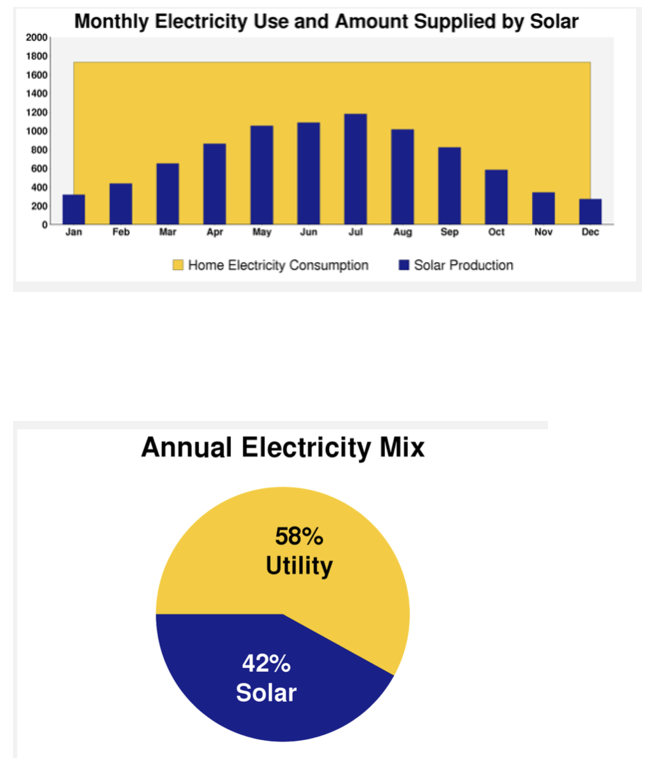
Also, it is best to install your system in the run-up to the summer solstice, when the days are longest and the sunshine brightest. Solar systems produce 400% more power on the longest day of the year compared to the shortest, because of the lower angle of the sun’s rays hitting the Northern Hemisphere.
Tesla (TSLA) has added a whole new chapter to the solar story.
It offers the PowerWall, a 13.5 kW home storage battery that will cost up to $7,000 (click here for “The Solar Missing Link is Here!”)
The development is made possible by the enormous economies of scale for battery manufacturing made possible by the new Gigafactory near Reno, Nevada.
The Gigafactory will double world lithium-ion battery capacity in one shot. Plans for a second Gigafactory are already in the works.
This will permit homeowners to use their solar panels to charge batteries during the day, and then run off them at night, making them fully energy-independent.
Yes, a total American solar energy supply in 15 years sounds outrageous, insane, and even ludicrous (to use some of Elon Musk’s favorite words).
But, so did the idea of a 3-gigahertz laptop microprocessor for a mere $1,000 24 years ago, when Moore’s law first applied.
The graphics for my own solar power supply are below:
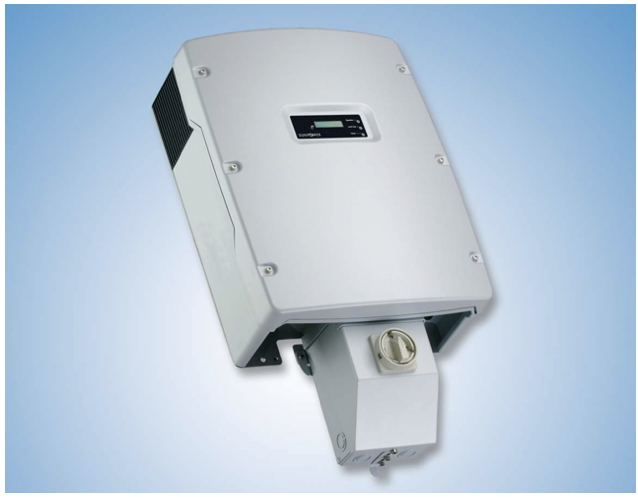
SunPower SPR-6000m

“Green technology is one of the best investment opportunities we’ve ever seen. We are used to seeing billion-dollar market opportunities. Here we’re seeing a trillion dollar opportunity,” said venture capitalist Steve Jurvetson.