Global Market Comments
September 12, 2023
Fiat Lux
Featured Trade:
(THE GREAT AMERICAN ONSHORING TREND IS ACCELERATING),
(GE), (TSLA),
(MURRAY SAYLE: THE PASSING OF A GIANT IN JOURNALISM)
(THE LAST PEARL HARBOR ARIZONA SURVIVOR)


Global Market Comments
September 12, 2023
Fiat Lux
Featured Trade:
(THE GREAT AMERICAN ONSHORING TREND IS ACCELERATING),
(GE), (TSLA),
(MURRAY SAYLE: THE PASSING OF A GIANT IN JOURNALISM)
(THE LAST PEARL HARBOR ARIZONA SURVIVOR)
Onshoring, the return of US manufacturing from abroad, is rapidly gathering pace.
It is increasingly playing a crucial part in the unfolding American industrial renaissance. It could well develop into the most important new trend on the global economic scene during the early 21st century. It is also paving the way for a return of the roaring twenties to our home shores.
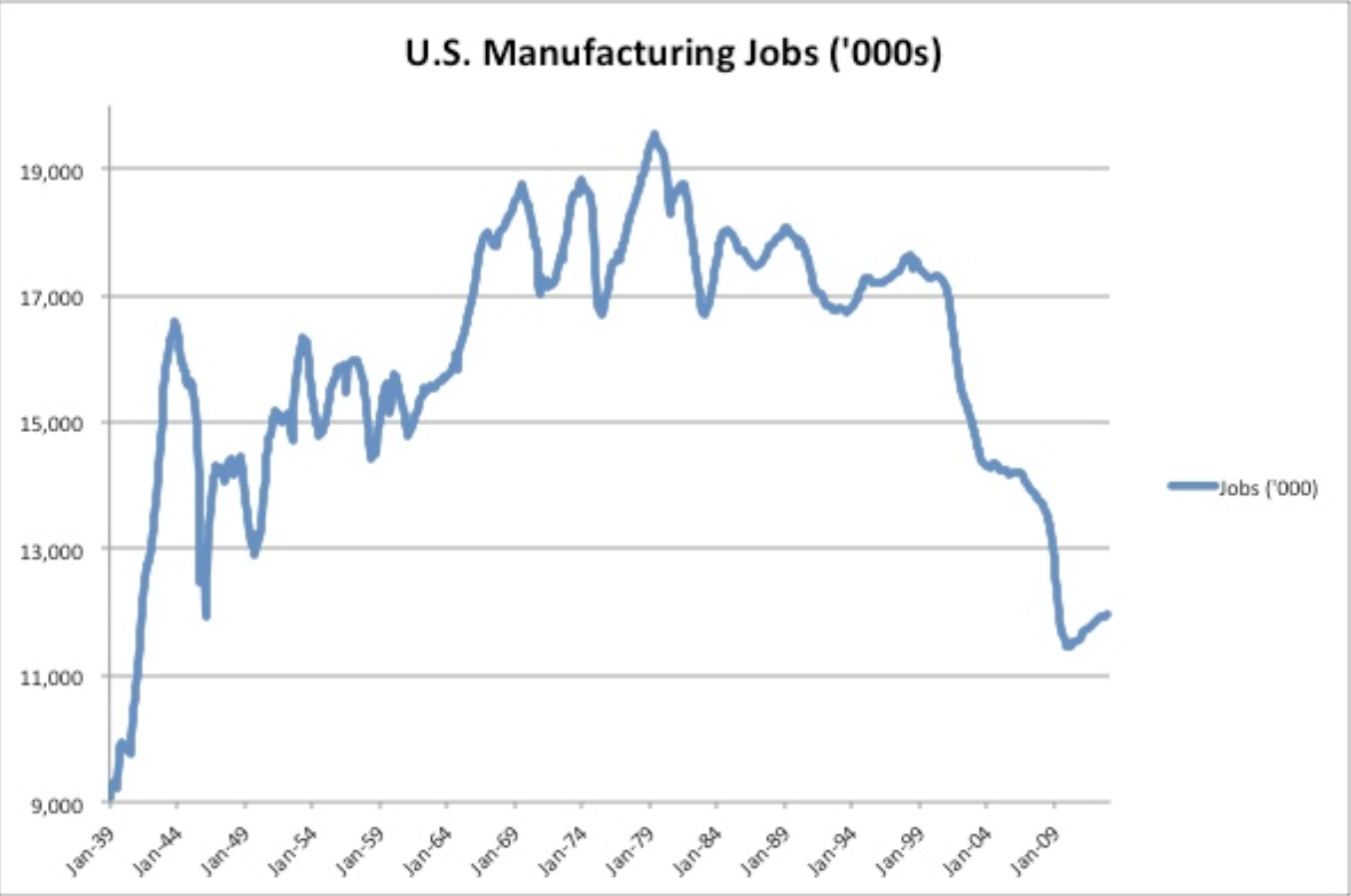
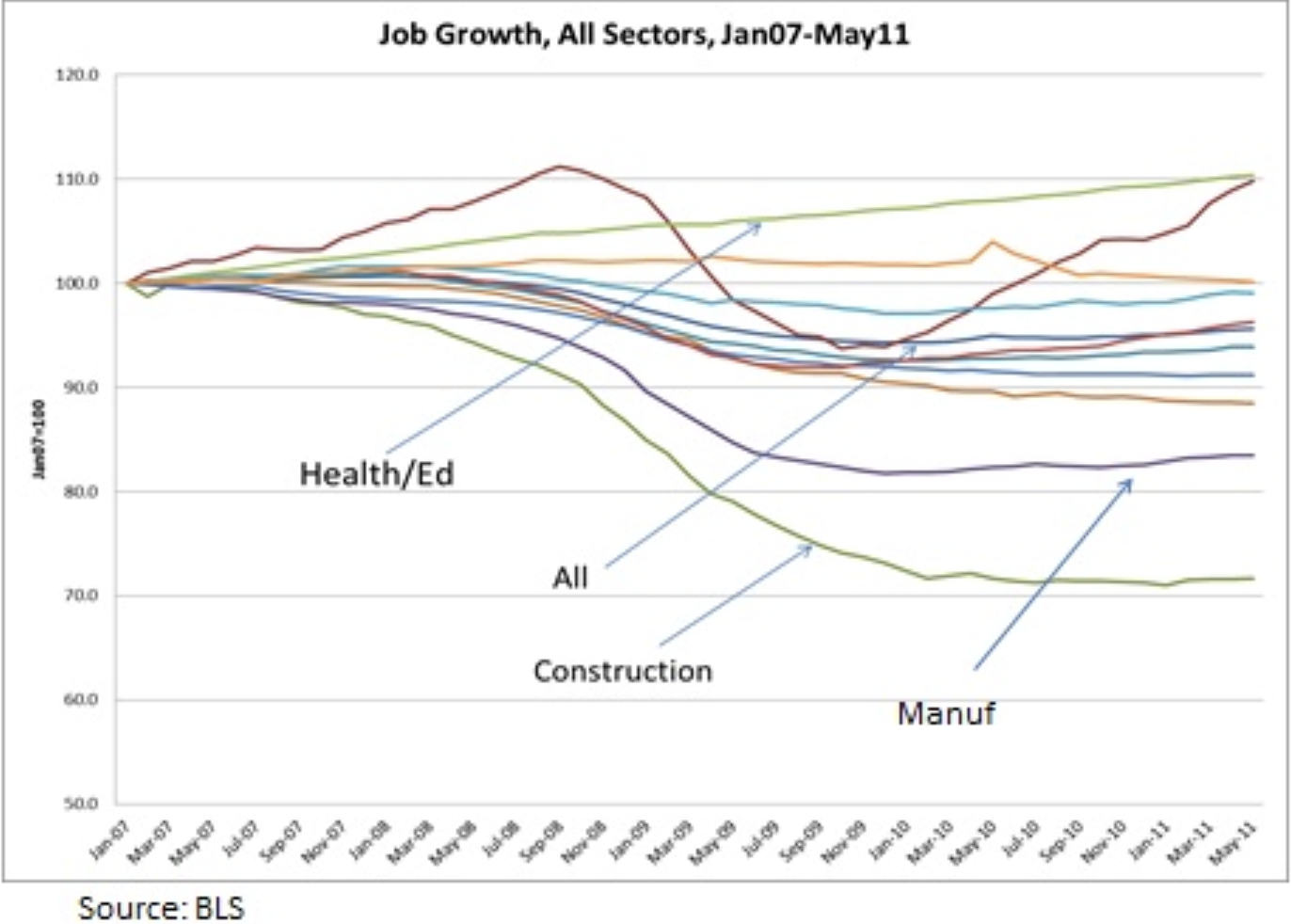
Of course, it is hard to quantify this assumption with hard data. US government statistics are a deep lagging indicator and are unable to keep up with a rapidly changing, interconnected, fluid world. No doubt, they will tell us this epoch-making sea change is underway in ten years.
However, it is possible to track what a single company is accomplishing. In 1973, General Electric (GE) ran the largest home appliance manufacturing facility in the world. Its Appliance Park in Louisville, Kentucky, employed 23,000 workers packed into six gigantic buildings, each as large as a shopping mall. It was so big, it even earned its own postal zip code (40225).
After that, the offshoring mania kicked in, with the firm motivated by a single factor: hourly wages. You could hire 30 men in China for the cost of one American union worker. The savings were too compelling to pass up, and The Great Hollowing Out of US manufacturing was off to the races.
GE tried to sell the entire operation but was too late. The 2008 financial crisis decimated the market for Midwest industrial facilities. You could only get the scrap metal value, or three cents on the dollar. By 2011 employment at Appliance Park had plunged to 1,863, and the region’s new “Rust Belt” sobriquet was well earned.
Then, almost imperceptibly at first, the trend started to reverse. Decades of 20% a year wage increases took the cost of a skilled Chinese worker from $300 a year to $25,000. The 2011 Japanese tsunami, followed by huge floods in Thailand, caused massive disruptions to the international parts supply network.
A minor strike by the Longshoreman’s Union at the Port of Oakland in California brought the distribution channel to a grinding halt. Business plans that looked great on an Excel spreadsheet turned out to be not so hot in practice.
It gets worse. When Chinese workers walked across the street to collect bigger pay packages, they often took blueprints, business plans, and proprietary software with them. Six months later, a local competitor would show up with a similar, although inferior, product at half the cost. Suddenly, globalization was not all it was cracked up to be.
In the meantime, the American labor force, reading the Chinese characters on the wall, evolved. Unions were disbanded. Antiquated work rules were tossed. The unions that were left agreed to two tier wage structures that had entry level employees coming in at $13.50 an hour, a fraction of the original rate.
Then management got smarter. By removing the assembly line from the marketplace, companies lost touch with customers. Designers lost contact with the manufacturing process, creating products that could only be built expensively, or not at all. Quality plummeted. Innovation suffered. By bringing manufacturing home, firms not only solved these problems, they were able to build better ones for less money.
China turned out to be farther away than people thought. Having middle management jet lagged up to three months a year proved to be very expensive. It takes six weeks to ship an appliance from the Middle Kingdom to the US if the shipping schedules are perfect.
An American plant can truck product to most US stores within two days. That wasn’t a problem when consumer products saw lives that ran into decades. It is a big deal when rapidly accelerating technological improvements require them to be turned over every three years or less, as they are today.
The energy picture is undercutting the arithmetic that used to justify offshoring. Oil prices levitating near $100 a barrel are up 400% in 14 years, elevating the cost of production in Asia and shipments to the US. In the US, the fracking boom has let lose a gusher of cheap oil. It has also freed up a few centuries worth of low carbon burning natural gas, giving American manufacturers a further cost advantage.
Better American management techniques are giving US based factories an edge. I saw this up close at the Tesla (TSLA) factory in Fremont, California, where workers have the ability to improve the assembly process daily and are incented to do so. The place was so clean and quiet, it felt more like a hospital than a factory. It turns out that a drive train with only 11 parts doesn’t require much labor to assemble it, and robots do most of that.
By adopting similar techniques, GE, is building the same number of appliances as it did during the 1960’s peak, about 250,000 a year, with one third of the employees.
Using the new thinking, many companies are finding out that offshoring was a big mistake in the first place, and are bringing production home. Some business analysts estimate that up to a quarter of the companies that offshored lost money doing it.
The fact that GE is onshoring is important. It is considered by many to be the best-run industrial company in the United States, and when it leads, many follow. On the heels of the GE move, Whirlpool has relocated its mixer assembly from China to Ohio, and Otis has brought home elevator making from Mexico.
Even Wham-O has jumped on board, the maker of Frisbees, Slinkies, and Hula Hoops, and a company that is dear to my heart (I dated the founder’s daughter in high school), moving production from the Middle Kingdom back to Southern California.
If I am right, and onshoring speeds up into the next decade, we may get another opportunity to relive the roaring twenties. By then, a shortage of workers will lead to higher wages, greater consumer spending, and rising standards of living. The price of everything will rocket, including your stocks and homes. US GDP growth will surge to 4%-5% a year. Inflation will, at long last, make its long-predicted return.
It will be an economy in which Jay Gatsby will feel right at home.

I was saddened to hear of the death of my close friend, the Australian, Murray Sayle, after a long battle with Parkinson's disease at the age of 84.
Murray was one of the giants of journalism in the second half of the 20th century. He started by editing the newspaper at University of Sydney, where his incendiary opinions got him expelled from school. It seems there was a problem with his suggestion to erect a statue of Priapus at the administration building honoring the chancellor, but only at the back door.
He moved on to London's Fleet Street in 1952, arriving as a wet behind the ears, but sassy colonial, and landed a job with a small paper named The People. This was when the media was then dominated by giant daily broadsheets. He went on to become the quintessential war correspondent, reporting for the London Times, known in the trade as the “Thunderer”, because the building shook when its giant presses ran.
I first met Murray in 1975 at a Mensa meeting in Tokyo where I was presenting a paper on the chemical structure and properties of tetrahydrocanabinol. Murray was on the hunt for a story, as always. He was cooling off after a decade of dodging bullets, bombs, shrapnel, and napalm covering the war in Vietnam.
Murray once told me that since his writings were often perceived as antiwar, it was a tossup who would shoot him first, the Vietcong or the Americans. Murray told me that the Foreign Correspondents' Club of Japan had one of the best English language libraries in the country, and that he would be happy to sponsor me for membership; thus inadvertently, launching me on a career in journalism.
Murray moved into a converted 19th century silkworm grower's farm house in a small mountain hamlet three hours outside of Tokyo with his wife Jenny, his tireless and loyal supporter. There, they raised three children who went through the local Japanese school system, soldiering on in their 19th century black German cadet uniforms as the only white kids in the district, emerging as flawless interpreters. I often made the long and arduous trip to Aikawa-cho (“Love River”) on weekends, spending long nights over endless flasks of hot sake listening to Murray drunkenly quote extended passages verbatim from Rudyard Kipling.
We passionately debated the issues of the day until we fell asleep at the kotatsu. If I learned nothing else, it was that there is always another way to look at any issue. As I had the tendency to always turn up with a different Japanese girlfriend, his pet name for me became 'Randy'.
Over a career that spanned nearly 70 years, Murray scored countless interviews with notoriously difficult to reach figures, like Ché Guevara and Yassir Arafat. Murray would regale me with tales of Ugandan dictator 'Big Daddy' Idi Amin, who stored the severed head of his wife's former lover in his refrigerator.
Murray won numerous awards for his Vietnam coverage and for his description of the barbarous downing of a Korean Airlines flight 007 off the coast of Japan by a Russian fighter in 1983, which killed 269 helpless civilians.
Just before he died, the university that shamefully ejected him 65 years earlier, made amends by awarding him an honorary doctorate. The wit, candor, and insight of this larger-than-life figure will be sorely missed.


Happy Birthday to Lou Conter, a Pearl Harbor survivor and the last crew member of the battleship USS Arizona sunk by Japanese bombs at its Hawaii moorings. He is a member of the Incline Village Nevada Veterans Club. My friend Lou is 102. The bombing of the USS Arizona was the deadliest event of the Pearl Harbor attacks, claiming the lives of 1,117 people out of the total of 2,403 casualties. Today the battleship still sits where it sank eight decades ago, with more than 900 dead entombed inside. Lou received a medal for rescuing several of his shipmates, many of whom saw their skin come off in his hands due to severe burns.




“A man who is the master of patience is the master of everything else,” said George Saville, a professional soccer player.

In an era characterized by unprecedented technological advancements, generative artificial intelligence (AI) has emerged as a powerful force reshaping various industries. From creative content generation to conversational chatbots and autonomous vehicles, generative AI systems have demonstrated remarkable potential. However, with great power comes great responsibility, and the Federal Trade Commission (FTC) has recognized the need to focus on generative AI due to its profound implications for consumer protection. In this article, we will delve into the reasons why the FTC is prioritizing generative AI, examining the challenges it poses, the opportunities it offers, and the regulatory frameworks required to ensure a harmonious future.
The Rise of Generative AI
Generative AI refers to systems capable of producing content, such as text, images, videos, or music, without explicit human input. These systems are driven by neural networks, leveraging large datasets to create content that can range from lifelike text passages to stunning visual artwork. Prominent examples of generative AI include OpenAI's GPT-3 and GPT-4 models, which can generate coherent and contextually relevant text based on user prompts.
The growing prominence of generative AI can be attributed to several factors. Firstly, advancements in deep learning techniques have significantly improved the capabilities of neural networks, allowing for more nuanced and context-aware content generation. Secondly, the availability of vast datasets and powerful computing resources has enabled researchers and developers to create increasingly sophisticated generative models. Finally, the commercial potential of generative AI has driven investment and innovation in this field, with applications ranging from content creation to customer service automation.
Challenges in Consumer Protection
As generative AI continues to gain traction, it presents a host of challenges in the realm of consumer protection, prompting the FTC to take action. Here are some key concerns:
The FTC's Motivation for Focusing on Generative AI
Given the challenges posed by generative AI, the FTC has several compelling reasons to prioritize this emerging technology:
Regulating Generative AI: A Balancing Act
Regulating generative AI is a complex endeavor that requires striking a delicate balance between fostering innovation and protecting consumers. The FTC must navigate this terrain carefully to ensure that regulations neither stifle technological progress nor allow for unchecked abuses. Here are some regulatory approaches and considerations:
The FTC can mandate transparency measures for generative AI systems, ensuring that consumers are aware when they are interacting with AI-generated content. Disclosure mechanisms can help build trust.
To mitigate data privacy concerns, the FTC can enforce stringent data protection standards, requiring companies to implement robust security measures and obtain explicit user consent for data usage.
The FTC can encourage developers to actively address bias and discrimination in generative AI models. Auditing and validation processes can help identify and rectify biased content generation.
They can provide guidelines on intellectual property rights in the context of generative AI. This can help content creators and businesses protect their creations and navigate potential infringement issues.
Also, the FTC can collaborate with technology companies to develop AI-driven tools for detecting and preventing generative AI-enabled fraud and scams.
Five Opportunities in Generative AI
While generative AI poses challenges, it also offers numerous opportunities for consumer protection and enhancement. Here are some ways in which generative AI can benefit consumers:
Final Thoughts
Generative AI is a transformative technology that holds immense promise and presents significant challenges. Recognizing its profound impact on consumer protection, the FTC has rightly focused on this emerging field. By addressing issues related to misinformation, privacy, bias, and intellectual property, the FTC aims to create a regulatory framework that promotes responsible and ethical use of generative AI.
As generative AI continues to evolve, it is crucial for regulators, technology companies, and consumers to work together to strike a balance between innovation and protection. The FTC's commitment to understanding and addressing the unique challenges of generative AI signifies its dedication to safeguarding consumer interests in the digital age. In doing so, the FTC can play a pivotal role in shaping the future of generative AI for the benefit of all.
Mad Hedge Technology Letter
September 11, 2023
Fiat Lux
Featured Trade:
(DEATH OF LEGACY MEDIA)
(CHTR), (DIS), (NFLX), (NXST), (DISH)

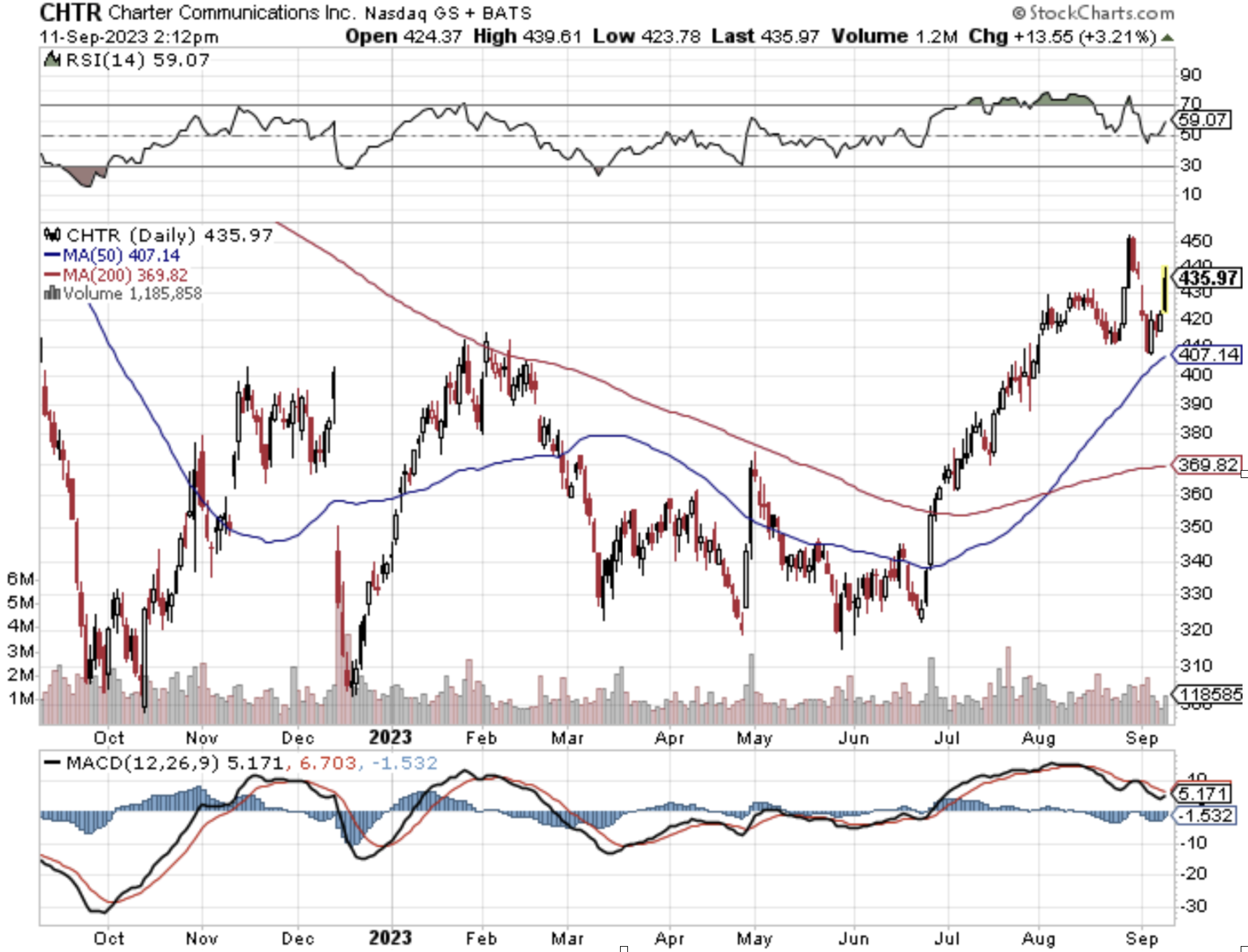
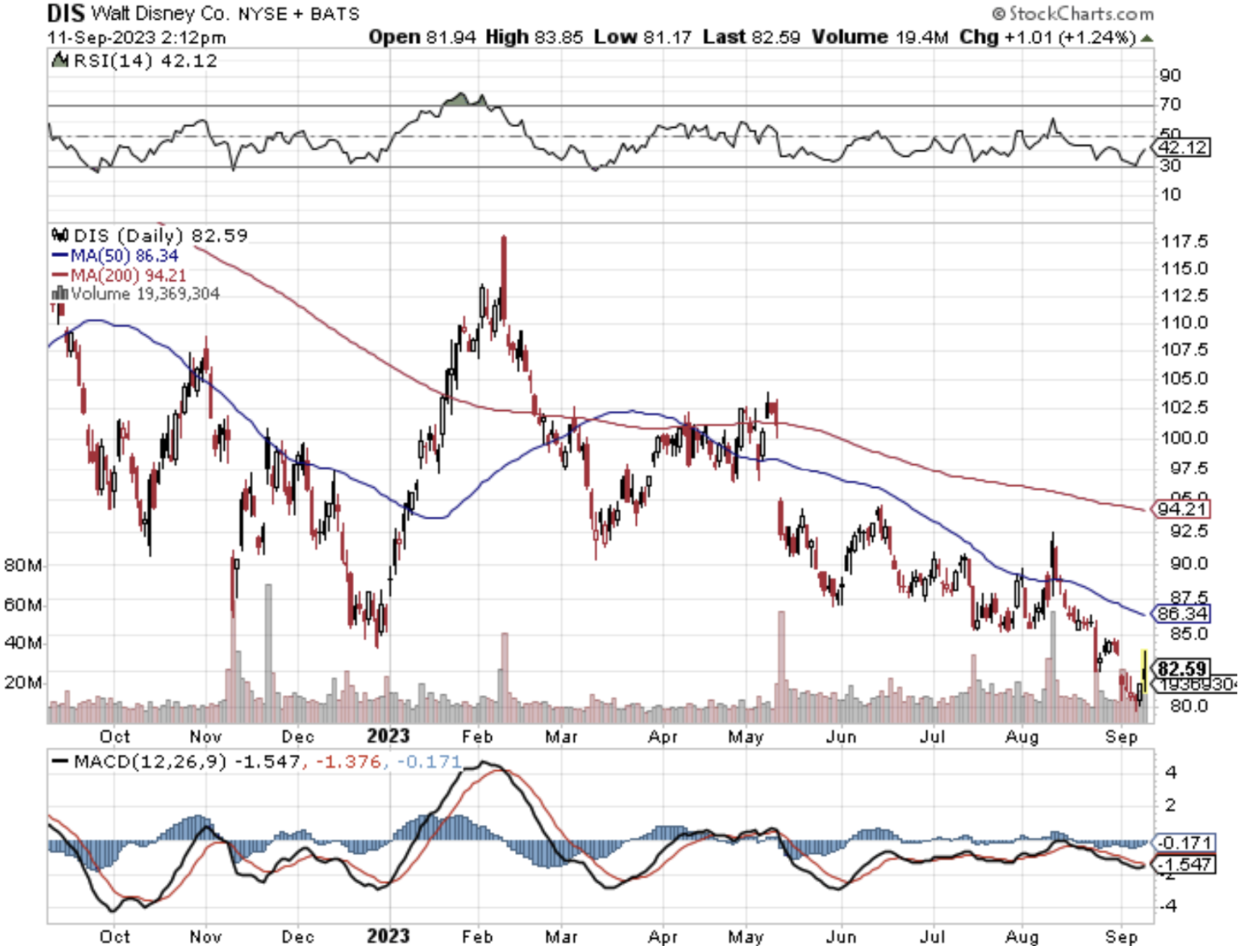
Negotiations between Spectrum’s parent company, Charter Communications (CHTR), and Walt Disney (DIS) finally got over the impasse and they struck a deal.
No deal for both would have been catastrophic for both.
Disney faced the potential loss of 14.7 million Charter pay TV subscribers, or 20% of ESPN's current linear subscriber base of 74 million.
That equates to linear revenue losses of roughly $5 billion, or 6% of overall revenue.
Cord-cutting has been occurring at a brisk pace in the last few years, but the lack of solidarity among the legacy media negotiators appears to turn the trickle into a breaking of the dam.
What am I talking about?
Disney decided to go nuclear by removing its channels from the cable provider. Charter (CHTR) proposed that Disney (DIS) offer its customers free access to Disney’s streaming services, especially ESPN; Disney rebuffed the offer, but CHTR finally agreed to add Disney+ Basic ad-supported offering being provided to Charter customers who purchase the Spectrum TV Select package at no additional cost, "as part of a wholesale arrangement."
This is really the beginning of the end for legacy media and this melee could trigger a swift bout of consolidation as disagreements become the norm and not the outlier.
It’s no surprise the cost of creating content is going up and these channels like DIS feel they can just pass the costs
Remember that many people pay for cable just to watch college football and the NFL.
Roughly 25% of Charter’s clients engage with Disney content, Charter said on a call last week.
DirecTV is also embroiled in its own content squabble with local broadcast network Nexstar (NXST), which recently pulled over 200 stations in more than 100 metro areas from DirecTV’s network over a similar price dispute.
While the cable TV business has been declining for years, there’s concern this is the last hurrah.
Down the road, the winners out of all of this may be internet TV operators, including YouTube TV, Hulu TV, FuboTV, and Dish’s DISH’s (DISH) Sling. Some of these have been gaining steady traction even before negotiations soured, with Hulu’s web traffic up 7.2% year-over-year in July and Sling’s traffic up 11.8%.
Web traffic may pick up as consumers look for ways to watch their regularly scheduled programming. Online search interest in five major live TV streaming services picked up Sept. 1 when news of Disney’s blackout became public, according to Google Trends data.
I believe that online momentum will translate to a long-term subscriber bump for these companies.
CEO of CHTR Christopher Winfrey and CEO of DIS had to make this deal.
The ongoing chaos in the legacy media markets signals that cord-cutting will supplant the legacy markets within the next 10 years.
Baby Boomers are the last stalwarts of the legacy media market and they are retiring in droves.
Netflix (NFLX) is another streamer that is in line to pick up some of the demand for streaming content.
With high rates, the era of excesses is rearing its ugly head.
Platforms are being careful with the type of agreements they make as less quality content is facing a bleak future.
Live professional sports are lynchpin to why many consumers don’t quit cable.
I believe the next contract cycle will see many pro sports leagues go all streaming much like the American soccer league MLS did with Apple TV.
When pro sports migrate 100% into digital, expect to be outsized winners and losers while distributors like SlingTV should sink like a rock.

“A good sign as to whether there’s free speech is: Is someone you don’t like allowed to say something you don’t like? If that is the case, then we have free speech.” – Said Owner of X formerly Twitter Elon Musk


(TO RETIRE OR NOT TO RETIRE)
September 11, 2023
Hello everyone,
We all think about it sometimes – retiring. What we would do, how we would spend our time, places we would see, hobbies we would take up, and causes we would support and become involved in.

But sometimes I hear that the reality doesn’t measure up to our idealized vision of the future.
One of the biggest cons I hear about is the loss of meaning in a person’s life. People retire and they think “now what”. Some people move into another career, with far less stress, while others have trouble finding that sense of peace and joy they were aiming for when they retired. This can lead to negative effects on mental health. Of course, then there could also be many years of low income, which limits the choices available to the retiree.
However, there are some studies that suggest that retiring early can actually lengthen your life. In a 2017 study in the Journal of Health and Economics in Amsterdam economists showed that male civil servants over the age of 54 who retired early were 42% less likely to die over the subsequent five years compared to those who continued working. The reasons were twofold: retiring frees you up allowing you more time to concentrate on and invest in your health. That could be sleeping more, exercising more, or addressing health issues promptly by seeing your GP. And secondly, work can be stressful, and retirement can alleviate that stress. We all know that stress can lead to hypertension, a risk factor for various potentially fatal conditions. Positive health effects of retirement have also been found by studies using data from Israel, England, Germany, and other European counties.
I think we would all agree that doing some sort of work gives your life meaning and purpose. Advice from a Japanese doctor and longevity expert who lived until 105 is “Don’t retire.”
Being in a work environment can keep your mind and, in some cases, your body active. If you work alongside others, that might also provide a sense of belonging. Social isolation is linked to cognitive decline and even death. Working can offer people a sense of purpose, which has a host of health benefits, including a healthier heart and lower risk of dementia. One study found that the longer you work, the lower your risk for dementia.
Of course, you have the option of volunteering after you retire. Sharing your skills with those who need your help. This can be very fulfilling work and can benefit you immensely because you are supporting a cause you are passionate about.
For those who choose to retire early, you need to keep challenging your mind. Learning a language or learning a new technology will keep your cognitive ability alive and well.
Leaving your job can come at a cost, but it does give you more free time. There are always trade-offs. If you spend that time wisely, you might be able to prolong your life.



Enjoy your week.
Cheers,
Jacquie