• support@madhedgefundtrader.com
  • Member Login
Mad Hedge Fund Trader
  • Home
  • About
  • Store
  • Luncheons
  • Testimonials
  • Contact Us
  • Click to open the search input field Click to open the search input field Search
  • Menu Menu
Douglas Davenport

BRIDGING BYTES AND BIOLOGY

Mad Hedge AI

(MSFT), (AAPL), (GOOGL), (AMZN), (CRM)

In the span of just nine months, the world of artificial intelligence (AI) has seen significant shifts. From the initial excitement of innovations like ChatGPT to more recent controversies, AI’s journey has been nothing short of captivating. 

While early missteps, such as Bing’s ex-chatbot Sydney’s quirky declarations, raised eyebrows, the broader implications of AI have caught the attention of industry and government alike.

With all the conversations about potential regulations and concerns about AI affecting job markets, one might think that the enthusiasm for the technology would slow down. On the contrary, the adoption of AI in software and daily applications is advancing at an astonishing pace. 

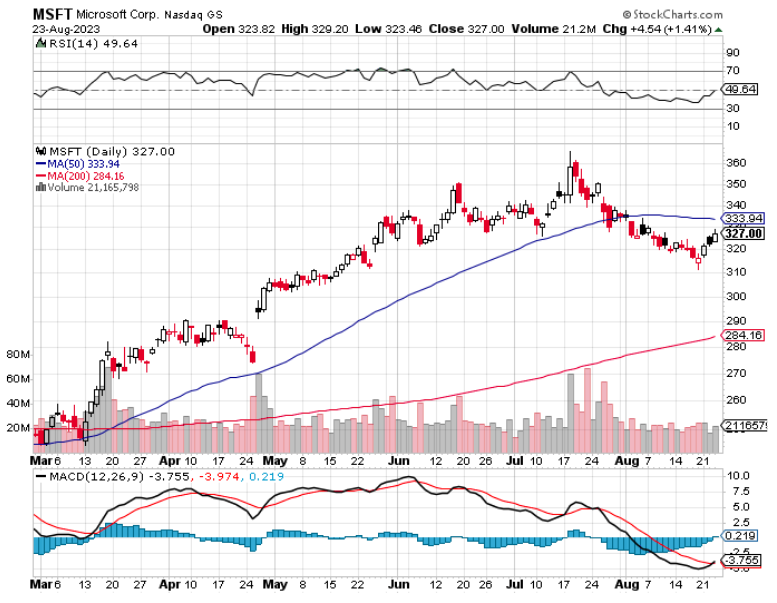
One sector emerging as the epicenter of this evolution is the workplace, and surprisingly, Microsoft (MSFT) is leading the charge.

A few years back, many would not have predicted Microsoft's dominance in the AI space. Yet, with a strategic investment of $13 billion, Microsoft's partnership with OpenAI has redefined its trajectory. This alliance has enhanced platforms like GitHub and Azure, giving Microsoft a competitive edge against giants like Amazon and Google.

Microsoft’s ascent in the AI sphere isn’t a sudden leap; it’s the result of deliberate strategizing and innovation. 

Their journey feels like an endurance race, with the company accelerating dramatically in recent months. While the dream of AI traces back to a 1956 Dartmouth College workshop, Microsoft was already exploring AI's potential by 1991 through its innovation hub, Microsoft Research. 

Despite a somewhat muted impact in the early days, Microsoft's rejuvenated strategy focused on humility, daring, and innovative leaps into areas like cloud computing. 

Strategic acquisitions, such as LinkedIn and GitHub, further positioned Microsoft as a formidable player. The result? A growth from a $300 billion market value to an impressive $2.5 trillion.

Generative AI might hold the key for Microsoft to surpass even the $3 trillion mark, a threshold currently only achieved by Apple (AAPL). McKinsey's projections suggest that such technology could boost the global economy by $2.6 trillion to $4.4 trillion annually by enhancing everyday operations. 

While tech stalwarts like Amazon (AMZN), Google (GOOGL), and Salesforce (CRM) are quickly integrating this technology, Microsoft's diverse tech offerings place it in a dominant position.

Healthcare, a sector urgently seeking the benefits of AI, sees a promising partnership between Microsoft and Epic. Their combined strategy utilizes Microsoft’s robust cloud and AI capabilities and Epic’s comprehensive knowledge of healthcare systems. Their collaborative aim is to embed conversational, ambient, and generative AI into Epic’s electronic health records. This initiative aims to transform patient care, streamline operations, enhance healthcare experiences, and solidify the financial foundation of healthcare institutions.

In their joint venture, Epic and Microsoft have unveiled tools like the advanced Note Summarization tool built on the AI-enhanced Epic In Basket, tailored to enhance physician and nurse productivity. By facilitating quicker documentation and offering AI-powered text suggestions, this tool promises to revolutionize healthcare documentation.

Furthermore, an improved version of Nuance's Dragon Ambient eXperience (DAX) tech is now integrated with Epic’s platforms, ensuring a more fluid workflow experience. On the administrative side, the partnership promises transformative shifts in revenue cycle management. 

Through the elimination of manual processes, Epic's new AI solution introduces smart medical coding suggestions, streamlining and heightening the precision of billing procedures. 

With Azure OpenAI taking the lead, Epic is also delving deep into clinical research, striving to bridge clinical evidence gaps and provide insights into rare diseases.

This integration of Azure OpenAI and Nuance's technologies within Epic underscores the transformative potential when tech behemoths collaborate. Such partnerships hold the promise of innovative AI solutions that can reinvent industries for the betterment of society.

However, it's crucial for investors to look beyond just the promise and understand the landscape. 

By 2025, the U.S. could face a shortage of nearly 90,000 physicians. Additionally, the rising trend of clinician burnout is concerning. 

On the operational front, almost 25% of national health expenditure is directed toward administrative costs—a significant portion that AI could optimize.

Recent discussions, like those between the UPMC Center for Connected Medicine and KLAS Research, underscore the healthcare industry's pressing need for AI. From enhancing diagnostic imaging to patient engagement, AI's potential is being eagerly explored, with clinical research taking center stage.

Microsoft and Epic’s collaboration is noteworthy here. For instance, their recent integration of Azure OpenAI into Epic's EHR introduces automatic message drafting, a futuristic leap for healthcare communication. The inclusion of natural language capabilities in Epic’s SlicerDicer and collaboration with Nuance further emphasize their commitment to advancing healthcare with AI.

But while AI offers a myriad of opportunities, it's essential to approach with caution. AI's potential risks, from propagating misinformation to its impact on employment, cannot be ignored. The balance between leveraging AI's benefits and ensuring responsible development is paramount for a future where technology serves humanity sustainably.

Overall, the nexus of AI, healthcare, and corporate collaborations presents a captivating narrative for investors. As Microsoft and its peers navigate this evolving landscape, staying informed will be critical for those looking to invest in the future of healthcare and technology.
https://madhedgefundtrader.com/wp-content/uploads/2019/05/cropped-mad-hedge-logo-transparent-192x192_f9578834168ba24df3eb53916a12c882.png 0 0 Douglas Davenport https://madhedgefundtrader.com/wp-content/uploads/2019/05/cropped-mad-hedge-logo-transparent-192x192_f9578834168ba24df3eb53916a12c882.png Douglas Davenport2023-08-25 17:21:372023-08-25 17:21:37BRIDGING BYTES AND BIOLOGY
Mad Hedge Fund Trader

August 25, 2023

Tech Letter

Mad Hedge Technology Letter
August 25, 2023
Fiat Lux

Featured Trade:

(ANOTHER LOW BLOW FOR TECH)
($COMPQ), (NVDA)

https://madhedgefundtrader.com/wp-content/uploads/2019/05/cropped-mad-hedge-logo-transparent-192x192_f9578834168ba24df3eb53916a12c882.png 0 0 Mad Hedge Fund Trader https://madhedgefundtrader.com/wp-content/uploads/2019/05/cropped-mad-hedge-logo-transparent-192x192_f9578834168ba24df3eb53916a12c882.png Mad Hedge Fund Trader2023-08-25 15:04:132023-08-25 18:28:14August 25, 2023
Mad Hedge Fund Trader

Another Low Blow for Tech

Tech Letter

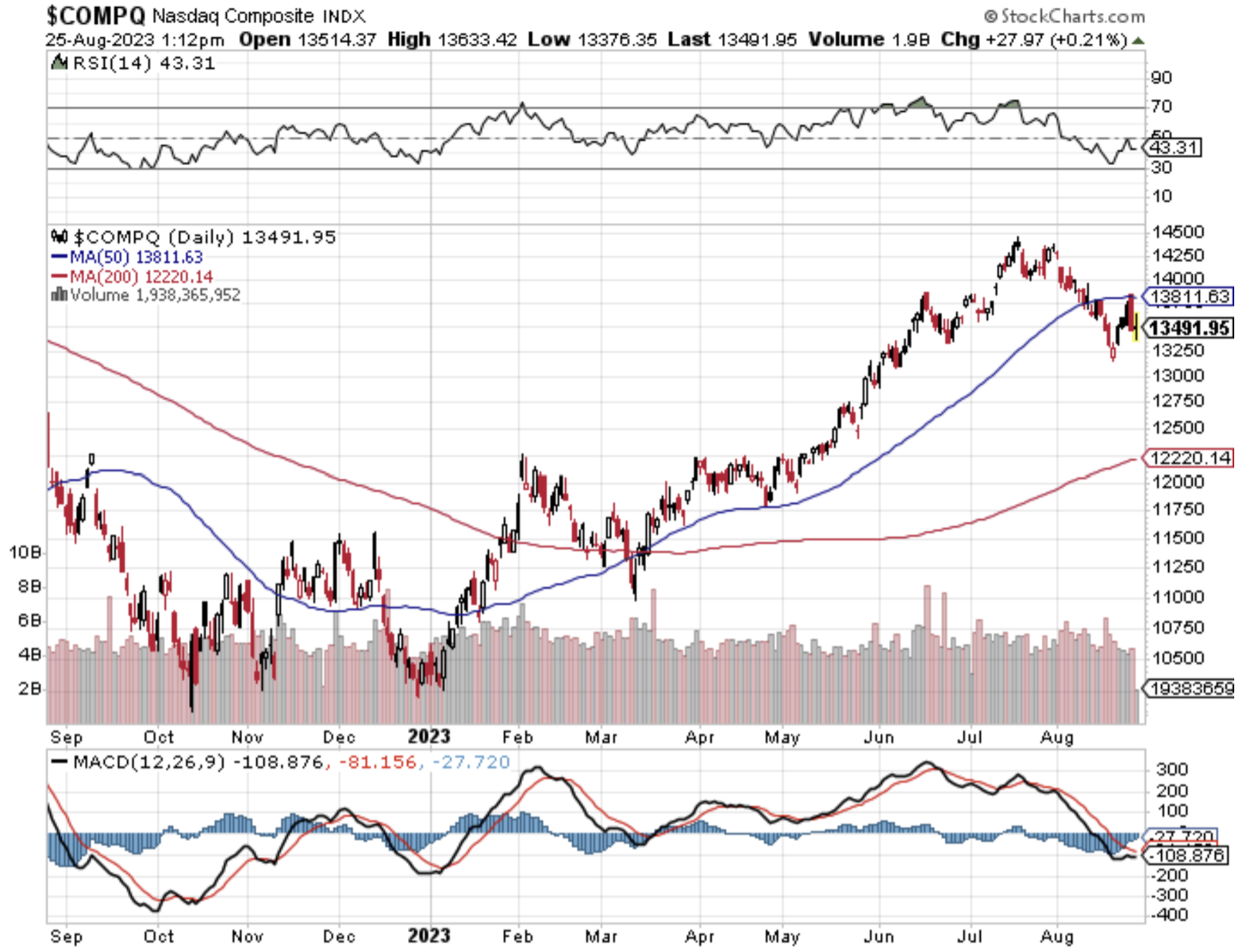
The almost four-year “transitory inflation” is a stark reminder that it isn’t smooth sailing yet for tech stocks ($COMPQ) after a glorious first 7 months of the year.

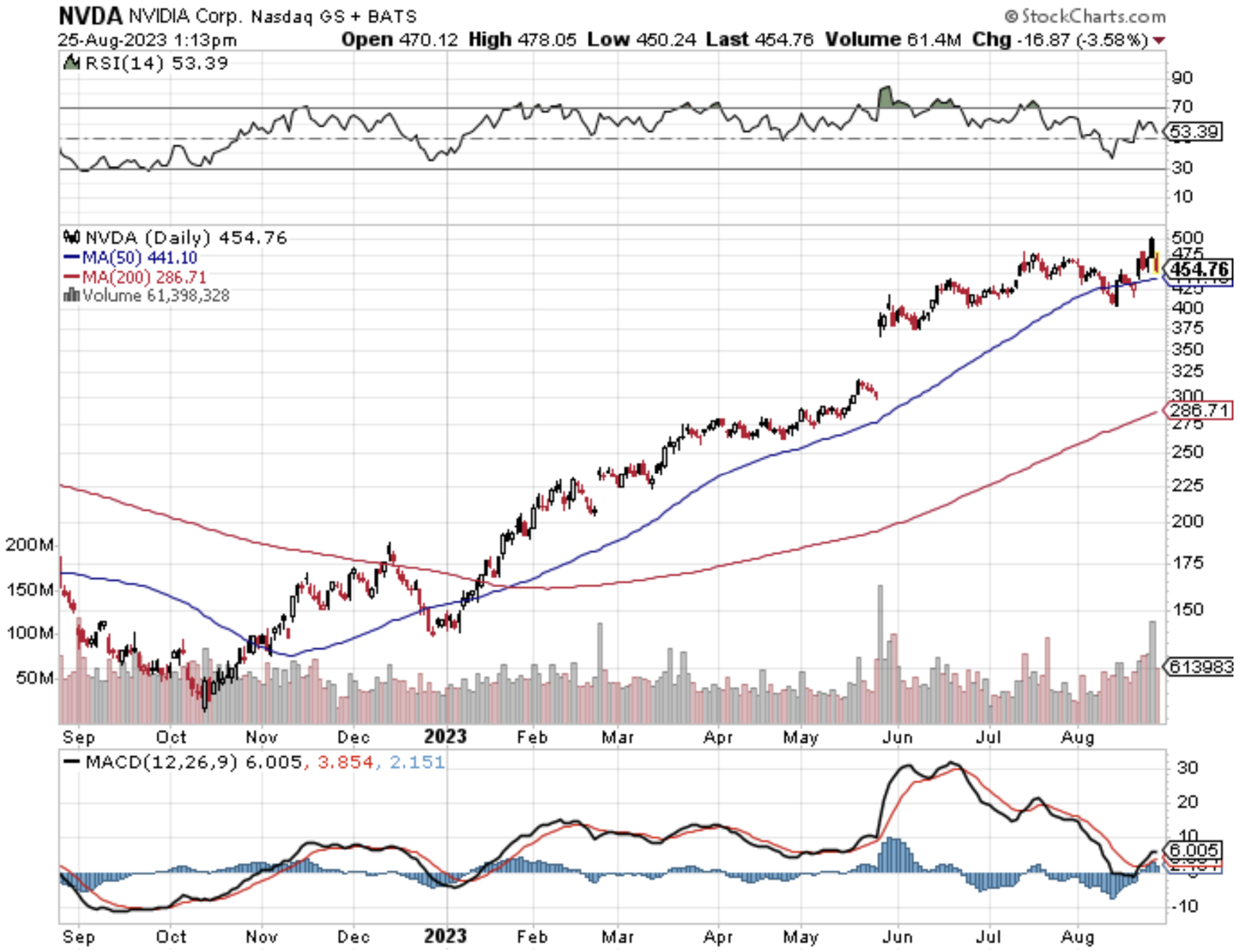
In hindsight, it appears more and more as if the great outperformance of the first 7 months in tech stocks was mainly due to a mean reversion after 2022 another surge helped by Nvidia’s (NVDA) AI hype.

The last 4 months of the year don’t appear as if these two tailwinds will light rocket fuel under tech stocks.

It’ll be harder to make money without those two turbo boosters.

Today tech got even more bad news as Federal Reserve Chair Jay Powell said the central bank is "prepared to raise rates further."

The hurtful part of this for tech stocks is that Powell’s comments absolutely have a knock-on effect to tech products.

Who wants to add that extra layer of anti-viral software protection when the budget is tight?

Powell is narrowing the goalposts for tech companies.  

Which Tick-Tock influencer is going to re-up to the better iPhone when they can’t afford it?

According to Reuters, Americans are now paying around $800 per month extra for the same daily necessities they paid for before March 2020.

That is $800 that could possibly go into more tech hardware and software that isn’t.

Powell doubled down on crushing inflation saying it is the “Fed's job to bring inflation down to our 2 percent goal, and we will do so.”

Right away we saw Fed futures expectations adjust to this new information with the “higher for longer” mantra taking hold in reality.

The consensus is now that the first rate cut will be sometime in the summer of 2024 of .25%.

Traders should remember that the first rate cut was priced in at the end of this year just recently.

The Fed has gotten more hawkish lately and that is demonstrably negative for the short-term trajectory of tech stocks.

In 2023, accelerating US economic growth of 2.4% has presented a challenge to the Fed on several levels, with the Fed chair noting the overall economy "may not be cooling as expected."

And the strength of the labor market has been at the center of this challenge.

While monthly job gains have cooled through the summer, Powell said Friday the labor market's rebalancing "remains incomplete."

In turn, wage pressures have moderated.

The Fed really has two problems on its hands as it seeks to induce a recession – full employment and blistering economic growth.

The fact is that the stock market and the economy have handled these itty bitty .25% interest hikes gracefully.

That would hardly be the case if rates were hiked 5% at one time.

Businesses have had time to adjust to the new normal and so has the tech industry by firing a swath of ineffective employees.

The net result of this is bad for technology stocks in the short term, but staving off a recession is also in the interest of the tech sector as well.

I expect tech firms to keep shedding the fat off their business model as we barrel into sink-or-swim times.

There won’t be excess money sloshing around in the system for the foreseeable future and tech bankruptcies should rise.

That doesn’t mean tech stocks will crater, but it does mean many business models need to consolidate before another move up.

The real weak hands will finally get flushed out.

Tapping the debt market because of poor management decisions is now route one to bankruptcy and that hasn’t been the case in technology companies for a long time.


https://madhedgefundtrader.com/wp-content/uploads/2019/05/cropped-mad-hedge-logo-transparent-192x192_f9578834168ba24df3eb53916a12c882.png 0 0 Mad Hedge Fund Trader https://madhedgefundtrader.com/wp-content/uploads/2019/05/cropped-mad-hedge-logo-transparent-192x192_f9578834168ba24df3eb53916a12c882.png Mad Hedge Fund Trader2023-08-25 15:02:052023-08-25 18:28:56Another Low Blow for Tech
Mad Hedge Fund Trader

Trade Alert - (ABNB) August 25, 2023 - BUY

Tech Alert

When John identifies a strategic exit point, he will send you an alert with specific trade information as to what security to sell, when to sell it, and at what price. Most often, it will be to TAKE PROFITS, but, on rare occasions, it will be to exercise a STOP LOSS at a predetermined price to adhere to strict risk management discipline. Read more

https://www.madhedgefundtrader.com/wp-content/uploads/2016/02/Alert-e1457452190575.jpg 135 150 Mad Hedge Fund Trader https://madhedgefundtrader.com/wp-content/uploads/2019/05/cropped-mad-hedge-logo-transparent-192x192_f9578834168ba24df3eb53916a12c882.png Mad Hedge Fund Trader2023-08-25 11:19:162023-08-25 11:19:16Trade Alert - (ABNB) August 25, 2023 - BUY
Mad Hedge Fund Trader

August 25, 2023

Diary, Newsletter, Summary

Global Market Comments
August 25, 2023
Fiat Lux

Featured Trades:


(THE NEXT COMMODITY SUPERCYCLE HAS ALREADY STARTED),
(COPX), (GLD), (FCX), (BHP), (RIO), (SIL),
 (PPLT), (PALL), (GOLD), (ECH), (EWZ), (IDX)


CLICK HERE to download today's position sheet.

https://madhedgefundtrader.com/wp-content/uploads/2019/05/cropped-mad-hedge-logo-transparent-192x192_f9578834168ba24df3eb53916a12c882.png 0 0 Mad Hedge Fund Trader https://madhedgefundtrader.com/wp-content/uploads/2019/05/cropped-mad-hedge-logo-transparent-192x192_f9578834168ba24df3eb53916a12c882.png Mad Hedge Fund Trader2023-08-25 09:04:382023-08-25 13:41:24August 25, 2023
Mad Hedge Fund Trader

The Next Commodity Supercycle Has Already Started

Diary, Newsletter

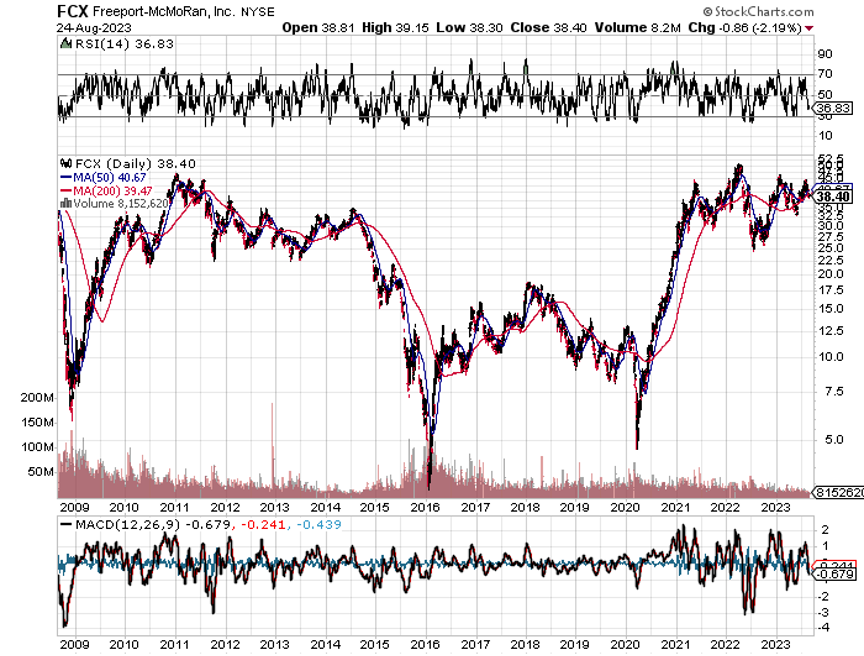
When I closed out my position in Freeport McMoRan (FCX) near its max profit earlier this year, I received a hurried email from a reader if he should still keep the stock. I replied very quickly:

“Hell, yes!”

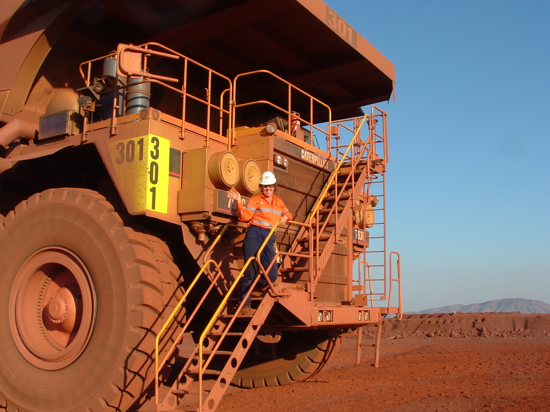
When I toured Australia a couple of years ago, I couldn’t help but notice a surprising number of fresh-faced young people driving luxury Ferraris, Lamborghinis, and Porsches.

I remarked to my Aussie friend that there must be a lot of indulgent parents in The Lucky Country these days. “It’s not the parents who are buying these cars,” he remarked, “It’s the kids.”

He went on to explain that the mining boom had driven wages for skilled labor to spectacular levels. Workers in their early twenties could earn as much as $200,000 a year, with generous benefits.

The big resource companies flew them by private jet a thousand miles to remote locations where they toiled at four-week on, four-week off schedules.

This was creating social problems, as it is tough for parents to manage offspring who make far more than they do.

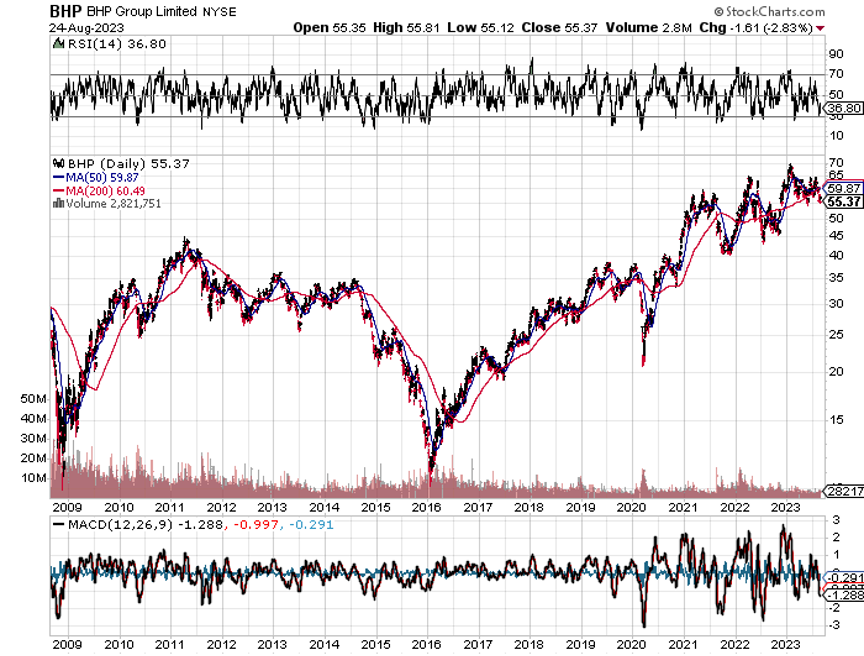
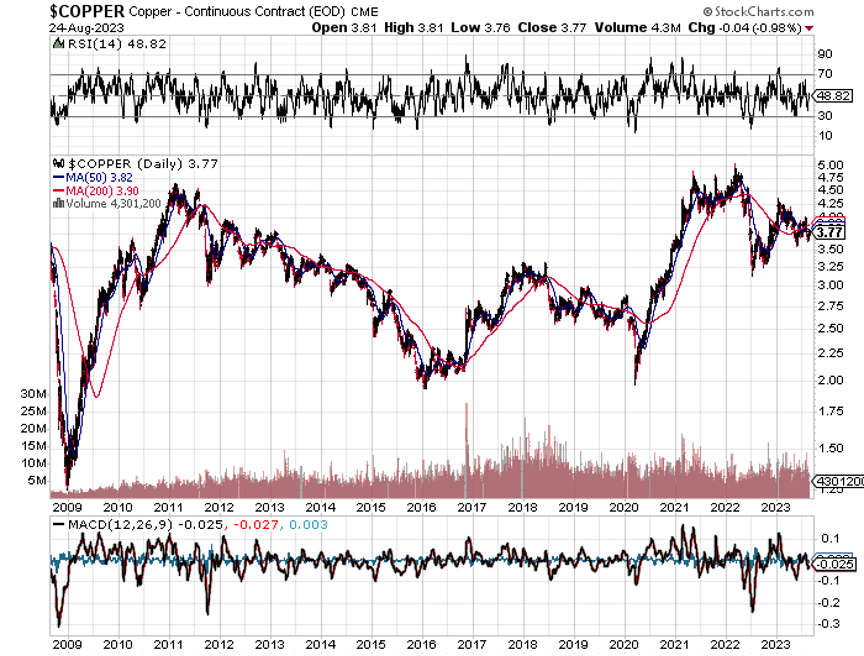
The Next Great Commodity Boom has started and, in fact, we are already years into a prolonged supercycle that could stretch into the 2030s.

China, the world’s largest consumer of commodities, is currently stimulating its economy on multiple fronts, to break the back of a Covid hangover.

Those include generous corporate tax breaks, relaxed reserve requirements, government bailouts of financial institutions, and interest rate cuts. Get triggers like the impending moderation of its trade war with the US and it will be off to the races once more for the entire sector.

The last bear market in commodities was certainly punishing. From the 2011 peaks, copper (COPX) shed 65%, gold (GLD) gave back 47%, and iron ore was cut by 78%. One research house estimated that some $150 billion in resource projects in Australia were suspended or cancelled.

Budgeted capital spending during 2012-2015 was slashed by a blood-curdling 30%. Contract negotiations for price breaks demanded by end consumers broke out like a bad case of chicken pox.

The shellacking was reflected in the major producer shares, like BHP Billiton (BHP), Freeport McMoRan (FCX), and Rio Tinto (RIO), with prices down by half or more. Write-downs of asset values became epidemic at many of these firms.

The selloff was especially punishing for the gold miners, with lead firm Barrack Gold (GOLD) seeing its stock down by nearly 80% at one point, lower than the darkest days of the 2008-9 stock market crash.

You also saw the bloodshed in the currencies of commodity-producing countries. The Australian dollar led the retreat, falling 30%. The South African Rand has also taken it on the nose, off 30%. In Canada, the Loonie got cooked.

The impact of China cannot be underestimated. In 2012, it consumed 11.7% of the planet’s oil, 40% of its copper, 46% of its iron ore, 46% of its aluminum, and 50% of its coal. It is much smaller than that today, with its annual growth rate dropping by more than half, from 13.7% to 3.50% today.

What happens to commodity prices when China recovers even a fraction of the heady growth rates of yore? It boggles the mind.

The rise of emerging market standards of living will also provide a boost to hard asset prices. As China goes, so does its satellite trading partners, who rely on the Middle Kingdom as their largest customer. Many are also major commodity exporters themselves, like Chile (ECH), Brazil (EWZ), and Indonesia (IDX), who are looking to come back big time.

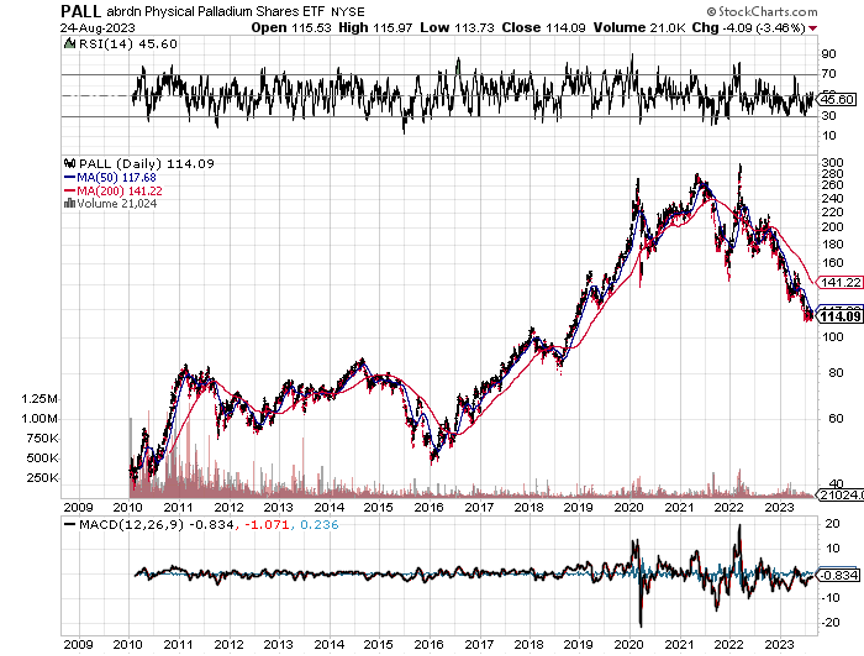
As a result, Western hedge funds will soon be moving money out of paper assets, like stocks and bonds, into hard ones, such as gold, silver (SIL), palladium (PALL), platinum (PPLT), and copper.

A massive US stock market rally has sent managers in search of any investment that can’t be created with a printing press. Look at the best-performing sectors this year and they are dominated by the commodity space.

The bulls may be right for as long as a decade thanks to the cruel arithmetic of the commodities cycle. These are your classic textbook inelastic markets.

Mines often take 10-15 years to progress from conception to production. Deposits need to be mapped, plans drafted, permits obtained, infrastructure built, capital raised, and bribes paid in certain countries. By the time they come online, prices have peaked, drowning investors in red ink.

So a 1% rise in demand can trigger a price rise of 50% or more. There are not a lot of substitutes for iron ore. Hedge funds then throw gasoline on the fire with excess leverage and high-frequency trading. That gives us higher highs, to be followed by lower lows.

I am old enough to have lived through a couple of these cycles now, so it is all old news for me. The previous bull legs of supercycles ran from 1870-1913 and 1945-1973. The current one started for the whole range of commodities in 2016. Before that, it was down from seven years.

While the present one is short in terms of years, no one can deny how business cycles will be greatly accelerated by the end of the pandemic.

Some new factors are weighing on miners that didn’t plague them in the past. Reregulation of the US banking system is forced several large players, like JP Morgan (JPM) and Goldman Sachs (GS) to pull out of the industry completely. That impairs trading liquidity and widens spreads— developments that can only accelerate upside price moves.

The prospect of falling US interest rates is also attracting capital. That reduces the opportunity cost of staying in raw metals, which pay neither interest nor dividends.

The future is bright for the resource industry. While the gains in Chinese demand are smaller than they have been in the past, they are off of a much larger base. In 20 years, Chinese GDP has soared from $1 trillion to $14.5 trillion.

Some 20 million people a year are still moving from the countryside to the coastal cities in search of a better standard of living and improved prospects for their children.

That is the good news. The bad news is that it looks like the headaches of Australian parents of juvenile high earners may persist for a lot longer than they wish.

Buy all commodities on dips for the next several years.


https://www.madhedgefundtrader.com/wp-content/uploads/2019/09/john-and-girls.png 322 345 Mad Hedge Fund Trader https://madhedgefundtrader.com/wp-content/uploads/2019/05/cropped-mad-hedge-logo-transparent-192x192_f9578834168ba24df3eb53916a12c882.png Mad Hedge Fund Trader2023-08-25 09:02:392023-08-25 13:41:06The Next Commodity Supercycle Has Already Started
Mad Hedge Fund Trader

August 24, 2023

Biotech Letter

Mad Hedge Biotech and Healthcare Letter
August 24, 2023
Fiat Lux

Featured Trade:

(FUTUREPROOFING BIOTECH)
(REGN), (SNY), (BAYN), (RHHBY)

https://madhedgefundtrader.com/wp-content/uploads/2019/05/cropped-mad-hedge-logo-transparent-192x192_f9578834168ba24df3eb53916a12c882.png 0 0 Mad Hedge Fund Trader https://madhedgefundtrader.com/wp-content/uploads/2019/05/cropped-mad-hedge-logo-transparent-192x192_f9578834168ba24df3eb53916a12c882.png Mad Hedge Fund Trader2023-08-24 20:02:342023-08-25 09:54:07August 24, 2023
Mad Hedge Fund Trader

Futureproofing Biotech

Biotech Letter

The financial landscape of 2023 offers a captivating tableau. While stock market giants, such as the S&P 500 and the Nasdaq Composite, have been garnering attention with their respective 18% and 34% gains, the biotechnology and healthcare domain unfolds a more nuanced story.

When I take a look at this sector, I notice certain ETFs, notably the iShares Biotechnology and the SPDR S&P Biotech, in a decellerative phase. However, the industry's canvas is dotted with companies that are scripting their distinct success stories.

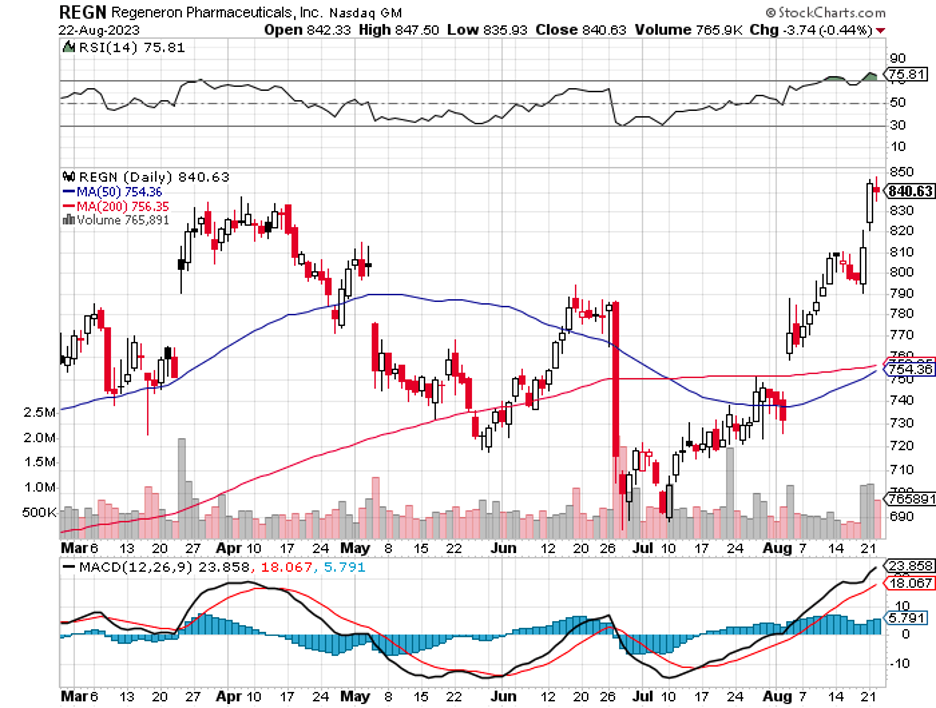
Among these trailblazers is Regeneron Pharmaceuticals (REGN).

Contrary to the broader biotech trend, Regeneron has asserted itself with a commendable 7% growth this year. This is complemented by its sturdy revenue and an impressive EPS trajectory showcased in Q2.

For those not completely familiar with the annals of biotech, the name Regeneron is synonymous with pioneering achievements in therapeutic proteins. Their landmark collaboration with Bayer (BAYN) resulted in the creation of Eylea, a beacon in the anti-VEGF drug realm.

Their story doesn't end there.

Together with Sanofi (SNY), they've masterminded treatments that have potentially revolutionized the way we approach cancer, inflammation, and specific respiratory disorders. A testament to this partnership's prowess is Dupixent, which registered a remarkable $8.68 billion in sales during 2022.

Insider chatter hints at the possibility of these figures ascending to an ambitious $20 billion by the end of this decade.

A retrospective look at Regeneron's journey over the past decade reveals a remarkable story of resilience and growth. Their compound annual growth rate (CAGR) stood at an enviable 24.2% from 2012 to 2022.

When contrasted against the S&P 500's relatively modest 16.3% in the same window, it underscores the vast potential that biologic therapies hold. Moreover, it showcases Regeneron's ability to harness this potential effectively.

Yet, as we look ahead, the landscape is not devoid of challenges.

Enter Roche’s (RHHBY) Vabysmo — a new contender that has begun to question Eylea's unchallenged dominion since its 2022 introduction.

Recognizing this, Regeneron has strategically moved towards bolstering Eylea to ensure it maintains its market presence. These evolving dynamics serve as a reminder that the arena of retinal disease treatments is becoming increasingly competitive.

Anticipating the industry's fluid dynamics, Regeneron has exhibited strategic foresight. Their ventures into the realm of immuno-oncology, notably their stalwart, Libtayo, are significant.

They've not stopped there, however.

Their strategic diversification includes incursions into groundbreaking fields like gene therapy, RNA interference, and more. The company's research pipeline, promising an influx of innovative drugs in the near future, showcases its commitment to remaining at the industry's forefront.

A key partnership that's generating interest is Regeneron's association with Intellia Therapeutics (NTLA) in the sphere of gene editing.

This venture is pivotal. Such therapies have the potential to redefine medicine, offering transformative, perhaps even curative, treatments. Their adoption, however, comes with its fair share of challenges.

The industry's somewhat tentative approach towards gene editing, with a preference for licensing and equity stakes rather than outright acquisitions, underscores the nascent and experimental nature of this domain.

In conclusion, Regeneron Pharmaceuticals stands as an epitome of innovation and adaptability in the biotech sector. It amalgamates a rich history of achievements with an ambitious vision for the future.

As the company maneuvers through the intricate maze of opportunities and challenges that the 2020s present, investors ought to approach with both optimism and prudence. In a domain characterized by rapid advancements and uncertainties, Regeneron's journey offers valuable insights.

The upcoming years promise a blend of innovation, challenges, and milestones, and firms like Regeneron are poised to shape this narrative. I suggest you buy the dip.


regeneron biotech

https://madhedgefundtrader.com/wp-content/uploads/2019/05/cropped-mad-hedge-logo-transparent-192x192_f9578834168ba24df3eb53916a12c882.png 0 0 Mad Hedge Fund Trader https://madhedgefundtrader.com/wp-content/uploads/2019/05/cropped-mad-hedge-logo-transparent-192x192_f9578834168ba24df3eb53916a12c882.png Mad Hedge Fund Trader2023-08-24 20:00:282023-08-31 17:04:01Futureproofing Biotech
Mad Hedge Fund Trader

August 24, 2023

Diary, Newsletter, Summary

Global Market Comments
August 24, 2023
Fiat Lux

Featured Trades:

(AN INSIDER’S GUIDE TO THE NEXT DECADE OF TECH INVESTMENT),
(AMZN), (AAPL), (NFLX), (AMD), (INTC), (TSLA), (GOOG), (META)


CLICK HERE to download today's position sheet.

https://madhedgefundtrader.com/wp-content/uploads/2019/05/cropped-mad-hedge-logo-transparent-192x192_f9578834168ba24df3eb53916a12c882.png 0 0 Mad Hedge Fund Trader https://madhedgefundtrader.com/wp-content/uploads/2019/05/cropped-mad-hedge-logo-transparent-192x192_f9578834168ba24df3eb53916a12c882.png Mad Hedge Fund Trader2023-08-24 09:04:052023-08-24 10:38:56August 24, 2023
Mad Hedge Fund Trader

August 23, 2023

Jacque's Post


(SUMMARY OF THE GREAT ROTATION – AUGUST 16, 2023 WEBINAR)

August 23, 2023

Hello everyone,

Webinar Title: The Great Rotation

Thursday, September 6: San Diego luncheon.

Performance: -4.70% MTD
Year to Date: 60.8%
Since inception: +657.99%
Trailing one-year return: +92.45%
Average annualized return: +48.15%


Method to My Madness

Rotation underway from Big Tech to industrials, commodities, and energy.
Tech sell-off should be brief/short-term.

Rising interest rate fears are pushing Bonds down.

The Fall may present an excellent window to buy stocks. Make sure precious metals and commodities are at the top of the “buy” list.

Be patient – wait for the set-up.

If you’re interested in SNOWFLAKE wait for a bigger dip.

John’s suggestion – buy TLT LEAPS at 90.


The Global Economy – Bouncing

Nonfarm Payroll drops to 187,000 in June. One year low.

Headline unemployment rate returned to 3.5% - a 50-year low.

Inflation jumps to 0.2% in July and 3.2% YOY.

Rents, education, and insurance (climate change) were higher while used cars were down 1.3% and air fares plunged by 8.1%.

PPI rose 0.3% in July.

Deflation hits China – economy struggling post-COVID.


Stocks – Correction Time

U.S. seeing big equity outflows. Approx. 15b fleeing the market. They believe the party is over for 2023.

Moody’s threatened downgrade of regional banks.

Albermark (ALB) to boost Lithium Production with a new filtering technology at an Arkansas plant to meet exploding demand from EV makers.

Berkshire Hathaway (BRKB) posts record profits up 38%.

Rivian (RIVN) beats, losing only $1.08 a share versus an expected $1.41.

Biden cracks down on tech.

Buy Adobe on dips.

Freeport McMoran (FCX) – looking like a great LEAPS trade at this level.

Keep buying Berkshire (BRKB) on dips.

Emerging Markets (EEM) strong buy here.


BONDS – Probing for a Bottom

The falling interest rates/rising bond prices are delayed after Fitch downgrade and hotter than expected economic growth at 2.40% for Q2.

U.S. Debt downgrade from AAA to AA+ by Fitch rating agency for only the second time in history.

Bonds (TLT) took a hit – but they are still the safest and most liquid investment in the world when held to expiration. Keep buying 90-day T-bills = 5.2% risk-free yield.

Still looking like 3.50% yield by the end of 2023.

Junk Bond ETFs (JNK) and (HYG) still holding up extremely well with a 6.5% yield.

According to John Bonds are still likely to hit $110 by year-end.

Foreign Currencies

Japanese Yen is headed for multi-year lows at 150.

Investors flee to safe-haven short-term investments.

Any strength in U.S.$ will be temporary.

Look for new dollar lows by the end of 2023.

Buy FXE, FXB, and FXA on dips. Avoid FXY.

Energy and Commodities – Reborn Again

Natural Gas soars to a new 2023 high and accomplished an upside breakout on all charts. European gas prices have just jumped 40%. An Australian strike shut down an LNG export facility.
Oil may break out to $100.
China expects LNG Price Spike later this year due to coming supply shortages and a recovering economy.

Exxon Mobile Corp. (XOM) –LEAPS territory.

Precious Metals – Take a Hit.

No Fed Action to lower rates undercuts precious metals. Interest rate rises in Europe and Australia aren’t helping either.

Gold is headed for $3000 by 2025.

New drivers are soon to be falling interest rates and the demise of crypto. Silver is the better play with a higher beta.

Russia and China are also stockpiling gold to sidestep international sanctions. A severe short squeeze in copper is developing, leading to a massive price spike later in 2023.


Real Estate – Coming Back

Home Mortgage rates hit a 22-year high at 7.24%. The existing home market and new home market is on fire in anticipation of the coming rate fall.

Rising rents still the big input into the Fed’s inflation calculation.

Case Shiller rose by 0.7% in May.

We are at the beginning of a decade-long demographic-driven bull market in residential real estate.


Economic growth and market performance should improve in 2023, but things may get worse before they get better.  So, there may be some strong cross currents ahead.

Cheers,

Jacquie

https://madhedgefundtrader.com/wp-content/uploads/2019/05/cropped-mad-hedge-logo-transparent-192x192_f9578834168ba24df3eb53916a12c882.png 0 0 Mad Hedge Fund Trader https://madhedgefundtrader.com/wp-content/uploads/2019/05/cropped-mad-hedge-logo-transparent-192x192_f9578834168ba24df3eb53916a12c882.png Mad Hedge Fund Trader2023-08-23 20:00:592023-08-23 20:28:27August 23, 2023
Page 457 of 2249«‹455456457458459›»

Legal Disclaimer

There is a very high degree of risk involved in trading. Past results are not indicative of future returns. MadHedgeFundTrader.com and all individuals affiliated with this site assume no responsibilities for your trading and investment results. The indicators, strategies, columns, articles and all other features are for educational purposes only and should not be construed as investment advice. Information for futures trading observations are obtained from sources believed to be reliable, but we do not warrant its completeness or accuracy, or warrant any results from the use of the information. Your use of the trading observations is entirely at your own risk and it is your sole responsibility to evaluate the accuracy, completeness and usefulness of the information. You must assess the risk of any trade with your broker and make your own independent decisions regarding any securities mentioned herein. Affiliates of MadHedgeFundTrader.com may have a position or effect transactions in the securities described herein (or options thereon) and/or otherwise employ trading strategies that may be consistent or inconsistent with the provided strategies.

Copyright © 2026. Mad Hedge Fund Trader. All Rights Reserved. support@madhedgefundtrader.com
Scroll to top