“It has become appallingly obvious that our technology has exceeded our humanity.” – Said Scientist Albert Einstein

“It has become appallingly obvious that our technology has exceeded our humanity.” – Said Scientist Albert Einstein
Global Market Comments
April 17, 2020
Fiat Lux
Featured Trade:
(REMEMBERING GUADALCANAL)

When the Commandant of the Marine Corps asks for a favor, I say “Yes Sir” without hesitating.
So, when General David H. Berger called me and asked to represent him at the 78th annual memorial service for the 1942 Battle of Guadalcanal, I started booking my flight. It turned out to be one of the most amazing experiences of my life. It also may have saved my life.
He needed a Marine veteran who had family members on both sides of the battle and spoke fluent English and Japanese. It turns out that there is only one such individual in the United States, and that would be me.
Both my father and my uncle Mitch fought at the Canal, where he won a Medal of Honor. My late wife’s father was a Captain in the Japanese Army. His family had the government monopoly for supplying “sniper boots”, or “jikatabi.” That enabled me to sympathize with the Japanese families attending the service who lost loved ones.
I have acted as a diplomatic representative for the Marine Corps for many decades. Over the years, I have met presidents, most Medal of Honor winners, and Navaho code talkers.
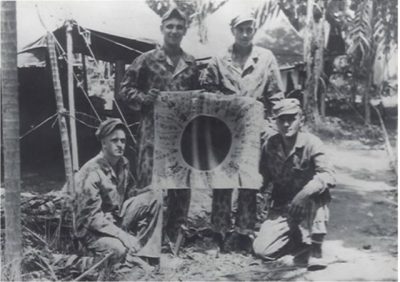
Guadalcanal was the decisive battle of WWII. The Americans lost 7,000 men, 25 ships, and 175 planes. The Japanese lost 30,000 men, 25 ships, including a major battleship, and 450 planes.
Before Guadalcanal, the Japanese had never lost a battle. After Guadalcanal, they never won. If the US had lost the battle of Guadalcanal, WWII would have continued until 1948 or 1949.
Today, Guadalcanal is one of the poorest countries in the world, with a per capita income of about $3,000 a year, That’s just a guess from Australian aid workers. Less than 50% of the population participate in the modern economy. Some 70% of the modern economy is accounted for by Chinese logging of ancient tropical hardwood trees.
The rest live a more traditional lifestyle of fishing and growing jungle fruits and vegetables. There are countless barefoot kids running around everywhere. Most families have more than five kids and birth control is unknown. Not helpful to the island's poverty of course is the still present devastation by this military activity from WWII; you can read about it's impacts here.
I hired a local guide and translator of the local language of pigeon, a sturdy four-wheel drive SUV, and sought out the local WWII battlefields. It wasn’t easy, as there were only 20 miles of paved road in the entire country and no street signs.
I was not disappointed.
The first stop was Paige’s Ridge, also known as “Hennikan’s Ridge”, where my uncle won his Medal of Honor, fighting a heroic night battle where he mowed down 2,000 charging Japanese in a torrential rainstorm. For a more detailed description of Mitch, please click here.
Reading from his diary, I was able to locate his exact fighting position, where I used a shovel to dig out several Japanese 6.5mm Arisaka bullet that had been fired at him.
A mob of local kids huddled around me watching my every move. I finally told them to bring me their souvenirs so I might buy some.
What came back was amazing.
One boy around nine years old showed up with a tattered old Marine rucksack and spilled the contents on the ground. There were several live Japanese hand grenades, some unexploded mortar shells, and spent bullets of several kinds. I warned him, these could explode at any time and that he should be careful not to drop them.
My next stop was Hill 27, the subject of the 1998 movie Thin Red Line, and where my dad fought. I found my dad’s foxhole dug out of the coral and extracted out more Japanese bullets. It was moving to finally grasp the suffering he went through as a 19-year-old, starving, afraid, and suffering with malaria.
Scouring the hill, I managed to dig up some USMC dog tags still readable. I forwarded them to the US Marine Corps Historical division so that I might return them to the families. My dad gave me his dog tags right before he died 20 years ago.
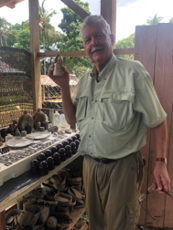
In the village near the summit of Hill 27, everyone had huge collections of war relics; pieces of Japanese zero fighters, helmets, coke bottles, rusted-out machine guns, and prewar coins from both sides. One citizen had amassed at least a kilo of morphine in military sachets. I even found a bottle of Old Spice aftershave, my dad’s favorite.
Another offered me a Japanese skeleton in a plastic bag for $10. He said I could get as many as I wanted. There are in fact 23,000 Japanese missing in action on Guadalcanal. So, I emailed a friend in the Japanese government in Tokyo asking if he wanted any wartime remains.
He said not to worry. Once a year, the government sends a scouting party to pick up all the remains they can find. They then cremate them, take the ashes back to Japan, and inter them at Yasakuni Jinja, the country’s equivalent of Arlington National Cemetery.
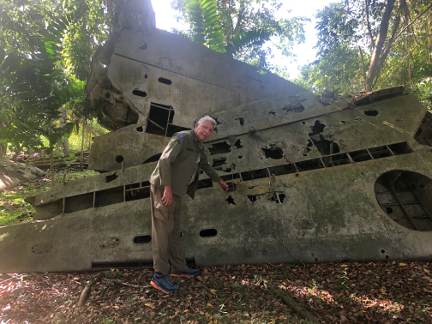
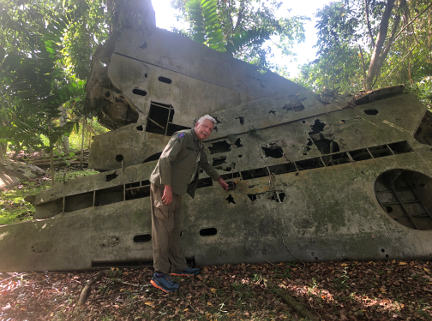
Next, I drove deep into the jungle to find a graveyard of US fighter planes. They were all there, rusting away in all their glory; Wildcats, Corsairs, and Aircobras. On the way back, I managed to find a battered Sherman tank.
I was invited to explore an intact Boeing B-17 bomber discovered only two years ago. But it involved hiking four hours into the mountains. Since one of my companions hadn’t taken anti-malaria drugs and the mosquitoes were present in great clouds, I passed.
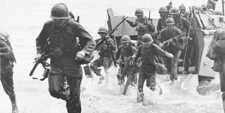
I went on to visit several other historic sites. I saw Red Beach, site of the initial Marine landing, where I found a nearly buried Japanese tank. I spent time at the Alligator Creek, where the Marines wiped out the Ichiki battalion.
With great difficulty, I found John Basilone’s machine gun bunker. John also won a Medal of Honor. I stopped by the soaring monuments of Bloody Ridge, where Edson’s raiders held off another Japanese onslaught. The original wartime tower for Henderson field can still be found at the airport.
Only recently did I realize that this trip commemorating the battle of Guadalcanal may have saved my life. To keep malaria at bay, I took Chloroquine for a week before, during, and after the trip. It is now being explored as a Coronavirus drug.
My original intention had been to make a 45-minute documentary video and give it to you and the Marine Corps. The stock market crashed the day I got back so everything is now on hold. Maybe if things quiet down this summer, I can get to it.
After all, I won’t be going anywhere.
Captain John Thomas
USMC, retired
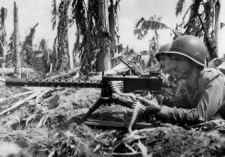
“The Marines I have seen around the world have the cleanest bodies, the filthiest minds, the highest morale, and the lowest morals of any group of animals I have ever seen. Thank God for the United States Marine Corps!” said Eleanor Roosevelt, First Lady of the United States, 1945.
Today, I would like to make a suggestion on a stock that appears to be bottoming.
That stock is Kronos Worldwide Inc. (KRO).
KRO is trading around $8.08 as I write this.
It does not have weekly options, only monthly options, but I am not going to suggest you sell calls at this time.
My suggestion is to buy KRO at the market, which is $8.08.
Based on the tracking portfolio, I suggest you limit the buy in to 500 shares or 4% of the portfolio.
While the Diary of a Mad Hedge Fund Trader focuses on investment over a one week to a six-month time frame, Mad Day Trader, provided by Bill Davis, will exploit money-making opportunities over a brief ten minute to three-day window. It is ideally suited for day traders, but can also be used by long-term investors to improve market timing for entry and exit points. Read more
Mad Hedge Biotech & Healthcare Letter
April 16, 2020
Fiat Lux
Featured Trade:
(CRISPR THERAPEUTICS’ CANCER BREAKTHROUGH),
(CRSP), (VRTX)

The findings for the first-ever human trial that uses CRISPR gene-editing technology to alter the immune cells of cancer patients have been announced.
The trial, which is hailed as the first of its kind to ever publish its results, centered on three patients suffering from advanced cancer who are all in their 60s. The goal is to determine whether or not their bodies could tolerate the genetically edited immune cells.
The patients received doses of CRISPR-modified variants gathered from their own T cells, which were specifically edited to transform into more efficient cancer-killing cells.
The results showed that there were no issues reintroducing the edited cells back into the bodies of the patients. More impressively, the modified cells managed to survive longer than the anticipated period.
In fact, these cells were detected in the patients’ bodies nine months following the novel treatment.
Doctors also noted that the patients’ symptoms stabilized throughout the treatment period. One of them even saw a reduction in tumor size.
While the treatment was only a one-time injection and was not carried on for a longer time, the fact that no major complication happened during the trial has health experts hailing it a success. Hence, more trials of this nature can be expected in the near future.
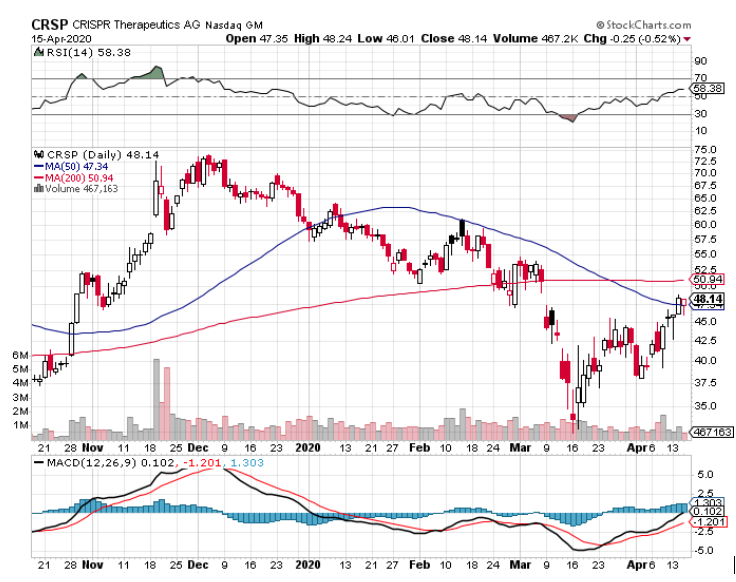
As expected, this trial boosted gene-editing stocks -- and CRISPR Therapeutics (CRSP) is one of the beneficiaries of this positive news.
This development is anticipated to further fuel investor interest in CRISPR Therapeutics especially after it released an impressive fourth-quarter financial report that beat revenue expectations.
The company’s profits grew to $77 million, indicating a substantial jump from the measly $100,000 it reported in the fourth quarter of 2018. As for its cash and cash equivalents, the amount increased by 106.7% from $456.6 million last year to $943.8 million.
Meanwhile, its total annual income increased from $3.1 million to a whopping $289.6 million.
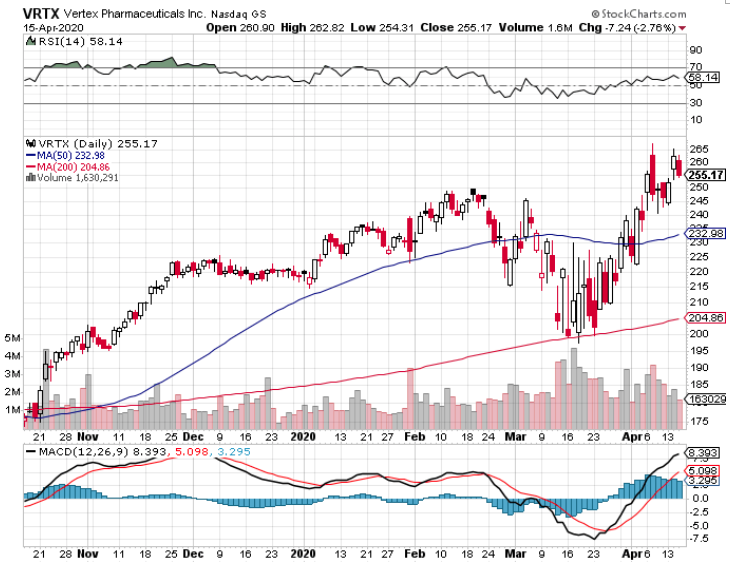
A quick look at the changes done by the company revealed that the surge can be mostly attributed to CRISPR Therapeutics’ collaboration with Vertex Pharmaceuticals (VRTX) and not product sales.
Nonetheless, the improvement in the gene-editing company’s performance is still impressive considering that analysts only estimated their earnings to reach $45.2 million in the said quarter.
While these numbers are already turning heads, CRISPR Therapeutics is expected to dominate more headlines in 2020.
So far, the company has four major treatments in development.
One is called CTX001, which is for genetic blood disorders specifically sickle cell disease and transfusion-dependent beta thalassemia. Results involving this treatment should be out sometime this year.
The other three, CTX110, CTX120, and CTX130, are cancer treatments commonly known as CAR-T therapies.
CRISPR Therapeutics is an obvious leader in the race to commercialize CRISPR/Cas9 gene-editing services and products.
The lowdown is that its treatments under development, which involve groundbreaking innovations focused on rare diseases, have the potential to turn in hundreds of billions in sales. More impressively, CRISPR Therapeutics is poised to achieve this in record time --- way ahead of its competitors.
So, what’s the catch?
Well, CRISPR Therapeutics’ whole platform could end up amounting to nothing more than a fascinating science experiment. If that happens, then this stock would be worthless.
However, Vertex Pharmaceuticals has a stellar track record of picking winners. Its decision to splurge on CRISPR Therapeutics and back the latter’s research speaks volumes of the mid-cap biotechnology company’s potential to turn into a frontrunner in this novel world of gene editing.
Needless to say, CRISPR Therapeutics’ current valuation arguably indicates a once-in-a-lifetime buying opportunity. However, this high-risk investment would only appeal to aggressive investors.

Global Market Comments
April 16, 2020
Fiat Lux
Featured Trade:
(MORE LONG-TERM LEAPS TO BUY AT THE BOTTOM),
(TSLA), (CRSP), (MU)

The final bottom in this bear market is fast approaching. It may come in weeks or months. After the cataclysmic meltdown in March, markets are becoming more orderly and tradable. What does this mean for LEAPs?
It means the next bid dip in share prices is the one you want to buy.
Readers have been besieging me with more ideas on long term LEAPS to buy at the next bottom. So, here is another generous serving of red meat.
I am often asked how professional hedge fund traders invest their personal money. They all do the exact same thing. They wait for a market crash like we are seeing now and buy the longest-term LEAPS (Long Term Equity Participation Securities) possible for their favorite names.
The reasons are very simple. The risk on LEAPS is limited. You can’t lose any more than you put in. At the same time, they permit enormous amounts of leverage.
Two years out, the longest maturity available for most LEAPS, allow plenty of time for the world and the markets to get back on an even keel. Recessions, pandemics, hurricanes, oil shocks, interest rate spikes, and political instability all go away within two years and pave the way for dramatic stock market recoveries.
You just put them away and forget about them. Wake me up when it is 2022.
I put together this new portfolio using the following parameters. I set the strike prices just above the all-time highs set in February. I went for the maximum maturity. I used today’s prices. And of course, I picked the names that have the best long-term outlooks based on our own intensive in-house research.
You should only buy LEAPS of the best quality companies with the rosiest growth prospects and rock-solid balance sheets to be certain they will still be around in two years. I’m talking about picking up Cadillacs, Rolls Royces, and even Ferraris at fire-sale prices. Don’t waste your money on speculative low-quality stocks that may never come back.
If you buy LEAPS at these prices and the stocks all go to new highs, then you should earn an average 400% profit from an average stock price increase of only 75%.
That is a staggering return 5.3 times greater than the underlying stock gain. And let’s face it. None of the companies below are going to zero, ever. Now you know why clever hedge fund traders only employ this strategy.
There is a smarter way to execute this portfolio. Put in throw-away crash bids at levels so low they will only get executed on the next cataclysmic 1,000-point down day in the Dow Average.
You can play around with the strike prices all you want. Going farther out of the money increases your returns, but raises your risk as well. Going closer to the money reduces risk and returns, but the gains are still a multiple of the underlying stock.
Buying when everyone else is throwing up on their shoes is always the best policy. That way your return will rise to ten times the move in the underlying stock.
If you are unable or unwilling to trade options, then you will do well buying the underlying shares outright. I expect the list below to rise by 50% or more over the next two years.
Enjoy.
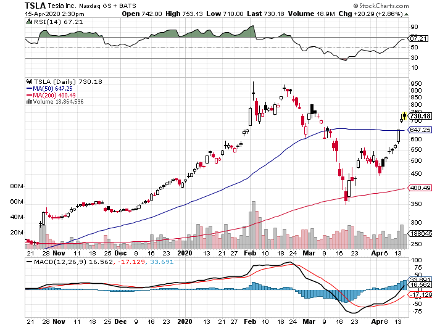
Tesla (TSLA) - June 17 2022 $1,080-$1,100 vertical bull call spread at $4.00 delivers a 400% gain with the stock at $1,100, up 51% from the current level. The pandemic is vastly accelerating all trends. One big one is the migration from internal combustion engines to electric power where Tesla has a ten-year and expanding head start. Sales at its new Shanghai factory in the first country to recover from the Coronavirus are blowing away its most optimistic view. The Model Y small SUV at the end of this year is expected to be the company’s biggest-selling model ever.
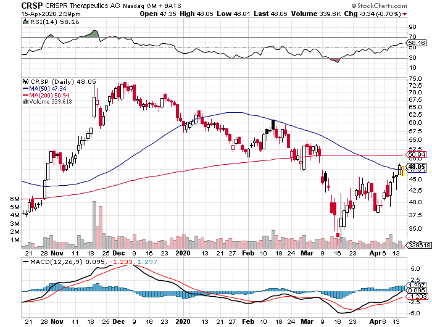
CRISPR Therapeutics (CRSP) - January 15 2021 $85-$90 vertical bull call spread at $1.00 delivers a 400% gain with the stock at $85, up 77% from the current level. It’s shorter-dated than the others, but this was the longest maturity posted on my trading platform. CRISPR Therapeutics is the dominant player in gene-editing technology, which is key to many biotech developments going forward. That includes beating the Coronavirus. The stock is an incredible bargain at this level, off 36% from its all-time high.
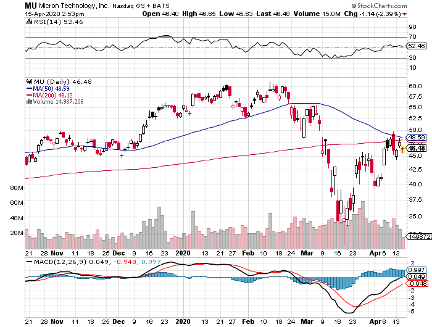
Micron Technology (MU) – January 21 2021 $85-$90 vertical bull call spread at $1.00 delivers a 400% gain with the stock at $90, up 96% from the current level. Coming out on the other side of the pandemic, there will be a massive global shortage of the computer chips that Micron Technology makes with already huge profit margins. A total no-brainer and I love visiting their Boise, Idaho headquarters.
To review my last list of Ten Long-Term LEAPS to Buy at the Market Bottom, please click here.

Yup, I Think I See Another Great LEAPS Opportunity