
Global Market Comments
June 27, 2023
Fiat Lux
Featured Trades:
(LAST CHANCE TO ATTEND THE THURSDAY, JULY 6 NEW YORK STRATEGY LUNCHEON)
(A BUY WRITE PRIMER), (AAPL)
CLICK HERE to download today's position sheet.

Global Market Comments
June 27, 2023
Fiat Lux
Featured Trades:
(LAST CHANCE TO ATTEND THE THURSDAY, JULY 6 NEW YORK STRATEGY LUNCHEON)
(A BUY WRITE PRIMER), (AAPL)
CLICK HERE to download today's position sheet.
Global Market Comments
June 26, 2023
Fiat Lux
Featured Trades:
(MARKET OUTLOOK FOR THE WEEK AHEAD, or IS THERE A COUP UNDERWAY IN RUSSIA?),
(AAPL), (GOOGL), (MSFT), (GE), (MU), (AMZN)
CLICK HERE to download today's position sheet.
I just received a call from the Marine Corps to go on emergency standby. This is not something the Corps does lightly.
The word is that there may be a coup d'etat underway in Russia and the entire US military has gone to a heightened alert status.
The Wagner group is Marching on Moscow with the intent of overthrowing the government, or at least the military. Putin took off in a plane which then disappeared radar, meaning he has either been shot down, or is flying low level to keep his destination secret.
This thing could go nuclear very easily, but only in Russia. It also could mean the end of the Ukraine War. There is nothing to do here as intelligence pours in over the weekend. We have ample satellites overhead and human intel on the ground.
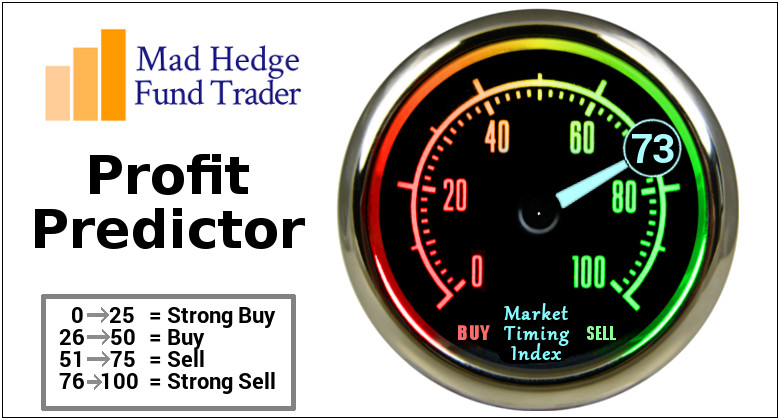
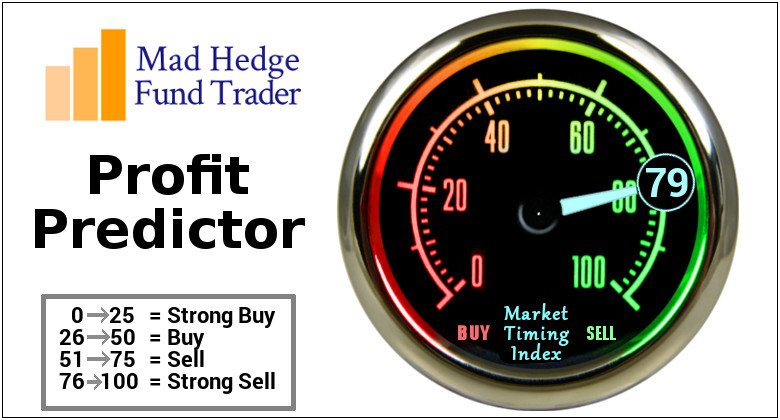
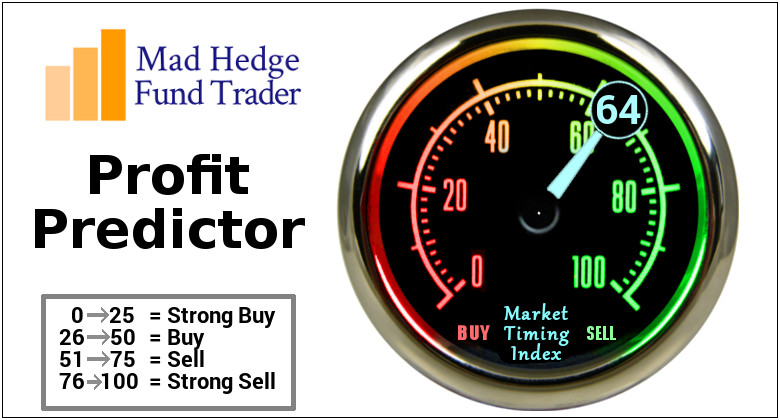
Expect market volatility today. The markets are ripe for a black swan-inducted selloff, which a Mad Hedge Market Timing Index at 82 was screaming at us.
I will be monitoring the situation closely.
My view that the markets were topping was vindicated last week. The “Magnificent Seven” which gained a record 25% in market capitalization in only eight weeks led the downturn, as they always do. But the AI surge that prompted the fastest equity creation in history is only just getting started.
This is against a backdrop of savage cost-cutting by Big Tech, which has had the effect of boosting earnings by an impressive 7% in only three months. My cleaning lady, gardener, dry cleaner, and shoe shine boy have started giving me stock tips yet, as they did in 2000, 2008, and 2020….but they are thinking about it.
While attention is focused elsewhere, one should not underestimate the importance of India Prime Minister Modi’s meeting with Joe Biden in Washington.
It signifies a major geopolitical shift out of the Russian orbit into the US one. Decades ago, India obtained all its weapon systems and nuclear power plants from Russia and was a major trading partner.
Now partnering up with Apple (AAPL), Google (GOOGL), Microsoft (MSFT), and General Electric (GE) is a much more attractive option. It is gaining a $2.7 billion factory from Micron Technology (MU) and presents a major market for its products. Amazon (AMZN) is investing $13 billion in cloud infrastructure there. The subcontinent graduates some 2.5 million STEM graduates a year and they need to be put to work in the global economy. It shows how limited Russia’s future really is. It’s a major win for the US.
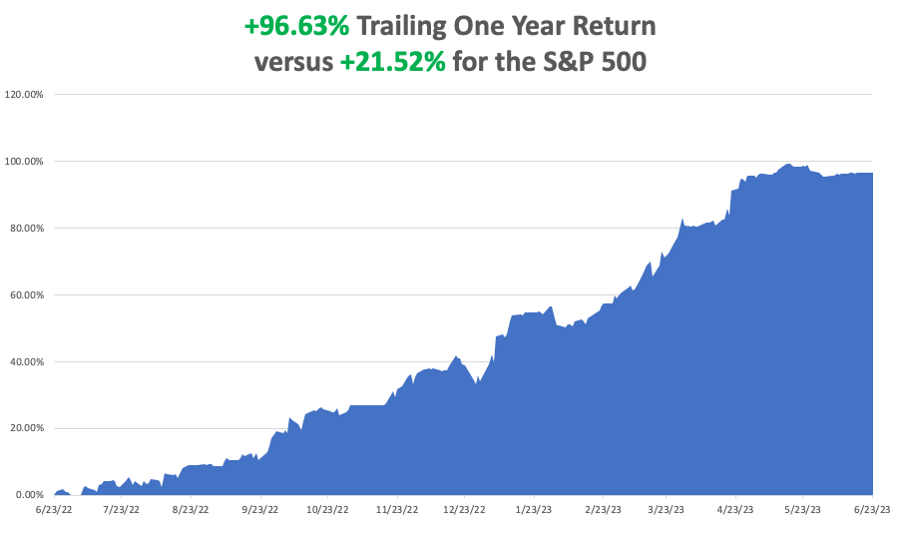
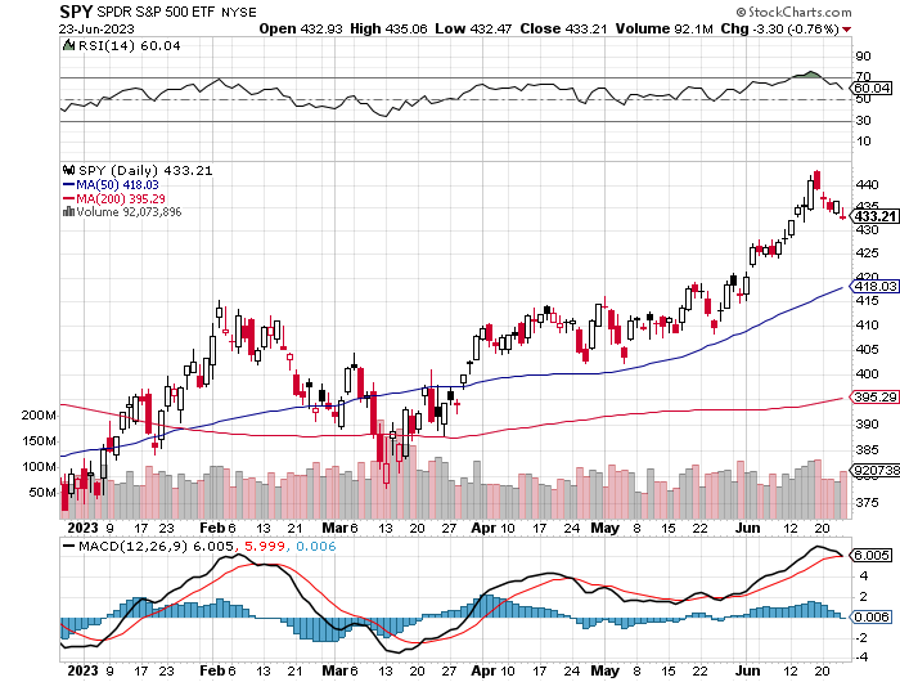
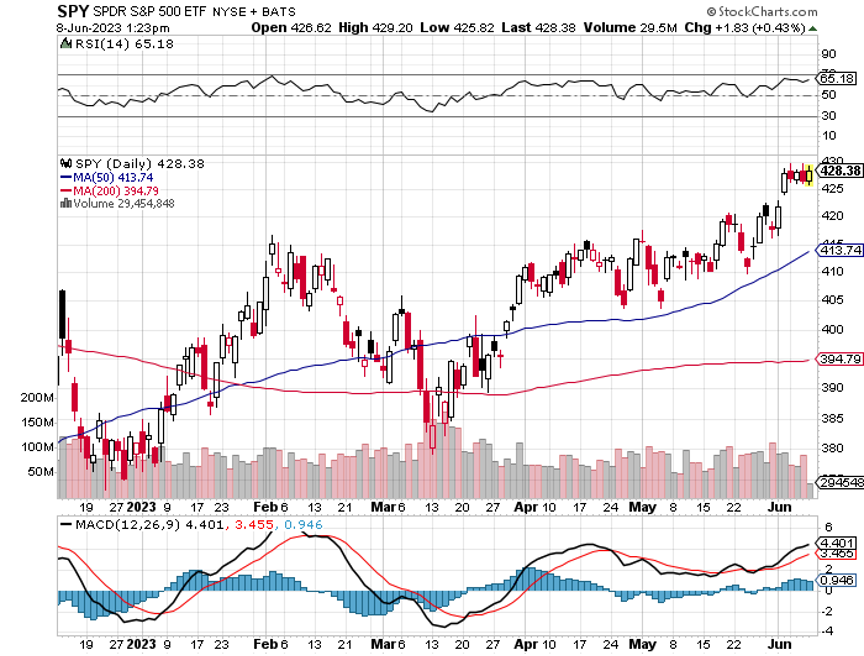
So far in June, we are up +0.47%. My 2023 year-to-date performance is still at an eye-popping +62.52%. The S&P 500 (SPY) is up only a respectable +14.00% so far in 2023. My trailing one-year return reached +96.63% versus +21.52% for the S&P 500.
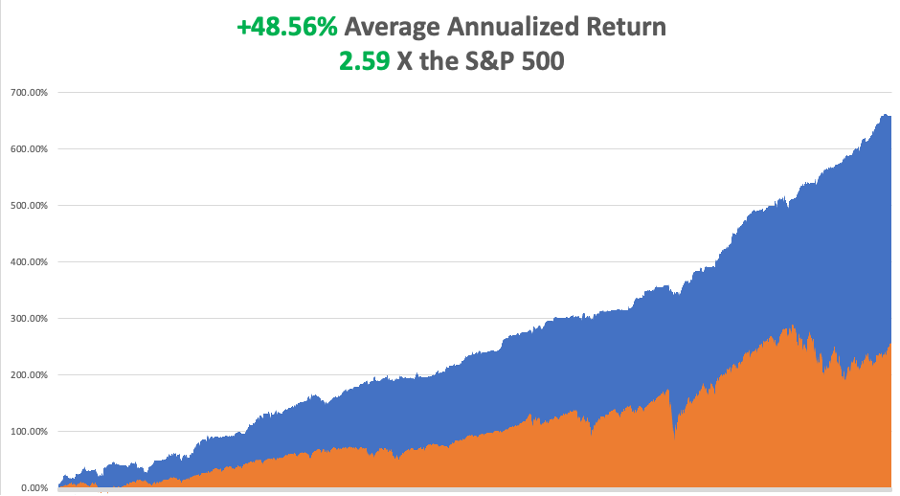
That brings my 15-year total return to +659.71%. My average annualized return has blasted up to +48.56%, another new high, some 2.59 times the S&P 500 over the same period.
Some 42 of my 46 trades this year have been profitable. Only 23 of my last 24 consecutive trade alerts have been profitable.
The Mad Hedge December 6-8 Summit Replays are Up. Listen to all 28 speakers opine on the best strategies, tactics, and instruments to use in these volatile markets. It is a true smorgasbord of investment strategies. Find the best one to suit your own goals. The product discounts offered last week are still valid. Start, stop, and pause the videos at your leisure. Best of all, access to the videos is FREE. Access them all by clicking here and then choosing the speaker of your choice. We look forward to working with you.The next summit is scheduled for September 12-14.
$2 Billion Fled Stock Market Last Week, according to a Bank of America survey, in what it calls a “Baby Bubble.” The markets are showing all the signs of an interim top, with either a 10% correction or a three-month flat line ahead of us. Time to strap on those Buy Writes for long-term shareholders.
Short Bets on US stocks Hit $1 trillion, the highest since April 2022. Shorts have so far lost $101 billion in 2023, with much of this hedged. The market is way overdue for a correction so these guys may finally be right. Even a broken clock is right twice a day.
Germany Signs Massive US Natural Gas Contract, in a major move to end reliance on Russian natural gas. Venture Global LNG will supply EnBW with 1.5 million tons a year of LNG starting in 2026. The 20-year sales and purchase agreement is Germany’s first binding deal with a US developer since the government announced ambitious plans to begin importing the super-chilled fuel. The move does a lot to eliminate the glut of gas in the US currently plaguing producers. Buy (UNG) LEAPS on dips. When China comes back on line, watch out!
Volatility Index ($VIX) Hits the $12 Handle, in a new multiyear low. At the high for the year in the S&P 500, complacency is running rampant. Time to add some downside hedges.
Copper Should be a “Critical Metal”, says billionaire Robert Friedland. A looming structural shortage is the reason, with the world going to an all-electric auto fleet and doubling of the electrical grid to accommodate it. Buy more (FCX) LEAPS on dips.
Leading Economic Indicators Down 0.7% for the 15th consecutive negative month. We are approaching the bottom of the trough in this cycle. I’ll focus on the half of the economy that is growing.
Distressed Commercial Property Debt is Exploding, up 10% to Q1 to $64 billion. Another $155 billion is waiting in the wings. This will go away when interest rates start to drop in six months.
My Ten-Year View
When we come out the other side of the recession, we will be perfectly poised to launch into my new American Golden Age, or the next Roaring Twenties. The economy decarbonizing and technology hyper-accelerating, creating enormous investment opportunities. The Dow Average will rise by 800% to 240,000 or more in the coming decade. The new America will be far more efficient and profitable than the old.
Dow 240,000 here we come!
On Monday, June 26 at 8:30 AM EST, the Dallas Fed Manufacturing Index is out.
On Tuesday, June 27 at 6:00 PM, S&P Case-Shiller National Home Price Index is published.
On Wednesday, June 28 at 7:30 AM, the Fed Governor Jay Powell speaks.
On Thursday, June 29 at 8:30 AM, the Weekly Jobless Claims are announced. The Final Report for Q1 US GDP is printed.
On Friday, June 30 at 8:30 AM, Personal Income and Spending is announced.
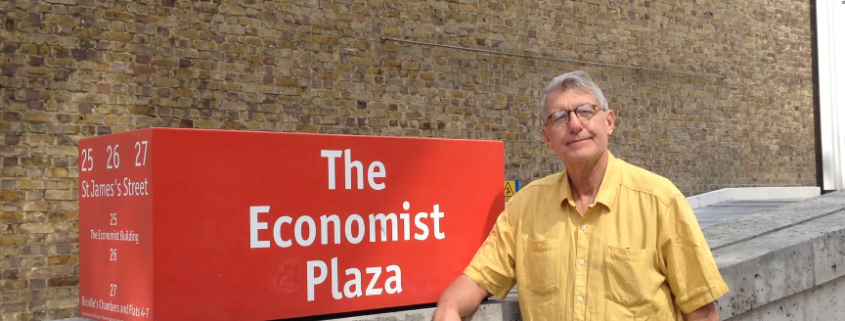
As for me, when I first met Andrew Knight, the editor of The Economist magazine in London 45 years ago, he almost fell off his feet. Andrew was well known in the financial community because his father was a famous WWII Battle of Britain Spitfire pilot from New Zealand.
At 34, he had just been appointed the second youngest editor in the magazine’s 150-year history. I had been reporting from Tokyo for years, filing two stories a week about Japanese banking, finance, and politics.
The Economist shared an office in Tokyo with the Financial Times, and to pay the rent I had to file an additional two stories a week for them as well. That’s where I saw my first fax machine, which then was as large as a washing machine even though the actual electronics would fit in a notebook. It cost $5,000.
The Economist was the greatest calling card to the establishment one could ever have. Any president, prime minister, CEO, central banker, or war criminal was suddenly available for a one-hour chart about the important affairs of the world.
Some of my biggest catches? Presidents Gerald Ford, Jimmy Carter, Ronald Reagan, George Bush, and Bill Clinton, China’s Zhou Enlai and Deng Xiaoping, Japan’s Emperor Hirohito, terrorist Yasir Arafat, and Teddy Roosevelt’s oldest daughter, Alice Roosevelt Longworth, the first woman to smoke cigarettes in the White House in 1905.
Andrew thought that the quality of my posts was so good that I had to be a retired banker at least 55 years old. We didn’t meet in person until I was invited to work the summer out of the magazine’s St. James Street office tower, just down the street from the palace of then Prince Charles.
When he was introduced to a gangly 25-year-old instead, he thought it was a practical joke, which The Economist was famous for. As for me, I was impressed with Andrew’s ironed and creased blue jeans, an unheard-of concept in the Wild West where I came from.
The first unusual thing I noticed working in the office was that we were each handed a bottle of whisky, gin, and wine every Friday. That was to keep us in the office working and out of the pub next door, the former embassy of the Republic of Texas from pre-1845. There is still a big white star on the front door.
Andrew told me I had just saved the magazine.
After the first oil shock in 1973, a global recession ensued, and all magazine advertising was cancelled. But because of the shock, it was assumed that heavily oil-dependent Japan would go bankrupt. As a result, the country’s banks were forced to pay a ruinous 2% premium on all international borrowing. These were known as “Japan rates.”
To restore Japan’s reputation and credit rating, the government and the banks launched an advertising campaign unprecedented in modern times. At one point, Japan accounted for 80% of all business advertising worldwide. To attract these ads the global media was screaming for more Japanese banking stories, and I was the only person in the world writing them.
Not only did I bail out The Economist, I ended up writing for over 50 business and finance publications around the world in every English-speaking country. I was knocking out 60 stories a month, or about two a day. By 26, I became the highest paid journalist in the Foreign Correspondents’ Club of Japan and a familiar figure in every bank head office in Tokyo.
The Economist was notorious for running practical jokes as real news every April Fool’s Day. In the late 1970s, an April 1 issue once did a full-page survey on a country off the west coast of India called San Serif.
It warned that if the West coast kept eroding, and the East coast continued silting up, the country would eventually run into India, creating serious geopolitical problems.
It wasn’t until someone figured out that the country, the prime minister, and every town on the map were named after a type font that the hoax was uncovered.
This was way back, in the pre-Microsoft Word era, when no one outside the London Typesetter’s Union knew what Times Roman, Calibri, or Mangal meant.
Andrew is now 84 and I haven’t seen him in yonks. My business editor, the brilliant Peter Martin, died of cancer in 2002 at a very young 54, and the magazine still awards an annual journalism scholarship in his name.
My boss at The Economist Intelligence Unit, which was modeled on Britain’s MI5 spy service, was Marjorie Deane, who was one of the first women to work in business journalism. She passed away in 2008 at 94. Today, her foundation awards an annual internship at the magazine.
When I stopped by the London office a few years ago I asked if they still handed out the free alcohol on Fridays. A young writer ruefully told me, “No, they don’t do that anymore.”
Sometimes, change is for the worse, not the better.
Good Luck and Good Trading
John Thomas
CEO & Publisher
The Diary of a Mad Hedge Fund Trader
Global Market Comments
June 23, 2023
Fiat Lux
Featured Trades:
(JUNE 21 BIWEEKLY STRATEGY WEBINAR Q&A),
(AAPL), (ABNB), (GLD), (BA), (CAT), (DE), (X), (PYPL), (SQ), (MSFT), (GD), (GE), (INDA), (META) (GOOGL), (CCI), (NVDA), (ABNB), (SNOW), (PLTR), (TSLA)
CLICK HERE to download today's position sheet.
Below please find subscribers’ Q&A for the June 21 Mad Hedge Fund Trader Global Strategy Webinar, broadcast from Lake Tahoe, NV.
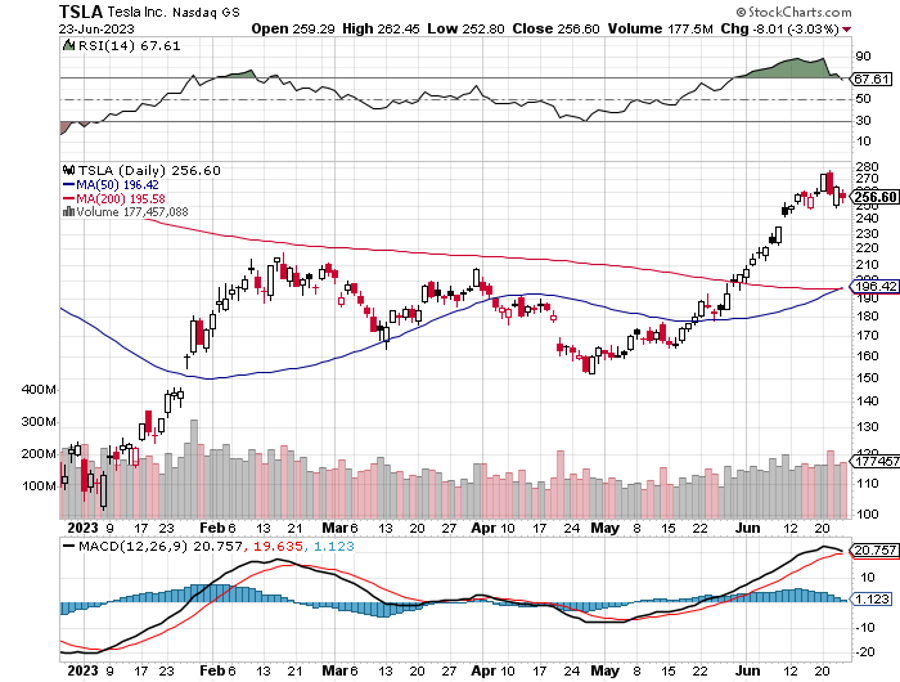
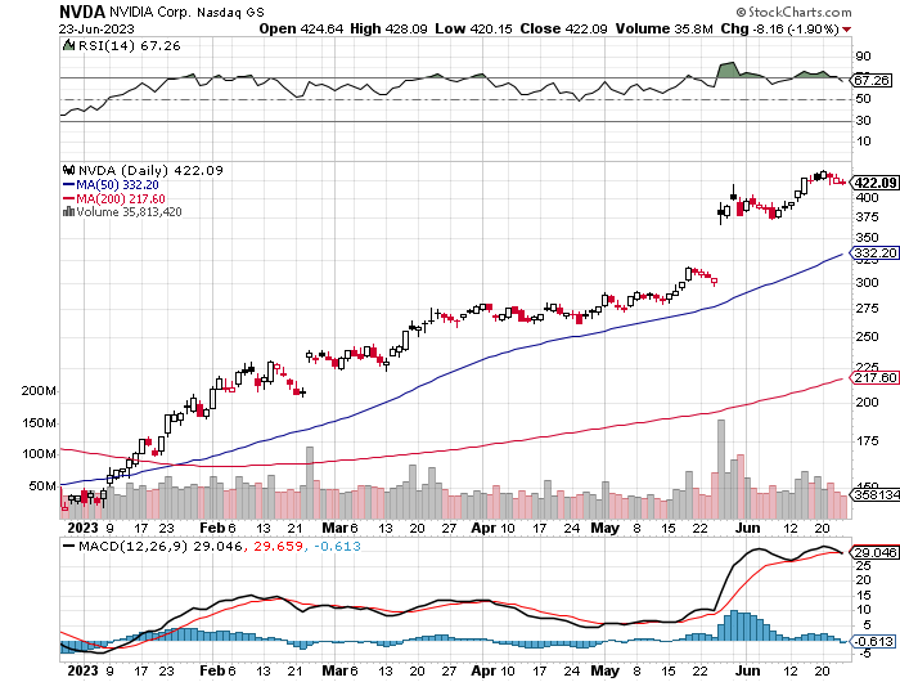
Q: When do we buy Nvidia (NVDA) and Tesla (TSLA)?
A: On at least a 20% dip. We have had ballistic moves—some of the sharpest up moves in the history of the stock market for large stocks—and certainly the greatest creation of market caps since the market was invented under the Buttonwood Tree in 1792 at 68 Wall Street. Tesla’s almost at a triple now. Tripling one of the world's largest companies in 6 months? You have to live as long as me to see that.
Q: Is it a good time to invest in Bitcoin?
A: No, absolutely not. You only want to invest in Bitcoin when we have an excess of cash and a shortage of assets. Right now, we have the opposite, a shortage of cash and an excess of assets, and that will probably continue for several years.
Q: Should I short Apple (APPL)?
A: Only if you’re a day trader. It’s hugely overbought for the short term, but still in a multiyear long-term uptrend. I think we could see Apple at $300 in the next one or two years.
Q: Is it better to focus on single stocks or ETFs?
A: Single stocks always, because a single stock will outperform a basket that's in an ETF by 2 to 1 or even 3 to 1. That's always the case; whenever you add stocks to a basket, it diversifies risk and dilutes the performance. Better to just own Tesla, and if you want to diversify, diversify to Nvidia, but then I live next door to these two companies. That's what I tell my friends. You only diversify if you don’t know what is going to happen, which is most investors and financial advisors.
Q: Is the bottom of the housing market in, and are we due for a spike in home prices when interest rates can only go lower?
A: Yes, absolutely. In fact, we will enter a new 10-year bull leg for housing because we have a structural shortage of 10 million homes and 82 million millennials desperately trying to buy them at any price. I just got a call from my broker and she is panicking because she is running out of inventory. Even the lemons are starting to move.
Q: When do you think energy will rise?
A: Falling interest rates could be a good key because it sets the whole global economy on fire and increases energy demand.
Q: Outlook for the S&P 500 (SPY) second half of the year?
A: We hit 4,800 at least, maybe even higher. That's about a little more than 10% from here, so it’s not that much of a stretch, not like it was at the beginning of the year when it needed to rise 25% to reach my yearend target.
Q: Best time to invest from here on?
A: Either a 10% pullback in the market, or a sideways move of 3 months—that's called a time correction. It usually counts as a price correction because of course, over 3 months, earnings go up a lot, especially in tech.
Q: I’m seeing grains (WEAT) in rally mode.
A: Yes, that's true. They are commodities, and just like copper’s been rallying, and it’s yet another signal that we may get a much broader global commodity rally in everything: iron ore, coal, energy, gold, silver, you name it.
Q: Will inflation drop to 2%, causing stocks to go on another epic run?
A: The answer is yes, I do see inflation dropping to 2% —maybe not this year, but next year; not because of any action the Fed is doing, but because technology is hyper-accelerating, and technology is highly deflationary. The tech product you bought two years ago is now half the price, and they offer you twice as much functionality with an auto-renew for life. So, that is happening across the entire technology front and feeds into the inflation numbers big time, including labor. There's going to be a lot of labor replacement by machines and AI in the coming years.
Q: Is Airbnb (ABNB) a good stock to buy?
A: Well, if we’re going into the most perfect travel storm of all time, which is this summer, and which is why I’m going to remote places only like Cortina, Italy. Airbnb is the perfect stock to own. It’s a well-run company even in normal times.
Q: Should I buy gold here on the pullback?
A: Yes, you should. Gold is also highly sensitive to any decline in interest rates, and by the way: buy silver, it always moves 2.5x as much as the barbarous relic.
Q: How can inflation not go up if commodities and wage demands are going up due to state and federal unions? What about farm equipment and truck supplies? Costs keep rising, should we buy John Deere (DE)?
A: There are three questions here. Inflation will not go up because, though commodities will rise, they are only 0.6% of the $100 trillion global economy, or $660 billion in 2022. That will be more than offset by technology cutting prices, which is 30% of the stock market. You have to realize how important each individual element is in the global picture. And regarding wage demands going up caused by state and federal unions, less than 11.3% of the workforce is now unionized and that figure has been declining for 40 years. Most growth in the economy has been in non-unionized technology firms which largely depend on temporary workers, by design. What IS unionized is mostly teachers, the lowest paid workers in the economy, so incremental pay rises will be small. Unions were absolutely slaughtered when 25 million jobs were offshored to China during the Bush administration. Buy farm equipment and trucks? Absolutely, buy John Deere (DE) and buy Caterpillar (CAT) on the next dip. I was actually looking at Caterpillar for the next LEAPS the other day, but it’s already had a big run; I'm going to wait for a pullback before I get CAT and John Deere. So, again, people see headlines, see union wage headlines—I say focus on the 89% and not on the 11% if you want to make good decisions.
Q: Is Boeing (BA) a buy on the dip?
A: Yes, they got 1,000 new aircraft orders and the stock hasn't moved. So yes, if you get any kind of selloff down to $200, I'd be hoovering this thing up.
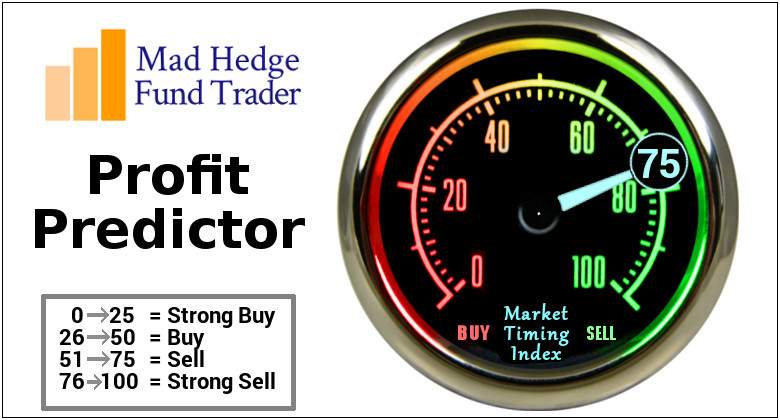
Q: Can you please explain how the profit predictor works?
A: It’s a long story; just go to our website, log in and do a search for “profit predictor,” and you’ll get a full explanation of how it works. It’s actually where Mad Hedge has been using artificial intelligence for 11 years, which is why our performance has doubled. Just for fun, I'll run the piece next week.
Q: Gold (GLD) is having a hard time going up because Russia is being squeezed by other governments. Since they need cash, they may be either selling their gold or stop buying new gold.
A: That is a good point, but at the end of the day, interest rates are the number one driver of all precious metals—period, end of story. We’re long gold too, I’ve got lots of gold coins stashed around the world in various safe deposit boxes, and I'm keeping them. I’ve got even more silver coins, which take up a lot of space.
Q: Do you like India (INDA) long term?
A: Yes, it’s the next China. But as Apple is finding out it is very difficult to get anything done there. A radical reforming Prime Minster Modi may be changing things there with his recent Biden visit and (GE) contract to build jet engines.
Q: What do you think of General Dynamics Corp (GD)?
A: I like General Dynamics because I think defense spending is in a permanent long term upcycle as a result of the Ukraine war. And it won’t end with the Ukraine war—the threat will always be out there, and the buying is done by not only us but all the other countries that think Russia is a threat.
Q: Do you like MP Materials Corp (MP)?
A: Yes, I do. The whole commodities space is ready to take off and go on fire.
Q: What about Square (SQ)?
A: The only reason I’m not recommending Square right now is huge competition in the entire sector, where all the stocks including PayPal (PYPL) are getting crushed. I will pass on Square for now, especially when I can buy US Steel (X) at close to its low for the year.
Q: If you had to pick one: Nvidia (NVDA), Tesla (TSLA), Microsoft (MSFT), Meta (META), and Google (GOOGL), which is the best to buy for next year?
A: All of them. Diversify. If I have to pick the top performer, it’s going to be either Tesla or Nvidia, probably Nvidia. But you need at least a 10% correction before you do anything. Actually, the split-adjusted price for our first (NVDA) recommendation eight years ago was $2 a share.
Q: Do you like Crown Castle International (CCI)?
A: Yes, I like it very much—it has very high dividend yield at 5.5%. The reason it hasn’t moved yet is that as long as interest rates are high, any REIT structure will suffer, and (CCI) has a REIT structure. Sure, it’s in a great sector—5G cell towers—but it is still a REIT nonetheless, and those will start to recover when interest rates go down; that’s why we did a 2.5-year LEAPS on CCI. For sure interest rates are going to go down in the next 2.5 years, and you will double your money on (CCI). That’s why we put it out.
Q: Which mid cap will do best over the long term: Airbnb (ABNB), Snowflake (SNOW), or Palantir (PLTR)?
A: That’s easy: Snowflake. They have such an overwhelming technology on the database and security front; I would be buying Snowflake all day long. Even Warren Buffet owns Snowflake, so that’s good enough for me.
Q: Could you comment on the pace of EV adoption/potential for (TSLA) robot fleet acceleration and implications for oil investments in holding pattern till the eventual collapse to near 0?
A: Yes, oil may collapse to near zero, but it may take twenty years to do it—that’s how long it takes to transition an energy source. That’s how long it took the move from horses and hay to gasoline-powered cars at the beginning of the 20th century. A national robot fleet of taxis with no drivers at all is a couple of years off. There are about 1,000 of them working in San Francisco right now, but they still have more work to do on the software. When it gets foggy, they often congregate at intersections causing traffic jams. Suffice it to say that eventually Tesla shares go to $1,000 and after that, $10,000—that’s my bet. By the way, my Tesla January 2025 $595-$600 LEAPS are starting to look pretty good.
To watch a replay of this webinar with all the charts, bells, whistles, and classic rock music, just log in to www.madhedgefundtrader.com , go to MY ACCOUNT, click on GLOBAL TRADING DISPATCH or TECHNOLOGY LETTER, then WEBINARS, and all the webinars from the last 12 years are there in all their glory.
Good Luck and Stay Healthy,
John Thomas
CEO & Publisher
The Diary of a Mad Hedge Fund Trader
2018 in Australia
Mad Hedge Biotech and Healthcare Letter
June 20, 2023
Fiat Lux
Featured Trade:
(THE RISE OF THE TRILLION-DOLLAR PHARMA)
(LLY), (NVO), (AAPL), (MSFT)
It's hardly a surprise when we think of titans like Apple (AAPL) and Microsoft (MSFT) topping the trillion-dollar club. After all, these tech leviathans have their tendrils in the lives of billions worldwide.
But guess what? This playground isn't just for tech heavyweights.
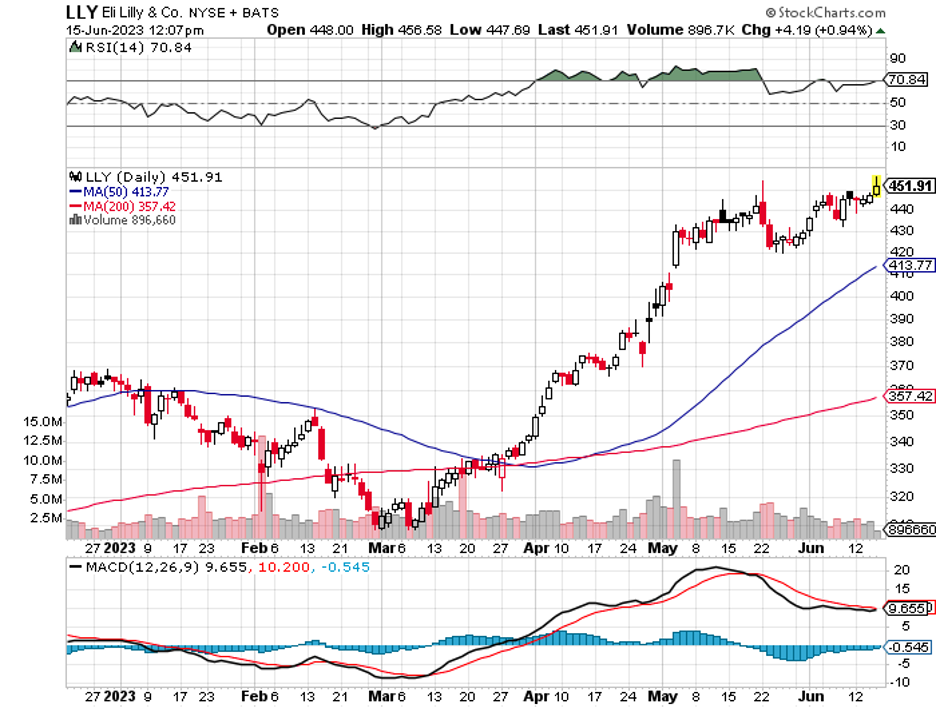
There's another contender in the ring, flexing its muscles from the biotechnology and healthcare sector: Eli Lilly (LLY).
Even as I write, I can almost hear the gears of potential turning. Eli Lilly could soon be donning the badge of the biopharma representative in the trillion-dollar league. What's more, this could happen sooner than you might think—say, before we're toasting to 2030.
Today, Eli Lilly stands proud with a market cap hovering over $410 billion, rubbing shoulders with the crème de la crème of the pharmaceutical world.
To reach the coveted trillion by 2030, it needs to rev up its growth engine by almost 166% in the next six or so years.
Given that its market cap ballooned by 178% since May 2020, we're not betting against the odds here.
Let's dissect this potential behemoth and scrutinize its growth prospects, valuation, and their likely dance over time.
With a trailing 12-month net income of $6.2 billion and a price-to-earnings ratio lingering around 69, Eli Lilly isn't exactly shy.
This valuation is higher than the industry standard but not bloated like some tech stocks.
Credit its remarkable net income growth of around 14% per annum over the last decade to persistent R&D investment, the frequent launch of new sought-after medicines, and strategic label expansions for its already-approved drugs.
Now, the market is giddy with anticipation, pricing in growth that surpasses its own impressive average. This is likely due to Eli Lilly's ambitious ventures into thriving markets with treatments for conditions like diabetes, obesity, and chronic kidney disease.
If Eli Lilly maintains its current PE ratio and boosts its earnings by a mere 13.5% each year between now and 2030, it will rake in a net income of about $15.1 billion, nudging its market cap just above $1 trillion.
A lofty goal? Perhaps, but Eli Lilly isn't one to back away from a challenge.
The question hanging in the air like an eager balloon is whether the company can maintain this steady pace.
Analysts are optimistic, predicting an EPS of $8.76 in 2023 and around $16 in 2025. This promising growth is tied to the launch of new medicines from its four programs awaiting approval decisions and a Phase 3 roster filled with 21 promising programs.
Meanwhile, Eli Lilly is acing its game in another affluent market: obesity treatments.
The company has long been a trailblazer in diabetes and obesity drugs, and its recent approval of Mounjaro, a revolutionary treatment for Type 2 diabetes, adds another feather to its cap.
Mounjaro has made waves, garnering $568.5 million in sales in the first quarter, and is predicted to hit peak annual revenue of $25 billion.
Obesity, a global health concern responsible for at least 2.8 million deaths yearly, opens up another massive market for Eli Lilly.
Branded anti-obesity drugs could hit $44 billion in risk-adjusted sales by 2030, up from a modest $2.5 billion in 2022.
As it stands, Eli Lilly's primary contender in this arena is Novo Nordisk (NVO).
So, can Eli Lilly flex its muscles and reach a market cap of $1 trillion by 2030? Signs point to a resounding yes.
With a steady stream of treatments on the horizon and a projected growth trajectory through the end of the decade, it seems to be business as usual for Eli Lilly.
However, like a precarious game of Jenga, the entire venture hinges on its valuation. As long as investors see sunny days ahead, all's well. But maintaining a P/E ratio of around 70 isn't a walk in the park. A dip in performance or a market crash could bring the whole structure down.
That being said, don't let these concerns hold you back from joining Eli Lilly's growth ride. Come 2030, you'll probably be smiling at your investment, whether or not Eli Lilly cracks that 13-digit milestone.
Global Market Comments
June 9, 2023
Fiat Lux
Featured Trades:
(JUNE 7 BIWEEKLY STRATEGY WEBINAR Q&A),
($VIX), (TSLA), (TLT), (FCX), (RUT), (COIN), (AAPL),
(ROM), (AMZN), (PYPL), (NVDA), (COPX), (FXI)
CLICK HERE to download today's position sheet.
Below please find subscribers’ Q&A for the June 7 Mad Hedge Fund Trader Global Strategy Webinar, broadcast from Lake Tahoe, NV.
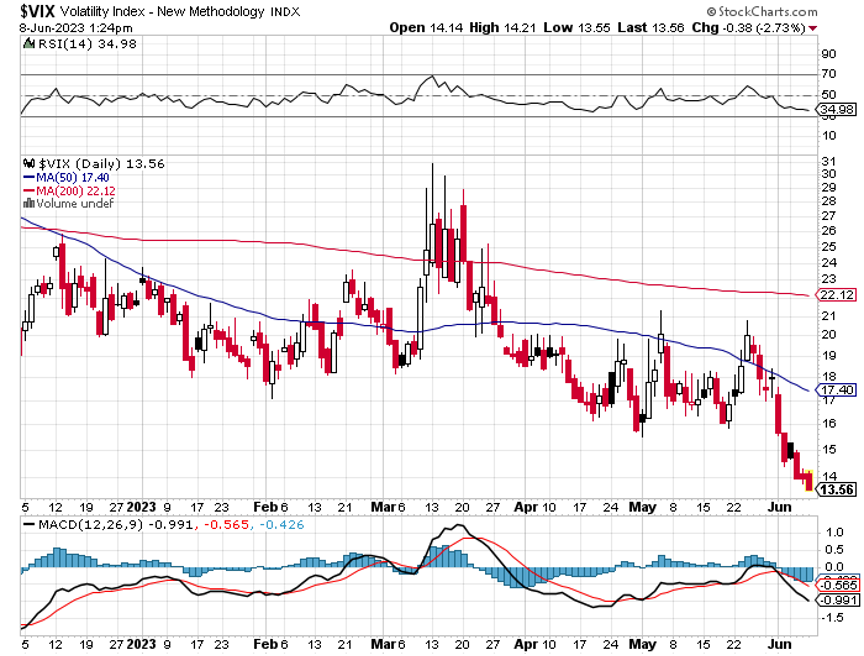
Q: Do you ever trade the CBOE Volatility Index ($VIX)?
A: No, I used to, but I got hit a few times. That’s because 95% of the year is spent seeing the ($VIX) go down, and then the other 5% basically doubles overnight. It’s a short play only. With a long ($VIX), the time decay is enormous, and it’s just not worth owning. The only way to make money in ($VIX) is to buy it right before a giant VIX spike. And the floor traders in Chicago have a huge inside advantage in that market. So, I finally gave up and decided there's better things to do.
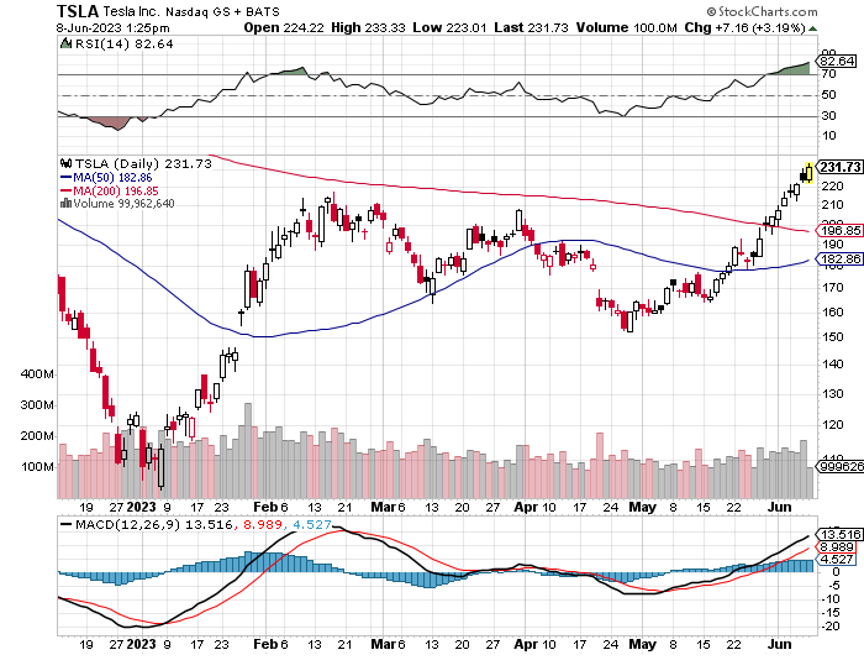
Q: Buy the price dip for Tesla (TSLA)?
A: I’d have to look at the charts, but if it gets back down to $200, I would start hoovering it up again. The fundamentals are really arriving for Tesla big time, as is the long-term bull case.
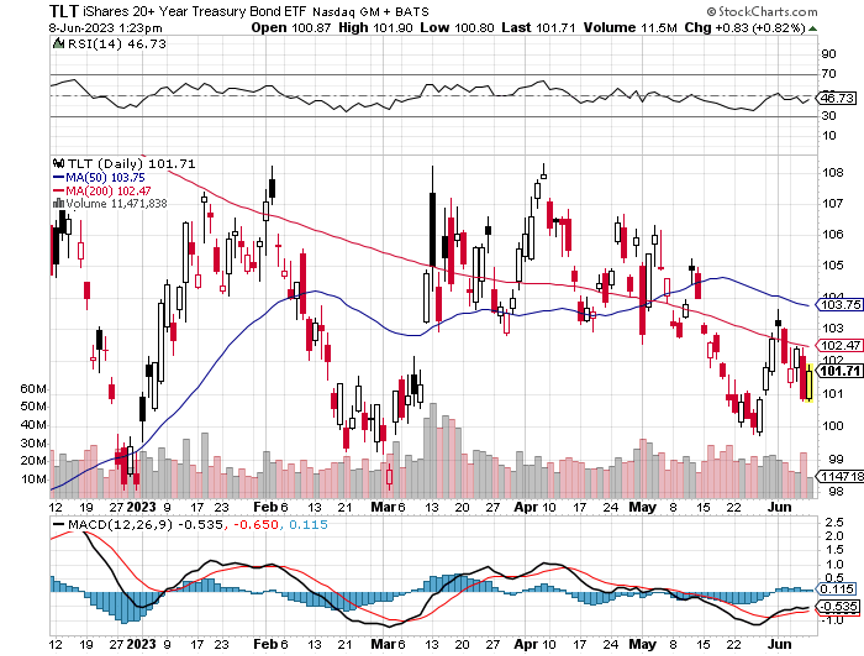
Q: With the debt crisis over, how low will the iShares 20 Plus Year Treasury Bond ETF (TLT) go in the short term?
A: Well, we know they have to issue a trillion dollars of 90-day T-bills in the next few weeks. The debt ceiling crisis stopped Treasury bill issuance for several months and now they have a lot of catch-up to do. So, best case scenario, the (TLT) drops to $95, then you load the boat for the rest of your life in (TLT) LEAPS, like a $95-$100 2024 LEAPS. And that should double about every year.
Q: Are you concerned about commodities given the weakness in the Chinese economy?
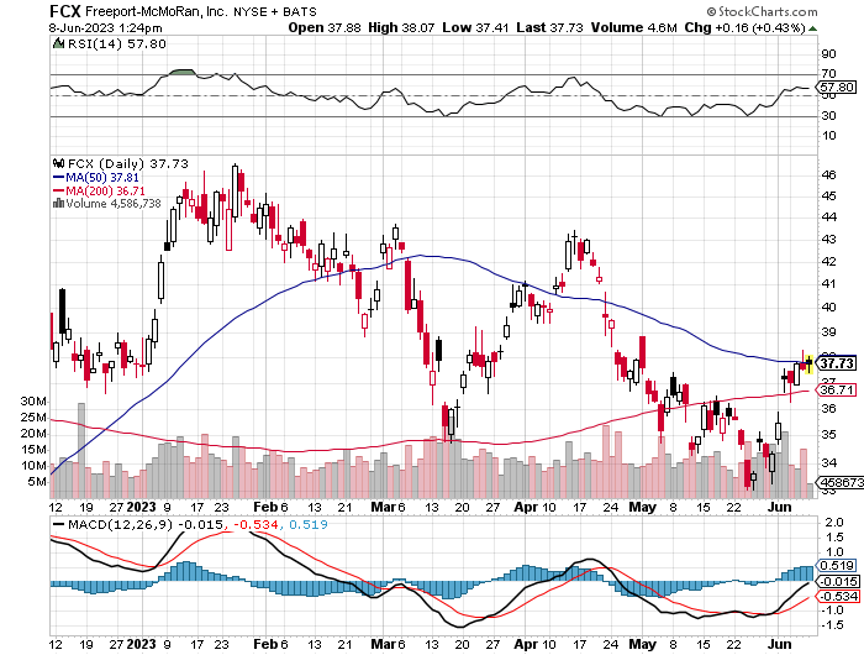
A: Yes, it’s definitely slowing the commodities recovery, but is also giving you a fantastic opportunity to get into things like Freeport McMoRan (FCX) at a cheaper price, where it was just a couple of weeks ago. All of the commodities look like they’re bottoming now, it’s time to buy them.
Q: It seems like you really love the Russell 2000 (RUT).
A: I hate the Russell. You only want to own big money stocks because that's where the big money goes first. Big money doesn’t go into the Russell, and as long as there's any doubt of a recession coming, they’ll perform poorly.
Q: Coinbase (COIN) is getting sued by the SEC, should I buy on the dip?
A: No, the whole crypto infrastructure is getting sued out of existence and disappearing. They went after Binance also. It seems like the SEC just doesn’t like crypto very much. That kind of shrinks the whole industry back down to hot wallets, where you slowly have direct control of your bitcoin on the network and you don't use any outside brokers to buy and sell it because there may not be any left shortly.
Q: Should we still hold the Apple (AAPL) bull call spread?
A: Yes, I think we have enough room on our call spread in the next 7 trading days to take max profit. However, if you have any doubts, no one ever gets fired for taking a profit.
Q: Is the ProShares Ultra Technology ETF (ROM) a buy at this time?
A: No, if anything, ROM is a sell. It almost had a near-double move. So no, wait for a 20% or 30% correction this summer in ROM and then go in. It has actually led most tech because it's a 2X long ETF. Sometimes I just want to shoot myself. You buy before stocks double, not afterwards.
Q: What will trigger a correction this summer?
A: The risk of a further rise in interest rates, which we may get. Other than that, the market is running out of negatives.
Q: What is the risk of US currency not being the world reserve?
A: Zero. I have been asked this question every day for the last 50 years and so far, I have been right. What would you rather keep your savings in Chinese Yuan, Russian rubles, or Euros? I would say none of those. And US currency will remain the reserve currency for this century, easily, until a digital US dollar comes out.
Q: Do you want to buy the cellphone companies?
A: No, not really. They weren’t very interesting before—it's a low margin, highly competitive cutthroat business—and now you have one of the world's largest companies, Amazon (AMZN), potentially offering phones for free? I think I'll pass on that one.
Q: Do you have any interest in pairs trading?
A: No, they blow up too often.
Q: Did you say you sent out a one-year LEAPS on Freeport McMoRan (FCX), the $35-$38?
A: Yes, if you didn’t get it, email customer support.
Q: Are investing in 90-day Treasury bills until the next one or two Fed meetings are over a good idea?
A: Yes, that is a good idea. Cash has a high-value night now. Remember, a dollar at a market top is worth $10 at a market bottom, and we now have a rare opportunity to get paid 5.2% or 5.3% while we wait. That hasn’t happened in almost 20 years.
Q: Will the new Apple VR headset be a boon to the stock price?
A: Yes, adding 10% to your earnings is always good, but it won’t happen immediately. You need a few thousand third-party app developers to come through with services before the earnings really get going. That's what happened with iTunes when the iPhone came out. Growth was slow when Apple only allowed its in-house apps to be sold—when they opened to the public, the business went up 100 times. That's maybe what will happen with the virtual headset.
Q: PayPal (PYPL) has dropped a lot, should I buy it here?
A: No, cutthroat competition in the sector is destroying the share price. There are too many other better things to buy.
Q: Why do so many professional analysts say the market will go down this year, but it goes up every day?
A: Professional analysts are just that—they're analysts, not traders. And often these days, to save money, your professional analyst is 26 years old, so they don’t have much market experience. I like to think that 50 years of trading experience backed with algorithms helps.
Q: Do you think oil could hit $100 a barrel next year?
A: Yes, definitely. Especially if we get a decent economic recovery and Saudi Arabia doesn’t immediately bring back 3 million barrels a day that they’ve cut.
Q: Should I chase NVIDIA (NVDA) here?
A: No, better to own cash here than Nvidia. Buy Nvidia on the next dip, or another Nvidia wannabe company, which will almost certainly arrive shortly.
Q: When will we get peace in Ukraine?
A: Within a year, I would say. Russia has literally run out of ammunition, and Ukraine is getting more. Ukraine is also getting F16s, our older fighter planes, and many other advanced weapons and parts—those are a big help. They can beat anything the Russians throw up.
Q: Is Global X Copper Miners ETF (COPX) a good copper play?
A: Yes it is, but you don’t get the leverage that you do with an FCX LEAP. I don’t know how far the top will go, but that would be a great trade one to two years out.
Q: Can you explain why there is a short squeeze in copper?
A: There are 200 pounds of copper needed for each EV, and EV production is exploding both here and in China. Tesla is expected to make 2 million EVs this year, especially with the $33,000 price point. China manufactures this many EVs as well. Four million EVS and 200 pounds of copper per EV equals the entire annual production of copper right now. At some point, people will notice that and they’ll take copper as much as they took lithium up last year.
Q: What do you mean when you say LEAPS one or two years?
A: It really depends on your risk. When you buy a two-year LEAPS, you usually get the extra year for free or almost nothing, and if you get a rapid increase in the underlying share price, the two-year LEAP will go up almost as much as the one year. So for most people who don’t want to watch the market every day, the two-year LEAPS is probably a better choice.
Q: Why did you buy only one LEAPS contracts?
A: All of my LEAPS recommendations are only for one contract. It is up to you to decide what your risk tolerance and experience level is, whether you buy 1, 100, or 1,000 contracts, so I leave the size up to you because it can vary tremendously depending on the person. Also, one contract makes the math really easy for people to understand.
Q: At what point do you sell your LEAPS?
A: Well, if you get a rapid 500% profit, which happened with many of the LEAPS that we did in October as well as the ones we did in March, I would take it. However, the goal on these is to go for the 10 baggers, or the 100% return in a year, and you usually need to hold it for the full year to get that. But, if the stock takes off like a rocket, I would take the profit. How many times in your life do you get a 500% profit in a month or two? I would say none. So, when you get that with these LEAPS recommendations, take it and run like a madman, move to a different country, and change your name.
Q: With the ($VIX) this low and many great companies for the second half down, would you buy single LEAPS instead of spreads?
A: I would; the problem with the call spread strategy is that it’s not the best thing to do at big market bottoms, down 20%, 30%, and 40%. The better thing to do is the LEAPS, but the LEAPS is a one- or two-year position, and I have to be sending out trade alerts every day. At market bottoms, you definitely want to get the most market leverage possible on the upside, and LEAPS does that for you in spades. They essentially turn your stock into a synthetic futures contract with a 10x leverage.
Q: When do we expect China (FXI) to take over Taiwan?
A: Never, because if they invade Taiwan, China loses its food supply from the US, which cannot be replaced anywhere. They also lose their international trade, so they won’t have the profits with which to buy food elsewhere. I’ve been in China when millions died during a famine and let me tell you, there is NO substitute for food. Not all the money in the world can buy it when it just plain isn’t available. But China will keep threatening and bluffing as they have done for 74 years.
To watch a replay of this webinar with all the charts, bells, whistles, and classic rock music, just log in to www.madhedgefundtrader.com, go to MY ACCOUNT, click on GLOBAL TRADING DISPATCH or TECHNOLOGY LETTER then WEBINARS, and all the webinars from the last 12 years are there in all their glory.
Good Luck and Stay Healthy,
John Thomas
CEO & Publisher
The Diary of a Mad Hedge Fund Trader

Sometimes the Market Can be Tough to Figure Out
Global Market Comments
May 31, 2023
Fiat Lux
Featured Trades:
(WHAT AI CAN AND CAN’T DO)
(AAPL), (GOOGL), (AMZN), (AMZN), (TSLA), (NVDA), (MU)
CLICK HERE to download today's position sheet.