• support@madhedgefundtrader.com
  • Member Login
Mad Hedge Fund Trader
  • Home
  • About
  • Store
  • Luncheons
  • Testimonials
  • Contact Us
  • Click to open the search input field Click to open the search input field Search
  • Menu Menu

Tag Archive for: (BTC)

Mad Hedge Fund Trader

Can Novavax Extend Its Winning Streak?

Biotech Letter

Would you believe that there was a bigger winner than Bitcoin (BTC) in 2020?

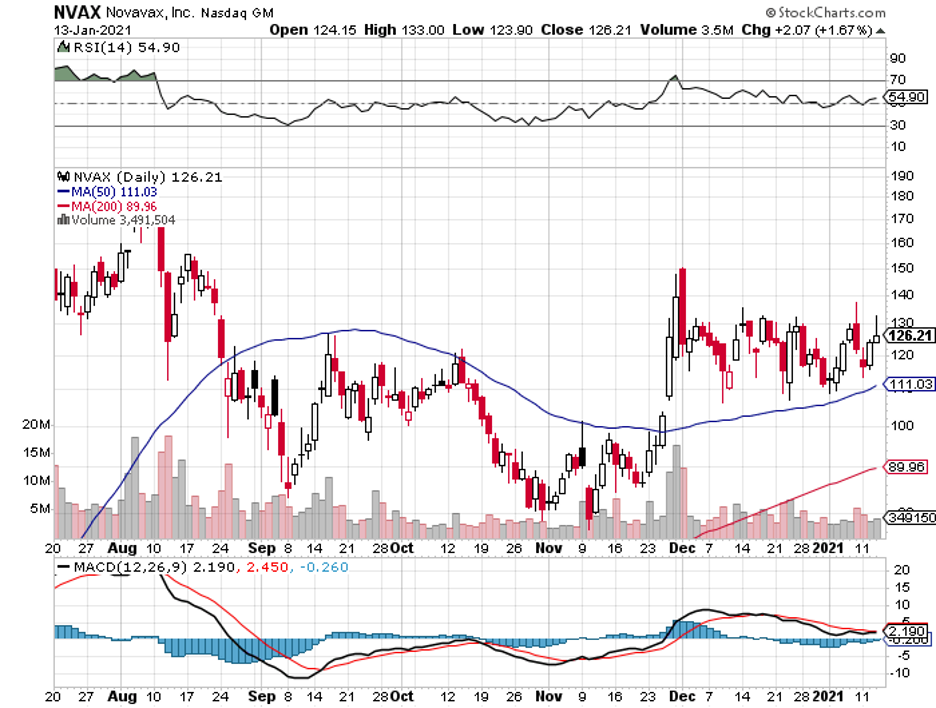
Amid the fanfare generated by COVID-19 vaccine developers like Moderna (MRNA) and Pfizer (PFE), there’s one biotechnology company that has quietly boosted its humble $4 share price to an impressive $128: Novavax (NVAX).

As incredible as that sounds, this isn’t the most unbelievable prediction for Novavax.

Despite recording a jaw-dropping 2,600% increase last year, this Maryland-based biotechnology company is projected to sustain the momentum in 2021 and beyond.

Let me share how Novavax can achieve a long-lasting winning streak.

Unlike Moderna and Pfizer, Novavax did not utilize RNA technology to develop NVX-CoV2373. Instead, the company opted for a more established approach.

The decision to pursue a more established technology could be viewed as a cost-cutting strategy for Novavax.

Doing so means dramatically lowering supply chain pressures, such as storage issues.

In effect, the Novavax vaccine would be the more convenient option that offers an equally potent result.

At this point, Novavax has yet to reveal its Phase 3 trial results. The tests, which involve trials in the UK, would prove to be the turning point for the company’s future.

Here’s a rough estimate of how the results could affect Novavax shares.

If the results show that NVX-CoV2373 is 90% effective, this would put the vaccine in the same league as Pfizer and Moderna. Consequently, shares will go up by 30% with this news.

Meanwhile, an efficacy result clocking in at less than 80% would have the stock falling by up to 20% primarily due to the strong competition in the COVID-19 market.

Approximately $40 billion in COVID-19 revenue is at stake this year.

While competitors Pfizer, Moderna, and AstraZeneca (AZN) have already had their vaccines approved for emergency use, Novavax still has a strong chance of getting a piece of the action.

Despite these candidates getting rolled out in other countries, Novavax’s NVAX-CoV2373 remains a heavy favorite among experts and analysts alike.

At this rate, NVX-CoV2373 could generate at least $4 billion of the $40 billion COVID-19 market in 2021.

Considering that Novavax has an $8 billion market capitalization, this alone more than justifies the company’s valuation.

Admittedly, Pfizer and Moderna hold the competitive advantage in being the first to market. It wouldn’t be surprising if both would end up gobbling up market share while Novavax awaits regulatory approval.

More importantly, both have achieved the coveted name recognition when it comes to COVID-19 vaccine so that could offer them power in the soon-to-be-crowded marketplace down the road.

However, both vaccine leaders have a considerable drawback.

Their vaccines require extremely delicate storage and transportation.

In fact, Pfizer and BioNTech’s (BNTX) BNT162b2 must be stored at minus 94 degrees—a requirement that not all countries, much less commercial distributors could adhere to.

This is where Novavax’s vaccine comes in.

NVX-CoV2373 can be stored and transported at refrigerated temperatures. This means it would be easier to distribute particularly in remote areas.

Any hiccups with storage or transportation involving the Moderna or Pfizer vaccines could offer Novavax an opening to generate vaccine sales that would otherwise no longer be available.

This scenario would translate to a more dominant presence of Novavax in the second half of 2021 until the early part of 2022.

Pfizer and Moderna may have been the first to market, but Novavax’s vaccine holds the potential to generate a sizable impact on sales over the long term.

In terms of revenue, the vaccine would be a significant boost for Novavax. It would transform from a zero product revenue to billions in a short period.

While Novavax has yet to announce the official pricing for the product, we can use its US price of $16 per dose as a benchmark for the rest of the contracts.

So far, Novavax has secured roughly orders for 300 million doses in the US alone. This would amount to $4.8 billion in sales—and all signs point to the number climbing higher this year.

Novavax has been ramping up its capacity to produce as many as 2 billion doses by mid-2021.

In comparison, Pfizer has a maximum capacity of 1.3 billion doses this year while Moderna would peak at 1 billion.

Evidently, Novavax holds an edge over the two companies in terms of capacity to fill orders.

Outside its COVID-19 efforts, Novavax has another potential blockbuster in its pipeline.

Although data is sparse, the company is expected to file for regulatory approval for its experimental flu vaccine called NanoFlu.

Oddly enough, NanoFlu was the reason that Novavax trounced the cryptocurrency surges in 2020.

Investors got all fired up following the promising showing of the flu vaccine candidate, with the stock gaining unprecedented attention when it reported remarkable results in a head-to-head study against the leading flu vaccine in the market today, Sanofi’s (SNY) FluZone Quadrivalent.

With all these in mind, Novavax’s earnings outlook is showing strong signs of even more stellar and stronger performance than that of Moderna this year.

So far, earnings per share for Novavax this year is estimated at $21 while Moderna’s is $10.

Another possible game-changer for Novavax is its plan to combine a flu-coronavirus vaccine to be marketed post-pandemic.

Before making any moves though, it’s important to invest in Novavax with all the facts out in the open.

Inasmuch as it’s a promising stock, this is still a risky investment. This means that only aggressive investors should consider buying this biotechnology stock.

In a number of ways, Novavax and Bitcoin share some similarities.

Both are speculative assets that could either skyrocket or sink. They’re extremely attractive to aggressive investors on the lookout for big wins but also unafraid of massive risks.

The main difference is that with Novavax, it’s simpler to understand the reason for its rise or fall.

The potential drivers for its success or failure appear to be less cryptic than those behind the cryptocurrency.
novavax vaccine

https://madhedgefundtrader.com/wp-content/uploads/2019/05/cropped-mad-hedge-logo-transparent-192x192_f9578834168ba24df3eb53916a12c882.png 0 0 Mad Hedge Fund Trader https://madhedgefundtrader.com/wp-content/uploads/2019/05/cropped-mad-hedge-logo-transparent-192x192_f9578834168ba24df3eb53916a12c882.png Mad Hedge Fund Trader2021-01-19 15:00:192021-01-21 21:44:09Can Novavax Extend Its Winning Streak?
MHFTF

October 25, 2018

Tech Letter

Mad Hedge Technology Letter
October 25, 2018
Fiat Lux

Featured Trade:

(HOW ENVIRONMENTALISTS MAY KILL OFF BITCOIN),
(BTC), (ETH), (TWTR), (SQ)


https://madhedgefundtrader.com/wp-content/uploads/2019/05/cropped-mad-hedge-logo-transparent-192x192_f9578834168ba24df3eb53916a12c882.png 0 0 MHFTF https://madhedgefundtrader.com/wp-content/uploads/2019/05/cropped-mad-hedge-logo-transparent-192x192_f9578834168ba24df3eb53916a12c882.png MHFTF2018-10-25 01:07:312018-10-24 18:47:57October 25, 2018
MHFTF

How Environmentalists May Kill Off Bitcoin

Tech Letter

If Jack Dorsey's proclamation that bitcoin will be anointed as the global "single currency," it could spawn a crescendo of pollution the world has never seen before.

In a candid interview with The Times of London, Dorsey, the workaholic CEO of Twitter (TWTR) and Square (SQ), offered a 10-year time horizon for his claim to come to fruition.

The originators of cryptocurrency derive from a Robin Hood-type mentality circumnavigating the costly fees and control associated with banks and central governments.

Unfolding before our eyes is a potential catastrophe that knows no limits.

Carbon emissions are on track to cut short 153 million lives as environmental issues start to spin out of control while the world's population explodes to 9.7 billion in 2050, from 8.5 billion people in 2030, up from the 7.3 billion today.

All these people will need to barter in bitcoin, according to Jack Dorsey.

Cryptocurrency is demoralizingly energy-intensive, and the recent institutional participation in crypto server farms will exacerbate the environmental knock-on effects by displacing communities, destroying wildlife, and climate-changing carbon emissions.

This seemingly controversial means to outmaneuver the modern financial system has transformed into a murky arms race among greedy cryptocurrency miners to use the cheapest energy sources and the most efficient equipment in a no-holds-barred money grab.

Bitcoin and Ethereum mining combined with energy consumption would place them as the 38th-largest energy consuming country in the world - if they were a country - one place ahead of Austria.

Mining a bitcoin adjacent to a hydropower dam is not a coincidence. In fact, these locales are ground zero for the mining movement. The common denominator is the access to cheap energy usually five times cheaper than standard prices.

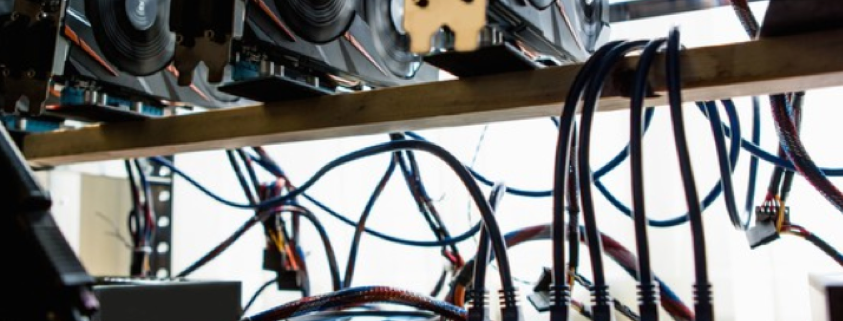
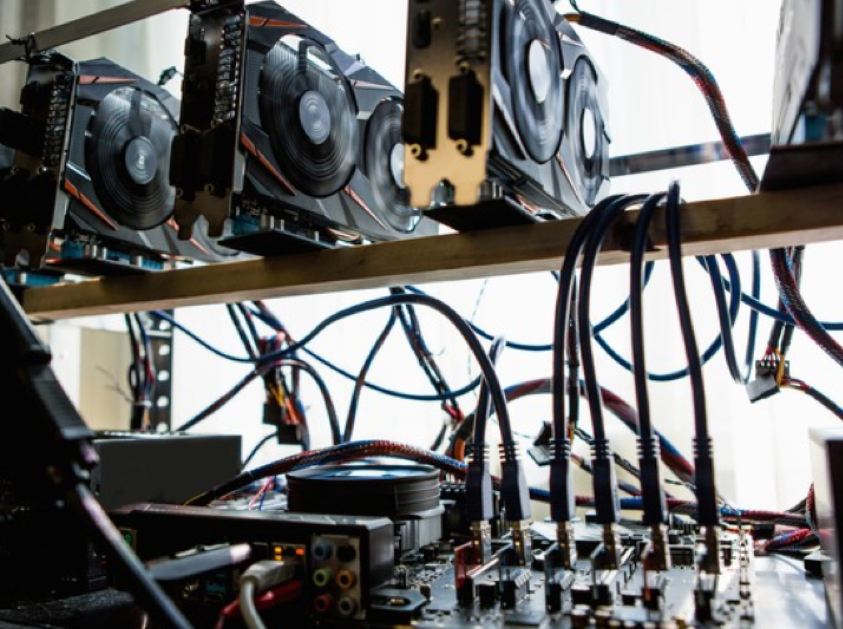
Big institutions that mine cryptocurrency install thousands of machines packed like a can of sardines into cavernous warehouses.

In 2015, a documentary detailed a large-scale foreign mining operation with an electricity outlay of $100,000 per month creating 4,000 bitcoins. These are popping up all over the world.

An additional white paper from a Cambridge University study uncovered that 58% of bitcoin mining comes from China.

Cheap power equals dirty power. Chinese mining outfits have bet the ranch on low-cost coal and hydroelectric generators. The carbon footprint measured at one mine per day emitted carbon dioxide at the same rate as five Boeing 747 planes.

The Chinese mining ban in January set off a domino effect with the Chinese mining operations relocating to mainly Canada, Iceland, and the United States.

Effectively, China has just exported a tidal wave of new pollution and carbon emissions.

Bitcoin is mined every second of every day and currently has a supply of approximately 17 million today, up from 11 million in 2013.

Bitcoin's electricity consumption has been elevated compared to alternative digital payment currencies because the dollar price of bitcoin is directly proportional to the amount of electricity that can profitably be used to mine it.

To add more granularity, miners buy more servers to maintain profitability then upgrade to more powerful servers. However, the new calculating power simply boosted the solution complexity even faster.

Mines are practically outdated upon launch and profitability could only occur by massively scaling up.

Consumer grade personal computers are useless now because the math problems are so advanced and complicated.

Specialized hardware called Application-Specific Integrated Circuit (ASIC) is required. These mining machines are massive, hot, and guzzle electricity.

Bitcoin disciples would counter, describing the finite number of bitcoins - 21 million. This was part of the groundwork laid down by Satoshi Nakamoto (a pseudonym), the anonymous creator of bitcoin when he (or they) constructed the digital form of money.

Nakamoto could not have predicted his digital experiment backfiring in his face.

The bottom line is most people use bitcoins to literally create money out of thin air in digital form, rather than using it as a monetary instrument to purchase a good or service.

That is why people mine cryptocurrency, period.

Now, excuse me while I go into the weeds for a moment.

Enter hard fork.

A finite 21 million coins is a misnomer.

A hard fork is a way for developers to alter bitcoin's software code. Once bitcoin reaches a certain block height, miners switch from bitcoin's core software to the fork's version. Miners begin mining the new currency's blocks after the bifurcation creating a new chain entirely and a brand-spanking new currency.

Theoretically, bitcoin could hard fork into infinite new machinations, and that is exactly what is happening.

Bitcoin Cash was the inaugural hard fork derived from the bitcoin's blockchain, followed by Bitcoin Gold and Bitcoin Diamond.

Recently, the market of hard fork derivations includes Super Bitcoin, Lightning Bitcoin, Bitcoin God, Bitcoin Uranium, Bitcoin Cash Plus, BitcoinSilver, and Bitcoin Atom.

All will be mined.

The hard fork phenomenon could generate millions of upstart cryptocurrency server farms universally planning to infuse market share because new currencies will be forced to build up a fresh supply of coins.

If Peter Thiel's prognostication of a 20% to 50% chance of bitcoin's price rising in the future is true, it could set off a cryptocurrency server farm mania.

By the way, Thiel also believes that there is a 30% chance that Bitcoin could go to zero.

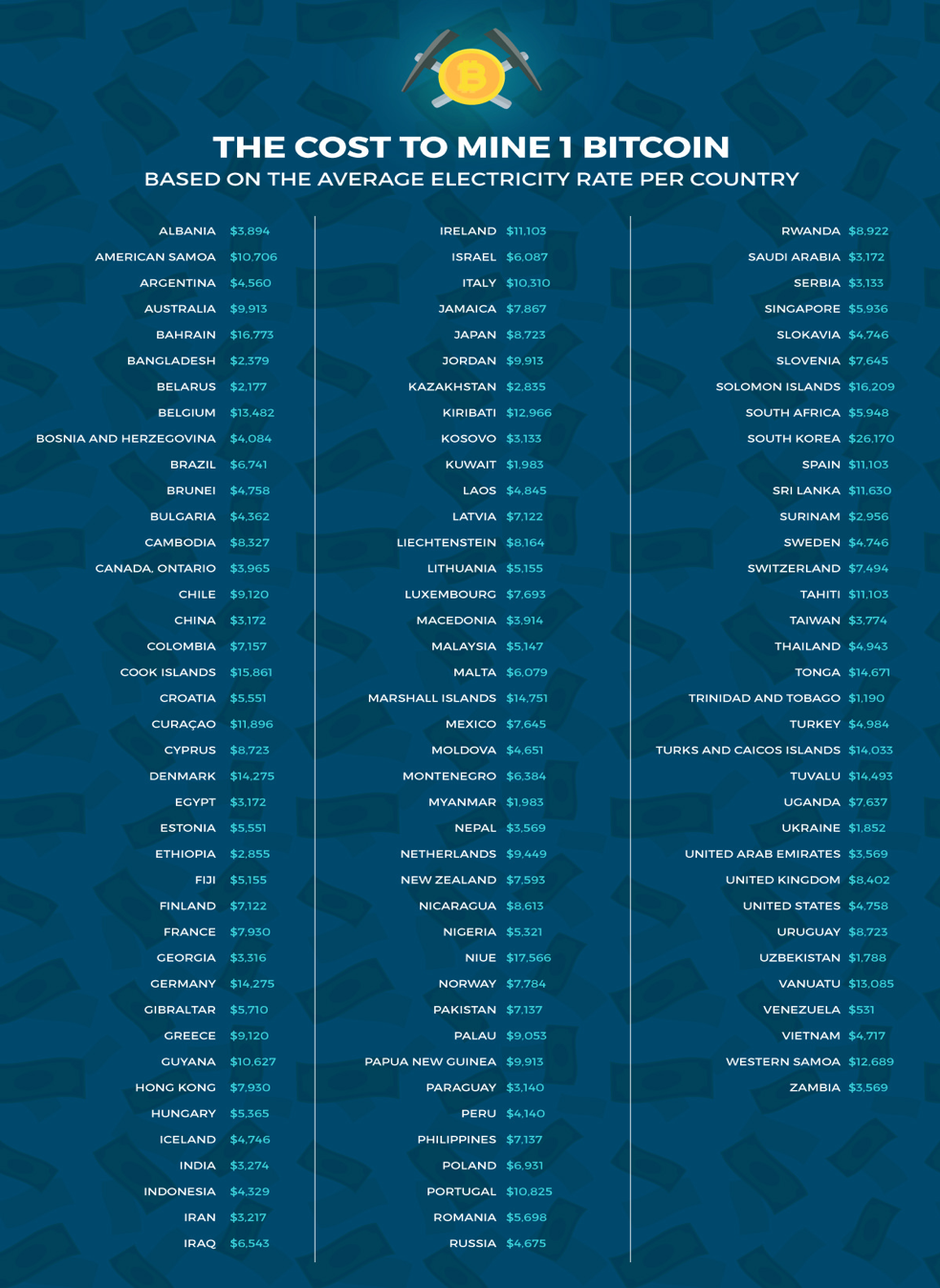
A surge in the price of bitcoin results in mining cryptocurrency operations everywhere by any type of electricity, especially if the surge maintains price stability. Even mining in Denmark, where one finds the world's costliest electricity at $14,275 per bitcoin, would make sense.

Recently, miners' appetite for power is causing local governments to implement surcharges for extra infrastructure and moratoriums on new mines. Even these mines built adjacent to hydro projects are crimping the supply lines, and consumers are forced to buy power from outside suppliers. Miners are often required to pay utility bills months in advance.

By July 2019, mining will possibly need more electricity than the entire United States consumes. And by February 2020, bitcoin mining will need as much electricity as the entire world does today, according to Grist, an environmental news website.

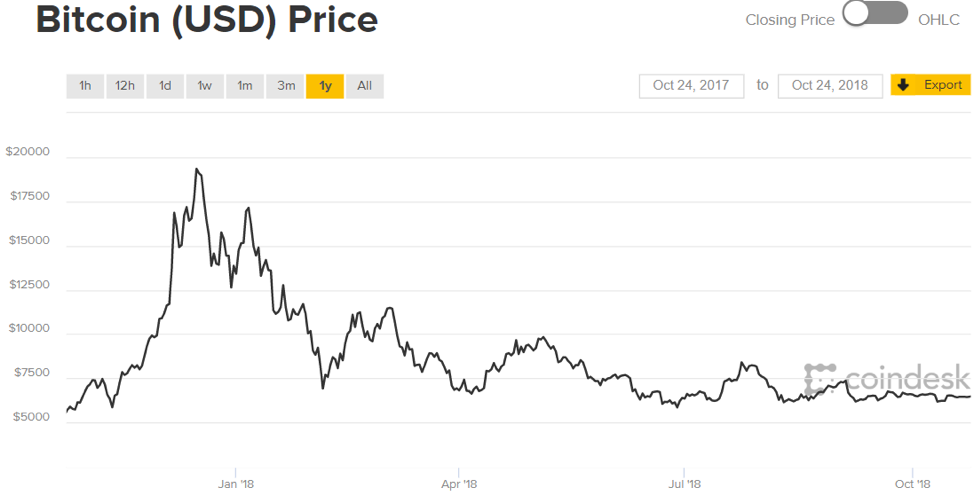
Geographically, most locations around the world were profitable based on May's bitcoin price of $10,000.

However, the sudden slide down to $6,400 reaffirms why the Mad Hedge Technology Letter avoids this asset class like the plague.

The most unrealistic operational locations are distant, tropical islands, such as the Cook Islands at $15,861, to mine one bitcoin.

If you'd like to drop your life and make a fortune mining bitcoin, then Venezuela is the most lucrative at $531 per bitcoin.

As bitcoin's nosedive perpetuates, Venezuela might be the last place on earth with mining farms.

Who doesn't like free money? Set up a few devices, crank up the power, collect the coins, pay off the electricity bill, pocket the difference and hopefully the world - or Venezuela - hasn't keeled over by then.


SHOW ME THE MONEY

https://www.madhedgefundtrader.com/wp-content/uploads/2018/10/bitcoin-hardware-oct25.png 629 843 MHFTF https://madhedgefundtrader.com/wp-content/uploads/2019/05/cropped-mad-hedge-logo-transparent-192x192_f9578834168ba24df3eb53916a12c882.png MHFTF2018-10-25 01:06:262018-10-24 18:42:19How Environmentalists May Kill Off Bitcoin
MHFTR

July 9, 2018

Tech Letter

Mad Hedge Technology Letter
July 9, 2018
Fiat Lux

Featured Trade:
(HOW ENVIRONMENTALISTS MAY KILL OFF BITCOIN),
(BTC), (ETH), (TWTR), (SQ)

https://madhedgefundtrader.com/wp-content/uploads/2019/05/cropped-mad-hedge-logo-transparent-192x192_f9578834168ba24df3eb53916a12c882.png 0 0 MHFTR https://madhedgefundtrader.com/wp-content/uploads/2019/05/cropped-mad-hedge-logo-transparent-192x192_f9578834168ba24df3eb53916a12c882.png MHFTR2018-07-09 01:06:192018-07-09 01:06:19July 9, 2018
MHFTR

How Environmentalists May Kill Off Bitcoin

Tech Letter

If Jack Dorsey's proclamation that bitcoin will be anointed the global "single currency," it could spawn a crescendo of pollution the world has never seen before.

In a candid interview with The Times of London, Dorsey, the workaholic CEO of Twitter (TWTR) and Square (SQ), offered a 10-year time horizon for his claim to come to fruition.

The originators of cryptocurrency derive from a Robin Hood-type mentality circumnavigating the costly fees and control associated with banks and central governments.

Unfolding before our eyes is a potential catastrophe that knows no limits.

Carbon emissions are on track to cut short 153 million lives as environmental issues start to spin out of control while the world's population explodes to 9.7 billion in 2050, from 8.5 billion people in 2030, up from the 7.3 billion today.

All these people will need to barter in bitcoin, according to Jack Dorsey.

Cryptocurrency is demoralizingly energy intensive, and the recent institutional participation in crypto server farms will exacerbate the environmental knock on effects by displacing communities, destroying wildlife, and climate-changing carbon emissions.

This seemingly controversial means to outmaneuver the modern financial system has transformed into a murky arms race among greedy cryptocurrency miners to use the cheapest energy sources and the most efficient equipment in a no-holds-barred money grab.

Bitcoin and Ethereum mining combined energy consumption would place them as the 38th-largest energy consuming country in the world - if they were a country - one place ahead of Austria.

Mining a bitcoin adjacent to a hydropower dam is not a coincidence. In fact, these locales are ground zero for the mining movement. The common denominator is the access to cheap energy usually five times cheaper than standard prices.

Big institutions that mine cryptocurrency install thousands of machines packed like a can of sardines into cavernous warehouses.

In 2015, a documentary detailed a large-scale foreign mining operation with an electricity outlay of $100,000 per month creating 4,000 bitcoins. These are popping up all over the world.

An additional white paper from a Cambridge University study uncovered that 58% of bitcoin mining comes from China.

Cheap power equals dirty power. Chinese mining outfits have bet the ranch on low-cost coal and hydroelectric generators. The carbon footprint measured at one mine per day emitted carbon dioxide at the same rate as five Boeing 747 planes.

The Chinese mining ban in January set off a domino effect with the Chinese mining operations relocating to mainly Canada, Iceland, and the United States.

Effectively, China has just exported a tidal wave of new pollution and carbon emissions.

Bitcoin is mined every second of every day and currently has a supply of approximately 17 million today, up from 11 million in 2013.

Bitcoin's electricity consumption has been elevated compared to alternative digital payment currencies because the dollar price of bitcoin is directly proportional to the amount of electricity that can profitably be used to mine it.

To add more granularity, miners buy more servers to maintain profitability then upgrade to more powerful servers. However, the new calculating power simply boosted the solution complexity even faster.

Mines are practically outdated upon launch, and profitability could only occur by massively scaling up.

Consumer grade personal computers are useless now because the math problems are so advanced and complicated.

Specialized hardware called Application-Specific Integrated Circuit (ASIC) is required. These mining machines are massive, hot, and guzzle electricity.

Bitcoin disciples would counter, describing the finite number of bitcoins - 21 million. This was part of the groundwork laid down by Satoshi Nakamoto (a pseudonym), the anonymous creator of bitcoin, when he (or they) constructed the digital form of money.

Nakamoto could not have predicted his digital experiment backfiring in his face.

The bottom line is most people use bitcoins to literally create money out of thin air in digital form, rather than using it as a monetary instrument to purchase a good or service.

That is why people mine cryptocurrency, period.

Now, excuse me while I go into the weeds for a moment.

Enter hard fork.

A finite 21 million coins is a misnomer.

A hard fork is a way for developers to alter bitcoin's software code. Once bitcoin reaches a certain block height, miners switch from bitcoin's core software to the fork's version. Miners begin mining the new currency's blocks after the bifurcation, creating a new chain entirely and a brand spanking new currency.

Theoretically, bitcoin could hard fork into infinite new machinations, and that is exactly what is happening.

Bitcoin Cash was the inaugural hard fork derived from the bitcoin's blockchain, followed by Bitcoin Gold and Bitcoin Diamond.

Recently, the market of hard fork derivations includes Super Bitcoin, Lightning Bitcoin, Bitcoin God, Bitcoin Uranium, Bitcoin Cash Plus, Bitcoin Silver, and Bitcoin Atom.

All will be mined.

The hard fork phenomenon could generate millions of upstart cryptocurrency server farms universally planning to infuse market share because new currencies will be forced to build up a fresh supply of coins.

If Peter Thiel's prognostication of a 20% to 50% chance of bitcoin's price rising in the future is true, it could set off a cryptocurrency server farm mania.

By the way, Thiel also believes that there is a 30% chance that Bitcoin could go to zero.

A surge in price of bitcoin results in mining cryptocurrency operations everywhere by any type of electricity, especially if the surge maintains price stability. Even mining in Denmark, where one finds the world's costliest electricity at $14,275 per bitcoin, would make sense.

Recently, miners' appetite for power is causing local governments to implement surcharges for extra infrastructure and moratoriums on new mines. Even these mines built adjacent to hydro projects are crimping the supply lines, and consumers are forced to buy power from outside suppliers. Miners are often required to pay utility bills months in advance.

By July 2019, mining will possibly need more electricity than the entire United States consumes. And by February 2020, bitcoin mining will need as much electricity as the entire world does today, according to Grist, an environmental news website.

Geographically, most locations around the world were profitable based on May's bitcoin price of $10,000.

However, the sudden slide down to $6,556.55 reaffirms why the Mad Hedge Technology Letter avoids this asset class like the plague.

The most unrealistic operational locations are distant, tropical islands, such as the Cook Islands at $15,861, to mine one bitcoin.

If you'd like to drop your life and make a fortune mining bitcoin, then Venezuela is the most lucrative at $531 per bitcoin.

As bitcoin's nosedive perpetuates, Venezuela might be the last place on earth with mining farms.

Who doesn't like free money? Set up a few devices, crank up the power, collect the coins, pay off the electricity bill, pocket the difference and hopefully the world - or Venezuela - hasn't keeled over by then.


_________________________________________________________________________________________________

Quote of the Day

"If privacy is outlawed, only outlaws will have privacy," - said Philip R. "Phil" Zimmermann, Jr., creator of the most widely used email encryption software in the world.


https://madhedgefundtrader.com/wp-content/uploads/2019/05/cropped-mad-hedge-logo-transparent-192x192_f9578834168ba24df3eb53916a12c882.png 0 0 MHFTR https://madhedgefundtrader.com/wp-content/uploads/2019/05/cropped-mad-hedge-logo-transparent-192x192_f9578834168ba24df3eb53916a12c882.png MHFTR2018-07-09 01:05:372018-07-09 01:05:37How Environmentalists May Kill Off Bitcoin
Page 24 of 24«‹222324

Legal Disclaimer

There is a very high degree of risk involved in trading. Past results are not indicative of future returns. MadHedgeFundTrader.com and all individuals affiliated with this site assume no responsibilities for your trading and investment results. The indicators, strategies, columns, articles and all other features are for educational purposes only and should not be construed as investment advice. Information for futures trading observations are obtained from sources believed to be reliable, but we do not warrant its completeness or accuracy, or warrant any results from the use of the information. Your use of the trading observations is entirely at your own risk and it is your sole responsibility to evaluate the accuracy, completeness and usefulness of the information. You must assess the risk of any trade with your broker and make your own independent decisions regarding any securities mentioned herein. Affiliates of MadHedgeFundTrader.com may have a position or effect transactions in the securities described herein (or options thereon) and/or otherwise employ trading strategies that may be consistent or inconsistent with the provided strategies.

Copyright © 2026. Mad Hedge Fund Trader. All Rights Reserved. support@madhedgefundtrader.com
Scroll to top