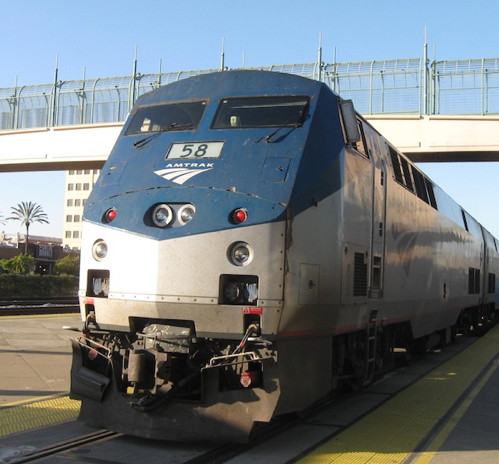
I am once again writing this report from a first-class sleeping cabin on Amtrak’s legendary California Zephyr.
By day, I have two comfortable seats facing each other next to a panoramic window. At night, they fold into two bunk beds, a single and a double. There is a shower, but only Houdini could navigate it.
I am anything but Houdini, so I foray downstairs to use the larger public hot showers. They are divine.
We are now pulling away from Chicago’s Union Station, leaving its hurried commuters, buskers, panhandlers, and majestic great halls behind. I love this building as a monument to American exceptionalism.
I am headed for Emeryville, California, just across the bay from San Francisco, some 2,121.6 miles away. That gives me only 56 hours to complete this report.
I tip my porter, Raymond, $100 in advance to make sure everything goes well during the long adventure and to keep me up to date with the onboard gossip.
The rolling and pitching of the car is causing my fingers to dance all over the keyboard. Microsoft’s Spellchecker can catch most of the mistakes, but not all of them.
As both broadband and cell phone coverage are unavailable along most of the route, I have to rely on frenzied Internet searches during stops at major stations along the way to Google obscure data points and download the latest charts.
You know those cool maps in the Verizon stores that show the vast coverage of their cell phone networks? They are complete BS.
Who knew that 95% of America is off the grid? That explains so much about our country today.
I have posted many of my better photos from the trip below, although there is only so much you can do from a moving train and an iPhone 14 Pro Max.
Here is the bottom line which I have been warning you about for months. In 2023, we will probably top the 84.63% we made last year, but you are going to have to navigate the reefs, shoals, and hurricanes. Do it and you can laugh all the way to the bank. I will be there to assist you to navigate every step.
The first half of 2023 will be all about trading. After that, I expect markets to go straight up.
And here is my fundamental thesis for 2023. After the Fed kept rates too low for too long, then raised them too much, it will then panic and lower them again too fast to avoid a recession. In other words, a mistake-prone Jay Powell will keep making mistakes. That sounds like a good bet to me.
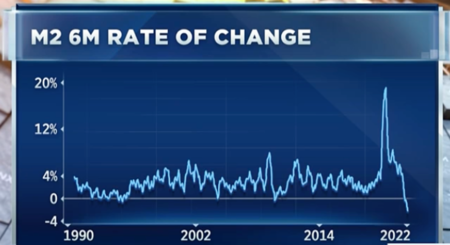
Let me give you a list of the challenges I see financial markets are facing in the coming year:
The Ten Key Variables for 2023
1) When will the Fed pivot?
2) How much of a toll will the quantitative tightening take?
3) How soon will the Russians give up on Ukraine?
4) When will buyers return to technology stocks from value plays?
5) Will gold replace crypto as the new flight to safety investment?
6) When will the structural commodities boom get a second wind?
7) How fast will the US dollar fall?
8) How quickly will real estate recover?
9) How fast can the Chinese economy bounce back from Covid-19?
10) How far will oil prices keep falling?
Whether we get a recession or not, you can count on markets fully discounting one, which it is currently doing with reckless abandon.
Anywhere you look, the data is dire, save for employment, which may be the last shoe to fall. Technology companies seem to be leading us in the right direction with never-ending mass layoffs. Even after relentless cost-cutting though, there are still 1.5 tech job offers per applicant, which is down from last year’s three.
The Fed is currently predicting a weak 0.5% GDP growth rate for 2023, the same feeble rate we saw for 2022. What we might get is two-quarters of negative growth in the first half followed by a sharp snapback in the second half.
Whatever we get, it will be one of the mildest recessions or growth recessions in American economic history. There is no hint of a 2008-style crash. The banking system was shored up too well back then to prevent that. Thank Dodd/Frank.
Since my job is to make your life incredibly easy, I am going to narrow my equity strategy for 2023.
It's all about falling interest rates.
When interest rates are high, as they are now, you only look at trades and investments that can benefit from falling interest rates.
In the first half, that will be value plays like banks, (JPM), (BAC), (C), financials (MS), (GS), homebuilders (KBH), (LEN), (PHM), industrials (X), capital goods (CAT), (DE).
As we come out of any recession in the second half, growth plays will rush to the fore. Big tech will regain leadership and take the group to new all-time highs. That means the volatility and chop we will certainly see in the first half will present a generational opportunity to get into the fastest-growing sectors of the US economy at bargain prices. I’m talking Cadillacs at KIA prices.
A category of its own, Biotech & Healthcare should do well on their own. Not only are they classic defensive plays to hold during a recession, technology and breakthrough new discoveries are hyper-accelerating. My top three picks there are Eli Lily (ELI), Abbvie (ABBV), and Merck (MRK).
Block out time on your calendars because whenever the Volatility Index (VIX) tops $30, I am going pedal to the metal, and full firewall forward (a pilot term), and your inboxes will be flooded with new trade alerts.
There is another equity subclass that we haven’t visited in about a decade, and that would be emerging markets (EEM). After ten years of punishment by a strong dollar, (EEM) has also been forgotten as an investment allocation. We are now in a position where the (EEM) is likely to outperform US markets in 2023, and perhaps for the rest of the decade.
Amtrak needs to fill every seat in the dining car to get everyone fed on time, so you never know who you will share a table with for breakfast, lunch, and dinner.
There was the Vietnam Vet Phantom Jet Pilot who now refused to fly because he was treated so badly at airports. A young couple desperately eloping from Omaha could only afford seats as far as Salt Lake City. After they sat up all night, I paid for their breakfast.
A retired British couple was circumnavigating the entire US in a month on a “See America Pass.” Mennonites are returning home by train because their religion forbade automobiles or airplanes.
The national debt ballooned to an eye-popping $30 trillion in 2021, a gain of an incredible $3 trillion and a post-World War II record. Yet, as long as global central banks are still flooding the money supply with trillions of dollars in liquidity, bonds will not fall in value too dramatically. I’m expecting a slow grind down in prices and up in yields.
The great bond short of 2021 never happened. Even though bonds delivered their worst returns in 19 years, they still remained nearly unchanged. That wasn’t good enough for the many hedge funds, which had to cover massive money-losing shorts into yearend.
Instead, the Great Bond Crash will become a new business. This time, bonds face the gale force headwinds of three promised interest rate hikes. The year-end government bond auctions were a complete disaster.
Fed borrowing continues to balloon out of control. It’s just a matter of time before the last billion dollars in government borrowing breaks the camel’s back.
That makes a bond short a core position in any balanced portfolio. Don’t get lazy. Make sure you only sell a rally lest we get trapped in a range, as we did for most of 2021.
With a major yield advantage over the rest of the world, the US dollar has been on an absolute tear for the past decade. After all, we have the world’s strongest economy.
That is about to end.
If your primary assumption is that US interest rates will see a sharp decline sometime in 2023, then the outlook for the greenback is terrible.
Currencies are driven by interest rate differentials and the buck is soon going to see the fastest shrinking yield premium in the forex markets.
That shines a great bright light on the foreign currency ETFs. You could do well buying the Australian Dollar (FXA), Euro (FXE), Japanese yen (FXE), and British Pound (FXB). I’d pass on the Chinese yuan (CYB) right now until their Covid shutdowns end.
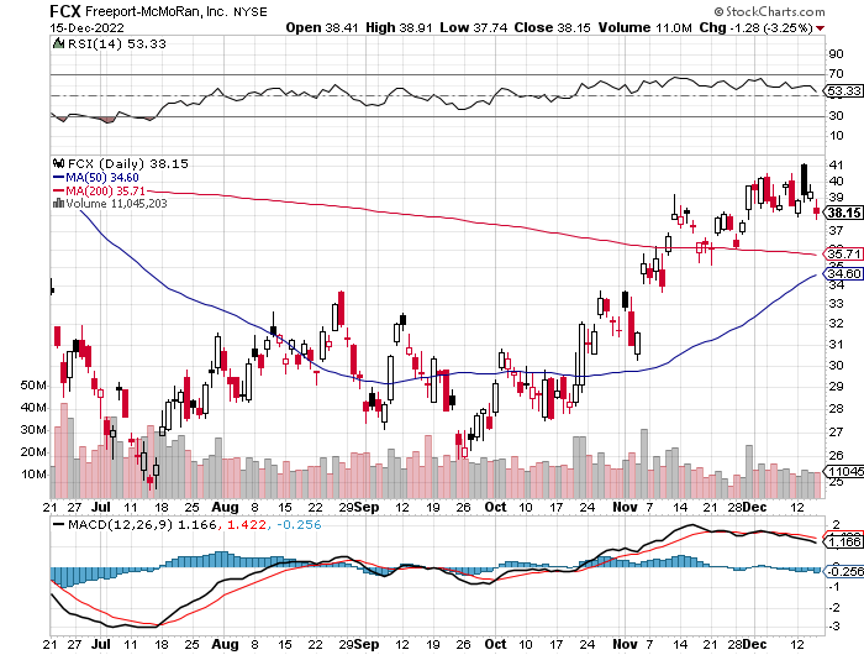
5) Commodities (FCX), (VALE), (DBA)
Commodities are the high beta play in the financial markets. That’s because the cost of being wrong is so much higher. Get on the losing side of commodities and you will be bled dry by storage costs, interest expenses, contangos, and zero demand.
Commodities have one great attribute. They predict recessions earlier than any other asset class. When they peaked in March of 2022, they were screaming loud and clear that a recession would hit in early 2023. By reversing on a dime on October 14, they also told us that the recovery would begin in July of 2023.
You saw this in every important play in the sector, including Broken Hill (BHP), Peabody Energy (BTU), Freeport McMoRan (TCX), and Alcoa Aluminum (AA). Excuse me for using all the old names.
The heady days of the 2011 commodity bubble top are about to replay. Now that this sector is convinced of a substantially weaker US dollar and lower inflation, it is once more a favorite target of traders.
China will still demand prodigious amounts of imported commodities once its pandemic shutdown ends, but not as much as in the past. Much of the country has seen its infrastructure built out, and it is turning from a heavy industrial to a service-based economy, much like the US. Investors are keeping a sharp eye on India as the next major commodity consumer.
And here’s another big new driver. Each electric vehicle requires 200 pounds of copper and production is expected to rise from 1 million units a year to 25 million by 2030. Annual copper production will have to increase three-fold in a decade to accommodate this increase, no easy task, or prices will have to rise.
The great thing about commodities is that it takes a decade to bring new supply online, unlike stocks and bonds, which can merely be created by an entry in an excel spreadsheet. As a result, they always run far higher than you can imagine.
Accumulate all commodities on dips.
Snow Angel on the Continental Divide
6) Energy (DIG), (RIG), (USO), (DUG), (UNG), (XLE), (AMLP)
Energy was the top-performing sector of 2022. But remember, you will be trading an asset class that is eventually on its way to zero sooner than you think. However, you could have several doublings on the way to zero. This is one of those times.
The real tell here is that energy companies are bailing on their own industry. Instead of reinvesting profits back into their future exploration and development, as they have for the last century, they are paying out more in dividends and share buybacks.
Take the money and run.
There is the additional challenge in that the bulk of US investors, especially environmentally friendly ESG funds, are now banned from investing in legacy carbon-based stocks. That means permanently cheap valuations and share prices for the energy industry.
Energy now counts for only 5% of the S&P 500. Twenty years ago, it boasted a 15% weighting.
The gradual shutdown of the industry makes the supply/demand situation infinitely more volatile.
Unless you are a seasoned, peripatetic, sleep-deprived trader, there are better fish to fry.
And guess who the world’s best oil trader was in 2022? That would be the US government, which drew 400 million barrels from the Strategic Petroleum Reserve in Texas and Louisiana at an average price of $90 and now has the option to buy it back at $70, booking a $4 billion paper profit.
The possibility of a huge government bid at $70 will support oil prices for at least early 2023. Whether the Feds execute or not is another question. I’m advising them to hold off until we hit zero again to earn another $18 billion. Why we even have an SPR is beyond me, since America has been a large net energy producer for many years now. Do you think it has something to do with politics?
To understand better how oil might behave in 2023, I’ll be studying US hay consumption from 1900-1920. That was when the horse population fell from 100 million to 6 million, all replaced by gasoline-powered cars and trucks. The internal combustion engine is about to suffer the same fate.
The train has added extra engines at Denver, so now we may begin the long laboring climb up the Eastern slope of the Rocky Mountains.
On a steep curve, we pass along an antiquated freight train of hopper cars filled with large boulders.
The porter tells me this train is welded to the tracks to create a windbreak. Once, a gust howled out of the pass so swiftly that it blew a passenger train over on its side.
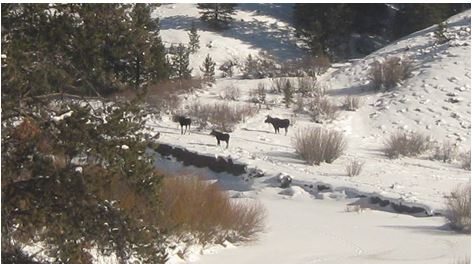
In the snow-filled canyons, we saw a family of three moose, a huge herd of elk, and another group of wild mustangs. The engineer informs us that a rare bald eagle is flying along the left side of the train. It’s a good omen for the coming year.
We also see countless abandoned 19th century gold mines and the broken-down wooden trestles leading to huge piles of tailings, relics of previous precious metals booms. So, it is timely here to speak about the future of precious metals.
Fortunately, when a trade isn’t working, I avoid it. That certainly was the case with gold last year.
2022 was a terrible year for precious metals until we got the all-asset class reversal in October. With inflation soaring, stocks volatile, and interest rates soaring, gold had every reason to fall. Instead, it ended up unchanged on the year, thanks to a 15% rally in the last two months.
Bitcoin stole gold’s thunder until a year ago, sucking in all of the speculative interest in the financial system. Jewelry and industrial demand were just not enough to keep gold afloat. That is over now for good and that is why gold is regaining its luster.
Chart formations are starting to look very encouraging with a massive head-and-shoulders bottom in place. So, buy gold on dips if you have a stick of courage on you, which I hope you do.
Higher beta silver (SLV) will be the better bet as it already has been because it plays a major role in the decarbonization of America. There isn’t a solar panel or electric vehicle out there without some silver in them and the growth numbers are positively exponential. Keep buying (SLV), (SLH), and (WPM) on dips.
Crossing the Great Nevada Desert Near Area 51
8) Real Estate (ITB), (LEN), (KBH), (PHM)
The majestic snow-covered Rocky Mountains are behind me. There is now a paucity of scenery, with the endless ocean of sagebrush and salt flats of Northern Nevada outside my window, so there is nothing else to do but write.
My apologies in advance to readers in Wells, Elko, Battle Mountain, and Winnemucca, Nevada.
It is a route long traversed by roving banks of Indians, itinerant fur traders, the Pony Express, my own immigrant forebearers in wagon trains, the Transcontinental Railroad, the Lincoln Highway, and finally US Interstate 80, which was built for the 1960 Winter Olympics at Squaw Valley.
Passing by shantytowns and the forlorn communities of the high desert, I am prompted to comment on the state of the US real estate market.
Those in the grip of a real estate recession take solace. We are in the process of unwinding 2022’s excesses, but no more. There is no doubt a long-term bull market in real estate will continue for another decade, once a two year break is completed.
There is a generational structural shortage of supply with housing which won’t come back into balance until the 2030s. You don’t have a real estate crash when we are short 10 million homes.
The reasons, of course, are demographic. There are only three numbers you need to know in the housing market for the next ten years: there are 80 million baby boomers, 65 million Generation Xers who follow them, and 86 million in the generation after that, the Millennials.
The boomers (between ages 58 and 76) have been unloading dwellings to the Gen Xers (between ages 46 and 57) since prices peaked in 2007. But there are not enough of the latter, and three decades of falling real incomes mean that they only earn a fraction of what their parents made. That’s what caused the financial crisis. That has created a massive shortage of housing, both for ownership and rentals.
There is a happy ending to this story.
Millennials now aged 26-41 are now the dominant buyers in the market. They are transitioning from 30% to 70% of all new buyers of homes. They are also just entering the peak spending years of middle age, which is great for everyone.
The Great Millennial Migration to the suburbs and Middle America has just begun. Thanks to the pandemic and Zoom, many are never returning to the cities. That has prompted massive numbers to move from the coasts to the American heartland.
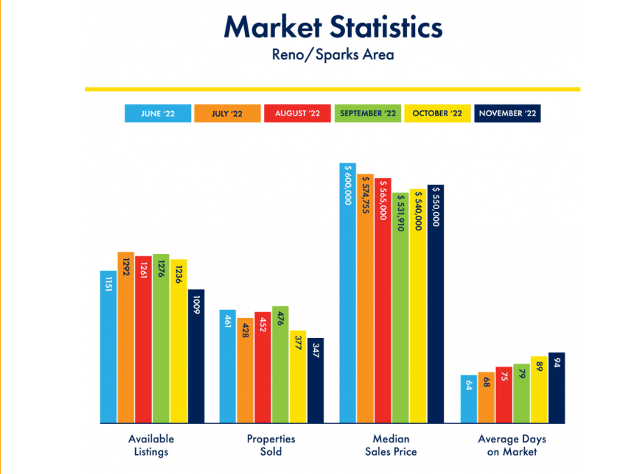
That’s why Boise, Idaho was the top-performing real estate market, followed by Phoenix, Arizona. Personally, I like Reno, Nevada, where Apple, Google, Amazon, and Tesla are building factories as fast as they can.
As a result, the price of single-family homes should continue to rise during the 2020s, as they did during the 1970s and the 1990s when similar demographic forces were at play.
This will happen in the context of a labor shortfall, soaring wages, and rising standards of living.
Rising rents are accelerating this trend. Renters now pay 35% of their gross income, compared to only 18% for owners, and less, when multiple deductions and tax subsidies are considered. Rents are now rising faster than home prices.
Remember, too, that the US will not have built any new houses in large numbers in 16 years. The 50% of small home builders that went under during the Financial Crisis never came back.
We are still operating at only a half of the 2007 peak rate. Thanks to the Great Recession, the construction of five million new homes has gone missing in action.
There is a new factor at work. We are all now prisoners of the 2.75% 30-year fixed rate mortgages we all obtained over the past five years. If we sell and try to move, a new mortgage will cost double today. If you borrow at a 2.75% 30-year fixed rate, and the long-term inflation rate is 3%, then, over time, you will get your house for free. That’s why nobody is selling, and prices have barely fallen.
This winds down towards the end of 2023 as the Fed realizes its many errors and sharply lowers interest rates. Home prices will explode…. again.
Quite honestly, of all the asset classes mentioned in this report, purchasing your abode is probably the single best investment you can make now after you throw in all the tax breaks. It’s also a great inflation play.
That means the major homebuilders like Lennar (LEN), Pulte Homes (PHM), and KB Homes (KBH) are a buy on the dip.
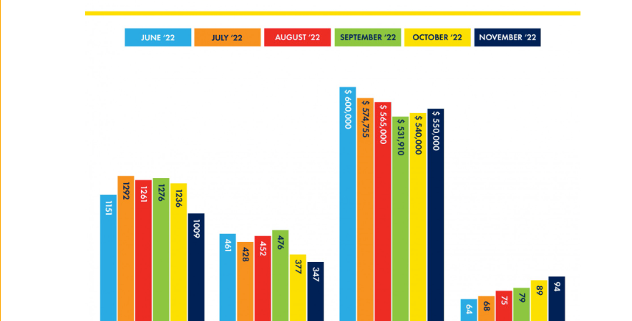
Recent Reno Real Estate Statistics
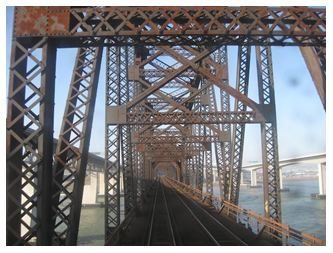
Crossing the Bridge to Home Sweet Home
9) Postscript
We have pulled into the station at Truckee amid a howling blizzard.
My loyal staff has made the ten-mile trek from my estate at Incline Village to welcome me to California with a couple of hot breakfast burritos and a chilled bottle of Dom Perignon Champagne, which has been resting in a nearby snowbank. I am thankfully spared from taking my last meal with Amtrak.
After that, it was over legendary Donner Pass, and then all downhill from the Sierras, across the Central Valley, and into the Sacramento River Delta.
Well, that’s all for now. We’ve just passed what was left of the Pacific mothball fleet moored near the Benicia Bridge (2,000 ships down to six in 50 years). The pressure increase caused by a 7,200-foot descent from Donner Pass has crushed my plastic water bottle. Nice science experiment!
The Golden Gate Bridge and the soaring spire of Salesforce Tower are just around the next bend across San Francisco Bay.
A storm has blown through, leaving the air crystal clear and the bay as flat as glass. It is time for me to unplug my MacBook Pro and iPhone, pick up my various adapters, and pack up.
We arrive in Emeryville 45 minutes early. With any luck, I can squeeze in a ten-mile night hike up Grizzly Peak and still get home in time to watch the ball drop in New York’s Times Square on TV.
I reach the ridge just in time to catch a spectacular pastel sunset over the Pacific Ocean. The omens are there. It is going to be another good year.
I’ll shoot you a Trade Alert whenever I see a window open at a sweet spot on any of the dozens of trades described above, which should be soon.
Good luck and good trading in 2023!
John Thomas
The Mad Hedge Fund Trader
The Omens Are Good for 2023!
https://www.madhedgefundtrader.com/wp-content/uploads/2023/01/market-statistics.png474632Mad Hedge Fund Traderhttps://madhedgefundtrader.com/wp-content/uploads/2019/05/cropped-mad-hedge-logo-transparent-192x192_f9578834168ba24df3eb53916a12c882.pngMad Hedge Fund Trader2023-01-04 15:00:552024-01-03 10:44:502023 Annual Asset Class Review
Below please find subscribers’ Q&A for the December 14 Mad Hedge Fund Trader Global Strategy Webinar broadcast from Silicon Valley in California.
Q: Is it time to short the S&P 500 (SPY), or go into cash?
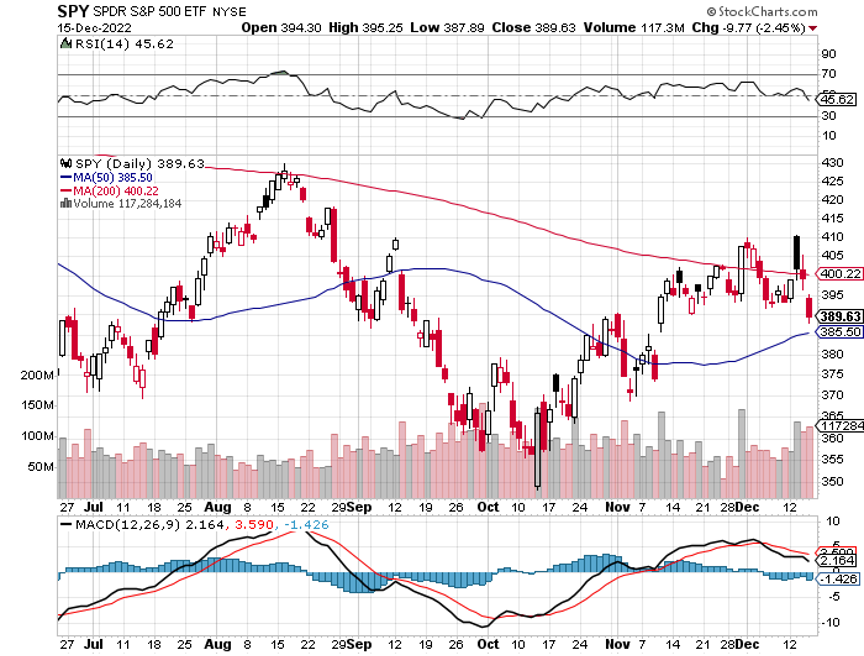
A: I vote for cash. Number 1. We’ve just had a tremendous run in the market. The 200-day moving average at $405 is proving to be massive resistance, and you could get a bunch of profit-taking in January on all the positions people bought up in October. They’ve made a ton of money on that, and they may be deferring to profit-taking, hoping for the Santa Clause rally to continue and to take advantage of all that time decay over the holidays—so, high risk. Risk-reward right now is terrible, so I don’t want to do anything. I’m 100% cash, and I’ll stay that way until the New Year unless something exceptional happens in the markets—you never know what might happen. And I watch markets 24/7, vacation or not because it's in my blood.
Q: What about Financials?
A: Wait until the next dip and then go for call spreads which deliver max profits in sideways markets. JP Morgan (JPM), Bank of America (BAC), Citigroup (C) and you might take a look at Wells Fargo (WFC) next time around, but they always seem to be getting into trouble.
Q: What do we do about interest rates here?
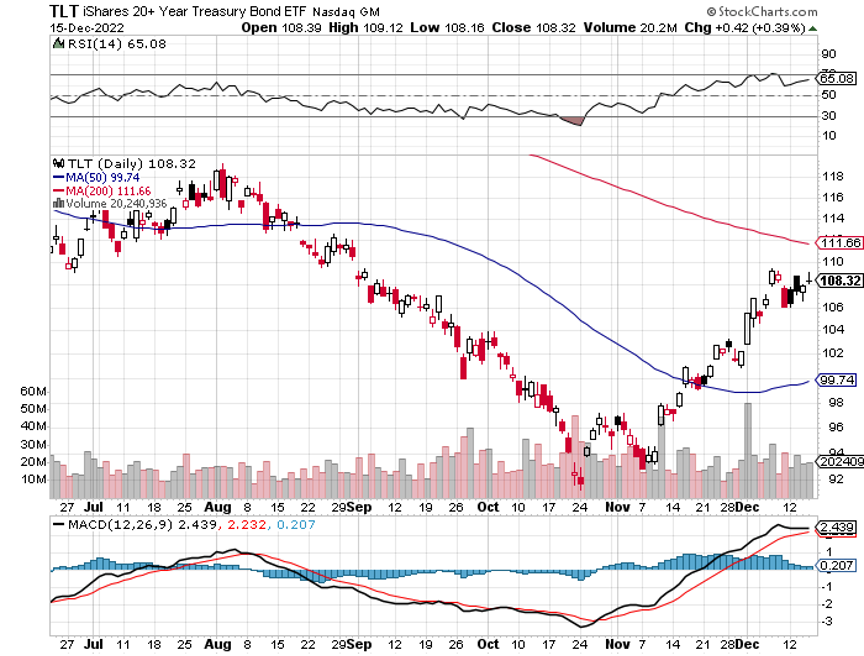
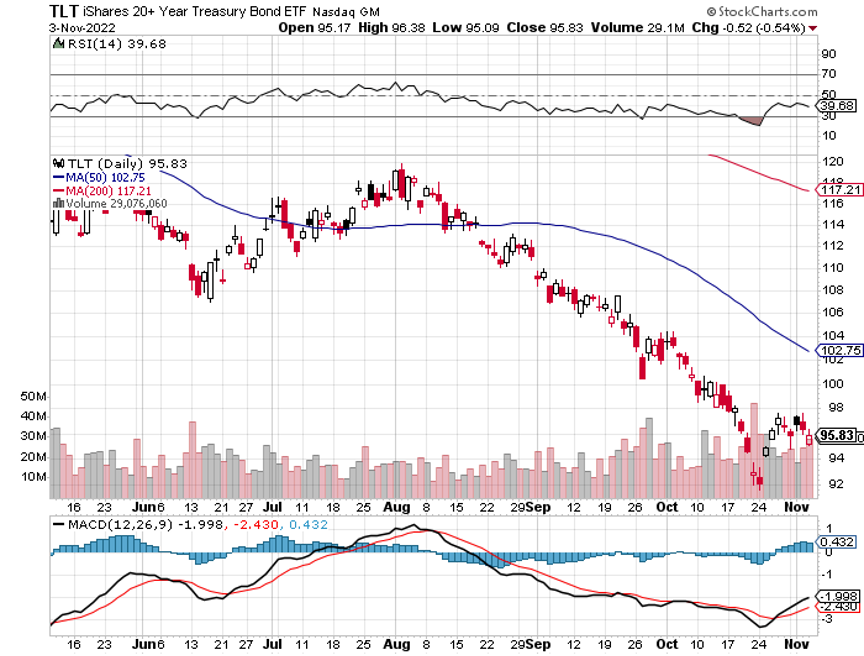
A: Look for the 10-year Treasury bond (TLT) yield to drop to about 2.50% in 2023, about the first half of 2023—maybe by June or so. We did just have a round of profit-taking, but we’re adding on dips.
Q: What do you think about the US sending patriot batteries to Ukraine?
A: The problem is the MIM-104 Patriot SAM system is kind of old—about 41 years old—and it’s been outrun by the new technologies developed by the Ukraine war. Also, 1,000 drones at $1,000 each would be cheaper than 1 patriot missile for $4 million. Sending swarms of hundreds of super cheap drone bombs to attack targets has only been developed over the past six months and you only need one to get through to destroy the target for which the patriot would be useless. Patriot is really designed to shoot down incoming Russian intercontinental ballistic missiles with nuclear warheads with one hour of notice and highly predictable trajectories. We used them a lot in the Gulf War in 1991, and we gave many to Israel which used them to great effect when defending big cities. But they were only firing against slow WWII German-style V2 rockets which Saddam Hussein literally copied off of Wikipedia. If you want to see how effective the new drone strategy is, watch competitive drone racing (https://www.youtube.com/watch?v=HNRiMgNnuVE ), or robot wars (http://www.robotwars.tv ), or any of these other online programs where you have drones controlled by humans doing exactly what I’m talking about. Also, 1,000 drones at $1,000 each would be cheaper than 1 patriot missile for $ million.
Q: What’s your Rivian (RIVN) target by the January options expiration?
A: I have no idea, but Elon Musk has had the impact of destroying not only Tesla but the entire EV sector, so Rivian is a great company clearly being dragged down by Tesla. But also, a joint venture to make trucks in Europe was also put on hold with Mercedes. And of course, nobody wants to spend money ahead of a recession. Buy (RIVN) two-year LEAPS.
Q: Why is the US buying Natural Gas (UNG) in Massachusetts from Russia when we have so much already in this country?
A: The US does not have a national natural gas pipeline system, so you can have excesses in Texas where it’s produced meet shortages in Massachusetts where it’s consumed. Somebody found a loophole to get Russian gas into the US using offshore shell companies which I’m sure will be closed instantly once that delivery is made. Suffice it to say that the sanctions on Russia are tightening, are having a deeper effect and forcing them to pull out of Ukraine sooner than we expect. That may be the pivotal black swan of 2023—that Russia gives up on Ukraine, which would be a huge positive for all markets.
Q: When will we be using nuclear fusion?
A: I have been following nuclear fusion for 50 years, ever since I worked at the Nuclear Test Site in Nevada—it’s long been the holy grail for alternative energy. I talked to the teams every once in a while, since they live next door. The positive developments we saw in England last week are a big breakthrough, but you’re looking for at least 30 years until we get functional economic nuclear fusion power plants. So, we only have to stay alive for 30 more years (and keep climate change from killing us all off in the meantime) before we get carbon-free energy in an unlimited supply. Having said that, from the time they developed a functional commercial nuclear powerplant using Uranium in 1957 from the initial use of the atomic bomb in 1945, was only 12 years and that had to be equally as daunting. So, I may be wrong, and there may be other breakthroughs coming our way, but you don’t control 150 million degrees easily—that's what’s necessary with fusion. The amounts of power input required are also staggering, like all the power that San Francisco uses in a day, just to produce marginal bits of electricity. And the deuterium fuel needed (H2, or heavy hydrogen) in large quantities would not exactly be cheap either. But in 30 years every city should get its own min sun to provide unlimited electricity. So there’s your science lecture of the day, from a long-term fusion follower. For a more detailed explanation please click here at https://www.energy.gov/science/doe-explainsnuclear-fusion-reactions
Q: Is Tesla (TSLA) a buy here?
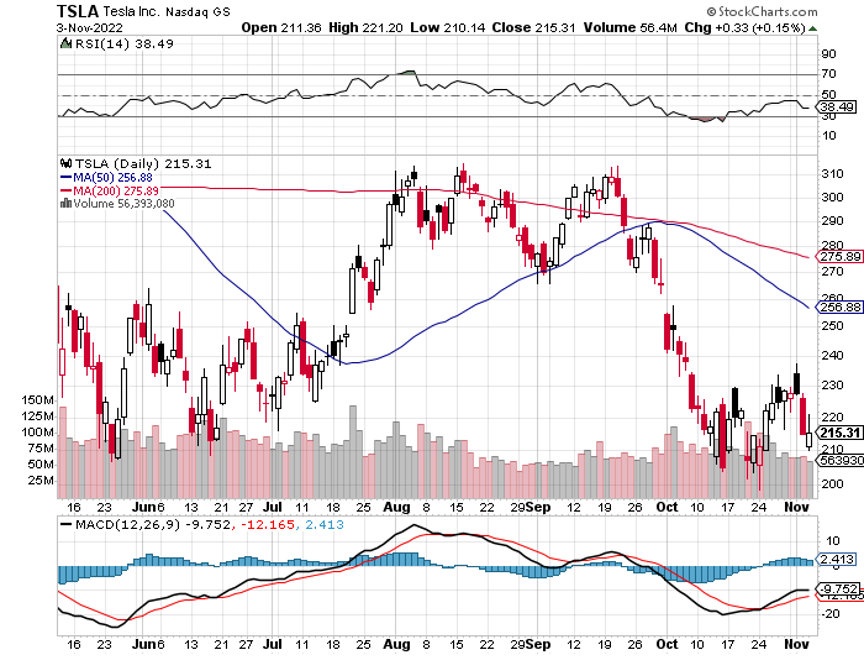
A: Absolutely, for the long term, but I would not be amazed to see $110 print first. Number one, there’s a major short play going on here too building huge amounts of buying power, and Number two, we’re flushing out a lot of long-term profit takers for tax loss selling as we go with the year-end to offset 2022 losses in other stocks. Buying Tesla at 27X earnings multiple, and next year’s 19X multiple when it was at 100X just a year ago is kind of unbelievable. An onslaught of new Tesla positives will hit the market in 2023. The new Cybertruck comes out and there is a two-year waiting list out the gate and deposits in hand for 100,000 vehicles. The company is generating such enormous cash flows that it is like to carry out $10 billion in share buybacks, especially with the price this low. There are no real competitors on the horizon, except for a handful with minimal production at big losses outside of China.
Q: Is the demise of FTX the end of crypto?
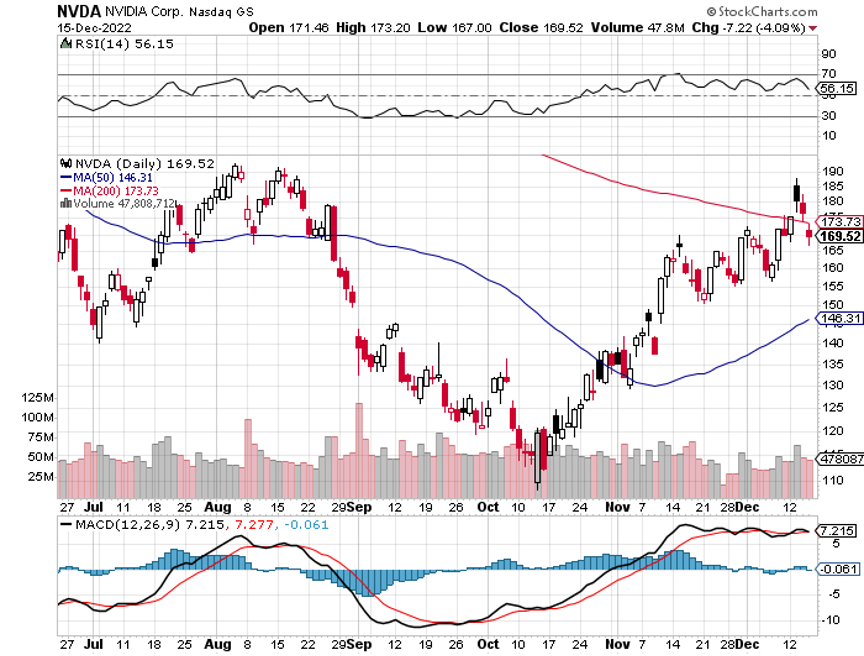
A: I would say yes, which is why we stopped producing our Bitcoin newsletter. It could take 30 years for this thing to recover. It’s another Japanese stock market type situation, where it literally takes three decades to recover, and by then new technologies will far surpass it. The confidence in anything crypto has been totally destroyed by the FTX scandal—it’s the final nail in the coffin. And there are better things to do—I’d rather be buying NVIDIA (NVDA) or Tesla (TSLA) than crypto. There are too many great trades after a bear market.
Q: Is Blackrock (BLK) in trouble?
A: Not in a million years, and I’d be buying it on any dip. They’re an incredibly well-run company, buy on dips. They have one gated REIT which thei disclosed well in advance that is drawing all the adverse publicity. In bear markets, traders always believe the worst.
Q: Why would you not sell Nvidia (NVDA)?
A: Well, we dumped all our tech stocks in January, so we did sell there. But I try not to go against long-term trends, and the long-term trends for Nvidia is a double or triple from here since they are the 8-pound gorilla in the high-end chip business.
Q: Why is cybersecurity (PANW), (CRWD) so unloved in this environment?
A: They are over-owned. When everybody owns something, you can have the greatest story in the world and it doesn’t go up because you need new buyers for things to go up, and the Cybersecurity story is pretty well known. That’s why it won’t go down either, people are not selling because they believe in the long-term story of cyber security—and quite correctly so, and I might add at the bottom of the ranges.
Q: Isn’t Warren Buffet’s age a worry regarding Berkshire Hathaway (BRKB)?
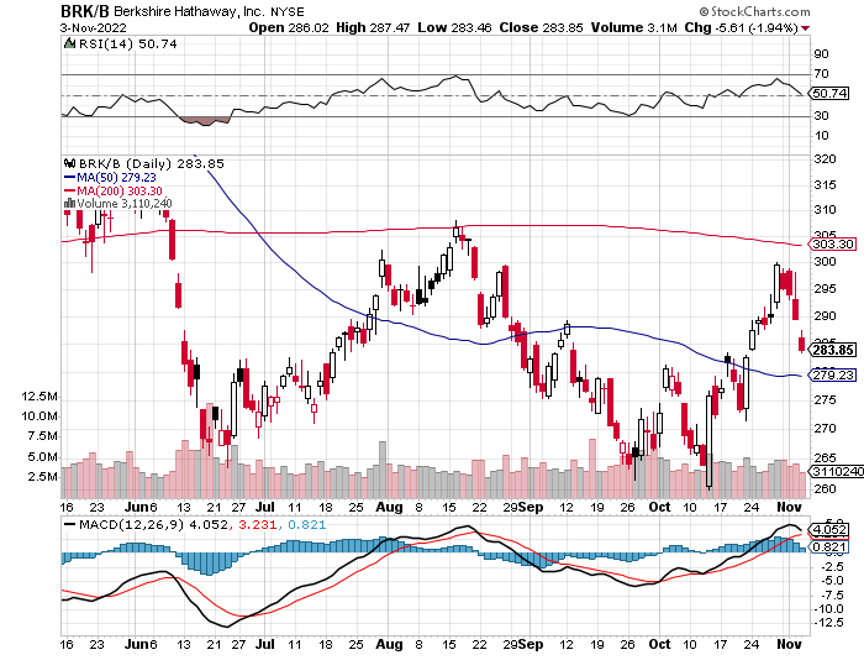
A: No, the replacement management team that has been there for 20 years, is generating great results. Warren is basically just the front-end mouthpiece for Berkshire Hathaway, just like I’m the front-end mouthpiece for the Mad Hedge Fund Trader and isn't really involved in day-to-day decisions. That’s how Berkshire was able to step up its technology exposure during the teens. When he goes, the stock might drop 5% from algorithm and uninformed sales, but no more.
Q: What do you think of the iShares 20 Plus Year Treasury Bond ETF (TLT) versus the ProShares UltraShort 20+ Year Treasury (TBT)?
A: Avoid the (TBT) because it’s a 2x—you have extra management fees, and extra dealing costs—it’s better just to buy (TLT) on a 2x margin than it is shorting the (TBT) which is already a 2x. I’m looking for $120-$130 in the (TLT) by mid-2023, which is also a great LEAPS candidate.
Q: Is the market rethinking technology multiples here which are IBIDTA based?
A: It has already rethought the technology multiples because they have collapsed. They have dropped, in Tesla’s case 100X to 19X, which looks like a pretty serious piece of rethinking to me, so yes absolutely. Where is the final level? My theory always has been that when tech falls to a market multiple, which for the S&P 500 right now is 18.5X, that is your final bottom in tech multiples which means they may have more to go down. And what might really happen is you may have a situation where the market multiples start to rise again and get back up to the 20’s, tech falls, and they meet somewhere in the low 20s. That’s your final bottom for tech, and then you buy it to own for the next 10 years.
Q: When do you think the Fed will start lowering rates?
A: It will be a second-half affair. First of all, they have to raise rates by 50 basis points on Wednesday, then raise them again in February by 50 and again in March by 25, and then leave them alone for 3 months. Then we will have a recession, or dramatically lower inflation by then, or both. And then they’ll have room to start cutting, which sets a calendar of about June where they start several 75 basis point CUTS. Remember, markets discount things 6-9 months in advance, which is why we had that $20 rally in the (TLT) that started in February. There’s your calendar. So far, it’s working.
Q: Will you give a buy signal on Tesla (TSLA)?
A: More like a Hail Mary on Tesla, hoping that it’s the bottom. When you get these capitulation selloffs, which is what we’re getting on Tesla, there is absolutely no way of predicting where the final number is, because you’re dealing with human emotions here, which are totally unpredictable and are panicking. I’d rather wait, give the first 10% of the move to the next guy, and then play the new trend from there. But I think Tesla could be one of the top performers of 2023. Especially if you get down to like $110 or so, something unbelievable—you know, get Tesla to market multiple, that means it’s got to drop another $30 essentially, and in this environment, it could do that. It could keep going down every day for the rest of this year because a lot of these big reversals tend to happen at year ends. When you get the last Tesla bull out of there, that’s when it goes up. After that, it’s all short covering.
Q: Do you think it will be 50 or 75 basis points?
A: It’s a coin toss for whether it’s 50 or 75. Knowing Jay Powell as I do, I’d go for 50, but with harsh talk. I think he wants to shock us, wants to kill off this stock market rally, wants to kill off any hope you can get one more price rise through the system before we hit a recession. A 50 basis points would be a real shocker and, by the way, would also give us easily a 1000-point selloff, which we could then use to buy into for the new year.
Q: Could Tesla reach $600?
A: Yes, I think it could. Remember, the fundamental story for Tesla is still on track. They are still growing at a 40% rate, while the rest of Detroit is going nowhere. All of their leads are overwhelming, and the really telling aspect for the future of Tesla is that Apple gave up on its autonomous driving program. Every other car company in the world is going to come to the same decision, except for maybe Google. So yes, the bull case is absolutely there, you just have to wait for the current capitulation to flush out, and then it becomes a buy for years.
Q: Does the adoption of a digital currency impact the economy?
A: No, I think anything digital money is on hold for the foreseeable future as the FTX disaster unfolds.
Q: Do you like Salesforce (CRM)?
A: Yes, long-term. It’s also in a capitulation “catch a falling knife” stage. Wait for that to finish—better to buy it on the way up than on the way down is all I can say.
Q: Will there be any restrictions on copper mining (FCX)?
A: Not that I can think of—we’re looking at an enormous shortage of copper going forward and a future copper shock. Most of this is produced in emerging markets that have no environmental restrictions, which is why it happens there, like Chile. So yes, looking for new copper sources will be one of the big plays of this decade.
Q: Do you think the market will bottom in 2023?
A: Yes, if it hasn’t already.
To watch a replay of this webinar with all the charts, bells, whistles, and classic rock music, just log in to www.madhedgefundtrader.com, go to MY ACCOUNT, click on GLOBAL TRADING DISPATCH, then WEBINARS, and all the webinars from the last 12 years are there in all their glory.
Good Luck and Stay Healthy.
John Thomas
CEO & Publisher
The Diary of a Mad Hedge Fund Trader
Peleliu in 1978 with a Japanese 8 Inch Gun
https://www.madhedgefundtrader.com/wp-content/uploads/2021/10/john-thomas-peleliu-island-1975.png434628Mad Hedge Fund Traderhttps://madhedgefundtrader.com/wp-content/uploads/2019/05/cropped-mad-hedge-logo-transparent-192x192_f9578834168ba24df3eb53916a12c882.pngMad Hedge Fund Trader2022-12-16 09:02:322022-12-16 14:32:18December 14 Biweekly Strategy Webinar Q&A
Below please find subscribers’ Q&A for the November 2 Mad Hedge Fund Trader Global Strategy Webinar broadcast from Silicon Valley in California.
Q: The country is running out of diesel fuel this month. Should I be stocking up on food?
A: No, any shortages of any fuel type are all deliberately engineered by the refiners to get higher fuel prices and will go away soon. I think there was a major effort to get energy prices up before the election. If that's the case, then look for a major decline after the election. The US has an energy glut. We are a net energy exporter. We’re supplying enormous amounts of natural gas to Europe right now, and natural gas is close to a one-year low. Shortages are not the problem, intentions are. And this is the problem with the whole energy industry, and the reason I'm not investing in it. Any moves up are short-term. And the industry's goal is to keep prices as high as possible for the next few years while demand goes to zero for their biggest selling products, like gasoline. I would be very wary about doing anything in the energy industry here, as you could get gigantic moves one way or the other with no warning.
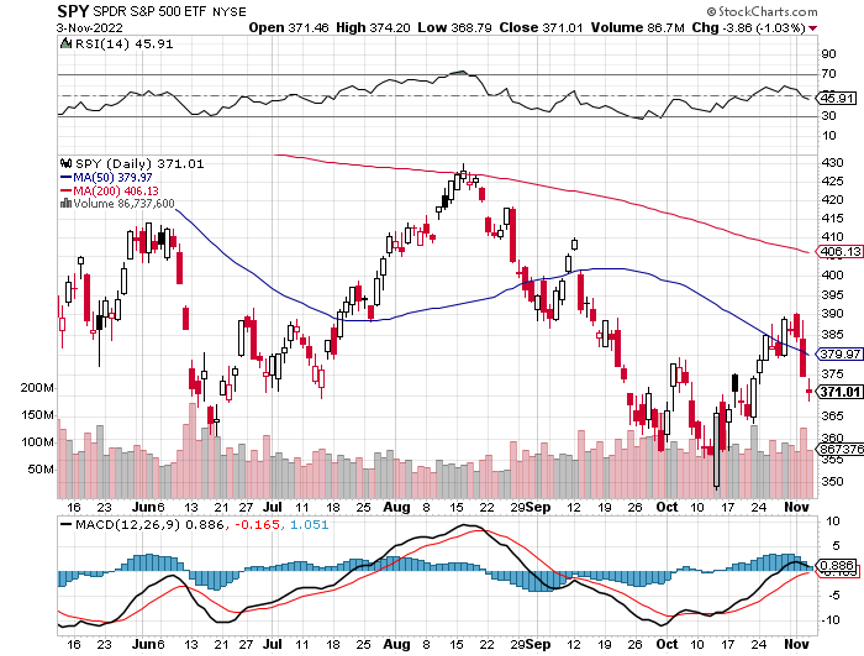
Q Is the SPDR S&P 500 ETF (SPY) put spread, correct?
A: Yes, we had the November $400-$410 vertical bear put spread, which we just sold for a nice profit.
Q: I missed the LEAPS on J.P. Morgan (JPM) which has already doubled in value since last month, will we get another shot to buy?
A: Well you will get another shot to buy especially if another major selloff develops, but we’re not going down to the old October lows in the financial sector. I believe that a major long-term bull move has started in financials and other sectors, like healthcare. You won’t get the October lows, but you might get close to them.
Q: I’m waiting for a dip to get into Eli Lilly (LLY), but there are no dips.
A: Buy a little bit every day and you’ll get a nice average in a rising market. By the way, I just added Eli Lilly to my Mad Hedge long-term model portfolio, which you received on Thursday.
Q: Any thoughts about the conclusion of the Twitter deal and how it will affect tech and social media?
A: So far all of the indications are terrible. Advertisers have been canceling left and right, hate speech is up 500%, and Elon Musk personally responded to the Pelosi assassination attempt by trotting out a bunch of conspiracy theories for the sole purpose of raising traffic and not bringing light to the issue. All indications are bad, but I've been with Elon Musk on several startups in the last 25 years and they always look like they’re going bust in the beginning. It’s not even a public stock anymore and it shouldn’t be affecting Tesla (TSLA) prices either, which is still growing 50% a year, but it is.
Q: In terms of food commodities for 2023, where are prices headed?
A: Up. Not only do you have the war in Ukraine boosting wheat, soybean, and sunflower prices, but every year, global warming is going to take an increasing toll on the food supply. I know last summer when it hit 121 degrees in the Central Valley, huge amounts of crops were lost due to heat. They were literally cooked on the vine. We now have a tomato shortage and people can’t make pasta sauce because the tomatoes were all destroyed by the heat. That’s going to become an increasingly common issue in the future as temperatures rise as fast as they have been.
Q: Do I trade options in Alphabet (GOOG) or Alphabet (GOOGL)?
A: The one with the L is the holding company, the one without the L is the advertising company and the stock movements are really identical over the long term, so there really isn’t much differentiation there.
Q: Why can’t inflation be brought down by increasing the supply of all goods?
A: Because the companies won’t make them. The companies these days very carefully manage output to keep prices as high as possible. It’s not only the energy industry that does that but also all industries. So those in the manufacturing sector don’t have an interest in lowering their prices—they want high prices. If they see the prices fall, they will cut back supply.
Q: What do you think about growth plays?
A: As long as interest rates are rising, growth will lag and value will lead, and that has been clear as day for the last month. This is why we have an overwhelming value tilt to our model portfolio and our recent trade alerts. They’ve all been banks—JP Morgan (JPM), Bank of America (BAC), Citigroup (C), plus Berkshire Hathaway (BRK) and Visa (V) and virtually nothing in tech.
Q: I don’t know how to execute spread trades in options so how do I take advantage of your service?
A: Every trade alert we send out has a link to a video that shows you exactly how to do the trade. I have to admit, I’m not as young as I was when I made the videos, but they’re still valid.
Q: Is the US housing market about to crash?
A: There is a shortage of 10 million houses in the US, with the Millennials trying to buy them. If you sell your house now, you may not be able to buy another one without your mortgage going from 2.75% to 7.75%—that tends to dissuade a lot of potential selling. We also have this massive demographic wave of 85 million millennials trying to buy homes from 65 million gen x-ers. That creates a shortage of 20 million right there. That's why rents are going up at a tremendous rate, and that's why house prices have barely fallen despite the highest interest rates in 20 years.
Q: If we get good news from the Fed, should we invest in 3X ETFs such as the ProShares UltraPro QQQ (TQQQ)?
A: No, I never invest in 3X ETFs, because they are structured to screw the investor for the benefit of the issuer. These reset at the close every day, so do 2 Xs and not more. If you're not making enough money on the 2Xs, maybe you should consider another line of business.
Q: Do you think BlackRock Corporate High Yield Fund (HYT) will show the pain of slights because of their green positioning?
A: No I don’t, if anything green investing is going to accelerate as the entire economy goes green. And you’ll notice even the oil companies in their advertising are trying to paint themselves as green. They are really wolves in sheep’s clothing. They’ll never be green, but they’ll pretend to be green to cover up the fact that they just doubled the cost of gasoline.
Q: Where do you find the yield on Blackrock?
A: Just go to Yahoo Finance, type in (BLK), and it will show the yield right there under the product description. That’s recalculated by algorithms constantly, depending on the price.
Q: Do you like Cameco (CCJ)?
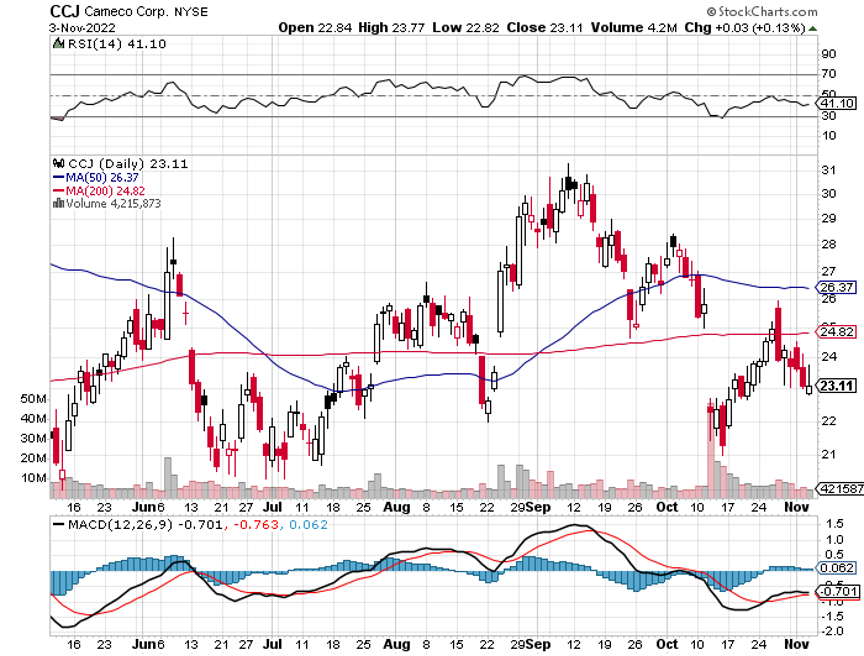
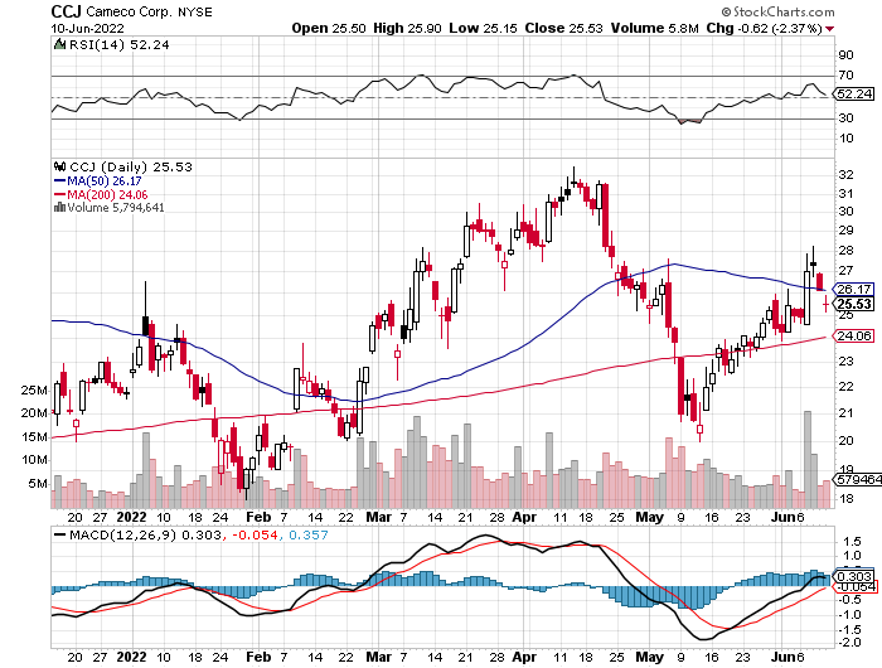
A: Yes, for the long term. Nuclear reactors have been given an extra five years of life worldwide thanks to the Russian invasion of Ukraine. Even Japan is opening theirs.
Q: Should I short the US dollar (UUP) here?
A: The answer is definitely maybe. I would look for the dollar to try to take one more run at the highs. If that fails, we could be beginning a 10-year bear market in the dollar, and bull market in the Japanese yen, Australian dollar, British pound, and euro. This could be the next big trade.
Q: What is your outlook on Real Estate Investment Trusts (REITs) now?
A: I think it looks great. REITs are now commonly yielding 10%. The worst-case scenario on interest rates has been priced in—buying a REIT is essentially the same thing as buying a treasury bond, but with twice the leverage, because they have commercial credits and not government credits. We’ll be doing a lot more work on REITS. We also have tons of research on REITS from 12 years ago, the last time interest rates spiked. I'll go in and see who’s still around, and I'll be putting out some research on it.
Q: How do you see the price development of gold (GLD)?
A: Lower—the charts are saying overwhelmingly lower. Gold has no place in a rising interest rate world. At least silver (SLV) has solar panel demand.
Q: Do you have any fear of Korea going into IT?
A: Yes, they will always occupy the low end of mass manufacturing, and you can see that in the cellphone area; Samsung actually sells more phones than Apple, but they’re cheaper phones with lower-end lagging technology, and that’s the way it’s always going to be. They make practically no money on these.
Q: When can we get some more trade alerts?
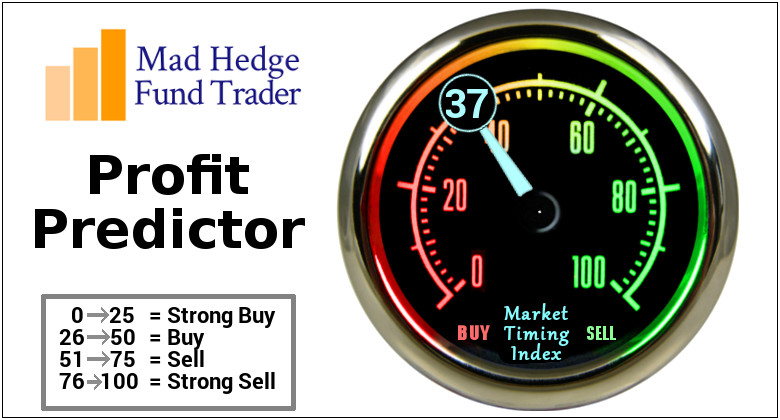
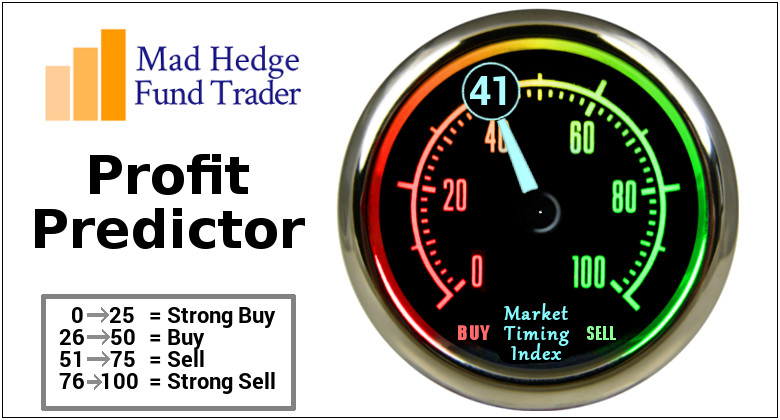
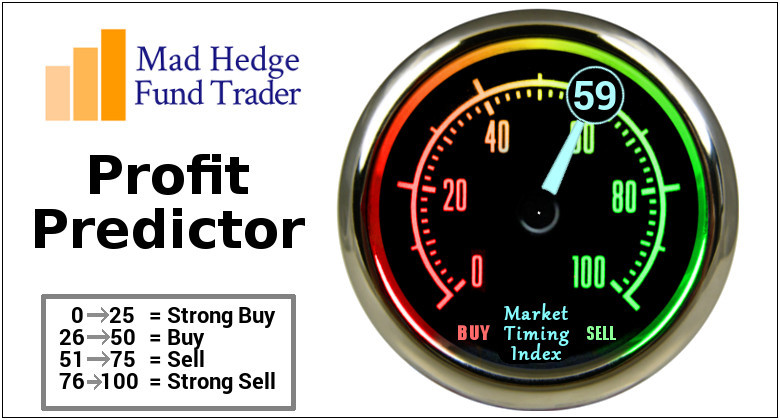
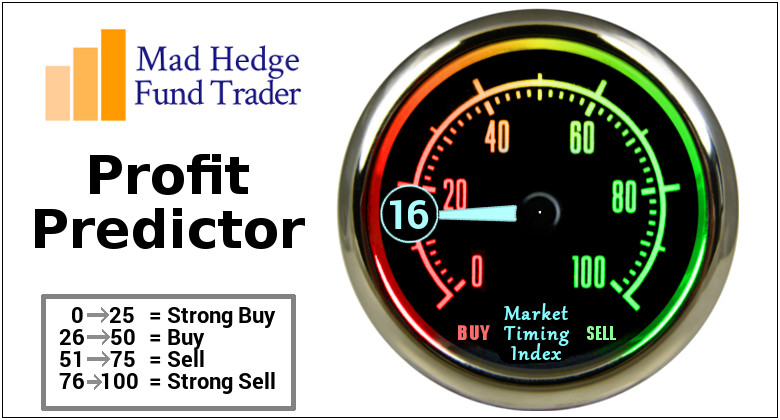
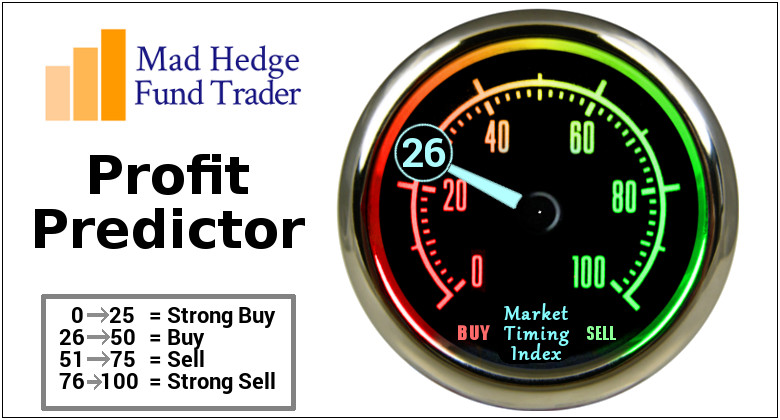
A: We are dead in the middle of my market timing index, so it says do nothing. I’m looking for either a big move down or big move up to get back into the market. This is a terrible environment to chase trades when you're trading, so I'm going to wait for the market to come to me.
Q: What about water as an investment? The Invesco Water Resources ETF (PHO)?
A: Long term I like it. There’s a chronic shortage of fresh water developing all over the world, and we, by the way, need major upgrades of a lot of water systems in the US, as we saw in Jackson, MS, and Flint, MI.
Q: Will REITs perform as well as buying rental properties over the next 10 to 20 years?
A: Yes, rental properties should do very well, as long as you’re not buying any city that has rent control. I have some rental properties in SF and dealing with rent control is a total nightmare, you’re basically waiting for your tenants to die before you raise the rent. I don’t think they have that in Nevada. But in Las Vegas, you have the other issue that is water. I think the shortage of water will start to drag on real estate prices in Las Vegas.
To watch a replay of this webinar with all the charts, bells, whistles, and classic rock music, just log on to www.madhedgefundtrader.com go to MY ACCOUNT, click on GLOBAL TRADING DISPATCH, then WEBINARS, and all the webinars from the last 12 years are there in all their glory.
Good Luck and Stay Healthy,
John Thomas
CEO & Publisher
The Diary of a Mad Hedge Fund Trader
It’s Been a Tough Market
https://www.madhedgefundtrader.com/wp-content/uploads/2022/11/john-thomas-lying-on-grass-e1667574535879.jpg500349Mad Hedge Fund Traderhttps://madhedgefundtrader.com/wp-content/uploads/2019/05/cropped-mad-hedge-logo-transparent-192x192_f9578834168ba24df3eb53916a12c882.pngMad Hedge Fund Trader2022-11-04 09:02:192022-11-04 11:26:35November 2 Biweekly Strategy Webinar Q&A
Featured Trade: (THE MAD HEDGE TRADERS & INVESTORS SUMMIT IS ON FOR JUNE 14-16)
(MARKET OUTLOOK FOR THE WEEK AHEAD,
or WHAT HAPPENS WHEN YOUR BEST FRIEND BECOMES YOUR WORST ENEMY?)
(SPY), (TLT), (TSLA), (CCJ), (TGT), NVDA), (JPM), (BAC), (C)
https://madhedgefundtrader.com/wp-content/uploads/2019/05/cropped-mad-hedge-logo-transparent-192x192_f9578834168ba24df3eb53916a12c882.png00Mad Hedge Fund Traderhttps://madhedgefundtrader.com/wp-content/uploads/2019/05/cropped-mad-hedge-logo-transparent-192x192_f9578834168ba24df3eb53916a12c882.pngMad Hedge Fund Trader2022-06-14 08:06:562022-06-14 08:27:32June 14, 2022
Of course, I am talking about the Federal Reserve.
The Fed was the best friend of share owners, pressing interest rates lower from March 2009. That remained the case for 12 years until November 2021 when its notorious pivot took place, flipping overnight from an easing to a tightening posture.
It's actually worst than that. In fact, our nation’s central bank morphed overnight from the easiest monetary policy in history to the most aggressive tightening.
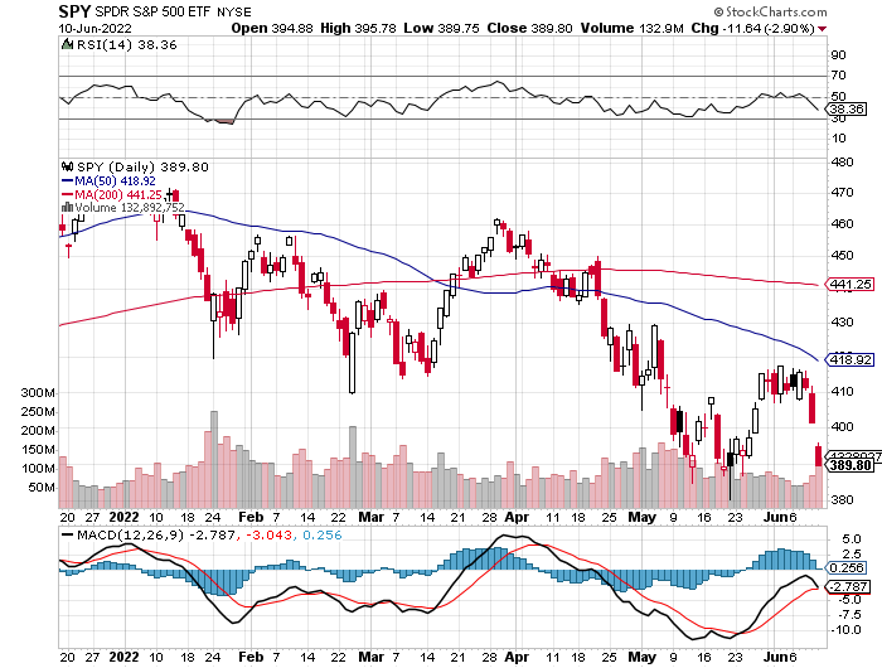
Stock markets have noticed, the Dow average giving up 20% in six months, and the final lows are probably not in yet.
I would bet money that you are expecting the worst-case scenario to happen. After all, the last serious selloff in 2008-2009 took the index down a heart-palpitating 52%.
What’s more, every oil shock of the last 50 years was followed by a recession, and we are clearly in one now. So, you are right to fear for your net worth and retirement security.
However, my work suggests that the best-case scenario will happen. Who is right, you or me?
You already know the answer.
Let me tell you what is already priced in the stock market: a Russian invasion of Ukraine, inflation at a 40-year high and climbing, a doubling of mortgage interest rates in a half year, peaking of the housing bubble, popping of technology and Bitcoin bubbles, and 200 basis points of Fed interest rate hikes.
With all this negativity already in the market, I would say that it is impossible for stocks NOT to go up. All that is left is to suck in one last round of non-believers on the short side before the indexes start a move to new all-time highs. That could take months at the most.
The only question now is whether a further 5% decline to an S&P 500 of 3,600, or a final puke out low of 3,500, down 7.5%. That means you should start scaling into your favorite longs now, the Cadillacs at Volkswagen prices.
So, let’s do some thinking outside the box here.
Tech stocks are cheaper now than after the low point of the Great 2000 Dotcom Bust. But they are still expensive compared to the main market. The S&P without technology stocks is now valued at earnings multiple of 13X versus 17x main market.
That is well into decade-low territory. That’s why I have included financials like (JPM), (BAC), and (C) in my list of “must own sectors'.
It's clear that inflation will bedevil the market for months to come given the dramatic acceleration we saw in May, from 0.3% to 1%. Let me tell you that there are only two ways to end inflation, and they could be done overnight.
*End all US support for Ukraine and throw in with Vladimir Putin. That would shave $50 off the price of oil immediately and get gas prices below $3.00 a gallon. You might have a hard time selling this to the thousands of Americans going over to Ukraine to volunteer.
*Cause a sharp recession immediately. The Fed is already well on their way to doing this with three guaranteed 50 basis point rate hikes by September. The first thing to collapse in a recession is oil demand. In the last recession, it went to negative $37 in the futures market (I got stopped out at -$5). This is why the oil industry isn’t interested in investing a dime at these oil prices. They are responsible to their shareholders, not Biden’s reelection prospects.
If there is a recession, it’s an invisible one. It’s a recession where you can’t hire anyone, can’t buy anything, subcontractors give you a six-month timeline with a straight face, and it takes a year to get delivery of a damn sofa. This recession miserably fails my “look out the window test.”
But at my advanced age, I don’t get surprised anymore.
Boba tea anyone? Who knew?
Consumer Price Index slaughters stocks, taking the Dow Average down 1,600 points, or 5% in two days, the worst move in two years. It’s typical bear market action. May inflation hit 8.6%, a new 40-year high. But you have to more than double to hit the old 1980s peak. New stock lows are in easy reach.
Lumber crashes, down 50% from the highs in months, with the near-complete cessation of new orders from builders. They see a recession just around the corner with higher interest rates and no new home buyers. It’s proof that the current inflation is spiking and setting up for a big fall.
Luxury Home Sales are plunging in New York, in numbers, but not in prices. Anyone who needed debt to trade up is out of the picture.
US drop Covid Testing Requirement for international travelers. Too many Americans trying to get home were getting stranded overseas for weeks because they failed a Covid test. Wheww!! That was a close call!
Americans will spend an extra $730 Billion on energy this year. That’s a heck of a lot to take out of consumer spending. So far, there has been no decline in demand. Much of this money ended up in Russian coffers.
Amazon (AMZN) splits 20:1, triggering an avalanche of new retail buyers. The company is also at the low end of its valuation range anger a gut-punching 41% decline in the share price this year. It may be early, but (AMZN) is definitely a BUY.
Target (TGT) warns of more margin squeeze, with too much inventory and flagging demand. (TGT) has become a bellwether for all of retail, which points to inflation, labor, and supply chain problems.
Uranium Stocks soar on Biden’s plan to buy $4.3 billion worth of enriched uranium, or yellow cake. The move is aimed to replace Russian imports where Russia is one of the world’s largest suppliers. It is the most unexploited form of non-carbon energy out there. Mad Hedge recommended Cameco (CCJ), the world’s second-largest supplier, a month ago. It was up 15% yesterday at the high.
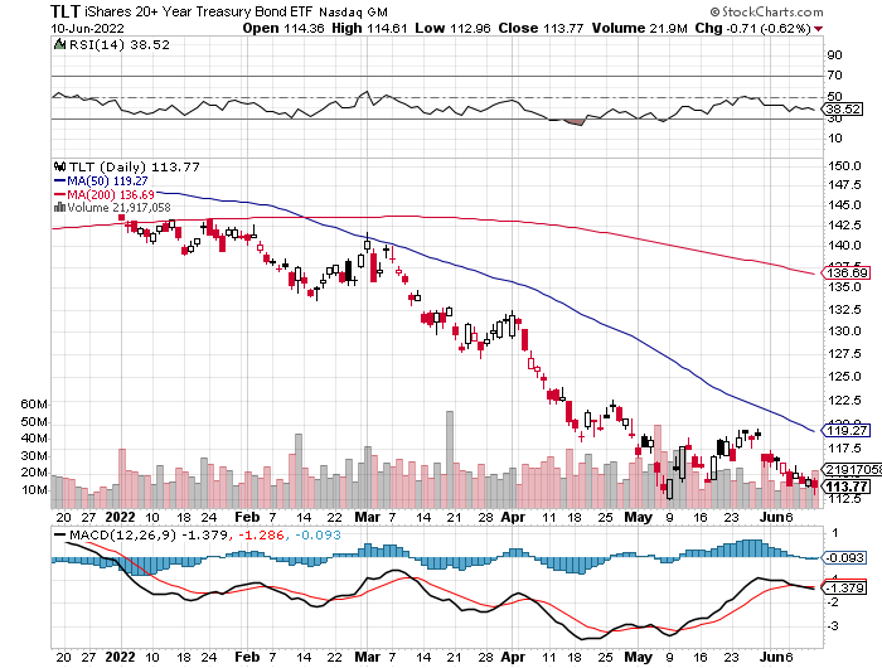
New Home Mortgages hit a 22-year low. With 30-year fixed-rate loans soaring from 2.8% to 5.58% in six months, how can they not? Refis have crashed 75% YOY. Now that the Fed has quit buying, investors won’t touch mortgage-backed securities with a ten-foot pole.
Weekly Jobless Claims pop 29,000 to a five-month high in another hint toward a recession. Continuing Claims are at 1.306 million. The preemptive layoffs by ultra-cautious companies have begun, especially in technology.
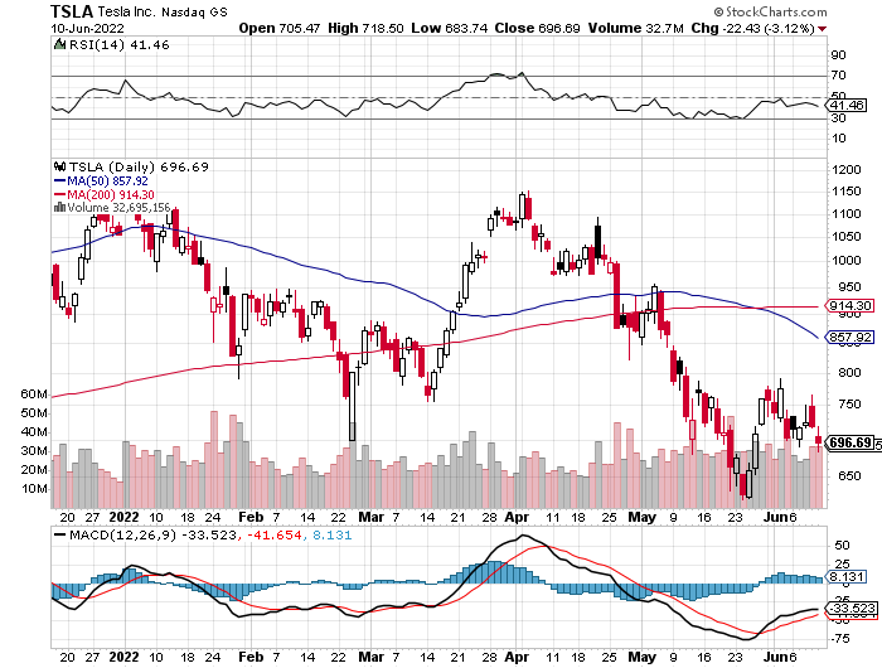
Tesla (TSLA) gets an upgrade by UBS, which sees 51% of upside from here to $1,200. Total sales should top 1.4 million vehicles in 2022, up 40% YOY, and that includes lost production of 60,000 in Shanghai. A new Gigafactory in Indonesia is planned with a locked-up supply of Nickel, where the world’s largest supply of the metal resides. Cheap labor helps a lot where 5,000 need to be hired. The company will need six gigafactories to reach 20 million annual production.
My Ten-Year View
When we come out the other side of pandemic, we will be perfectly poised to launch into my new American Golden Age, or the next Roaring Twenties. With interest rates still historically cheap, oil peaking out soon, and technology hyper-accelerating, there will be no reason not to. The Dow Average will rise by 800% to 240,000 or more in the coming decade. The America coming out the other side of the pandemic will be far more efficient and profitable than the old. Dow 240,000 here we come!
With some of the greatest market volatility seen since 1987, my June month-to-date performance recovered to +2.57%.
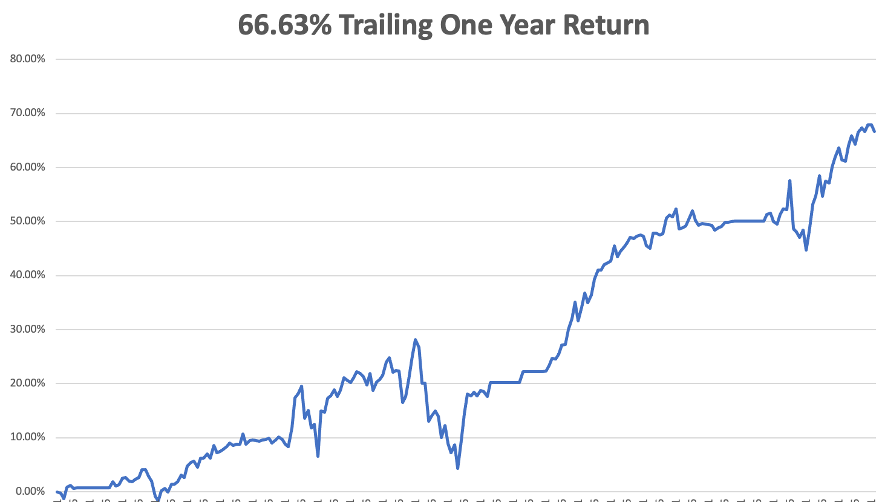
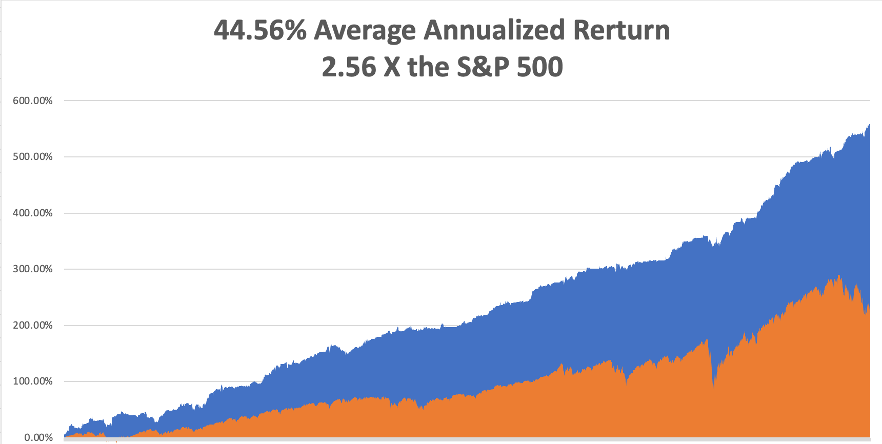
My 2022 year-to-date performance ratcheted up to 44.44%, a new all-time high. The Dow Average is down -13.52% so far in 2022. It is the greatest outperformance on an index since Mad Hedge Fund Trader started 14 years ago. My trailing one-year return maintains a sky-high 66.63%.
That brings my 14-year total return to 557%, some 2.56 times the S&P 500 (SPX) over the same period and a new all-time high. My average annualized return has ratcheted up to 44.56%, easily the highest in the industry.
We need to keep an eye on the number of US Coronavirus cases at 85.6 million, up 200,000 in a week, and deaths topping 1,011,200 and have only increased by 2,000 in the past week. You can find the data here.
On Monday, June 13 at 8:00 AM EDT, US Consumer Inflation Expectations are out. On Tuesday, June 14 at 8:30 AM, the Producer Price Index for May is published.
On Wednesday, June 15 at 10:30 AM, Retails Sales for May are announced. The Fed interest rates decision is out at 11:00 AM. The press conference follows at 11:30. On Thursday, June 16 at 8:30 AM, Weekly Jobless Claims are out. We also get Housing Starts and Building Permits for May.
On Friday, June 10 at 8:15 AM, Industrial Production for May is published. At 2:00, the Baker Hughes Oil Rig Count is out.
As for me, I have benefited from many mentors and role models over the years, but Al Pinder, last of the New York-based Shipping and Trade News, is one of my favorites. Short with blown hair, glasses, and an always impish smile, he was a regular at lunch where we always played an old dice game called “ballout.”
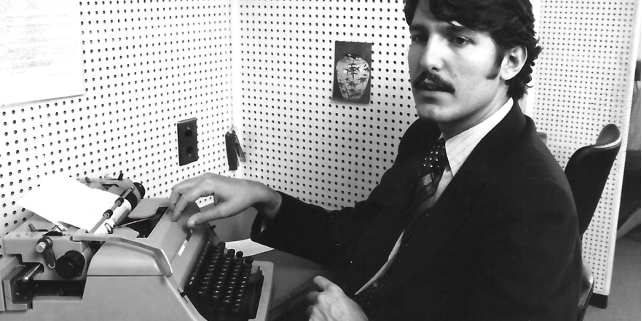
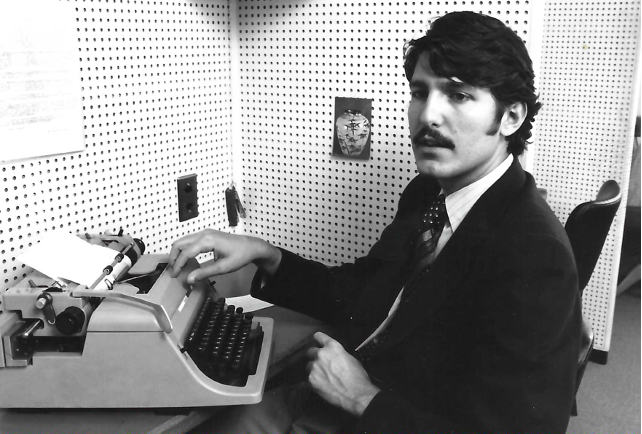
I sat next to Al for ten years at the Foreign Correspondents Club of Japan high up in Tokyo’s Yukakucho Denki Building, we were pounding away on our antiquated Royal typewriters. At the end of the day, our necks would be stiff as boards. Al’s idea of work was to type for five minutes, then tell me stories for ten.
Saying that Al lived a colorful life would be the understatement of the century.
Al covered the Japanese invasion of China during the 1930s, interviewing several key generals like Hideki Tojo and Masaharu Homma, later executed for war crimes. He told me of child laborers in Shanghai silk processors who picked cocoons out of boiling water with their bare hands.
Al could see war with Japan on the horizon, so he took an extended tour of every west-facing beach in Japan during the summer of 1941, taking thousands of black and white pictures. The trick was how to get them out of the country without being arrested as a spy.
So he bought an immense steamer trunk and visited a sex shop in Tokyo’s red-light district where he bought a life-sized, blow-up doll of a Japanese female. His immensely valuable photos were hidden below a false bottom in the trunk and the blow-up doll placed on top.
When he passed through Japanese customs on the ship home from Yokohama, the inspectors opened the trunk, had a good laugh, and then closed it. These photos later became the basis of Operation Coronet, the American invasion of Japan in 1945.
Al was working for the Honolulu Star Bulletin when the Japanese attacked Pearl Harbor on December 7, 1941. Many antiaircraft shells fired at the attacking zeros landed in Honolulu causing dozens of casualties. Al told me every woman on the island wanted to get laid that night because they feared getting raped by the Japanese Army the next day.
Since Al knew China well, he was parachuted into western Yunan province to act as a liaison with Mao Zedong, then fighting a guerrilla war against the Japanese with his Eighth Route Army. Capture by the Japanese then meant certain torture and certain death.
In 1944, Al received a coded message in Morse code to pick up an urgent communication from Washington. So, he hiked a day to the drop zone and when the Army Air Corps DC-3 approached, he lit three signal fires.
A package parachuted to the ground, which he grabbed and then he fled for the mountains. Dodging enemy patrols all the way, he returned to his hideout in a mountain cave and opened the package. It was a letter from the Internal Revenue Service asking why he had not filed a tax return in three years.
When the second atomic bomb fell on Nagasaki, the war ended on August 15. Since Al was the closest man on the spot, he flew to Korea where he accepted the Japanese surrender there.
Al was one of the first to move into the Press Club, which housed war correspondents in one of the only buildings still standing in a city that had been bombed flat.
Al never left Japan because, as with many other war correspondents who arrived with the US military, it was the best thing that ever happened to him. After some initial hesitation, they were treated like conquering heroes, it was incredibly cheap at 800 yen to the dollar, and the women were beautiful.
During the Japanese occupation when the people were starving, Al bought an acre of land in Tokyo’s burned-out prime Akasaka district for a ten-pound can of ham. He spent the rest of his life living off this investment, selling one piece at a time, until it eventually became worth $10 million.
Al went to work for the Shipping and Trade News, an obscure industry trade publication which no one had ever heard of. I sat next to him when he artfully lifted every story out of an ancient book, Ships of the World. But Al always had plenty of money to spend.
When Al passed away in the early 2000s, an official from the American embassy in Tokyo showed up at the Press Club asking if anyone knew all Pinder. We eventually traced a bank branch which held a safe deposit box in his name. In it was proof that the CIA had been bribing every Japanese prime minister of the 1950s. He kept the evidence as an insurance policy against the day when his lucrative deal with the Shipping and Trade News was ever put at risk.
I flew in for Al’s wake and his Japanese wife was there along with most of the foreign press. Everyone was crying until I told the IRS story, then they had a good laugh.
A few years ago, I was invited to give the graduation speech at Defense Language Institute in Monterey, California. The latest bunch of graduates, including my nephew, were freshly versed in Arabic and headed for the Middle East.
The school was founded in 1941 to train Americans in Japanese to gain an intelligence advantage in the Pacific war.
General 'Vinegar Joe' Stillwell said their contribution shortened the war by two years. General Douglas MacArthur believed that an army had never before gone to war with so much advance knowledge about its enemy.
To this day, the school's motto is 'Yankee Samurai'. There on the wall with the school’s first graduates was a very young Al Pinder, still with that impish grin.
Al lived a full life and I still miss him to this day. I hope I can do as well.
Stay Healthy,
John Thomas
CEO & Publisher
The Diary of a Mad Hedge Fund Trader
Al Pinder
Press Club 1976
https://www.madhedgefundtrader.com/wp-content/uploads/2022/06/john-thomas-press-club-1976.png434642Mad Hedge Fund Traderhttps://madhedgefundtrader.com/wp-content/uploads/2019/05/cropped-mad-hedge-logo-transparent-192x192_f9578834168ba24df3eb53916a12c882.pngMad Hedge Fund Trader2022-06-14 08:02:382022-06-14 08:27:59The Market Outlook for the Week Ahead, or What Happens When Your Best Friend Becomes You Worst Enemy
Below please find subscribers’ Q&A for the June 1 Mad Hedge Fund Trader Global Strategy Webinar broadcast from Silicon Valley.
Q: What are the 3 best stocks to own for the end of the year?
A: Apple (AAPL), Alphabet Inc. (GOOGL), and Microsoft (MSFT). Those you want to buy on meltdown days, kind of like today. Make sure you scale into these—so maybe buy 20% on every down-500-point Dow day. Eventually, you’ll end up with a pretty decent position at a market low in a stock that will double in 3-5 years.
Q: Why these three stocks?
A: Lots of reasons: They’re huge, they’re safe, two out of three pay dividends, Alphabet is about to split, and they have huge moats so nobody can get into their sectors. They have near monopolies in what they do, and they have immense cash on the balance sheet. These are the kind of stocks that portfolio managers dream about. And watch what rallied the hardest in the last dead cat bounce we had—it was these three names. That tells you that they will lead any long-term bull market in the future. These are the stocks that people want to own.
Q: What will bring your predicted second half-bull market in the stock market?
A: Inflation drops from 8% to 4%. That will happen for a couple of reasons. The year-on-year comparisons become highly favorable starting from next month when inflation started to take off a year ago. Inflation numbers are going to be climbing the wall of worry from here on out. That could get us down to 4% by the end of the year. The second reason is the Ukraine War either ends or becomes a stalemate and is no longer a factor in the global markets, and we’ve had time to replace all the Russian oil and Ukrainian wheat.
Q: Are banks positioned to benefit from the coming rally?
A: Absolutely. I think big tech and banks will be the top-performing stock sectors for the next five years because inflation will go away, recession fears will go expire, and credit quality will improve, but interest rates will remain 300 basis points higher than they were during the pandemic. Buy (JPM), (BAC), and (C) on dips.
Q: What will be the worst performing sector?
A: Energy—anything energy-related will get absolutely slaughtered, which is why I don't want to touch it with a ten-foot pole right now. That includes oil companies, exploration companies, E&P companies, and master limited partnerships, as well as coal and other natural gas stocks. So, if you’re long these names don’t forget to sit down when the music stops playing. You could get your head handed to you at the end.
Q: Can we make lower lows?
A: Yes, that’s entirely possible. Market moves are basically random when you get down to these levels— down more than 20%. And on all future downturns, I would be spending your cash going back into the market expecting a second half rally.
Q: What about green energy?
A: Unfortunately, green energy is very tied to old energy because $120 oil makes green companies much more competitive from a cost point of view. So, I’m not going to go piling into green companies right here, especially if I think oil is topping out in the near future. Buying green energy companies here is the same as buying oil at $120 a barrel.
Q: What is the best way to play the declining US dollar?
A: Buy the iShares MSCI Emerging Markets ETF (EEM). Also, the Aussie dollar (FXA) and the Canadian Dollar (FXC), which benefit tremendously from commodity prices, which will rise for another decade in a global economic recovery.
Q: Why will energy be the worst sector?
A: If you end the war in the Ukraine or you replace Russian oil, either by finding new sources of oil, getting other producers to increase production which they can do (including the US), or by accelerating the move to alternatives, then you move oil back to pre-invasion prices which were about $70 a barrel or $50 lower than they are here.
Q: Best way to hedge a falling market?
A: Do what I'm doing: keep a balanced portfolio of longs and shorts, that way you always have something that’s going up. And if you do it through the options, you have time decay working for you on both sides of the equation. If you want to go outright, buy outright puts on individual stocks because they had double the moves of the indexes. And go to my short selling school which you can find by going to my website at https://www.madhedgefundtrader.com. There’s actually 12 different ways to benefit from falling markets.
Q: How deep in the money can we go on our call spreads?
A: Wait for the Volatility Index (VIX) to go over $30, and then go 15-20% in the money. And yes, you only make 10, 15, or 20% on those positions in a month but then you put together ten of them and that adds up to quite a lot of money. You want to find the position that has the greatest probability of happening—i.e. something that’s 20% in the money. Do that when the market has just dropped 20%, which it already has, and then you have a position that has a minuscule chance of losing money.
Q: How much longer do you see this current bear market bounce lasting?
A: Until yesterday.
Q: What's your favorite commodity ETF?
A: My favorite commodity stock is Freeport McMoRan (FCX), the world’s largest copper producer. Rather than pay the extra management fees for an ETF, I prefer just to go straight to the source and buy (FCX).
Q: When do you think the Fed will pivot to dovish or neutral?
A: This summer. It’s just a question of whether it’s the July or the September meeting.
Q: When you say “buy on dips”, what does that mean? 1%, 3%, 5%?
A: Well in this market, a dip would be a retest of the previous lows which is going to be down 10% or 15% on the major positions in your portfolio. If you’re day trading, a dip is only 1%, so it really depends on your timeframe and your risk tolerance. That’s why I always tell people to scale by doing everything in incremental pieces—20%, 25%, and so on. You never know what the market’s actually going to do on a short-term basis. Randomness can’t be predicted.
Q: If you plan to enter a LEAPS on Apple, what strikes would you do?
A: Well, first of all, I want to see if Apple drops all the way to $125, which is a lot of people’s downside target. If it did, then I would do the $125/$135 call spread two years out, and that will probably double. And if it starts a long term up trend, then I’ll keep rolling up the strike prices. If, say, Apple goes to $125, you put your LEAPS on. If the stock rises to 150, then take profits on the $125/$135 and roll into the $150/$160. That’s how you can get like 1,000% returns like we got on Tesla (TESLA) a few years ago. You just keep rolling up your strike prices on every weak day and maintain your leverage.
Q: When do we bet the farms on Editas Medicine Inc. (EDIT) and Crispr (CRSP) Therapeutics?
A: Never. These are small, highly speculative companies which will make money someday, but if the someday is in five years and you’re betting the farm with a LEAPS, you lose the farm. It's going to take a long time for these smaller biotech stocks to come back. If you want to play biotech, go with the big ones like Amgen. It takes a long time to convert cutting-edge technology into profits. The big companies already have a stable of reliable money-making drugs on hand.
Q: Salesforce Inc. (CRM) is up big on earnings—what should I do with the stock?
A: Buy the dips. It’s still way, way below its all-time highs, so use the weekdays to accumulate Salesforce for the long term. It’s one of the best cloud plays out there.
Q: What do you think about NVIDIA Corporation (NVDA)?
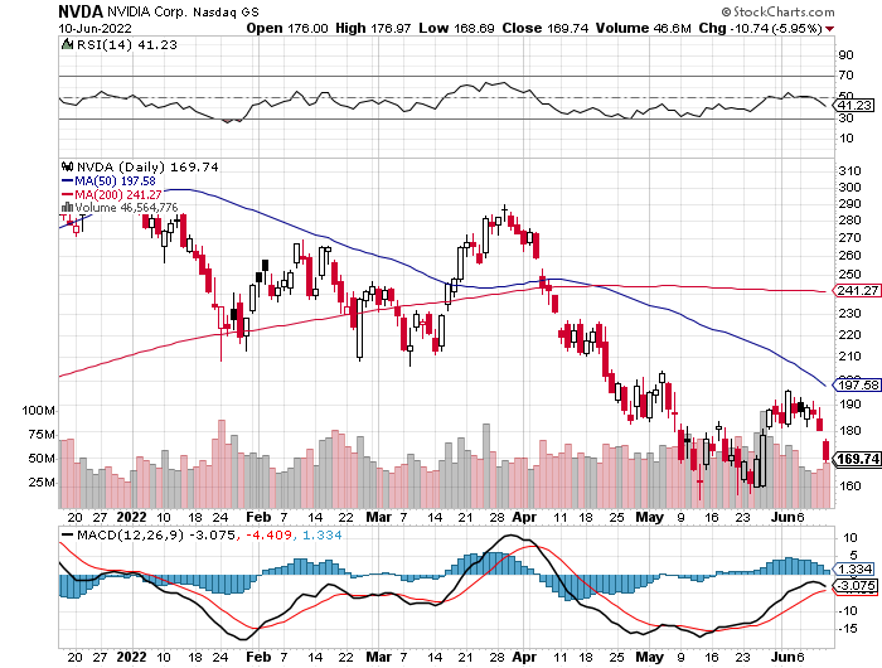
A: I absolutely love it. It rallied 20% off the bottom. Use any other additional weak days like today to increase your position. This stock someday is worth $1,000, up from today’s $195.
Q: Do you like SPACS?
A: No, I hate them and think they’re a rip-off. And a lot of them have become totally illiquid and untradable, so you have no choice but for them to shut down and return their money if they have any left. I’ve hated SPACS from day one and people are now getting their comeuppance on these.
Q: What do you think about the weakness in Coinbase Global Inc. (COIN) down here?
A: It’s just going down with all the other high-risk, speculative, meme stock type plays, which include all of the crypto plays like Bitcoin. I would avoid all of those. You want to buy quality at the discount now, and you want to buy the Cadillacs at Volkswagen prices and leave the speculative plays for the next generation, Gen Z, who are already highly interested in stocks.
Q: What is your favorite non-US country to invest in?
A: Australia, because you get a double play there on the currency, which should go up 30% from here, and they will benefit from a global commodity boom which continues for another ten years. They pretty much sell a lot of the major commodities like iron ore, wheat, sheep, and so on. It’s also a really nice country to visit. The only negative with Australia are the sharks.
Q: Biotech takeover targets?
A: Well (EDIT) and (CRSP) would be two of them. Things in the sector are so cheap that they are all potential takeover targets. M&A (Mergers and Acquisitions) will be a major play in the biotech sector for the foreseeable future.
Q: Should we sell short the defense industry here?
A: No, even if the war ends tomorrow, you might get some profit-taking, but the fact is that long term military spending is increasing permanently. The peace dividend now has to be paid back, and that is great for all the defense companies, so I would not be shorting them. If anything, I’d be buying on dips. Buy Lockheed Martin (LMT), Raytheon (RTX), who make the Javelin antitank missile for which there is now a two-year order backlog. You can also throw in General Dynamics (GD) for good measure which builds nuclear submarines and the Stryker armored vehicle.
To watch a replay of this webinar with all the charts, bells, whistles, and classic rock music, just log in to www.madhedgefundtrader.com, go to MY ACCOUNT, click on GLOBAL TRADING DISPATCH, then WEBINARS, and all the webinars from the last 12 years are there in all their glory.
Good Luck and Stay Healthy,
John Thomas
CEO & Publisher
The Diary of a Mad Hedge Fund Trader
Keep Those Defense Plays
https://www.madhedgefundtrader.com/wp-content/uploads/2021/05/john-thomas-gunslinger.png410404Mad Hedge Fund Traderhttps://madhedgefundtrader.com/wp-content/uploads/2019/05/cropped-mad-hedge-logo-transparent-192x192_f9578834168ba24df3eb53916a12c882.pngMad Hedge Fund Trader2022-06-03 10:02:102022-06-03 10:55:37June 1 Biweekly Strategy Webinar Q&A
Legal Disclaimer
There is a very high degree of risk involved in trading. Past results are not indicative of future returns. MadHedgeFundTrader.com and all individuals affiliated with this site assume no responsibilities for your trading and investment results. The indicators, strategies, columns, articles and all other features are for educational purposes only and should not be construed as investment advice. Information for futures trading observations are obtained from sources believed to be reliable, but we do not warrant its completeness or accuracy, or warrant any results from the use of the information. Your use of the trading observations is entirely at your own risk and it is your sole responsibility to evaluate the accuracy, completeness and usefulness of the information. You must assess the risk of any trade with your broker and make your own independent decisions regarding any securities mentioned herein. Affiliates of MadHedgeFundTrader.com may have a position or effect transactions in the securities described herein (or options thereon) and/or otherwise employ trading strategies that may be consistent or inconsistent with the provided strategies.