Global Market Comments
March 17, 2026
Fiat Lux
Featured Trade:
(HOW TO HANDLE THE FRIDAY, MARCH 20, OPTIONS EXPIRATION),
(SPY), (RTX), (BA), (CAT), (GLD)

Global Market Comments
March 17, 2026
Fiat Lux
Featured Trade:
(HOW TO HANDLE THE FRIDAY, MARCH 20, OPTIONS EXPIRATION),
(SPY), (RTX), (BA), (CAT), (GLD)
Global Market Comments
March 16, 2026
Fiat Lux
Featured Trade:
(MARKET OUTLOOK FOR THE WEEK AHEAD or SPRING IN THE CENTRAL VALLEY)
AAPL), (GOOGL), (AMZN), (BA), (CAT), (RTX) (GLD), (B), (WPM) (MSFT), (GOOGL), (XLE), (XLU), (XLF), (XLF), (XLK) ($VIX) (USO), (JPM), (KKR), (OWL), (AAL), (BLK), (APO)
Global Market Comments
March 9, 2026
Fiat Lux
Featured Trade:
(MARKET OUTLOOK FOR THE WEEK AHEAD, or DON’T LET YOUR COMPLACENCY WIPE OUT YOUR RETIREMENT FUND)
(USO), ($INDU), (RTZ), (CAT), (FCX), (SPY), (GLD),
(MSFT), (C), (CRWD), (PANW), (BLK), ($VIX), (PANW), (IGV), (KO), (XLE), (XLP), (XLF) (KRE), (DHI)

Global Market Comments
June 12, 2025
Fiat Lux
Featured Trade:
(HERE IS YOUR NEXT DECADE LONG PLAY),
(CAT), ($COPPER), (FCX), (BHP), (RIO),
(TESTIMONIAL)
Global Market Comments
March 27, 2025
Fiat Lux
Featured Trade:
(HOW TO GAIN AN ADVANTAGE WITH PARALLEL TRADING),
(GM), (F), (TM), (NSANY), (DDAIF), BMW (BMWYY), (VWAPY),
(PALL), (GS), (EZA), (CAT), (CMI), (KMTUY),
(KODK), (SLV), (AAPL)

One of the most fascinating things I learned when I first joined the equity trading desk at Morgan Stanley during the early 1980s was how to parallel trade.
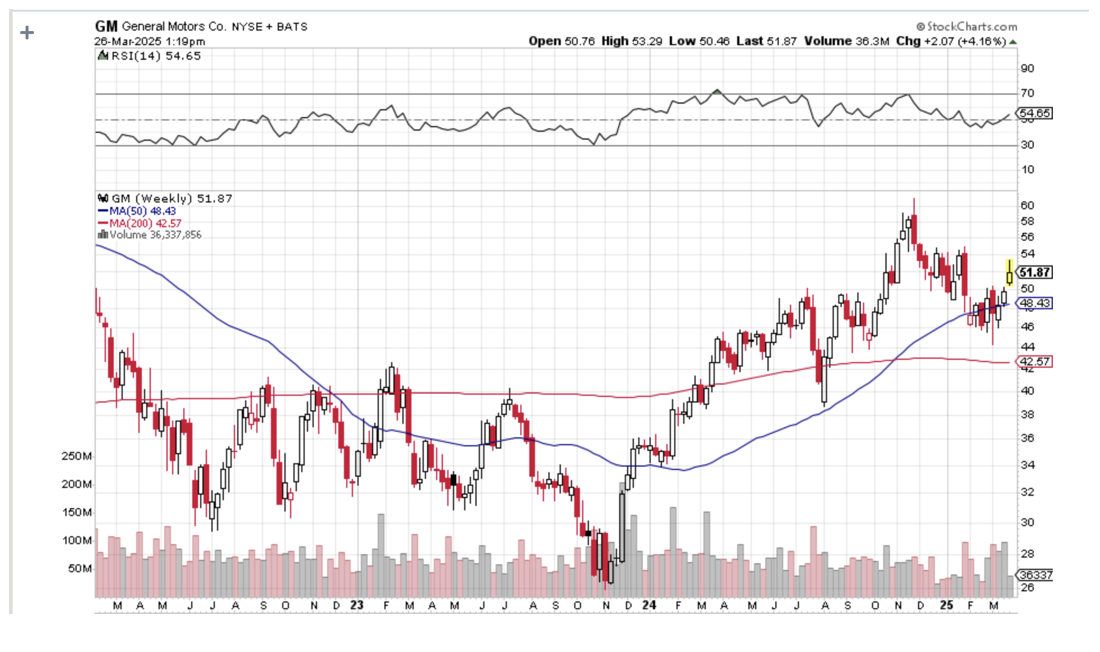
A customer order would come in to buy a million shares of General Motors (GM), and what did the in-house proprietary trading book do immediately?
It loaded the boat with the shares of Ford Motors (F).
When I asked about this tactic, I was taken away to a quiet corner of the office and read the riot act.
“This is how you legally front-run a customer,” I was told.
Buy (GM) in front of a customer order, and you will find yourself in Sing Sing shortly.
Ford (F), Toyota (TM), Nissan (NSANY), Daimler Benz (DDAIF), BMW (BMWYY), and Volkswagen (VWAPY), were all fair game.
The logic here was very simple.
Perhaps the client completed an exhaustive piece of research concluding that (GM) earnings were about to rise.
Or maybe a client's old boy network picked up some valuable insider information.
(GM) doesn’t do business in isolation. It has thousands of parts suppliers for a start. While whatever is good for (GM) is good for America, it is GREAT for the auto industry.
So through buying (F) on the back of a (GM) might not only match the (GM) share performance, it might even exceed it.
This is known as a Primary Parallel Trade.
This understanding led me on a lifelong quest to understand Cross Asset Class Correlations, which continues to this day.
Whenever you buy one thing, you buy another related thing as well, which might do considerably better.
I eventually made friends with a senior trader at Salomon Brothers while they were attempting to recruit me to run their Japanese desk.
I asked if this kind of legal front-running happened on their desk.
“Absolutely,” he responded. But he then took Cross Asset Class Correlations to a whole new level for me.
Not only did Salomon’s buy (F) in that situation, they also bought palladium (PALL).
I was puzzled. Why palladium?
Because palladium is the principal metal used in catalytic converters, it removes toxic emissions from car exhaust and has been required for every U.S.-manufactured car since 1975.
Lots of car sales, which the (GM) buying implied, ALSO meant lots of palladium buying.
And here’s the sweetener.
Palladium trading is relatively illiquid.
So, if you catch a surge in the price of this white metal, you would earn a multiple of what you would make on your boring old parallel (F) trade.
This is known in the trade as a Secondary Parallel Trade.
A few months later, Morgan Stanley sent me to an investment conference to represent the firm.
I was having lunch with a trader at Goldman Sachs (GS) who would later become a famous hedge fund manager, and asked him about the (GM)-(F)-(PALL) trade.
He said I would be an IDIOT not to take advantage of such correlations. Then he one-upped me.
You can do a Tertiary Parallel Trade here by buying mining equipment companies such as Caterpillar (CAT), Cummins (CMI), and Komatsu (KMTUY).
Since this guy was one of the smartest traders I ever ran into, I asked him if there was such a thing as a Quaternary Parallel Trade.
He answered “Abso******lutely,” as was his way.
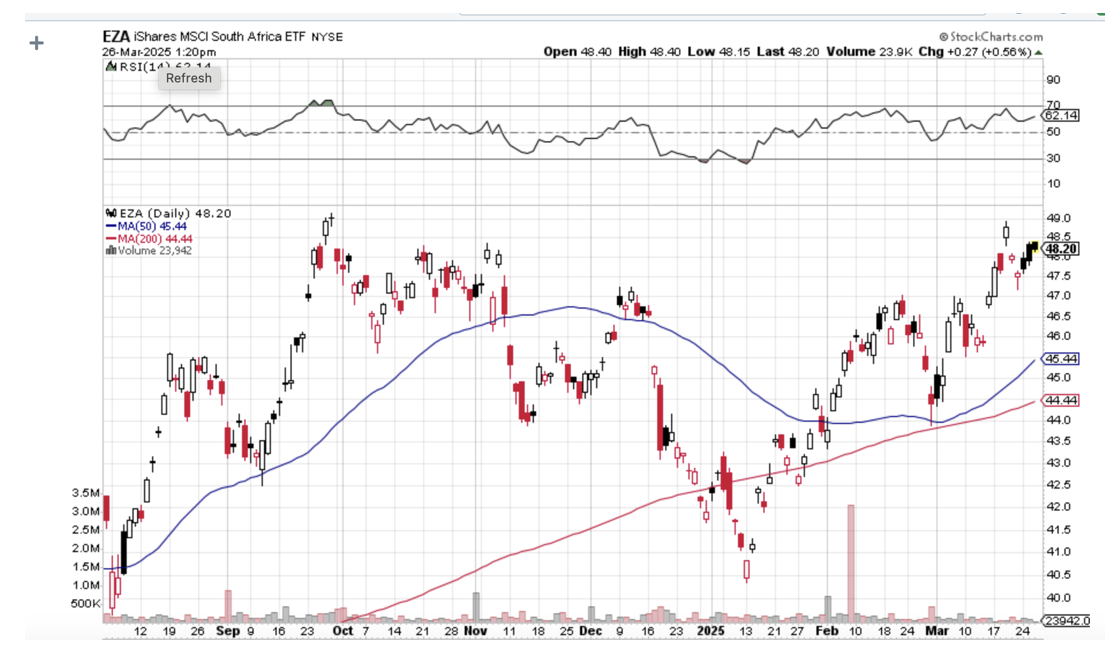
But the first thing he always did when searching for Quaternary Parallel Trades would be to buy the country ETF for the world’s largest supplier of the commodity in question.
In the case of palladium, that would be South Africa (EZA).
Since then, I have discovered hundreds of what I call Parallel Trading Chains and have been actively making money off of them. So have you, you just haven’t realized it yet.
I could go on and on.
If you ever become puzzled or confused about a trade alert I am sending out (Why on earth is he doing THAT?), there is often a parallel trade in play.
Do this for decades as I have and you learn that some parallel trades break down and die. The cross relationships no longer function.
The best example I can think of is the photography/silver connection. When the photography business was booming, silver prices rose smartly.
Digital photography wiped out this trade, and silver-based film development is still only used by a handful of professionals and hobbyists.
Oh, and Eastman Kodak (KODK) went bankrupt in 2012.
However, it seems that whenever one Parallel Trading Chain disappears, many more replace it.
You could build chains a mile long simply based on how well Apple (AAPL) or NVIDIA (NVDA) is doing.
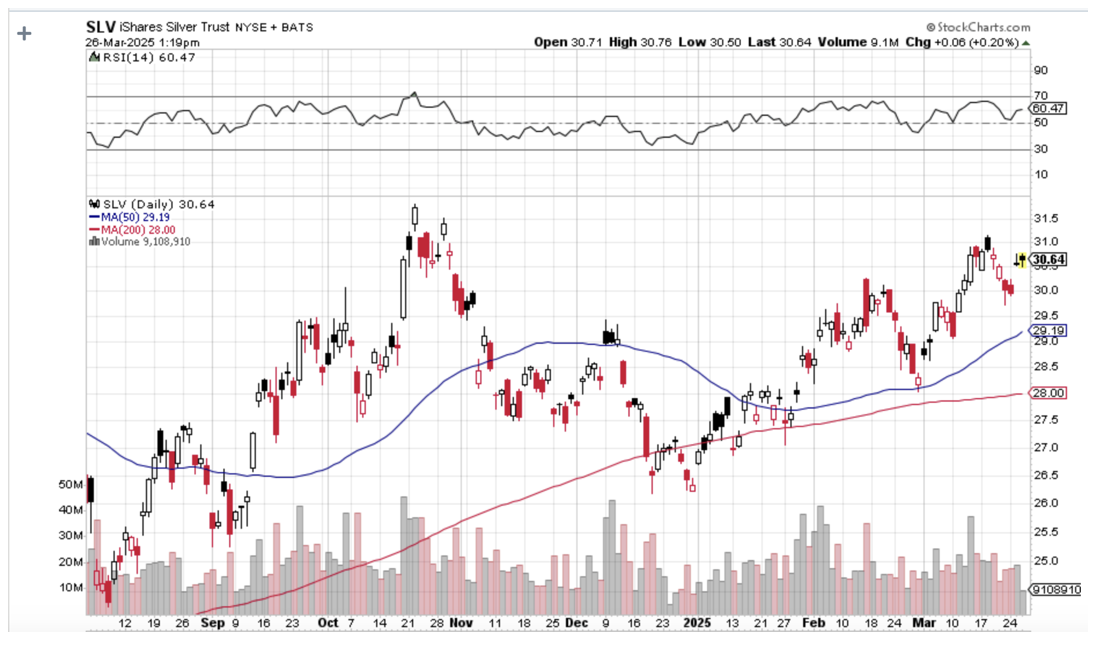
And guess what? There is a new parallel trade in silver developing. Whenever someone builds a solar panel anywhere in the world, they use a small amount of silver for the wiring. Build several tens of millions of solar panels and that can add up to quite a lot of silver.
What goes around comes around.
Suffice it to say that parallel trading is an incredibly useful trading strategy.
Ignore it at your peril.
Global Market Comments
August 22, 2024
Fiat Lux
Featured Trade:
(THE TOP SEVEN CHINESE RETAILIATION TARGETS),
(AAPL), (GM), (WMT), (TGT), (BA), (SBUX), (CAT),
(AND MY PREDICTION IS….)
It’s looking like the trade war between the US and China is going to heat up some more, no matter who wins the presidential election. It is no longer a question of “if”, but “how much” and “when.”
Please forgive me, but I am new at this. I have only been covering China for 50 years now since the Cultural Revolution was sweeping an impoverished, starving third-world communist country.
With a massive US trade deficit with China in 2023, the Middle Kingdom has become a top administration target.
A real trade war would cause thousands of businesses in the US to go bankrupt and leave millions unemployed. Transpacific transportation would ground to a halt, filling up harbors with hundreds of redundant ships.
Trillions of dollars of direct investment in the two countries would be held hostage.
In other words, a trade war would be like cutting off our noses to spite our faces.
Just as America has its Tea Party and right-wing conspiracy theorists, so does China.
Their entire worldview revolves around the merciless exploitation of China by the Western powers that took place during the 19th century.
British trading companies, like Jardine Matheson, imported cheap opium from India and sold it to the Chinese at the point of a gun, triggering three wars. With only primitive weapons at hand, the Chinese were powerless to resist.
By the time of the fall of the Qing Dynasty in 1912, the entire country had been carved up into spheres of influence dominated by the West and Japan.
Then the Japanese invaded in 1937, and 29 million Chinese died. As recently as 1938, my Marine Corps uncle, Colonel Mitchell Paige, was charged with protecting American gunboats cruising the Yangtze River.
To us, this is all ancient history inhabiting dusty textbooks in libraries never visited. Patriotic Chinese feel like this happened yesterday.
You could dismiss all this as academic musings.
But national pride and sovereignty are really big deals in China today.
During China’s last trade war with Japan only five years ago, several Japanese facilities were burned down by angry, uncontrollable mobs, and visiting businessmen were assaulted on the street. Trade ground to a halt.
So it behooves us to analyze which companies will suffer the most from any deterioration in the US-Chinese relationship before markets figure this out. The Chinese are not interested in any “America First” policy in any way, shape, or form.
Here is my hit list:
1) Apple (AAPL) – Yes, Cupertino, CA-based Apple has a big fat bull’s-eye on its back. The company is a vast, finely tuned machine that needs everything to work perfectly to deliver hundreds of millions of iPhones around the world.
The number of things that can go wrong here can’t be counted. What if the one million workers at its Foxconn subcontractor fail to show up for work someday? What if they are not allowed to go to work? What if they burn THAT factory down?
Another problem is that Chinese growth is a key part of Apple’s long-term sales strategy. A Chinese boycott would put a huge dent in those plans.
Remember, Apple is getting it from both sides, with Trump promising a 35% import duty on all Apple products. That would certainly hurt sales.
I’m sure Apple management is on tenterhooks as to how all this will play out in the coming months.
There is no backup plan here. Apple is just too big and too sophisticated to change any part of its incredibly complex supply chain in less than a decade.
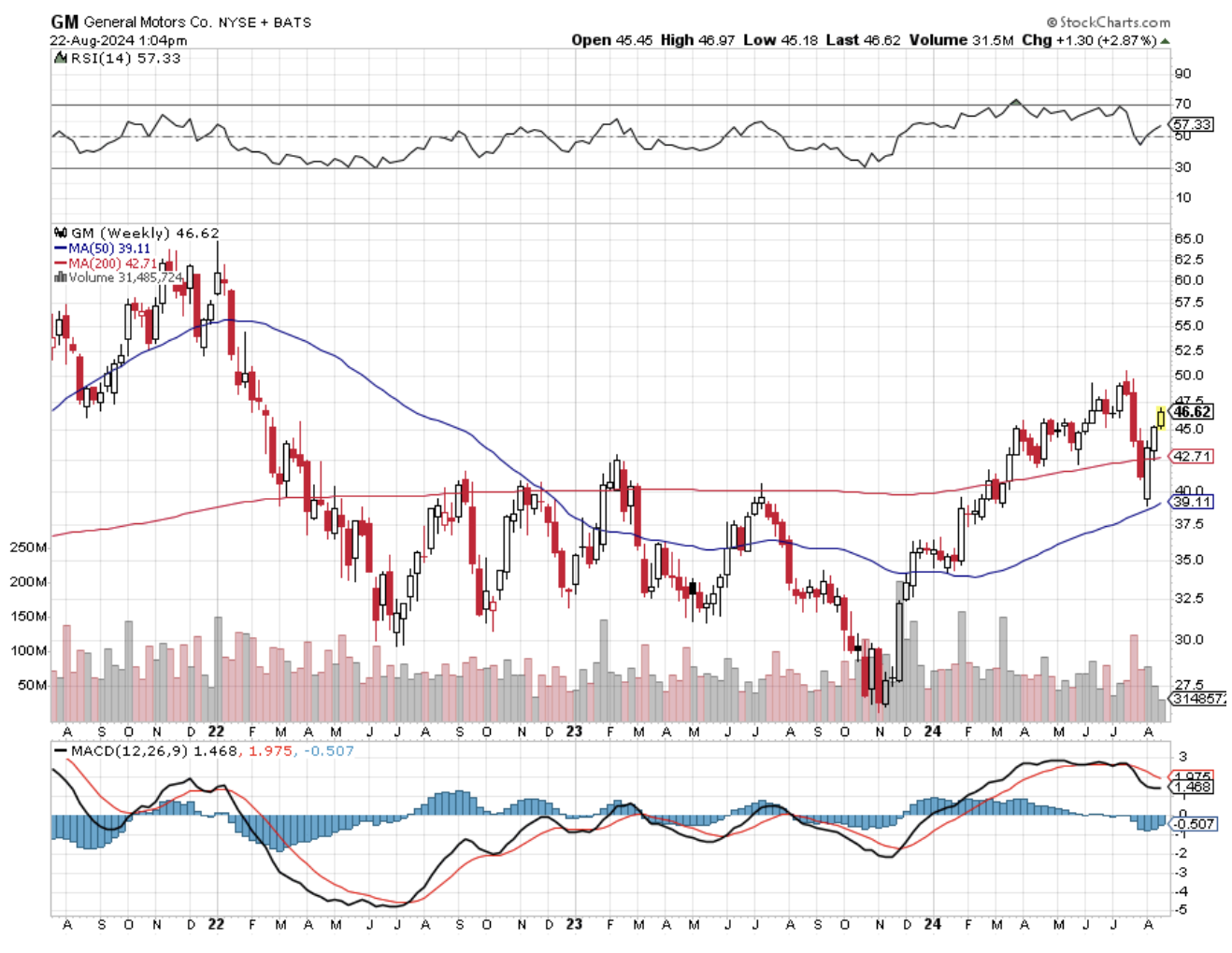
2) General Motors (GM) – Is one of the most globalized US companies of all. (GM) can’t build a car in Detroit without 40% of its parts coming from Japan, Mexico, South Korea, or dozens of other countries.
General Motors is also hugely dependent on Chinese sales. It sells more Buicks in China than it does in the US. That is one-third of GM’s total worldwide sales.
Next, the company plans to sell Chinese-made Buicks in America.
While we weren’t looking, General Motors has become a Chinese company, and many others are falling suit.
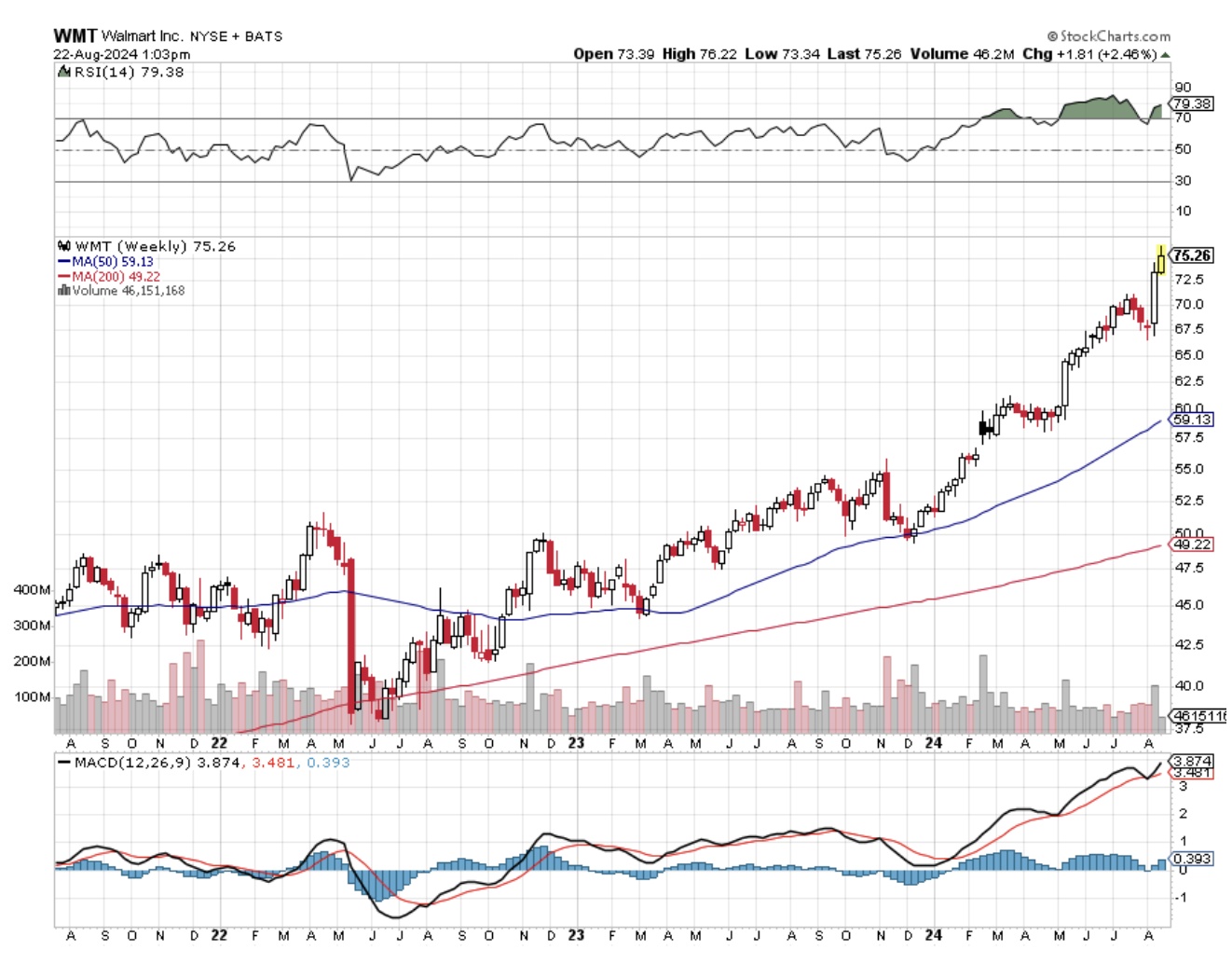
3) Wal-Mart (WMT) – Imagine walking into your local Walmart one day and finding out that all of the prices have been marked up by 35%.
This is the reason why the company is called the “Chinese Embassy.” I dare you to find anything there that is NOT made in China, except for the food and the flowers (a dozen long stem red roses are only $10!).
Like Apple, the company is so big that any change in its supply chain would take years. You can add Target (TGT) to this hit list for the same reasons.
On top of that, Wal-Mart has 432 stores operating in China. Imagine the effect that a boycott would have there.
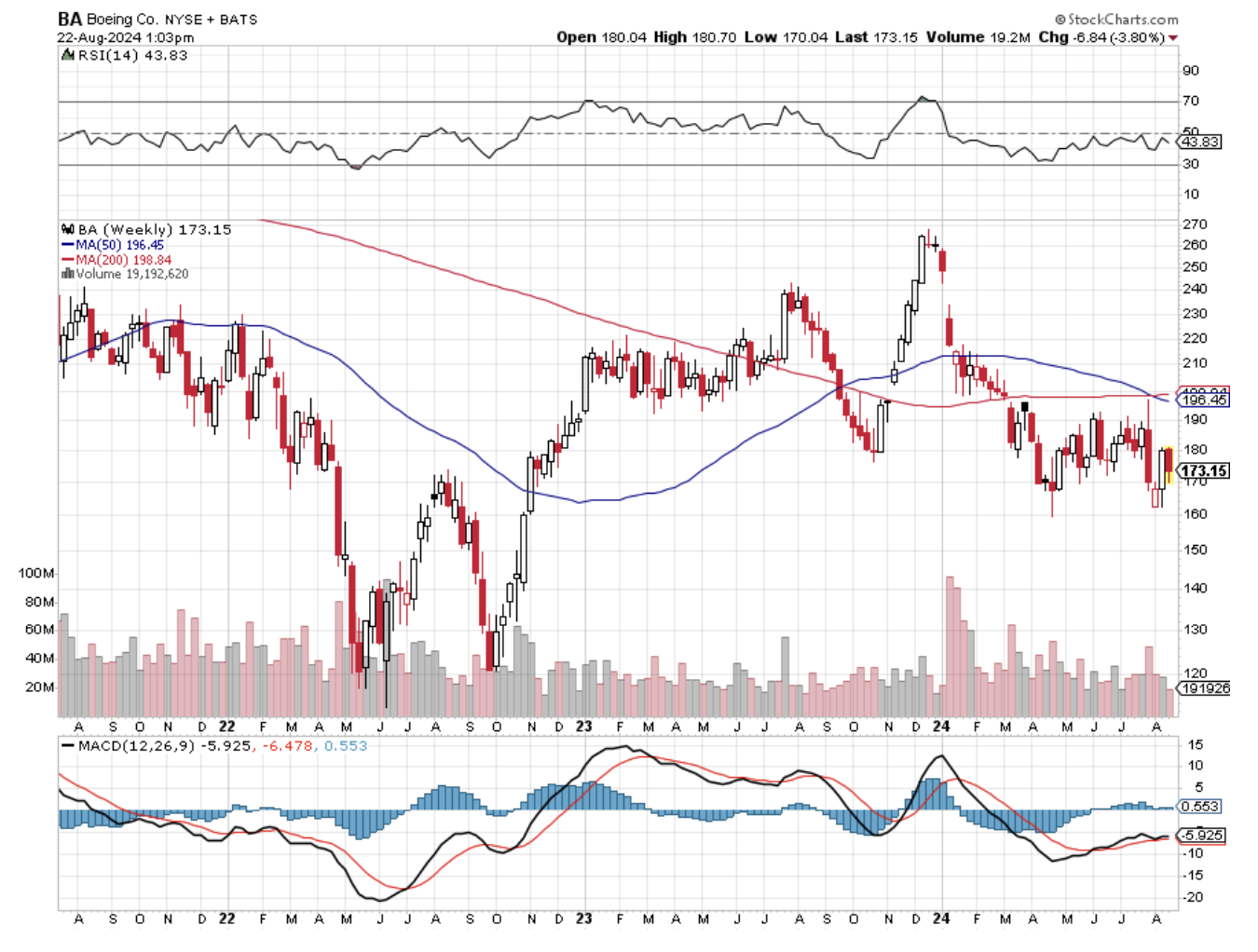
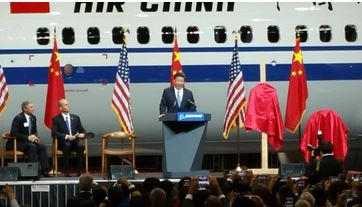
4) Boeing (BA) - The local flight school that maintains my plane has been totally taken over by Chinese students. That is because China needs to buy $1 trillion worth of aircraft over the next 20 years, some 6,800 jetliners in all.
Boeing expects to provide the lion’s share of these. The company has already entered the planning phases for the construction of a giant new aircraft assembly plant in China.
It would be really easy for China to switch a major part of these orders over to Europe’s Airbus Industries, which has been aggressively competing to accomplish exactly that.
Boeing didn’t get the business because of the advanced technology seen in the 787 Dreamliner. Chinese were simply attempting to even out the trade balance.
5) Starbucks (STBX) – Starbucks founder Howard Schultz made no secret of his dislike for Donald Trump before the election. With 2,500 stores in China, and plans to double that figure, he had little other choice.
With relations between the US and China turning colder than the firm’s overpriced ice espresso, sales, growth plans, and share prices could take a big hit. Chinese may have to postpone their caffeine addiction until the next Democratic administration.
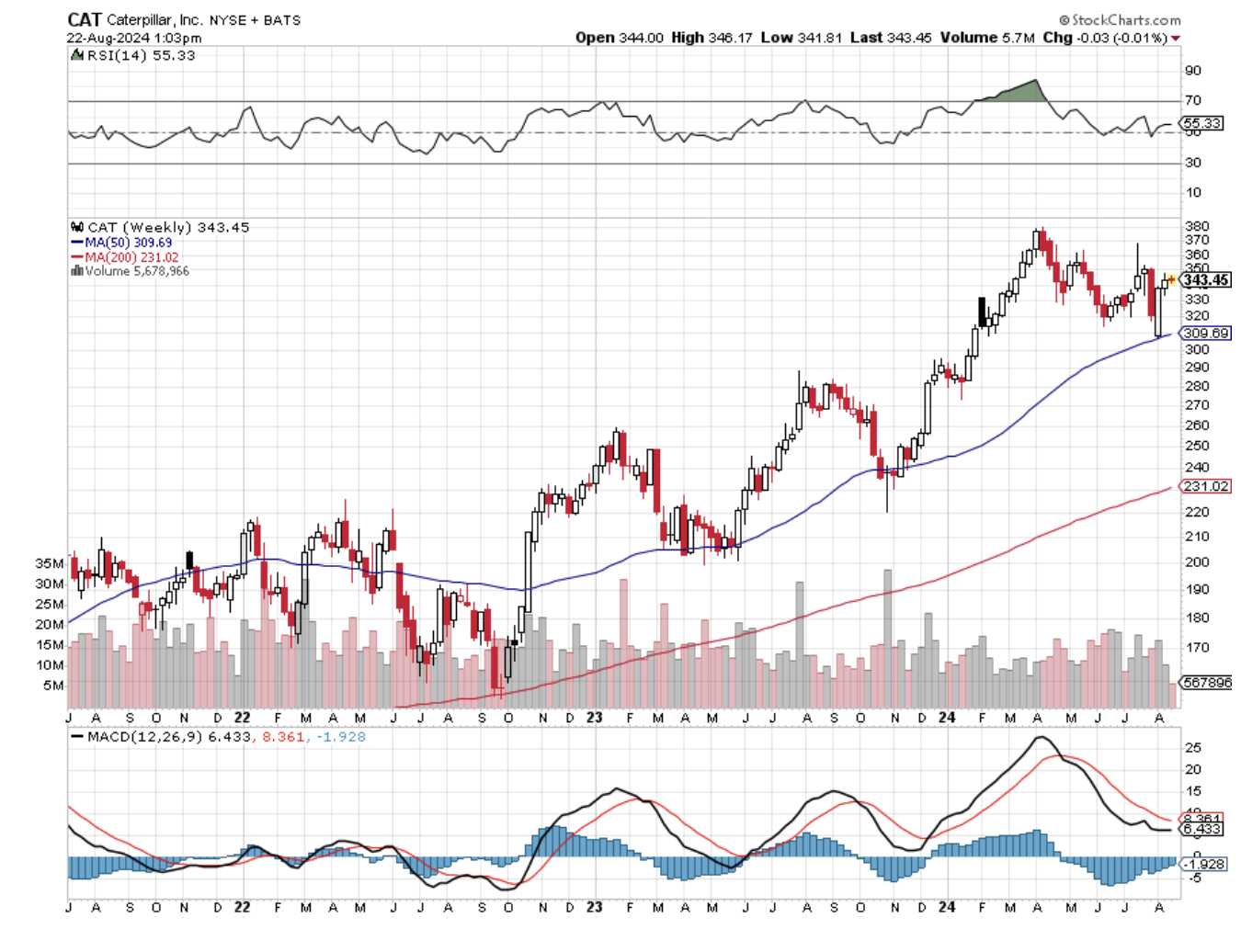
6) Caterpillar (CAT) – You can’t have an infrastructure boom anywhere in the world without Caterpillar, whose heavy machinery is the gold standard for large public works projects. I have been covering the company for 40 years.
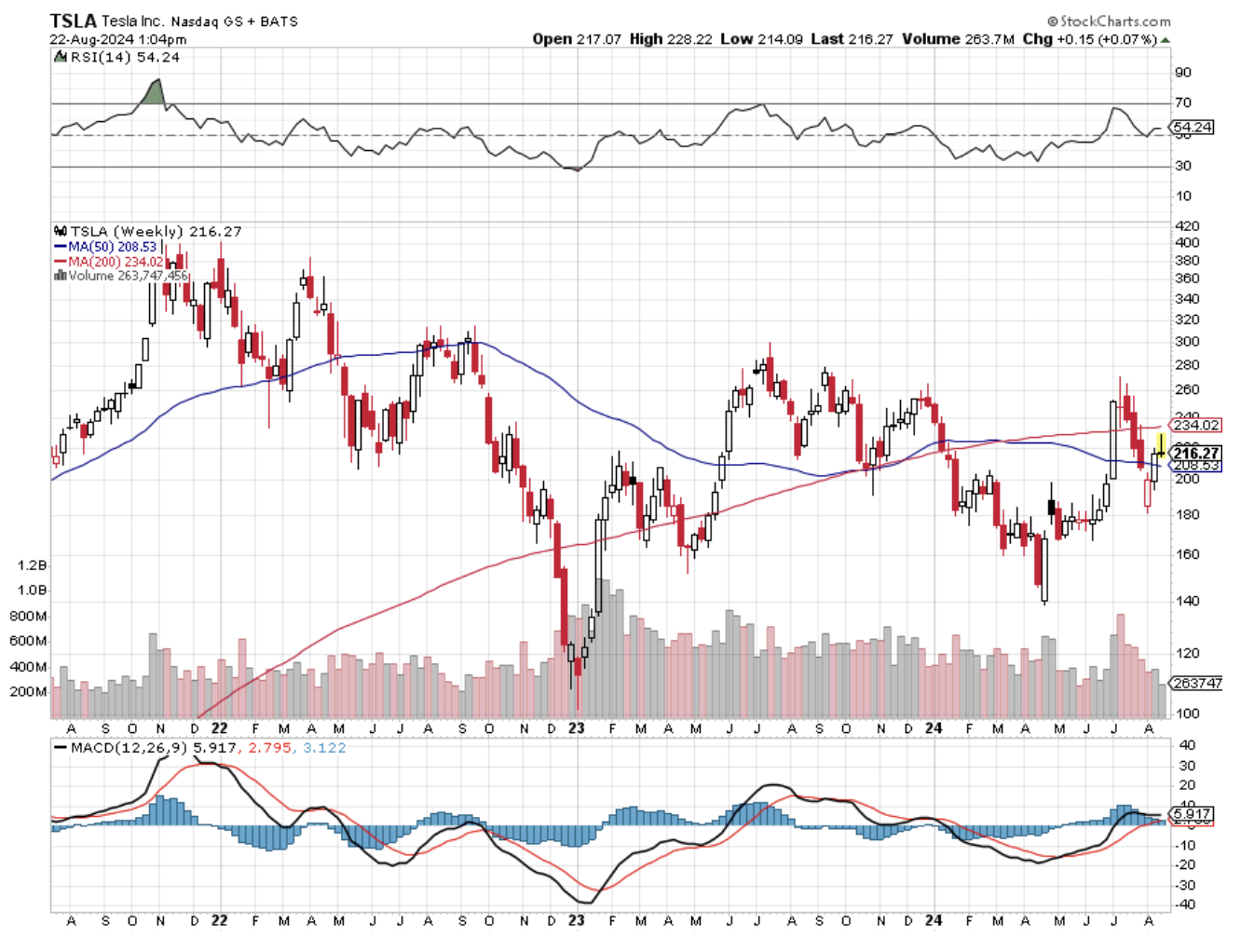
7) Tesla (TSLA) – Tesla’s factory in China is the company’s biggest seller. If the Chinese expropriate or impede in any way such as through strikes, Tesla’s share price would drop by half instantly. I know the Chinese promised to play nice when Tesla made this groundbreaking, technology-transferring investment. But guess what Elon? The Chinese can change their minds.
As a result of the upcoming US round of massive deficit spending, (CAT)’s share has been one of the best performers since the presidential election.
Unfortunately, this time the company is so heavily invested in China that it has also built a large assembly plant there. China accounts for 20% of the firm’s worldwide sales.
Time for a short?
The net effect on the impairment of business at all of these companies will be lower profits, high volatility of profits, and continued uncertainty. The shares will be forced to trade at a discount.
When you are running a mammoth global business, the last thing in the world you want is unpredictability.
It will also bring a rapid rise in inflation, as prices are raised to offset higher costs and a strong dollar.
Who will be the biggest victims?
Working-class Trump voters in Rust Belt states, least able to afford price hikes, especially those who already have jobs in Midwest manufacturing.
Global Market Comments
August 12, 2024
Fiat Lux
Featured Trade:
(MARKET OUTLOOK FOR THE WEEK AHEAD or THE ROUND TRIP TO NOWHERE), plus (A VISIT TO TRINITY),
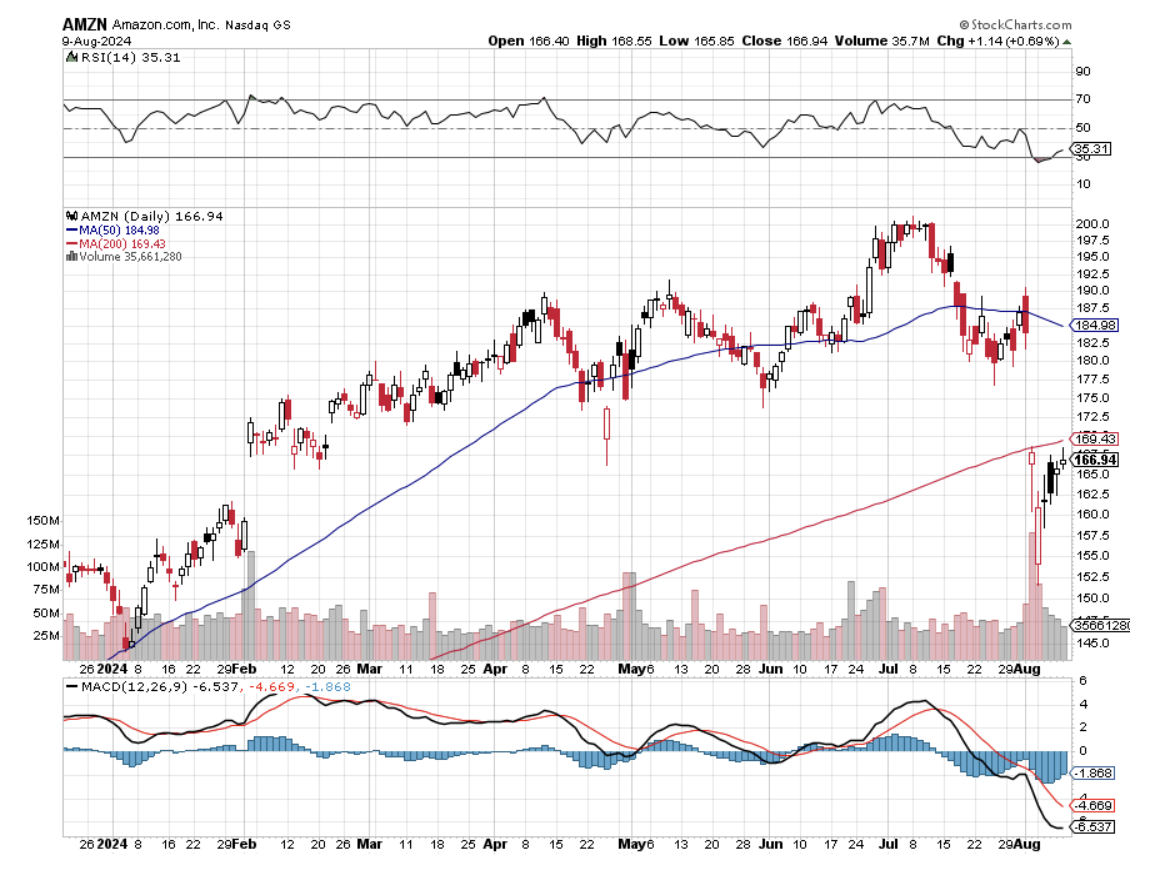
(ROM), (TQQQ), ($VIX), (TLT), (SLRN), (CAT), (AMZN), and (BRK/B). (NVDA), (TSLA), (AAPL), and (META), ($INDU), (TSLA), (DHI), (DE), (AAPL), (JPM), (DE), (GLD), (DHI)
I am writing this to you from the airport in Vilnius, Lithuania, which is under construction. The airport is packed because people are flying all planes to Paris to catch the closing ceremony of the 2024 Olympics. There is also the inflow of disappointed Taylor Swift fans returning from three concerts in Vienna, Austria that had been canceled due to terrorist threats. Some 150,000 tickets had to be refunded.
It is hard to focus on my writing because every 30 seconds, a beautiful woman walks by.
And I am told at my age I am not supposed to learn. I should know better.
Well, that was some week!
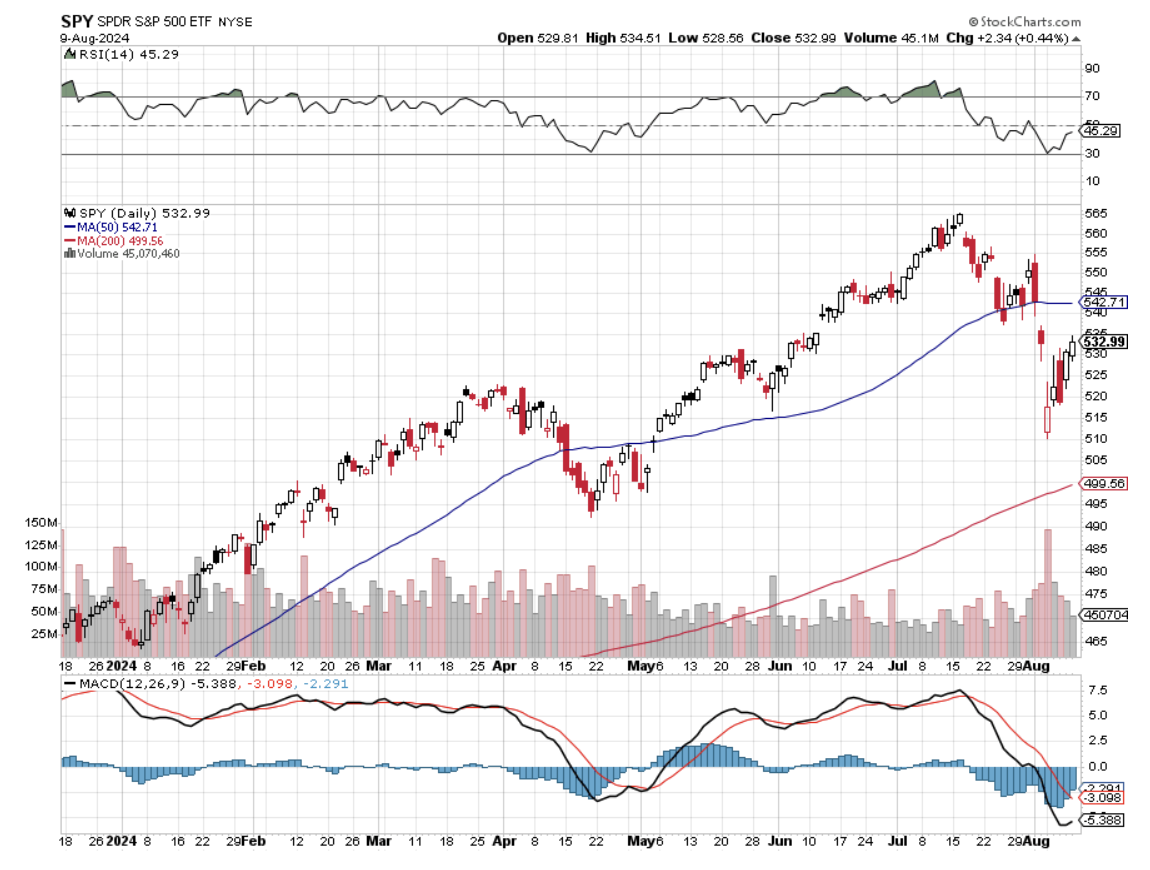
If you had taken a ten-day cruise to Alaska, you would wonder what all the fuss was about, for last week the stock market was basically unchanged. The worst day in two years, down 3%, followed by the best, up 2 ½% amounts to a big fat nothing burger.
It all reminds me of one of those advanced aerobatics classes I used to take. I was busier than a one-armed paper hanger, sending out some 13 trade alerts in all.
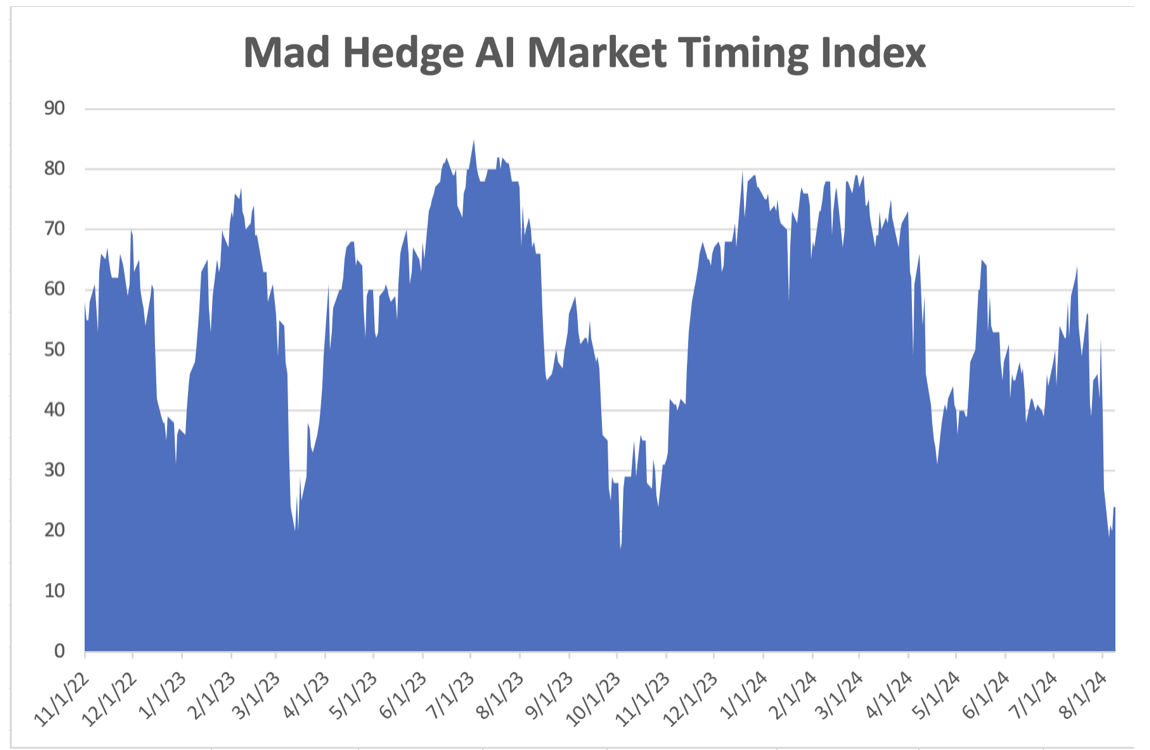
And while the volatility is certainly not over, it is probably at least two-thirds over, meaning that we can step out for a cup of coffee and NOT expect a 1,000 move in the Dow Average by the time we get back.
Is the Bottom IN?
I don’t think so. The valuation disparity between big tech and value is still miles wide. Uncertainty reaches a maximum just before the US presidential election. A bottom for the year is coming, but not quite yet. When it does, it will be the buying opportunity of the year. Watch this space! And watch (ROM) and (TQQQ) too.
The average drawdown per year since 2020 stands at 15%, so with our 10% haircut, the worst is over. What will remain in high volatility? After staying stuck at $12 for most of 2024 and then spiking to $65 in two days, the $20 handle should remain for the foreseeable future.
That is a dream come true and a license to print money for options traders because the higher options prices effectively double the profit per trade. So, expect a lot of trade alerts from the Mad Hedge Fund Trader going forward. That is, until the ($VIX) returns to $36, then the potential profit triples.
Up until July, I had been concerned that the market might not sell off enough to make a yearend rally worth buying into. There was still $8 trillion in cash sitting under the market buying even the smallest dips.
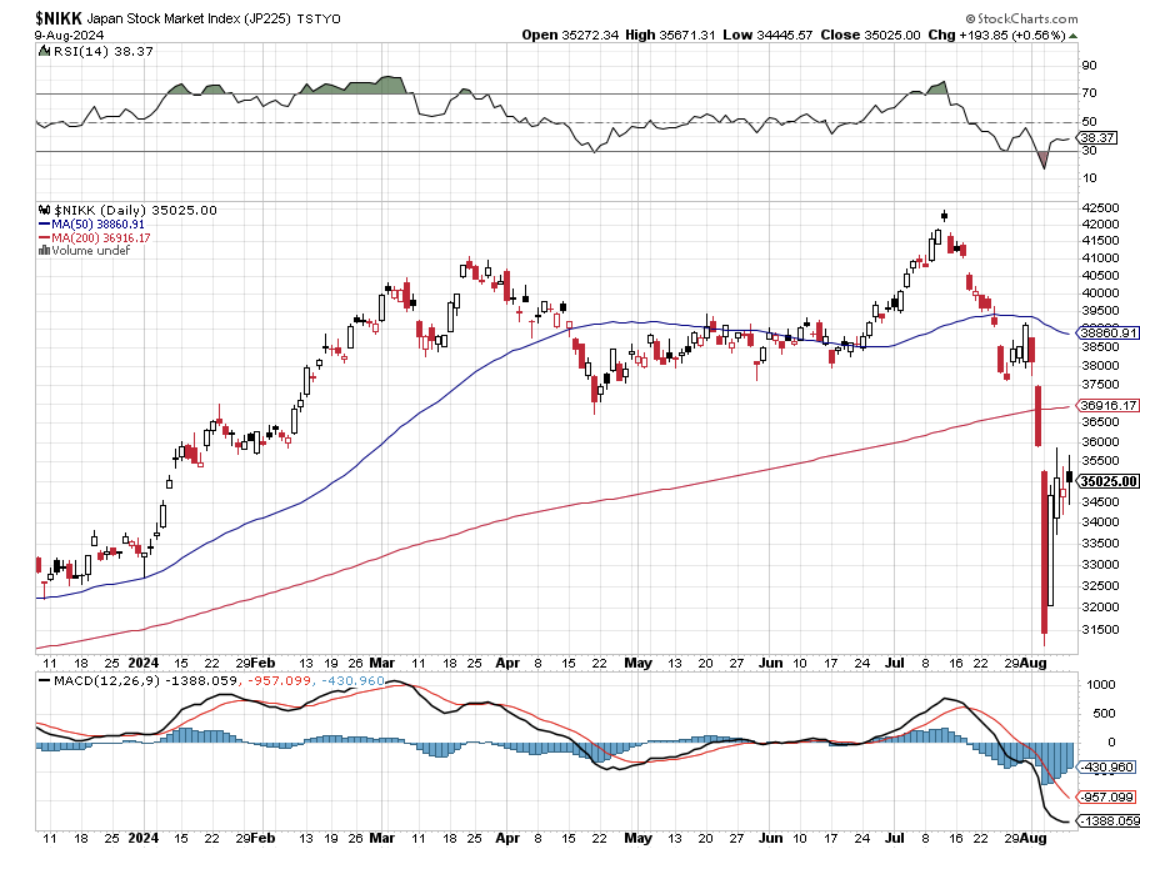
The Japanese took care of that in a heartbeat with a good old-fashioned financial crisis. In hours trillions of dollars’ worth of yen carry trades unwound, creating an unprecedented 14% move UP in the Japanese currency and a 26% move DOWN in the Japanese stock market.
Suddenly, the world was ending. Or at least the financial media thought it was.
Some hundreds of hedge funds probably went under as their leverage is so great at 10X-20X. But we probably won’t know who until the redemption notices go out at yearend.
It couldn’t happen to a nicer bunch of people.
Don’t expect the Fed to take any emergency action, such as a surprise 50 basis point rate cut, to help us out. Things are just not bad enough. The headline Unemployment Rate is still a low 4.3%. Corporate profits are at all-time highs. We are nowhere near a credit crisis or any other threats to the financial system. The US still has the strongest major economy in the world.
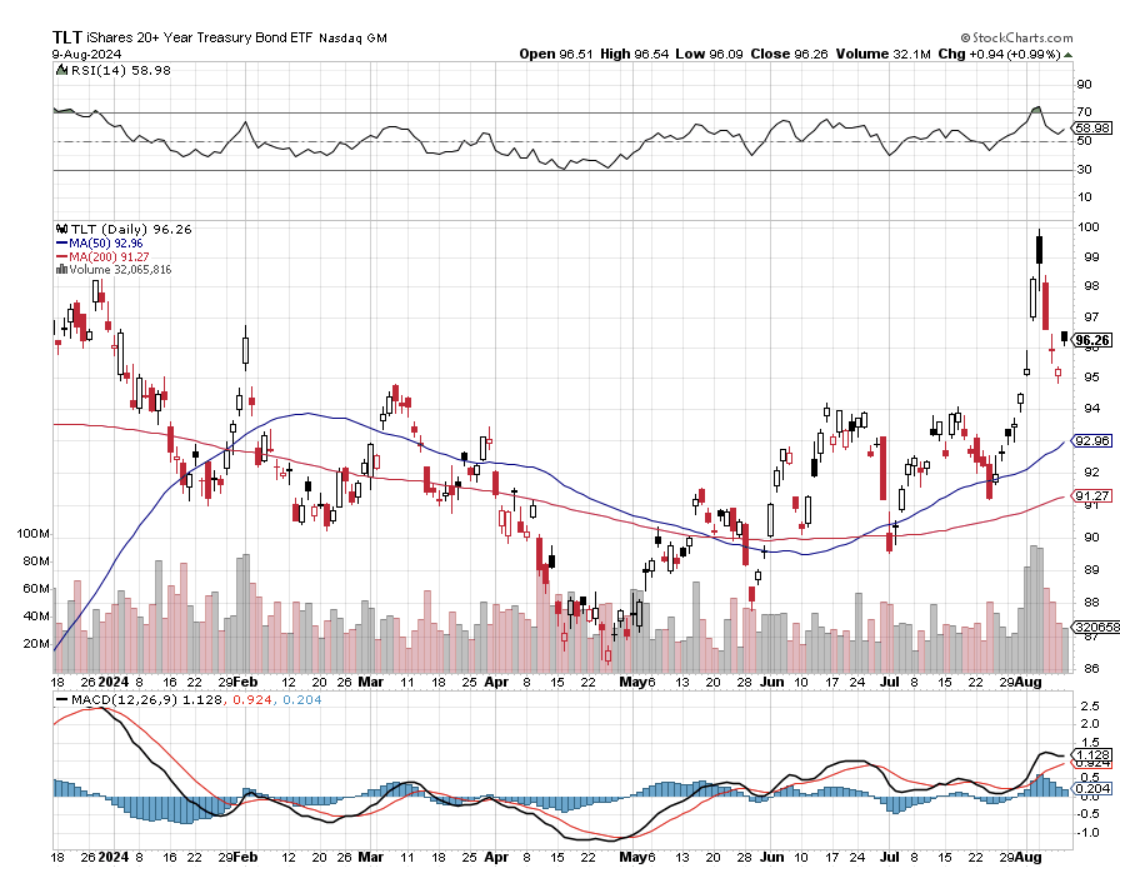
Of course, if you followed my advice and went heavy into falling interest rate plays, as I have been begging you to do for months, last week was your best of the year. The United States US Treasury Bond Fund (TLT) rocketed to a year high at $100. Junk bonds (JNK), REITS (CCI), BB-rated loan ETFs (SLRN), and high-yield stocks (MO) went up even more.
It's still not too late to pile into yield plays because the Fed hasn’t actually cut interest rates YET.
Volatility Index ($VIX) Hits Four-Year High at $65, the most since the 2020 pandemic. That implies a 2% move in the S&P 500 (SPX) every day for the next 30 days, which is $103.42 (SPX) points or $774 Dow ($INDU) points. No doubt, massive short covering played a big role with traders covering shorts they sold in size at $12. Spikes like this are usually great long-term “BUY” signals.
$150 Billion in Volatility Plays were Dumped on Monday. Volatility-linked strategies, including volatility funds and equities trend-following commodity trading advisers (CTAs), are systematic investment strategies that typically buy equities when markets are calm and sell when they grow turbulent. They became heavy sellers of stocks over the last few weeks, exacerbating a market rout brought on by economic worries and the unwind of a massive global carry trade.
Weekly Jobless Claims Drop to 233,000, sparking a 500-point rally in the market. It’s a meaningless report, but traders are now examining every piece of jobs data with a magnifying glass.
Commercial Real Estate Has Bottomed, which will be great news for regional banks. Visitations are up big in Manhattan, with Class “A” properties gaining the most attention. New leasing is now exceeding vacations.
Warren Buffet Now Owns More T-Bills than the Federal Reserve. The Omaha, Nebraska-based conglomerate held $234.6 billion in short-term investments in Treasury bills at the end of the second quarter. That compared with $195.3 billion in T-bills that the Fed owned as of July 31. The Oracle of Omaha wisely unloaded $84 billion worth of Apple at the market top.
No Recession Here says shipping giant Maersk. U.S. inventories are not at a level that is worrisome says CEO Vincent Clerc, as fears of a recession in the world’s largest economy mount. Chinese exports have helped drive overall container demand in the most recent quarter reported a decline in year-on-year underlying profit to $623 million from $1.346 billion in the second quarter and a dip in revenue to $12.77 billion from $12.99 billion.
A Refi Boom is About to Begin. Mortgage rates in the high fives are now on offer. Over 40% of existing mortgages have rates of over 6%. It’s all driven by the monster rally in the bond market this week which took the (TLT) to $100 and ten-year US Treasury yields down to 3.65%.
Google (GOOG) Gets Hit with an Antitrust Suit, a Federal judge ruling that the company has a monopoly in search, with a 92% market share. The smoking gun was the $20 billion a year (GOOG) paid Apple (AAPL) to remain their exclusive search engine. Apple is the big loser here, which I just sold short.
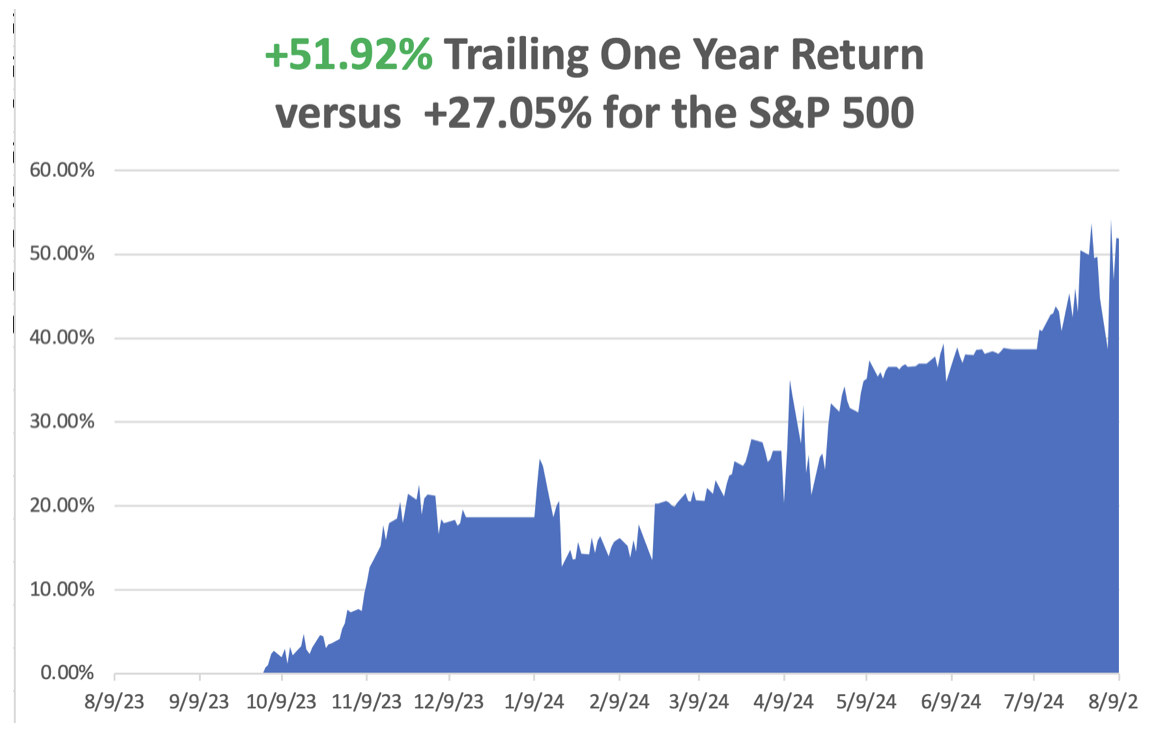
In July we ended up a stratospheric +10.92%. So far in August, we are up by +2.51% My 2024 year-to-date performance is at +33.45%. The S&P 500 (SPY) is up +7.34% so far in 2024. My trailing one-year return reached +51.92.
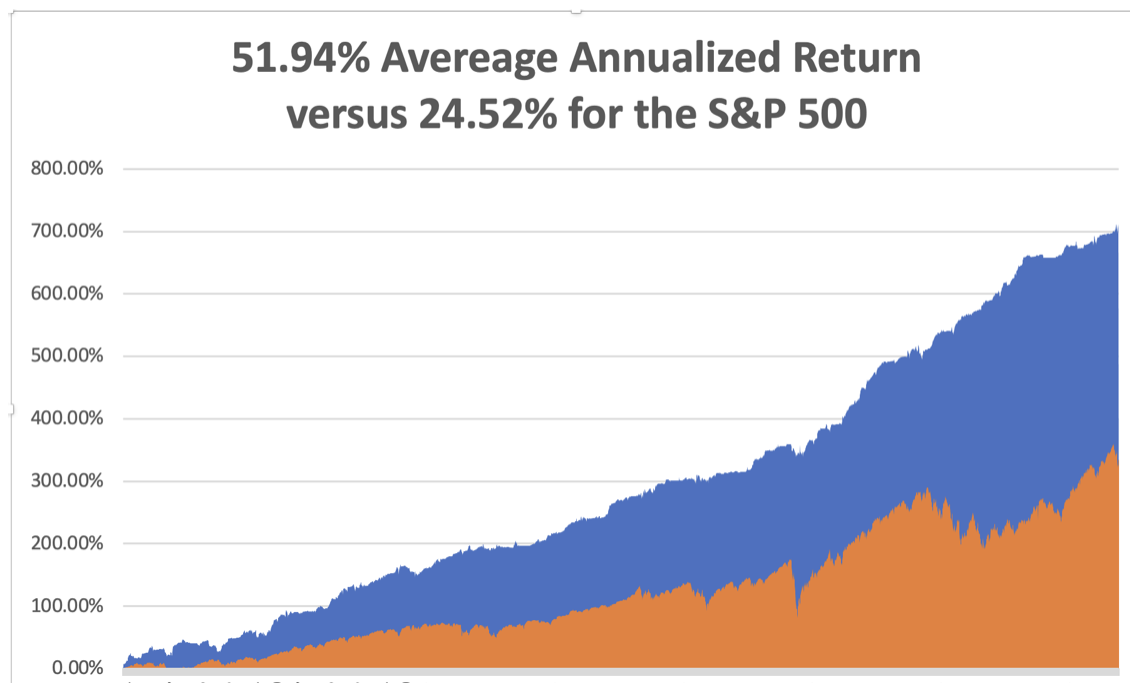
That brings my 16-year total return to +710.08. My average annualized return has recovered to +51.94%.
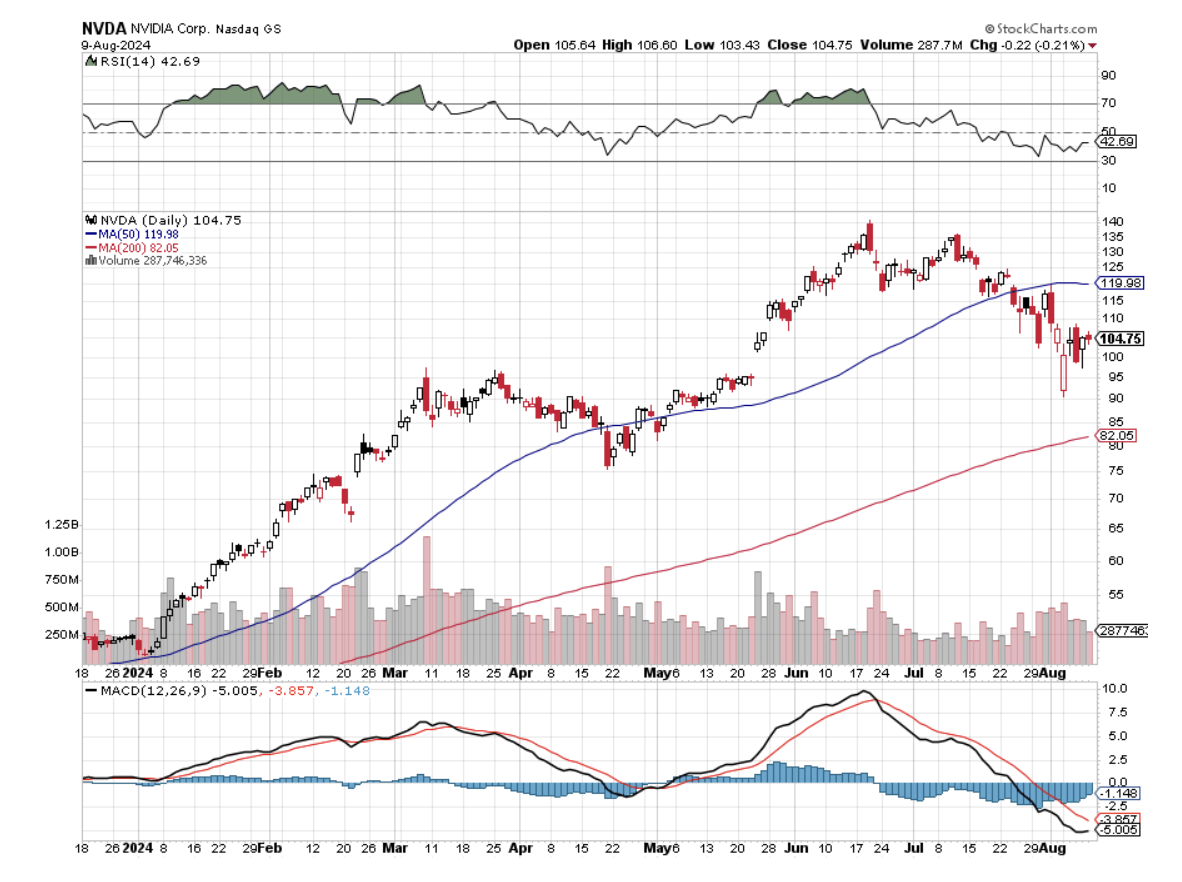
I used the market crash to stop out of three STOP LOSS positions in (CAT), (AMZN), and (BRK/B). When the ($VIX) hit $65 I then made all the losses back when I piled on four new technology longs in (NVDA), (TSLA), (AAPL), and (META). After the Dow Average ($INDU) rallied 2,000 points and volatility was still high I then pumped out short positions in (TSLA), (DHI), (DE), (AAPL), and (JPM). I stopped out of my position in (DE) at breakeven.
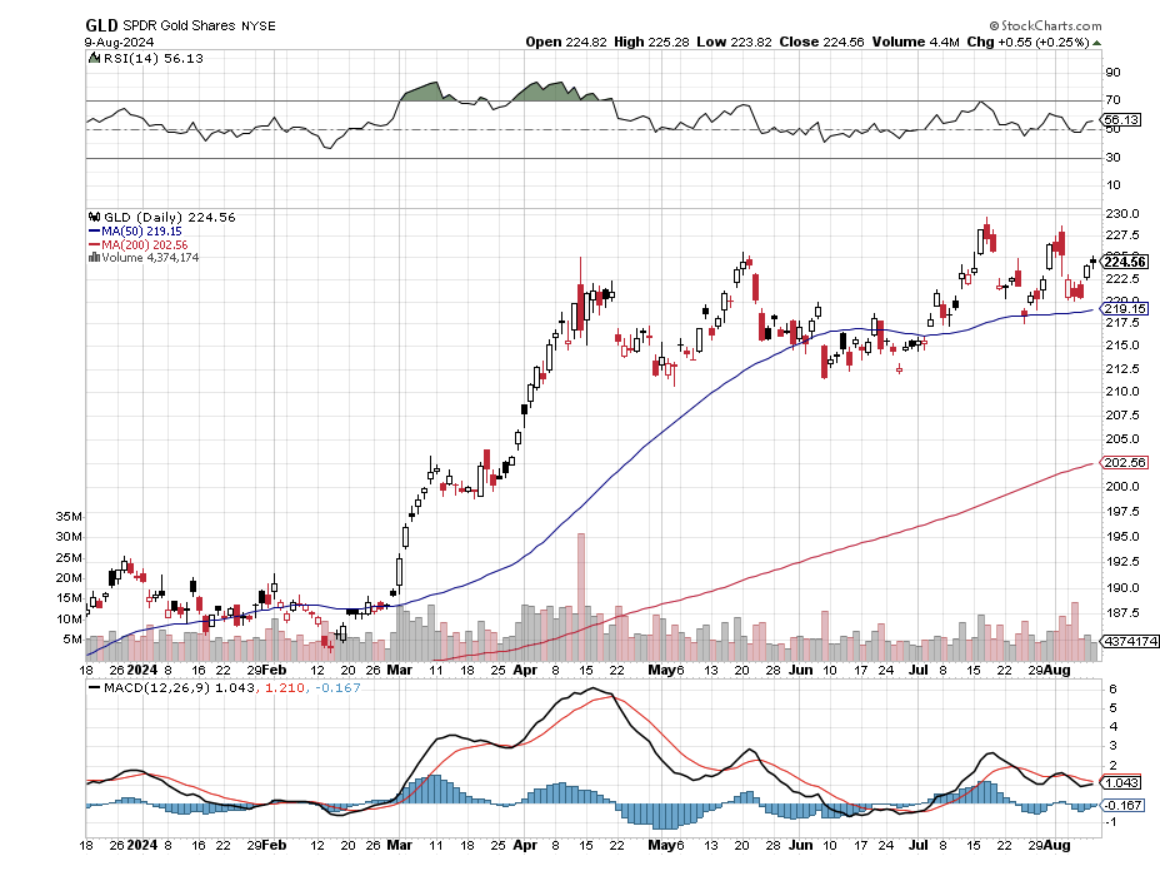
This is in addition to existing longs in (GLD) and (DHI), which I will likely run into the August 16 option expiration.
Some 63 of my 70 round trips, or 90%, were profitable in 2023. Some 48 of 66 trades have been profitable so far in 2024, and several of those losses were really break-even. That is a success rate of 72.73%.
If you were wondering why I was sending out so many trade alerts out last week it is because we were getting months’ worth of market action compressed into five days. Make hay while the sun shines and strike while the iron is hot!
Try beating that anywhere.
My Ten-Year View
When we come out the other side of the recession, we will be perfectly poised to launch into my new American Golden Age or the next Roaring Twenties. The economy decarbonizing and technology hyper accelerating, creating enormous investment opportunities. The Dow Average will rise by 600% to 240,000 or more in the coming decade. The new America will be far more efficient and profitable than the old.
Dow 240,000 here we come!
On Monday, August 12 at 8:30 AM EST, the Consumer Inflation Expectations is out.
On Tuesday, August 13 at 9:30 AM, the Producer Price Index is published.
On Wednesday, August 14 at 8:30 AM, the new Core Inflation Rate is printed.
On Thursday, August 15 at 8:30 AM, the Weekly Jobless Claims are announced. Retail Sales are also printed.
On Friday, August 16 at 8:30 AM, Building Permits are disclosed. We also get the University of Michigan Consumer Sentiment. At 2:00 PM, the Baker Hughes Rig Count is printed.
As for me, with the overwhelming success of the Oppenheimer movie, I thought I’d review my long and fruitful connection with America’s nuclear program.
When the Cold War ended in 1992, the United States judiciously stepped in and bought the collapsing Soviet Union’s entire uranium and plutonium supply.
For good measure, my client George Soros provided a $50 million grant to hire every Soviet nuclear engineer. The fear then was that starving scientists would go to work for Libya, North Korea, or Pakistan, which all had active nuclear programs. They ended up here instead.
That provided the fuel to run all US nuclear power plants and warships for 20 years. That fuel has now run out and chances of a resupply from Russia are zero. The Department of Defense attempted to reopen our last plutonium factory in Amarillo, Texas, a legacy of the Johnson administration.
But the facilities were deemed too old and out of date, and it is cheaper to build a new factory from scratch anyway. What better place to do so than Los Alamos, which has the greatest concentration of nuclear expertise in the world?
Los Alamos is a funny sort of place. It sits at 7,320 feet on a mesa on the edge of an ancient volcano so if things go wrong, they won’t blow up the rest of the state. The homes are mid-century modern built when defense budgets were essentially unlimited. As a prime target in a nuclear war, there are said to be miles of secret underground tunnels hacked out of solid rock.
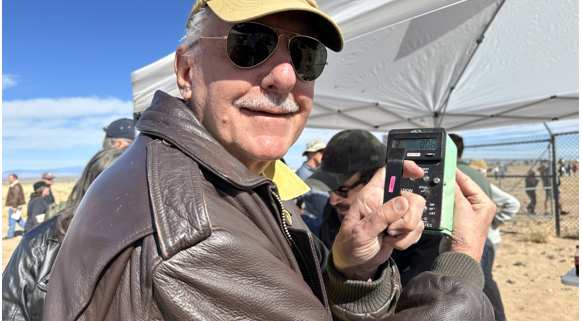
You need to bring a Geiger counter to garage sales because sometimes interesting items are work castaways. A friend almost bought a cool coffee table which turned out to be part of an old cyclotron. And for a town designing the instruments to bring on the possible end of the world, it seems to have an abnormal number of churches. They’re everywhere.
I have hundreds of stories from the old nuclear days passed down from those who worked for J. Robert Oppenheimer and General Leslie Groves, who ran the Manhattan Project in the early 1940s. They were young mathematicians, physicists, and engineers at the time, in their 20’s and 30’s, who later became my university professors. The A-bomb was the most important event of their lives.
Unfortunately, I couldn’t relay this precious unwritten history to anyone without a security clearance. So, it stayed buried with me for a half century, until now.
Some 1,200 engineers will be hired for the first phase of the new plutonium plant, which I got a chance to see. That will create challenges for a town of 13,000 where existing housing shortages already force interns and graduate students to live in tents. It gets cold at night and dropped to 13 degrees F when I was there.
I was allowed to visit the Trinity site at the White Sands Missile Test Range, the first visitor to do so in many years. This is where the first atomic bomb was exploded on July 16, 1945. The 20-kiloton explosion set off burglar alarms for 200 miles and was double to ten times the expected yield.
Enormous targets hundreds of yards away were thrown about like toys (they are still there). Half the scientists thought the bomb might ignite the atmosphere and destroy the world but they went ahead anyway because so much money had been spent, 3% of US GDP for four years. Of the original 100-foot tower, only a tiny stump of concrete is left (picture below).
With the other visitors, there was a carnival atmosphere as people worked so hard to get there. My Army escort never left me out of their sight. Some 78 years after the explosion, the background radiation was ten times normal, so I couldn’t stay more than an hour.
Needless to say, that makes uranium plays like Cameco (CCJ), NextGen Energy (NXE), Uranium Energy (UEC), and Energy Fuels (UUUU) great long-term plays, as prices will almost certainly rise and all of which look cheap. US government demand for uranium and yellow cake, its commercial byproduct, is going to be huge. Uranium is also being touted as a carbon-free energy source needed to replace oil.
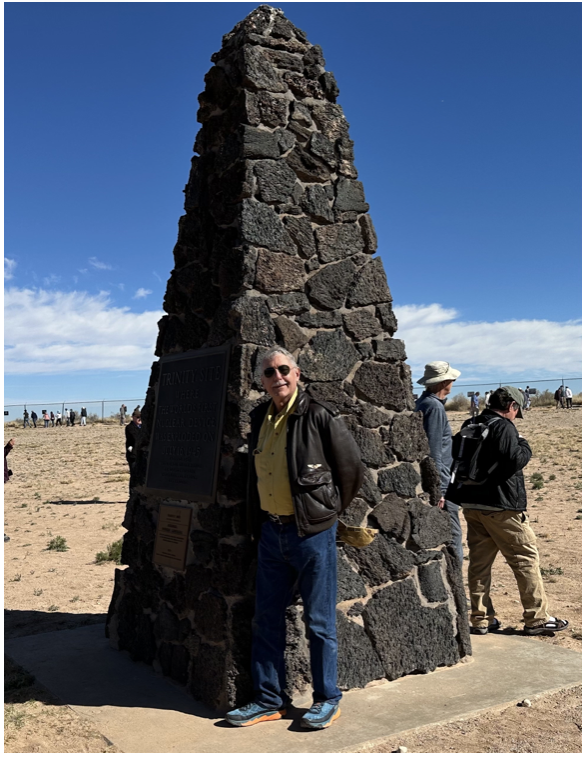
At Ground Zero in 1945
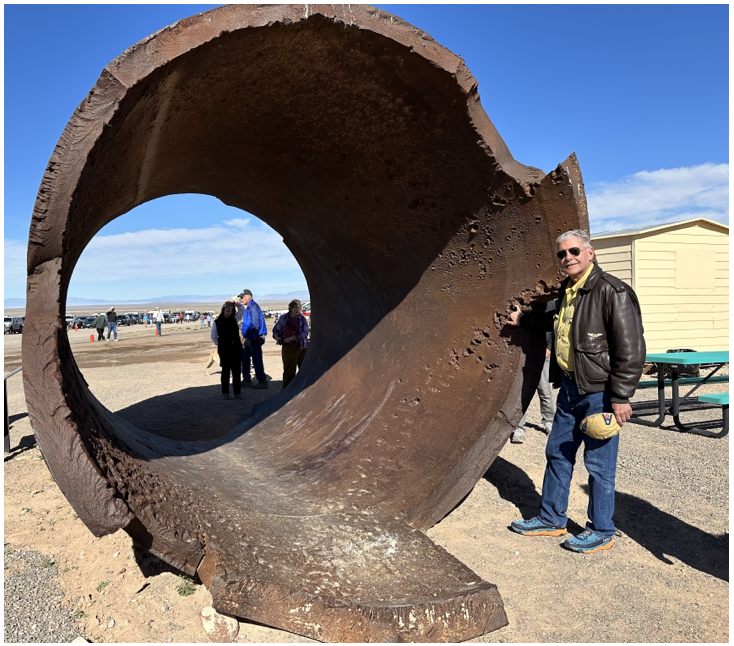
What’s Left of a Trinity Target 200 Yards Out

Playing With My Geiger Counter
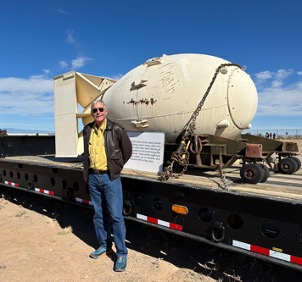
Atomic Bomb No.3 Which was Never Used on Tokyo
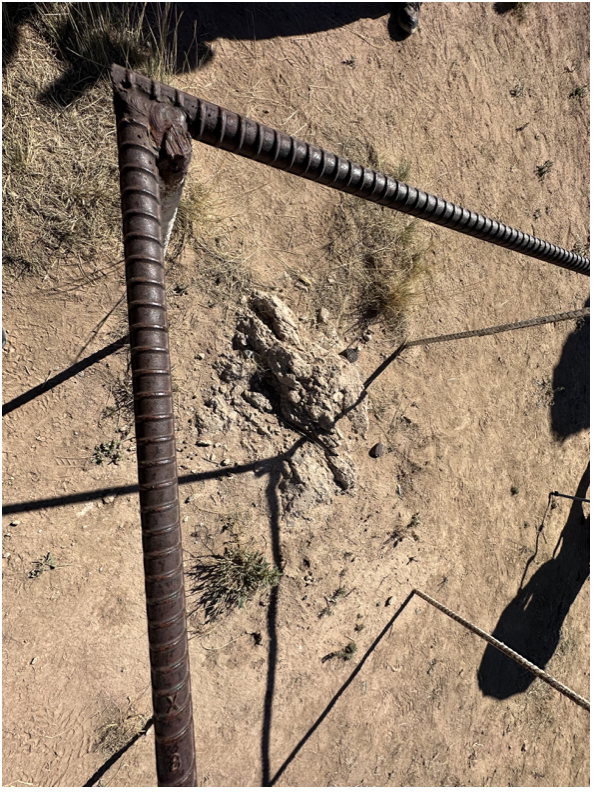
What’s Left from the Original Test
Good Luck and Good Trading,
John Thomas
CEO & Publisher
The Diary of a Mad Hedge Fund Trader