Mad Hedge Technology Letter
February 24, 2023
Fiat Lux
Featured Trade:
(PART 2: THE BEST OF THE REST IN QUANTUM COMPUTING)
(GOOGL), (QUBT), (IBM), (MSFT), (AMAT)


Mad Hedge Technology Letter
February 24, 2023
Fiat Lux
Featured Trade:
(PART 2: THE BEST OF THE REST IN QUANTUM COMPUTING)
(GOOGL), (QUBT), (IBM), (MSFT), (AMAT)
Alphabet (GOOGL)
In 2019, Google claimed that it had achieved what it called quantum supremacy. The company claimed to have built a computer with capabilities far beyond those of traditional computers.
In a report published in Nature, Google said its quantum computer managed to calculate something that would take a normal machine 10,000 years.
What practical applications Google's performance will have in the real world is still unclear. The initial computation was a demonstration of capability rather than a product that will have a significant commercial impact any time soon.
Having a horse in the race will also mean they can turn it up a notch once they receive more direction on where this might lead.
Like so many of its other companies, Alphabet invests heavily in the latest computer technology.
Many of these ventures probably won't bring in much money; others, on the other hand, will likely recoup the company's entire research budget and then some. And the good thing about Alphabet is that it's so busy that a single project, such as B. quantum computing, will not decide on the entire investment.
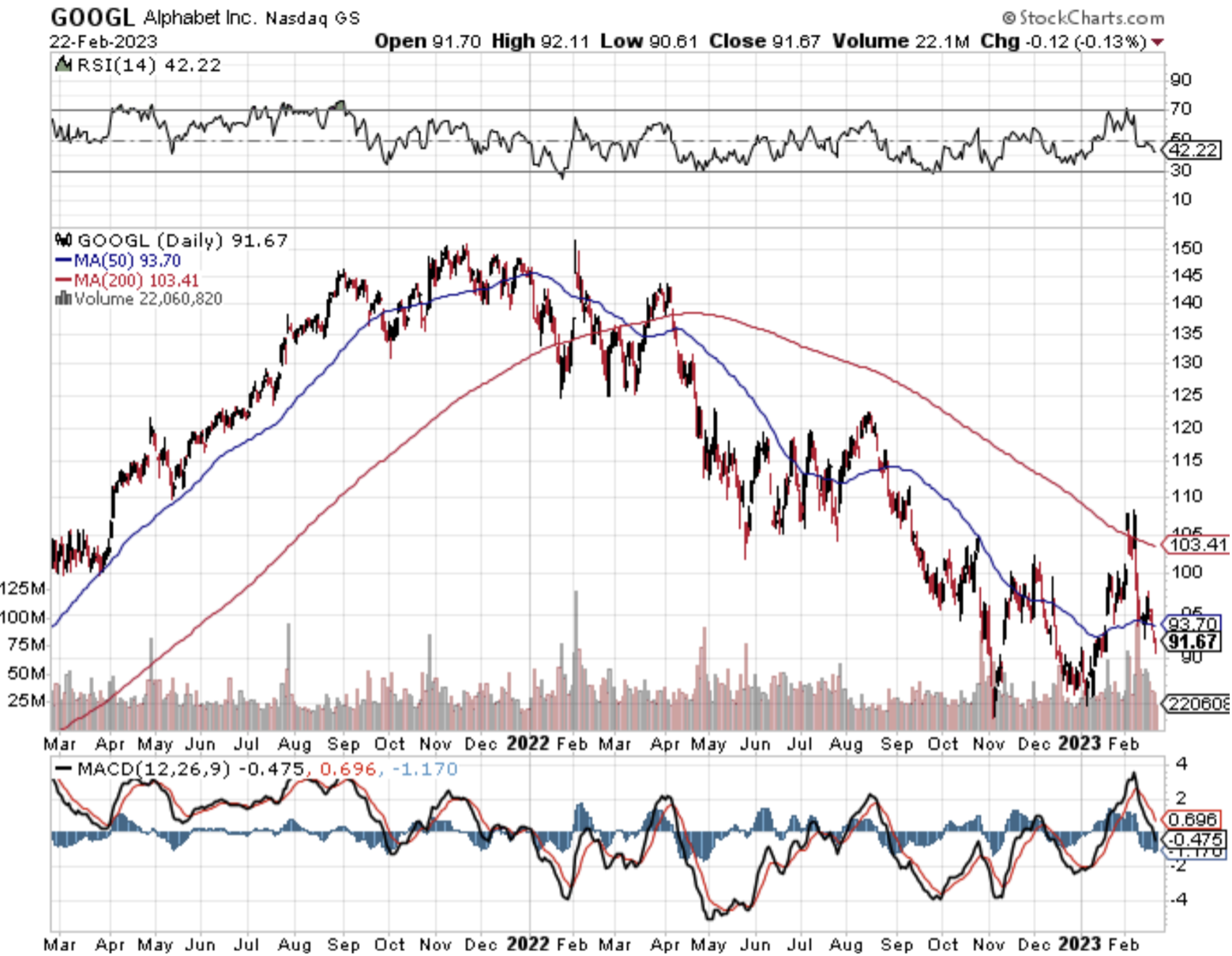
I am not going to sit here and say that Google is a quantum computing company because it’s not, but they are ready to pounce if the opportunity presents itself.
Quantum Computing (QUBT)
Quantum Computing is an innovative company focused on its namesake. It sees a market opportunity in the ability to create a service that coordinates computing needs.
There are providers of quantum computers, such as IonQ or Rigetti. Then there are customers in large companies, universities, or research laboratories. Quantum Computing sits in the middle, making software to help customers manage their quantum computing needs.
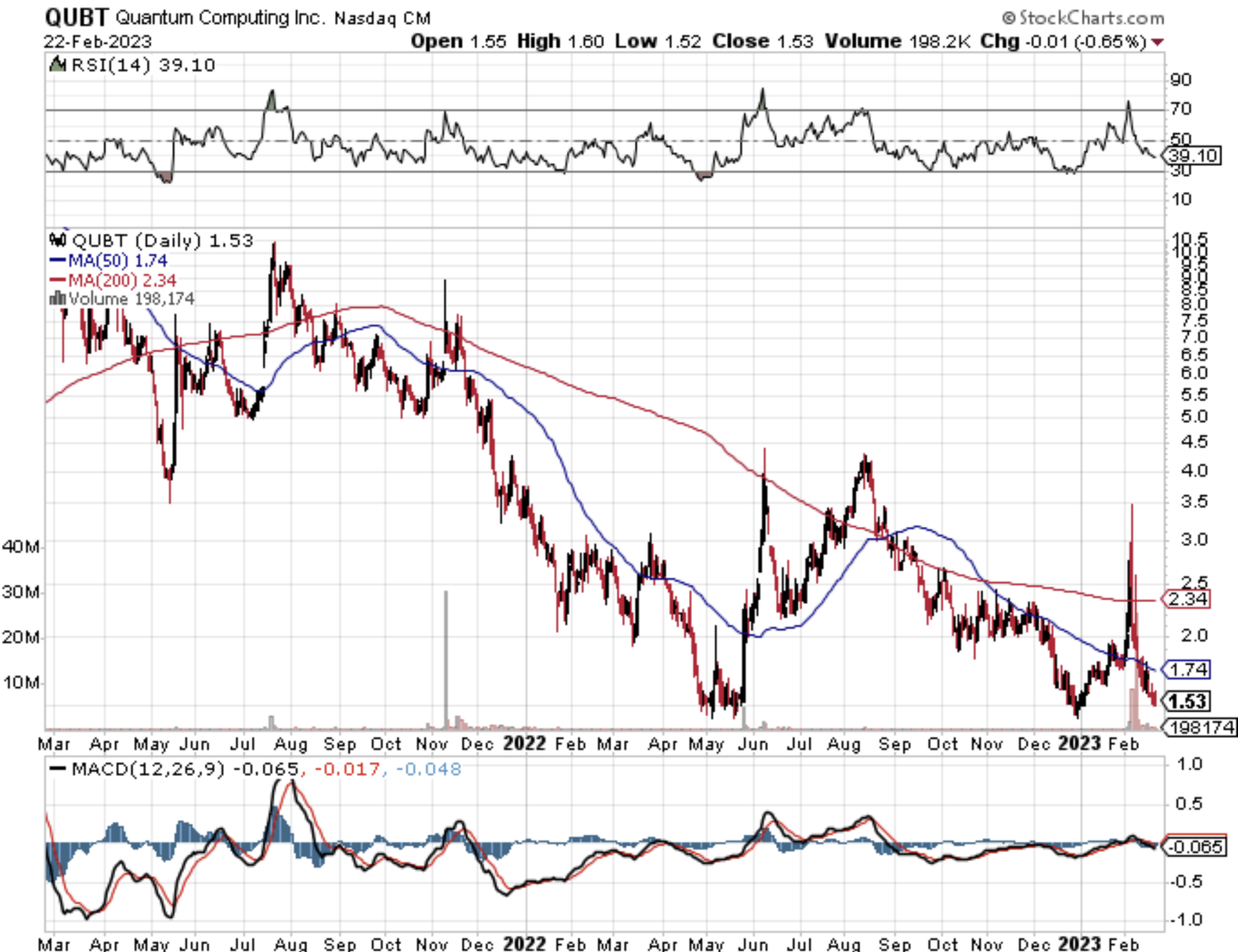
Currently, quantum computing has almost no revenue. Management acknowledges that the company is still in the early stages of market development and understanding customer use cases.
QUBT stock is highly speculative, as are most other companies in the sector. However, as the market for quantum computing vendors and customers grows, a brokerage service that connects the two could represent a fairly profitable niche.
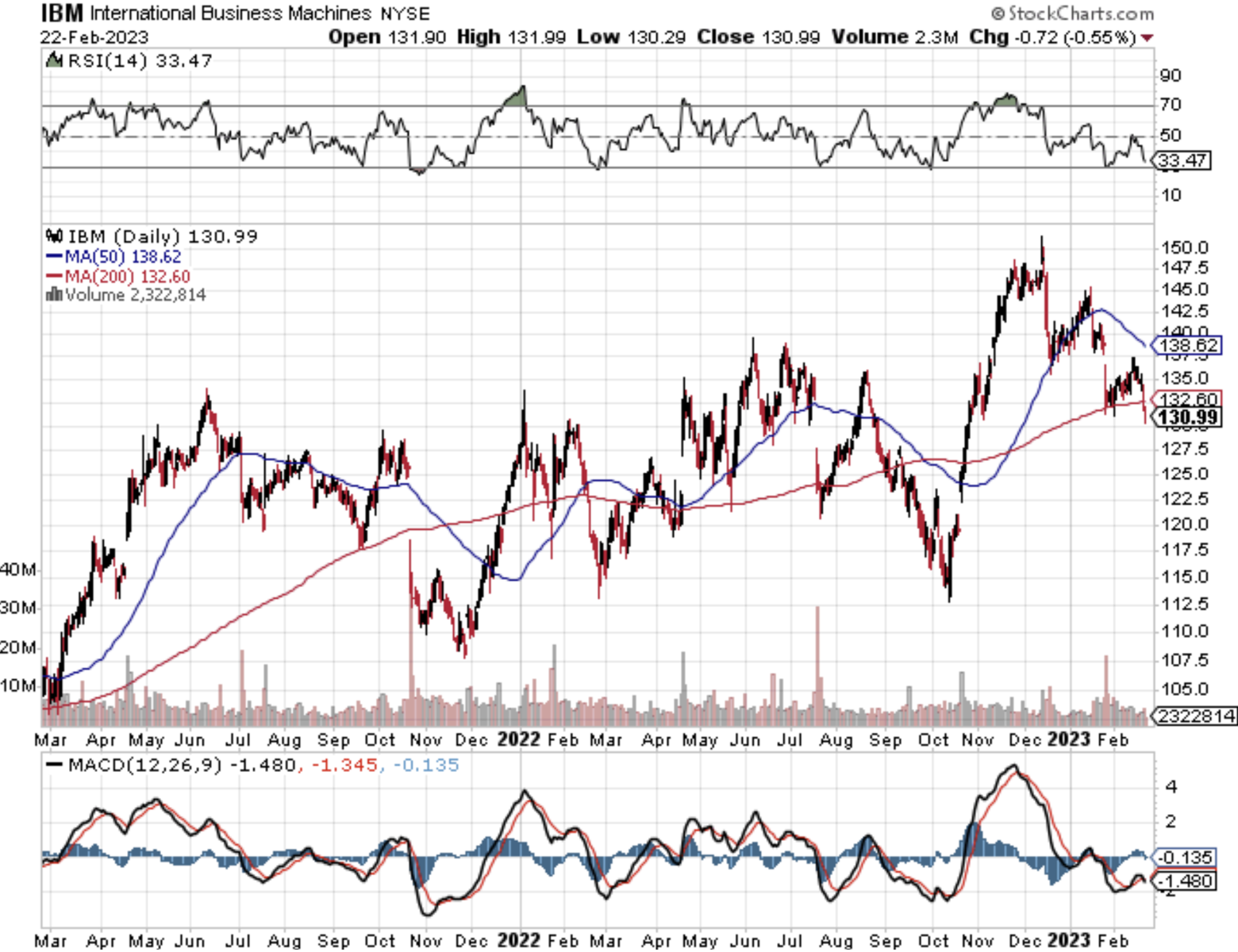
IBM (IBM)
Tech analysts like to compare IBM to companies like Radio Shack and Eastman Kodak (KODK) as a dinosaur inevitably heading towards the dustbin of history.
However, the truth is much more nuanced.
IBM still achieves $60 billion a year in total revenue, and that number is actually on the rise again. They also have a PE ratio of 21 as its ongoing operations in consulting, services, and cloud, among others, are very profitable. And IBM continues to invest heavily in research and development, including quantum computing.
IBM's quantum computing division promises to unlock information beyond the reach of even the world's fastest supercomputers. The IBM partnership for quantum computing already involves 160 Fortune 500 companies as well as national laboratories and academic institutions. These partners work in areas such as finance, chemistry, and logistics.
Microsoft (MSFT)
Like IBM, Microsoft wants to take the lead in the emerging field of quantum computing. Microsoft has an inbuilt advantage, as its Azure cloud platform already has a massive installed base with a variety of Fortune 500 customers.
Now Microsoft is building its quantum computing capabilities directly into Azure. Microsoft describes this as “the world’s first full-featured, open cloud ecosystem for quantum computing.”
It makes a lot of sense that this would be offered as part of a cloud package. After all, most customers probably don't need their own supercomputer. Rather, they want the ability to buy that computing power only when they need it.
If Microsoft can seamlessly integrate this experience into its native Azure platform, it could be a major win, both for this product and for securing greater market share in cloud computing.
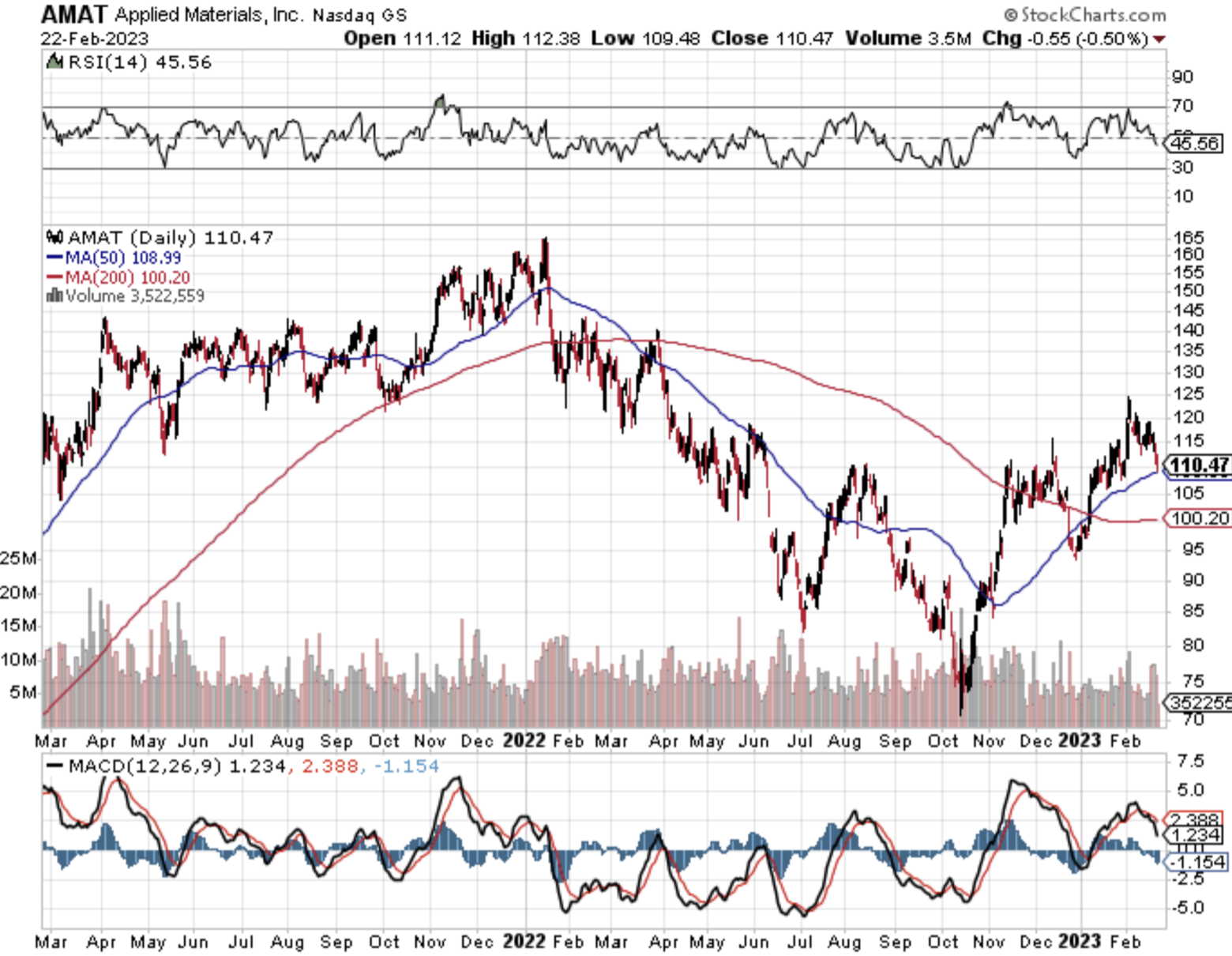
Applied Materials (AMAT)
Another approach to betting on quantum computing stocks is to be long on suppliers. Given that the technology is still very new, it can be difficult to determine which companies will ultimately be among the winners in this space. What is certain, however, is that if quantum computing catches on, we will need faster and more powerful semiconductors.
Applied Materials is one of the industry leaders in terms of patents and industry know-how when it comes to manufacturing chips that will be used in quantum computing hardware. During a gold rush, you want to be the one selling the shovels. Applied Materials should be the shovel dealer for the quantum computing industry.
In the meantime, Applied Materials' existing business is extremely profitable.
Global Market Comments
February 24, 2023
Fiat Lux
Featured Trade:
(FEBRUARY 22 BIWEEKLY STRATEGY WEBINAR Q&A)
(SPY), (BA), (CCI), (HD), (TLT), (TSLA), (PPLT), (PALL),
(JPM), (NVDA), (AAPL), (GOOGL), (META), (AMZN)

CLICK HERE to download today's position sheet.

Below please find the subscribers’ Q&A for the February 22 Mad Hedge Fund Trader Global Strategy Webinar broadcast from Silicon Valley in California.
Q: Will Russia use nuclear weapons on Ukraine?
A: No, they won’t. If you’re trying to take over a country, you don’t exactly want to drop atomic bombs on it first and render it useless. If they do, Ukraine will retaliate in kind with the nukes they have. Most of the nuclear weapons the old Soviet Union had were assembled in Ukraine and the machinery is still there. We know Ukraine has four nuclear power plants and hundreds of tons of fuel so they have uranium. You only need to increase the purity from 80% to 93% and then convert it to plutonium to get weapons-grade and you only need 20 pounds to make a small bomb. At the very least, they could build a dirty truck bomb and make Moscow uninhabitable for 100 years. If the Russians did explode a nuke, the fallout cloud would blow back on them the next day, China in three days, the US in 10 days, and back on Russia again in two weeks. If Ukraine doesn’t remember how to make nuclear weapons, they can just ask me. I do have “Nuclear Test Site” on my resume.
Q: What would be the impact on the markets of a government debt default?
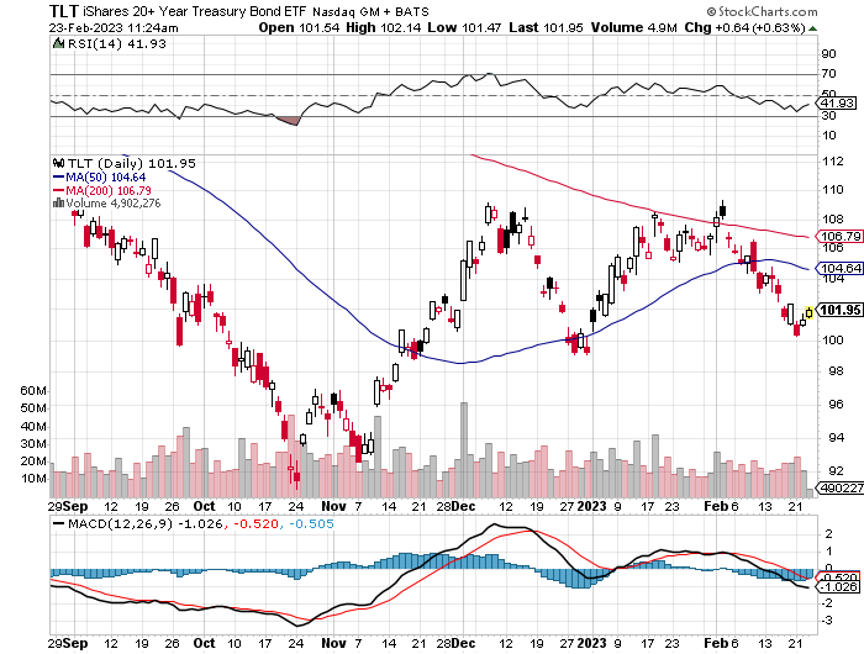
A: Bonds would collapse, causing interest rates to spike, and taking down stocks big time. Higher interest rates would crash the real estate market. You also can’t do real estate closings during a shutdown because Fannie Mae and Freddie Mac aren’t there to buy the debt. Commodities would fall sharply on recession fears. Even gold and silver do poorly on a massive liquidity squeeze. Government payments would cease, including Social Security, Medicare, and military salaries. Air traffic control would stop unless they are happy to work for free. The only place to hide is cash under your mattress since US Treasury bills and commercial banks will also be at risk. This is what the House Republicans are risking. It really depends on how long the shutdown lasts. Every time Georgia representative Marjorie Taylor Greene shouted “liar” at the State of the Union address you could see bond prices ticking down. She is one of the people who has to agree to a rise in the debt ceiling and she didn’t inspire a lot of confidence in bondholders. All that said, a $10 dip is a good place to buy the (TLT).
Q: Would you buy Boeing up here?
A: I loved Boeing at $100 and we did a could trades down there. At $220 not so much. It’s more than doubled off the October low and all the best-case scenarios have happened. The 737 MAX, which crashed twice due to an AI issue, got back in the air. The 787 Dreamliner is selling well. The company now has a two-year order backlog. And Air India followed up with the biggest aircraft order in history, some 450 planes over ten years. If Boeing dips $50 that would be another story because I think it hits a new all-time high at $450 in a couple of years. By the way, I took a 737 MAX on my flight back from Hawaii last weekend and the crew loved it. There are no screens on the seats. Instead, they broadcast the 800 greatest movies of all time on free WIFI.
Q: How do we know if your trade alert is for the stock, the ETF, or another underlying position?
A: Look at the ticker symbol—it always tells you exactly which security we are working in.
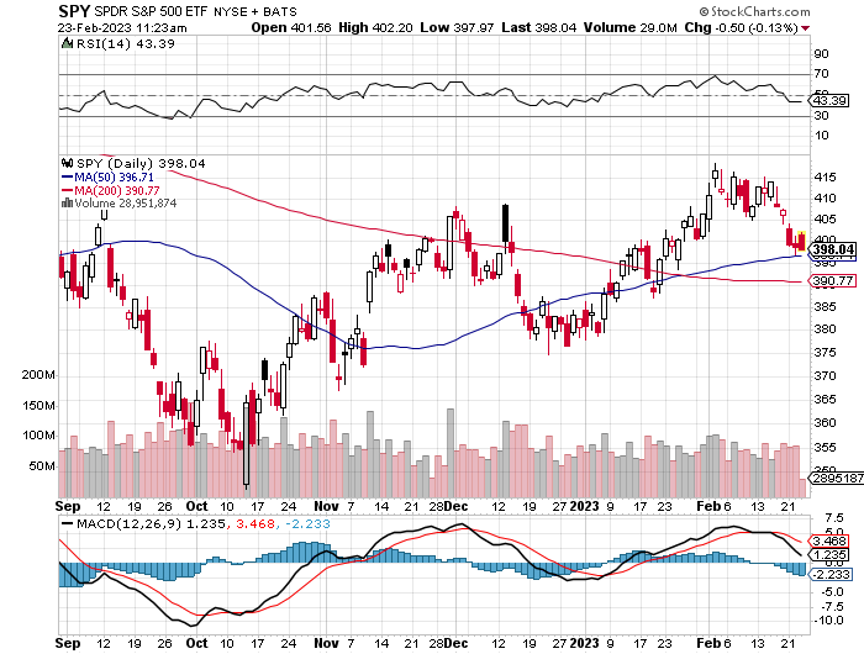
Q: With Bullard signaling a 50 basis-point rate hike, will the S&P (SPY) go down in the near term and how much?
A: Well Bullard is only one guy out of nine, so he doesn’t have the final say. It really depends on what Jay Powell wants. And if the data continues hot and inflation keeps rising, we will get a 50 basis point rise, and that should take the index down 10% from the recent high, or give up half of its recent year-to-date gains, so that’s a good rule of thumb. As long as we’re waiting for bad news, (which we won’t get until March 22) the markets will do nothing until then.
Q: What do you think about Crown Castle International (CCI), the cell tower company, taking a big hit with the bond market?
A: It pretty much moves in sync with the bond market, which has just dropped 10 points, so you probably want to be buying or doubling up on (CCI) right here, because it will be the first thing to recover once we see a negotiated increase in the debt ceiling which has to happen before the summer. The 5G buildout continues unabated.
Q: Would you recommend buying Tesla (TSLA) shares again?
A: Yes, but at least $50 lower, which we may get. Or at least $50 off the $217 top. I think Tesla goes to $1,000 sometime in the next couple of years and so does Elon Musk. All of the factors that could drive the stock that high are in progress. I know it’s happening over there, and that’s easily a $1,000 stock once their current breakthroughs go mass-market.
Q: Any interest in Iron Condors?
A: It is the same as Strangles, with more limited risk with four legs, a call spread and a put spread because you stop out your losses at much lower levels. But they are very trading-intensive, commission-intensive trades, and it’s really too much for most beginners to handle. However, if you’re a professional, you might consider doing iron condors on these positions. Iron Condors also max profits when nothing moves, and lately, no move is a pretty rare event. We’re going to get it for the next couple of months, but don’t count on that being a frequent trade.
Q: Any iShares 20 Plus Year Treasury Bond ETF (TLT) LEAPS to buy now?
A: Yes I've been kind of sitting on my hands waiting to see if this bottom here holds at 99 before I put out LEAPS, but we’re so close it really almost makes no difference. And if I were to do a LEAPS here it probably would be the $100-$105 one-year out. That might get you about a 100% profit in a year. That’s a very safe LEAPS, and I’ll get the numbers out when I get a chance.
Q: What’s your opinion on Home Depot (HD)?
A: I like it for the long term. Clearly, their disastrous earnings report shows that the economy for home repair is not as strong as we thought it was, so it may go lower first. I would hold off until we get a real capitulation selloff in those stocks.
Q: Are gold and silver possible candidates for LEAPS?
A: Yes, especially in view of the recent correction in these metals. And we did put these out last October at the market bottom. I probably will be updating that sometime in the next few weeks.
Q: How much longer will the Ukraine/Russia war last?
A: The general consensus among the military now is that this goes on for several more years, and both sides will just keep pouring troops into the meat grinder until they get exhausted.
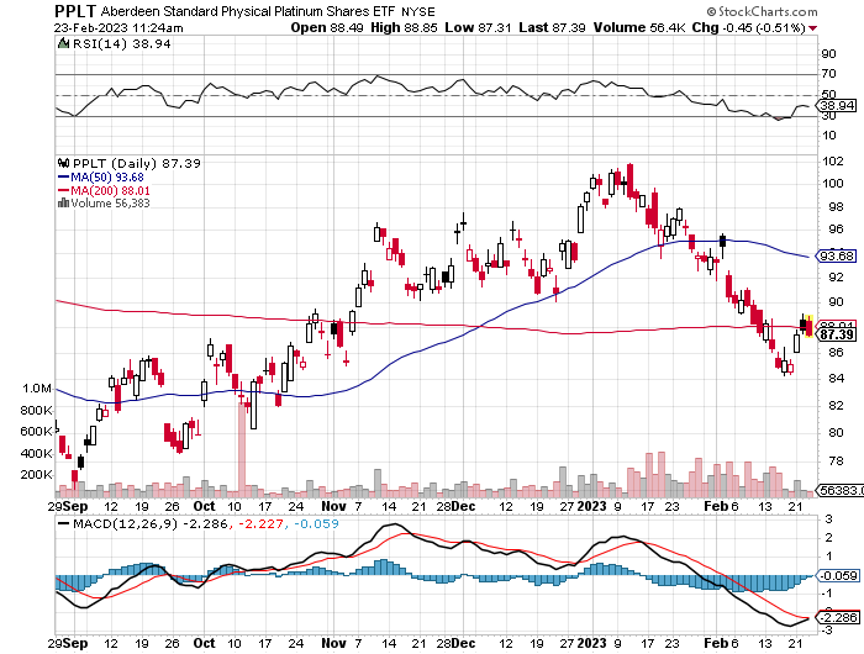
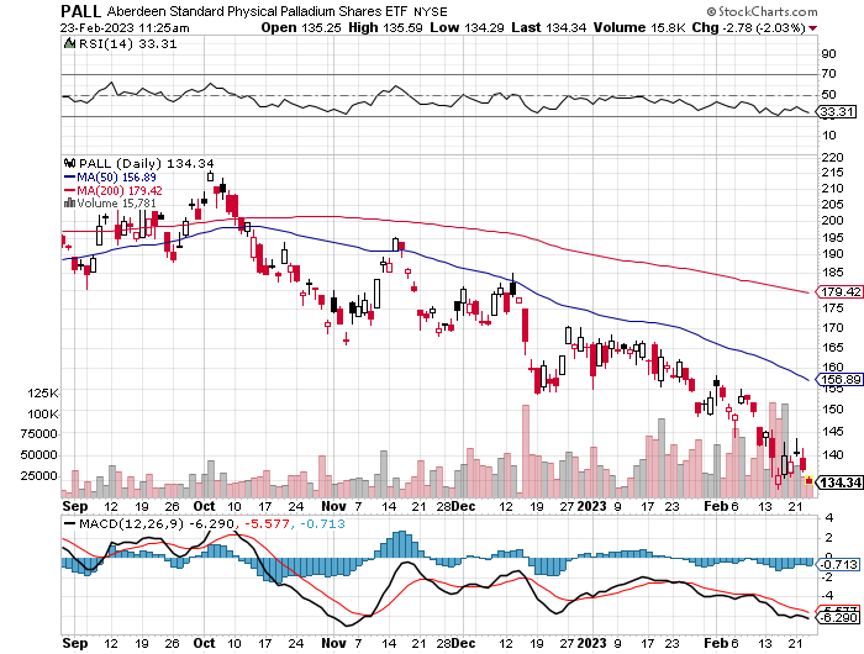
Q: Any way to play Platinum (PPLT) or Palladium (PALL)?
A: Yes, there are ETFs on each of them.
Q: Any thoughts on the crypto industry?
A: I have given up on the crypto industry because it has been shown that so many of these trading platforms were stealing from their customers. Once you lose the confidence of a customer on trust, you never get it back in the financial industry. Also, crypto was interesting a couple of years ago when it was going up and everything else in the world was too expensive, but now you have all the best stocks trading not far from multi-year lows, and that makes quality stocks much more attractive than a crypto where you really don't know what’s going to happen. Crypto could be another Nikkei, which after 32 years still hasn’t reached its old highs. That is unless it gets taken over by big banks like (JPM) and regains respectability that way.
Q: Any thoughts on investing in the AI trend?
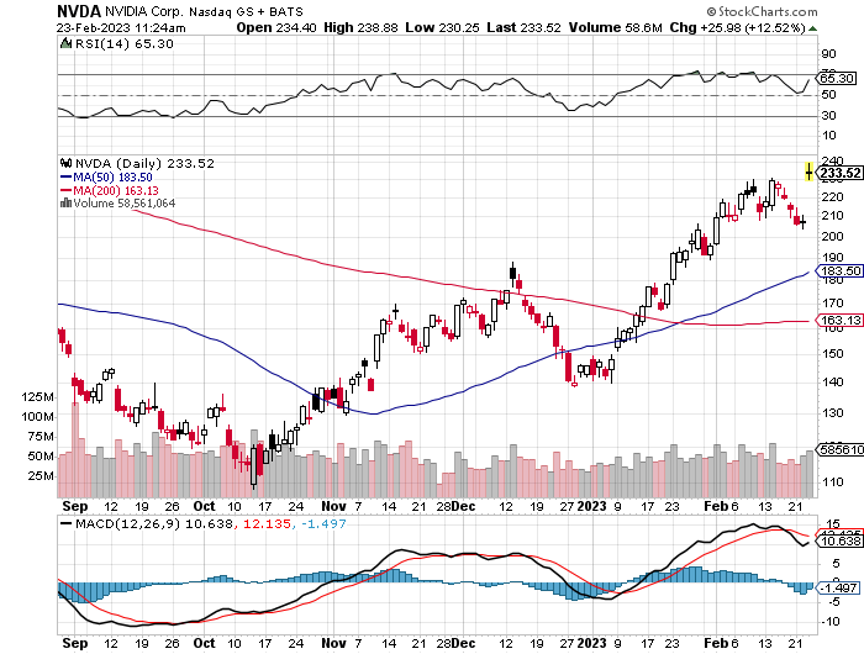
A: AI has suddenly become what crypto was 2 years ago, and what 3D printing was 15 years ago. It’s just the theme of the day, and something to promote. There are no pure AI plays. Basically, all companies have been using it for 10 or 15 years, it’s not a new thing. In fact, AI is already in every aspect of your life, you just might not know it yet. NVIDIA (NVDA) is probably the purest AI play out there whose chips everyone needs to execute AI. Beyond that, the biggest AI users are Apple (AAPL), Alphabet (GOOGL), Meta (META), and Amazon (AMZN). When Amazon makes ten more recommendations on books you might like or movies you might watch, that is AI.
To watch a replay of this webinar with all the charts, bells, whistles, and classic rock music, just log in to www.madhedgefundtrader.com, go to MY ACCOUNT, click on GLOBAL TRADING DISPATCH or TECHNOLOGY LETTER, then WEBINARS, and all the webinars from the last 12 years are there in all their glory.
Good Luck and Stay Healthy,
John Thomas
CEO & Publisher
The Diary of a Mad Hedge Fund Trader

With Medal of Honor Winner Colonel Mitchel Paige

Global Market Comments
February 22, 2023
Fiat Lux
Featured Trade:
(TESTIMONIAL),
(TEN MORE TRENDS TO BET THE RANCH ON),
(AAPL), (AMZN), (GOOGL), (TSLA), (CRSP), (EDIT), (NTLA)

CLICK HERE to download today's position sheet.

I believe that the pandemic and hyper-accelerating technology is bringing forward the future at an astonishing rate.
More applications will be created in the next year than over the last 40, some 500,000. The sum total of human knowledge is now doubling every year. The profits spun off and investment opportunities will be incredible, which is why I just doubled my ten-year forecast for the Dow Average (INDU) from 120,000 to 240,000.
Here are ten major trends for the economy and the markets that we can see already. It’s the unseen ones that will be really interesting.
(1) The Insurance Industry Changes Beyond All Recognition, confirming from “Recovery After Risk” to “Prevention of Risk”. Today, fire insurance pays you after your house burns down. Life insurance pays your next of kin after you die. And health insurance (which is really sick insurance) pays only after you get sick. During the next decade, we’ll see a new generation of insurance providers that offer you a service to KEEP you healthy and keep your house safe during a wildfire. Also, full autonomous driving will cut hospital admissions by half, dramatically dropping the cost of insurance. This is driven by machine learning, ubiquitous sensors, low-cost genome sequencing, and robotics to detect risk, prevent disaster, and guarantee safety before any costs are incurred.
(2) Autonomous Vehicles and Flying Cars (eVTOL) will make travel cheaper and easier. Fully autonomous vehicles (TSLA), (GOOGL), car-as-a-service fleets, and aerial ridesharing (flying cars) will be fully operational in most major metropolitan cities in the coming decade. The cost of transportation will plummet 3-4X, transforming real estate, finance, insurance, the materials economy, and urban planning. Where you live and work, and how you spend your time, will all be fundamentally reshaped by this future of human travel. Your kids and elderly parents will never drive. Already, a half dozen eVTOL companies have gone public raising more than $10B to fuel their growth. These vehicles are real and will help define the decade ahead. This is driven by machine learning, sensors, materials science, battery storage improvements, and ubiquitous gigabit connections.
(3) On-demand Production and On-demand Delivery Will Create an “Instant Economy of Things”. Urban dwellers will learn to expect “instant fulfillment” of their retail orders as drone and robotic last-mile delivery services carry products from local supply depots directly to your doorstep. Further riding the deployment of regional on-demand digital manufacturing (3D printing farms), individualized products can be obtained within hours—anywhere, anytime. I ordered a new high-end 50-pound garage door opener from Amazon Prime (AMZN) last month after my old one went kaput. Incredibly, they delivered it in hours! This is driven by networks, 3D printing, robotics, and AI.
(4) The Ability to Sense and Know Anything, Anytime, Anywhere. We’re rapidly approaching the era where 100 billion sensors (the Internet of Everything) are monitoring and sensing (imaging, listening, measuring) every facet of our environments, all the time. Global imaging satellites, drones, autonomous car LIDARs, and forward-looking augmented reality (AR) headset cameras are all part of a global sensor matrix, together allowing us to know anything, anytime, anywhere. In this future, it’s not “what you know,” but rather “the quality of the questions you ask” that will be most important. That gives us old guys a huge advantage. This is driven by the convergence of terrestrial, atmospheric, and space-based sensors, vast data networks, 5G and 6G communication networks (AAPL), next-gen Wi-Fi, and machine learning.
(5) Advertising Hyper Evolves. As ads become the primary driver of new services for free, AI becomes increasingly embedded in everyday life and your custom personal AI will soon understand what you want better than you do. In turn, we will begin to both trust and rely upon our AIs to make most of our buying decisions, turning over shopping to AI-enabled personal assistants. Your AI might make purchases based on your past desires, current shortages, conversations you’ve allowed your AI to listen to, or by tracking where your pupils focus on a virtual interface (i.e., what catches your attention). As a result, the advertising industry—which normally competes for your attention (whether at the Superbowl or through search engines)—will have a hard time influencing your AI. This is driven by machine learning, sensors, augmented reality, and 5G/networks.
(6) Cellular Agriculture Moves from the Lab to Inner Cities, Providing High-quality Protein that is Cheaper and Healthier. The next decade will witness the birth of the most ethical, nutritious, and environmentally sustainable protein production system devised by humankind. Stem cell-based “cellular agriculture” will allow the production of beef, chicken, and fish anywhere, on-demand, with far higher nutritional content, and a vastly lower environmental footprint than traditional livestock options. Traditional legacy steaks found at Ruth’s Chris and Morton’s will only to available to the wealthy. This is driven by biotechnology, materials science, machine learning, and agtech.
(7) Your Brain Will Integrate with Super-Fast Hardware and Software. My friend, technologist and futurist Ray Kurzweil, has predicted that by the mid-2030s, we will begin connecting the human neocortex to the cloud. This next decade will see tremendous progress in that direction, first serving those with spinal cord injuries, whereby patients will regain both sensory capacity and motor control. Yet beyond assisting those with motor function loss, several BCI pioneers are now attempting to supplement their baseline cognitive abilities, a pursuit with the potential to increase their sensorium, memory, and even intelligence. Recent demonstrations of a macaque monkey playing Pong using a Neuralink implant is proof of incredible progress. This is driven by materials science, AI/machine learning, robotics, and some fantastic imaginations.
(8) High-resolution Virtual Reality Will Transform Both Retail and Real Estate Shopping & the Future of Education. If you were a couch potato, you are about to become one on steroids. High-resolution, lightweight virtual reality headsets will allow individuals at home to shop for everything from clothing to real estate—all from the convenience of their living room. Need a new outfit? Your AI knows your detailed body measurements and can whip up a fashion show featuring your avatar wearing the latest 20 designs on a runway. Want to see how your furniture might look inside a house you’re viewing online? No problem! Your AI can populate the property with your virtualized inventory and give you a guided tour. On the education front, the use of VR and AI-driven avatars with technology such as that demonstrated by Dreamscape promises a future of game-like, immersive, and powerful education and training. This is driven by VR, machine learning, and high-bandwidth networks. Get your Oculus Rift from Facebook (FB) now!
(9) Increased Focus on Sustainability and the Environment will drive companies to invest in sustainability—both from a necessity standpoint and for marketing purposes. Breakthroughs in materials science, enabled by AI, will allow companies to drive tremendous reductions in waste and environmental contamination. One company’s waste will become another company’s profit center. Want to visit my chalet in Switzerland? You can do so by connecting your Oculus Rift headset to Google Maps….today! This is driven by materials science, AI, CRISPR, digital biology, and broadband networks.
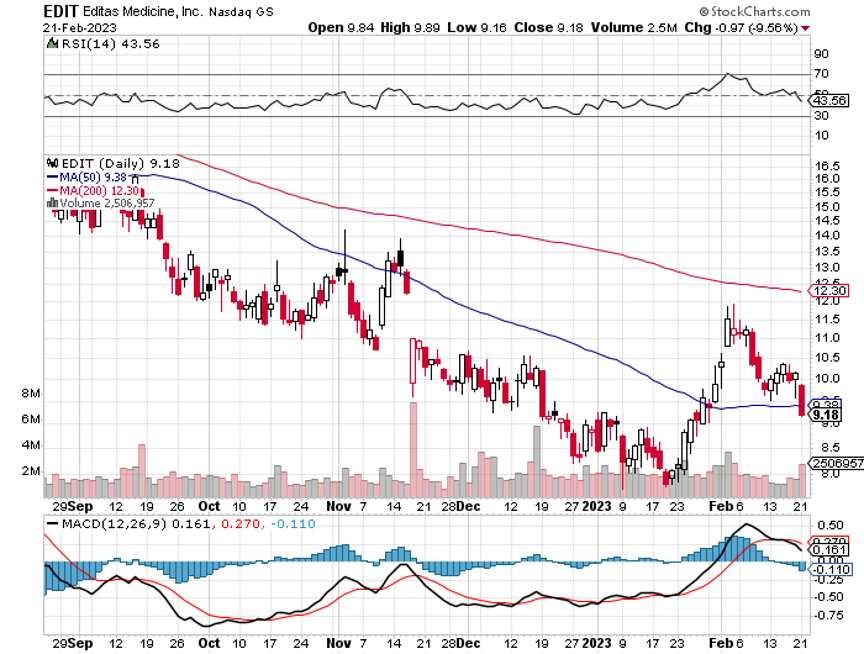
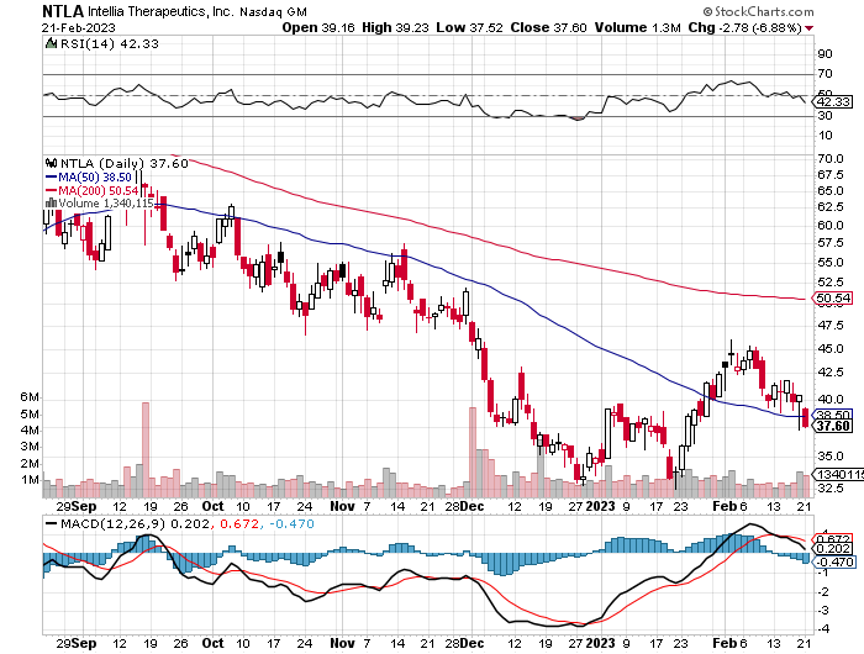
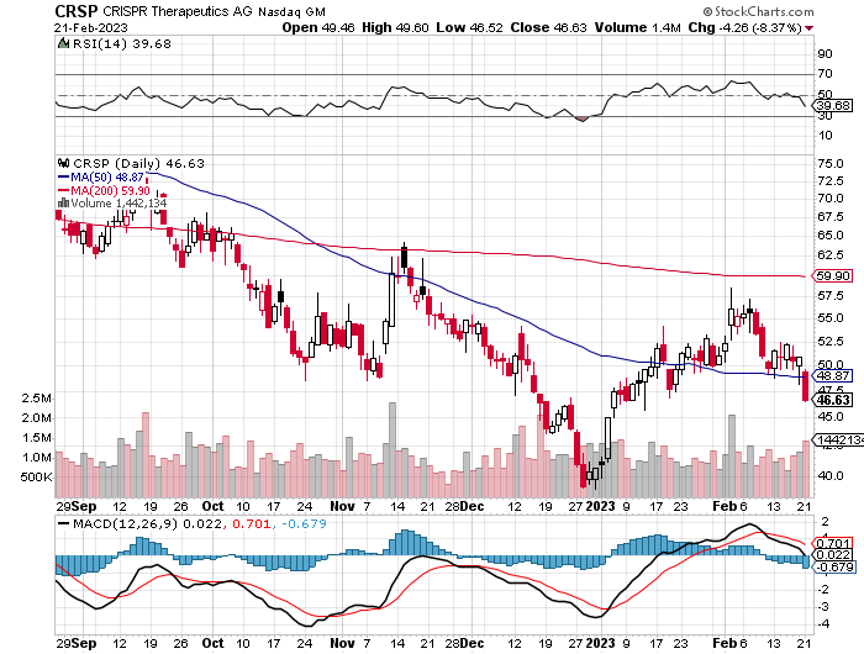
(10) CRISPR and Gene Therapies Will Eliminate Disease. Perhaps one of the most powerful, underappreciated technologies in the world is CRISPR. In 2020, two incredible women won the Nobel Prize in medicine for its discovery, and revenues from CRISPR doubled between 2019 and 2020 to over $1.5B. A vast range of infectious diseases, from AIDS to Ebola, are now potentially curable, as are a wide range of genetic ailments like sickle cell anemia, thalassemia, and certain forms of congenital blindness. In addition, gene-editing technologies continue to advance in precision and ease of use, allowing families to treat and ultimately cure hundreds of inheritable genetic diseases. This is driven by various biotechnologies (CRISPR, Gene Therapy), genome sequencing, and AI. Only three companies have a monopoly in this sector right now, (CRSP), (EDIT), and (NTLA).
In the decade ahead, master entrepreneurs will look beyond the immediate effects of a given technology to seize secondary and tertiary, Google-sized business opportunities on the horizon.
As an investor, you should be asking yourself: What challenges or problems can I help solve? How can I leverage the coming waves of tech advancements?
I just thought you’d like to know.
John Thomas

Mad Hedge Technology Letter
February 15, 2023
Fiat Lux
Featured Trade:
(NOT ALL AD TECH FIRMS ARE IN THE DOGHOUSE)
(TTD), (GOOGL), (META)


Some of the digital ad tech stocks have had a rough go of it lately.
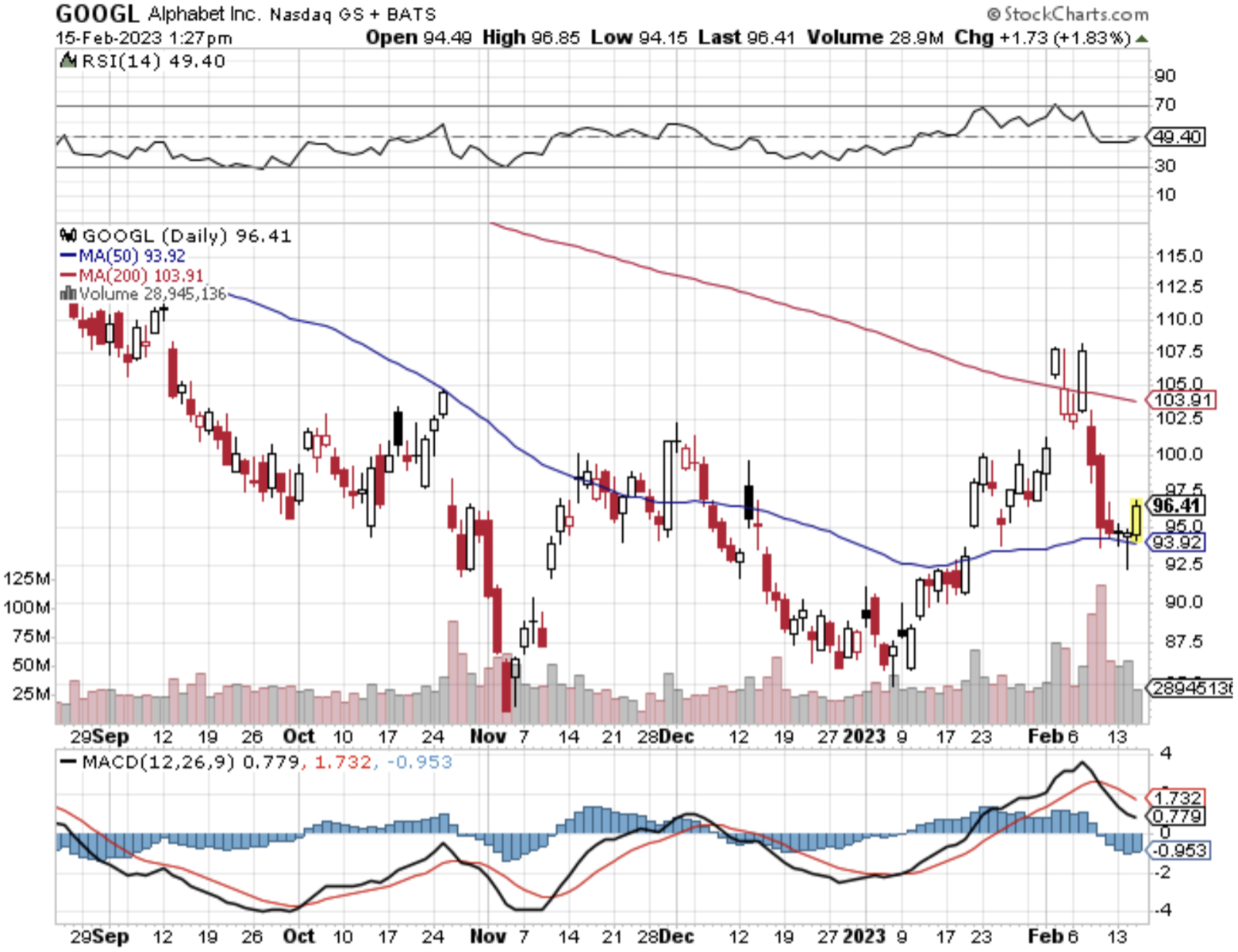
There was Google (GOOGL), whose stock has been threatened because of the new artificial intelligence chat box technology that was debuted by OpenAI called ChatGPT.
Meta (META) has rebounded but the initial sell-off last year was cringe-worthy.
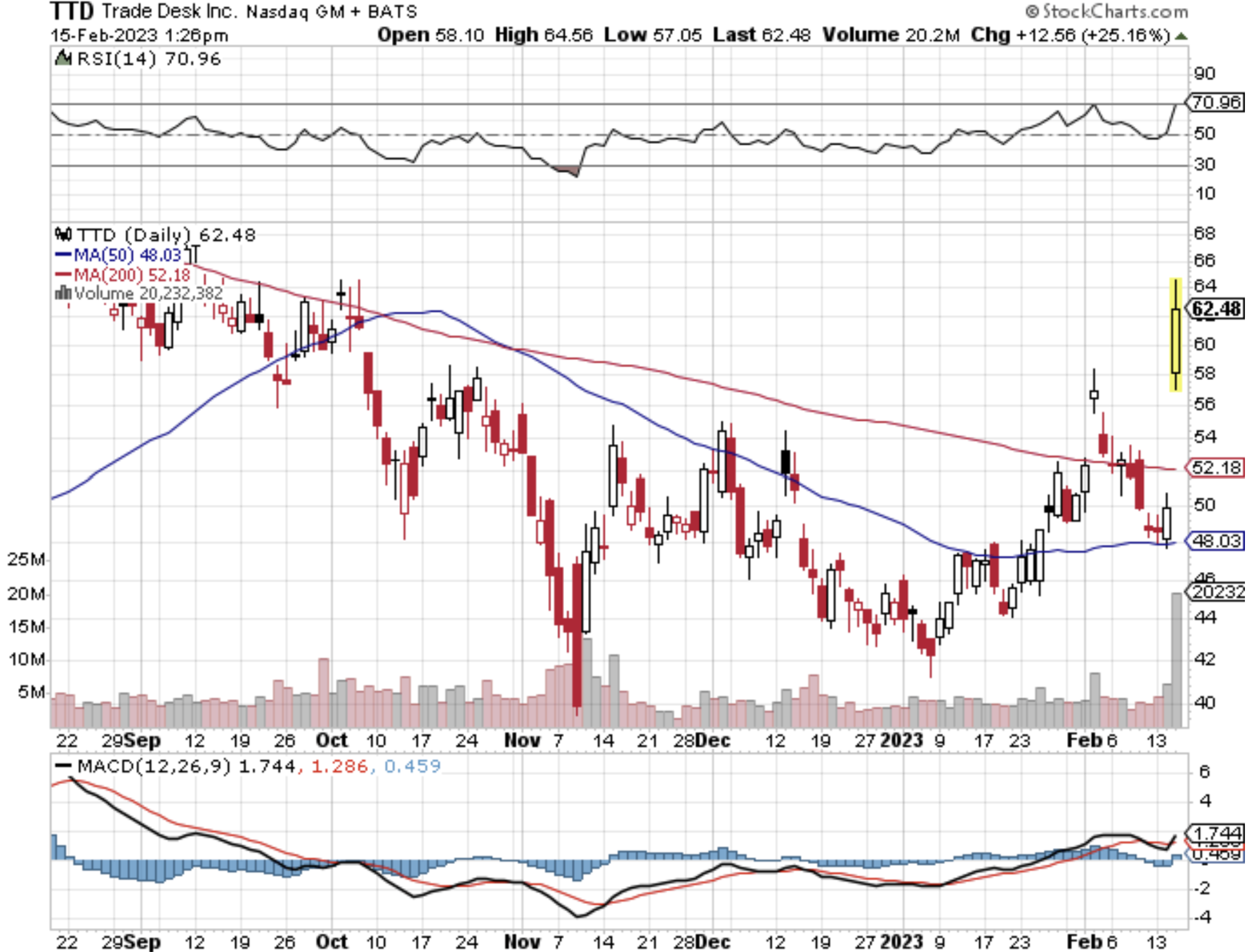
As we see the light at the end of the tunnel, it’s time to explore where to deploy funds to invest in tech, and one option is The Trade Desk (TTD).
The advertising-technology company issued a stronger-than-expected outlook and unveiled a $700 million stock buyback program.
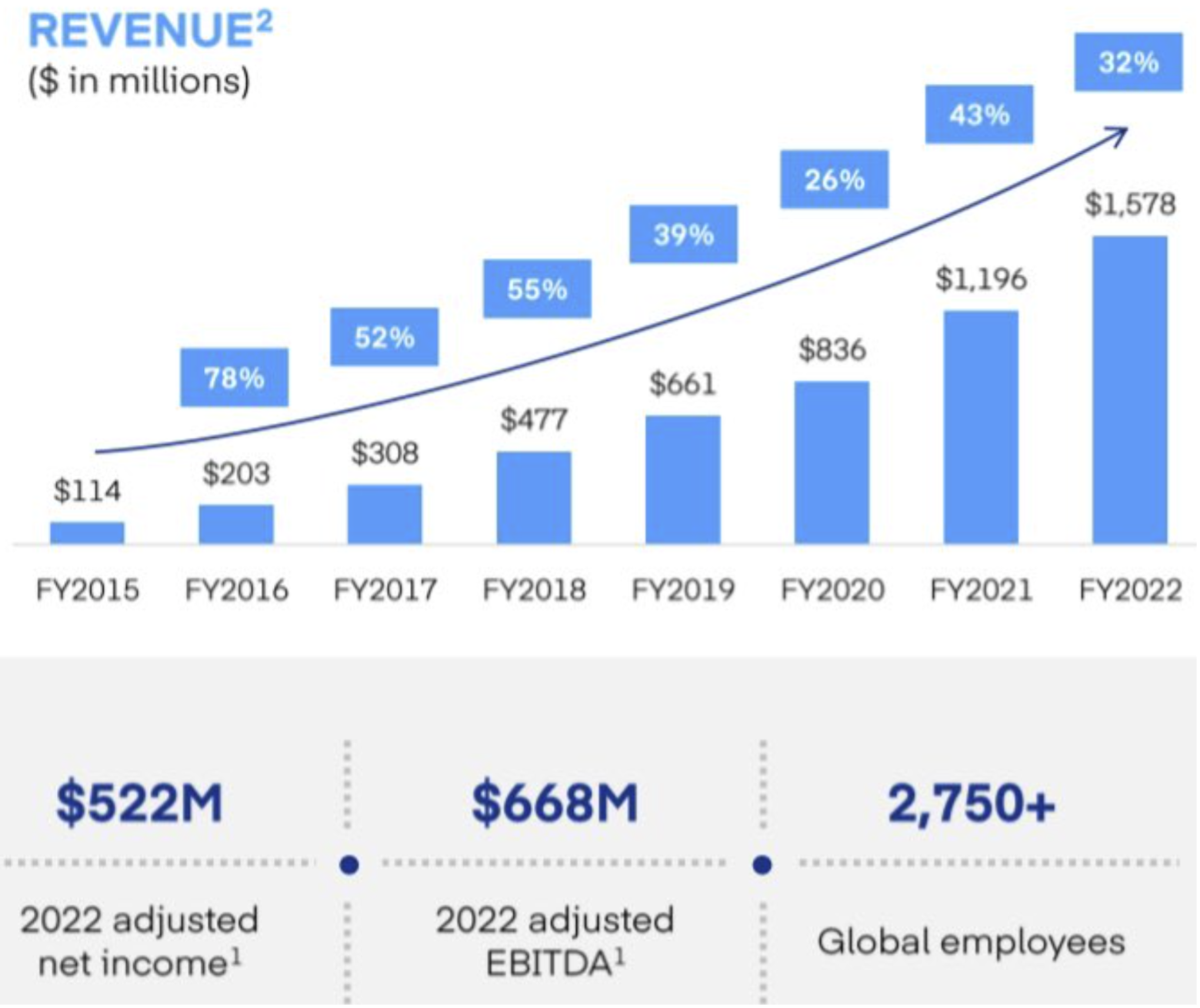
The Trade Desk outpaced nearly all areas of digital advertising in 2022, with 32% revenue growth year over year, and a record $491 million of revenue in the fourth quarter alone.
In addition, management at The Trade Desk made significant operational progress during the first quarter.
For example, Adobe was won as a partner that carries out real-time integration. But a first certified service partner has also been won with the Goodway Group. Growth in the area of programmatic advertising therefore continues.
I can confidently say that they delivered great earnings results once again and that’s a good habit to have in the public markets.
The company's top line didn't beat expectations, but was still impressive, especially considering a macroeconomic environment that weighed on the broader advertising industry.
Analyzing their company, I am confident that they are gaining market share and that their platform continues to gain traction with advertisers.
The numbers strongly back me up.
While the company's sales grew by 24% in the fourth quarter, some of The Trade Desk's biggest competitors were seeing their sales decline.
Another highlight from the quarter is The Trade Desk keeping its customer retention rate above 95%, which it has done for nine consecutive quarters.
The company also said that its Unified ID 2.0 - an online identifier that gives users more privacy than online trackers - continues to be accepted by more companies, including the addition of Paramount Advertising in the quarter.
Management expects Unified ID 2.0 to continue growing as online trackers (called cookies) "become less important" in the ad industry.
I can’t say it has been the golden year for digital ad tech.
The beating it took last year was quite horrendous, but as all rate hikes have mostly been priced into shares, we can expect a positive trajectory to the upside.
It’s quite positive that in the last two days, we received a hot CPI number and hot retail sales, but tech stocks have held up nicely.
I fully expect many growth tech stocks including TTD to become buy-the-dip candidates moving through the bulk of the year.
Sure, higher inflation remains the biggest risk to shares and after the latest numbers, we could go up to 5.25% on the Fed Funds rate but that has largely been quantified and sanitized by the market by now.
Mad Hedge Technology Letter
February 8, 2023
Fiat Lux
Featured Trade:
(CHATBOT SINKS STOCK 8%)
(GOOGL), (MSFT)
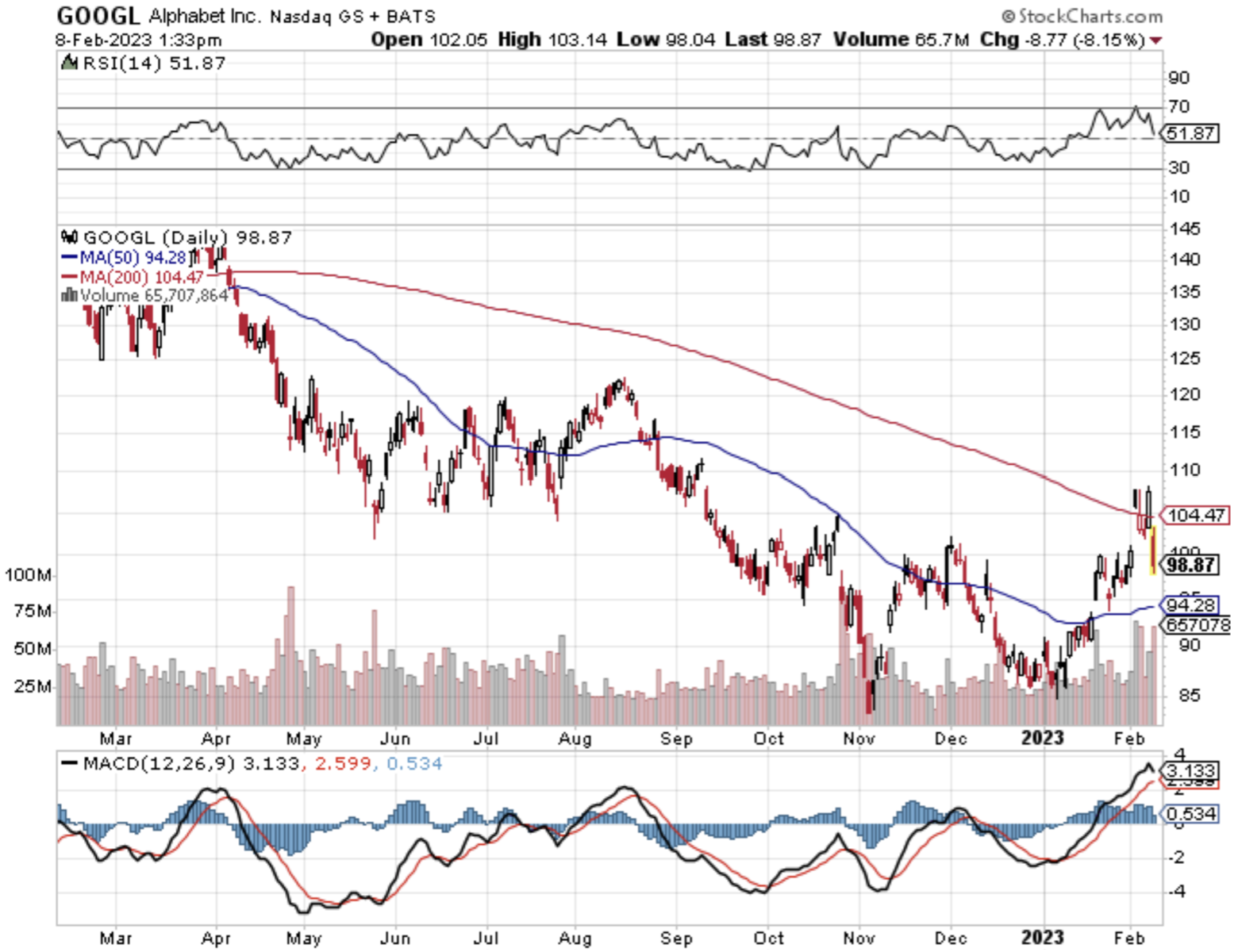
Down 8% on a faulty chatbot conversation – that’s what happened to Google’s (GOOGL) stock today.
That’s why we need to pare back the euphoria and nonstop celebration of ChatGPT.
Hold your horses.
It’s an emerging technology and could end up with chatbots chatting with other chatbots for little or no value.
My point is that it can still go very wrong from here.
Google’s stock swan dived on Wednesday after its own iteration of A.I. chatbot erroneously answered a question about the first usage of space telescopes via its promotional material.
It all lends itself to surmise that Google is way behind in this game and Microsoft has the situation by the scruff of the neck.
Only just a few days ago, Microsoft integrated the AI technology into the front page of its Bing search engine, and is available for user downloads on the Bing app.
The drop in share price meant that Google lost more than $100 billion off its market cap.
The service called Bard is to compete with the popular ChatGPT.
Despite the chatbot’s claim in the ad, NASA reports that the first photo of a planet outside the Milky Way was taken by the Very Large Telescope in 2004 — nearly 19 years before NASA’s Webb telescope.
Unpreparedness by Google could translate into a significant loss of ad revenue for Google’s cash cow Google search.
The desperation of throwing Bard out there not on their timeline could mean they are exposing a product that isn’t up to Google’s standards.
An AI chatbot that consistently delivers false answers will turn off an advertiser quicker than no AI chatbot.
Investing in Google is still worth it even if it takes time to correct the quality of their AI. because it is logical to give a good company the benefit of the doubt.
Another problem is that Google could be stuck with bad AI for a few years before it turns the corner.
For better or worse, they were forced to go public with whatever they had just for the optics of competition even if they are badly lagging behind.
The worst-case scenario is receiving a direct blow to the cranium in terms of total ad revenue.
Google is still relying on search to drive the rest of its business.
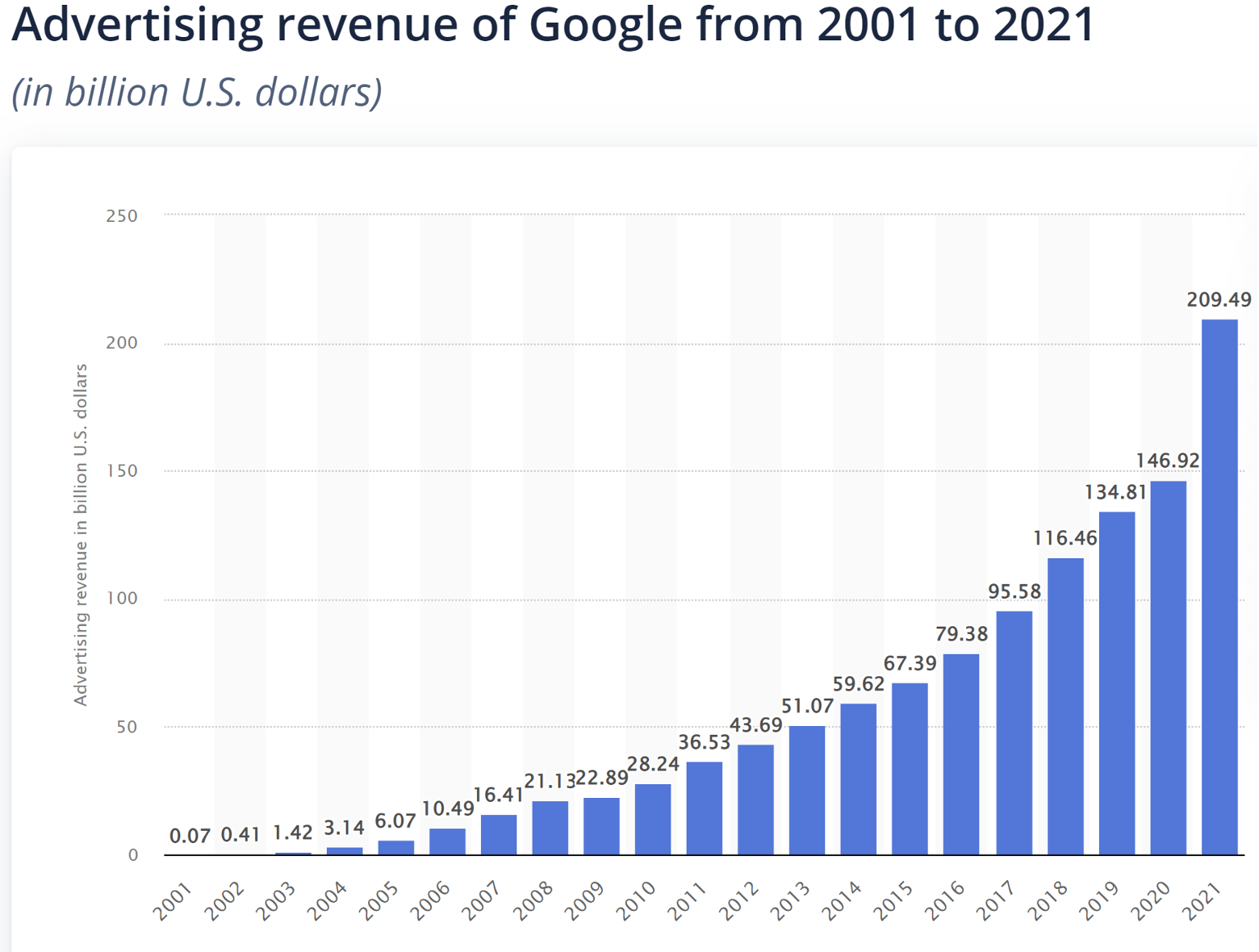
They earned over $200 billion in ad revenue in 2021.
This is the first threat to Google’s search model in a generation and the threat has them on their toes.
I do believe they possess the resources to solve this issue.
No doubt that Google CEO Sundar Pichai is throwing the kitchen sink to find and poach the best AI engineers to beef up the chatbot team.
Ultimately, the real new world of higher interest rates and high inflation environment means that your father’s tech playbook must be thrown out the window.
It’s quite evident that we are in the midst of a paradigm shift and new leaders during this shift will emerge.
History shows us that tech leaders of old have a habit of falling behind because they are too set in their ways to adapt to a world with new rules.
It might be so that at some point in the not-so-near future, we might need to set the search default to Bing.
How ironic?