• support@madhedgefundtrader.com
  • Member Login
Mad Hedge Fund Trader
  • Home
  • About
  • Store
  • Luncheons
  • Testimonials
  • Contact Us
  • Click to open the search input field Click to open the search input field Search
  • Menu Menu

Tag Archive for: (IBM)

Mad Hedge Fund Trader

September 8 Biweekly Strategy Webinar Q&A

Diary, Newsletter

Below please find subscribers’ Q&A for the September 8 Mad Hedge Fund Trader Global Strategy Webinar broadcast from the safety of Silicon Valley.

Q: Do you think we’ll see the under $130 in the United States Treasury Bond Fund (TLT) before January 2022?

A: I don’t think so; I think we could go below $140, maybe below $135. But $130 would be a brand new low in the move and would be a stretch. We basically lost 4 months on this trade due to the countertrend rally, which just ended. I would come out of your (TLT) $130-$135 vertical bear put spreads right here while they still have time value, but keep the $135-$ 140s, the $140-$145’s, and especially the $150-$155’s. The idea was that you just keep averaging up and up until the market turns, and then you make back any loss. We move into accelerated time decay on those deep out of the money put spreads in December, so I would take the money and then offset it with the gains you made in those positions.

Q: Does Palantir (PLTR) look like it’ll hit $100 by year-end?

A: No, the stock has been dead, and management has not been doing anything to promote it. We did get a move up to $45 but it failed. It’s still a great long-term idea as they are growing at 50% a year. Also, they did buy $50 million worth of gold bars as a hedge. But as a short-term trader, Palantir isn’t working. If you have an options position on that I would probably get out of it or roll it forward to 2023.

Q: PayPal (PYPL) is fluctuating up and down with Bitcoin. Do you like PayPal?

A: Absolutely, but it obviously is being dragged down by Bitcoin. It is a temporary down move caused by a one-time-only event in El Salvador. Buy the dip in PayPal. It is a leader in the whole move into a digital financial system.

Q: When is Freeport McMoRan (FCX) likely to move up?

A: As soon as we shift out of the tech trade into the domestic recovery trade, which could be in weeks or months at the latest. We’ll switch from one side of the barbell to the other.

Q: Where do you see Tesla (TSLA)?

A: It keeps going up, so my guess is we top $800 by the end of the year, and maybe $850. The big news here is that Tesla has gone into the chip business, making its own chips in-house which is easy for them to do in Silicon Valley. But it does make them the first global car maker that is also a chip maker, and therefore the stock deserves a higher premium. The stock went up $30 on the news and is great for all Tesla holders. I hope you have the 2023 LEAPS.

Q: Too late to buy Tesla LEAPS?

A: Unless you’re really deep in the money, with something like a $600-$650; but the return on that will only be about 50% in 2 years.

Q: The Biden administration just set a goal of 45% solar by the end of 2050. Which solar stock should I buy here?

A: The problem with solar is as soon as Biden started winning primaries, every solar stock took off like a rocket, figuring he’d win, which he did. All of them went up 6-fold or more as a result of that, then gave up one-third of their gains and are now moving sideways. So if you look at the charts, the classic one to buy here is the Invesco Solar ETF (TAN), a basked of the top solar companies. All of these peaked in February and have been doing sideways “time” corrections since then, which means they eventually want to go higher. The other two that have charts that look like they’re finally starting to break out to the upside are First Solar (FSLR) and SunPower (SPWR) after 8 months of consolidation.

Q: Why is the second half of September almost always bad? Is it due to institutional repositioning?

A: Not really, the cash comes into the market at certain times of the year, like end of the year, beginning of the year, and end of each quarter. September seems like the month where they kind of just run out of money. But there's actually also a historical reason for that. For most of American history, we had an agricultural economy. Farmers were more than half the population, and the period of maximum distress for farmers is September, where they put all the money into seed and fertilizer and labor into the field, but they haven't harvested it yet. So, traditionally, they always did a lot of borrowing in September, which caused a cash squeeze and interest rate spike, and a stock market panic as a result. So that's the history behind weak Septembers and Octobers. Once the farmers get the crops in and sell them, that resolves the cash squeeze, interest rates fall, and it’s straight up for stocks for the rest of the year most of the time.

Q: SPACs (Special Purpose Acquisition Companies) seem to be losing interest. Do you recommend any or stay away?

A: Stay away—they’re all rip-offs and are simply a means by which managers can increase their fees from 2% to 20%. That's what they did with virtually all of them. This will end in tears.

Q: What's your feeling about satellite internet phone service replacing current internet cell service in the future?

A: It’s in the future, but it may be 10 years off in the future. If it happens sooner, it’s because Elon Musk was able to deliver cheap rocket service. He already has 20,000 satellites in the sky for his own Starlink global cell phone service for internet access.

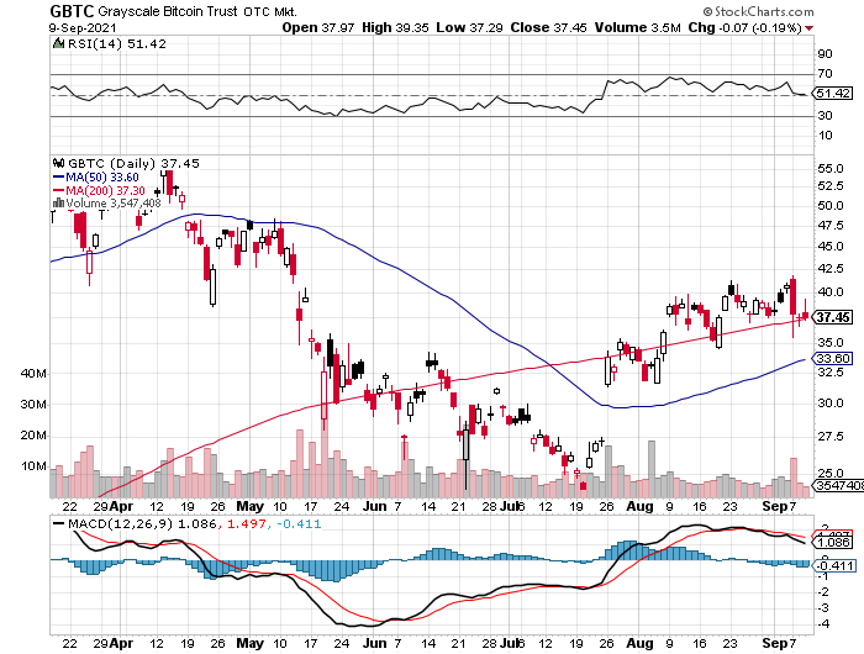
Q: How does one buy a Bitcoin stock?

A: Well first of all, I highly recommend you buy the Mad Hedge Bitcoin Letter, which you can get in our store. But there's also the Greyscale Bitcoin Trust (GBTC) which allows you to buy a Bitcoin proxy very easily. I’ll even honor the discounted $995 price for my Bitcoin Letter for another day by clicking here.

Q: Is Warren Buffet and his value philosophy something I should be following, or is he outdated?

A: I have to say, buying stocks cheap with high cash flow will never go out of style. Currently, Warren’s big holdings are domestic industrials, banks, and Apple. All of those look like they will do well moving forward. Buffet’s Berkshire Hathaway (BRKB) has a built-in barbell element to it and is the subject of one of our LEAPS recommendations which has already been hugely successful.

Q: Is Home Depot (HD) at $330 a bargain?

A: Well, we just had a selloff and it bounced hard, and now we’re waiting for the domestic post delta recovery. It's hard to imagine both Home Depot and Lowes not doing well in this scenario.

Q: What will happen to tech when interest rates rise?

A: My bet is they go sideways to down small until you get another peak in interest rates (the next peak will be at 1.76% in the ten year US Treasury bond, the 2021 high) and once you hit that, then tech will take off like a rocket again, and in the meantime, you play the domestics while interest rates are rising. That is the game and will continue to be the game for a couple of years.

Q: Should I buy IBM (IBM) on a turnaround story?

A: No, I've been waiting for IBM to turn around for 10 years. They just don’t seem to get it. What they do is whenever a division starts to make money, they sell it and get cash like they did with the PC division and this year with its infrastructure business called Kyndryl. So, they’re not leaving any growth for the actual IBM holders.

Q: Do you like Square (SQ) at $256?

A: Yes, and that would be a great 2023 LEAPS candidate. All of the digital settlement payment systems are going to do well in the Bitcoin future. They also own quite a lot of Bitcoin. They are leading the charge into a digitized financial system.

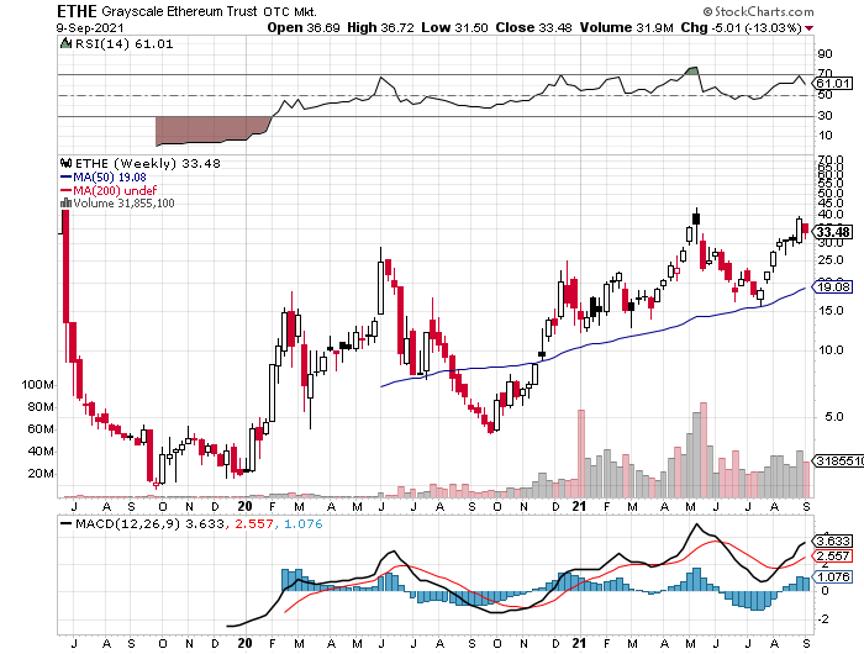
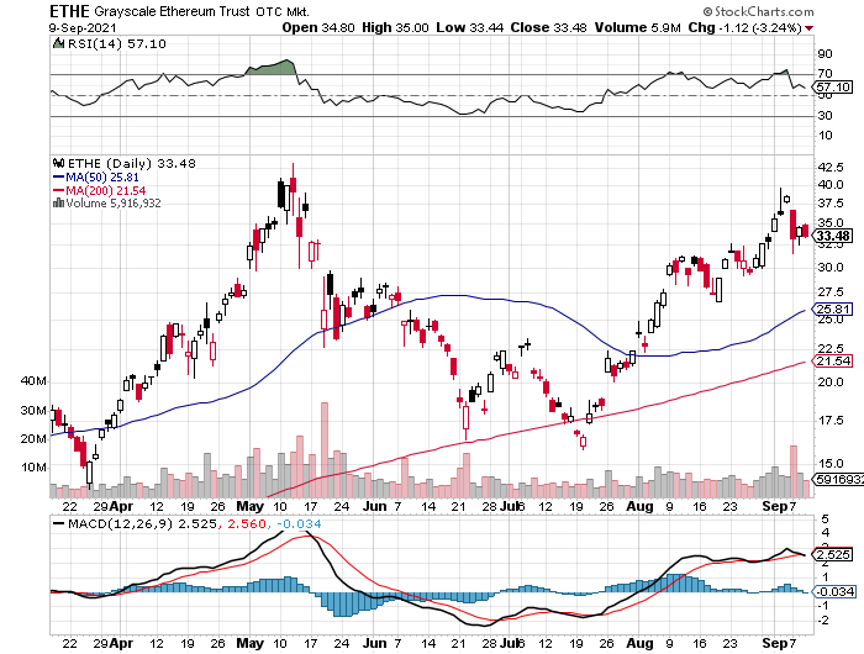
Q: What’s a good Ethereum ETF?

A: The Greyscale Ethereum Trust (ETHE) is just the ticket.

Q: So you avoid energy, meaning oil and gas?

A: Yes, alternative energy we like, but it’s had an enormous run already so after a 7-month time correction it’s probably safe to get into solar. Traditional oil and gas (USO) is in a long-term secular bear market that started 13 years ago and will eventually go to zero. Last year’s visit to negative futures prices is just a start. Since 2020, the energy market weighting has gone from 15% to 2%.

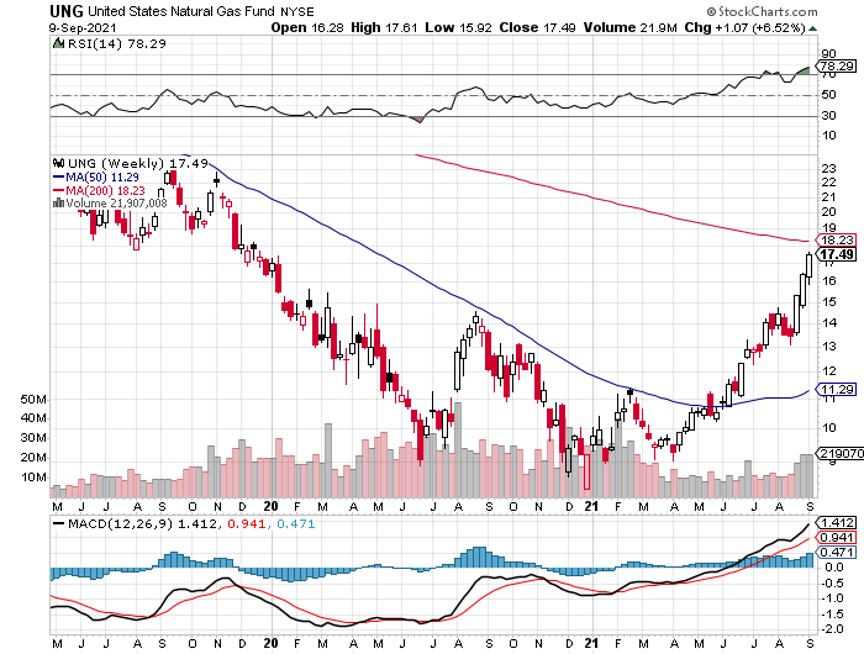
Q: Is Natural Gas the only rational core fuel for the grid?

A: No, natural gas (UNG) still produces carbon even though it’s only half the amount of oil. This all gets replaced by solar in the next ten years. That’s why I tell people to stay away from energy like the plague. Would you rather buy natural gas at $4.50/btu or get solar electricity for free? Those are basically going to be the choices in ten years.

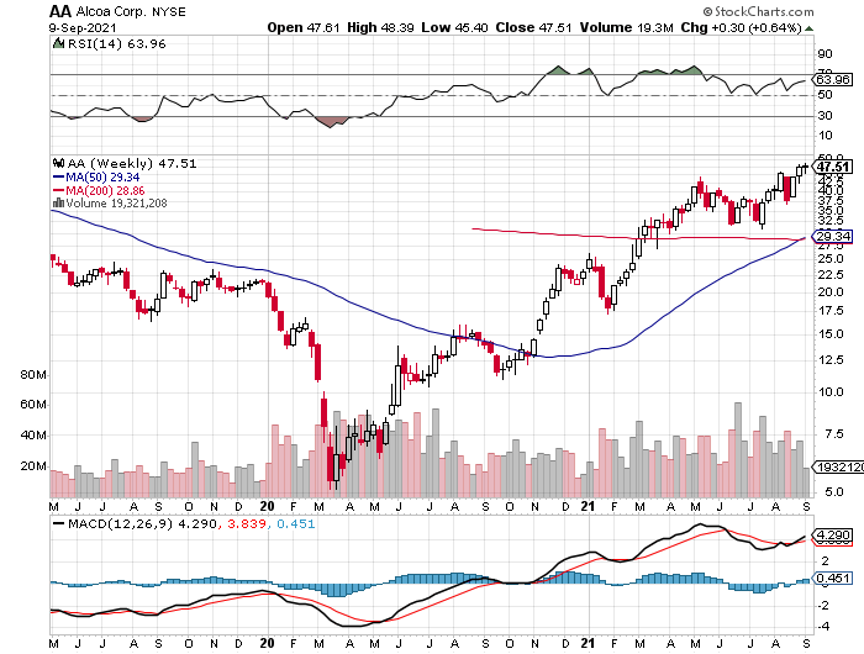
Q: Who is the biggest Aluminum producer?

A: Alcoa (AA) which we are a buyer on dips. By the way, if we do have to build 200,000 miles of long-distance transmission lines to cover the electrification of the US energy supply, all of that has to be made of aluminum. You don't use copper for long distances, you use aluminum (aluminum for you Brits).

Q: Would you buy Uber (UBER) at $40 today?

A: Probably, yes; it had a nice 40% correction. However, you are buying into the battle over gig workers—whether they should be treated as full-time or part-time workers. That is going to be a continuing drag on the stock until they win.

Q: What do you think of meme stocks?

A: You're better off buying a lottery ticket. Even with a low payoff, you get a 1:10 chance of winning on a $1 lottery ticket. Meme stocks could double or go to zero with no warning whatsoever—there’s no logic to this market at all.

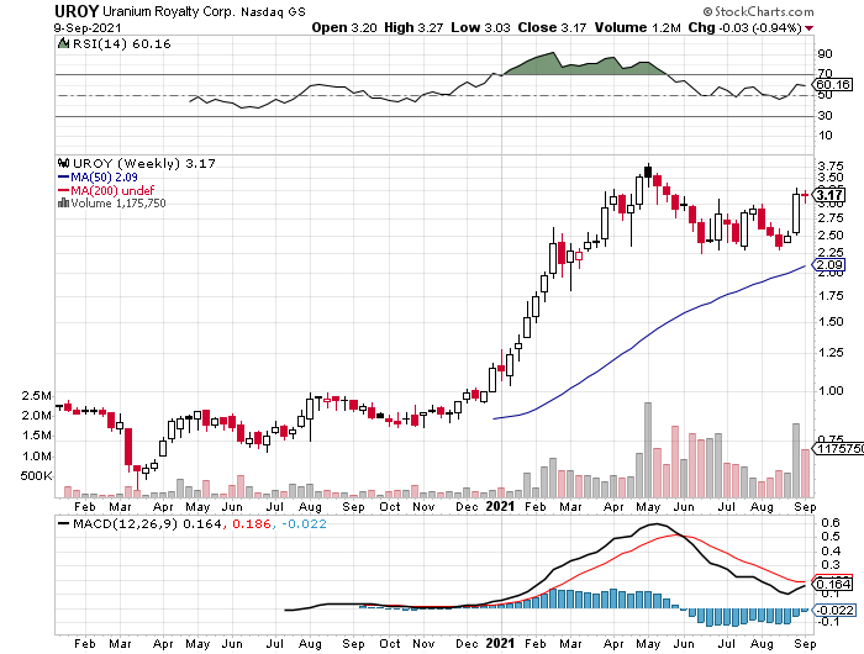
Q: What do you think of Uranium?

A: Three words come to mind: Chernobyl, Fukushima, and Three Mile Island. I think uranium's time has passed, even though China is building a hundred nuclear power plants. It’s just too expensive to compete against solar on a large scale and impossible to insure. If you still like Uranium though, the Uranium Royalty Corp. (UROY) has had a nice pop recently. But the issue is that nuclear technologies can’t keep up with solar and digital. And they blow up.

To watch a replay of this webinar with all the charts, bells, whistles, and classic rock music, just log in to www.madhedgefundtrader.com, go to MY ACCOUNT, click on GLOBAL TRADING DISPATCH, then WEBINARS, and all the webinars from the last ten years are there in all their glory.

Good Luck and Stay Healthy.

John Thomas
CEO & Publisher
The Diary of a Mad Hedge Fund Trader



https://www.madhedgefundtrader.com/wp-content/uploads/2021/09/john-thomas-roller-coaster.png 696 424 Mad Hedge Fund Trader https://madhedgefundtrader.com/wp-content/uploads/2019/05/cropped-mad-hedge-logo-transparent-192x192_f9578834168ba24df3eb53916a12c882.png Mad Hedge Fund Trader2021-09-10 10:02:392021-09-10 12:21:53September 8 Biweekly Strategy Webinar Q&A
Mad Hedge Fund Trader
August 26, 2021

Diary, Newsletter, Summary

Global Market Comments
August 26, 2021
Fiat Lux

Featured Trade:

(GOOGLE’S MAJOR BREAKTHROUGH IN QUANTUM COMPUTING),
(GOOGL), (IBM)

https://madhedgefundtrader.com/wp-content/uploads/2019/05/cropped-mad-hedge-logo-transparent-192x192_f9578834168ba24df3eb53916a12c882.png 0 0 Mad Hedge Fund Trader https://madhedgefundtrader.com/wp-content/uploads/2019/05/cropped-mad-hedge-logo-transparent-192x192_f9578834168ba24df3eb53916a12c882.png Mad Hedge Fund Trader2021-08-26 12:04:162021-08-26 15:31:31August 26, 2021
Mad Hedge Fund Trader

May 14, 2021

Tech Letter

Mad Hedge Technology Letter
May 14, 2021
Fiat Lux

Featured Trade:

(THE GOLDEN ERA OF CYBERSECURITY SPEND)
(PANW), (FTNT), (CRWD), (AMZN), (GOOGL), (ORCL), (MSFT), (IBM)

https://madhedgefundtrader.com/wp-content/uploads/2019/05/cropped-mad-hedge-logo-transparent-192x192_f9578834168ba24df3eb53916a12c882.png 0 0 Mad Hedge Fund Trader https://madhedgefundtrader.com/wp-content/uploads/2019/05/cropped-mad-hedge-logo-transparent-192x192_f9578834168ba24df3eb53916a12c882.png Mad Hedge Fund Trader2021-05-14 15:04:292021-05-14 19:57:25May 14, 2021

Mad Hedge Fund Trader

The Golden Era of Cybersecurity Spend

Tech Letter

The tech sector and the U.S. government are poised to engage in a more transactional relationship than ever before after the cybersecurity attack on Colonial Pipeline and the U.S. President’s executive order that followed it.  

This doesn’t mean just servicing an email account, but this will incorporate broad-based networking cloud infrastructure from the top-down and the bits in between.

Technology is just getting too good, too fast, and applicable to the point that it allows nefarious actors to wield it in a way that could damage and permanently set back sovereign nations and global business.

Don’t get me wrong, this was already in the works, and U.S. President Joe Biden has signaled his intent to ramp up the IT spent, but this cyberattack that is causing gas hoarding in parts of South Eastern United States is just the event to really kick this initiative into overdrive.

Colonial Pipeline paid the almost $5 million ransom payment that will encourage similar type of behavior in the long-term.

The Cyberattack also means that the relationship between U.S. tech and government could swerve from net negative of a relentless anti-monopoly narrative to one in which big tech will be anointed as the saviors to the foreign cyber-criminals and paid handsomely to defend the operations of private and state U.S. business.

The latter sounds much better to Silicon Valley than the former and the bigwigs in Silicon Valley might ostensibly push this marketing dynamic of internet protection to save their bacon and get the regulatory heat off their back.

Polarizing figures such as U.S. Senator Elizabeth Warren have made it a point to bash big tech whenever she sees fit which is more often than not.

CEOs like Facebook’s Mark Zuckerberg have tried a disingenuous approach of blaming China’s marginal data privacy policies as a way to protect its Instagram business and prevent growth monster TikTok, a Chinese app, from cannibalizing its cash cow business.

The origin of the Colonial Attack is purportedly to be Russian which would offer more fuel to the fire and create a ready-made reason for U.S. government to pour incremental billions into Silicon Valley and its array of almost multi-trillion dollar heavy hitters while protecting their business moat.

This event also means Tesla is toast in China. 

Officials in China banned Tesla vehicles from military bases and housing compounds amid concerns that potentially sensitive data from its onboard cameras could be collected and stored on Tesla servers.

Once the data privacy genie is out of the bottle, it’s hard to contain the fallout and Tesla will need to adopt a whack-a-mole strategy in China which often proves futile in the long-term.

The United States faces persistent and increasingly sophisticated malicious cyber campaigns that threaten the public sector, the private sector, and ultimately the American people’s security and privacy. 

This is all just the beginning, a little taste of what’s on the menu.

Collaborating with U.S tech companies to improve its efforts to identify, deter, protect against, detect, and respond to these actions and actors is now a must. 

The Federal Government must also carefully examine what occurred during any major cyber incident and apply lessons learned.

Incremental improvements will not offer the security Americans need; instead, the Federal Government needs to make bold changes and significant investments in order to defend the vital institutions that underpin the American way of life. 

It’s the authorities’ job and to offer resources to protect and secure its computer systems, whether they are cloud-based, on-premise, or hybrid. 

The scope of protection and security must include systems that process data (information technology (IT)) and those that run the vital machinery that ensures our safety (operational technology (OT)).

Contracts will be signed with IT and OT service providers to conduct an array of day-to-day functions on Federal Information Systems.  These service providers, including cloud service providers, have unique access to and insight into cyber threat and incident information on Federal Information Systems. 

Increasing the sharing of information about such threats, incidents, and risks, and enabling more effective defense of agencies’ systems and of information collected, processed, and maintained by or for the Government are necessary steps to accelerating incident deterrence, prevention, and response efforts.

The executive order signed by Biden shows that within 60 days, the Director of the Office of Management and Budget will hash out “language for contracting with IT and OT service providers and recommend updates.”

The U.S. must take decisive steps to modernize its approach to cybersecurity and must increase the Federal Government’s visibility into threats while protecting privacy and civil liberties.

Money will be spent to accelerate movement to secure cloud services, including Software as a Service (SaaS), Infrastructure as a Service (IaaS), and Platform as a Service (PaaS); centralize and streamline access to cybersecurity data to drive analytics for identifying and managing cybersecurity risks; and invest in both technology and personnel to match these modernization goals.

Prioritizing money spent on addressing “critical software” will translate into huge paydays to many cloud providers and not just the big guys.

Most recently, The Central Intelligence Agency awarded its long-awaited Commercial Cloud Enterprise, or C2E, contract to five companies—Amazon Web Services (AMZN), Microsoft (MSFT), Google (GOOGL), Oracle (ORCL), and IBM (IBM).

No doubt they will be vying for more government procurement contracts since they already have one hand in the honey jar.

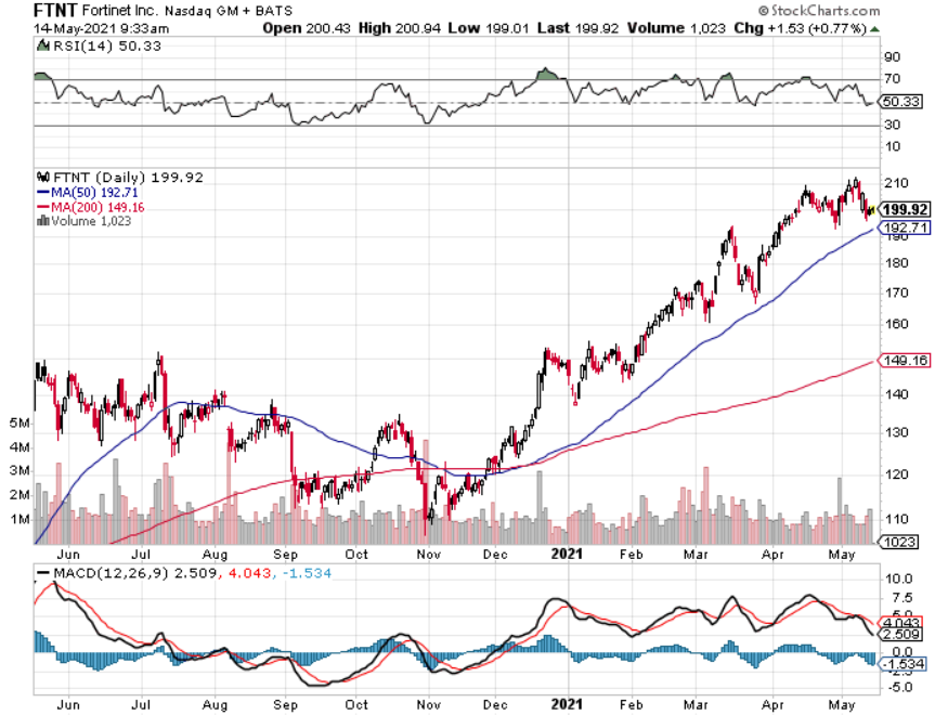
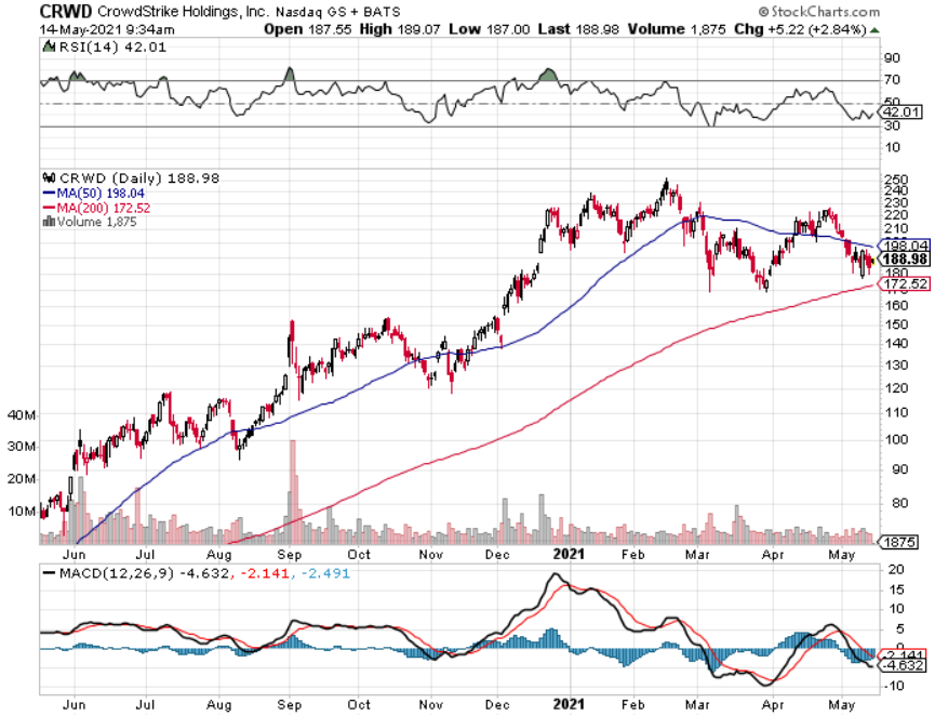
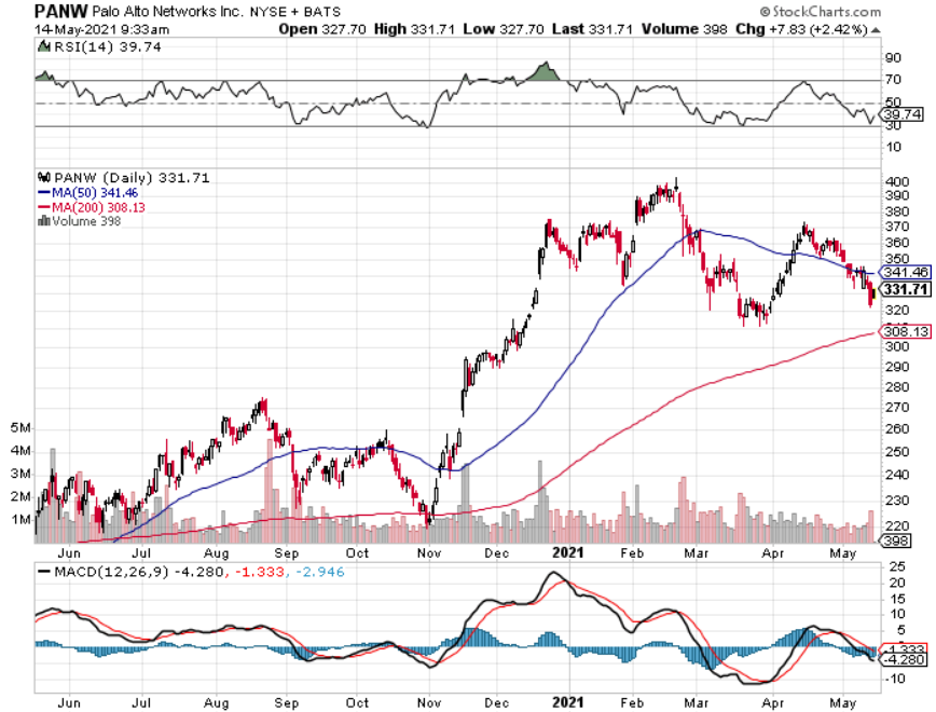
At a lower level, readers should consider buying cybersecurity companies Fortinet (FTNT), Palo Alto Networks, Inc. (PANW), and CrowdStrike Holdings, Inc. (CRWD), but these smaller names come with more volatility.

This event really anoints the impending future as the golden era of IT cybersecurity spend and it will never go back to what it once was.

Paying for IT protection is here for the long haul and this goes for private companies and public institutions.  

Nearly 80% of senior IT and IT security leaders believe their organizations lack sufficient protection against cyberattacks despite increased IT security investments made in 2020 to deal with distributed IT and work-from-home challenges, according to a new IDG Research Services survey commissioned by Insight Enterprises.

There will be a huge boom in IT cybersecurity spend because CEOs don’t want to be the idiot that allowed cybercriminals to hijack their whole business.

That’s the fastest way to end a management career.

Last time I checked, it’s a hard slog up the corporate ladder to land a prime CEO gig and it’s not getting any easier.

cybersecurity


https://madhedgefundtrader.com/wp-content/uploads/2019/05/cropped-mad-hedge-logo-transparent-192x192_f9578834168ba24df3eb53916a12c882.png 0 0 Mad Hedge Fund Trader https://madhedgefundtrader.com/wp-content/uploads/2019/05/cropped-mad-hedge-logo-transparent-192x192_f9578834168ba24df3eb53916a12c882.png Mad Hedge Fund Trader2021-05-14 15:02:252021-05-21 00:04:48The Golden Era of Cybersecurity Spend
Mad Hedge Fund Trader

April 21, 2021

Tech Letter

Mad Hedge Technology Letter
April 21, 2021
Fiat Lux

Featured Trade:

(BUY OR SELL FIRST QUARTER TECH EARNINGS?)
(IBM), (MU), (SAMSUNG), (ZM), (GOOGL)

https://madhedgefundtrader.com/wp-content/uploads/2019/05/cropped-mad-hedge-logo-transparent-192x192_f9578834168ba24df3eb53916a12c882.png 0 0 Mad Hedge Fund Trader https://madhedgefundtrader.com/wp-content/uploads/2019/05/cropped-mad-hedge-logo-transparent-192x192_f9578834168ba24df3eb53916a12c882.png Mad Hedge Fund Trader2021-04-21 14:04:002021-04-21 20:10:50April 21, 2021
Mad Hedge Fund Trader

Buy or Sell First Quarter Tech Earnings?

Tech Letter

We are on the cusp of tech earnings which could either take us on the next leg up or leg down.

Going off of data points that we are getting from around the world, it’s clear that the secular bull market in big technology is as healthy as ever.

A few weeks ago, South Korea’s behemoth Samsung Electronics sounded off when it said first-quarter profit likely rose 44% because of the surge in sales of smartphones and TVs.

The work-from-home economy has made technology stocks the ultimate winner and now we need to assess what will happen to these very stocks in 2021.

Many analysts out there see an ongoing correction in names such as videoconferencing software company Zoom (ZM) which is going through a drawn-out consolidation phase after hyper-growth in their products last year.

That is not a bad thing, but frustrating in the short-term.

Tech stocks are renowned for getting ahead of itself.

Waiting for tech stocks to grow into their valuation is no fun, however, ultimately, there is an avalanche of money piling into this sector because it is fundamentally underpinned by cash cow secular trends.

Part of that thesis also is applied internationally to giants like Samsung, the South Korean technology giant forecast January-March operating profit at $8.32 billion.

Samsung’s flagship Galaxy S21 smartphone series outsold the previous version by a two-to-one margin in the six weeks since its January launch.

Profit in Samsung’s television set and home appliance business also likely more than doubled due to continued stay-at-home demand.

Cross-town TV and home appliance rival LG Electronics announced its largest-ever preliminary quarterly operating profit for January-March.

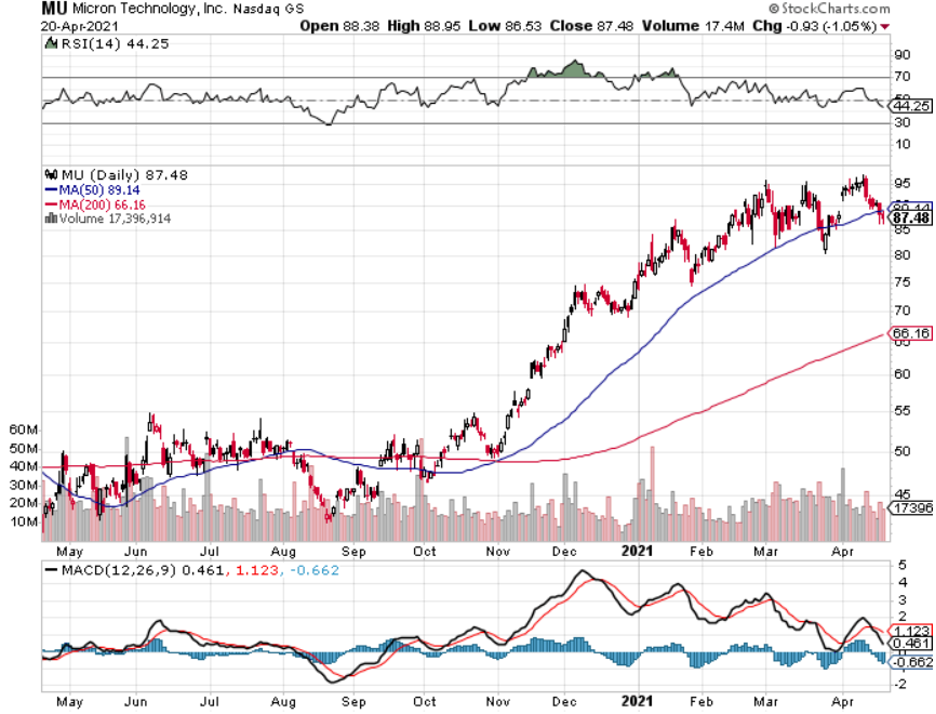
The secular health is not only confined to Korea, as U.S. memory chip peer Micron Technology last month forecast third-quarter revenue above analyst estimates due to rising demand brought about by a global shift to remote work.

The price of DRAM chips widely used in laptops and other computing devices rose 5.3% in January-March from the previous three months.

Samsung will invest about 10 trillion won in its chip contract manufacturing business this year, compared to about 6 trillion won last year.

In addition to the performance, regulation is now set to offer another helping hand to U.S. tech with two top White House aides hosting a meeting on how to better equip the state of the U.S. supply chain.

Samsung is considering a new $17 billion chip plant in the United States.

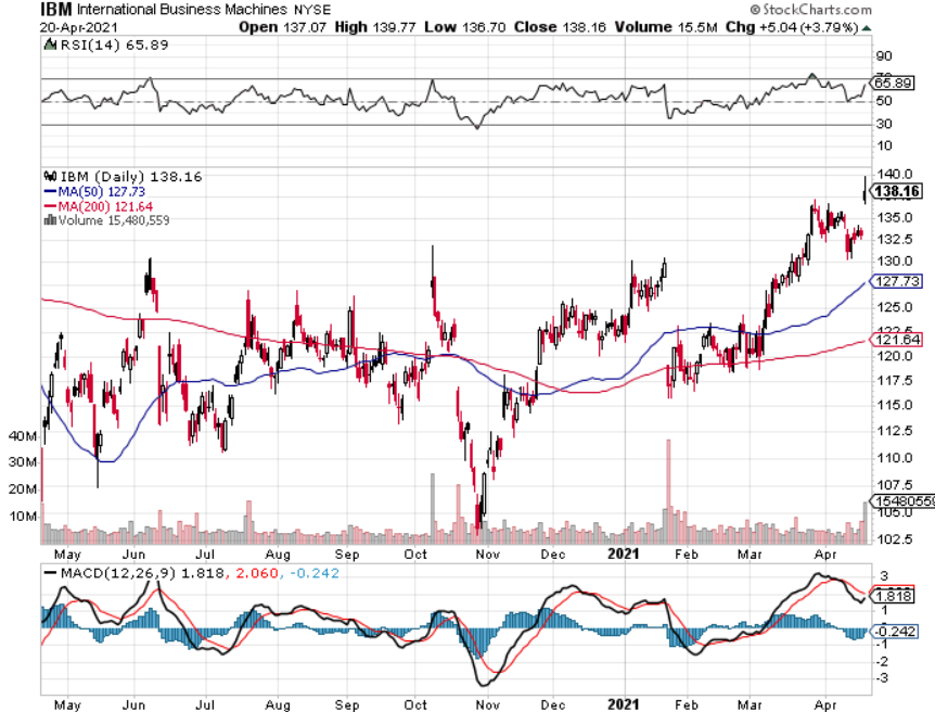
On the night before an earnings flurry, we also got word from IBM that they finally reversed 4 years of declining revenue to post 1% revenue growth.

Like many big tech groups, IBM has jumped on the bandwagon of clients digitally transforming their businesses, using hybrid cloud and AI to capture new growth opportunities, increase productivity and create operating flexibility.

Their revenue performance this quarter reflects this. Global business service (GBS) cloud revenue growth accelerated to almost 30%, doubling its growth rate from the prior quarter with strong growth across the portfolio.

The numbers reflect expanding practices with ecosystem partners like Salesforce and Adobe and strong momentum in their acquisition of Red Hat.

IBM has doubled the number of Red Hat client engagements from the prior year to over 150, working with companies such as HBO, Marriott, Vodafone, and Honda.

They’ve now signed $2 billion of business in their Red Hat practice inception to date.

Across these, IBM's cloud revenue was up 18% in the quarter and over the last 12 months and now stands at over $26 billion for the last year.

Like many other tech firms, employment hiring is expanding with IBM hiring thousands of people in the past quarter.

Like other firms as well, M&A is an often-utilized growth strategy with IBM closing on six acquisitions since mid-December.

They are adding go-to-market and delivery capabilities in GBS, and technical skills in Red Hat. And they’re increasing R&D in areas like AI and quantum to drive innovation.

Across cloud and cognitive software, IBM continues to increase subscription and support renewal rates, driving the record deferred income levels.

Red Hat continued solid performance with normalized revenue growth of 15%, led by Red Hat Enterprise Linux and OpenShift, both of which continue to gain share.

Even IBM, the laggard of tech, is improving their balance sheet by whittling down $3 billion from year-end, their debt was down $5 billion. They have now reduced debt by about $17 billion from the peak.

IBM even still delivers shareholders a nice dividend.

The takeaways from IBM and Samsung will largely apply to many of the tech companies that are about to report earnings.

Hiring is up because the business is doing so well.

Even if these legacy operations are only growing minimally in IBM, their cloud operations are far and away the highest growth element in their portfolio, and the performance of Red Hat indicates that.

The secular tailwinds are indeed helped by the business environment undergirded by a work-from-home assumption which is why companies like Samsung are posting record sales in tablets, smartphones, and can’t keep up with the demand for chips.

We are getting indication that much of the transformation into the 2020 digital economy is here to stay, but the issue in April is that although companies are as healthy as could be, firms are now facing Himalayan-like comparisons with last year.

Last year, April was a time when technology took off like a scalded chimp, and fast forward to 2021, many tech firms won’t be able to beat those year-over-year numbers they posted during peak lockdown business.

What I expect is for many tech firms to announce that comparisons were tough to beat because of a once in a 100-year event that locked down most of the world, but many tech firms will reaccelerate growth after a period of earnings consolidation.

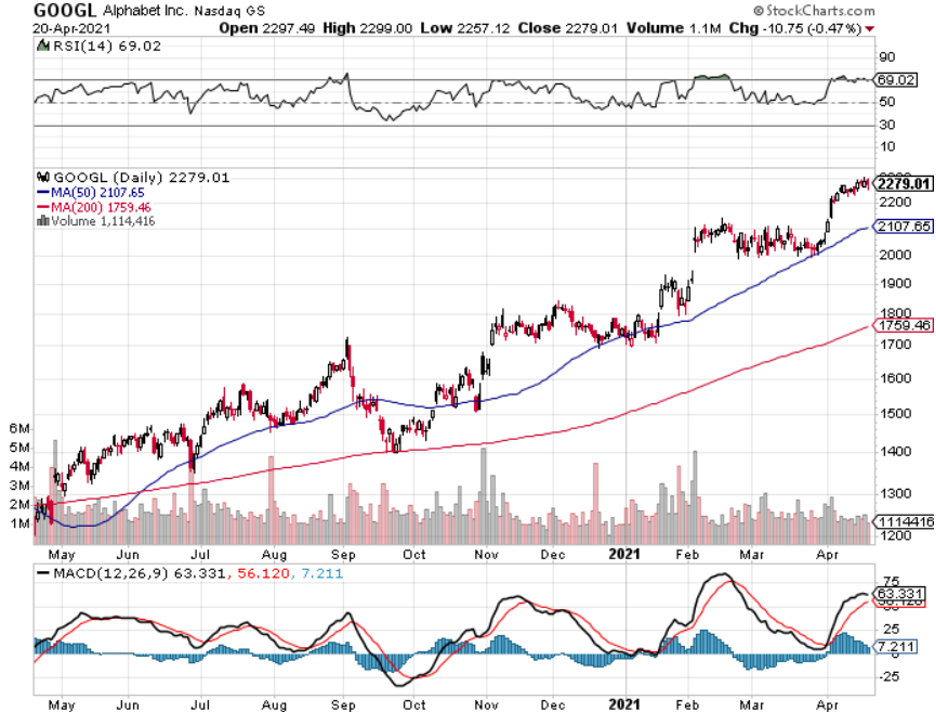
Expectations have gotten a little stretched and outperformers like Alphabet (GOOGL) are already up 25% year to date, but I can argue that the guys at Google are making miracles and are surpassing even astronomically high expectations.

That won’t be the case for other tech companies that will need miracle performance to outdo exorbitant forecasts, but just quite aren’t there like Google.

Consolidation through sideways price action could take hold in the second quarter as many tech firms need time to recalibrate so they can reaccelerate in the second half of the year which they indeed will.

IBM


IBM


https://madhedgefundtrader.com/wp-content/uploads/2019/05/cropped-mad-hedge-logo-transparent-192x192_f9578834168ba24df3eb53916a12c882.png 0 0 Mad Hedge Fund Trader https://madhedgefundtrader.com/wp-content/uploads/2019/05/cropped-mad-hedge-logo-transparent-192x192_f9578834168ba24df3eb53916a12c882.png Mad Hedge Fund Trader2021-04-21 14:02:212021-04-27 01:56:50Buy or Sell First Quarter Tech Earnings?
Mad Hedge Fund Trader

December 16, 2020

Tech Letter

Mad Hedge Technology Letter
December 16, 2020
Fiat Lux

Featured Trade:

(THE NEW SALESFORCE)
(NOW), (CRM), (SAP), (ORCL), (IBM), (MSFT)

https://madhedgefundtrader.com/wp-content/uploads/2019/05/cropped-mad-hedge-logo-transparent-192x192_f9578834168ba24df3eb53916a12c882.png 0 0 Mad Hedge Fund Trader https://madhedgefundtrader.com/wp-content/uploads/2019/05/cropped-mad-hedge-logo-transparent-192x192_f9578834168ba24df3eb53916a12c882.png Mad Hedge Fund Trader2020-12-16 12:04:142020-12-16 12:35:17December 16, 2020
Mad Hedge Fund Trader

The New Salesforce

Tech Letter

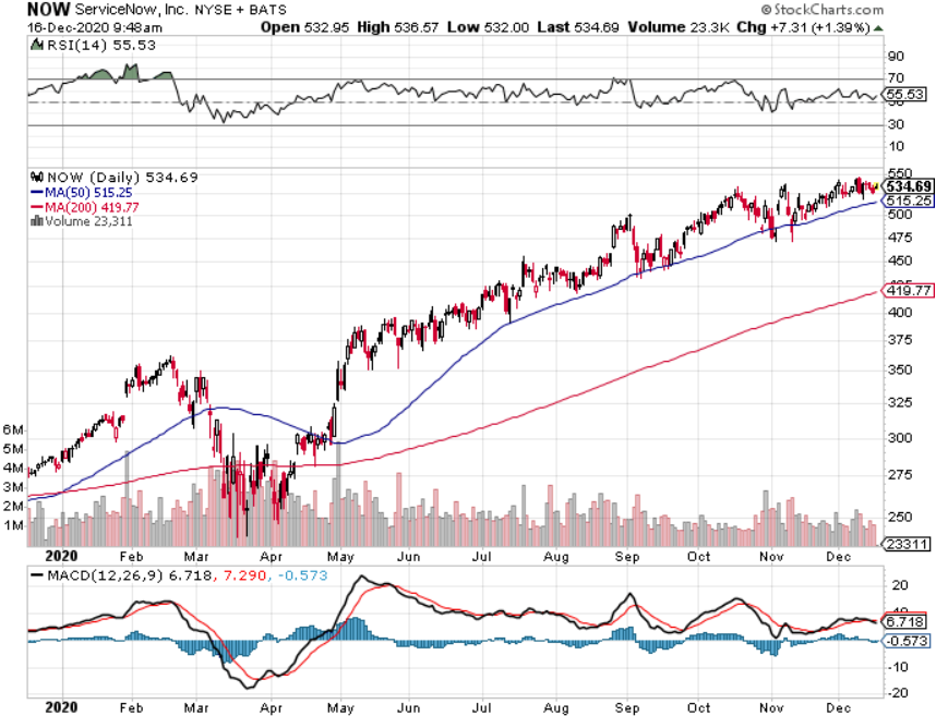
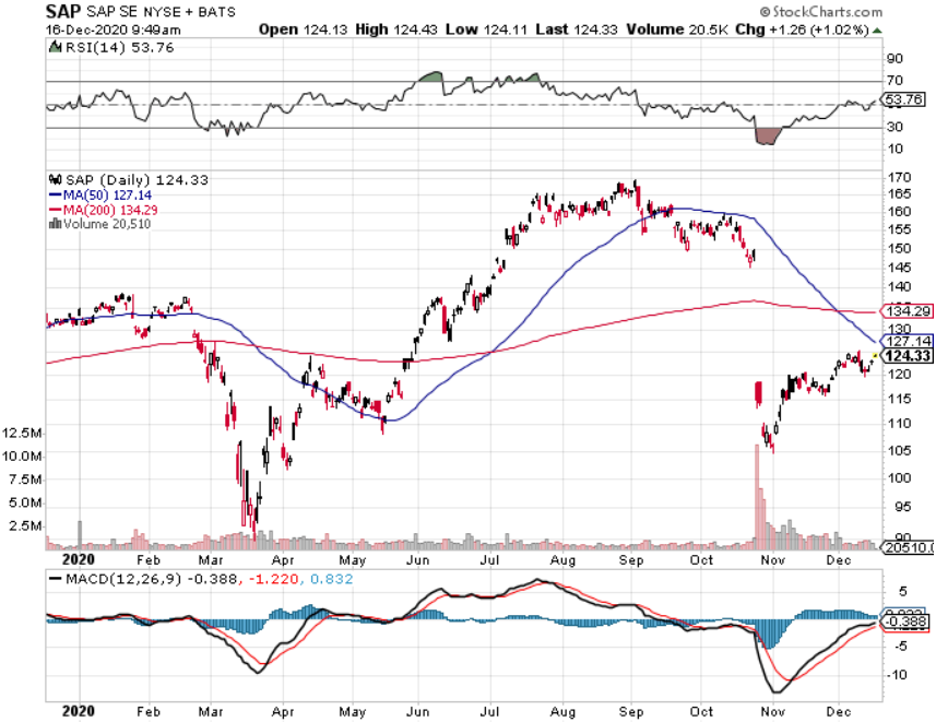
During Bill McDermott’s leadership as CEO, German software firm SAP's market value increased from $39 billion to $156 billion.

No doubt that this experience at SAP paved the way to become one of the fastest-growing major cloud vendors in 2020.

McDermott is now CEO of ServiceNow (NOW), a company that offers specific IT solutions. It allows you to manage projects and workflow, take on essential HR functions, and streamline your customer interaction and customer service. It does all of this, thanks to a comprehensive set of ServiceNow web services, as well as various plug-ins and apps.

Their market value has doubled to $100 billion and this is just the beginning.

ServiceNow almost doesn’t exist after numerous attempts to be acquired, like the time it was almost sold to VMware for $1.5 billion.

Company founder Fred Luddy, who is now chairman, and the board of directors were intrigued by the VMware offer, but venture-capital firm Sequoia Capital argued that $1.5 billion wasn’t a premium at that time let alone market rate for this burgeoning cloud player.

Then-CEO Frank Slootman was eventually replaced by former eBay Inc. (EBAY) CEO John Donahoe in February 2017, who took the company to $3.46 billion in annual 2019 sales.

Donahoe then bolted for Nike Inc. (NKE), and McDermott joined from SAP, locking in the firm for a new era of meteoric growth.

ServiceNow is now on its way to become the defining enterprise-software company of the 21st century and if you look at their position in the market today, they’re the only born-in-the-cloud software company to have surpassed $100 billion market cap without large-scale M&A.

This underdog cloud company whose automation software is deployed to improve productivity is leading to what is known as a “workflow revolution.”

Their set of software tools fused with the sudden emphasis on digital tracking of employees and business systems — has played into ServiceNow’s strengths.

The seismic shift is accelerating: By 2025, most of the millennial generation will work from home permanently, based on internal company reports.

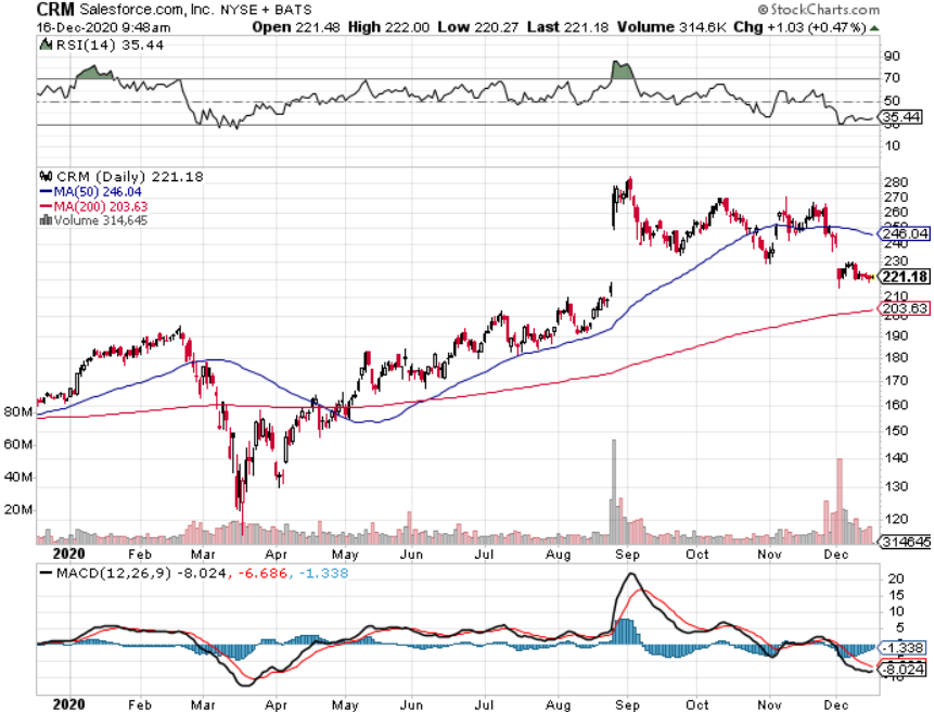
It expects revenue of $4.49 billion in fiscal 2020 and still has a mountain to climb with revenue of just 20% of Salesforce, one-sixth of SAP, and one-ninth of Oracle Corp. (ORCL).

But ServiceNow is catching up as corporations and government agencies pour billions of dollars into their digital infrastructures.

So far, more than $3 trillion has been invested in digital transformation initiatives. Yet only 26% of the investments have delivered meaningful returns on investment.

This is launching the workflow revolution, where ServiceNow is the missing cog that can integrate systems, silos, departments, and processes, all in simple, easy-to-use cross-enterprise workflows.

A demand surge for “workflow automation” technology went parabolic in 2020 and is part of the puzzle helping ServiceNow sustain 25%-plus revenue growth.

ServiceNow most recently raised its full-year guidance after disclosing it has 1,012 customers with more than $1 million in annual contract value, up 25% year-over-year.

That included 41 such transactions in the third quarter, with new customers such as the U.S. Senate and New York City’s Mount Sinai Hospital.

ServiceNow raised guidance for the full year on subscription-revenue range to between $4.257 billion and $4.262 billion, up 31% year-over-year in constant currency.

The company has detailed a goal of $10 billion in annual sales as something feasible in the mid-term and its bevy of strategic relationships will help, like in July, Microsoft Corp. (MSFT) expanded its relationship with ServiceNow; shortly thereafter, Accenture (CAN) and IBM created new business units in partnership with ServiceNow to develop new opportunities.

In March, ServiceNow added a new computing platform, Orlando, that added artificial intelligence and machine learning that lets the MGM Macau casino resort, for example, use a virtual agent to automate and handle repetitive requests.

The integration of virtual agents will supplement casino employees with 24/7 support experiences when human staff is unavailable.

After hitting the $100 billion market cap, McDermott has identified M&A as the catalyst to take NOW higher with the CEO squarely looking at artificial intelligence targets.

ServiceNow has enabled firms to unite front, middle and back office functions, increasing productivity during this time period when speed and simplicity matter the most to digital customers.

I would describe NOW as a baby brother to Salesforce and its entrance into the first and most likely continuous acquisition cycle will most probably result in higher share prices.

ServiceNow turns out to be placed in the perfect position benefitting from Americans moving their careers online with the added effect of the broad-based secular digital migration to remote work.

As long as this firm is generating revenue in the mid-20% annually, it will be a constant buy-the-dip candidate for the foreseeable future regardless of whether there is a pandemic or not.

servicenow

https://madhedgefundtrader.com/wp-content/uploads/2019/05/cropped-mad-hedge-logo-transparent-192x192_f9578834168ba24df3eb53916a12c882.png 0 0 Mad Hedge Fund Trader https://madhedgefundtrader.com/wp-content/uploads/2019/05/cropped-mad-hedge-logo-transparent-192x192_f9578834168ba24df3eb53916a12c882.png Mad Hedge Fund Trader2020-12-16 12:02:122020-12-18 23:18:13The New Salesforce
Mad Hedge Fund Trader

October 14, 2020

Diary, Newsletter, Summary

Global Market Comments
October 14, 2020
Fiat Lux

Featured Trade:

(GOOGLE’S MAJOR BREAKTHROUGH IN QUANTUM COMPUTING),
(GOOGL), (IBM)

https://madhedgefundtrader.com/wp-content/uploads/2019/05/cropped-mad-hedge-logo-transparent-192x192_f9578834168ba24df3eb53916a12c882.png 0 0 Mad Hedge Fund Trader https://madhedgefundtrader.com/wp-content/uploads/2019/05/cropped-mad-hedge-logo-transparent-192x192_f9578834168ba24df3eb53916a12c882.png Mad Hedge Fund Trader2020-10-14 07:04:402020-10-13 18:20:48October 14, 2020
Mad Hedge Fund Trader

August 20, 2020

Diary, Newsletter, Summary

Global Market Comments
August 20, 2020
Fiat Lux

Featured Trade:

STORAGE WARS),
(MSFT), (IBM), (CSCO), (SWCH),

https://madhedgefundtrader.com/wp-content/uploads/2019/05/cropped-mad-hedge-logo-transparent-192x192_f9578834168ba24df3eb53916a12c882.png 0 0 Mad Hedge Fund Trader https://madhedgefundtrader.com/wp-content/uploads/2019/05/cropped-mad-hedge-logo-transparent-192x192_f9578834168ba24df3eb53916a12c882.png Mad Hedge Fund Trader2020-08-20 09:04:042020-08-20 09:55:48August 20, 2020
Page 3 of 8‹12345›»

Legal Disclaimer

There is a very high degree of risk involved in trading. Past results are not indicative of future returns. MadHedgeFundTrader.com and all individuals affiliated with this site assume no responsibilities for your trading and investment results. The indicators, strategies, columns, articles and all other features are for educational purposes only and should not be construed as investment advice. Information for futures trading observations are obtained from sources believed to be reliable, but we do not warrant its completeness or accuracy, or warrant any results from the use of the information. Your use of the trading observations is entirely at your own risk and it is your sole responsibility to evaluate the accuracy, completeness and usefulness of the information. You must assess the risk of any trade with your broker and make your own independent decisions regarding any securities mentioned herein. Affiliates of MadHedgeFundTrader.com may have a position or effect transactions in the securities described herein (or options thereon) and/or otherwise employ trading strategies that may be consistent or inconsistent with the provided strategies.

Copyright © 2026. Mad Hedge Fund Trader. All Rights Reserved. support@madhedgefundtrader.com
Scroll to top