Mad Hedge Biotech and Healthcare Letter
November 11, 2021
Fiat Lux
Featured Trade:
(A HIGH-QUALITY DIVIDEND STOCK WITH MORE ROOM TO GROW)
(LLY), (INCY), (GILD), (ABBV), (PFE), (NVO), (BIIB)

Mad Hedge Biotech and Healthcare Letter
November 11, 2021
Fiat Lux
Featured Trade:
(A HIGH-QUALITY DIVIDEND STOCK WITH MORE ROOM TO GROW)
(LLY), (INCY), (GILD), (ABBV), (PFE), (NVO), (BIIB)
Investors can enjoy long-term recurring income and stability with dividend stocks. However, paying out dividends is largely discretionary.
Each business frequently determines whether it’s in a good position to hand out part of its profits to shareholders.
One method to assess a dividend’s safety is reviewing a company’s history and whether it makes regular payouts. The longer its track record shows a consistent payment, the more preferable the business.
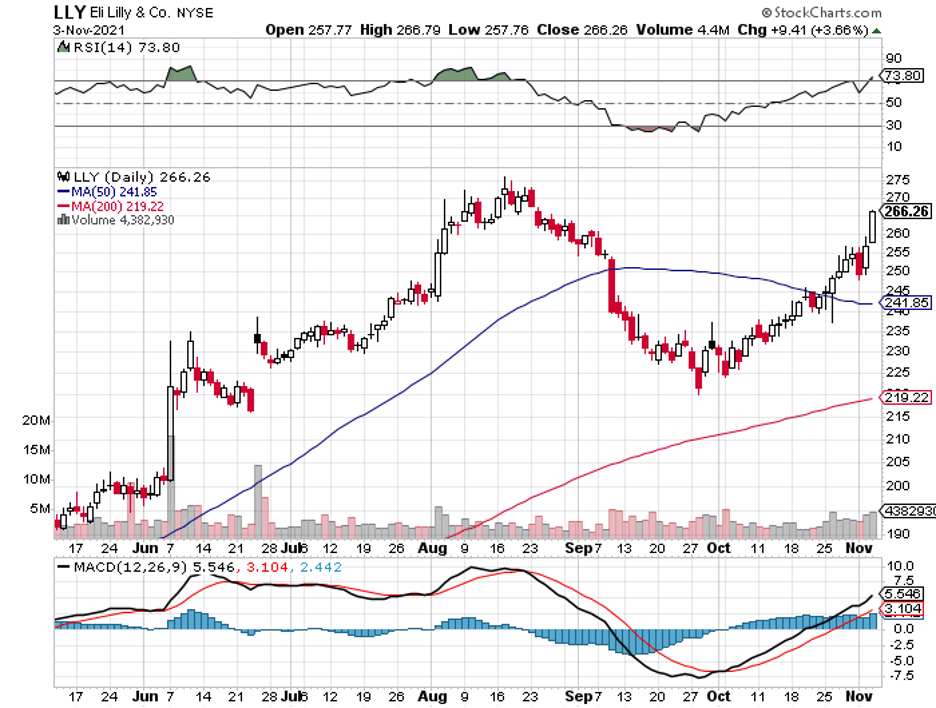
There’s a stock particularly known for paying dividends every year for over a century in the biotechnology and healthcare sector: Eli Lilly (LLY).
While Eli Lilly’s dividend yield is only 1.5% at its current share price, which is a bit over the S&P 500’s average reported at less than 1.3%, the company has been paying out dividends since 1885.
Apart from its consistent payouts throughout the years, Eli Lilly also holds promising potential for future hikes.
At the moment, the quarterly payout of Eli Lilly is $0.85, which is 75% higher than its 2015 payout of $0.49.
This number can still climb thanks to its robust revenue growth of 19.2% year over year, with its current approved drug portfolio generating $13.55 billion in the first six months of 2021.
In the first two quarters of the year alone, several products recorded year-over-year sales growth of over 20%.
Eli Lilly isn’t content in growing its dividend, though. It’s also working on expanding its drug portfolio.
Among its existing drugs, the company has been maximizing Olumiant to include more indications.
One of the recent advancements involving Olumiant is Eli Lilly’s work with Incyte (INCY), which utilizes the drug as a treatment for COVID-19 patients.
In fact, the FDA has recently approved the use of Olumiant with or without the need to combine it with Gilead Sciences (GILD) Remdesivir.
However, Olumiant’s application as a COVID-19 treatment isn’t the most promising expansion for this drug.
Just recently, Eli Lilly and Incyte disclosed that Olumiant could be used as a treatment for an autoimmune disorder more commonly known as alopecia areata—an indication that could very well transform the drug into the company’s next blockbuster.
In a nutshell, Olumiant can help alopecia patients regrow their hair at a more rapid speed and consistent rate than other competitors.
So far, the drug has recorded an 80% hair growth among those who tested it.
In the previous months, the FDA included Olumiant and AbbVie’s (ABBV) Rinvoq in the list of JAK inhibitors that needed to carry a warning label sharing their severe potential side effects like blood clots and even cancer.
Despite this, Eli Lilly’s product proved to be safe for alopecia patients.
If approved for alopecia, Olumiant could become a groundbreaking treatment sought after by roughly 147 million people across the globe who suffer from the condition.
For context, the global market for alopecia is projected to grow in revenue from $ 7.6 billion in 2020 to reach over $ 14.2 billion by 2028 annually.
Alopecia areata, which is the target market of Eli Lilly, is expected to hold about 35% of the total. This puts the addressable market for Olumiant at $5 billion by 2028.
Considering that another name has been working to dominate the market, Pfizer’s (PFE) Cibingo, we can realistically assume that Eli Lilly will get at least 15% of the market share worldwide.
This would mean roughly $750 million in yearly revenue for Olumiant’s alopecia market alone.
Other than its work on alopecia areata, Eli Lilly has another potential blockbuster. This time, the treatment is targeting the diabetes sector.
The company has an up-and-coming treatment called Tirzepatide, which could not only expand Eli Lilly’s diabetes market share but also provide a strong competitor against Novo Nordisk’s (NVO) top-selling Ozempic.
Tirzepatide is the successor of Eli Lilly’s bestseller Trulicity, which logged $2.99 billion in the first half of 2021 and is set to lose patent protection by 2027.
Looking at Tirzepatide’s trajectory, the drug is projected to reach peak annual sales worth $10 billion—an amount that could easily offset the gradual decline in sales by Trulicity.
Even the company’s breast cancer drug, Verzenio, is set to show off impressive growth soon. In the first half of 2021, the treatment raked in $610 million in sales, demonstrating a 53.8% increase year-over-year.
Considering Eli Lilly’s efforts to distinguish its breast cancer treatment from Pfizer’s Ibrance, Verzenio is anticipated to generate $4.6 billion in annual sales by 2024.
Another exciting development is Eli Lilly’s Alzheimer’s disease treatment Donanemab.
Although Phase 3 data are expected to be released in 2023, this candidate is already reported to be a superior treatment than Biogen’s (BIIB) controversial Aduhelm.
These are some of the results of Eli Lilly’s efforts to continue expanding in the diabetes area, as seen in its ramped-up R&D spending.
So far, the company boosted its research investment by 21% year-over-year to reach $3.36 billion.
While doing this isn’t exactly a guarantee of commercial success, it’s undoubtedly a solid strategy to protect and enhance its pipeline.
Overall, Eli Lilly is a high-quality stock with a verifiable and impressive history of innovation.
Given the promising lineup of approved drugs and pipeline candidates of Eli Lilly, it’s reasonable to expect roughly a 15% yearly earnings growth from the company over the next 5 years.
Mad Hedge Biotech & Healthcare Letter
September 29, 2020
Fiat Lux
(WHY THE PANDEMIC ISN’T STOPPING ELI LILLY’S WINNING STREAK)
(LLY), (PFE), (MRNA), (AZN), (GILD), (INCY), (REGN), (NVO), (BIIB)
Vaccine developers have taken center stage on Wall Street since the pandemic started, with companies like Pfizer (PFE), Moderna (MRNA), and AstraZeneca (AZN) enjoying soaring share prices for months now.
One of the primary reasons for this popularity is the US government’s Operation Warp Speed, which poured $11 billion into its chosen COVID-19 vaccine programs.
Realistically, the cold, hard truth is that a COVID-19 vaccine will not be the panacea for this deadly virus.
While the vaccine developers are rushing to complete their clinical trials, more people continue to die from COVID-19.
With almost a million deaths and over 30 million cases recorded to date, the need for treatments is more pressing than ever.
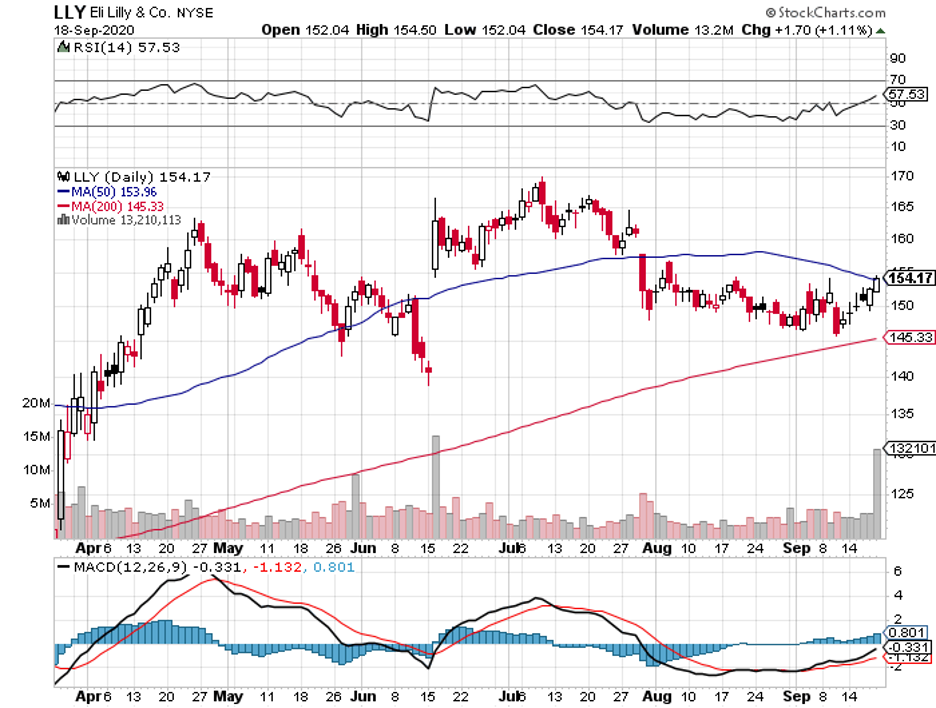
Among the companies working on COVID-19 treatments, one name has been quietly making headway: Eli Lilly (LLY).
So far, the company has two potential treatments that can cure COVID-19 patients.
One is its rheumatoid arthritis drug Olumiant, which the company developed with biotechnology firm Incyte (INCY).
Results showed that the treatment can lessen the days patients stay in hospitals when combined with Gilead Sciences’ (GILD) Remdesivir. Not only that, the combination also reduced the severity of the disease and allowed for less-intensive hospital care.
Once all the results have been tested and validated, Eli Lilly will seek an emergency authorization from the FDA.
Aside from Eli Lilly and Gilead Sciences, Pfizer is also working on a potential COVID-19 treatment. Although not much is known about the New York biopharmaceutical giant’s version of the antiviral drug, the target approval date is set in the second half of 2021.
Riding on the momentum of its successful Olumiant trials, Eli Lilly is working to extend its winning streak by being one of the first to develop a preventive COVID-19 treatment specifically designed for elderly patients.
Eli Lilly is developing the potent monoclonal antibody treatment, called LY-CoV555, with AbCellera. The Phase 3 trials conducted in nursing homes were launched in August and the company expects the results to be available by March 2021.
While using monoclonal antibody treatment is groundbreaking technology, Eli Lilly is not alone in the field.
The company faces considerable competition from other healthcare giants like AstraZeneca and Regeneron (REGN).
Nonetheless, the antibody market is massive enough for sharing, with this market estimated to rake in as much as $10 billion annually.
Conservatively speaking and assuming that Eli Lilly fails to attract major market share, there’s still a decent chance that the sales of LY-CoV555 can go beyond $1 billion every year starting 2022.
Outside its COVID-19 programs, Eli Lilly is a dominant player in the diabetes market, with Trulicity leading the charge along with up and coming products like Humalog, Jardiance, Basaglar, and Humulin.
The company is expected to attract at least 13.8% of the market share this year, ranking second only to Novo Nordisk (NVO) and its 30.7% hold of the sector.
In the second quarter earnings report this year, Trulicity sales showed a 20% year-over-year jump to reach $1.2 billion in that period.
This is an impressive performance as investors expect the diabetes drug to surpass its 2019 sales of $4.1 billion.
Although Trulicity delivers substantial sales, it is remarkable that Eli Lilly is not overly reliant on the drug.
In fact, the diabetes drug’s total revenue only accounts for less than one-fifth of the company’s overall sales.
To boost its presence in the diabetes market, Eli Lilly added another potential blockbuster in its pipeline: Tirzepatide.
This drug is projected to become “best-in-class for lowering glucose, weight loss, and cardiovascular risk.”
To date, Tirzepatide is undergoing Phase 3 trials to test it on diabetes, obesity, and heart disease. It is also queued in Phase 2 trials for the liver disease NASH.
The potential of Tirzepatide is hinged not only in being a diabetes drug but more importantly, as an obesity drug.
If successful, Tirzepatide is estimated to hit peak sales of $10 billion annually, with the number trailing by 2025 to record $3.7 billion.
Another potential moneymaker for Eli Lilly is Verzenio, which showed an impressive 56% increase in sales in the second quarter to contribute $208.6 million.
In a bid to expand its oncology pipeline, Eli Lilly is looking into adding a new indication for Verzenio as well.
The company recently released the promising results for the oral tablet as an early-stage breast cancer treatment.
If successful, this drug will be in direct competition against an industry leader, Pfizer’s Ibrance.
In terms of its neurology pipeline, Eli Lilly has also been active in developing its own Alzheimer’s program.
While most of the treatments are still in the early stages, the success of Biogen’s (BIIB) Aducanumab could provide a much-needed boost for Eli Lilly’s own Alzheimer’s candidates.
Eli Lilly offers an extensive product line that goes beyond its COVID-19 programs, underscoring the company’s resilience even during the pandemic.
After dominating in the diabetes sector, the company focused its efforts on becoming one of the top players in the oncology, immunology, and neurology fields.
Consequently, Eli Lilly has been consistent in posting first-rate earnings and revenue growth since 2017.
Eli Lilly markets treatments for life-threatening and chronic conditions, with the company owning the rights to products with consistently growing sales. It also has the ability to continuously boost its revenue stream thanks to its rich pipeline and strategic collaborations.
The COVID-19 pandemic may have negatively affected sectors of Eli Lilly’s business this year, but the company holds the qualities that make it a solid long-term investment.
Mad Hedge Biotech & Healthcare Letter
July 7, 2020
Fiat Lux
Featured Trade:
(THE BILLIONS IN CROSS-PRESCRIBING FOR COVID-19),
(INCY), (NVS), (REGN), (SNY), (RHHBY), (LLY), (AZN), (GILD)

Although there is no obvious connection between cancer and viral infections, Delaware-based biotechnology and pharmaceutical company Incyte (INCY) is optimistic that its blood cancer treatment Jakafi can offer a solution to the COVID-19 pandemic.
The research on Jakafi’s efficacy against the severe acute respiratory syndrome coronavirus 2 (SARS-CoV-2) started in April. It’s rooted in the premise that since the drug works by inhibiting the immune cells, then it can be effective in suppressing the body’s response to the coronavirus attack.
This is promising considering that the immune system bears the brunt of the most deleterious effects of the virus, with the patients’ own cells attacking their bodies that subsequently leads to death.
Jakafi received its first approval back in 2011. While it was discovered and marketed by Incyte in the US, this drug is sold by Novartis (NVS) outside the country under the name Jakavi.
Apart from Incyte, other companies working on a similar strategy of using an autoimmune disease drug to treat COVID-19 complications include Regeneron (REGN), Sanofi (SNY), and Roche Holding’s (RHHBY).
Outside its COVID-19 efforts, Incyte is also looking into expanding the market for Jakafi.
In 2019, Jakafi sales grew by 21% to reach $1.7 billion. Revenues were derived from the drug’s three approved uses, namely, myelofibrosis, polycythemia vera, and acute graft-versus-host disease.
For 2020, Incyte estimates sales to grow to hit $1.8 billion to $1.95 billion, paving the way for Jakafi to become a $3 billion brand.
So far, Incyte is hoping to achieve this by expanding Jakafi’s indications to include atopic dermatitis. The goal is to submit this for approval by the fourth quarter of the year.
Another COVID-19-related effort linked to the company is testing rheumatoid arthritis drug Olumiant, which Eli Lilly (LLY) licensed from Incyte.
Eli Lilly is investigating this drug in partnership with the National Institute of Allergy and Infectious Diseases (NIAID) hoping Olumiant can be used to treat critically ill COVID-19 patients.
Other companies looking into the same plan are Roche with Actemra and AstraZeneca (AZN) via Calquence.
Aside from that, NIAID is also looking into the efficacy of Olumiant when combined with Gilead Sciences’ (GILD) lead COVID-19 candidate Remdesivir.
Looking into Incyte’s earnings history, it’s safe to say that the company is on its way to a brighter financial future.
Last year, Incyte’s total global revenue reached $2.16 billion, showing a 15% increase from 2018.
Aside from its best-selling drug Jakafi, Incyte has another potential blockbuster in its portfolio in the form of blood cancer treatment Iclusig. This drug, which the company licensed from Ariad Pharmaceuticals, added $90 million in sales last year.
In addition, Incyte earned $226 million in royalties from Novartis’ sales of Jakafi outside the US and $80 million from Eli Lilly’s Olumiant sales last year.
As for Incyte’s pipeline for 2020, the company kicked off the second quarter with an early FDA approval of bile duct cancer treatment Pemazyre.
This new medication is also anticipated to be another bestseller for Incyte, with a $17,000 price tag for every treatment cycle.
On average, each patient requires eight to nine cycles in a span of six months. This puts the cost for every patient somewhere between $136,000 and $153,000.
At this rate, Pemazyre can rake in $50 million for 2020 alone.
Given that the world is still struggling with the pandemic, the company reported a modest peak sales estimate for Pemazyre at $140 million.
While this may not be enough to move the needle, Incyte is optimistic that the number will rise once the crisis is behind us.
More importantly, Incyte offers a fast-growing portfolio along with promising pipeline candidates that could give bigger biotechnology companies a run for their money.
Mad Hedge Biotech & Health Care Letter
October 22, 2019
Fiat Lux
Featured Trade:
(SPECIAL CANCER ISSUE - PART 1)
(BMY), (MRK), (CELG), (AMGN), (ROG), (MRTX), (INCY)
Multiple times every year, leading oncology researchers gather to share and discuss the latest developments in the field. During these events, biotech companies actively seek ways to snatch top billing, hoping to amp up their value not only within the industry but also to the public.
Needless to say, company stock prices tend to fluctuate dramatically based on the data and whether or not the companies lived up to the hype of their studies. Hence, these events have turned into must-attend conferences among the healthcare industry leaders and even institutional investors.
For everyday investors though, it’s too impractical to even consider the possibility of attending these grand shindigs. This is why we’re sharing with you a list of companies that are currently making strides or are anticipated to dominate the cancer research and treatment market in 2019 and in the years to come.
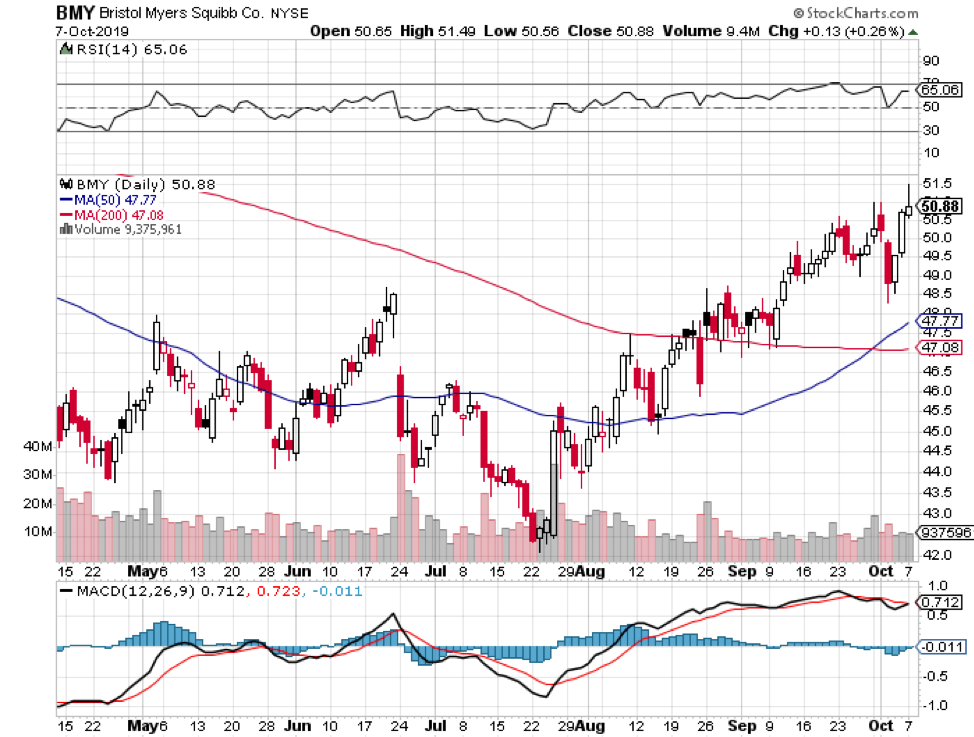
Bristol-Myers Squibb (BMY)
As always, no other field has been watched more intensely than the lung cancer market -- an area considered as the most lucrative in the immuno-oncology circle. In the recently concluded European Society for Medical Oncology Congress in Barcelona, all eyes were on the up-and-coming Opdivo/Yervoy combo of Bristol-Myers Squibb (BMY).
In the recent data it presented, Bristol disclosed that the combination of its cancer drugs Opdivo and Yervoy provided promising results to melanoma patients. According to their study, over 50% of melanoma patients survived after five years which is a huge leap from the 5% survival rate recorded over the same period prior to the introduction of immunotherapies.
With the company’s recent moves to beef up its cancer portfolio, the Opdivo/Yervoy combo is anticipated to turn into a strong competitor of Roche Holding Ltd. Genussscheine’s (ROG) Tecentriq. This combo also reinvigorates the ongoing rivalry between Bristol and Merck & Co. (MRK), with Opdivo/Yervoy aiming to dethrone the latter’s major moneymaker Keytruda.
However, this isn’t exactly the first time Bristol showed interest in dominating the oncology market. Wielding the power of its $81.05 billion market value, Bristol has signified its aggressive stance in pushing for the expansion of its cancer department.
The most highly publicized news from this front came in January this year courtesy of its announcement involving a $74 billion merger with Celgene Corporation (CELG). Now, it appears that we’re seeing the first of Bristol’s efforts to bolster its cancer drug lineup.
Although Bristol has been underperforming compared to its competitors for the majority of 2019, the stock has actually surpassed its rivals by roughly 5% in September. Following its 52-week low in July, the company has performed steadily higher to currently trading 6.5% below its 2019 high.
Hence, traders should be vigilant as a dip to a short-term trendline in the next weeks could offer a suitable entry point to eventually take advantage of the upside momentum.
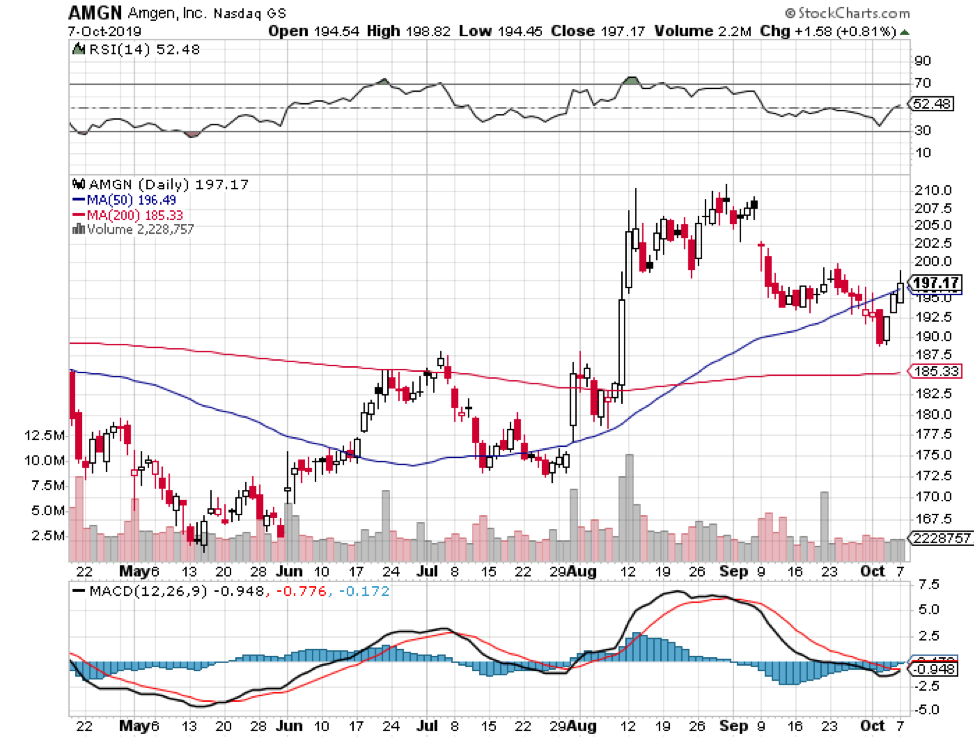
Amgen (AMGN)
Another oncology frontrunner is Amgen (AMGN). The biotech giant recently presented its data on experimental treatments AMG 510 and AMG 160, which target some forms of colorectal cancer. So far, AMG 510 has provided higher response rates at 3% for patients across all levels of dosage.
These drugs form part of the rising trend of precision medicines, which zero in on particular gene mutations. This method is anticipated to be able to ward off cancer cells regardless of the organ where the disease originated.
In September, Amgen shared that the drug managed to shrink tumors by almost 50% during the trial period for advanced non-small lung cancer patients. Meanwhile, the drug’s disease control rate was recorded at 92%, with patients capable of tolerating AMG 510 without any dose-limiting toxicities.
These results prompted the FDA to send AMG 510 for “fast track” review. Aside from their own study, Amgen is also looking at a possible combination with Merck’s Keytruda in an effort to bolster its foothold in the lung cancer front.
If Amgen succeeds in the application of AMG 510 to colorectal cancer patients, the drug will be the first-ever approved treatment to target a mutated form of a gene commonly referred to as KRAS. This particular mutation called KRASG12C is prevalent in approximately 13% of non-small cell lung cancers, 3% to 5% of colorectal cancers, and almost 2% of solid tumor cancers.
In terms of revenue, the success of AMG 510 could lead to annual sales of $3 billion in the United States alone and $6.4 billion internationally. Aside from Amgen, Mirati Therapeutics Inc. (MRTX) has been actively pursuing treatments that aim to treat KRAS mutations as well.
Incyte Corporation (INCY)
At first blush, Incyte (INCY) is regarded as simply another young company striving to make a name for itself in the massive biotech market. Despite the success of bone marrow disorder drug Jakafi, a lot of investors still believe that the company only managed to stumble its way to growth. In fact, even those who actually started to invest in this biopharma firm still somehow see it as a company with an extremely limited potential.
Unfortunately for these investors, they’re missing out on a crucial detail. Although Incyte’s trajectory isn’t exactly moving at a blistering pace, the steady revenue growth of the company in 2019 is a strong indicator of meaningful profits in the succeeding years.
This growth would eventually land the company in the watchlist of every biotech investor, with the company stock already gaining 18% this year alone to boost its $16.10 billion market value.
One of the most exciting developments from Incyte is its bile duct cancer research which led to a potential oncology blockbuster drug Pemigatinib. So far, 36% of its test patients saw their tumors shrink with a preliminary median overall survival of 21.1 months.
Despite the promising results though, the company cautions on the modesty of its projected revenue as Pemigatinib specifically targets cholangiocarcinoma, which is a rare type of bile duct cancer. Incyte plans to submit the drug for review to the FDA before the year ends.
For now, Incyte is focused on the commercialization and development of its existing moneymakers. Aside from Jakafi, the company is also making waves in the rheumatoid arthritis market with Olumiant. Its myeloid leukemia treatment Iclusig is another potential golden goose on the rise as well.
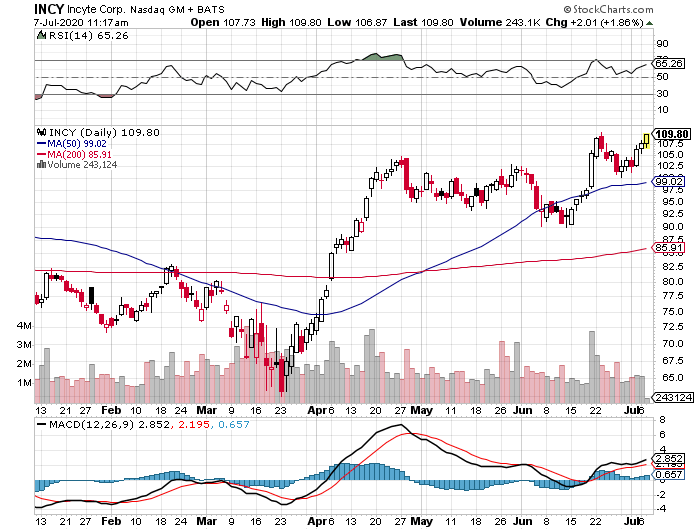
So far, Incyte’s share price has been trading at approximately $15 range since April. The past two months showed a pullback though, with the stock finding key support from the lower trendline of the trading range at $72. For investors who intend to open a long position within these levels, you should set your take-profit order somewhere near $88. However, simply cut your losses if Incyte stock fails to hold $72 support.