Global Market Comments
July 21, 2021
Fiat Lux
Featured Trade:
(AN INSIDER’S GUIDE TO THE NEXT DECADE OF TECH INVESTMENT),
(AMZN), (AAPL), (NFLX), (AMD), (INTC), (TSLA), (GOOG), (FB)


Global Market Comments
July 21, 2021
Fiat Lux
Featured Trade:
(AN INSIDER’S GUIDE TO THE NEXT DECADE OF TECH INVESTMENT),
(AMZN), (AAPL), (NFLX), (AMD), (INTC), (TSLA), (GOOG), (FB)
Mad Hedge Technology Letter
May 21, 2021
Fiat Lux
Featured Trade:
(THE STRENGTH OF AMD)
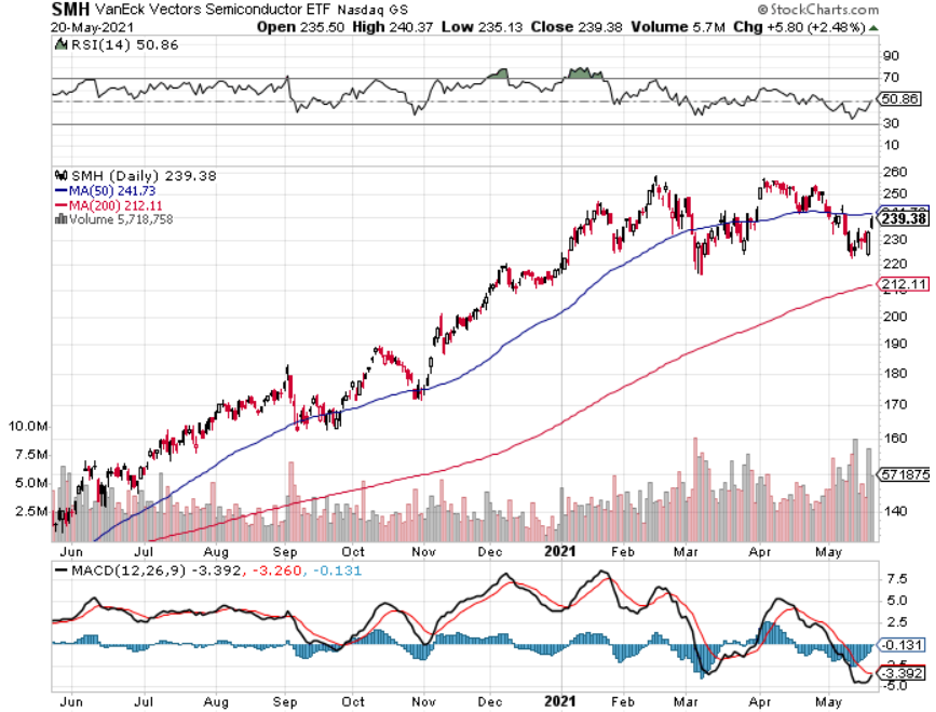
(AMD), (INTC), (TSM), (XLNX), (SMH)

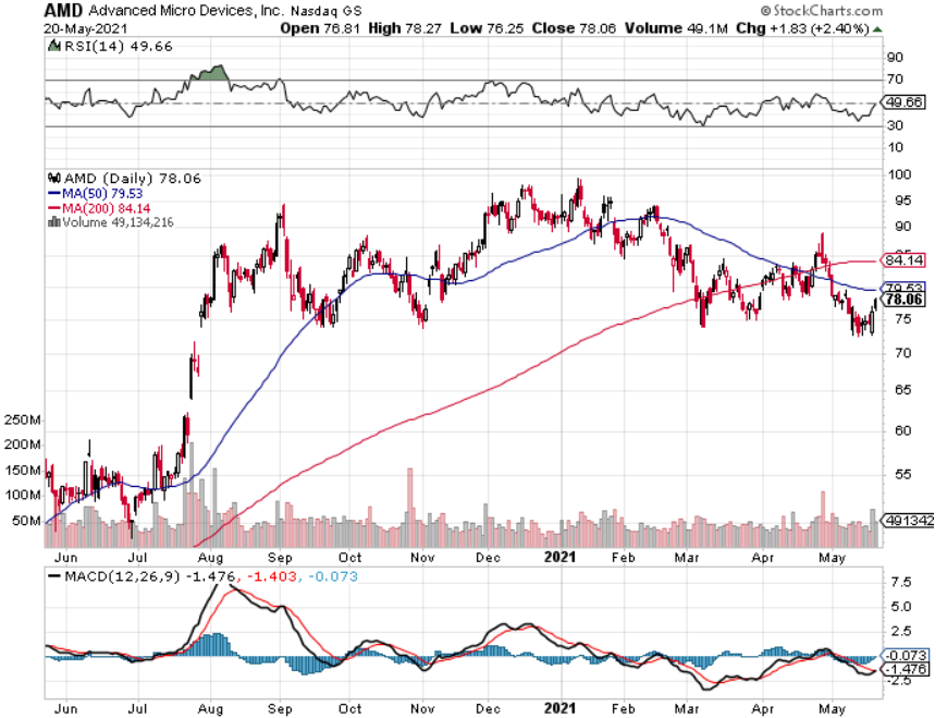
Advanced Micro Devices Inc. (AMD) is a chip stock that needs some serious attention, even more so because of their new share repurchase program that has no end date.
They are led by one of the best tech CEOs in Silicon Valley Lisa Su, who has been in charge since 2014.
She transformed the company into a profitable one, secured incremental market share from Intel Corp. (INTC) and diminished concerns that AMD has a weak balance sheet.
Strength begets strength as AMD introduced a $4 billion stock buyback plan, its first repurchase authorization since 2001, signaling the chipmaker’s robust momentum in their own business.
The buyback will be distributed through cash from operations and will total about 4% of AMD’s market value.
AMD's stock in the high $70s right here looks like a screaming buy.
Share buyback is not only something Apple and Microsoft do, but other smaller players are getting in on the action displaying the great breadth and depth of the tech market.
We don’t see this anywhere else in any other industry because profitable companies simply return money back to shareholders and tech has the luxury of accelerated future earnings and revenue growth to buttress this.
Cut it up however you want, the tech sector is responsible for the bulk of earnings as it relates to the total market and that won’t change.
AMD delivered $832 million in free cash flow in Q1 2021.
The company has now pivoted from a net debt position to a balance sheet that will harness over $3 billion in net cash by the end of the current quarter.
This strength of the balance sheets is even pertinent if you strip out the Xilinx deal which will bring in their own array of financial pluses to add on to the might of AMD's current cash flow situation.
An accumulating share count is something to be wary of in any stock and given that AMD had the opportunity to reduce share count, it was a no-brainer.
Years ago, AMD had 766 million shares outstanding, and it would have climbed to over 1.6 billion considering the Xilinix shares by the end of this year.
This obviously makes EPS metrics appear rosier in future earnings reports and inching them up is a nod to AMD CFO Devinder Kumar who usually has a big say in these decisions.
Under Su’s helmsmanship, the company’s market value has toppled the $90 billion mark from only $2 billion just seven years ago.
That was the year she was named CEO and she hasn’t looked back.
Su’s key to returning AMD to profitability was to rely on the quality of product delivered — these new products snatched market share from Intel.
As what a savvy CEO usually does, she has played down success in order to tamper down high expectations in the stock price and business by saying, “without a doubt it does not get easier.”
I don’t think it was ever easy to begin with but that’s beside the point.
Su’s AMD has gone from an inferior chipmaker building cheaper knockoffs to Intel products to a premium provider of computer processors that win orders solely based on superior performance.
AMD has already repurchased $77 million of stock in its prior buyback plan two decades ago.
Su has rejuvenated AMD’s reputation and performance at a critical juncture and as chip shortages become the norm in this boom-and-bust industry.
The public health problem triggered a crazy demand for remote work and the devices that facilitate a work from home economy.
During this sensitive period, the world’s largest chipmaker, Intel, had struggled to develop its manufacturing technology, one of the foundations of its decades-long dominance of the computer industry.
The chip shortage is an example of the periodic mismatch between supply and demand in the semiconductor market whose companies avoid dipping into capital expenditure until capacity is stretched to the extreme limit.
This is an expensive business to get into, constructing high-performance chips is time-consuming and an engineering headache, thus barriers of entry are incredibly insurmountable.
Most new chip foundries and designers don’t happen unless sovereign nations make it a national security issue which is the case lately.
Ancillary industries started to hoard chips 6-8 months ago and I believe that these pressures will begin to subside soon as supply chains start to normalize.
These longer-term contracts to secure inputs we are seeing now will eventually be reduced easing the supply crunch as demand begins to slow and capacity begins to rise.
Even Su predicts supply of AMD chips, which are built by Taiwan Semiconductor Manufacturing (TSM), will catch up throughout 2021.
As the tech consolidation rips through chip stocks, I see this as an unequivocal buying opportunity for the strongest of names.
If AMD continues to build on their strong financial position — continue to offer more share repurchases and even a sweet dividend — it clearly means they are building premium products buyers want and that satisfaction not only filters down to the end-user of their chips but the owners of the stock.
I first recommended this stock at $18 at the advent of the Mad Hedge tech letter in 2018, and I am still bullish AMD long term period.
It was a great company in 2018 — it’s gotten even better in 2021 — don’t miss out.
Global Market Comments
March 29, 2021
Fiat Lux
Featured Trade:
(MARKET OUTLOOK FOR THE WEEK AHEAD, or THE WEEK THAT NEVER WAS),
(SPY), (TLT), (TBT), (TSLA), (CSCO), (ORCL), (INTC)


Of course, WWII historians know well the man who never was, the popular name for Operation Mincemeat.
In 1943, British intelligence found a homeless man who died on the streets of London, dressed him up as a Royal Marine Major William Martin, and released his body from a submarine off the coast of Spain, a German ally.
Handcuffed to his wrist was a briefcase with highly detailed plans for the allied invasion of Greece and the Balkans. The Germans shifted ten divisions to defend the region.
When the allies invaded Sicily instead, it came completely out of the blue. The invading American and British forces found the island almost undefended and inadequately manned and supplied by Italian troops. The allies planned for three months to capture Sicily. Instead, they did it in a mere 38 days. Allied losses came in at a tenth of those expected, thanks to Royal Marine Major William Martin.
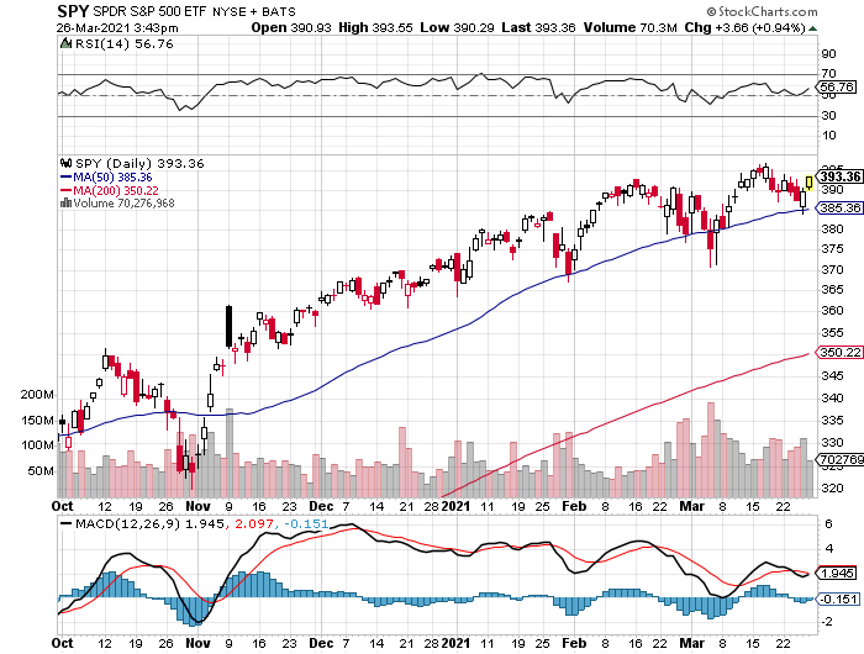
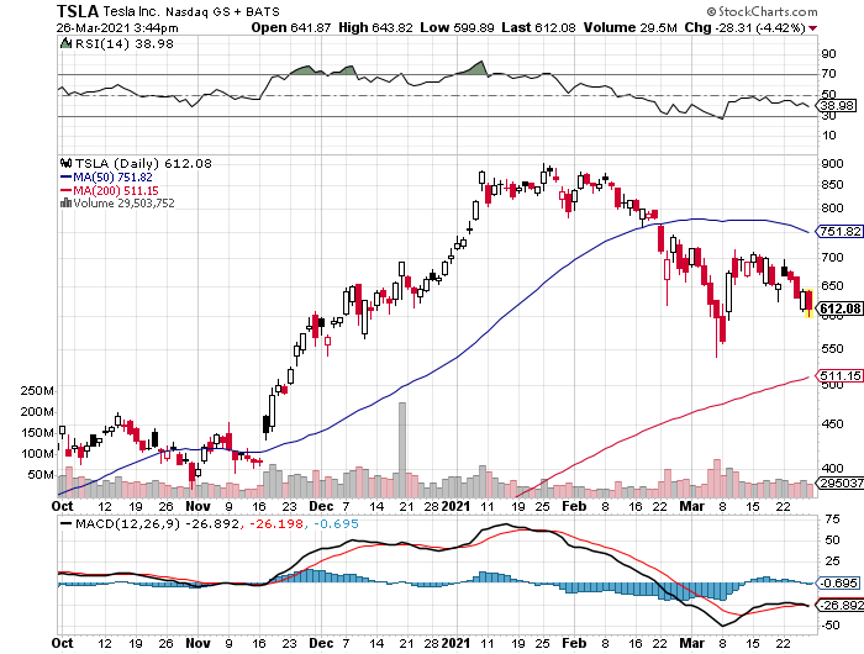
The analogy here is that last week, we witnessed the market that never was. Stocks went down, then up. Bonds went up, then down. Even Tesla was virtually unchanged. It all ended up as a big fat zero for traders.
What all of this means for us investors is a subject of heated discussion among strategists. Of course, the Cassandras are always out there arguing that this is all proof that markets are peaking and that the mother of all stock market crashes is just ahead of us.
I take a different tack.
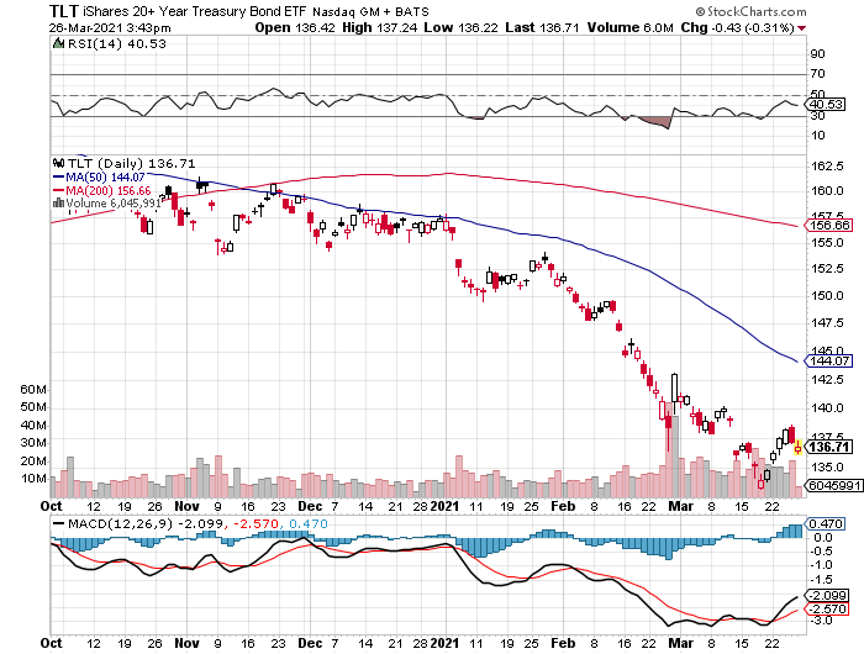
I think we are well into a long-overdue “time” correction whereby stocks go sideways for weeks or months before resuming their heroic assault on new highs. The timing will be dictated by the frantic reversal of the bond market at a ten-year Treasury yield of 2.00%.
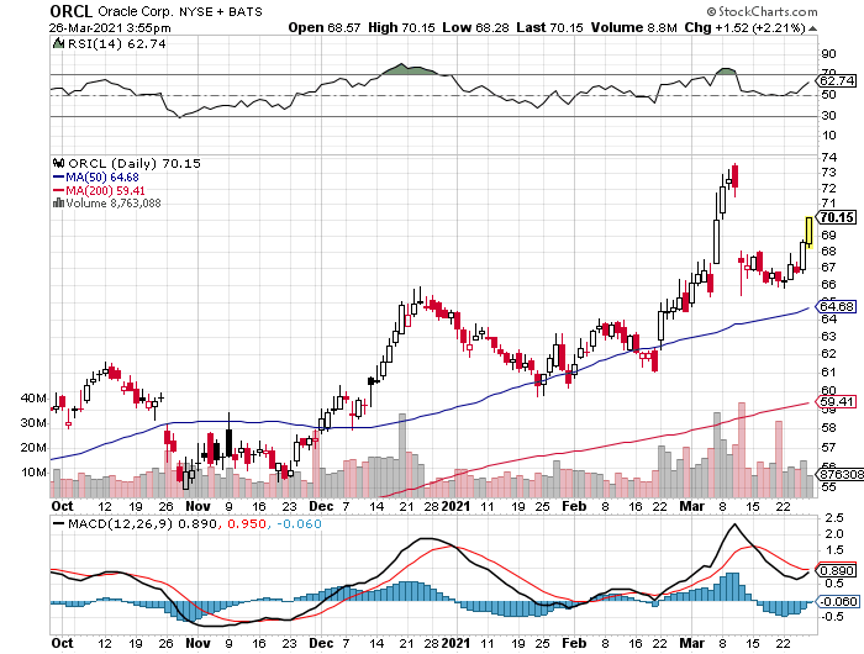
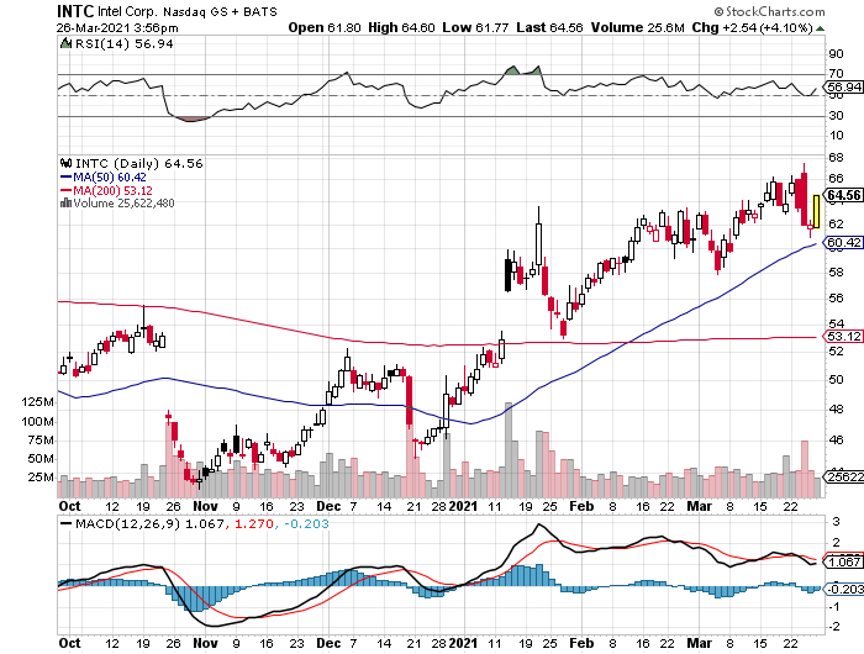
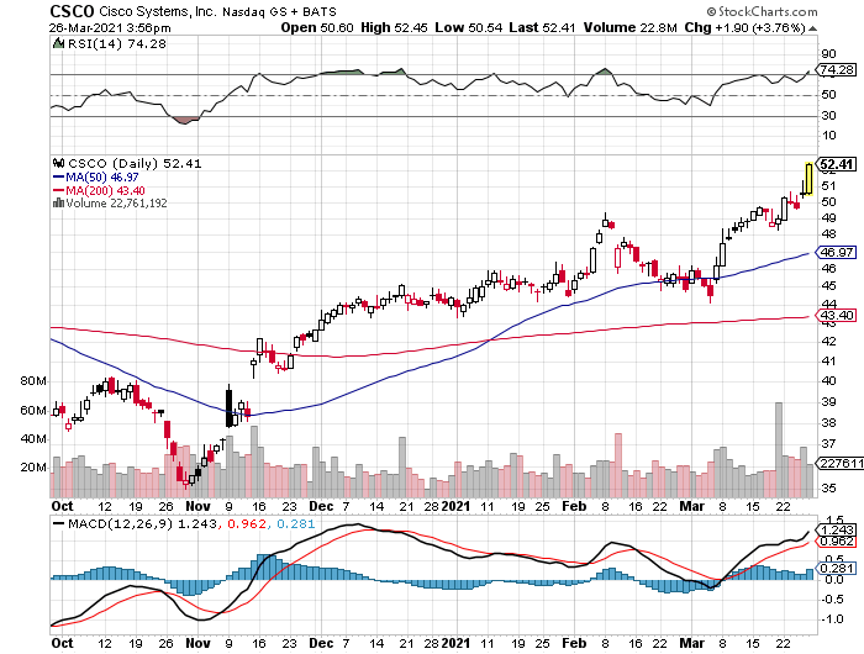
Investors will rotate from the newly expensive recovery plays like banks into the newly cheap, such as technology stocks. Notice the sudden recent interest in legacy companies like Oracle (ORCL), Intel (INTC), and Cisco Systems (CSCO), which completely missed the great 2020 tech rally.
All of this sets up perfectly for the barbell portfolio which I have been advocating all year.
If there is a selloff, it will be by things that normal people don’t own. Those include SPACS, anything the Reddit crowd chases, stay-at-home stocks, and very high-priced tech stocks with no earnings.
Much focus has been placed on the Taiwanese-owned Ever Given stuck in the Suez Canal. As a Middle Eastern war correspondent for many years, I spent endless hours debating with my compatriots over what closure of the canal would mean.
What hasn’t been mentioned was that the accident was not caused by a Chinese captain, but Egyptian pilot ships are required to take on to raise revenues, and bribes, for the impoverished country. This all happened in the middle of a sandstorm where visibility is near zero.
I can tell you right now that they won’t get the Ever Given off there until they start to unload containers and lift off some weight so the 200,000-ton ship can rise of its own accord. Good luck with that in the middle of the Sinai Desert. Why not just sell all the contents on Amazon and have them deliver it for free as part of their prime membership?
This is a debacle that will last weeks, if not months, and will cost $9 billion a day in international trade until it’s over. In the meantime, commercial shippers have asked for protection from pirates from the US Navy as they navigate the unfamiliar water around the tip of Africa.
The Mad Hedge Summit Videos are Up, from the March 9,10, and 11 confab. Listen to 27 speakers opine on the best strategies, tactics, and instruments to use in these volatile markets. The product discounts offered last week are still valid. Start, stop, and pause the videos at your leisure. Best of all, access to the videos is FREE. Access them all by clicking here, click on CURRENT SUMMIT REPLAYS in the upper right-hand corner, and then choose the speaker of your choice.
Weekly Jobless Claims dive by 100,000, to 684,000, a one-year low. The decline was led by Illinois and Ohio. Labor shortages are popping up around the country in skilled areas, but bars and restaurants are still lagging severely.
Huge Office Cuts are coming, with execs planning a permanent 20% cut. Better to give the money to shareholders. Downtowns across the country will change beyond all recognition. How do you turn an office into an apartment?
CP Rail buys Kansas City Southern, for $25 billion, further concentrating the north American rail industry. It’s a steal because an economy entering a decade-long boom moves lots of stuff. It’s also a great North/South international trade play, which is recovering strongly with the exit of our last president. I used to ride box cars on the old Canadian Pacific back in the sixties (you can’t hitch hike where there are no cars), and occasionally the engineers would let me drive. It suddenly makes Norfolk South (NSC) and Union Pacific (UNP) look very tempting.
Another Tesla $3,000 Target was issued by Ark’s Cathie Wood, an early investor. Cathie’s Ark Innovation Fund ETF was up 180% last year largely on the strength of a massive Tesla (TSLA) holding. Her bear case is a low of $1,500 by 2025, nearly triple the current price. She has only one more triple to go to get to my own $10,000 forecast.
Biden has $3 Trillion More to Spend on top of the just passed $1.9 trillion rescue package. It's all rocket fuel for the stock market, not so much for bonds. The money will be spent on a mix of old-line freeway and bridge repair along with new spending on decarbonizing the power grid and social measures. It will be financed by tax hikes on those earning over $400,000. Remember, Roosevelt hiked the maximum tax rate to 90% on the wealthy, where it stayed for 30 years, and Biden is old enough to remember.
Daily Air Travelers top 1.5 Million, for the first time in a year. The pandemic low was 200,000 a day. It’s an indication of how anxious Americans have become to travel, and how strong the imminent economic boom will be.
Intel to build two chip fabs for $20 billion in Arizona to address the current severe shortage. US construction is a positive as it helps reduce reliance on foreign supplies. Too bad it will still leave them five years behind (AMD), but it’s a major move in the right direction. It deals with everything investors wanted to hear and moves them solidly into the 10nm architecture market. Buy (INTC) on dips.
New Home Sales Dive, off 18.2% in February, now that the free money train has left the station. Weather was blamed as a factor, with giant snowstorms slamming much of the country. Shortage of supply is another big issue. Some big builders are basically out of inventory and are reduced to selling floor plans with extended completion dates.
US Dollar (UUP) hits a four-month high, with a major assist from rising US bond interest rates. Expect the rally to continue until ten-year yields hit 2.00%, then sell the daylights out of it. With the US money supply growing at a near exponential 30% annual rate, there’s no way the dollar strength can continue. When you increase the supply, you decrease the value, simple supply and demand. My first pick is to buy the Aussie (FXA) a call option on a global synchronized economic recovery.
When we come out the other side of pandemic, we will be perfectly poised to launch into my new American Golden Age, or the next Roaring Twenties. With interest rates still at zero, oil cheap, there will be no reason not to. The Dow Average will rise by 400% to 120,000 or more in the coming decade. The American coming out the other side of the pandemic will be far more efficient and profitable than the old. Dow 120,000, here we come!
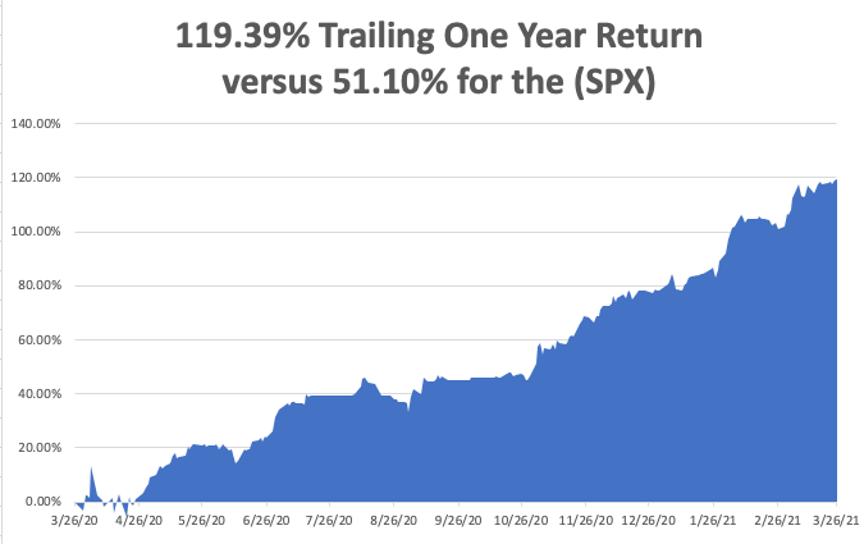
It’s amazing how well patience can help your performance. My Mad Hedge Global Trading Dispatch profit reached a super-hot 18.61% so far in March on the heels of a spectacular 13.28% profit in February.
It was a go-nowhere week in the market, so I limited myself to a single trade all week, a double short in the bond market (TLT) on top of a welcome $5 rally. The position turned immediately profitable.
I still have a deep in-the-money call spread Tesla (TSLA) that is profitable and expires in 14 trading days. That leaves me with 70% cash and a barrel full of dry powder.
This is my fifth double-digit month in a row. My 2021 year-to-date performance soared to 42.10%. The Dow Average is up 9.9% so far in 2021.
That brings my 11-year total return to 464.65%, some 2.08 times the S&P 500 (SPX) over the same period. My 11-year average annualized return now stands at an unbelievable 41.30%.
My trailing one-year return exploded to positively eye-popping 119.39%. I truly have to pinch myself when I see numbers like this. I bet many of you are making the biggest money of your long lives.
We need to keep an eye on the number of US Corona virus cases at 30.2 million and deaths topping 550,000, which you can find here.
Thankfully, death rates have slowed dramatically, but Obituaries are still the largest sector in the newspaper. At this point, some 47% of the US population has achieved immunity through vaccination or catching the disease. Herd immunity is near.
The coming week is a big one for jobs data.
On Monday, March 29, at 9:00 AM, the Dallas Fed Manufacturing Index for March is released.
On Tuesday, March 30, at 9:00 AM, the S&P Case Shiller National Home Price Index for January is published.
On Wednesday, March 31 at 8:15 AM, the ADP Challenger Private Employment Report for March is out. Pending Home Sales for February are indicated at 9:00 AM.
On Thursday, April 1 at 8:30 AM, the Weekly Jobless Claims are published.
On Friday, April 2 at 8:30 AM we get the Nonfarm Payroll Report for March. At 2:00 PM, we learn the Baker-Hughes Rig Count.
As for me, tax time is coming up and let me tell you, I have absolutely the best IRS story of all time.
It comes from my late, dear friend, Al Pinder, who I sat next to for ten years at the Foreign Correspondents of Japan in Tokyo, pounding away on antiquated Royal typewriters until our shoulders were as stiff as boards. Al then was the shipping correspondent for the New York Journal of Commerce newspaper.
Al was a colorful character, to say the least.
In the run up to WWII, Al took an extended vacation in Japan where he toured and photographed the country’s beaches, looking for the best landing sites for the US military in case war broke out.
To sneak the top-secret pictures out of the country, he bought a large steamer trunk and placed them a false bottom. Then he went to Tokyo’s red-light district in Yoshiwara, bought a dubious sex toy, an inflatable life-sized Japanese doll, and placed it on top.
When the trunk was searched, the customs officials found the doll, had a good laugh and passed him on. Al’s photos were the basis of Operation Olympic, the 1945 US invasion of Japan, made unnecessary by the dropping of the atomic bomb.
When the war broke out, Pinder parachuted into western China, where he acted as the liaison with Mao Zedong’s guerilla forces in Hunan province. In 1944, Al received a coded message from headquarters ordering him to intercept a top-secret airdrop from a DC3 in the middle of the night.
Knowing he would be mercilessly tortured by the Japanese if caught, he set up three signal fires in a triangle in a remote part of the desert and managed to find the parachute. Dodging enemy patrols all the way, he returned to his hideout in a mountain cave and opened the package.
In it was a letter from the IRS asking why he had not filed a tax return for the past three years.
I told this story at Al’s wake a few years ago and everyone had a good laugh. Al went on to run CIA operations in Japan during the fifties and sixties. When he passed away, there was a frantic search for a safe deposit box by American intelligence officials containing records of all CIA payoffs to Japan’s leading conservative party.
When the box was finally found, there was an enormous sigh of relief at the embassy. I still miss Al.
Stay healthy.
John Thomas
CEO & Publisher
The Diary of a Mad Hedge Fund Trader


Global Market Comments
December 28, 2020
Fiat Lux
SPECIAL ISSUE ABOUT THE FAR FUTURE
Featured Trade:
(PEEKING INTO THE FUTURE WITH RAY KURZWEIL),
(GOOG), (INTC), (AAPL), (TXN)

Mad Hedge Technology Letter
December 21, 2020
Fiat Lux
Featured Trade:
(THE BEST WAY TO SUPERCHARGE YOUR TECH PORTFOLIO)
(NVDA), (PLTR), (AMD), (APPL), (OTC:SFTBF), (INTC), (QCOM)

Superiority is mainly about taking complicated data and finding perfect solutions for it. Trading in technology stocks is no different.
Investing in software-based cloud stocks has been one of the seminal themes I have promulgated since the launch of the Mad Hedge Technology Letter way back in February 2018.
Well, if you thought every tech letter until now has been useless, this is the one that should whet your appetite.
Instead of racking your brain to find the optimal cloud stock to invest in, I have a quick fix for you and your friends.
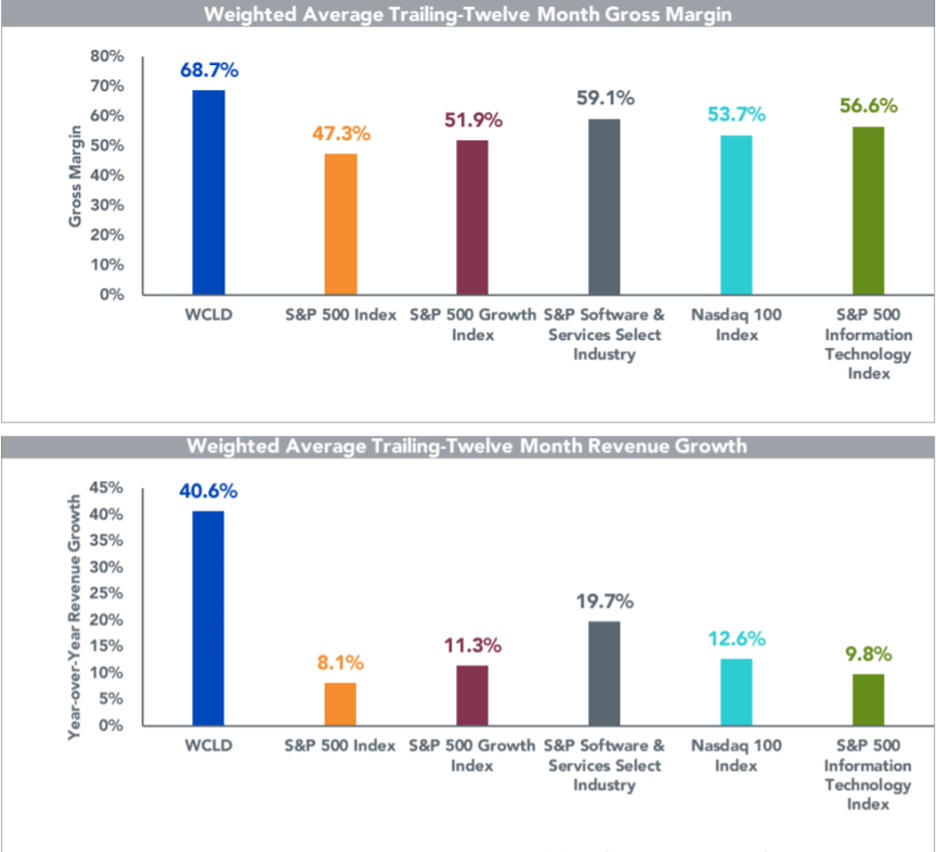
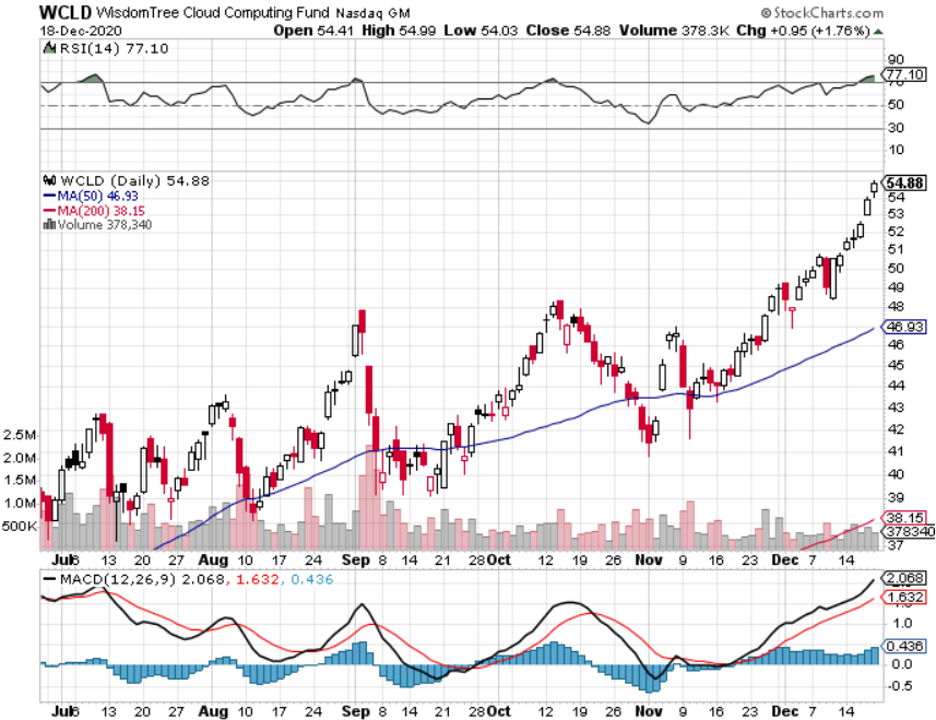
Invest in The WisdomTree Cloud Computing Fund (WCLD) which aims to track the price and yield performance, before fees and expenses, of the BVP Nasdaq Emerging Cloud Index (EMCLOUD).
What Is Cloud Computing?
The “cloud” refers to the aggregation of information online that can be accessed from anywhere, on any device remotely.
Yes, something like this does exist and we have been chronicling the development of the cloud since this tech letter’s launch.
The cloud is the concept powering the “shelter-at-home” trade which has been hotter than hot in 2020.
Cloud companies provide on-demand services to a centralized pool of information technology (IT) resources via a network connection.
Even though cloud computing already touches a significant portion of our everyday lives, the adoption is on the verge of overwhelming the rest of the business world due to advancements in artificial intelligence and the Internet of Things (IoT) hyper-improving efficiencies.
The Cloud Software Advantage
Cloud computing has particularly transformed the software industry.
Over the last decade, cloud Software-as-a-Service (SaaS) businesses have dominated traditional software companies as the new industry standard for deploying and updating software. Cloud-based SaaS companies provide software applications and services via a network connection from a remote location, whereas traditional software is delivered and supported on-premise and often manually. I will give you a list of differences to several distinct fundamental advantages for cloud versus traditional software.
Product Advantages
Speed, Ease, and Low Cost of Implementation – cloud software is installed via a network connection; it doesn’t require the higher cost of on-premise infrastructure setup and installation.
Efficient Software Updates – upgrades and support are deployed via a network connection, which shifts the burden of software maintenance from the client to the software provider.
Easily Scalable – deploying via a network connection allows cloud SaaS businesses to grow as their units increase, with the ability to expand services to more users or add product enhancements with ease. Client acquisition can happen 24/7 and cloud SaaS companies can more easily expand into international markets.
Business Model Advantages
High Recurring Revenue – cloud SaaS companies enjoy a subscription-based revenue model with smaller and more frequent transactions, while traditional software businesses rely on a single, large, upfront transaction. This model can result in a more predictable, annuity-like revenue streams making it easy for CFOs to solve long-term financial solutions.
High Client Retention with Longer Revenue Periods – cloud software becomes embedded in client workflow, resulting in higher switching costs and client retention. Importantly, many clients prefer the pay-as-you-go transaction model, which can lead to longer periods of recurring revenue as upselling product enhancements does not require an additional sales cycle.
Lower Expenses – cloud SaaS companies can have lower R&D costs because they don’t need to support various types of networking infrastructure at each client location.
I believe the product and business model advantages of cloud SaaS companies have historically led to better margins, growth, higher free cash flow, and efficiency characteristics as compared to non-cloud software companies.
How does the WCLD ETF select its indexed cloud companies?
Each company must satisfy critical criteria such as they must derive the majority of revenue from business-oriented software products, as determined by the following checklist.
+ Provided to customers through a cloud delivery model – e.g., hosted on remote and multi-tenant server architecture, accessed through a web browser or mobile device, or consumed as an application programming interface (API).
+ Provided to customers through a cloud economic model – e.g., as a subscription-based, volume-based, or transaction-based offering Annual revenue growth, of at least:
+ 15% in each of the last two years for new additions
+ 7% for current securities in at least one of the last two years
Some of the stocks that would epitomize the characteristics of a WCLD stock are Salesforce, Microsoft, Amazon-- I mean, they are all up, you know, well over 100% from the nadir we saw in March and contain the emerging growth traits that make this ETF so robust.
If you peel back the label and you look at the contents of many tech portfolios, they tend to favor some of the large-cap names like Amazon, not because they are “big” but because the numbers behave like emerging growth companies even when the law of large numbers indicate that to push the needle that far in the short-term is a gravity-defying endeavor.
We all know quite well that Amazon isn't necessarily a direct play on cloud computing, but the elements of its cloud business are nothing short of brilliant.
But ETF funds like WCLD, what they look to do is to cue off of pure plays and include pure plays that are growing faster than the broader tech market at large. So you're not going to necessarily see the vanilla tech of the world in that portfolio. You're going to see a portfolio that's going to have a little bit more sort of explosive nature to it, names with a little more mojo, a little bit more risk because you're focusing on smaller names that have the possibility to go parabolic and gift you a 10-bagger.
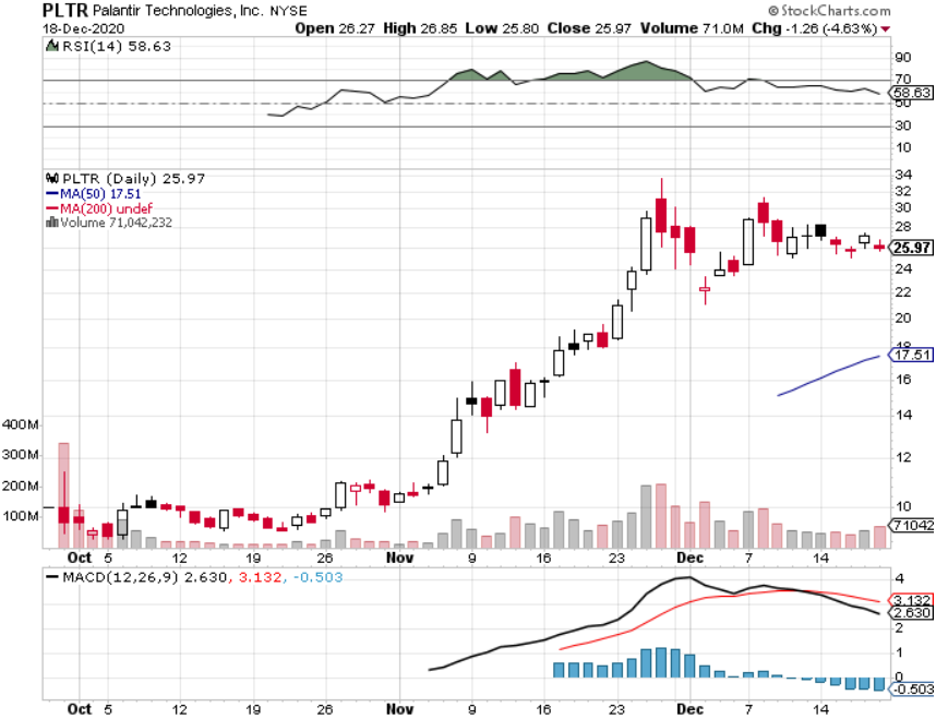
One stock that has the chance of a 10-bagger is my call on Palantir (PLTR).
Palantir is a tech firm that builds and deploys software platforms for the intelligence community in the United States to assist in counterterrorism investigations and operations, and my call was to buy them at $10 after it’s IPO, it's up to $26 and has an easy pathway to $50.
This is one of the no-brainers that procure revenue from Democrat and Republican administrations even though its CEO Alex Karp has been caught on video making fun of the current administration’s leaders.
In a global market where the search for yield couldn’t be tougher right now, right-sizing a tech portfolio to target those extraordinary, extra-salacious tech growth companies is one of the few ways to produce alpha without overleveraging.
No doubt there will be periods of volatility, but if a long-term horizon is something suited for you, this super-growth strategy is a winner and don’t forget about PLTR while you’re at it.
Mad Hedge Technology Letter
December 14, 2020
Fiat Lux
Featured Trade:
(NVIDIA’S SHOW OF FORCE)
(NVDA), (AMD), (APPL), (OTC:SFTBF), (INTC), (QCOM)

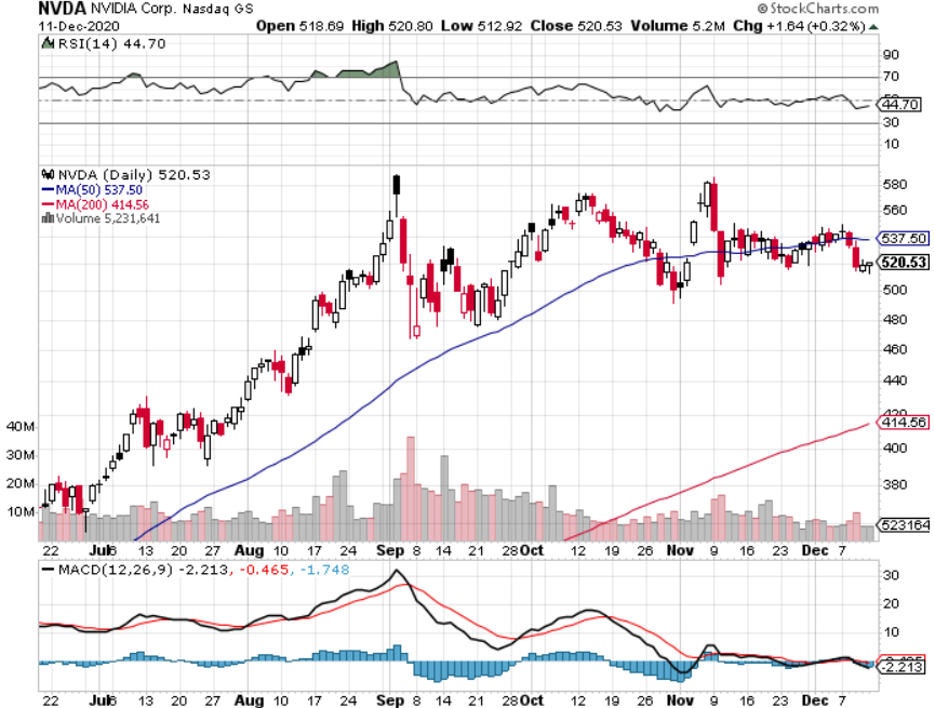
One of the best buy and hold tech stock has to be Nvidia (NVDA).
They are positioned at the vanguard of every major cutting-edge technology in the world such as self-driving technology, data center, and artificial intelligence.
Their cash cow business of manufacturing GPUs (graphics processing unit) which are essential to video gaming has been bolstered by the shelter-at-home movement.
Video games as an activity or something to just pass the time has never been so popular and Nvidia is the best of breed in this department.
The key takeaway from Nvidia’s asset portfolio is the diversity.
They aren’t beholden to any one division and I wouldn’t bet anytime soon that video games are going to go out of fashion because of the generational tailwind occurring.
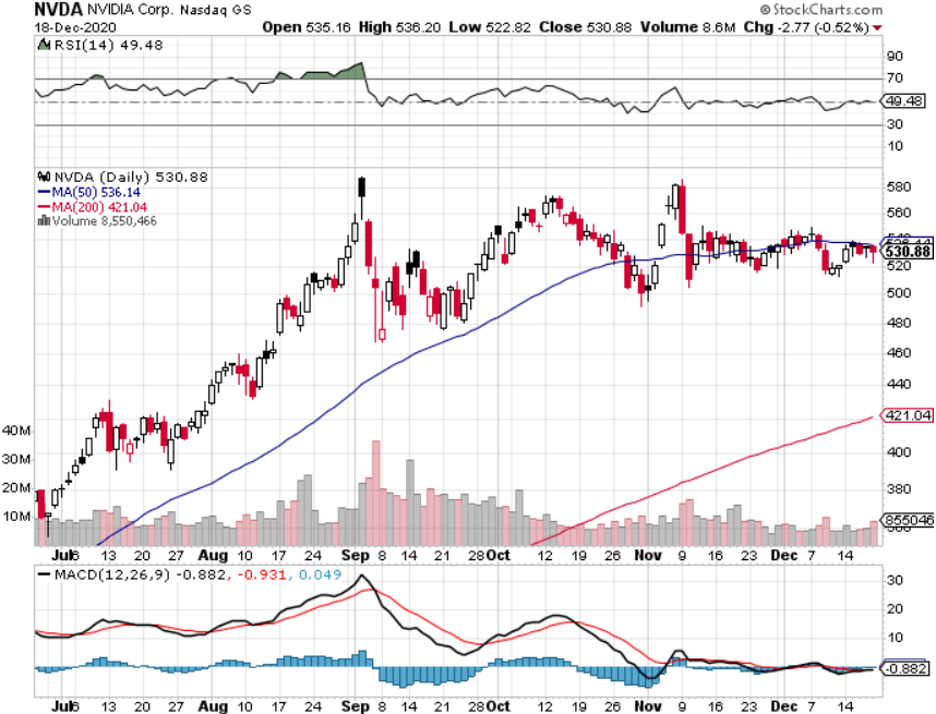
In fact, the underlying Nvidia stock has risen more than 120% in 2020 and semiconductors have proven to be an astute place to put your money in during the pandemic.
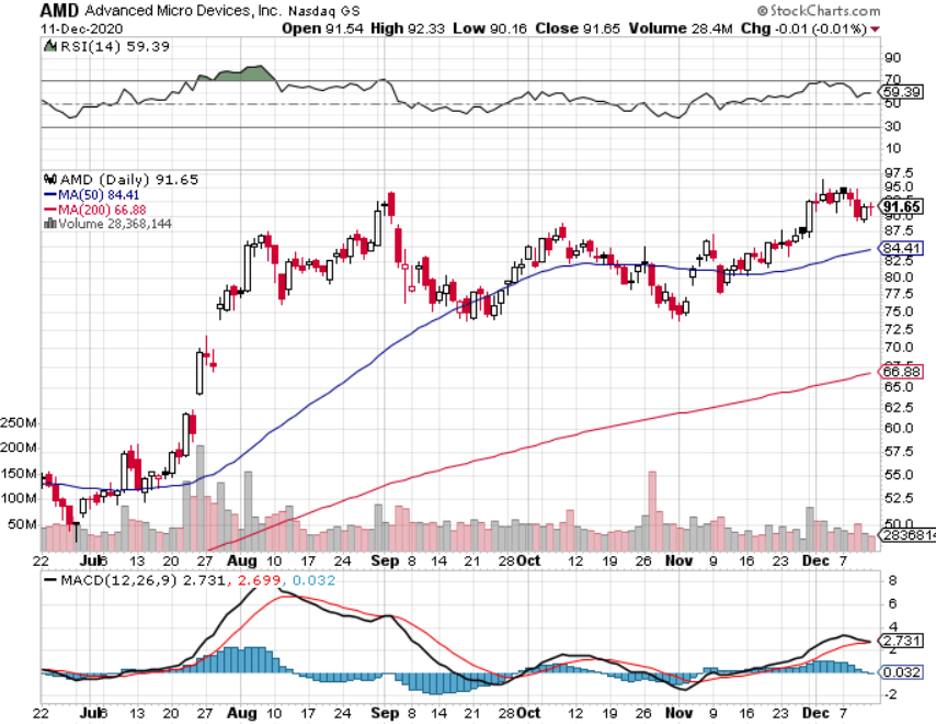
The same goes for competitive rivals such as Advanced Micro Devices (AMD), Intel (INTC), and Qualcomm (QCOM) who explore some of those same markets.
Nvidia counts Amazon (AMZN) Web Services as a customer for data-center chips. It is partnering with VMware (VMW) and Amazon on an AI-driven cloud platform for big businesses.
Be mindful that semiconductor stocks are volatile because of the boom-bust nature of their business cycle.
Global chip sales cratered in late 2018 and fell 12% in 2019.
They rallied early this year on signs of an industry recovery and on a U.S.-China trade deal, then sold off on coronavirus fears.
The trade war has also thrown a spanner in the works of global chip production.
Production was first halted in China and then put global economies under strain.
Despite the pandemic, the semiconductor industry will return to growth in 2020.
Chip sales will rise by 5.1% to $433 billion this year and accelerate to 8.4% in 2021.
The spread of 5G wireless networks is a key catalyst.
Moving forward, it’s highly likely that U.S. lawmakers maintain an anti-China doctrine, and Nvidia and AMD derive only 1% to 2% of revenue from Huawei.
In fact, other companies are more exposed like Cisco and Intel.
How well is Nvidia doing?
They increased revenue by 57% year over year in the third quarter predominately due to its data center business, which grew revenue by 162% over the same period.
In Q3, the data center division accounted for $1.9 billion of the company's $4.7 billion of revenue.
Nvidia is also growing through acquisitions with its blockbuster pending $40 billion acquisition of chip design licensor ARM Holdings from Softbank (OTC:SFTBF).
ARM’s acquisition will help NVIDIA maintain the best of breed quality through 2021 and beyond.
That is important because the semiconductor industry is becoming more cutthroat with many big players sourcing chips in-house after deeply investing in this technology.
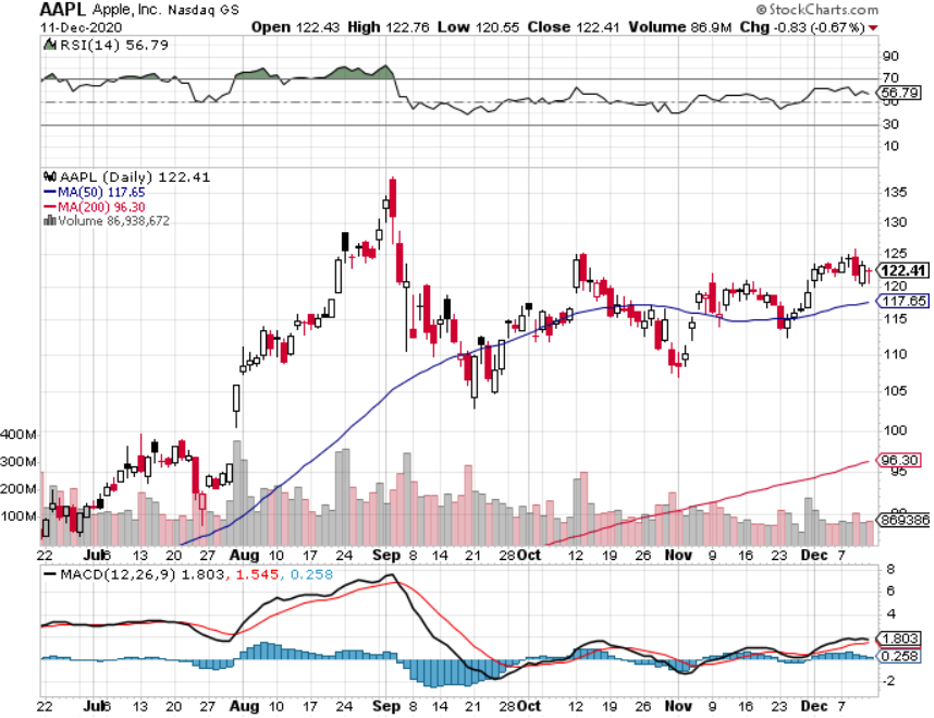
Apple (AAPL) recently unveiled its own stable of Mac processors, the M1, making its debut in late 2020. Manufacturing chips is historically a capital-intensive activity, and new chips don’t roll out that fast. In any case, cash-rich companies the size of Google and Apple have the firepower to pull this off.
ARM holds many unique patents forcing many companies to license from them, Apple can customize those designs, and the actual fabrication is outsourced to Taiwan Semiconductor (TSM), the largest and most technologically advanced semiconductor fabricator in the world.
In this specific case, Intel is the direct loser from the production of Apple M1 chips and at this point, this is becoming an existential crisis for Intel.
The acquisition of ARM is a gamechanger, and not just because NVIDIA would gain access to new markets like CPUs for mobile as early as 2021.
Integrating with ARM signals NVIDIA's future shift toward licensing of technology - a far more stable business model than the traditionally cyclical nature of semiconductor industry sales driven by upgrade cycles.
It all comes down to the quality of NVIDIA's chips which remain highly competitive in secular growth areas of tech, such as data centers and artificial intelligence. This alone should keep NVIDIA high up investors' list for years to come.
Demand for the new Nvidia GeForce RTX GPU has been “overwhelming” and the company completed its Mellanox acquisition, a tech firm that sells adapters, switches, software, cables, and silicon for markets including high-performance computing, data centers, cloud computing, computer data storage, and financial services, in April, helping it to double down on their revenue drivers.
Sales for Nvidia's chips remain robust across some of the most desirable end markets and there is nothing meaningful out there to suggest that Nvidia won’t continue its overperformance next year even if the shelter-at-home economy stops.
I am highly bullish on Nvidia stock into 2021 and beyond.