
Mad Hedge Biotech and Healthcare Letter
April 25, 2023
Fiat Lux
Featured Trade:
(SMALL BIOTECHS, BIG OPPORTUNITIES)
(PFE), (SGEN), (MRK), (RXDX), (BMY), (BIIB), (ETNB), (KRTX), (MORF), (IDYA)

Mad Hedge Biotech and Healthcare Letter
April 25, 2023
Fiat Lux
Featured Trade:
(SMALL BIOTECHS, BIG OPPORTUNITIES)
(PFE), (SGEN), (MRK), (RXDX), (BMY), (BIIB), (ETNB), (KRTX), (MORF), (IDYA)
The biopharma sector has seen a flurry of merger and acquisition activity recently, and the trend seems to continue. This is good news for smaller biotech stocks looking to capitalize on the trend.
In the first quarter of 2023, the total healthcare and life sciences M&A in the United States reached roughly $71 billion, more than double the $28 billion seen in the same quarter in 2022. Notably, this figure includes Pfizer's (PFE) acquisition of Seagen (SGEN) for $43 billion.
Still, the situation isn't as dire as it may seem especially considering that in 2022, the total M&A spending in the U.S. dropped to about $300 million year over year from the $400 billion recorded in 2021.
The main culprit behind this trend appears to be higher interest rates, which have made financing a deal less appealing for buyers, particularly when there is the potential for a less optimistic profit outlook due to a slowing economy.
Even with these concerns, pharmaceutical deals have been far from stagnant since the end of the first quarter.
Merck (MRK), a biopharmaceutical company with a market capitalization of $288 billion, announced that it would purchase Prometheus Biosciences (RXDX) for roughly $11 billion, representing a premium of about 75% over the pre-announcement price. The announcement had a considerable impact on Prometheus stock, which saw a surge in value.
Shareholders of Prometheus enjoyed significant gains as Merck seeks to replace its revenue stream from cancer treatment Keytruda, which generates just over $20 billion annually.
Keytruda's patent is set to expire in 2028, leaving room for competitors to gain market share and making Merck's acquisition of Prometheus a critical move. For context, Prometheus's ulcerative colitis product alone has a total available market worth roughly $30 billion.
This deal could be just the beginning of a wave of new mergers and acquisitions in the biotechnology and healthcare industry. Experts note that we are entering a "smart optimism" period in the sector.
It makes sense for larger pharma companies to explore mergers and acquisitions in the current market for several reasons.
For one, many larger companies are seeking to revamp their drug pipelines. Take Bristol Myers Squibb (BMY), for example, which has a market capitalization of $146 billion. Sales of its myeloma treatment, Revlimid, likely peaked at just over $12 billion in 2021. As the patent for Revlimid expires, the company is expected to lose market share, causing sales to plummet to the low hundreds of millions.
While the company has several new drugs in development, it may still seek to acquire smaller firms to safeguard its future. However, given that Bristol has just over $9 billion in cash, any significant acquisitions it pursues could require taking on debt. Such a move would not be unprecedented, as Pfizer financed roughly 70% of its Seagen purchase with long-term debt.
Another big name that could be on the lookout for an attractive deal is Biogen (BIIB), a company with a market capitalization of $42 billion. Biogen is reportedly interested in the neuropsychiatric and inflammatory sectors and could strike a deal as early as the latter half of 2023.
Looking at things from a seller's point of view, many of these companies are now much less valuable than they once were on the public market and, therefore are easier targets for acquisition.
The SPDR S&P Biotech ETF (XBI) has taken a 50% hit from its all-time high set in February 2021. This is mainly due to higher interest rates, which have diminished the perceived value of future profits. Since many small biotechs are valued based on their projected earnings well into the future, this has significantly affected their stock prices.
Some biotech companies have been eyed as potential takeover targets due to their reduced market value.
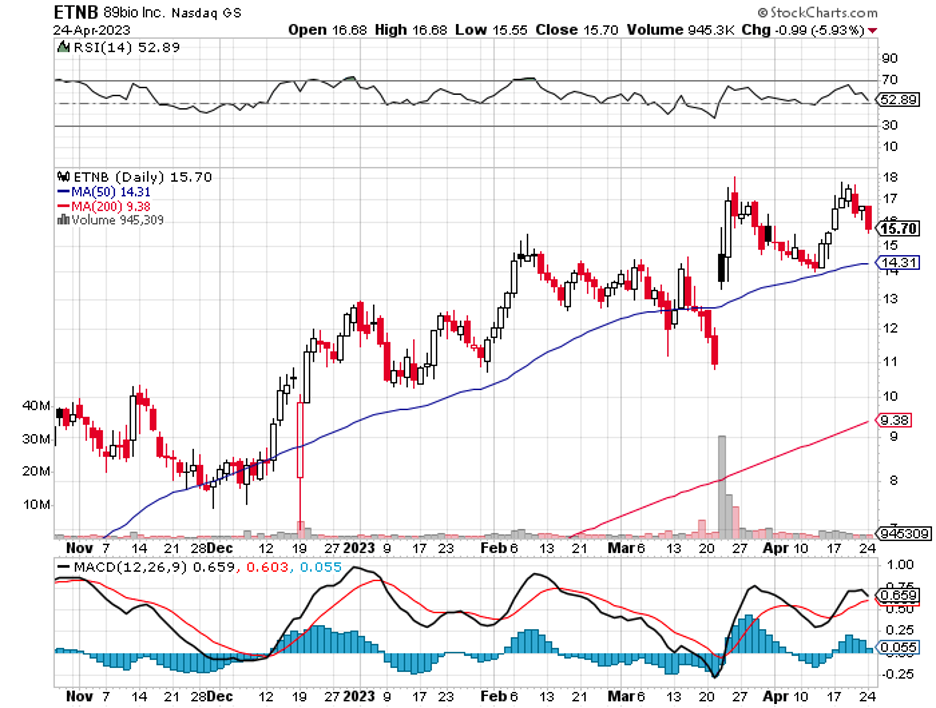
One is 89bio (ETNB), with a market cap of $1.2 billion and a stock price falling by more than 50% from its all-time high, could be a potential target.
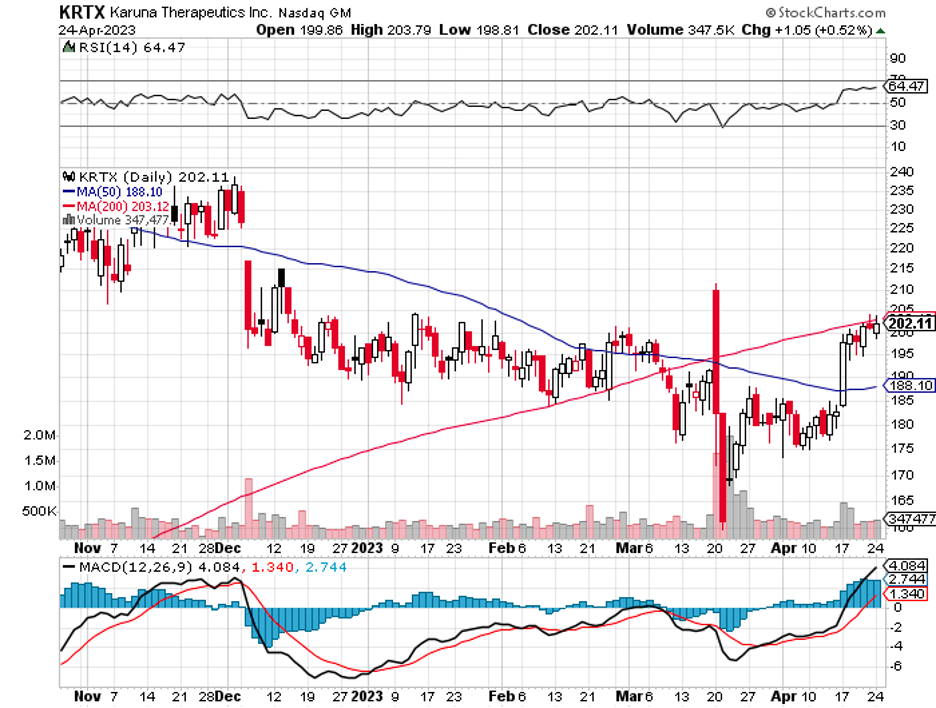
Similarly, Karuna Therapeutics (KRTX), which has a market cap of $7.4 billion and has seen a decline of almost 30% from its all-time high, is also considered an acquisition candidate.
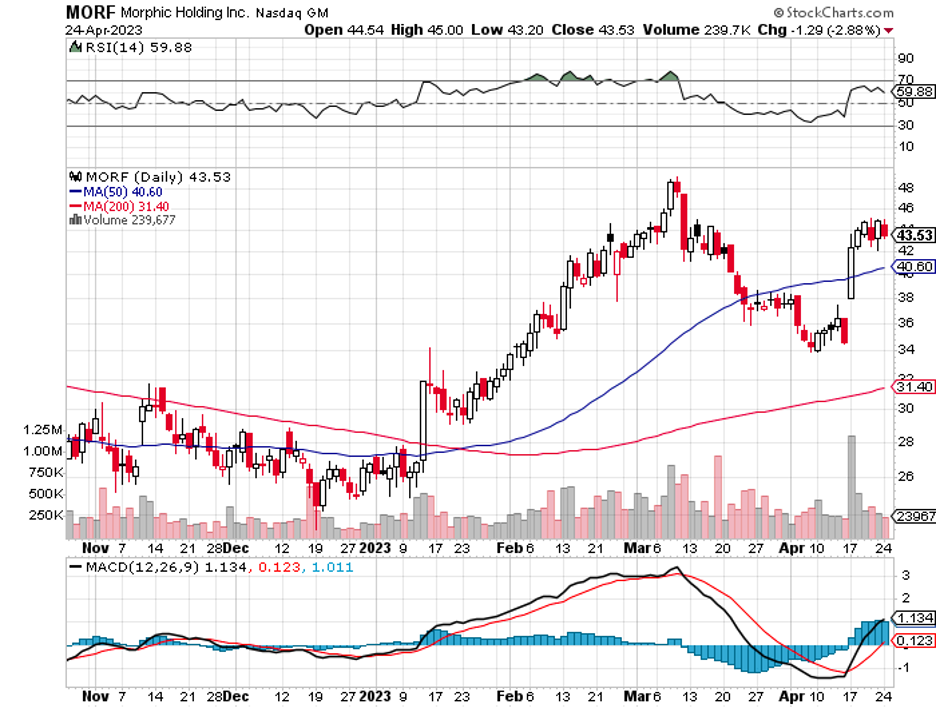
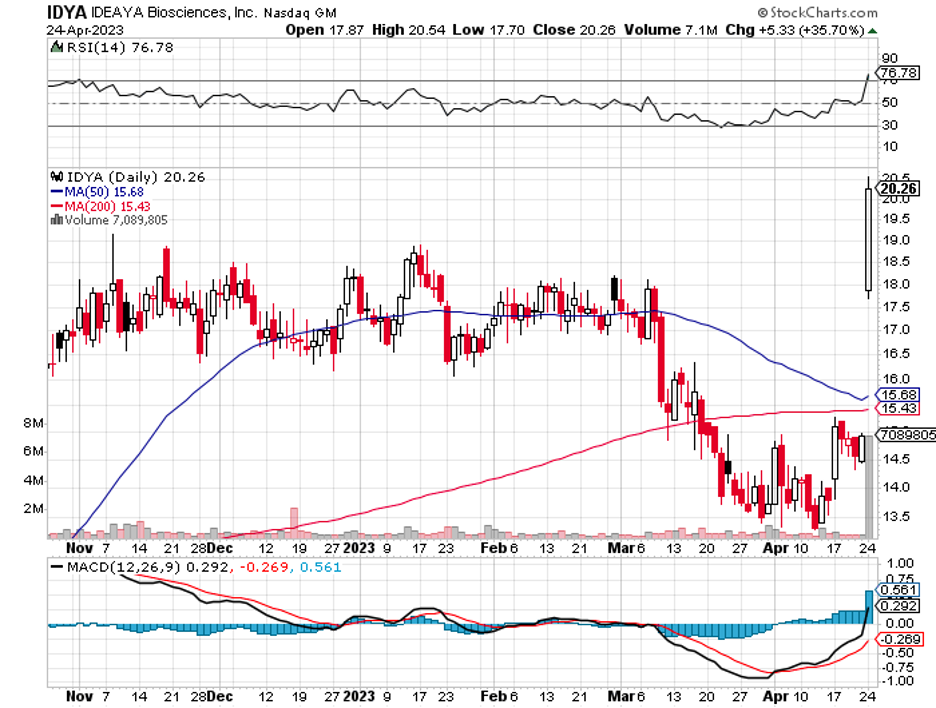
Morphic Holding (MORF), with a market cap of $1.8 billion and a drop of more than 35% from its all-time high, and Ideaya Biosciences (IDYA), which has a market cap of $706 million and has lost almost half its value from its all-time high, could also be targeted for acquisition.
Overall, this is a promising period for the sector. So, take a moment to consider some of the smaller biotech firms in the market. Suppose these companies have a hard time finding interested buyers. In that case, there is still hope for shareholders as there's a chance that a larger corporation may step in and make an acquisition, leading to a substantial payout.
Mad Hedge Biotech and Healthcare Letter
April 20, 2023
Fiat Lux
Featured Trade:
(ANOTHER WILD RIDE IN BIOTECH)
(CRSP), (VRTX), (BLUE), (MRK), (MRNA),(RXDX)
The biotech industry is a rollercoaster of investment opportunities, where great successes and flops can easily be the difference between riches or ruin.
Companies like Moderna (MRNA) have seen this firsthand - going from a $4 billion valuation to nearly 15-fold that amount in just one successful drug launch resulting from their COVID vaccine development program. To rekindle investor interest in what may seem like an erratic space, giants such as Merck (MRK) are also putting money into promising companies; with its recent acquisition of Prometheus Biosciences (RXDX) evidence enough that even long-established pharmas recognize the potential rewards available within biotechnology markets.
Investors seeking the next big win in biotech should look beyond household names for potential gems.
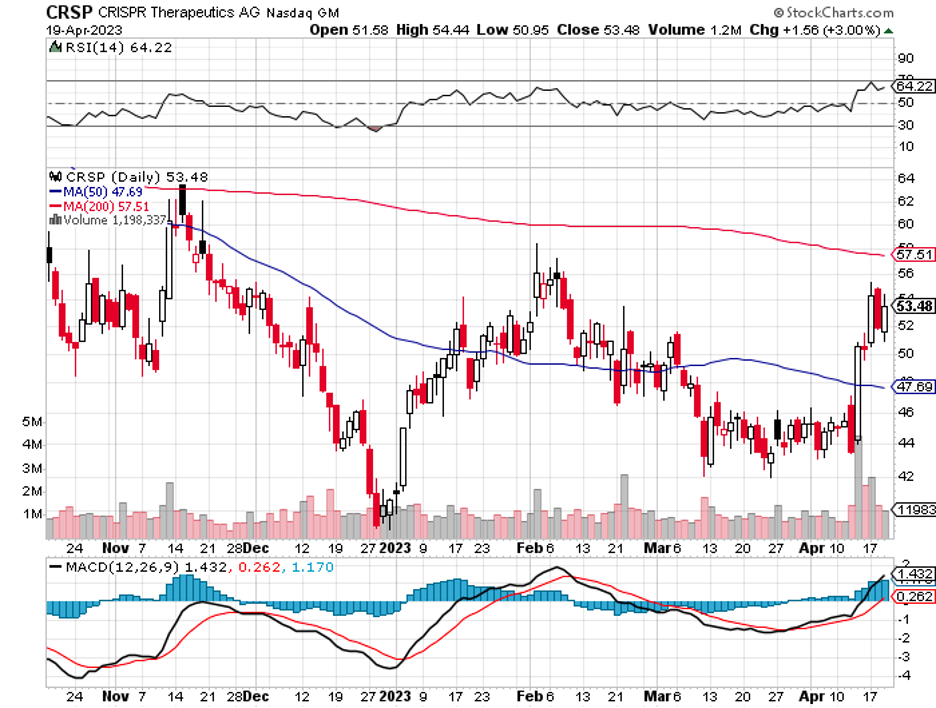
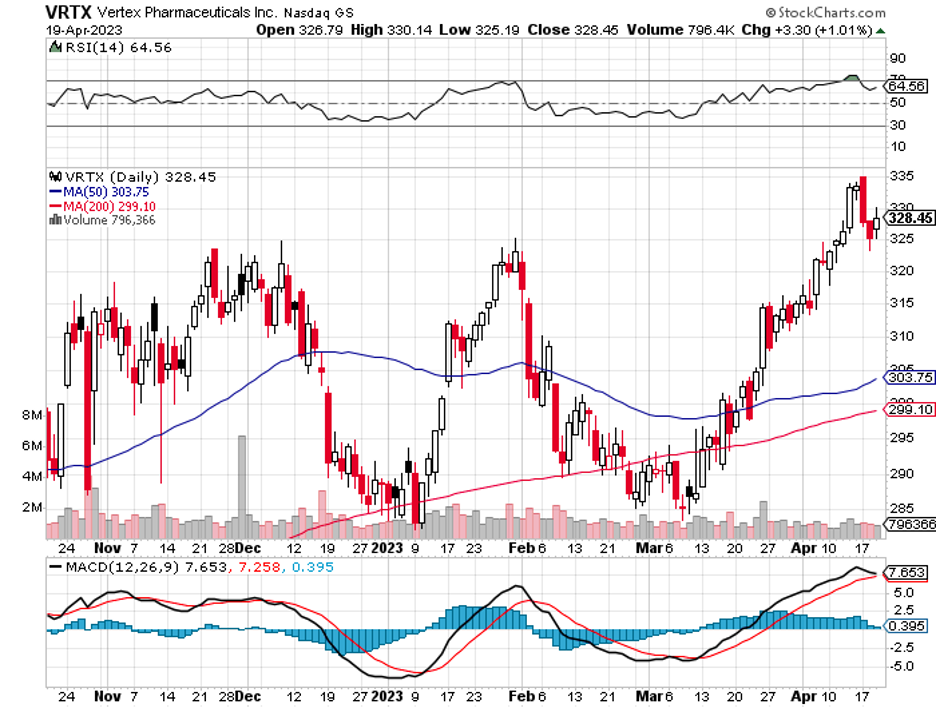
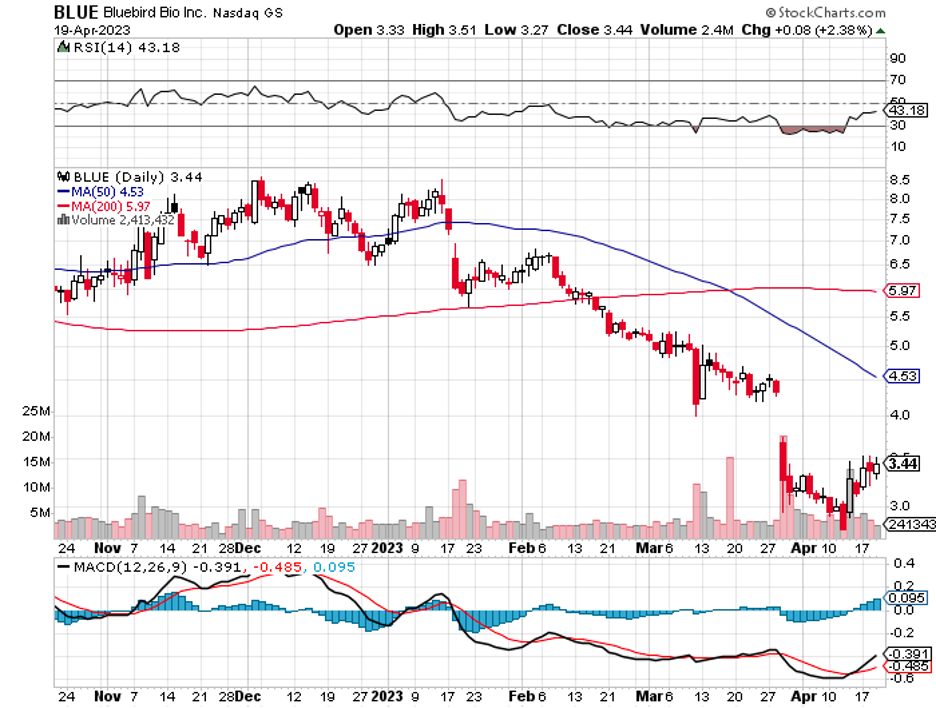
Take CRISPR Therapeutics (CRSP), whose collaboration with Vertex Pharmaceuticals (VRTX) is taking exa-cel to new heights, and Bluebird Bio's (BLUE) progress on lovo-cel as just two examples of lesser-known science ahead of its time that could pay off handsomely in your portfolio.
Recent news shows that two upcoming treatments for sickle cell disease, exa-cel and lovo-cel, could be cost-effective if priced below $1.9 million - a figure the Institute of Clinical and Economic Review (ICER) concluded after conducting an extensive assessment of their financial aspects. Momentum is building as both companies aim to secure FDA approval soon; investor optimism in CRISPR continues to grow increasingly evident due to this good news.
Here’s a quick recap of the treatment’s market opportunity.
Sickle cell disease and thalassemia patients face a hefty financial burden over their lifetime, with disease-related expenses ranging from $4 million to $6 million.
As a gene-editing therapy, exa-cel is a complex treatment to manufacture and administer, which further justifies its potentially high price tag. With this innovative therapy, Vertex Pharmaceuticals and CRISPR Therapeutics aim to target 32,000 sickle cell disease (SCD) and thalassemia (TDT) patients in the United States and Europe, emphasizing the significant market opportunity for the companies.
The potential market for exa-cel, assuming a price point of $2 million, amounts to a staggering $64 billion opportunity.
While this price tag may seem steep, it is not unprecedented in the industry. Bluebird Bio, for instance, secured approval for its gene-editing medicine Zynteglo last year, pricing it at $2.8 million.
The question remains whether third-party payers will be willing to cover the high costs associated with these treatments. Case in point – Bluebird Bio exited the European market after being unable to secure favorable deals with third-party payers. As such, how exa-cel will fare in this challenging reimbursement environment is yet to be determined.
As CRISPR Therapeutics and Vertex Pharmaceuticals chart their path for the launch of exa-cel, they are keenly aware that pricing gene editing therapies rightly is critical.
Both companies have been in active dialogue with insurance providers and governmental programs like Medicaid to ensure this goal comes to fruition. Even if it means accepting modest prices for its product, there's still immense potential for exa-cel due to the lack of existing treatments meeting SCD and TDT patients' needs.
Given these details, where does CRISPR currently stand?
Investing in clinical-stage biotech stocks can be a tricky, with the potential rewards marred by the risks of what still lies ahead. However, for those brave enough to take on this challenge, there's an astronomical market opportunity at stake—the CRISPR Therapeutics and Vertex Pharmaceuticals tag team are vying against formidable foes like Bluebird’s Zynteglo as well as lovo-cel, one that could transform how SCD gene editing is treated if approved soon by FDA.
With a bigger war chest, however, Vertex may have an edge in the race, but CRISPR is no slouch, with an agreement in place to retain 40% of exa-cel's profits. It remains to be seen who will come out on top remains to be seen, but the potential rewards are undeniably huge.
As investors eagerly await the approval of exa-cel, CRISPR Therapeutics' promising gene-editing therapy for sickle cell disease, the company's market capitalization may not reflect the therapy's massive potential.
Assuming that exa-cel delivers and truly becomes a multi-billion-dollar opportunity, CRISPR Therapeutics and Vertex Pharmaceuticals are poised to capture a significant market share with their forthcoming therapies. With the advantage of a stronger cash position, Vertex could push the scales in its favor, helping with the therapies' launch.
Even conservatively assuming profits of $12 billion, CRISPR Therapeutics' market cap of $3.6 billion does not do justice to the company's potential.
While it's still early days, CRISPR Therapeutics' other promising programs should not be ignored. The company is somewhat fairly valued, but exa-cel's approval could send its shares soaring.
Beyond the financial benefits, the success of exa-cel could also bolster CRISPR Therapeutics' position as a leader in gene editing technology.
The company's pipeline includes promising programs in immuno-oncology and rare diseases, and the sustained revenue generated by exa-cel could fuel further research and development efforts. This bodes well for the stock's prospects, as CRISPR Therapeutics continues to advance the frontiers of innovative medicine.
Meanwhile, another possibility for CRISPR is a buyout.
The gene-editing market may be small, but its rapid growth rate of nearly 30% until 2030 presents an enticing opportunity for healthcare businesses to pursue. The market is estimated to reach less than $15 billion by then. With an approved gene-editing therapy, CRISPR Therapeutics could be a valuable asset for a larger healthcare company seeking growth.
At a market cap of less than $4 billion, CRISPR Therapeutics is an affordable acquisition for a top healthcare company looking to expand its portfolio. The company's favorable balance sheet, with over $1.8 billion in cash and short-term investments and modest debt of just over $244 million, makes it even more appealing as a potential acquisition.
The acquisition of CRISPR's business wouldn't come with a lot of headaches, and it could instantly boost a company's growth prospects.
With the sustained revenue from exa-cel and the potential for more clinical and regulatory wins in its other programs, CRISPR Therapeutics' gene-editing pipeline is worth considering for any healthcare business looking to capitalize on the promising growth opportunities in this market.
Overall, the potential for significant upside in the short and mid-term, combined with the company's pioneering spirit, makes CRISPR Therapeutics an attractive investment opportunity for discerning investors.
Global Market Comments
March 22, 2023
Fiat Lux
Featured Trade:
(THE MAD HEDGE TRADERS & INVESTORS SUMMIT VIDEOS ARE UP!)
(THE BARBELL PLAY WITH BERKSHIRE HATHAWAY),
(BRKA), (BRKA), (BAC), (KO), (AXP), (VZ), (BK) (USB), (TLT), (AAPL), (MRK), (ABBV), (CVX), (GM), (PCC), (BNSF)
CLICK HERE to download today's position sheet.
Mad Hedge Biotech and Healthcare Letter
February 28, 2023
Fiat Lux
Featured Trade:
(NO REST FOR THE WEARY)
(PFE), (BNTX), (SGEN), (MRK)
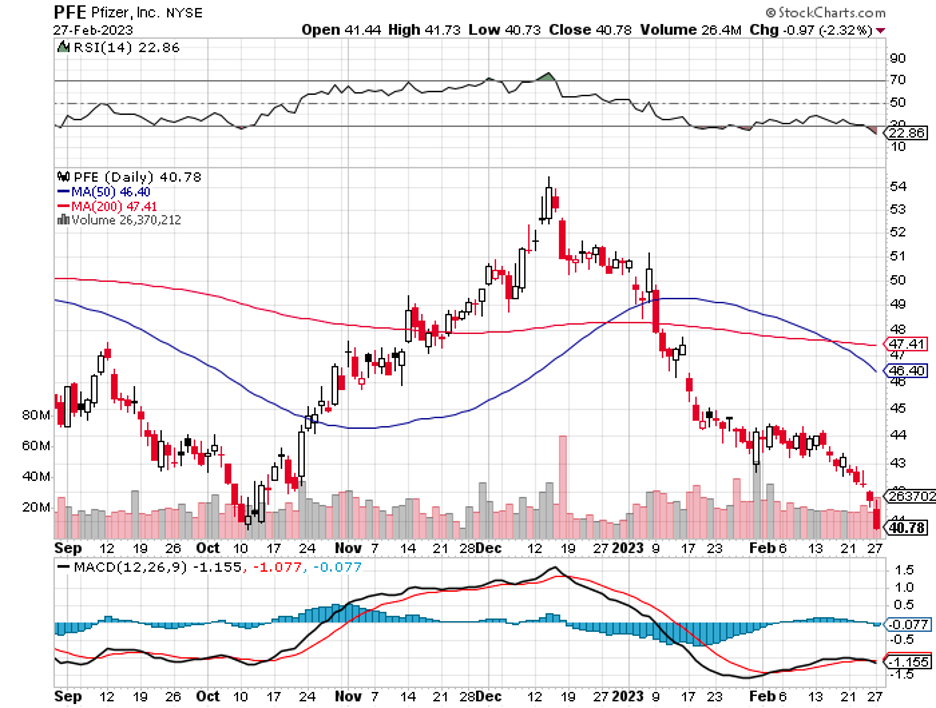
Pfizer (PFE), along with its partner BioNTech (BNTX), developed one of the first COVID-19 vaccines to receive emergency use authorization from regulatory bodies worldwide. The Pfizer-BioNTech vaccine has been highly effective in preventing COVID-19 infection and has played a significant role in the global effort to curb the pandemic.
In addition to its vaccine, Pfizer also developed a COVID-19 treatment called Xeljanz, which has shown promising results in clinical trials. Xeljanz, originally developed to treat rheumatoid arthritis, is an oral medication that works by blocking a molecule involved in the immune response, which can reduce the risk of severe illness and death in some COVID-19 patients.
The Pfizer-BioNTech vaccine and Xeljanz have contributed to the company's financial success during the COVID-19 pandemic. In fact, this lineup made up the bulk of Pfizer’s operational growth of an impressive 30% year over year, pushing the company’s sales in 2022 to a whopping $100 billion.
But now that the pandemic has come to an end, Pfizer faces a massive revenue hit. With its boatload of cash, however, the company is in excellent shape and position to make an acquisition.
The latest name under Pfizer’s radar is Seagen (SGEN).
This is the second time Seagen has found itself the center of acquisition reports. In 2022, the biotech was said to be in serious discussion with Merck (MRK). At one point, Merck reportedly offered $200 per share, but the talks fell apart because neither party was happy with the final price.
Now it’s Pfizer’s turn to pitch its offer. The Big Pharma company is said to be in discussions to buy the cancer-focused biotech for a deal worth more than $30 billion.
This deal could prove to be a boon for Pfizer as the company sustains its momentum and continue to boost its portfolio and late-stage programs. Aside from the waning sales of its COVID products, it also faces a patent cliff as some of its blockbuster drugs will soon lose their exclusivity.
Seagen focuses on a group of cancer therapies called antibody-drug conjugates, or ADCs.
Basically, ADCs are a type of cancer treatment that combines the specificity of antibodies with the potency of chemotherapy. ADCs consist of three components: an antibody that targets a specific cancer cell marker, a cytotoxic drug that kills the cancer cell, and a linker that connects the two components.
Once the ADC is administered to the patient, the antibody portion of the ADC selectively binds to the cancer cell surface marker. Then the entire ADC is internalized into the cancer cell. Once inside the cancer cell, the linker is degraded, and the cytotoxic drug is released, killing the cancer cell.
The advantage of ADCs over traditional chemotherapy is that they are more selective and can target cancer cells more precisely while minimizing damage to healthy cells. ADCs have shown promising results in clinical trials and are currently approved for the treatment of several types of cancer.
In 2019, Seagen received FDA approval for its ADC named Padcev. The treatment raked in $451 million in 2022, but sales are projected to reach $2.4 billion in 2027.
Since Merck has been working on its own ADCs, a Pfizer acquisition of the sought-after Seagen seems likely as it would not attract anti-trust investigations.
One of the main reasons Big Pharma names are fighting over Seagen is the biotech’s revenue forecasts. By 2026, Seagen is projected to rake in $5 billion in revenue and peak at $9 billion by 2030.
Aside from Padcev’s current indication, Seagen has been working on how it could be used as a combo treatment alongside Merck’s top-selling Keytruda to target bladder cancer. The company also queued the drug for several trials. These would boost the company’s $2 billion annual revenue and $30.1 billion market value if approved.
Pfizer has been sitting on a massive war chest thanks to the success of its COVID programs. Despite its impressive cash flow, the company has no time to rest as it scrambles to ride the momentum and ensure that all its progress doesn’t go to waste.
Since then, the company has been aggressive in striking deals, including its $11.6 billion purchase of Biohaven Pharmaceuticals, which came with a top-selling migraine treatment, and its $5.4 billion agreement with Global Blood Therapeutics, which brought with its rare hematological therapies.
If Pfizer buys Seagen, it will mark the most significant deal since the Big Pharma’s acquisition of Wyeth for $68 billion back in 2009.
Pfizer disclosed that it plans to add $25 billion to its annual revenue via business development agreements at the end of the decade as it aims to mitigate the projected $17 billion loss from its products going off-patent. Considering that the company would buy Seagen shares at a premium, the deal would be a win-win for both parties.
Mad Hedge Biotech and Healthcare Letter
January 24, 2023
Fiat Lux
Featured Trade:
(A MARKET-BEATING HEALTHCARE STOCK)
(LLY), (ABBV), (AMGN), (BMY), (GILD), (JNJ), (MRK), (PFE), (MRNA)
The previous year was horrible for the stock market, with the S&P 500 dropping in value by roughly 19%, marking its first decline since 2018 and only the second time it sank since the 2008 financial crisis.
It was an even more horrid year for the biotechnology industry, with the flagship SPDR S&P Biotech ETF (XBI) sinking by 26% following its more than 20% decline in 2020—a catastrophic blow for such a promising index which delivered an impressive over 30% gains in 6 of the last 10 years.
Meanwhile, the stock prices in the large-cap pharmaceutical segment generally stayed buoyant. The “Big 8,” in particular—AbbVie (ABBV), Amgen (AMGN), Bristol Myers Squibb (BMY), Eli Lilly (LLY), Gilead Sciences (GILD), Johnson & Johnson (JNJ), Merck & Co (MRK), and Pfizer (PFE)—reported an average share price gains of roughly 15%.
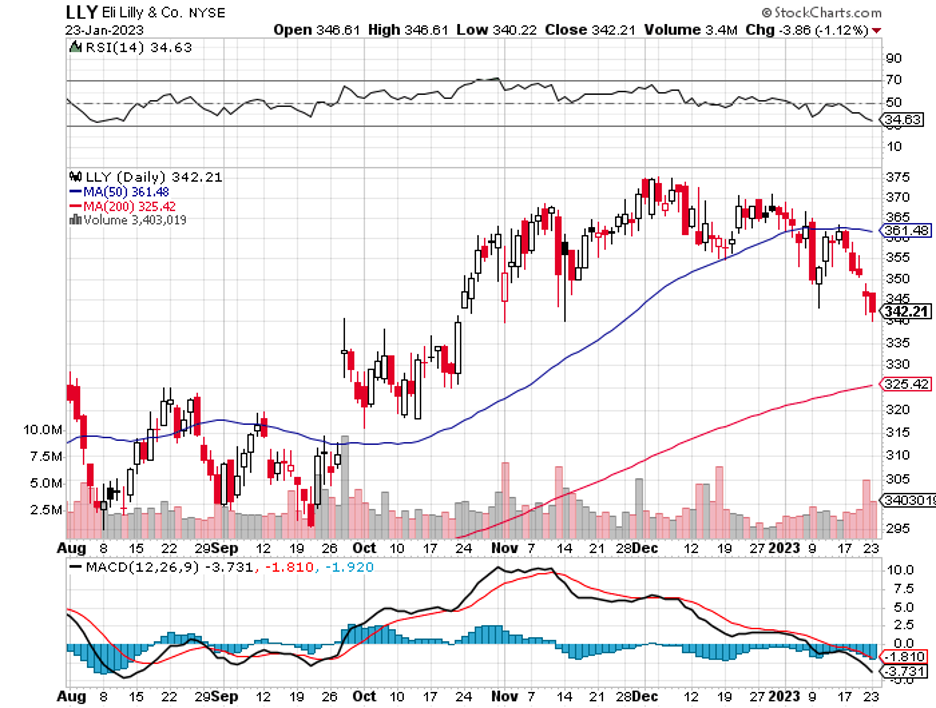
Among the names in this list, Eli Lilly has become one of the go-to “safe” stocks during these turbulent times.
In contrast to the broader market, the company has performed exceptionally well in the last 12 months, with its share prices climbing by 12% within the timeframe.
One of the critical reasons that propelled Eli Lilly’s performance was the regulatory approval it obtained for Mounjaro, a diabetes treatment, in May 2022. Although this pharma giant has been hailed as the leader in the diabetes care segment for decades, Mounjaro is a game changer.
This newly approved diabetes treatment could blow any competitor out of the water, with peak sales estimated to hit $25 billion.
Besides diabetes, Mounjaro is also under review as a potential obesity treatment, signifying label expansions for this drug.
If this pushes through, then Eli Lilly would become one of the first movers in the diabetes and obesity markets, with only Novo Nordisk (NVO) standing as a realistic challenger. Based on the market size and the lack of competitors, the profit margins for these segments could be likened to those recorded by Pfizer and Moderna (MRNA) for the COVID-19 vaccines.
There are also other promising candidates in Eli Lilly’s portfolio. One is Donanemab, which is a potential treatment for Alzheimer’s disease. According to the company's Phase 3 study, its candidate delivered better results than Biogen’s (BIIB) approved Alzheimer’s treatment, Aduhelm.
Eli Lilly recently sent its atopic dermatitis treatment candidate, Lebrikizumab, for regulatory review in both the US and Europe. This marks another potential blockbuster for the company, with many treatments queued for review and possible approval by the end of 2023.
As for the company’s current portfolio, most of its products still report good results. For instance, sales of its cancer drug Verzenio rose by 84% year over year to record $617.7 million in the third quarter of 2022. Revenue for the diabetes treatment Trulicity climbed 16% year over year to reach $1.9 billion.
Another factor that makes Eli Lilly attractive is its dividend. Over the past five years, the company has doubled its payout. In 2022, the company disclosed a 15% hike to its dividend payouts. This marked the fifth consecutive year Eli Lilly implemented.
In December 2022, Eli Lilly shared its updated guidance for 2023. For 2022, the company projected that its top line would be between $28.5 billion and $29 billion. That represents a modest growth rate. Eli Lilly shareholders can anticipate better performance this year.
For 2023, the company estimates sales to climb to $30.8 billion. While that amount may appear underwhelming, it’s essential to keep in mind that this is a very conservative estimate. Eli Lilly is taking into account several concerns that may affect its growth, such as patent exclusivity losses and a decline in its COVID-19 sales.
Overall, Eli Lilly has proven itself to be a good and solid business that looks in excellent shape to continue delivering market-beating returns.
With a market capitalization of over $350 billion and several candidates in its pipeline, this company has a strong potential to be worth much more in the following years. Also, it’s critical to bear in mind that since 2020, Eli Lilly shares have skyrocketed by 176%, dwarfing the S&P 500’s 20%—a trend I expect to continue. I suggest you buy the dip.
Mad Hedge Biotech and Healthcare Letter
December 27, 2022
Fiat Lux
Featured Trade:
(AN UNDERRATED YET OVERACHIEVING STOCK)
(PFE), (UNH), (JNJ), (LLY), (ABBV), (BMY), (LEGN), (VRTX), (CRSP)