• support@madhedgefundtrader.com
  • Member Login
Mad Hedge Fund Trader
  • Home
  • About
  • Store
  • Luncheons
  • Testimonials
  • Contact Us
  • Click to open the search input field Click to open the search input field Search
  • Menu Menu

Tag Archive for: (MSFT)

Arthur Henry

Who Will Be the Next FANG?

Diary, Newsletter

FANGS, FANGS, FANGS! Can’t live with them but can’t live without them either.

I know you’re all dying to get into the next FANG on the ground floor, for to do so means capturing a potential 100-fold return, or more.

I know because I’ve done it four times. The split adjusted average cost of my Apple shares is only 25 cents compared to today’s $174, so you can understand my keen interest. My average on Tesla is $16.50.

Uncover a new FANG and the riches will accrue rapidly. Facebook (FB), Amazon AMZN), Netflix (NFLX), and Alphabet (GOOGL) didn’t exist 25 years ago. Apple (AAPL) is relatively long in the tooth at 40 years. And now all four are in a race to become the world’s first trillion-dollar company.

One thing is certain. The path to FANGdom is shortening. It took Apple four decades to get where it is today, Facebook did it in one. As Steve Jobs used to tell me when he was running both Apple and Pixar, “These overnight successes can take a long time.”

There is also no assurance that once a FANG always a FANG. In my lifetime, I have seen far too many Dow Average components once considered unassailable crash and burn, like Eastman Kodak (KODK), General Electric (GE), General Motors (GM), Sears (SHLD), Bethlehem Steel, and IBM (IBM).

I established in an earlier piece that there are eight essential attributes of a FANG, product differentiation, visionary capital, global reach, likeability, vertical integration, artificial intelligence, accelerant, and geography.

We are really in a “What have you done for me lately” world. That goes for me too. All that said, I shall run through a short list for you of the future FANG candidates we know about today.

Alibaba (BABA)

Alibaba is an amalgamation of the Chinese equivalents of Amazon, PayPal, and Google all sewn together. It accounts for a staggering 63% of all Chinese online commerce and is still growing like crazy. Some 54% of all packages shipped in China originate from Alibaba.

The juggernaut has over half billion active users, and another half billion placing orders through mobile phones. It is a master of AI and B2B commerce. There is nothing else like it in the world.

However, it does have some obvious shortcomings. Its brand is almost unknown in the US. It has a huge problem with fakes sold through their sites.

It also has an ownership structure for foreign investors that is byzantine, to say the least. It is a contractual right to a share of profits funneled through a PO box in the Cayman Island. The SEC is interested, to say the least.

We also don’t know to what extent founder Jack Ma has sold his soul to the Beijing government. It’s probably a lot. That could be a problem if souring trade relations between the US and the Middle Kingdom get worse, a certainty with the current administration.

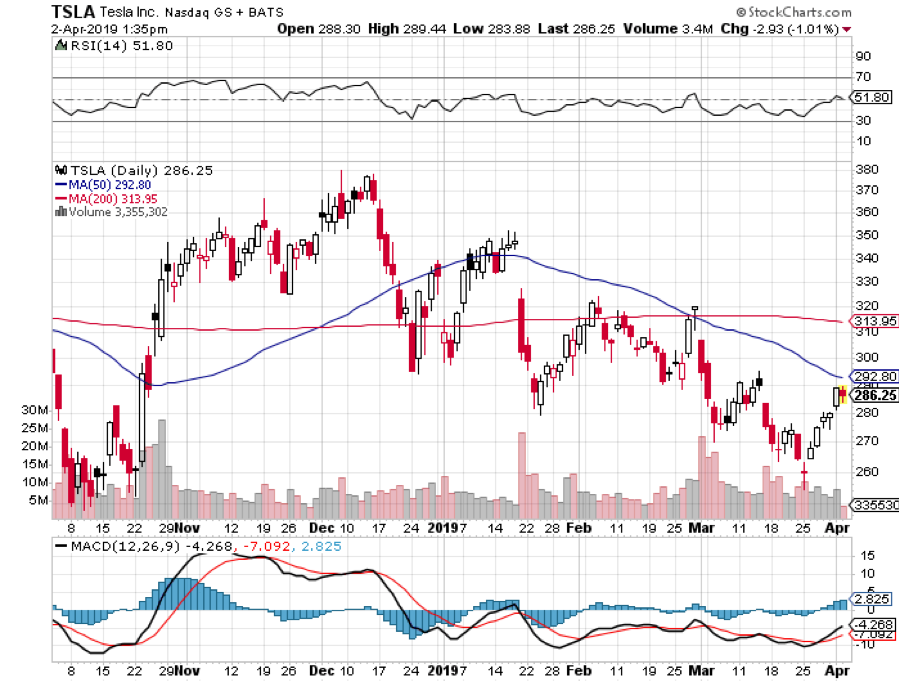
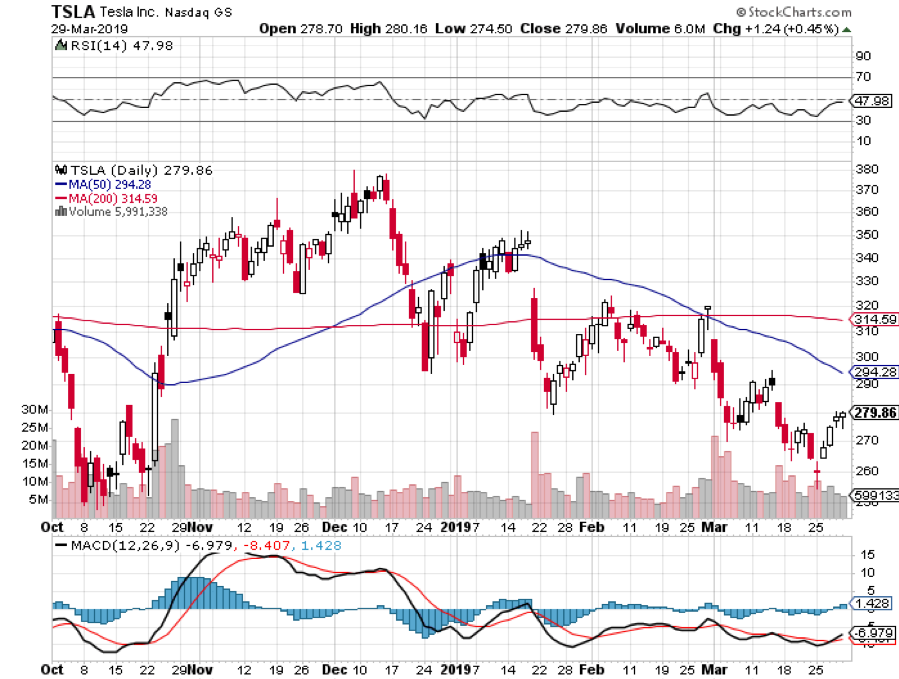
Tesla (TSLA)

Before you bet on a new startup breaking into the Detroit Big Three, go watch the movie “Tucker” first. Spoiler Alert: It ends in tears.

Still, Tesla (TSLA) has just passed the 270,000 mark in the number of cars manufacturered. Tucker only got to 50.

Having led my readers into the stock after the IPO at $16.50, I am already pretty happy with this company. Owning three of their cars helps too (two totaled). But Tesla still has a long way to go.

It all boils down to the success of the $35,000, 200-mile range Tesla 3 for which it already has 500,000 orders. So far so good.

It’s all about scale. If it can produce these cars in sufficient numbers, it will take over the world and easily become the next FANG. If it can’t, it won’t. It’s that simple.

To say that a lot is already built into the share price would be an understatement. Tesla now trades at ten times revenues compared to 0.5 for Ford (F) and (General Motors (GM). That’s a relative overvaluation of 20:1.

Any of a dozen competing electric car models could scale up with a discount model before they do, such as the similarly priced GM Bolt. But with a ten-year lead in the technology, I doubt it.

It isn’t just cars that will anoint Tesla with FANG sainthood. The firm already has a major presence in rooftop solar cell installation through Solar City, utility sized solar plants, industrial scale battery plants, and is just entering commercial trucks. Consider these all seeds for FANGdom.

One thing is certain. Without Tesla, there wouldn’t be s single mass-market electric car on the road today.

For that, we can already say thanks.

Uber

In the blink of an eye, ride sharing service Uber has become essential for globe-trotting travelers such as myself.

Its 2 million drivers completely disrupted the traditional taxi model for local transportation which remains unchanged since the days of horses and buggies.

That has created the first $75 billion of enterprise value. It’s what’s next that could make the company so interesting.

It is taking the lead in autonomous driving. It could also replace FeDex, UPS, DHL, and the US post office by offering same day deliveries at a fraction of the overnight cost.

It is already doing this now with Uber Foods which offers immediate delivery of takeouts (click here if you want lunch by the time you finish reading this piece.)

UberCopters anyone? Yes, it’s already being offered in France and Brazil.

Uber has the potential to be so much more if it can just outlive its initial growing pains.

It is a classic case of the founder being a terrible manager, as Travis Kalanick has lurched from one controversy to the next. The board finally decided he should spend much time on his new custom built 350-foot boat.

Its “bro” culture is notorious, even in Silicon Valley.

It is also getting enormous pushback from regulators everywhere protecting entrenched local interests. It has lost its license in London, the only place in the world that offered a decent taxi service pre-Uber. Its drivers are getting beaten up in Paris.

However, if it takes advantage of only a few of the doors open to it, status as a FANG beckons.

Walmart (WMT)

A few years ago, I was heavily criticized for pointing out that half the employees at my local Walmart (WMT) were missing their front teeth. They have since received a $2 an hour's pay raise, but the teeth are still missing. They don’t earn enough money to get them fixed.

The company is the epitome of bricks and mortar in a digital world with 12,000 stores in 28 countries. It is the largest private employer in the US, with 1.4 million workers, mostly earning minimum wage.

The Walmart customer is the very definition of the term “late adopter.” Many are there only because unlike Amazon, Wal-Mart accepts cash and Food Stamps.

Still, if Walmart can, in any way, crack the online nut, it would be a turbocharger for growth. It moved in this direction with the acquisition of Jet.com for $3 billion, a cutting-edge e-commerce firm based in Hoboken, NJ.

However, this remains a work in progress. Online sales account for only 4% of Walmart’s total. But they could only be a few good hires at the top away from success.

Microsoft (MSFT)

Talk about going from being the 800-pound gorilla to an 80 pound one, and then back to 800 pounds.

I don’t know why Microsoft (MSFT) lost its way for 15 years, but it did. Blame Bill Gates’s retirement from active management and his replacement by his co-founder Steve Ballmer.

Since Ballmer’s departure in 2014, the performance of the share price has been meteoric, rising by some 125% over the past two years.

You can thank the new CEO Satya Nadella who brought new vitality to the job and has done a complete 180, taking Microsoft belatedly into the cloud.

Microsoft was never one to take lightly. Windows still powers 90% of the world’s PCs. No company can function without its Office suite of applications (Word, Excel, and PowerPoint). SQL Server and Visual Studio are everywhere.

That’s all great if you want to be a public utility, which Microsoft shareholders don’t.

LinkedIn, the social media platform for professionals, could be monetized to a far greater degree. However, specialization does come at the cost of scalability.

It seems that the future is for Microsoft to go head to head against next door neighbor Amazon (AMZN) for the cloud services market while simultaneously duking it out with Alphabet (GOOGL).

My bet is that all three win.

Airbnb

This is another new app that has immeasurably changed my life for the better. Instead of cramming myself into a hotel suite with a wildly overpriced minibar for $600 a night, I get a whole house for $300 anywhere in the world, with a new local best friend along with it.

Overnight, Airbnb has become the world’s largest hotel chain without actually owning a single hotel. At its latest funding round in 2017, it was valued at $31 billion.

The really tricky part here is for the firm to balance out supply and demand in every city in the world at the same time. It is also not a model that lends itself to vertical integration. But who knows? Maybe priority deals with established hotels are to come.

This is another firm that is battling local regulation, that great barrier to technological innovation. None other than its home town of San Francisco now has strict licensing requirements for renters, a 30 day annual limitation, and a $1,000 a day fine for offenders.

The downtowns of many tourist meccas like Florence, Italy and Paris, France have been completely taken over by Airbnb customers, driving rents up and locals out.

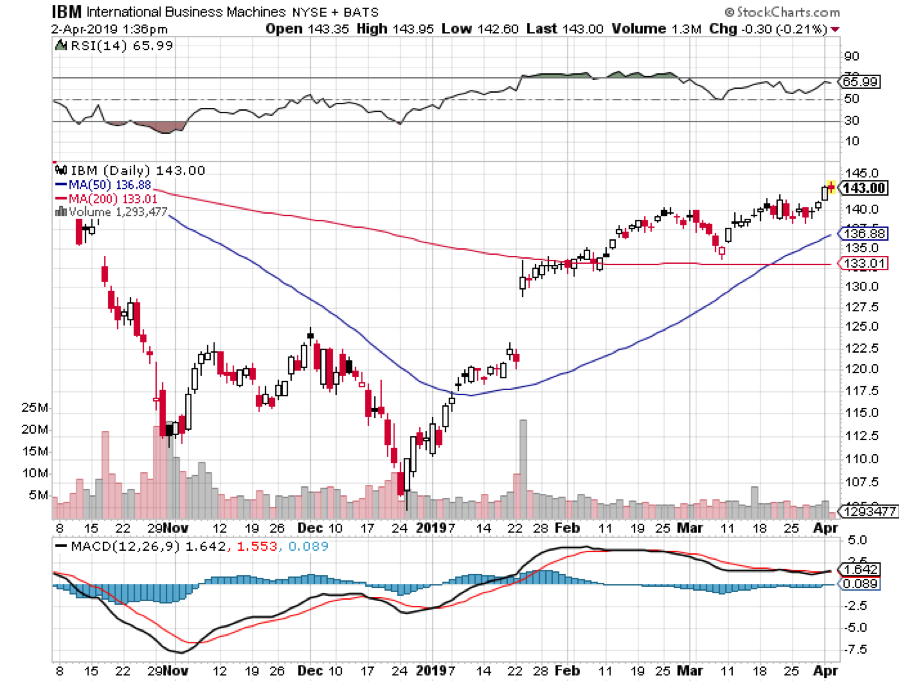
IBM (IBM)

There was a time in my life when IBM was so omnipresent we thought like the Great Pyramids of Egypt it would be there forever. How times change. Even Oracle of Omaha Warren Buffet became so discouraged that he recently dumped the last of his entire five-decade long position.

A recent 20 consecutive quarters of declining profits certainly hasn’t helped Big Blue’s case. It is one of the only big technology companies whose share price has gone virtually nowhere for the past two years.

IBM’s problem is that it stuck with hardware for too long. An entrenched bureaucracy delayed its entry into services and the cloud, the highest growth areas of technology.

Still, with some $80 billion in annual revenues, IBM is not to be dismissed. Its brand value is still immense. It still maintains a market capitalization of $144 billion.

And it has a new toy, Watson, the supercomputer named after the company’s founder, which has great promise, but until now has remained largely an advertising ploy.

If IBM can reinvent itself and get back into the game, it has FANG potential. But for the time being, investors are unimpressed and sitting on their hands.

The Big Telecom Companies

My final entrant in the FANGstakes would be any combination of the four top telecommunication companies, Verizon (VZ), AT&T (T), Comcast (CMCSA), and Time Warner (TWX), which now control a near monopoly in the US.

There is a reason why the administration is blocking the AT&T/Time Warner merger, and it is not because these companies are consistently cited in polls as the most despised in America. They are trying to stop the creation of another hostile FANG.

Still, if any of the big four can somehow get together, the consequences would be enormous. Ownership of the pipes through which the modern economy courses bestows great power on these firms.

And Then….

There is one more FANG possibility that I haven’t mentioned. Somewhere, someplace, there is a pimple-faced kid in a dorm room thinking up a brand-new technology or business model that will take the world by storm and create the next FANG.

Call me crazy, but I have been watching this happen for my entire life.

I want to thank my friend, Scott Galloway, of New York University’s Stern School of Business, for some of the concepts in this piece. His book, “The Four” is a must read for the serious tech investor.


Creating the Next FANG?

https://www.madhedgefundtrader.com/wp-content/uploads/2018/02/tech-guys.jpg 368 550 Arthur Henry https://madhedgefundtrader.com/wp-content/uploads/2019/05/cropped-mad-hedge-logo-transparent-192x192_f9578834168ba24df3eb53916a12c882.png Arthur Henry2019-04-03 01:06:312019-04-02 17:47:43Who Will Be the Next FANG?
Mad Hedge Fund Trader

April 1, 2019

Diary, Newsletter, Summary

Global Market Comments
April 1, 2019
Fiat Lux

Featured Trade:

(MARKET OUTLOOK FOR THE WEEK AHEAD, OR THE INMATES ARE RUNNING THE ASYLUM)
(SPY), (TLT), (FCX), (DIS), (TSLA), (IWM), (AAPL),
 (GOOGL), (MSFT), (PYPL), (AMZN)

https://madhedgefundtrader.com/wp-content/uploads/2019/05/cropped-mad-hedge-logo-transparent-192x192_f9578834168ba24df3eb53916a12c882.png 0 0 Mad Hedge Fund Trader https://madhedgefundtrader.com/wp-content/uploads/2019/05/cropped-mad-hedge-logo-transparent-192x192_f9578834168ba24df3eb53916a12c882.png Mad Hedge Fund Trader2019-04-01 08:07:292019-04-01 08:12:16April 1, 2019
Mad Hedge Fund Trader

The Market Outlook for the Week Ahead, or The Inmates are Running the Asylum

Diary, Newsletter

I have decided to run for president next year. If you wondered why my content has been slacking off lately, it’s because I’ve been hard at work writing the Mueller Report. Oh, and the Dow Average will reach 100,000 by December.

Ha! Gotcha! April fool.

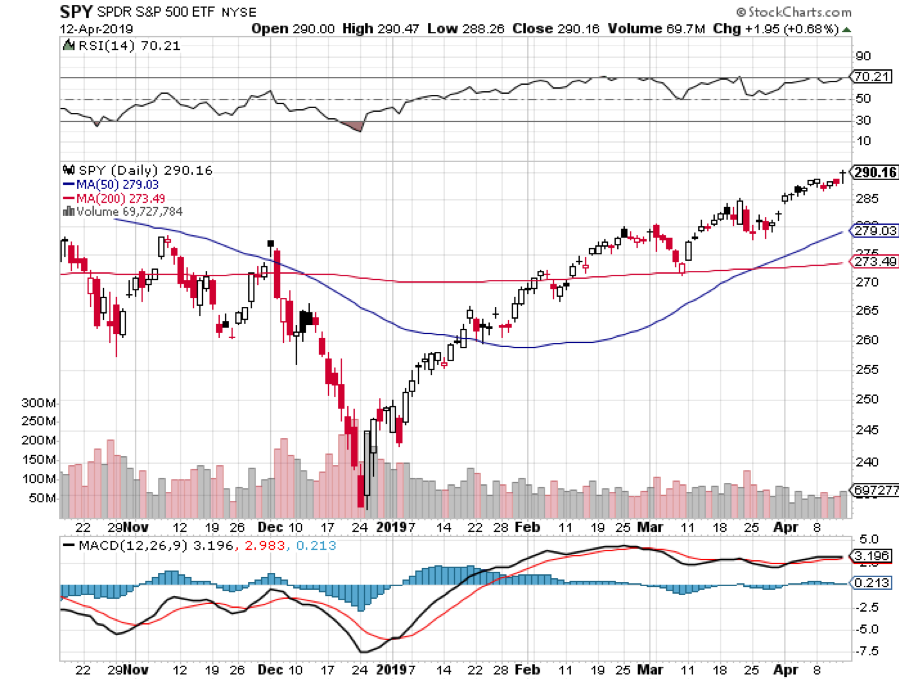
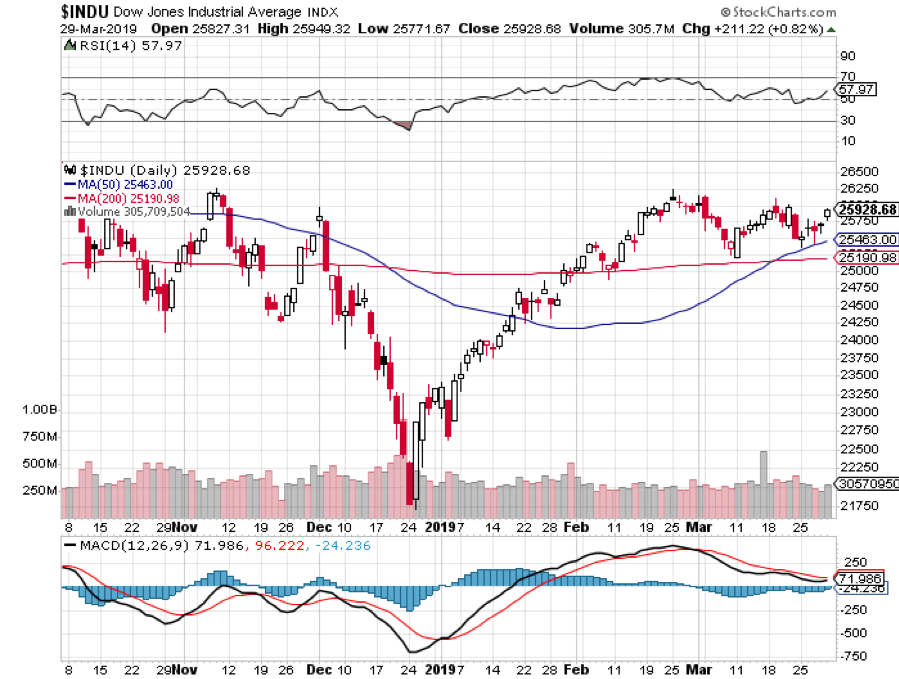
Still, looking at the market action last week, you really have to wonder if the inmates have seized control of the asylum when the average rose four of five days. These are people who are buying stocks at a decade high, with collapsing earnings, and the rest of the world falling into recession.

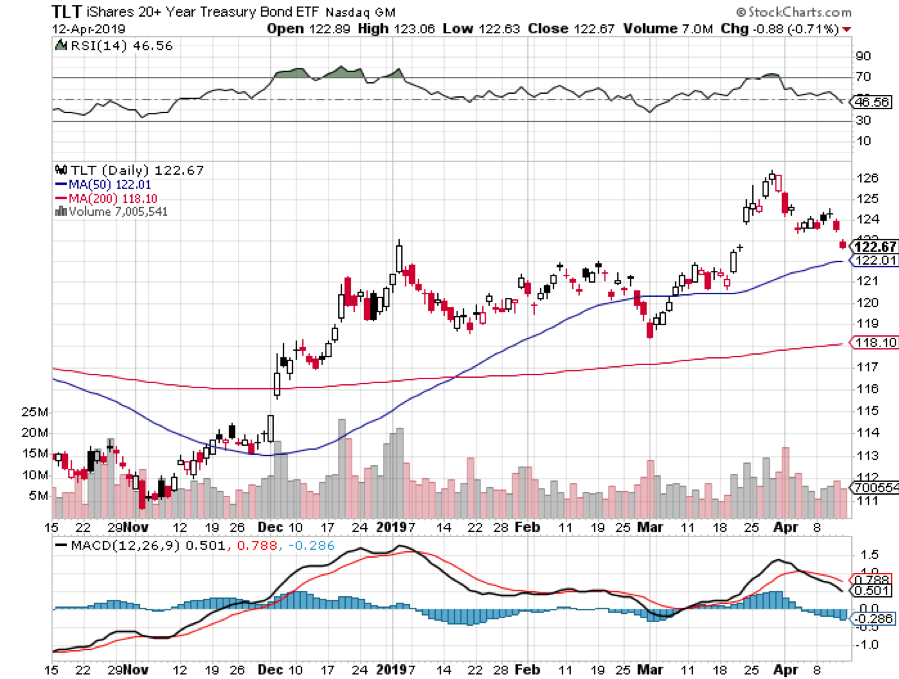
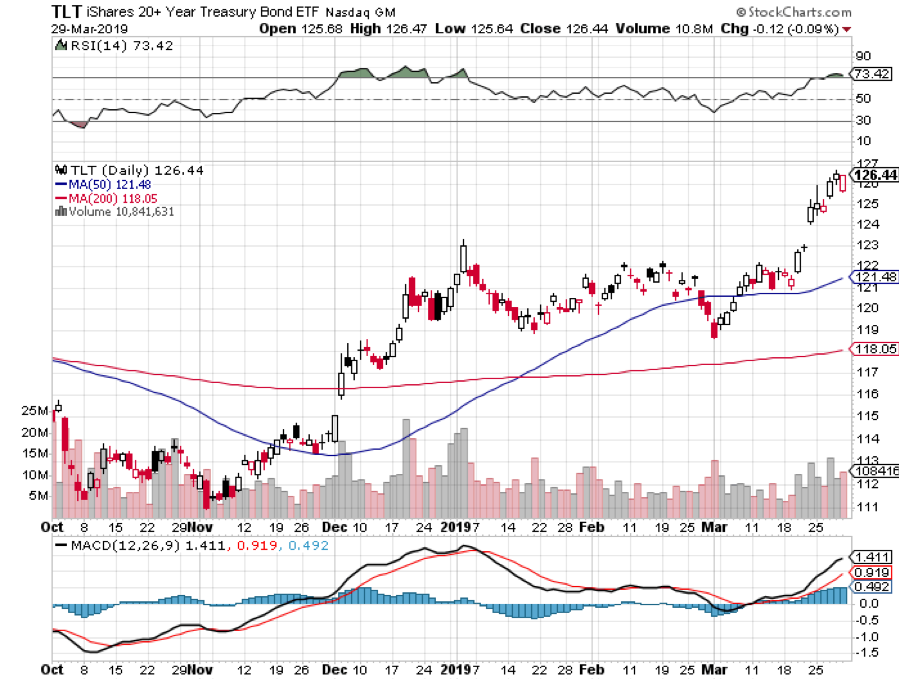
However, there is a method to their madness. Interest rates across every maturity in Europe and Japan turned negative last week. Suddenly both US stocks AND bonds looked like the bargain of the century, but only if you were foreign. An avalanche of cash into the US followed triggering an explosive move up in the bond market. For the first time in three years, I was not short.

And here’s the interesting part. It could continue for months.

In the meantime, investors have been grappling with a number that will be the most important print of the year. The first look at Q1 2019 GDP will be published on April 23, and it is widely expected to be awful, at less than a 1% annual rate. It will include the effects of the record 34-day government shutdown as well as the horrendous weather and flooding of last winter.

So, on the one hand, you have a stock market that is simultaneously being propped up by enormous cash flows and held back by a weakening economy and earnings and profit-taking from the best quarterly start in ten years. It all adds up to a market that could go absolutely nowhere.

And I just so happen to have the perfect portfolio for such a market. These are the precise conditions where deep in-the-money call and put option spreads absolutely prosper. When everything is going nowhere, spreads always expire at their maximum profit points.

The global easing trend is accelerating as central banks rush to head off the next global recession. Expect interest rates to drop to levels you once thought impossible.

The global bond short covering panic continues, with ten-year US Treasury yields dropping to an eye-popping 2.33%. Slowing global growth is to blame. Did I hear the word “refi”?

Foreign investors poured into the US bond market, driving ten-year US Treasury yields down to 2.33%. When everyone else in the world has negative yields, our bonds become the best paying in the world.

Q4 GDP final report came in at 2.2% as expected, down a third from Q3. Expect that figure to more than halve in Q1 2019. Put on your hard hat.

The Mueller Report gave Trump a clean bill of health, at least on the collusion issue. But it opened up a dozen other lines of investigation that will continue for years. It’s definitely a “RISK ON” development.

US Existing Home sales jumped 11.8% in January. Low mortgage interest rates are finally kicking in with the 30-year fixed at 4.23%. This is a one hit wonder, not the beginning of a new trend. But interest rates are going lower.

New Home Sales were up 4.9% to 667,000 units in February in a rare positive data point. Could low interest rates finally be kicking in? Still, avoid homebuilders.

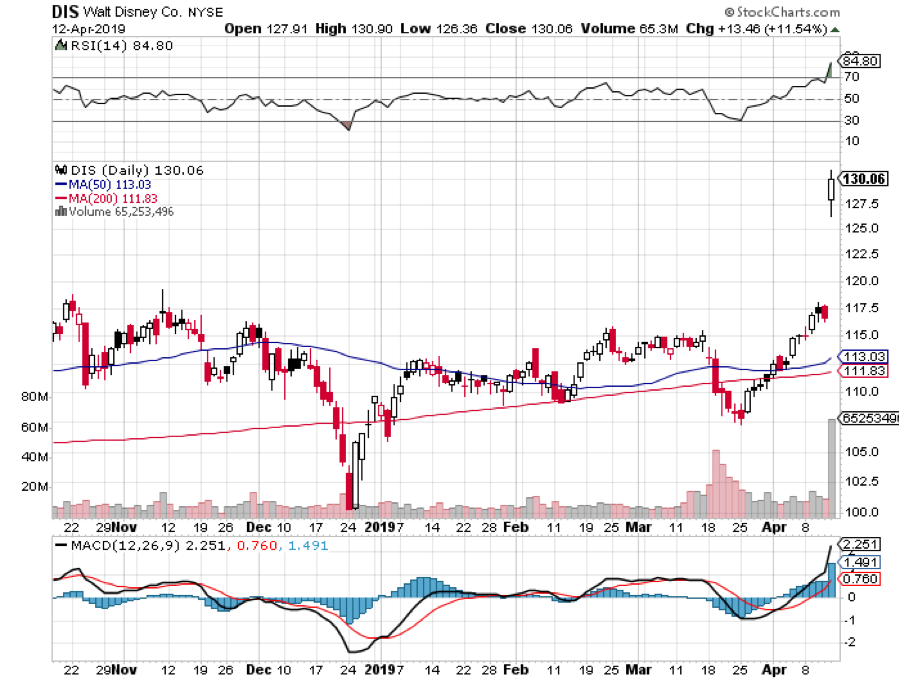
Apple (AAPL) announced its new streaming service, Apple TV Plus, and the stock fell on a “sell the news” drop. Roku is included in the package so buy (ROKU). The Apple offering is weak enough to allow plenty of room for Disney to launch its own streaming service Disney Plus at the end of this year. Prepare for an onslaught of princesses. Buy (DIS) too.

Home price appreciation hit a four-year low with the S&P Case Shiller National Home Price Index growing only 4.2% YOY in January, down from 4.6% the previous month. Las Vegas, Phoenix, and Minneapolis are still showing the biggest gains while San Francisco and Seattle are seeing the biggest price drops. Avoid homebuilders (ITB).

Lyft (LYFT) priced at $72 a share, the top end of expectations, valuing the company at an eye popping $25 billion at the end of the day. Never mind that the company is losing money hand over fist, it’s all about potential. The tech IPO bubble top has started!
 

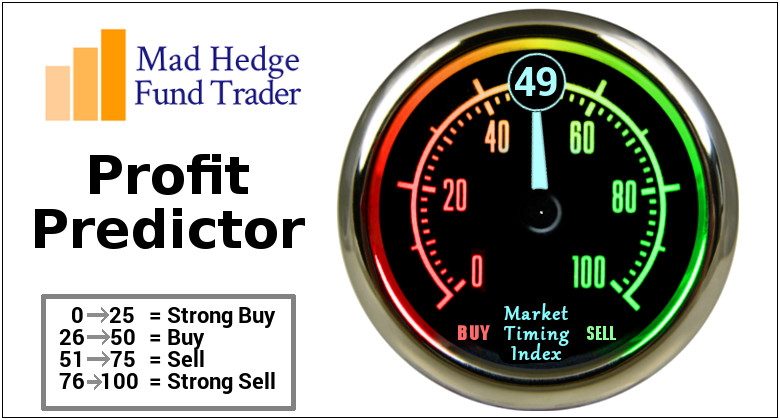
The Mad Hedge Fund Trader was up on the week with time decay in our combed 13 positions our best friend. The quarter end window dressing was kind to us.

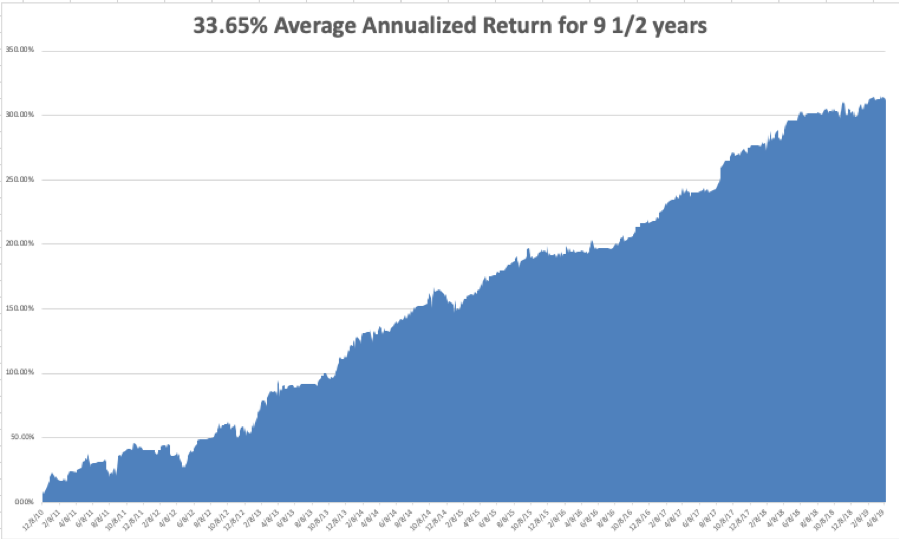
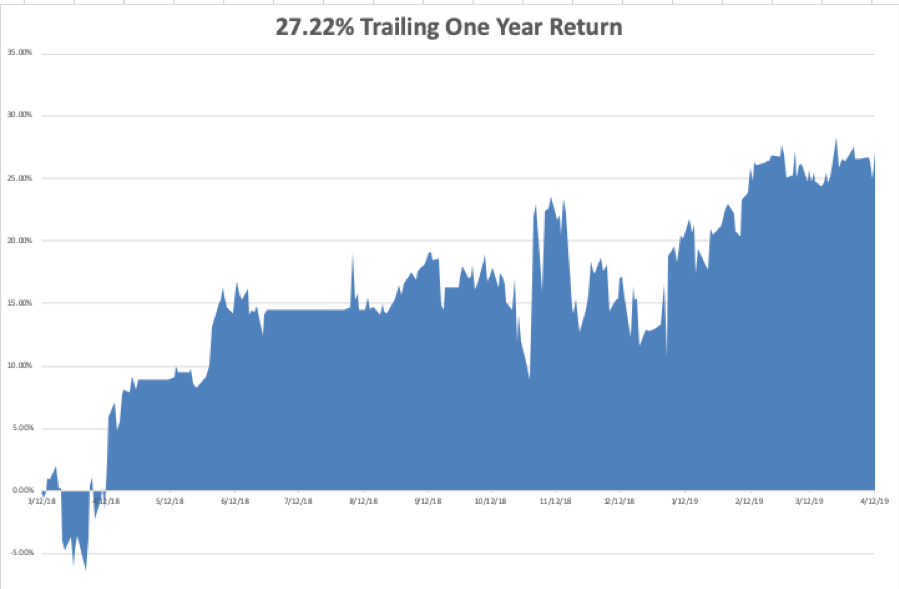
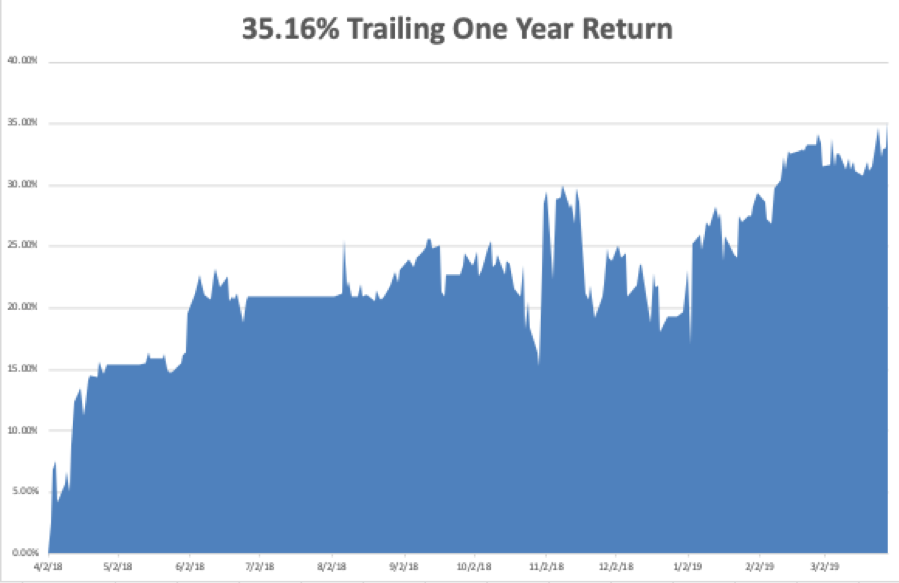
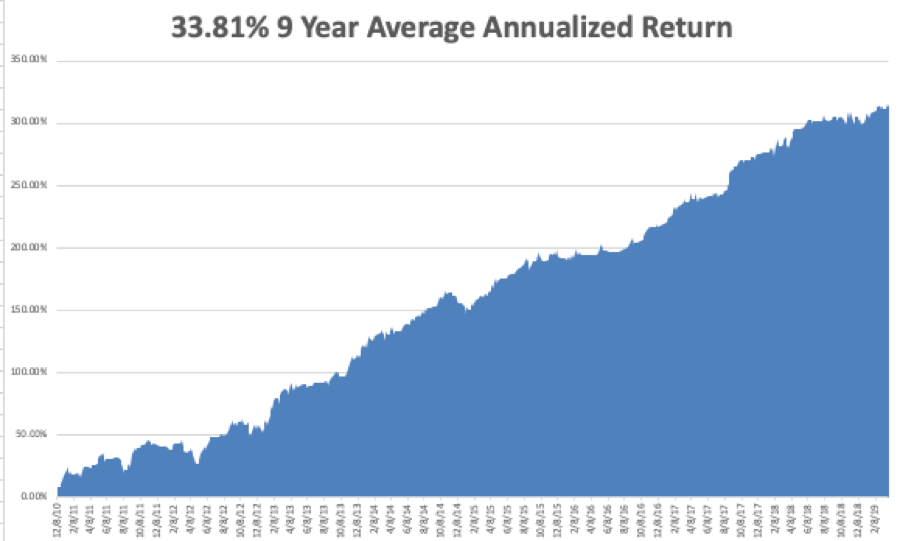
March turned positive in a final burst, up 1.78%.  My 2019 year to date return retreated to +15.49%,  boosting my trailing one-year return back up to +35.16%. 
 
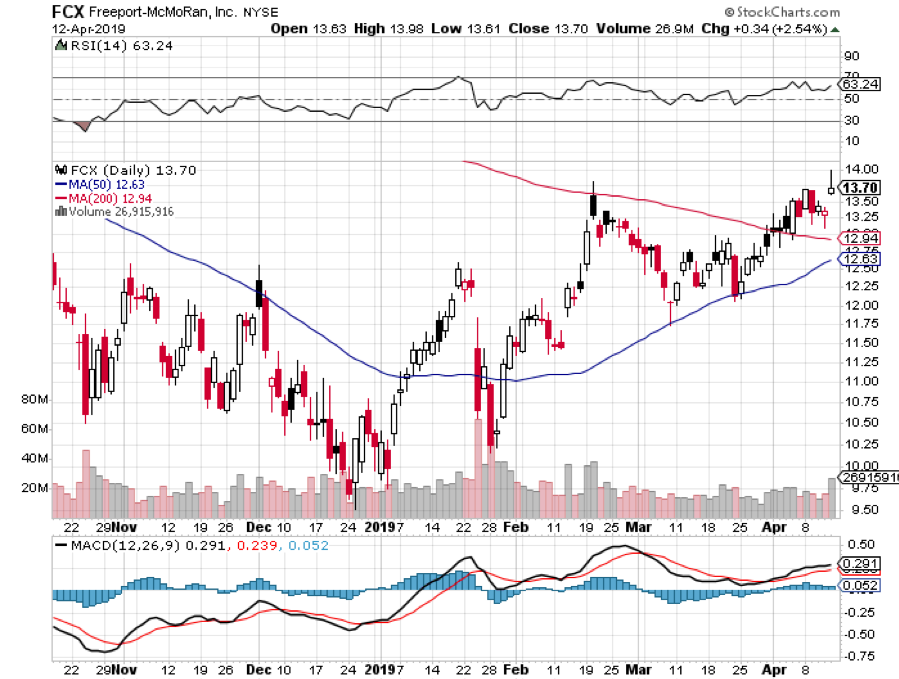
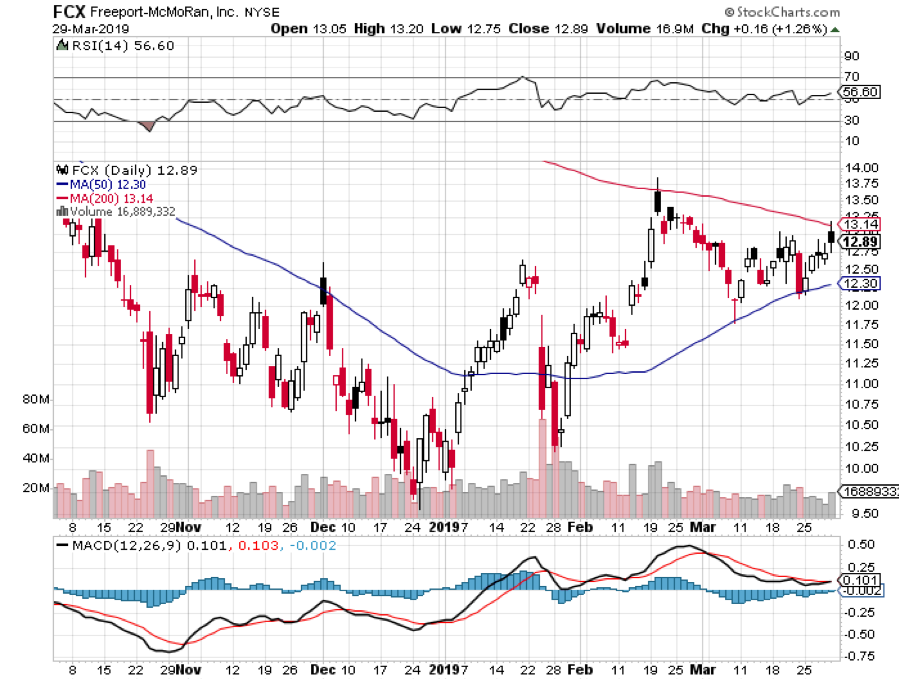
My nine-year return recovered to +315.56%, a new all-time high. The average annualized return appreciated to +33.81%. I am now 45% in cash, 30% long and 25% short, and my entire portfolio expires at the April 18 option expiration day in 9 trading days. I took generous profits on my positions in copper miner Freeport McMoRan (FCX) right when it bounced off the 200-day moving average.

The Mad Hedge Technology Letter maintained long positions in Microsoft (MSFT), Alphabet (GOOGL), and PayPal (PYPL), and Amazon (AMZN), which are clearly going to new highs.

It’s jobs week again with the usual trifecta of employment reports. Last month was a disaster, so this month will be interesting.

On Monday, April 1 at 8:30 AM, February Retail Sales are published.

On Tuesday, April 2, 8:30 AM EST, we learn February Durable Goods.

On Wednesday, April 3 at 8:15 AM, the ADP Employment Report comes out for private hiring.

On Thursday, April 4 at 8:30 AM EST, the Weekly Jobless Claims are announced.

On Friday, April 5 at 8:30 AM, we obtain the big number of the week, the February Nonfarm Payroll Report.

The Baker-Hughes Rig Count follows at 1:00 PM.

As for me, I’m going to use a rare spell of good weather to drive up to Lake Tahoe and start the planning work on my October 25-26 Mad Hedge Lake Tahoe Conference. Half the dinner tickets sold out on the first day, so you better get moving now.

Maybe it’s something I said? To learn more about the conference, please click here. I’ll see you there.

Good luck and good trading.

John Thomas
CEO & Publisher
The Diary of a Mad Hedge Fund Trader


https://madhedgefundtrader.com/wp-content/uploads/2019/05/cropped-mad-hedge-logo-transparent-192x192_f9578834168ba24df3eb53916a12c882.png 0 0 Mad Hedge Fund Trader https://madhedgefundtrader.com/wp-content/uploads/2019/05/cropped-mad-hedge-logo-transparent-192x192_f9578834168ba24df3eb53916a12c882.png Mad Hedge Fund Trader2019-04-01 08:06:362019-04-01 08:12:28The Market Outlook for the Week Ahead, or The Inmates are Running the Asylum
Mad Hedge Fund Trader
March 13, 2019

Tech Letter

Mad Hedge Technology Letter
March 13, 2019
Fiat Lux

Featured Trade:

(NVIDIA STEPS UP ITS GAME),
(NVDA), (INTC), (MSFT), (ANET), (CSCO), (MCHP), (XLNX)

https://madhedgefundtrader.com/wp-content/uploads/2019/05/cropped-mad-hedge-logo-transparent-192x192_f9578834168ba24df3eb53916a12c882.png 0 0 Mad Hedge Fund Trader https://madhedgefundtrader.com/wp-content/uploads/2019/05/cropped-mad-hedge-logo-transparent-192x192_f9578834168ba24df3eb53916a12c882.png Mad Hedge Fund Trader2019-03-13 01:07:102019-07-10 21:43:22March 13, 2019

Mad Hedge Fund Trader
Nvidia Steps Up its Game

Tech Letter

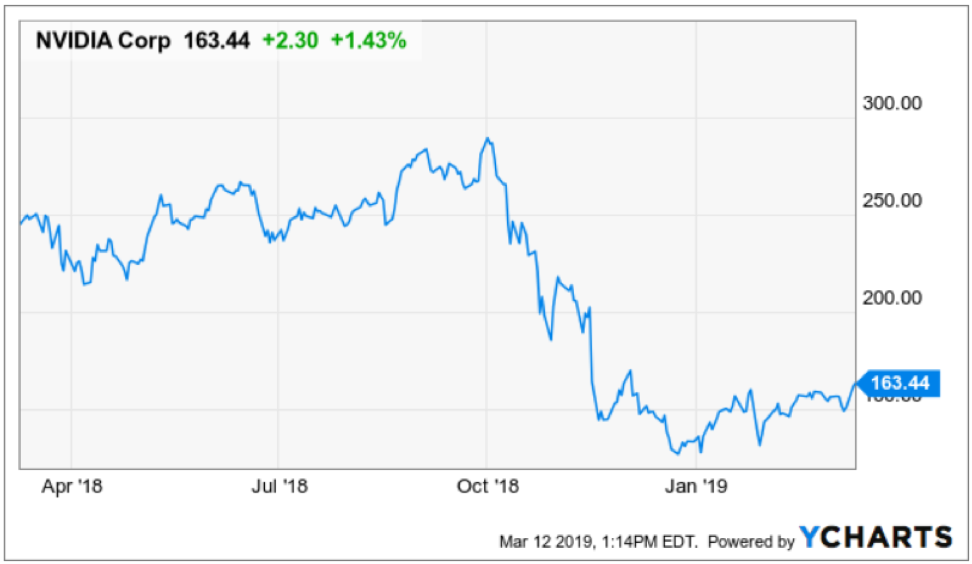
Nvidia (NVDA) was right to pull the trigger – that was my first reaction when I first learned that they had aggressively acquired Israeli chip company Mellanox for $6.9 billion.

The fight to seize these assets were fierce triggering a bidding war -American heavyweights Intel and Microsoft were also in the mix but lost out.

CEO of Nvidia Jensen Huang touted the importance of the deal by explaining that “the emergence of AI and data science as well as billions of simultaneous computer users, is fueling skyrocketing demand on the world's data centers."

Therefore, satisfying this demand will require holistic architectures that connect massive numbers of fast computing nodes over intelligent networking fabrics to form a giant datacenter-scale compute engine.

Mellanox and its capabilities cover all the bases for Nvidia and will nicely slot into its portfolio offering, an added bonus of cross-selling and upselling opportunities to existing clients.

The strategic motives behind the deal are plentiful with increased importance of connectivity and bandwidth enhancing Nvidia's ability to provide datacenter-scale computing across the full stack for next-generation high-performance computing and AI workloads.

The agreement is the result of the company's shift toward next-gen technology as adoption of cloud, AI, and robotics ramps up and Nvidia will be at the forefront of this massive migration.

As the fourth industrial revolution advances, Nvidia is best of breed of semiconductor companies and the imminent adoption of 5G will aid the likes of Microchip Technology (MCHP) and Xilinx (XLNX).

Technology is rapidly changing, and the data center is the segment that is accelerating at a faster clip than in previous years translating into de-emphasizing current revenues of gaming and autonomous on a relative growth basis.

These segments will be secondary to the addressable opportunity in data center and signing up Mellanox is a key strategic initiative to exploit this growth opportunity.

Missing the boat on this compelling opportunity could have dragged Nvidia into an existential crisis down the road as the missed opportunity costs of lucrative data center revenues would begin to bite, and with no quick fix on the horizon, Nvidia’s growth drivers would be potentially disarmed.

Investors need to remember that Nvidia derives half of its revenue from China and up until this point, gaming had been a huge tailwind to its total revenue, however, the Chinese communist party has identified gaming addiction in young adults as a national crisis and have been refusing to deliver new gaming licenses to gaming creators.

As the data center via the cloud begins its next ramp-up of insatiable demand, Nvidia was acutely aware they could not miss the boat and to grab a foot hole against larger player Intel.

Almost overpaying to have more skin in the game does not do justice to what the ramifications would have been if Intel or even Microsoft were able to hijack this deal.

The two-fold victory will in turn boost sales of Nvidia's data center products long term while depriving Intel of extending the lead in data center.

And after the lack of recent underperformance in the prior quarter, Nvidia needed a gamechanger to cauterize the blood flow.

Nvidia's total revenue plunged more than 24% YOY in Q4 of 2018, and shareholders have been looking for remedies, especially after the once mythical cryptocurrency business blew up and the company was stuck with a glut of inventory.

The purchase of Mellanox will help Nvidia start competing with other dominant players like Cisco Systems (CSCO) and Arista Networks (ANET).

Mellanox is one of a handful of firms selling hardware that connects devices in the data center through network cards, switches, and cables.

The deal still needs regulatory approval and could be a stumbling block if Chinese authorities drag this into the orbit of the trade war and make it a bullet point in negotiations.

The net result is positive to the overall business model, and this move will breathe oxygen into Nvidia’s long-term narrative with a flow of revenue set to come online once the 5,000 Mellanox employees are integrated into Nvidia’s levers of operation.

Shares should be the recipient of short-term strength and after getting smushed by a poor last quarter, there is substantial room to the upside.

A dip back to $150 would serve as a good entry point to strap on a short-term bullish trade in Nvidia shares.


https://www.madhedgefundtrader.com/wp-content/uploads/2019/03/NVDA-mar13.png 564 972 Mad Hedge Fund Trader https://madhedgefundtrader.com/wp-content/uploads/2019/05/cropped-mad-hedge-logo-transparent-192x192_f9578834168ba24df3eb53916a12c882.png Mad Hedge Fund Trader2019-03-13 01:06:052019-07-10 21:43:29Nvidia Steps Up its Game
Mad Hedge Fund Trader
March 12, 2019

Tech Letter

Mad Hedge Technology Letter
March 12, 2019
Fiat Lux

Featured Trade:

(FIREEYE’S LAST LINE OF DEFENSE),
(FEYE), (MSFT), (AMZN), (GOOGL), (ORCL), (EFX), (IBM)

https://madhedgefundtrader.com/wp-content/uploads/2019/05/cropped-mad-hedge-logo-transparent-192x192_f9578834168ba24df3eb53916a12c882.png 0 0 Mad Hedge Fund Trader https://madhedgefundtrader.com/wp-content/uploads/2019/05/cropped-mad-hedge-logo-transparent-192x192_f9578834168ba24df3eb53916a12c882.png Mad Hedge Fund Trader2019-03-12 01:07:242019-03-13 01:34:20March 12, 2019

Mad Hedge Fund Trader
FireEye’s Last Line of Defense

Tech Letter

A potential cataclysmic threat potentially wreaking havoc to our financial system is no other than cybercrime – that is one of the few gems that Fed Chair Jerome Powell delivered to the American public in a historic interview with 60 Minutes this past weekend.

Powell has even gone on record before claiming that Congress should do “as much as possible (against cybercrime), and then double it.”

The Fed Chair clearly has intelligence that retail investors wish they could get their hands on.

Digital nefarious attacks have been all the rage resulting in public blowups at Equifax (EFX) and North Korea’s state-sponsored hack on International Business Machines Corporation (IBM) just to name a few.

At the bare minimum, this means that cybersecurity solution companies will be the recipients of a gloriously expanding addressable market.

Powell’s testimony to the public was timely as it provides the impetus for investors to look at cybersecurity firms that will actively forge ahead and protect domestic business from these lurking threats.

Considering a long-term investment in FireEye Inc. (FEYE) at these beaten down prices could unearth value.

For all the digital novices, FireEye offers cybersecurity solutions allowing organizations to pre-emptively plan, prevent, respond to, and remediate cyber-attacks.

It offers vector-specific appliance, virtual appliance, and a smorgasbord of cloud-based solutions to detect and thwart indistinguishable cyber-attacks.

The company deploys threat detection and preventative methods including network security products, email security solutions, and endpoint security solutions.

And when you marry this up with my 2019 underlying thesis of the year of the enterprise software subscription, this company is on the verge of a breakout.

Last year was a year full of milestones for the company with the firm achieving non-GAAP profitability for the full year for the first time and generating positive operating and free cash flow for the full year.

The company was able to attract new business by adding over 1,100 new customers.

The cloud is where the company is betting all their chips and crafting the optimal subscription-as-a-service (SaaS) product is the engine that will propel the company’s shares higher.

The heart of their cloud initiative relies on Helix - a comprehensive detection and response platform designed to simplify, integrate and automate security operations.

This intelligence-led approach fuses innovative security technologies, nation-grade FireEye Threat Intelligence and world-renowned expertise from FireEye Mandiant into FireEye Helix.

By enhancing the endpoint products and email protection, sales of both products exploded higher by double digits YOY as FireEye successfully displaced incumbent vendors and legacy technology to the delight of shareholders.

As a result, the firm’s pipeline of opportunities continues to build.

As for network security, FireEye plans to extend the reach of their market-leading advanced threat protection capabilities further into the cloud with protection specifically aimed for cloud heavyweights Microsoft (MSFT) Azure, Amazon Web Services (AWS), Google (GOOGL) and Oracle (ORCL) Cloud.

They are collaborating with these major cloud providers on hybrid solutions that integrate seamlessly with their technologies so FireEye solutions will easily snap into a customer's cloud deployments.

Cloud subscriptions and managed services were the ultimate breakout performer highlighting the successful outsized pivot to (SaaS) revenue.

This segment increased 31% sequentially and 12% YOY, highlighting underlined strength in the segments of managed defense, standalone threat intelligence, Helix subscriptions, and cloud email solution.

The furious growth was achieved even though Q4 2017 billings included a $10 million plus transaction and if this deal is excluded, cloud subscriptions and managed services would have grown more than 30% YOY in Q4 2017 demonstrating the hard bias to the cloud has been highly instrumental to its success.

Recurring billings expanded 12% YOY, a small bump in acceleration from 11% in Q3, but if you remove that big deal in Q4 '17, recurring billings grew over 20% YOY in Q4 2018.

The growing chorus of product satisfaction can be found in the customer retention rate of 90%.

Transaction volume was at record levels for both deals greater than $1 million and transactions less than $1 million, signaling not only that customer renewals are expanding, but also explosion of new revenue streams captured by FireEye is aiding the top line.

This story is all about the recurring revenue and I expect that narrative to perpetuate throughout 2019 as an overarching theme to the strength of the firm’s revenue drivers.

The 10% billings growth last quarter paints a more honest trajectory of the true growth proposition for FireEye.

I believe the 6%-to-7% revenue guide for fiscal 2019 is down to the accounting technicals manifesting in the appliance revenue that is fading from the overall story.

The solid billings growth underpinning the overall business meshing with diligent expense control is conjuring up a massive amount of operating leverage.

Shares are undervalued and offer an attractive risk versus reward proposition.

If the company delivers on its core growth outlook, which I fully expect them to do plus more, shares should climb over $20 barring any broad-based market meltdowns.

I am bullish FireEye and urge readers to wait for shares to settle before putting new money to work.


https://www.madhedgefundtrader.com/wp-content/uploads/2019/03/billings-growth.png 708 974 Mad Hedge Fund Trader https://madhedgefundtrader.com/wp-content/uploads/2019/05/cropped-mad-hedge-logo-transparent-192x192_f9578834168ba24df3eb53916a12c882.png Mad Hedge Fund Trader2019-03-12 01:06:142019-07-10 21:43:40FireEye’s Last Line of Defense
Mad Hedge Fund Trader
March 8, 2019

Diary, Newsletter, Summary

Global Market Comments
March 8, 2019
Fiat Lux

Featured Trade:

(MARCH 6 BIWEEKLY STRATEGY WEBINAR Q&A),
(SPY), (SDS), (TLT), (TBT), (GE), (IYM),
 (MSFT), (IWM), (AAPL), (ITB), (FCX), (FXE)

https://madhedgefundtrader.com/wp-content/uploads/2019/05/cropped-mad-hedge-logo-transparent-192x192_f9578834168ba24df3eb53916a12c882.png 0 0 Mad Hedge Fund Trader https://madhedgefundtrader.com/wp-content/uploads/2019/05/cropped-mad-hedge-logo-transparent-192x192_f9578834168ba24df3eb53916a12c882.png Mad Hedge Fund Trader2019-03-08 01:07:292019-03-07 16:50:50March 8, 2019
Mad Hedge Fund Trader

March 6 Biweekly Strategy Webinar Q&A

Diary, Newsletter

Below please find subscribers’ Q&A for the Mad Hedge Fund Trader March 3 Global Strategy Webinar with my guest and co-host Bill Davis of the Mad Day Trader. Keep those questions coming!
Q: Are you sticking to your market top (SPY), (SDS) by mid-May?

A: Yes, at the rate that economic data is deteriorating, and earnings are falling, there’s no prospect of more economic stimulation here, my May top in the market is looking better than ever. Europe going into recession will be the gasoline on the fire.

Q: Where do you see interest rates (TLT) in 1-2 years?

A: Interest rates in 2 years could be at zero. If interest rates peaked at 3.25% last year, then the next move could be to zero, or negative numbers. The world is awash in cash, and without any economic growth to support that, you could have massive cuts in interest rates.

Q: Will (TLT) be going higher when a market panic sets in?

A: It will, which is why I’m being cautious on my short positions and why I’m only using tops to sell. You can be wrong in this market but still make money on every put spread, as long as you’re going far enough in the money. That said, when the stock market starts to roll over big time, you want to go long bonds, not short, and we may do that someday.

Q: Do you see a selloff to stocks similar to last December?

A: As long as the Fed does not raise interest rates, I don’t expect to get a selloff of more than 5% or 6% initially. If we do get a dramatic worsening of economic data and it looks like we’re headed in that direction, the Fed will start cutting interest rates, the recession signal will be on and only then will we drop to the December lows—and possibly as low as 18,000 in the Dow.

Q: General Electric has gone from $6 to $10; what would you do now?

A: Short term, sell with a 66% gain in a stock. Long term, you probably want to hold on. However, their problems are massive and will take years to sort out, probably not until the other side of the next recession.

Q: Microsoft (MSFT): long term hold or sell?

A: Absolutely long-term hold; look for another double in this company over the next 3 years. This is the gold standard in technology stocks today. Short term, you’re looking at no more than $15 of downside to the December low.

Q: Would you short banks (IYF) here since interest rates have failed to push them higher?

A: I would not; they’ve been one of the worst performing sectors of the market and they’re all very low, historically. You want to short highs like I’m doing now in the (SPY), the (IWM), and Apple (AAPL), not lows.

Q: Is the China trade deal (FXI) a ‘sell the news’ event?

A: Absolutely; there’s not a hedge fund out there that isn’t waiting to go short on a China trade deal. The weakness this week is them front-running that news.

Q: Do you see emerging markets (EEM) pushing higher from the 42 level, or will a global recession bring it back to earth?

A: First of all, (EEM) will go higher as long as interest rates in the U.S. are flatlining, so I expect a rally to last until the spring; however, when a real recession does become apparent, that sector will roll over along with everything else.

Q: Would you buy homebuilders (ITB) if this lower interest rate environment persists?

A: I wouldn’t. First of all, they’ve already had a big 28% run since the beginning of the year— like everything else—and second, low-interest rates don’t help if you can’t afford the house in the first place.

Q: Would you short corporate bonds if you think there’s going to be a recession next year?

A: I’m glad you asked. Absolutely not, not even on pain of death. I would buy bonds because interest rates going to zero takes bond prices up hugely.

Q: Should you buy stocks in front of a blackout period on corporate buybacks?

A: Absolutely not. Corporate buybacks are the number one buyers of shares this year, possibly exceeding $1 trillion. Companies are not allowed to buy their own stocks anywhere from a couple of weeks to a month ahead of their earnings release. By removing the principal buyer of a share, you want to sell, not buy.

Q: What are the chances the China trade deal (FXI) breaks down this month and no signing takes place?

A: I have a feeling Trump is desperate to sign anything these days, and I think the Chinese know that as well, especially in the wake of the North Korean diplomatic disaster. He has to sign the deal or we’ll go to recession, and that would be tough to run on for reelection.

Q: Which stock or ETF would you short on real estate?

A: If you short the iShares US Home Construction ETF (ITB), you short the basket. Shorting individual stocks is always risky—you really have to know what’s going on there.

Q: What’s the best commodity play out there?

A: Copper. If China is the only country that’s stimulating its economy right now, and China is the largest consumer of copper, then you want to buy copper. The electric car boom feeds into copper because every new vehicle needs 20 pounds of copper for wiring and rotors. Copper is also cheap as it is coming off of a seven-year bear market. What do you buy at market tops? Only cheap stuff.

Q: Why did you go so far in the money in the Freeport-McMoRan (FCX) call spread with only a 10% profit on the trade in five weeks?

A: In this kind of market, I’ll take 10% in 5 weeks all day long. But additionally, when prices are this high, I want to be as conservative as possible. Going deep in the money on that is a very low-risk trade. It’s a bet that copper doesn’t go back to the December lows in five weeks, and that’s a bet I’m willing to make.

Q: Will a new round of QE in Europe affect our stock market?

A: Yes, it’s terrible news. It will weaken the Euro (FXE), strengthen the dollar (UUP), and force US companies to lower earnings guidance even further. That is bad for the market and is a reason why I have been selling short.


Sending You Trade Alerts from Africa

https://www.madhedgefundtrader.com/wp-content/uploads/2018/02/john-laptop.jpg 388 335 Mad Hedge Fund Trader https://madhedgefundtrader.com/wp-content/uploads/2019/05/cropped-mad-hedge-logo-transparent-192x192_f9578834168ba24df3eb53916a12c882.png Mad Hedge Fund Trader2019-03-08 01:06:512019-07-09 04:01:56March 6 Biweekly Strategy Webinar Q&A
Mad Hedge Fund Trader
March 1, 2019

Tech Letter

Global Market Comments
March 1, 2019
Fiat Lux

SPECIAL FRIDAY TECH EDITION

Featured Trade:
(ABOUT THE TRADE ALERT DROUGHT),
(SPY), (GLD), (TLT), (MSFT),

https://madhedgefundtrader.com/wp-content/uploads/2019/05/cropped-mad-hedge-logo-transparent-192x192_f9578834168ba24df3eb53916a12c882.png 0 0 Mad Hedge Fund Trader https://madhedgefundtrader.com/wp-content/uploads/2019/05/cropped-mad-hedge-logo-transparent-192x192_f9578834168ba24df3eb53916a12c882.png Mad Hedge Fund Trader2019-03-01 01:07:062019-07-10 21:45:18March 1, 2019
Page 59 of 77«‹5758596061›»

tastytrade, Inc. (“tastytrade”) has entered into a Marketing Agreement with Mad Hedge Fund Trader (“Marketing Agent”) whereby tastytrade pays compensation to Marketing Agent to recommend tastytrade’s brokerage services. The existence of this Marketing Agreement should not be deemed as an endorsement or recommendation of Marketing Agent by tastytrade and/or any of its affiliated companies. Neither tastytrade nor any of its affiliated companies is responsible for the privacy practices of Marketing Agent or this website. tastytrade does not warrant the accuracy or content of the products or services offered by Marketing Agent or this website. Marketing Agent is independent and is not an affiliate of tastytrade. 
Legal Disclaimer

There is a very high degree of risk involved in trading. Past results are not indicative of future returns. MadHedgeFundTrader.com and all individuals affiliated with this site assume no responsibilities for your trading and investment results. The indicators, strategies, columns, articles and all other features are for educational purposes only and should not be construed as investment advice. Information for futures trading observations are obtained from sources believed to be reliable, but we do not warrant its completeness or accuracy, or warrant any results from the use of the information. Your use of the trading observations is entirely at your own risk and it is your sole responsibility to evaluate the accuracy, completeness and usefulness of the information. You must assess the risk of any trade with your broker and make your own independent decisions regarding any securities mentioned herein. Affiliates of MadHedgeFundTrader.com may have a position or effect transactions in the securities described herein (or options thereon) and/or otherwise employ trading strategies that may be consistent or inconsistent with the provided strategies.

Copyright © 2026. Mad Hedge Fund Trader. All Rights Reserved. support@madhedgefundtrader.com
Scroll to top