Chip stocks have been the talk of the town in the tech world.
It’s hard not to notice as stock valuations skyrocket.
These aren’t normal times anymore.
A secular trend that could be the biggest we have seen for a generation is taking hold.
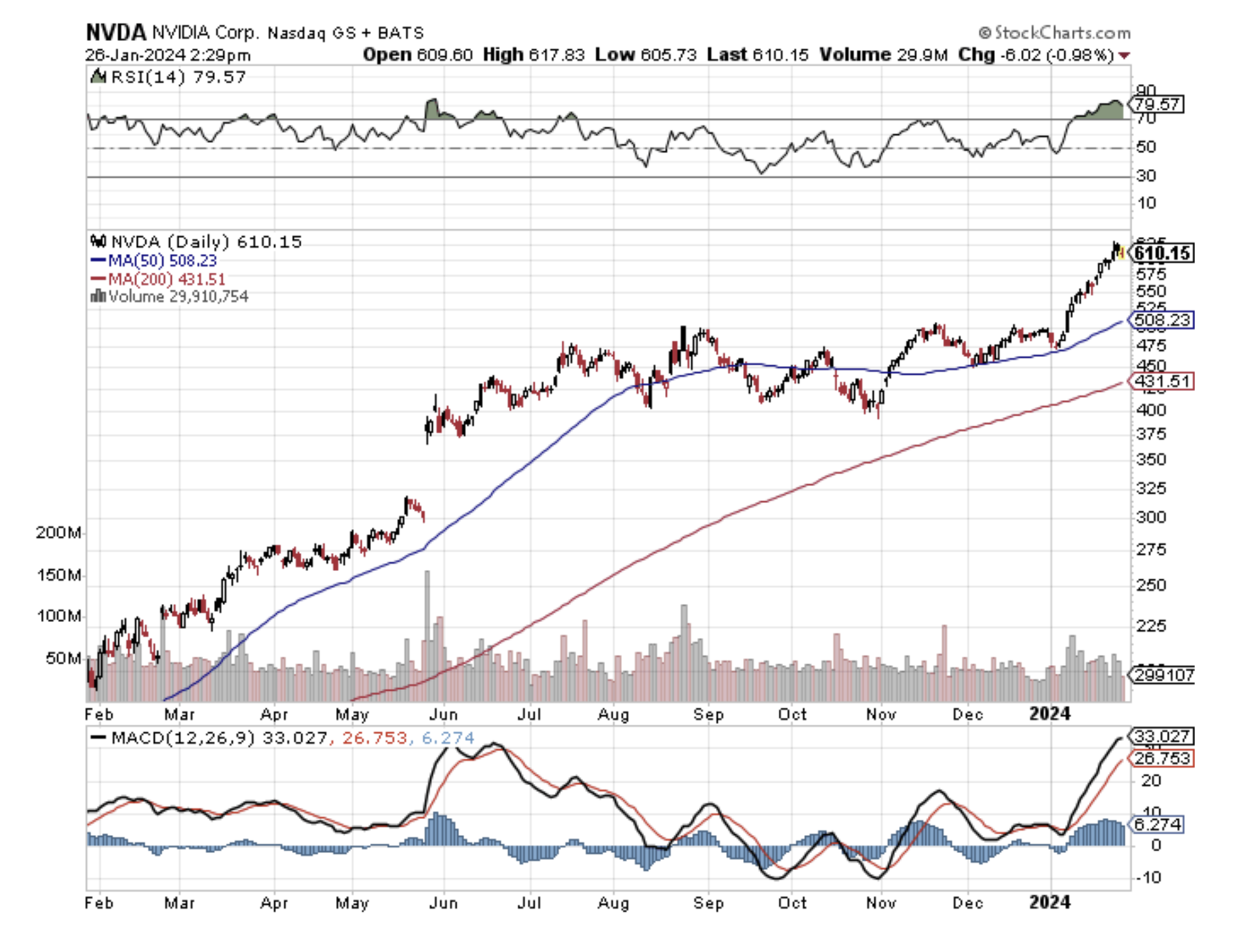
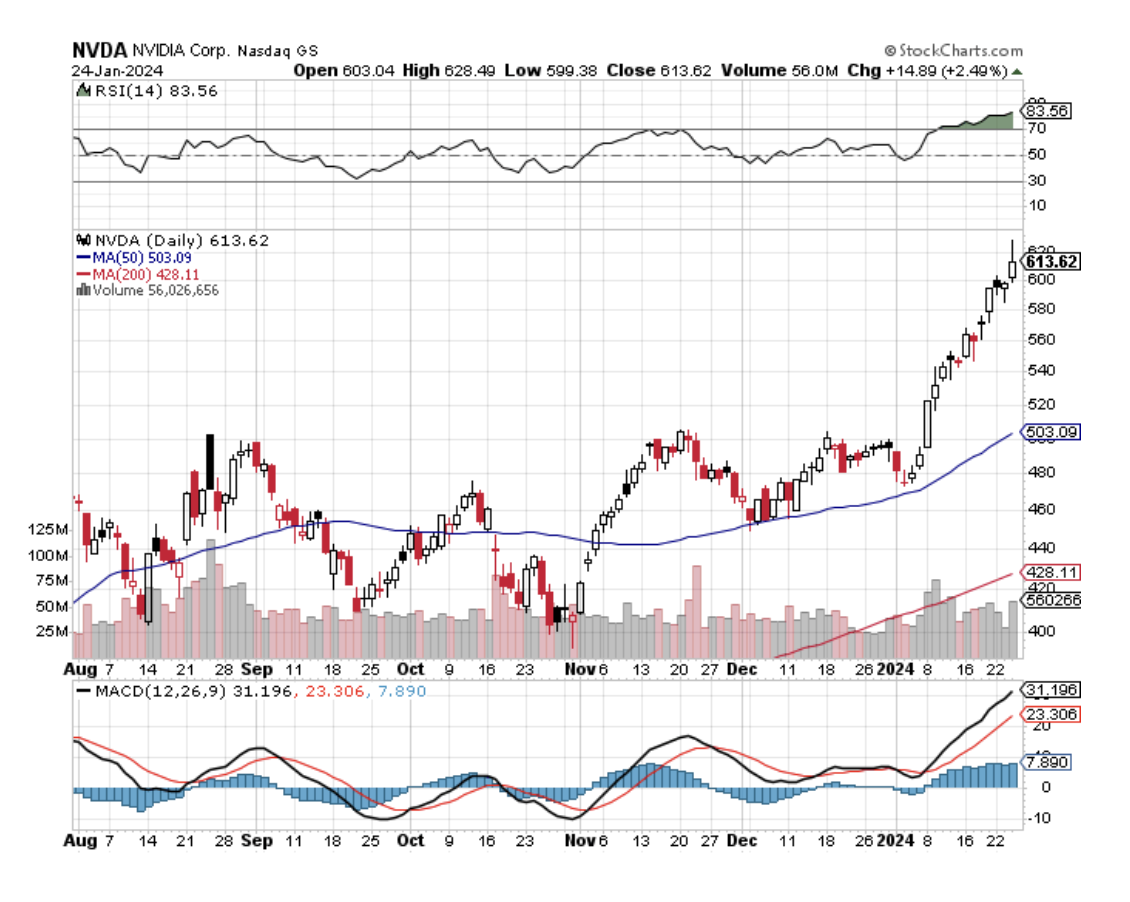
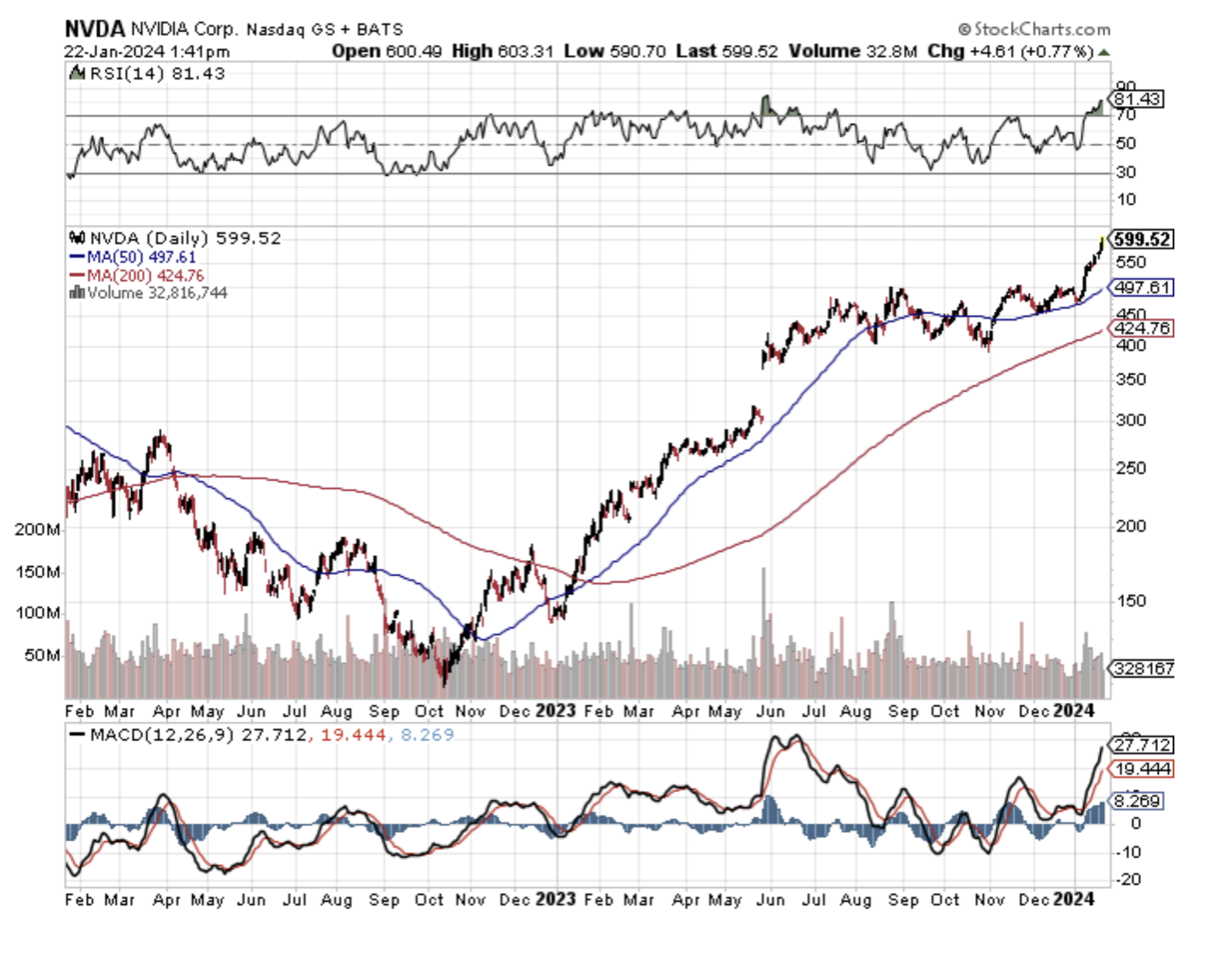
That trend today is AI, and this 800-pound gorilla in the room is causing institutional money to pour into the chips that will help AI and the top firm is clearly Nvidia (NVDA).
After NVDA, there is a solid group of others like AMD, but even after that, there is still more ammo left in the shotgun.
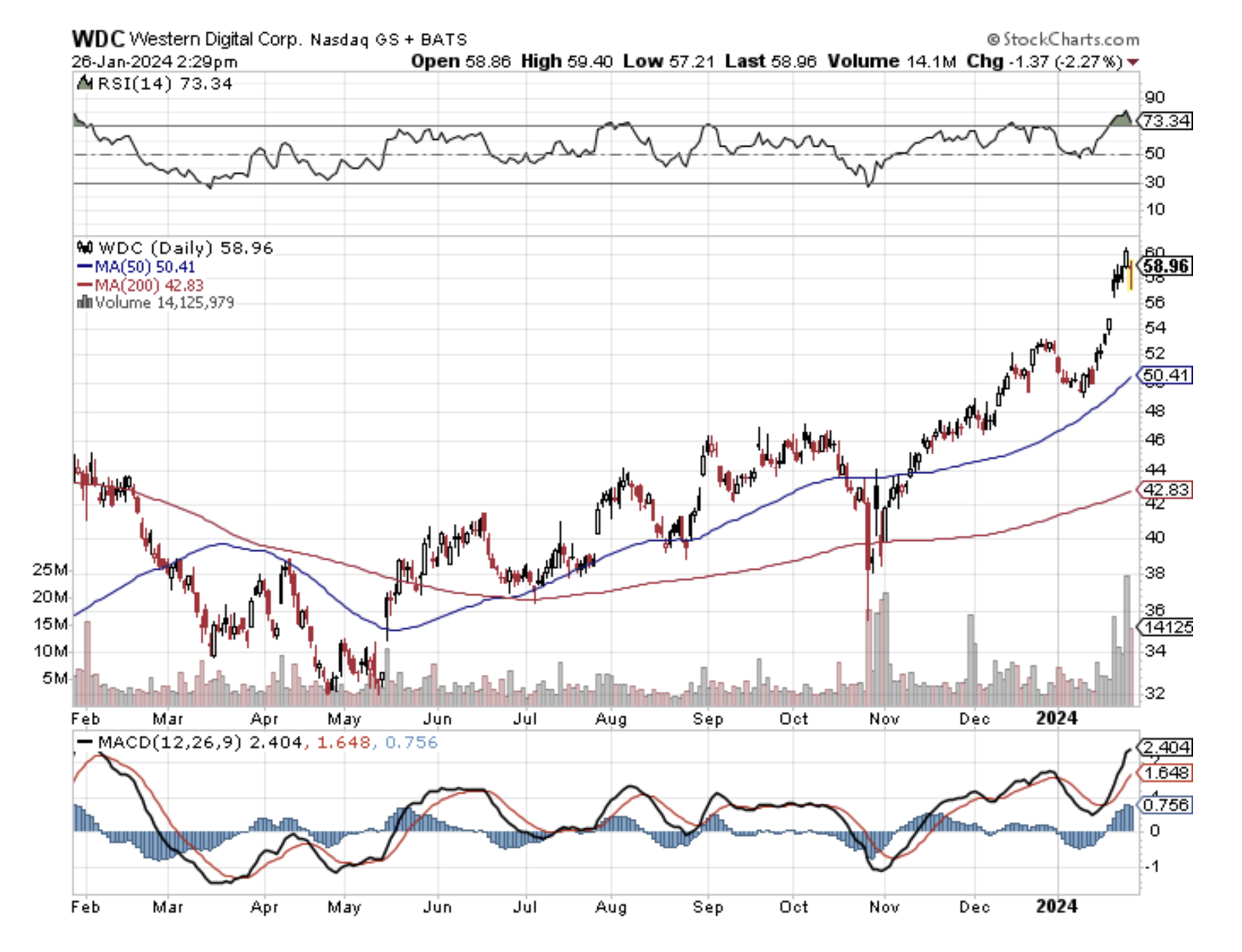
Investors could look at an intriguing name - something like Western Digital (WDC).
WDC has a $19 billion valuation and in the long term future could be considered a bargain looking back.
Its earnings weren’t great with another quarter of decelerating revenue.
Western Digital (WDC) reported a narrower-than-expected loss for its December quarter, with revenue just squeaking past expectations.
The business model has been affected due to the impact of structural changes the company implemented in its flash and HDD businesses.
Last quarter, the company said it would spin off its flash memory business, which has been grappling with a supply glut after talks of merging the unit with Japan's Kioxia stalled, by the second half of 2024.
The company said its second-quarter loss included $156 million underutilization-related charges in Flash and HDD.
Western Digital has struggled as demand for memory chips cooled in the past couple of years, but underlying shares have rallied in recent months.
WDC stock had gained nearly 40% since the end of October.
Cloud represented 35% of total revenue, with the quarterly growth attributed to higher “nearline” or onsite data storage shipments to data center customers and better nearline pricing. The increase in client revenue was driven by an increase in the average selling price of flash memory and customer revenue was driven by a seasonal surge in flash bit shipments.
Revenue came in at $3.023 billion, down 2.5% year-over-year but up 10% quarter-over-quarter.
In addition to the recovery in both Flash and HDD markets, I believe storage is entering a multi-year growth period.
Generative AI has quickly emerged as yet another growth driver and transformative technology that is reshaping all industries, all companies, and our daily lives.
Importantly, industry analysts estimate that the edge now represents approximately 80% of total NAND bit shipments, an increase from approximately 75% in 2022, which is another indication that cloud demand was significantly pulled in during the pandemic.
In addition, I believe the second wave of generative AI-driven storage deployments will spark a client and consumer device refresh cycle and reaccelerate content growth in PC, smartphone, gaming, and consumer in the coming years.
WDC has done some nice business specifically in the cloud division with some serious growth.
WDC is also at the center of the generative AI trend and they could be the recipient of “the tide lifts all boats.”
However, I don’t like how revenue as a whole isn’t growing causing major uproar in the investor community.
Splitting up the company should do the trick of weeding out the bad revenue from the good.
I do believe that WDC represents good value for buy-and-hold investors in the mid-$50 range.
This isn’t an ideal stock to trade in and out and even on an earnings beat, the stock sold off which isn’t what investors like to see in terms of price action.
There isn’t enough investor confidence in the stock yet, but that could change in the future.
https://madhedgefundtrader.com/wp-content/uploads/2019/05/cropped-mad-hedge-logo-transparent-192x192_f9578834168ba24df3eb53916a12c882.png00april@madhedgefundtrader.comhttps://madhedgefundtrader.com/wp-content/uploads/2019/05/cropped-mad-hedge-logo-transparent-192x192_f9578834168ba24df3eb53916a12c882.pngapril@madhedgefundtrader.com2024-01-26 14:02:512024-01-26 15:36:04Western Digital Has Potential
Below please find subscribers’ Q&A for the January 24 Mad Hedge Fund Trader Global Strategy Webinar, broadcast from Silicon Valley, CA.
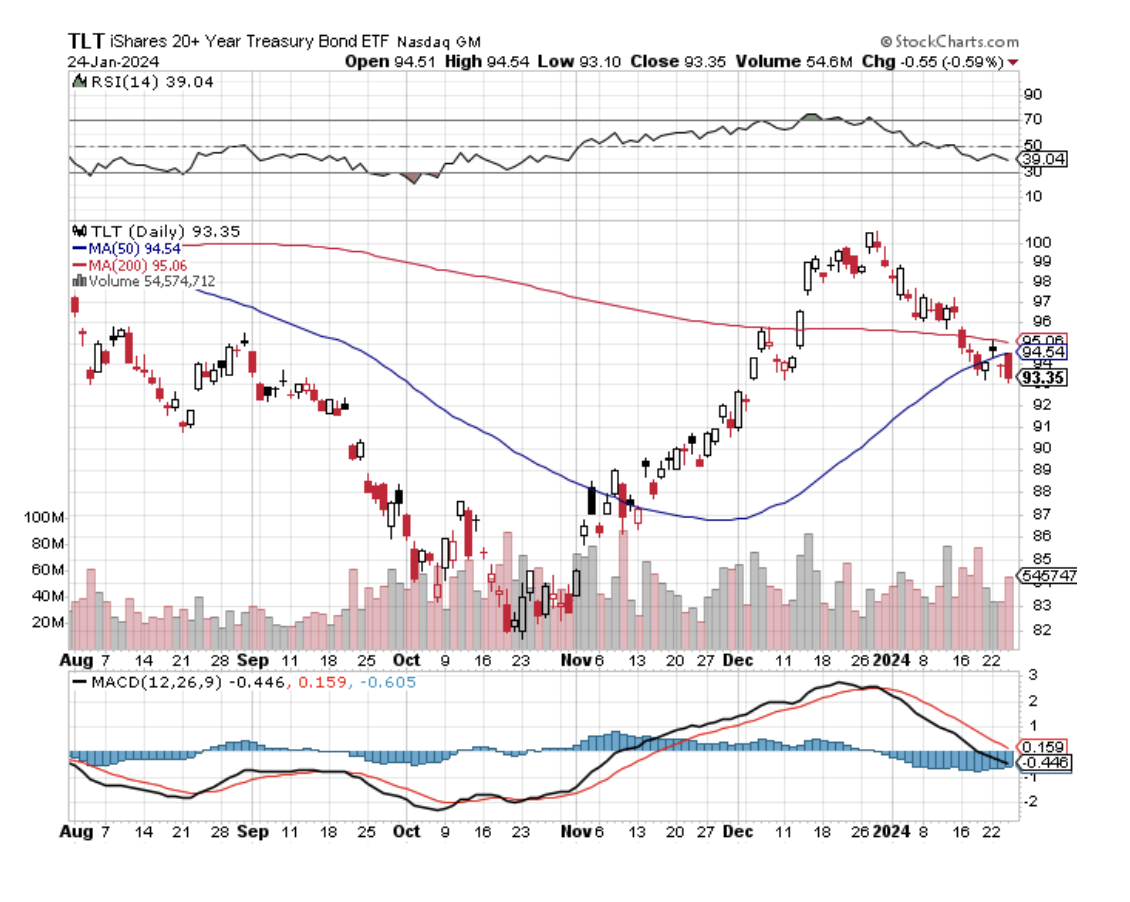
Q: Will you stop out of (TLT) if it breaches the $93 level?
A: Yes, and I'm actually hoping it will do that because that sets up some really great two-year LEAPS for the (TLT) going out long-term. It's trying to hold in here at the bottom. It's been in the $93 handle for several days now, so we'll just watch.
Q: There seems to be negativity all over the place, but markets continue upwards. What are the chances of a black swan this year, and what do you think it might be?
A: Well, there always is a possibility of a black swan. That's why we do risk control and risk management all the time because black swans are by definition unpredictable. The reason people are negative is that they don't own more stocks, and they keep going straight up, at least the tech ones do. Money managers always look dumber not owning a market that's going up than owning a market that's going down and losing money with everybody else. It's just the way investor psychology works.
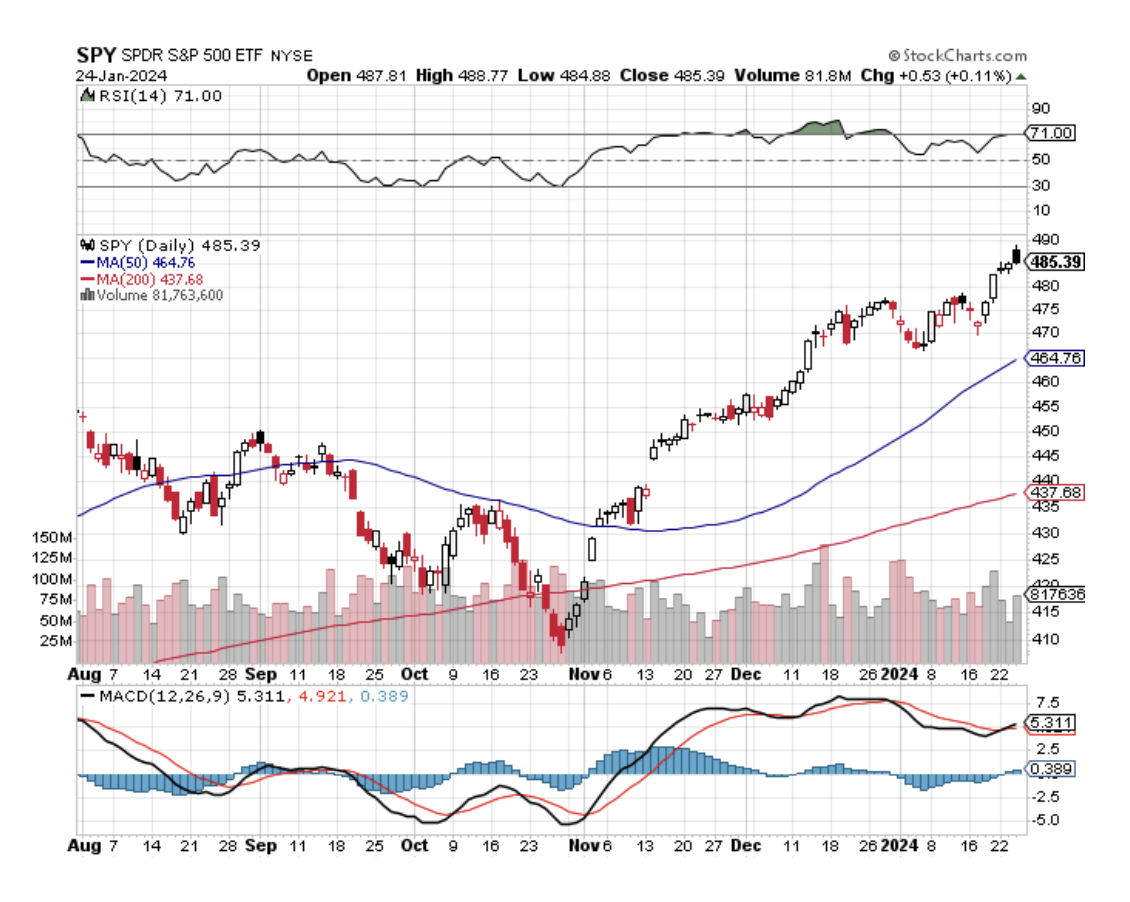
Q: Do you expect small caps (IWM) to outperform the S&P 500 (SPY) this year?
A: Yes I do, but it'll be a second half of the year game. They really need the big drops in interest rates to get earnings moving.
Q: Would Boeing (BA) be good for a LEAPS?
A: Yes, it would, but I would go out to the maximum maturity, say two to two and a half years, and you may get a double on your money on that. Basically, there are only two airplane manufacturers in the world that have a monopoly (or a duopoly to be technically correct) and Boeing is one of them. So love them or hate them, you still have to buy their airplanes; look no further than Alaska Airlines (ALK) and United (UAL), which have had to cancel literally tens of thousands of flights because they don't have enough airplanes. They had to ground all their 737 maxes.
Q: With all the shooting going on in the Middle East, why isn't oil higher?
A: It's all about China (FXI). As long as China is in a recession which seems to be getting worse, oil demand falls. China is the world's largest importer of oil by a large margin. They're also taking all the natural gas that the US will produce, and that is a big drag on prices. That will end when China starts to recover, and we did get a major stimulus package out of the Chinese government this week.
Q: What about NVIDIA (NVDA)? It's gone up so much. I'm up 300% since my cost. Should I sell now and take profits or just run the long?
A: This whole group, which I now call the AI 5—Microsoft (MSFT), Google (GOOGL), Amazon (AMZN), NVIDIA (NVDA), and Meta (META) could drop 20% at any time and then go on to new highs, and that's exactly what happened in the fall. We had a 20% drop in everything and then it just shot off to the races. So as long as you can handle a 20% decline in these stocks, and if you're a long-term investor, then you should keep them. Because the risk is you'll take profits, generate a big tax bill, and then won't be able to get back in at the next low, and you'll end up missing the next $1,000 point move. If you're the trader of the century like me, you can do that. But for your average garden variety trading at-home investor, I would say keep what's winning—keep the AI 5.
Q: Thanks John,Igot a double on your (UNG) LEAPS that you put out over Christmas. It's since given back much of the gains. Do you see another big rally in (UNG) this year?
A: Yes, that was a 2-year LEAPS I put out. It doubled in 2 weeks, and I do see a bigger recovery in the second half of the year once the Chinese economy starts to recover. Their marginal first choice for new energy supplies is American natural gas; it's not oil from the Middle East. They're trying to clean up their atmosphere as much as we are, so look for another big demand spike for (UNG) later in the year.
Q: Why has the dollar (UUP) been so strong?
A: Rising interest rates. Currencies are all about interest rates and where the next interest rate move is going to be. Money always pours into the currency that has the next rise in interest rates. That's been the US dollar for all of this year so far.
Q: Will the election have an effect on the market?
A: Absolutely not. Nobody cares about the election. If you're an election junkie, you may stay glued to your TV. I'm not interested myself. I don't expect any changes in the economy to take place this year, and that's all investors and money managers really care about—is how they will do by the end of this year. So you're better off watching sports on ESPN is all I can tell you. Oh yes, and this is supposed to be a record year for disinformation about elections and candidates. Another reason to not bother with the election this year. Go watch the Jack Reacher series. At least there you can keep track of the body count.
Q: Is it a good time to buy a home right now?
A: Yes, if you have cash. It is still too expensive to borrow money to buy a home with 30-year mortgages at 6.5% and 5/1 ARMs at 6% or even 5.5%, but if you have cash, it is a great time to buy a house because what is the next move? Interest rates go down. Suddenly everybody in the world can afford houses and they now want to buy your house. So very rapid price rises are coming for the housing market once the rates start to fall, which could be March, could be June, depending on how Jerome Powell feels that morning.
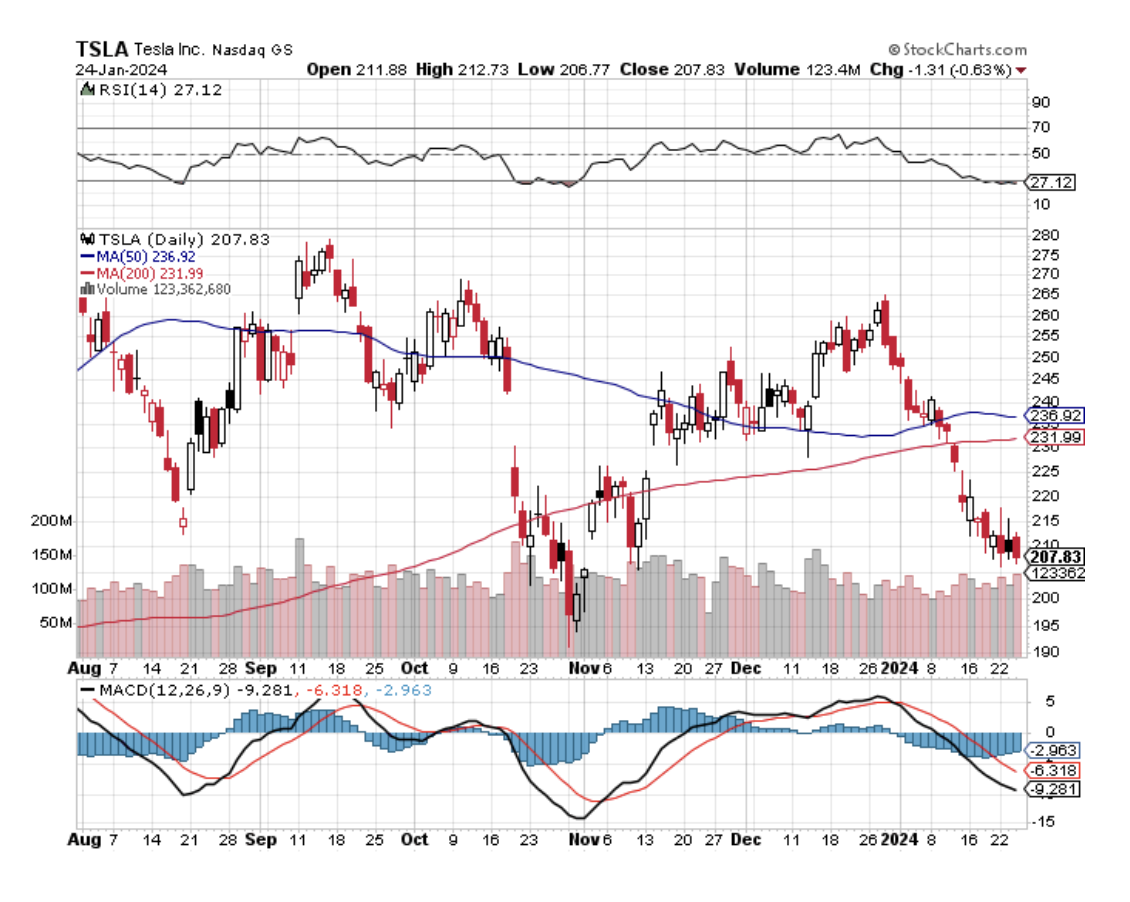
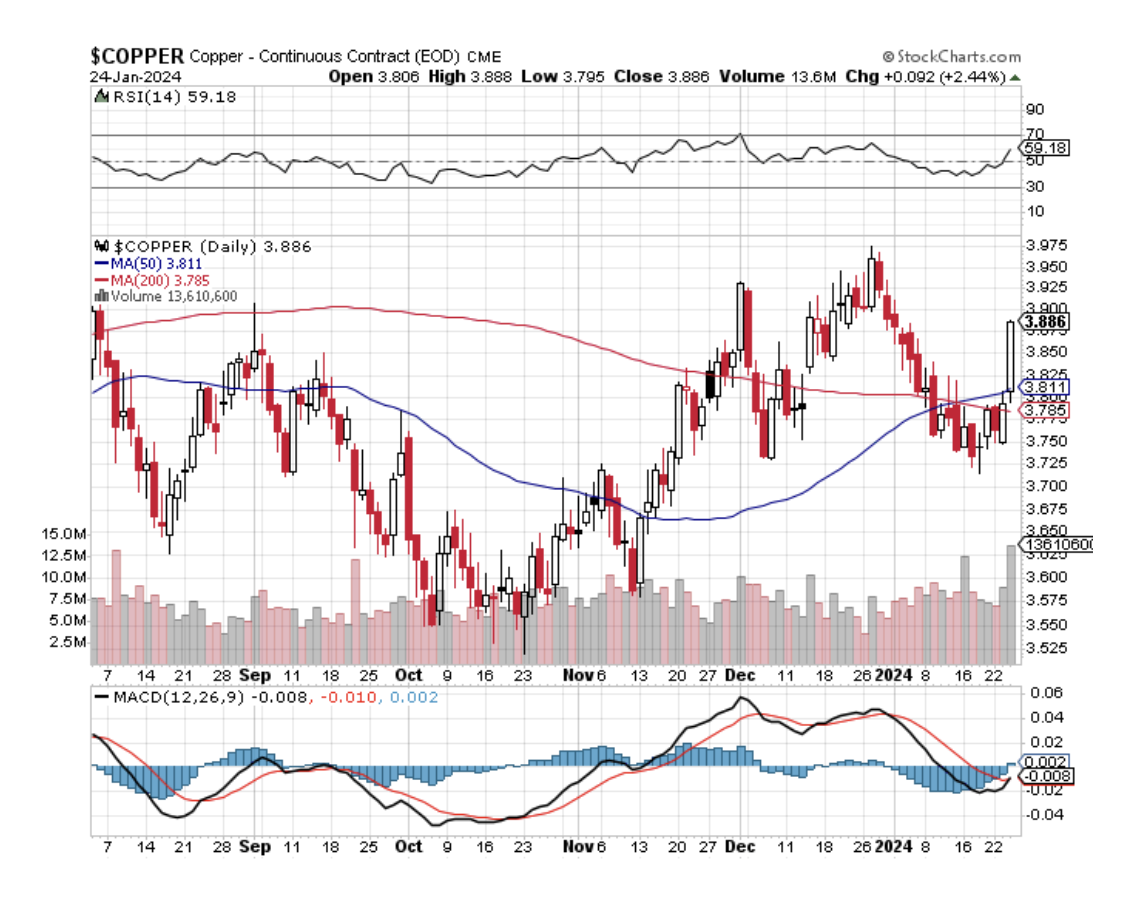
Q: With EV sales up 50% last year (TSLA), why has copper been so weak?
A: The old high price of copper was based on continuing 50% per year increases in EV sales for the indefinite future. In fact, we got a 50% increase last year and forecasts for 10% growth only this year, so that's a big part of it. Also, backing out the Chinese construction demand gives copper a huge hit. New construction in China is essentially at zero and will be at zero for quite some time because of the real estate crisis there. Some people in China are looking at prices on their homes down 80%, which sounds like a repeat of our 2008 financial crisis. So that is another major drag on copper.
Q: Is it a good time to “buy wrights”?
A: Absolutely yes. If you read today's newsletter, it tells you how to do a buy write, and you do “buy rights” on the most expensive stocks. For example, NVIDIA (NVDA) at $600 today—you can get $8 for the February $650 calls, which you sell short against your stock ownership at $600, or you can go out to March 15th and you can get $19 for the March $650 calls. That will reduce your average cost for the shares by $19, so actually (NVDA) is, in fact, one of the best stocks to do this in, because it has the highest implied volatility of any options, second to Tesla (TSLA), it turns out.
Q: How did you predict the S&P 500 so accurately last year? You got within a point, pretty amazing.
A: All I can say is 55 years of practice helps! And I am a bit of a contrarian person; so when everybody said the market was going to go down, I said, “How about new all-time highs?” But also the answer to all questions really is people are wildly underestimating the impact of technology and AI, which continues to surprise the upside and will keep doing so for the next decade. That is the driver of all asset prices everywhere right now, and people will figure that out in probably about 5 years.
Q: Crown Castle Inc. (CCI), is that a good one to watch, with renewed interest in REITS?
A: Absolutely yes, and it's also a great interest-rate play. It had a horrible selloff going into October and has since made back all of those losses. We actually had a LEAPS in (CCI), which is now making money.
To watch a replay of this webinar with all the charts, bells, whistles, and classic rock music, just log in to www.madhedgefundtrader.com, go to MY ACCOUNT, click on GLOBAL TRADING DISPATCH, then WEBINARS, and all the webinars from the last 12 years are there in all their glory.
Good Luck and Stay Healthy.
John Thomas
CEO & Publisher
The Diary of a Mad Hedge Fund Trader
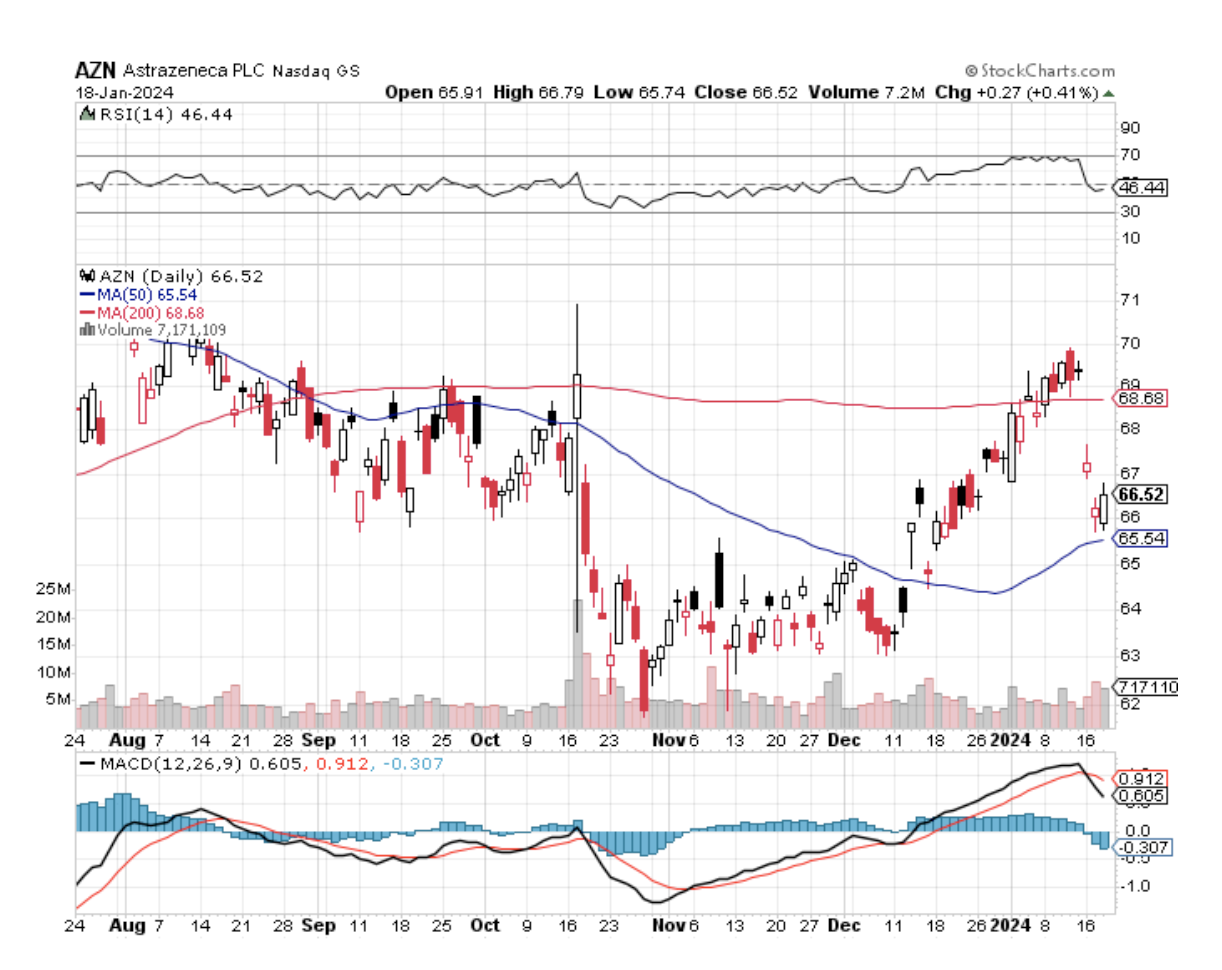
Faced with an aging blockbuster pipeline and a competitive landscape where some of its rivals are sprinting ahead, AstraZeneca (AZN) is making a bold move - doubling down on Artificial Intelligence (AI).
This isn't just about keeping up with the Joneses (or in this case, their industry rivals); it's a calculated gamble with the potential to redefine drug discovery. The million-dollar question is: will this tech-savvy move send its shares soaring or just keep it in the running?
Let's address the elephants in the room of drug development. It's a long and winding road, with more dead ends than a maze in a horror movie. The usual grind? Spend ages finding a glimmer of hope in therapy targets and molecules, only for a paltry 21% to get the regulatory thumbs up after clinical trials.
So, you can bet your bottom dollar that if there’s a technology promising to up those odds and speed things up, companies will be jumping on the bandwagon faster than you can say "biotech boom."
And AstraZeneca? They are fully committing to AI, making significant waves in the field.
Case in point: their recent team-up with Absci, an AI drug discovery outfit. They're talking about developing a cancer-fighting antibody, with a potential payout of up to $247 million in milestone payments. If this pans out, it could be the first of many high-fives between the two.
But AstraZeneca's history with AI extends beyond this collaboration. Last September, they put up to $840 million on the line with Verge Genomics, aiming to tackle neurodegenerative diseases.
Add to that their work with Illumina (ILMN) and Nvidia (NVDA) in 2021 for some supercomputing firepower, and you've got a company that's serious about its AI game. They’ve even got a couple of AI-bred candidates in their pipeline, though it’s hush-hush on how those are faring.
And before you think it’s all about the new kids on the block, AstraZeneca has been rubbing elbows with Schrodinger (SDGR) since before 2020, working on making their biological medicine modeling sharper than a tack.
However, AstraZeneca is far from being the lone ranger in this new frontier.
Exscientia (EXAI) and Sanofi (SNY) are pairing up to take on COPD with an AI-driven approach. Meanwhile, BenevolentAI (BAIVF) played matchmaker between baricitinib and its new role as a COVID-19 treatment contender.
Over at Google’s (GOOGL) DeepMind, they’ve cooked up AlphaFold, an AI program adept at unraveling protein structures – a feat that’s akin to finding a map to hidden treasure in drug design.
And let's not forget the big guns. Pfizer (PFE) has teamed up with IBM’s (IBM) AI and supercomputing prowess, a partnership that’s been pivotal in accelerating the development of COVID-19 treatments like Paxlovid.
Novartis (NVS) is another key player, wielding AI to shave years off its drug development timeline, a strategy that could redefine the pace of pharmaceutical innovation.
Not to be outdone, Roche (RHHBY) is utilizing AI for a spectrum of tasks, from target identification to the virtual screening of molecules, illustrating the technology’s versatility in the drug discovery process.
Bayer (BAYRY) is also making a significant bet on AI to uncover new therapies, focusing on areas like immuno-oncology and cardiovascular diseases, areas with immense potential for groundbreaking treatments.
Vertex Pharmaceuticals (VRTX) and Johnson & Johnson (JNJ) are part of this evolving landscape as well, leveraging AI to enhance various stages of drug development. Their involvement underscores the widespread adoption of AI across different phases of the pharmaceutical process, from initial research to clinical trials.
Now, let’s go back to AstraZeneca. Best-case scenario? They cut their R&D budget, which was a cool $9.8 billion in 2022 while keeping the pedal to the metal on their clinical trials.
Worst case? Their AI bets don't pay off big time. But let's be real, with AI tech moving faster than a New York minute, that's looking less and less likely.
So, should you invest in AstraZeneca stocks right now? Not so fast. Jumping on the AI bandwagon isn't a golden ticket on its own.
Remember, everyone and their mother in big pharma is chasing the same AI dream. For now, it’s a case of watch, wait, and see how this fusion of AI and pharmaceuticals reshapes the landscape of drug discovery and development. Keep your ears to the ground – this is one race you don't want to miss.
https://madhedgefundtrader.com/wp-content/uploads/2019/05/cropped-mad-hedge-logo-transparent-192x192_f9578834168ba24df3eb53916a12c882.png00april@madhedgefundtrader.comhttps://madhedgefundtrader.com/wp-content/uploads/2019/05/cropped-mad-hedge-logo-transparent-192x192_f9578834168ba24df3eb53916a12c882.pngapril@madhedgefundtrader.com2024-01-23 12:00:332024-01-23 11:15:28Pharma's AI Play: A Masterstroke or Misfire?
Stocks and firms tethered to artificial intelligence won’t always have a one-way joyride to profits.
The honest truth is that the road will be met with drawbacks some years and the sector will need time to digest the new developments.
Mainstream tech has made most people believe that AI can do no wrong in the short-term future.
There is a consensus that it’s the panacea for everything and anything.
The Magnificent 7 tech firms are priced for an AI boom and the hype is there, but it will take some time for AI to really filter into meaningful balance sheet development.
We are still in the beginning stages.
It’s not surprising that the Massachusetts Institute of Technology published a study that sought to address fears about AI replacing humans in a swath of industries and found that artificial intelligence can’t ACTUALLY replace the majority of jobs right now in cost-effective ways.
It’s important to note this report because much of AI has been celebrated with no mention of cost control or benefit versus the price or expenses incurred.
Any corporate tech will need to evaluate whether it’s worth gutting whole divisions to replace it with AI.
In many cases in early 2024, this type of strategy to a workforce could turn into an unmitigated disaster.
For instance, a new AI study found only 23% of workers, measured in terms of dollar wages, could be effectively supplanted. In other cases, because AI-assisted visual recognition is expensive to install and operate, humans did the job more economically.
The adoption of AI across industries accelerated last year after OpenAI’s ChatGPT and other generative tools showed the technology’s potential. Tech firms from Microsoft and Alphabet in the US to Baidu and Alibaba in China rolled out new AI services and ramped up development plans which could serve as a canary in the coal mine for things to come. Fears about AI’s impact on jobs have long been a central concern.
Computer vision is a field of AI that enables machines to derive meaningful information from digital images and other visual inputs, with its most ubiquitous applications showing up in object detection systems for autonomous driving or in helping categorize photos on smartphones.
The cost-benefit ratio of computer vision is most favorable in segments like retail, transportation, and warehousing.
The study was funded by the MIT-IBM Watson AI Lab and used online surveys to collect data on about 1,000 visually assisted tasks across 800 occupations. Only 3% of such tasks can be automated cost-effectively today, but that could rise to 40% by 2033 if data costs fall and accuracy improves.
When getting academic about the subject, many projections feel way too ambitious.
AI won’t take over the workforce in the next few years and will struggle to make inroads before 2030.
That doesn’t mean firms like Nvidia, AMD, Qorvo, and Broadcom will not sell AI-based chips promising better AI.
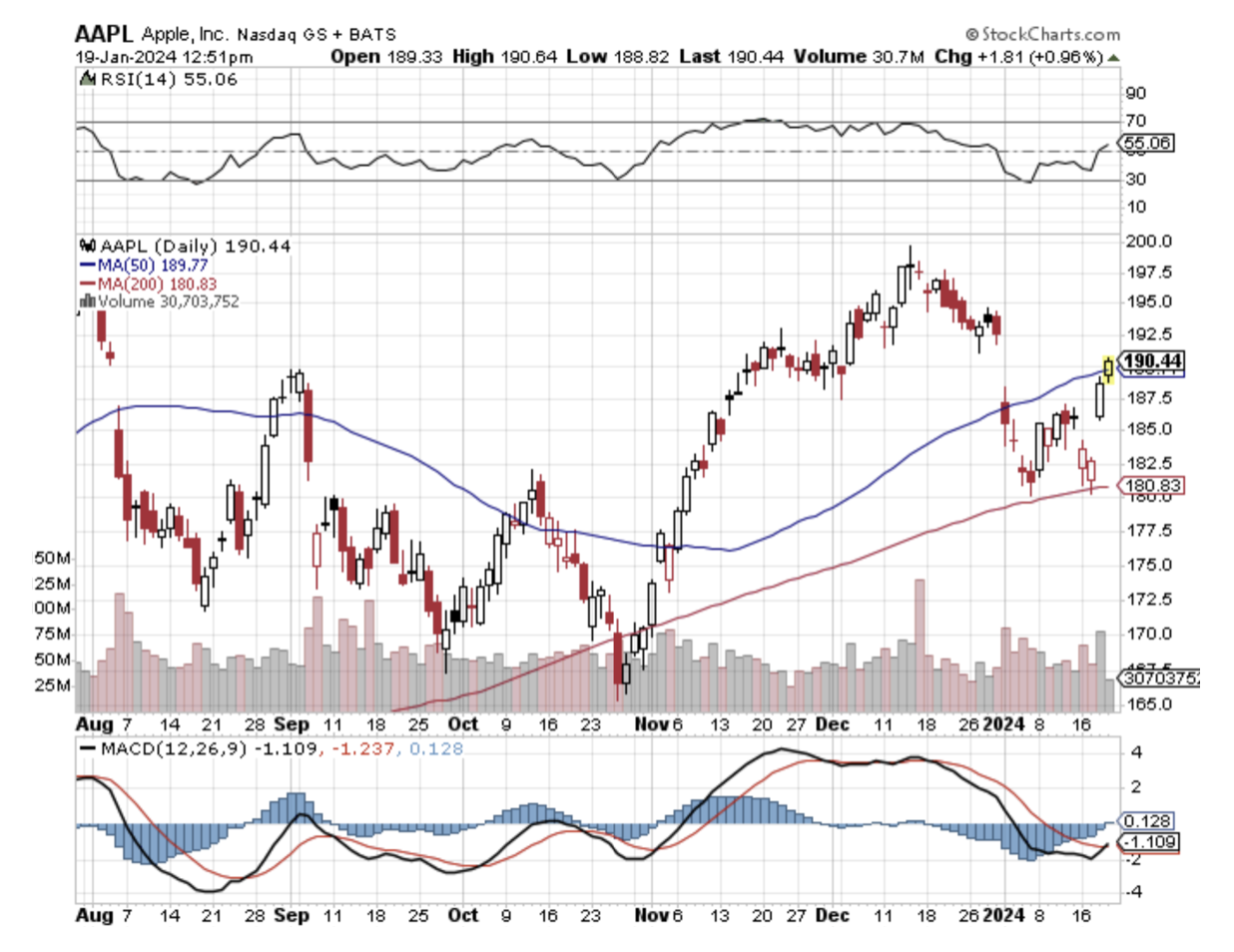
That doesn’t mean firms like Google, Apple, Microsoft, Amazon, and Meta won’t feel a small AI bump in revenue.
There certainly will be some changes, but wholesale transformation is a ways off.
I believe the AI hype has gotten too far over its skis.
Tech needs to slow down and make sure it’s properly implemented and the real effects will be seen after 2030.
https://madhedgefundtrader.com/wp-content/uploads/2019/05/cropped-mad-hedge-logo-transparent-192x192_f9578834168ba24df3eb53916a12c882.png00april@madhedgefundtrader.comhttps://madhedgefundtrader.com/wp-content/uploads/2019/05/cropped-mad-hedge-logo-transparent-192x192_f9578834168ba24df3eb53916a12c882.pngapril@madhedgefundtrader.com2024-01-22 14:02:212024-01-22 15:18:21Take A Deep Breath With AI
Today, let's talk about something that's stirring up quite the buzz in the investment community, something that's not just about numbers and charts, but about potentially changing lives.
Now, I'm sure you've heard of Apple (AAPL), Amazon (AMZN), Alphabet (GOOGL), Microsoft (MSFT), Meta Platforms (META), and Nvidia (NVDA). These tech titans aren't just playing around with gadgets and gizmos; they're digging deep into the world of knowledge to uncover stuff we didn't even know was missing. And let's be clear, this isn't just some fancy artificial intelligence show-off; it's bigger, much bigger.
But, recently, other industries aren’t letting tech have all the fun.
The pharma industry, led by stars like Moderna (MRNA), Eli Lilly (LLY), and Novo Nordisk (NVO), is on the brink of what I'd call medical miracles.
We're looking at treatments that might kick some serious diseases to the curb – illnesses that we thought were just part of the unlucky draw in the genetic lottery.
Admittedly, figuring out the real worth of these innovations is a bit like trying to nail jelly to the wall – traditional financial analysis scratches its head at this sort of thing.
But for those of you who don't mind a bit of a rollercoaster ride, investing in these themes could be as rewarding as finding a forgotten winning lottery ticket in your old jeans.
Let's chew on obesity for a second. It's a big deal, literally and figuratively. It's the root of all sorts of nasty stuff like heart disease and diabetes.
Here's where Lilly and Novo Nordisk come in, swinging like heroes with their weight-loss drugs. These aren't just your average diet pills; we're talking about drugs that could turn the tables on major illnesses and even some curveballs like Alzheimer’s and sleep apnea.
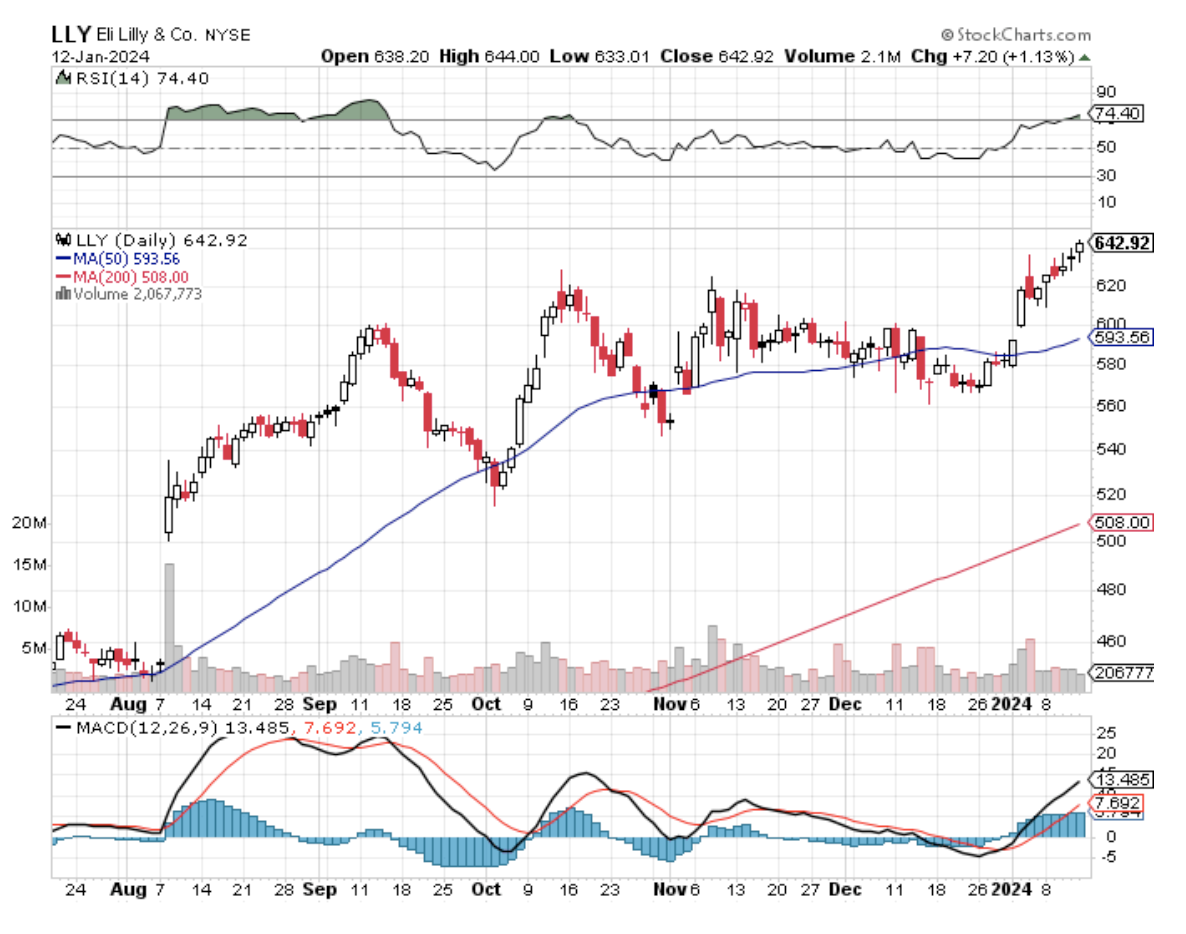
Lilly's stock has been on a joyride, up 77% in the past year. Sure, by the bookworms' metrics, it's overvalued, but if you ask me, those numbers are playing catch-up to what these drugs could really do.
For context, imagine if you had bought Amazon or Apple back when they were just a bookstore and a computer company. Looking at their history and trajectory, Lilly and Novo Nordisk could be cooking up something similar.
And with over 20 studies lined up in the next five years, Lilly's stock, hanging around $625, could jump to a cool $840 by 2028 if things go well.
Keep in mind that the obesity treatment market is huge, and I mean, really huge. We're talking over 100 million potential customers in the U.S. alone.
And get this: insurance companies, those penny pinchers, are likely to cover these drugs because they're cheaper than surgeries.
Getting down to the specifics with Lilly, they've been making waves in the weight loss market with Mounjaro, raking in a sweet $2.9 billion in just nine months. And with Zepbound, it's like they've hit the jackpot twice.
Still, it's not a solo race; Novo Nordisk is right there with Wegovy and Ozempic. The demand is so hot that there were shortages last year. Talk about being in high demand!
But here's where Lilly might just have the upper hand. Their molecule, tirzepatide, is like the Usain Bolt of weight loss drugs – up to three times more effective than Novo Nordisk’s semaglutide.
And with the market expected to balloon to $100 billion by 2030, we're just seeing the opening act of what could be a blockbuster show.
With all this obesity talk, it’s important to understand that Lilly is no one-trick pony. They've got a whole stable of drugs treating everything from lymphoma to ulcerative colitis. And with over 20 programs in phase 3 studies, they're not running out of steam anytime soon.
Plus, here's the cherry on top: Lilly isn't just about making money; they're sharing the love with a 15% hike in their dividend.
That means if you jump on the Lilly train by Feb. 15, you're in for a treat in early March.
So, is Lilly a solid bet for the long haul? It sure looks like it. The excitement around their weight loss treatments is just one piece of the puzzle.
With a variety of drugs in their arsenal and an impressive pipeline, Lilly isn't just a flash in the pan. Sure, there are the usual hiccups like patent expiries and pipeline flops, but with their portfolio, they look set to weather any storms and keep the growth party going. I suggest you buy the dip.
There is a very high degree of risk involved in trading. Past results are not indicative of future returns. MadHedgeFundTrader.com and all individuals affiliated with this site assume no responsibilities for your trading and investment results. The indicators, strategies, columns, articles and all other features are for educational purposes only and should not be construed as investment advice. Information for futures trading observations are obtained from sources believed to be reliable, but we do not warrant its completeness or accuracy, or warrant any results from the use of the information. Your use of the trading observations is entirely at your own risk and it is your sole responsibility to evaluate the accuracy, completeness and usefulness of the information. You must assess the risk of any trade with your broker and make your own independent decisions regarding any securities mentioned herein. Affiliates of MadHedgeFundTrader.com may have a position or effect transactions in the securities described herein (or options thereon) and/or otherwise employ trading strategies that may be consistent or inconsistent with the provided strategies.