• support@madhedgefundtrader.com
  • Member Login
Mad Hedge Fund Trader
  • Home
  • About
  • Store
  • Luncheons
  • Testimonials
  • Contact Us
  • Click to open the search input field Click to open the search input field Search
  • Menu Menu

Tag Archive for: (TDOC)

Mad Hedge Fund Trader

Leftover Stocks Ripe for the Picking

Biotech Letter

One of the key things to remember in choosing companies to invest in is their long-term prospects. With these firmly in place, compounding can practically do most of the heavy lifting in the years to come.

Sure. It’s easy to be blinded by hot growth businesses these days—ones that seemingly promise unabated growth forever or those with cheap valuations but with no definitive growth prospects. 

That is, you need to find businesses with not only promising prospects but are also trading at reasonable valuations. This requires a delicate balancing act.

With that balance in mind, one of the most obvious trends that fits the bill is to capitalize on the aging populations across the world.

As people age, it will drive higher demand for a myriad of healthcare services and the sector that responds most to this trend is the medical insurance segment.

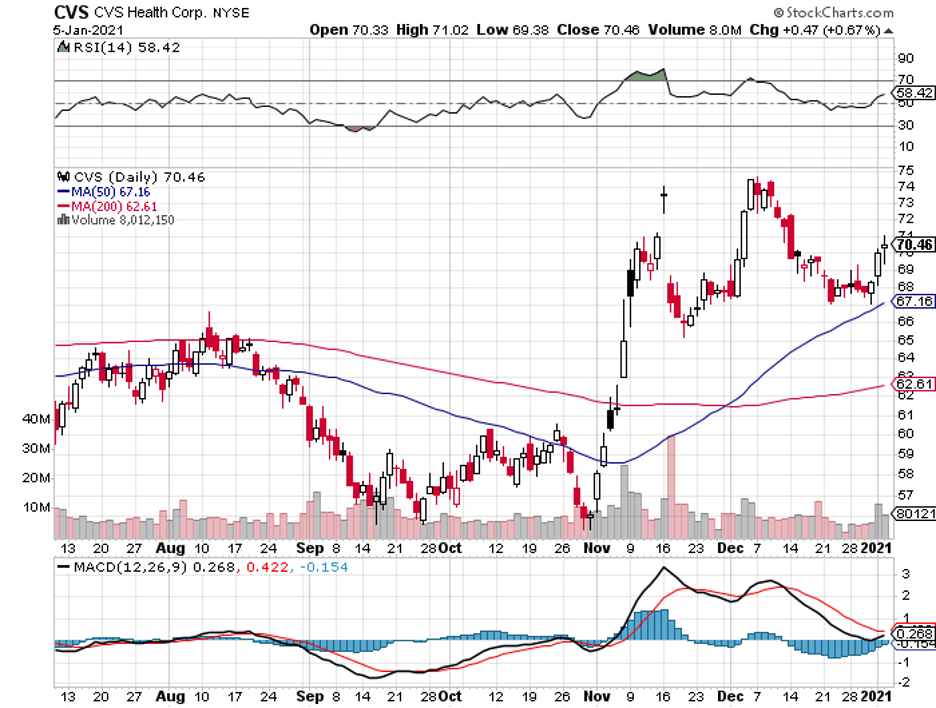
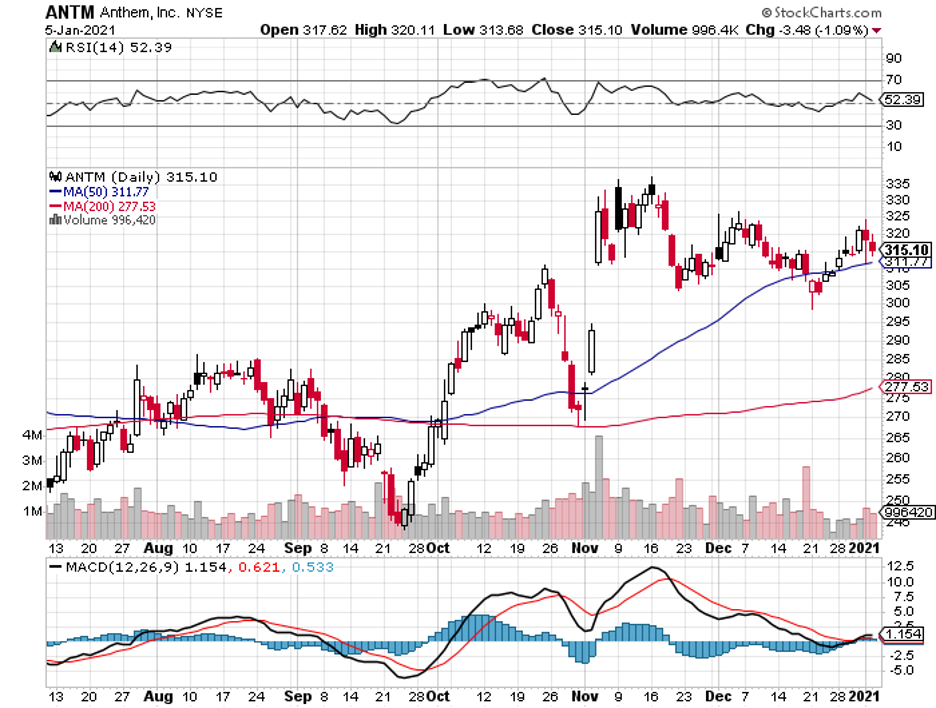
Among the companies in this industry, I find Anthem (ANTM), UnitedHealth (UNH), and CVS Health (CVS) to bring the most bang for your buck.

While these companies are as fun to talk about as an actuarial table, they offer predictable cash flows and long-term prospects at reasonably priced valuations.

Let’s take Anthem for example.

From a valuation point of view, Anthem has traded hands at roughly 11.5 times its trailing earnings. More impressively, those earnings are estimated to increase by approximately 14.5% clip over the next five years.

That’s a reasonable, if not really cheap, price to pay for a company that’s well-positioned for what the future is expected to bring.

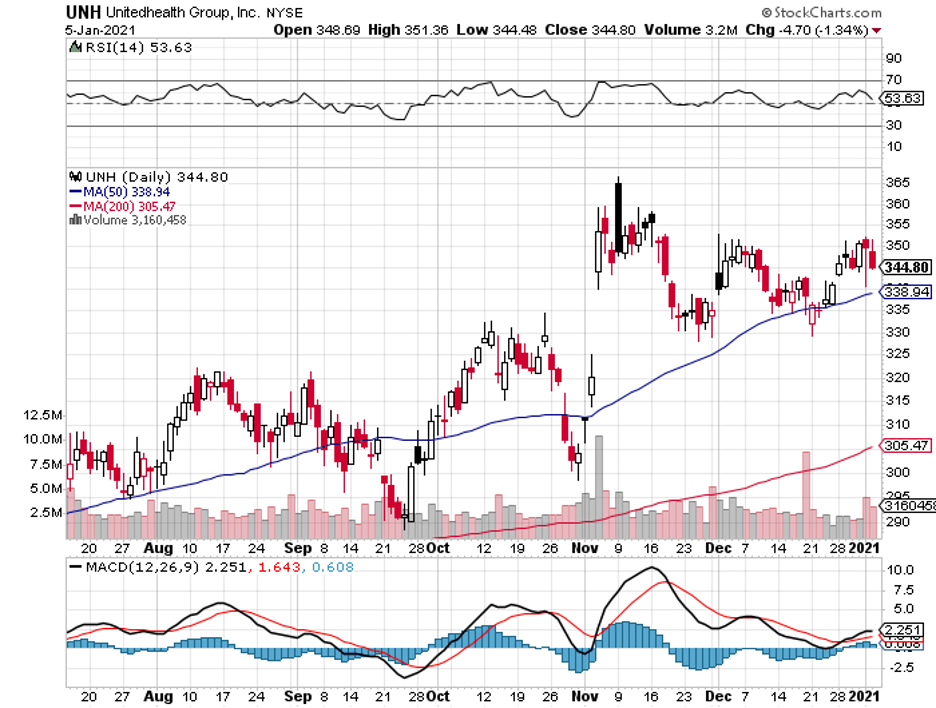
The aging population will also swell the ranks of UnitedHealth, being the largest health insurer in the country with over 14 million members in its Medicare programs.

Among the three, I find CVS the most intriguing.

The problem with this business is that people generally believe it’s only a pharmacy company. The truth is, it’s only one facet of CVS’ business, and, surprisingly, that’s its least profitable sector to date.

During the first six months of 2020, the total revenues of CVS went up 5% year over year to $132 billion.

Meanwhile, revenues of its pharmacy services sector grew by 2% compared to the same period in 2019 while its retails segment increased by 3%.

Notably, the biggest gainer is its healthcare benefits segment with a 6% jump year over year in revenues.

During these six months, CVS increased its medical memberships by 134,000 individuals to add Medicare and Medicaid insurance products. 

On top of these, CVS reported that it had administered almost 2 million tests for COVID-19 in July—a number that continued to grow as the pandemic progressed throughout 2020.

Taking cue from the success of companies like Teladoc (TDOC), CVS also invested heavily in telehealth services.

In its second quarter earnings report, the company recorded a 15% increase in the number of its HealthHUB visits for regular members and Aetna cardholders.

This 2021, CVS plans to boost its digital health services by adding more segments like a behavioral support unit.

Overall, CVS has been performing better than its peers despite the pandemic thanks to its efforts on transforming itself into a more affordable healthcare benefits provider.

In fact, the company raked in $4.9 billion in profits in July 2020 alone—a whopping 48% jump from its performance in the previous year over the same period.

Most importantly, CVS is offering a dividend of $0.50 per share. Although the company hasn’t exactly raised this since 2017, it remains a preferable yield of 3.54%. This is way better than the average 1.8% payout from the S&P 500.

Despite all these, CVS is still one of the unpopular stocks among investors today.

All three companies have managed to still make a notable profit and fared relatively well despite the pandemic.

They are also underpriced, trading at roughly 14 times earnings or even less. On top of these, each pays dividends and offers an ROE of at least 11%.

Keep in mind that aging is an unstoppable and undeniable trend.

You’ve heard about the large number of Baby Boomers hitting retirement age, with the last of the roughly 72 million from that generation in the US alone turning 65 by 2030.

By 2034, older adults will outnumber children aged 18 and under. That has never happened in American history.

This isn’t a unique case in the US either.

The same is happening in Europe, where 1 of 5 people is already at least 65 years old. Asia is also expected to experience the same thing within the decade, particularly in South Korea and Singapore.

All three stocks, Anthem, UnitedHealth, and CVS offer reasonable opportunities at their current prices. They actually fit the textbook definition of value stocks. Hence, buying and holding these stocks is one of the most straightforward strategies over the next decade and beyond.

To put it simply, this only means one thing. For investors of these medical insurance stocks, time is literally on your side.
CVS


CVS


https://madhedgefundtrader.com/wp-content/uploads/2019/05/cropped-mad-hedge-logo-transparent-192x192_f9578834168ba24df3eb53916a12c882.png 0 0 Mad Hedge Fund Trader https://madhedgefundtrader.com/wp-content/uploads/2019/05/cropped-mad-hedge-logo-transparent-192x192_f9578834168ba24df3eb53916a12c882.png Mad Hedge Fund Trader2021-01-07 14:00:412021-01-10 21:12:32Leftover Stocks Ripe for the Picking
Mad Hedge Fund Trader

November 17, 2020

Biotech Letter

Mad Hedge Biotech & Healthcare Letter
November 17, 2020
Fiat Lux

FEATURED TRADE:

(WHY TELADOC IS A WIN-WIN-WIN STOCK)
(TDOC), (GOOG), (GOOGL), (AAPL)

https://madhedgefundtrader.com/wp-content/uploads/2019/05/cropped-mad-hedge-logo-transparent-192x192_f9578834168ba24df3eb53916a12c882.png 0 0 Mad Hedge Fund Trader https://madhedgefundtrader.com/wp-content/uploads/2019/05/cropped-mad-hedge-logo-transparent-192x192_f9578834168ba24df3eb53916a12c882.png Mad Hedge Fund Trader2020-11-17 13:02:222020-11-18 08:16:30November 17, 2020
Mad Hedge Fund Trader

Why Teladoc is a Win-Win-Win stock

Biotech Letter

Digital health was a struggling sector before COVID-19, but the pandemic changed the game, driving customers and even providers to embrace digital health solutions.

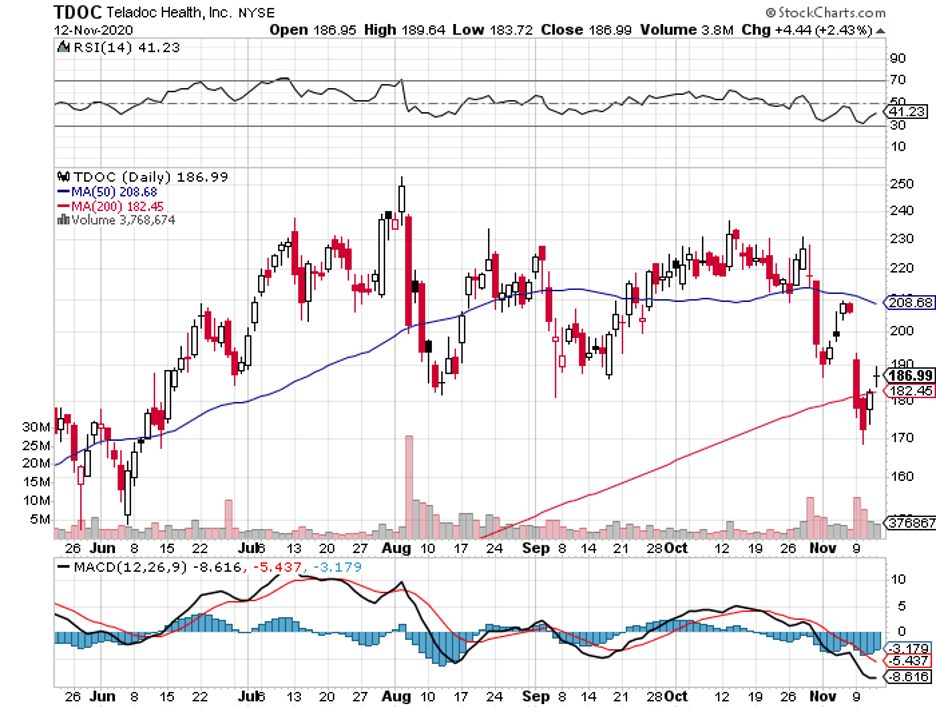
As expected, frontrunner Teladoc Health (TDOC) surfaced as a major beneficiary of this booming industry, reporting a record high in the number of virtual care visits during the ongoing health and financial crisis.

While there are concerns that these rewards could be fleeting, COVID-19 appears to have contributed longer-lasting changes, particularly in consumer behavior.

More and more users are opting for digital health solutions, with total virtual care visits up by 206% to hit 2.8 million in the third quarter of 2020 alone.

A noticeable change in Teladoc’s portfolio is the diversity of diseases they handle.

Previously accounting for only a third of its total care visits in 2019, non-infectious conditions like hypertension, depression, anxiety, and back pain now account for half.

As for the virtual care visits for dermatology and behavioral health in their business-to-business transactions, the company enjoyed a 500% boost year over year.

For context, the total number of virtual visits to Teladoc in 2019 was only 4.1 million.

Since the year 2020 started, though, the company has already recorded almost twice that number at 7.6 million—and the fourth quarter is projected to become its best-performing period yet.

The shift was also evident in the third-quarter earnings report of Teladoc, which showed that the company’s top line jumped by 109% year over year to reach $289 million.

This marks the company’s highest quarterly top-line growth rate.

In fact, this growth rate exceeded even the company's expectations.

When Teladoc released its second-quarter earnings, its Q3 projections were only somewhere between $275 million and $285 million.

As the number of COVID-19 cases continues to climb, it is highly possible that the company will once again deliver much better results than the forecasted numbers in the fourth quarter.

In terms of its fourth-quarter projections, Teladoc is expected to reach roughly 3 million virtual visits in the last months of 2020.

The conservative estimate for Teladoc’s total virtual visits this year is at 10 million.

So far, Teladoc shares are up 133% year-to-date, with the company expected to cross the $1 billion revenue mark in 2020—an almost 100% increase from its 2019 projection.

In terms of future growth, Teladoc recently completed an $18.5 billion mega-merger with Livongo Health (LVGO), making it a one-stop-shop for every virtual care need.

As a combined unit, the Teladoc-Livongo partnership is hailed as the next-generation virtual care provider. Simply put, this newly formed company is the future of the healthcare industry in America.

This means that while Teladoc has more than doubled this 2020, the stock is still expected to continue soaring thanks to its recent merger with Livongo.

Here’s a brief background of Livongo.

This company gathers data and sends reminders to its users suffering from chronic diseases to encourage them to implement lifestyle and even behavioral changes that would improve their health.

Prior to its cash-and-stock merger with Teladoc, Livongo was doubling its membership, particularly among diabetes patients.

This deal is anticipated to elevate virtual care and push Teladoc front and center of the $121 billion digital health market in the United States alone—a number that is projected to grow at a rate of 16.9% until 2025.

Needless to say, Teladoc has set itself up to control a huge part of that total value.

So far, the most notable competitors of Teladoc in this space are technology giants like Google (GOOG) via its parent company Alphabet (GOOGL) and Apple (AAPL).

With all the opportunities and even with the challenges of new competitors in the market, Teladoc remains the leader in this explosive digital health industry, making it extremely attractive for investors to ignore.

Looking at its risk-reward proposition, the company is clearly a solid growth pick.

After all, telemedicine offers a long-term win-win-win situation for everyone in the healthcare industry.

It is a win for doctors because they can see more patients.

It’s a win for patients because they get to see doctors with ease and convenience.

Finally, it is a win for insurance agencies because they generally pay lower bills for virtual visits.


https://madhedgefundtrader.com/wp-content/uploads/2019/05/cropped-mad-hedge-logo-transparent-192x192_f9578834168ba24df3eb53916a12c882.png 0 0 Mad Hedge Fund Trader https://madhedgefundtrader.com/wp-content/uploads/2019/05/cropped-mad-hedge-logo-transparent-192x192_f9578834168ba24df3eb53916a12c882.png Mad Hedge Fund Trader2020-11-17 13:00:202020-11-18 14:15:00Why Teladoc is a Win-Win-Win stock
Mad Hedge Fund Trader

August 6, 2020

Biotech Letter

Mad Hedge Biotech & Healthcare Letter
August 6, 2020
Fiat Lux

Featured Trade:

(THE DOCTOR WILL SEE YOU NOW)
(TDOC), (MRNA), (PFE), (AZN)

https://madhedgefundtrader.com/wp-content/uploads/2019/05/cropped-mad-hedge-logo-transparent-192x192_f9578834168ba24df3eb53916a12c882.png 0 0 Mad Hedge Fund Trader https://madhedgefundtrader.com/wp-content/uploads/2019/05/cropped-mad-hedge-logo-transparent-192x192_f9578834168ba24df3eb53916a12c882.png Mad Hedge Fund Trader2020-08-06 10:02:012020-08-06 10:29:14August 6, 2020
Mad Hedge Fund Trader

The Doctor Will See You Now

Biotech Letter

With everything that has been happening in 2020, it is difficult to foresee what will transpire for the rest of the year. Although the major indexes have been trading at virtually record highs again, what is in store for the market in the second half remains a mystery.

Since the COVID-19 pandemic broke out, several businesses have shut down. However, some companies managed to survive with others even thriving in this unpredictable economy.

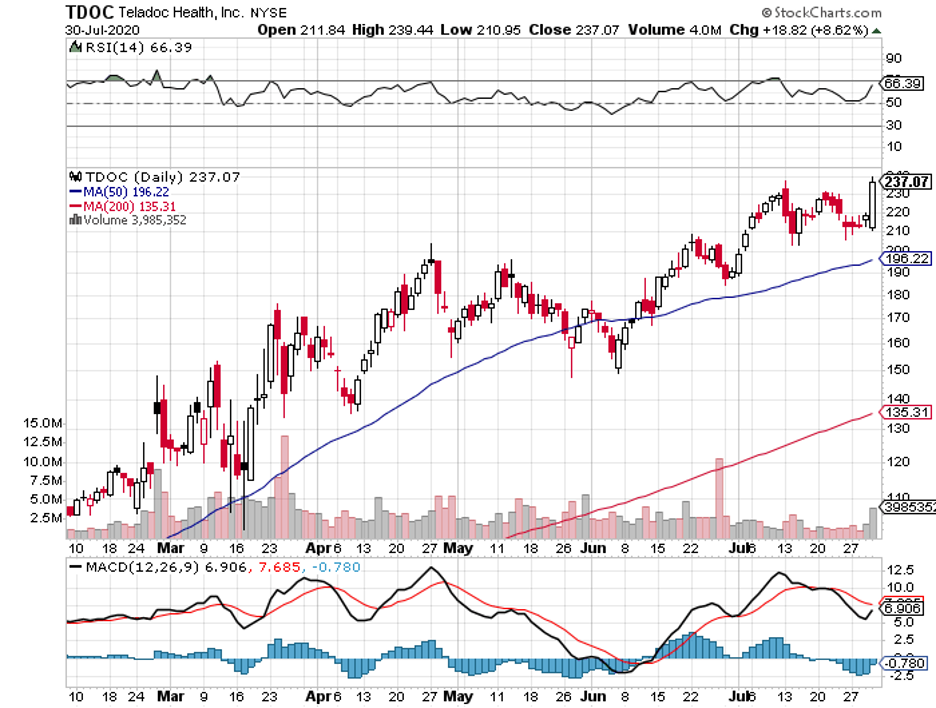
One of the businesses that exploded during this pandemic is Teladoc Health (TDOC).  

Lockdowns and physical social distancing protocols have pushed people to find alternative ways to still go about their lives, and this is where Teladoc comes in.

With the growing fear of infection from the virus, more and more patients are opting for virtual care offerings instead of risking contamination in public.

The exponential rise for this demand was underscored in the second-quarter earnings report of Teladoc.

The company’s revenue jumped by 85% year-over-year to hit $241 million, which blew past the estimated $220.7 million projected by analysts earlier. This substantial increase was primarily fueled by the 203% year-over-year climb of visits.

As for its fee-only visits, Teladoc recorded a whopping 125% increase in the US to hit 21.8 million. Its total visits reach 2.76 million, reporting an over threefold jump from last year.

Teladoc’s paid membership total soared 92% year-over-year in the US alone, reporting 51.5 million members so far.

While this is great news to its investors, Teladoc’s outlook for the third quarter is even more promising.

The company anticipates its third-quarter revenue to be somewhere between $275 million and $285 million, showing off an approximately 103% year-over-year growth.

In terms of its 2020 earnings report, Teladoc is expected to rake in $980 million to $995 million in revenue, with a net loss somewhere between $1.45 and $1.36 for each share.

Based on its preliminary outlook, Teladoc’s growth could slow down next year. However, the company is still estimated to reach a 30% to 40% increase in revenue in 2021.

Riding the momentum of the demand for its services, Teladoc completed the $600 million acquisition of virtual care competitor InTouch Health in July.

This move is anticipated to give a boost to the company’s top line and expand the reach of Teladoc around the world. InTouch is estimated to contribute roughly $80 million in revenues.

With Teladoc’s share price skyrocketing to over 150%, none of its investors could ever find a reason to complain about the company’s performance this year so far.

With the accelerated adoption of telehealth services in various sectors and the growing number of consumers eager to receive treatment, Teladoc is expected to continue reaping the rewards.

Since the COVID-19 crisis has encouraged more people to avail of the telehealth service, it would no longer come as a surprise if most of them decide to become more permanent subscribers of the platform.

This is expected to remain the case even when the growth from this health and financial crisis starts to taper off.

Given the company’s market-leading role in this quickly multiplying virtual care market, Teladoc is well-positioned to dominate the sector in years to come. After all, being the market leader in any industry offers tremendous advantages as seen in the tight COVID-19 vaccine race among Moderna (MRNA), Pfizer (PFE), and AstraZeneca (AZN).

Although Teladoc shares do not come cheap, especially with its ever-growing popularity during the pandemic, the stock’s premium valuation is well warranted.

Teladoc is a stock for investors who are prepared to withstand the considerable volatility that oftentimes accompanies the majority of growth stocks in the biotechnology and healthcare sector. For those uncertain but are curious to own shares of this telehealth platform, the ideal move would be to start with a small position until you feel comfortable investing larger sums.

https://madhedgefundtrader.com/wp-content/uploads/2019/05/cropped-mad-hedge-logo-transparent-192x192_f9578834168ba24df3eb53916a12c882.png 0 0 Mad Hedge Fund Trader https://madhedgefundtrader.com/wp-content/uploads/2019/05/cropped-mad-hedge-logo-transparent-192x192_f9578834168ba24df3eb53916a12c882.png Mad Hedge Fund Trader2020-08-06 10:00:392020-08-10 08:57:05The Doctor Will See You Now
Mad Hedge Fund Trader

June 26, 2020

Tech Letter

Mad Hedge Technology Letter
June 26, 2020
Fiat Lux

Featured Trade:

(GETTING READY FOR THE SECOND WAVE)
(DOCU), (TDOC), (NFLX), ($COMPQ)

https://madhedgefundtrader.com/wp-content/uploads/2019/05/cropped-mad-hedge-logo-transparent-192x192_f9578834168ba24df3eb53916a12c882.png 0 0 Mad Hedge Fund Trader https://madhedgefundtrader.com/wp-content/uploads/2019/05/cropped-mad-hedge-logo-transparent-192x192_f9578834168ba24df3eb53916a12c882.png Mad Hedge Fund Trader2020-06-26 10:04:142020-06-26 10:12:03June 26, 2020
Mad Hedge Fund Trader

Getting Ready for the Second Wave

Tech Letter

The coronavirus is dangerously inching towards knocking out the main street economy which would finally land a heavy blow to the tech sector because of the knock-on effect of a substantial drop in future tech budgets.

This leads me to believe that tech stocks are overvalued in the short-term and are due for consolidation.

Daily coronavirus cases have more than doubled from 18,000 to 45,000 as of June 24rd as Americans reclaim the streets and the summer heatwaves kick into gear.

Florida, California, Arizona, and Texas appear to be the new ground zero of the coronavirus and 26 states are experiencing an explosion in cases compared to the prior week.

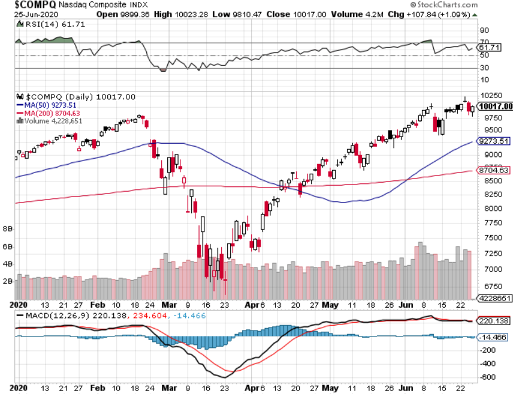
The blatant disregard for human safety after the reopening means that deaths are likely to spiral out of control in the short-term boding ill for the Nasdaq index but great for shelter-in-place tech stocks.

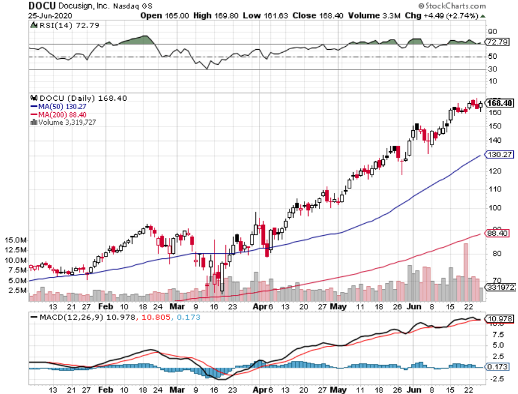
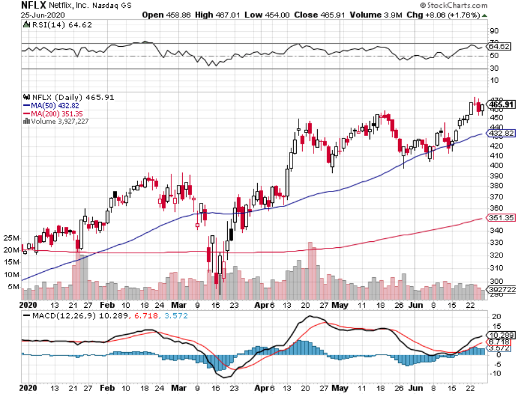
DocuSign (DOCU), Netflix (NFLX), and Teladoc Health (TDOC) could be in for another run-up.

The jolt in death levels is not baked into tech shares yet, and if things get out of hand, Americans could voluntarily resort back to a shelter-in-place existence.

From March until today, the Nasdaq index has done nothing but sprint upwards due to the eclectic mix of the “re-opening” trade and copious amounts of fiscal stimulus.

If the re-opening trade is killed, the tech market will then go through another contentious referendum to test whether Jay Powell and the Fed are willing to save the equity market yet again.

Propping up the markets ultimately means propping up the tech markets.

If U.S. coronavirus cases re-accelerate from 45,000 to 70,000 then 100,000 per day, the streets could empty out in 1-day.

The risks are certainly to the downside now and the mushrooming of U.S. coronavirus cases could be the catalyst for mass profit-taking in tech names.

Saying the Nasdaq is a little frothy does not mean that tech shares can’t still go higher from here.

They certainly can and there is a legitimate base case surrounding the enormous amount of liquidity sloshing around in the system, meaning that every dip will be bought up.

Then we look forward to the next earnings and news like Apple re-closing 18 stores in coronavirus hot spots doesn’t help.

However, even in the throes of the pandemic, Apple is as innovative as ever - announcing plans to cut ties with Intel during its virtual Worldwide Developers Conference on Monday, saying that it will phase out the use of Intel’s chips in its Mac line of computers over the next two years to use its own in-house chips.

That’s a big deal.

Big tech has so many levers at its disposal.

This goes a long way in a pandemic when specific revenue avenues are blocked off.

Tech is nimble as ever.

Another prime example, after the success of video conferencing software Zoom Communications (ZM), Facebook, Google, and Microsoft posted replica software in a matter of weeks.

Even if their video communication replicas do not catch on, it shows you the vast resources they can muster to harness in whichever direction they please in a blink of an eye.

Many firms are confronting some harsh realities, but investors aren’t penalizing tech firms by selling.

Facebook has seen an ad boycott because of not doing enough against extremism and racism on their platform.

Their algorithms often pit two opposite opinions against each other stoking engagement and more hatred.  

Companies including REI, The North Face, Magnolia Pictures, and Upwork have said they won't buy ads on Facebook at least through July as part of a boycott.

The boycott is mostly all bark and no bite and earnings won’t change in a meaningful way.

Uber is a less robust tech firm in the regulatory crosshairs with the state of California about to file court documents that could force Uber and Lyft to reclassify drivers as employees in less than a month.

This could wipe out a small tech company like Uber which is only a $53 billion company.

If the courts rule against Uber, the law would require them to grant drivers employment status while they await the outcome of a pending lawsuit over the issue which would crush the bottom line.

They are having a tough time figuring out how to become profitable.

Investors are doing their best to analyze what the tech industry will look like post-Covid-19 and the assumption is that tech and big tech will dominate which is why any sell-off is temporary.

Every big tech name will survive the pandemic with its business models intact.

Throw in that news of a vaccine and treatment inching forward to fruition and there is a solid bottom for any temporary dip.

It is irrelevant if big tech loses 10% or 20% of revenue this year just as long as they don’t structurally break.

big tech


big tech


big tech

https://madhedgefundtrader.com/wp-content/uploads/2019/05/cropped-mad-hedge-logo-transparent-192x192_f9578834168ba24df3eb53916a12c882.png 0 0 Mad Hedge Fund Trader https://madhedgefundtrader.com/wp-content/uploads/2019/05/cropped-mad-hedge-logo-transparent-192x192_f9578834168ba24df3eb53916a12c882.png Mad Hedge Fund Trader2020-06-26 10:02:122020-06-27 16:10:05Getting Ready for the Second Wave
Mad Hedge Fund Trader

June 23, 2020

Diary, Newsletter, Summary

Global Market Comments
June 23, 2020
Fiat Lux

Featured Trade:

(HERE ARE THE FOUR BEST PANDEMIC-INSPIRED TECHNOLOGY TRENDS),
(AMZN), (CHWY), (EBAY), NFLX), (SPOT), (TMUS), (ATVI), (V), (PYPL), (AAPL), (MA), (TDOC), (ISRG), (TMDI)

https://madhedgefundtrader.com/wp-content/uploads/2019/05/cropped-mad-hedge-logo-transparent-192x192_f9578834168ba24df3eb53916a12c882.png 0 0 Mad Hedge Fund Trader https://madhedgefundtrader.com/wp-content/uploads/2019/05/cropped-mad-hedge-logo-transparent-192x192_f9578834168ba24df3eb53916a12c882.png Mad Hedge Fund Trader2020-06-23 09:04:582020-06-23 09:02:04June 23, 2020
Mad Hedge Fund Trader

Here the Four Best Pandemic-Inspired Technology Trends

Diary, Newsletter, Summary

By now, we have all figured out that the pandemic has irrevocably changed the course of technology investment. Some sectors are enjoying incredible windfalls, while others are getting wiped out.

The digitization of the economy has just received a turbocharger. It has become a stock pickers market en extemus.

The good news is that we are still on the ground floor of trends that have a decade to run, like working from home, more online food purchases, and a rise in touchless payments. This means there's a huge upside for investors willing to make big bets on what’s expected to become some of the most important technologies in the years ahead.

Covid-19 is a wake-up call to accelerate trends that have been around for years and are now greatly speeding up. The pandemic seems to have triggered a new survival instinct: innovate fast or die. Let me list some of the frontrunners.

1. E-commerce

E-commerce is the No. 1 shelter-in-place beneficiary by miles, as a combination of stay-at-home orders, reduced spending on dining, and government stimulus have sent Americans in search of other ways to spend their money. Even though Covid-19 restrictions are now being eased, the e-commerce industry should still see about 25% growth across all of 2020.

The estimated $60 billion spent by consumers from their stimulus checks has also been a tailwind. While the world is now re-opening, we expect these buckets of available dollars to remain e-commerce tailwinds for the foreseeable future as we expect adjusted retail and travel spend to decline an aggregate of 18% in and for as much as half of all small retail stores to potentially close this year.

When Amazon shares were at $1,000, I wrote a report calculating that its breakup value was at least $3,000 a share. It looks like Amazon may hit that target before yearend….without the breakup.

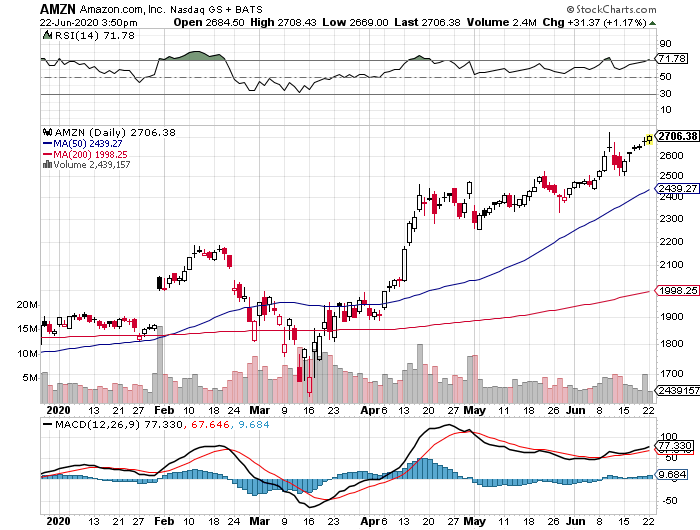
Want to know the winners? Try Amazon (AMZN), Chewy (CHWY), and eBay (EBAY).

2. Digital Entertainment

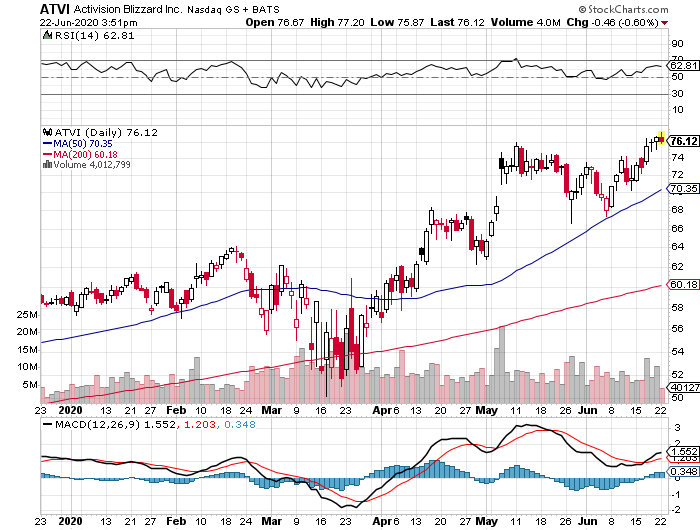
The Covid-19 pandemic has also left more Americans in search of digital, at-home entertainment, a trend that’s delivered a huge push for companies like Activision Blizzard that develop online games. New users, time spend gaming and in-game purchases are only accelerating and spell even more lasting benefit for game developers.

Content names like video streaming site Netflix (NFLX), as well as bandwidth and connectivity companies including Comcast (CMCSA) and T-Mobile (TMUS), are names to focus on.

This increased use of high bandwidth applications is likely to continue post-COVID-19 and has the impact of similarly increasing the demand for bandwidth and connectivity. This increases the value of upstream assets in the infrastructure sectors like fiber-based wireline broadband networks and nascent 5G build-outs.

Names to play the space: Netflix (NFLX), Spotify (SPOT), T-Mobile (TMUS), Activision Blizzard (ATVI).

3. Touchless payments

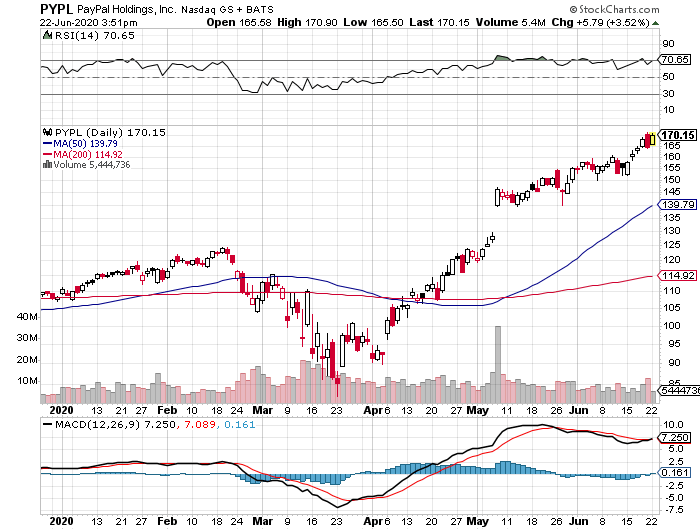
Another trend the stock market still underappreciated is a generational surge in contactless payments, which has recently seen a jump higher amid Covid-19 fears and efforts to minimize physical contact. Companies like Visa (V), Mastercard (MA), and PayPal (PYPL), already integral to the payments world, should be major beneficiaries in the years ahead.

The market assumes that COVID-19 related adoption of digital payments is a near-term benefit for payment service providers, offsetting some of the consumer spending headwinds. However, digitization of payments is part of a multi-year secular growth driver, with COVID-19 as just the latest accelerator.

Names to play the space: Visa (V), PayPal (PYPL), Apple (AAPL), and Mastercard (MA).

4. Telemedicine

Healthcare is one of the most inefficient industries left in the United States. I call it a 19th century industry operating with 21st century technology. While progress has been made, those massive stacks of paper records are finally disappearing, there still is a long way to go.

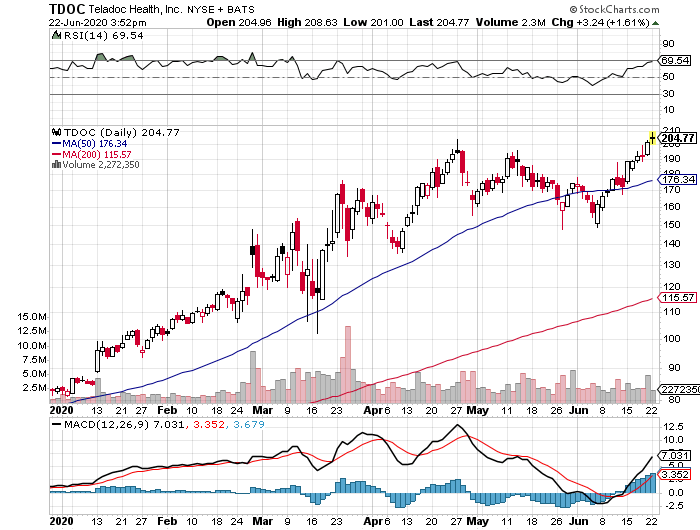
These days, even doctors don’t want to see patients in person, as they may contract the Coronavirus. Far better to see them online, which could address 90% of most patients. Teledoc (TDOC) does exactly that (click here for my full report).

So does Intuitive Surgical (ISRG), maker of DaVinci Surgical Systems, which enables remote operations for a whole host of maladies. Titan Medical (TMDI) is another name to look at here.

Names to play the space: (TDOC), (ISRG), (TMDI).


https://www.madhedgefundtrader.com/wp-content/uploads/2020/06/john-vegas.png 343 457 Mad Hedge Fund Trader https://madhedgefundtrader.com/wp-content/uploads/2019/05/cropped-mad-hedge-logo-transparent-192x192_f9578834168ba24df3eb53916a12c882.png Mad Hedge Fund Trader2020-06-23 09:02:442020-06-23 09:02:32Here the Four Best Pandemic-Inspired Technology Trends
Mad Hedge Fund Trader

AbbVie Joins the Corona Fray

Biotech Letter

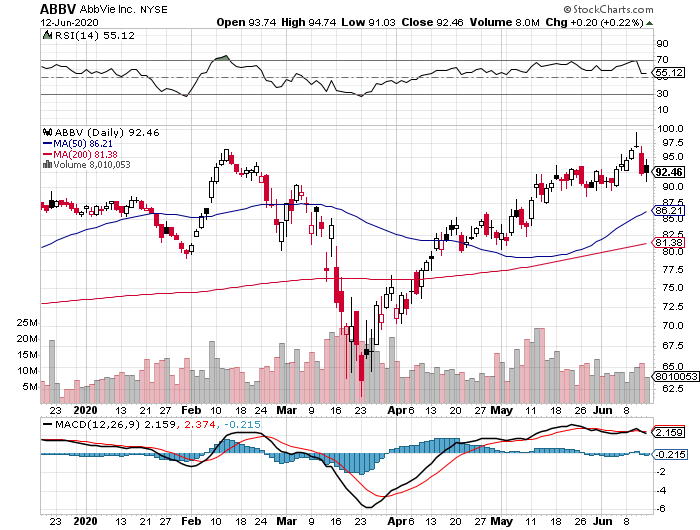
Although late to the party, giant biopharmaceutical company AbbVie (ABBV) is now going all-out on its coronavirus disease (COVID-19) treatment program.

The Illinois-based company, which has a market capitalization of $162.95 billion, aims to come up with a treatment that can block the SARS-CoV-2 coronavirus that causes COVID-19. The drug is currently dubbed 47D11.

 AbbVie is working on this cure alongside Netherlands’ Erasmus Medical Center and Utrecht University as well as China’s  bio-therapeutics developer Harbour BioMed.

 It’s worth noting that AbbVie isn’t the first company to use this approach.

Earlier this year, Regeneron (REGN) announced a similar strategy to beat COVID-19. Its experimental cure, called REGN-COV2, is an antibody cocktail composed of two to three proteins working together to fight off the virus. The company plans to start clinical trials sometime this month.

 Aside from AbbVie and Regeneron, Eli Lilly (LLY) is also utilizing the same technology.

In fact, the Indiana-based biotechnology leader already started dosing actual patients with COVID-19 with its experimental treatment, LY-CoV555.

Eli Lilly’s drug was actually developed using the antibodies collected from one of the first patients in the US to recover from the disease.

Using the same approach to find a COVID-19 cure isn’t the only thing Regeneron and AbbVie have in common, though.

To bulk up its oncology pipeline, AbbVie forged a partnership with Danish biotechnology company Genmab (GMAB) earlier this month.

Interestingly, Genmab is the same company behind the clinical progress of the bispecific antibody treatments of both Regeneron and Roche Holding (RHHBY).

AbbVie and Genmab agreed to collaborate on bispecific antibody development to come up with treatments that can target cancer cells and strengthen immune cells. The three drugs included in the deal are epcoritamab (DuoBody-CD3xCD20), DuoHexaBody-CD37, and DuoBody-CD3x5T4.

Aside from the three candidates already lined up, the two companies are also ironing out details on four additional cancer treatments.

The deal is estimated to be worth almost $4 billion, with AbbVie paying $750 million upfront.

On top of that, Genmab will also be entitled to get potential payments of up to $3.15 billion in milestone payments. The four potential cancer treatments could also entitle Genmab with an additional $2 billion.

Since bispecific antibodies are hailed as the “next-generation cancer therapy,” this market continues to attract big names in the industry.

So far, the list of companies working on bispecific antibodies includes Amgen (AMGN), Johnson & Johnson (JNJ), Novartis (NVS), GlaxoSmithKline (GSK), Merck (MRK), AstraZeneca (AZN), and Sanofi (SNY).

Aside from improving its oncology lineup, Abbvie has shown more creativity in diversifying its products.

Throughout the years, AbbVie had been considered as a strictly pharmaceutical company in the past. However, its recent purchase of Allergan set off a series of decisions that showcased the company’s plan to expand its portfolio.

With AbbVie’s revenue reaching $33.3 billion in 2019, several experts disagreed with the company’s decision to buy Allergan (AGN).

However, the move is estimated to add roughly $50 billion to the company’s annual revenue and help AbbVie’s bottom line.

One of the biggest products added to AbbVie’s portfolio is Botox, which has been long-regarded as Allergan’s prized cash cow.

In fact, this widely popular injectible raked in $1.02 billion in sales for Allergan in the fourth quarter of 2019 alone. Another promising product is the dermal filler Juvederm, which brought in $347.3 million in the same period.

Despite the excitement from the newly formed partnerships, a lot of investors remain apprehensive over AbbVie’s future.

These fears are rooted in the doomsday countdown for the company’s blockbuster rheumatoid arthritis drug Humira — and for good reason.

In its 2020 first quarter report, AbbVie recorded $8.6 billion in revenue, indicating a 10.1% jump year over year.

From this, Humira contributed nearly 58% despite the growing number of biosimilar rivals in Europe. In fact, Humira sales reached $4.7 billion, showing a 14.5% climb from the same period last year.

In 2019, experts predicted that Humira is poised to overtake Pfizer’s (PFE) Lipitor as the top-selling drug of all time by 2024.

AbbVie’s rheumatoid arthritis drug is estimated to reach a whopping $240 billion in sales in the next four years. 

As expected, biosimilar competition, led by Amgen, has been licking their chops to get a piece of the action for years now, and they would do everything to dethrone AbbVie from its top spot in the autoimmune diseases sector.

Hence, AbbVie implemented two strategies to address this issue.

The first is forestalling the inevitable. In a recent court victory, AbbVie secured patent exclusivity for Humira until 2023.

Although this only leaves AbbVie with three short years to deal with the problem, it’s sufficient period for the company to execute its second plan: “Humira on steroids.”

Since Humira’s patent exclusivity has been a sore issue for AbbVie for years, the company decided to solve it by creating a stronger version of the drug.

The new antibody treatment, called ABBV-3373, is said to be more effective than Humira.

If all goes well in its clinical trials, then this “new Humira” can very well be AbbVie’s next megablockbuster and main moneymaker after 2023.

Humira isn’t the only big seller in AbbVie’s lineup.

Other blockbusters include cancer drug Imbruvica, which recorded $1.2 billion in revenue in the first quarter, up by 20.6% compared to the same period last year. Another cancer drug, Venclexta, is also performing well, bringing in $317 million in net revenue.

AbbVie has been boosting its next-generation treatments as well.

So far, two more Humira-like drugs stand out --severe plaque psoriasis medication Skyrizi and rheumatoid arthritis treatment Rinvoq.

Skyrizi’s annual sales are projected to grow from $1 billion to hit $4.4 billion by 2025, with the numbers going higher than $7.4 billion in the following years.

Rinvoq is expected to bring in $3.7 billion in sales by 2025 and increasing to reach $5.9 billion after that.

Right now, AbbVie appears to be oddly cheap as its shares are trading at only 9 times its expected earnings this year. This is possibly due to the anxiety over the loss of Humira’s patent exclusivity by 2023.

As AbbVie has shown in the past months, it has solid plans on how to deal with the impending loss. Its acquisition of Allergan, partnership with Genmab, and development of the “next Humira” all prove that claim.

https://madhedgefundtrader.com/wp-content/uploads/2019/05/cropped-mad-hedge-logo-transparent-192x192_f9578834168ba24df3eb53916a12c882.png 0 0 Mad Hedge Fund Trader https://madhedgefundtrader.com/wp-content/uploads/2019/05/cropped-mad-hedge-logo-transparent-192x192_f9578834168ba24df3eb53916a12c882.png Mad Hedge Fund Trader2020-06-18 11:00:482020-06-18 16:14:10AbbVie Joins the Corona Fray
Page 7 of 8«‹5678›

tastytrade, Inc. (“tastytrade”) has entered into a Marketing Agreement with Mad Hedge Fund Trader (“Marketing Agent”) whereby tastytrade pays compensation to Marketing Agent to recommend tastytrade’s brokerage services. The existence of this Marketing Agreement should not be deemed as an endorsement or recommendation of Marketing Agent by tastytrade and/or any of its affiliated companies. Neither tastytrade nor any of its affiliated companies is responsible for the privacy practices of Marketing Agent or this website. tastytrade does not warrant the accuracy or content of the products or services offered by Marketing Agent or this website. Marketing Agent is independent and is not an affiliate of tastytrade. 

Legal Disclaimer

There is a very high degree of risk involved in trading. Past results are not indicative of future returns. MadHedgeFundTrader.com and all individuals affiliated with this site assume no responsibilities for your trading and investment results. The indicators, strategies, columns, articles and all other features are for educational purposes only and should not be construed as investment advice. Information for futures trading observations are obtained from sources believed to be reliable, but we do not warrant its completeness or accuracy, or warrant any results from the use of the information. Your use of the trading observations is entirely at your own risk and it is your sole responsibility to evaluate the accuracy, completeness and usefulness of the information. You must assess the risk of any trade with your broker and make your own independent decisions regarding any securities mentioned herein. Affiliates of MadHedgeFundTrader.com may have a position or effect transactions in the securities described herein (or options thereon) and/or otherwise employ trading strategies that may be consistent or inconsistent with the provided strategies.

Copyright © 2025. Mad Hedge Fund Trader. All Rights Reserved. support@madhedgefundtrader.com
Scroll to top