Mad Hedge Biotech & Healthcare Letter
December 12, 2019
Fiat Lux
Featured Trade:
(THE STAMPEDE INTO BIOSIMILAR DRUGS),
(BIIB), (NOVN), (REGN), (ALXN), (NITE), (PFE), (AMGN), (MRK)

Mad Hedge Biotech & Healthcare Letter
December 12, 2019
Fiat Lux
Featured Trade:
(THE STAMPEDE INTO BIOSIMILAR DRUGS),
(BIIB), (NOVN), (REGN), (ALXN), (NITE), (PFE), (AMGN), (MRK)
It’s been roughly a year since Biogen (BIIB) tightened its partnership with Samsung Bioepis and the Massachusetts-based biotech giant handed over an additional $100 million to funnel new programs to its own growing biosimilars pipeline.
On top of the upfront payment, the South Korean company is also eligible to gain up to $210 million depending on milestones achieved plus a $60 million fee if Biogen chooses to exercise its option in Europe. This comes in the heels of the $700 million it paid Bioepis in 2018 in an effort to boost its stake to 49.9% in their joint venture in the biosimilar space.
How has that gone?
In return, Biogen brought home two new ophthalmology biosimilars. One is a knockoff of Novartis AG’s (NOVN) prized Lucentis and the other is Regeneron Pharmaceuticals’ (REGN) top-selling Eylea. The terms of the recent deal give Biogen the exclusive commercialization rights worldwide.
Here’s a quick summary of the differences between biosimilars and generics.
Generics are identical versions of brand name products that lose patent protection. Biosimilars are considered as brand name products. However, these are highly similar to those existing branded drugs available in the market. The competitive edge of biosimilars against the “original” brand name products is the fact that they can deliver equivalent results at cheaper alternatives.
This latest update on Biogen’s partnership with Bioepis is dubbed as the “second wave” of biosimilar candidates joining the Biogen lineup. Aside from the Lucentis and Eylea biosimilars, Alexion Pharmaceuticals (ALXN) red blood cell treatment Soliris is also expected to join this batch.
Apart from that, the company can also commercialize a number of anti-tumor necrosis factor drugs in China with the list including plaque psoriasis drug Imraldi, rheumatoid arthritis treatment Benepali, and Crohn's disease medication Flicabi. Both companies have left their options open to potentially expand their current agreement in Europe for an additional five years.
Biogen’s first aggressive foray in the eye diseases sector was signified by its acquisition of clinical-stage gene therapy company Nightstar Therapeutics (NITE) earlier this year. At the time, the smaller company has already attracted attention for their research on rare retinal disorders.
Despite the promising announcements though, some investors remain wary of this growth direction Biogen has decided to pursue.
A commonly voiced concern is the issue of the production timeline, especially since neither biosimilar drug from the new deal has actually completed clinical trials to prove their efficacy compared to the reference drugs. At this point, the Lucentis biosimilar is in Phase 3 testing while the Eylea copycat is still in the preclinical phase. Patent issues are notable roadblocks as well.
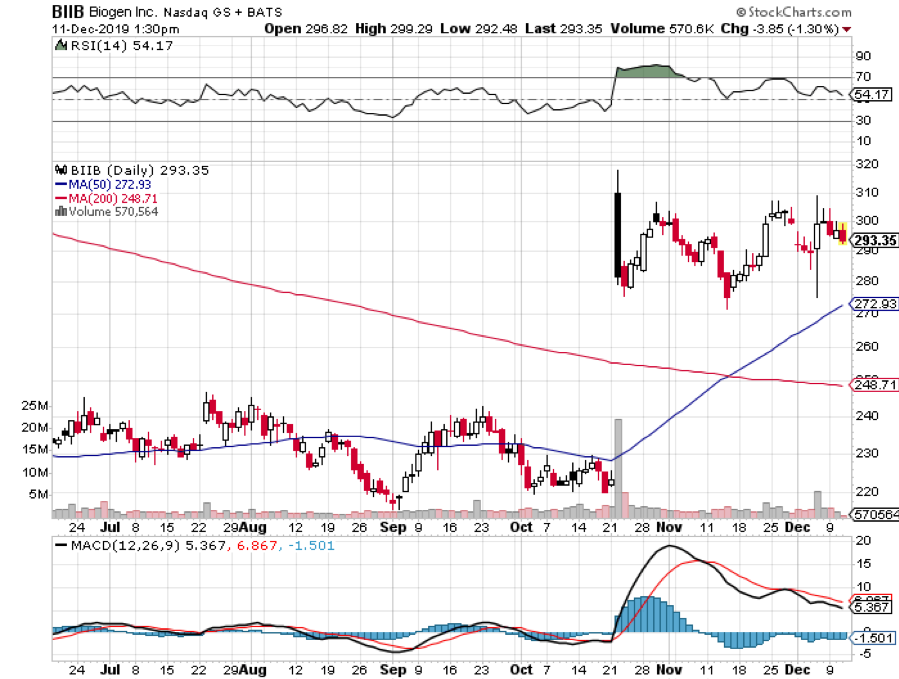
Regardless of the issues, Biogen appears to be set on this track. Even before the “second wave” was implemented, the company has already presented a convincing lineup of biosimilars. A look at its third quarter earnings report showed that the biosimilars lineup managed to generate almost $184 million during that period alone, with copycat versions of Enbrel, Remicade, and Humira taking the lead in sales.
The biosimilars movement remains strong among biotech and pharmaceutical companies. Unlike in the generic drug sector, the leaders of the biosimilar movement are also the big names in the “branded” products market.
In fact, biotech heavyweights eagerly jumped at the opportunity to become frontrunners in the move to cut down on the staggering costs of branded medicine. Novartis has quickly developed its biosimilars arm, with Sandoz AG quickly taking over the European market.
Pfizer’s (PFE) partnership with South Korean biosimilar developer Celltrion Healthcare as well as its $17 billion acquisition of generic injectable pharmaceuticals producer Hospira in 2015 signify its plans to emerge as a strong contender in this sector. Even Amgen (AMGN) and Merck & Co. (MRK) have cranked up notable biosimilar development programs to join the race.
Needless to say, the biosimilar rush is all the rage right now. Big biotech companies have already learned their lesson on how the generic drugs business practically took over the pharmaceutical market, growing to almost 90% of overall prescriptions filled but only accounting for less than 30% of the total expenses. Plus, it’s also clear that big money is being made from blockbuster biologics.
While the Diary of a Mad Hedge Fund Trader focuses on investment over a one week to the six-month time frame, Mad Day Trader, provided by Bill Davis, will exploit money-making opportunities over a brief ten minute to three-day window. It is ideally suited for day traders, but can also be used by long-term investors to improve market timing for entry and exit points. Read more

When John identifies a strategic exit point, he will send you an alert with specific trade information as to what security to sell, when to sell it, and at what price. Most often, it will be to TAKE PROFITS, but, on rare occasions, it will be to exercise a STOP LOSS at a predetermined price to adhere to strict risk management discipline. Read more
When John identifies a strategic exit point, he will send you an alert with specific trade information as to what security to sell, when to sell it, and at what price. Most often, it will be to TAKE PROFITS, but, on rare occasions, it will be to exercise a STOP LOSS at a predetermined price to adhere to strict risk management discipline. Read more
While the Diary of a Mad Hedge Fund Trader focuses on investment over a one week to a six-month time frame, Mad Day Trader, provided by Bill Davis, will exploit money-making opportunities over a brief ten minute to three-day window. It is ideally suited for day traders, but can also be used by long-term investors to improve market timing for entry and exit points. Read more
Global Market Comments
December 11, 2019
Fiat Lux
Featured Trade:
(WHAT TO BUY AT MARKET TOPS?),
(CAT), ($COPPER), (FCX), (BHP), (RIO),
(EUROPEAN STYLE HOMELAND SECURITY),
(TESTIMONIAL)
Mad Hedge Technology Letter
December 11, 2019
Fiat Lux
Featured Trade:
(CHERRY-PICKING IN TECH TODAY)
(ZM), (CRM), (GOOGL), (AAPL)
The valedictorian of the IPO class Zoom Video Communications, Inc. (ZM) is finally on sale at a discount.
If readers want to indulge themselves in a high caliber tech growth stock to buy and hold stock, this is the one for you.
This one has no regulatory headwinds as well as an added bonus.
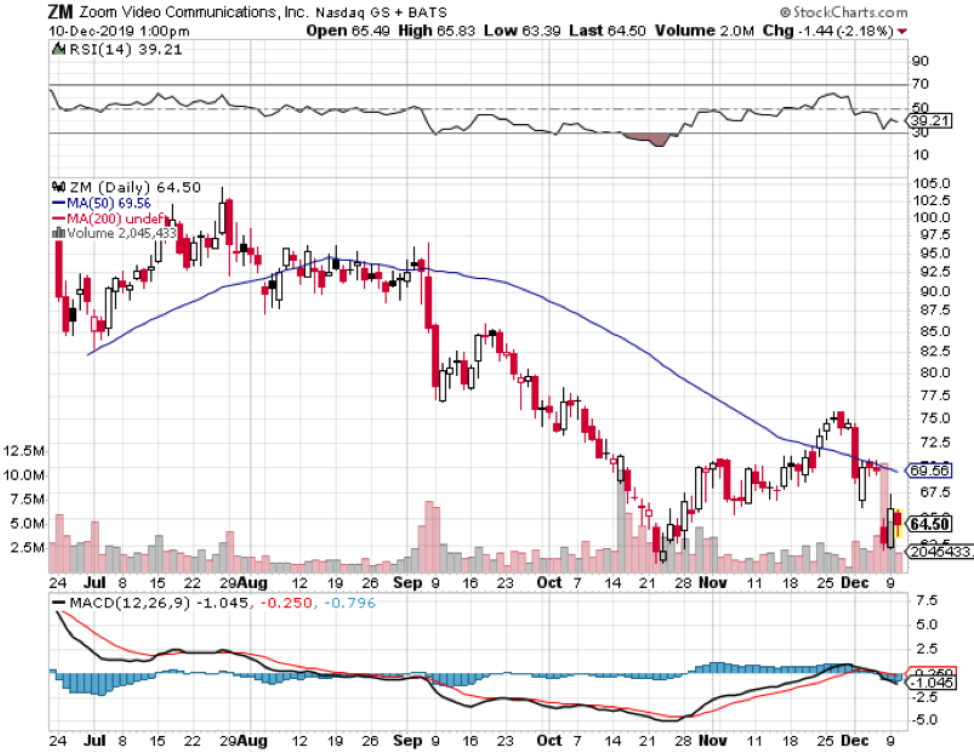
Zoom’s share price has dropped 40% since hitting the heights of $102 in July which was coincidentally the high for most post-IPO tech stocks of 2019.
It’s been an elevator straight down to no man’s land since then, but investors would be foolish to paint all hyper-growth companies with the same brush.
Filtering out the wheat from the chaff is critical and Zoom is the stock that still has the gloss on its outside package buttressed by its best in show video conferencing software.
There are no other proper alternatives in this sub-sector of software.
A few days ago, the stock slid 9% even though the company crushed expectations with its latest quarterly result and outlook.
Zoom generated revenue of $166.6 million representing a growth rate year on year of 85%.
The company then offered a forecast of $175 million next quarter when analysts only estimated $165 million.
Remember that this company grew 96% just 2 quarters ago and it would be illogical to believe that the stock is being penalized from faltering to 85% today.
Any tech company would give a left leg for 85% growth.
Zoom was trading at 33.5 times my calendar 2020 estimates compared to the fast growth software as a service (SaaS) median at 12.9 times.
Then software stocks started indiscriminately selling off on earnings over the past few weeks irrelevant to the quality of news because of worries to the broader bull market in tech stocks.
It’s true that tech stocks aren’t cheap now, and the skittishness rears its ugly head when bullet-proof earnings’ results are met with a cascade of selling.
Salesforce (CRM) was a software company that was penalized for pricey M&A because the company has been unable to organically grow forcing them to buy growth.
Buying growth is not necessarily a bad strategy but buying growth at this point in the economic cycle naturally means that companies will need to overpay for growth because of expensive valuations.
Zoom is perfectly positioned to outperform in the next 2-3 years.
The advancing runway is wide open with no competition in sight and a generous growth trajectory is firmly on their side.
We Company singlehandedly destroyed positive biased market momentum for any tech growth stock this summer, but on the bright side, quality post-IPO growth stocks are more reasonably priced with compelling entry points.
At around $60, Zoom looks appetizing and is a convincing buy and hold. At some point, this software company could become a takeover target for a larger corporate because companies such as Google (GOOGL) and Apple (AAPL) will need to acquire growth moving forward.
I am impressed with Zoom's superior products, growth prospects, and scalable business model, and the stock’s near-term risk/reward trade-off is attractive after the 9% haircut this past week.
There is an actionable and manageable clear path to a $2 billion revenue run rate with strong margin expansion potential and with its flagship product growing around 80-90%, its next growth driver in Zoom Phone could translate well into a meaningful revenue stream.
Zoom Phone is the next springboard to further success for this company.
Anyone that has used Zoom as a product can confirm the veracity of its superior performance standards.
This isn’t the type of stock to trade short-term, the volatility undermines any potential entry points.
If the broader market holds up in 2020, and Zoom isn’t a $100 stock by yearend, then the stars should align by 2021 because the value extraction potential is substantially robust in Zoom’s business model.
We finally have a reasonable level to scale into Zoom, and if it drops into the $50 range, it’s not just a scale-in type of scenario, investors should buy as much as they can with two hands.
Growth stocks can only be pinned down for so long and the best and brightest have been unfairly penalized with the rest. And let me remind you, this patch of softness in shares is only ephemeral and now is the time to act.
“When we launch a product, we're already working on the next one. And possibly even the next, next one.” – Said CEO of Apple Tim Cook