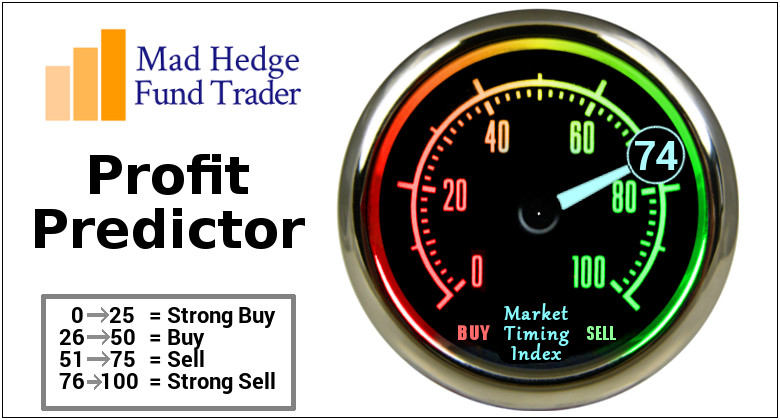
While the Diary of a Mad Hedge Fund Trader focuses on investment over a one week to the six-month time frame, Mad Day Trader, provided by Bill Davis, will exploit money-making opportunities over a brief ten minute to three-day window. It is ideally suited for day traders, but can also be used by long-term investors to improve market timing for entry and exit points.Read more
https://madhedgefundtrader.com/wp-content/uploads/2019/05/cropped-mad-hedge-logo-transparent-192x192_f9578834168ba24df3eb53916a12c882.png00Mad Hedge Fund Traderhttps://madhedgefundtrader.com/wp-content/uploads/2019/05/cropped-mad-hedge-logo-transparent-192x192_f9578834168ba24df3eb53916a12c882.pngMad Hedge Fund Trader2019-12-16 11:13:272019-12-16 11:13:27December 16, 2019 - MDT Alert (DBX)
After a China trade deal, UK election and a NAFTA 2.0 are announced, what is left to drive the stock market?
That is a very good question and explains why the Dow Average was up only a microscopic 3.33 points on Friday. It had spent much of the day down.
It’s not a pretty picture.
Not only is the market running out of drivers, the economic data is still decelerating, with the GDP running a 1.5% rate, inflation rising, and corporate earnings growth at zero, with earnings multiples at 17-year high.
A Wiley Coyote moment comes to mind.
And while we are finishing a great 27% year (56% for the Mad Hedge Fund Trader), we are in effect getting three years of performance packed into one. Not only did we pull forward a good chunk of 2020’s performance, we borrowed heavily from 2018 as well, coming in at such a low start as we did.
Thus 2019 might well get bookended by an 8% gain in 2018 and another 8% year in 2020, with dividends. Blame it all on the massive liquidity burst we got from the Fed that started last December and continues unabated.
Stocks have been floated by a tidal wave of new money creation worldwide. Globally, new money creation is running at a $1 trillion a month rate and much of that is ending up in the US stock market, especially in technology shares.
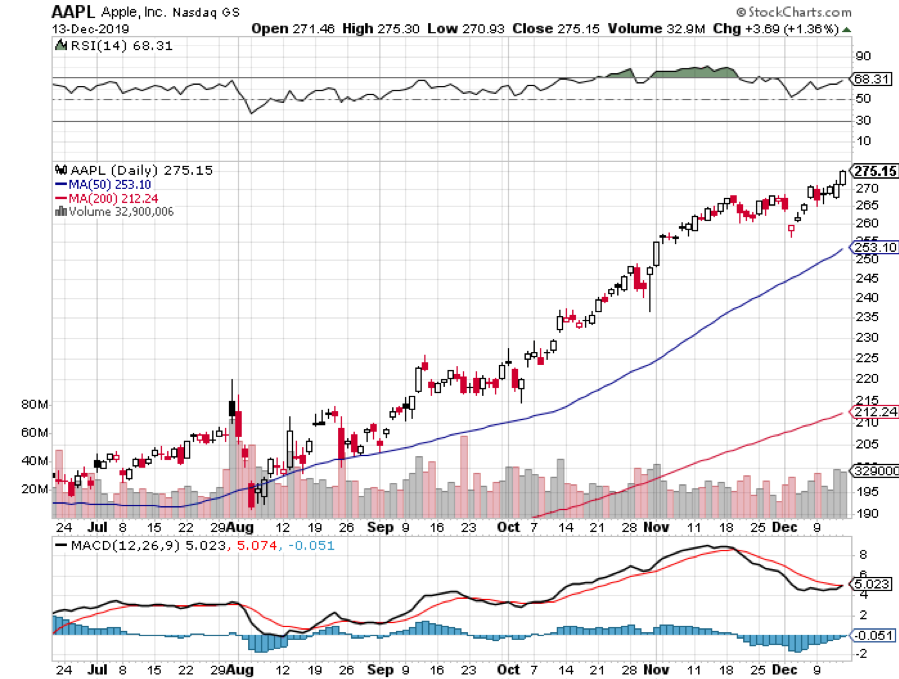
The rush was enough to drive Apple (AAPL) to a new all-time high at $275, pushing its market capitalization up to a staggering $1.2 trillion. It could surpass Saudi ARAMCO’s $2 trillion valuation in a year or two.
Steve Jobs’ creation now accounts for a mind-blowing 6% of the S&P 500 and 4% of total US stock market capitalization. It’s the best argument I’ve ever heard for becoming a hippy and dropping out of college after one quarter.
Which leads us to paint a picture for the 2020 stock market. Even the most optimistic outlook for next year, that of Ed Yardeni, is calling for only a 10% gain. Many prognostications are calling for negative numbers next year.
You might be better off parking your money in a 2% CD and taking a cruise around the world. I’ve done that before, and it works fantastically well.
You’re only going to have one shot at making money in 2020. Wait for a 10%-20% nosedive to go long. My guess is that happens when it becomes clear that the Democrats are dominating in the polls (Joe Biden is currently 14 points ahead in swing state Pennsylvania). No matter who wins, less borrowing, less spending, and higher taxes will prevail.
Then stocks will rally 10% AFTER the election because the uncertainty is gone. That will get you a 20%-30% profit in 2020, but only of you are a trader and follow the Mad Hedge Fund Trader. After basking in their own brilliance in 2019, 2020 might be a year when indexers wish they never heard of the term.
In the end, corporate earnings growth always wins, especially in tech, which is still growing at 20% a year. Remember, my 2030 forecast for the Dow Average is 125,000.
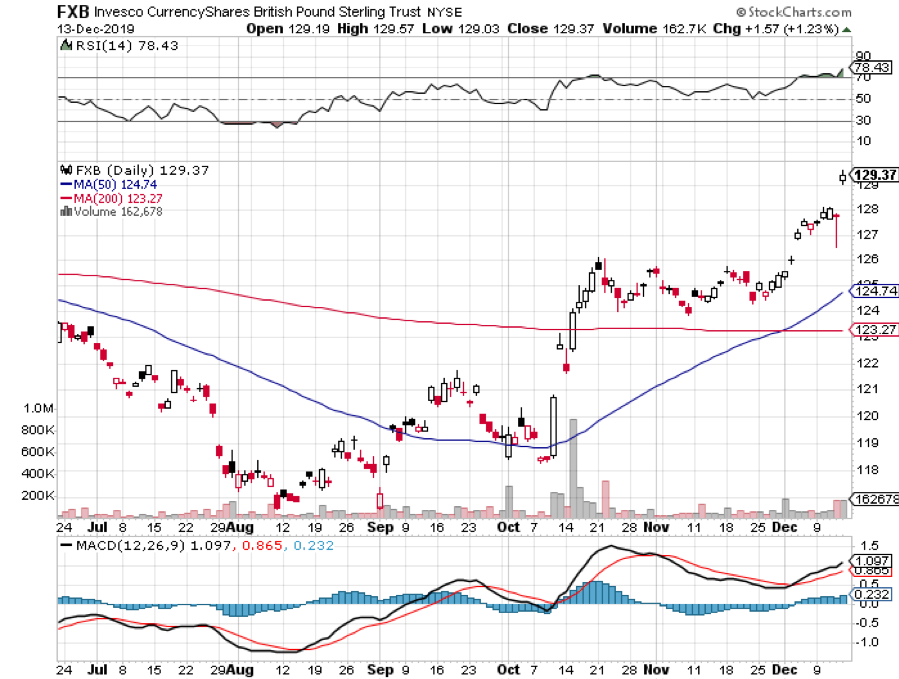
China (FXI) won big in mini trade deal. We rolled back a tariff increase that was never going to happen and the Chinese buy $50 billion worth of soybeans they were going to buy anyway, except at half the price that prevailed two years ago. All of it will come out of stockpiles built up during the trade war. Only the ag sector is affected, which is 2% of the US economy. The ag markets aren’t buying it. If this were a real trade deal, stocks would be up 1,000 points, not 89. Conservatives won big in UK election. The British pound (FXB) is up 2% and stocks are soaring. A hard Brexit is coming, so look for Scotland to secede and Northern Ireland to join the Republic. The UK will be gone as we know it. Britain’s standard of living will plummet. Great Britain will no longer be great, and the Russians financed the whole thing. Volatility crashed, as complacency rules supreme. Don’t buy (VIX) until we see the $11 handle again.
Chinese copper purchases hit a 13-month high, up 12.1% in November, to 483,000 metric tonnes. It explains the 78% move up in Freeport McMoRan (FCX) since October, the world’s largest producer. Obviously, someone believes a trade deal is coming. My long LEAP players love it.
US Consumer inflation expectations rebounded, up 0.1% to 2.5%, accounting to the New York Fed. That’s crawling up from a five-year low, a slightly positive economic note.
Saudi ARAMCO went public, with a 10% pop in the shares on the first two days, providing a $24 billion fund raise. This is one of the top three largest IPOs in history after Alibaba (BABA) and Softbank. It values the company at $1.88 trillion. Oil (USO) is down a dollar on the news, no longer needing artificial support to get the deal done. This could be one of the seminal shorts of our generation.
NAFTA 2.0 was signed, removing a potential negative from the market. It is 90% of the original NAFTA, not the “greatest trade deal in history” as claimed. Buy the main North/South railroad, Norfolk Southern (NSC) on the news.
Weekly Jobless Claims soared to a two-year high, by 49,000 to 252,000. Are stores laying people off from Christmas early this year, or did they never hire in the first place because the retail businesses are gone? Peak jobs are in. US job growth is now far slower than in the Obama era, as is GDP growth.
Most US companies will have fewer staff in 2020, except Mad Hedge Fund Trader. More automation and algos mean fewer humans. Only a capital spending freeze caused by the trade war kept a low of low-skilled people in their jobs.
This was a week for the Mad Hedge Trader Alert Service to catapult to new all-time highs.
My long positions have shrunk to my core (MSFT) and (GOOGL), which expire with the coming December 20 option expiration.
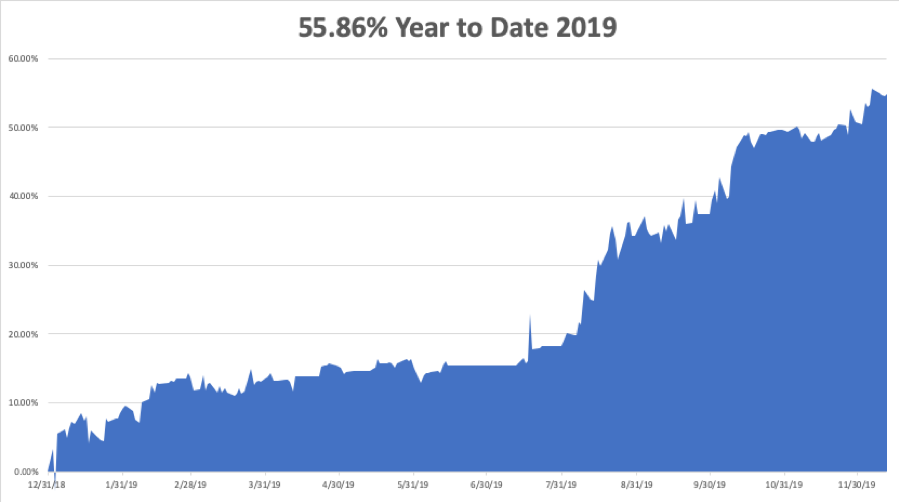
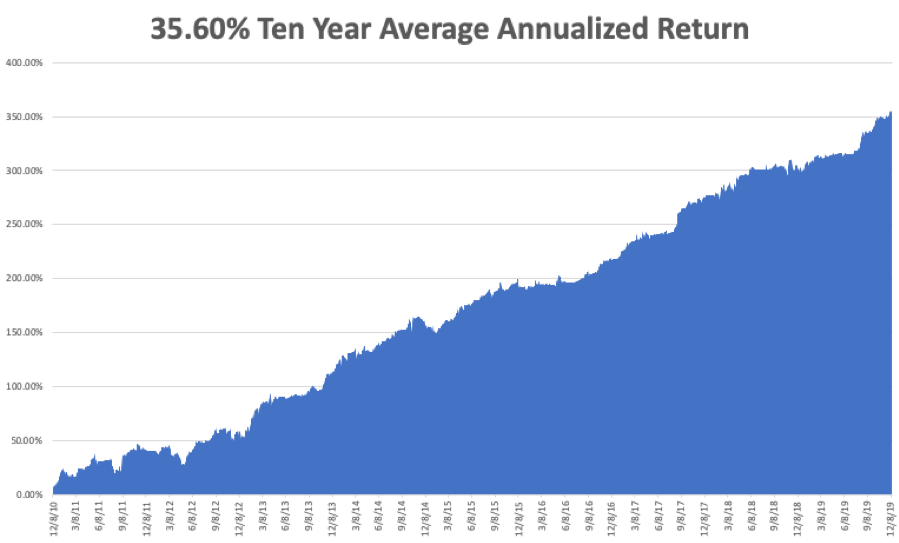
My Global Trading Dispatch performance ballooned to +356.00% for the past ten years, a new all-time high. My 2019 year-to-date catapulted back up to +55.86%. December stands at an outstanding +4.85% profit. My ten-year average annualized profit rebounded to +35.59%.
The coming week will be a noneventful one on the data front, with some housing data and the Q3 GDP on the menu. Anyway, everyone else will be out Christmas shopping or attending parties.
On Monday, December 16 at 9:30 AM, New York Empire State Manufacturing Index for December is out.
On Tuesday, December 17 at 9:30 AM, Housing Starts for November are released.
On Wednesday, December 18 at 11:30 AM, US EIA Crude Stocks for the previous week are announced.
On Thursday, December 19 at 8:00 AM Existing Home Sales are published. At 8:30 AM, we get Weekly Jobless Claims.
On Friday, December 20 at 9:30 AM, the final read on US Q3 GDP is printed. The Baker Hughes Rig Count follows at 2:00 PM.
As for me, after blowing out 1,200 Christmas trees, the Boy Scouts will be taking down the tree lot for the year. And who do they turn to when it comes to wielding a chain saw or sledge hammer?
Good luck and good trading.
John Thomas
CEO & Publisher
The Diary of a Mad Hedge Fund Trader
https://www.madhedgefundtrader.com/wp-content/uploads/2019/09/john-and-girls.png322345Mad Hedge Fund Traderhttps://madhedgefundtrader.com/wp-content/uploads/2019/05/cropped-mad-hedge-logo-transparent-192x192_f9578834168ba24df3eb53916a12c882.pngMad Hedge Fund Trader2019-12-16 11:02:062020-05-11 14:03:26Market Outlook for the Week Ahead, or The Good News is Out
While the Diary of a Mad Hedge Fund Trader focuses on investment over a one week to a six-month time frame, Mad Day Trader, provided by Bill Davis, will exploit money-making opportunities over a brief ten minute to three-day window. It is ideally suited for day traders, but can also be used by long-term investors to improve market timing for entry and exit points.Read more
https://madhedgefundtrader.com/wp-content/uploads/2019/05/cropped-mad-hedge-logo-transparent-192x192_f9578834168ba24df3eb53916a12c882.png00Mad Hedge Fund Traderhttps://madhedgefundtrader.com/wp-content/uploads/2019/05/cropped-mad-hedge-logo-transparent-192x192_f9578834168ba24df3eb53916a12c882.pngMad Hedge Fund Trader2019-12-16 09:32:052019-12-16 09:32:05December 16, 2019 - MDT Pro Tips A.M.
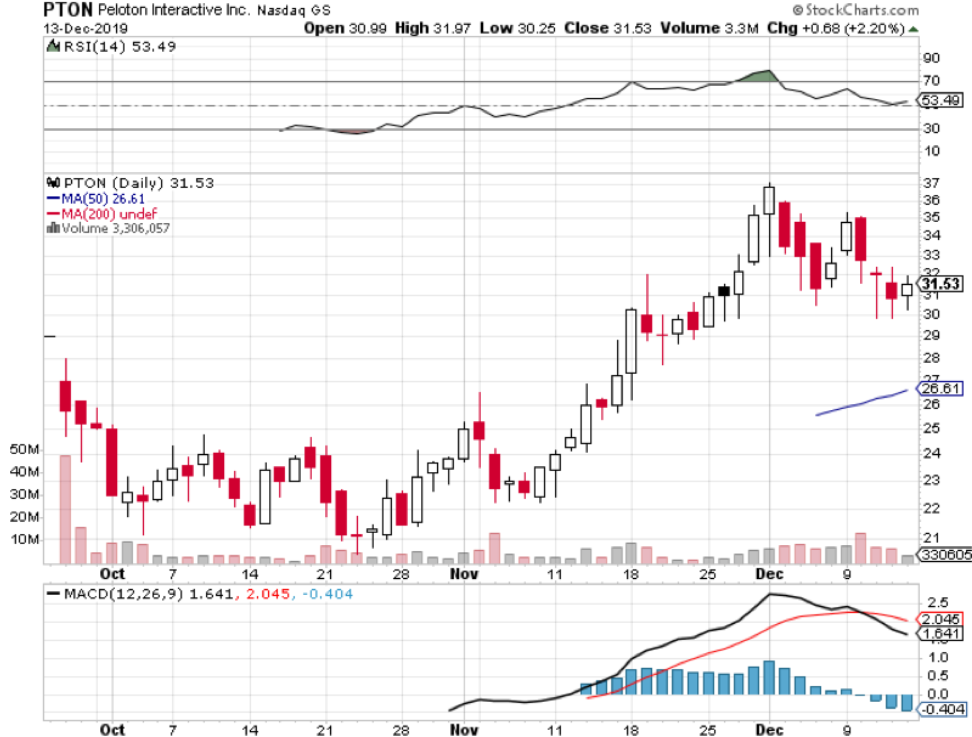
Own a Peloton (PTON) bike, but don’t buy the stock.
That is the conclusion after deep research into this wellness tech company.
Peloton is an American exercise equipment and media company that bills itself as a tech company.
It was founded in 2012 and launched with help from a Kickstarter funding campaign in 2013. Its main product is a stationary bicycle that allows users to remotely participate in spinning classes that are digitally streamed from the company's fitness studio and are paid for through a monthly subscription service.
Peloton is wildly overpriced with the enterprise value of each subscriber at $15,631.
Contrast that with other comparable firms such as Planet Fitness (PLNT) whose enterprise value per subscriber is $553 or even streaming giant Netflix (NFLX) whose enterprise value per subscriber comes in at $895.
There are three massive deal breakers with this company – software, hardware, and the management team.
The management team acts as a bunch of cheerleaders overhyping a simple exercise bike with a screen that has no deeper use case and in turn an unrealistic valuation that has disintermediated from all reality in the post-WeWork tech world.
What’s the deal with the hardware?
Some recognition must be given to Peloton for creating a nice bike and interactive classes that mesh with it. That idea was fresh when it came out.
The marketing campaigns were attractive and allured a wave of revenue and these customers were paying elevated prices.
But the bike itself has not developed and advanced in a meaningful way since it debuted in 2014 and back then the valuation of the company was $100 million.
The first-mover advantage was a godsend at the beginning, but the lack of differentiation is finally catching up with the business model and now you can get your own Peloton carbon copy on Amazon (AMZN) for $500 instead of $2,300.
Instead of focusing on the meat and bones of the company, Peloton has doled out almost $600 million over the last 3 years in marketing to capture the low hanging fruit that they most likely would have seized without marketing while competition was low.
Competition has intensified to the point that some of its competitors are giving away bikes for free justifying to never cough up cash for a $500 exercise bike let alone a $2,300 genuine Peloton bike.
The first-mover advantage when Peloton had the best exercise bike is now in the past and the company is attempting to move forward with a stagnant bicycle.
The Peloton treadmill came out much later but has not caught on and has many of the barriers to success I just talked about.
What about the case for owning the stock for the software?
Peloton is charging an overly expensive $39 per month for a “connected experience” to anyone who has bought the $2,300 Peloton bike.
But if the user happens to not buy the bike, they can download the digital app and pay $12.99 per month for the same connected experience.
Why would someone pay $2,300 for an overpriced exercise bike when they can just sign up to a full-service gym and just use the Peloton app with some headphones for $12.99 per month?
This illogical strategy means that less than 10% of Peloton subscribers have bought their bike.
Peloton’s competitors have shredded apart their strategy by essentially underpricing their bike and mentioning that they can use the Peloton app with their bike.
And even if you thought that Peloton’s live streaming fitness classes were the x-factor, users can just add a nice little removable iPad holder to the exercise bike and stream YouTube for free or any other digital content on demand.
The cost of adding an iPad holder is about $13-$15 which is a cheap and better option than paying $12.99 or $39 per month for Peloton’s fitness classes.
Users will eventually migrate towards cheaper packaged content because of the overpriced nature of Peloton’s digital content.
Is Management doing a good job?
Peloton’s CEO John Foley most recently told mainstream media that the company is profitable when it is not.
He has repeated this claim several times throughout the years as well. The company has never been profitable and lost $50 million on $228 million of revenue last quarter.
Each quarter before that has also lost between $30 million to $50 million as well, and Foley is outright dishonest by saying the company is profitable.
Peloton relies on top 100 billboard songs to integrate with their fitness streaming classes and the company just got slammed with a $300 million lawsuit from music publishers claiming they have never actually paid for music licensing.
Music is core to their streaming product and without the best songs, users won’t tune in just for the instructor.
Working out and live music go hand in hand and stiffing the music industry on licensing fees is just another example of poor management.
In March 2020, the lockup expires and top executives are free to dump shares which will happen in full force.
Management has one unspoken mandate now – attempt to buoy the stock any way possible until they can cash out next March.
This group of people is only a few months away from their payday.
There is no software or hardware advantage and management is holding out for dear life until they can kiss the company goodbye.
Do not buy shares and I would recommend aggressively shorting this pitiful attempt of a tech company.
Peloton is a $6 stock – not a $30 stock.
https://www.madhedgefundtrader.com/wp-content/uploads/2019/12/peloton-bike.png547474Mad Hedge Fund Traderhttps://madhedgefundtrader.com/wp-content/uploads/2019/05/cropped-mad-hedge-logo-transparent-192x192_f9578834168ba24df3eb53916a12c882.pngMad Hedge Fund Trader2019-12-16 06:02:092020-05-11 13:02:17The Peleton Bubble is On
“Basically, we juiced our expense line but think it will pay dividends down the line.” – Said CEO of Peloton John Foley on why Peloton loses money
https://www.madhedgefundtrader.com/wp-content/uploads/2019/12/john-foley.png302397Mad Hedge Fund Traderhttps://madhedgefundtrader.com/wp-content/uploads/2019/05/cropped-mad-hedge-logo-transparent-192x192_f9578834168ba24df3eb53916a12c882.pngMad Hedge Fund Trader2019-12-16 06:00:152019-12-16 06:42:35December 16, 2019 - Quote of the Day
While the Diary of a Mad Hedge Fund Trader focuses on investment over a one week to a six-month time frame, Mad Day Trader, provided by Bill Davis, will exploit money-making opportunities over a brief ten minute to three-day window. It is ideally suited for day traders, but can also be used by long-term investors to improve market timing for entry and exit points.Read more
https://madhedgefundtrader.com/wp-content/uploads/2019/05/cropped-mad-hedge-logo-transparent-192x192_f9578834168ba24df3eb53916a12c882.png00Mad Hedge Fund Traderhttps://madhedgefundtrader.com/wp-content/uploads/2019/05/cropped-mad-hedge-logo-transparent-192x192_f9578834168ba24df3eb53916a12c882.pngMad Hedge Fund Trader2019-12-13 09:26:542019-12-13 09:26:54December 13, 2019 - MDT Pro Tips A.M.
(TUESDAY, FEBRUARY 4 SYDNEY, AUSTRALIA STRATEGY LUNCHEON)
(BIDDING MORE FOR THE STARS), (SPY), (INDU), (NVDA) (NOW THE FAT LEADY IS REALLY SINGING FOR THE BOND MARKET),
(TLT), (TBT)
https://madhedgefundtrader.com/wp-content/uploads/2019/05/cropped-mad-hedge-logo-transparent-192x192_f9578834168ba24df3eb53916a12c882.png00Mad Hedge Fund Traderhttps://madhedgefundtrader.com/wp-content/uploads/2019/05/cropped-mad-hedge-logo-transparent-192x192_f9578834168ba24df3eb53916a12c882.pngMad Hedge Fund Trader2019-12-13 08:08:022019-12-23 09:12:45December 13, 2019
"Every Napoleon meets his Watergate," said Yogi Berra, former manager of the New York Yankees.
https://www.madhedgefundtrader.com/wp-content/uploads/2015/05/Napoleon-e1431023864518.jpg227300DougDhttps://madhedgefundtrader.com/wp-content/uploads/2019/05/cropped-mad-hedge-logo-transparent-192x192_f9578834168ba24df3eb53916a12c882.pngDougD2019-12-13 08:00:102019-12-13 08:06:25Quote of the Day - December 13, 2019
Legal Disclaimer
There is a very high degree of risk involved in trading. Past results are not indicative of future returns. MadHedgeFundTrader.com and all individuals affiliated with this site assume no responsibilities for your trading and investment results. The indicators, strategies, columns, articles and all other features are for educational purposes only and should not be construed as investment advice. Information for futures trading observations are obtained from sources believed to be reliable, but we do not warrant its completeness or accuracy, or warrant any results from the use of the information. Your use of the trading observations is entirely at your own risk and it is your sole responsibility to evaluate the accuracy, completeness and usefulness of the information. You must assess the risk of any trade with your broker and make your own independent decisions regarding any securities mentioned herein. Affiliates of MadHedgeFundTrader.com may have a position or effect transactions in the securities described herein (or options thereon) and/or otherwise employ trading strategies that may be consistent or inconsistent with the provided strategies.