While the Diary of a Mad Hedge Fund Trader focuses on investment over a one week to a six-month time frame, Mad Day Trader, provided by Bill Davis, will exploit money-making opportunities over a brief ten minute to three-day window. It is ideally suited for day traders, but can also be used by long-term investors to improve market timing for entry and exit points.Read more
https://madhedgefundtrader.com/wp-content/uploads/2019/05/cropped-mad-hedge-logo-transparent-192x192_f9578834168ba24df3eb53916a12c882.png00Mad Hedge Fund Traderhttps://madhedgefundtrader.com/wp-content/uploads/2019/05/cropped-mad-hedge-logo-transparent-192x192_f9578834168ba24df3eb53916a12c882.pngMad Hedge Fund Trader2019-06-19 09:07:432019-06-19 10:47:16June 19, 2019 - MDT Pro Tips A.M.
The company who exploits workers in the gig economy, Fiverr International Ltd. (FVRR), went public and is a terrible long-term buy and hold for investors.
I’ll tell you exactly why you should stay away from it like the plague.
Take a look at one of the sad side effects of the tech industry – 58% of full-time gig workers said they would have a hard time finding $400 to cover an emergency bill compared to 38% of people who don’t work in the gig economy.
The large discrepancy indicates that the informal economy is far more destabilized from Silicon Valley than investors care to admit.
And in many cases, the brutal economic conditions don’t underline the lack of upward mobility too.
While some are drawn to flexible roles, the gig-economy has faced condemnation, particularly because it has enabled companies to marginalize workers as contractors rather than employees who would be entitled to benefits and wage protections.
What about the risks of Washington smushing their business models?
Fiverr confesses that policy changes could destroy their business model if the ability to designate their workers as contractors is banned.
The freelance model could also become less attractive if it means higher regulatory risk or even higher perceived regulatory risk.
Another stain on Fiverr’s reputation is that, like many other tech companies of its ilk, it is loss-making.
Fiverr posted a net loss for 2018 of $36.1 million, compared to a net loss of $19.3 million in the prior year.
The lack of profitability is absorbed for the ultimate goal of gouging a total addressable market within the U.S. of $100 billion.
Fiverr's $82.5 million in trailing revenue is less than a third of fellow freelance platform operator Upwork (UPWK) at $263.1 million.
Uber (UBER) and Lyft (LYFT), ridesharing services, are considerably larger than that as Uber and Lyft command trailing top-line results of $11.8 billion and $2.5 billion, respectively.
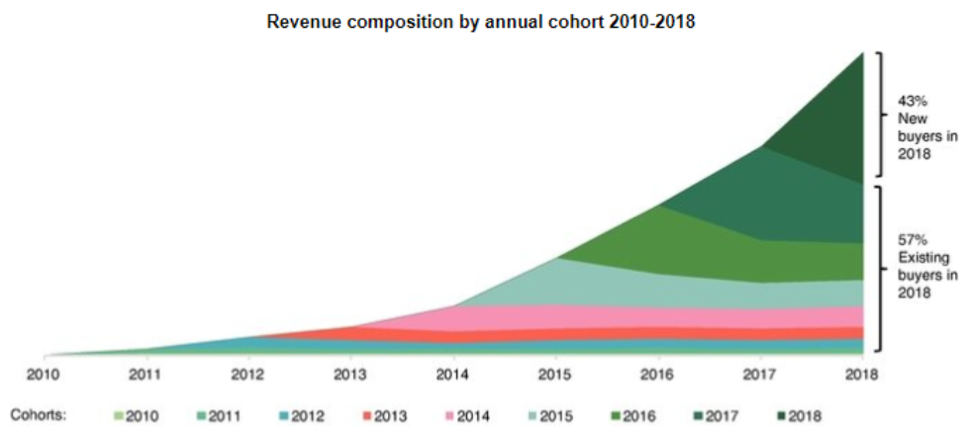
Revenue expanded 45% last year and this year 42% annualized through the first three months of 2019.
Fiverr is growing faster than Upwork with just a 16% top-line gain in the first quarter and Uber which decelerated to a 20% increase in the same reporting period.
But all three gig-economy players still trail behind Lyft with its first-quarter revenue surge of 95%.
None of these companies are currently profitable.
Is it worth it to pay a premium for cash burners?
Fiverr, Upwork, Uber, and Lyft are fetching between six- and nine-times trailing revenue.
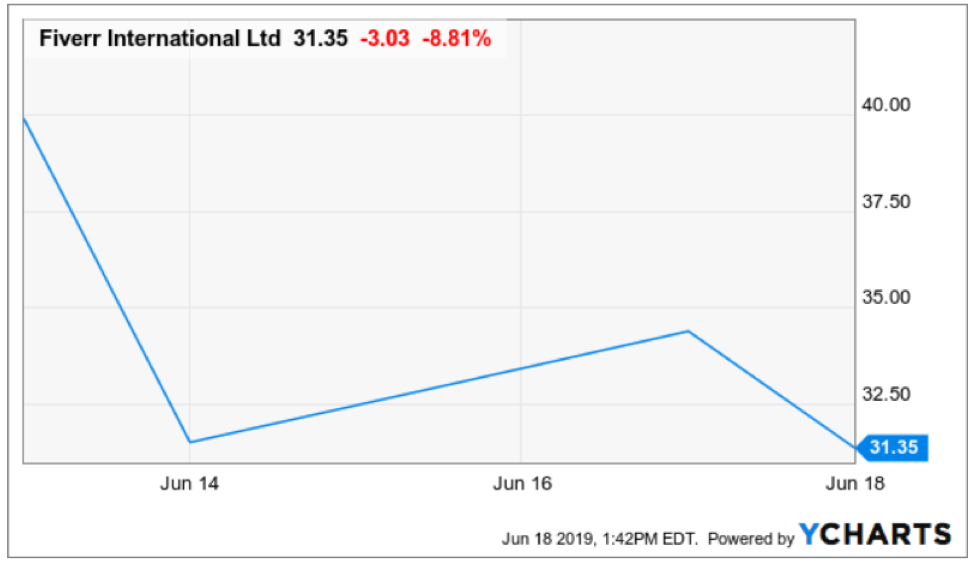
Fiverr shares are 50% above its IPO price after just two days of trading and is somewhat misleading but mister market is always right.
Lyft and Uber have been losers this year after going public and the jury is out to whether they are really worth a long-term duration trade.
It can be argued that Uber is a better bet long-term bet because of a bold aerial service that could eventually unlock massive value, but I would say its current model is somewhat underwhelming and could be called a fancy taxi service.
The best type of tech companies right now are software companies insulated from the turmoil of the trade war.
If you are interested in pure software companies, there are a handful of names out there that fit the bill, but if you are looking at a company attempting to crowbar itself into the idea of a software company then Fiverr is it.
That unflattering description is entirely justified as well.
Don’t forget they have real competition in the marketplace to supply freelance jobs in Upwork who has a bigger market share.
These type of broker apps do not have much pricing power and their only sell is the prospect of scaling as fast as possible meaning a volume play.
I can honestly ask, why buy Fiverr when there is a much better option out there?
The success of Fiverr is reliant on maintaining and expanding the scale of operations to generate a sufficient amount of revenue to offset the associated fixed and variable costs.
In my eyes, growing the number of users to benefit from the scale might happen after it does not exist anymore.
Investors must really ask themselves if gig workers will even be around in 8-10 years.
Why is that?
The gig economy is a battle down to zero and as tech companies become more sophisticated with expanding their artificial intelligence capabilities, it will remove the demand for gig economy taking away a huge swath of the addressable market with it.
This stock is a bet against artificial intelligence and the application of it, and if anyone has been reading this newsletter, they know it would be akin to throwing your hard-earned money down the toilet.
Specifically speaking, every cornerstone industry from national defense, consumer products, the trappings of Wall Street, industrial production, robotics, autonomous driving technology, and transportation is moving full speed ahead with implementing and harnessing artificial intelligence.
The technology isn’t quite there yet and humans are just a quick stop-gap until the optimal technology can be achieved.
Then it will be arrivederci to the human element, stripped away like my innocence in high school.
This is a bet on the upward trajectory of gig economy workers and the fate of them and that is a bad gamble to make long-term.
https://www.madhedgefundtrader.com/wp-content/uploads/2019/06/rev-competition.png433972Mad Hedge Fund Traderhttps://madhedgefundtrader.com/wp-content/uploads/2019/05/cropped-mad-hedge-logo-transparent-192x192_f9578834168ba24df3eb53916a12c882.pngMad Hedge Fund Trader2019-06-19 01:02:152019-07-23 09:01:29Freelancing to the Tune of the Gig Economy
“10 to 20 years out, driving your car will be viewed as equivalently immoral as smoking cigarettes around other people is today.” – Said American Venture Capitalist Marc Andreessen
https://www.madhedgefundtrader.com/wp-content/uploads/2019/06/andreessen.png458691Mad Hedge Fund Traderhttps://madhedgefundtrader.com/wp-content/uploads/2019/05/cropped-mad-hedge-logo-transparent-192x192_f9578834168ba24df3eb53916a12c882.pngMad Hedge Fund Trader2019-06-19 01:00:112019-07-23 09:01:22June 19, 2019 - Quote of the Day
While the Diary of a Mad Hedge Fund Trader focuses on investment over a one week to the six-month time frame, Mad Day Trader, provided by Bill Davis, will exploit money-making opportunities over a brief ten minute to three-day window. It is ideally suited for day traders, but can also be used by long-term investors to improve market timing for entry and exit points.Read more
https://madhedgefundtrader.com/wp-content/uploads/2019/05/cropped-mad-hedge-logo-transparent-192x192_f9578834168ba24df3eb53916a12c882.png00Mad Hedge Fund Traderhttps://madhedgefundtrader.com/wp-content/uploads/2019/05/cropped-mad-hedge-logo-transparent-192x192_f9578834168ba24df3eb53916a12c882.pngMad Hedge Fund Trader2019-06-18 13:51:282019-06-18 13:51:28June 18, 2019 - MDT Alert (SNAP)
While the Diary of a Mad Hedge Fund Trader focuses on investment over a one week to a six-month time frame, Mad Day Trader, provided by Bill Davis, will exploit money-making opportunities over a brief ten minute to three-day window. It is ideally suited for day traders, but can also be used by long-term investors to improve market timing for entry and exit points.Read more
https://madhedgefundtrader.com/wp-content/uploads/2019/05/cropped-mad-hedge-logo-transparent-192x192_f9578834168ba24df3eb53916a12c882.png00Mad Hedge Fund Traderhttps://madhedgefundtrader.com/wp-content/uploads/2019/05/cropped-mad-hedge-logo-transparent-192x192_f9578834168ba24df3eb53916a12c882.pngMad Hedge Fund Trader2019-06-18 09:12:232019-06-18 09:12:23June 18, 2019 - MDT Pro Tips A.M.
Terrorist attacks, trade wars, and crashing airlines all spell one thing to me.
Travel bargains!
Of course, my first choice for a vacation destination this year was the civil war in Syria, so I could find out on the ground what is really happening out there. In addition, I could shop for a refugee camp in Jordan for one of my non-profits to help support.
Unfortunately, my family was not too hot on this idea, not wishing to buy me back from kidnappers at an inflated price, again (the last time was Cambodia in 1976).
The Joint Chiefs were not too thrilled either. At my advanced age, I simply know too much to fall into the wrong hands. They said I would last a day.
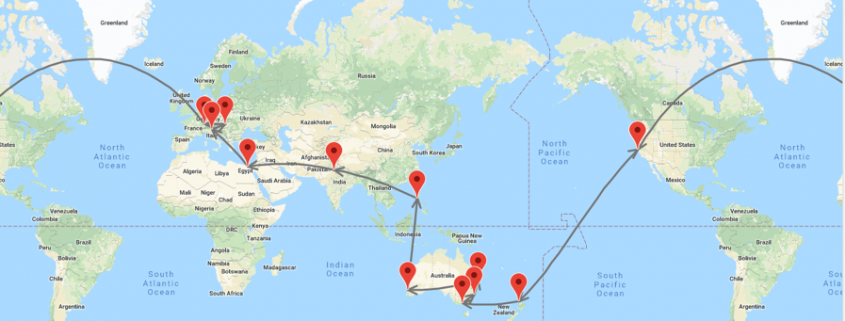
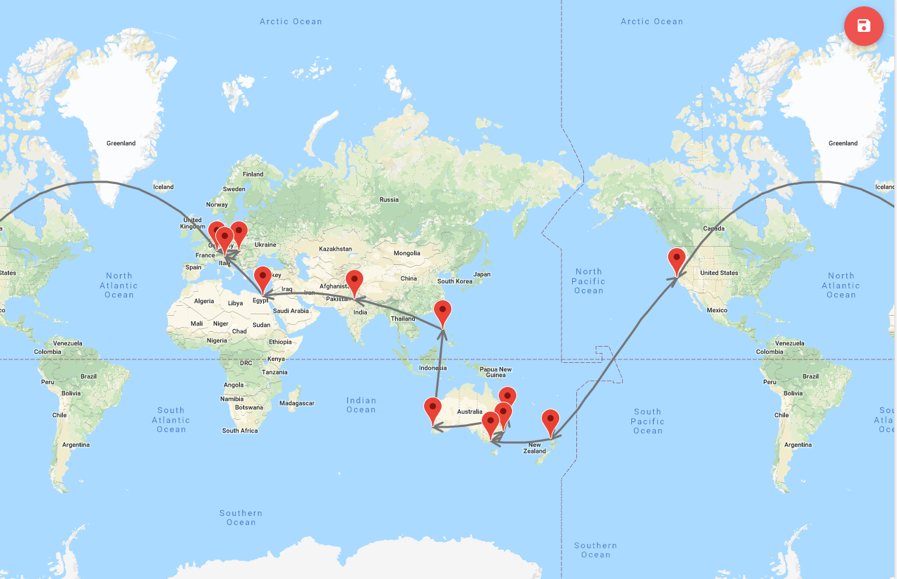
So I compromised. This summer will find me flying around the world to meet my many disparate readers. I’ll be diving on the Great Barrier Reef in Australia, riding elephants near the Taj Mahal in India, and enjoying a dinner cruise on the Nile in Egypt. If you spot someone wearing a fedora hat on a gondola in Venice Italy, it’s probably me.
I’ll end up at my chalet in Zermatt, Switzerland where I traditionally restart my year. Weather permitting, I'll climb the 14,692-foot Matterhorn again. Is it seven times this year, or eight? Otherwise, I’ll rejoin Zermatt Search and Rescue again pulling lost Americans off of Alpine slopes. It seems I’m the only one up there who has a sense of humor.
To make things exciting this year, I’ll have two teenaged daughters into tow, aged 14 and 15. Who said I didn’t like challenges?
The five-star hotels are booked, our passports are loaded with exotic visas, and the limo is waiting outside. The Cessna is fully fueled, and the flight plan filed.
I have worked the hardest in my life the past year, and it is time for a break. I have also put myself through the most grueling training regimen ever, hiking 2,000 miles in torrential rains and snowshoeing another 600, all with a 60-pound pack.
Every year it seems to get harder to keep the calendar at bay.
Along the way I will be meeting with other hedge fund managers, senior government officials, CEOs at major banks and Fortune 500 companies, large institutional investors, and a Nobel Prize winner or two.
Getting out into the real world and soaking up new data and opinions is invaluable in shaping my own global view, and your performance benefits from it.
Since I don’t stumble across these people in my living room, I have to travel the world and seek them out. You can soak up all the online data you want, but nothing beats contact with the real world.
I will be traveling with my laptop and keeping touch with the markets. While 18th century Internet service is passable, the bandwidth can be snail-like. So, unless I see something extraordinary, I will cut back on new Trade Alerts.
After running up a 315% return in nine and a half years and beating 99.9% of the hedge funds in the industry, I deserve a break. I need to spend some time alone on a mountaintop, communing with the spirits, attempting to discover the new long-term market trends through the mist.
While on the road, I will continue writing my newsletter, giving you my daily dose of market insight. I will also be re-running some of my favorite research pieces from the past when my travel schedule does not allow Internet access.
This is to expose my thousands of new subscribers to the golden oldies and to remind the legacy readers who have since forgotten them.
I will be back in San Francisco in early August, glued to my screens once again for another year of toil in the salt mines. In the meantime, please feel free to email me.
Mad Hedge Technology Letter author Arthur Henry and Mad Day Trader Bill Davis will be working straight through the summer. No rest for the wicked!
In the meantime, I shall be raising a glass to all of you at dinner, the loyal readers of The Diary of a Mad Hedge Fund Trader. Salute! Prost! Kampai, and Cheers! Thanks for making this letter a huge success!
If you want to take the opportunity to meet me in person, please find my strategy luncheon schedule below. To purchase tickets for the luncheons, please go to my online store here and click on “LUNCHEONS”, and select the country and city of your choice.
Friday, June 21 12:30 PM Auckland, New Zealand
Monday, June 24 12:30 PM Melbourne, Australia
Tuesday, June 25 12:30 PM Sydney, Australia
Wednesday, June 26 12:30 PM Brisbane, Australia
Friday, June 28 12:30 PM Perth, Australia
Sunday, June 30 12:30 PM Manila, Philippines
Tuesday, July 2 12:30 PM New Delhi, India
Friday, July 5 12:30 PM Cairo, Egypt
Monday, July 8 12:30 PM Venice, Italy
Wednesday, July 10 12:30 PM Budapest, Hungary
Friday, July 19, 3:00 PM Zermatt, Switzerland
I look forward to seeing you there, and thanks for supporting my research.
John Thomas
CEO & Publisher
Diary of a Mad Hedge Fund Trader
https://www.madhedgefundtrader.com/wp-content/uploads/2019/06/world-tour-map.png579897Mad Hedge Fund Traderhttps://madhedgefundtrader.com/wp-content/uploads/2019/05/cropped-mad-hedge-logo-transparent-192x192_f9578834168ba24df3eb53916a12c882.pngMad Hedge Fund Trader2019-06-18 02:02:512019-07-19 18:16:33Taking Off for the 2019 Mad Hedge World Tour
While the Diary of a Mad Hedge Fund Trader focuses on investment over a one week to a six-month time frame, Mad Day Trader, provided by Bill Davis, will exploit money-making opportunities over a brief ten minute to three-day window. It is ideally suited for day traders, but can also be used by long-term investors to improve market timing for entry and exit points.Read more
https://madhedgefundtrader.com/wp-content/uploads/2019/05/cropped-mad-hedge-logo-transparent-192x192_f9578834168ba24df3eb53916a12c882.png00Mad Hedge Fund Traderhttps://madhedgefundtrader.com/wp-content/uploads/2019/05/cropped-mad-hedge-logo-transparent-192x192_f9578834168ba24df3eb53916a12c882.pngMad Hedge Fund Trader2019-06-17 09:02:352019-06-17 09:02:35June 17, 2019 - MDT Pro Tips A.M.
Legal Disclaimer
There is a very high degree of risk involved in trading. Past results are not indicative of future returns. MadHedgeFundTrader.com and all individuals affiliated with this site assume no responsibilities for your trading and investment results. The indicators, strategies, columns, articles and all other features are for educational purposes only and should not be construed as investment advice. Information for futures trading observations are obtained from sources believed to be reliable, but we do not warrant its completeness or accuracy, or warrant any results from the use of the information. Your use of the trading observations is entirely at your own risk and it is your sole responsibility to evaluate the accuracy, completeness and usefulness of the information. You must assess the risk of any trade with your broker and make your own independent decisions regarding any securities mentioned herein. Affiliates of MadHedgeFundTrader.com may have a position or effect transactions in the securities described herein (or options thereon) and/or otherwise employ trading strategies that may be consistent or inconsistent with the provided strategies.