One of the most painful experiences of my half century long trading life involved the Credit Suisse VelocityShares Daily Inverse VIX Short-Term ETNs (XIV).
I was certain that the Volatility Index (VIX) would peak for the year at the Wednesday, February 5, 8:30 AM market opening. So, I shot out a Trade Alert to place only 10% of your capital into the (XIV), a bet that the (VIX) would fall. There was only a 15-minute window before the market closed during which readers could get in. A few managed to do it.
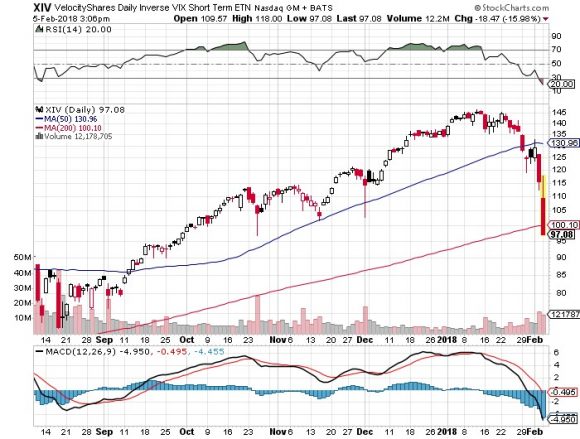
The (XIV) had just fallen from $147 to $95.00. We got in at $97.08, and it closed the day at $100. The (VIX) closed at $37. And we had made money many times selling short volatility over the past decade on spikes just like this one. The (XIV) had been the fastest growing of 3,500 ETFs over the past five years. So far, so good.
Then an hour after the close, I received an urgent call from a client. The (XIV) was trading at $14. What's up?
My initial instinct was that a major hedge fund had either gone bankrupt or had a margin call and was suffering a forced liquidation in the aftermarket.
Overnight, the (XIV) traded as low as $6.50. I later heard that Credit Suisse itself was the major buyer of volatility in the aftermarket, in fact was the ONLY buyer, and that it was deliberately attempting to bankrupt its own fund to limit its liability. Those in management in Zurich were afraid that if the (VIX) shot up to $100 it might take the entire bank down. In short, they panicked.
The next morning they issued notice that they were closing the fund in 10 days. I was certain that the managers were guilty of insider trading and securities fraud in ordering the emergency short cover, and that it was just a matter of time before the class action suits emerged.
Three months later, the lawsuit has been filed by the Gibbs Law Group in Oakland, CA, in the Southern District of New York for unspecified damages, expenses, and legal fees, with a jury trial demanded.
The last time I was involved with one of these was with the MF Global bankruptcy in 2011, where I and most of the rest of the trading community had an account.
I was initially offered 25 cents on the dollar. I refused, expecting to eventually get paid in full. I knew that the MF assets in question were never lost, they were just caught up in a conflict between U.S. and U.S. bankruptcy law that would eventually be resolved. That is what happened, and I was paid in full three years later.
The (XIV) case is much more complicated because there was a huge real loss, about $2 billion, and it involved complex mathematically constructed derivatives. Since the managers behaved so reprehensibly, and because the evidence of their misdeeds is so overwhelming, it is unlikely that the case will ever come to trial. Instead, there will be an out-of-court settlement.
If the SEC takes action it will further strengthen the plaintiffs' hands. There is currently an investigation of Credit Suisse underway and it ultimately could get banned from doing business in the United States.
My bet is that investors will get at least half their money back, if not more. But it could take years to get it, and in a class action the lawyers get a big chunk of any awards for their efforts, usually one-third. Sometimes, class actions can last as long as 10 years.
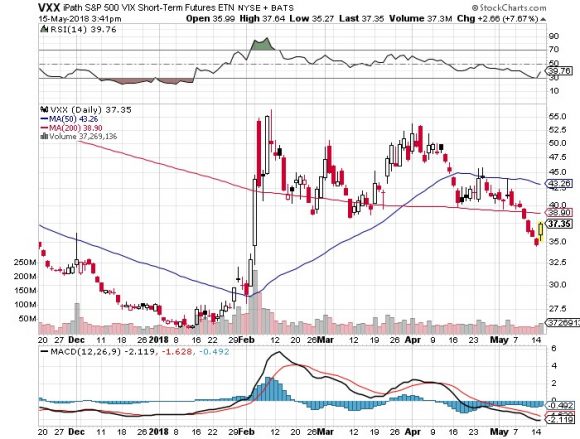
As for my own followers, most followed my advice to put no more than 10% of their capital into the trade. As it turned out, they made back the 9% loss in less than a month, half of it through selling volatility short again. But this time I used put spreads on the iPath S&P 500 VIX Short-Term Futures ETN (VXX), a long volatility play that will never go to zero overnight.
To read the suit in its entirety, please click here.
To learn more about the suit, please click here and here.
Or you can call the Gibbs Law Group directly at 510-350-9700. I'm sure they'd love to hear from you.
Trading Volatility Can Be Hazardous to Your Wealth
https://madhedgefundtrader.com/wp-content/uploads/2019/05/cropped-mad-hedge-logo-transparent-192x192_f9578834168ba24df3eb53916a12c882.png00MHFTRhttps://madhedgefundtrader.com/wp-content/uploads/2019/05/cropped-mad-hedge-logo-transparent-192x192_f9578834168ba24df3eb53916a12c882.pngMHFTR2018-05-16 01:08:412018-05-16 01:08:41The Lawsuits Are Piling Up on the (XIV)
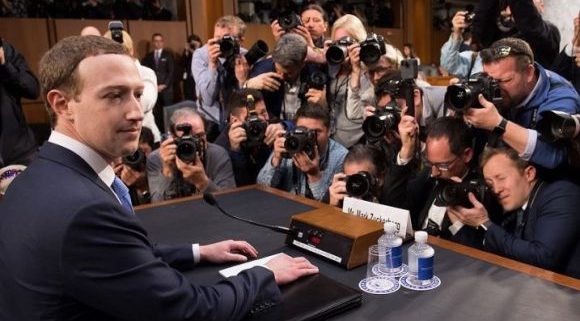
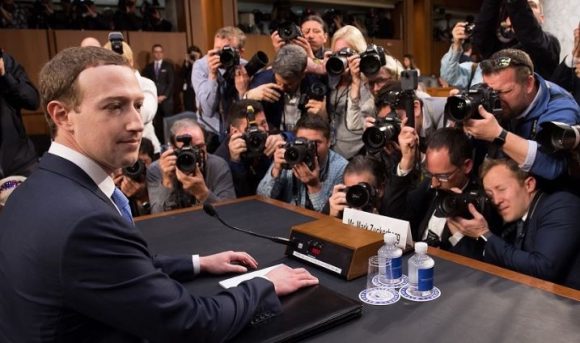
Capitol Hill unleashed a healthy dose of criticism on Facebook (FB) CEO Mark Zuckerberg and he has mobilized the forces to avoid a repeat shellacking.
Zuckerberg's response has been to reshuffle his cabinet at the Menlo Park, CA, headquarters, and a few tell-tale signs offer a unique glimpse into Facebook's future.
Basically, something needed to change at Facebook.
The company single-handedly took the blame for the entire sector and was not the only company with a liberal stance on personal data.
Zuckerberg would like to eschew public humiliation and avoid being a sitting duck.
The episode in Washington highlights the need for Facebook to decouple itself from ad revenue, which makes up the lion's share of revenue at the firm and find other levers to pull.
Down the road, Facebook's ad business could get crimped by regulators, and a lack of fallback options haunts Facebook investors in their sleep.
Consequently, a whole slew of high-level management rotation is underway at Facebook.
It is the biggest shake-up in the history of Facebook.
The road map starts with one of Zuckerberg's best friends and protege Chris Cox who will manage the new "family of apps" segment.
This collection of projects he will preside over include WhatsApp, Messenger, Instagram, and the Facebook Core App.
The step up in responsibility is warranted for Chris Cox who was credited with creating the Facebook news feed after joining the company in 2005 after ditching his Stanford graduate degree program at the time.
The executive reshuffle coincided with WhatsApp co-founder Jan Koum, one of Silicon Valley's biggest advocates for data privacy, who quit his post as a show of disapproval to Facebook's business model.
Mark Zuckerberg wants to aggressively monetize the WhatsApp messenger service that was acquired for $19 billion in 2014.
Zuckerberg's blueprint involves using the WhatsApp phone numbers as a vehicle to monetize through offering different products.
Facebook would then collect the data from its 1 billion usership and WhatsApp would become Facebook's new advertisement clearing house.
WhatsApp's leadership vehemently refused this U-turn and Koum decided he would rather leave then see his baby ruined.
Facebook consistently refrained in the past from passing WhatsApp to the data mining scientists and was able to prevent full-scale implementations of advertisements onto its platform.
Currently, there are no ads on WhatsApp's interface, and users could be in store for a massive transformation in look and feel.
Facebook investors have been clamoring for Zuckerberg to start the process of making WhatsApp into a material revenue stream.
Time is of the essence as the big data police creep in from the shadows.
Putting Zuckerberg's top guy on the job embarks Facebook down a new path of hyper accelerated profit-making.
Well, that is the goal.
Compounding Facebook's pivot to other businesses is commissioning a new blockchain tech team.
Blockchain technology, the technology that helped unearth bitcoin, has seen a recent slew of endorsements from financial heavy hitters such as Goldman Sachs (GS), which acknowledged the formation of a new business brokering in bitcoin futures.
A year ago, no reputable organization would touch blockchain with a 10-foot pole.
The utilization of blockchain technology would allow trackability and provide more security.
That would help Facebook to understand the provenance of unique problems allowing staff to nip problems in the bud before they snowball.
Blockchain tech fits nicely within the constraints of the model and would enhance the existing Facebook product.
Let's not forget that Facebook has a mountain of cash to fix any problem that crops up.
It is not one of these early stage seed companies burning through heaps of cash waiting for "scalability" down the road.
Facebook is here and now, and it has the money to show for it.
The pillars of blockchain revolve around cryptography. Blockchain would effectively allow individuals to possess more power over their identity decentralizing the stranglehold from Menlo Park.
Thus, Facebook must invest deeply into blockchain to counter the fear that this technology can marginalize the core business.
This epitomizes the tendency for large-cap tech to become preemptive.
None of the powerful FANGs want to miss the next big shift in technology, and the cash hoard allows them to have skin in the game in each revolutionary trend.
The tide has changed at Facebook from the early years where growing the user base was paramount.
Now that user base has matured into a 2.2 billion marketplace.
Facebook's strategy has shifted to extracting more revenue per user and management closely follows this metric.
Mike Schroepfer, the CTO of Facebook, was tabbed as the man leading the charge for Artificial Intelligence (A.I.), Augmented Reality (A.R.), and Virtual Reality (V.R.) technology.
Facebook was able to poach Jerome Pesenti from IBM (IBM), where he was a critical cog in the development of IBM's Watson, to run the Facebook A.I. team. A.I. is routinely implemented into Facebook's core products to enhance performance.
Promoting Chris Cox as the next in line and giving him control over all the powerful products effectively pushes ad tech down the pecking order.
Javier Olivan is the new man at Facebook tasked for managing ads, analytics, and integrity, growth and product management.
Moving forward, the ad division will be laced with a certain level of security to avoid a repeat of Cambridge Analytica.
Zuckerberg must know that there are other Cambridge Analytica's hidden somewhere in the system; another incident would knock down the stock 5% to 10%.
Facebook could look vastly different in a few years if some of these profit drivers prove successful. It only needs one to work.
Disrupt or be disrupted.
At this point, the big tech companies are considering anywhere or anyone to capture accelerated growth. The FANGs are spilling over to other companies' turf.
Crossover is everywhere and this is just the beginning.
Expect Amazon's (AMZN) ad division to grow from the already $2 billion per quarter, gradually challenging the duopoly of Facebook and Alphabet in the digital ad revenue industry.
It is yet to be seen if the new revamp of management will produce better results.
This move could backfire as the management carousel excluded any fresh blood from taking part.
Effectively, Zuckerberg rotated his best friends into different parts of the business without demoting anyone.
Solidifying his close-knit circle of trust is no doubt a defensive reaction to being hounded the past few months, leaving his existing circle as the few people on which he can still count.
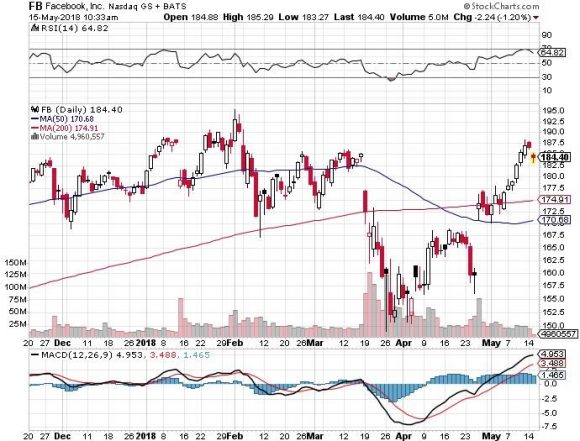
Facebook's stock remains healthy and the brouhaha stoked by the data leak gave investors a timely entry point.
I pounded on the table calling the bluff, begging readers to get into Facebook.
The long-term Facebook story is intact but the stock is overbought short-term.
Investors should not sleep on Facebook as it is a profit machine printing money like Apple (AAPL) and the executive revamp is a bullish development for Facebook.
My bet is that Chris Cox goes for the low hanging fruit monetizing WhatsApp, inciting the next leg up in Facebook shares later in the year.
"Simply put: We don't build services to make money; we make money to build better services." - said Facebook CEO Mark Zuckerberg
https://www.madhedgefundtrader.com/wp-content/uploads/2018/05/Zuckerberg-on-the-Hill-image-2-e1526417830446.jpg343580MHFTRhttps://madhedgefundtrader.com/wp-content/uploads/2019/05/cropped-mad-hedge-logo-transparent-192x192_f9578834168ba24df3eb53916a12c882.pngMHFTR2018-05-16 01:05:032018-05-16 01:05:03What's Up at Facebook?
While the Global Trading Dispatch focuses on investment over a one week to six-month time frame, Mad Options Trader, provided by Matt Buckley, will focus primarily on the weekly US equity options expirations, with the goal of making profits at all times.Read more
https://madhedgefundtrader.com/wp-content/uploads/2019/05/cropped-mad-hedge-logo-transparent-192x192_f9578834168ba24df3eb53916a12c882.png00Mad Hedge Fund Traderhttps://madhedgefundtrader.com/wp-content/uploads/2019/05/cropped-mad-hedge-logo-transparent-192x192_f9578834168ba24df3eb53916a12c882.pngMad Hedge Fund Trader2018-05-15 15:09:502018-05-15 15:09:50MOT Follow-Up to Text Alerts (RUT) Trade May 15, 2018
While the Diary of a Mad Hedge Fund Trader focuses on investment over a one week to six-month time frame, Mad Day Trader, provided by Bill Davis, will exploit money-making opportunities over a brief ten minute to three day window. It is ideally suited for day traders, but can also be used by long-term investors to improve market timing for entry and exit points. Read more
https://madhedgefundtrader.com/wp-content/uploads/2019/05/cropped-mad-hedge-logo-transparent-192x192_f9578834168ba24df3eb53916a12c882.png00Mad Hedge Fund Traderhttps://madhedgefundtrader.com/wp-content/uploads/2019/05/cropped-mad-hedge-logo-transparent-192x192_f9578834168ba24df3eb53916a12c882.pngMad Hedge Fund Trader2018-05-15 09:33:352018-05-15 09:33:35May 15, 2018 - MDT Pro Tips A.M.
Featured Trade: (FRIDAY, JUNE 15, 2018, DENVER, CO, GLOBAL STRATEGY LUNCHEON) (GET READY FOR THE COMING GOLDEN AGE),
(SPY), (INDU), (FXE), (FXY), (UNG), (EEM), (USO),
(TLT), (NSANY), (TSLA)
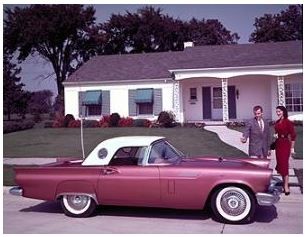
I believe that the global economy is setting up for a new golden age reminiscent of the one the United States enjoyed during the 1950s, and which I still remember fondly.
This is not some pie in the sky prediction. It simply assumes a continuation of existing trends in demographics, technology, politics, and economics. The implications for your investment portfolio will be huge.
What I call "intergenerational arbitrage" will be the principal impetus. The main reason that we are now enduring two "lost decades" of economic growth is that 80 million baby boomers are retiring to be followed by only 65 million "Gen Xers."
When the majority of the population is in retirement mode, it means that there are fewer buyers of real estate, home appliances, and "RISK ON" assets such as equities, and more buyers of assisted living facilities, health care, and "RISK OFF" assets such as bonds.
The net result of this is slower economic growth, higher budget deficits, a weak currency, and registered investment advisors who have distilled their practices down to only municipal bond sales.
Fast forward six years when the reverse happens and the baby boomers are out of the economy, worried about whether their diapers get changed on time or if their favorite flavor of Ensure is in stock at the nursing home.
That is when you have 65 million Gen Xers being chased by 85 million of the "millennial" generation trying to buy their assets.
By then we will not have built new homes in appreciable numbers for 20 years and a severe scarcity of housing hits. Residential real estate prices will soar. Labor shortages will force wage hikes.
The middle-class standard of living will reverse a then 40-year decline. Annual GDP growth will return from the current subdued 2% rate to near the torrid 4% seen during the 1990s.
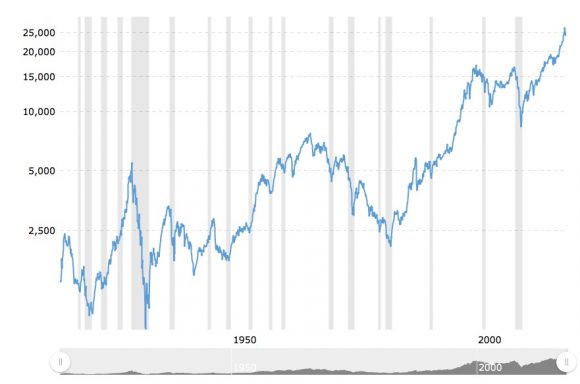
The stock market rockets in this scenario. Share prices may rise very gradually for the rest of the teens as long as tepid 2% growth persists. A 5% annual gain takes the Dow to 28,000 by 2019.
After that, after a brief dip, we could see the same fourfold return we saw during the Clinton administration, taking the Dow to 100,000 by 2030. If I'm wrong, it will hit 200,000 instead.
Emerging stock markets (EEM) with much higher growth rates do far better.
This is not just a demographic story. The next 20 years should bring a fundamental restructuring of our energy infrastructure as well.
The 100-year supply of natural gas (UNG) we have recently discovered through the new "fracking" technology will finally make it to end users, replacing coal (KOL) and oil (USO). Fracking applied to oilfields is also unlocking vast new supplies.
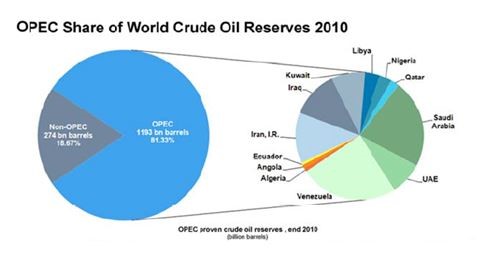
Since 1995, the United States Geological Survey estimate of recoverable reserves has ballooned from 150 million barrels to 8 billion. OPEC's share of global reserves is collapsing.
This is all happening while automobile efficiencies are rapidly improving and the use of public transportation soars.
Mileage for the average U.S. car has jumped from 23 to 24.7 miles per gallon in the past couple of years, and the administration is targeting 50 mpg by 2025. Total gasoline consumption is now at a five-year low.
Alternative energy technologies will also contribute in an important way in states such as California, accounting for 30% of total electric power generation by 2020, and 50% by 2030.
I now have an all-electric garage, with a Nissan Leaf (NSANY) for local errands and a Tesla Model S-1 (TSLA) for longer trips, allowing me to disappear from the gasoline market completely. Millions will follow. The net result of all of this is lower energy prices for everyone.
It will also flip the U.S. from a net importer to an exporter of energy, with hugely positive implications for America's balance of payments. Eliminating our largest import and adding an important export is very dollar bullish for the long term.
That sets up a multiyear short for the world's big energy consuming currencies, especially the Japanese yen (FXY) and the Euro (FXE). A strong greenback further reinforces the bull case for stocks.
Accelerating technology will bring another continuing positive. Of course, it's great to have new toys to play with on the weekends, send out Facebook photos to the family, and edit your own home videos.
But at the enterprise level this is enabling speedy improvements in productivity that are filtering down to every business in the U.S., lowering costs everywhere.
This is why corporate earnings have been outperforming the economy as a whole by a large margin.
Profit margins are at an all-time high. Living near booming Silicon Valley, I can tell you that there are thousands of new technologies and business models that you have never heard of under development.
When the winners emerge, they will have a big cross-leveraged effect on economy.
New health care breakthroughs will make serious disease a thing of the past, which are also being spearheaded in the San Francisco Bay area.
This is because the Golden State thumbed its nose at the federal government 10 years ago when the stem cell research ban was implemented. It raised $3 billion through a bond issue to fund its own research, even though it couldn't afford it.
I tell my kids they will never be afflicted by my maladies. When they get cancer in 20 years they will just go down to Wal-Mart and buy a bottle of cancer pills for $5, and it will be gone by Friday.
What is this worth to the global economy? Oh, about $2 trillion a year, or 4% of GDP. Who is overwhelmingly in the driver's seat on these innovations? The USA.
There is a political element to the new golden age as well. Gridlock in Washington can't last forever. Eventually, one side or another will prevail with a clear majority.
This will allow the government to push through needed long-term structural reforms, the solution of which everyone agrees on now, but for which nobody wants to be blamed.
That means raising the retirement age from 66 to 70 where it belongs and means-testing recipients. Billionaires don't need the maximum $30,156 annual supplement. Nor do I.
The ending of our foreign wars and the elimination of extravagant unneeded weapons systems cuts defense spending from $800 billion a year to $400 billion, or back to the 2000, pre-9/11 level. Guess what happens when we cut defense spending? So does everyone else.
I can tell you from personal experience that staying friendly with someone is far cheaper than blowing them up.
A Pax Americana would ensue.
That means China will have to defend its own oil supply, instead of relying on us to do it for them. That's why they have recently bought a second used aircraft carrier. The Middle East is now their headache.
The national debt then comes under control, and we don't end up like Greece.
The long-awaited Treasury bond (TLT) crash never happens. The Fed has already told us as much by indicating that the Federal Reserve will only raise interest rates at an infinitesimally slow rate of 25 basis points a quarter.
Sure, this is all very long-term, over-the-horizon stuff. You can expect the financial markets to start discounting a few years hence, even though the main drivers won't kick in for another decade.
But some individual industries and companies will start to discount this rosy scenario now.
Perhaps this is what the nonstop rally in stocks since 2009 has been trying to tell us.
Dow Average 1908-2018
Another American Golden Age is Coming
https://www.madhedgefundtrader.com/wp-content/uploads/2018/05/50s-photo-story-2-image-3.jpg237305MHFTRhttps://madhedgefundtrader.com/wp-content/uploads/2019/05/cropped-mad-hedge-logo-transparent-192x192_f9578834168ba24df3eb53916a12c882.pngMHFTR2018-05-15 01:06:182018-05-15 01:06:18Get Ready for the Coming Golden Age
Uber has seen a ferocious challenge to its business model of late. It seems everything it touches turns into fool's gold.
It is easy to assign blame to the current CEO, but Dara Khosrowshahi was shoehorned into a difficult situation after previous CEO Travis Kalanick defiantly departed leaving the company in tatters in his wake.
What could go wrong went wrong.
The company was purged of its license to operate in London, which was one of its highest transactional cities.
Uber boasted a ridership of 3.5 million and sub-contracted 40,000 drivers in London that singlehandedly wiped out the Cockney black cab industry.
The land of fish and chips has not exactly been kind to Uber with the British seaside resort city Brighton the next location to excommunicate Uber from its sandy shores.
Uber's massive data breach of 2016, which took Uber a full year to publicly disclose, of 25.6 million names, 22.1 million mobile phone numbers, and 607,000 driver's license numbers was cited as one of the reasons Uber's license in Brighton was discontinued.
Is there a way back for CEO Dara Khosrowshahi?
The future looks turbulent at best.
Khosrowshahi has left no stone unturned carrying out his search for a new CFO. Uber has not had a CFO since 2015, and a CFO is required to shepherd the company through the IPO process.
Prospective candidates will not touch this position with a 10-foot pole.
Several high-profile hopefuls have already rebuffed offers.
It was painfully obvious to onlookers last week at Uber's Elevate conference in Los Angles that Alphabet (GOOGL) is dominating every potential business that Uber desires to penetrate.
Waymo, Alphabet's autonomous driving technology arm, is miles ahead of Uber after developing in secret for many years.
Waymo's self-driving testing began in 2009 while Uber's first test was carried out in September 2016 in Pittsburgh, conceding a seven-year head start to bitter rivals.
Even worse, Uber's trials have been sidelined as of late because of a casualty in the Phoenix program. Arizona is on the verge of removing Uber from possible future tests along with California making Pittsburgh the last place left to consolidate operations.
At the Elevate conference, Khosrowshahi elucidated Uber's roadmap to industry professionals, and his synopsis was largely underwhelming.
Khosrowshahi broke down the future into three easy-to-understand stages.
In the next two to three years, stage one consists of focusing on improving existing algorithms, enhancing ride share transactions, and expanding to different locations widening the companies ride-share footprint.
Stage 1.5 detailed refining its Uber Eats segment seizing further market share from Grubhub (GRUB) and Amazon (AMZN), the two biggest rivals.
In two to five years from now, stage two entails ramping up the e-bike segment through recently acquired e-bike firm Jump.
Lastly, stage three was proposed to happen in five to 10 years and encompass growing a newly minted air-taxi division called Elevate.
Up until today, Uber's core business has been an unmitigated failure of massive proportions.
In the fourth quarter of 2016, Uber hemorrhaged $2.8 billion then followed up the fourth quarter in 2017 with a $4.5 billion loss, a stark reminder that profits are hard to come by in the tech world.
If losses are what investors want, Uber gives it to you in spades.
If it cannot successfully monetize the core business using cars, the e-biking future is dead on arrival.
Stage 1.5 is all designer chocolates and fancy roses now because growth and margins remain healthy. However, this industry is fraught with booby traps that I chronicled in the recently published story about Grubhub (GRUB).
Stage three was a division that Khosrowshahi reviewed several times after he took the top job and it made the cut after deep contemplation.
Uber plans to start conducting trials in 2020 in Dallas or Los Angeles with the hope of commercial operations starting in 2023.
This timeline is wishful thinking because regulators would never grant operational authority to Uber in a mere five years when it cannot even succeed on asphalt with its self-driving technology.
Lamentably, Alphabet's co-founder Larry Page has an ace up his sleeve.
Since last October, stealth flight trials have been carried out in New Zealand by firm Kitty Hawk led by Sebastian Thrun one of the creators of Waymo, which is developing autonomous flying taxis.
Kitty Hawk was developed for years in secret and personally backed by Larry Page's personal wealth.
He has already poured more than $100 million of his own money into this venture.
To further develop its business, Kitty Hawk was forced to decamp to New Zealand as the Federal Aviation Administration (FAA) in America lacks a path to certification and commercialization.
New Zealand has embraced the revolutionary start-up, and New Zealand is the first country poised to develop a functional robo air-taxi network.
Kitty Hawk's hopes and dreams rely on the aircraft Cora. Please click here to visit its website for more information.
Cora is an all-electric affair powered by batteries with a 36-foot wingspan.
This meshes perfectly with New Zealand's hope to be carbon free by 2050.
Cora has been manufactured with capabilities of flying at heights up to 2,950 feet and a range of 62 miles.
New Zealand has bet the ranch on aerospace technology allowing even marginal start-ups within its borders such as Martin Jetpack, the first commercially sold jetpack, operating with a flight ceiling of 2,500 feet and sold at a starting price of $150,000.
It is ironic that Uber chose to host an aerial-taxi conference considering it is not the company building the flying taxis.
This is the crux of the problem in which Uber finds itself.
It does not produce anything unique.
The biggest winners that take home the lion's share of the spoils are the firms that create a proprietary product that cannot be replicated easily such as Netflix's original content or Google's advanced search engine.
The heavy lifters gain control and can dictate the path toward monetization.
Page's Kitty Hawk is in the driver's seat with the best technology and Uber's Khosrowshahi recently met with Thrun pitching his idea of partnering up.
Expectedly, Kitty Hawk declined to become buddies because nothing can be gained by collaborating with Uber.
Kitty Hawk stated that it plans to develop an app for its own robo-flights, which could crush Uber's dream of being the end all be all of transportation apps.
At the end of the day, Uber is just an app matching drivers and passengers, and creating this app is highly replicable.
It takes billions upon billions of dollars to build an autonomous aerial taxi from scratch. Uber's inability to produce aircraft gives it little negotiating power down the line.
On that note, Uber announced a partnership with NASA to build an air traffic control system, which would logically be used to construct landing ports similar to a helipad for aircraft to land.
By carving out a sliver of the industry mastering port construction, it gives Uber a narrow entranceway into the future of aero-taxi industry albeit a weaker strategic position than Page's Kitty Hawk.
Another day and another loss to Alphabet. Wave the white flag.
Each loss leads to the need for more funding.
More funding has brought on more losses for Uber in a vicious cycle that has seen Uber's valuation slip at the last round of financing.
In the next five years, onlookers can expect much of the same from Uber - underperformance in the form of accelerated losses from its core ride-sharing business.
Capital is disappearing into a black hole and the monetization of Uber Eats and Jump is nothing about which to boast.
These are side businesses at best.
The road map is wishy-washy at best. Uber's Elevate division could turn out to be lipstick on a pig hyping up the company for its 2019 IPO to attract more dollars - the same reason it needs to recruit a new CFO.
The IPO road show will give Uber a platform to explain how it plans to curtail losses. A miracle is required for Uber to finally turn into a profitable business by the time it goes public.
To visit Uber's Elevate division to watch a video of its version of the future of aerial taxis, please click here.
"A computer once beat me at chess, but it was no match for me at kickboxing." - said American comedian Emo Philips.
https://www.madhedgefundtrader.com/wp-content/uploads/2018/05/Uber-image-1-e1526328288895.jpg324580MHFTRhttps://madhedgefundtrader.com/wp-content/uploads/2019/05/cropped-mad-hedge-logo-transparent-192x192_f9578834168ba24df3eb53916a12c882.pngMHFTR2018-05-15 01:05:442018-05-15 01:05:44Hard Times at Uber
While the Global Trading Dispatch focuses on investment over a one week to six-month time frame, Mad Options Trader, provided by Matt Buckley, will focus primarily on the weekly US equity options expirations, with the goal of making profits at all times.Read more
https://madhedgefundtrader.com/wp-content/uploads/2019/05/cropped-mad-hedge-logo-transparent-192x192_f9578834168ba24df3eb53916a12c882.png00Mad Hedge Fund Traderhttps://madhedgefundtrader.com/wp-content/uploads/2019/05/cropped-mad-hedge-logo-transparent-192x192_f9578834168ba24df3eb53916a12c882.pngMad Hedge Fund Trader2018-05-14 14:54:132018-05-14 14:54:13MOT Follow-Up to Text Alerts (AMZN) Trade May 14, 2018
Legal Disclaimer
There is a very high degree of risk involved in trading. Past results are not indicative of future returns. MadHedgeFundTrader.com and all individuals affiliated with this site assume no responsibilities for your trading and investment results. The indicators, strategies, columns, articles and all other features are for educational purposes only and should not be construed as investment advice. Information for futures trading observations are obtained from sources believed to be reliable, but we do not warrant its completeness or accuracy, or warrant any results from the use of the information. Your use of the trading observations is entirely at your own risk and it is your sole responsibility to evaluate the accuracy, completeness and usefulness of the information. You must assess the risk of any trade with your broker and make your own independent decisions regarding any securities mentioned herein. Affiliates of MadHedgeFundTrader.com may have a position or effect transactions in the securities described herein (or options thereon) and/or otherwise employ trading strategies that may be consistent or inconsistent with the provided strategies.