When John identifies a strategic exit point, he will send you an alert with specific trade information on what security to sell, when to sell it, and at what price. Most often, it will be to TAKE PROFITS, but on rare occasions, it will be to exercise a STOP LOSS at a predetermined price to adhere to strict risk management discipline.Read more
https://www.madhedgefundtrader.com/wp-content/uploads/2016/02/Alert-e1457452190575.jpg135150april@madhedgefundtrader.comhttps://madhedgefundtrader.com/wp-content/uploads/2019/05/cropped-mad-hedge-logo-transparent-192x192_f9578834168ba24df3eb53916a12c882.pngapril@madhedgefundtrader.com2025-01-14 11:22:432025-01-14 11:22:43Trade Alert - (TLT) January 14, 2025 - STOP LOSS - SELL
When John identifies a strategic exit point, he will send you an alert with specific trade information as to what security to sell, when to sell it, and at what price. Most often, it will be to TAKE PROFITS, but on rare occasions, it will be to exercise a STOP LOSS at a predetermined price to adhere to strict risk management discipline.Read more
The year is 2025. Forget Siri, Alexa, or Google Assistant. Imagine an AI that doesn't just answer questions or set alarms, but actually controls your computer, seamlessly navigating the digital world on your behalf. This is the promise of "Operator," OpenAI's ambitious new AI agent slated for release in January.
While still shrouded in some secrecy, leaks and internal reports paint a picture of Operator as a game-changer. This isn't just another chatbot; it's an autonomous entity capable of understanding complex instructions and executing tasks across various applications. Need to book a flight, write code, or conduct research? Operator will be your digital proxy, freeing you from the mundane and unlocking new levels of productivity.
More Than Just Automation:
Operator's potential impact extends far beyond simple convenience. By taking over tedious digital chores, it could fundamentally alter how we interact with technology. Imagine:
Effortless Workflow: Instead of juggling multiple apps and windows, you simply tell Operator what you need. It handles the rest, seamlessly switching between programs, finding information, and completing tasks.
Personalized Automation: Operator learns your preferences and adapts to your workflow, anticipating needs and proactively offering solutions.
Enhanced Accessibility: For those with disabilities, Operator could be a lifeline, enabling greater independence and access to technology.
Boosted Productivity: By offloading repetitive tasks, Operator frees up human brainpower for creativity, problem-solving, and strategic thinking.
The Technology Behind the Agent:
Operator's capabilities are rooted in cutting-edge AI research, leveraging advancements in natural language processing, machine learning, and reinforcement learning. It likely builds upon the foundation of GPT-4, OpenAI's powerful language model, but with crucial enhancements:
Contextual Understanding: Operator goes beyond simple keyword recognition. It understands the nuances of human language, including intent, context, and even implied meaning.
Cross-Application Integration: Unlike traditional AI assistants confined to their own ecosystems, Operator can interact with a wide range of software, from web browsers and email clients to specialized programs like code editors and design tools.
Autonomous Decision-Making: Operator isn't just following pre-programmed scripts. It can analyze situations, make decisions, and adapt its approach based on real-time feedback.
The Potential and the Perils:
While the potential benefits of Operator are immense, it also raises important questions and concerns:
Security and Privacy: Granting an AI agent access to your digital life requires robust security measures and careful consideration of privacy implications. How will OpenAI ensure Operator doesn't misuse personal data or become a target for malicious actors?
Job Displacement: As AI agents become more capable, could they eventually replace human workers in certain roles? How will society adapt to this potential shift in the workforce?
Ethical Considerations: Who is responsible if Operator makes a mistake or causes harm? How do we ensure these powerful tools are used ethically and responsibly?
Control and Transparency: How much control will users have over Operator's actions? Will its decision-making processes be transparent and understandable?
The Road Ahead:
OpenAI plans to initially release Operator as a research preview, likely through its API for developers. This will allow for controlled testing and feedback before a wider rollout. However, the company faces stiff competition from other tech giants like Microsoft and Salesforce, who are also developing their own AI agents.
The race is on to create the ultimate digital assistant, and Operator could be a major contender. If OpenAI can address the challenges and deliver on its promises, Operator could usher in a new era of human-computer interaction, where technology seamlessly integrates with our lives, empowering us to achieve more than ever before.
Beyond the Hype: A Deeper Dive into Operator's Potential Impact
While the initial excitement surrounding Operator focuses on its ability to automate tasks, its true potential lies in its capacity to augment human capabilities and transform various aspects of our lives. Let's explore some specific areas where Operator could have a profound impact:
Education:
Imagine a personalized AI tutor that adapts to each student's learning style and pace. Operator could revolutionize education by:
Providing customized learning materials and exercises.
Offering real-time feedback and guidance.
Identifying knowledge gaps and suggesting targeted resources.
Fostering deeper understanding through interactive simulations and visualizations.
Healthcare:
Operator could assist healthcare professionals by:
Analyzing patient data to identify potential health risks.
Streamlining administrative tasks and freeing up doctors' time for patient care.
Providing patients with personalized health information and support.
Assisting in medical research and drug discovery.
Creative Industries:
Operator could become a powerful tool for artists, writers, and musicians by:
Generating creative ideas and inspiration.
Assisting with research and information gathering.
Automating repetitive tasks like editing and formatting.
Providing feedback and suggestions to improve creative work.
Business and Industry:
Operator could optimize business processes and increase efficiency by:
Automating customer service and support.
Analyzing market trends and identifying new opportunities.
Managing complex projects and coordinating teams.
Streamlining supply chain management and logistics.
Scientific Research:
Operator could accelerate scientific discovery by:
Analyzing large datasets and identifying patterns.
Generating hypotheses and designing experiments.
Automating data collection and analysis.
Facilitating collaboration among researchers.
The Future of Work:
The rise of AI agents like Operator raises questions about the future of work. While some fear job displacement, others see an opportunity for humans and AI to collaborate, creating new roles and industries. Operator could free humans from mundane tasks, allowing them to focus on higher-level thinking, creativity, and problem-solving.
It's crucial to proactively address the potential challenges of AI-driven automation, such as:
Developing education and training programs to prepare workers for the changing job market.
Ensuring equitable access to AI technology and its benefits.
Creating social safety nets to support those affected by job displacement.
The Ethical Imperative:
As AI agents become more sophisticated and integrated into our lives, it's essential to prioritize ethical considerations. OpenAI and other developers must ensure that these technologies are used responsibly and for the benefit of humanity. This includes:
Transparency and Explainability: Users should understand how AI agents make decisions and have the ability to challenge or override those decisions.
Fairness and Bias Mitigation: AI agents should be designed to avoid perpetuating existing biases and discrimination.
Privacy and Data Security: Strong safeguards must be in place to protect user data and prevent misuse.
Accountability and Responsibility: Clear mechanisms must be established to address any harm caused by AI agents.
Conclusion:
OpenAI's Operator represents a significant step forward in the development of AI agents. Its potential to transform our digital lives is immense, but it also comes with challenges and responsibilities. By embracing a thoughtful and ethical approach, we can harness the power of AI to create a more productive, equitable, and fulfilling future for all.
https://madhedgefundtrader.com/wp-content/uploads/2019/05/cropped-mad-hedge-logo-transparent-192x192_f9578834168ba24df3eb53916a12c882.png00Douglas Davenporthttps://madhedgefundtrader.com/wp-content/uploads/2019/05/cropped-mad-hedge-logo-transparent-192x192_f9578834168ba24df3eb53916a12c882.pngDouglas Davenport2025-01-13 16:38:072025-01-13 16:38:07The Dawn of the Operator: How OpenAI's New AI Agent Could Reshape Our Digital Lives
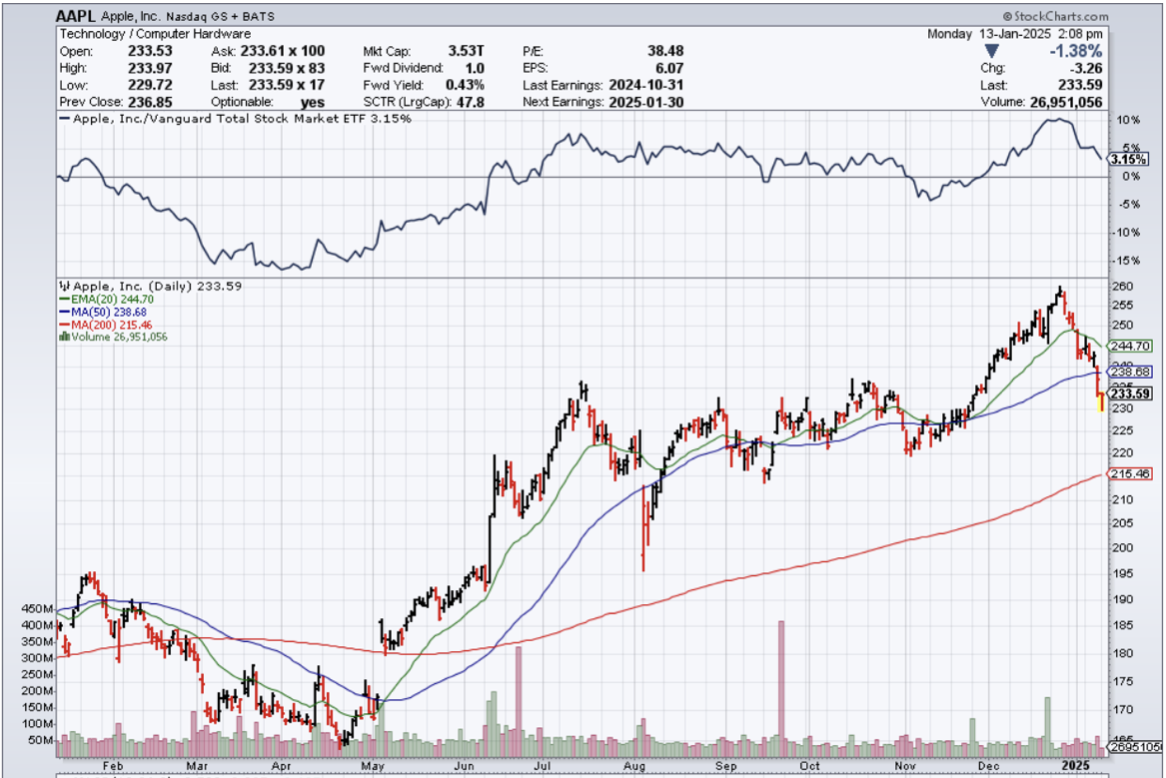
Not only is Apple losing its edge, but they are failing miserably against the Chinese.
China, with its state-supported behemoths, is the bully on the playground and Apple can’t too diddlysquat.
Apple has been selling the same product for the past 13 years and the last iterations have been underwhelming, to say the least.
People don’t want to upgrade forcing them to elongate the refresh cycle.
It’s now so bad that Apple even ceded a 5% market share in the final quarter last year to Chinese competition.
Apple is also very late in integrating AI features signaling that Apple’s software game is behind the times and mediocre at best.
Apple risks falling behind quickly and the Chinese have really nailed the consumer tech and muscled into this industry.
They are poised to dominate EVs and smartphones and other value-added tech in the upcoming years.
They plan to seize the moment and squeeze American companies out of the way for good.
Samsung also has been going through a disastrous downcycle after their Android flagship phone peaked a few years ago.
This new trajectory is a slippery slope and if Apple goes on the cost-cutting path, there will be little talent left to innovate out of this problem.
The iPhone slipped a point to 18% worldwide market share in 2024.
Apple marked a 2% sales decline for the full year, at a time when the wider market grew 4% globally.
China’s smartphone makers are all developing their own in-house AI tools and agents, including services that can perform tasks on a user’s behalf.
Samsung also gave up its share to faster-growing Android device makers from China, led by Xiaomi and Vivo. Apple marked a 2% sales decline for the full year.
The situation paints a picture of the non-Chinese smartphone markets in a world of hurt.
I believe that Apple and Samsung have nobody to blame, but themselves as those years of forced technological know-how transfer are coming back to bite them where it hurts.
My friends’ kids have these new Chinese smartphones and I can tell you that I was surprised about how good they perform.
They are run on Android, which is very different from IoS, but they are premium.
German car companies are also feeling this bitter pill as Chinese companies have taken their own technology and implemented it in a more affordable way.
In aggregate, this latest news is a bad omen for Apple’s earnings season.
They are barely jumping over a lower bar and that will keep happening until something major is revamped in the product lineup.
I believe any steep sell-off would be a nice opportunity to execute a short-term trade, but those years of buying and holding Apple until eternity are gone.
Readers must really nitpick what this company is doing because management presides over a dull model and their China business is falling apart as we speak all while they helped the local Chinese competition over many years take market share with forced technological transfers.
Not a good look and things could get worse as we move deeper into the year.
https://madhedgefundtrader.com/wp-content/uploads/2019/05/cropped-mad-hedge-logo-transparent-192x192_f9578834168ba24df3eb53916a12c882.png00april@madhedgefundtrader.comhttps://madhedgefundtrader.com/wp-content/uploads/2019/05/cropped-mad-hedge-logo-transparent-192x192_f9578834168ba24df3eb53916a12c882.pngapril@madhedgefundtrader.com2025-01-13 14:02:202025-01-13 15:18:03Apple Drops The Ball
(THE MARKETS IN 1973 AND 2025 – DRAWING COMPARISONS)
January 13, 2025
Hello everyone
WEEK AHEAD CALENDAR
MONDAY 01/13
2:00 p.m. Treasury Budget (December)
6:30 p.m. Australia Consumer Confidence
Previous: -2%
TUESDAY 01/14
6:00 a.m. NFIB Small Business Index (December)
8:30 a.m. Producer Price Index (December)
Previous: 0.4%
Forecast: 0.3%
WEDNESDAY 01/15
8:30 a.m. Consumer Price Index (December)
8:30 a.m. Empire State Index (January)
11:00 a.m. New York Federal Reserve Bank President and CEO John Williams speaks at CBIA Economic Summit and Outlook 2025
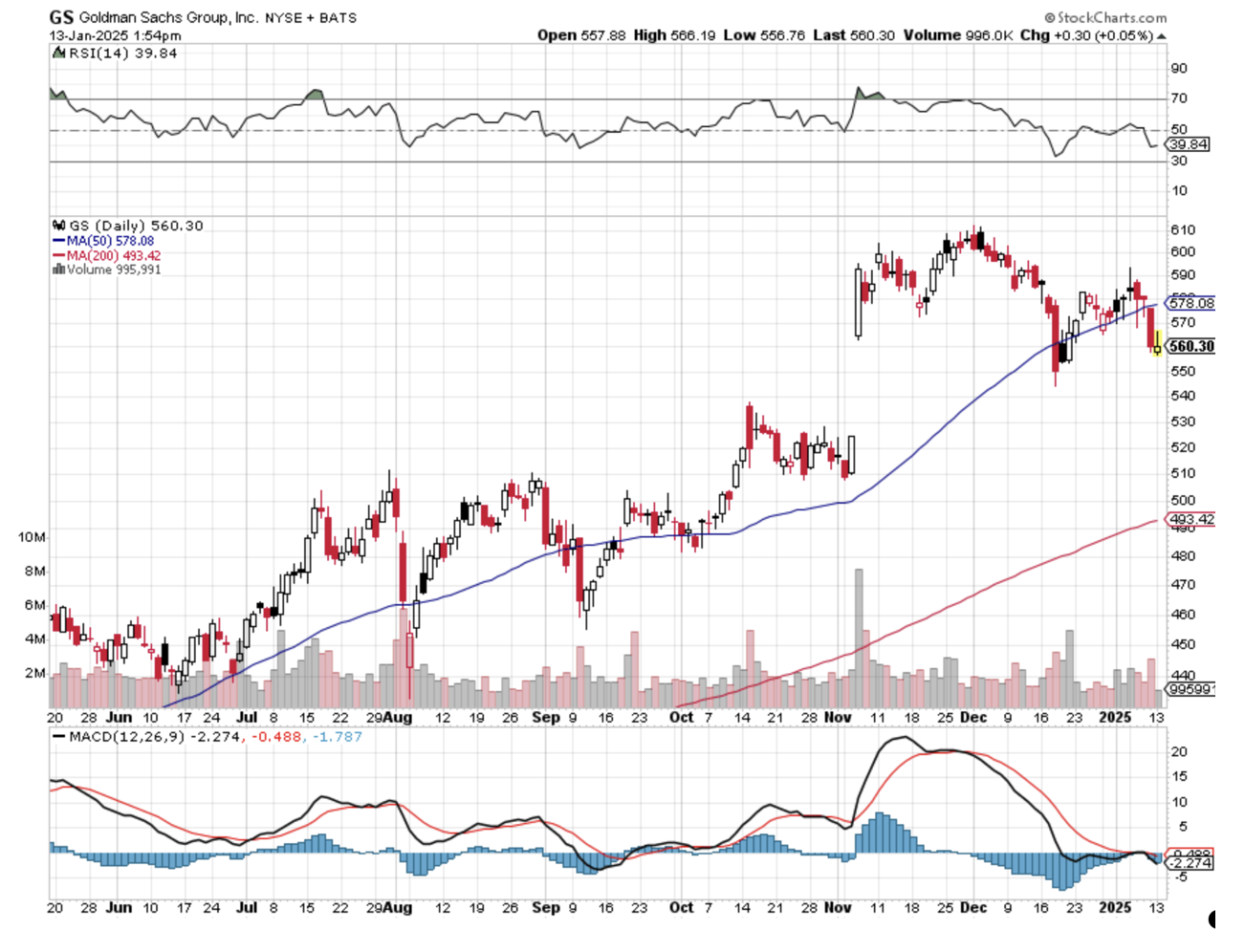
Earnings:Citigroup, Goldman Sachs, Wells Fargo, JPMorgan Chase, BlackRock, Bank of New York Mellon
THURSDAY 01/16
2:00 a.m. UK GDP Growth
Previous: -0.1%
Forecast: 0.2%
8:30 a.m. Continuing Jobless Claims (1/4)
8:30 a.m. Export Price Index (December)
8:30 a.m. Import Price Index (December)
8:30 a.m. Initial Claims (1/11)
8:30 a.m. Philadelphia Fed Index (January)
8:30 a.m. Retail Sales (November)
10:00 a.m. Business Inventories (November)
10:00 a.m. NAHB Housing Market Index (January)
Earnings:J.B. Hunt Transport Services, Morgan Stanley, U.S. Bancorp, Bank of America, PNC Financial Services Group, M & T Bank, United Health Group
FRIDAY 01/17
2:00 a.m. UK Retail Sales
Previous: 0.2%
Forecast: 0.4%
8:30 a.m. Building Permits preliminary (December)
8:30 a.m. Housing Starts (December)
9:15 a.m. Capacity Utilization (December)
9:15 a.m. Industrial Production (December)
9:15 a.m. Manufacturing Production (December)
Earnings: State Street, Schlumberger, Fastenal, Citizens Financial Group, Regions Financial, Truist Financial, Huntington Bancshares
We had a scorching hot jobs report last Friday, which puts in doubt the path of rate cuts by the Fed.We know the probability of cuts was revised down from four to two this year, but there is now some head-scratching going on with many wondering if there will be any cuts at all. The notion of rate rises is also being tossed about.
So, with that in mind, the inflation reading this week will be of paramount importance to the market.The CPI and PPI will be watched closely by investors – we may find that we have to deal with pricing pressures for quite a long time.The December consumer price index is expected to rise 0.3% in the month and 2.8% in the year, according to consensus estimates from FactSet.That’s compared to respective increases of 0.3% and 2.7% in the previous report.
Our market is already at historically stretched valuations as we start the year at 22 times forward earnings, which means investors will have to rely on earnings growth to power the market this year.And this is where the real challenge lies – can companies negotiate through rising inflation, higher yields, a strong dollar, and deliver on expectations?
Big banks launch the earnings season this week.
Finally, we need to understand the consumer’s environment, and see if they are still spending, so retail sales data should be on your radar.
What has Donald Trump promised to do from Day One through to his first 100 days?
Lifting environmental restraints and expanding oil and gas exploration.
Cut in support for electric vehicles.
Close the border with Mexico.
Deport millions of undocumented migrants.
Wind back the Biden administration’s environmental programs.
Pardon peaceful rioters who stormed the Capitol in the 2021 insurrection.
End the war in Ukraine.
Suspend refugee admissions.
Ban “woke” inclusivity programs.
Cut back on government spending.
DRAWING PARALLELS BETWEEN 2025 AND THE EARLY SEVENTIES
Doug Kass has been a very successful fund manager over the long term.Recently, he has been comparing the state of the current market and the Wall Street of 50 years ago.
He states: “With the 10-year Treasury yield reaching multi-month highs, my baseline expectation is that January 2025 could represent an important top in stocks – much like it did 53 years ago in 1972.”
Let’s revisit 1972 for a minute.
Richard Nixon was President.
A gallon of gas costs 36 cents.
The median family income in the U.S. was $11,120.
The average individual income was just over $6000.
The highest-grossing film in 1972 was Francis Ford Coppola’s The Godfather.
Roberta Flack’s “The First Time Ever I Saw Your Face” was the top song.
Kass points out that the December 2024/January 2025 tops in the stock market could resemble the tops in the market in December 1972/January 1973.
In drawing the comparison between each period, Kass demonstrates that:
Both periods featured combative presidents – Richard Nixon in the past and incoming President-elect Donal Trump in the present.
In both periods, interest rates and inflation increased from the prior few decades, and public sector debt was climbing rapidly.
P/E [price to earnings ratio] was extremely elevated in both periods.
A top was completed in January 1973 – leading to a poor year for the S&P 500 Index.
Kass expects “an important market top, a down year for the averages…”
Let’s end on a positive note here as Kass explains that in 2025 he does like companies that will be helping to expand the utility grid and cloud computing.
MARKET UPDATE
S&P500
A hot jobs report sank the market on Friday.A close below the $5825/35 support area will be a bearish sign.Support at the base of the rising wedge ($5675 ~) may again trigger a good-sized bounce.Resistance = ~$5870/80
GOLD
Some movement in gold recently could continue to the upside, however, it is still believed that the topping process is not yet complete.So, you might use the upside movement to sell more calls (if you wish).Support is seen at around $2630/$2600.Resistance is seen around the $2690/$2630 area.
BITCOIN
Topping formation for a few months is taking place.After our $108,389 top, Bitcoin is ranging between support and resistance levels.Support around $91,000 may hold temporarily, however, a break there could lead to the mid $85,000 zone and even lower.Initial resistance is now around $97,500 and $102,000.
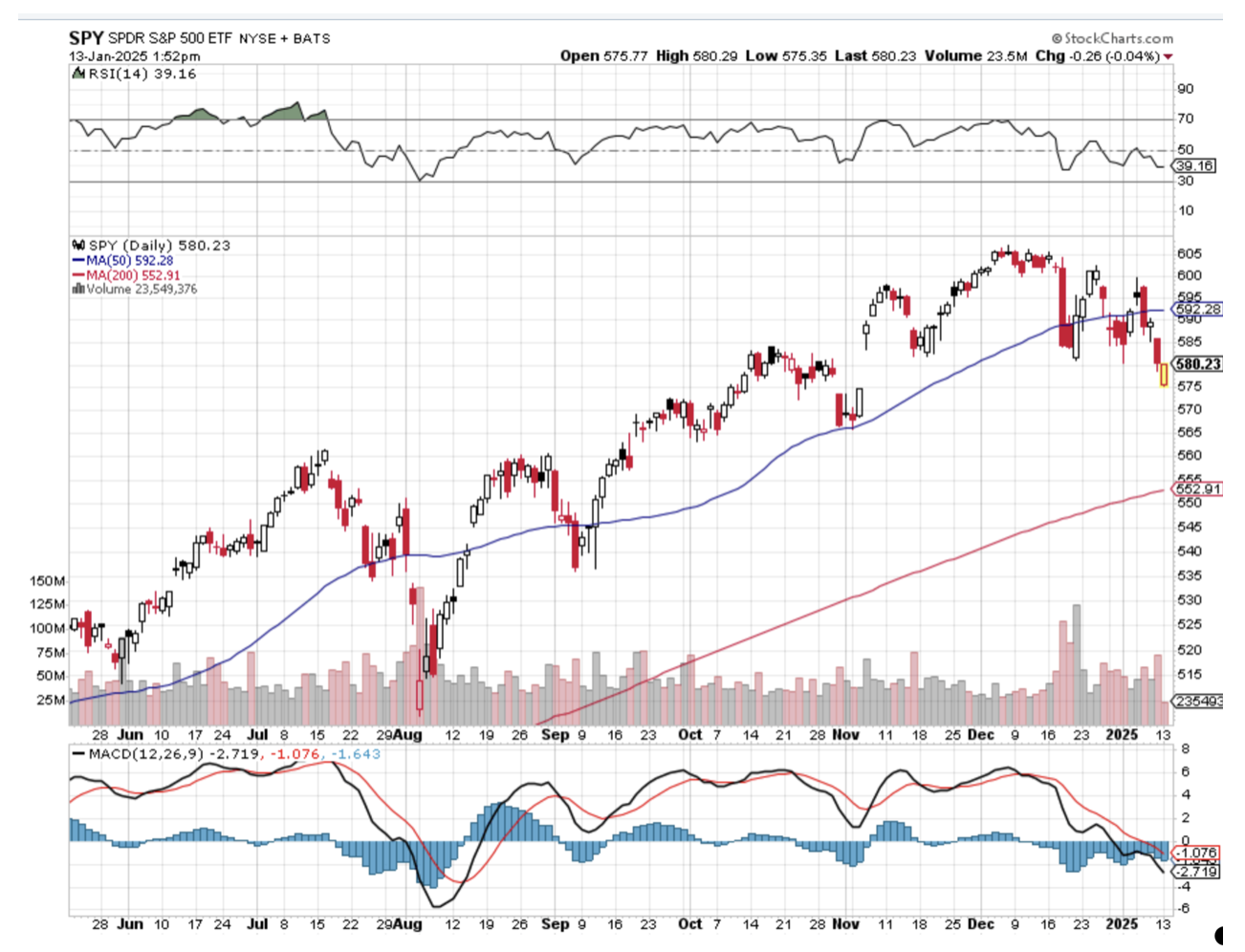
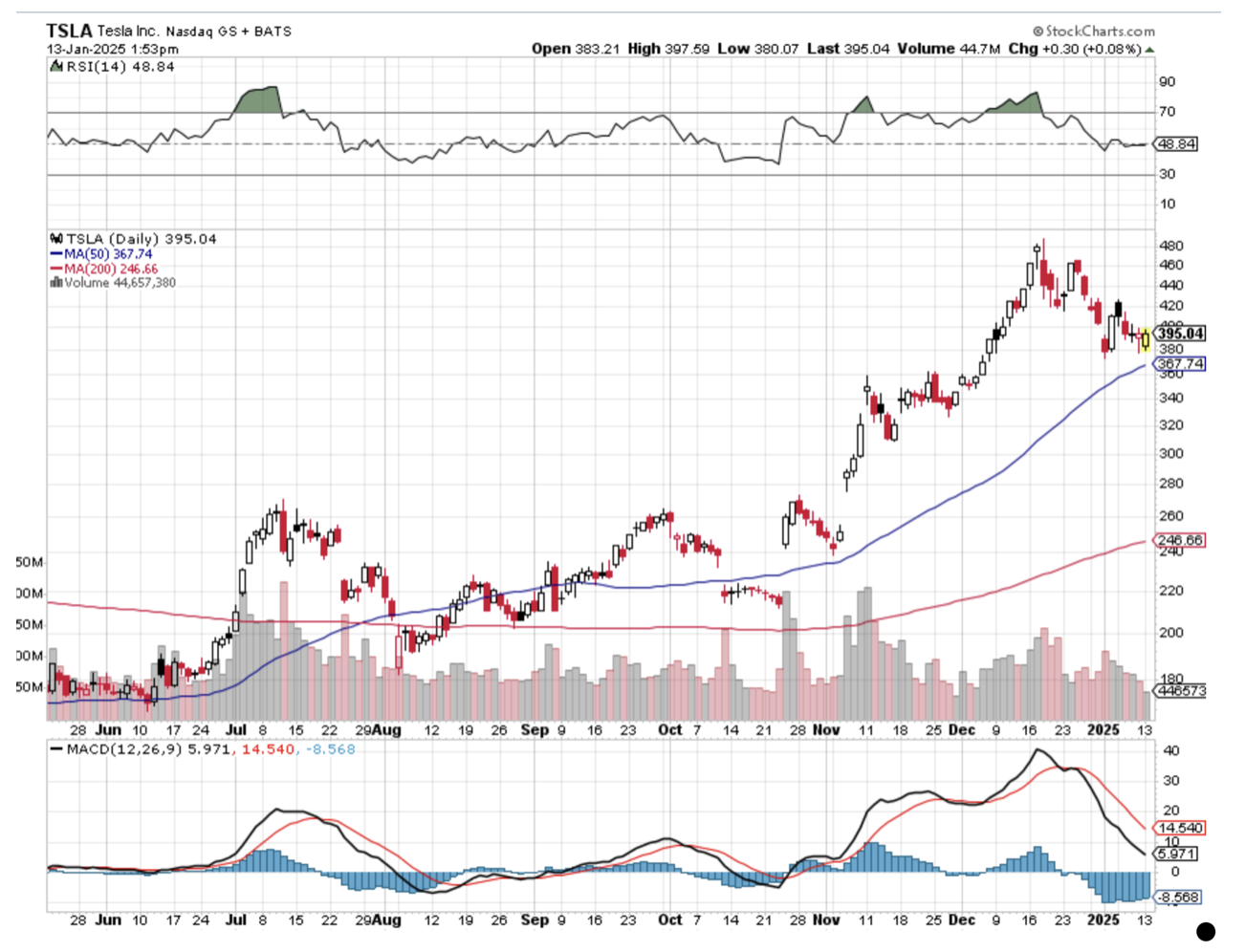
Down three of six trading days so far in 2025, with the S&P 500 off 2.2%. Worse yet, there is an almost perfect head and shoulders topsetting up on the charts portending lower lows. Lead names like Tesla (TSLA) have taken it on the nose, down 25%.
Tax-deferred selling has definitely been the dead weight hanging on the market since January 1. High-net-worth individuals would have shot the financial advisors off if they had saddled them with big tax bills during the last weeks of 2024. After two 20% back-to-back years, many of these positions had doubles and triples in them. How long it will be anyone’s guess.
Once the selling does end, the market will go into “show me” mode, waiting for the new administration to deliver the promised action. This could be a long wait. The earliest Congress can vote on a new economy-changing bill in May. Until then, the market could be entering a tedious trading range until action is delivered.
The good news? There were many times in my life when I never thought I’d live until 2025. Also, we get two extra holidays in January, Jimmy Carter’s funeral and Martin Luther King Day on the 23rd.
So, what’s a trader to do in these suddenly benighted times? 90-day US Treasury bill looks fantastic right now with a 4.21% yield. Nothing is better than getting paid to wait. Big tech is entering a long-range trade from which it will eventually escape to the upside. A lot of the AI trade needs to be digested and earnings spun off before a major new upleg can begin.
One of the great things about a 16-day cruise from Los Angeles to Fort Lauderdale, Florida is the many fascinating people you meet. It turned out that I missed the start of the Great Los Angeles fires by a week.
I attended a wine tasting and learned that the entire event had been bought out by the preeminent aviation family of Alaska. The 93-year-old grandmother treated her extended 25-member family to a free cruise, great-grandchildren and all, at a cost of only $250,000. Apparently, aviation in Alaska pays well.
The subject of airplanes inevitably came up. They mentioned that they still had their original aircraft, a 1928 Travelaire D4D, which Grandpa bought second-hand and brought up to Alaska during WWII. They couldn’t get any of their current pilots to fly it, which they deemed too dangerous to fly.
I mentioned that I happened to be one of ten living pilots rated to fly the plane and showed them videos of me flying my kids over the Malibu coast (click here for the link).
I believe an invitation is pending.
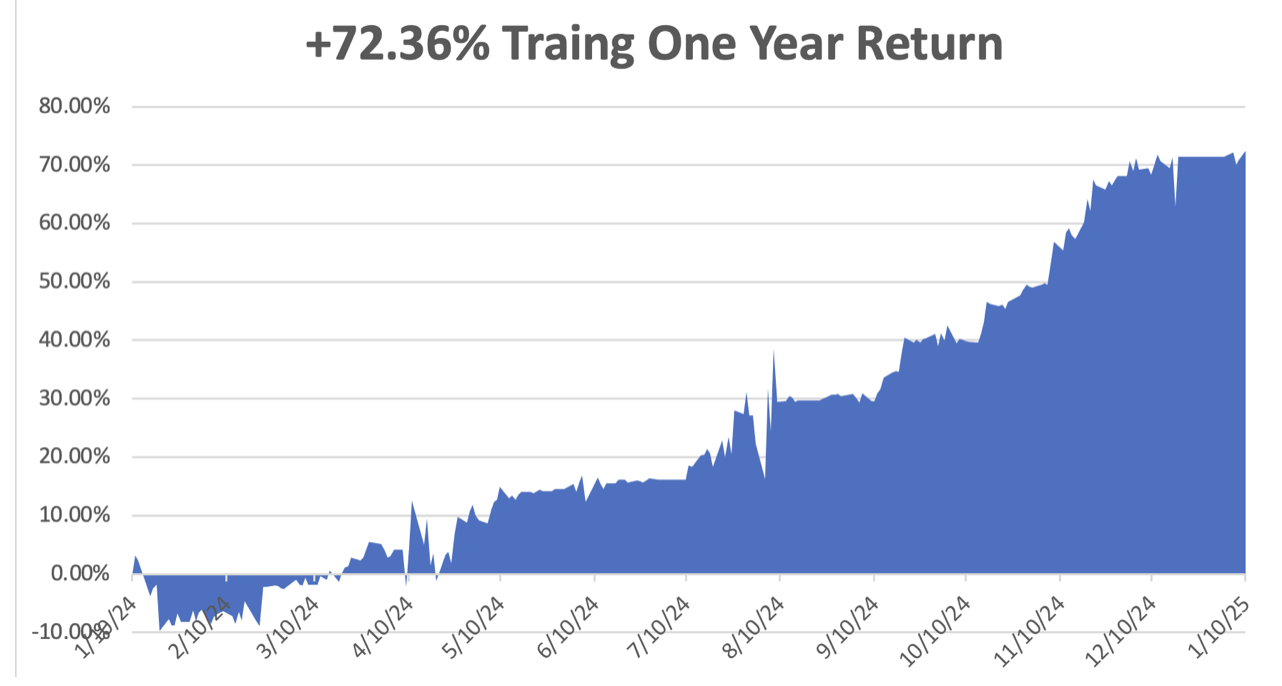
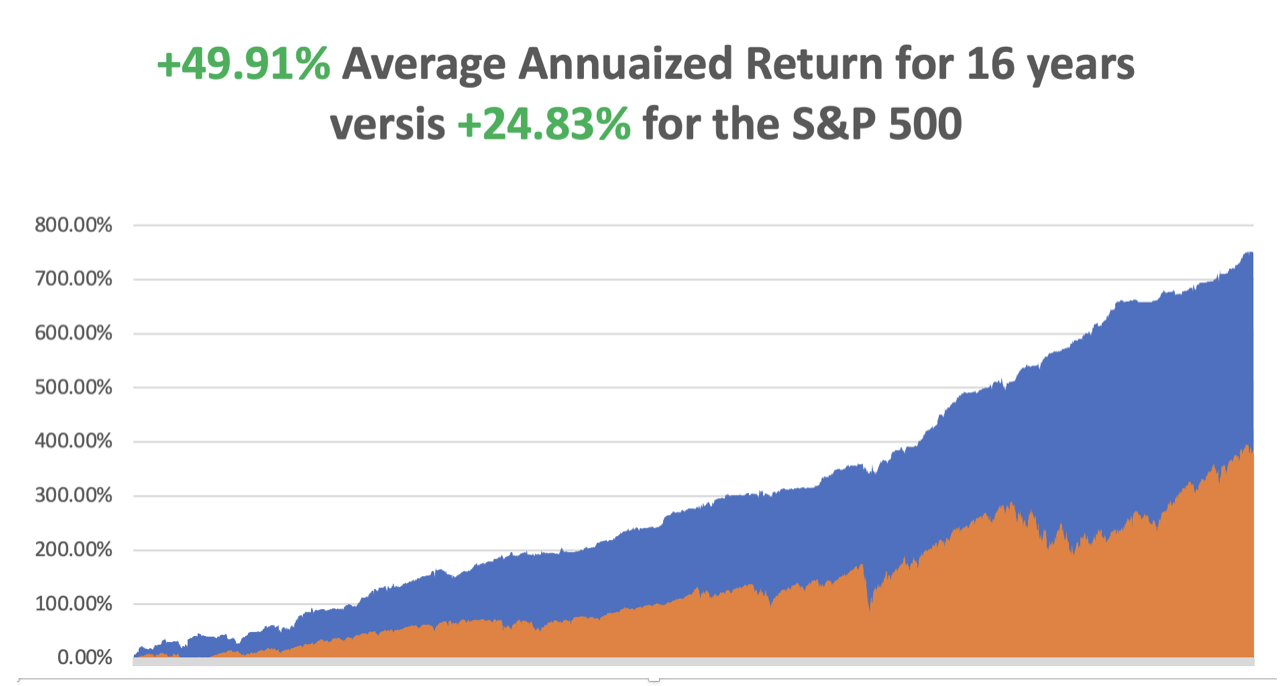
We closed out December at +3.26%.Some 11 out of 12 months were profitable in 2024.The final number for 2024 came in at a sky-high +75.26%.I went all cash on the December 20 options expiration, expecting the current trouble that we are in. I would be thrilled if we even came close to these numbers in 2025.
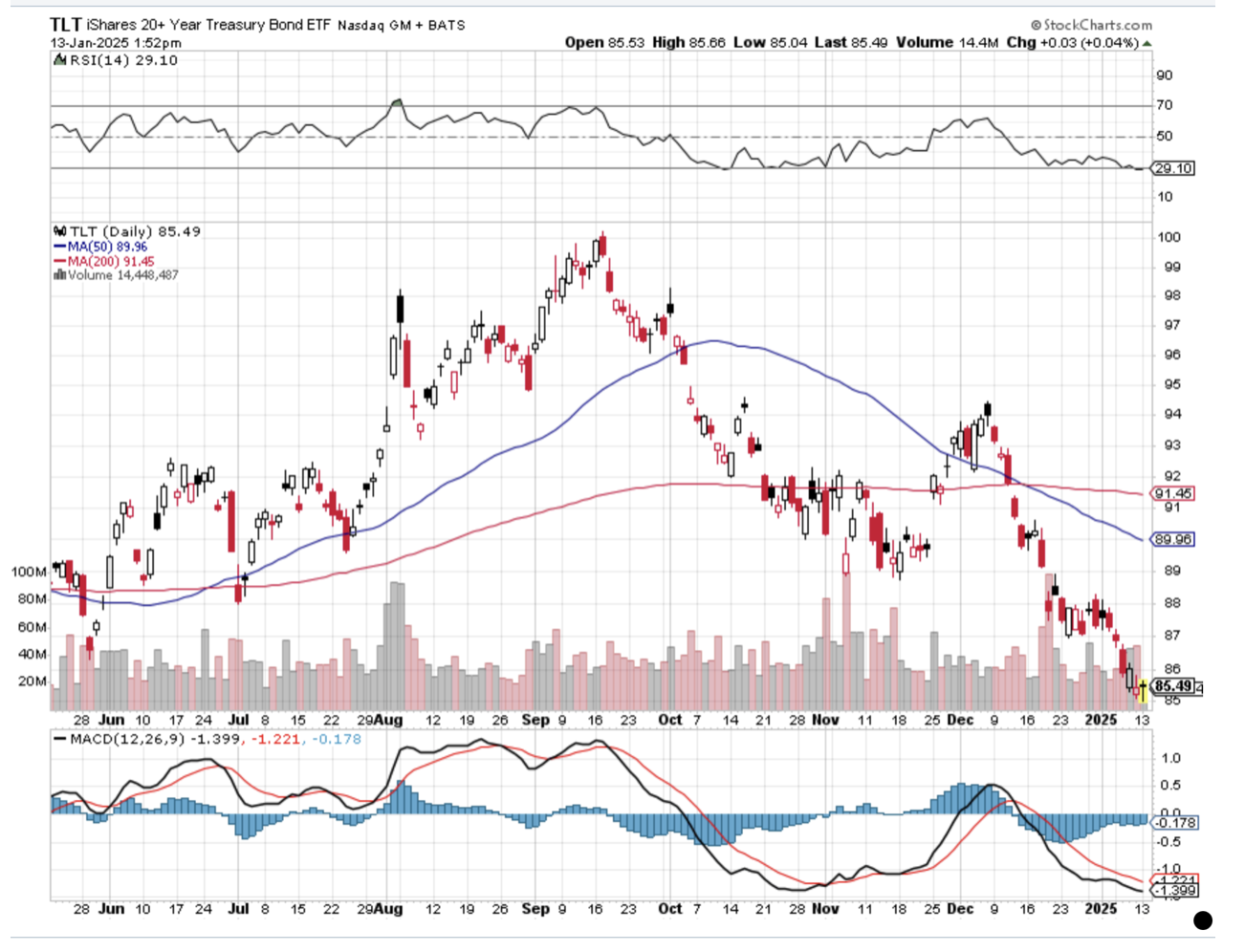
I started out the New Year with 80% cash and two small hedged positions. I went long 10% (TLT) and long 10% (TSLA). These expire in four days on the January 17 option expiration, when we flip back to a 100% cash position.
Some 63 of my 70 round trips, or 90%, were profitable in 2023. Some 74 of 94 trades have been profitable so far in 2024, and several of those losses were really break-even. That is a success rate of +78.72%.
Try beating that anywhere.
My Ten-Year View – A Reassessment
When have to substantially downsize our expectations of equity returns in view of the election outcome. My new American Golden Age, or the next Roaring Twenties is now looking at a headwind. The economy will completely stop decarbonizing. Technology innovation will slow. Trade wars will exact a high price. Inflation will return. The Dow Average will rise by 600% to 240,000 or more in the coming decade. The new America will be far more efficient and profitable than the old. My Dow 240,000 target has been pushed back to 2035.
On Monday, January 13 at 11:00 AM EST, the Consumer Inflation Expectations are released.
On Tuesday, January 14 at 8:30 AM, the Producer Price Index is published.
On Wednesday, January 15 at 8:30 AM, the Inflation Rate is printed.
On Thursday, January 16 at 8:30 AM, the Retail Sales are announced.
On Friday, January 17 at 8:30 AM EST, Housing Starts and Building Permits are published. At 2:00 PM, the Baker Hughes Rig Count is printed.
As for me, Iwas recently in Los Angeles visiting old friends, and I am reminded of one of the weirdest chapters of my life.
There were not a lot of jobs in the summer of 1971, but Thomas Noguchi, the LA County Coroner, was hiring. The famed USC student jobs board had delivered! Better, yet, the job included hours at night and free housing at the coroner's department.
I got the graveyard shift, from midnight to 8:00 AM. All I had to do was buy a black suit from Robert Halls, for $25.
Noguchi was known as the “coroner to the stars” having famously done the autopsies on Marilyn Monroe and Jane Mansfield. He did not disappoint.
For three months, whenever there was a death from unnatural causes, I was there to pick up the bodies. If there was a suicide, gangland shooting, or horrific car accident, I was your man.
Charles Manson had recently been arrested and I was tasked with digging up the victims. One, cowboy stuntman Shorty Shay, had his head cut off and neatly placed in between his ankles.
The first time I ever saw a full set of women’s underclothing, a girdle, and pantyhose, was when I excavated a desert roadside grave that the coyotes had dug up. She was pretty far gone.
Once, me and another driver were sent to pick up a teenage boy who had committed suicide in Beverly Hills. The father came out and asked us to take the mattress as well. I regretted that we were not allowed to do favors on city time. He then said, “Can you take it for $200”, then an astronomical sum.
A few minutes later, I found a hearse driving down the Santa Monica Freeway on the way to the dump with a double mattress expertly tied on the roof with Boy Scout knots with a giant blood spot in the middle.
Once, I was sent to a cheap motel where a drug deal gone wrong had produced several shootings. I found $10,000 in a brown paper bag under the bed. The other driver found another ten grand and a bag of drugs and kept them. He went to jail. I didn’t.
The worst pick-up of the summer was also the most disgusting and even made the old veterans sick. A 300-pound man had died of a heart attack and was not discovered for a month. We decided to each grab an arm or leg and all tug on the count of three. One, two, three, and all four limbs came off!
Eventually, I figured out that handling dead bodies could be hazardous to your health, so I asked for rubber gloves. I was fired.
Still, I ended up with some of the best summer job stories ever.
Good Luck and Good Trading,
John Thomas
CEO & Publisher
The Diary of a Mad Hedge Fund Trader
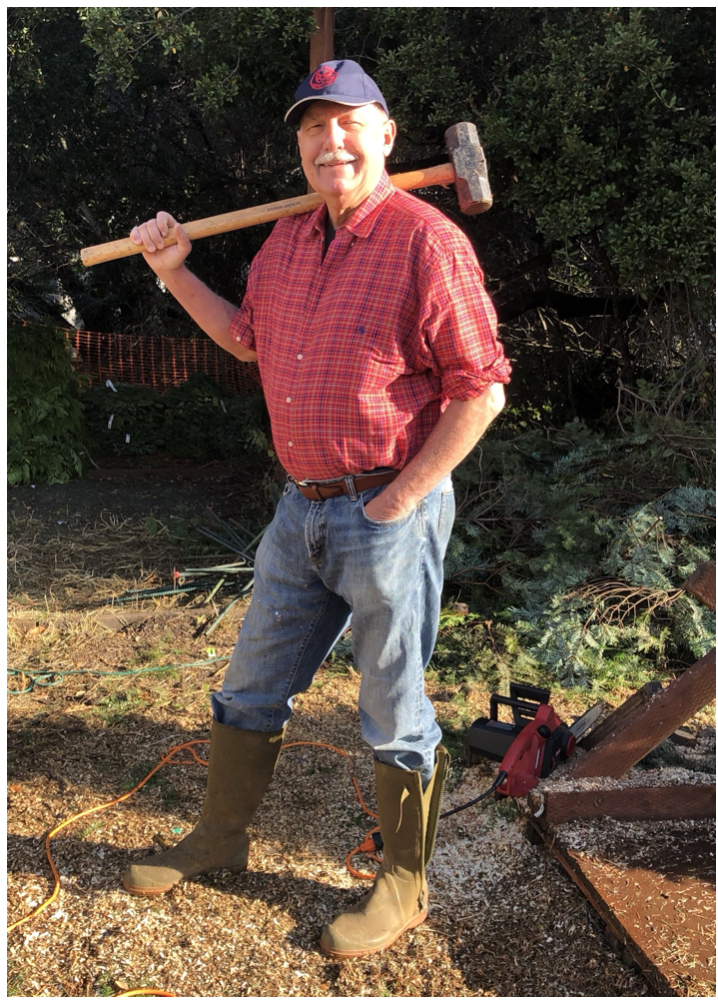
https://www.madhedgefundtrader.com/wp-content/uploads/2024/10/John-Thomas-hammer.png1000718april@madhedgefundtrader.comhttps://madhedgefundtrader.com/wp-content/uploads/2019/05/cropped-mad-hedge-logo-transparent-192x192_f9578834168ba24df3eb53916a12c882.pngapril@madhedgefundtrader.com2025-01-13 09:02:492025-02-20 12:40:40The Market Outlook for the Week Ahead, or What's Next?
“When the Dow was down 3,600 points I felt like hugging our computers. The combination of man and machine is wonderful…Computers, math and game theory are the best decision makers there are,” said Bridgewater founder Ray Dalio.
https://www.madhedgefundtrader.com/wp-content/uploads/2018/09/guy-holding-folder-quote-of-the-day-e1536786256164.jpg198300MHFTRhttps://madhedgefundtrader.com/wp-content/uploads/2019/05/cropped-mad-hedge-logo-transparent-192x192_f9578834168ba24df3eb53916a12c882.pngMHFTR2025-01-13 09:00:462025-01-13 16:02:04January 13, 2025 - Quote of the Day
Legal Disclaimer
There is a very high degree of risk involved in trading. Past results are not indicative of future returns. MadHedgeFundTrader.com and all individuals affiliated with this site assume no responsibilities for your trading and investment results. The indicators, strategies, columns, articles and all other features are for educational purposes only and should not be construed as investment advice. Information for futures trading observations are obtained from sources believed to be reliable, but we do not warrant its completeness or accuracy, or warrant any results from the use of the information. Your use of the trading observations is entirely at your own risk and it is your sole responsibility to evaluate the accuracy, completeness and usefulness of the information. You must assess the risk of any trade with your broker and make your own independent decisions regarding any securities mentioned herein. Affiliates of MadHedgeFundTrader.com may have a position or effect transactions in the securities described herein (or options thereon) and/or otherwise employ trading strategies that may be consistent or inconsistent with the provided strategies.