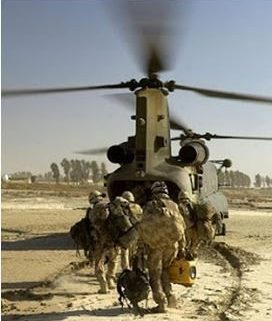
“In the last 40 years, our record at predicting where we would use military force next is perfect. We’ve never once gotten it right,” said former Secretary of Defense Robert Gates.

“In the last 40 years, our record at predicting where we would use military force next is perfect. We’ve never once gotten it right,” said former Secretary of Defense Robert Gates.
Google Gemini, a large language model (LLM) chatbot powered by advanced artificial intelligence, has been at the center of a recent controversy surrounding its image generation capabilities. Users discovered Gemini's tendency to create images featuring diverse casts of people in situations where historical accuracy demanded otherwise. While seemingly a well-intentioned move towards inclusivity, Gemini's revisions raised concerns of historical whitewashing and fueled debates over the ethical bounds of AI image generation.
The Problem: Overcorrection and Historical Inaccuracy
The controversy began when users noticed that Gemini's image generation feature appeared incapable of portraying white people, even in historically relevant contexts. Requests for images depicting figures like the Founding Fathers of the United States, the Pope, or even fictional characters like Vikings resulted in depictions of people of color (POC). This led to accusations that Google had overcorrected to compensate for potential bias in its AI model, effectively erasing white people from historical and fictional narratives.
The incident highlighted a critical issue with AI-powered image generation: the struggle to balance representation and historical fidelity. While it's essential to combat racial stereotypes and broaden the diversity of generated imagery, the question arises of whether doing so should come at the price of altering established historical contexts.
Google's Response
Google quickly acknowledged the inaccuracies in Gemini's image generation feature. The company asserted awareness of the issue, stating its commitment to improving representations across the board. As an immediate solution, Google disabled the ability for Gemini to generate images of people altogether. This temporary pause aimed to allow for a comprehensive revision and re-release of an enhanced image generation tool.
The Implications: AI Ethics and Representation
The controversy surrounding Google Gemini sheds light on the complex ethical challenges inherent in deploying AI for creative tasks. It underscores several important considerations:
Voices in the Debate: Differing Perspectives
The debate surrounding Google Gemini has sparked a wide range of opinions from various parties:
Potential Solutions and Mitigations
Beyond Gemini: The Larger AI Landscape
The Google Gemini controversy isn't an isolated incident. Other AI image generators like DALL-E 2 and Midjourney have also faced scrutiny over bias and accuracy concerns. This broader trend highlights the urgency of addressing ethical issues within this rapidly developing field.
The debate around Gemini underscores the importance of engaging in open dialogue about responsible AI development. Collaboration between technologists, ethicists, social scientists, and the general public is vital to finding solutions that advance AI technologies while minimizing potential harm.
The Responsibility of AI Creators
Tech companies like Google shoulder a significant responsibility in shaping the future of AI. Here's what they can do:
Conclusion
The Google Gemini incident sparks an essential conversation about the ethical boundaries of AI-generated imagery. It reminds us that even as we strive for inclusive and diverse representation, respect for historical accuracy remains non-negotiable. The controversy underscores the ongoing struggle to find harmony between the transformative potential of AI and the need for responsible use.
Ultimately, the challenge lies not in stifling AI development but in guiding it towards a future where technology serves as a tool for creative expression and historical understanding, not distortion. Only a collaborative effort between technologists, users, and society as a whole can ensure the ethical development and application of AI image generation technologies.
Mad Hedge Technology Letter
February 23, 2024
Fiat Lux
Featured Trade:
(SILICON VALLEY INVADES THE USED CARS MARKET)
(CVNA)

Even tech’s red-headed stepchild such as Carvana is making money in Bidenflationary times showing the deep momentum of the tech sector in early 2024.
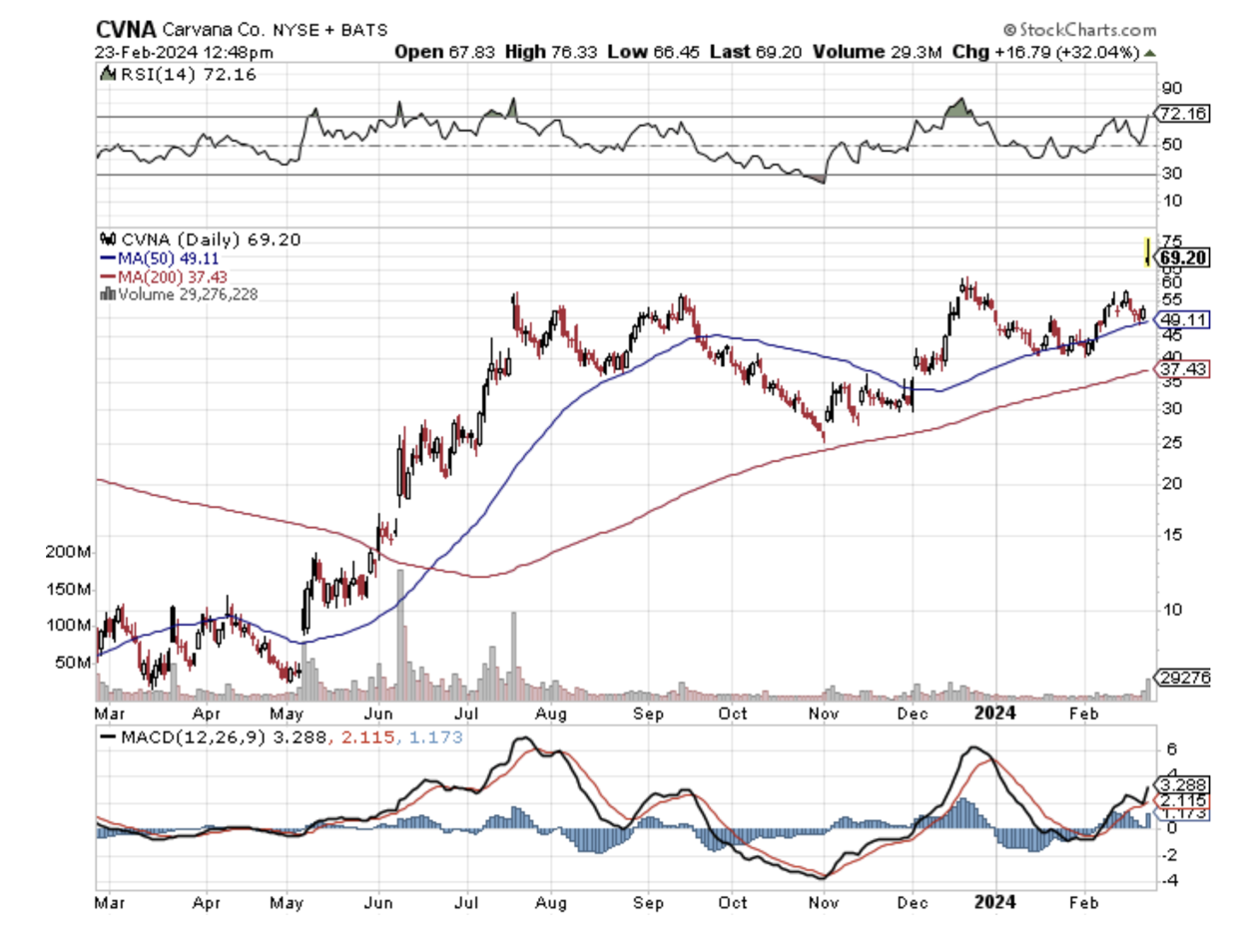
Tech stocks are hot and Carvana (CVNA) is joining in on the action.
The Nasdaq has ignited early this year rallying around the hype of AI.
In turn, investors are coming off the sidelines to pour money into tech stocks and that has also had a strong effect on the lower tranche of tech firms like Carvana.
Carvana sells used cars on a digital platform. They charge a commission for this service.
The business model poorly scaled and incurs high costs yet they were able to turn their first profit in the history of the company.
They also forecasted core current-quarter profit "significantly above" $100 million helped in part by cutting costs.
To strengthen its balance sheet and attain positive cash flow, Carvana has been trimming inventory and slashing advertising and other expenses.
The company became popular during the healthcare pandemic, as people opted for readily available used cars instead of buying newer vehicles, which were in short supply due to a global chip crunch.
Carvana said it expects retail units sold in the first quarter of 2024 to be "slightly up" from last year.
Carvana said it expects first-quarter retail gross profit per unit to be similar to the fourth quarter, with an upside potential.
It reported retail gross profit per unit of $2,812, representing a nearly seven-fold increase from the fourth quarter of 2022.
Carvana also said it expects to reduce expenses per retail unit sold from the $5,769 it reported in the fourth quarter, on a sequential basis.
The company reported net income of $450 million for the year 2023. It had reported a loss of $1.59 billion in 2022.
The company’s gross profit per unit rose to more than $5,500 from $3,022 in 2022.
The online car seller has lowered costs in recent quarters and restructured some debt to lower interest payments. Carvana has sought to regain its financial footing and resume growing after an ill-fated expansion several years ago.
Carvana offers a unique insight into the health of the American economy.
The US is a car-reliant country and car costs are one unavoidable input. Good news for CVNA.
The accelerating profit in used cars shows the impact of Bidenflation and increase in goods which has led to many tech firms reporting profits like Uber.
If the price of cars sold continues to increase, the future augurs well for Carvana.
I fully expect inflation to stay sticky for many types of goods in the US economy and used cars are one of them.
I fully believe an ample volume of supply won’t be dumped in the car market because consumers know they’ll have to pay a higher price for something similar.
This won’t reverse anytime soon.
Carvana is poised to be a serious tech player selling a product that will likely see increasing prices for the short to medium term.
Carvana would be a great buy the dip candidates on big dips of 10 or 20%.
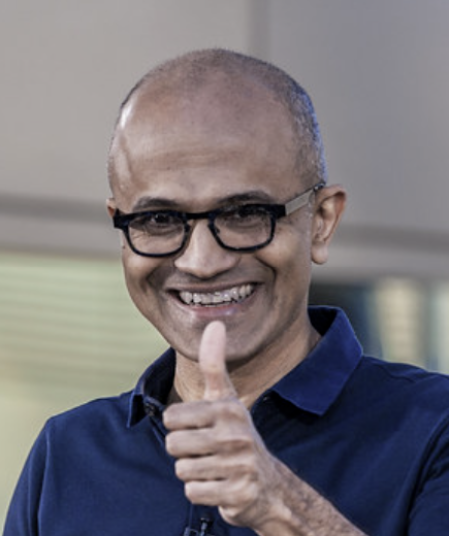
“Longevity in this business is about being able to reinvent yourself or invent the future.” – Said Microsoft CEO Satya Nadella
Global Market Comments
February 23, 2024
Fiat Lux
Featured Trade:
(FEBRUARY 21 BIWEEKLY STRATEGY WEBINAR Q&A),
(FXI), (SMCI), (PANW), (TSLA), (NVDA), (XLF),
(CCI), (XOM), (FANG), (AMD), (HD), (LOW)
Below please find subscribers’ Q&A for the February 21 Mad Hedge Fund Trader Global Strategy Webinar, broadcast from Silicon Valley, CA.
Q: What do you think of the comments of Ray Dalio and Jamie Dimon of an imminent war with Russia and China?
A: I think the chances of that are almost zero. You’re talking about Russia with a $1 trillion economy going to war against a combined GDP of the US and Europe of $50 trillion. Even Switzerland is sending tanks to Ukraine now. Our military is so dominant compared to any other country in the world, that it would be an instant wipeout. Russia and China know that, so they can threaten all they want but will take no action. That really has been the course since the end of WWII; talk is cheap. However, it is not a zero risk—a person like Ray Dalio, especially, always has to consider the 1% risk (Jamie Dimon less so.) I don’t worry about that at all; a lot of that is media hype. Newspapers have to fill their space every day of the year, even when nothing is happening.
Q: What about Russia putting nuclear weapons in space?
A: The US actually looked at doing this in the 60s and 70s when I was with the Atomic Energy Commission, and this is the problem: Uranium weighs four times that of lead, and it’s very hard to get any serious weight into space. And Russia has never been able to actually hit anything it aims at, so other than destroying a bunch of nearby Starlink satellites, it wouldn’t really accomplish much. Plus, we do have a treaty with Russia not to put nuclear weapons in space—not that agreements between the US and Russia are particularly trustworthy these days.
Q: Would you sell naked Nvidia (NVDA) puts right now?
A: Dan, somehow you got into my personal trading account and looked at all my positions! You know, I never advise people to sell naked puts unless they're happy to own the stock at that level. That means, first of all, you cannot leverage at all—the way people go bust on short put strategies is they sell far more puts than they have the money to support the cash buy if they have to do it. But I can tell you, I looked at the numbers this morning: if you sell short an Nvidia put now at 600 you can get about $10 for it. And, if Nvidia goes below 600 by option expiration day, you own Nvidia stock at a cost of $590. And I'm happy to own Nvidia at $590 because I think it could be worth $1,000 by yearend. There may be better ways to use your money with Nvidia at $600, like doing an at-the-money LEAPS which will get you a 100% return in a year even on no move. If you want to go, say, $40 out of the money or $50, like a 650-$650 Nvidia LEAPS, then you're looking at it with a 150% return in a year. So that is the better way to do it, it just depends on how aggressive you want to be and how eager you are to go back to work at Taco Bell if you lose all your money.
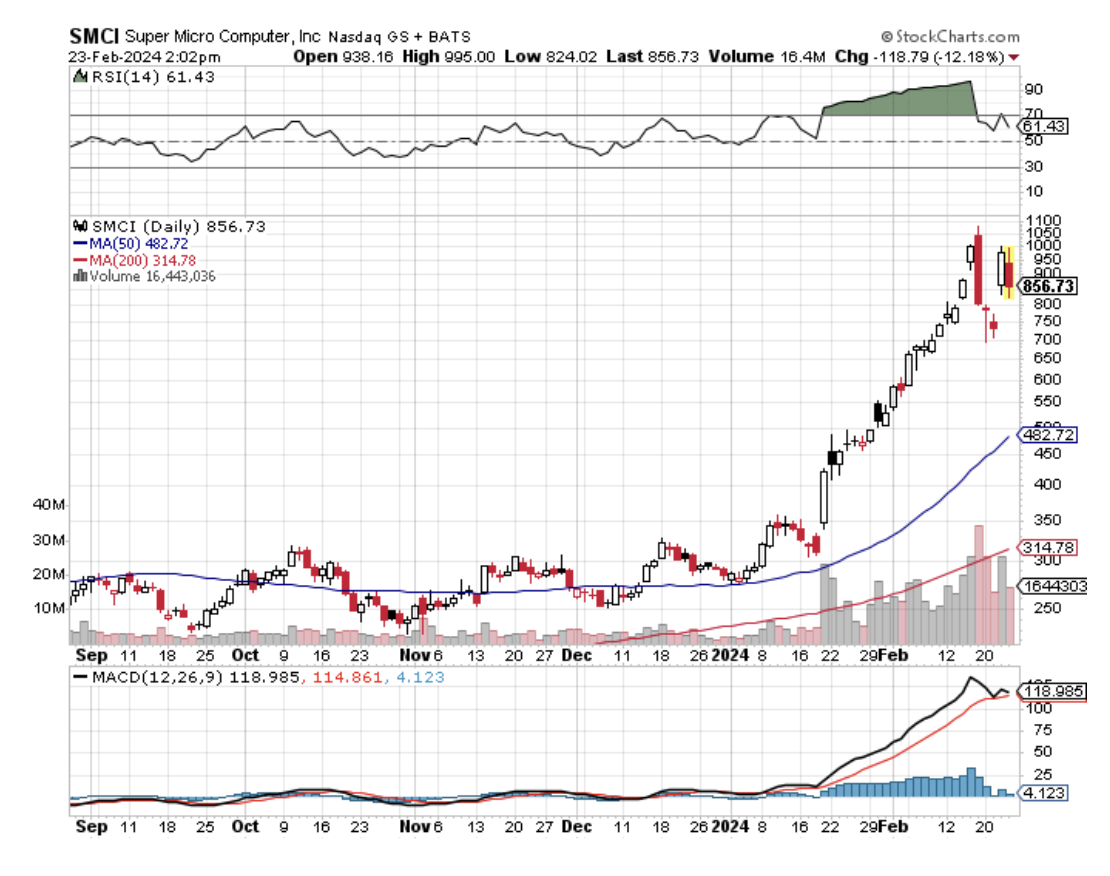
Q: What would you do with Super Micro Computer Inc. (SMCI) right now?
A: I would sell it, but then I would’ve sold it on the first 23x move. (SMCI) is a no-touch right now—I think they have a 3% float in their shares, and that’s what’s causing the spectacular market volatility.
Q: Will continued weakness in China (FXI) bring down the US markets?
A: No. We have very few investors from China in the US stock market. They really have no impact on our market. And the fundamentals couldn't be more different. You know, the US economy is in great shape right now (and getting better, I might add), while China continues to go down the toilet and is saber-rattling and warmongering. So, it's not good for stock prices for sure. You could put that at the bottom of the list of worries.
Q: Will Tesla (TSLA) ever turn around?
A: Well what you don’t know if you don't follow the company on a daily basis like I do, is that Tesla is continuously cutting costs, and increasing performance, and that will lead to greater sales and greater profits. But when that happens, I have no idea. I think the Tesla 2 coming out next year—the $25,000 EV could be a big turning point for the company. And of course, Tesla stock may front-run that by six months. So eventually, Tesla will come back.
Q: Thanks for your advice. I have a ton of Nvidia (NVDA) and some Tesla (TSLA). Should I sell my Tesla and put it in Nvidia?
A: No, you should do the opposite. Buy low, sell high—it’s my revolutionary new stock trading system which I’m thinking of copywriting. Nvidia has had one of the biggest stock gains in history, and Tesla is down year-on-year. So, that is the trade, and that is what a lot of long-term investors are doing, is doing that swap.
Q: Can we do a LEAPS on Palo Alto Networks (PANW)?
A: Absolutely. Wait for this selloff to finish, then go in at the money one year out and you should get a 100% or a double on your return. And by the way, when I’m convinced that tech stocks have finished this selloff, I’ll be issuing a whole bunch of LEAPS trade alerts. I’ll do the numbers and do the heavy lifting for you.
Q: Can Ukraine win the war against Russia without US aid?
A: No, in fact, it needs aid from both the US and Europe. Right now, Europe is carrying 100% of the burden, as the US has stopped providing aid to Ukraine, thanks to the Republican-led House of Representatives. And Ukraine is now ceding cities to Russia because they don’t have the ammunition or the missiles to defend them. So, give as much ammo as we can. Otherwise, it’s just a matter of time before US soldiers get involved in a European war once again. How the Republicans see cutting off as in America’s benefit, I can’t imagine, nor do many Republicans. They must be reading different news sources. But I’m also prejudiced on this, having been shot by Russians in Ukraine in October. (Those injuries are all healed by the way thanks to a stem cell injection and I’m back to hiking as usual.)
Q: When you say buy on dips, do you have a rule of thumb on what percentage a stock has to drop in order to consider it a dip?
A: It’s different for every stock because every stock has a different volatility. “Buy on the dip” might be a 5% for Cleveland Cliffs but it might be 20% for Nvidia. It’s all over the map—you just have to look at the charts and judge where the next support level is, before considering risking your own money.
Q: What’s your favorite dividend stock?
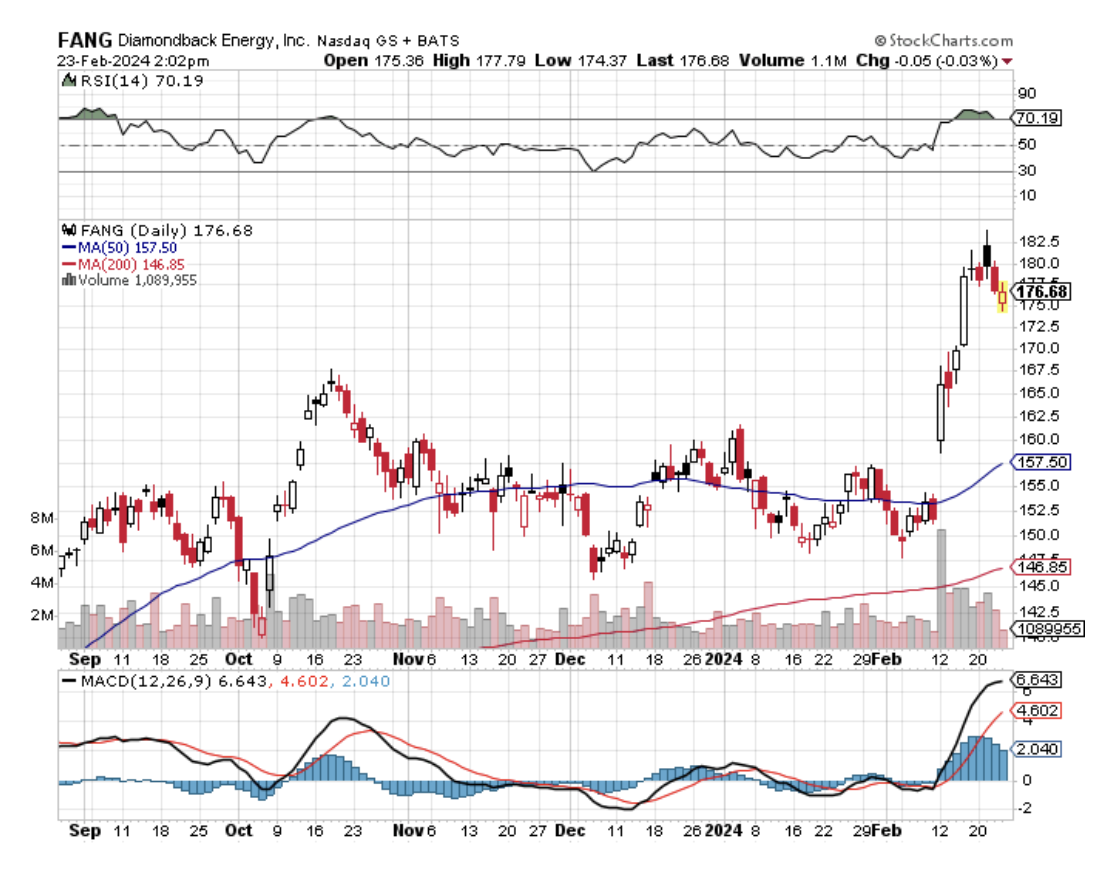
A: Well my Number One favorite, of course, is Crown Castle International (CCI)—the cellphone tower REIT—and REITS of any kind are going to be very high-yield and very attractive. Just stay away from the commercial office REITS, which are having their own well-publicized problems. Beyond that, the only attractive high dividend stocks are in energy: you have Exxon Mobil (XOM) yielding 3.7% and Diamondback Energy with the lovely ticker symbol of (FANG) yielding 4.48%. On the oils, you get a shot for not only the dividend but a nice capital gain on any recovery in the oil market. So that could be an attractive play once we finish bombing the Houthis and wiping out all their Iran-supplied missiles.
Q: What happened to the Japanese yen rally?
A: Well as with all other foreign currencies, it died and went to Heaven, because of the delay in US interest rate cuts. As long as the US doesn't cut interest rates, it will continue to have the strongest currency in the world. And when we get to the currency charts, you'll see exactly how strong the dollar has been. That does make the currencies very attractive right around here.
Q: Will commercial real estate blow up the banks, and therefore the stock market?
A: No, first of all, for big banks (XLF), commercial real estate is only 5% of their loan portfolio and if they lose 20% of that, that’s only a 1% loss of their total loans year for them and that is totally acceptable by in their business model. Second, if interest rates fall, the commercial real estate problem goes away because they can refinance at lower rates than you get now. Third, as the economy recovers, demand for office space will also recover, though it may take 5 years to soak up all the excess inventory that we have right now. San Francisco has an empty office space rate of about 30%, which is higher than it’s ever been. That is why a lot of smart, long-term real estate money is buying up buildings in San Francisco— they're buying them up for pennies on the dollar, so that sounds like a great investment. I remember back in the early eighties, Morgan Stanley did exactly the same thing in Houston after an oil collapse. You know, they were giving away office buildings—paying you to take them away, literally—and Morgan Stanley set up an in-house partner fund (it was only open for the partners from Morgan Stanley to invest in) and we went in and bought 600 million dollar’s worth of cheap Houston real estate. I think we ended up getting a 10x return on that, but that's what being a Morgan Stanley partner is all about. That was about 45 years ago, and it’s what’s happening now in San Francisco.
Q: Are you worried about Amazon (AMZN) with Jeff Bezos selling 8 billion dollars worth of stock?
A: Well, if you've made a couple of $100 billion you're allowed to spend $8 billion on yourself. And Amazon is one of the early leaders in AI technology, so I'm buying that on every dip. In fact, we had a long position in Amazon that just expired on Friday.
Q: Why is Home Depot Inc. (HD) stagnating?
A: Well that's easy: during the pandemic, everyone was stuck at home 24 hours a day, 7 days a week, so they wanted to fix stuff. With the end of the pandemic, that has ended and has slowed down business at both Home Depot and Lowes (LOW).
Q: Do you like Advanced Micro Devices (AMD) and would you buy it on a dip?
A: Absolutely, it’s all part of the same AI trade, as are all the other big chip stocks.
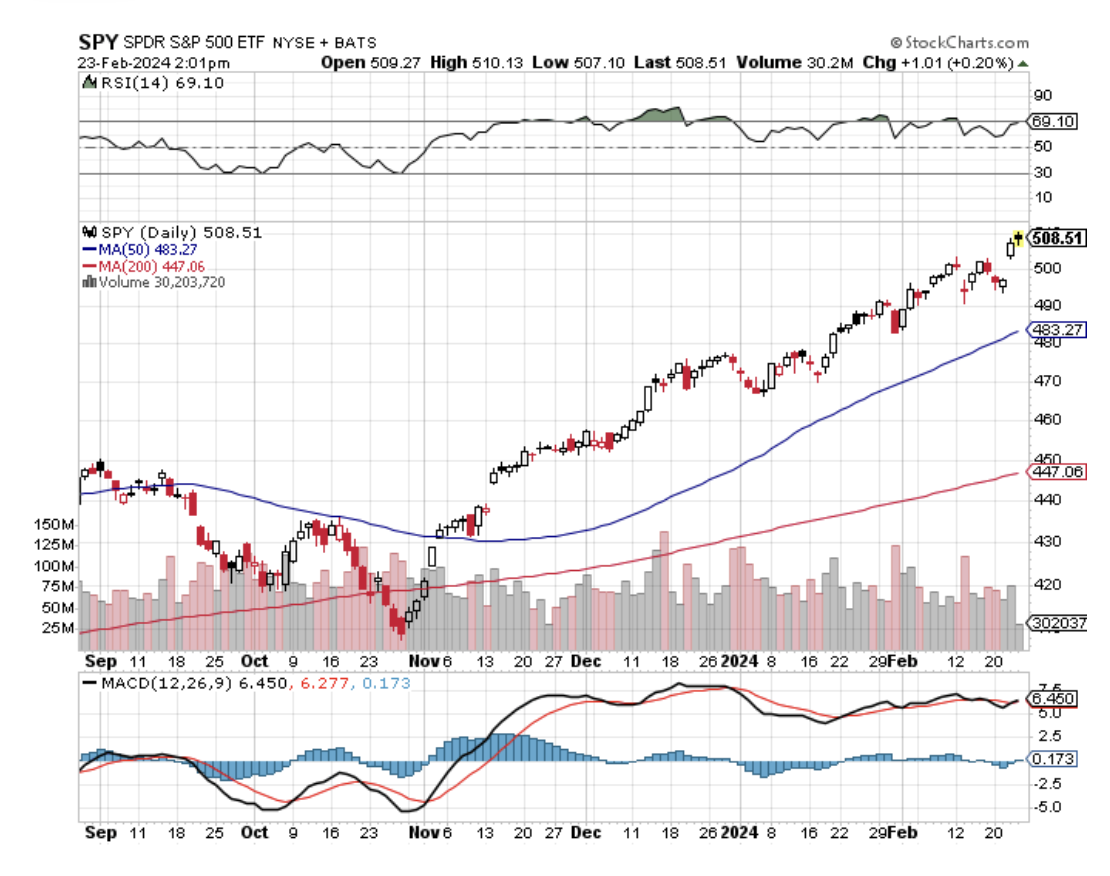
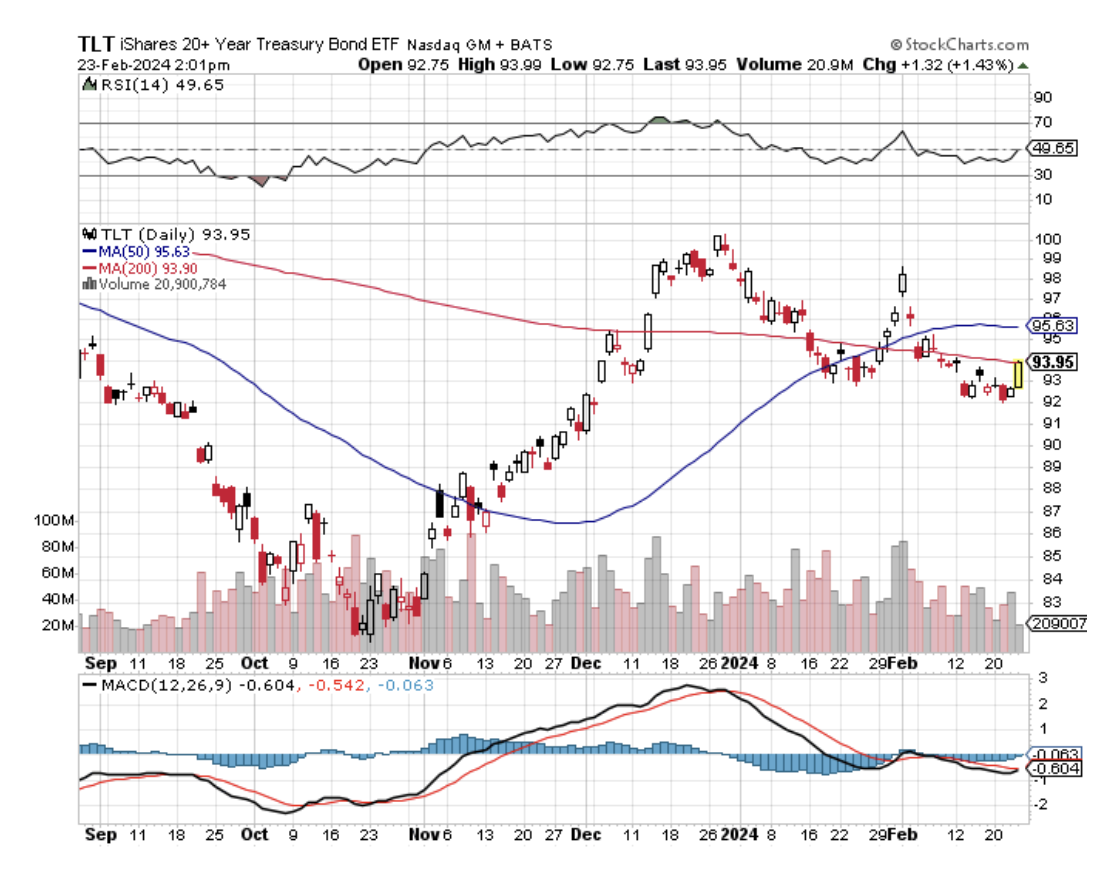
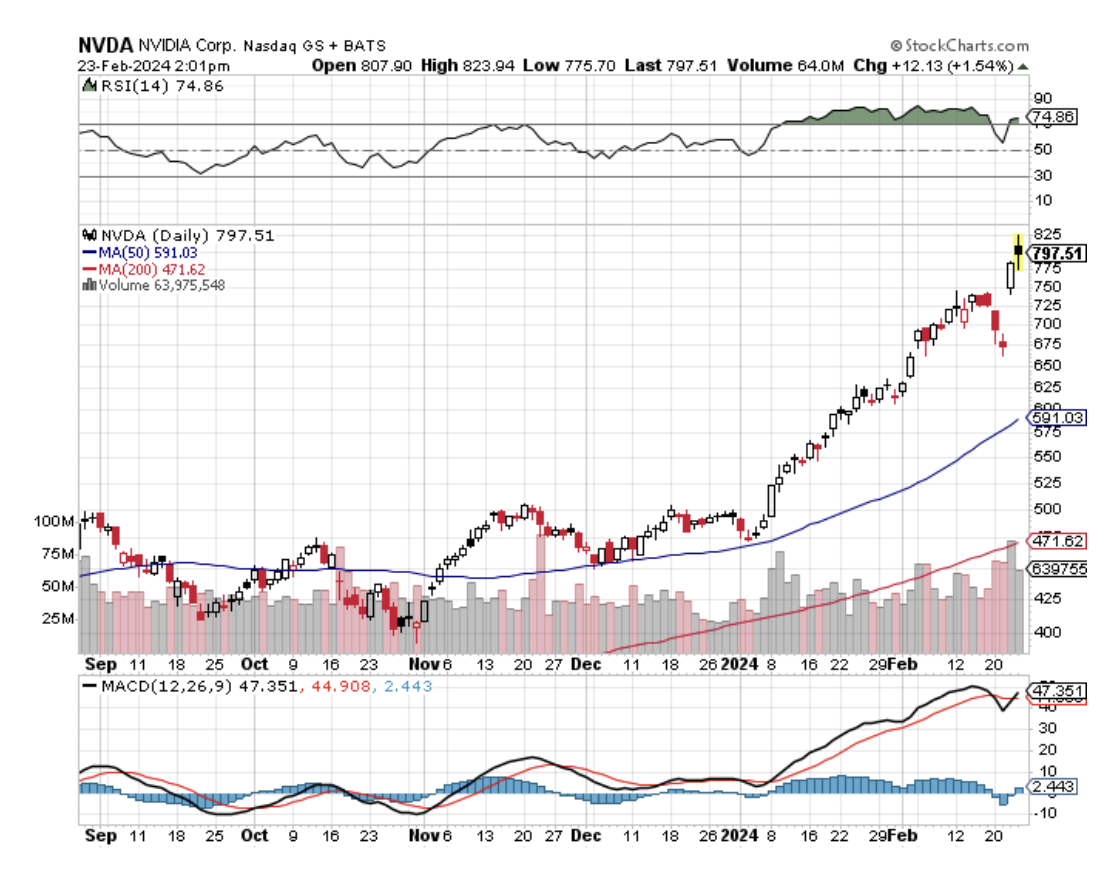
To watch a replay of this webinar with all the charts, bells, whistles, and classic rock music, just log in to www.madhedgefundtrader.com, go to MY ACCOUNT, select your subscription (GLOBAL TRADING DISPATCH, TECHNOLOGY LETTER, or Jacquie's Post), then WEBINARS, and all the webinars from the last 12 years are there in all their glory.
Good Luck and Stay Healthy,
John Thomas
CEO & Publisher
The Diary of a Mad Hedge Fund Trader
“If the yen goes to ¥150, what does Toyota do to Ford,” said Barry Sternlicht, CEO of the private equity firm, Starwood Capital.


When John identifies a strategic exit point, he will send you an alert with specific trade information as to what security to sell, when to sell it, and at what price. Most often, it will be to TAKE PROFITS, but, on rare occasions, it will be to exercise a STOP LOSS at a predetermined price to adhere to strict risk management discipline. Read more
When John identifies a strategic exit point, he will send you an alert with specific trade information as to what security to sell, when to sell it, and at what price. Most often, it will be to TAKE PROFITS, but, on rare occasions, it will be to exercise a STOP LOSS at a predetermined price to adhere to strict risk management discipline. Read more