• support@madhedgefundtrader.com
  • Member Login
Mad Hedge Fund Trader
  • Home
  • About
  • Store
  • Luncheons
  • Testimonials
  • Contact Us
  • Click to open the search input field Click to open the search input field Search
  • Menu Menu
Mad Hedge Fund Trader

Short-Term Stumbles

Tech Letter

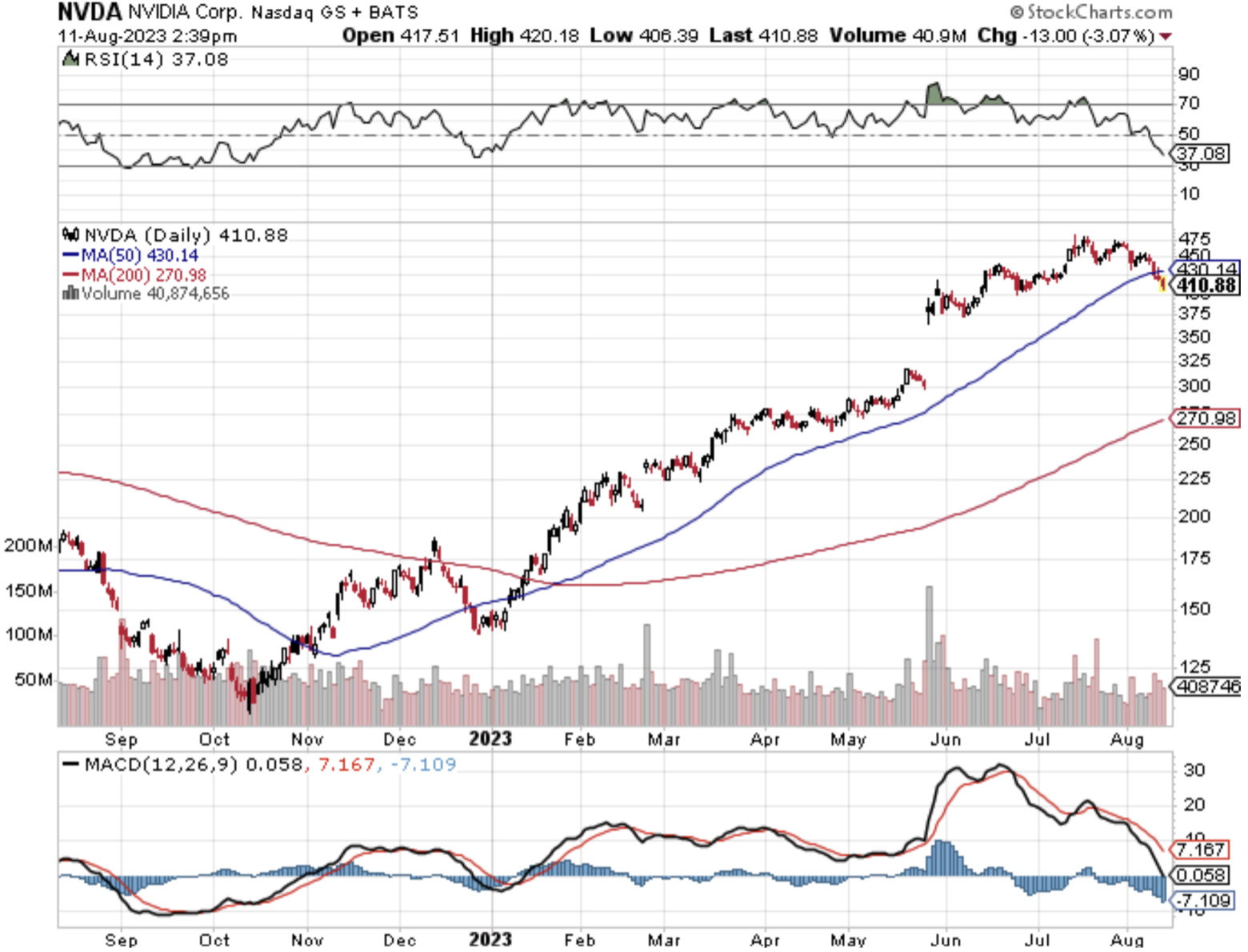
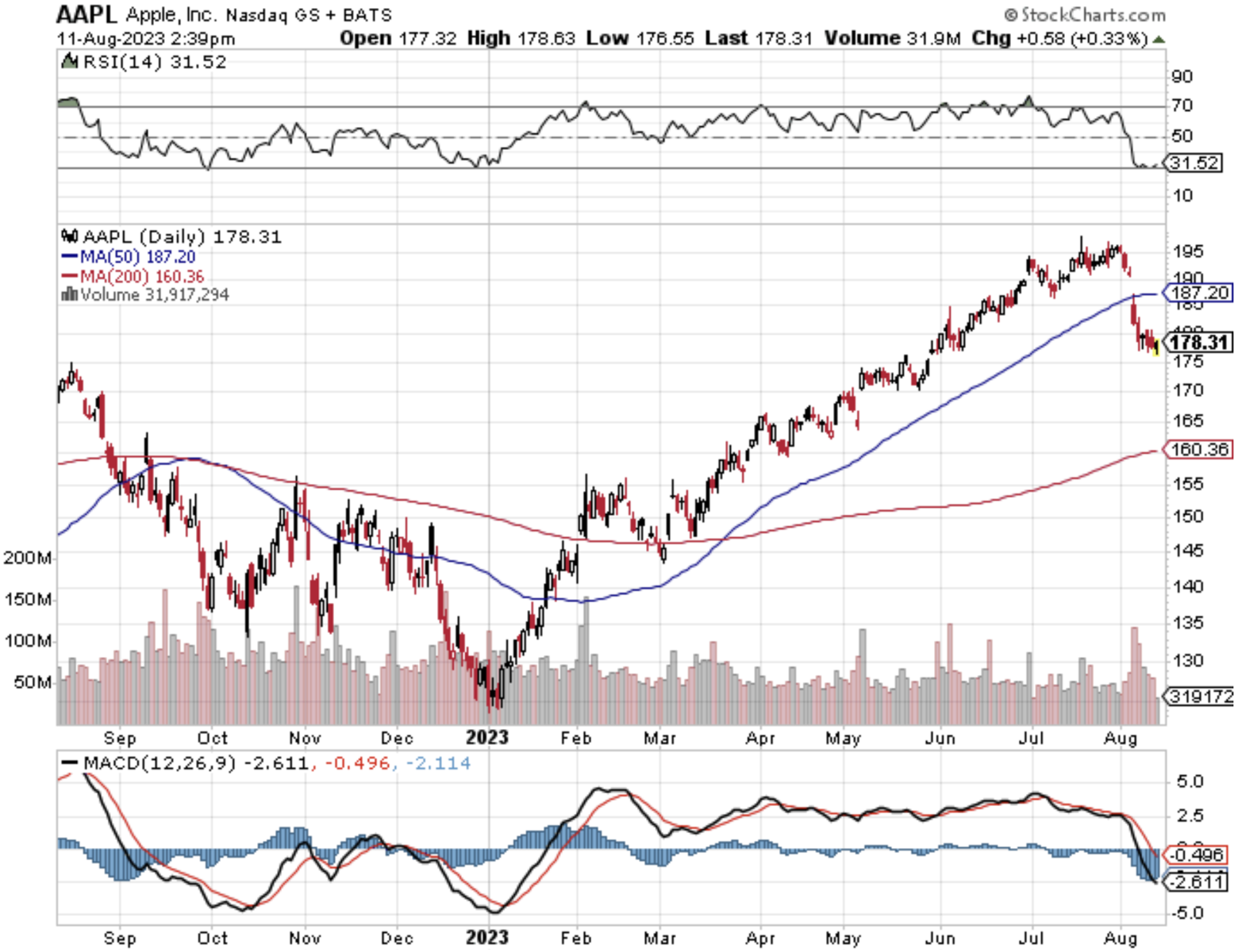
When Apple and Nvidia go, so does the Nasdaq.

That’s why tech shares have been relatively impotent the past few weeks as Apple, again, revealed they don’t have much more than the iPhone.

This has spooked tech shares.

Combine the lack of innovation from Apple with the scares of Nvidia not being able to sell their chips in China as Washington clamps down on China’s ability to procure semiconductor products, and there you have it.

Growth fears from the biggest and best tech companies mean that as a sector, the Nasdaq shares pull back and investors are feeling the pain.

Apple is experiencing a slowdown in the smartphone market, but will the presumed iPhone 15 release in September change that for Apple?

NVDA shares surged by over 200% year-to-date in 2023 and replicating that for the back half of the year is almost impossible.

A continued drop in Apple’s overall revenue suggests that investors demand Apple to pull another cat out of the hat and at some point find something new.

A bout of inertia from management could force investors to look elsewhere with their capital allocation strategy.

Services did have a good quarter, but moving forward, what is their grand plan?

What does that mean then for this quarter as well as the next quarter, when we get the presumed iPhone 15?

It's something that Apple is going to have to answer once those phones are revealed in September.

They're going to have to have stellar features and not just the same groundhog day with a different color lock screen.

New cameras, new processor, basically looks the same. So can Apple really push the envelope enough to get people back into stores, back online, and picking up their products?

Take what I just said about the iPhone and apply it to the iPad and the Mac businesses too.

It is an industry-wide trend where people bought their PCs or laptops during the government-mandated lockdowns.

Now they just don't need another new one. And so we're seeing that from manufacturers to chip makers as well.

Beyond Apple, what about Nvidia?

There was a massive run-up on NVDA shares throughout the year. And now the question is, can they keep it rolling?

NVIDIA is a unique company when it comes to the AI space. They produce chips that nobody else can. They've perfected this over decades. They made the bet several years ago, and now it's really paying off for them.

Also, what happens when companies, this kind of hyperscaler companies, go out and begin putting their own chips into their own servers?

We know that Microsoft is working on it, Google is working on it, Amazon's working on it; Tesla has their own supercomputer that they're building with their own chips.

They already use NVIDIA as well and Elon Musk had said, look, we'll order as many as we can.  

I don’t believe that will bite Nvidia in the short term, but it’s definitely a long-term risk.

As long as Nvidia produces the quality required to stay ahead of the competition, the stock market will pick back up after it has time to digest the rally in the first half of the year.

Ultimately, these are great companies, but faster than we know it, solutions are demanded for structural problems.
 

apple nvidia


https://madhedgefundtrader.com/wp-content/uploads/2019/05/cropped-mad-hedge-logo-transparent-192x192_f9578834168ba24df3eb53916a12c882.png 0 0 Mad Hedge Fund Trader https://madhedgefundtrader.com/wp-content/uploads/2019/05/cropped-mad-hedge-logo-transparent-192x192_f9578834168ba24df3eb53916a12c882.png Mad Hedge Fund Trader2023-08-11 15:02:582023-08-25 17:30:45Short-Term Stumbles
Mad Hedge Fund Trader

Quote of the Day - August 11, 2023

Tech Letter

“When something is important enough, you do it even if the odds aren't in your favor.” – Said Tesla CEO Elon Musk


https://www.madhedgefundtrader.com/wp-content/uploads/2022/12/elon-musk-e1696019090338.png 372 380 Mad Hedge Fund Trader https://madhedgefundtrader.com/wp-content/uploads/2019/05/cropped-mad-hedge-logo-transparent-192x192_f9578834168ba24df3eb53916a12c882.png Mad Hedge Fund Trader2023-08-11 15:00:532023-08-11 16:26:07Quote of the Day - August 11, 2023
Mad Hedge Fund Trader

August 11, 2023

Jacque's Post


(WHAT’S HAPPENING AT ROBLOX AND PAYPAL?)

August 11, 2023


Hello everyone,

Roblox gets punished after the earnings report.
Roblox stock took the lift down yesterday after its latest earnings report, giving up almost all the gains it had made so far this year. The videogame-platform company’s issues with managing costs, and uncertainty over its timeline to increasing profitability are posing problems for the market.

Roblox stock (RBLX) dropped 22% after it reported a bigger quarterly earnings loss than expected. The shares were staging only a small recovery on Thursday, up 2% in premarket trading.

That leaves Roblox stock only marginally up in 2023 so far, and down 26% over the last three months. There is growing apprehension over its ability to cut costs and increase its earnings margin.

Roblox executives are pinning their hopes on the launch of its new advertising platform which they hope will help grow its income ahead of expenses in coming quarters.

Roblox is one of my son’s favourite places to hang out with his friends. He designs environments here and plays competitive games as well. The creative digital worlds are designed with all age groups in mind. No one is ever too old to play here.


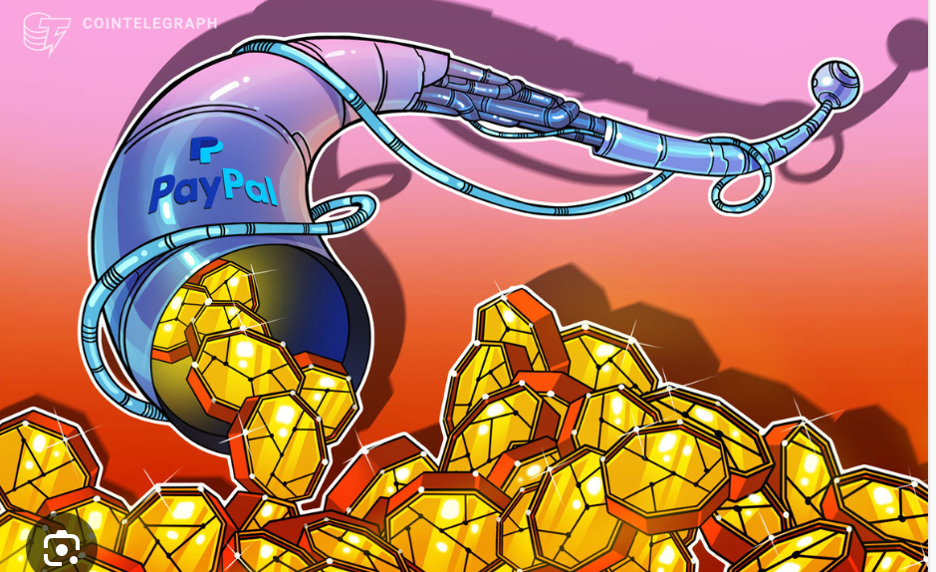
PayPal launches U.S.$ stable coin (PYUSD).

PayPal USD is designed to contribute to the opportunity stable coins offer for payments and is 100% backed by U.S. dollar deposits, short-term U.S. Treasuries, and similar cash equivalents. PayPal USD is redeemable 1:1 for U.S. dollars and is issued by Paxos Trust Company.

From early August onwards, eligible U.S. PayPal customers who purchase PayPal USD will be able to:

Transfer PayPal USD between PayPal and compatible external wallets
Send person-to-person payments using PYUSD.
Fund purchases with PayPal USD by selecting it at checkout.
Convert any of PayPal’s supported cryptocurrencies to and from PayPal USD.

Dan Schulman, president, and CEO of PayPal states that the “shift toward digital currencies requires a stable instrument that is both digitally native and easily connected to fiat currency like the U.S.$.” Furthermore, Schulman argues that “our commitment to responsible innovation and compliance, and our track record delivering new experiences to our customers, provides the foundation necessary to contribute to the growth of digital payments through PayPal USD.”


Brief market update:

Nasdaq could reach 4400 or even 4200 before it rallies again into the end of the year. A buyer’s market at the aforementioned levels.

Euro, Pound Sterling, Aussie dollar, and Kiwi dollar may face significant downside in the weeks ahead.

Gold could get down to 1880 before rallying to new highs.

Wishing you all a great weekend.

Cheers,

Jacquie


https://madhedgefundtrader.com/wp-content/uploads/2019/05/cropped-mad-hedge-logo-transparent-192x192_f9578834168ba24df3eb53916a12c882.png 0 0 Mad Hedge Fund Trader https://madhedgefundtrader.com/wp-content/uploads/2019/05/cropped-mad-hedge-logo-transparent-192x192_f9578834168ba24df3eb53916a12c882.png Mad Hedge Fund Trader2023-08-11 10:00:342023-08-11 10:31:28August 11, 2023
Mad Hedge Fund Trader

August 11, 2023

Diary, Newsletter, Summary

Global Market Comments
August 11, 2023
Fiat Lux

Featured Trades:

(THE DEATH OF THE FINANCIAL ADVISOR)


CLICK HERE to download today's position sheet.

https://madhedgefundtrader.com/wp-content/uploads/2019/05/cropped-mad-hedge-logo-transparent-192x192_f9578834168ba24df3eb53916a12c882.png 0 0 Mad Hedge Fund Trader https://madhedgefundtrader.com/wp-content/uploads/2019/05/cropped-mad-hedge-logo-transparent-192x192_f9578834168ba24df3eb53916a12c882.png Mad Hedge Fund Trader2023-08-11 09:04:372023-08-11 21:13:08August 11, 2023
Mad Hedge Fund Trader

The Death of the Financial Advisor

Diary, Newsletter

About one-third of my readers are professional financial advisors who earn their crust of bread telling clients how to invest their retirement assets for a fixed fee.

They used to earn a share of the brokerage fees they generated. After stock commissions went to near zero, they started charging a flat 1.25% a year on the assets they oversaw.

So it is with some sadness that I have watched this troubled industry enter a long-term secular decline which seems to be worsening by the day.

Some miscreants steered clients into securities solely based on the commissions they earned, which could reach 8% or more, whether it made any investment sense or not. Some of the instruments they recommended were nothing more than blatant rip-offs.

Knowing hundreds of financial advisors personally, I can tell you that virtually all are hardworking professionals who go the extra mile to safeguard customer assets while earning incremental positive returns.

That is no easy task given the exponential speed with which the global economy is evolving. Yesterday’s “widow and orphans” safe bets can transform overnight into today’s reckless adventure.

Look no further than coal, energy, and the auto industry. Once a mainstay of conservative portfolios, all of these sectors have, or came close to filing for bankruptcy two years ago. 

Even my own local power utility, Pacific Gas & Electric Company (PGE), filed for chapter 11 in 2019 because they couldn’t handle the liability created by massive wildfires.

Some advisors even go the extent of scouring the Internet for a trade mentoring service that can ease their burden, like the Diary of a Mad Hedge Fund Trader, to get their clients that extra edge.

Traditional financial managers have been under siege for decades.

Commissions have been cut, expenses increased, and mysterious “fees” have started showing up on customer statements.

Those who work for big firms, like UBS, Morgan Stanley, Goldman Sacks, Merrill Lynch, and Charles Schwab, have seen health insurance coverage cut back and deductibles raised.

The safety of custody with big firms has always been a myth. Remember, all of these guys would have gone under during the 2008-09 financial crash if they hadn’t been bailed out by the government. It will happen again.

The quality of the research has taken a nosedive, with sectors, like small caps, no longer covered.

What remains offers nothing but waffle and indecision. Many analysts are afraid to commit to a real recommendation for fear of getting sued, or worse, scaring away lucrative investment banking business.

And have you noticed that after Dodd-Frank, two-thirds of a brokerage report is made up of disclosures?

Many advisors have, in fact, evolved over the decades from money managers to asset gatherers and relationship managers.

Their job is now to steer investors into “safe” funds managed by third parties that have to carry all of the liability for bad decisions (buying energy plays in 2014?).

The firms have effectively become toll-takers, charging a commission for anything that moves.

They have become so risk-averse that they have banned participation in anything exotic, like options, option spreads, (VIX) trading, any 2X leveraged ETFs, or inverse ETFs of any kind. When dealing in esoterica is permitted, the commissions are doubled.

Even my own newsletter has to get compliance review before it is distributed to clients, often provided by third parties to smaller firms.

“Every year they try to chip away at something”, one beleaguered advisor confided to me with despair.

Big brokers often hype their own services with expensive advertising campaigns that unrealistically elevate client expectations.

Modern media doesn’t help either.

I can’t tell you how many times I have had to convince advisors not to dump all their stocks at a market bottom because of something they heard on TV, saw on the Internet, or read in a competing newsletter warning that financial Armageddon was imminent.

Customers are force-fed the same misinformation. One of my main jobs is to provide advisors with the fodder they need to refute the many “end of the world” scenarios that seem to be in continuous circulation.

In fact, a sudden wave of such calls has proven to be a great “bottoming” indicator for me.

Personally, I don’t expect to see another major financial crisis until 2032 at the earliest, and by then, I’d probably be dead.

Because of all of the above, about half of my financial advisor readers have confided in me a desire to go independent in the near future, if they are not already.

Sure, they won’t be ducking all these bullets. But at least they will have an independent business they can either sell at a future date or pass on to a succeeding generation.

Overheads are far easier to control when you own your own business, and the tax advantages can be substantial.

A secular trend away from non-discretionary to discretionary account management is a decisive move in this direction.

There seems to be a great separation of the wheat from the chaff going on in the financial advisory industry.

Those who can stay ahead of the curve, both with the markets and their own business models, are soaking up all the assets. Those that can’t are unable to hold on to enough money to keep their businesses going.

Let’s face it, in the modern age, every industry is being put through a meat grinder. Thanks to hyper-accelerating technology, business models are changing by the day.

Just be happy you’re not a doctor trying to figure out Obamacare.

Those individuals who can reinvent themselves quickly will succeed. Those that won’t, will quickly be confined to the dustbin of history.

Financial Advisor

It’s Not as Easy as It Looks

https://www.madhedgefundtrader.com/wp-content/uploads/2016/05/Financial-Advisor.jpg 373 424 Mad Hedge Fund Trader https://madhedgefundtrader.com/wp-content/uploads/2019/05/cropped-mad-hedge-logo-transparent-192x192_f9578834168ba24df3eb53916a12c882.png Mad Hedge Fund Trader2023-08-11 09:02:412023-08-11 21:13:23The Death of the Financial Advisor
Mad Hedge Fund Trader

August 10, 2023

Biotech Letter

Mad Hedge Biotech and Healthcare Letter
August 10, 2023
Fiat Lux

Featured Trade:

(INVESTING IN A KING)
(ABBV), (JNJ), (LLY)

https://madhedgefundtrader.com/wp-content/uploads/2019/05/cropped-mad-hedge-logo-transparent-192x192_f9578834168ba24df3eb53916a12c882.png 0 0 Mad Hedge Fund Trader https://madhedgefundtrader.com/wp-content/uploads/2019/05/cropped-mad-hedge-logo-transparent-192x192_f9578834168ba24df3eb53916a12c882.png Mad Hedge Fund Trader2023-08-10 15:02:402023-08-10 15:27:23August 10, 2023
Mad Hedge Fund Trader

Investing In A King

Biotech Letter

The Dividend Aristocrats Club is a badge of honor for those S&P 500 stocks that have managed to increase their dividends for at least 25 consecutive years. But let's take a closer look because there's an even more exclusive club worth our attention.

Introducing the Dividend Kings, the unsung heroes of the dividend world. No need to be part of the S&P 500; these select few must achieve at least 50 consecutive years of dividend growth. That's a feat as impressive as running an investment marathon and crossing the finish line with energy to spare!

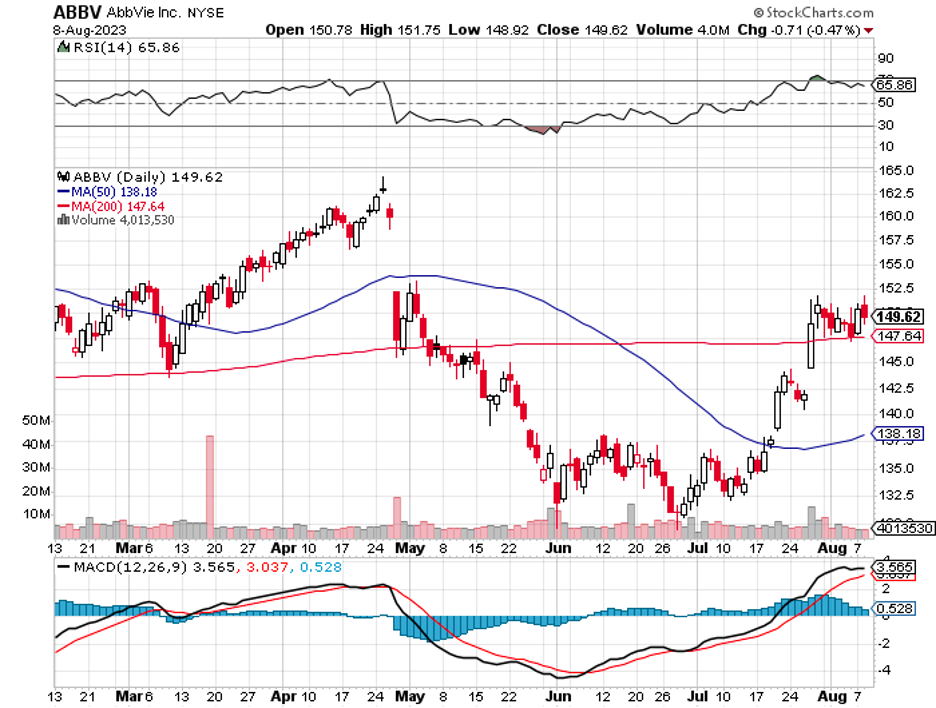
Among them? AbbVie (ABBV), is a name synonymous with financial resilience. Let's explore why this Dividend King is attracting the attention of savvy income investors.

AbbVie, with 51 years of dividend growth, has a strong financial footprint. It is the fifth-largest pharmaceutical company worldwide, with a market capitalization of $260 billion. It ranks just behind industry giants such as Johnson & Johnson (JNJ) and Eli Lilly (LLY). Its pharmaceutical line-up serves over 62 million patients annually, combating conditions like cancer and migraines.

Now, let's not overlook some recent financial trends. AbbVie recorded $13.9 billion in net revenue during the second quarter, a 4.9% drop from last year, but the net revenue only fell by 4.2% when considering currency fluctuations. A stumble? Perhaps. A fall? Not quite. This Dividend King may have more to reveal.

However, it is essential to remain grounded in reality. After all, even giants face their day of reckoning.

AbbVie's Humira, a drug that generated $200 billion over the last 10 years, lost its exclusive patent in January 2023. Biosimilar competition led Humira's total revenue to shrink by 25.2% in the second quarter.

The company’s non-GAAP diluted earnings per share (EPS) dipped by 13.6% year over year to $2.91 for the second quarter. The company's non-GAAP net margin contracted by nearly 390 basis points year over year.

Clearly, the era of Humira's dominance as the top-selling medication in history is slowly coming to an end, paving the way for a future where its sales will be reduced. A tough pill to swallow, no doubt, but it's not all gloom at AbbVie's camp.

In 2022, Humira's global sales peaked at $21.2 billion. The emergence of biosimilar versions like Amjevita from Amgen has seen global Humira sales slide to $16 billion in the second quarter. However, AbbVie is managing the decline with rapidly increasing sales from newly launched drugs.

Promising medicines such as Skyrizi, Rinvoq, Botox Therapeutic, Vraylar, and Venclexta continue to offset the withering Humira sales, with solid growth prospects in other areas and a pipeline full of potential.

These new drugs appear ready to replace the shrinking Humira revenue. With other growth drivers like Epkinly and Vraylar, AbbVie looks well-positioned for the long term.

Additionally, with a strong $23.5 billion free cash flow over the past 12 months and needing just 43% of that amount to meet its dividend commitments, the company's 4% yield remains appealing to income investors.

The decline of Humira's sales is significant but hardly a death knell for AbbVie. The company has shown resilience and adaptability, balancing both growth and income potential.

While the potential risk of a recession could disrupt these trends, AbbVie's 50-plus-year record of increased dividends suggests historical resilience.

With moderate annual dividend growth likely, and a strong foundation for future development, AbbVie represents a compelling buy for investors. The figures and financials paint a picture of opportunity; now it's time to consider whether AbbVie fits into your investment portfolio.

Remember, the crown of a Dividend King is not easily earned, and AbbVie's financial performance showcases a royal opportunity worth exploring.


abbvie dividend

https://madhedgefundtrader.com/wp-content/uploads/2019/05/cropped-mad-hedge-logo-transparent-192x192_f9578834168ba24df3eb53916a12c882.png 0 0 Mad Hedge Fund Trader https://madhedgefundtrader.com/wp-content/uploads/2019/05/cropped-mad-hedge-logo-transparent-192x192_f9578834168ba24df3eb53916a12c882.png Mad Hedge Fund Trader2023-08-10 15:00:482023-08-24 20:46:38Investing In A King
Mad Hedge Fund Trader

August 10, 2023

Diary, Newsletter, Summary

Global Market Comments
August 10, 2023
Fiat Lux

Featured Trades:

(WEDNESDAY, SEPTEMBER 6, 2023 SAN DIEGO, CALIFORNIA GLOBAL STRATEGY LUNCHEON)
(HOW TO GAIN AN ADVANTAGE WITH PARALLEL TRADING),
(GM), (F), (TM), (NSANY), (DDAIF), BMW (BMWYY), (VWAPY),
(PALL), (GS), (EZA), (CAT), (CMI), (KMTUY),
(KODK), (SLV), (AAPL)


CLICK HERE to download today's position sheet.

https://madhedgefundtrader.com/wp-content/uploads/2019/05/cropped-mad-hedge-logo-transparent-192x192_f9578834168ba24df3eb53916a12c882.png 0 0 Mad Hedge Fund Trader https://madhedgefundtrader.com/wp-content/uploads/2019/05/cropped-mad-hedge-logo-transparent-192x192_f9578834168ba24df3eb53916a12c882.png Mad Hedge Fund Trader2023-08-10 09:06:192023-08-10 13:54:28August 10, 2023
Mad Hedge Fund Trader

How to Gain an Advantage with Parallel Trading

Diary, Newsletter, Research

One of the most fascinating things I learned when I first joined the equity trading desk at Morgan Stanley during the early 1980s was how to parallel trade.

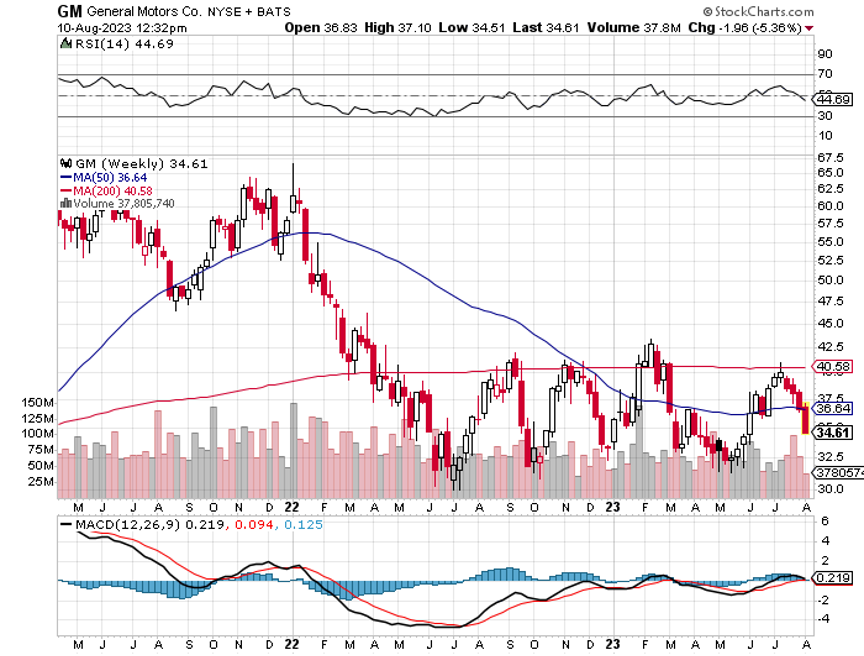
A customer order would come in to buy a million shares of General Motors (GM) and what did the in-house proprietary trading book do immediately?

It loaded the boat with the shares of Ford Motors (F).

When I asked about this tactic, I was taken away to a quiet corner of the office and read the riot act.

“This is how you legally front-run a customer,” I was told.

Buy (GM) in front of a customer order, and you will find yourself in Sing Sing shortly.

Ford (F), Toyota (TM), Nissan (NSANY), Daimler Benz (DDAIF), BMW (BMWYY), or Volkswagen (VWAPY), are no problem.

The logic here was very simple.

Perhaps the client completed an exhaustive piece of research concluding that (GM) earnings were about to rise.

Or maybe a client's old boy network picked up some valuable insider information.

(GM) doesn’t do business in isolation. It has tens of thousands of parts suppliers for a start. While whatever is good for (GM) is good for America, it is GREAT for the auto industry.

So through buying (F) on the back of a (GM) might not only match the (GM) share performance, it might even exceed it.

This is known as a Primary Parallel Trade.

This understanding led me on a lifelong quest to understand Cross Asset Class Correlations, which continue to this day.

Whenever you buy one thing, you buy another related thing as well, which might do considerably better.

I eventually made friends with a senior trader at Salomon Brothers while they were attempting to recruit me to run their Japanese desk.

I asked if this kind of legal front running happened on their desk.

“Absolutely,” he responded. But he then took Cross Asset Class Correlations to a whole new level for me.

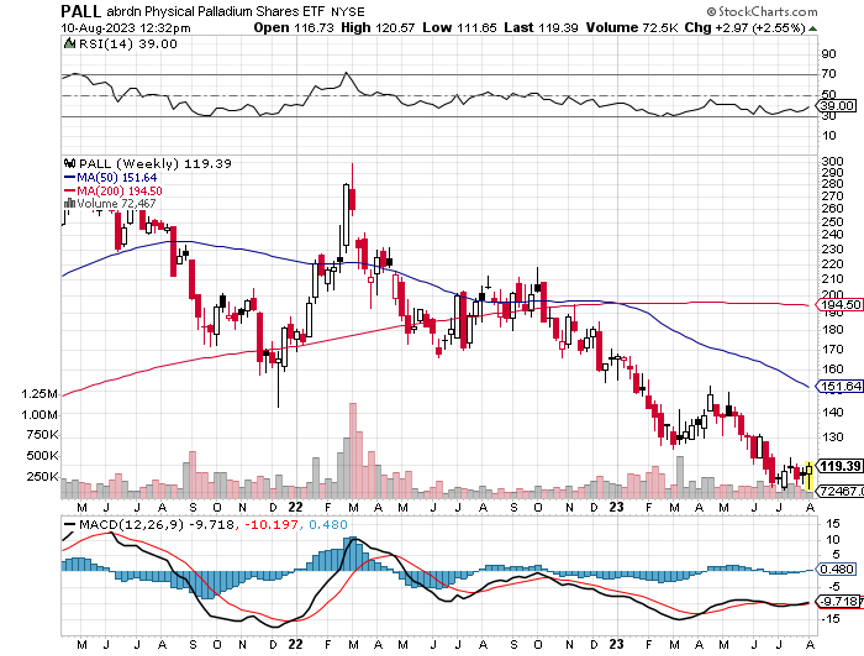
Not only did Salomon’s buy (F) in that situation, they also bought palladium (PALL).

I was puzzled. Why palladium?

Because palladium is the principal metal used in catalytic converters, which remove toxic emissions from car exhaust, and has been required for every U.S. manufactured car since 1975.

Lots of car sales, which the (GM) buying implied, ALSO meant lots of palladium buying.

And here’s the sweetener.

Palladium trading is relatively illiquid.

So, if you catch a surge in the price of this white metal, you would earn a multiple of what you would make on your boring old parallel (F) trade.

This is known in the trade as a Secondary Parallel Trade.

A few months later, Morgan Stanley sent me to an investment conference to represent the firm.

I was having lunch with a trader at Goldman Sachs (GS) who would later become a famous hedge fund manager and asked him about the (GM)-(F)-(PALL) trade.

He said I would be an IDIOT not to take advantage of such correlations. Then he one-upped me.

You can do a Tertiary Parallel Trade here through buying mining equipment companies such as Caterpillar (CAT), Cummins (CMI), and Komatsu (KMTUY).

Since this guy was one of the smartest traders I ever ran into, I asked him if there was such a thing as a Quaternary Parallel Trade.

He answered “Abso******lutely,” as was his way.

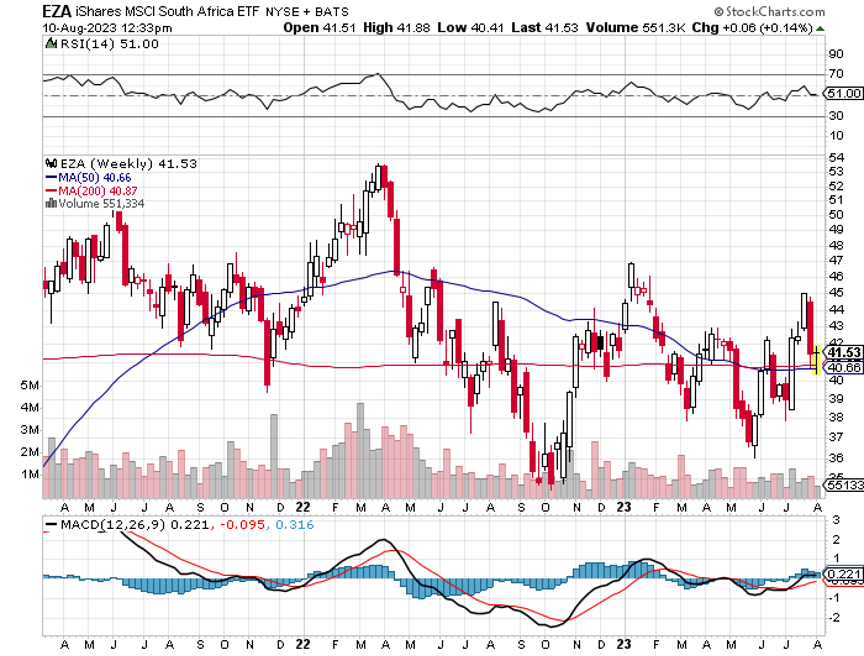
But the first thing he always did when searching for Quaternary Parallel Trades would be to buy the country ETF for the world’s largest supplier of the commodity in question.

In the case of palladium, that would be South Africa (EZA), the world's largest non-sanctioned producer, which together accounts for 74% with Russia of the world’s total production.

Since then, I have discovered hundreds of what I can Parallel Trading Chains, and have been actively making money off of them. So have you, you just haven’t realized it yet.

I could go on and on.

If you ever become puzzled or confused about a trade alert I am sending out (Why on earth is he doing THAT?), there is often a parallel trade in play.

Do this for decades as I have and you learn that some parallel trades break down and die. The cross relationships no longer function.

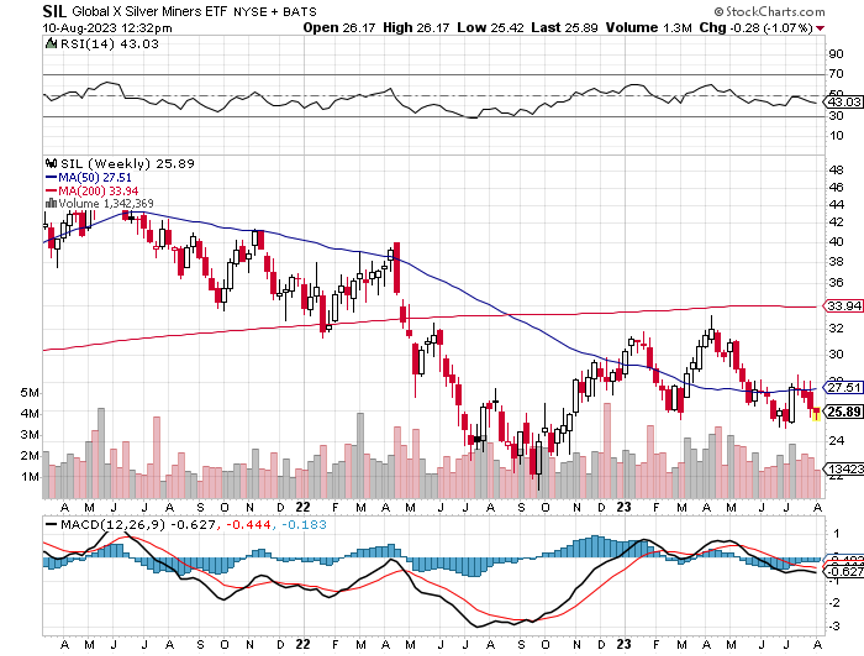
The best example I can think of is the photography/silver connection. When the photography business was booming, silver prices rose smartly.

Digital photography wiped out this trade, and silver-based film development is still only used by a handful of professionals and hobbyists.

Oh, and Eastman Kodak (KODK) went bankrupt in 2012.

However, it seems that whenever one Parallel Trading Chain disappears, many more replace it.

You could build chains a mile long simply based on how well Apple (AAPL) is doing.

And guess what? There is a new parallel trade in silver developing. For whenever someone builds a solar panel anywhere in the world, they are using a small amount of silver for the wiring. Build several tens of millions of solar panels and that can add up to quite a lot of silver.

What goes around comes around.

Suffice it to say that parallel trading is an incredibly useful trading strategy.

Ignore it at your peril.


Sometimes Markets are Hard to Figure Out

https://www.madhedgefundtrader.com/wp-content/uploads/2023/06/john-thomas-mourning.jpg 177 171 Mad Hedge Fund Trader https://madhedgefundtrader.com/wp-content/uploads/2019/05/cropped-mad-hedge-logo-transparent-192x192_f9578834168ba24df3eb53916a12c882.png Mad Hedge Fund Trader2023-08-10 09:02:402023-08-10 13:53:53How to Gain an Advantage with Parallel Trading
Mad Hedge Fund Trader

August 9, 2023

Jacque's Post


(UNDERSTANDING BEHAVIOURAL FINANCE CAN HELP US MAKE BETTER FINANCIAL DECISIONS)

August 9, 2023

Hello everyone,

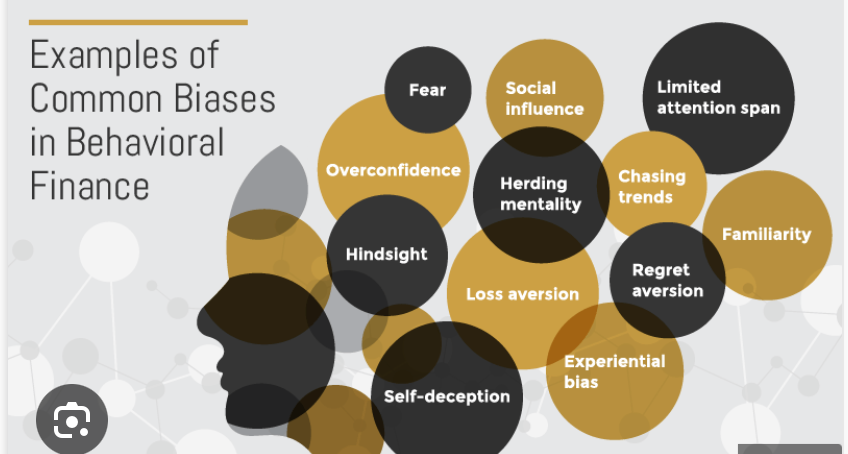
Today I want to explore elements of behavioural finance. Behavioural finance explains how decision-makers take financial decisions in real life, and why their decisions might not appear to be rational every time and, therefore, have unpredictable consequences. When we look at the subject of behavioural finance, we are analysing the influence of psychological biases. Among the common behavioural financial aspects are loss aversion, consensus bias, and familiarity tendencies.

Understanding human behaviour is at the core of most behaviour-based finance theories. Learning some common biases and beliefs can help better predict the decisions that individuals might make in the future. The elements of this theory may include:


Self-deception

Self-deception relates to the idea that human beings may be missing important information that is required to make an informed decision. People may think they know more than they actually do, which can lead to errors when making financial decisions. This idea can mask itself in our emotions and manifest itself as feelings of overconfidence or self-assurance.

Or we can also term this Overconfidence. Overconfidence is a cognitive bias that causes people to overestimate their knowledge, skills, or ability to predict future outcomes. In finance, overconfidence can lead to excessive trading, under-diversification, and inadequate risk management.


Mental accounting

Mental accounting is the human tendency to assign subjective value to money. People tend to separate money into different mental accounts that affect the way they spend it. For example, if someone receives a tax refund, they may likely see it as extra money, or a windfall. In reality, the money already belongs to them. Although the refund money is part of their regular income, they may spend it on discretionary items because they see it as disposable.


Heuristic simplification

A heuristic simplification accounts for human error when analysing data and information. Heuristics are mental shortcuts that reduce mental processing effort. They factor into whether people fully process information, which can have a significant impact on their financial decisions.


Emotion

Emotion in finance refers to how our emotions can influence the decisions we make. And doesn’t this ring true for all of us. We all understand how strongly emotions influence our financial decisions making. Emotions help shape the human mindset and are typically the primary reason people may struggle to make informed decisions. For example, when people experience positive emotions, such as excitement and optimism, they’re more likely to take risks when investing. Isn’t it true that when you have had a run of great profitable trades, you tend to place bigger positions?

When people are feeling low in their emotions and experience emotions such as sadness and anxiety, they become more risk-averse and are less likely to make major financial decisions. It can also be said that people with these emotions are often vulnerable and easily influenced by financial “vampires” or fraudulent financial schemes as they are often looking to escape a situation or person and will consider alternatives not normally considered when they are thinking rationally.


Social influence

The social environment can play a considerable role in human behaviour. Social influence bias explains why humans make investment decisions based on what other investors are doing. By preparing and planning financial decisions, you are less likely to let factors such as emotion, deception, or social influence affect your actions.

Other key concepts in behavioural finance that you need to be aware of.


Confirmation Bias

Confirmation Bias is the tendency to seek, interpret, and remember information that confirms one’s pre-existing beliefs while ignoring or discounting contradictory evidence. This bias can contribute to investment mistakes such as holding onto losing positions or overlooking red flags.


Loss aversion

Loss aversion is the tendency for individuals to prefer avoiding losses over acquiring equivalent gains. The bias can lead to risk-averse behaviour when facing potential gains and risk-seeking behaviour when facing potential losses. In other words, we might hear that a trader stops out of winning positions early and doubles up on losing positions.


Herding Behaviour

Herding behaviour is individuals’ tendency to follow a larger group’s actions or beliefs, even if It contradicts their own judgement or available information. In finance, herding can contribute to market bubbles and crashes.

Availability bias
Availability bias is the tendency to rely on readily available information or recent experiences when making decisions, often leading to a distorted perception of probabilities and risks.

By identifying the various biases that we may have, we will be better prepared to make more rational, thoughtful, and informed decisions in the future.


“Investing isn’t about beating others at their game. It’s about controlling yourself at your own game.”
–Jason Zweig

“The investor’s chief problem – and even his worst enemy – is likely to be himself.” – Benjamin Graham

“Overconfidence is a very serious problem. If you don’t think it affects you, that’s probably because you’re overconfident.”
– Carl Richards

Have a great week.

Cheers,

Jacquie

https://madhedgefundtrader.com/wp-content/uploads/2019/05/cropped-mad-hedge-logo-transparent-192x192_f9578834168ba24df3eb53916a12c882.png 0 0 Mad Hedge Fund Trader https://madhedgefundtrader.com/wp-content/uploads/2019/05/cropped-mad-hedge-logo-transparent-192x192_f9578834168ba24df3eb53916a12c882.png Mad Hedge Fund Trader2023-08-09 20:00:482023-08-09 20:22:15August 9, 2023
Page 463 of 2249«‹461462463464465›»

Legal Disclaimer

There is a very high degree of risk involved in trading. Past results are not indicative of future returns. MadHedgeFundTrader.com and all individuals affiliated with this site assume no responsibilities for your trading and investment results. The indicators, strategies, columns, articles and all other features are for educational purposes only and should not be construed as investment advice. Information for futures trading observations are obtained from sources believed to be reliable, but we do not warrant its completeness or accuracy, or warrant any results from the use of the information. Your use of the trading observations is entirely at your own risk and it is your sole responsibility to evaluate the accuracy, completeness and usefulness of the information. You must assess the risk of any trade with your broker and make your own independent decisions regarding any securities mentioned herein. Affiliates of MadHedgeFundTrader.com may have a position or effect transactions in the securities described herein (or options thereon) and/or otherwise employ trading strategies that may be consistent or inconsistent with the provided strategies.

Copyright © 2026. Mad Hedge Fund Trader. All Rights Reserved. support@madhedgefundtrader.com
Scroll to top