
Global Market Comments
February 15, 2019
Fiat Lux
Featured Trade:
(THE CONTINUING DEATH OF RETAIL),
(AMZN), (WMT), (M), (JWN),
(TESTIMONIAL)


Global Market Comments
February 15, 2019
Fiat Lux
Featured Trade:
(THE CONTINUING DEATH OF RETAIL),
(AMZN), (WMT), (M), (JWN),
(TESTIMONIAL)
Mad Hedge Technology Letter
February 13, 2019
Fiat Lux
Featured Trade:
(WHY THE FUTURE IS NOT IN FURNITURE),
(W), (NWARF), (AMZN)

Avoid online furniture e-store Wayfair (W) – it’s too expensive.
That was my conclusion after going over the company’s data with a fine-tooth comb.
The stock is up over 600% over the past 5 years, it’s certainly a performance of a rock star in retrospect but it is far from a guaranteed indicator of future success by any means.
Shares have outgained the broader market by a wide margin resulting from January’s snapback in oversold territory scorching skyward 22% compared to an 8% spike in the S&P 500.
Investors must look at the performance of the company and deduce if the path forward is littered with booby traps or if it is as smooth as a slab of granite.
I would argue the former.
Just because the company is in e-commerce doesn’t mean it gets a free pass.
When you hear the word e-commerce, the mind darts and dives to the success of Amazon (AMZN) and observers must assume that if it’s doing the same job as Amazon, cash must be falling from the sky.
Well, the truth is sometimes harsh, and unfortunately, this company is nothing close to Amazon.
Wayfair sells furniture, a tough business from the onset.
Investors must ask themselves - does Wayfair optimally sell furniture and run its company efficiently?
First, the good.
Sales have gone gangbusters the past few years and this is the catalyst driving the stock northwards.
The company presided over a 3-year sales growth rate of 44% - impressive for a cloud company, let alone an online furniture company.
In the past 3 years, the company has more than doubled sales from $2.25 billion in 2015.
Noticeably, tech growth investors have piled into this name propping it up irrespective of any problems behind the lipstick.
The knock on Wayfair is not the amount of growth but the net quality of growth.
These two must be differentiated and have ramifications affecting the firm’s ability to nurture return business down the road.
Take a quick spin on their official website by clicking here.
Right away, before the user can even take a glance at what the website has to offer, the company is vigorously fishing for an email address to allow the reader to continue.
Without entering an email, the prospective customer is stopped dead in its tracks clicking out of the website – too aggressive for my taste.
Why hand over a personal email when any Amazon prime user can just migrate to Amazon’s search bar without all these hoops that need to be jumped through?
The subsequent message attached to the email signup form says, “Up to 70% off Every Day - Shop every style of furniture and décor at up to 70% OFF. - Exclusive sales start daily.”
If you finally decide the site is worth your time and want to insert your email to move forward pass the first barrier, almost every inch of the site is peppered with over excessive 70% sales reminders.
Don’t forget the first pop-up described the same thing – and now it’s sales promotion overload.
This aggressive marketing push reminds me of a company who knows they cannot compete long-term and believes a marketing solution is the elixir to all of its ills.
Wayfair has performed admirably at growing sales the past few years, and that cannot be taken away.
But its sales success has been carried out in an over-reaching way with respect to the health of the company.
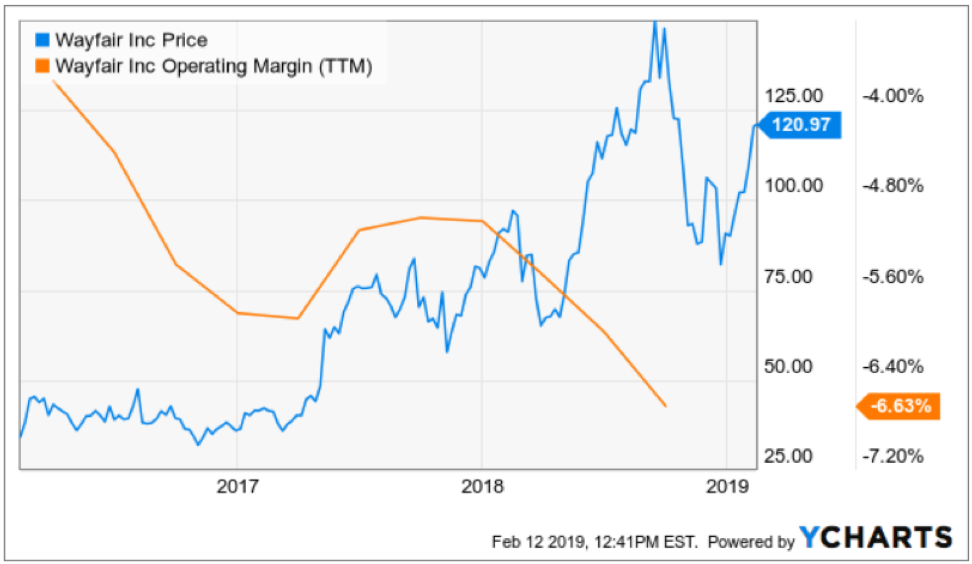
Effectively, Wayfair has been sacrificing margin and burning cash at a high rate potentially disenfranchising its shareholder base in the near future.
This will end in tears.
I cannot envision a scenario where this same business model perpetuates due to a lack of a differentiated advantage.
They do nothing more than the next guy does.
The more I use the website, the more I want to revert back to Amazon and buy furniture from Jeff Bezos.
The situation echoes the current situation with low-cost airlines Wow Airlines from Iceland and Norwegian Air Shuttle (NWARF) who doubled down on the same type of strategy that took them to the brink of solvency.
Wayfair’s advertising and marketing expenses have been growing 30-40% per year along with customer service expenses.
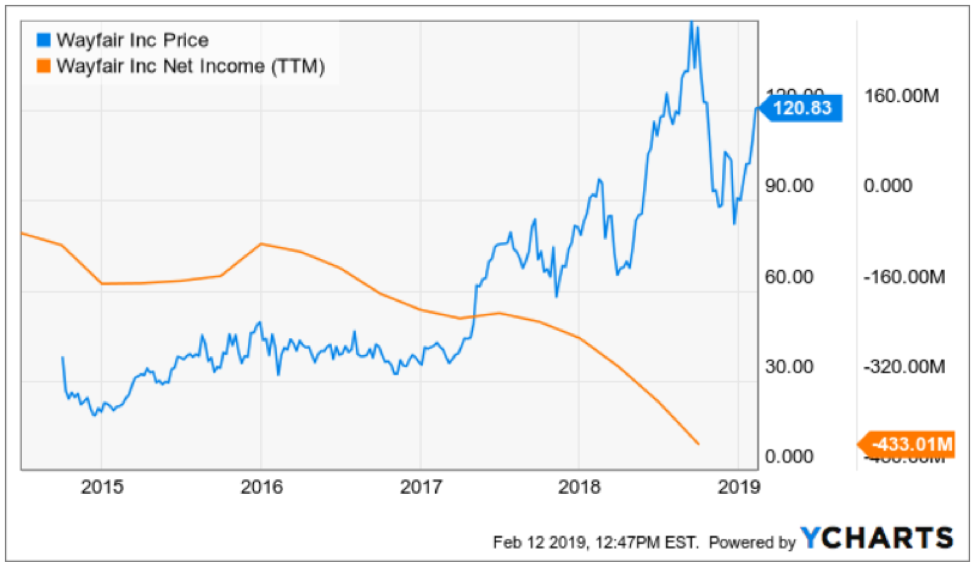
Net income has gotten clobbered during this time span as well.
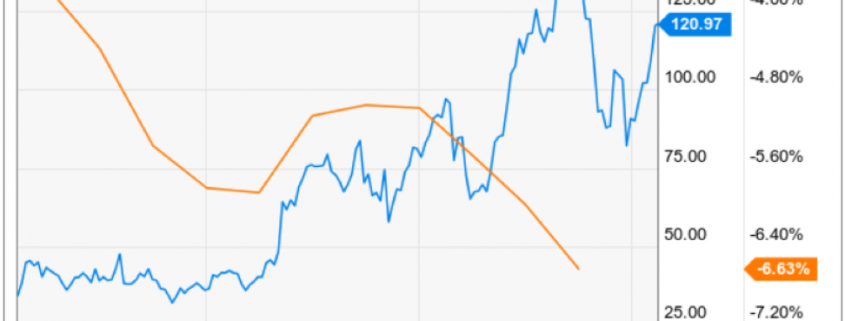
Wayfair lost less than $50 million in 2015. The losses have racked up to almost $450 million at the beginning of 2019.
As quarterly EPS has cratered, Wayfair has missed the past 4 quarterly EPS forecasts demonstrating a continuous lack of execution from management and an inferior strategy.
The EPS percentage change on a sequential basis was negative 97% last quarter.
This company will end up as a pump-and-dump stock, and I speculate no viable path forward to profitability unless major surgery is done to this business model.
I highly doubt that Wayfair can consistently maintain mid-40% sales expansion, and if it does, it is only a matter of time until the ripcord is pulled and the pilots abort the plane before it crashes into the ocean.
As soon as this turns sour, whether it be a recession or the sales strategy becomes impotent, shares will face Armageddon.
Ultimately, the risk/reward proposition is poor, but that doesn’t mean this stock can’t rally a further 30% on the back of a dovish Fed and kick the can down the road trade deal.
If they can clock in mid-40% sales growth, it doesn’t matter if they slaughter net income and expenses because growth investors will come out the woodwork to buttress this online furniture store.
Stay away from this high-risk company.
This is almost a tale of the emperor's new clothes.

Mad Hedge Technology Letter
February 6, 2019
Fiat Lux
Featured Trade:
(ALPHABET WOWS THEM AGAIN),
(GOOGL), (AMZN), (AAPL), (MSFT)

Alphabet (GOOGL) is entangled in the same imbroglio as Apple (AAPL), that is why I have held back on issuing any trade alerts on this name.
The stalwart is still grinding out a respectable 20% of revenue growth in their core business but the underlying conundrum is that their hyper-growth segments are 5 times or more diminutive than their bread and butter of digital ads.
Apple is addressing the same type of strain in attempting to flip high octane revenue drivers into a bigger piece of the pie – the services business trails the hardware business by a large margin.
This phenomenon highlights how investors demand tech companies to grow at elevated rates and a maturing business model isn’t given any free passes.
Investors simply migrate towards higher growth names period.
That being said, Alphabet’s digital ad business is one of the premier tech divisions in all of technology and the American economy.
How powerful is it?
They did $32.6 billion in sales last quarter.
If you look at that number without context, it is quite impressive, but there are several lurking impediments.
This 20% QOQ growth is flatter than a pancake offering evidence that the best days are behind them.
No investors like to hear the dreaded “P word” thrown into a company’s business trajectory – peak.
In respect to revenue growth rates, I expect Google’s digital ad business to gradually decline relative to competition.
This segment also battles with the law of large numbers.
It’s simply difficult to accelerate revenue rates at a 25% YOY clip when revenues are already over $30 billion per quarter. Again, this is another Apple problem and a side effect of being overly successful in one part of the business model.
If investors' tepid reaction about these aspects of the core business telegraph dissatisfaction, then discovering further ancillary problems might be the final dagger in the heart.
Google search’s price per click cratered 29% YOY indicating that variables in the current marketing environment have significantly blunted Google’s pricing power.
Traffic Acquisition Cost (TAC) represents the cost for a company to acquire internet traffic onto their assets.
Alphabet faced a 15% YOY rise in TAC costs last quarter to $7.44 billion illustrating the difficulty in keeping these high costs down.
The bulk of the $7.44 billion stems from a widely known agreement with Apple contracting Google search as its default search engine on Apple devices.
This TAC expense has been surging the past few years and Alphabet has little negotiating power.
Expect an annual 15-20% rise in TAC expenses as long as Alphabet’s digital ads are expanding the standard vanilla 20% most investors expect them to grow.
As a whole, TAC costs soaked up 23% of the digital ad revenue which was in line with analysts’ expectations.
However, I expect this number to surpass 25% before winter because I believe Google search’s ad business will confront ceaseless growth problems.
Amazon’s (AMZN) new-found digital ad business is an influential factor in this story.
New marketing dollars aren’t being showered on Google as they once were, over 50% of product searches populate from Amazon.com today boding poorly for the future of Google search.
This optionality could be a large reason in driving the cost per click downwards.
CEO of Amazon Jeff Bezos refused to enter the digital ad game for years but his recent change of heart will correlate to subduing Google digital ad model.
Consumers are finding less incentive to search on Google for products when they just can smartly and efficiently search on Amazon directly.
Clearly, this only affects product searches and not searches on other informative content such as widely popular searches including “top 10 places to travel in Europe” or “best Thanksgiving recipes.”
Google’s “other revenues” is chugging along nicely with 31% YOY growth headed by Google’s cloud business and hardware division.
This is what Alphabet needs to focus on going forward similar to Microsoft and Amazon web services.
Yes, Google is the 3rd biggest cloud player but miles behind the top two.
Being in catch-up mode is no fun and is part of the reason capital expenditures exploded and came in $1.38 billion higher than expected.
Alphabet simply isn’t doing a good job at executing relative to Amazon and Microsoft frittering away more capital in the name of growth but not curating the type of growth that current expenses justify.
Higher costs damaged operating margins coming down 2% YOY to 21%.
Even more worrisome is that there has been no material progress on the Waymo business.
This is the year that Alphabet expected the technology to roll out to the masses.
However, this broad-based integration will not happen as fast as they would like.
I blame regulation and consumers' hesitation to quickly adopt this new technology.
Alphabet is reliant on this business to carry them to the next level of growth and I believe it can become a $100 billion per year business in a $2 trillion addressable market.
But when you peruse through the “Other Bets” category which houses Alphabet’s other companies such as health venture Verily, the $154 million in revenue was a huge miss against the $187.4 million expected.
Estimates aside, the pitiful fact that Waymo only brings in revenue of less than 1% of total revenue is disappointing.
Summing things up, Alphabet is a great company and is a long-term buy and hold stock even with short term transitory headaches.
In the near term, there is uneasiness about the decreasing profitability, exploding expense factors, a heavy reliance on weakening core business revenue, and a lack of top-line contribution of “other revenues” relative to their core business.
Long term, Alphabet’s game-changing investments have yet to show signs of life in terms of real revenue expansion even though Alphabet is the global leader of artificial intelligence and self-driving technology.
Investors would like to see actionable steps to incorporate this best of breed technology that funnels down to the top and bottom line.
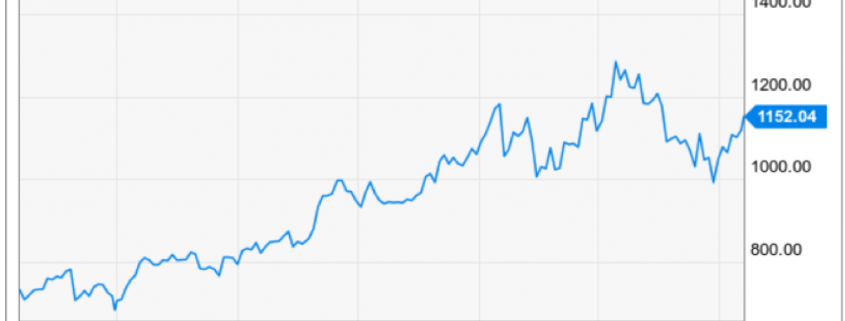
Investors are stuck with a stale digital ads business that has locked the stock into a holding pattern essentially trading sideways for the past year until they prove they are ready to take the next step up.
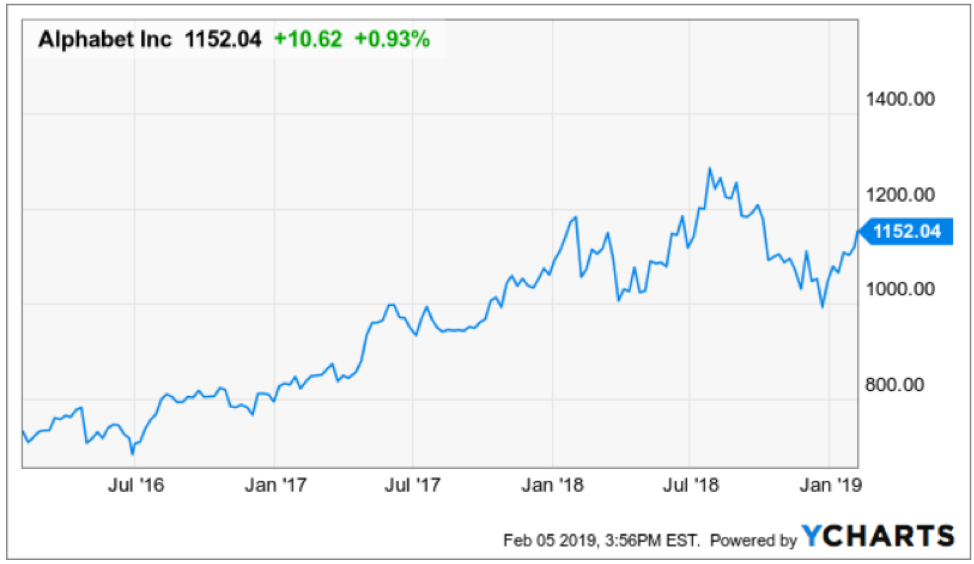
Looking at Alphabet’s chart, the stock has iron-clad support at $1,000 which it tested in April 2018 and December 2018.
Using this entry point as the lower range would be sensible as I don’t foresee any demonstrably negative news blindsiding the stock, and I surmise that investors will start receiving positive news on Waymo’s roll out towards the middle of the year.
Mad Hedge Technology Letter
February 4, 2019
Fiat Lux
Featured Trade:
(WHY AMAZON IS TAKING OVER THE WORLD),
(AMZN)

Amazon, being the best publicly traded company in America, has more than one way to skin a cat.
That is what I took away during the mixed bag of an earnings call.
The road forward for most companies are defined by one maybe two unforgiving directions that the company has no choice but to migrate down through no fault of their own due to market forces.
Amazon operates in a different universe and the breadth of optionality for Amazon is breathtaking.
They have chosen to try to spike their future core business which has traditionally proven to pay dividends within three years or less.
Investors have always allowed Amazon to revert back to the reinvestment blueprint for added profitability - profits should reaccelerate once more in 2020.
Take into consideration that 2018 was a “light” year in Amazon’s reinvestment cycle in which Amazon only grew its fulfillment and shipping square footage by 15% and its headcount by 14%.
Amazon has used this playbook before. The warehouse efficiencies that benefited margins in 2018 was a direct result of massive capital expenditures into robot technology in the preceding years before that.
Amazon guided weakly on top line growth because of several regulation quagmires in India.
The Indian government began banning foreign online retailers from selling products from marketplace vendors that they have an equity stake in, leading Amazon to shelf items from its Indian site including its popular Echo speakers.
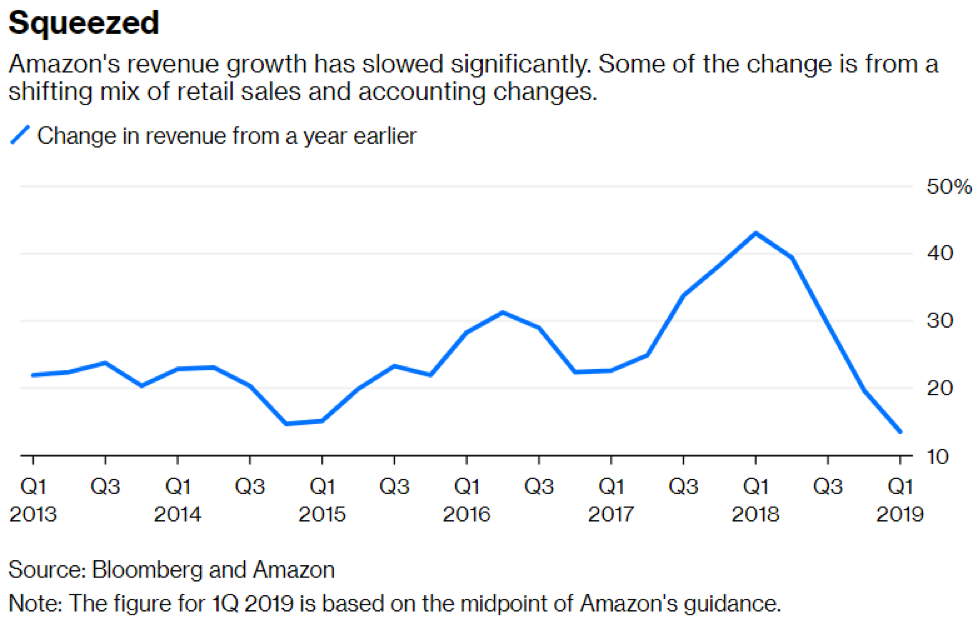
The $72.38 billion translating into 20% YOY fourth quarter revenue growth was its weakest since 2015.
They still have some work to do with physical stores, mostly Whole Foods, which saw a dip of 3% YOY in revenue.
Investors shouldn’t worry too much about this because Amazon can quickly switch back and ramp up revenue expansion when need be.
India is what China was 15 years ago and will morph into its own consumer supergiant with a population to service Amazon sales in the future.
Even with these headwinds that could frustrate operating margins and top-line revenue, Amazon still has some robust drivers in its portfolio in the form of cloud division Amazon Web Services (AWS) that grew 45% YOY and its advertising business which will perpetuate 50% YOY growth trajectory going forward.
Some other highlights were outperformance in voice tech with Amazon CEO Jeff Bezos gloating that “Echo Dot was the best-selling item across all products on Amazon globally, and customers purchased millions more devices from the Echo family compared to last year.”
In hindsight, the report wasn’t bad considering Q4 is the quarter Amazon usually diverges the most with expectations because of the sky-high expectations of the Christmas season.
Digital advertising is already a $12 billion-plus annual business and earned Amazon over $3 billion last quarter.
These lucrative businesses give Amazon more leeway into combatting headwinds that slow down its e-commerce engine.
The e-commerce side of business changes rapidly causing capital to be earmarked for reinvestment as others catch up to its latest iteration of Amazon.com.
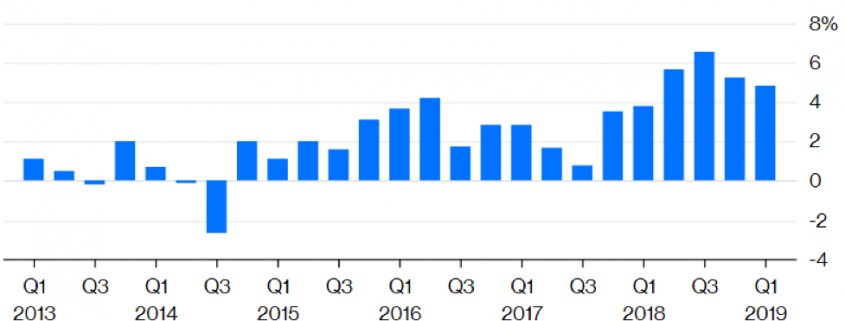
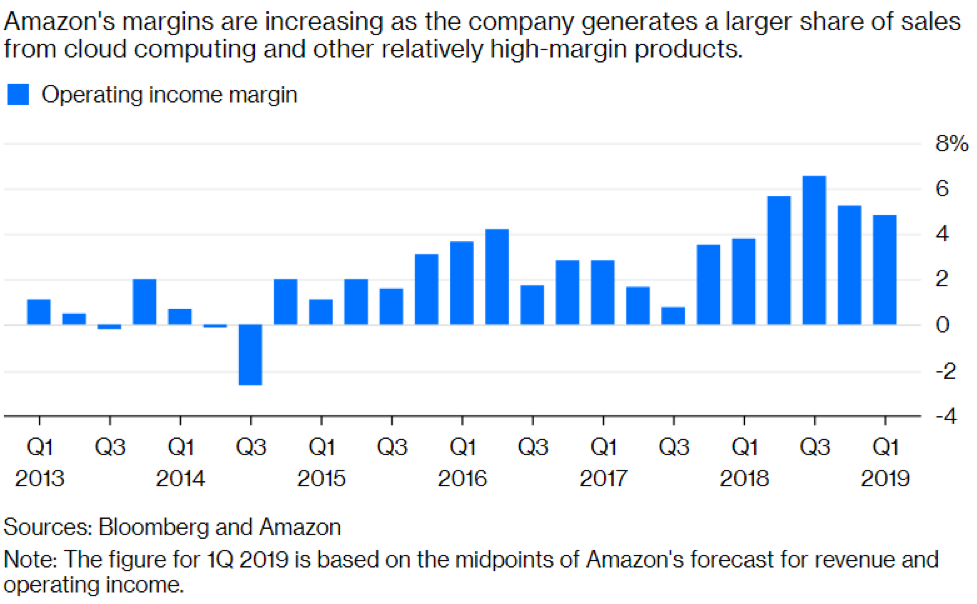
That being said, operating income margins are still over 4% and for the business model Amazon is trotting out, it is still a healthy number.
Not only that, AWS’ margins still remain intact at a robust 29%.
Consumers will agree with you admitting they can visibly notice the e-commerce platform improving over time.
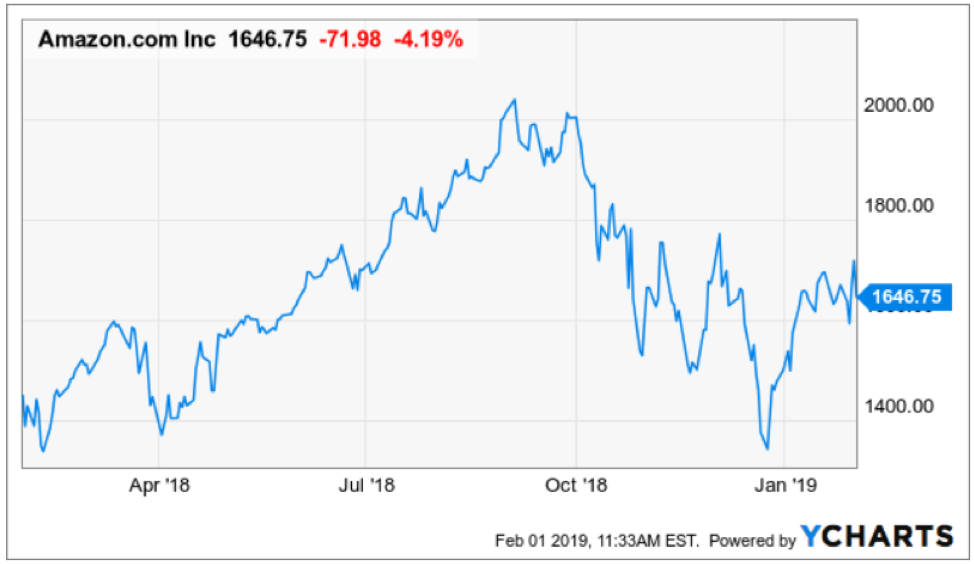
The mixed results dinged shares 4% and I would classify this as a positive down day considering that from peak to trough, Amazon gained 35% after the December sell-off.
If these earnings came out in December, I would not have been shocked with a 15% haircut, but this speaks volumes to how tech shares have been resilient.
And tech earnings, for the most part, have been encouraging relative to expectations.
The change in rules has bred uncertainty in its Indian operation and management will wait for the dust to settle to carve out a plan ahead, but this is small potatoes in the larger picture because of the cash cow that is rich western countries.
To sum things up, Amazon’s services and e-commerce platform is still humming along, but growth is tapering off just a tad.
Amazon plans to juice up their business model by reinvesting into their model extracting the bounty in the years ahead.
The lead up to this will be a broad-based harvest resulting in stock price acceleration.
Do not forget we just went through a global growth scare, and I still believe that if the overall market will rise, the tech sector will need to participate with the bigger names carrying a substantial load.
An even more positive signal are the likes of Facebook, Apple, and Netflix buoying nicely, boding well for short-term price action.
This all means that Amazon should be a buy on the dip company with its long-term growth story more attractive than any other tech name, and by a wide margin.
Margins could come down temporarily in the spring and summer offering weakness for investors to buy into.
Amazon is truly a multi-dimensional beast that uses its capital wisely to create red hot businesses that never existed before.
Such is the magnitude of innovation at Amazon to the point that I would argue that Amazon is the most innovative American company today, period.
I sit on the edge of my seat to see what Amazon does next and you should too.
The easiest way to play this is to buy and hold shares for the long term on any major ephemeral stock offloading because they dominate like any other company in their field in relative terms.
Amazon will be back above 2,000 later in 2019 or early 2020.
Mad Hedge Technology Letter
January 29, 2019
Fiat Lux
Featured Trade:
(WHATS BEHIND THE NVIDIA MELTDOWN),
(QRVO), (MU), (SWKS), (NVDA), (AMD), (INTC), (AAPL), (AMZN), (GOOGL), (MSFT), (FB)

Great company – lousy time to be this great company.
That is the least I can say for GPU chip company Nvidia (NVDA) who issued a cataclysmic earnings alert figuring it was better to spill the negative news now to start the healing process earlier.
This stock is a great long-term hold because they are the best of breed in an industry fueled by a secular tailwind in GPUs.
But this doesn’t mean they will be gifted any freebies in the short term and, sad to say, they have been dragged, kicking and screaming, into the heart of the trade skirmish along with Apple (AAPL) and buddy Intel (INTC) amongst others.
The best thing a tech company can have going for them right now is to have no China exposure, that is why I am bullish on software companies such as PayPal, Twilio, and Microsoft.
I called the chip disaster back in summer of 2018 recommending to stay away like the plague.
The climate has worsened since then and like I recently said – don’t buy the dead cat bounce in chips because the bad news isn’t baked into the story yet or at least not fully baked.
It’s actually a blessing in disguise if banned in China if you are firms such as Facebook (FB), Google (GOOGL), and Amazon (AMZN).
I recently noted that a material end to this trade war could be decades away and the tech world is already being reconfigured around the monopoly board as we speak with this in mind.
Where do things stand?
The US administration took a scalp when Chinese communist backed DRAM chip maker Fujian Jinhua effectively shuttered its doors.
Victory in a minor battle will likely embolden the US administration into continuing its aggressive stance if it is working.
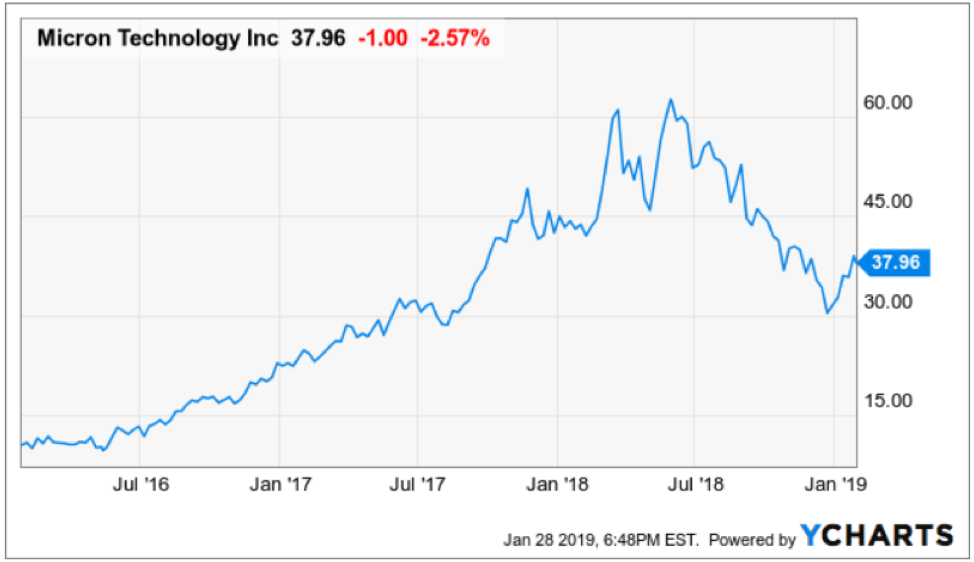
If you forgot who Fujian Jinhua was… they are the Chinese chip company who were indicted by the U.S. Justice Department for stealing intellectual property (IP) from Boise-based chip behemoth Micron (MU).
The way they allegedly stole the information was by poaching Taiwanese chip engineers who would divulge the secrets to the Chinese company buttressing China in pursuing their hellbent goal of being able to domestically supply enough quality chips in order to stop buying American chips in the future.
Officially, China hopes to ramp up its self-sufficiency ratio in the semiconductor industry to at least 70% by 2025 which dovetails nicely with the broader goal of Chinese tech hegemony.
Fujian Jinhua was classified as a strategically important firm to the Chinese state and knocking the wind out of their sails will have a reverberating effect around the Chinese tech sector and will deter Taiwanese chip engineers to act as a go-between.
According to a research note by Zhongtai Securities, Jinhua’s new plant was expected to have flooded the market with 60,000 chips per month and generate annual revenue of $1.2 billion directly competing with Micron with their own technology borrowed from Micron themselves.
Jinhua’s overall goal was to support a monthly manufacturing target of 240,000 chips spoiling Chinese tech companies with a healthy new stream of state-subsidized allotment of chips needed to keep costs down and build the gadgets and gizmos of the future.
For the most part, it was unforeseen that the US administration had the gall and calculative nous to combat the nurtured Chinese state tech sector.
However, I will say, it makes sense to pick off the Chinese tech space now before they stop needing American chips at all in 5-7 years and when all remnants of leverage disappear.
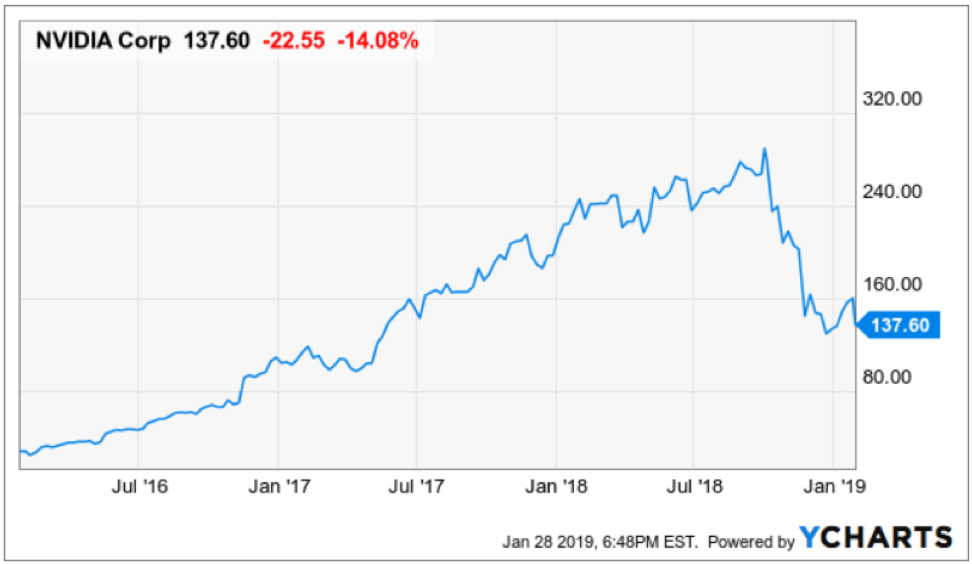
The short-term pain will be felt in the American chip tech sector which is evident with the horrid news Nvidia reported and the aftermath seen in the price action of the stock.
Nvidia expects top line revenue to shrink by $500 million or half a billion – it’s been a while since I saw such a massive cut in forecasts.
Half of revenue comes from the Middle Kingdom and expect huge downgrades from Apple on its earnings report too.
If this didn’t scare you, what will?
These short-term headwinds are worth it to the American tech sector as a whole.
To eventually ward off a future existential crisis when Chinese GPU companies start offering outside business actionable high quality chips curated with borrowed technology, funded by artificially low debt, and for half the price is worth its weight in gold.
The same story is playing out with Huawei around the globe but at the largest scale possible.
This is what happens when the foreign tech sector is up against companies who have access to unlimited state loans and is part of wider communist state policy to take over foundational technology globally.
I will also emphasize that the Chinese communist party has a seat on every board at any notable Chinese tech company influencing decisions at the top even more than the upper management.
If upper management stopped paying heed to the communist voice at the table, they would be out of business in a jiffy.
Therefore, Huawei founder Ren Zhengfei standing at a podium promulgating a scenario where Huawei is operating freely from the government is what dreams are made of.
It’s not a prognosis rooted in reality.
The communist party are overlords breathing down the neck of Huawei after any material decisions that can affect the company and subsequently the government’s position in the interconnected world.
The China blue print essentially entails a pan-Amazon strategy emphasizing large volume – low cost strategy.
Amazon was successful because investors would throw money at the company until it scaled up and wiped the competition away in one fell swoop.
Amazon is on a destructive path bludgeoning every American second-tier mall reshaping the economic world.
The unintended consequences have been profound with the ultimate spoils falling at the feet of CEO and Founder of Amazon Jeff Bezos, his phalanx of employees as well as Amazon stockholders which are mostly comprised of wealthy investors.
Well, Chairman Xi Jinping and the Chinese communist party are attempting to Amazon the American tech sector and the broader American economy.
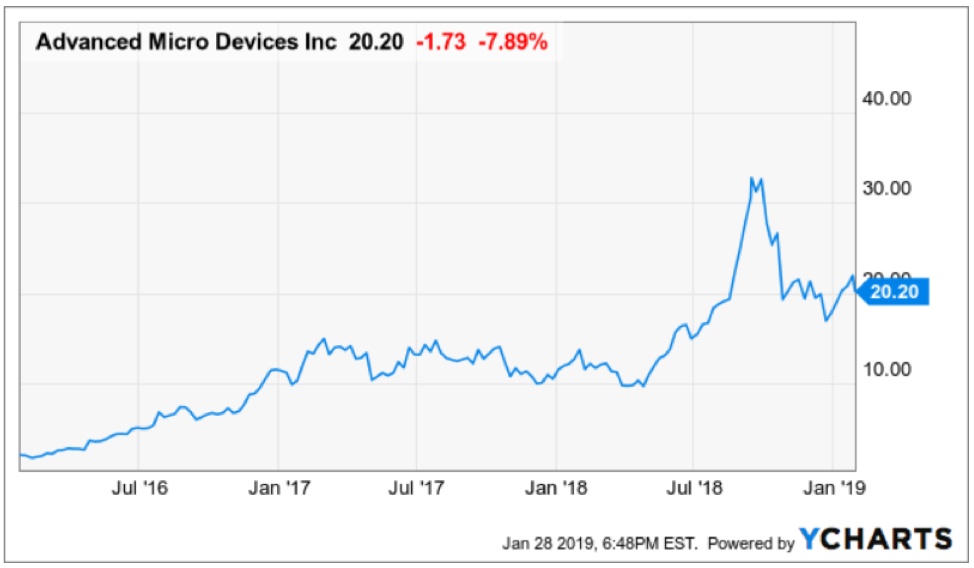
The American economy could potentially become the second-tier mall in this analogy and the game playing out is an existential crisis for the likes of Advanced Micro Devices (AMD), Nvidia, Micron, Intel and the who’s who of semiconductor chips.
If stocks reacted on a 30-year timeframe, Nvidia would be up 15% today instead of reaching a trading day nadir of 17%.
What is happening behind the scenes?
American tech companies are moving supply chains or planning to move supply chains out of China.
This is an epochal manifestation of the larger trade war and a decisive development in the eyes of the American administration.
In fact, many industry analysts understand a logjam of failed trade solutions as a bonus to the Chinese.
However, I would argue the complete opposite.
Yes, the Chinese are waiting out the current administration to deal with a new one that might be more lenient.
But that will take another two years and publicly listed companies grappling with the performance of quarterly earnings don’t have two years like the Chinese communist party.
And who knows, the next administration might even seize the baton from the current administration and clamp down even more.
Be careful what you wish for.
Taiwanese company and biggest iPhone assembler Foxconn Technology Group is discussing plans to move production away from China to India.
India is a democratic country, the biggest democracy in Asia, and is a staunch ally of the United States.
CEOs of Google (GOOGL) and Microsoft (MSFT), some of Silicon Valley heavyweights, are from India and American tech companies have been making generational tech investments in India recently.
Warren Buffet even invested $300 million in an Indian FinTech company Paytm.
When you read stories about India being the new China, well it’s happening faster than anyone thought and on a scale that nobody thought, and the underlying catalyst is the overarching trade war fueling this quick migration.
Apple is already constructing low grade iPhones in India in the state of Karnataka since 2017, and these were the first iPhones made in India.
They won’t be the last either.
Wistron, major Taiwanese original design manufacturer, has since started producing the iPhone 6S model there as well.
And it is no surprise that China and its artificially priced smartphones have undercut Samsung and Apple in India grabbing the market share lead.
This is happening all over the emerging world.
And don’t forget if U.S. President Donald Trump revisits banning American chip companies supply channels to Chinese telecom company ZTE. That would be 70,000 Chinese jobs out the window in a nanosecond.
The current administration has drier powder than you think and this would hasten the deceleration of the Chinese economy and also move forward the American recession into 2019 boding negative for tech shares.
Therefore, I would recommend balancing out a trading portfolio with overweights and underweights because it is obvious that tech stocks won’t be coupled to a gondola trajectory to the peak of the summit this year.
It’s a stockpickers market this year with visible losers and winners.
And if China does get their way in the tech war, American chip companies will eventually become worthless squeezed out by mainland competition brought down by their own technology full circle.
They are first on the chopping board because their overreliance on Chinese revenue streams for the bulk of sales.
Among these companies that could go bust are Broadcom (AVGO), Qualcomm (QCOM), Qorvo (QRVO), Skyworks Solutions (SWKS) and as you expected Micron and Nvidia who are one of the main protagonists in this story.
Global Market Comments
January 29, 2019
Fiat Lux
Featured Trade:
(RISK CONTROL FOR DUMMIES),
(SPY), (AMZN), (TLT), (CRM), (VXX)