• support@madhedgefundtrader.com
  • Member Login
Mad Hedge Fund Trader
  • Home
  • About
  • Store
  • Luncheons
  • Testimonials
  • Contact Us
  • Click to open the search input field Click to open the search input field Search
  • Menu Menu

Tag Archive for: (BABA)

MHFTR

The New AI Book that Investors are Scrambling For

Diary, Newsletter, Research

A better headline for this piece would be “The Future of You,” as artificial intelligence is about to become so integral to your work, your investment portfolio, and even your very existence that you won’t be able to live without it, quite literally.

Well, do I have some great news for you. A blockbuster book about the state of play on all things AI will be released on September 25, and I managed to obtain and read an advanced copy. It is entitled: AI Superpowers: China, Silicon Valley, and the New World Order by Dr. Kai-Fu Lee.

The bottom line: The future is even more unbelievable than you remotely imagined. We are at the very early days of this giant megatrend, and the investment opportunities will be nothing less than spectacular.

And here is a barn burner. The price of AI is dropping fast as hundreds of thousands of new programmers pour into the field. Those $10 million signing bonuses are about to become a thing of the past.

Dr. Lee is certainly someone to take seriously. He obtained one of the first Ph.D.’s in AI from Carnegie Mellon University. He was the president of Google (GOOG) China and put in stints at Microsoft (MSFT) and Apple (AAPL). Today, he is the CEO of Sinovation Ventures, the largest AI venture capital firm in China, and is a board director of Alibaba (BABA).

AI is nothing more than deep learning, or super pattern recognition. Dr. Lee dates the onset of artificial intelligence to 1952, when an IBM mainframe computer learned to play checkers and beat human opponents. By 1955, it learned to develop strategies on its own.

Dr. Lee sees the AI field ultimately divided into two spheres of dominance, the U.S. and China. No one else is devoting a fraction of the resources needed to become a serious player. The good news is that Russia and Iran are nowhere in the game.

While the U.S. dominates in the original theory and algorithms that founded AI, China is about to take the lead in applications. It can do this because it has access to mountains of data that dwarf those available in America. China processes three times more mobile phones, five times more Internet customers, 10 times more eat-out orders, and 50 times more mobile transactions. In a future where data is currency, this is huge.

The wake-up call for China in applications took place two years ago when U.S. and Korean AI programs beat grandmasters in the traditional Chinese game of Go. Long a goal of AI programmers, this great leap forward took place 20 years earlier than had been anticipated. This created an AI stampede in the Middle Kingdom that led to the current bubble.

The result has been applications that are still in the realm of science fiction in the U.S. The Chinese equivalent of eBay (EBAY), Taobao, doesn’t charge fees because its customer base is so big it can remain profitable on ad revenues only. Want to be more beautiful in your selfies sent to friends? A Chinese app will do that for you, Beauty Plus.

The Chinese equivalent of Yelp, Dianping, has 600,000 deliverymen on mopeds. The number of takeout meals is so vast that it has been able to drop delivery costs from $6 a meal to 60 cents. As a result, traditional restaurants are dying out in China.

Teachers in Chinese schools no longer take attendance. Students are checked off when they enter the classroom by facial recognition software. And heaven help you if you jaywalk in a Chinese city. Similar software will automatically issue you a citation with a fine and send it to your home.

Credit card fraud is actually on the decline in China as dubious transactions are blocked by facial matching software. The bank simply calls you, asks you to look into your phone, takes your picture, and then matches it with the image they have on file.

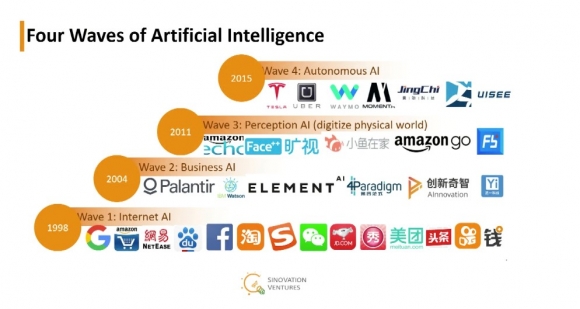
Dr. Lee sees AI unfolding in four waves, and there are currently companies operating in every one of these (see graph below):

1) Internet AI

The creation of black boxes and specialized algorithms opened the door to monetizing code. This was the path for today’s giants that dominate online commerce today, Google (GOOG), Amazon (AMZN), JD.com (JD), and Facebook (FB). Alibaba (BABA), Baidu (BIDU), and Tencent followed.

2) Business AI

Think big data. This is the era we just entered, where massive data from online customers, financial transactions, and health care led to the writing of new algorithms that maximize profitability. Suddenly, companies can turn magic knobs to achieve desired goals, such as stepping up penetration or monetization.

3) Perception AI

Using trillions of sensors worldwide, analog data on any movement, facial expression, sound, and image are converted into digital data, and then mined for conclusions by more advanced algorithms. Cameras are suddenly everywhere. Amazon’s Alexa is the first step in this process, where your conversations are recorded and then mined for keywords about your every want and desire.

Think of autonomous fast food where you walk in your local joint and it immediately recognizes you, offers you your preferred dishes, and then auto bills your online account for your purchase. Amazon has already done this with a Whole Foods store in Seattle.

4) Autonomous AI

Think every kind of motion. AI will get applied to autonomous driving, local shuttles, factory forklifts, assembly lines, and inspections of every kind. Again, data and processing demand take an enormous leap upward. Tesla (TSLA), Waymo (GOOG), and Uber are already very active in this field.

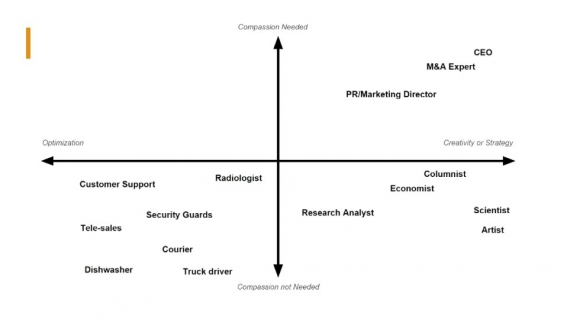
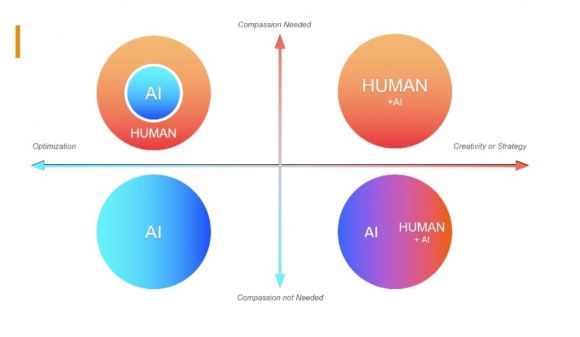
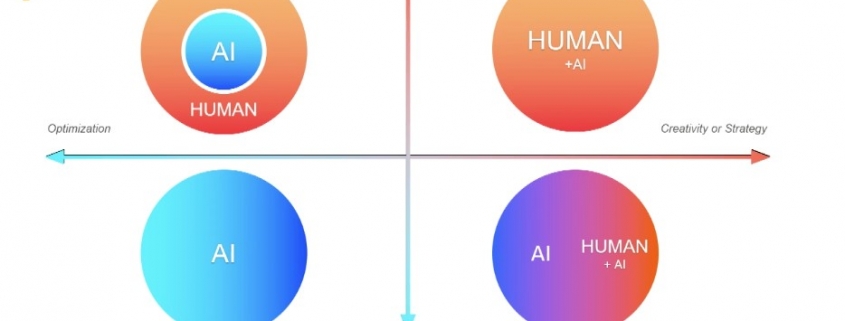
The book focuses a lot on the future of work. Dr. Lee creates a four-part scatter chart predicting the viability of several types of skills based on optimization, compassion, creativity, and strategy (see below).

If you are a truck driver, in customer support, or a dishwasher, or engage in any other repetitive and redundant profession your outlook is grim. If you can supplement AI, such as a CEO, economist, or marketing head you’ll do fine. People who can do what AI can’t, such as teachers and artists, will prosper.

The Investment Angle

There have been only two ways to invest in AI until now. You can buy shares in any of the seven giants above, whose shares have already risen for 100- or 1,000-fold.

You can invest in the nets and bolts parts providers, such as NVIDIA (NVDA), Advanced Micro Devices (AMD), Micron Technology (MU), and Lam Research (LRCX), which provide the basic building blocks for the Internet infrastructure.

Fortunately for our paid subscribers, the Mad Hedge Trade Alert Service caught all of these very early.

What’s missing is the “in-between companies,” which are out of your reach because they are locked up in university labs or venture capital funds. Many of these never see the light of day as public companies because they get taken over by the tech giants above. It’s effectively a closed club that won’t let outsiders in. It’s a dilemma that vexes any serious technology investor.

When quantum computing arrives in a decade, you can take all the functionality above and multiply it by a trillion-fold, while costs drop a similar amount. That’s when things really get interesting. But then, I’ve seen trillion-fold increases in technology before.

I hope I live to see another.


Personally, I Prefer the Original

https://www.madhedgefundtrader.com/wp-content/uploads/2018/09/Human-and-AI-chart-image-3-e1536698568163.jpg 337 580 MHFTR https://madhedgefundtrader.com/wp-content/uploads/2019/05/cropped-mad-hedge-logo-transparent-192x192_f9578834168ba24df3eb53916a12c882.png MHFTR2021-08-05 09:02:522021-08-05 15:59:33The New AI Book that Investors are Scrambling For
Mad Hedge Fund Trader

July 30, 2021

Diary, Newsletter, Summary

Global Market Comments
July 30, 2021
Fiat Lux

Featured Trade:

(JULY 28 BIWEEKLY STRATEGY WEBINAR Q&A),
(SPY), (CRSP), (TLT), (TBT), (BABA), (BIDU), (FXI), (RAD), (TSLA), (NASD), (NKLA), (NIO), (INTC), (MU), (NVDA), (AMD), (TSM),
(VXX), (XVZ), (SVXY), (FCX), (ROM), (SPG)

https://madhedgefundtrader.com/wp-content/uploads/2019/05/cropped-mad-hedge-logo-transparent-192x192_f9578834168ba24df3eb53916a12c882.png 0 0 Mad Hedge Fund Trader https://madhedgefundtrader.com/wp-content/uploads/2019/05/cropped-mad-hedge-logo-transparent-192x192_f9578834168ba24df3eb53916a12c882.png Mad Hedge Fund Trader2021-07-30 13:04:292021-07-30 14:07:50July 30, 2021
Mad Hedge Fund Trader

July 28 Biweekly Strategy Webinar Q&A

Diary, Newsletter, Research

July 28 Biweekly Strategy Webinar Q&A

Below please find subscribers’ Q&A for the July 28 Mad Hedge Fund Trader Global Strategy Webinar broadcast from Lake Tahoe, NV.

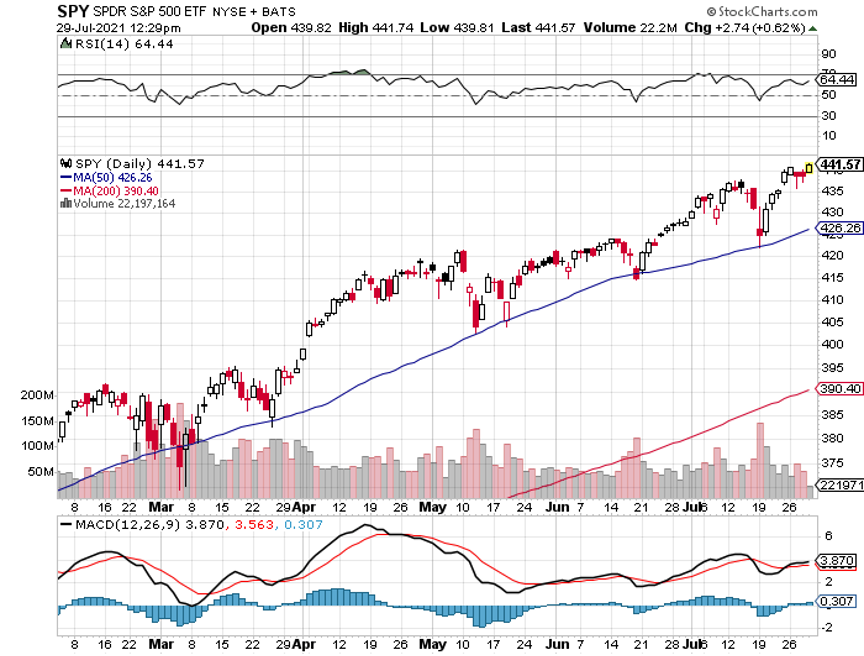
Q: What is your plan with the (SPY) $443-$448 and the $445/450 vertical bear put spreads?

A: I’m going to keep those until we hit the lower strike price on either one and then I’ll just stop out. If the market doesn’t go down in August, then we are going straight up for the rest of the year as the earnings power of big tech is now so overwhelming. Sorry, that’s my discipline and I’m sticking to it. Usually, what happens 90% of the time when we go through the strike, and then go back down again by expiration for a max profit. But the only way to guarantee that you'll keep your losses small is by stopping out of these things quickly. That’s easy to do when you know that 95% of the time the next trade alert you’ll get is a winner.

Q: Are you still expecting a 5% correction?

A: I am. I think once we get all these great earnings reports out of the way this week, we’re going to be in for a beating. I just don't see stocks going straight up all the way through August, so that’s another reason why I'm hanging on to my short positions in the S&P 500 (SPY).

Q: What’s the best way to play CRISPR Therapeutics (CRSP) right now?

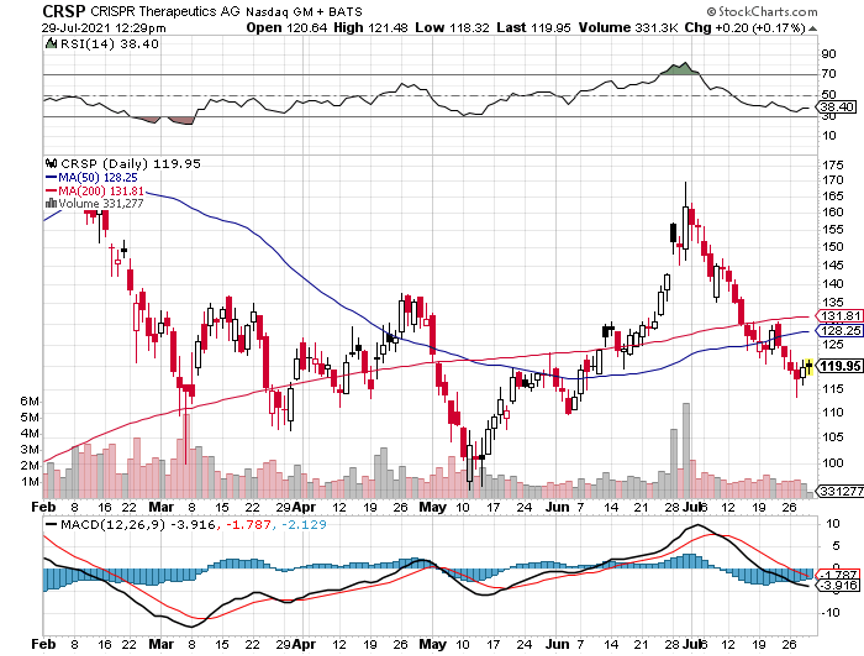
A: That is with the $125-$130 vertical bull call spread LEAPS with any maturity in 2022. We had a run in (CRSP) from $100 up to $170 and I didn’t take the damn profit! And now we’ve gone all the way back down to $118 again. Welcome to the biotech space. You always take the ballistic moves. Someday I should read my own research and find out why I should be doing this. For those who missed (CRSP) the last time, we are one proprietary drug announcement, one joint venture announcement, or one more miracle cure away from another run to $170. So that will probably happen in the next year, you get the $125-$130 call spread, and you will double your money easily on that. 

Q: I’m down 40% on the United States Treasury Bond Fund (TLT) January $130-$135 vertical bear put spread LEAPS. What would you do?

A: Number one, if you have any more cash I would double up. Number two, I would wait, because I would think that starting from the Fall, the Fed will start to taper; even if they do it just a little bit, that means we have a new trend, the end of the free lunch is upon us, and the (TLT) will drop from $150 down to $132 where it was in March so fast it will make your head spin. I'm hanging onto my own short position in (TLT). If you are new to the (TLT) space and you want some free money, put on the January 2020 $150-$155 vertical bear put spread now will generate about a 75% return by the January 21, 2022 options expiration. I just didn't figure on a 6.5% GDP growth rate generating a 1.1% bond yield, but that’s what we have. I'm sorry, it’s just not in the playbook. Historically, bonds yield exactly what the nominal GDP growth rate is; that means bonds should be yielding 6.50% now, instead of 1.1%. They will yield 6.5% in the future, but not right now. And that's the great thing about LEAPS—you have a whole year or 6 months for your thesis to play out and become right, so hang on to those bond shorts. 

Q: Do you have any ideas about the target for Facebook (FB) by the end of the year?

A: I would say up about 20% from current levels. Not only from Facebook but all the other big tech FANGS too. Analysts are wildly underestimating the growth of these companies in the new post-pandemic world.

Q: Do you think the worst of the pandemic will be over by September?

A: Yes, we will be back on a downtrend by September at the latest and that will trigger the next leg up in the bull market. Delta with its great infectious and fatality rates is panicking people into getting shots. The US government is about to require vaccinations for all federal employees and that will get another 5 million vaccinated. Americans have the freedom to do whatever they want but they don’t have the freedom to kill their neighbors with fatal infections.

Q: What should I do with my China (BABA), (BIDU), (FXI) position? Should I be doubling down?

A: Not yet, and there’s no point in selling your positions now because you’ve already taken a big hit, and all the big names are down 50% from the February high. I wouldn't double down yet because you don’t know what's happening in China, nobody does, not even the Chinese. This is their way of addressing the concentration of the wealth in the top 1% as has happened here in the US as well. They’re targeting all the billionaire stocks and crushing them by restricting overseas flotations and so on, so it ends when it ends, and when that happens all the China stocks will double; but I have absolutely no idea when that's going to happen. That being said, I have been getting phone calls from hedge funds who aren’t in China asking if it's time to get in, so that's always an interesting precursor.

Q: What happened to the flu?

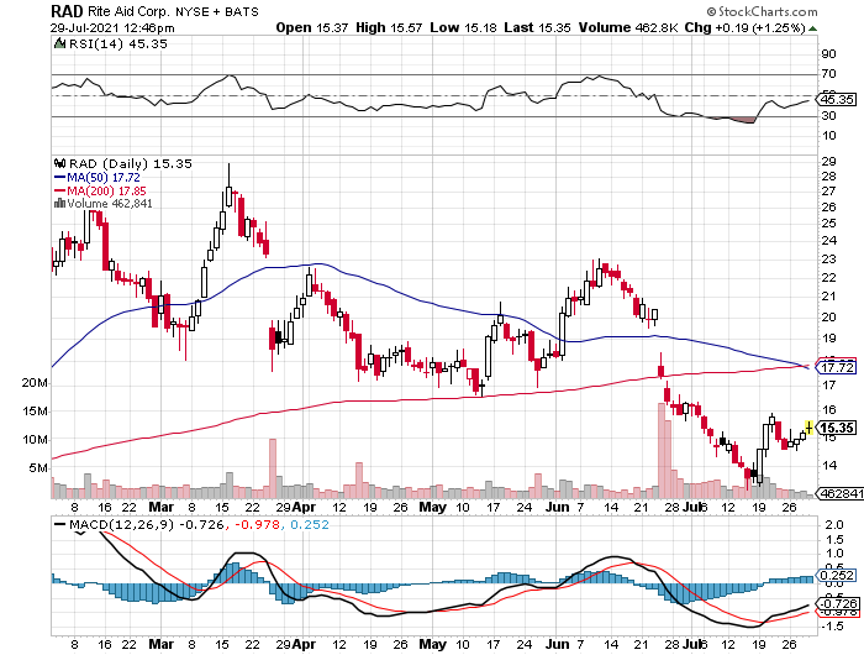
A: It got wiped out by all the Covid measures we took; all the mask-wearing, social distancing, all that stuff also eliminates transmission of flu viruses. Viruses are viruses, they’re all transmitted the same way, and we saw this in the Rite Aid (RAD) earnings and the 55% drop in its stock, which were down enormously because their sales of flu medicines went to zero, and that was a big part of their business. I didn’t get the flu last year either because I didn’t get Covid; I was extremely vigilant on defensive measures in the pandemic, all of which worked.

Q: Why would the Fed taper or do much of anything when Powell wants to be reappointed in February 2022?

A: I don’t think he is going to get reappointed when his four-year term is up in early 2022. His policies have been excellent, but never underestimate the desire of a president to have his own man in the office. I think Powell will go his way after doing an outstanding job, and they will appoint another hyper dove to the position when his job is up.

Q: What are your thoughts on the Chinese electric auto company Nio competing here in the U.S.?

A: They will never compete here in the U.S. China has actually been making electric cars longer than Tesla (TSLA) has but has never been able to get the quality up to U.S. standards. Look what happened to Nikola (NKLA) who’s founder was just indicted. Avoid (NIO) and all the other alternative startup electric car companies—they will never catch up with Tesla, and you will lose all your money. Can I be any clearer than that? 

Q: You recently raised the ten-year price target up for the Dow Average from 120,000 to 240,000. What is Nasdaq's target 10 years out?

A: I would say they’re even higher. I think Nasdaq (NASD) could go up 10X in 10 years, from 14,000 to 140,000 because they are accounting for 50% of all earnings in the U.S. now, and that will increase going forward, so the stocks have to go ballistic.

Q: What do you think of Intel (INTC)?

A: I don’t like it. They had a huge rally when they fired their old CEO and brought in a new one. There was a lot of talk on reforming and restructuring the company and the stock rallied. Since then, the market has started insisting on performance which hasn’t happened yet so the stock gave up its gains. When it does happen, you’ll get a rally in the stock, not until then, and that could be years off. So I'd much rather own the companies that have wiped out Intel: (MU), (NVDA), (AMD), and (TSM).

Q: When you do recommend buying the Volatility Index (VIX), do you recommend buying the (VIX) or the (VXX)?

A: You can only buy the VIX in the futures market or through ETFs and ETNs, like the (VXX), the (XVZ), and the (SVXY), or options on these. I would be very careful in buying that because time decay is an absolute killer in that security, and that's why all the professionals only play it from the short side. That's also why these spikes in prices literally last only hours because you have professionals hammering (VIX). Somebody told me once that 50% of all the professional traders in the CME make their living shorting the (VIX) and the (VXX). So, if you think you’re better than the professionals, go for it. My guess is that you’re not and there are much better ways to make money like buying 6-to-12-month LEAPS on big tech stocks.

Q: Can the Delta variant get a bigger pullback?

A: Yes. I expect one in August, about 5%. But if Delta gets worse, the selloff gets worse. You saw what it did last year, down 40% in the (SPY) in only two months, so yes, it all depends on the Delta virus. I'm not really worrying about Delta, it's the next one, Epsilon or Lambda, which could be the real killer. That's when the fatality rate goes from 2% to 50%, and if you think I'm crazy, that's exactly what happened in 1919. Go read The Great Influenza book by John Barry that came out 20 years ago, which instantly became a best seller last year for some reason.

Q: Does the Matterhorn have enough flat space on the top to stand on it?

A: Actually, there is a 6’x6’ sort of level rock to stand on top of the Matterhorn. If you slip, it’s a 5000’ fall straight down on any side, and on a good weather day in the summer, there are 200 people climbing the Matterhorn. There's sometimes a one-hour line just to take your turn to get to the top to take your pictures, and then get down again to make space for the next person. So that's what it's like climbing the Matterhorn, it's kind of like climbing Mount Everest, but I still like to do it every year just to make sure I can do it, and one year I hope to win the prize for the oldest climber of the year to climb the Matterhorn. Every year this German guy beats me; he’s two years older than me.

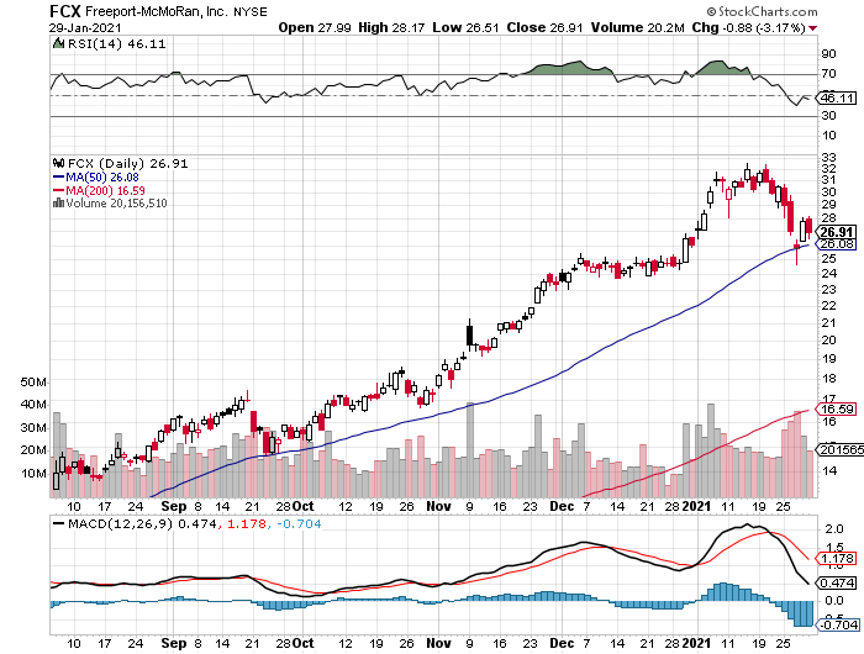
Q: When will Freeport McMoRan (FCX) start going up? I have the 2023 LEAPS

A: Good thing you have the two-year LEAPS because that gives you two years for inflation to show its ugly face once again. You just have to be patient with these. I think we’ll get a rally in the Fall along with all the other interest rate plays like banks, industrials, money management companies, and so on. (FCX) will certainly participate in that. In the meantime, if we get all the way down to $30 in Freeport McMoRan, I would double up your position.

Q: Why is oil (USO) not a buy? Oil is the ultimate inflation hedge.

A: Yes, unless all of the cars in the United States become electric in the next 15 years, which they will, wiping out half of all demand from the largest oil consumer. The United States consumes about 20 million barrels of oil a day, half of that is for cars, and if you take that out of the demand picture you dump 10 million barrels a day on the market and oil goes back to negative numbers like we saw last year. Never do counter-trend trades unless you’re a professional in from of a screen 24 hours a day.

Q: Should I take profits on my ProShares Ultra Technology ETF (ROM) November $90-$95 vertical bull spread and then enter a new spread when tech sells off?

A: Absolutely! When you have that much leverage and you get these price spikes, you sell! The leverage on this position is 2X on the ETF and 10X on the options for a total of 20X! Well done, nice trade and nice profit, go out and buy yourself a new Tesla and wait for the next dip in tech, which may have already started, and which could power on for the rest of August.

Q: What’s the next move for REITs?

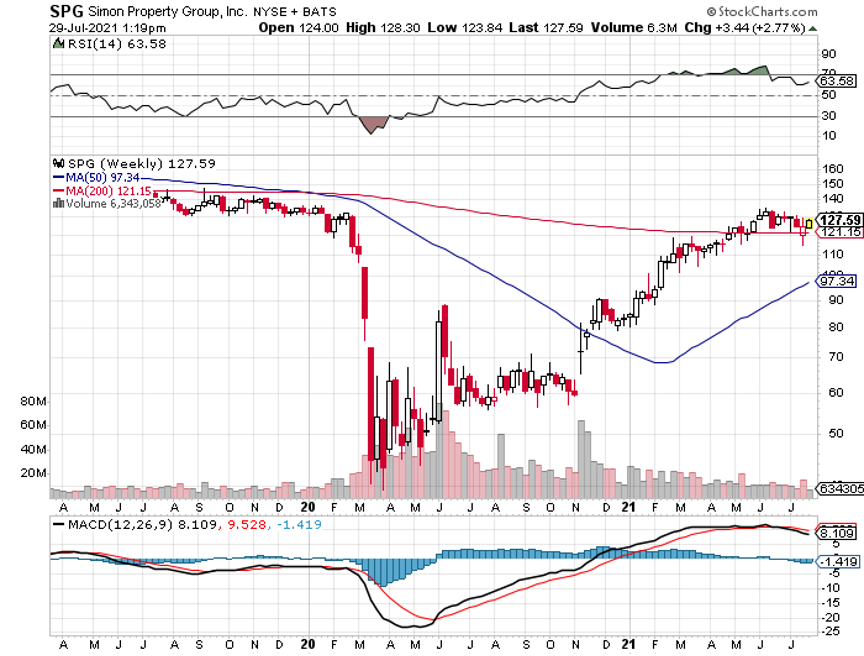
A: REITs came off of historic lows last year; a lot of people thought they were going to go bankrupt, and for companies like (SPG) it was a close-run thing. I would be inclined to take profits on REITs here. The next thing to happen is for interest rates to go up and REITs don’t do that great in a rising rate environment.

Q: When is the off-season in Incline Village?

A: It’s the Spring and the Fall, in between ski season and the summer season. That means there are four months a year here, May/June and September/October, where I’m the only one here and the parking lots are empty. There is no one on the trails, the weather is perfect, the leaves are changing colors, and the roads aren’t crowded, so that is the time to be here. It’s a mob scene in the winter and a worse mob scene in the summer!

To watch a replay of this webinar with all the charts, bells, whistles, and classic rock music, just log in to www.madhedgefundtrader.com, go to MY ACCOUNT, click on GLOBAL TRADING DISPATCH, then WEBINARS, and all the webinars from the last ten years are there in all their glory.

Good Luck and Stay Healthy.

John Thomas
CEO & Publisher
The Diary of a Mad Hedge Fund Trader


https://www.madhedgefundtrader.com/wp-content/uploads/2019/07/john-thomas-8.png 422 564 Mad Hedge Fund Trader https://madhedgefundtrader.com/wp-content/uploads/2019/05/cropped-mad-hedge-logo-transparent-192x192_f9578834168ba24df3eb53916a12c882.png Mad Hedge Fund Trader2021-07-30 13:02:442021-07-30 14:11:16July 28 Biweekly Strategy Webinar Q&A
Mad Hedge Fund Trader

June 21, 2021

Tech Letter

Mad Hedge Technology Letter
June 21, 2021
Fiat Lux

Featured Trade:

(SOFTBANK’S EPIC COMEBACK)
(SOFTBANK), (CS), (CPNG), (GRAB), (AAPL), (GOOGL), (BABA)

https://madhedgefundtrader.com/wp-content/uploads/2019/05/cropped-mad-hedge-logo-transparent-192x192_f9578834168ba24df3eb53916a12c882.png 0 0 Mad Hedge Fund Trader https://madhedgefundtrader.com/wp-content/uploads/2019/05/cropped-mad-hedge-logo-transparent-192x192_f9578834168ba24df3eb53916a12c882.png Mad Hedge Fund Trader2021-06-21 14:04:312021-06-21 15:49:18June 21, 2021
Mad Hedge Fund Trader

Softbank's Epic Comeback

Tech Letter

I haven’t touched on the Softbank Vision Fund since pre-pandemic times, but it is time to take a barometer of the state of their fund because they also represent a snapshot of the state of emerging technology.

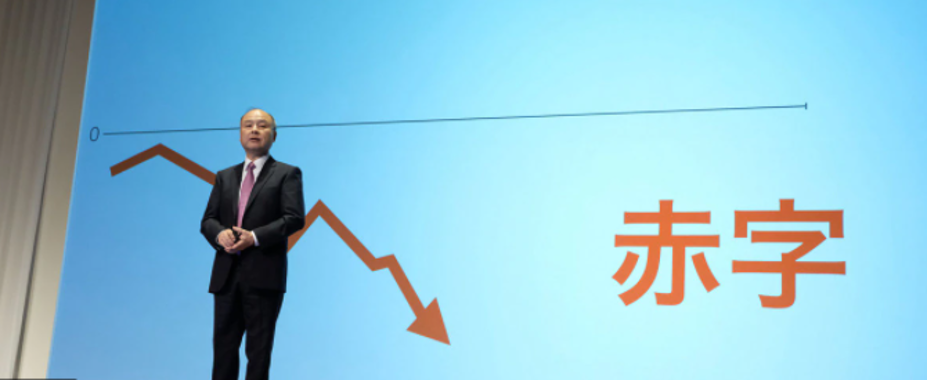
The Fund reported a massive loss of $18 billion during the nadir of the tech correction in 2020, and its clout in the tech world fell by epic proportions to almost pariah status.

Those were perilous times for Softbank Founder and CEO Masayoshi Son who held the distinction of losing the most wealth in the world before making it all back.

The ensuing flood of liquidity, accessible at the tech lows, catapulted most of Softbank’s investments in the U.S. tech market and they recently reported the highest-ever profit for a Japanese company.

Softbank Group reported profits of $48 billion for the fourth quarter, while Softbank Vision Fund, which invests in startups, reported a profit of $37 billion.

After massive weakness in assets including Airbnb, Oyo, and WeWork, we saw the value in these startups dip to an all-time low, then they were essentially bailed out by the Fed.

During that recapitalization process, Softbank Vision Fund fired 10% of its employees to cut costs.

When you combine that with big up moves from South Korean e-commerce company Coupang (CPNG) and ride-hailing firm Grab planning to go public via an SPAC, betting all his chips in emerging tech was the right thing to do and Son was handsomely rewarded for this outsized risk.

Son is quite famous for some of his speculative energy that he has channeled towards China’s Alibaba (BABA) before Alibaba became famous.

More than a decade later, that investment is worth $130 billion, becoming one of the most successful startup bets in history. He then aggressively invested in several startups around the world, including Snapdeal, Oyo, Ola, and Paytm in India.

For as many lemons in his basket, he’s had his fair share of 10-baggers and 433-baggers like Alibaba that validated his aggressive tech strategy.

Son got into many investments before venture capitalists in tech started being copied around the world and before the Arab sovereign funds and Chinese could get their house in order to partake as well.

He wasn’t the first, but the first group mover advantage made these deals possible, and by borrowing heavily against his Softbank equity, he was able to bet the ranch on many emerging techs by acquiring the proper financing and leverage.

However, the Softbank Vision Fund is a harbinger for what’s to come in tech and Son laughing all the way to the bank could also be loosely translated as the low hanging fruit in tech and its harvest has been plucked dry.

Venture capitalists are having a harder time in 2021 finding those 433-baggers or even 3-baggers.

An ominous sign that bodes ill for emerging tech is the financing hawks that have started to highlight the extreme risks involved in investing big in little-known business models with the propensity to fail.

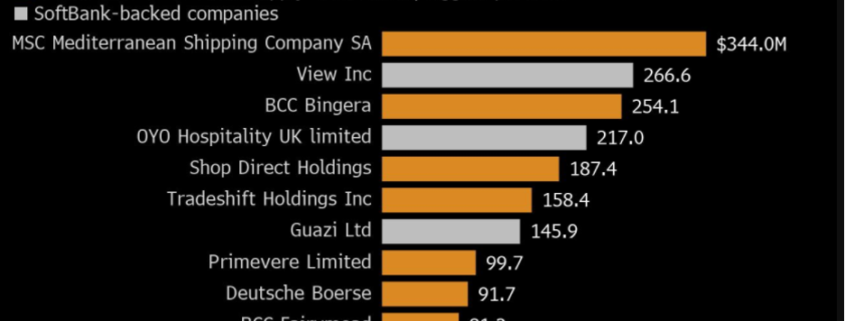
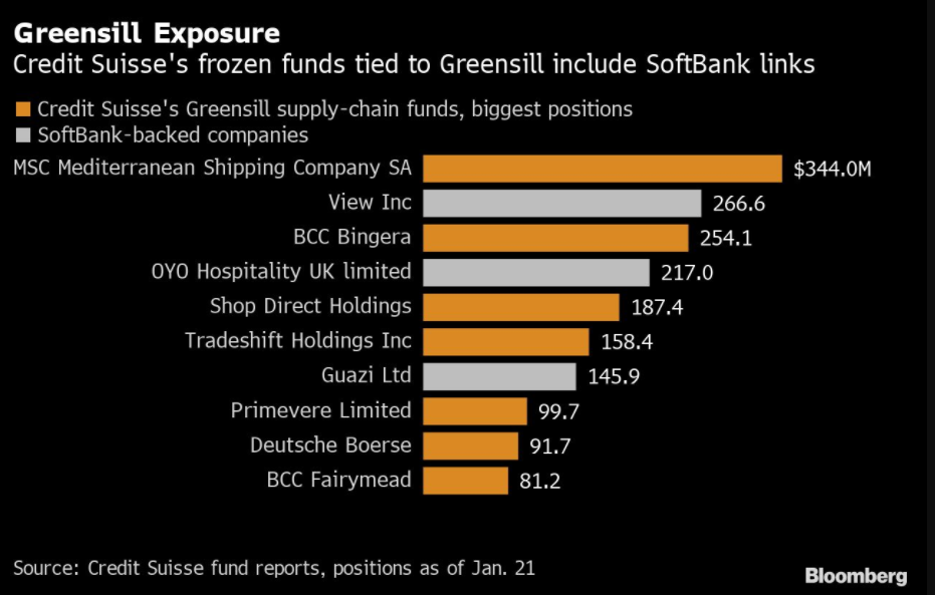
Credit Suisse (CS) has put Son recently on notice by dissolving a longstanding personal lending relationship as the bank clamps down on transactions with his company, according to regulatory filings and people familiar with the situation.

The moves came after the collapse of SoftBank-backed Greensill Capital that caused turmoil for Credit Suisse forcing them to book a massive loss.

That was on the heels of Credit Suisse’s $5.5 billion loss originating from trading by family office Archegos Capital Management.

The bank is now avoiding business with big tech investors who are likely to reach further up the risk barometer and inflict heavy damage.

Does this mean the era of subsidized tech business models is over?

No, but it will become more difficult to originate financing from traditional methods like European banks to invest in these types of exotic tech projects.

Mr. Son had long used Credit Suisse and other banks to borrow money against the value of his substantial holdings in SoftBank.

As recently as February, Mr. Son had around $3 billion of his shares in the company pledged as collateral with Credit Suisse, one of the biggest amounts of any bank, according to Japanese securities filings.

The share pledge loan relationship stretched back almost 20 years. By May, that lending had gone to zero.

Bloomberg News reported in May that Credit Suisse refuses to do any new business with SoftBank, but the silver lining is that Softbank has $48 billion in new profits to theoretically spin into some new projects it likes.

Of course, it’s always easier when you use other people’s money, but these are then new rules of the game.

Its bounty from the liquidity surge will help them advance into this new post-pandemic tech ecosystem with substantial gunpowder.

So I can’t say it’s been all bad for everyone at the individual level because this pandemic divided the masses into tech winners and losers.

Notice that many Bay Area tech investors were taking profits from the tech pandemic stock surge and rolled the capital into $3-5 million Lake Tahoe Mountain chalets as a summer house or dinner party house.

And if they didn’t do that, they were rolling these profits into Hawaiian beachfront properties with views of Diamond Head in Oahu or even dabbling in villas on the Kauai Island.

This could partially explain why Apple (AAPL) has gone sideways for the past 11 months.

This year has instigated a tech reset and in the short term, the Nasdaq has been overwhelmed by external headlines like of perceived inflation fears, chip shortage, and a built-in assumption that earnings will be perfect.

These sky-high earnings expectations have created a “buy the rumor and sell the news” type of price action with only a handful of companies able to top these insane expectations like Google (GOOGL).


softbank


https://www.madhedgefundtrader.com/wp-content/uploads/2021/06/greensill-exposure.png 596 936 Mad Hedge Fund Trader https://madhedgefundtrader.com/wp-content/uploads/2019/05/cropped-mad-hedge-logo-transparent-192x192_f9578834168ba24df3eb53916a12c882.png Mad Hedge Fund Trader2021-06-21 14:02:412021-06-25 22:45:02Softbank's Epic Comeback
Mad Hedge Fund Trader

February 8, 2021

Tech Letter

Mad Hedge Technology Letter
February 8, 2021
Fiat Lux

Featured Trade:

(VENTURE CAPITALISTS SHARE THE CLUES TO THE TECH MARKET)
(NVDA), (OTCMKTS: SFTBY), (GOOGL), (BABA), (AMZN), (UBER), (FB)

https://madhedgefundtrader.com/wp-content/uploads/2019/05/cropped-mad-hedge-logo-transparent-192x192_f9578834168ba24df3eb53916a12c882.png 0 0 Mad Hedge Fund Trader https://madhedgefundtrader.com/wp-content/uploads/2019/05/cropped-mad-hedge-logo-transparent-192x192_f9578834168ba24df3eb53916a12c882.png Mad Hedge Fund Trader2021-02-08 11:04:302021-02-08 12:19:34February 8, 2021
Mad Hedge Fund Trader

Venture Capitalists Share Clues to the Tech Market

Tech Letter

To gain a glimpse into the current psyche of tech investing, we need to take a raw snapshot of the state of Softbank’s Vision Fund.

The Vision Fund is the brainchild of the Japanese telecom company’s founder Softbank Masayoshi Son and is the world’s largest technology-centric venture capital fund with over $100 billion in capital.

The torrent of bullish price action of late has meant that SoftBank recorded a record quarterly profit in its Vision Fund as a gangbusters’ stock market lifted the value of its portfolio companies.

However, the significant gains accrued in equity were also substantially offset by painful derivatives losses as Son attempted to parlay his winnings into leverage directional bets in the short-term.

The Vision Fund’s $8 billion profit in the December quarter is a stark change from the prior March when the pandemic was in full gear and the Fund booked major losses amid embarrassing flops like office space sharing company WeWork.

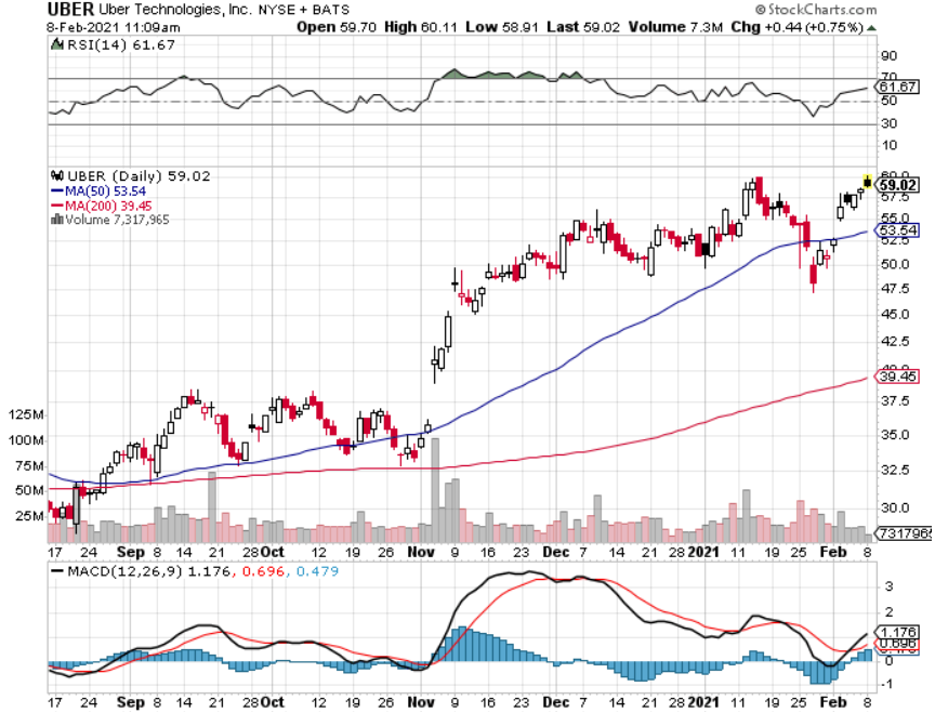
As 2020 came to a close, tech growth firms like Uber (UBER) stock exploded higher and DoorDash (DASH) gave the Vision Fund a nice payday going public at the end of the year in stellar fashion.

On the options trading front, things didn’t go so rosy.

SoftBank posted a 285.3 billion yen or $2.7 billion derivatives loss in the period.

I understand “hedging your bets” but for Son to create this massive loss undeniably has to infuriate deep-pocketed investors from Arab nations that have stuck with him through tumultuous events.  

The staggering option losses was why the asset management arm registered a loss of 113.5 billion yen or $1.08 billion, up from losses of 85.2 billion yen in the previous three-month period.

Experiencing wonderful gains only to have the narrative wiped out because of high stakes option bets is perhaps a sign of the times as phenomena like the Gamestop (GME) have moved to the forefront indicating that players have access to too much liquidity at this point in the market cycle.

Some 15 companies have gone public from the Vision Fund so far, and Son does have a long list of busts and winners.

However, one might assume that he won’t hit on every company as he revealed that his Vision Fund 1 and Vision Fund 2 have invested in a total of 131 companies. In the case of DoorDash, SoftBank invested about $680 million for a stake now worth about $9 billion while its $7.7 billion investment in Uber is worth $11.3 billion.

There are still shining stars on the balance sheet.

Another six more portfolio companies are planning IPOs this year and bringing this volume model to the public markets is logical considering even zombie companies are getting funded out the wazoo at this point.

Tech is also still holding its perch as the darling of the market and Son is simply delivering to market what investors want which is growth tech and more of it.

Other issues on Softbank’s list are to sell off its interests in Alibaba, T-Mobile US Inc., and SoftBank Corp., the Japan telecommunications unit. SoftBank also announced a deal to sell its chip designer Arm to Nvidia (NVDA) for $40 billion.

On top of the risky growth companies, Softbank has also parked its capital in a who’s who of tech firms such as a $7.39 billion investment in Amazon.com (AMZN), $3.28 billion in Facebook (FB). and $1.38 billion in Alphabet or Google (GOOGL). The operation is managed by its asset management subsidiary SB Northstar, where Son personally holds a 33% stake.

Son labeled his options debacle as a “test-drive stage” hoping to play down the fact that he should have made a lot more with the massive ramp-up in tech demand in 2020.

It’s not all smooth for Son with the chaos at Alibaba (BABA), Son’s most exotic investment success to date and SoftBank’s largest asset, tanked 20% last quarter amid a Chinese government clampdown on Alibaba Founder Jack Ma.

This has to worry Son’s future tech investing prospects in China (P.R.C.).

SoftBank’s own sale of Arm to Nvidia (NVDA) is still making the rounds through the EU approval process. The United Kingdom and European Union are both preparing to launch probes into the deal.

All in all, a mixed bag for the Vision Fund where profits should have been higher and most of the damage was self-inflicted.

At some point, throwing massive amounts of capital to juice up tech growth firms will backfire, but the generous access to liquidity that Son has makes this strategy work while even affording him some massive failures.

In short, the Vision Fund should be many times more profitable and it’s a reminder that these leveraged bets aren’t going away which should mean enough liquidity out there to take the markets higher.

We should also be aware that the eventual “market mistake” could give us 10% tech corrections, which are no brainer buying opportunities if the same liquidity volume persists.

Then consider that many tech companies have done well in the recent earnings season and combine that with the eventual reestablishment of buybacks and the neutral observer must think that tech has more room to run in 2021.


vision fund


vision fund


https://madhedgefundtrader.com/wp-content/uploads/2019/05/cropped-mad-hedge-logo-transparent-192x192_f9578834168ba24df3eb53916a12c882.png 0 0 Mad Hedge Fund Trader https://madhedgefundtrader.com/wp-content/uploads/2019/05/cropped-mad-hedge-logo-transparent-192x192_f9578834168ba24df3eb53916a12c882.png Mad Hedge Fund Trader2021-02-08 11:02:292021-02-14 15:02:00Venture Capitalists Share Clues to the Tech Market
Mad Hedge Fund Trader

February 2, 2021

Diary, Newsletter, Summary

Global Market Comments
February 2, 2021
Fiat Lux

Featured Trade:

(MY NEWLY UPDATED LONG-TERM PORTFOLIO),
(PFE), (BMY), (AMGN), (CELG), (CRSP), (FB), (PYPL), (GOOGL), (AAPL), (AMZN), (SQ), (JPM), (BAC), (MS), (GS), (BABA), (EEM), (FXA), (FCX), (GLD), (SLV), (TLT)

https://madhedgefundtrader.com/wp-content/uploads/2019/05/cropped-mad-hedge-logo-transparent-192x192_f9578834168ba24df3eb53916a12c882.png 0 0 Mad Hedge Fund Trader https://madhedgefundtrader.com/wp-content/uploads/2019/05/cropped-mad-hedge-logo-transparent-192x192_f9578834168ba24df3eb53916a12c882.png Mad Hedge Fund Trader2021-02-02 10:04:232021-02-02 10:37:11February 2, 2021
Mad Hedge Fund Trader

My Newly Updated Long-Term Portfolio

Diary, Newsletter

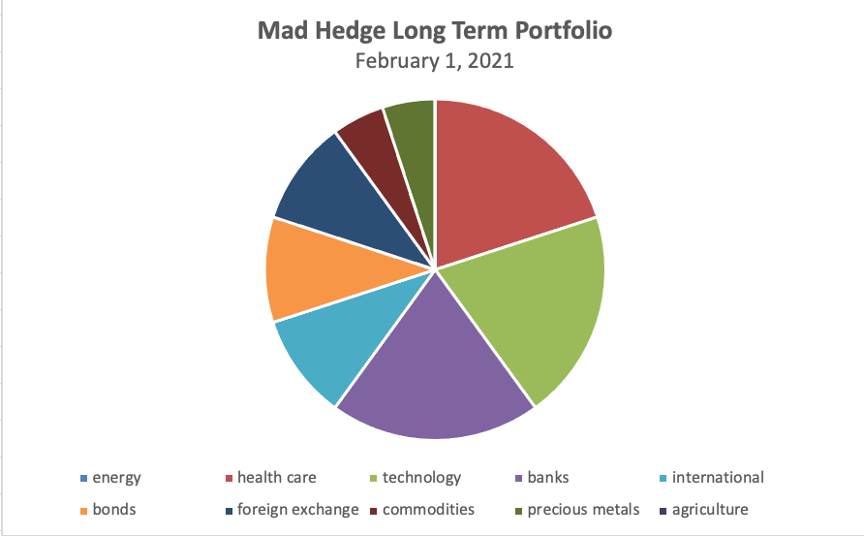
I am really happy with the performance of the Mad Hedge Long Term Portfolio since the last update on July 21, 2020.  In fact, not only did we nail the best sectors to go heavily overweight, we also completely dodged the bullets in the worst-performing ones.

For new subscribers, the Mad Hedge Long Term Portfolio is a “buy and forget” portfolio of stocks and ETFs. If trading is not your thing, these are the investments you can make, and then not touch until you start drawing down your retirement funds at age 72.

For some of you, that is not for another 50 years. For others, it was yesterday.

There is only one thing you need to do now and that is to rebalance. Buy or sell what you need to reweight every position to its appropriate 5% or 10% weighting. Rebalancing is one of the only free lunches out there and always adds performance over time. You should follow the rules assiduously.

Despite the seismic changes that have taken place in the global economy over the past nine months, I only need to make minor changes to the portfolio, which I have highlighted below.

To download the entire new portfolio in an excel spreadsheet, please go to www.madhedgefundtrader.com, log in, go “My Account”, then “Global Trading Dispatch”, then click on the “Long Term Portfolio” button.

Changes

I am cutting back my weighting in biotech from 25% to 20% because Celgene (CELG) was taken over by Bristol Myers (BMY) at a 110% profit compared to our original cost. We also earned a spectacular 145% gain on Crisper Therapeutics (CRSP). I’m keeping it because I believe it has more to run.

My 30% weighting in technology also gets pared back to 20% because virtually all of my names have doubled or more. These have been in a sideways correction for the past six months but are still an important part of any barbell portfolio. So, take out Facebook (FB) and PayPal (PYPL) and keep the rest.

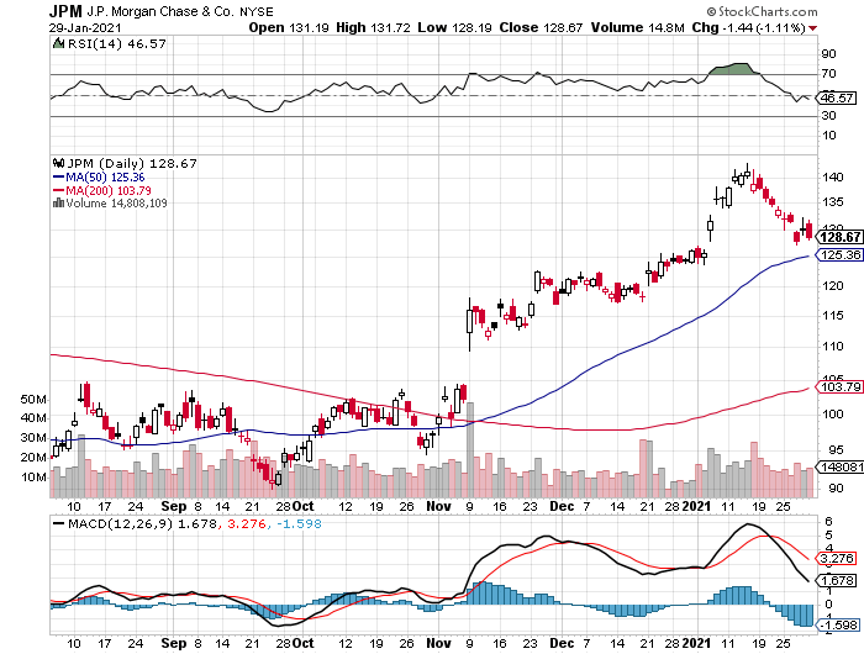
I am increasing my weighting in banks from 10% to 20%. Interest rates are finally starting to rise, setting up a perfect storm in favor of bank earnings. Loan default rates are falling. Banks are overcapitalized, thanks to Dodd-Frank. And because of the trillions in government stimulus loans they are disbursing, they are now the most subsidized sector of the economy. So, add in Morgan Stanley (MS) and Goldman Sachs (GS), which will profit enormously from a continuing bull market in stocks.

Along the same vein, I am committing 10% of my portfolio to a short position in the United States Treasury Bond Fund (TLT) as I think bonds are about to go to hell in a handbasket. I rant on this sector on an almost daily basis, so go read Global Trading Dispatch.

I am keeping my 10% international exposure in Chinese Internet giant Alibaba (BABA) and the iShares MSCI Emerging Market ETF (EEM). The Biden administration will most likely dial back the recent vociferous anti-Chinese stance, setting these names on fire.

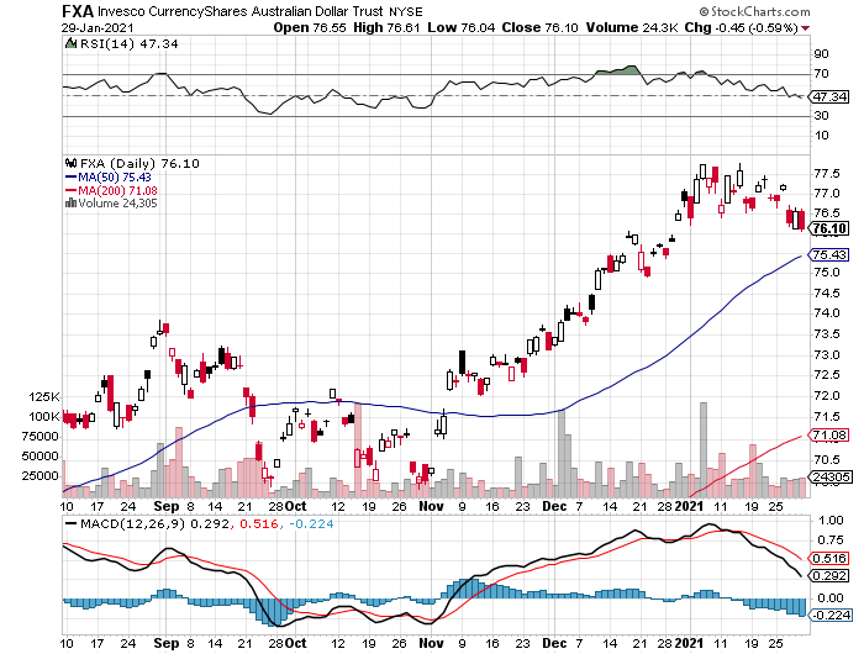
I am also keeping my foreign currency exposure unchanged, maintaining a double long in the Australian dollar (FXA). The Aussie has been the best performing currency against the US dollar and that should continue.

Australia will be a leveraged beneficiary of the synchronized global economic recovery, both through strong commodity prices and gold which has already started to rise, and the post-pandemic return of Chinese tourism and investment. I argue that the Aussie will eventually make it to parity with the US dollar, or 1:1.

As for precious metals, I’m baling on my 10% holding in gold (GLD), which delivered a nice 20% gain in 2020. From here, it is having trouble keeping up with other alternative assets, like Bitcoin, and there are better fish to fry.

Yes, in this liquidity-driven global bull market, a 20% return is just not enough to keep my interest. Instead, I add a 5% weighting in the higher beta and more volatile iShares Silver Trust (SLV), which has far wider industrial uses in solar panels and electric vehicles.

As for energy, I will keep my weighting at zero. Never confuse “gone down a lot” with “cheap”. I think the bankruptcies have only just started and will stretch on for a decade. Thanks to hyper-accelerating technology, the adoption of electric cars, and less movement overall in the new economy, energy is about to become free. You are looking at the next buggy whip industry.

My ten-year assumption for the US and the global economy remains the same. I’m looking at 3%-5% a year growth for the next decade.

When we come out the other side of this, we will be perfectly poised to launch into my new American Golden Age, or the next Roaring Twenties. With interest rates still at zero, oil cheap, there will be no reason not to. The Dow Average will rise by 400% or more in the coming decade. The America coming out the other side of the pandemic will be far more efficient, productive, and profitable than the old.

You won’t believe what’s coming your way!

I hope you find this useful and I’ll be sending out another update in six months so you can rebalance once again.

Stay healthy.

John Thomas
CEO & Publisher
The Diary of a Mad Hedge Fund Trader


https://www.madhedgefundtrader.com/wp-content/uploads/2021/02/long-term-portfolio.png 536 864 Mad Hedge Fund Trader https://madhedgefundtrader.com/wp-content/uploads/2019/05/cropped-mad-hedge-logo-transparent-192x192_f9578834168ba24df3eb53916a12c882.png Mad Hedge Fund Trader2021-02-02 10:02:032021-02-02 10:37:30My Newly Updated Long-Term Portfolio
Mad Hedge Fund Trader

January 22, 2021

Diary, Newsletter, Summary

Global Market Comments
January 22, 2021
Fiat Lux

Featured Trade:
(JANUARY 20 BIWEEKLY STRATEGY WEBINAR Q&A),
(QQQ), (IWM), (SPY), (ROM), (BRK/A), (AMZN), NVDA), (MU), (AMD), (UNG), (USO), (SLV), (GLD), ($SOX), CHIX), (BIDU), (BABA), (NFLX), (CHIX), ($INDU), (SPY), (TLT)

https://madhedgefundtrader.com/wp-content/uploads/2019/05/cropped-mad-hedge-logo-transparent-192x192_f9578834168ba24df3eb53916a12c882.png 0 0 Mad Hedge Fund Trader https://madhedgefundtrader.com/wp-content/uploads/2019/05/cropped-mad-hedge-logo-transparent-192x192_f9578834168ba24df3eb53916a12c882.png Mad Hedge Fund Trader2021-01-22 11:04:402021-01-22 11:40:06January 22, 2021
Page 6 of 17«‹45678›»

tastytrade, Inc. (“tastytrade”) has entered into a Marketing Agreement with Mad Hedge Fund Trader (“Marketing Agent”) whereby tastytrade pays compensation to Marketing Agent to recommend tastytrade’s brokerage services. The existence of this Marketing Agreement should not be deemed as an endorsement or recommendation of Marketing Agent by tastytrade and/or any of its affiliated companies. Neither tastytrade nor any of its affiliated companies is responsible for the privacy practices of Marketing Agent or this website. tastytrade does not warrant the accuracy or content of the products or services offered by Marketing Agent or this website. Marketing Agent is independent and is not an affiliate of tastytrade. 

Legal Disclaimer

There is a very high degree of risk involved in trading. Past results are not indicative of future returns. MadHedgeFundTrader.com and all individuals affiliated with this site assume no responsibilities for your trading and investment results. The indicators, strategies, columns, articles and all other features are for educational purposes only and should not be construed as investment advice. Information for futures trading observations are obtained from sources believed to be reliable, but we do not warrant its completeness or accuracy, or warrant any results from the use of the information. Your use of the trading observations is entirely at your own risk and it is your sole responsibility to evaluate the accuracy, completeness and usefulness of the information. You must assess the risk of any trade with your broker and make your own independent decisions regarding any securities mentioned herein. Affiliates of MadHedgeFundTrader.com may have a position or effect transactions in the securities described herein (or options thereon) and/or otherwise employ trading strategies that may be consistent or inconsistent with the provided strategies.

Copyright © 2025. Mad Hedge Fund Trader. All Rights Reserved. support@madhedgefundtrader.com
Scroll to top