• support@madhedgefundtrader.com
  • Member Login
Mad Hedge Fund Trader
  • Home
  • About
  • Store
  • Luncheons
  • Testimonials
  • Contact Us
  • Click to open the search input field Click to open the search input field Search
  • Menu Menu

Tag Archive for: (EBAY)

Mad Hedge Fund Trader

The Green Light for E-commerce

Tech Letter

Data from Adobe Analytics is in and it suggests that e-commerce is delivering on its expected domination over retail.

I can’t ignore the helping hand of the pandemic which has deemed pedestrian shopping malls too dangerous to set foot in and for analog businesses that survive, it is essentially coming down to whether a digital footprint has been developed or not.

There is only so much a PPP loan can do to paper over the cracks of a non-digital business.

At some point, CEOs will need to wake up and understand that survival means a migration to digital.

Forecasts show that Black Friday online sales will register between $8.9 billion and $10.6 billion, which represents growth of up to 42% year over year.

The data firm expects Black Friday and Cyber Monday to become the two largest online sales days in history as consumers shift more spending toward e-commerce amid the public health crisis.  

By last Friday morning, Salesforce projected online sales in the U.S. for Black Friday to spike 15% to $11.9 billion.

The truth is that many shoppers got their shopping done even before Thursday and Friday with digital sales in the U.S. spiking 72% year over year on Tuesday and were up 48% on Wednesday.

E-commerce companies front-ran the actual holidays to eke out more profit in the anticipation of competitors offering earlier sales.

According to Adobe, Thanksgiving sales hit a record $5.1 billion, up 21.5% over 2019 and this aggressive growth rate can be considered the new normal.

Smartphones continued to account for an increasing segment of online sales, with this year’s $3.6 billion up 25.3%, while alternative deliveries — a sign of the e-commerce space maturing — also continued to grow, with in-store and curbside pickup up 52% on 2019.

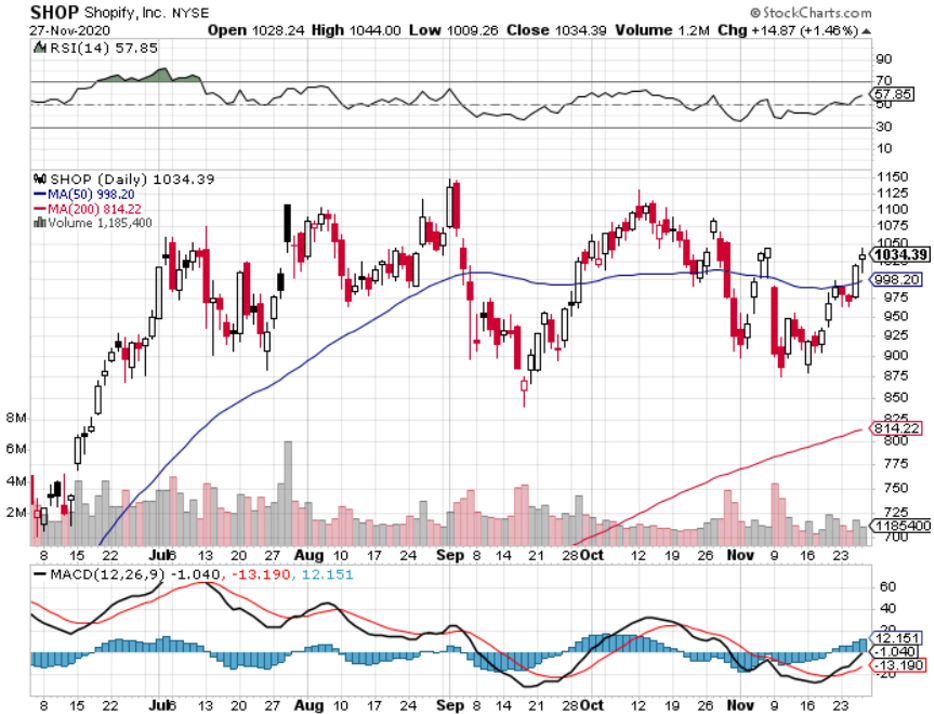
Shopify said that over 70% of its sales are being made using smartphones.

What are the hot gift items?

Electronics, tech, toys, and sports goods being the most popular categories — at the right price will help retailers continue to experience elevated sales volume.

Adobe said a survey of consumers found that 41% said they would start shopping earlier this year than previous years due to much earlier discounts.

This season is headed for record-breaking levels as consumers power online sales for both holiday gifts and necessities.

Not all big-box retailers were open over the holidays and getting that extra surge from the likes of daily needs such as paper towels, cleaning products, and garbage bags has boosted the top-line growth as well.

We have seen the perfect storm of elements fuse together to help the bottom line records of the likes we have never observed.

Comps will be difficult to beat next year if the vaccine solution starts coming online by next winter and considering that the worst economic damage is behind us.

Next year, the U.S. consumer will have more to spend setting up a tough but possible beat to next year’s numbers along with the high likelihood that tech stocks will experience another leg up.

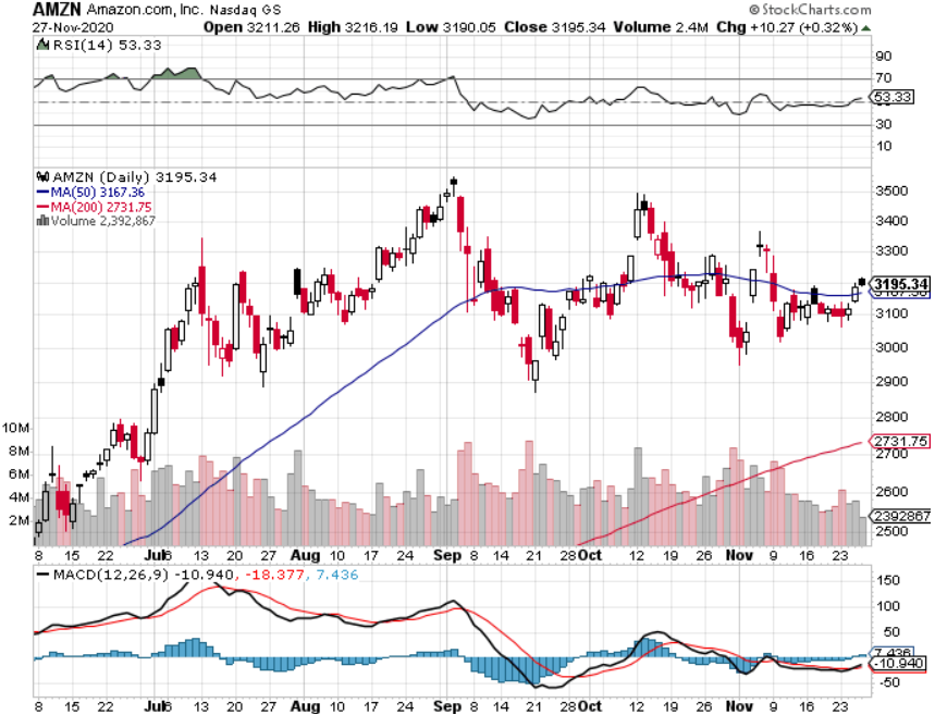
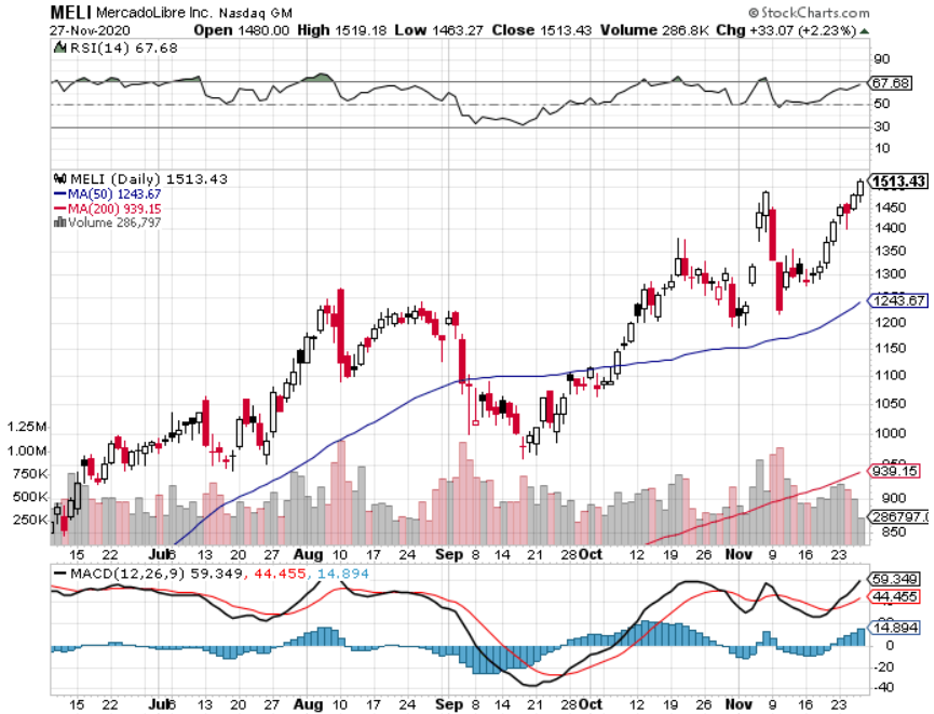
There will be a lot happening in between, such as a new U.S. administration that is primed for a different economic polic; but it’s impossible not to love the narrative of certain e-commerce companies such as Shopify (SHOP), MercadoLibre (MELI), Target (TGT), Walmart (WMT), Etsy (ETSY), Wayfair (W), eBay (EBAY), Overstock.com (OSTK), Amazon (AMZN) and the companies that measure their data like Salesforce (CRM) and Adobe (ADBE).

If we ever could anoint when a year became the year of technology, then this would be it in 2020.

The base case for next year is that the borders and states will still grapple with the virus and the knock-on effects to society, economy, and politics as the capacity to produce the virus won’t meet demand for at least a year.

Tech stocks are primed to outperform non-tech next year and even though multiples are high, the momentum suggests that this group of stocks will be the gift that keeps giving as the Fed has offered generous liquidity conditions to tech investors.


e-commerce

https://madhedgefundtrader.com/wp-content/uploads/2019/05/cropped-mad-hedge-logo-transparent-192x192_f9578834168ba24df3eb53916a12c882.png 0 0 Mad Hedge Fund Trader https://madhedgefundtrader.com/wp-content/uploads/2019/05/cropped-mad-hedge-logo-transparent-192x192_f9578834168ba24df3eb53916a12c882.png Mad Hedge Fund Trader2020-11-30 10:02:262020-12-04 15:30:24The Green Light for E-commerce
Mad Hedge Fund Trader

November 11, 2020

Tech Letter


Mad Hedge Technology Letter
November 11, 2020
Fiat Lux

Featured Trade:

(THE VULTURES AT ELLIOT MANAGEMENT)
(FFIV), (TWTR), (EBAY), (T)

https://madhedgefundtrader.com/wp-content/uploads/2019/05/cropped-mad-hedge-logo-transparent-192x192_f9578834168ba24df3eb53916a12c882.png 0 0 Mad Hedge Fund Trader https://madhedgefundtrader.com/wp-content/uploads/2019/05/cropped-mad-hedge-logo-transparent-192x192_f9578834168ba24df3eb53916a12c882.png Mad Hedge Fund Trader2020-11-11 12:04:312020-11-11 12:31:03November 11, 2020
Mad Hedge Fund Trader

The Vultures at Elliott Management

Tech Letter

Elliott Management’s dive into tech can be used as a leading indicator of which tech companies are great fixer-uppers.

Truth be told, Elliott Management, the vulture hedge fund, has a knack for finding those rusted cloud gems and polishing them shiny.

They don’t do this for free either, and making a killing on each of these turnaround stories usually has the same ruthless strategy.

Some of the prey were well-known within particular tech sector niches, like BMC, Novell and Informatica, but none were giants or household names.

Billionaire Paul Singer, notched sale after sale, reaping gains from the associated premiums on the acquisitions.

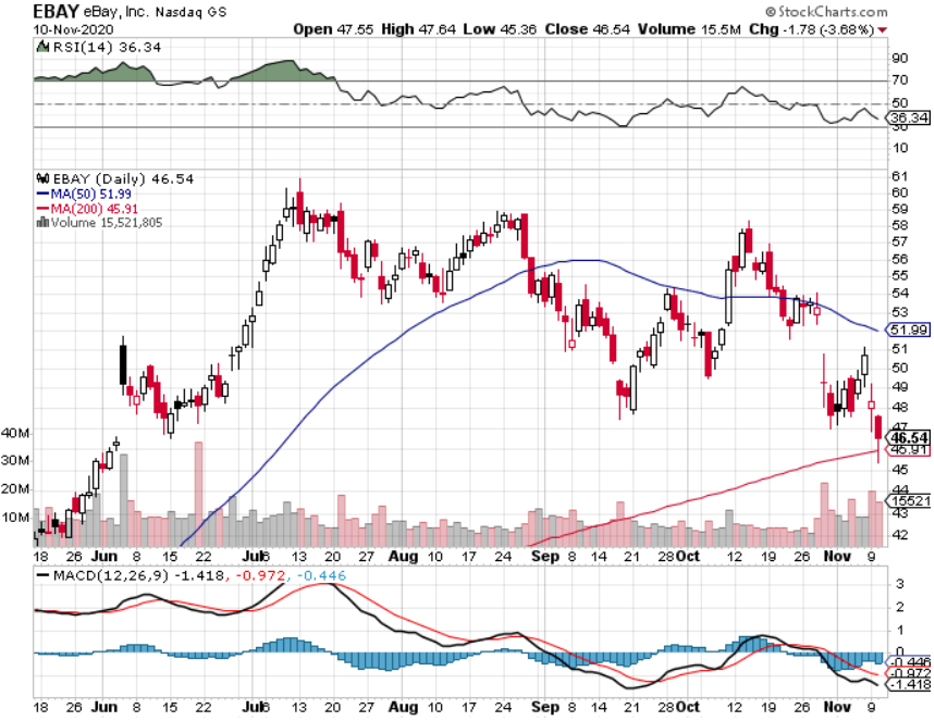
Most recently, his tech aspirations have increased with the pedigree of the company dwarfing in size he did before with stakes in eBay (EBAY), SAP, and AT&T (T).

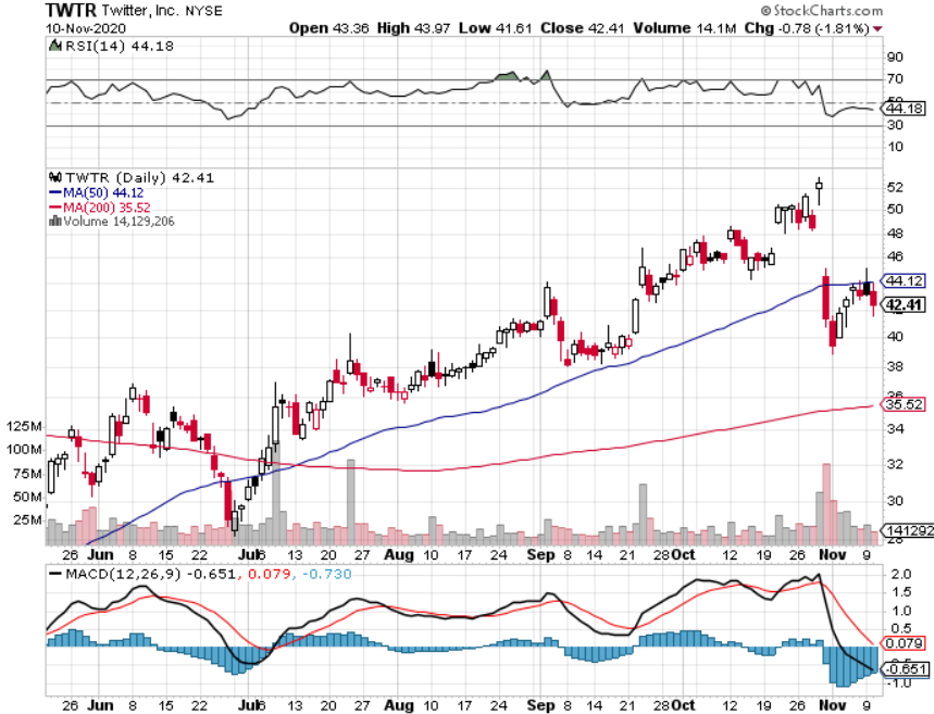
This year, Elliott has already feasted on Twitter (TWTR) and SoftBank.

Part of the reason for slaying bigger dragons is because tech has gotten expensive with multiples expanding rapidly, and successfully leveraging usually works by going bigger and not smaller.

How does Elliott influence the change needed to raise the share prices?

First, getting his guys on the board to make decisions for the company.

He does this by getting his most trusted confidante and deal maker Jesse Cohn in the mix and he leads Elliott’s technology transactions.

He now sits on the boards of both eBay and Twitter.

Rather than scorching the earth for public change, he has worked in tandem with management at both companies.

Cohn is also supported by Elliott’s in-house Internet analysts, software analysts, operation analysts, consultants and stable of installed board members to help make decisions.

A decision they were at the forefront of was possibly firing Jack Dorsey at Twitter after identifying him as not maximizing profitability and revenue at Twitter.

Ultimately, Dorsey earned himself another quarter as CEO, but that’s how things work at Elliott, they run a tight ship.

Twitter said in a securities filing that a board committee formed this spring recommended that the current management structure remains in place for the time being.

The announcement gives Mr. Dorsey a reprieve after his performance was heavily criticized by Cohn and Elliott Management.

Twitter and Elliott reached an agreement in March in which the company agreed to appoint two board members and commit to $2 billion in share buybacks.

The agreement also included the formation of the new committee to study Twitter’s leadership, which effectively created a probation period for Mr. Dorsey to prove himself to the new investors.

So, does Elliott’s aggressive strategy work or fail?

The proof is in the pudding with Twitter shares up about 40% since bottoming out in March.

Twitter has expanded its userbase by about 23% since the fourth quarter of 2019.

So what now for Elliott?

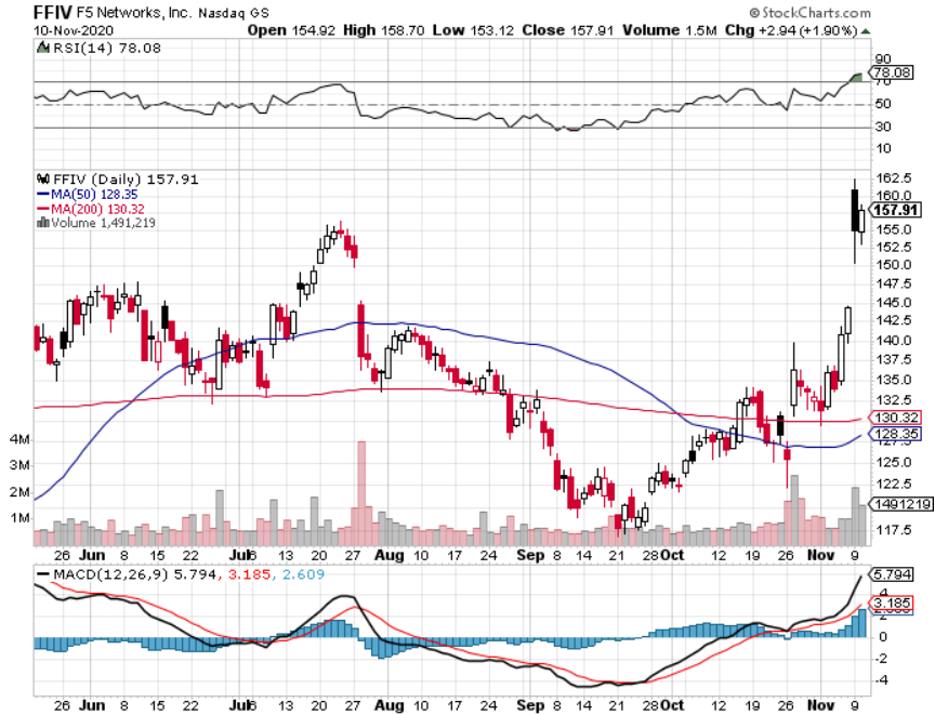
Elliott is now one of the biggest investors in F5 Networks (FFIV), a Seattle company with a market value of about $8.8 billion.

They have spoken to the software company’s management about ways to appreciate the underlying shares which has not gone up in the past 365 days.

Shares have seriously underperformed to similar-sized cloud companies.

F5 Networks provides multi-cloud application services for the availability, security, performance, and availability of network applications, servers, and storage systems.

So far, they have announced plans to repurchase $1 billion worth of stock through fiscal 2022.

The buyback plan includes the accelerated repurchase of $500 million worth of stock in fiscal 2021.

The company said it targets double-digit adjusted earnings per share growth over the next two years and revenue growth of 6% to 7%, including software revenue growth CAGR of 35% to 40%.

These moves will help the company arrive at an inflection point in the transformation story where operating margins are poised to expand and revenue will accelerate, leading to sustainable double-digit growth

Elliott has also investigated some dubious decisions by F5’s management such as the company’s recent acquisitions of Shape Security Inc. and Nginx Software Inc., unhappy F5 overpaid without a clear integration strategy.

Elliott’ roadmap typically involves sizeable stakes in tech firms giving them the authority to throw their weight around behind the scenes.

Stock buybacks, acquiring company board seats, reducing expenses, acquisitions, wholesale management changes are part of their recipe for raising the stock price.

I have no reason to believe that Elliott will fail this time around after their string of tech successes and that leads me to recommend F5 Networks as a great buy the dip tech story.

The first stage of the turnaround is usually the most dramatic and noticeable with the follow-through to the flagging share price.

I wouldn’t be shocked if shares are up 25% from current prices in Q1 2021.


Elliott


Elliott

https://madhedgefundtrader.com/wp-content/uploads/2019/05/cropped-mad-hedge-logo-transparent-192x192_f9578834168ba24df3eb53916a12c882.png 0 0 Mad Hedge Fund Trader https://madhedgefundtrader.com/wp-content/uploads/2019/05/cropped-mad-hedge-logo-transparent-192x192_f9578834168ba24df3eb53916a12c882.png Mad Hedge Fund Trader2020-11-11 12:02:282020-11-15 15:46:41The Vultures at Elliott Management
Mad Hedge Fund Trader

June 23, 2020

Diary, Newsletter, Summary

Global Market Comments
June 23, 2020
Fiat Lux

Featured Trade:

(HERE ARE THE FOUR BEST PANDEMIC-INSPIRED TECHNOLOGY TRENDS),
(AMZN), (CHWY), (EBAY), NFLX), (SPOT), (TMUS), (ATVI), (V), (PYPL), (AAPL), (MA), (TDOC), (ISRG), (TMDI)

https://madhedgefundtrader.com/wp-content/uploads/2019/05/cropped-mad-hedge-logo-transparent-192x192_f9578834168ba24df3eb53916a12c882.png 0 0 Mad Hedge Fund Trader https://madhedgefundtrader.com/wp-content/uploads/2019/05/cropped-mad-hedge-logo-transparent-192x192_f9578834168ba24df3eb53916a12c882.png Mad Hedge Fund Trader2020-06-23 09:04:582020-06-23 09:02:04June 23, 2020
Mad Hedge Fund Trader

Here the Four Best Pandemic-Inspired Technology Trends

Diary, Newsletter, Summary

By now, we have all figured out that the pandemic has irrevocably changed the course of technology investment. Some sectors are enjoying incredible windfalls, while others are getting wiped out.

The digitization of the economy has just received a turbocharger. It has become a stock pickers market en extemus.

The good news is that we are still on the ground floor of trends that have a decade to run, like working from home, more online food purchases, and a rise in touchless payments. This means there's a huge upside for investors willing to make big bets on what’s expected to become some of the most important technologies in the years ahead.

Covid-19 is a wake-up call to accelerate trends that have been around for years and are now greatly speeding up. The pandemic seems to have triggered a new survival instinct: innovate fast or die. Let me list some of the frontrunners.

1. E-commerce

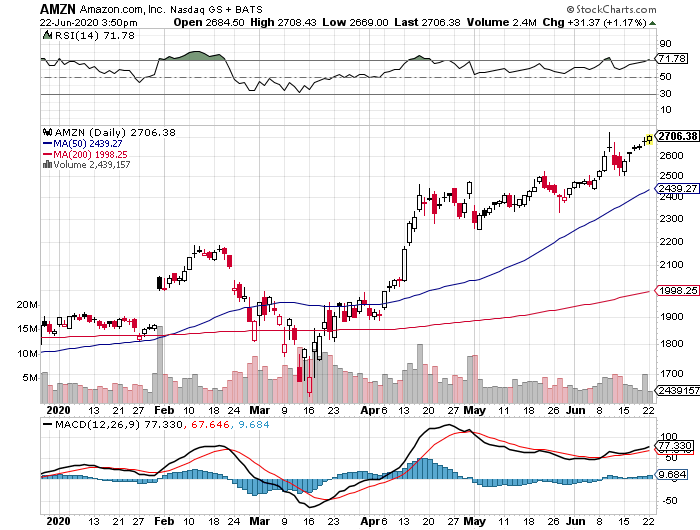
E-commerce is the No. 1 shelter-in-place beneficiary by miles, as a combination of stay-at-home orders, reduced spending on dining, and government stimulus have sent Americans in search of other ways to spend their money. Even though Covid-19 restrictions are now being eased, the e-commerce industry should still see about 25% growth across all of 2020.

The estimated $60 billion spent by consumers from their stimulus checks has also been a tailwind. While the world is now re-opening, we expect these buckets of available dollars to remain e-commerce tailwinds for the foreseeable future as we expect adjusted retail and travel spend to decline an aggregate of 18% in and for as much as half of all small retail stores to potentially close this year.

When Amazon shares were at $1,000, I wrote a report calculating that its breakup value was at least $3,000 a share. It looks like Amazon may hit that target before yearend….without the breakup.

Want to know the winners? Try Amazon (AMZN), Chewy (CHWY), and eBay (EBAY).

2. Digital Entertainment

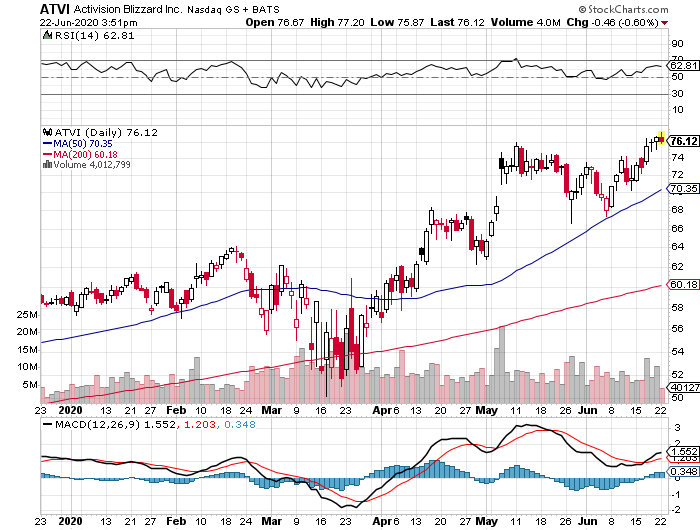
The Covid-19 pandemic has also left more Americans in search of digital, at-home entertainment, a trend that’s delivered a huge push for companies like Activision Blizzard that develop online games. New users, time spend gaming and in-game purchases are only accelerating and spell even more lasting benefit for game developers.

Content names like video streaming site Netflix (NFLX), as well as bandwidth and connectivity companies including Comcast (CMCSA) and T-Mobile (TMUS), are names to focus on.

This increased use of high bandwidth applications is likely to continue post-COVID-19 and has the impact of similarly increasing the demand for bandwidth and connectivity. This increases the value of upstream assets in the infrastructure sectors like fiber-based wireline broadband networks and nascent 5G build-outs.

Names to play the space: Netflix (NFLX), Spotify (SPOT), T-Mobile (TMUS), Activision Blizzard (ATVI).

3. Touchless payments

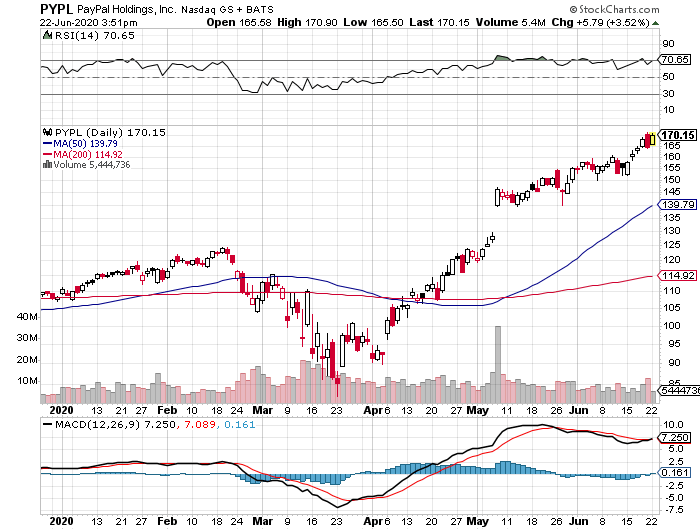
Another trend the stock market still underappreciated is a generational surge in contactless payments, which has recently seen a jump higher amid Covid-19 fears and efforts to minimize physical contact. Companies like Visa (V), Mastercard (MA), and PayPal (PYPL), already integral to the payments world, should be major beneficiaries in the years ahead.

The market assumes that COVID-19 related adoption of digital payments is a near-term benefit for payment service providers, offsetting some of the consumer spending headwinds. However, digitization of payments is part of a multi-year secular growth driver, with COVID-19 as just the latest accelerator.

Names to play the space: Visa (V), PayPal (PYPL), Apple (AAPL), and Mastercard (MA).

4. Telemedicine

Healthcare is one of the most inefficient industries left in the United States. I call it a 19th century industry operating with 21st century technology. While progress has been made, those massive stacks of paper records are finally disappearing, there still is a long way to go.

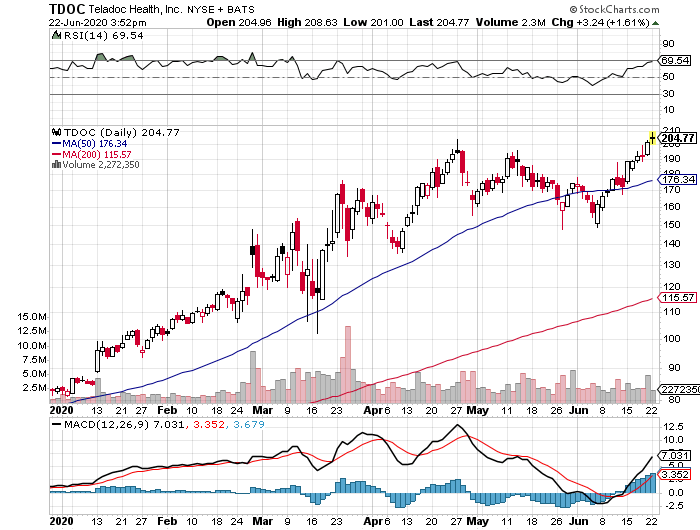
These days, even doctors don’t want to see patients in person, as they may contract the Coronavirus. Far better to see them online, which could address 90% of most patients. Teledoc (TDOC) does exactly that (click here for my full report).

So does Intuitive Surgical (ISRG), maker of DaVinci Surgical Systems, which enables remote operations for a whole host of maladies. Titan Medical (TMDI) is another name to look at here.

Names to play the space: (TDOC), (ISRG), (TMDI).


https://www.madhedgefundtrader.com/wp-content/uploads/2020/06/john-vegas.png 343 457 Mad Hedge Fund Trader https://madhedgefundtrader.com/wp-content/uploads/2019/05/cropped-mad-hedge-logo-transparent-192x192_f9578834168ba24df3eb53916a12c882.png Mad Hedge Fund Trader2020-06-23 09:02:442020-06-23 09:02:32Here the Four Best Pandemic-Inspired Technology Trends
Mad Hedge Fund Trader

March 11, 2020

Tech Letter

Mad Hedge Technology Letter
March 11, 2020
Fiat Lux

Featured Trade:

(THE BEST LEAPS IN MID-SIZED TECH)
(TWTR), (EBAY)

https://madhedgefundtrader.com/wp-content/uploads/2019/05/cropped-mad-hedge-logo-transparent-192x192_f9578834168ba24df3eb53916a12c882.png 0 0 Mad Hedge Fund Trader https://madhedgefundtrader.com/wp-content/uploads/2019/05/cropped-mad-hedge-logo-transparent-192x192_f9578834168ba24df3eb53916a12c882.png Mad Hedge Fund Trader2020-03-11 10:04:002020-03-11 10:28:44March 11, 2020
Mad Hedge Fund Trader

The Best LEAPS in Mid-Sized Tech

Tech Letter

Successful investors rarely disclose their modus operandi.

The truth is that success comes in all shapes and sizes.

Many take the volatility index and aggressively short it until death hoping to avoid the “big one” that wipes them out.

Picking up pennies in front of the steam roller on steroids works until it doesn’t.

Conversely, long-term investors with an eagle-eye view of the underlying trends in the economy, society, and the tech sector will let the market crash come to them only to slip in a few long-dated long-term equity anticipation securities (LEAPs) in their favorite names.

The reasons are very obvious. The risk on a LEAP is limited. You can’t lose any more than you put in. At the same time, they permit enormous amounts of upside leverage.

Two years out, the longest maturity available for most LEAPS, allow plenty of time for the world and the markets to get back on an even keel.

Depressions, pandemics, tsunamis, oil shocks, interest rates going to 0, and political instability all fall away within two years and pave the way for dramatic stock market reversals.

You just put them away and forget about them. Wake me up when it is 2022.

There is a smarter way to execute this portfolio. Put in throw-away crash bids at levels so low they will only get executed on the next 1,000 point down day in the Nasdaq Index which could happen any day.

You can play around with the strike prices all you want. Going farther out of the money increases your returns but raises your risk as well. Going closer to the money reduces risk and returns, but the gains are still a multiple of the underlying stock.

Committing to risk when there is blood in the streets seems scary at the time, but is often the origins of fruitful trades that get fully harvested down the road.

I am zeroing in on two companies that aren’t the vaunted FANGs but are positioned right behind their back shoulder and whose share prices are poised to shoot higher long before the January 2020 expiration.

Considering we have just had an eye-gouging 20% sell-off in tech shares, there is the argument that tech shares are on discount in the shop window as we speak.

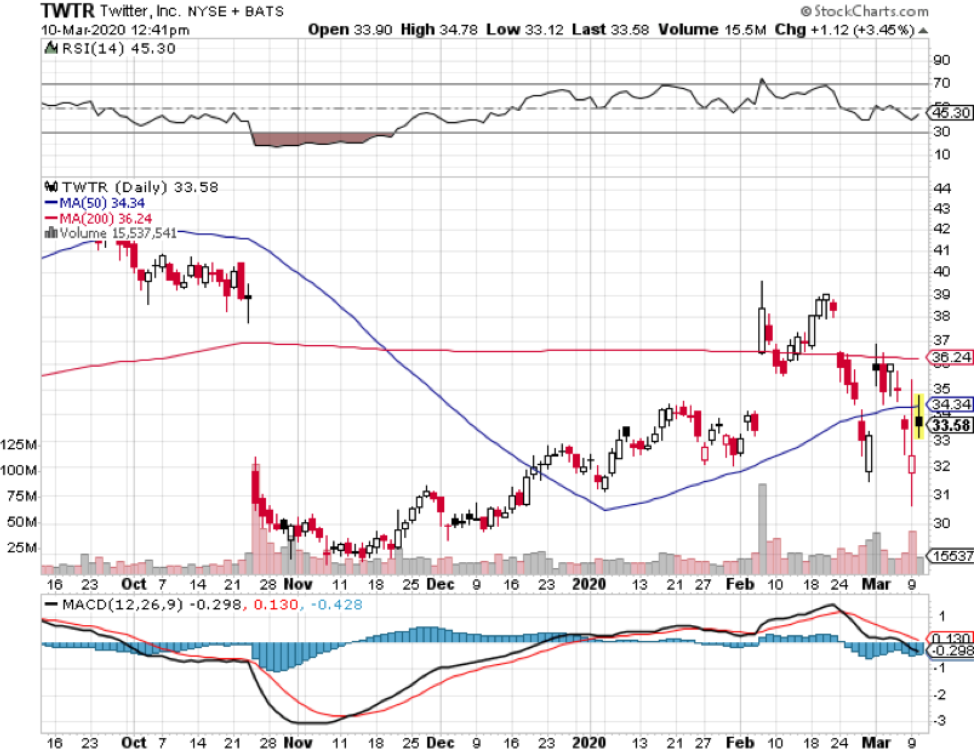
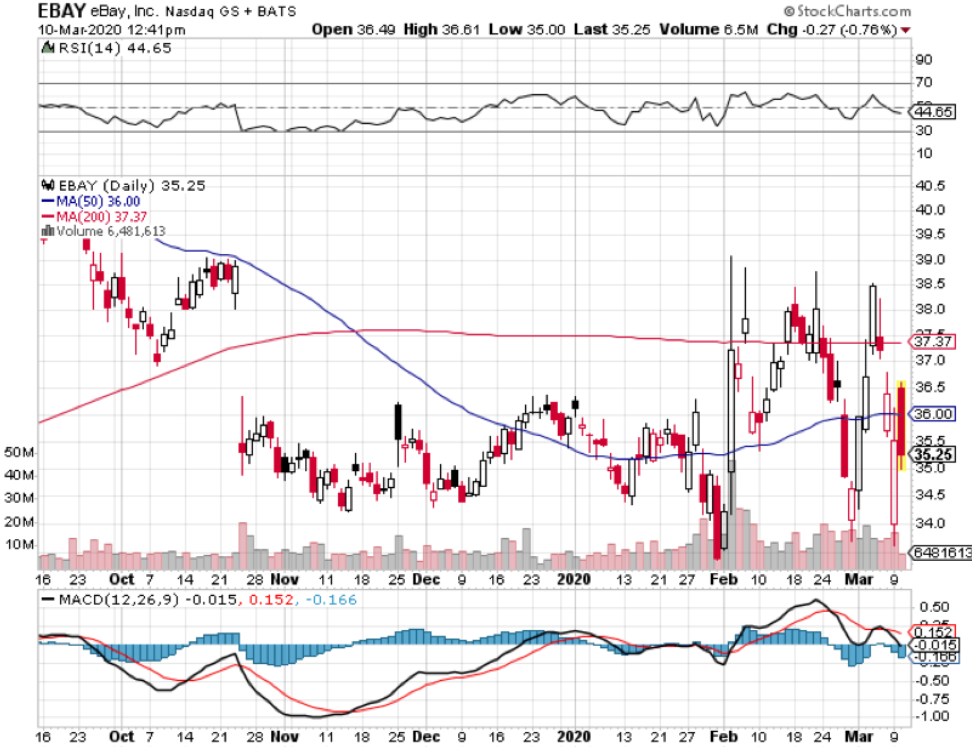
The two companies who fit the bill are Twitter (TWTR) and eBay (EBAY).

What do they have in common?

Both are being bullied and cajoled by Elliott Management, the vulture fund who cut its teeth on profiting off of distressed debt but have now ventured into the realm of public markets to only bring the same type of aggressiveness and bottom line mentality to the octagon cage.

They exist solely to deliver shareholders higher returns and brutally squeeze growth out of underperforming assets.

There is no empathy or feel-good factor at Elliot.

They have identified Twitter and eBay as low-hanging fruit in the tech ecosystem and have adamantly demanded that management get their finger out and improve its execution.

I agree with Elliot that Twitter and eBay have failed to find the parabolic growth that something like a Facebook has experienced.

Elliot Management is here to set things straight, after they quietly acquired a 4% stake in Twitter, and that couldn’t be more evident when they tried to oust CEO of Twitter Jack Dorsey a few days ago.

The vulture fund was already peeved that Dorsey was splitting time with his other company Square and imagine how they felt when Dorsey announced he would seek to spend the year in Africa working remotely.

The outcry and backlash were considerable, and the strong-arm tactics have worked out beautifully for Elliot Management who scored an extra 3 seats on Twitter’s board for agreeing to allow Dorsey to keep his job.

On top of that, Dorsey agreed to expand Twitter’s user base by at least 20% this year, achieve accelerating revenue growth, and gain market share as a digital advertiser.

In effect, Elliot Management put Dorsey in his place, and they have had the same type of end result in eBay’s management ranks as well.

Under almost any scenario, it’s hard to fathom that these two tech companies will have share prices lower by January 2022.

Granted, short-term gyrations are ripe for volatility as the coronavirus wreaks havoc on the sensitive minds of investors and traders, but the risk/reward in these two LEAPs are overwhelmingly favorable.

I would suggest looking at the $23 strike price for Twitter and eBay and executing a limit order near the bid price.

At the $23 strike price, 7 contracts would cost around $10,000 for Twitter’s LEAPs and 8 contracts for eBay.

Executing limit orders is necessary otherwise you will get gouged on the spread nullifying the leverage that is critical to making this trade a homerun.

If the market swan dives, there is a high chance of getting an order filled at the price you are comfortable with.

There is a strong likelihood of cashing out in January 2022 – what’s not to like about that?

Twitter’s Jan 2022 LEAP:

Twitter’s Jan 2022 LEAP:


https://madhedgefundtrader.com/wp-content/uploads/2019/05/cropped-mad-hedge-logo-transparent-192x192_f9578834168ba24df3eb53916a12c882.png 0 0 Mad Hedge Fund Trader https://madhedgefundtrader.com/wp-content/uploads/2019/05/cropped-mad-hedge-logo-transparent-192x192_f9578834168ba24df3eb53916a12c882.png Mad Hedge Fund Trader2020-03-11 10:02:232020-05-11 13:17:03The Best LEAPS in Mid-Sized Tech
Mad Hedge Fund Trader

February 21, 2020

Tech Letter

Mad Hedge Technology Letter
February 21, 2020
Fiat Lux

Featured Trade:

(WHY THE GOVERNMENT IS GUNNING FOR GOOGLE AND FACEBOOK)
(FB), (GOOGL), (TWTR), (ADBE), (FTNT), (EBAY)

https://madhedgefundtrader.com/wp-content/uploads/2019/05/cropped-mad-hedge-logo-transparent-192x192_f9578834168ba24df3eb53916a12c882.png 0 0 Mad Hedge Fund Trader https://madhedgefundtrader.com/wp-content/uploads/2019/05/cropped-mad-hedge-logo-transparent-192x192_f9578834168ba24df3eb53916a12c882.png Mad Hedge Fund Trader2020-02-21 04:04:102020-02-21 05:44:00February 21, 2020
Mad Hedge Fund Trader

Why the Government is Gunning for Google and Facebook

Tech Letter

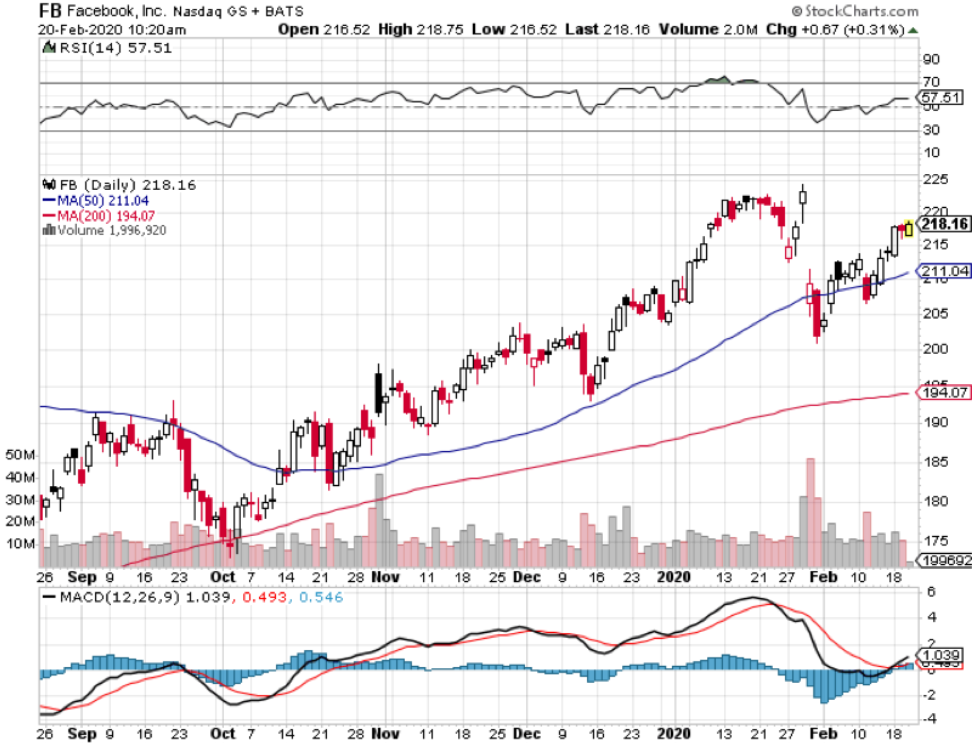
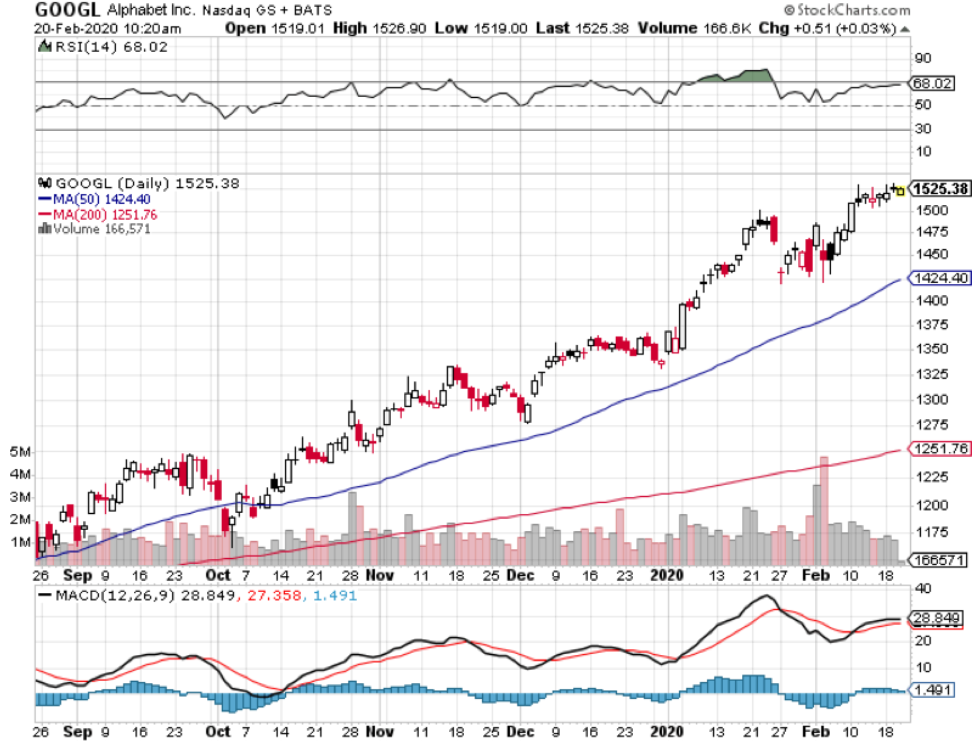
Google (GOOGL) and Facebook (FB) are dominant to the extent that the U.S. administration is hoping to dismantle them.

The two companies enjoy a flourishing duopoly and guzzle up digital ad dollars.

Governments around the world are scratching their heads attempting to figure out how to put a dent in these fortresses and so far, have been unsuccessful.

Big tech has made governments look bad, to say the least, and their response has been even more shambolic.

Alphabet installed Google CEO Sundar Pichai as the top decision-maker for all Alphabet assets preparing for the onslaught of digital privacy headwinds and regulation that the E.U., U.S., and everyone else will throw at them.

Luckily, they do not need to deal with the Chinese communist party as big tech minus Apple was effectively banned years ago.

What’s on Google and Facebook’s plate right now?

Attorney General William Barr has pointed the finger at these two platforms for hiding behind a clause that gives them immunity from lawsuits while their platforms carry material promoting illicit and immoral conduct and suppressing opinions.

Barr is currently looking into potential changes to Section 230 of the Communications Decency Act, which was passed in 1996 and has been also referred to as the supercharger to tech riches.

What could eventually come of this?

Barr could decide for the Justice Department to explore ways to limit the provision, which protects internet companies from liability for user-generated content.

This could open up Google and Facebook to higher costs of managing content on their platforms and lawsuits related to malcontent in which they fail to remove.

Even though platforms love to market that they actively thwart bad actors, at the end of the day, they aren’t on the hook for what happens.

Massive alterations could fundamentally weaken their business models and force them to review each word and photo that is thrown upon their platform.

They have already hired an army of hourly paid contractors, but at their massive scale, content is simply impossible to smother.

Content generators understand how to sidestep machine learning algorithms which are based on backdated data, meaning they would not be able to catch a new iteration of past content.

Absolving themselves of any responsibility for policing their platforms has been an important catalyst in the outperformance in shares for both Facebook and Google.

The social side of this has cringeworthy unintended consequences.

The Computer & Communications Industry Association, a tech trade group that counts Google and Facebook as members want the government to stay out of it as they believe they are overreaching.

Government has been slowly making inroads in combatting the strength of these digital platforms, and the first successful foray was when Congress eliminated the liability protection for companies that knowingly facilitate online sex trafficking.

Big tech won’t go with a whimper and they will propose a range of changes to avoid direct damage to their business model such as raising the bar a smidgeon on which companies can have the shield, to carving out other laws negating attempt to weaken their platforms, to delaying the repealing of Section 230.

There is too much shareholder value on the line and as the coronavirus rears its ugly head, it’s ironic that investors perceive safety in not only the U.S. dollar but in the vaunted FANG tech group.

Ultimately, the math wins out and these companies with gargantuan earnings can weather any storm with a moat as wide as ever.

It’s to the point that a $10 billion fine is a massive victory, and what other group of companies can boast about that?

We can only trade the market we have in front of us and not the one we want.

I pulled the trigger on a Google call spread and I believe this narrow group of power tech players and their partners in crime cloud stocks of the likes of Twitter (TWTR), eBay (EBAY), Fortinet (FTNT), Adobe (ADBE), and a few others will hoist the market on its back like I predicted it would at the beginning of the trading year.


https://madhedgefundtrader.com/wp-content/uploads/2019/05/cropped-mad-hedge-logo-transparent-192x192_f9578834168ba24df3eb53916a12c882.png 0 0 Mad Hedge Fund Trader https://madhedgefundtrader.com/wp-content/uploads/2019/05/cropped-mad-hedge-logo-transparent-192x192_f9578834168ba24df3eb53916a12c882.png Mad Hedge Fund Trader2020-02-21 04:02:152020-05-11 13:13:05Why the Government is Gunning for Google and Facebook
Mad Hedge Fund Trader

February 14, 2020

Tech Letter

Mad Hedge Technology Letter
February 14, 2020
Fiat Lux

Featured Trade:

(DATA TELLS THE WHOLE STORY)
(FB), (GOOGL), (NFLX), (AMZN), (EBAY), (TWTR)

https://madhedgefundtrader.com/wp-content/uploads/2019/05/cropped-mad-hedge-logo-transparent-192x192_f9578834168ba24df3eb53916a12c882.png 0 0 Mad Hedge Fund Trader https://madhedgefundtrader.com/wp-content/uploads/2019/05/cropped-mad-hedge-logo-transparent-192x192_f9578834168ba24df3eb53916a12c882.png Mad Hedge Fund Trader2020-02-14 10:04:552020-02-14 10:37:44February 14, 2020
Page 2 of 41234

tastytrade, Inc. (“tastytrade”) has entered into a Marketing Agreement with Mad Hedge Fund Trader (“Marketing Agent”) whereby tastytrade pays compensation to Marketing Agent to recommend tastytrade’s brokerage services. The existence of this Marketing Agreement should not be deemed as an endorsement or recommendation of Marketing Agent by tastytrade and/or any of its affiliated companies. Neither tastytrade nor any of its affiliated companies is responsible for the privacy practices of Marketing Agent or this website. tastytrade does not warrant the accuracy or content of the products or services offered by Marketing Agent or this website. Marketing Agent is independent and is not an affiliate of tastytrade. 

Legal Disclaimer

There is a very high degree of risk involved in trading. Past results are not indicative of future returns. MadHedgeFundTrader.com and all individuals affiliated with this site assume no responsibilities for your trading and investment results. The indicators, strategies, columns, articles and all other features are for educational purposes only and should not be construed as investment advice. Information for futures trading observations are obtained from sources believed to be reliable, but we do not warrant its completeness or accuracy, or warrant any results from the use of the information. Your use of the trading observations is entirely at your own risk and it is your sole responsibility to evaluate the accuracy, completeness and usefulness of the information. You must assess the risk of any trade with your broker and make your own independent decisions regarding any securities mentioned herein. Affiliates of MadHedgeFundTrader.com may have a position or effect transactions in the securities described herein (or options thereon) and/or otherwise employ trading strategies that may be consistent or inconsistent with the provided strategies.

Copyright © 2025. Mad Hedge Fund Trader. All Rights Reserved. support@madhedgefundtrader.com
Scroll to top