• support@madhedgefundtrader.com
  • Member Login
Mad Hedge Fund Trader
  • Home
  • About
  • Store
  • Luncheons
  • Testimonials
  • Contact Us
  • Click to open the search input field Click to open the search input field Search
  • Menu Menu

Tag Archive for: (PFE)

Mad Hedge Fund Trader

A High-Quality Dividend Stock With More Room to Grow

Biotech Letter

Investors can enjoy long-term recurring income and stability with dividend stocks. However, paying out dividends is largely discretionary.

Each business frequently determines whether it’s in a good position to hand out part of its profits to shareholders.

One method to assess a dividend’s safety is reviewing a company’s history and whether it makes regular payouts. The longer its track record shows a consistent payment, the more preferable the business.

There’s a stock particularly known for paying dividends every year for over a century in the biotechnology and healthcare sector: Eli Lilly (LLY).

While Eli Lilly’s dividend yield is only 1.5% at its current share price, which is a bit over the S&P 500’s average reported at less than 1.3%, the company has been paying out dividends since 1885.

Apart from its consistent payouts throughout the years, Eli Lilly also holds promising potential for future hikes.

At the moment, the quarterly payout of Eli Lilly is $0.85, which is 75% higher than its 2015 payout of $0.49.

This number can still climb thanks to its robust revenue growth of 19.2% year over year, with its current approved drug portfolio generating $13.55 billion in the first six months of 2021.

In the first two quarters of the year alone, several products recorded year-over-year sales growth of over 20%.

Eli Lilly isn’t content in growing its dividend, though. It’s also working on expanding its drug portfolio.

Among its existing drugs, the company has been maximizing Olumiant to include more indications.

One of the recent advancements involving Olumiant is Eli Lilly’s work with Incyte (INCY), which utilizes the drug as a treatment for COVID-19 patients.

In fact, the FDA has recently approved the use of Olumiant with or without the need to combine it with Gilead Sciences (GILD) Remdesivir.

However, Olumiant’s application as a COVID-19 treatment isn’t the most promising expansion for this drug.

Just recently, Eli Lilly and Incyte disclosed that Olumiant could be used as a treatment for an autoimmune disorder more commonly known as alopecia areata—an indication that could very well transform the drug into the company’s next blockbuster.

In a nutshell, Olumiant can help alopecia patients regrow their hair at a more rapid speed and consistent rate than other competitors.

So far, the drug has recorded an 80% hair growth among those who tested it.

In the previous months, the FDA included Olumiant and AbbVie’s (ABBV) Rinvoq in the list of JAK inhibitors that needed to carry a warning label sharing their severe potential side effects like blood clots and even cancer.

Despite this, Eli Lilly’s product proved to be safe for alopecia patients.

If approved for alopecia, Olumiant could become a groundbreaking treatment sought after by roughly 147 million people across the globe who suffer from the condition.

For context, the global market for alopecia is projected to grow in revenue from $ 7.6 billion in 2020 to reach over $ 14.2 billion by 2028 annually.

Alopecia areata, which is the target market of Eli Lilly, is expected to hold about 35% of the total. This puts the addressable market for Olumiant at $5 billion by 2028.

Considering that another name has been working to dominate the market, Pfizer’s (PFE) Cibingo, we can realistically assume that Eli Lilly will get at least 15% of the market share worldwide.

This would mean roughly $750 million in yearly revenue for Olumiant’s alopecia market alone.

Other than its work on alopecia areata, Eli Lilly has another potential blockbuster. This time, the treatment is targeting the diabetes sector.

The company has an up-and-coming treatment called Tirzepatide, which could not only expand Eli Lilly’s diabetes market share but also provide a strong competitor against Novo Nordisk’s (NVO) top-selling Ozempic.

Tirzepatide is the successor of Eli Lilly’s bestseller Trulicity, which logged $2.99 billion in the first half of 2021 and is set to lose patent protection by 2027.

Looking at Tirzepatide’s trajectory, the drug is projected to reach peak annual sales worth $10 billion—an amount that could easily offset the gradual decline in sales by Trulicity.

Even the company’s breast cancer drug, Verzenio, is set to show off impressive growth soon. In the first half of 2021, the treatment raked in $610 million in sales, demonstrating a 53.8% increase year-over-year.

Considering Eli Lilly’s efforts to distinguish its breast cancer treatment from Pfizer’s Ibrance, Verzenio is anticipated to generate $4.6 billion in annual sales by 2024.

Another exciting development is Eli Lilly’s Alzheimer’s disease treatment Donanemab.

Although Phase 3 data are expected to be released in 2023, this candidate is already reported to be a superior treatment than Biogen’s (BIIB) controversial Aduhelm.

These are some of the results of Eli Lilly’s efforts to continue expanding in the diabetes area, as seen in its ramped-up R&D spending.

So far, the company boosted its research investment by 21% year-over-year to reach $3.36 billion.

While doing this isn’t exactly a guarantee of commercial success, it’s undoubtedly a solid strategy to protect and enhance its pipeline.

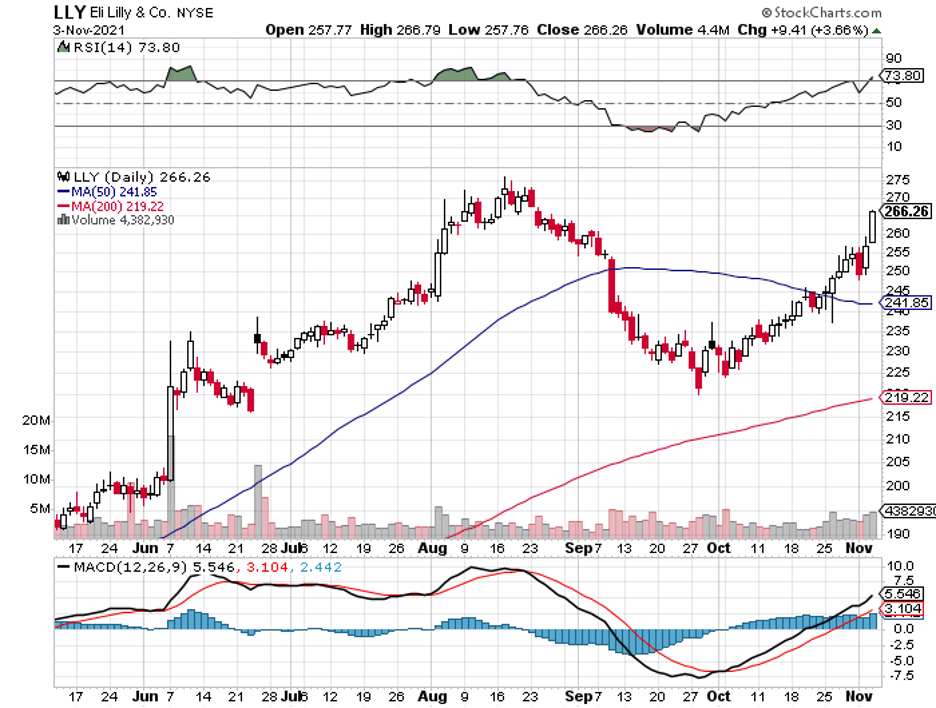
Overall, Eli Lilly is a high-quality stock with a verifiable and impressive history of innovation.

Given the promising lineup of approved drugs and pipeline candidates of Eli Lilly, it’s reasonable to expect roughly a 15% yearly earnings growth from the company over the next 5 years.

 

eli lilly stock

https://madhedgefundtrader.com/wp-content/uploads/2019/05/cropped-mad-hedge-logo-transparent-192x192_f9578834168ba24df3eb53916a12c882.png 0 0 Mad Hedge Fund Trader https://madhedgefundtrader.com/wp-content/uploads/2019/05/cropped-mad-hedge-logo-transparent-192x192_f9578834168ba24df3eb53916a12c882.png Mad Hedge Fund Trader2021-11-11 16:00:562021-11-19 20:22:27A High-Quality Dividend Stock With More Room to Grow
Mad Hedge Fund Trader

November 9, 2021

Biotech Letter

Mad Hedge Biotech and Healthcare Letter
November 9, 2021
Fiat Lux

Featured Trade:

(A SAFE BET FOR MRNA TECHNOLOGY ENTHUSIASTS)
(BNTX), (PFE), (MRNA), (REGN), (SNY), (NVAX)

https://madhedgefundtrader.com/wp-content/uploads/2019/05/cropped-mad-hedge-logo-transparent-192x192_f9578834168ba24df3eb53916a12c882.png 0 0 Mad Hedge Fund Trader https://madhedgefundtrader.com/wp-content/uploads/2019/05/cropped-mad-hedge-logo-transparent-192x192_f9578834168ba24df3eb53916a12c882.png Mad Hedge Fund Trader2021-11-09 16:02:312021-11-09 17:35:06November 9, 2021
Mad Hedge Fund Trader

A Safe Bet for MRNA Technology Enthusiasts

Biotech Letter

It was a case of being in the right place at the right time.

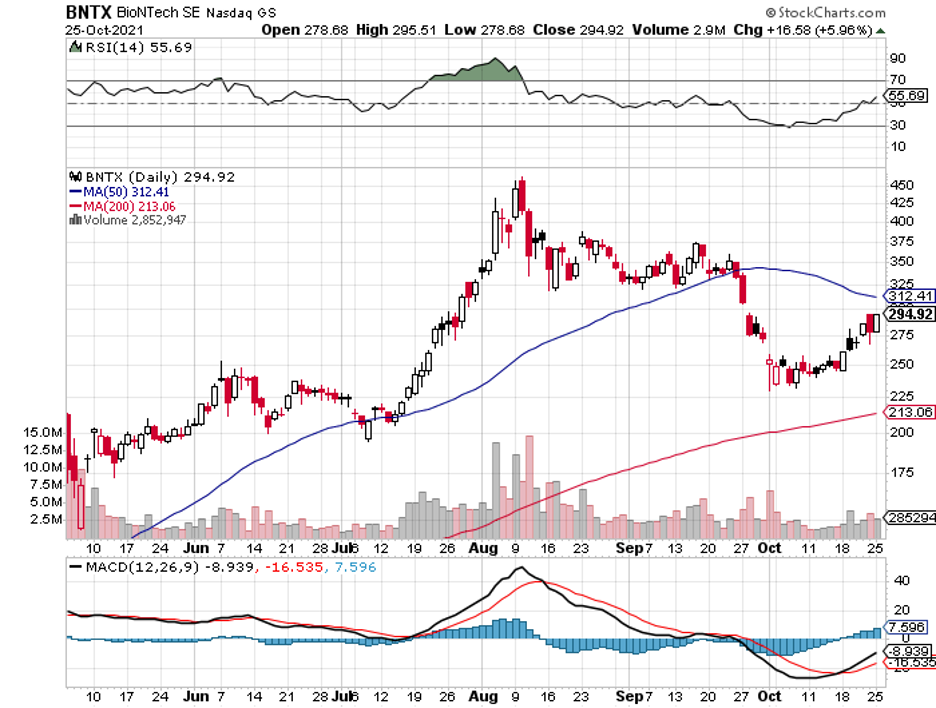
BioNTech (BNTX) has always been focused on mRNA technology, so when Big Pharma player Pfizer (PFE) knocked on its doors for a collaboration, this up-and-coming biotech company was more than ready to go.

We all know what happened after that. BioNTech and Pfizer became the first to bring a COVID-19 vaccine to the public.

And just like how the pandemic changed the fortune of Moderna (MRNA), the COVID-19 situation also served as proof of concept of BioNTech’s technology.

Looking at BioNTech’s history and recent performance, I can see several reasons to buy the stock.

Short term, one of the primary reasons to buy BioNTech is obvious: its overwhelming success in creating a COVID-19 vaccine.

BioNTech expects approximately $18.4 billion in revenue from its COVID-19 vaccine in 2021.

In its second-quarter earnings report, BioNTech and Pfizer disclosed that they already crossed the 1 billion mark in terms of the vaccine doses delivered globally.

In fact, BioNTech’s revenues beat the projected $2.35 billion, with the company generating $6.4 billion in sales for the second quarter of 2021 alone.

This is an impressive jump from the $47.54 million it recorded during the same period in 2020.

Considering the consistently high demand for the BioNTech-Pfizer vaccine, it’s reasonable to expect that the momentum will be sustained.

To date, an additional 200 million doses have been ordered by the US government. This is on top of the 500 million doses it initially bought under the current supply agreement.

Meanwhile, the EU’s orders for 2021 reached 660 million doses plus 900 million more for 2022 to 2023.

Depending on the situation, another 900 million doses might be added to these initial agreements.

Just between the US and the EU, BioNTech has already received orders for over 1 billion doses of COVID-19 vaccines for 2022 onward—a number that’s widely expected to go up when other nations place their orders as well.

So far, the two companies have sealed an agreement with a South African biopharmaceutical company, Biovac, to collaborate on the manufacture and distribution of the vaccine across the 55 member states of the African Union.

As for the South American area, the partners have recently signed a deal with a Brazilian biopharma company, Eurofarma Laboratorios, to cover the Latin American regions.

Moving with the long-term reasons to invest in BioNTech, one of the most convincing aspects is the company’s promising pipeline.

BioNTech is realistic enough that the demand for its COVID-19 vaccine will eventually plateau. That has been the expectation since the beginning, which is why the company has been leveraging the incredible cash flow through expanding its pipeline.

Actually, BioNTech is allocating roughly $1.05 billion for R&D expenses in 2021.

Some of the segments that BioNTech has been working on are regenerative treatments and products for infectious diseases, inflammatory conditions, and allergies.

The company is also developing potential cancer therapies. After all, curing cancer is considered the Holy Grail of mRNA-centered companies—an achievement that would undoubtedly catapult BioNTech’s stock to the top of the Big Pharma list.

One of the telltale indicators of BioNTech’s plan to focus on oncology treatments is its July 2021 acquisition of Kite’s R&D platform on TCR Cell solid tumor neoantigen T-cell receptor (TCR) along with its manufacturing plant in Maryland.

The driving force behind that deal is BioNTech’s desire to become a first-mover in the cell therapy space.

Basically, the company added ammunition to its pipeline to come up with individualized cancer therapies.

BioNTech also has a couple of mRNA-based solutions queued for Phase 2 trials this year.

One is FixVac BNT111, which is developed for melanoma and a collaborative effort with Regeneron (REGN). This candidate has shown promising results, with the possibility of being available for use to over 90% of melanoma patients.

Others include FixVac BNT113, which targets head and neck cancer, and FixVac BNT112 for prostate cancer.

Another promising candidate is its cancer vaccine, INeST BNT122, which BioNTech is working on with Genentech.

Apart from these, BioNTech is also looking at developing treatments for infectious diseases as another potential long-term growth pillar—a direction taken by its biggest competitor in mRNA-based solutions, Moderna.

Checking its pipeline, it looks like BioNTech plans to target malaria as its first project. It also has candidates for HIV, tuberculosis, and influenza.

BioNTech’s goal is to launch the first-ever mRNA vaccine against malaria. If all goes according to plan, the company plans to conduct clinical trials by 2022.

Meanwhile, its influenza vaccine program, which faces serious competition against Sanofi (SNY) and Novavax (NVAX), will be another collaborative work with Pfizer. The two companies plan to initiate human trials before the end of 2021.

Pretty much like Moderna, I look at BioNTech as a long-term play. Investing in this company requires patience and belief in the burgeoning mRNA space.

Overall, I think BioNTech is a safe bet for investors looking to dip their toes in the rapidly expanding mRNA world.

biotech mrna

https://madhedgefundtrader.com/wp-content/uploads/2019/05/cropped-mad-hedge-logo-transparent-192x192_f9578834168ba24df3eb53916a12c882.png 0 0 Mad Hedge Fund Trader https://madhedgefundtrader.com/wp-content/uploads/2019/05/cropped-mad-hedge-logo-transparent-192x192_f9578834168ba24df3eb53916a12c882.png Mad Hedge Fund Trader2021-11-09 16:00:282021-11-13 20:07:52A Safe Bet for MRNA Technology Enthusiasts
Mad Hedge Fund Trader

November 2, 2021

Biotech Letter

Mad Hedge Biotech and Healthcare Letter
November 2, 2021
Fiat Lux

Featured Trade:

(IS THIS THE BEST BUY AMONG THE VACCINE STOCKS)
(NVAX), (MRNA), (PFE), (BNTX), (SNY), (JNJ)

https://madhedgefundtrader.com/wp-content/uploads/2019/05/cropped-mad-hedge-logo-transparent-192x192_f9578834168ba24df3eb53916a12c882.png 0 0 Mad Hedge Fund Trader https://madhedgefundtrader.com/wp-content/uploads/2019/05/cropped-mad-hedge-logo-transparent-192x192_f9578834168ba24df3eb53916a12c882.png Mad Hedge Fund Trader2021-11-02 16:04:262021-11-02 15:58:40November 2, 2021
Mad Hedge Fund Trader

Is This the Best Buy Among the Vaccine Stocks?

Biotech Letter

Many investors have amassed a fortune since the pandemic started in the early months of 2020 by betting on COVID-19 vaccine candidates. Moderna (MRNA), for example, has skyrocketed to over 1,500% since last year.

However, there was an even bigger winner: Novavax (NVAX).

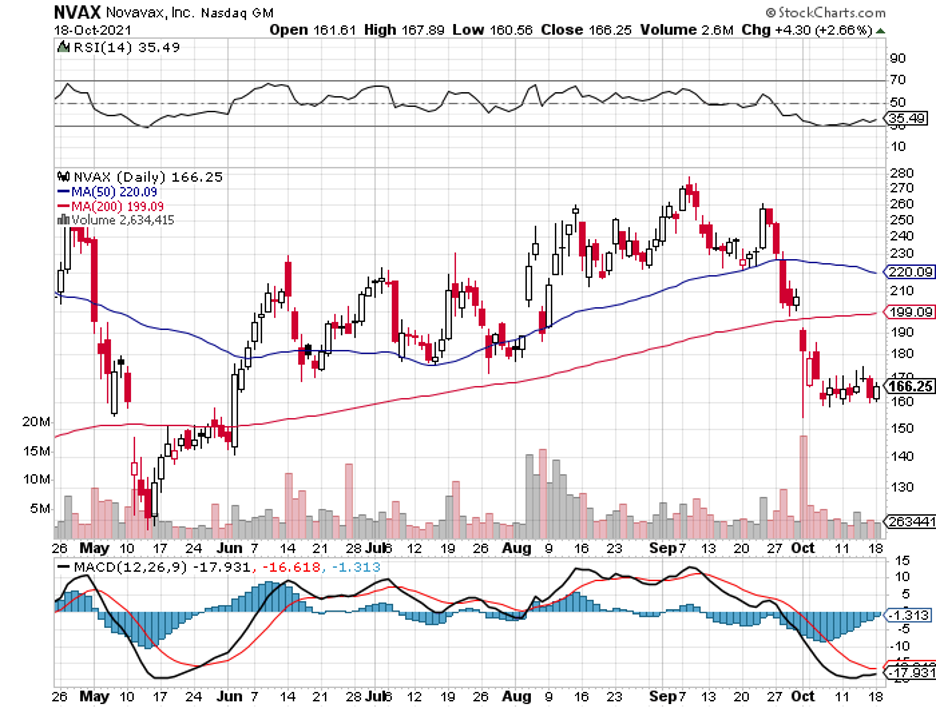
Novavax shares actually rose by a jaw-dropping 4,000% since the COVID-19 pandemic began, with the company’s wild rollercoaster ride still not reaching its end anytime soon.

In fact, Novavax has been quite volatile in 2021, rising by more than 180% in early February only to have most of those gains practically wiped out a mere three months after.

Then, the stock managed to show off a strong rebound over the following months. Since early September, though, Novavax’s share price has fallen by over 35%.

While these can be discouraging for some investors, I think that the befuddling gyrations that had us reeling in the past months tell a different story: We might have just discovered the biggest bargain among the leading COVID-19 vaccine stocks in the market today.

There are two possible reasons for the Novavax selloff recently.

The first is the company’s delayed filing of its own COVID-19 vaccine candidate, NVX-CoV2373. This is particularly frustrating considering that Novavax has failed to meet its deadlines multiple times now.

Nonetheless, I prefer to look at these delays as mere speed bumps than actual roadblocks that hinder the company from achieving its goal.

After all, the issue is not on the vaccine’s safety and efficacy—the results have been proven to be highly compelling—but on manufacturing concerns, which can eventually be resolved.

The second reason is the recent update from Merck (MRK) and its partner, Ridgeback Biotherapeutics, on their COVID-19 pill. Of the two, I find this reason to be an overreaction by the market.

None of the vaccine developers should ever be negatively affected by Merck’s oral treatment. While some people might choose not to get the vaccine if and when the pills become available, practically all governments worldwide are still committed to vaccinating their citizens.

Moreover, the COVID-19 vaccines will probably be necessary every year.

When Novavax gets the required authorizations, the company is set to generate a boatload of cash. The biotechnology company is anticipating to supply up to 200 million doses in the European Union alone.

The entire COVID-10 vaccine market is projected to be worth $115 billion by the end of 2021. Moderna is estimated to deliver up to 3 billion doses, while Novavax is expected to produce up to 2 billion doses by 2022.

The rest of the anticipated 14 billion doses will be divided among the other vaccine makers.

Among them, though, Novavax is expected to be the stand-out.

For one, its vaccine candidate appears to be the most robust and affordable at $16 per dose compared to Moderna’s $25.50 and Pfizer-BioNTech’s $22.80.

The growing number of reports on the side effects of mRNA vaccines, which are said to be of a higher rate than Johnson & Johnson’s (JNJ) candidate, can also be a turnoff for many people.

Since Novavax uses a more traditional and familiar vaccine technology—the same one used for the flu, HPV, and Hepatitis B—it causes lower side effects rates.

More importantly, these are mild symptoms like muscle pain and fatigue compared to the heart inflammation concerns raised among those jabbed with Moderna or Pfizer vaccines.

While the side effects from the other two occur in relatively small populations, Novavax is anticipated to be perceived as the more reassuring option, especially for people who are still uneasy with the new technology of mRNA vaccines.

More importantly, Novavax can offer a solution to the global problem of vaccine hesitancy for COVID-19.

To offer a context on how important this is, 48% of Russians and 27% of Americans refuse to take the vaccines.

As of September, only 181.2 million individuals in the US, or 55.1% of the country’s population, have agreed to be fully vaccinated. Needless to say, overcoming this hesitancy would be a massive relief for everyone.

Apart from its COVID-19 vaccine, Novavax has also been working on an influenza vaccine candidate, NanoFlu.

Recently, results from the NanoFlu clinical trials showed that it’s way more effective than the leading brand today, Sanofi’s (SNY) Fluzone Quadrivalent.

If NanoFlu gains approval, this will be another huge growth driver for Novavax.

To put it in perspective, Sanofi’s Fluzone generated $2.9 billion in sales in 2020—a market that Novavax can also tap into and might even dominate.

Meanwhile, the flu vaccine market in the US alone continues to expand.

From 2020 to 2021, the number of flu vaccines administered rose by 11% year over year to reach 193.8 million doses. That’s roughly 59% of the US population—a country that’s only 7th place in terms of the global rates of flu vaccination.

That signifies a colossal market opportunity worldwide for Novavax to capitalize.

At this point, Novavax has yet to secure any approval or official authorization for NVX-CoV2373 or NanoFlu—and that’s the best reason to add this stock to your portfolio.

Investors are given a chance to seize shares of the stock while it’s still in the stage where its most lucrative catalysts are just lurking around the corner.

novavax covid

https://madhedgefundtrader.com/wp-content/uploads/2019/05/cropped-mad-hedge-logo-transparent-192x192_f9578834168ba24df3eb53916a12c882.png 0 0 Mad Hedge Fund Trader https://madhedgefundtrader.com/wp-content/uploads/2019/05/cropped-mad-hedge-logo-transparent-192x192_f9578834168ba24df3eb53916a12c882.png Mad Hedge Fund Trader2021-11-02 16:02:232021-11-07 16:26:00Is This the Best Buy Among the Vaccine Stocks?
Mad Hedge Fund Trader

October 26, 2021

Biotech Letter

Mad Hedge Biotech and Healthcare Letter
October 26, 2021
Fiat Lux

Featured Trade:

(A BEATEN-DOWN STOCK POISED FOR A BREAKTHROUGH)
(ABBV), (ABT), (REGN), (PFE)

https://madhedgefundtrader.com/wp-content/uploads/2019/05/cropped-mad-hedge-logo-transparent-192x192_f9578834168ba24df3eb53916a12c882.png 0 0 Mad Hedge Fund Trader https://madhedgefundtrader.com/wp-content/uploads/2019/05/cropped-mad-hedge-logo-transparent-192x192_f9578834168ba24df3eb53916a12c882.png Mad Hedge Fund Trader2021-10-26 18:02:172021-10-27 19:01:26October 26, 2021
Mad Hedge Fund Trader

A Beaten-Down Stock Poised for a Breakthrough

Biotech Letter

The market's volatility has made it difficult to find high-quality stocks at reasonable prices as of late.

Despite challenges, the key to investing is never to stray from quality.

In the words of no less than Warren Buffett, “It is better to buy a wonderful company at a fair price than a fair company at a wonderful price.”

This reminds me of one of the stocks I constantly add on pullbacks: AbbVie (ABBV).

AbbVie, which is a spinoff company from Abbott Laboratories (ABT), started trading in 2013. Since then, its name has been synonymous with its rheumatoid arthritis drug Humira—the No. 1 selling drug globally in the past years.

While AbbVie understandably relied heavily on this product for years, with 65% of its revenue coming from Humira sales in 2018, the company has already aggressively implemented ways to diversify its portfolio to prepare for the impending patent loss.

Among its efforts, one of the most exciting ones is its work with biotechnology company Regenxbio (RGNX).

AbbVie and Regenxbio have been collaborating to develop gene therapies that can treat rare eye disorders.

Basically, gene therapy is a novel approach to deal with diseases by genetically altering a patient's cells instead of the traditional method involving surgery or drugs.

AbbVie’s deal with the smaller company comprises a $370 million upfront payment to Regenxbio, with up to $1.38 billion in developmental and commercial milestones.

So far, the two have come up with RGX-314, a gene therapy candidate in Phase 2 trial for wet age-related macular degeneration (AMD).

This condition includes symptoms like blurred vision and a blind spot.

Patients can also suffer from a complication triggered by diabetes, called diabetic retinopathy, which results in damages to the retina’s blood vessels. Some cases may even lead to blindness.

In terms of the target market, the US alone has recorded over 11 million individuals suffering from some form of AMD, with the number projected to double and reach 22 million by 2050.

There’s also an urgent need for treatments for this condition, as more and more AMD cases lead to blindness annually.

In fact, diabetic retinopathy has been identified as the leading cause of blindness among adults with diabetes and the No. 1 cause of blindness among all adults in the US.

Considering the pervasiveness of diabetes and the continuously rising number of cases of this disease in the US, the number of people affected with diabetic retinopathy is estimated to virtually double from 7.7 million recorded in 2010 to over 14.6 million by 2050.

Assuming that RGX-314 gains FDA approval, AbbVie and its partner can target a market that can generate sales reaching $8.7 billion by 2025 due to the aging global population.

Meanwhile, the diabetic retinopathy segment, which has had an annualized growth rate of 6.3% since 2017, can reach up to $10.1 billion by 2025.

Given the massive addressable market, it is no surprise that the AMD segment has also attracted competitors. One of the contenders is Regeneron (REGN) with Eylea.

What makes RGX-314 more attractive, however, is that it’s a one-time treatment.

This is a massive competitive advantage over Eylea, which requires administration every four to eight weeks.

Using a conservative estimate, we can safely assume that AbbVie could take at least 8% of the market share by 2030. This would work out to roughly $2.1 billion in yearly revenue for RGX-314.

This is just one of the candidates that Regenxbio and AbbVie are working on these days, and its potential is enough to move the needle.

Other than that, AbbVie has the product portfolio from its $63 billion acquisition of Allergen, which includes the best-selling Botox.

The company also has its own homegrown drugs, cancer treatment Imbruvica, rheumatoid arthritis drug Rinvoq, and psoriasis medication Skyrizi, which all deliver strong results every quarter.

To date, they have a dividend yield of 4.7%, and the company has boosted its dividend for an impressive 8 consecutive years now.

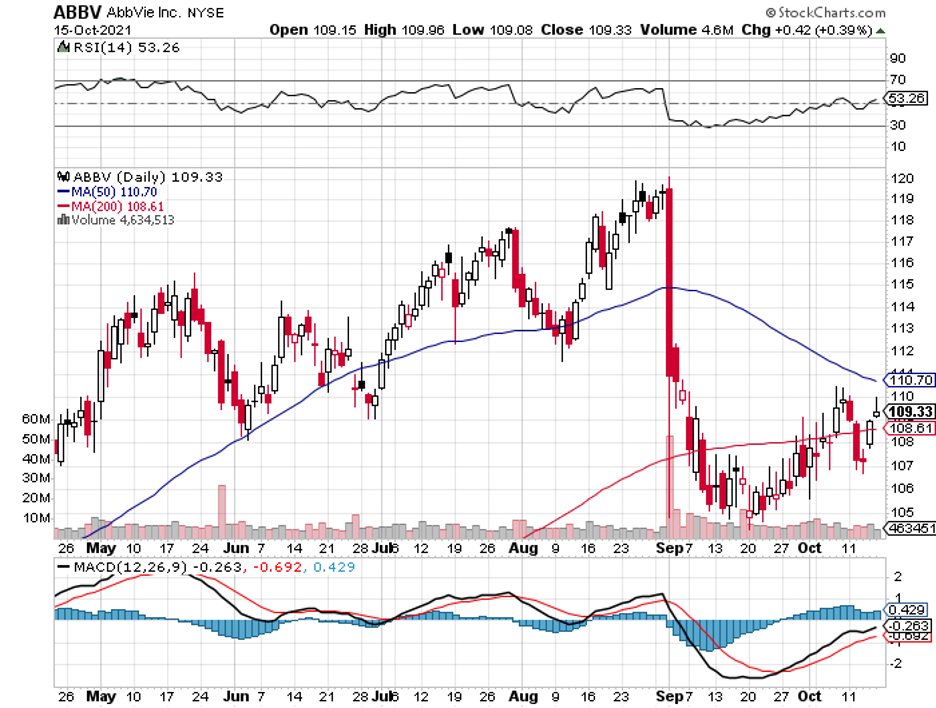
Recently, AbbVie stock has been clobbered because Rinvoq was included in the list of drugs that the FDA instructed to carry a warning label that announced severe side effects, such as blood clots and even death.

However, AbbVie isn’t too worried about this as the company explained that the FDA based the decision on another company’s product, Pfizer’s (PFE) Xeljanz, which holds a completely different safety profile as Rinvoq.

So, what do all these mean?

This means that investors are handed a rare opportunity to buy into a solid, cash-generating biopharmaceutical titan at a massive discount.

AbbVie stock

https://madhedgefundtrader.com/wp-content/uploads/2019/05/cropped-mad-hedge-logo-transparent-192x192_f9578834168ba24df3eb53916a12c882.png 0 0 Mad Hedge Fund Trader https://madhedgefundtrader.com/wp-content/uploads/2019/05/cropped-mad-hedge-logo-transparent-192x192_f9578834168ba24df3eb53916a12c882.png Mad Hedge Fund Trader2021-10-26 18:00:242021-11-02 19:47:54A Beaten-Down Stock Poised for a Breakthrough
Mad Hedge Fund Trader

October 21, 2021

Biotech Letter

Mad Hedge Biotech and Healthcare Letter
October 21, 2021
Fiat Lux

Featured Trade:

(A DIVIDEND ARISTOCRAT THAT DELIVERS LIKE CLOCKWORK)
(JNJ), (PFE), (MRNA), (BNTX), (NVS), (RHHBY), (MGTX)

https://madhedgefundtrader.com/wp-content/uploads/2019/05/cropped-mad-hedge-logo-transparent-192x192_f9578834168ba24df3eb53916a12c882.png 0 0 Mad Hedge Fund Trader https://madhedgefundtrader.com/wp-content/uploads/2019/05/cropped-mad-hedge-logo-transparent-192x192_f9578834168ba24df3eb53916a12c882.png Mad Hedge Fund Trader2021-10-21 16:02:132021-10-21 18:34:15October 21, 2021
Mad Hedge Fund Trader

A Dividend Aristocrat That Delivers Like Clockwork

Biotech Letter

There have been two narratives as far as COVID-19 vaccine developers go. One story centers on companies with fortunes essentially built and exploding thanks to their COVID-19 vaccines, like Moderna (MRNA), Novavax (NVAX), and BioNTech (BNTX).

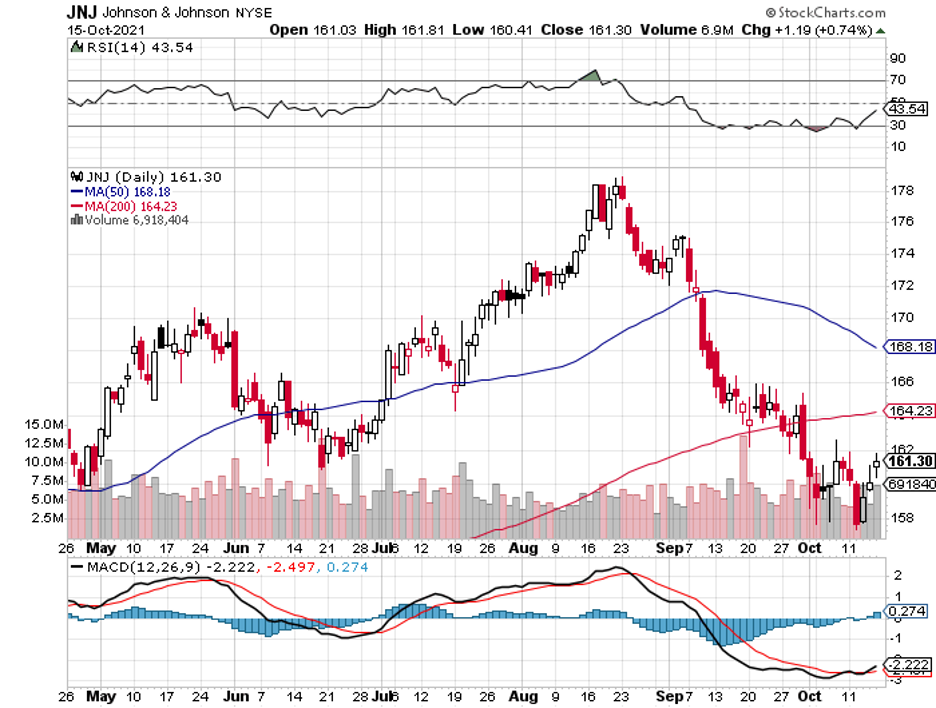
The second story involves larger biopharmaceutical companies, such as Johnson & Johnson (JNJ) and BioNTech’s partner, Pfizer (PFE), which barely felt their shares move in the past 18 months.

While it’s easy to understand the excitement over the achievements of the likes of Moderna, is it reasonable for Pfizer and JNJ investors to feel bad over the lack of movement in their shares?

Not at all, especially in the case of JNJ.

After all, these huge companies have decided to sell their vaccines on a not-for-profit basis until the major wave of the pandemic ends—a move that can be seen as a sound strategy for JNJ to rebuild some goodwill especially following the recent scandals involving the company.

Nevertheless, JNJ might still get a boost (pun intended) from its COVID-19 vaccine booster shots.

Just last week, a prominent advisory committee to the US FDA unanimously voted to recommend the booster shots, which likely means that the 15 million people who got jabbed with JNJ’s candidate will get a second shot as well.

If the FDA agrees with this recommendation, then the boosters could be available within the month. This comes after the agency also approved booster shots from Pfizer-BioNTech and Moderna.

Last month, the US government decided to provide Pfizer booster shots to the older population and high-risk groups, with Moderna following suit almost immediately.

So far, there have been 8 million people who have already received their Pfizer booster doses, while 1.6 million got the third dose for Moderna.

This is another lucrative market for vaccine makers, considering that to date, there are over 104 million people vaccinated with Pfizer, roughly 69 million with Moderna, and approximately 15 million with JNJ.

Amid the talks about the boosters, JNJ stands firm that its vaccine’s potency increases over time and doesn’t wane, unlike Pfizer’s candidate. This means there’s no urgency for a booster shot when it comes to JNJ’s candidate.

Nevertheless, considering that JNJ isn’t exactly attempting to earn from its COVID-19 vaccine aggressively, there’s no point in investors worrying about this issue too much.

The fundamental aspects that will impact the stock price can be found elsewhere.

One of the more exciting projects of JNJ lately is its move to become more active in the gene-editing field.

Following the buzz from the multi-billion dollar acquisitions of companies like Novartis (NVS) and Roche (RHHBY) several years ago, it looks like JNJ might be the next big name to enter the fray.

Since 2018, JNJ has been working closely with a small-cap gene-therapy company called MeiraGTx Holdings (MGTX).

While highly secretive of the details, MeiraGTX, which has a market capitalization of just below $600 million, has been developing a gene-regulation technology—an innovation that could revolutionize gene therapy.

For context, this kind of innovation was applied to Novartis’ Zolgensma, a one-time treatment for spinal muscular atrophy worth a whopping $2.1 million—the most expensive medication in the world.

In terms of MeiraGTX’s work with JNJ, the two companies are focusing on creating therapies for various eye diseases. Looking at their timeline, the first candidate should be ready by 2023.

While there remain questions about its COVID-19 vaccine candidate, their earnings are expected to reach roughly $2.5 billion or merely 2.65% of JNJ’s total revenue. This would barely make a dent in the overall performance of the company. 

What comes clear in the performance reports from the company is that its core business remains the primary moneymakers.

In the second quarter of 2021, JNJ recorded $23.3 billion in sales, reporting a notable 27.1% from the $18.3 billion revenue it generated from the same quarter in 2020.

Its gross profit also climbed from $11.7 billion to $15.7 billion, showing a 33.8% improvement. As for its EPS, it skyrocketed by 72.8% year-over-year from $1.36 to $2.35.

Meanwhile, JNJ’s guidance for 2021 has been updated to reflect its expected 13.% to 14.% year-over-year increase between the range of $93.8 billion and $94.6 billion.

Its pipeline and current portfolio also all but guarantee that JNJ will deliver mid to high single-digit earnings in the years to come.

Another indicator of the stock’s quality is its dividend record, with JNJ priding itself on a 59-year streak—making it an undisputed dividend aristocrat.

Overall, I see JNJ as an impressive $433 billion behemoth in the biopharmaceutical sector. The company has been consistent in delivering remarkable top and bottom lines every quarter.


jnj booster

https://madhedgefundtrader.com/wp-content/uploads/2019/05/cropped-mad-hedge-logo-transparent-192x192_f9578834168ba24df3eb53916a12c882.png 0 0 Mad Hedge Fund Trader https://madhedgefundtrader.com/wp-content/uploads/2019/05/cropped-mad-hedge-logo-transparent-192x192_f9578834168ba24df3eb53916a12c882.png Mad Hedge Fund Trader2021-10-21 16:00:152021-10-31 21:27:15A Dividend Aristocrat That Delivers Like Clockwork
Mad Hedge Fund Trader

October 19, 2021

Biotech Letter

Mad Hedge Bitcoin Letter
October 19, 2021
Fiat Lux

Featured Trade:

(TRANSCENDING ITS COVID-19 VACCINE POTENTIAL)
(SNY), (PFE), (BNTX), (MRNA), (JNJ), (GSK)

https://madhedgefundtrader.com/wp-content/uploads/2019/05/cropped-mad-hedge-logo-transparent-192x192_f9578834168ba24df3eb53916a12c882.png 0 0 Mad Hedge Fund Trader https://madhedgefundtrader.com/wp-content/uploads/2019/05/cropped-mad-hedge-logo-transparent-192x192_f9578834168ba24df3eb53916a12c882.png Mad Hedge Fund Trader2021-10-19 16:02:322021-10-19 16:51:57October 19, 2021
Page 24 of 46«‹2223242526›»

Legal Disclaimer

There is a very high degree of risk involved in trading. Past results are not indicative of future returns. MadHedgeFundTrader.com and all individuals affiliated with this site assume no responsibilities for your trading and investment results. The indicators, strategies, columns, articles and all other features are for educational purposes only and should not be construed as investment advice. Information for futures trading observations are obtained from sources believed to be reliable, but we do not warrant its completeness or accuracy, or warrant any results from the use of the information. Your use of the trading observations is entirely at your own risk and it is your sole responsibility to evaluate the accuracy, completeness and usefulness of the information. You must assess the risk of any trade with your broker and make your own independent decisions regarding any securities mentioned herein. Affiliates of MadHedgeFundTrader.com may have a position or effect transactions in the securities described herein (or options thereon) and/or otherwise employ trading strategies that may be consistent or inconsistent with the provided strategies.

Copyright © 2026. Mad Hedge Fund Trader. All Rights Reserved. support@madhedgefundtrader.com
Scroll to top