Just a short time ago, the South American country Argentina began the 20th Century as one of the ten richest countries in the world.
Its ranking in the world wasn’t that bad, comparable to that of, say, Germany today.
It had a per capita income much higher than that of Japan and Belgium and comparable to that of France.
However, that was then, and this is now.
Argentina has turned into a banana republic where a government filled with incapable politicians has grounded the country.
How did this dramatic change come about?
Well, that’s for historians to debate and I’m not a historian, but let’s talk about the current, now, and present about the dire Argentinian financial situation.
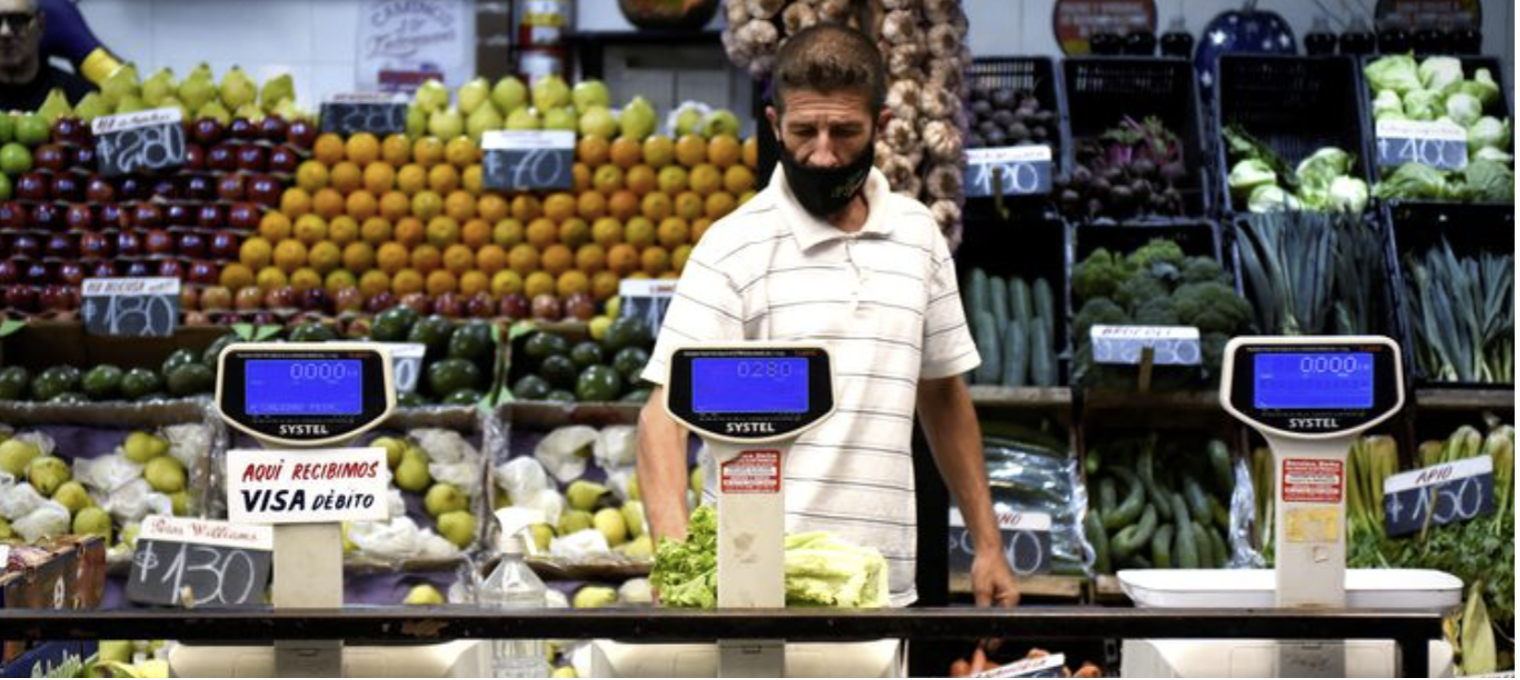
Argentina’s annual inflation surged past 70% last month at one of the fastest rates in the world after renewed political turmoil fueled price spikes and a currency rout.
It even beat Turkey out in the inflation Olympics.
Consumer prices rose 71% in July from a year ago, the highest level in about 30 years, according to government data published Thursday.
Skyrocketing prices pushed Argentina’s central bank to lift rates earlier in the day by the most in three years, raising central bank rates by 9.5% to 69.5%.
It signaled a tougher monetary stance against inflation, following another large rate hike just two weeks ago. Policymakers had been only raising rates once a month previously.
All the political turmoil added volatility to an already unstable outlook, with the black-market peso losing about 15% of its value in the month and local businesses jacking up prices 20% overnight.
To signal a tougher stance on inflation, the central bank committed to stop printing more money to finance government spending — a key factor driving inflation — for the rest of the year. However, other policies, such as removing subsidies on utility bills to improve the fiscal balance, stand to keep price increases high in the near term.
Consensus has it that inflation could break the threshold of 100% by the end of the year.
I’m not going to champion Bitcoin and crypto as the greatest thing since sliced bread.
It’s not and it’s a work in progress.
There is still a high chance that this iteration of crypto isn’t the final version of what goes mainstream.
There are just too many variables to know what will happen.
However, Argentina and its financial situation is a country that is screaming to adopt Bitcoin.
Nominally, consumers start to really suffer psychological damage when inflation and prices start climbing 25% per year.
Anything past 30% is a time when crypto really needs to be looked at by Argentinians and whoever is in a similar situation in whatever country they are in.
The chaos down south shows what could become of irresponsible financial policy down the road to rich, Western countries.
The hard cold truth is that 9.1% inflation in the United States isn’t that bad.
The Rubicon will not be crossed at these levels.
I would argue that American consumers could easily handle inflation at 20%.
Granted, the upper-middle class will start shopping at Walmart (WMT) and the Walmart shoppers will start shopping at the dollar store, but Americans can handle it.
In a broad sense, the use case for Bitcoin is really starting to become attractive in countries like Argentina, because when the government throws fiat currency under the bus like the Argentinian government, there really is no alternative but Bitcoin.
9.1% inflation is nowhere near risky when other sovereign nations are close to 100% year-over-year.
https://madhedgefundtrader.com/wp-content/uploads/2019/05/cropped-mad-hedge-logo-transparent-192x192_f9578834168ba24df3eb53916a12c882.png00Mad Hedge Fund Traderhttps://madhedgefundtrader.com/wp-content/uploads/2019/05/cropped-mad-hedge-logo-transparent-192x192_f9578834168ba24df3eb53916a12c882.pngMad Hedge Fund Trader2022-08-16 16:02:282022-08-16 17:33:11Adoption in Argentina
I am writing this from the balcony of my corner suite at the historic Danieli Hotel overlooking the Grand Canal in Venice, Italy.
Every conceivable watercraft imaginable are passing by in large numbers; water taxis, Vaporettos, and even the traditional gondolas. Outside my window, I see two pilots are heatedly arguing over who should enter the side canal first.
This will be my last stay at the Danieli for a while as the 200-year-old hotel cobbled together for three 700-year-old palaces has been sold to the Four Seasons and will imminently close for a three-year gutting and remodeling.
Until Thursday, the market was reaching the top of a three-month range and was ripe to roll over for an August summer correction. Then the Democrats dropped a bombshell. They announced a blockbuster $739 billion stimulus package that will be voted on as early as this week. All of a sudden, the Biden agenda is back on just at one-third its original size.
The package breaks down as follows:
Commits $369 billion to Climate change
Renews a $7,500 tax credit for electric vehicles
Allows Medicare to negotiate prices
Adds a 15% Corporate alternative minimum tax
Reduces the Deficit by $300 billion
It all amounts to a massive stimulus package just as the US economy is entering the most modest of recessions. It also represents a Hail Mary for the Democrats to maintain congressional control.
It just might work.
Who is the biggest victim of the stimulus package? Big oil companies where an alternative minimum neatly sidesteps the oil depletion allowance which enabled them to dodge most taxes since it was passed in 1913.
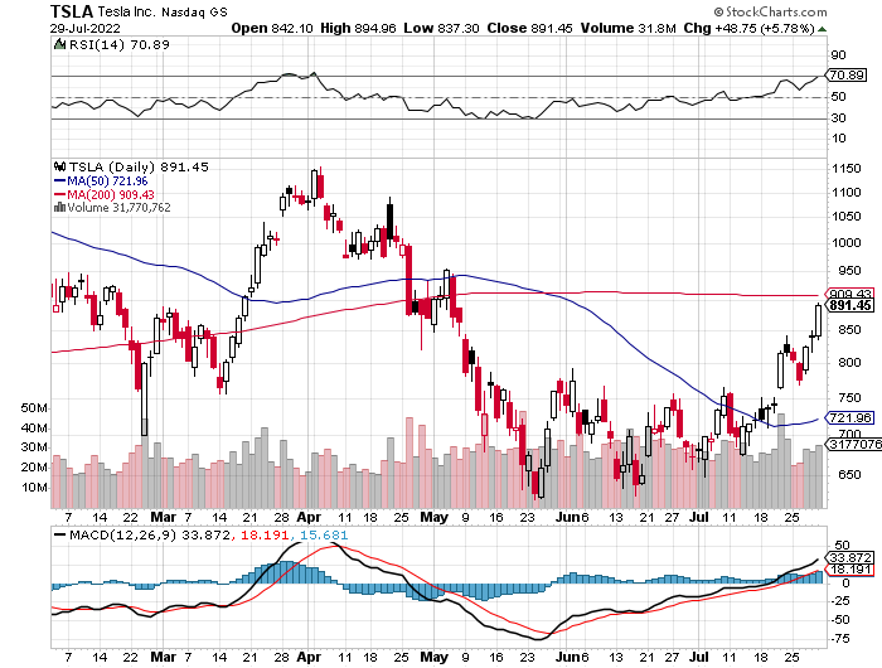
Who is the biggest winner? Tesla (TSLA), which accounted for 80% of global EV production and benefits enormously from a $7,500 tax credit, is made available for low-income earners purchasing electric cars. It also allows tax credits for the purchase of used EVs for the first time. That is important for the economy as a whole, as both General Motors (GM) and Ford (F) plan to have more than 50% of their production in EVs by 2030.
Traders seemed to know this, taking Tesla shares up 50% from the June bottom and minting several new Mad Hedge millionaires along the way.
The market seemed to sense that something was in the works, even though the meetings were held in secret in a windowless basement room in the Capitol Building. The markets seemed to know something was coming. July posted the best market performance in two years, with the Dow Average up 7.69%.
This is a classic example of markets sensing major events we mere humans are blind to. My favorite example of this is the Battle of Midway, where the Japanese lost a disastrous four aircraft carriers and 350 planes, which ended on June 7, 1942. Even though the outcome was top secret and withheld from the public for months, a 20-year bull market ensued and didn’t end until the 1962 Cuban Missile Crisis.
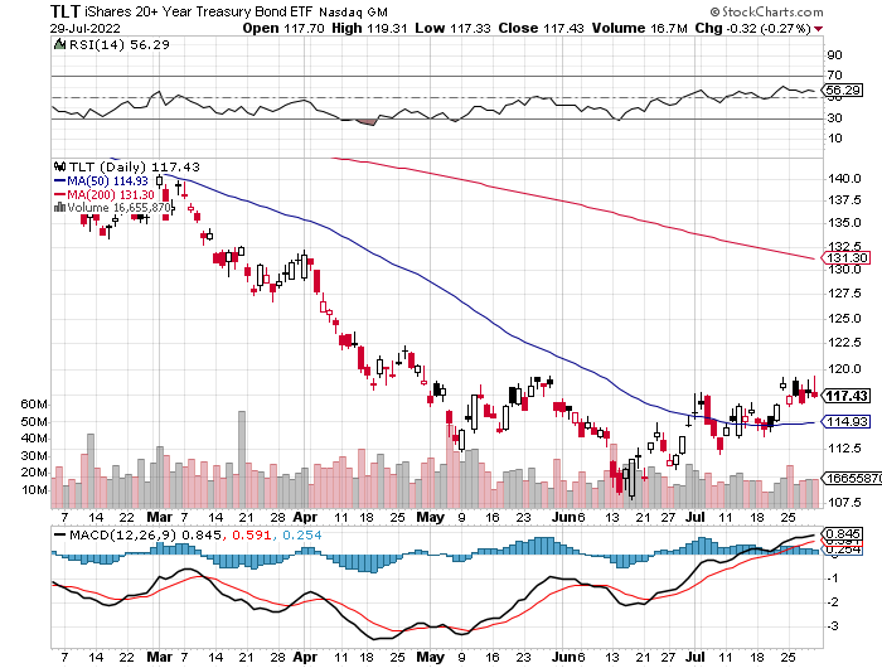
You may have noticed that I have pulled back from my aggressive shorting of the bond market. That’s because the US budget deficit is seeing the largest decline in American history. Throw in the $300 billion promised by this week’s stimulus package, and the deficit will plunge by a staggering $1.5 trillion in 2022.
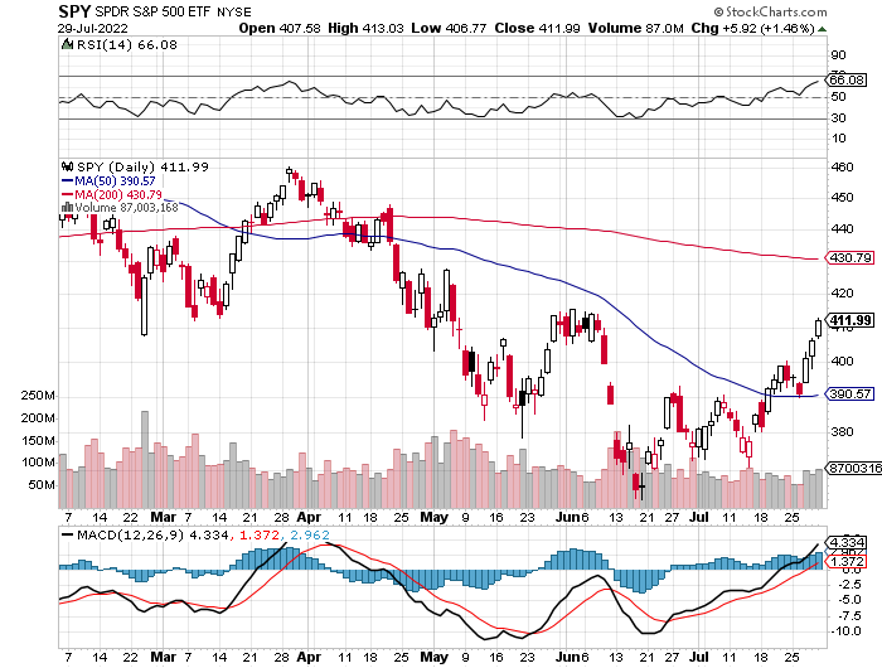
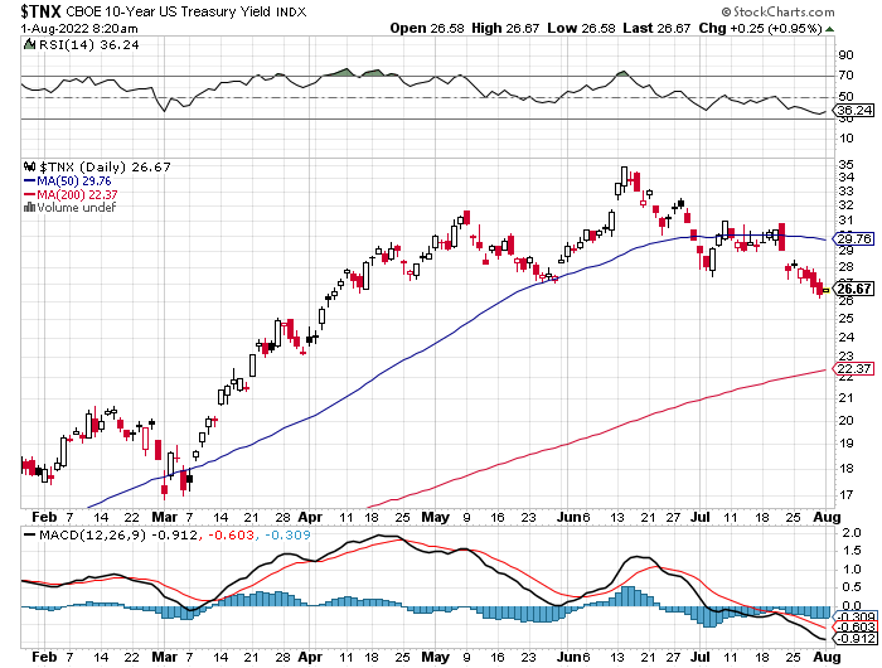
That will pay off 37.5% of the $4 trillion deficit run up by the Trump administration. As a result, ten-year US Treasury yields have plunged an eye-popping 90 basis points, from 3.5% to 2.6% in only six weeks. No wonder stocks have been so hot during the same time period.
The Fed Makes Its Move, and the market loved it, taking stocks up 436 points. Notice that the market is not letting anyone in. An increasing number of investors are coming over to my view that the S&P 500 is headed over to $4,800 by yearend. The bottom for this cycle is in. The overnight rate is now 2.25%-2.5%. The Fed is rapidly catching up with the curve. Powell left the door open to raising only 0.50% next time. The futures market is betting that we hit 3.3% this year.
The US is Officially in Recession, after reporting a slight 0.9% decline in Q2. That makes two back-to-back quarters following the 1.6% decline in Q1. The big question is are we already out, given the incredible demand seen in some sectors of the economy, like airlines, hotels, and resorts? It also looks like a big spending bill is about the pass congress. Weekly Jobless Claims Hit 256,000, down 5,000 from the previous week. Is the recession already over?
IMF Cuts GDP Forecast, cutting its 2022 forecast from 3.6% to 3.2%. 2023 gets a haircut from 3.6% to 2.9%. The IMF is always a deep lagging indicator. Inflation, a China slowdown, and the Ukraine War are the reasons. I think largest are about to start discounting a growth resurgence.
Russia and Ukraine Sign Grain Deal, opening up the Black Sea ports for wheat exports. It’s hard to imagine how this is going to work. Two countries at war but continuing international trade? Indeed, one Russian missile hit Odessa the next day with two others shot down. Still, it was enough to drop wheat prices.
Space X Breaks Launch Record, sending 32 reusable Falcon 9’s aloft so far in 2022. The Starlink ramp-up is responsible, Elon Musk’s effort to build a global satellite WIFI network. You can already become a Starlink beta tester in the US at competitive prices.
The S&P Case Shiller National Home Price Index Sees Another Drop, from 20.6% to 19.7% in May. The closely watched figure saw only its second drop in three years. Tampa (36.1%), Miami (34%), and Dallas (30.8%) brought in the strongest gains. These are still incredible mains, meaning high mortgage interest rates have yet to make a serious dent in prices.
Pending Home Sales Fell a Staggering 20% in June, on a signed contracts basis, says the National Association of Realtors. It’s the slowest pace since June 2011. The roll-over of the real estate market has just begun, in volume, if not in price. The hottest cities like Phoenix, Tampa, and Boise are seeing the sharpest falls.
Lumber Prices are Still in Free-Fall, with lumber sales down 25% in June. Commodities are still falling, showing that the end of inflation is near. Some 10.8% of orders have been cancelled and inventories are building. Construction costs are falling too.
Russia Seizes all Foreign Leased Aircraft and re-registers them as Russian. Some 515 leased aircraft worth $10 billion are trapped in the country and are not allowed by sanctions to get spare parts. Ireland is taking the biggest hit, with 40% owned there. Why insurance covers accidents and not theft as large commercial aircraft are so rarely stolen. And 515 at once! This will be a legal headache for the ages.
Walmart Gets Crushed, with the founding Walton family taking $11.4 billion in personal losses on the $13 or 10% drop in the stock suffered yesterday. Low-end retail is not what you want to own if you think a recession is headed our way. That’s on an expected 13% decline in EPS expected for the year. Sam Walton would be rolling over in his grave.
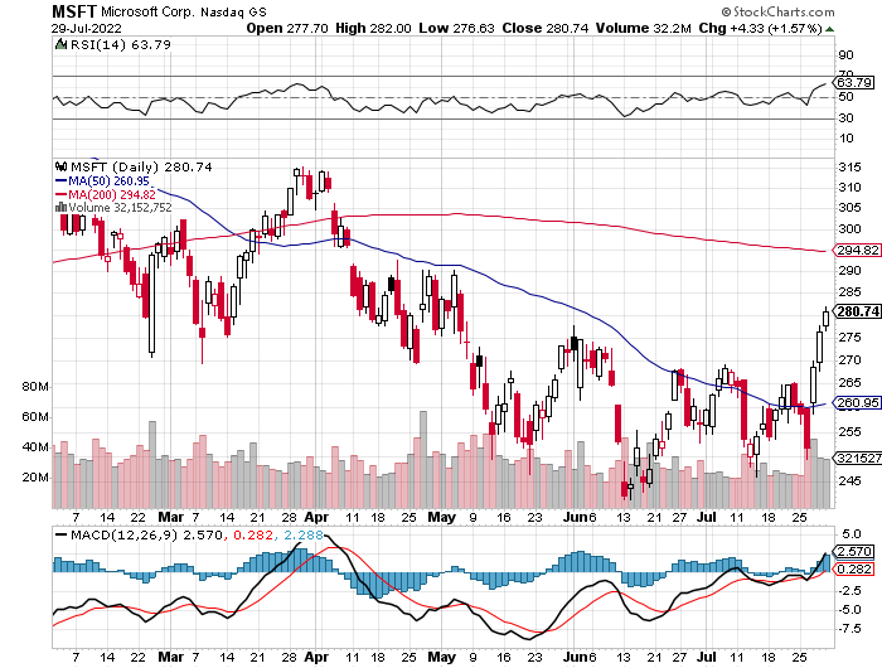
Microsoft Misses Slightly, but the stock jumps 5% anyway as the long term buyers come in. A strong dollar punches foreign earnings in the nose. The crucial azure cloud hosting and storage business is still growing at 40% a year. Buy (MSFT) on dips and sell short the puts.
Meta (META) Post First Loss Ever in Q2, with ever weaker forecasts as Market Zuckerberg’s money machine grinds to a halt. It will take 3-5 years for the metaverse to mature to the point where the world’s largest social media platform is making money again. The required investment is overwhelming. Avoid (META).
The Wealthiest 100 Americans Lost $622 Billion Since November when the stock market topped. But they are still richer than pre-pandemic. Who was the biggest loser? My friend Elon Musk, whose stock dropped 50% from $1,200 in the first half, costing him a neat $170,000 billion personally. But it created a spectacular buying opportunity for the stock for the rest of us.
My Ten-Year View
When we come out the other side of pandemic and the recession, we will be perfectly poised to launch into my new American Golden Age, or the next Roaring Twenties. With oil peaking out soon, and technology hyper-accelerating, there will be no reason not to. The Dow Average will rise by 800% to 240,000 or more in the coming decade. The America coming out the other side will be far more efficient and profitable than the old. Dow 240,000 here we come!
With some of the greatest market volatility in market history, my July month-to-date performance exploded to +3.98%.
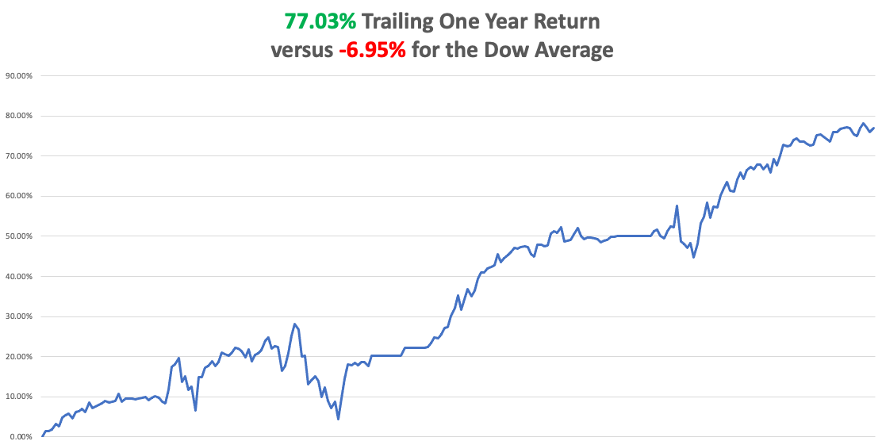
My 2022 year-to-date performance ballooned to 54.83%. The Dow Average is down -11.23% so far in 2022. It is the greatest outperformance on an index since Mad Hedge Fund Trader started 14 years ago. My trailing one-year return maintains a sky-high 77.02%.
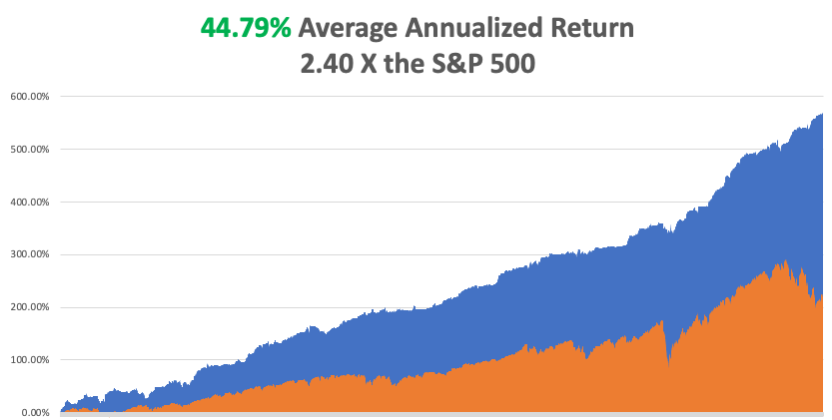
That brings my 14-year total return to 567.39%, some 2.40 times the S&P 500 (SPX) over the same period and a new all-time high. My average annualized return has ratcheted up to 44.79%, easily the highest in the industry.
We need to keep an eye on the number of US Coronavirus cases at 91 million, up 300,000 in a week and deaths topping 1,030,000 and have only increased by 2,000 in the past week. You can find the data here.
On Monday, August 1 at 7:00 AM, the ISM Manufacturing PMI for July is released. Activision Blizzard (ATVI) announces earnings.
On Tuesday, August 2 at 7:00 AM, the JOLTS Job Openings for July are out. Caterpillar (CAT) and Airbnb (ABNB) announce earnings.
On Wednesday, August 3 at 7:00 AM, ISM Manufacturing PMI for July is published. MGM Resorts (MGM) announces earnings.
On Thursday, August 4 at 8:30 AM, Weekly Jobless Claims are announced. Amgen (AMGN) and Lyft (LYFT) announce earnings. On Friday, August 5 at 8:30 AM, the Nonfarm Payroll Report for July is disclosed. Berkshire Hathaway (BRKB) announces earnings. At 2:00 the Baker Hughes Oil Rig Count is out.
As for me, I have met many interesting people over a half-century of interviews, but it is tough to beat Corporal Hiroshi Onoda of the Japanese Army, the last man to surrender in WWII.
I had heard of Onoda while working as a foreign correspondent in Tokyo. So, I convinced my boss at The Economist magazine in London that it was time to do a special report on the Philippines and interview president Ferdinand Marcos. That accomplished, I headed for Lubang island where Onoda was said to be hiding, taking a launch from the main island of Luzon.
I hiked to the top of the island in the blazing heat, consuming two full army canteens of water (plastic bottles hadn’t been invented yet). No luck. But I had a strange feeling that someone was watching me.
When the Philippines fell in 1945, Onoda’s commanding officer ordered the remaining men to fight on to the last man. Four stayed behind, continuing a 30-year war.
As a massive American military presence and growing international trade raised Philippine standards of living, the locals eventually were able to buy their own guns and kill off Onoda’s companions one by one. By 1972 he was alone, but he kept fighting.
The Japanese government knew about Onoda from the 1950s onward and made every effort to bring him back. They hired search crews, tracking dogs, and even helicopters with loudspeakers, but to no avail. Frustrated, they left a one-year supply of the main Tokyo newspaper and a stockpile of food and returned to Japan. This continued for 20 years.
Onoda read the papers with great interest, believing some parts but distrusting others. His world view became increasingly bizarre. He learned of the enormous exports of Japanese automobiles to the US, so he concluded that while still at war, the two countries were conducting trade.
But when he came to the classified ads, he found the salaries wildly out of touch with reality. Lowly secretaries were earning an incredible 50,000 yen a year, while a salesman could earn an obscene 200,000 yen.
Before the war, there was one Japanese yen to the US dollar. In the hyperinflation that followed, the yen fell to 800, and then only recovered to 360. Onoda took this as proof that all the newspapers were faked by the clueless Americans who had no idea of true Japanese salary levels.
So he kept fighting. By 1974, he had killed 17 Filipino civilians.
After I left Lubang island, a Japanese hippy named Norio Suzuki with long hair, beads, and sandals followed me, also looking for Onoda. Onoda tracked him as he had me but was so shocked by his appearance that he decided not to kill him. The hippy spent two days with Onoda explaining the modern world.
Then Suzuki finally asked the obvious question: what would it take to get Onoda to surrender? Onoda said it was very simple, a direct order from his commanding officer. Suzuki made a beeline straight for the Japanese embassy in Manila and the wheels started turning.
A nationwide search was conducted to find Onoda’s last commanding officer and a doddering 80-year-old was turned up working in an obscure bookstore. Then the government custom-tailored a prewar Imperial Japanese Army uniform and flew him down to the Philippines.
The man gave the order and Onoda handed over his samurai sword and rifle, or at least what was left of it. Rats had eaten most of the wooden parts. You can watch the surrender ceremony by clicking here on YouTube.
When Onoda returned to Japan, he was a sensation. He displayed prewar mannerisms and values like filial piety and emperor worship that had been long forgotten. Emperor Hirohito was still alive.
When I finally interviewed him, Onoda was sympathetic. I had by then been trained in Bushido at karate school and displayed the appropriate level of humility, deference, mannerisms, and reference.
I asked why he didn’t shoot me. He said that after fighting for 30 years, he only had a few shells left and wanted to save them for someone more important.
Onoda didn’t last long in the modern Japan, as he could no longer tolerate modern materialism and cold winters. He moved to Brazil to start a school to teach prewar values and survival skills where the weather was similar to that of the Philippines. Onoda died in 2014 at the age of 91. A diet of coconuts and rats had extended his life beyond that of most individuals.
Onoda wasn’t actually the last Japanese to surrender in WWII. I discovered an entire Japanese division in 1975 that had retreated from China into Laos and just blended in with the population. They were prized for their education and hard work and married well.
During the 1990s, a Japanese was discovered in Siberia. He was released locally at the end of the war, got a job, married a Russian woman, and forgot how to speak Japanese. But Onoda was the last to stop fighting.
The Onoda story reminds me of a fact about journalists very early in their careers. You can provide all the facts in the world to someone. But if they conflict with deeply held beliefs, they won’t buy them for a second. The debate over the 2020 election outcome is a perfect example. There is no cure for this disease.
Stay healthy,
John Thomas
CEO & Publisher
The Diary of a Mad Hedge Fund Trader
Hiro Onoda Surrenders
Budding Journalist John Thomas
https://www.madhedgefundtrader.com/wp-content/uploads/2022/08/hiro-onoda-e1659376492740.jpg394450Mad Hedge Fund Traderhttps://madhedgefundtrader.com/wp-content/uploads/2019/05/cropped-mad-hedge-logo-transparent-192x192_f9578834168ba24df3eb53916a12c882.pngMad Hedge Fund Trader2022-08-01 11:02:482022-08-01 14:18:30The Market Outlook for the Week Ahead, or A Bombshell from Washington
People aren’t going to wake up the next day and find that Bitcoin (BTC) is suddenly the de-facto global payment system.
There are steps that need to be taken for it to get to that point.
How I see it – the path to further adoption will go through the e-commerce systems in digitized form.
This makes sense on a lot of fronts.
It’s no secret that e-commerce is usurping the status quo of brick-and-mortar shops.
That process was accelerated by the health phenomenon over the past two years.
If Bitcoin get can the likes of Amazon to allow Bitcoin payment, then that would be considered a massive victory.
That needs to happen before government services or utility payments allow Bitcoin payments.
It also needs to happen before big government install regulations too onerous that it won’t come to fruition.
The short-term positive news is that payment network Strike has announced integrations with Shopify (SHOP), an alternative payment processor Blackhawk Network, which will make it easier for global merchants to accept Bitcoin payments.
Bitcoin Lightning Network, a second layer built on top of the Bitcoin blockchain, will convert BTC payments into dollars quickly, relieving merchants of complexities associated with actually holding Bitcoin.
I must admit, Shopify is no Amazon, but baby steps need to happen somewhere and Shopify is a reputable e-commerce company as it stands.
Yet Shopify’s $4.5 billion of annual sales is dwarfed by Amazon’s $450 billion in annual sales and that matters.
Scale is everything in tech and hitting singles doesn’t make quite the dent or simply will take too long for the results to become meaningful.
Shopify will be able to take advantage of previously untapped global markets and purchasing power, as well as save money with low-cost payment processing through accepting Bitcoin payments.
Merchants will be able to interact with the Bitcoin network, and users will be able to make purchases privately throughout the United States, taking advantage of the cheap, instant, and open access that Bitcoin offers.
More than 400,000 storefronts will now accept Bitcoin through the Lightning Network, and any merchant is welcome to join through SHOP.
What was once hard to imagine is now becoming a reality. The future looks like it will bring millions of storefronts across the US accepting Bitcoin in the near future. Other countries may follow suit after seeing the success of this nation-state Bitcoin usage.
Sadly, financial institutions have been woefully inadequate to meet the needs of an increasingly digital consumer, and it’s now evident they are generations behind.
If we really think about it, there has been no innovation in the payment systems since 1949.
The launch of the Bitcoin payment system has revolutionized and disrupted well-established traditional credit card networks like Visa and MasterCard, bringing a new financial world order.
Several examples show how crypto adoption boosted a nation's economy, including Argentina, which adopted Strike’s Lightning payments system and saw its GDP rise 10.3% in 2021, the highest rise since 2004. Another example is El Salvador, which adopted Bitcoin as legal tender with the help of Strike and saw its GDP grow by double digits for the first time recently.
I am eagerly awaiting McDonald’s (MCD) and Walmart’s (WMT) announcement that they will start accepting Bitcoin.
That will really move the needle.
If some of these big players come on board, Bitcoin will also benefit from reduced volatility as well inspire the incremental investor to hold Bitcoin as a store of value.
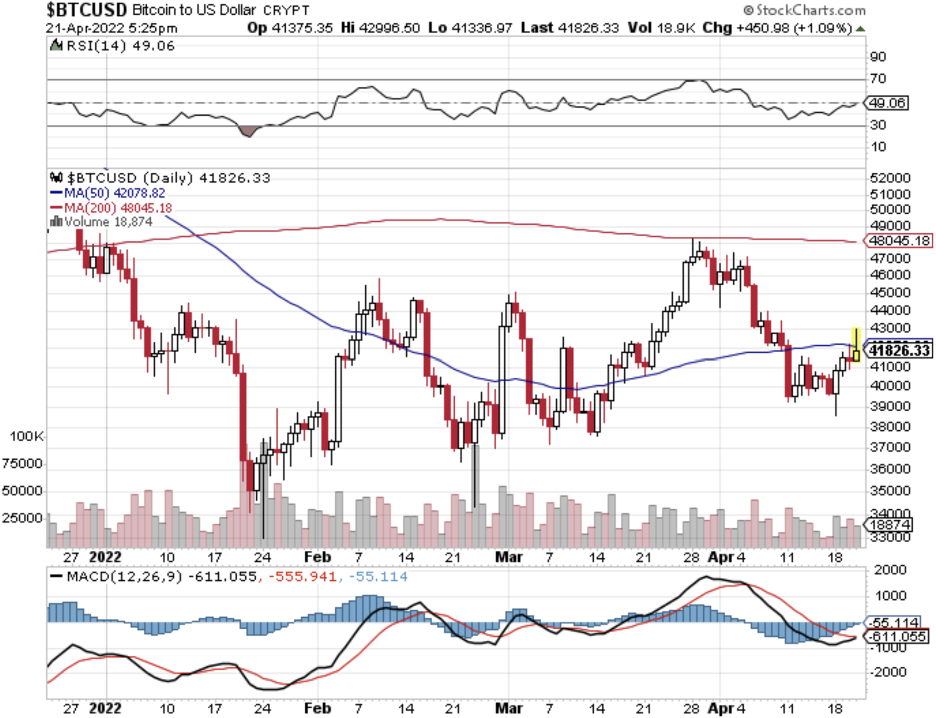
Yet the wait goes on as Bitcoin is slowly accepted around the world and the more sovereign nations and large corporations that come into the fold, there is no doubt in my mind that this will be a main driving force behind higher Bitcoin prices.
https://madhedgefundtrader.com/wp-content/uploads/2019/05/cropped-mad-hedge-logo-transparent-192x192_f9578834168ba24df3eb53916a12c882.png00Mad Hedge Fund Traderhttps://madhedgefundtrader.com/wp-content/uploads/2019/05/cropped-mad-hedge-logo-transparent-192x192_f9578834168ba24df3eb53916a12c882.pngMad Hedge Fund Trader2022-04-21 11:02:332022-04-21 18:43:59Shopify Boosts Digital Gold
Moving on to tomorrow’s tech and the decisive trends that will power your tech portfolio, you can’t help but think about what will happen to the American university system if we are slammed with another delta dropkick.
A bachelor’s degree has already been massively devalued with each subsequent “wave” knocking off an extra 20% from a 4-year achievement.
Another unstoppable trend that shows no signs of abating is the “winner take all” mentality of the tech industry.
The virus was a great catalyst for U.S. tech companies and U.S. asset holders in stocks and real estate to cash in with a smash and grab of the century effectively leaving the rest of the uncompetitive global economy in its wake.
Remember this is all while China is destroying their own tech companies with zeal because they perceive them as too powerful at this point and a legitimate threat to the interest of the communist party.
Now, tech giants will apply their huge relative gains to gut different industries and have set their sights on academics and the buildings they operate from as their next exercise in destroy and conquer.
Recently, we got clarity on big-box malls becoming the new tech fulfillment centers with the largest mall operator in the United States, Simon Property Group (SPG), signaling they are willing to convert space leftover in malls from Sears and J.C. Penny.
The next bombshell would hit sooner rather than later.
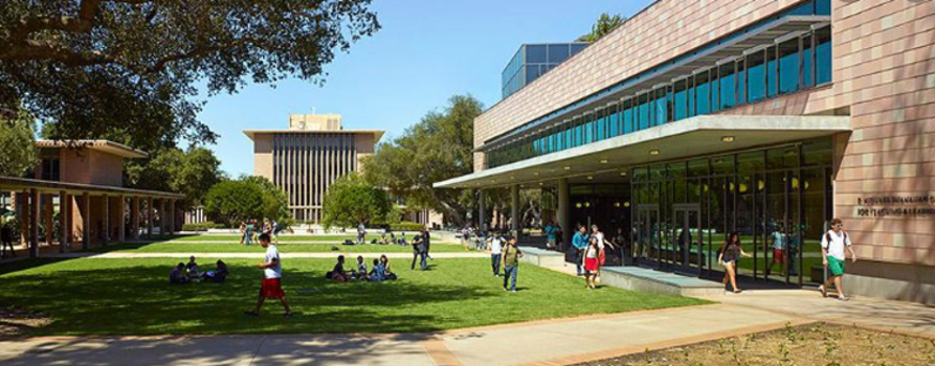
College campuses will become the newest of the new Amazon (AMZN), Walmart (WMT), or Target (TGT) eCommerce fulfillment centers, and let me explain to you why.
When the California state college system shut down its campuses and moved classes online due to the coronavirus in March, rising sophomore Jose Antonio returned home to Vallejo, California where he expected to finish his classes and “chill” with friends and family.
Then Amazon announced plans to fill 100,000 positions across the U.S at fulfillment and distribution centers to handle the surge of online orders. A month later, the company said it needed another 75,000 positions just to keep up with demand. More than 1,000 of those jobs were added at the five local fulfillment centers. Amazon also announced it would raise the minimum wage from $15 to $17 per hour through the end of April.
Antonio, a marketing and communications major, jumped at the chance and was hired right away to work in the fulfillment center near Vacaville that mostly services the greater Bay Area. He was thrilled to earn extra spending money while he was home and doing his schoolwork online.
This was just the first wave of hiring for these fulfillment center jobs, and there will be a second, third, and fourth wave as eCommerce volumes spike.
Even college students desperate for the cash might quit academics all together to focus on starting from the bottom at Amazon or launching an e-store.
Even though many of these jobs at Amazon fulfillment centers aren’t the plush office job that Ivy League graduates covet, any job will do for the bottom 40% of hardworking Americans.
The rise of ecommerce has happened at a time when the cost of a college education has risen by 250% and more often than not, the price rises don’t live up to the value accretion.
Many fresh graduates are mired in $100,000 or even $200,000 plus debt burdens that prevent them from getting a foothold on the property ladder and delay household formation and there’s been no indication President Biden is about to cancel this colossal debt.
Then consider that many of the 1000s of colleges that dot America have borrowed capital to the hills building glitzy business schools, $200 million football locker rooms, and rewarding the entrenched bureaucrats at the school management level outrageous compensation packages.
America will be saddled with scores of colleges and universities shuttering because they can’t meet their debt obligations.
The financial profiles of prospective students have dipped by 50% or more in the short-term with their parents unable to find the money to send their kids back to college, not to mention the health risks.
Then there is the international element here with the lucrative Chinese student that added up to 500,000 total students attending American universities in the past.
They won’t come back as well.
The college campuses will be carcasses with juicy meat on the bones allowing Jeff Bezos to choose the prime cuts.
The coronavirus has exposed the American college system for what it is, and not every college has a $40 billion endowment fund like Harvard to withstand today’s financial apocalypse.
The only two industries now big enough to quench big tech’s insatiable appetite for devouring revenue are healthcare and education.
We are seeing this play out quickly, and once tech gets a foothold literally and physically on campus, the rest of the colleges will be thrust into an existential crisis of epic proportions with the only survivors being the ones with large endowment funds and a global brand name.
It’s scary, isn’t it?
This is how tech has evolved and certain parts of society are now diminished while others supercharged.
This is also part of how the world is changing so rapidly now because of a combustible mix of geopolitics, health scares, and accelerating technology that average people can’t recognize the world we live in anymore.
When this happens, close your eyes and buy tech stocks since most of us don’t run pharma companies or can’t extract largesse from dollar or euro-denominated governments.
YOUR NEW DELIVERY CENTER
https://madhedgefundtrader.com/wp-content/uploads/2019/05/cropped-mad-hedge-logo-transparent-192x192_f9578834168ba24df3eb53916a12c882.png00Mad Hedge Fund Traderhttps://madhedgefundtrader.com/wp-content/uploads/2019/05/cropped-mad-hedge-logo-transparent-192x192_f9578834168ba24df3eb53916a12c882.pngMad Hedge Fund Trader2021-12-27 14:02:312022-01-03 15:51:09Converting Campuses For Fulfillment Centers
Below please find subscribers’ Q&A for the November 17 Mad Hedge Fund Trader Global Strategy Webinar broadcast from the safety of Silicon Valley.
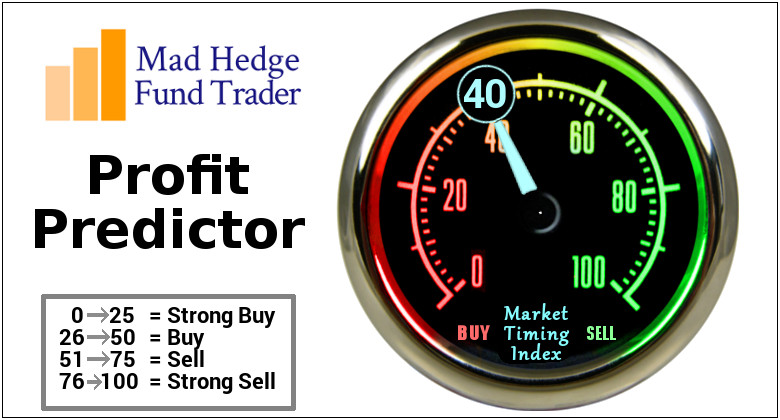
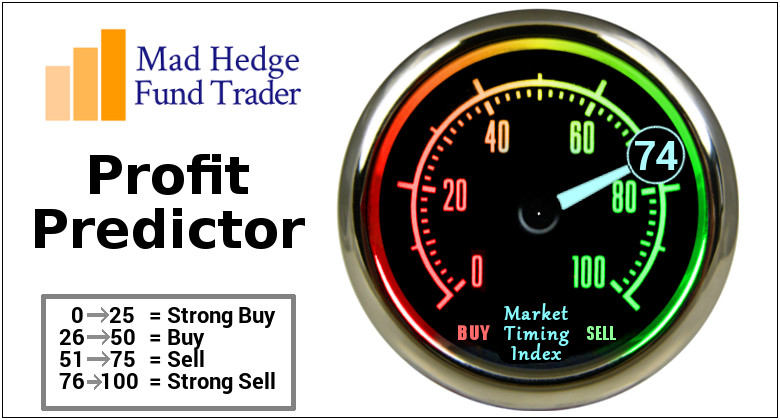
Q: Even though your trading indicator is over 80, do you think that investors should be 100% long stocks using the barbell names?
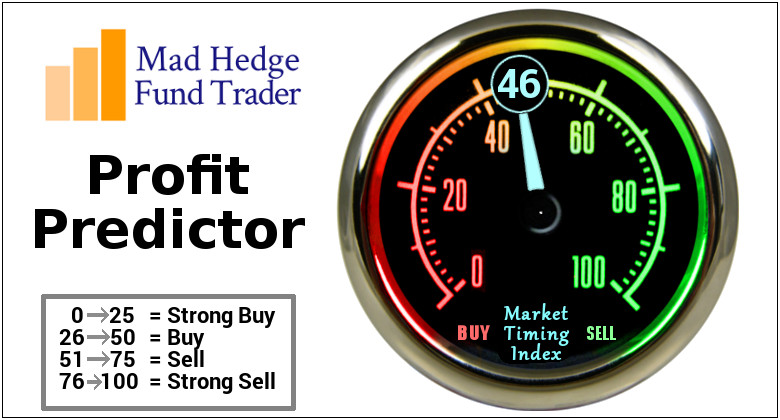
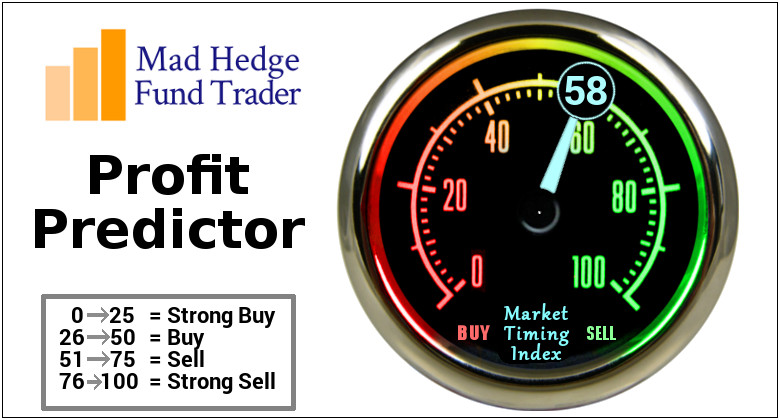
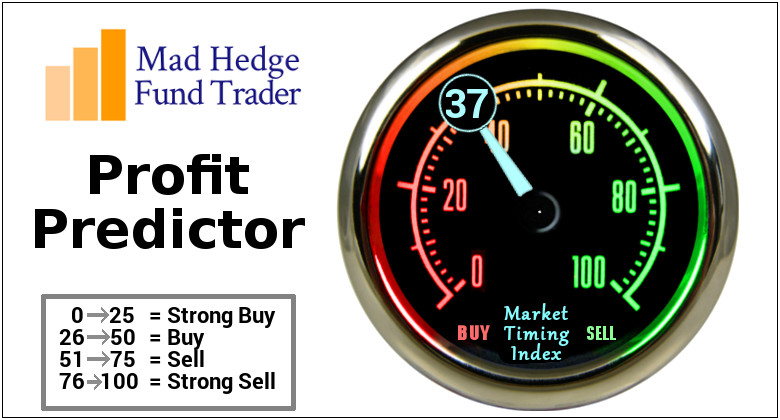
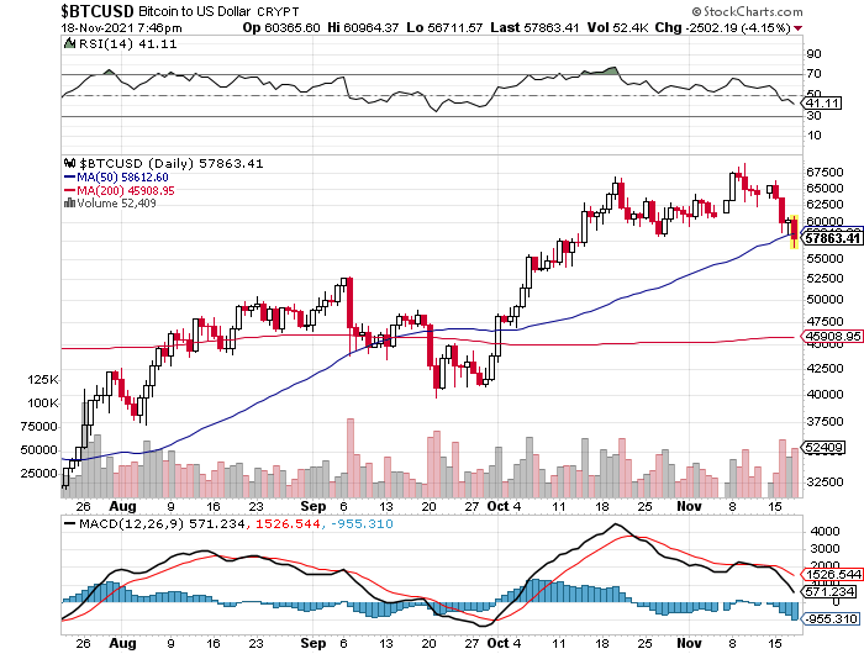
A: Yes, in a hyper-liquidity type market like we have now, we can spend months in sell territory before the indexes finally rollover. That happened last year and it’s happening now. So, we can chop in this sort of 50-85 range probably well into next year before we get any sell signals. Selling apparently is something you just do anymore; if things go down, you just buy more. It’s basically the Bitcoin strategy these days.
Q: What do you think about Rivian's (RIVN) future?
A: Well, with Amazon behind them, it was guaranteed to be a success. However, we mere mortals won't be able to buy any cars until 2024, and they have yet to prove themselves on mass production. Moreover, the stock is ridiculously expensive—even more than Tesla was in its most expensive days. And it’s not offering any great value, just momentum so I don’t want to chase it right here. I knew it was going to blow up to the upside when the IPO hit because the EV sector is just so hot and EVs are taking over the global economy. I will watch from a distance unless we get a sudden 40% drawdown which used to happen with Tesla all the time in the early days.
Q: Are you worried about another COVID wave?
A: No, because any new virus that appears on the scene is now attacking a population that is 80-90% immune. Most people got immunity through shots, and the last 10% got immunity by getting the disease. So, it’s a much more difficult population for a new virus to infect, which means no more stock market problems resulting from the pandemic.
Q: Is investing in retail or Walmart (WMT) the best way to protect myself from inflation?
A: It’s actually quite a good way because Walmart has unlimited ability to raise prices, which goes straight through to the share price and increases profit margins. Their core blue-collar customers are now getting the biggest wage hikes in their lives, so disposable income is rocketing. And really, overall, the best way to protect yourself from inflation is to own your own home, which 62% of you do, and to own stocks, which 100% of the people in this webinar do. So, you are inflation-protected up the wazoo coming to Mad Hedge Fund Trader. Not to mention we buy inflation plays like banks here.
Q: Why are financials great, like Bank of America (BAC)?
A: Because the more their assets increase in value, the greater the management fees they get to collect. So, it’s a perfect double hockey stick increase in profits.
*Interest rates are rising
*Rising interest rates increase bank profit margins
*A recovering economy means default rates are collapsing
*Thanks to Dodd-Frank, banks are overcapitalized
*Banks shares are cheap relative to other stocks
*The bank sector has underperformed for a decade
*With rates rising value stocks like banks make the perfect rotation play out of technology stocks.
*Cryptocurrencies will create opportunities for the best-run banks.
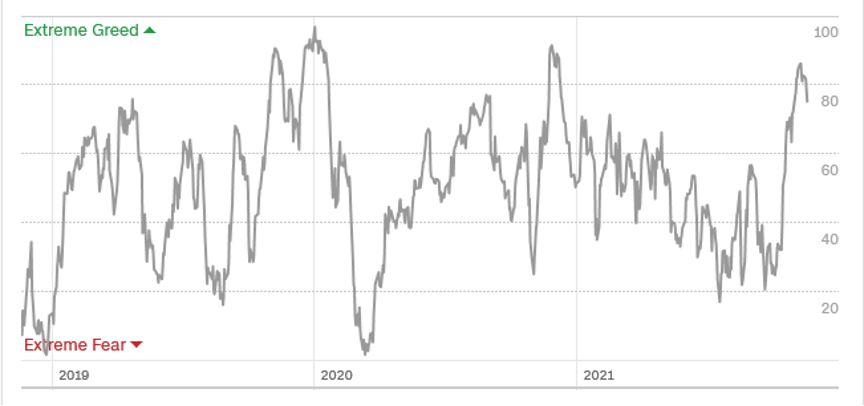
Q: Do you think the market is in a state of irrational exuberance?
A: Yes. Warning: irrational exuberance could last for 5 years. That’s what happened when Alan Greenspan, the Fed governor in 1996, coined that phrase and tech stocks went straight up all the way up until 2000. We made fortunes off of it because what happens with irrational exuberance is that it becomes more irrational, and we’re seeing that today with a lot of these overdone stock prices.
Q: Should I hold cash or bonds if you had to choose one?
A: Cash. Bonds have a terrible risk/reward right now. You’re getting like a 1% coupon in the face of inflation that's at 6.2%. It’s like the worst mismatch in history. In fact, we made $8 points on our bond shorts just in the last week. So just keep selling those rallies, never own any bonds at all—I don’t care what your financial advisor tells you, these are worthless pieces of paper that are about to become certificates of confiscation like they did back in the 80s when we had high inflation.
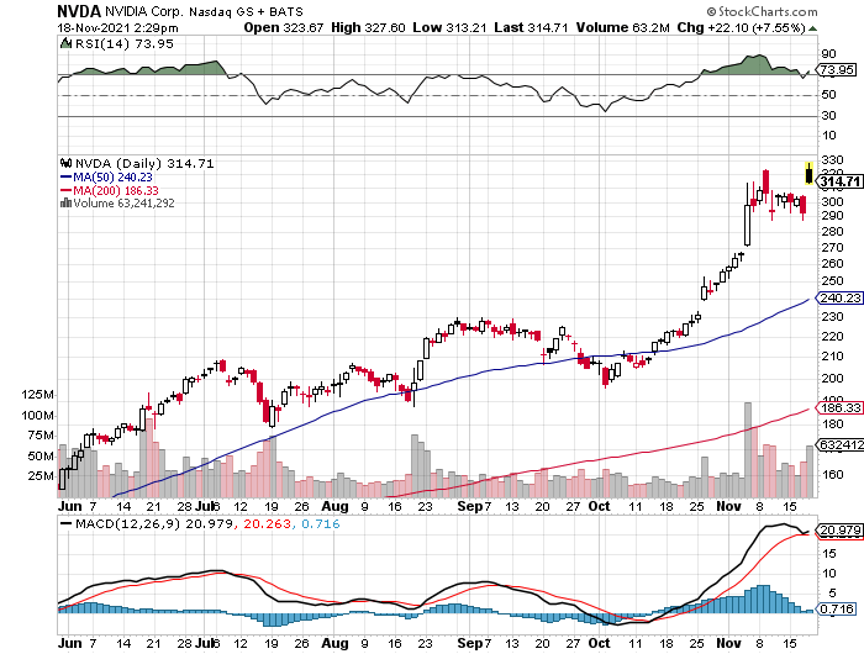
Q: What’s your yearend target for Nvidia (NVDA)?
A: Up. It’s one of the best companies in the world. It’s the next trillion dollar company, but as for the exact day and time of when it hits these upside targets, I have no idea. We’ve been recommending Nvidia since it was $50, and it’s now approaching $400. So that’s another mad hedge 20 bagger setting up.
Q: What about CRISPR Therapeutics (CRSP)?
A: The call spread is looking like a complete write-off; we missed the chance to sell it at $170, it’s now at $88. So, I’m just going to write that one-off. Next time a biotech of mine has a giant one-day spike, I am selling. What you might do though with Crisper is convert your call spread to straight outright calls; that increases your delta on the position from 10% to 40% so that way you only need to get a $20 move up in the stock price and you’ll get a break-even point on your long position. So, convert the spreads to longs—that’s a good way of getting out of failed spreads. You do not need a downside hedge anymore, and you’ll find those deep out of the money calls for pennies on the dollar. That is the smart thing to do, however, you have to put money into the position if you’re going to do that.
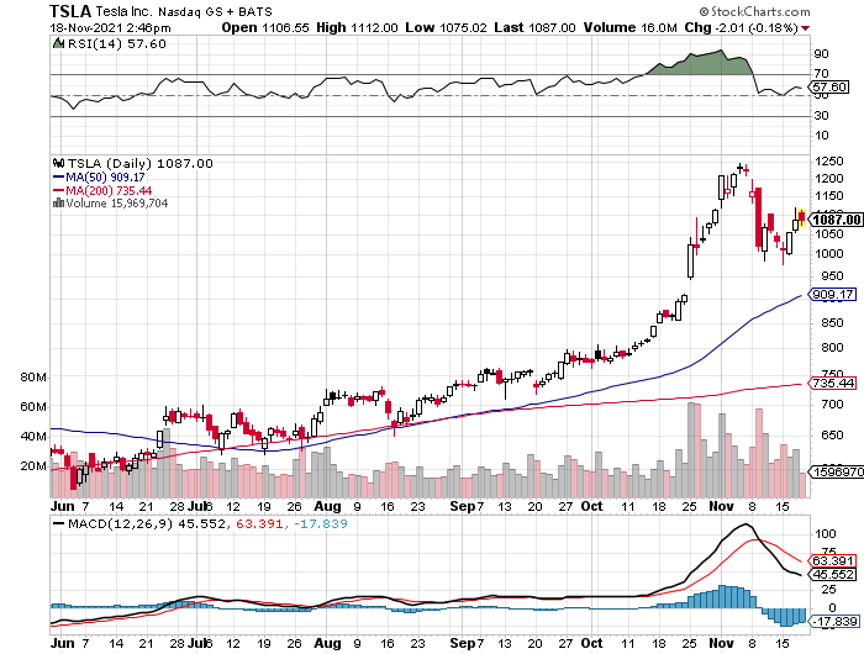
Q: Would you buy a LEAP in Tesla (TSLA) at this time?
A: No, it’s starting a multi-month topping out process, then it goes to sleep for 5 months. After it’s been asleep for 5 months then I go back and look at LEAPS. Remember, we had a 45% drawdown last year. I bet we get that again next year.
Q: Will inflation subside?
A: Probably in a year or so. A lot depends on how quickly we can break up the log jam at the ports, and how this infrastructure spending plays out. But if we do end the pandemic, a lot of people who were afraid of working because of the virus (that’s 5 or 10 million people) will come back and that will end at least wage inflation.
Q: When is the next Mad Hedge Fund Trader Summit?
A: December 7, 8, and 9; and we have 27 speakers lined up for you. We’ll start emailing probably next week about that.
Q: Are gold (GLD) and silver (SLV) getting close to a buy?
A: Maybe, unless Bitcoin comes and steals their thunder again. It has been the worst-performing asset this year. The only gold I have now is in my teeth.
Q: Morgan Stanley (MS) is tanking today, should I dump the call spread?
A: I’m going to see if we hold here and can close above our maximum strike price of $98 on Friday. But all of the financials are weak today, it’s nothing specific to Morgan Stanley. Let’s see if we get another bounce back to expiration.
Q: Where can I view all the current positions?
A: We have all of our positions in the trade alert service in your account file, and you should find a spreadsheet with all the current positions marked to market every day.
Q: What is the barbell strategy?
A: Half your money is in big tech and the other half is in financials and other domestic recovery plays. That way you always have something that’s going up.
Q: Is Elon Musk selling everything to avoid taxes from Nancy Pelosi?
A: Actually, he’s selling everything to avoid taxes from California governor Gavin Newsom—it’s the California taxes that he has to pay the bill on, and that’s why he has moved to Texas. As far as I know, you have to pay taxes no matter who is president.
Q: Will the price of oil hit $100?
A: I doubt it. How high can it go before it returns to zero?
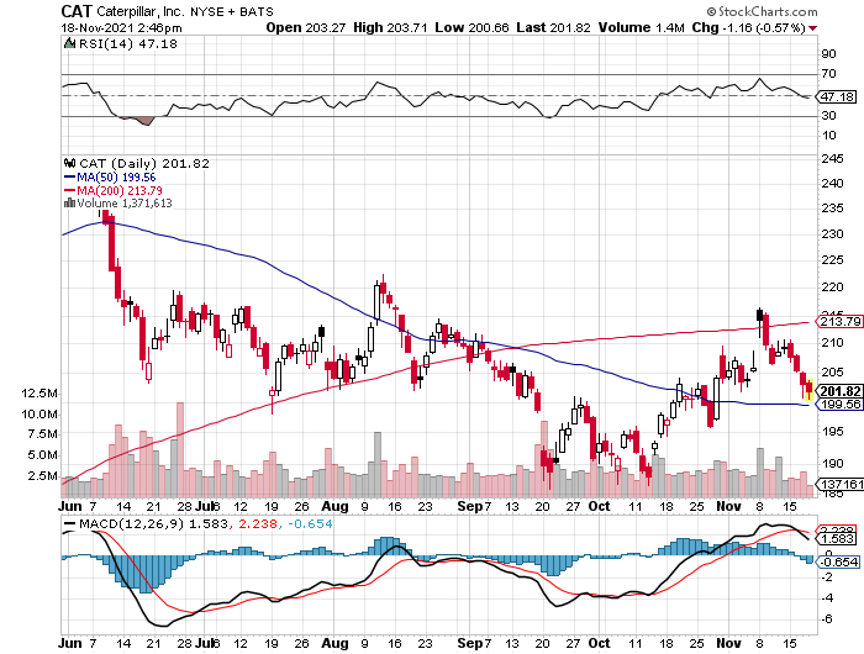
Q: Is it time to buy a Caterpillar (CAT) LEAP?
A: We’re getting very close because guess what? We just got another $1.2 billion to spend on infrastructure. Not a single job happens here without a Caterpillar tractor or a tractor from Komatsu for John Deere (DE).
Q: Will small caps do well in 2022?
A: Yes, this is the point in the economic cycle where small caps start to outperform big caps. So, I'd be buying the iShares Russell 2000 ETF (IWM) on dips. That's because smaller, more leveraged companies do better in healthy economies than large ones.
Q: Is it too late to buy coal?
A: Yes, it’s up 10 times. The next big move for coal is going to be down.
Q: Peloton (PTON) is down 300%; should I buy here?
A: Turns out it’s just a clothes rack, after all, it isn't a software company. I didn’t like the Peloton story from the start—of course, I go outside and hike on real mountains rather than on machines, so I’m biased—but it has “busted story” written all over it, so don’t touch Peloton.
Q: Will spiking gasoline prices cause US local governments to finally invest in Subways and Trams like European cities, or is this something that will never happen?
A: This will never happen, except in green states like New York and California. A lot of the big transit systems were built when labor was 10 cents a day by poor Irish and Italian immigrants—those could never be built again, these massive 100-mile subway systems through solid rock. So if you want to ride decent public transportation, go to Europe. Unfortunately, that’s the path the United States never took, and to change that now would be incredibly expensive and time-consuming. They’re talking about building a second BART tunnel under the bay bridge; that’s a $20 billion, 20-year job, these are huge projects. And for the last five years, we’ve had no infrastructure spending at all, just lots of talk.
Q: Would Tesla (TSLA) remains stable if something happened to Elon Musk?
A: Probably not; that would be a nice opportunity for another 45% correction. But if that happened, it would also be a great opportunity for another Tesla LEAPS. My long-term target for the stock is $10,000. Elon actually spends almost no time with Tesla now, it’s basically on autopilot. All his time is going into SpaceX now, which he has a lot more fun with, and which is actually still a private company, so he isn’t restricted with comments about space like he is with comments about Tesla. When you're the richest man in the world you pretty much get to do anything you want as long as you're not subject to regulation by the SEC.
Q: How realistic is it that holiday gatherings will trigger a huge wave of COVID in the United States forcing another lockdown and the Fed to delay a rise in interest rates?
A: I would say there’s a 0% chance of that happening. As I explained earlier, with 90% immunity in much of the country, viruses have a much harder time attacking the population with a new variant. The pandemic is in the process of leaving the stock market, and all I can say is good riddance.
Q: What about the Biden meeting with President Xi and Chinese stocks (FXI)?
A: It’s actually a very positive development; this could be the beginning of the end of the cold war with China and China’s war on capitalism. If that’s true, Chinese stocks are the bargain of the century. However, we’ve had several false green lights already this year, and with stuff like Microsoft (MSFT) rocketing the way it is, I’d rather go for the low-risk high-return trades over the high-risk, high return trades.
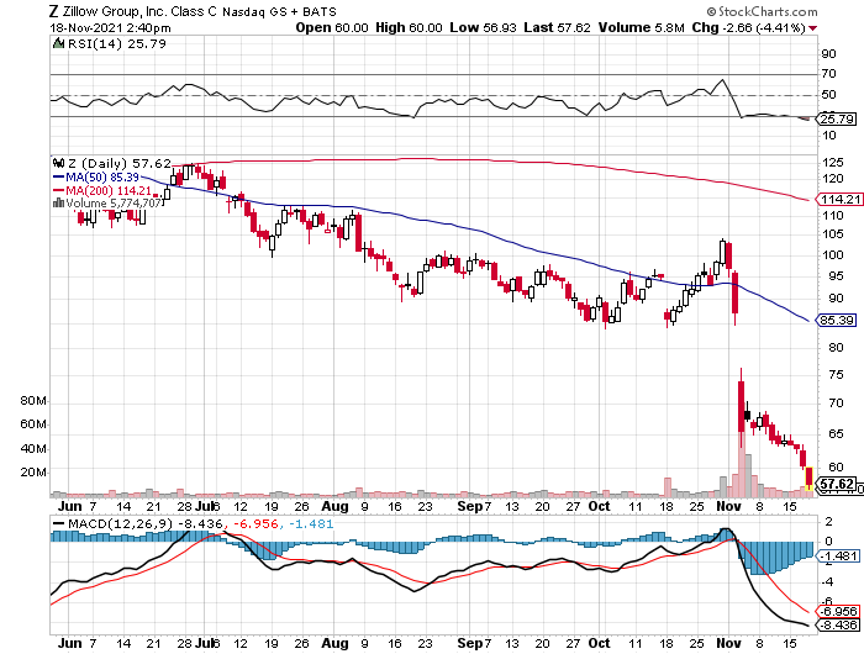
Q: What’s your opinion of Zillow (Z)?
A: I actually kind of like it long term, despite their recent disaster and exit from the home-flipping business.
Q: Do you like copper (CPER) for the long term?
A: Yes, because every electric car needs 200 lbs. of copper, and if you’re going from a million units a year to 25 million units a year, that’s a heck of a lot of copper—like three times the total world production right now.
To watch a replay of this webinar with all the charts, bells, whistles, and classic rock music, just log in to www.madhedgefundtrader.com, go to MY ACCOUNT, click on GLOBAL TRADING DISPATCH, then WEBINARS, and all the webinars from the last ten years are there in all their glory.
Good Luck and Stay Healthy.
John Thomas
CEO & Publisher
The Diary of a Mad Hedge Fund Trader
An Old Fashioned Peloton (a Mountain)
https://www.madhedgefundtrader.com/wp-content/uploads/2021/11/John-Thomas.png518360Mad Hedge Fund Traderhttps://madhedgefundtrader.com/wp-content/uploads/2019/05/cropped-mad-hedge-logo-transparent-192x192_f9578834168ba24df3eb53916a12c882.pngMad Hedge Fund Trader2021-11-19 12:02:122021-11-19 20:02:15November 17 Biweekly Strategy Webinar Q&A
Legal Disclaimer
There is a very high degree of risk involved in trading. Past results are not indicative of future returns. MadHedgeFundTrader.com and all individuals affiliated with this site assume no responsibilities for your trading and investment results. The indicators, strategies, columns, articles and all other features are for educational purposes only and should not be construed as investment advice. Information for futures trading observations are obtained from sources believed to be reliable, but we do not warrant its completeness or accuracy, or warrant any results from the use of the information. Your use of the trading observations is entirely at your own risk and it is your sole responsibility to evaluate the accuracy, completeness and usefulness of the information. You must assess the risk of any trade with your broker and make your own independent decisions regarding any securities mentioned herein. Affiliates of MadHedgeFundTrader.com may have a position or effect transactions in the securities described herein (or options thereon) and/or otherwise employ trading strategies that may be consistent or inconsistent with the provided strategies.