Mad Hedge Technology Letter
March 11, 2022
Fiat Lux
Featured Trade:
(AMAZON MEANS BUSINESS)
(AMZN), (AAPL), (TSLA), (GOOGL)
Mad Hedge Technology Letter
March 11, 2022
Fiat Lux
Featured Trade:
(AMAZON MEANS BUSINESS)
(AMZN), (AAPL), (TSLA), (GOOGL)
The blockbuster announcement from Amazon (AMZN) regarding their 20:1 stock split is a big deal, and don’t listen to the charlatans who say otherwise.
Sure, on paper, the business model will be thriving just like it has been since its inception, but this piece of financial manipulation is genius.
Just think about it.
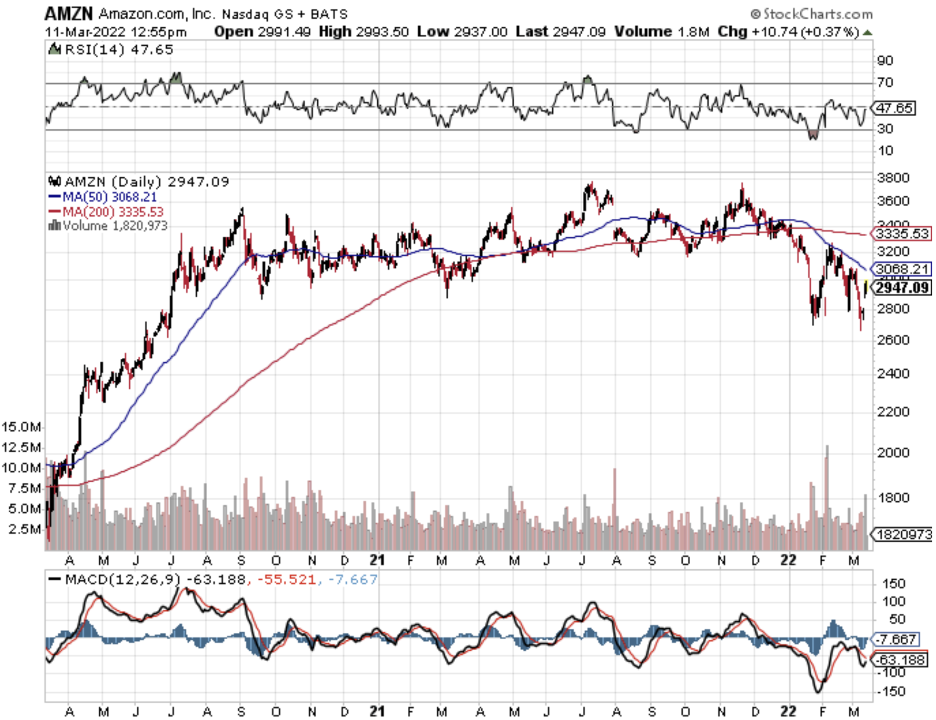
The reason for Amazon to need a stock split in the first place is because the stock has gone from the bottom left to the top right over time.
The best and most successful companies frequently execute stock splits and so even if one wants to spin it as a problem, it’s a problem that I wouldn’t mind having myself.
Splits are often a bullish sign since valuations get so high that the stock may be out of reach for smaller investors trying to stay diversified. Investors who own a stock that splits may not make a lot of money immediately, but they shouldn't sell the stock since the split is likely a positive sign.
Nominally cheap stocks have a massive psychological effect on the average investor.
I also don’t buy the BS about fractional shares, it’s like owning half a car.
Nobody wants that.
Investors also clamor for round numbers.
Would you rather own 5 shares of AMZN or 100 after the stock split?
Human psychology can’t be discounted here and, true to form, stock splits have been the precursor to even higher share prices.
Many companies decide to rinse and repeat and AMZN also unearthed a tidy $10 billion stock buyback plan.
So it’s no shock that this will be Amazon's 4th stock split in its history. The last split came in September 1999.
If shareholders approve of the split, it will begin trading on the new basis on June 6.
Big tech behemoths made hay when the sun was shining during the pandemic, and now they want to make it easy for the simple investors to get back into shares.
Bravo to them.
Other companies of its ilk have also partaken in stock splits like Tesla and Alphabet.
So this isn’t out of left field.
It just so happens that at the time of the stock split announcement, big tech has been the most oversold in the past 5 years.
Apple (AAPL) split its stock 4-for-1 in 2020s. Tesla's (TSLA) 5-for-1 stock split also occurred in 2020. Alphabet's (GOOGL) 20-for-1 stock split was announced in February.
Granted, at a fundamental level, things won’t be different at Amazon.
This doesn’t change the innards of the machine that was built for financial engineering from share buybacks to stock splits and the timing of it is also an important lever as every company tries to max out its genetic makeup.
Amazon shares are down about 9% in the past year, but I would attribute that more to too fast too soon.
Then we were hit by the onslaught of higher interest rate expectations and then the Ukrainian war.
Let’s be honest, the first 3 months of this year have been an absolute blood bath for equities, and AMZN doesn’t trade in a vacuum.
The extra kick in the teeth was the supply chain problem for the ecommerce juggernaut.
AMZN will come back as market sentiment starts to heal itself.
War won’t be a ubiquitous event around the Western world and I view the military escalation as an anomaly.
It’s not like AMZN is operating in Russia as well, or China for that matter.
It’s true that the events of the last few weeks have shined a spotlight on non-Democratic countries as a poor environment for business and in absolute disregard of the rule of law.
AMZN needs to operate in places where the law has teeth, otherwise, delivery packages would get stolen half the time with no recourse.
I feel the timing of the stock split is also indicative of a near short-term bottom in tech stocks.
“Don't chase a girl, let the girl chase you.” – Said Founder of Softbank Masayoshi Son
Global Market Comments
March 11, 2022
Fiat Lux
Featured Trade:
(THE MAD HEDGE TRADERS & INVESTORS SUMMIT IS ON FOR MARCH 14-16)
(A REFRESHER COURSE AT SHORT SELLING SCHOOL),
(SH), (SDS), (PSQ), (DOG), (RWM), (SPXU), (AAPL), (TSLA),
(VIX), (VXX), (IPO), (MTUM), (SPHB), (HDGE)
Mad Hedge Biotech and Healthcare Letter
March 10, 2022
Fiat Lux
Featured Trade:
(COULD THIS BE THE NEXT BIOTECH BUYOUT CANDIDATE?)
(BLUE), (AZN), (ABBV), (BMY), (VRTX), (CRSP)
What is the common denominator of giant drugmakers AstraZeneca (AZN), AbbVie (ABBV), and Bristol Myers Squibb (BMY)?
Aside from being three of the biggest healthcare companies across the globe, all three have also completed high-profile acquisitions amid the pandemic.
AstraZeneca acquired Alexion Pharmaceuticals for $39 billion in December 2020.
Meanwhile, AbbVie wrapped up its whopping $63 billion acquisition of Allergan in May 2020.
As for BMY, this biopharma titan followed its jaw-dropping $74 billion acquisition of Celgene with a $13 billion merger with MyoKordia.
Since then, these deals have bolstered the lineups and deepened the pipelines of all three drugmakers, helping them secure their dominance in the healthcare space.
As for the acquirees, they also benefited from the transactions, particularly those struggling to get through tough situations prior to getting bought out.
With that in mind, it looks like the biotechnology and healthcare sector has another potential high-profile acquisition candidate: Bluebird Bio (BLUE).
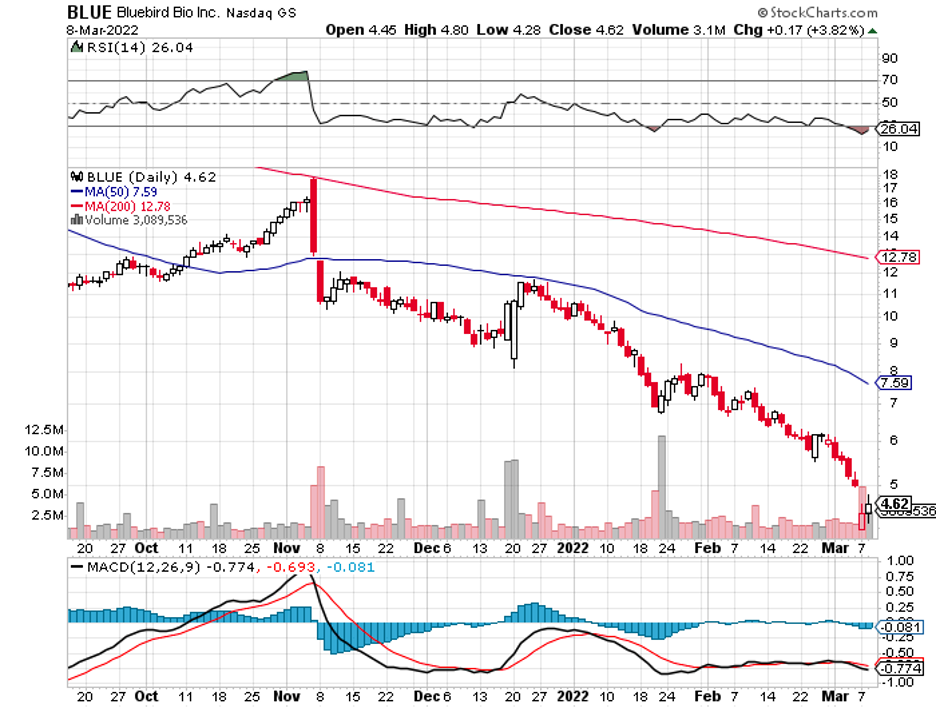
Bluebird Bio has recently fallen from investors’ grace following multiple setbacks.
The biotechnology company, once considered a trail-blazer in the gene therapy space, now finds itself without a CFO and left behind by competitors.
Its peers, who were initially eons away in terms of pipeline development, have figured out ways to work around Bluebird’s patents and even managed to outpace the company in launching new gene therapies to market.
Given all these factors, it is no surprise that investing in Bluebird bio has become synonymous with a recycler searching for value in random scraps and parts.
Over the last three years, Bluebird Bio’s shares have plummeted by more than 90%. From a $1.39 billion market capitalization, it is now at roughly $330 million.
That is a horrible performance based on any metric.
Bluebird bio has faced several headwinds that caused its stocks to fall apart.
One problem is the delay in the company’s Biologics License Application in the US for its transfusion-dependent beta-thalassemia treatment, LentiGlobin.
Bluebird Bio initially planned to complete this rare blood disorder therapy’s application by the second half of 2020. However, the company failed to submit some information requested by the FDA.
Another LentiGlobin-related issue is the temporary pause on the clinical trial for sickle cell disease treatment. Eventually, the suspension was lifted, but not before investors scurried away from the stock, following back-to-back concerns over the same treatment.
Other aggravating factors include Bluebird’s move to exit the European market following disagreements over the pricing of some of its gene therapies.
These issues saw Bluebird’s market cap sink, positioning it lower than rival gene-editing companies today.
Needless to say, this deeply discounted value could attract a bigger and expanding biopharma seeking to dip its toes in the gene-editing space.
While Bluebird might be struggling these days, it remains a promising company thanks to its candidates.
This becomes even more exciting since the company announced its plans to concentrate on severe genetic diseases. Although this is a small niche, there’s massive potential in this market.
A strong candidate in its roster is Zynteglo, which gained regulatory approval in 2019 and has yet to reach blockbuster status.
Patients with beta-thalassaemia normally have no other choice but to get blood transfusions regularly. Zynteglo drastically challenges this standard by offering a one-time curative treatment. In fact, saying that this is a life-changing breakthrough is an understatement.
Another potential blockbuster is Skysona, a treatment for a pediatric neurodegenerative disorder called cerebral adrenoleukodystrophy. This neurological disease is extremely rare, affecting only 50 patients in the US annually.
As for its pipeline, Bluebird has three major candidates nearing FDA approval in the US. This means 2022 and 2023 will be critical years for the company.
The first product is Lenti-D, which is similar to Skysona. If things go according to plan, then this treatment might receive the green light by August 2022.
Another product is Beti-cel, which was initially launched as Zynteglo. When this successfully penetrates the US market, this first-ever gene therapy option for beta-thalassemia will rake in roughly $1.87 billion by 2024.
Considering the potential of this market, Beti-cel inevitably finds itself facing off strong competitors in the space.
Thus far, the strongest is Vertex Pharmaceuticals (VRTX), which recently announced an additional $900 million investment in its collaboration with CRISPR Therapeutics (CRSP).
The third candidate is Lovo-cel, which is a sickle cell disease treatment.
This could be a major product for Bluebird, given the over 100,000 patients in the US alone that the company can target.
The goal is to finish the validation process by 2022 and submit Lovo-cel for approval by the first quarter of 2023.
Outside its pipeline candidates and approved products, Bluebird's manageable debt is another thing that makes it attractive for a potential buyout.
After all, cash is king, especially when it comes to biotechnology companies.
At the moment, Bluebird still holds roughly $442 million in the bank, and $46 million of this is restricted.
This indicates unrestricted liquid assets of approximately $396 million—an amount higher than its current market cap.
Consequently, this will allow Bluebird to comfortably weather at least the rest of the year until 2023.
It possesses a relatively solid secure position to hold itself together until its pending candidates start raking in revenues on their own.
Admittedly, Bluebird Bio has had several challenging years. There will still be uncertainties ahead, but it’s undeniable just how promising the company is at this point.
Overall, this stock is worth serious consideration, particularly for companies looking to get a head start in the gene-editing sector.
Mad Hedge Bitcoin Letter
March 10, 2022
Fiat Lux
Featured Trade:
(WASHINGTON GETS SERIOUS ABOUT CRYPTO)
(BTC), (FB)
U.S. President Joe Biden signing a crypto executive order is more bark than bite.
It doesn’t mean that anything really will happen, especially in the short term.
Optics are quite important for the current American administration, and I believe this is another instance.
Throw the crypto fanatics a bone and hype it up like a transformational moment when it’s not.
If you live in a world of hard outcomes, then this isn’t one of them.
Granted, it’s a step in the right direction, but no meaningful legislation has been enacted yet and I highly doubt that anything concrete gets done before the next administration.
I won’t get into the business of hyping up this announcement of “establishing a framework” for the digital gold because it echoes the direction they were supposed to go with big tech.
Big tech was supposed to get regulated to the utmost, but nothing ever came of it.
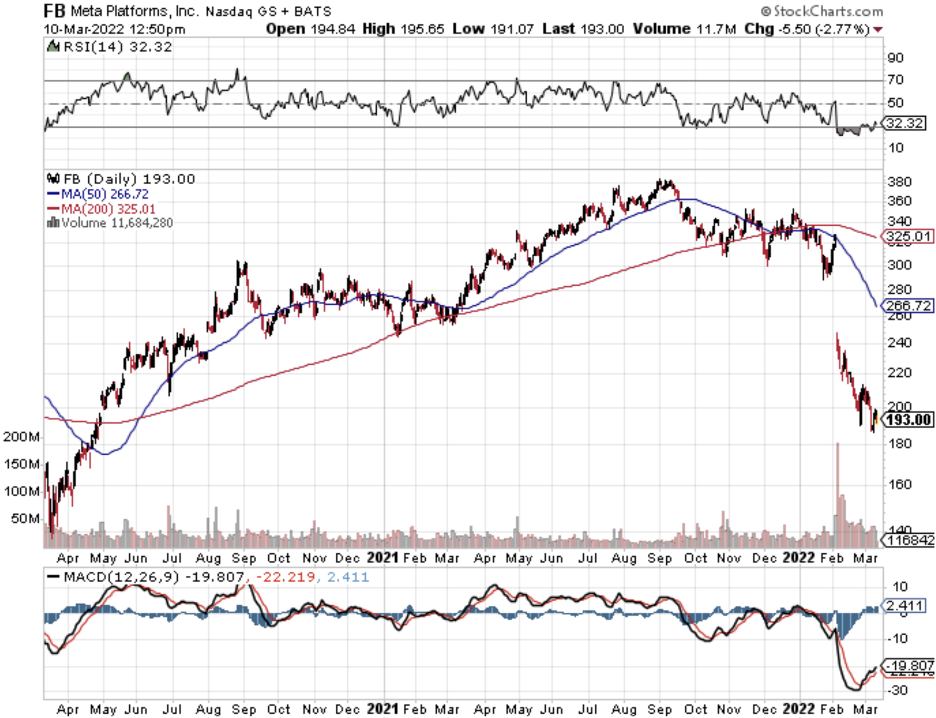
The only tech firm that blew up was Meta or Facebook (FB), but that was more about self-inflicted wounds than anything else.
Big tech is largely unscathed from the historical behavior, and nothing has changed in terms of the handling of personal data and its integrity.
Turning a blind eye than rather dealing with issues has been sort of the consensus for anything really controversial with big business.
I don’t believe the administration will lift a finger and plan to treat crypto as politicking even to please optics.
This will create a situation where they can straddle positions on both sides so they can claim innocence if something goes wrong with crypto or take the credit if crypto develops.
The reports will dish up buzz words like “historic” and “unprecedented.”
The order was finally signed Wednesday. It calls on federal agencies to take a unified approach to regulation and oversight of digital assets, according to a White House fact sheet.
A unified approach could also mean that nobody does anything together so we will need to see more substance out of Washington.
The Biden administration is calling on the Treasury to assess and develop policy recommendations on crypto.
Even if recommendations can be decided upon, it doesn’t mean that it will be net positive for Bitcoin’s price.
Last month, U.S. officials seized $3.6 billion worth of bitcoin — their biggest seizure of cryptocurrencies ever — related to the 2016 hack of crypto exchange Bitfinex.
Following Russia’s invasion of Ukraine, authorities are now also concerned about the possible use of crypto in helping sanctioned Russian individuals and companies evade the restrictions.
There is illegal activity that the government wants to stamp out and writing the rules makes it easier to do that.
The Biden administration also wants to explore a digital version of the dollar which is copying the Chinese playbook.
Much of the policy is strategizing relative to what China and Russia are doing and he fell short of saying that the US will create a digital dollar.
Again, it’s more of the optics of saying the government need “urgency” on research and development of a potential digital dollar which doesn’t really mean anything.
The Federal Reserve last year began work on exploring the potential issuance of a digital dollar. The central bank released a long-awaited report detailing the pros and cons of such virtual money but didn’t take a position yet on whether it thinks the U.S. should issue one.
These announcements are a far cry from real policy moves.
It’s great that more resources will be thrown at the asset class but research and urgency don’t mean much in terms of hard victories.
Short-term, this Eastern European crisis has been a massive shot across the bow for Bitcoin fanatics because it has proven that during a possible nuclear war, nobody will buy Bitcoin.
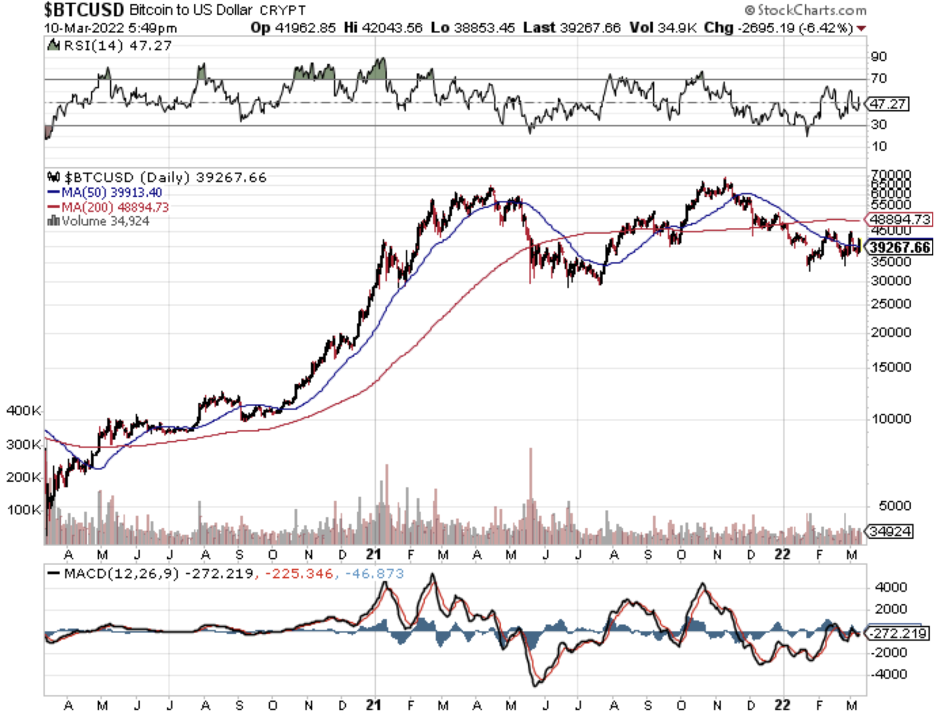
After the dead cat bounce, there was another draconian sell-off this morning in Bitcoin with the asset down 7%, again, diving below $40,000.
The bad price action was created by the 7.9% CPI print and Bitcoin was supposed to be an inflation hedge, but the price action suggests it performs poorly as an inflation hedge.
The jury is out but Bitcoin has failed some major tests this year and it will be a hard slog for the rest of the year.
Sell the rallies until the backdrop and variables change for the better.
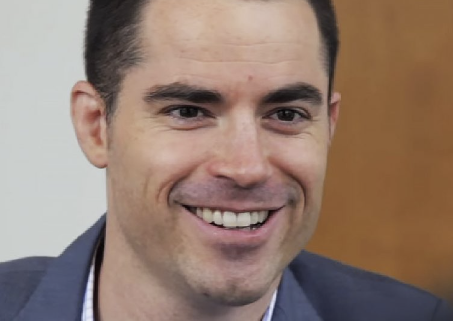
“Setting regulatory certainty is very important for bitcoin. I'm opposed to the regulations, but the bitcoin businesses need to know the rules of the game in order to move ahead.” – Said Crypto Entrepreneur Roger Ver
Global Market Comments
March 10, 2022
Fiat Lux
Featured Trade:
(THE NEXT COMMODITY SUPERCYCLE HAS ALREADY STARTED),
(COPX), (GLD), (FCX), (BHP), (RIO), (SIL),
(PPLT), (PALL), (GOLD), (ECH), (EWZ), (IDX)
Legal Disclaimer
There is a very high degree of risk involved in trading. Past results are not indicative of future returns. MadHedgeFundTrader.com and all individuals affiliated with this site assume no responsibilities for your trading and investment results. The indicators, strategies, columns, articles and all other features are for educational purposes only and should not be construed as investment advice. Information for futures trading observations are obtained from sources believed to be reliable, but we do not warrant its completeness or accuracy, or warrant any results from the use of the information. Your use of the trading observations is entirely at your own risk and it is your sole responsibility to evaluate the accuracy, completeness and usefulness of the information. You must assess the risk of any trade with your broker and make your own independent decisions regarding any securities mentioned herein. Affiliates of MadHedgeFundTrader.com may have a position or effect transactions in the securities described herein (or options thereon) and/or otherwise employ trading strategies that may be consistent or inconsistent with the provided strategies.