As a potentially profitable opportunity presents itself, John will send you an alert with specific trade information as to what should be bought, when to buy it, and at what price. Read more

As a potentially profitable opportunity presents itself, John will send you an alert with specific trade information as to what should be bought, when to buy it, and at what price. Read more
As a potentially profitable opportunity presents itself, John will send you an alert with specific trade information as to what should be bought, when to buy it, and at what price. Read more
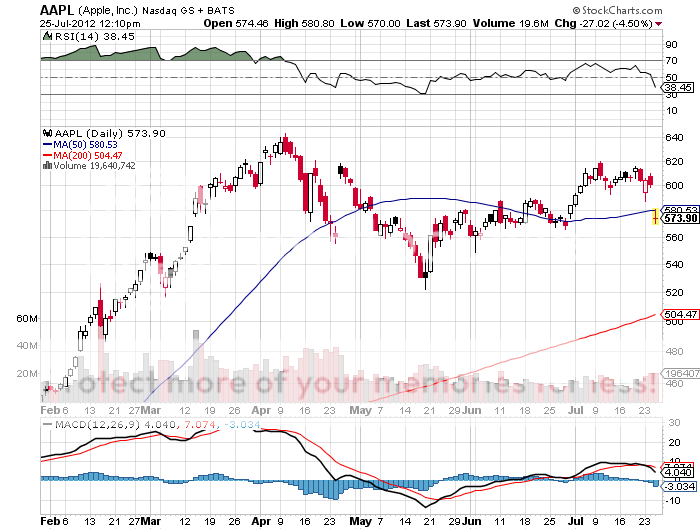
Steve Jobs? creation dropped a real bombshell on the market Tuesday when it announced Q2, 2012 earnings that were rotten to the core. The timing could not have been worse for a market that was on the verge of complete nervous breakdown. Of the 53 brokers who provided research coverage of the Mountain View, California firm, 27 rated it a ?buy?, 21 ?outperform?, and precisely zero ?underperform?. And you wonder why retail has bailed on Wall Street.
The numbers made grim reading. Sales, which had been targeted at $37 billion came in at only $35 billion. Profits amount to $8.82 billion, taking earnings per share to $9.32, well down from the $10.37 expected. Estimates for iPhone sales had run as high as the low 30 millions. The actual figure was 26 million. In overnight trading, the shares opened down a gob smacking $40, instantly vaporizing $37 billion in market capitalization.
Apple is suffering from the mother of all delayed consumption headaches. Consumers love their products so much they have gone on strike until the vastly upgraded and better performing iPhone 5 is launched in the fall, yours truly included. So the dip in profits will reappear as a spike in profits in the next one or two quarters. This means that if you missed the 50% run up since the beginning of the year, you may have a chance to take another bite at, well, the apple.
Apple is not just an iPhone story. The mini iPad is expected out soon. Apple TV is expected to be huge next year. Apple has only just scratched China?s market of 600 million cell phone users. Its six stores are regularly the scene of long lines, and occasional riots by consumers desperate to buy their products. Droves are crossing the border by train from Shensen to Hong Kong, where Apple products are more easily available.
In the spring I lead readers into the August $400-$450 call spread which became one of our most profitable trades of the year. I took them out a month ago because we had already squeezed out most of the profit, and because I thought that exactly this kind of disappointment might occur.
The intelligent thing to do here is to wait for the current shock to work its way through the system. You also want the present melt down in the broader market to exhaust itself. That could take us well into August. The best-case scenario here is that you get back in when the stock falls all the way down to its June low at $525. If it then drops below $500, double up. This would be a once in a lifetime gift.
If you are cautious, you will then want to put the $400-$450 (AAPL) call spread back on with a January 2013 expiration. The more aggressive could roll up to the $450-$500 call spread. Or you could just buy the stock outright for longer-term accounts. All of the arguments that I made two years ago that the shares were headed for $1,000 are still valid (click here for the link).

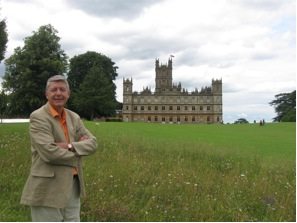
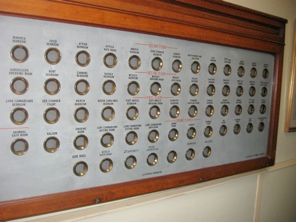
The city is now the most crowded that it has been at any time since WWII. Most hotels have tripled their rates, forcing traveling students on a budget to sleep in doorways and under bridges everywhere.? My usual abode here, The Naval Officers Club near Piccadilly, honored their regular price since I have been such a long term and loyal guest. However, I was the only one in the building not participating in an Olympic event, as the teams of several nations booked every room two years ago. The American team arrived today in their spiffy blue blazers. After randomly driving around London, the hapless bus driver broke down and admitted that he didn?t know where the Olympic Village was. And enterprising athlete whipped out his iPhone, Googled the address, Mapquested the directions, and they finally arrived four hours late. Still, they fared better than the Australian sailing team, whose sales were lost by Qantas Airlines. I decided to flee the madness in London for a day and visit some old friends in the countryside, the 8th Earl and Countess of Carnarvon. The late 7th Earl was an early investor in my first hedge fund and I have kept in touch with the family ever since. ? 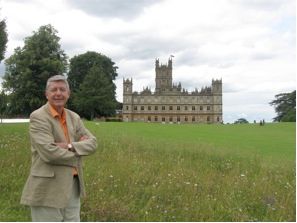 His grandfather, the 5th Earl gained fame and fortune from his co-discovery of King Tut?s tomb in Egypt?s Valley of the Kings in 1922. His early death, shortly thereafter, was the origin of ?The Mummy?s Curse? of depression era horror film fame. Many of his discoveries today make up the bulk of the Egyptian collection in New York?s Metropolitan Museum of Art, which the family sold to pay estate taxes. Recently, the family has been renting out their 350 year old home, a 15-minute taxi ride south of Newbury, the spectacular Highclere Castle, for use as a film set. The period drama series that resulted, ?Downton Abbey,? unexpectedly became a blockbuster in the US where viewers stupefied by endless low budget reality shows were starved for quality, thoughtful content and adult writing. It also sent 100,000 visitors a year their way, as well as $25 million in ticket fees. This windfall enables to maintain the house and the magnificent gardens in immaculate condition. The cash flow enabled them to ramp up the other family business, breeding racehorses for the queen. Portraits of past winners adorned almost every room. After tea with my hosts and a personal tour of the estate, I picked up some tea towels for friends at home who are into this kind of thing. I also saw a display of some spectacular early Egyptian relics, which the family found bricked up behind a wall 60 years after the Met sale. ?
  ? The train has just emerged from the tunnel and we are now racing our way across the Norman countryside. Everyone?s cell phone has simultaneously started bleeping, mine with a text message welcoming me to France and informing me that I will be allowed unlimited data transfer, but will be billed $1.29 per minute for voice. Is that in English or French? Is there a surcharge for speaking foreign languages in France? The medieval red rick farmhouses whip by in a blur. The steward has arrived with my dinner tray, so I?ll sign off for now. I?ll report again after Paris. John Thomas

During my recent quick run through Chicago, I stopped by Obama?s house on Greenwood Avenue and 50th street in up and coming Hyde Park to say hello. I was thwarted by two concrete crash barriers, 16 cop cars, and army of elderly Chicago police happily pulling overtime. Shifty looking characters wearing long overcoats and sprouting wires out of their ears were everywhere. Needless to say, I did not get invited in for tea and cookies.
Every neighborhood bird nest, flagpole, and chimney sported video cameras, and Google Earth has wiped the block off the map. No wanting to risk my valued Secret Service clearance, I scuttled out of there before anyone started asking questions. Instead, I settled for a visit to the delicious Valois Cafeteria around the corner, the president?s favorite diner, and his preferred bookstore at 57th Street Books. They carried all of his publications. Amazing!
I managed to run into someone, who knew someone, who once babysat Obama?s kids. Need, a presidential pardon, a cushy ambassadorial appointment, a new alternative energy program, or a juicy government contract? I?m now your ?go to? guy! Just make a discreet donation to my favorite 501 (3) (c) and it?s a deal.

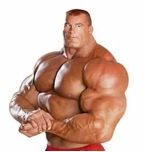
? The modern Olympic Games are orgies of lachrymose nationalism. War by other means, warrior-athletes, watched by men in suits and uniforms?.rogue California chemists running their eye popping, vein-clustered, vest stripping robots against degendered state laboratory freaks,? said author, Ian Sinclair, and outspoken critic of the Olympics.

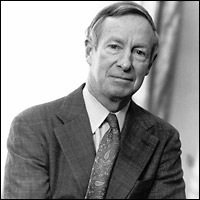
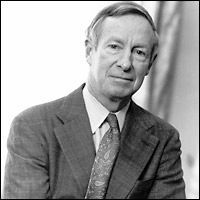
It is with a great sense of sorrow that I learned of the passing of industry legend, Barton Biggs. He was 79. I was speaking to him only a few weeks ago when I passed through New York for my strategy seminar, attempting to decipher the medium term trends for these fractious and conflicting markets. It is a reminder of how temporary and fleeting life can be.
Barton was a pioneer in the international investment arena and founding father of the modern hedge fund industry. He became famous for calling market bottoms in 1982, 1987, and 2008. He was a colorful and masterful writer who regularly titillated investors with his iconoclastic and out of consensus ideas. Sound familiar?
Barton grew up as a member of the East coast establishment, his father being the chief investment officer of the Bank of New York. He graduated from Yale in 1955 in creative writing and then did a brief stint in the Marine Corps. He next turned to Wall Street and joined E.F. Hutton as a junior broker (remember ?When E.F. Hutton speaks, people listen??).
In 1965 he spun off to create Fairfield Partners, one of the early long/short US equity hedge funds. After several prosperous years, the fund crashed and burned with the collapse of the ?Nifty 50?. He later told me that was when he first learned of the six standard deviation move. ?The biggest mistake you can make in a bear market is to cover your shorts too soon? he said.
In the mid seventies, he was recruited by a small, white shoed, private partnership called Morgan Stanley & Co. to build up an asset management division from scratch. Barton became my friend and mentor when I joined the firm in the early eighties, and I spent the better part of the decade debating every pebble of the investment landscape with him.
Together, we fought a major uphill battle trying to convince a cautious and blinkered management that the firm?s future lies in international and emerging market equities. Getting them to focus on Toyota and Matsushita instead of General Motors and IBM, we felt like Sisyphus endlessly rolling the boulder up a steep mountain.
Barton persevered, and in the following three decades the business grew to $1 trillion in assets along with a world-class global research department. After Morgan Stanley went public, he became a billionaire in his own right. I bailed to start my own hedge fund a few years later.
In 2003, Barton left (MS) to start a new hedge fund, Traxis Partners. We all thought he was crazy at the time, as it was the last thing you would expect a 71 year old to do. This is a business where 30 year olds regularly drop dead of heart attacks from the stress. That was pure Barton. I heard at one point he reached $5 billion in assets.
He became a regular fixture in the media, offering his wisdom and insights in his characteristic gravelly voice. Always the independent thinker, I know he voted for Obama in the last election, at odds with much of Wall Street.
To listen to my last extended interview with Barton where he gave his global view a few years ago on Hedge Fund Radio, please click here. He was tiring even then, and we had to record the show in 15-minute segments so he could rest in between sessions. But he made the extra effort to give my readers an edge on the market. That was pure Barton too.
Barton will be missed by many.
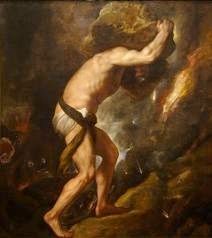
Sysiphus
Remember the $2 trillion US corporate cash mountain that you have heard so much about? Well, it is finally starting to shrink. Have they started reinvesting profits in America? Are they hiring more people? Did they finally get those tax breaks they were begging for? Have they dramatically increased dividends and share buy backs or returned to acquisitions to boost earnings?
Well, not exactly. The cash mountain is shrinking, but for all the wrong reasons. They are just not earning as much money as they used to. According to data released by S&P Capital IQ, US corporate cash flow turned negative in Q1, 2012 for the first time since 2008. It almost certainly worsened in Q2.
The harsh truth is that earnings are falling because of collapsing revenues, which at the rate reported so far in this season look to come in at about 1% YOY. Adjust for inflation, and these figures turn negative. This means that the 5.4% YOY earnings growth we are seeing, which I predicted all the way back in my January annual asset revue, are being achieved through aggressive cost cutting.
Managers aren?t hiring more, they?re firing more, which explains our stubbornly high headline 8.2% unemployment rate. This can?t last. You can only eat your seed corn for so long before you go hungry.
This deterioration, which has been under reported and unappreciated, has economists slashing their forecasts for US GDP growth. It is clear that consumers are returning to their bomb shelters. I recently chopped my own forecast from 2% to 1.5%, and even that could start to look high in a matter of weeks. All of this sets up the scenario which I have been pounding the table about in my strategy seminars in Chicago, New York, London, Paris, Frankfurt, and Zermatt, which I have entitled ?The Crash of 2013?.
None of this makes a convincing case for buying equities right now. It makes the current 14 multiple for the S&P 500 look positively pricey. If there was ever a case for selling rips in the indexes it is now. Keep your fastest finger on your mouse ready to buy puts on the (SPX), (IWM), and (QQQ), and the bear ETF (SDS), and (SH).
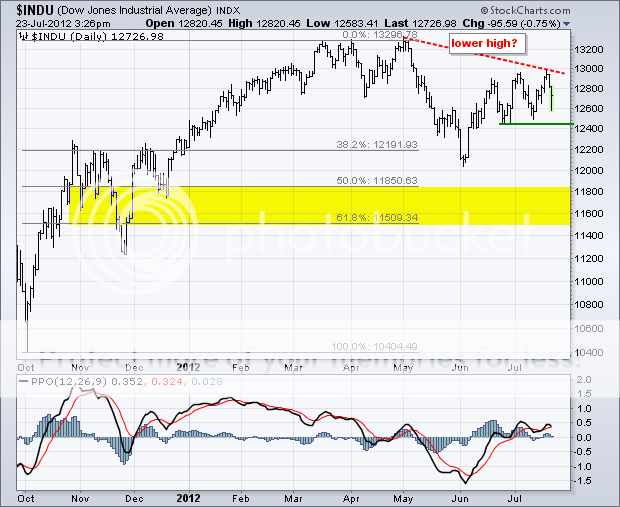
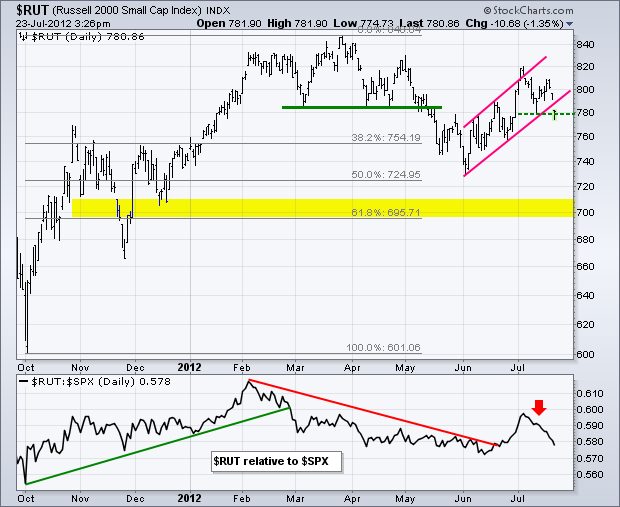

US Companies are Eating Their Seed Corn ?
I write this to you from my double suite on the Orient Express crossing the Swiss Alps. My manservant, Charles, is off fetching a cup of tea and steam pressing my white dinner jacket for tonight?s formal dinner.
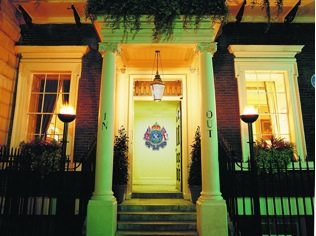
My first night at the Naval & Military Club in London, a group of British Army officers just back from Afghanistan, and their dates, hosted a blowout black tie homecoming party, complete with disc jockey and disco ball. While singing a drunken and rautious ?Rule Britannia? at 4:00 AM we maxed out the amplifiers and ended up blowing the power, not only for our building, but for the entire block.
Suddenly, our 18th century building was plunged back to the 18th century, meaning no lights, Internet, or flushing toilets. Candelabras solved the first problem, and the Financial Times the second, but when nature called, I had to retire to the pub across the street. Each time I did so, I enjoyed a pint of Fuller?s London Pride, not sure if I was making my problem better or worse. Two days later, two truck sized diesel generators on loan from the army magically showed up and solved the power problem, and we returned to the 20th century.

The Globe Theater is a magnificent reproduction of the original, which burned down in 1613 during a canon during scene in Henry VIII (click here for the link at http://www.shakespearesglobe.com/ ). Its thatched roof, open air seats, and 12 inch roughhewn oak beams led me to expect The Bard from Stratford-upon-Avon to walk out any moment. Actors tore through the standing crowds, reciting lines, and embracing a startled few theater goers. Half way through As You Like It, I realized that the devotees sitting next to me were mouthing the lines. They had memorized the entire script.

One afternoon I asked a somewhat doddering old taxi driver to take me to Kensington Palace, who seemed quite impressed. He drove me directly to Harry and Kate?s private entrance. After giving me the gimlet eye, Scotland Yard directed us to the correct entrance for the tourists. I try not to cause international incidents when on vacation, and this time I came close.
England definitely did not show its best face when I walked out of a comedy club into Leicester Square at 2:00 AM. The women were so drunk that they walked barefoot across the vomit covered pavement, unable to walk in high heels.
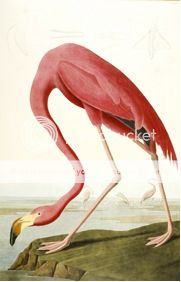
Another day found me at Christie?s auction house for a private viewing of John James Audubon?s spectacular Birds of America. The multi-volume set was in mint condition, the colors as bright as the day they were printed. Only 70 of the original print run of 140 in 1838 are known to exist. One sold for $11.5 million last year, making it the world?s second most valuable book after the Gutenberg Bible.
My last morning in London found me desperately hailing a taxi in a torrential downpour. The taxi Gods smiled upon me, and I was soon barreling down the streets of Piccadilly and Westminster on the way to Victoria Station. It seems that a 20 pound tip can move mountains here. I arrived with more than enough time for a pre-prandial glass of Champagne before boarding the Orient Express.
Report from London, Part III will be continued tomorrow.
John Thomas
The Mad Hedge Fund Trader
?The biggest mistake you can make in a bear market is to cover your shorts too soon? he said.