Mad Hedge Technology Letter
October 18, 2019
Fiat Lux
Featured Trade:
(THE ROAD OUT OF SILICON VALLEY),
(AAPL), (CRM), (MSFT), (FB), (AMZN), (GOOGL)
Mad Hedge Technology Letter
October 18, 2019
Fiat Lux
Featured Trade:
(THE ROAD OUT OF SILICON VALLEY),
(AAPL), (CRM), (MSFT), (FB), (AMZN), (GOOGL)
In a new study, 44% of Millennials plan to move out of the Bay Area in the “next few years.”
In the same study, 8% of Millennials will move out of the Californian tech peninsula within the next 365 days.
Tech companies are in serious danger of stagnating because they won’t be able to hire the talent needed to keep their companies afloat while the number of foreign HB-1 visas has dried up.
All of this could come home to roost and early cracks can be found in the local housing migratory trends.
The robust housing demand, lack of housing supply, mixed with the avalanche of inquisitive tech money has made living with a roof over your head a tall order.
The area has also become squalid like some third world countries due to the homeless problem that is growing faster than any software company.
Salesforce Founder and CEO Marc Benioff has lamented that San Francisco, where ironically he is from, is a diabolical “train wreck” and urged fellow tech CEOs to “walk down the street” and see it with their own eyes to observe the numerous homeless encampments dotted around the city limits.
The leader of Salesforce doesn’t mince his words when he talks and beelines to the heart of the issues.
In condemning large swaths of the beneficiaries of the Silicon Valley ethos, he has signaled that it won’t be smooth sailing forever.
He has also urged companies to transform their business model if they are irresponsible with user data.
The tech lash could get messier this year because companies that go rogue with personal data will face a cringeworthy reckoning as government policy stiffens.
I have walked around the streets of San Francisco myself.
Places around Powell Bart station close to the Tenderloin district are eyesores littered with used syringes that lay in the gutter.
South of Market Street (SoMa) isn’t a place I would want to barbecue on a terrace either.
Summing it up, the unlimited tech talent reservoir that Silicon Valley gorged on isn’t flowing anymore because people don’t want to live there anymore.
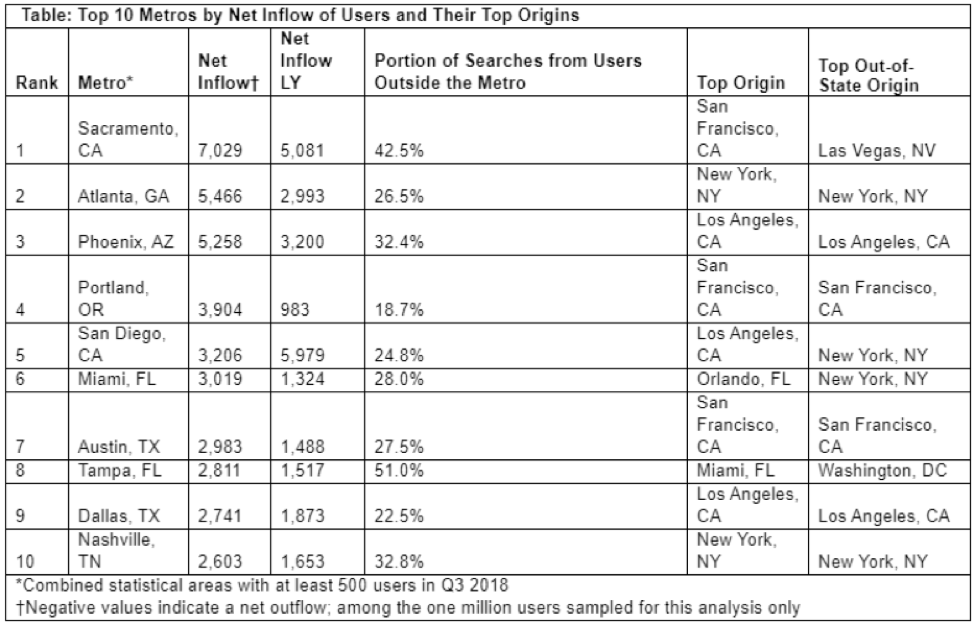
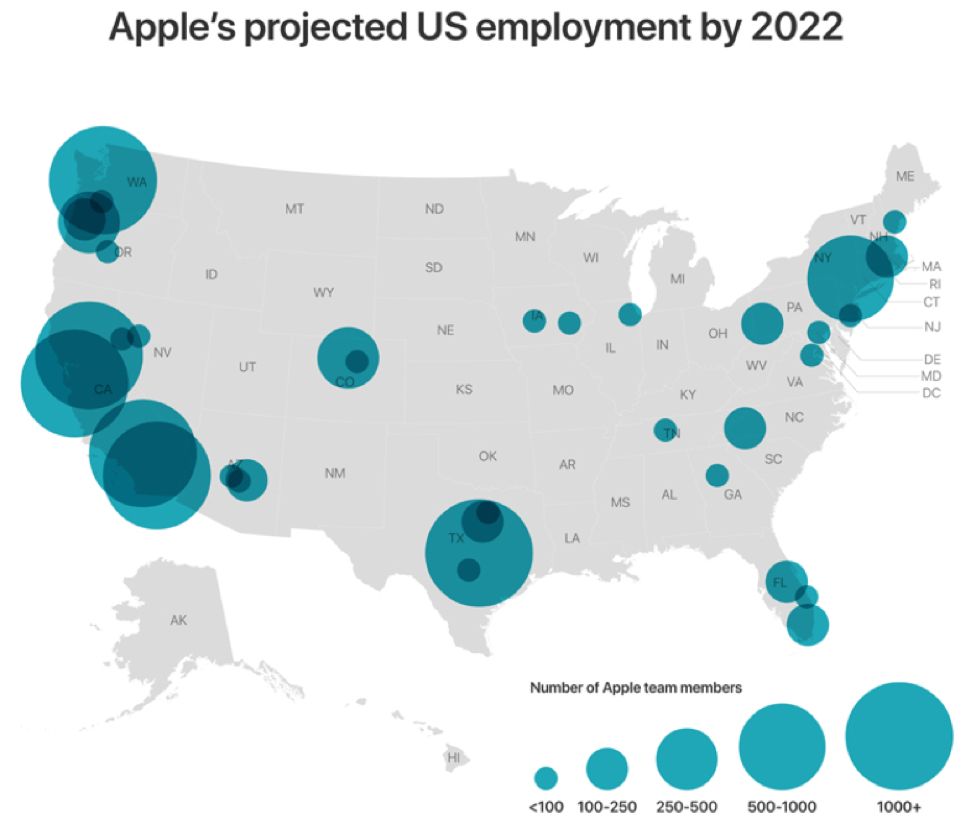
This is exactly what Apple’s $1 billion investment into a new tech campus in Austin, Texas, and Amazon adding 500 employees in Nashville, Tennessee are all about.
Apple also added numbers in San Diego, Atlanta, Culver City, and Boulder just to name a few.
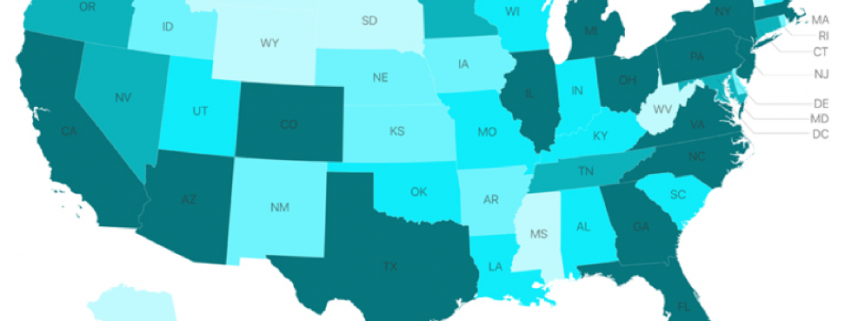
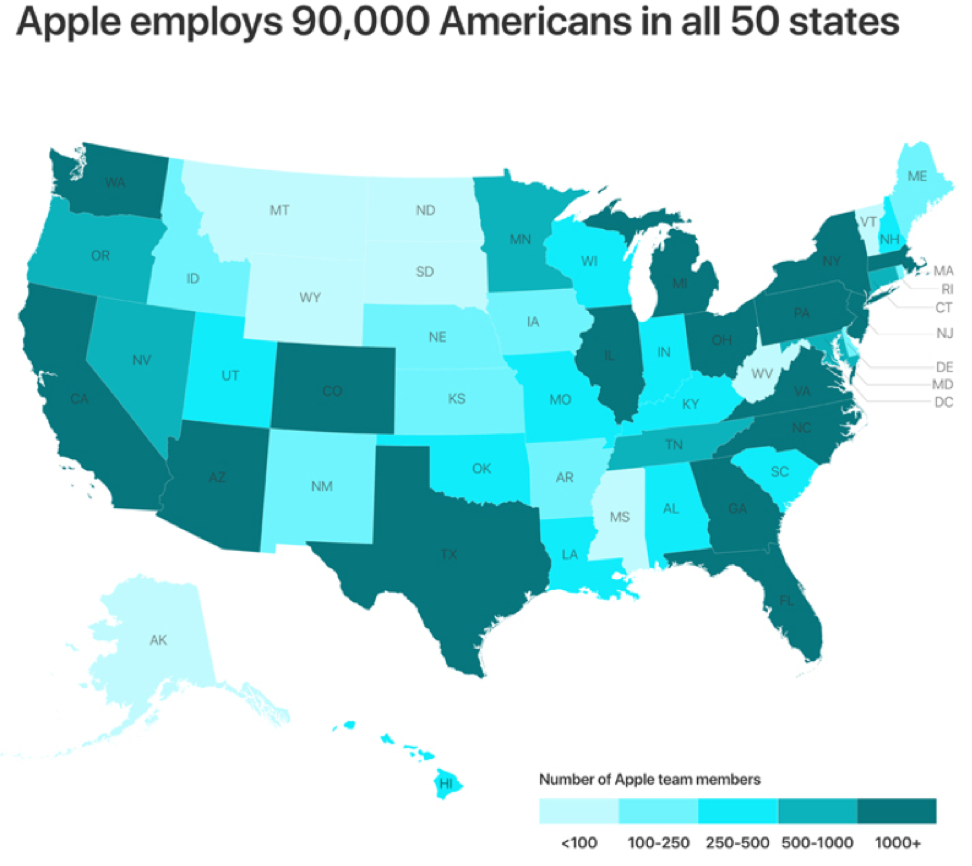
Apple currently employs 90,000 people in 50 states and is in the works to create 20,000 more jobs in the US by 2023.
Most of these new jobs won’t be in Silicon Valley.
Jobs simply flock to where the talent is.
The tables have turned but that is what happens when the heart of western tech becomes unlivable to the average tech worker earning $150,000 per year.
Sacramento has experienced a dizzying rise of newcomers from the Bay Area escaping the sky-high housing.
Millennials are reaching that age of family formation and they are fleeing to places that are affordable and possible to take the first step onto the property ladder.
These are some of the practical issues that tech has failed to address, and part of the problem with unfettered capitalism which doesn’t consider quality of life.
No wonder why Silicon Valley real estate has dropped in the past year, people and their paychecks are on the way out.
Global Market Comments
October 1, 2019
Fiat Lux
Featured Trade:
(LAUNCHING THE NEW MAD HEDGE BIOTECH AND HEALTHCARE LETTER)
(THE NEW AI BOOK THAT INVESTORS ARE SCRAMBLING FOR),
(GOOG), (FB), (AMZN), MSFT), (BABA), (BIDU),
(TENCENT), (TSLA), (NVDA), (AMD), (MU), (LRCX)
Global Market Comments
September 20, 2019
Fiat Lux
Featured Trade:
(SEPTEMBER 18 BIWEEKLY STRATEGY WEBINAR Q&A),
(TLT), (FDX), (FB), (HYG), (JNK), (EEM), (BABA), (JD), (TBT), (FXE), (UUP), (AMZN), (FB), (DIS), (MSFT), (USO), (INDU),
(THE GREAT TRADING GURU SPEAKS)
Below please find subscribers’ Q&A for the Mad Hedge Fund Trader September 18 Global Strategy Webinar broadcast from Silicon Valley, CA with my guest and co-host Bill Davis of the Mad Day Trader. Keep those questions coming!
Q: What would happen to the United States Treasury Bond Fund (TLT) if the Fed does not lower rates?
A: My bet is that it would immediately have a selloff—probably several points—but after that, recession worries will take bond prices up again and yields down. I don’t think we have seen the final lows in interest rates by a long shot. That’s why I bought the (TLT) last week.
Q: Is it good to buy FedEx (FDX) considering the 13% fall today?
A: I use the 3-day rule on these situations. That's how long it takes for the dust to settle from an earnings shock like this and find the real price. The problem with FedEx is that it’s a great early recession predictor. When the number of delivered packages decreases, it’s always an indicator that the economy as a whole is slowing down, which we know has been happening. It’s one of the most cyclical stocks out there, therefore one of the most dangerous. I wouldn’t bother with FedEx right now. Go take a long nap instead.
Q: Would you be a buyer of Facebook (FB) here, given they seem to have weathered all the recent attacks from Washington?
A: Not here in particular, but I would buy it 20% down when it gets to the bottom edge of its upward channel—it still looks like it’s going crazy. They’re literally renting or buying buildings to hire an additional 50,000 people in San Francisco anticipating huge growth of their business, so that’s a better indicator of the future of Facebook than anything.
Q: Will junk bonds be more in demand now that rates are cratering?
A: Junk bonds (HYG), (JNK) are driven more by the stock market than the bond market, as you can see in the huge rally we just had. Junk bonds are great because their default ratios are usually far below that which the interest rate implies, but you really have to trade them like stocks. Think of them as preferred stocks with really high dividends. When the stock market tops, so will junk bonds. Remember in 2008, junk yields got all the way up to 15% compared to today’s 5.6%.
Q: What will happen to emerging markets (EEM) as rates lower?
A: If lower interest rates bring a weaker US dollar, that would be very positive for emerging markets over the long term and they would be a great buy. However, emerging markets will take the hardest hit if we actually do go into a recession. So, I would pass for now.
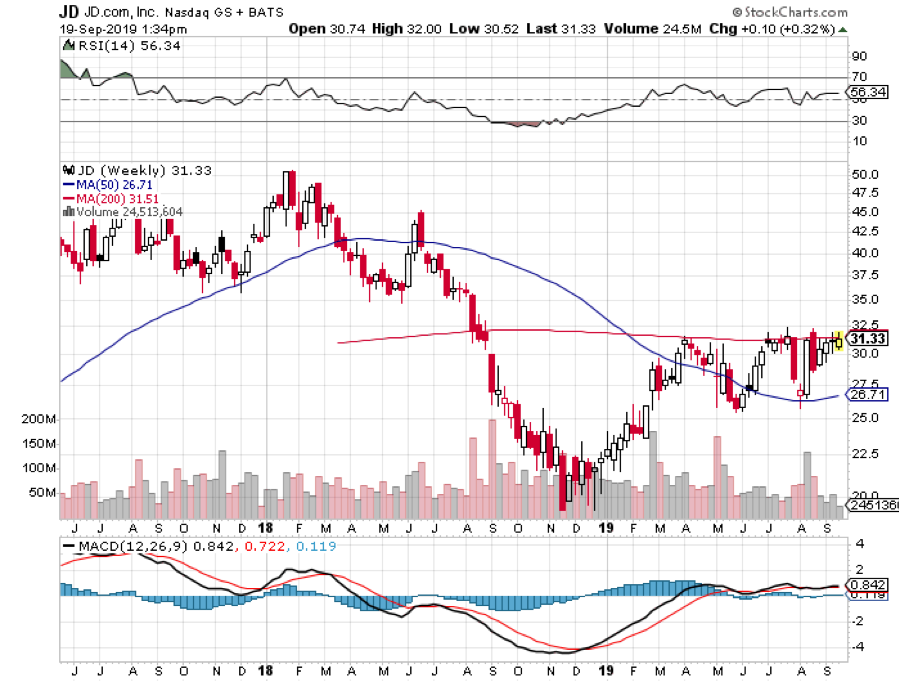
Q: What are your thoughts on Alibaba (BABA) and JD.com (JD)?
A: They are great for the long term. However, expect a lot of volatility in the short term. As long as the trade war is going on, these are going to be hard to trade until we get a settlement. (JD) is already up 50% this year but is still down 40% from pre trade war levels. These things will all be up 20-30% when that happens. If you can take the heat until then, they would probably be okay for a long-term portfolio globally diversified.
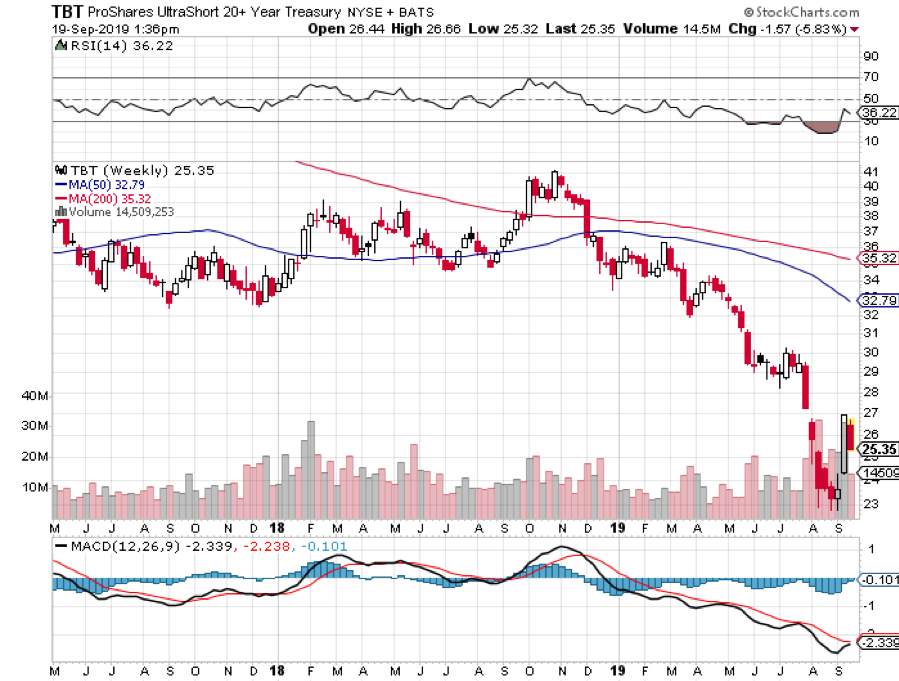
Q: What do you have to say about the ProShares Ultra Short 20+ Year Treasury ETF (TBT)—the short bond ETF?
A: If you have a position, I’d be selling now. We just had a massive 20%, 4-point rally from $22 to $27 and now would be a good time to take a profit, or at least get out closer to your cost. The zero interest rates story is not over yet.
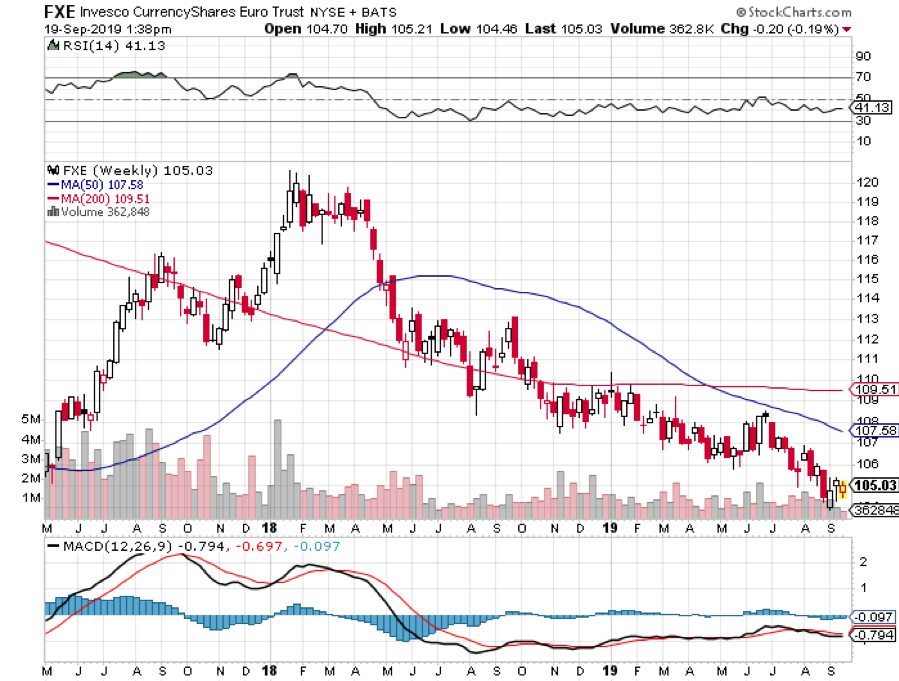
Q: Would you short the US dollar?
A: I would most likely short it against the euro (FXE), which now has a massive economic stimulus and quantitative easing program coming into play which should be positive for it and negative for the US dollar (UUP). That’s most likely why the euro has stabilized over the last couple of weeks. That said, the dollar has been unexpected high all year despite falling interest rates so I have been avoiding the entire foreign exchange space. I try to stay away from things I don’t understand.
Q: If all our big tech September vertical bull call spreads are in the money, what should we do?
A: You do nothing. They all expire at the Friday close in two trading days. Your broker should automatically use your long call position to cover your short call position and credit your account with the total profit on the following Monday, as well as release the margin for holding that position. After that, we’ll probably wait for another good entry point on all the same names, (AMZN), (FB), (DIS), (MSFT).
Q: If the US fires a cruise missile at Iran, how would the market react?
A: It would selloff pretty big—markets hate wars. And the US wouldn’t send one missile at Iran; it would be more like 100, probably aimed at what little nuclear facilities they have. I doubt that is going to happen. The world has figured out that Trump is a wimp. He talks big but there is never any action or follow through. Inviting the Taliban to Camp David while they were still blowing up our people? Really?
Q: Will the housing market turn on the turbochargers after this dip in rates?
A: It wouldn't turn on the turbochargers, but it might stabilize the market because money is available now at unprecedentedly low interest rates. However, we still have the loss of the SALT deductions—the state and local taxes and real estate taxes that came in with the Trump tax bill. Since then, real estate has been either unchanged or has fallen on both the East and West coast where the highest priced houses are. It’s the most expensive houses that take the loss of the SALT deduction the hardest. Don’t expect any movement in these markets until the SALT deduction comes back, probably in 16 months.
Q: What catalyst do you think would cause a 10% correction in the next 2-3 months?
A: Trump basically saying “screw you” to the Chinese—a tweet saying he’s going to bring another round of tariff increases. That’s worth a minimum of 2,000 points in the Dow Average (INDU), or about 7% percent. Either that or no move in Fed interest rates—that would also create a big selloff. My guess is that and adverse development in the trade war will be what does it. That’s why my positions are so small now.
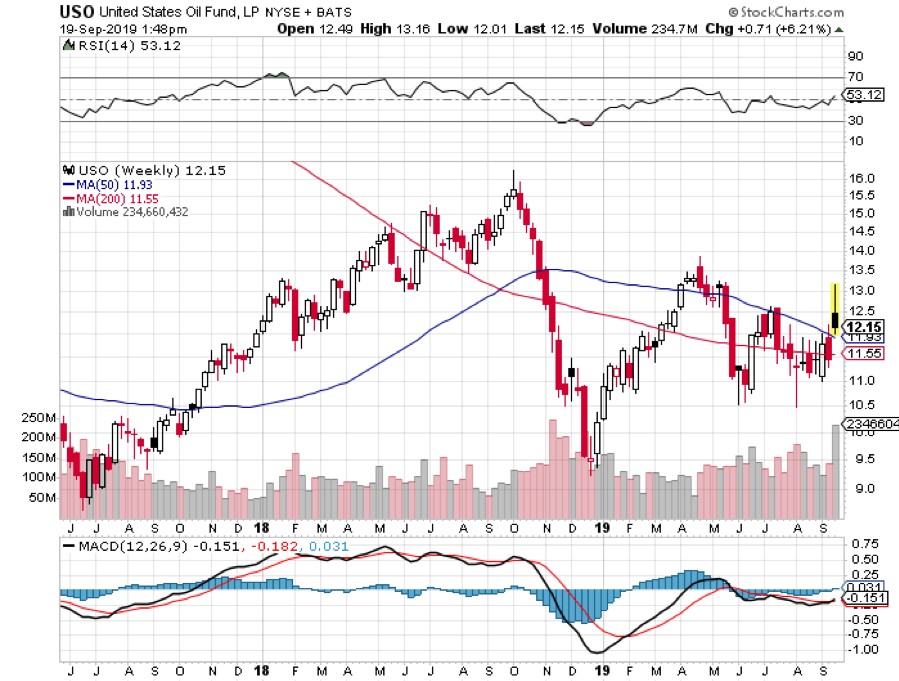
Q: We have a big short position in the United States Oil Fund (USO) now. Are you going to run this into expiration until October $18?
A: Even though oil has already collapsed by 10% since we put this position on last Friday, premiums in oil options are still close to record levels. So, it pays us to hang on for the time decay. The world is still massively oversupplied in oil and the Saudis were able to bring half of the lost production back on in a day. Oil will keep falling unless there is another attack and it is unlikely we will see one again on this scale. And, we only have 20 more days to go to capture the full 14.8% profit.
Good luck and good trading.
John Thomas
CEO & Publisher
Diary of a Mad Hedge Fund Trader
Global Market Comments
September 18, 2019
Fiat Lux
Featured Trade:
(HOW TO HANDLE THE FRIDAY, SEPTEMBER 20 OPTIONS EXPIRATION),
(AMZN), (DIS), (FB), (MSFT), (VIX),
(INDUSTRIES YOU WILL NEVER HEAR FROM ME ABOUT)
Global Market Comments
September 12, 2019
Fiat Lux
Featured Trade:
(WILL ANTITRUST DESTROY YOUR TECH PORTFOLIO?),
(FB), (AAPL), (AMZN), (GOOG), (SPOT), (IBM), (MSFT)
In recent days, two antitrust suits have arisen from both the Federal government and 49 states seeking to fine, or break up the big four tech companies, Facebook (FB), Apple (AAPL), Amazon (AMZN), and Google (GOOG). Let’s call them the “FAAGs.”
And here is the problem. These four companies make up the largest share of your retirement funds, whether you are invested with active managers, mutual funds, or simple index funds. The FAAGs dominate the landscape in every sense, accounting 13% of the S&P 500 and 33% of NASDAQ.
They are also the world’s most profitable large publicly listed companies with the best big company earnings growth.
I’ll list the antitrust concern individually for each company.
Facebook has been able to maintain its dominance in social media through buying up any potential competitors it thought might rise up to challenge it through a strategy of serial defense acquisitions
In 2012, it bought the photo-sharing application Instagram for a bargain $1 billion and built it into a wildly successful business. It then overpaid a staggering $19 billion for WhatsApp, the free internet phone and texting service that Mad Hedge Fund Trader uses while I travel. It bought Onovo, a mobile data analytics company, for pennies ($120 million) in 2013.
Facebook has bought over 70 companies in 15 years, and the smaller ones we never heard about. These were done largely to absorb large numbers of talented engineers, their nascent business shut down months after acquisition.
Facebook was fined $5 billion by the Fair Trade Commission (FTC) for data misuse and privacy abuses that were used to help elect Donald Trump in 2016.
Apple
Apple only has a 6% market share in the global smart phone business. Samsung sells nearly 50% more at 9%. So, no antitrust problem here.
The bone of contention with Apple is the App Store, which Steve Jobs created in 2008. The company insists that it has to maintain quality standards. No surprise then that Apple finds the products of many of its fiercest competitors inferior or fraudulent. Apple says nothing could be further from the truth and that it has to compete aggressively with third party apps in its own store. Spotify (SPOT) has already filed complaints in the US and Europe over this issue.
However, Apple is on solid ground here because it has nowhere near a dominant market share in the app business and gives away many of its own apps for free. But good luck trying to use these services with anything but Apple’s own browser, Safari.
It’s still a nonissue because services represent less than 15% of total Apple revenues and the App Store is a far smaller share than that.
Amazon
The big issue is whether Amazon unfairly directs its product searches towards its own products first and competitors second. Do a search for bulk baby diapers and you will reliably get “Mama Bears”, the output of a company that Amazon bought at a fire sale price in 2004. In fact, Amazon now has 170 in-house brands and is currently making a big push into designer apparel.
Here is the weakness in that argument. Keeping customers in-house is currently the business strategy of every large business in America. Go into any Costco and you’ll see an ever-larger portion of products from its own “Kirkland” branch (Kirkland, WA is where the company is headquartered).
Amazon has a market share of no more than 4% in any single product. It has the lowest price, and often the lowest quality offering. But it does deliver for free to its 100 million Prime members. In 2018, some 58% of sales were made from third-party sellers.
In the end, I believe that Amazon will be broken up, not through any government action, but because it has become too large to manage. I think that will happen when the company value doubles again to $2 trillion, or in about 3-5 years, especially if the company can obtain a rich premium by doing so.
Directed search is also the big deal here. And it really is a monopoly too, with some 92% of the global search. Its big breadwinner is advertising, where it has a still hefty 37% market share. Google also controls 75% of the world’s smart phones with its own Android operating software, another monopoly.
However, any antitrust argument falls apart because its search service is given away to the public for free, as is Android. Unless you are an advertiser, it is highly unlikely that you have ever paid Google a penny for a service that is worth thousands of dollars a year. I myself use Google ten hours a day for nothing but would pay at least that much.
The company has already survived one FTC investigation without penalty, while the European Union tagged it for $2.7 billion in 2017 and another $1.7 billion in 2019, a pittance of total revenues.
The Bottom Line
The stock market tells the whole story here, with FAAG share prices dropping a desultory 1%-2% for a single day on any antitrust development, and then bouncing back the next day.
Clearly, Google is at greatest risk here as it actually does have a monopoly. Perhaps this is why the stock has lagged the others this year. But you can count on whatever the outcome, the company will just design around it as have others in the past.
For start, there is no current law that makes what the FAAGs do illegal. The Sherman Antitrust Act, first written in 1898 and originally envisioned as a union-busting tool, never anticipated anticompetitive monopolies of free services. To apply this to free online services would be a wild stretch.
The current gridlocked congress is unlikely to pass any law of any kind. The earliest they can do so will be in 18 months. But the problems persist in that most congressmen fundamentally don’t understand what these companies do for a living. And even the companies themselves are uncertain about the future.
Even if they passed a law, it would be to regulate yesterday’s business model, not the next one. The FAAGs are evolving so fast that they are really beyond regulation. Artificial intelligence is hyper-accelerating that trend.
It all reminds me of the IBM antitrust case, which started in 1975, which my own mother worked on. It didn’t end until the early 1990s. The government’s beef then was Big Blue’s near-monopoly in mainframe computers. By the time the case ended, IBM had taken over the personal computer market. Legal experts refer to this case as the Justice Department’s Vietnam.
The same thing happened to Microsoft (MSFT) in the 1990s. After ten years, there was a settlement with no net benefit to the consumer. So, the track record of the government attempting to direct the course of technological development through litigation is not great, especially when the lawyers haven’t a clue about what the technology does.
There is also a big “not invented here” effect going on in these cases. It’s easy to sue companies based in other states. Of the 49 states taking action against big tech, California was absent. But California was in the forefront of litigation again for big tobacco (North Carolina), and the Big Three (Detroit).
And the European Community has been far ahead of the US in pursuing tech with assorted actions. Their sum total contribution to the development of technology was the mouse (Sweden) and the World Wide Web (Tim Berners Lee working for CERN in Geneva).
So, I think your investments in FAAGs are safe. No need to start eyeing the nearest McDonald’s for your retirement job yet. Personally, I think the value of the FAAGs will double in five years, as they have over the last five years, recession or not.
Global Market Comments
September 9, 2019
Fiat Lux
Featured Trade:
(MARKET OUTLOOK FOR THE WEEK AHEAD, or SAVED BY A HURRICANE)
(FXB), (M), (XOM), (BAC), (FB), (AAPL),
(AMZN), (ROKU), (VIX), (GS), (MS),
This was the week when the stock market was saved by Hurricane Dorian.
Why a hurricane?
Because it gave President Trump something else to Tweet about beside China and Jay Powell. The White House went totally silent, at least on matters concerning the stock market. There, the focus instead turned on whether Trump predicted Dorian was going to hit Alabama (it didn’t).
Thank goodness for small favors.
Instead, investors got to hear about progress was purported to be made on the China trade talks with a possible October meeting.
It all reminds me of the 1968 Paris peace talks, which I visited, where I remember Ambassador Avril Harriman storming out of the Majestic Hotel with a very stern expression on his face. They had just spent a year arguing with the North Vietnamese over the shape of the table (they finally settled on an oval).
Brexit finally started lurching towards its inevitable demise. Hard Brexit failed in Parliament, a disaster for Prime Minister Boris Johnson, whose own party and even his own brother voted against him.
Elections will follow which will finally plunge a dagger through the heart of Britain’s attempt to leave the European Community. If this happens, it will be a huge positive for risk markets globally. This is the beginning of the end. Get ready to buy the pound (FXB).
The bad news? Don’t count on this happening again this week, unless we get another hurricane. When a stock market rally is led by sectors with the worst fundamentals, like retail (M), energy (XOM), and banks (BAC), you want to run a mile. It means the rally was driven by short-covering, we are now at a market high, and the short players have a ton of cash.
I have been pounded with questions all week if the bottom is in and if it’s time to load the boat with tech stocks yet again. I have to answer with a firm “Not yet!” We still have three weeks to go in September with plenty of time for more volatility.
If the Fed cuts interest rates by 25 basis points, the Dow average could crater by 1,000 points. If they don’t cut, which I give a 50/50 chance, it will be down by 2,000 points.
They will be encouraged to cut by an August Nonfarm Payroll Report that came in at a tepid 130,000. The headline Unemployment Rate remained unchanged at 3.7%, a 50-year low. Average Hourly Earnings were an inflationary 0.4%, or 3.2% YOY. June and July were revised down.
The 2020 census was a big factor in August, where the US government hired 25,000 workers to prepare for next year. Without this, August would have come in at a weak 105,000 jobs.
Manufacturing hiring amounted to only 3,000, while Retail lost 11,000 jobs for the seventh consecutive monthly decline. The broader U-6 “discouraged worker” unemployment rate rose from 7.0% to 7.2%.
To demonstrate how much value you are gaining with this service, I generated the chart below. Since January 26, 2018 when the S&P 500 peaked, the total return has been zero, with a lot of heart-stopping volatility, including one 20% drawdown.
That has been the cost to the stock market of the trade war, which started only a few days later. The profit created by the Mad Hedge Fund Trader during the same period has been 58.97%.
You couldn’t even beat the Mad Hedge Fund Trader by pouring all your money into big technology stocks. Over the same time, Facebook (FB) fell 4.1%, Apple (AAPL) rose 21.7%, and Amazon (AMZN) by 22.2%.
The only way you could have topped my performance was to pour your life savings into Roku (ROKU), right when Amazon was about to put it out of business. Jeff Bezos partnered with Roku instead of delivering a 225% pop in the shares.
You might think such a performance is blown out of proportion, exaggerated, and fake. However, it is perfectly consistent with the numbers generated for the in-house trading books by senior traders at Goldman Sachs (GS) and Morgan Stanley (MS) where I come from.
In fact, during my day, if a trader earned less than 30% a year on his capital, he got fired or transferred over to covering retail accounts because the firm had so many better places to invest. They are also consistent with the performance of the top-end hedge managers, of which I used to be one.
Chinese Manufacturing Activity fell for four consecutive months taking the Purchasing Managers Index below a recessionary 50. If you wreck the economy of the world’s largest customer, the rest of the world goes into recession.
US Manufacturing hit a three-year low, the ISM Manufacturing PMI diving from an average 56.5 to 49.1 in August. Anything below 50 is a recession indicator. Hoping that China will bleed worse than us in a trade war is not a winning strategy. Stocks dove 300 points and the Volatility Index (VIX) shot up to $21 on the news. Avoid risk, as this is going to be a terrible month.
The prospect of a China meeting popped stocks 400 points, with an agreement to meet in October, citing progress on a phone call. Boy, I’m getting tired of this. When can we go back to looking at earnings, dividends, and book value?
The European Central Bank will almost certainly ease this week. It hasn’t worked for ten years so let’s try it again. They’re obviously not printing enough Euros. Overnight rates will fall from -0.4% to -0.6%. Some 30 billion euros a month will hit the economy in a new QE.
The Atlanta Fed downgraded the economy, cutting its Q3 GDP growth forecast from 2.0% to 1.5%. Expect a string of poor data points in the coming months as the delayed effect of an escalated trade war. However, the non-manufacturing service economy remains strong. That’s me, and probably you too.
The Mad Hedge Trader Alert Service has posted its best month in two years. Some 22 or the last 23 round trips, or 95.6%, have been profitable, generating one of the biggest performance jumps in our 12-year history.
My Global Trading Dispatch has hit a new all-time high of 334.48% and my year-to-date shot up to +34.35%. My ten-year average annualized profit bobbed up to +34.30%.
Better yet, since July 31, we generated a 20% profit for the trade alert service while the gain in the Dow Average was absolutely zero!
I raked in an envious 16.01% in August. All of you people who just subscribed in June and July are looking like geniuses. My staff and I have been working to the point of exhaustion, but it’s worth it if I can print these kinds of numbers.
As long as the Volatility Index (VIX) stays above $20, deep in-the-money options spreads are offering free money. I am now 40% long big tech. It rarely gets this easy.
The coming week will be a snore, as it always is after the jobs data.
On Monday, September 9 at 11:00 AM, August Consumer Inflation Expectations are out.
On Tuesday, September 10 at 12:00 PM, the NFIB Business Optimism Index for August is released.
On Wednesday, September 11, at 8:30 AM, the US Producer Price Index is announced.
On Thursday, September 12 at 8:30 AM, the Weekly Jobless Claims are printed. At the same time, the US Inflation Rate is published.
On Friday, September 13 at 8:30 AM, the US Retails Sales are printed. The Baker Hughes Rig Count follows at 2:00 PM.
As for me, I’ll be driving up to Lake Tahoe to make final preparations for the October 25-26 Mad Hedge Lake Tahoe Conference. A record number of black bears have been breaking into homes this summer and I just want to make sure my lakefront estate is OK.
It seems that Airbnb tenants have been leaving trails of cookies to their front doors and painting their refrigerators with peanut butter so they can get better selfies with their ursine neighbors.
Not a good idea.
I’ll be avoiding Interstate 80. A truck carrying 1,000 live chickens crashed there yesterday and the California Highway Patrol was last seen chasing them down the freeway.
Good luck and good trading.
John Thomas
CEO & Publisher
The Diary of a Mad Hedge Fund Trader
Legal Disclaimer
There is a very high degree of risk involved in trading. Past results are not indicative of future returns. MadHedgeFundTrader.com and all individuals affiliated with this site assume no responsibilities for your trading and investment results. The indicators, strategies, columns, articles and all other features are for educational purposes only and should not be construed as investment advice. Information for futures trading observations are obtained from sources believed to be reliable, but we do not warrant its completeness or accuracy, or warrant any results from the use of the information. Your use of the trading observations is entirely at your own risk and it is your sole responsibility to evaluate the accuracy, completeness and usefulness of the information. You must assess the risk of any trade with your broker and make your own independent decisions regarding any securities mentioned herein. Affiliates of MadHedgeFundTrader.com may have a position or effect transactions in the securities described herein (or options thereon) and/or otherwise employ trading strategies that may be consistent or inconsistent with the provided strategies.