
• support@madhedgefundtrader.com
  • Member Login
Mad Hedge Fund Trader
  • Home
  • About
  • Store
  • Luncheons
  • Testimonials
  • Contact Us
  • Click to open the search input field Click to open the search input field Search
  • Menu Menu

Tag Archive for: (TLT)

Mad Hedge Fund Trader

Why I?m Keeping My Bond Shorts

Newsletter

The Department of Labor took the punch bowl away from the party on Friday, reporting that the December nonfarm payroll came in at an anemic 74,000. Analyst forecasts had been running in the 200,000-250,000 range.

What was even more interesting was that the labor participation rate dropped to a 1978 low, with nearly 400,000 workers disappearing from the rolls. This is what took the headline unemployment rate down to 6.7%, off a whopping 0.3% from November. The Fed 6.5% target looms.

It was happy days again for the bond market, which had been beaten like a red headed stepchild since the summer. The relief rally spread to the entire high yield space, including corporates (LQD), munis (MUB), Junk bonds (HYG), (JNK), master limited partnerships (LINE), and even construction stocks (ITB).

The weather seems to be a big factor. When consumers and employers are sitting at home, freezing their keisters off, they aren?t hiring. This was not just a one off storm. It appears that this will be one of the coldest winters in history, except on the west coast, which is facing a 100 year drought. For proof, look no further than the price of natural gas (UNG), which appears to have broken out of a multiyear torpor.

The calendar was also an issue. Thanks to the compressed placement of the Thanksgiving, Christmas, and New Years holidays, this was one of the shortest shopping seasons in history. This would especially impact the retail sector, which is big on seasonal hiring around then.

As for the participation rate, this is clearly an effect of the 80 million retiring baby boomers. Some 10,000 a day are now collecting their gold watches and hitting the golf course. This drain of workers will continue until we are all dead in 2030. Once people retire, they tend to never reenter the labor force again. Can you blame them?

The bottom line here is that you need to look at the headline unemployment rate, which is fabulous, and not the gross nonfarm payroll numbers, which are dire. Whatever we lost in the nonfarm this month we will make back in large upward revisions next month. This has been the pattern of the past year. So mark February 7 on you calendar with bold red ink.

In fact, all of the recent employment numbers have been behaving as if they are still on their New Year?s Eve drinking binge, exhibiting extraordinary volatility. These could be just statistical outliers. More likely is that the epochal changes now besetting the long-term structure of the US economy, such as the simultaneous implementation of Obamacare and the lurch towards US energy independence, can?t be captured by traditional data collection means. Combined, these account for 24% of American GDP.

All of this leads me to believe that the current pop in bond prices and dip in yields will be a temporary affair. I?m sorry, but I?m just not buying the world that the bond market is currently anticipating, that of a massive shift of money out of stocks into bonds, and the return of inflation moving out another decade. The truth is that there still is no other decent place to put your money than large cap us stocks, thanks to the efforts of the Federal Reserve.

The stock market is not buying this scenario either. It barely budged, and closed up on Friday. More importantly, the volatility index (VIX) plunged to a new six month low at an amazing 11.5% on Monday. This instrument at these prices is betting that stocks will be sideways to up for the next 30 days.

As for my own model-trading portfolio, I would be selling short bonds here with both hands if that I did not already have a position. The problem is that I do, owning the iShares Barclays 20+ Year Treasury Bond Fund January, 2014 $104-$107 bear put spread, which expires at the close in four days on January 17. This is what remains from a $106-$109 put spread, which I profitably rolled down on December 27.

In a perfect world, I would have taken profits on this position on January 3, when it was showing a 0.53% profit. It would have been prudent to take the belated Christmas gift, given that a nonfarm payroll was due a week later. But I didn?t. Everyone got it wrong. But that seems to be par for the course these days, continuing with the golf analogy.

I do have the luxury of carrying my losing bond short against a portfolio of nine other positions, some of which I have already taken profits on, which will still leave me up big on the month. This is why they have the term ?hedge? in hedge fund. So I am relaxed.

However, it is proof once again that even after spending 45 years mastering the art of trading, I can still make mistakes typical of a first year summer intern.

Markets Chart of the Day

TNX 1-10-14

TLT 1-13-14

TLT 1-10-14

ITB 1-10-14

Shorts on Clothes lineLong May They Wave

https://www.madhedgefundtrader.com/wp-content/uploads/2014/01/Shorts-on-Clothes-line.jpg 338 449 Mad Hedge Fund Trader https://madhedgefundtrader.com/wp-content/uploads/2019/05/cropped-mad-hedge-logo-transparent-192x192_f9578834168ba24df3eb53916a12c882.png Mad Hedge Fund Trader2014-01-14 01:04:092014-01-14 01:04:09Why I?m Keeping My Bond Shorts
Mad Hedge Fund Trader

My Market Take for the Rest of 2014

Newsletter

I can?t believe how fast the year has gone by. It seems like only yesterday that I was riding the transcontinental railroad from Chicago to San Francisco, writing my 2013 All Asset Class Review. Now 2014 is at our doorstep.

As usual, the market has got it all wrong. There is not going to be a taper by the Federal Reserve next week. If there is, it will be only $5-$10 billion, which means that $70-$75 billion a month in Fed bond buying continues. Either way it is a win-win.

However, managers are eternally loath to trade against an unknown, hence the weakness we are seeing this week. I think that we have entered another one of those sideways corrections that has been a hallmark of the market all year, and that there is a reasonable chance that we saw the low of the entire move down this morning at 1,780 in the S&P 500.

That sets up a dead, range trading market into the Fed decision next Wednesday afternoon. Once their Solomon like choice is out, it will be off to the races for the markets once again, probably all the way until 2014.

However, we are heading in the Christmas holidays, when volume and volatility shrivel to a shadow of its former selves, with daily ranges often falling within 50 Dow points. So it is important to have a large short volatility element to your portfolio.

That way, you will make money on every flat day, of which there should be many. That?s why I have 70% of my current model-trading portfolio invested in call spreads.

My current holding in the (SPY) has me profitable at all points above $175.68. If we move below that, any losses should be more than offset by profits thrown off by the rest of the portfolio. The same is true for my call spread in the financial ETF (XLF).

The Japanese yen is clearly in free fall, probing new lows almost every day. That should take the (FXY) to $95, and explains my triple weight 30% holding in the area. Bonds (TLT) just can?t get a break, failing to rally over $105 for the third time. Lower levels beckon, making my bear put spread look pretty good, my second one this month.

With a dramatically weakening yen, you have to add to Japanese equities, which will benefit hugely. That?s why I doubled up on my position in Masayoshi Son?s Softbank (SFTBY) this morning. The day they announce the Ailibaba IPO, probably early next year, these shares should be up 10%-20%.

To summarize, this portfolio is perfectly set up for the following: ?A sideways move for four more trading days, then an upside breakout after the Fed decision, then going to sleep inside a slow grind up over Christmas and New Years.

The grand finale should come on January 2, the first trading day of 2014, when I expect the value of the portfolio to pop a full 5% or more. This will be delivered by a massive new wave of capital into the markets, which for calendar and legal reasons couldn?t be invested until this day.

What will they buy? Everything that worked last year. After all, that?s why these managers were hired. Why not start the New Year with a bang, and then spend the rest of the year trading against that profit.

It certainly worked this year.

PerfChart

MHFT Trading Book

SPY 12-12-13

TLT 12-12-13

FXY 12-12-13

AAPL 12-12-13

SFTBY 12-12-13

Zephyr

JT & conductor

JT at workHas It Been That Long?

https://www.madhedgefundtrader.com/wp-content/uploads/2013/01/Zephyr.jpg 342 451 Mad Hedge Fund Trader https://madhedgefundtrader.com/wp-content/uploads/2019/05/cropped-mad-hedge-logo-transparent-192x192_f9578834168ba24df3eb53916a12c882.png Mad Hedge Fund Trader2013-12-13 01:05:282013-12-13 01:05:28My Market Take for the Rest of 2014
Mad Hedge Fund Trader

Selling Bonds Again

Newsletter

You all know well my antipathy to the bond market, which I believe hit a 60-year peak on August 18, 2012 at 10:32 AM EST. I managed to catch the exact top of the one-month post taper bond market rally, and sent the Trade Alerts to sell bonds showering upon you. I quickly closed all of those out for nice profits.

We have since seen a $2.24 dead cat bounce in the (TLT) that took the yield on the ten year Treasury bond back down to 2.68%, off of the recent 2.77% top. That is enough for me to sell into.

Take a look at the chart below, and you will see that we are probably setting up an interim head and shoulders top that presages much larger moves lower to come.

The rocket fuel for this break will be the yearend selling where money managers attempt to minimize their bond exposure that appears in their annual reports so as not to appear too stupid to their customers. Then we have the ?Great Reallocation? trade out of bonds into stocks, which should get some real legs in 2014.

This all promises to take the (TLT) down from today?s $104.51 to $98 or lower over the next six months. If I am wrong on this, then we should hit major resistance for the (TLT) on the upside at $106.80, where you would expect the right shoulder formation to begin that will carry us safely into the December 20 expiration. This could be the trade that keeps on giving.

If you can?t do the options, you can buy the ProShares Ultra Short 20+ Year Treasury leveraged short ETF (TBT) on the dip. My very long-term target for this baby is $200, up from today?s $76.70.

TLT 11-15-13

TBT 11-15-13

Girl-SadBonds Have Suddenly Become Unloved

https://www.madhedgefundtrader.com/wp-content/uploads/2013/11/Girl-Sad.jpg 329 527 Mad Hedge Fund Trader https://madhedgefundtrader.com/wp-content/uploads/2019/05/cropped-mad-hedge-logo-transparent-192x192_f9578834168ba24df3eb53916a12c882.png Mad Hedge Fund Trader2013-11-18 01:03:272013-11-18 01:03:27Selling Bonds Again
Mad Hedge Fund Trader

You Just Can?t Keep America Down

Newsletter

You just can?t keep America down. That is the overwhelming message from Friday?s blockbuster October nonfarm payroll showing that 204,000 jobs were added, double the industry forecasts. The headline unemployment rate ratcheted back up from 7.2% to 7.3%, the first gain in many months.

August and September were revised up by an eye popping 60,000 jobs. October private sector job growth came in at a stunning 212,000. Apparently, the prospect of an imminent default by the US government prompted many corporate managers to rush out and hire! Go figure.

Without the Washington shutdown we probably would have seen a 300,000 print. It appears that 223,000 federal workers were temporarily laid off, but later received back pay, so they weren?t counted as jobless.

Leisure and hospitality was up an unbelievable 53,000. Retail added 44,000. Professional and technical services tacked on 21,000. Health care increased by 12,000 jobs, anticipating an onslaught of 30 million new customers with government guaranteed payments, thanks to Obamacare.

It confirms what I have been arguing since the summer, that the US economy is far stronger than anyone suspects, and that we are accelerating with an upward trajectory. This is the recurring theme that I get from speaking to dozens of CEO?s every month, whose views on the health of their own business usually beat the government data releases by 3-6 months. Believe me, I don?t talk to these guys because they wear snappy suits.

Of course, the initial market reaction was negative, since the good news is seen as advancing the Federal Reserve?s tapering of its quantitative easing program. This certainly was the read by the stock market on Thursday, when a surprise interest cut in the Euro and a blistering 2.8% Q3 GDP report triggered a 150 sell off in the Dow. Gold took it on the nose again, dropping $25. But we made it all back, and more, the next day, disproving this analysis, for everything, except gold.

Bonds really took it in the keister, the (TLT) dropping two and a half full points, bumping ten year Treasury yield up from 2.60% to 2.77%, one of the most extreme pops of the year in the fixed income markets. I came within a hair?s breadth of doubling my bond shorts the previous day, but decided to wait for the payroll report. This time, discretion was not the better part of valor.

If anyone had any doubts about the extreme, but underestimated strength of the economy, better take a look at the chart below of growth of the broader monetary aggregates. We are running at a nearly white hot 40% YOY growth rate.

This reflects a huge increase that is occurring in the velocity of money, a number that almost no one tracks, in addition to the Federal Reserve?s never ending monetary expansion. This is because more people everywhere are doing more business with each other. Despite what you hear in the media, confidence is rocketing. This eventually has to feed into higher reported GDP growth rates and will justify ever-higher share prices.

How many individual investors believe this? Almost no one. This year, $114 billion has trickled back into equity mutual funds. That is only a dent in the $600 billion this group tore out of equity mutual funds over the last five years. That fact alone should be worth another 25% of upside in the indexes.

For more depth on the rapidly evolving fundamentals in the economy, click here for my recent piece on ?The Rising Risk of a Market Melt Up?.

TLT 11-8-13

Adjusted Monetary Base

Uncle Sam - FistIn Better Shape Than He Looks

0 0 Mad Hedge Fund Trader https://madhedgefundtrader.com/wp-content/uploads/2019/05/cropped-mad-hedge-logo-transparent-192x192_f9578834168ba24df3eb53916a12c882.png Mad Hedge Fund Trader2013-11-12 01:04:322013-11-12 01:04:32You Just Can?t Keep America Down
Mad Hedge Fund Trader

Mad Hedge Fund Trader Blasts to new All Time High

Diary, Newsletter

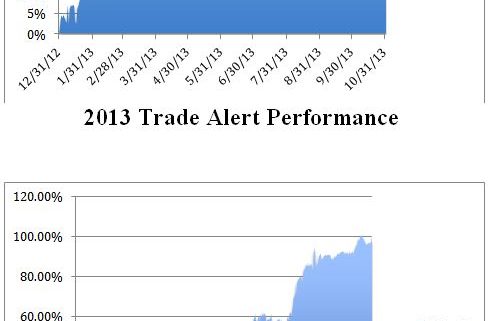
The Trade Alert service of the Mad Hedge Fund Trader has posted a new all time high in performance, taking in 46.05% so far in 2013. The three-year return is an eye popping 101.7%, taking the averaged annualized return to 35%. That compares to a far more modest increase for the Dow Average during the same period of 19%.

This has been the profit since the groundbreaking trade mentoring service was launched 35 months ago. These numbers place me at the absolute apex of all hedge fund managers, where the year to date gains have been a far more pedestrian 3%.

These numbers come off the back of a blistering week in the market where I added 5% in value to my model-trading portfolio. I called the top in the bond market on Monday, shorted the Treasury bond ETF (TLT), and bought the short Treasury ETF (TBT). Prices then collapsed, taking the ten-year Treasury bond yield from 2.47% to 2.63%.

I then pegged the top of the Euro (FXE) against the dollar, betting that the European Central Bank would have to cut interest rates to head off another recession. Since then, the beleaguered continental currency has plunged from $1.3700 to $1.3350 to the buck.

I then bet that the stock market would enter another tedious sideways correction going into the Thanksgiving holidays. I bought an in the money put spread on the S&P 500, and then bracketed the index through buying an in the money call spread.

Carving out the 2013 trades alone, 57 out of 71 have made money, a success rate of 80%. It is a track record that most big hedge funds would kill for.

This performance was only made possible by correctly calling the near term direction of stocks, bonds, foreign currencies, energy, precious metals and the agricultural products. It all sounds easy, until you try it.

My esteemed colleague, Mad Day Trader Jim Parker, has also been coining it. He caught a spike up in the volatility index (VIX) by both lapels. He also was a major player on the short side in bonds.

The coming winter promises to deliver a harvest of new trading opportunities. The big driver will be a global synchronized recovery that promises to drive markets into the stratosphere in 2014. The Trade Alerts should be coming hot and heavy.

Global Trading Dispatch, my highly innovative and successful trade-mentoring program, earned a net return for readers of 40.17% in 2011 and 14.87% in 2012. The service includes my Trade Alert Service and my daily newsletter, the Diary of a Mad Hedge Fund Trader. You also get a real-time trading portfolio, an enormous trading idea database, and live biweekly strategy webinars, order?Global Trading Dispatch PRO?adds Jim Parker?s?Mad Day Trader?service.

To subscribe, please go to my website at www.madhedgefundtrader.com, find the ?Global Trading Dispatch? or "Mad Hedge Fund Trader PRO" box on the right, and click on the blue ?SUBSCRIBE NOW? button.

TA Performance YTD

FXE 11-1-13

TLT 11-1-13

TBT 11-1-13

SPY 11-1-13

Jim ParkerMad Day Trader Jim Parker

https://www.madhedgefundtrader.com/wp-content/uploads/2013/11/TA-Performance-YTD.jpg 699 490 Mad Hedge Fund Trader https://madhedgefundtrader.com/wp-content/uploads/2019/05/cropped-mad-hedge-logo-transparent-192x192_f9578834168ba24df3eb53916a12c882.png Mad Hedge Fund Trader2013-11-08 10:10:562013-11-08 10:10:56Mad Hedge Fund Trader Blasts to new All Time High
Mad Hedge Fund Trader

The Run in Bonds is Over

Newsletter

This is a bet that the ten-year Treasury bonds, now trading at a 2.50% yield, don?t fall below 2.40% over the next 14 trading days. It has to make this move on top of an unbelievable decline in yields from 3.0% to 2.50% since September. And it has to do it quickly.

The Federal Reserve on Wednesday to consider whether they should raise rates, lower them, or leave them unchanged. Some traders are looking for hints of a taper that may arrive earlier than expected. I think there is zero chance of this. The futures markets for overnight money are trading at prices suggesting that this won?t occur until April or May of 2015! (No typo here). We could be setting up for a classic ?buy the rumor, sell the news? move here.

We are also blessed with a short calendar for the November 15 expiration, as November 1 falls on a Friday. This also takes us into the usual volatility sapping Thanksgiving holidays.

My standing view on bonds is that we will trade in a 2.40%-3.0% range for some time. Given that the ?Great Reallocation? trade may begin in earnest in 2014. We should take a run at the higher end of that range as we go into yearend.

Loss of 1.5% in fiscal drag from Washington next year could take US GDP growth up from a sluggish 2.0% to a more sporty 3.5%. This is not an environment where you want to own any kind of fixed income security.

You might also consider buying November call spreads on the double short Treasury bond ETF, the ProShares Ultra Short 20+ Treasury Fund (TBT), or just buying the (TBT) outright. Another run at the highs for the year from here is worth ten points.

While examining your own fixed income exposure, you might want to use the current strength in bonds to lighten up in other areas. Municipal bond prices (MUB) are now so high that the capital risk no longer justifies the tax savings. Get rid of them! The only successful muni bond strategy here is to die, and let your heirs sort out the wreckage. That way, your widow gets the step up in the cost basis.

Ditto for junk bonds (JNK), (HYG), which after the latest humongous rally, also see low yields no longer justifying the principal risk. The only bonds I like here are master limited partnerships (LINE), where double digit yields adequately pay you for your risk. I also like sovereign bonds (ELD), which will be supported by emerging market currencies appreciating against the US dollar.

TLT 9-24-13

TBT 10-28-13

MUB 10-28-13

ELD 10-25-13

JNK 10-28-13

The End is Near-signThe Run in Bonds is Over

https://www.madhedgefundtrader.com/wp-content/uploads/2013/10/The-End-is-Near-sign.jpg 301 420 Mad Hedge Fund Trader https://madhedgefundtrader.com/wp-content/uploads/2019/05/cropped-mad-hedge-logo-transparent-192x192_f9578834168ba24df3eb53916a12c882.png Mad Hedge Fund Trader2013-10-29 01:04:552013-10-29 01:04:55The Run in Bonds is Over
Mad Hedge Fund Trader

Why I?m Buying the Treasury Bond Market

Newsletter

The Fed?s decision not to taper, and therefore keep interest rates lower for longer, gave a great flashing green light to the bond market. It has been off to the races ever since, with the iShares Barclays 20+ Year Treasury Bond Fund (TLT) blasting through resistance this morning to new two month high. As this is off a double bottom on the charts that has been unfolding since July, the move looks pretty solid.

With the imminent appointment of my friend, Janet Yellen, as the next chairman of the Federal Reserve, I think we may not see a real taper until well into 2014. I heard yesterday that the White House staff has been ordered to start talking her up, now that their favorite, Larry Summers, has been sent to an assisted living facility.

So bonds have more to run, easily taking the yield on ten year Treasuries from this morning?s 2.70% down to 2.50%. There, we may stall out and define the lower end of the new range for bond yields for quite some time.

I have been begging, pleading with, and cajoling readers for the past month to take profits in their short bond positions and sell their holding in the ProShares Ultra Short 20+ Year Treasury ETF (TBT). If they did, they are nicely positioned to buy it back the next time it hits $70, down from the recent $82 peak. That is roughly where we hit the 2.50% ten-year yield.

That could be the bond trader?s lot for the next six months, buying paper every time we hit a 3% yield, and going short at the 2.50% yield. They deserve nothing less. If they had real balls, they?d be stock traders.

Keep in mind that this is a counter trend trade, which are always dangerous. I am convinced that we are now 13 months into the Great Bear Market for bonds that could last another 20 years. Future capital flows will be defined by moving out of bonds into stocks probably until the end of the 2020?s, the so called ?Great Rotation.? So I am being careful here, keeping maturities short at a little more than three weeks, the size small, and the strikes distant.

This is not my best-timed trade of the year, and I am a little late to the party. I am resorting to finishing off the left over drinks abandoned by the early arrivals. As has lately so often been the case, prices turn on a dime, and then don?t let anyone in, as there are no pullbacks. This is a sign of a market dominated by professional momentum traders, not stay at home day traders.

So the potential profit on this trade is only a modest $630, or 0.63% for the model $100,000 trading portfolio. The risk is small, and therefore, so is the payoff. If this doesn?t appeal, or if the commissions end up eating too much of your potential profit, just walk away. Or, you could wait for better prices with a pullback in the (TLT) to get the better return. Or, just watch it play out in the paper portfolio as a training exercise.

The attraction of this position is that it gives us a participation in the unfolding, politically driven smack down in Washington over the debt ceiling crisis. It also establishes a ?RISK OFF? position, which I can use to counterbalance my existing ?RISK ON? positions.

It?s always nice to have a hedge on in case the wheels fall off the market.

TLT 9-23-13

TBT 9-24-13

QuadAlways Nice to Have a Hedge On

https://www.madhedgefundtrader.com/wp-content/uploads/2013/09/Quad.jpg 393 401 Mad Hedge Fund Trader https://madhedgefundtrader.com/wp-content/uploads/2019/05/cropped-mad-hedge-logo-transparent-192x192_f9578834168ba24df3eb53916a12c882.png Mad Hedge Fund Trader2013-09-25 01:03:242013-09-25 01:03:24Why I?m Buying the Treasury Bond Market
Mad Hedge Fund Trader

My 2013 Stock Market Outlook

Newsletter

It?s time to put on your buying boots and throw caution to the wind. The S&P 500 (SPY) is likely to rebound as much as 9% from the recent 1,630 low to as high as 1,780 by the end of December. What?s more, stocks could add another 10%-20% in 2014. The nimble and the aggressive here will be rewarded handsomely. Those who keep their hands in their pockets will sadly watch the train leave the station without them, and shortly be exploring career options on Craigslist.

The move will be driven by the double-barreled improvement in valuation parameters, rising earnings and expanding earnings multiples. S&P 500 earnings are likely to come in this year around $107, modestly above the New Year forecasts. An improving economy could take that number as high as $117 next year.

This is encouraging underweight investors to pay up for stocks for the first time in a very long time. Today?s (SPX) 1,660 print gives you a 15.5 multiple. Boost that to 16.5 times, and the 1,780 number is served up to you like a Christmas turkey on as silver platter. Maintain that multiple, and the (SPX) grinds up to 1,930 by the end of 2014. With earning multiples smack dab in the middle of an historic 9-22 range, this is not an outrageous expectation. This is known in trading parlance as a ?win-win,? and creates a positive hockey stick effect on your P&L.

Of course, there are still many non-believers out there. Reveal yourself as a bull in the wrong quarters, and a torrent of abuse piles upon you. The taper, Syria, the debt ceiling crisis, and another sequester will demolish the economy and send stocks tumbling. There are plenty of Dow 3,000 forecasts out there. Thank you Dr. Doom.

Here?s the wakeup call: you are reading about these risks in this newsletter, and thousands more out there. None of these risks have the ability to surprise the market, as they have been so belabored by the media. They will most likely be solved fairly quickly. Everyone is planning on using these events as a buying opportunity. They are fully priced in. That?s why stocks have failed to pull back more than 7.4% since November, when the Obama reelection shock pared 10% off share prices.

What will be the short-term triggers for the next leg up? I?ll round up the most likely suspects for you.

1) Ben Bernanke?s taper of the largest quantitative easing program in history will either come in smaller than expected, or won?t show up at all. Concerns over weak jobs progress, flaccid economic growth, Syria, zero inflation, and the debt ceiling have cut the knees out from more substantial action. Here?s some quickie math. A $10 billion a month taper leave $75 billion a month on net federal bond buying in place for at least another quarter.

2) Bonds have been falling since April, taking interest rates up. Once the taper is announced, they will rally and limit moves to a new, higher 2.50%-3% range on the ten-year Treasury (TLT).

3) Syria will go away pretty soon, peacefully or otherwise. Despite the humanitarian disaster, nobody here really cares what happens on the other side of the world.

4) The debt ceiling crisis will generate headlines and sound bites for a few weeks, and then get resolved or end with a second sequester. This year?s sequester proved highly stock market positive, as it sent the government?s budget deficit plunging at the fastest rate in history, with the first serious cuts in military spending since the end of the cold war.

5) The economic data flow from Europe is modestly improving. Crises are becoming fewer and farther between.

6) The already great data from Japan is coming in even hotter than expected.

All of this makes US equities the world?s most attractive asset class. For a listing of longer term positive factors which few in the market currently appreciate, please read my early piece (?Why US Stocks Are Dirt Cheap? by clicking here).

This is not your father?s bull market. While interest rates have been moving up at the long end, they are still half of what they were at this point in past market cycles. Five years of balance sheet repair since the financial crisis mean that corporations are carrying only half the debt and leverage seen at previous market peaks.

There will also be no new tax increases for the foreseeable future. The fiscal drag on the economy, which knocked 1% off GDP growth this year, is diminishing rapidly. Remove the dead weight, and US growth could rebound to 3.5% next year.

Dividend yields are far higher, with nearly half of the S&P 500 still yielding more than the 10-year Treasury bond. Investment in stocks, particularly large caps, is safer now than it has been at any time since the Great Depression.

Another big bullish factor could be president Obama?s decision regarding Ben Bernanke?s replacement as chairman of the Federal Reserve. Naming co-chairperson, the ultra dovish Janet Yellen, could add another 20% to the (SPX), with investor expectations of ?QE forever? taking earnings multiples even higher. If mildly hawkish Larry Summers gets the nod, it might chop 10% off the index.

Which sectors will take the lead? Technology is still the area that the world wants to own. Profits are rising faster than in the main market, and they boast large amounts of cash. Look no further than Apple?s (AAPL) $150 billion wad, a third of its total capitalization. It is selling the bottom end of its historical multiple range and at a market discount. I?m not just talking Apple (AAPL), the behemoth that could make it up to $600 next year. Cloud and mobile plays will also be highly sought after.

For those with more pedestrian tastes, you can?t go wrong with plain vanilla industrials and cyclicals, which will continue to appreciate off the back of a stronger economy. Even financials should do well, given an assist from a steepening yield curve, their traditional bread and butter.

What could pee on this parade? Washington, what else? If the government shuts down and stays closed, this could give you your long awaited 10% correction, or more. The last time they threatened this, stocks gave up 25% in just two months. Will this happen? I doubt it. But no one ever went broke underestimating stupidity in our nation?s capitol.

Caveat emptor!

SPX 9-10-13

Wall Street Bull Higher Prices Beckon

https://www.madhedgefundtrader.com/wp-content/uploads/2013/09/Wall-Street-Bull.jpg 439 367 Mad Hedge Fund Trader https://madhedgefundtrader.com/wp-content/uploads/2019/05/cropped-mad-hedge-logo-transparent-192x192_f9578834168ba24df3eb53916a12c882.png Mad Hedge Fund Trader2013-09-11 08:01:352013-09-11 08:01:35My 2013 Stock Market Outlook
Mad Hedge Fund Trader

SkyBridge Capital?s Anthony Scaramucci on Hedge Fund Radio

Diary, Newsletter

Markets are overbought now, especially given that the US economy is only growing at a subpar 2% annual rate. But the S&P 500 (SPY) will close higher by yearend. Despite the fact that 30-year Treasury prices (TLT) are near all time highs, there are still huge opportunities in the fixed income space. And both the Japanese yen (FXY) (YCS) and the Tokyo stock market (EWJ) (DXJ) have more to run.

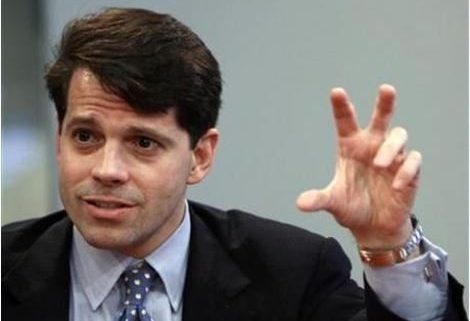
These were a few choice investment nuggets I gleaned from my wide-ranging interview with my friend, Anthony Scaramucci. Anthony is the founder and managing partner of SkyBridge Capital, a leading fund of funds for alternative investments. To learn more about SkyBridge Capital, please go to their website at http://www.skybridgecapital.com/.

After getting a law degree from Harvard, he started his investment career at Goldman Sachs in 1989, where he spent 7 years in the wealth management division. He went on to start his own money management firm, which he sold to Neuberger Berman in 2001. When Lehman Brothers bought Neuberger Berman in 2003, Scaramucci spent a short stint there as managing director of its Investment Management Division.

Anthony is the author of two books: The Little Book of Hedge Funds: What You Need to Know About Hedge Funds but the Managers Won?t Tell You and Goodbye Gordon Gekko: How to Find Your Fortune Without Losing Your Soul.

Scaramucci is focusing his heaviest weighting in fixed income strategies that benefit from improving credit ratings in the US real estate market and low prepayment rates. This brilliant, reasonably well risk adjusted strategy is earning him 11%-13% annual returns, or 5-7 times the cash flow of ten-year Treasury bonds.

Anthony has been consistently negative on gold, which makes him look like a genius for the past two years. He has a small weighting in emerging markets, which offer higher risk and volatility, but potentially greater returns. His picks there include the Southeast Asian nations of Indonesia (IDX), Singapore (EWS), and Malaysia (EWM).

He thinks Apple (AAPL) is very cheap, but is facing an innovation headwind. Still, investors in Steve Jobs? creation should do well over the long term.

SkyBridge Capital uses 28 sub managers to generate outsized market returns. He came out ahead by 20% in 2012 and is up 9% so far this year. It has won awards for the best fund of funds with over $1 billion in assets for the last three years in a row. The firm now has over $7.7 billion in assets under management or advisement.

Anthony?s team of professionals does all the spadework in finding great managers, doing the due diligence, and cross hedging exposures. He charges 1.50% management fee, but last year earned back 77 basis points for his clients in manager discounts. So on a net basis the fees are really quite reasonable.

New investors can open an account for as little as $50,000. This is a big deal because some of the best managers have minimums as high as $10-$15 million. It is the only way the little guy can get access to the best of the best. Customers must be accredited investors with at least $200,000 in annual income and a net worth of over $1 million.

Anthony comes across as polished and erudite, yet cautious. He clearly spends a lot of time thinking about how to invest other people?s money.

As if Scaramucci didn?t have enough to do, he devotes much energy to organizing the SkyBridge Alternatives Conferences, the annual Woodstock for the high and the mighty of the hedge fund industry. The most recent event in Las Vegas presented heavyweight hedge fund legends Paulson & Co.?s John Paulson, Third Point?s Daniel Loeb, and Omega?s Leon Cooperman (click here for my coverage of this love fest).

I will be attending the next SkyBridge Alternatives Conference in Singapore during September 24-27, 2013 (click the link http://www.saltconference.com/saltasia2013/). Former Treasury secretary, Tim Geithner, and the last European Central Bank president, Jean-Claude Trichet, will be the keynote speakers.

To learn the precise details of the SkyBridge high return strategy, please follow the instructions for downloading the full interview below. There you can also get his list of the best US stocks to buy in the current environment.

Just go to the AUDIO menu tab and click on the pull down menu for RADIO SHOW (click here for the link at http://madhedgefundradio.com/radio-show/). Click on the green BUY NOW button and complete the order form. A blue link will appear telling you to ?click here to proceed?. Then click on the small blue box with the question mark inside to download. Hit the PLAY arrow to listen. You can pause, fast forward, or rewind at any time. Given the quality of the information you will obtain, the $4.95 price is a bargain.

To buy The Little Book of Hedge Funds at a discounted Amazon price, please click here. To buy Goodbye Gordon Gekko, please click here.

Anthony Scarmucci

SALT Badge

SkyBridge Capital?s Anthony Scaramucci on Hedge Fund Radio

DXJ 5-24-13

FXY 5-24-13

GOLD 5-24-13

https://www.madhedgefundtrader.com/wp-content/uploads/2013/05/Anthony-Scarmucci.jpg 344 470 Mad Hedge Fund Trader https://madhedgefundtrader.com/wp-content/uploads/2019/05/cropped-mad-hedge-logo-transparent-192x192_f9578834168ba24df3eb53916a12c882.png Mad Hedge Fund Trader2013-05-28 09:42:272013-05-28 09:42:27SkyBridge Capital?s Anthony Scaramucci on Hedge Fund Radio
Mad Hedge Fund Trader

Why I?m Covering My Bond Shorts

Newsletter

I am going to bail on my (TBT) position at close to cost. For me, it is amazing that we got a 350-point rally in the Dow and ten-year Treasury bond yields only manage to eke out a gain from 1.68% to 1.72%.

I scoured the bond trading pits in Chicago yesterday, and the answer came back the same everywhere. Overwhelming Japanese buying is pushing up the prices of not just bonds, but all asset classes, including stocks, gold, silver, and even Apple. Not only that, the Japanese driven price dislocations are going to get worse before they get better.

Last month, the world was wringing its hands over the possible loss of quantitative easing. Instead of losing the program we had, we got a second one instead, of equal magnitude, about $85 billion a month. For that, you can thank the new government of Shinzo Abe and his appointment of hyper aggressive Haruhiko Kuroda as the new governor of the Bank of Japan. Think of Ben Bernanke cubed, as his easing program is three times greater than America?s on a per capita GDP basis.

As a result, there is a brand new ocean of liquidity sloshing around the world that doesn?t know where to go. Therefore, it is going everywhere. Japanese institutions are using the huge government bond-buying program in unload their holdings of Japanese government bonds (JGB?s) and replace them with much higher yielding, stronger currency denominated, US Treasuries.

The scary thing is what happens next time we get a selloff in stock prices. With the stock rally now six months old and May nearly upon us, this is not a wild and reckless assumption. You could easily get a surge in bond prices and a drop in yields to 1.50%. There are some outlier forecasts as low as 1.40%. You don?t want to be short any bonds in this potentially extreme situation.

You especially don?t want to wait out a return to sanity in the bond market if you own the (TBT), the 200% leveraged short Treasury bond ETF. Since you are short double the coupon of the long bond, that will cost you about 5% a year in negative interest carry. Add in the management fees and other expenses, and the cost of carry for this ETF comes to about 50 basis points a month. That is a big nut to cover in a negative interest rate world.

TLT 4-25-13

TBT 4-25-13

Wave - Silkscreen Looks Like We?re Getting Another Wave of Japanese Buyers

https://www.madhedgefundtrader.com/wp-content/uploads/2013/04/Wave-Silkscreen.jpg 264 353 Mad Hedge Fund Trader https://madhedgefundtrader.com/wp-content/uploads/2019/05/cropped-mad-hedge-logo-transparent-192x192_f9578834168ba24df3eb53916a12c882.png Mad Hedge Fund Trader2013-04-26 09:26:172013-04-26 09:26:17Why I?m Covering My Bond Shorts
Page 101 of 103«‹99100101102103›»

Legal Disclaimer

There is a very high degree of risk involved in trading. Past results are not indicative of future returns. MadHedgeFundTrader.com and all individuals affiliated with this site assume no responsibilities for your trading and investment results. The indicators, strategies, columns, articles and all other features are for educational purposes only and should not be construed as investment advice. Information for futures trading observations are obtained from sources believed to be reliable, but we do not warrant its completeness or accuracy, or warrant any results from the use of the information. Your use of the trading observations is entirely at your own risk and it is your sole responsibility to evaluate the accuracy, completeness and usefulness of the information. You must assess the risk of any trade with your broker and make your own independent decisions regarding any securities mentioned herein. Affiliates of MadHedgeFundTrader.com may have a position or effect transactions in the securities described herein (or options thereon) and/or otherwise employ trading strategies that may be consistent or inconsistent with the provided strategies.

Copyright © 2026. Mad Hedge Fund Trader. All Rights Reserved. support@madhedgefundtrader.com
Scroll to top