Global Market Comments
July 16, 2021
Fiat Lux
Featured Trade:
(JULY 14 BIWEEKLY STRATEGY WEBINAR Q&A),
(JPM), (MS), (GS), (TLT), (TBT), (CRSP), (AAPL), (TSLA), (QS), (SPCE), (AMZN),
(FCX), (FEYE), (PANW), (HACK)
Global Market Comments
July 16, 2021
Fiat Lux
Featured Trade:
(JULY 14 BIWEEKLY STRATEGY WEBINAR Q&A),
(JPM), (MS), (GS), (TLT), (TBT), (CRSP), (AAPL), (TSLA), (QS), (SPCE), (AMZN),
(FCX), (FEYE), (PANW), (HACK)
Below please find subscribers’ Q&A for the July 14 Mad Hedge Fund Trader Global Strategy Webinar broadcast from Lake Tahoe, NV.
Q: Which banks are best?
A: JP Morgan (JPM), Morgan Stanley (MS), and Goldman Sachs (GS). That's the trifecta. If you look at the charts, the brokers Morgan Stanley and Goldman Sachs are overwhelmingly outperforming everyone else. They will continue to do that, as the bull market in stocks is a money machine for them.
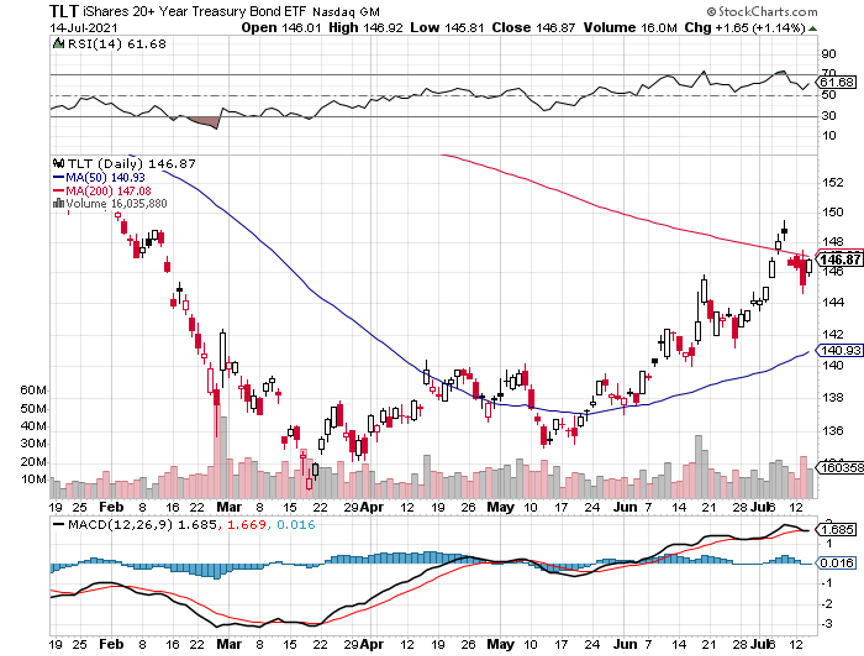
Q: What has caused interest rates to continue to drop so much in the last 1-2 months? Why are you confident you will see them rise from here on?
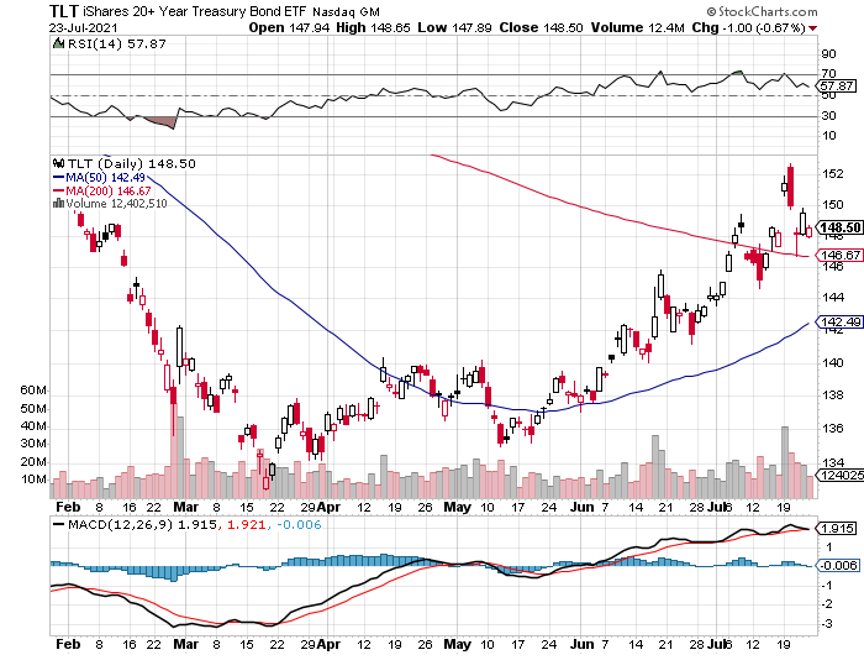
A: The reason they've dropped so much is there is a bond shortage (TLT). There is more demand for bonds and reach for yield around the world than the US government is able to supply. Therefore, the US government should do more borrowing and issue more bonds. That's what the market is telling them to do. When your 10-year yield goes to 1.2%, the message is that you're not borrowing enough, not that you're borrowing too much. How does this end? Eventually, the sheer volume of bond issuance will reach global demand. And we will also see some inflation, not much but some, and that will be enough to take us back up to the 1.75% yield that we had in March. I think we will see that by the end of the year, especially if the Fed tapers and cuts back at least the mortgage bond purchases, which is $40 billion/month. Why subsidize housing when there are nationwide bidding wars?
Q: Are you positive on CRISPR Technologies (CRSP)?
A: Yes, but it is a long-term play and I recommend the LEAPS on those that go out to 2023. That said, we did just have a big rally up to the 140s from the 100s so that 40% was pretty good. But that's the way these small biotech’s trade you get long periods of no movement and then sudden explosive moves to the upside when they make a breakthrough.
Q: Are we going to see inflation?
A: We will have some inflation; but the major component of inflation now is used cars and rental cars, which are up 100% year on year, and that is totally unsustainable. That means a year from now, increase in used car prices will be zero, and will actually be a big drag on inflation. So that's what the Fed means when they say that any inflation will be temporary as we go through these tremendous YOY comparisons when demand goes from zero to near infinite. And that's happening in many sectors of the economy right now. You never get rich betting against a 40-year trend, and for inflation that is down.
Q: Has the market peaked for the short term?
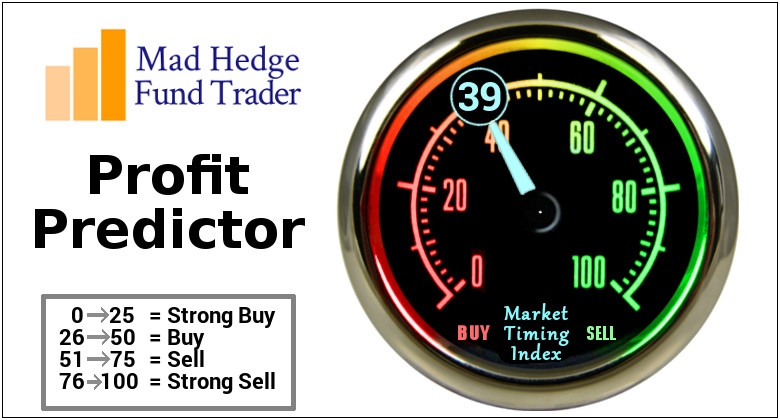
A: My bet on a short-term peak is the last week of July when all the big tech companies report. And then we classically get reasonable selloffs after that—buy the rumor, sell the news. That's our next entry point for long positions in this market. Since the presidential election, the index has been unable to drop more than 4.8% as there is so much money on the sidelines trying to get in.
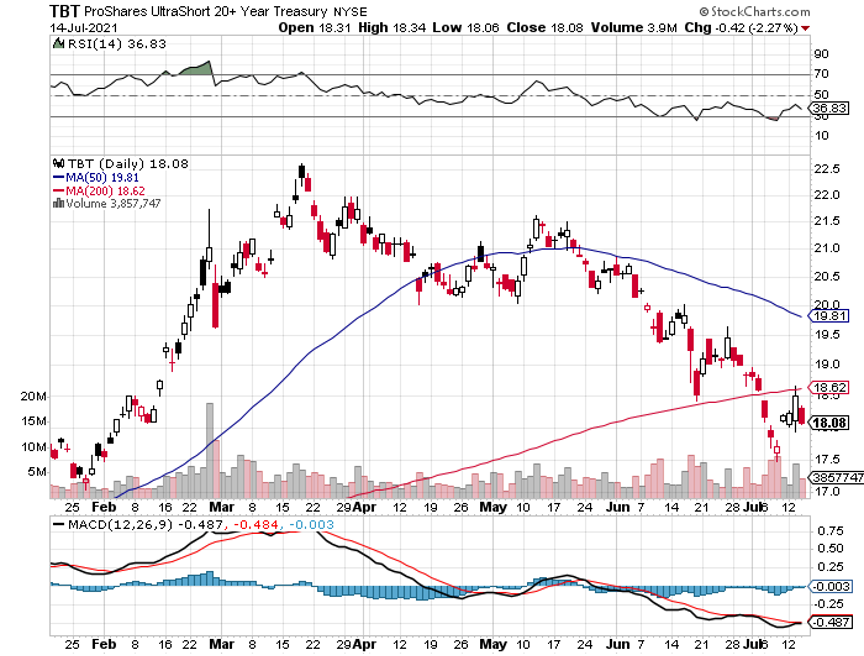
Q: Should I be max long ProShares Ultra Short Treasury Bond Fund (TBT) LEAPS?
A: Just make sure they’re long-dated LEAPS—at least six months to a year or longer. That way you have plenty of time for them to work. The current return on the (TBT) June 2022 $17-$19 vertical bull call LEAPS at $0.75 is 166%.
Q: What’s the chance of Biden’s budget passing?
A: 100%. It’s just a question of how much will be in there—we’re at $597 billion on infrastructure and $3.5 trillion for the rest of spending. That gives you a $4.1 trillion budget for the next fiscal year starting October 30, which is the biggest in history and biggest since WWII on an inflation-adjusted basis. That will go through and keep the stock market percolating for several more years. Dow $240,000 here we come!
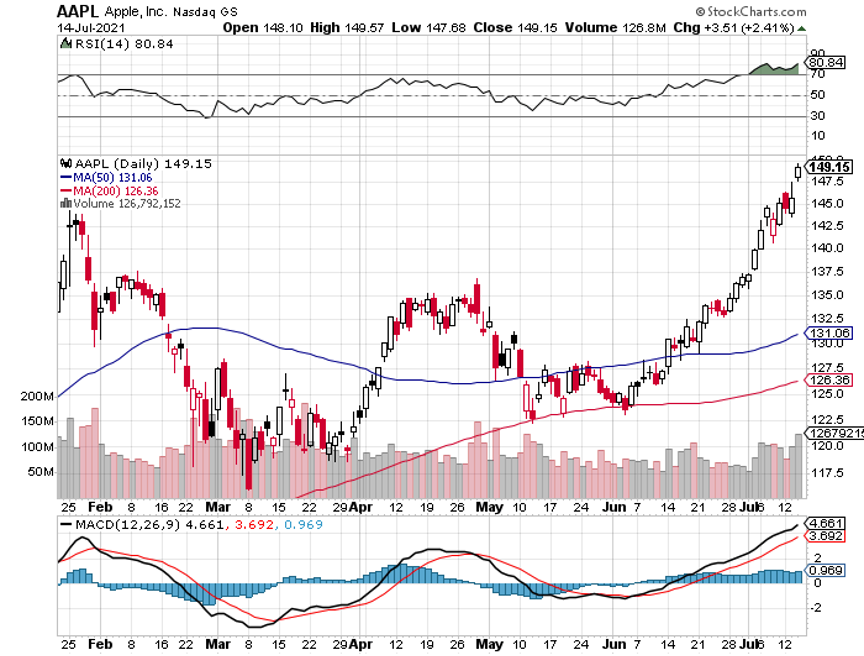
Q: Would you sell calls against Apple (AAPL) today?
A: I would, I would do something like the August $165’s. Even then, it’s a high-risk trade because Apple has been on such a parabolic move for the last 2 months. So do that at your own risk; notice I’m not putting out trade alerts telling you to short Apple in any way shape or form. My target for the yearend is $200.
Q: Will Tesla (TSLA) use QuantumScape (QS) batteries to make their own solid-state ones?
A: Tesla will make their own solid-state batteries They are far ahead of QuantumScape with their own technology and eventually, they will wipe them out. So, I am not recommending QuantumScape—they are 10 years behind Tesla. Sorry, I didn’t make that clearer in my research piece.
Q: When do you expect the 7% drop in the market?
A: August/September is usually when the market bottoms. Let’s see if we get it this time. Predicting down moves has been somewhat of a fool's errand in a market when you have infinite QE, infinite fiscal stimulus, infinite monetary stimulus, and the highest economic growth in history. And again, I am upgrading my 10-year forecast for the market; I’m not looking for a Dow 120,000 by 2030 anymore, I’m looking for a Dow 240,000, and when you’re still at only a measly 34,933, you don’t get many 7% drops. In fact, we’ve had none since the election.
Q: Could Tesla make an all-time high by the end of the year?
A: Yes, especially if they make progress on the solid-state batteries. Tesla (TSLA) tends to have sideways periods that can last years and then explosive moves to the upside. It almost trades like a biotech stock.
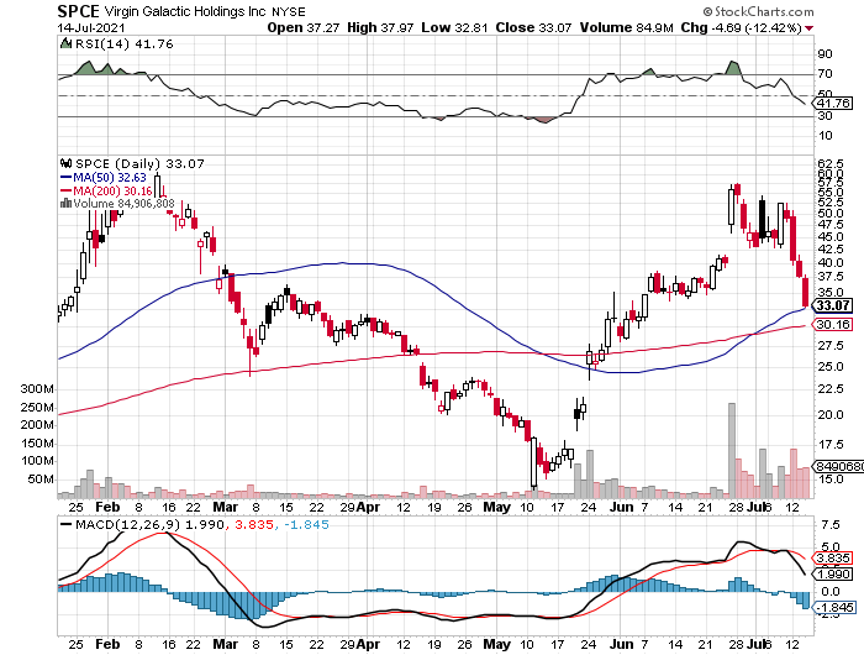
Q: Is Virgin Galactic (SPCE) a buy here off the back of their successful rocket launch last week?
A: No, any business dependent on retail sales of tickets at $250,000 each has absolutely no chance of ever making a profit in its life. As much as I like Richard Branson, who I used to fly with, the fact is that this business will never make money. It's more of a public relations vehicle for all of the hundreds of Virgin Brands. They’ll never get the cost low enough to make this economic for the average person. Spaceships aren’t cheap, and they don’t sell them at Costco. In fact, you notice that after the rocket launch, the stock dropped 20%. However, if they do drop the price to $100,000 even I might buy a ticket but only if they let me fly the thing.
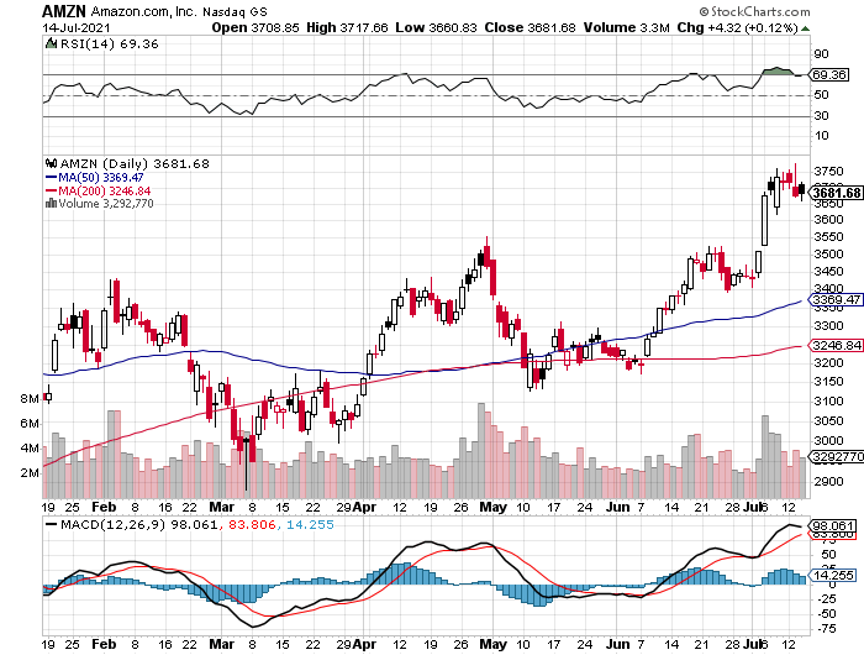
Q: What is your favorite FANG stock other than Apple?
A: It is Amazon (AMZN). I think it hits $5,000 by the end of the year. If they try to break it up it’ll be worth $10,000, which it will get to eventually (in like 5 years) anyway. They just have absolutely everything working there.
Q: Why is Alaska the worst state to do business in?
A: Well, first of all, it’s only habitable for like 6 months of the year, and otherwise it’s too cold and heating bills are enormous. Also, nothing is produced in Alaska besides tourism and oil, which is subject to enormous volatility. They actually canceled the oil payouts for Alaskan citizens last year. Anything else you want to do in Alaska requires transportation costs from the US. So essentially there are 49 other better states to bring business ideas to.
Q: Will Amazon ever split their stock?
A: No, there's no reason or net benefit to it. Jeff Bezos has never been prone to financial engineering because he never needed to. Natural earnings growth was always so enormous he didn’t need to bother with any of these side games to jack the stock price. So, I would say “no” on a stock split.
Q: In a two-year LEAPS, you’re taking a long position, yes?
A: When you do a LEAPS spread, you're buying a 1-2 year call and you’re selling short a 1-2 year call against it. That cuts your price by ⅔ and increases your leverage by a factor of 3 and is a far greater risk/reward than just buying the 2-year call outright. If you want to learn more about LEAPS, send us an email about the Mad Hedge Concierge Service that is by application only.
Q: When is the recording up?
A: About two hours.
Q: Do you still love Freeport McMoRan (FCX)?
A: Yes, it’s taking the inflation vacation right now with the rest of the commodities, but I expect it to come roaring back by the end of the year. Electric vehicles need 200 pounds of copper compared to only 20 pounds for internal combustion cars.
Q: Thoughts on FireEye (FEYE)?
A: Yes, we love FireEye along with the rest of the cybersecurity plays, so buy on the dips. Hacking is a growth market and will never go out of fashion. BUY (PANW) and (HACK) on dips.
To watch a replay of this webinar with all the charts, bells, whistles, and classic rock music, just log in to www.madhedgefundtrader.com, go to MY ACCOUNT, click on GLOBAL TRADING DISPATCH or TECHNOLOGY LETTER, then WEBINARS, and all the webinars from the last ten years are there in all their glory.
Good Luck and Stay Healthy.
John Thomas
CEO & Publisher
The Diary of a Mad Hedge Fund Trader
Global Market Comments
July 14, 2021
Fiat Lux
Featured Trade:
(TEN TECH TRENDS DEFINING YOUR FUTURE, or THE BEST TECH PIECE I HAVE EVER WRITTEN)
(TSLA), (GOOG), (AMZN), (AAPL), (CRSP)
Not a day goes by without a reader asking me what is the next stock ten, hundred, or thousand bagger. After all, I nailed the 295X move in Tesla (TSLA) starting in 2010.
Can’t I do better?
Well actually, I can, which is the purpose of the Diary of a Mad Hedge Fund Trader. There are many potentially Google (GOOG), Amazon (AMZN), and Apple (AAPL)-sized opportunities out there today. It’s just a matter of time before they become public and investable.
One thing I will tell you today is that they will have some or all of the following gale-force tailwinds below. These will turbocharge the value of everything you own now, as well as anything new you might pick up going forward.
The future is happening fast!
1) People are Getting Richer, as the middle-income population continues to rise worldwide. That means more customers for everything and astronomically greater earnings for the companies inventing and selling them. Everyday goods and services (finance, insurance, education, and entertainment) are being digitized and becoming fully demonetized, available to the rising billion on mobile devices. Thank the convergence of high-bandwidth and low-cost communication, ubiquitous AI on the cloud, growing access to AI-aided education, and AI-driven healthcare.
2) And they are Communicating with Each Other More. The deployment of both licensed and unlicensed 5G, plus the launch of a multitude of global satellite networks (Starlink, OneWeb, Viasat, etc.), allow for ubiquitous, low-cost communications for everyone, everywhere, all the time––not to mention the connection of trillions of devices. And today’s skyrocketing connectivity is bringing online an additional 3 billion individuals, driving tens of trillions of dollars into the global economy and into the pockets of shareholders. Thank the convergence of low-cost space launches (Space-X), hardware advancements, 5G networks, artificial intelligence, a new generation of materials science, and exponentially surging computing power.
3) Your Lifespan Will Increase by at Least Ten Years. A dozen game-changing biotech and pharmaceutical solutions (currently in Phase 1, 2, or 3 clinical trials) will reach consumers this decade as covered by the Mad Hedge Biotech & Healthcare Letter (click here for the link). Technologies include stem cell supply restoration, senolytic or age-related medicines, a new generation of Endo-Vaccines, GDF-11, and supplementation of NMD/NAD+, among several others. And as machine learning continues to mature, AI is set to unleash countless new drug candidates, ready for clinical trials. Thank the convergence of genome sequencing, CRISPR technologies (CRSP), AI, quantum computing, and cellular medicine.
4) More Capital for Everything Will Become Abundant. Over the past few years, humanity hit all-time highs in the global flow of seed capital, venture capital, and sovereign wealth fund investments. It is expected to continue its overall upward trajectory. Capital abundance leads to the funding and testing of "crazy" entrepreneurial ideas, which in turn accelerate innovation. Already, $300B in crowdfunding is anticipated by 2025, democratizing capital access for entrepreneurs worldwide. And even during a pandemic (2020), the world deployed more venture capital than ever before, handily beating out the last high-water mark in 2019. Thank global connectivity, dematerialization, demonetization, and democratization.
5) Distribution is Becoming Vastly Easier. The combination of Augmented Reality (yielding Web 3.0, or the Spatial Web) and 5G networks (offering lighting fast 100Mb/s - 10Gb/s connection speeds) will transform how we live our everyday lives, impacting every industry from retail and advertising, to education and entertainment. Consumers will play, learn and shop throughout the day in a new intelligent, virtually overlaid world. This is where technologies like SpatialWeb.net, Vatoms (new digital connections between products and customers), and Apple’s (AAPL) next generation AR & VR headsets will shine. Thank hardware advancements, 5G networks, artificial intelligence, materials science, and surging computing power.
(6) Everything is Getting Smarter: The price of specialized machine learning chips is dropping rapidly with a rise in global demand. Imagine a specialized $5 chip that enables AI for a toy, a shoe, a kitchen cabinet? Combined with the explosion of low-cost microscopic sensors and the deployment of high-bandwidth networks, we’re heading into a decade wherein every device becomes intelligent. Your child’s toy remembers her face and name. Your kid's drone safely and diligently follows and videos all the children at the birthday party. Appliances respond to voice commands and anticipate your needs. Thank AI, 5G networks, and more advanced sensors.
(7) Artificial Intelligence is Getting Smarter than We are. Artificial intelligence will reach human-level performance this decade (by 2030). Through the 2020s, AI algorithms and machine learning tools will be increasingly made open source, available on the cloud, allowing any individual with an internet connection to supplement their cognitive ability, augment their problem-solving capacity, and build new ventures at a fraction of the current cost. Thank global high-bandwidth connectivity, neural networks, and cloud computing. Every industry, spanning industrial design, healthcare, education, and entertainment, will be impacted.
(8) AI is Becoming a Service: The rise of “AI as a Service” (AIaaS) platforms will enable humans to partner with AI in every aspect of their work, at every level, in every industry. AI will become entrenched in everyday business operations, serving as cognitive collaborators to employees—supporting creative tasks, generating new ideas, and tackling previously unattainable innovations. In some fields, partnership with AI will even become a requirement. For example: in the future, making certain diagnoses without the consultation of AI may be deemed malpractice. And try trading stocks today without AI behind you. Thank increasingly intelligent AI, global high-bandwidth connectivity, neural networks, and cloud computing.
(9) Software Will Become an Integrated Part of Our Lives. As services like Alexa, Google Home, and Apple Homepod expand in functionality, such services will eventually travel beyond the home and become your cognitive prosthetic 24/7. Imagine a secure software shell that you give permission to listen to all your conversations, read your email, monitor your blood chemistry, etc. With access to such data, these AI-enabled software shells will learn your preferences, anticipate your needs and behavior, shop for you, monitor your health, and help you problem-solve in support of your mid- and long-term goals. Thank increasingly intelligent AI, neural networks, and cloud computing.
(10) Energy Will Become Effectively Free when compared to today’s all-in costs. Continued advancements in solar, wind, geothermal, hydroelectric, small nuclear, and localized grids will drive humanity towards cheap, abundant, and ubiquitous renewable energy. The price per kilowatt-hour will drop below 1 cent for renewables, just as storage drops below a mere 3 cents per kilowatt-hour, resulting in the elimination of fossil fuels globally. And as the world’s poorest countries are also the world’s sunniest, the democratization of both new and traditional storage technologies will grant energy abundance to those already bathed in sunlight. We are also on the cusp of many breakthroughs in fusion power at nearby Lawrence Livermore Labs as capital, new materials, and entrepreneurs pour in this arena. Thank materials science, hardware advancements, AI/algorithms, and improved battery technologies.
I just thought you’d like to know.
Global Market Comments
July 13, 2021
Fiat Lux
Featured Trade:
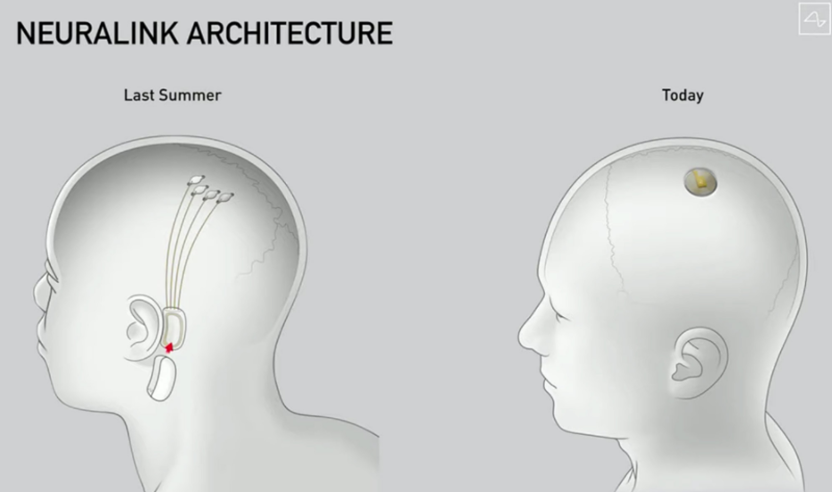
(WHY SOLID-STATE BATTERIES ARE THE “NEXT BIG THING”)
(TSLA), (QS)
Global Market Comments
July 7, 2021
Fiat Lux
Featured Trade:
(JUNE 30 BIWEEKLY STRATEGY WEBINAR Q&A),
(QQQ), (BRKB), (GOOG), (NVDA), (FB), (TSLA), (JPM), (BAC), (C), (GS), (MS), (NASD), ((X), (FCX), (AMZN), (MSFT), (AAPL), (FCX)
Global Market Comments
June 23, 2021
Fiat Lux
Featured Trade:
(WHY YOU MISSED THE TECHNOLOGY BOOM AND WHAT TO DO ABOUT IT NOW),
(AAPL), (AMZN), (MSFT), (NVDA), (TSLA), (WFC), (FB)
I often review the portfolios of new concierge subscribers looking for fundamental flaws in their investment approach and it is not unusual for me to find some real disasters.
The Armageddon scenario was quite popular a decade ago. You know, the philosophy that said that the Dow ($INDU) was plunging to 3,000, the US government would default on its debt (TLT), and gold (GLD) was rocketing to $50,000 an ounce?
Those who stuck with the deeply flawed analysis that led to those flawed conclusions saw their retirement funds turn to ashes.
Traditional value investors also fell into a trap. By focusing only on stocks with bargain basement earnings multiples, low price to book values, and high visible cash flows, they shut themselves out of technology stocks, far and away the fastest-growing sector of the economy.
If they are lucky, they picked up shares in Apple a few years ago when the earnings multiple was still down at ten. But even the Giant of Cupertino hasn’t been that cheap for years.
And here is the problem. Tech stocks defy analysis because traditional valuation measures don’t apply to them.
Let’s start with the easiest metric of all, that of sales. How do you measure the value of sales when a company gives away most of its services for free?
Take Google (GOOG) for example. I bet you all use it. How many of you have actually paid money to Google to use their search function? I would venture none.
What would you pay Google for search if you had to? What is it worth to you to have an instant global search function? Probably at least $100 a year. I would pay $10,000 as I use it all day long. With 92.05% of the global search market comprising 2 billion users, that means $200 billion a year of potential Google revenues are invisible.
Yes, the company makes a chunk of this back by charging advertisers access to these search users, generating some $55.31 Billion in revenues and $17.93 billion in net income in the most recent quarter.
But much of the increased value of this company is passed on to shareholders not through rising profits or dividend payments but through an ever-rising share price. If you’re looking for dividends, Google doesn’t exist. It is also very convenient that unrealized capital gains are tax-free until the shares are sold, which may be never.
I’ll tell you another valuation measure that investors have completely missed, that of community. The most successful companies don’t have just customers who buy stuff, they have a community of members who actively participate in a common vision, which is then monetized. There are countless communities out there now making fortunes, you just have to know how to spot them.
Facebook (FB) has created the largest community of people who are willing to share personal information. This permits the creation of affinity groups centered around specific interests, from your local kids’ school activities to municipality emergency alerts, to your preferred political party.
This creates a gigantic network effect that increases the value of Facebook. Each person who joins (FB) makes it worth more, raising the value of the shares, even though they haven’t paid it a penny. Again, it’s advertisers who are footing your tab.
Tesla (TSLA) has one million customers willing to lend it $400 billion for free in the form of deposits on future car purchases because they also share in the vision of a carbon-free economy. When you add together the costs of initial purchase, fuel, and maintenance savings, a new Tesla Model 3 is now cheaper than a conventional gasoline-powered car over its entire life.
REI, a privately held company, actively cultivates buyers of outdoor equipment, teaches them how to use it, then organizes trips. It will then pursue you to the ends of the earth with seasonal discount sales. Whole Foods (WFC), now owned by Amazon (AMZN), does the same in the healthy eating field.
If you spend a lot of your free time in these two stores, as I do, The United States is composed entirely of healthy, athletic, good-looking, and long-lived, intelligent people.
There is another company you know well that has grown mightily thanks to the community effect. That would be the Diary of a Mad Hedge Fund Trader, one of the fastest-growing online financial services firms of the past decade. What is the value of our community? To give you a hint, the price of my Global Trading Dispatch has soared from $29 a month to $3,000 a year.
We have succeeded not because we are good at selling newsletters, but because we have built a global community of like-minded investors with a common shared vision around the world, that of making money through astute trading and investment.
We produce daily research services covering global financial markets, like Global Trading Dispatch, the Mad Hedge Technology Letter, and the Mad Hedge Biotech & Healthcare Letter. We teach you how to monetize this information with our books like Stocks to Buy for the Coming Roaring Twenties and the Mad Hedge Options Training Course.
We then urge you to action with our Trade Alerts. If you want more hands-on support, you can upgrade to the Concierge Service. You can also meet me in person to discuss your personal portfolios and my Global Strategy Luncheons.
The luncheons are great because long-term Mad Hedge veterans trade notes on how best to use the service and inform me on where to make improvements. It’s a blast.
The letter is self-correcting. When we make a mistake, readers let us know in 60 seconds and we can shoot out a correction immediately. The services evolve on a daily basis.
It all comes together to enable customers to make up to 20% to 100% a year on their retirement funds. And guess what? The more money they make, the more products and services they buy from me. This is why I have so many followers who have been with me for a decade or more. And some of my best ideas come from my own subscribers.
So, if you missed technology now what should you do about it? Recognize what the new game is and get involved. Microsoft (MSFT) with the fastest-growing cloud business offers good value here. Amazon looks like it will eventually hit my $5,000 target. You want to be buying graphics card and AI company NVIDIA (NVDA) on every 10% dip. It’s going to $1,000.
You can buy the breakouts now to get involved or patiently wait until the 10% selloff that usually follows blowout quarterly earnings.
My guess is that tech stocks still have to double in value before their market capitalization of 26% matches their 50% share of US profits. And the technologies are ever hyper-accelerating. That leaves a lot of upside even for the new entrants.
Mad Hedge Biotech & Healthcare Letter
June 22, 2021
Fiat Lux
FEATURED TRADE:
(PRIMED FOR DOMINANCE)
(TDOC), (AMZN), (AMWL), (WMT), (CVS), (ARKK), (TSLA)
While growth stocks have already begun clawing their way back following the losses they suffered earlier this year, there are still former market favorites struggling to bounce back.
One of them is Teladoc Health (TDOC).
To date, Teladoc is still trading at roughly 40% below its previous highs.
While this can be frustrating for its investors, the current situation might just be an opportune time to add this stock to your portfolio.
Teladoc emerged as the leader in virtual care in 2020 by being at the right place at the right time when the pandemic struck. That year, the company’s revenue rose by a whopping 145% compared to its 2019 performance.
These days though, the stock has lost half of its value. Although that’s definitely a head-scratcher, Teladoc’s 51.5 million paid memberships in the United States alone still make it the most dominant force in this industry.
For a long-term investor, the situation presents a compelling opportunity.
Teladoc is a growing business that’s expanding both in the US and globally. While penetrating more markets would happen over time, the basic footprint has been established. This offers Teladoc much-needed exposure to a massive addressable market.
The global market for telemedicine is estimated to expand from $49.9 billion in 2019 to a jaw-dropping $459.8 billion by 2030.
In North America, which holds roughly 34.4% of the market share in 2020, the telemedicine market generated $19.23 billion during the pandemic.
Taking into consideration Teladoc’s revenue of $967.4 million for its US segments in 2020, it becomes clear that the company is only getting started, as this comprised only 5% of the market size.
If the company maintains its momentum, then the next 10 years would be an incredible journey for Teladoc investors.
Despite the disappointing share price performance of Teladoc in the past months, the company’s actual business has sustained its growth.
Revenue continues to rapidly rise, showing off a 151% growth in the first quarter of 2021.
This impressive growth has prompted Teladoc to boost its full-year revenue guidance to $2 billion, which indicates an 80% year-over-year gain.
Impressive growth has been observed all around, with access fee revenue going up 183% while visit fees climbed 24%.
Considering the size of the market, it no longer comes as a surprise that Teladoc is facing competitive threats.
Amazon (AMZN) and Amwell (AMWL) have recently entered the virtual care market. Even Walmart (WMT) and CVS (CVS) have been working on toppling Teladoc as well.
Despite the competition, Teladoc remains ahead of the pact thanks to its continuous efforts to innovate.
For example, the latest innovation from Teladoc is Primary360.
This product is designed to take virtual healthcare to the next level. It offers personalized service at the patient level. Here’s a preview of how it works.
Traditionally, patients go to their doctors when they discover a health problem. This is a reactive way of dealing with health. In contrast, Primary360 is proactive.
That is, the product monitors the patients individually from annual checkups to ongoing treatments to manage chronic conditions. Through closely monitoring the patients, Teladoc is able to perform earlier diagnoses of potential diseases and help doctors reach better outcomes for treatments.
To better picture the long-term rewards of this company, it’s good to keep in mind that Teladoc is actually the second biggest holding of Cathie Wood’s ARK Innovation ETF (ARKK), next only to Tesla (TSLA).
Teladoc Health emerged as one of the most popular pandemic plays in 2020.
While the stock tumbled when vaccines hit the market, its projected growth trajectory remains promising. In fact, Teladoc’s revenue growth is anticipated to skyrocket over the remainder of this decade, with telemedicine estimated to reach roughly half a trillion dollars by 2030.
For investors on the lookout for long-term plays, Teladoc Health's tumble has presented a good opportunity to add it to your portfolio.
Legal Disclaimer
There is a very high degree of risk involved in trading. Past results are not indicative of future returns. MadHedgeFundTrader.com and all individuals affiliated with this site assume no responsibilities for your trading and investment results. The indicators, strategies, columns, articles and all other features are for educational purposes only and should not be construed as investment advice. Information for futures trading observations are obtained from sources believed to be reliable, but we do not warrant its completeness or accuracy, or warrant any results from the use of the information. Your use of the trading observations is entirely at your own risk and it is your sole responsibility to evaluate the accuracy, completeness and usefulness of the information. You must assess the risk of any trade with your broker and make your own independent decisions regarding any securities mentioned herein. Affiliates of MadHedgeFundTrader.com may have a position or effect transactions in the securities described herein (or options thereon) and/or otherwise employ trading strategies that may be consistent or inconsistent with the provided strategies.