Mad Hedge Technology Letter
February 15, 2018
Fiat Lux
Featured Trade:
(GAMING YOUR WAY TO PROFITS WITH ACTIVISION)
(ATVI), (FB), (TTWO)


Mad Hedge Technology Letter
February 15, 2018
Fiat Lux
Featured Trade:
(GAMING YOUR WAY TO PROFITS WITH ACTIVISION)
(ATVI), (FB), (TTWO)
Lately, I have noticed an upsurge in questions about WWII from kids in their teens, and twenties, usually men.
Over the past 50 years, I have visited virtually every WWII battlefield, have read hundreds of books on the topic, and rank as an armchair general in my own right.
I also have has the pleasure of meeting the veterans of many armies, from a German ME 262 jet pilot, to my own Uncle Mitch, the first Medal of Honor winner of WWII.
The question for me always was, why are kids born a half century after the war suddenly interested in the subject. The answer is always the same: they heard about it on a video game. Gaming, in fact, is coming to shape these kids' understanding of history.
E-gaming is not typically pigeonholed as a highly attractive stock on Wall Street. But in 2018, the e-gaming phenomenon emphatically has legs.
People are spending more time playing video games globally with an accelerating pace.
The e-gaming sector is a far larger chunk of American economy that you would imagine.
Many American children under the age of 18 play video games for nearly 20 hours a week. This social abnormality has reached an extreme tipping point, where 10% of children are classified as obsessively addicted to these consoles.
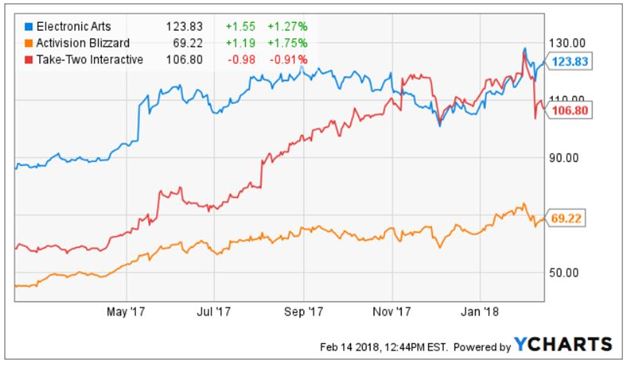
The lucky firm procuring these satisfying yields are the video game producer, top dog Activision (ATVI).
Unzipping their quarterly data, investors can quickly grasp the vibrant breadth of this industry.
The most salient pillar of success is total net audience, which printed $385 million MAU/quarter-an increase of 1 million users from Q3 2017.
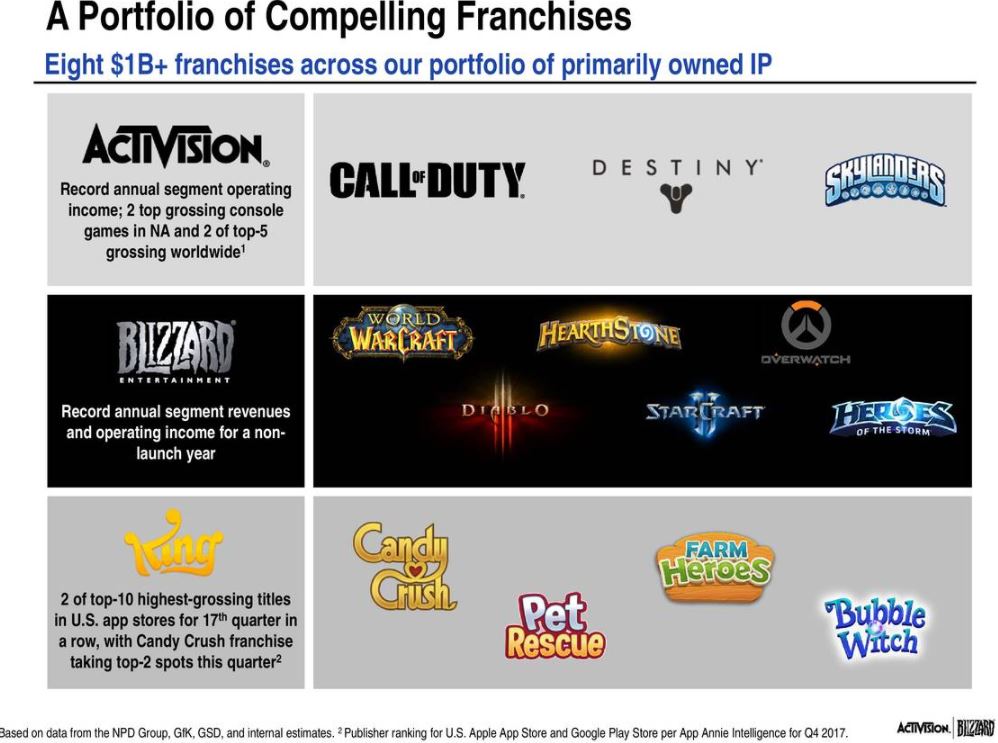
The business is split into 3 different segments: Activision along with subsidiaries Blizzard and King, which Activison bought in recent years. All are contributing unique gaming franchises which are immensely profitable.
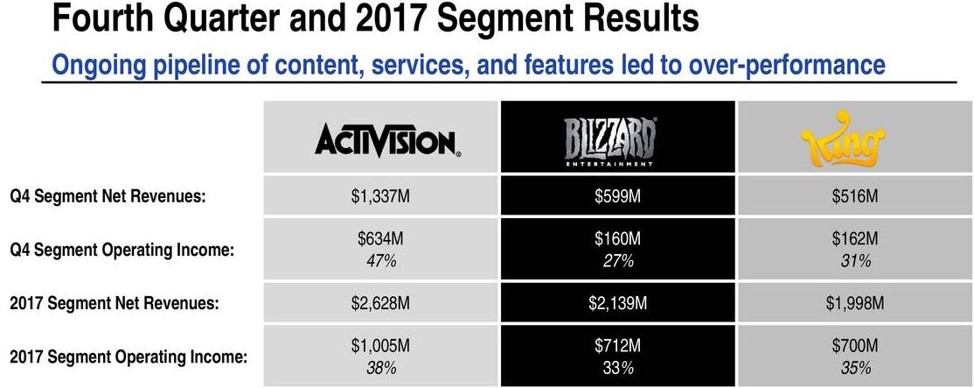
Activision checked in at $1.33 billion of revenue for the quarter. Blizzard ratcheted up to $599 million, and King was on Blizzard's tail with $516 million.
The bread and butter of Activision is the gaming classic Call of Duty: World War II, which was the highest global grossing game in 2017. This franchise has been ranked #1 in the industry for eight of the last nine years.
Along with many brick and mortar businesses, e-gaming is stampeding into the online digital world. The industry is migrating in a consumer-led surge to full-game downloads instead of boxed purchases in stores.
This monetization method connects the gaming companies adjacent to the consumer with tightly bound synergies that cut out the middleman, Gamestop Corp (GME).
The skyward propulsion was also partially attributed to Activision's Blizzard and King upping their overall "daily time spent per user", exceeding 50 minutes. Daily usage per day is starting to reflect that of Facebook (FB), which is a mighty feat.
Activision capped off the most successful year in history, with a total operating income of over $1 billion and operating margin of over 38%.
Their pipeline includes World of Warcraft's Battle for Azeroth, expected to be released this summer.
Guidance was quite impressive, and Activision shelled out two blueprints depicting their plans to gather a head of steam.
The most profitable business is steered predominantly by Call of Duty's Live Ops package.
What are Live Ops? They are in-game purchases by the user. This has become the new normal in gaming, where players must buy items in order to stay ahead of the curve.
This method has proved extremely popular while pushing up the ROI/user.
The Live-Ops manifest in 3 forms:
Gacha - Popularized by Japanese capsule toy vending machines, the appeal of paying virtual currency for a chance to get an ultra-rare item has proven to be a sticky feature.
The objective is performance progress. Gamers are offered free or discounted gachas during the initial stages but must pay for higher tiered gacha that in return represent a higher-level score.
Online Competition - This includes competitive structures such as guilds, leagues, playoffs or leader-boards that will boost the retention rate. The core idea is exclusive competition with unique rewards.
One-time Events - Time sensitive events corral gamers into an exclusive venue, creating a forced spending environment to conflate spending with winning.
In-game offerings have been such a hit that the feature crossed the $1 billion threshold in Q4 2017, which comprised about 25% of total quarterly revenue.
Activision truly has the highest-quality downloadable content in 2017, including Zombies Chronicles for Call of Duty: Black Ops III, the top add-on service of the year for PlayStation.
Constructing stunning Live Ops features are a challenge for game studios, because Live Ops teams must build database servers that scale with the involvement of millions of hardcore gamers. Harmonizing these functions is a nightmare, but is highly effective if successful.
After Live Ops, the second stage of the blueprint is mobile execution. Mobile gaming has not been scaled to the extent of the PC and gaming console market. The mobile market is still in its infancy and gaming studios can capture the immense growth potential, especially in Asia.
Technology has progressed to the degree where Activision is able to triumphantly consummate this strategy. These two great initiatives will spur Activision to extreme heights.
The wild card is the Overwatch League that commenced late last year and is in its incubation stage. Overwatch is a new global e-gaming league that is televised in a traditional sporting-league format. The league reached 10 million unique viewers and almost 300,000 average viewer/minute in the first week.
The follow through, post week 1, was also exceptional, with viewership stabilized. The audience can access Amazon's Twitch platform to view these contests.
Activision has made a calculated bet that the "average joe" gamer will want to watch world-class caliber gamers perform as a spectator sport.
Activision plans to sell new expansion teams to an array of global cities, and if gaming maintains its appeal to the global youth, the league could potentially rival one of the physical sporting leagues in the United States. And yes, Activision intends to weave in its add-on features to these live encounters.
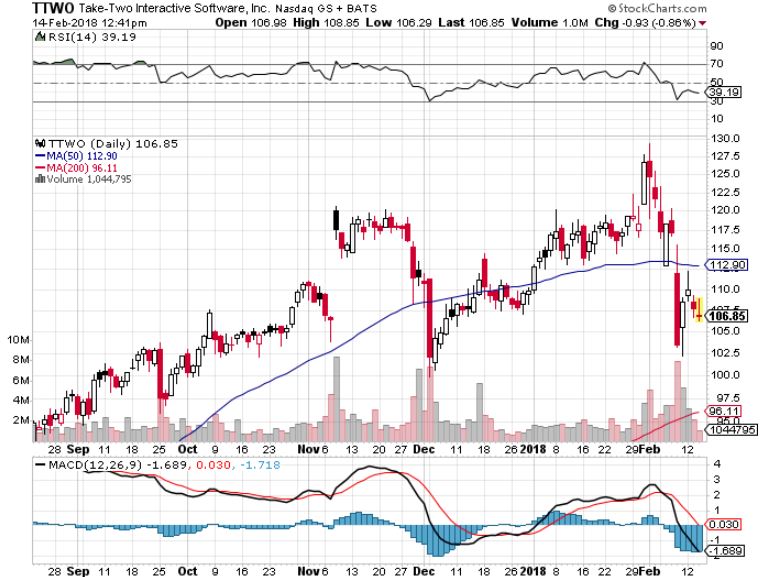
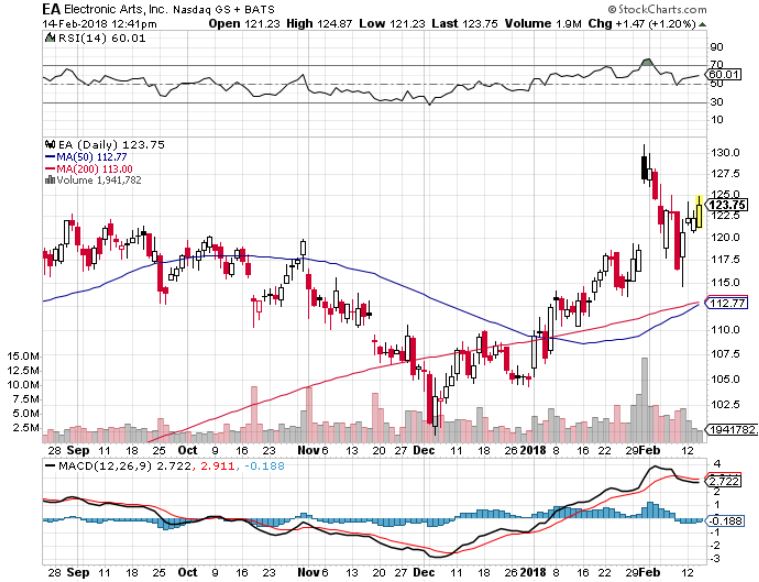
If you are keen on Activision's (ATVI) competitors, who also run healthy gaming franchises of their own, then have a look at Take-Two Interactive (TTWO), who hawk their legendary game, Grand Theft Auto or EA Sports- held up by the NFL Madden and FIFA soccer labels.
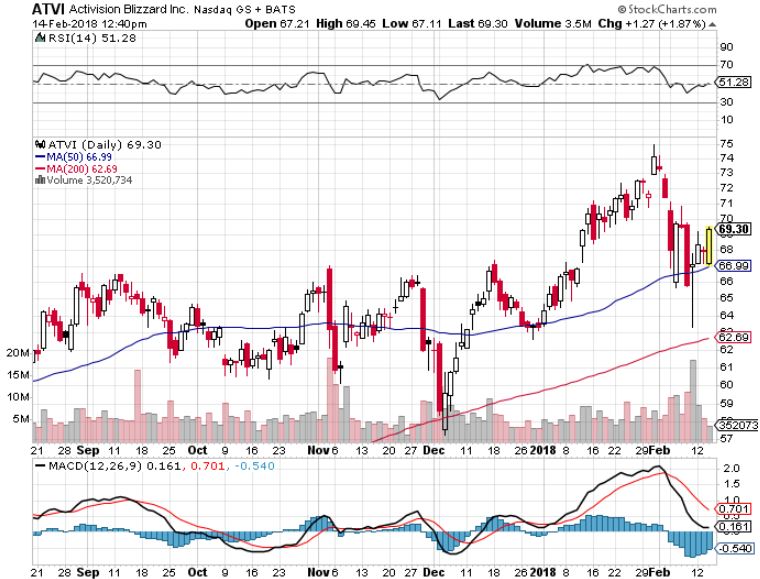
In short, Activison looks like a "BUY" here, and the recent correction has given us the gift of a fabulous entry point.
To visit Activision's website, please click here.

"It is impossible to compete with a big company that doesn't want to make money," said J. Crew founder Mickey Drexler about Amazon.

When John identifies a strategic exit point, he will send you an alert with specific trade information as to what security to sell, when to sell it, and at what price. Most often, it will be to TAKE PROFITS, but, on rare occasions, it will be to exercise a STOP LOSS at a predetermined price to adhere to strict risk management discipline. Read more
When John identifies a strategic exit point, he will send you an alert with specific trade information as to what security to sell, when to sell it, and at what price. Most often, it will be to TAKE PROFITS, but, on rare occasions, it will be to exercise a STOP LOSS at a predetermined price to adhere to strict risk management discipline. Read more
Global Market Comments
February 14, 2018
Fiat Lux
Featured Trade:
(AUTONOMOUS SELF-DRIVING CARS ARE COMING SOONER THAN YOU THINK),
(TSLA), (GM), (F), (GOOG),
(INDIA IS CATCHING UP WITH CHINA),
(PIN), (TTM), (EPI), (INP)

Mad Hedge Technology Letter
February 14, 2018
Fiat Lux
(SPECIAL BATTERY ISSUE)
Featured Trade:
(THE GREAT RACE FOR BATTERY TECHNOLOGY),
(TSLA), (GM), (BYDDF), (NSANNY), (SQM), (TM)
One hundred years from now, historians will probably date the beginning of the fall of the American Empire to 1986.
That is the year President Ronald Reagan ordered Jimmy Carter's solar panels torn down from the White House roof, and when Chinese Premier Deng Xiaoping launched his top secret 863 program to make his country a global technology leader.
The big question today is who will win one of the biggest opportunities of our generation?
Some 32 years later, the evidence that China is winning this final battle is everywhere. China dominates in windmill power, controls 97% of the world's rare earth supplies essential for modern electronics, is plunging ahead with clean coal, and boasts the world's most ambitious nuclear power program.
It is a dominant player in high-speed rail and is making serious moves into commercial and military aviation. It is also cleaning our clock in electric cars, with more than 30 low cost, emission free models coming to the market by the end of 2013.
Looking from a distance, one could conclude that China has already won the technology war.
General Motors (GM) pitiful entrant in this sweepstakes, the Chevy Bolt, has utterly failed to reach the firm's sales targets. Still, I receive constant emails from drivers who say they absolute love the cars, and at $36,620, with dealer discounts it IS cheap.
This is all far more than a race to bring commercial products to the marketplace. At stake is nothing less than the viability of our two economic systems.
By setting national goals, providing unlimited funding, focusing scarce resources, and letting engineers run it all, China can orchestrate assaults on technical barriers and markets that planners here can only dream about.
And let's face it, economies of scale are possible in the Middle Kingdom that would be unimaginable in America.
The laissez faire, libertarian approach now in vogue in the US creates a lot of noise, but little progress. The Dotcom bust dried up substantial research and development funding for technology for a decade.
While China was ramping up clean coal research, president Bush was closing down ours.
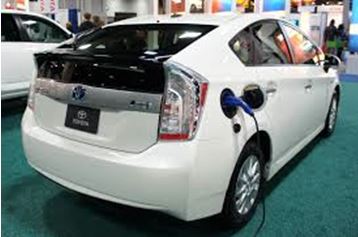
Toyota Plug-In Prius
Mention government involvement in anything these days and you get a sour, skeptical look. But this ignores the indisputable verdict of history.
Most of the great leaps forward in US economic history were the product of massive government involvement. I'm thinking of the transcontinental railroad, the Panama Canal, Hoover Dam, the atomic bomb, and the interstate highway system.
All of these were far too big for a private company ever to consider. If the government had not funneled billions in today's dollars into early computer research, your laptop today would run on vacuum tubes, be as big as a skyscraper, and cost $100 million.
 Check Out My New Laptop
I mention all of this not because I have a fascination with obscure automotive technologies or inorganic chemistry (even though I do).
Long time readers of this letter have already made some serious money in the battery space. This is not pie in the sky stuff; this is where money is being made now.
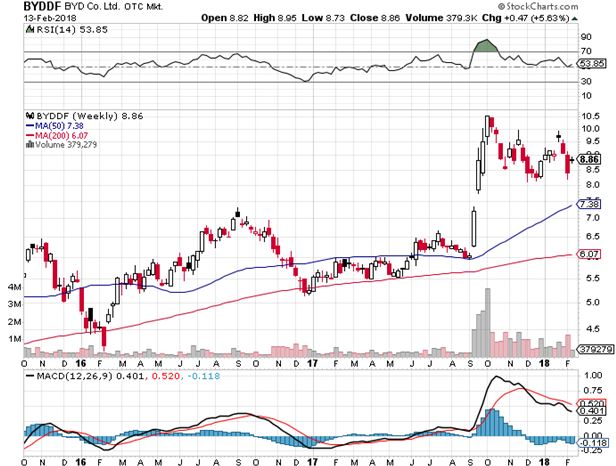
I caught a 500% gain by hanging on to Warren Buffet's coat tails with an investment in the Middle Kingdom's Build Your Dreams (BYDFF).
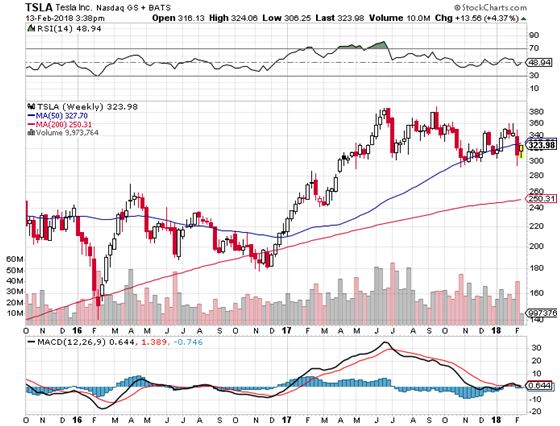
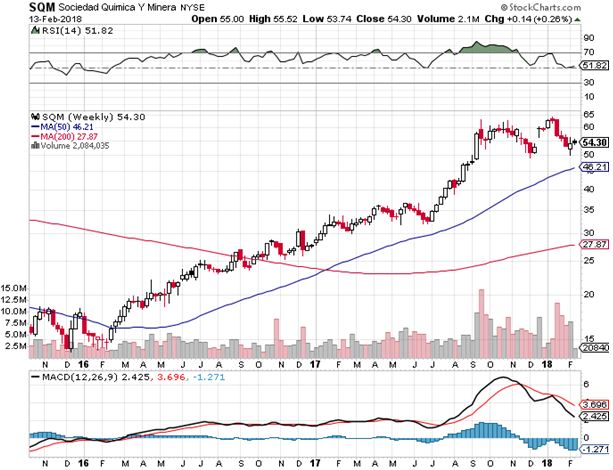
I followed with a 250% profit in Chile's Sociedad Qimica Y Minera (SQM), the world's largest lithium producer. Tesla's own shares have been the top performer in the US market in 2014, up from $16.50 to $392.
These are not small numbers. I have been an advocate and an enabler of this technology for 40 years, and my obsession has only recently started to pay off big time.
We're not talking about a few niche products here.
The research boutique, HIS Insights, predicts that electric cars will take over 15% of the global car market, or 7.5 million units by 2025. Even with costs falling, that means the market will then be worth $225 billion.
Electric cars and their multitude of spin off technologies will become a dominant investment theme for the rest of our lives. Think of the auto industry in the 1920's. (TSLA), (BYDDF), and (SQM) are just the appetizers.
All of this effort is being expended to bring battery technology out of the 19th century and into the 21st.
The first crude electrical cell was invented by Italian Alessandro Volta in 1759, and Benjamin Franklin came up with the term battery after his experiments with brass keys and lightning. In 1859, Gaston Plant discovered the formula that powers the Energizer bunny today.
Further progress was not made until none other than Exxon developed the first lithium-ion battery in 1977. Then, oil prices crashed, and the company scrapped the program, a strategy misstep that was to become a familiar refrain.
Sony (SNE) took over the lead with nickel metal hydride technology, and owns the industry today, along with Chinese and South Korean competitors.
 BYD F3
Expect to hear a lot about the number 1,600 in coming years. That is the amount of electrical energy in a liter (0.26 gallons), or kilogram of gasoline expressed in kilowatt-hours.
A one-kilogram lithium-ion battery using today's most advanced designs produces 200 KwH. Stretching the envelope, scientists might get that to 400 KwH in the near future.
But any freshman physics student can tell you that since electrical motors are four times more efficient than internal combustion ones, that is effective parity with gasoline.
Since no one has done any serious research on inorganic chemistry since the Manhattan project, until Elon Musk came along, the prospects for rapid advances are good.
A good rule of thumb is that costs will drop my half every four years. So Tesla S-1 battery that costs $30,000 four years ago, will run $15,000 today, and only $7,500 in 2022.
Per Kilowatt battery costs are dropping like a stone, from $1,000 a kWh in the Nissan Leaf I bought eight years ago to $200 kWh in my new Tesla S-1.
In fact, the Tesla, it is such a revolutionary product that the battery is only the eighth most important thing.
The additional savings that no one talks about is that an electric motor with only eleven moving parts requires no tune-ups for the life of the vehicle.
This compares to over 1,000 parts for a standard gas engine. You only rotate tires every 6,000 miles. That's because the motor runs at room temperature, compared to 500 degrees for a conventional engine, so the parts last forever.
Visit the Tesla factory, and you are struck by the fact that there are almost no people, just an army of German robots. Few parts mean fewer workers, and lower costs.
All of the parts are made at the Fremont, CA plant, eliminating logistical headaches, and more cost. By only selling the vehicle online, the expense of a huge dealer network is dispatched.
The US government rates the S-1 as the safest car every built, a fact that I personally tested with my own crash. Consumer Reports argues that it is the highest quality vehicle every manufactured.
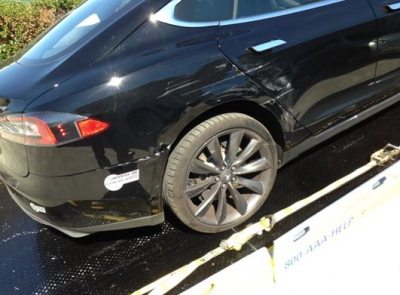
My Personal Crash Test
Indeed, the Tesla S-1 is already the most registered car in America's highest earning zip codes. Oh, and did I tell you that the car is totally cool?
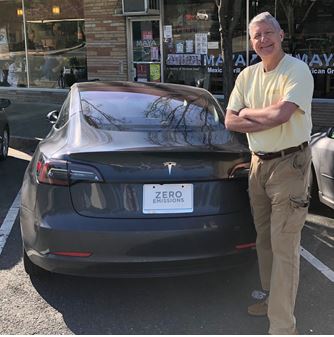
The New Tesla 3
Hence, the need for government subsidies to get private industry over the cost/production hump.
Nissan, Toyota, Tesla, and others are all betting their companies that further progress and economies of scale will drive that cost down to below $100 per kWh.
That will make electric cars cheaper than conventional hydrocarbon powered ones by a large margin. The global conversion to electric happens much faster than anyone thinks.
In a desperate attempt to play catch up, President Obama lavished money on alternative energy, virtually, since the day he arrived in office.
His original 2010 stimulus package included $167 billion for the industry, enough to move hundreds of projects out of college labs and into production.
However, in the ultimate irony, much of this money is going to foreign companies, since it is they who are closest to bringing commercially viable products to market. Look no further than South Korea's LG, which received $160 million to build batteries for the GM Volt.
Since then, all subsidies for electric cars have been eliminated by the tax bill passed in December.
Fortunately, the US, with its massively broad and deep basic research infrastructure, a large military research establishment (remember the old DARPA Net?), and dozens of still top rate universities, is in the best position to discover a breakthrough technology.
The Energy Department has financed the greatest burst in inorganic chemistry research in history, with top rate scientists pouring out of leading defense labs at Los Alamos, Lawrence Livermore, and Argonne National Labs.
There are newly funded teams around the country exploring opportunities in zinc-bromide, magnesium, and lithium sulfur batteries. A lot of excitement has been generated by lithium-air technology, as well as much controversy.
In the end, it may come down to whether our Chinese professors are smarter than their Chinese professors.
In 2007, the People's Republic took the unprecedented step of appointing Dr. Wan Gan as its Minister of Science and Technology, a brilliant Shanghai engineer and university president, without the benefit of membership in the communist party.
Battery development has been named a top national priority in China. It is all reminiscent of the 1960's missile race, when a huge NASA organization led by Dr. Werner Von Braun beat the Russians to the moon, proving our Germans were better than their Germans.
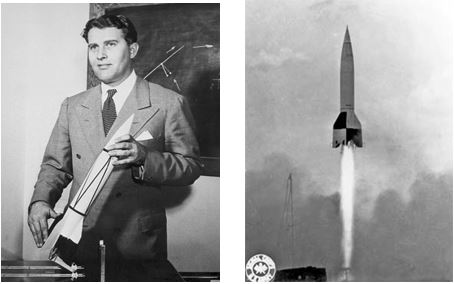 Anything for a Green Card
Consumers were the ultimate winners of that face off as the profusion of technologies the space program fathered pushed standards of living up everywhere.
I bet that's how this contest ends as well. The only question is whether the operating instructions will come in English or Mandarin.
I was somewhat taken aback when I picked up my new Tesla Model S-1 a few weeks ago. Right now, with only 20 miles on the odometer, the car is stupid, said the salesman.
But it has an artificial intelligence program that will start learning as soon as you drive it off the lot. He added, Don't even try the self parking function until you have at least 3,000 miles on the clock?
I was stunned. Self-driving cars are coming sooner than you think. Much sooner.
So, here is where we are with self-driving cars, right now, today. My new S-1 will:
My first read on all of this? The car can drive better than I can, especially at night.
The technology will go mainstream in volume when the Tesla 3 begins mass production in early 2018. The company plans to manufacture 500,000 vehicles a year by late 2020.
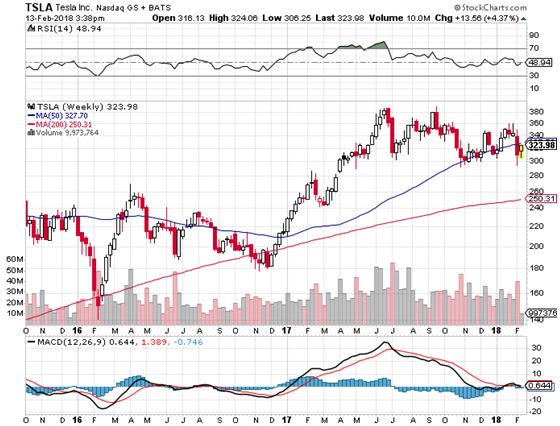
The stock market has noticed. Since the November 8th presidential election, Tesla shares have rocketed a staggering 40%. Last year was just a pit stop on its way to $1,000 or much more.
Ostensibly, the reason for this gigantic move has been the flowering love affair between the new president and Tesla founder, Elon Musk, the largest creator of new manufacturing jobs in the US in recent years.
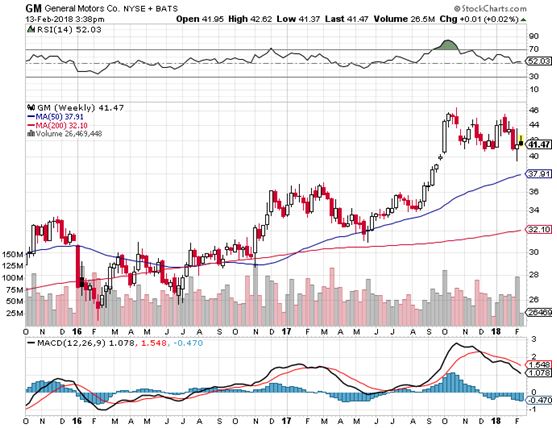
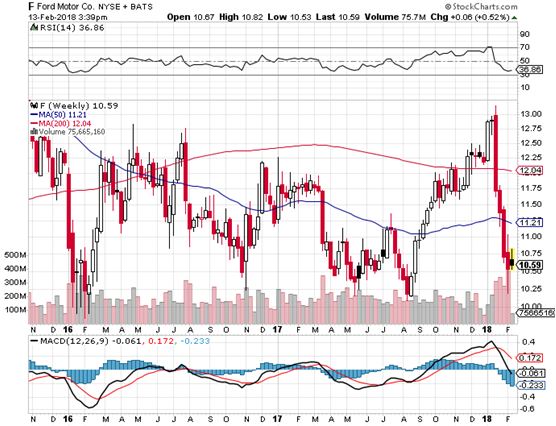
The real reason is much more complex. Tesla's main competitors, General Motors (GM), Ford (F), and Chrysler have a substantial portion of their manufacturing in low wage foreign countries, like Mexico and China.
That has placed a big fat bullseye on their backs with the new administration. Current policy is to intimidate, cajole, and threaten these pillars of US industry to move a big part of their production from a $3 an hour labor force to a $30-$50 an hour one.
I've never been much of a stock analyst, but even I can tell you this will be terrible for the profits of GM and Ford . . . and great for Tesla. This explains the recent feeble performance of the big three auto shares and the ballistic move of Tesla. The stock market agrees with me.
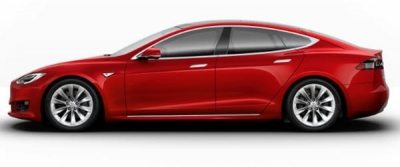
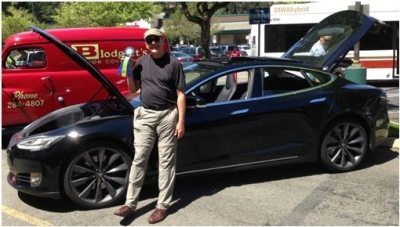
So, by now, you are probably asking why I am buying my third $110,000 Tesla in three years. Of course, midlife crisis has to be at the top of the list. After all, I just turned 65. So I bought the fire engine red model to match the color on my new Medicare card.
Free fuel is another reason, as the massive solar array on my roof will power the car indefinitely. A new car also comes with a four-year warranty, meaning that all repairs are on Tesla. There is no maintenance, save for occasional tire rotations.
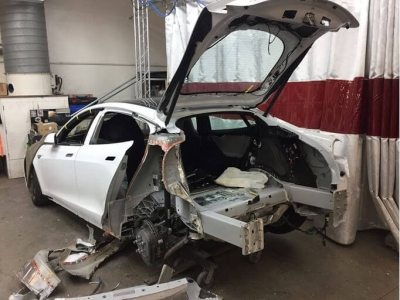
But the real reason is that I just totaled my last Tesla and needed a quick replacement. The dealer in Bellingham, WA had just what I wanted . . . and in red! It was on a flatbed trailer and at my door in two days.
Did I mention that insurance companies hate me? This time, it wasn't my fault. I swear!
I was parked in Berkeley, CA when a GM Silverado driven by a drunk driver plowed into the side of my car just as I was getting out. I missed getting killed by about six inches. I hope that wasn't my ninth life!
Tesla isn't the only company on the verge of a major breakthrough in self-driving cars. It just so happens to be the leader in quality and volume.
Uber's self-driving vehicles are now plying the streets of Pittsburg (after having been banned in San Francisco). The company is now experimenting with 18-wheeler trucks for cross-country trips.
Ford has announced the production of a fleet of self-driving cars for ride sharing by sometime in 2021. General Motors is planning a similar venture with Lyft.
Alphabet (GOOG) has created an entire division dedicated to the field, with the ultimate goal of becoming a major supplier of technology to third party manufacturers. It also has a ride sharing deal in the works with Chrysler.
The 30,000 foot view of what is going on here is that the major car companies are experimenting with new business models to forestall a secular decline in car ownership expected for the 2020s.
It is even spilling over into the agricultural sector, where self-driving tractors and other farm machinery are the hot new thing.
It is even spilling over into the agricultural sector, where self-driving tractors and other farm machinery are the hot new thing.
When I first visited Calcutta in 1976, more than 800,000 people were sleeping on the sidewalks.
I was hauled everywhere by a very lean, barefoot rickshaw driver, and drinking the water out of a tap was tantamount to committing suicide.
Aggressive population control measures where underway, and strict quotas were in force. Everyone was taking their grandmother in to get sterilized.
Some 38 years later, and the subcontinent is poised to overtake China's white hot growth rate.
My friends at the International Monetary Fund just put out a report predicting that India will grow by 8.5% this year. While the country's total GDP is only a quarter of China's $6 trillion, its growth could exceed that in the Middle Kingdom as early as 2018.
Many hedge funds believe that India will be the top growing major emerging market for the next 25 years, and are positioning themselves accordingly.
India certainly has a lot of catching up to do. According to the World Bank, its per capita income is $3,275, compared to $6,800 in China and $46,400 in the US. This is with the two populations close in size, at 1.3 billion for China and 1.2 billion for India.
But India has a number of advantages that China lacks. To paraphrase hockey great, Wayne Gretzky, you want to aim not where the puck is, but where it's going to be.
The massive infrastructure projects that have powered much of Chinese growth for the past three decades, such as the Three Gorges Dam, are missing in India. But financing and construction for huge transportation, power generation, water, and pollution control projects are underway.
A large network of private schools is boosting education levels, enabling the country to capitalize on its English language advantage.
When planning the expansion of my own business, I was presented with the choice of hiring a website designer here for $60,000 a year, or in India for $5,000.
That's why booking a ticket on United Airlines or calling technical support at Dell Computer gets you someone in Bangalore.
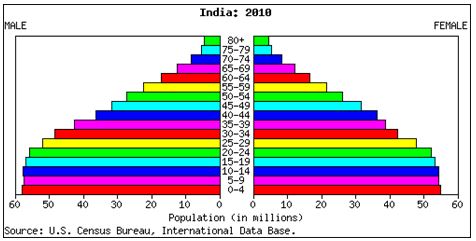
India is also a huge winner on the demographic front, with one of the lowest ratios of social service demanding retirees in the world.
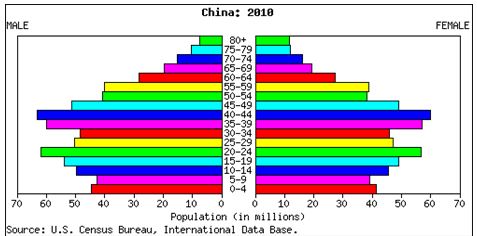
Even though it has recently been terminated, China's 30-year-old ???one child??? policy is going to drive it into a wall in ten years, when the number of retirees starts to outnumber their children.
There is one more issue out there that few are talking about. The reform of the Chinese electoral process at the People's Congress in 2013 could lead to posturing and political instability, which the markets could find unsettling.
India is the world's largest democracy, and much of its current prosperity can be traced to wide ranging deregulation and modernization than took place 20 years ago.
I have been a big fan of India for a long time, and not just because they constantly help me fix my computers, make my travel reservations, and tell me how to work my new altimeter watch.
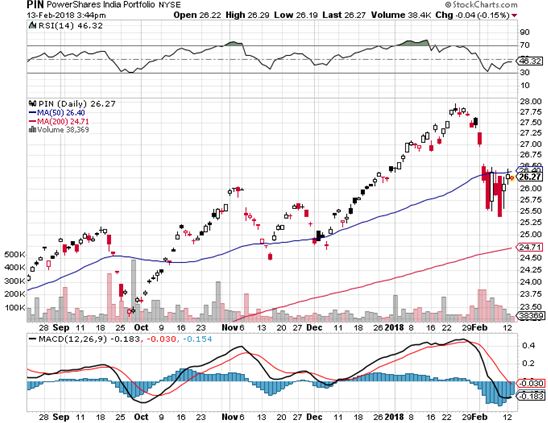
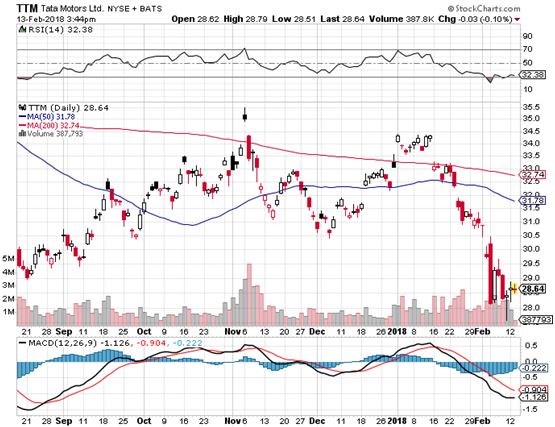
In August, I recommended Tata Motors (TTM), and it has gone up in a straight line since, instantly making it one of my top picks of the year. On the next decent dip take a look at the Indian ETF's (INP), (PIN), and (EPI).