• support@madhedgefundtrader.com
  • Member Login
  • Register for our December Summit
Mad Hedge Fund Trader
  • Home
  • About
  • Store
  • Luncheons
  • Testimonials
  • Contact Us
  • Click to open the search input field Click to open the search input field Search
  • Menu Menu

Tag Archive for: (AMZN)

MHFTR

The Tale of Two Economies

Diary, Newsletter, Research

I’m looking at my screens this morning and virtually every stock sold short by the Dairy of a Mad Hedge Fund Trader cratered to new six-month lows.

Call it lucky, call it fortuitous. All I know is that the harder I work the luckier I get.

If you are in the right economy, that of the future, you are having another spectacular year. If you aren’t, you are probably posting horrific losses for 2019. Call it the “Tale of two Economies.”

I suspected that this was setting up over the last couple of weeks. No matter how much bad news and uncertainty dumped on these companies, the shares absolutely refused to go down. Instead, they flat lined just below their 2019 highs. It was a market begging for a selloff.

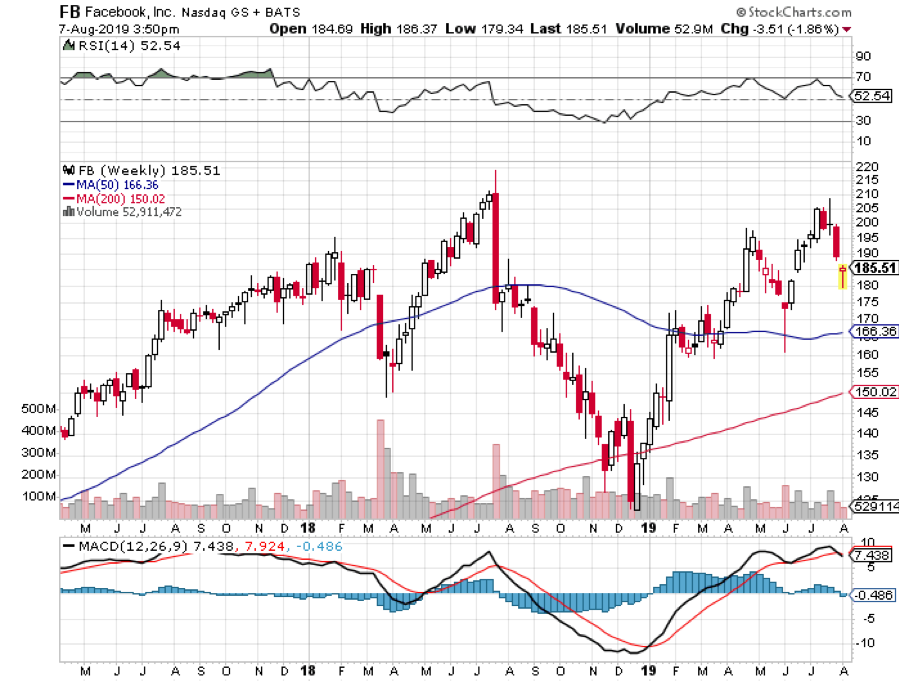
When the Facebook (FB) hacking scandal hit, investors were ringing their hands about the potential demise of Mark Zuckerberg’s vaunted business model and the shares plunged to $123.

However, while analysts were making these dire productions, I knew that Facebook itself was signing a long-term lease for a brand new 46-story skyscraper in downtown San Francisco just to house its Instagram operations.

Months later, and the company that misused Facebook’s data, Steve Bannon’s Cambridge Analytica, is bankrupt, and (FB) is trading at $185, a new high. Facebook was right, and the Cassandras were wrong.

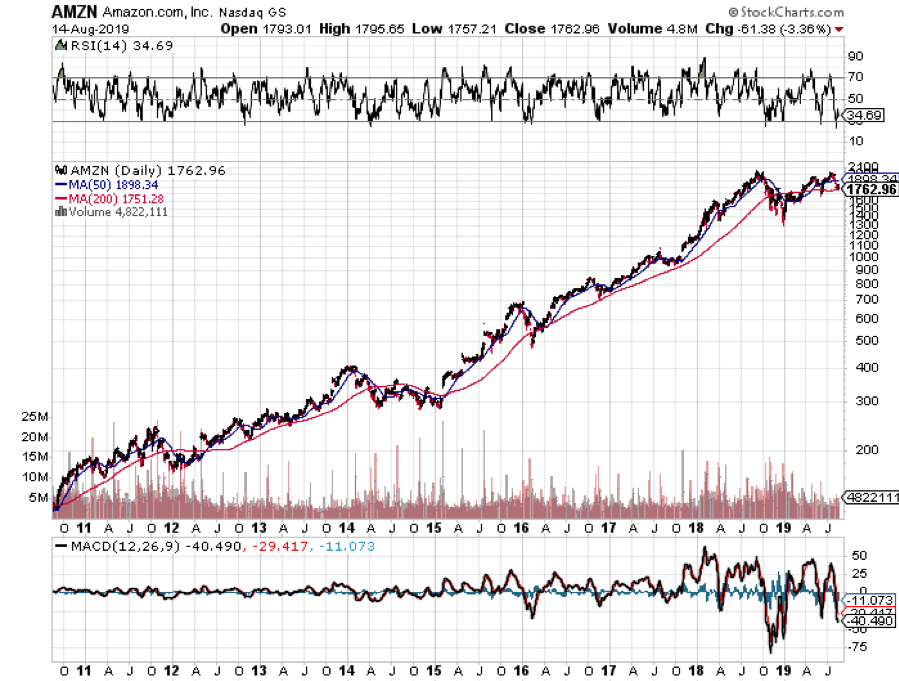
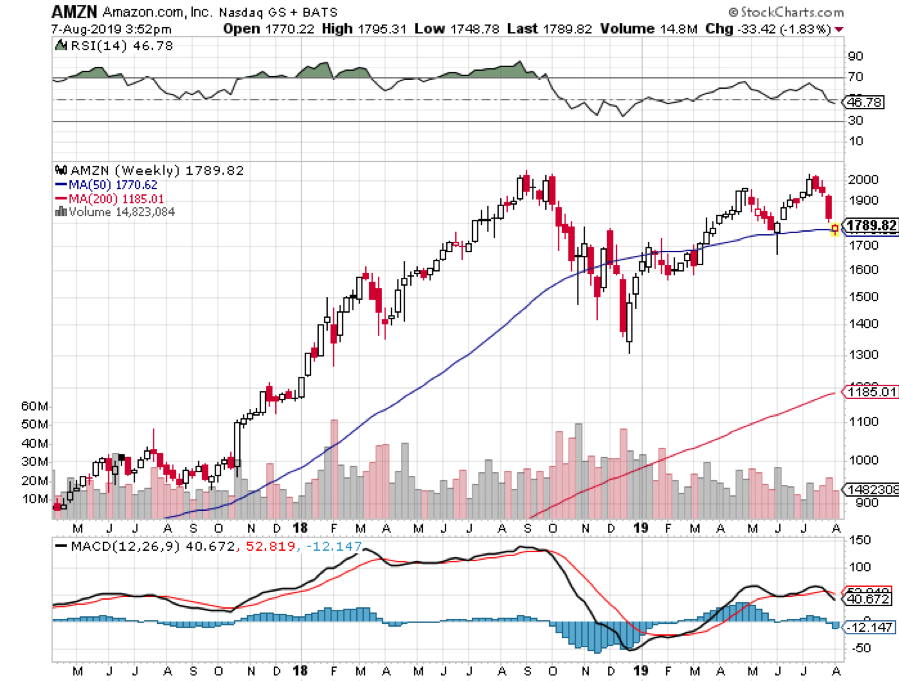
Amazon was given up for dead during the February melt down as the shares withered from a daily onslaught of presidential attacks threatening antitrust action. Today, the shares are up a mind-blowing 38% above those lows.

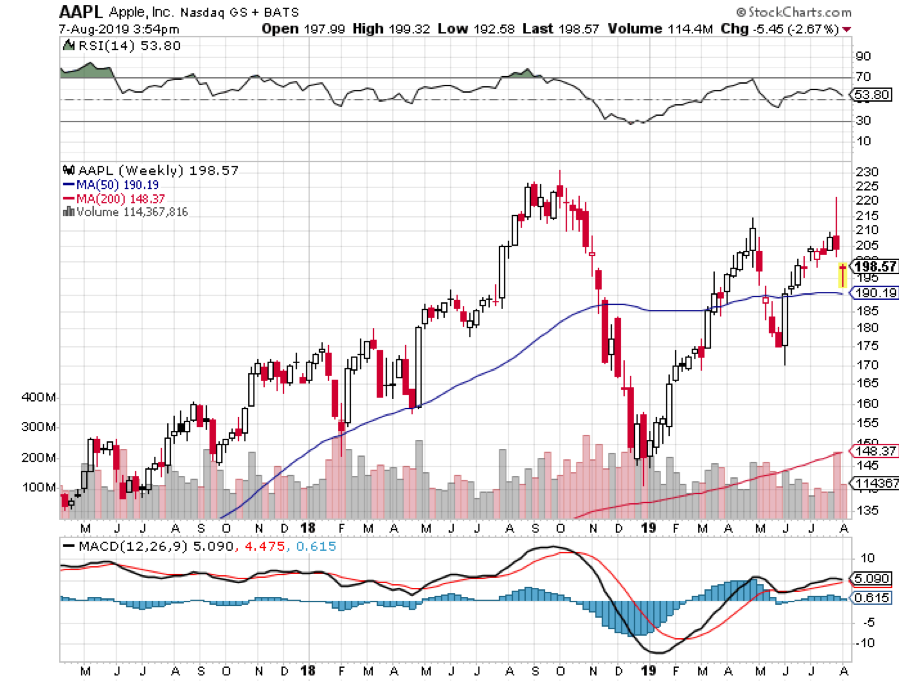
And when Apple announced its earnings, the shares tickled $222, putting it squarely back into the ranks of the $1 trillion club ($949 billion at today’s close).

It turns out that technology companies are immune from most of the negative developments that have caused the rest of the stock market to drag. I’ll go through these one at a time.

Falling Interest Rates

Tech companies are sitting gigantic cash mountains, some $245 billion in Apple’s case, which means that as net lenders to the credit markets, they are beneficiaries of the credit markets. This makes tech companies immune from the credit problems that will demolish old economy industries during the next rate spike.

Rising Oil Prices

While tech companies are prodigious consumers of electricity, many power these with massive solar arrays and they sell periodic excess power to local utilities. So as net energy producers, they profit from rising energy prices.

Rising Inflation

Since the output of technology companies is entirely digital, they can handily increase productivity faster than the inflation rate, whatever it is. Traditional old economy companies, like industrials and retailers can’t do this.

Remember that while analogue production grows linearly, digital production grows exponentially, enabling tech companies to handily beat the inflation demon, leaving others behind in the dust.

Share Buybacks

While technology companies account for only 26% of the S&P 500 stock market capitalization, they generate 50% of the profits. Thanks to the massive tax breaks and low tax repatriation of foreign profits enabled by the 2017 tax bill, share buybacks are expected to rocket from $500 billion to $1 trillion this year. Companies repurchasing their own shares have become the sole net buyers of equities in 2019.

And companies with the biggest profits buy back the most stock. This has created a virtuous cycle whereby higher share prices generate more buybacks to create yet higher share prices. Old economy companies with lesser profits are buying back little, if any, of their own shares.

Of course, tech companies are not without their own challenges. For a start, they have each other to worry about. FANGs will simultaneously cooperate with each other in a dozen areas, while fight tooth and nail and sue on a dozen others. It’s like watching Silicon Valley’s own version of HBO’s Game of Thrones.

Also, occasionally, the tech story becomes so obvious to the unwashed masses that it creates severe overbought conditions and temporary peaks, like we saw in January.


https://www.madhedgefundtrader.com/wp-content/uploads/2018/06/FANG-story-3-image-4-e1528149670397.jpg 220 580 MHFTR https://madhedgefundtrader.com/wp-content/uploads/2019/05/cropped-mad-hedge-logo-transparent-192x192_f9578834168ba24df3eb53916a12c882.png MHFTR2019-08-08 01:02:082019-09-06 16:51:56The Tale of Two Economies
Mad Hedge Fund Trader

August 7, 2019

Diary, Newsletter, Summary

Global Market Comments
August 7, 2019
Fiat Lux

Featured Trade:

(WHY I SOLD SHORT MACYS’),
(AMZN), (WMT), (M), (JWN), (KOL)
(TESTIMONIAL)

https://madhedgefundtrader.com/wp-content/uploads/2019/05/cropped-mad-hedge-logo-transparent-192x192_f9578834168ba24df3eb53916a12c882.png 0 0 Mad Hedge Fund Trader https://madhedgefundtrader.com/wp-content/uploads/2019/05/cropped-mad-hedge-logo-transparent-192x192_f9578834168ba24df3eb53916a12c882.png Mad Hedge Fund Trader2019-08-07 01:06:472019-08-07 01:22:23August 7, 2019
Mad Hedge Fund Trader

Why I Sold Short Macy’s

Diary, Newsletter

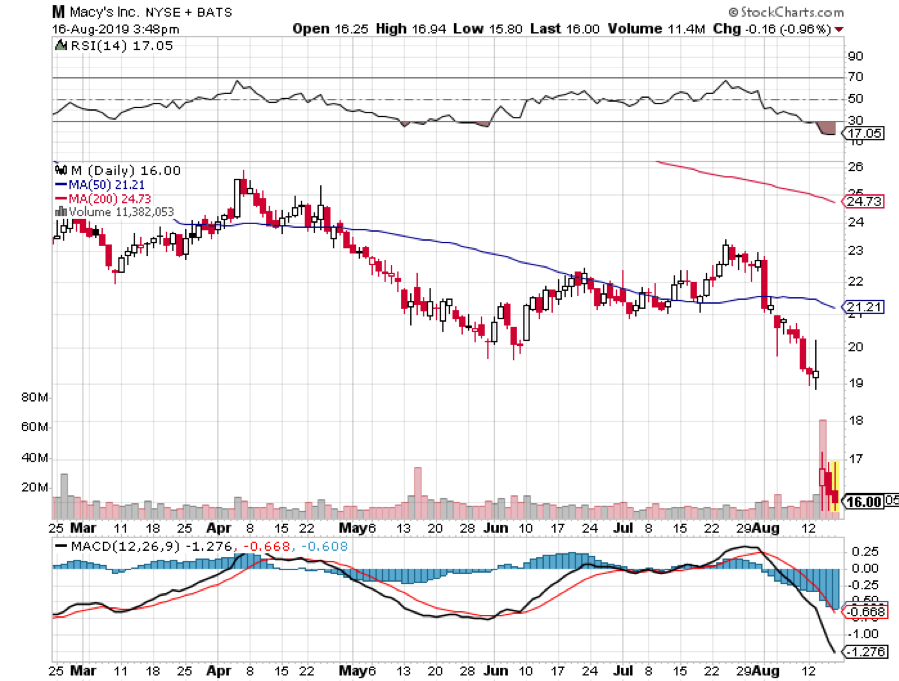
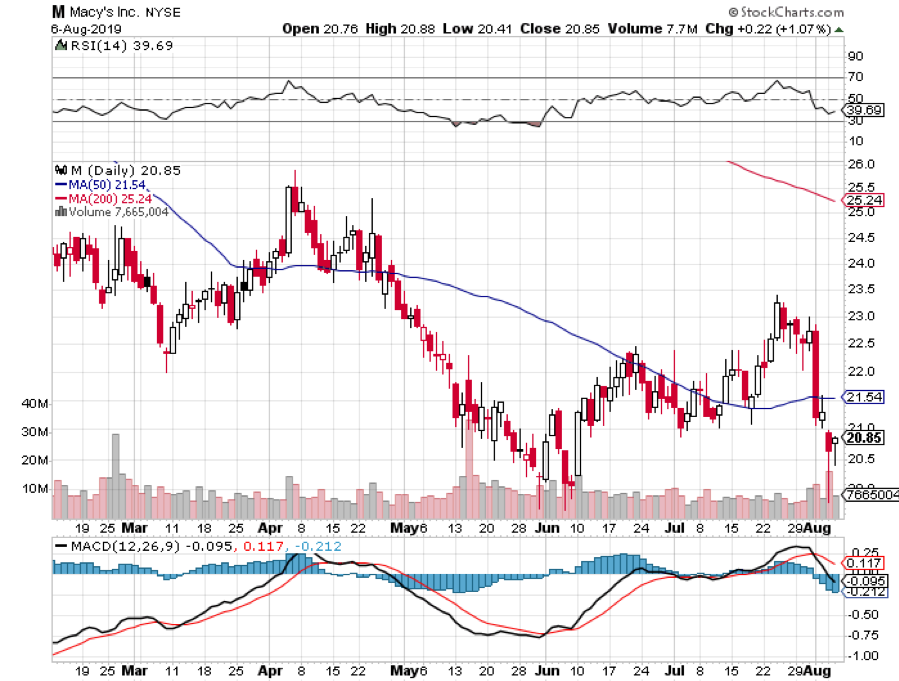
Sorry, the Trade Alert to sell short Macys’ (M) went out late yesterday. I was speaking to a retail expert and his list of things wrong with the marquee name was so long that I couldn't get off the phone. New Yorkers are going to have to find something else to do on Thanksgiving Day than attend their famous parade.

His bottom line? Retail is in a death spiral from which it will never recover. Trying on clothes in a shopping mall will soon become a thing of the past, going the way of the buggy whip, black and white TV, and six-track tapes.

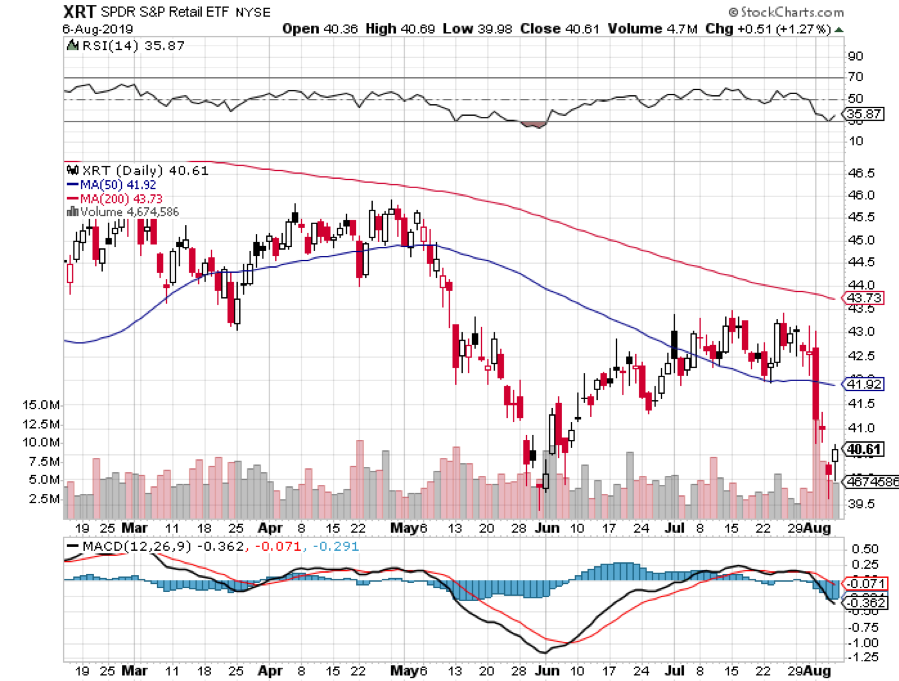
If you had to pick the biggest loser of our ongoing trade wars, which have just been ratcheted up in intensity, it would be the retail industry (XRT). Higher costs and tariffs can’t be passed on, minimum wages are rising in the big cities, lower selling prices are lower, and a massive inventory glut is NOT what money-making is all about.

The stocks have delivered as expected, providing one of the worst-performing sectors of 2019. Half of them probably won’t even make it until 2020.

In fact, Sears (S) and Macy’s (M) have announced more store closings nationwide. The overhead is killing them in a micro margin world.

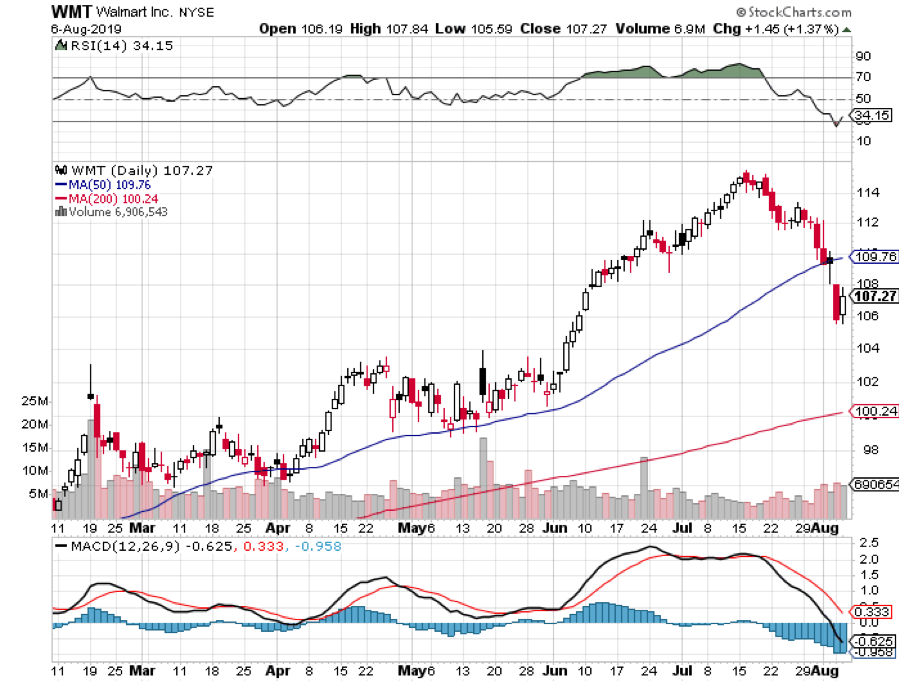
So, I stopped at a Walmart (WMT) the other day on my way to Napa Valley to find out why.

I am not normally a customer of this establishment. But I was on my way to a meeting where a dozen red long-stem roses would prove useful. I happened to know you could get these for $10 a dozen at Walmart.

After I found my flowers, I browsed around the store to see what else they had for sale. The first thing I noticed was that half the employees were missing their front teeth.

The clothing offered was out of style and made of cheap material. It might as well have been the Chinese embassy. Most concerning, there was almost no one there, customers OR employees.

The Macy’s downsizing is only the latest evidence of a major change in the global economy that has been evolving over the last two decades.

However, it now appears we have reached both a tipping point and a point of no return. The future is happening faster than anyone thought possible. Call it the Death of Retail.

I remember the first purchases I made at Amazon 20 years ago. Even though I personally knew the founder, Jeff Bezos, from my Morgan Stanley days, the idea sounded so dubious that I made my initial purchases with a credit card with only a low $1,000 limit. That way, if the wheels fell off, my losses would be limited.

And how stupid was that name Amazon, anyway? At least, he didn’t call it “Yahoo” because it was already taken.

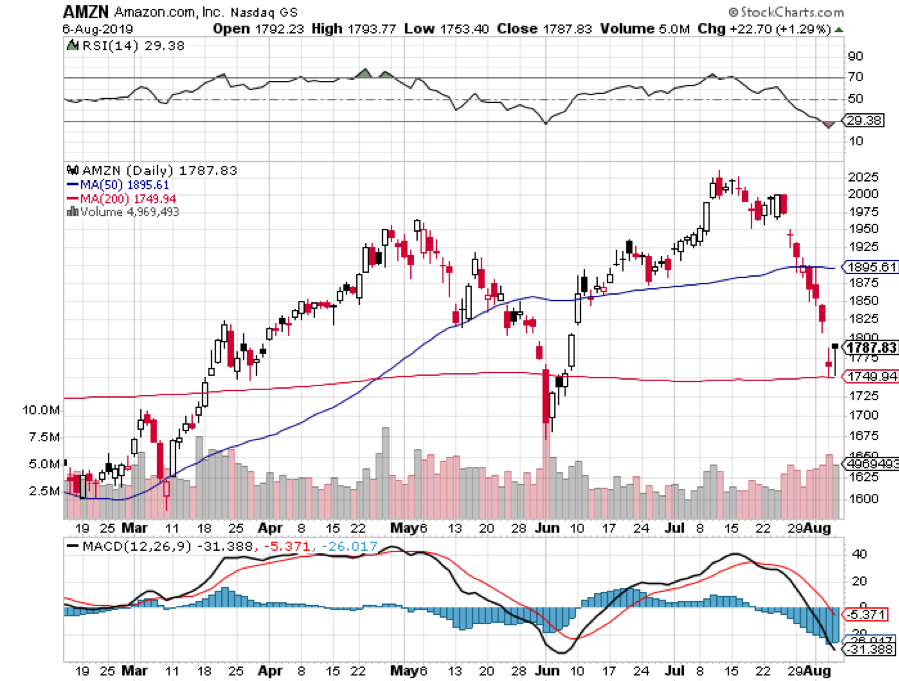
Today, I do almost all of my shopping at Amazon (AMZN). It saves me immense amounts of time while expanding my choices exponentially. And I don’t have to fight traffic, engage in the parking space wars, or wait in line to pay.

It can accommodate all of my requests, no matter how bizarre or esoteric. A WWII reproduction Army Air Corps canvas flight jacket in size XXL? No problem!

A used 42-inch Sub Zero refrigerator with a front-door icemaker and water dispenser? Have it there in two days, with free shipping at one fifth the $17,000 full retail price.

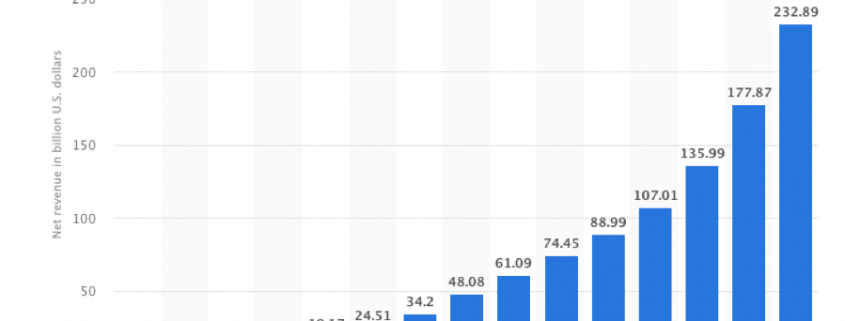
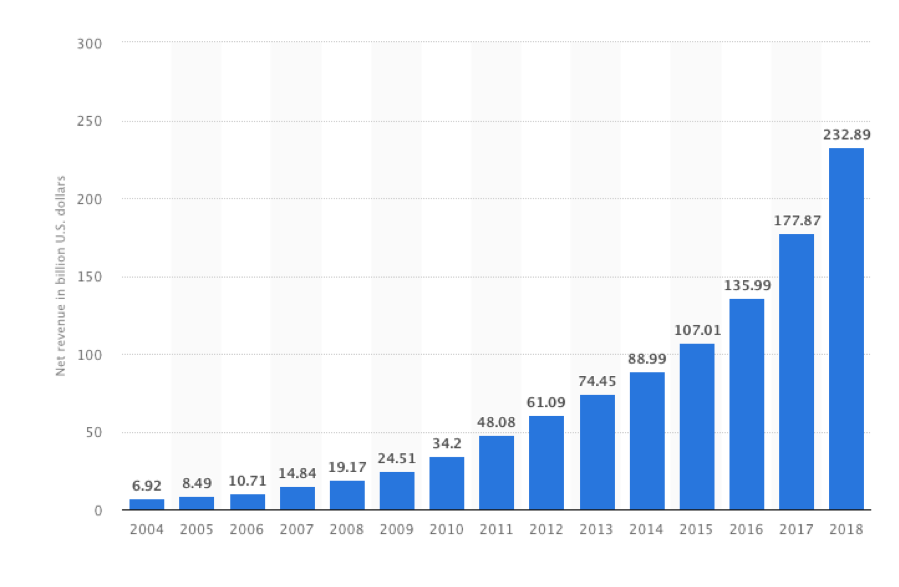
So I was not surprised when I learned this morning that Amazon accounted for 25% of all new online sales in 2018 in a market that is already growing at a breathtaking 20% YOY.

In 2000, after the great “Y2K” disaster that failed to show, I met with Bill Gates Sr. to discuss his foundation’s investments.

It turned out that they had liquidated their entire equity portfolio and placed all their money into bonds, a brilliant move coming mere months before the Dotcom bust and a 16-year bull market in fixed income.

Mr. Gates (another Eagle Scout) mentioned something fascinating to me. He said that unlike most other foundations their size, they hadn’t invested a dollar in commercial real estate.

It was his view that the US economy would move entirely online, everyone would work from home, emptying out city centers and rendering commuting unnecessary. Shopping malls would become low-rent climbing walls and paintball game centers.

Mr. Gates’ prediction may finally be occurring. Some counties in the San Francisco Bay area now see 25% of their workers telecommuting.

It is becoming common for staff to work Tuesday-Thursday at the office, and from home on Monday and Friday. Productivity increases. People are bending their jobs to fit their lifestyles. And oh yes, happy people work for less money in exchange for personal freedom, boosting profits.

The Mad Hedge Fund Trader itself may be a model for the future. We are entirely a virtual company with no office. Everyone works at home in four countries around the world. Oh, and we all use Amazon to do our shopping.

The downside to this is that whenever there is a snowstorm anywhere in the country, it affects our output. Two storms are a disaster, and at three, such as last winter, we grind to a virtual halt.

You may have noticed that I can work from anywhere and anytime (although sending a Trade Alert from the back of a camel in the Sahara Desert was a stretch), so was sending out an Alert while hanging on the cliff face of a Swiss Alp, but they both made money.

Moroccan cell coverage is better than ours, but the dromedary’s swaying movement made it hard to hit the keys.

The cost of global distribution is essentially zero. Profits go into a bonus pool shared by all. Oh, and we’re hiring, especially in marketing.

It is happening because the entire “bricks and mortar” industry is getting left behind by the march of history.

Sure, they have been pouring millions into online commerce and jazzed up websites. But they all seem to be poor imitations of Amazon with higher prices. It is all “Hour late and dollar short” stuff.

In the meantime, Amazon soared by 49% from December to the May high, and was one of the top performing stocks of 2018. There are now a cluster of Amazon analyst forecasts around the $3,000 mark.

And here is the bad news. Bricks and Mortar retailers are about to lose more of their lunch to Chinese Internet giant Alibaba (BABA), which is ramping up its US operations and is FOUR TIMES THE SIZE OF AMAZON!

There’s a good reason why you haven’t heard much from me about retailers. I made the decision 30 years ago never to touch the troubled sector.

I did this when I realized that management never knew beforehand which of their products would succeed, and which would bomb, and therefore were constantly clueless about future earnings.

The business for them was an endless roll of the dice. That is a proposition in which I was unwilling to invest. There were always better trades.

I confess that I had to look up the ticker symbols for this story as I never use them.

You will no doubt be enticed to buy retail stocks as the deal of the century by the talking heads on TV, Internet research, and maybe even your own brokers, citing how “cheap” they are.

Never confuse a low stock price with “cheap.”

It will be much like buying the coal industry (KOL) a few years ago, another industry headed for the dustbin of history. That was when “cheap” was on its way to zero for almost every company.

So the next time someone recommends that you buy retail stocks, you should probably lie down and take a long nap first. When you awaken, hopefully the temptation will be gone.

Or better yet, go shopping at Amazon. The deals are to die for.

To read “An Evening with Bill Gates Sr.”, please click here. 


https://madhedgefundtrader.com/wp-content/uploads/2019/05/cropped-mad-hedge-logo-transparent-192x192_f9578834168ba24df3eb53916a12c882.png 0 0 Mad Hedge Fund Trader https://madhedgefundtrader.com/wp-content/uploads/2019/05/cropped-mad-hedge-logo-transparent-192x192_f9578834168ba24df3eb53916a12c882.png Mad Hedge Fund Trader2019-08-07 01:04:592019-09-06 16:51:27Why I Sold Short Macy’s
Mad Hedge Fund Trader

August 2, 2019

Tech Letter

Mad Hedge Technology Letter
August 2, 2019
Fiat Lux

Featured Trade:

(THE GREAT LATIN AMERICAN INTERNET PLAY),
(MELI), (PYPL), (AMZN), (EBAY)

https://madhedgefundtrader.com/wp-content/uploads/2019/05/cropped-mad-hedge-logo-transparent-192x192_f9578834168ba24df3eb53916a12c882.png 0 0 Mad Hedge Fund Trader https://madhedgefundtrader.com/wp-content/uploads/2019/05/cropped-mad-hedge-logo-transparent-192x192_f9578834168ba24df3eb53916a12c882.png Mad Hedge Fund Trader2019-08-02 11:04:342019-09-04 13:24:22August 2, 2019
Mad Hedge Fund Trader

The Great Latin American Internet Play

Tech Letter

How do you get exposure to the e-commerce story in Latin America?

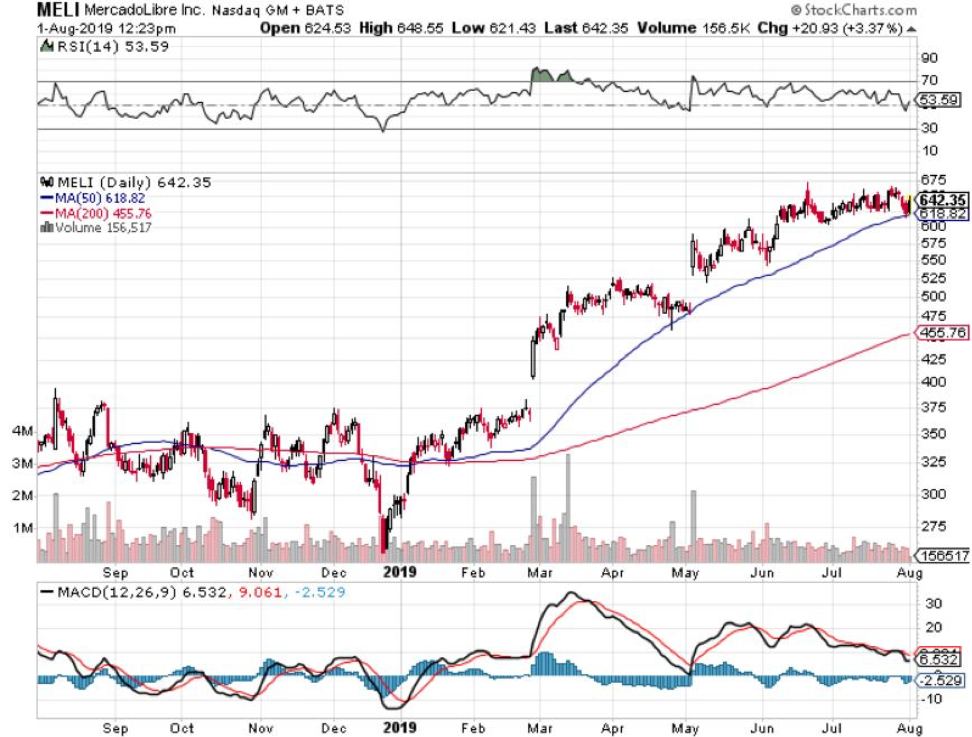
The best way to do that is to dive into Mercado Libre (MELI), meaning “free market” in Spanish, an Argentine company incorporated in the United States that operates online marketplaces dedicated to e-commerce and online auctions, including mercadolibre.com.

Mercado Libre was established as an Argentine company in 1999 and Founder & CEO Marcos Galperin, while attending Stanford University, acquired funding from HM Capital Partners co-founder John Muse to start his brainchild.

Mercado Libre received additional funding from JPMorgan Partners, Flatiron Partners, Goldman Sachs, GE Capital, and Banco Santander Central Hispano.

The company has used M&A along with organic growth to drive the company.

Relevant examples are of eBay (EBAY) buying a 19.5% stake in the company and then selling its stake in Mercado Libre in 2016, but the companies continue to expand eBay sellers into Latin America.

The cooperation remains strong with eBay opening its first branded store on the Mercado Libre marketplace from Chile in March 2017.

Mercado Libre has acquired iBazar Como, the Brazilian subsidiary of eBay's earlier acquisition, iBazar S.A.

The success culminated with becoming the first Latin American technology company to be listed on the NASDAQ, under the ticker symbol MELI.

The firm offers investors a way to invest in one of the fastest-growing e-commerce markets in the world.

The company has 280 million registered users out of 644 million people who live in Latin America.

The stock has soared 543% in the last five years making the firm one of the fastest growing e-commerce companies in the world by many metrics.

The main drag is that the valuation looks frothy at these price levels.

Mobile payments have mushroomed naturally because of its title, the "eBay of Latin America."

They can also claim to be the PayPal of the region, thanks to robust growth happening in the MercadoPago digital payments business.

In the first quarter, total payment volume rose 82.5% year-over-year.

Off-marketplace payment volume is up 194% – accelerating each and every quarter.

Off-marketplace payments now comprise 45% of the company's total payment volume, and management sees high penetration trends happening in certain areas.

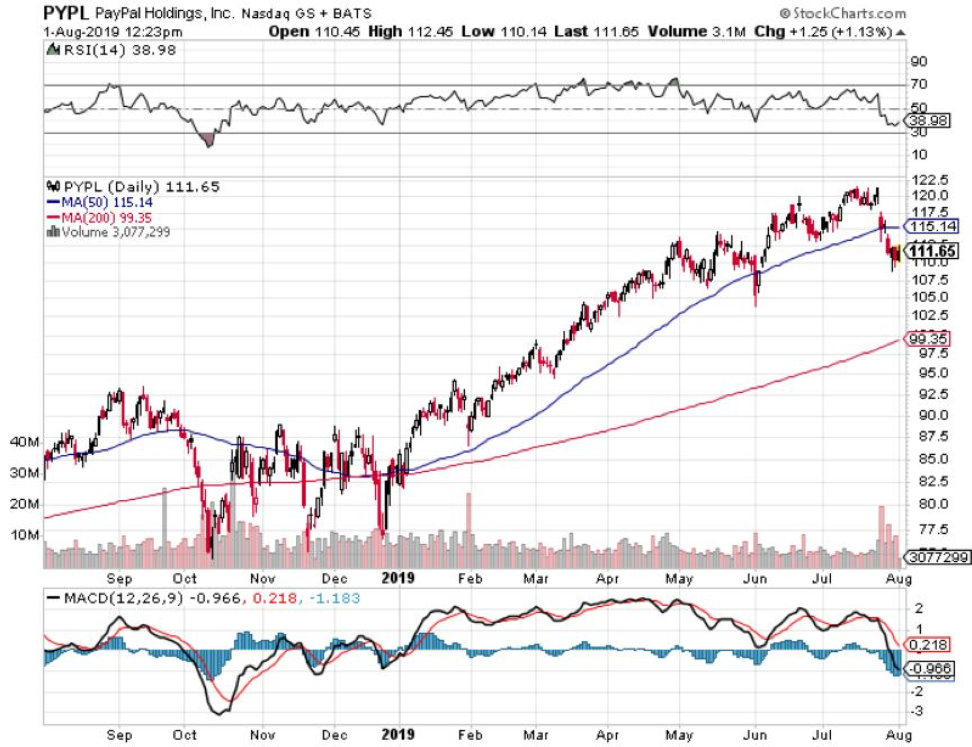
PayPal (PYPL) have become huge supporters of MercadoLibre with an investment of $750 million into MercadoPago.

The deal will join the firms together to work on the shared vision to digitize the economy, especially for the underbanked, in Latin America.

It's a stamp of approval of Mercado's brand recognition in the region that PayPal chose to invest in the company instead of competing.

How fast is the addressable market growing?

Investors have been seduced by the company's impressive growth in payments, but the core marketplace business is still doing backflips.

Gross merchandise volume (GMV) expanded 27% year-over-year in the first quarter, driven by 70% growth in Mexico.

Brazil is the largest market and expanded GMV by 18% year-over-year in the quarter.

Management referenced supermarket items in Mexico and increasing apparel selection as two areas that are showing strong results.

Apparel is the fastest-growing category, up 79% year-over-year last quarter.

With signs that new development is headed in the right direction, new categories and the company expanding its logistics footprint, the market will definitely expand.

MercadoLibre can grow beyond the marketplace business to become a formidable fintech company.

As it expands into other services, Mercado is fortifying its strong brand across Latin America.

Even as Amazon.com (AMZN) enters the high stakes industry, Mercado's first mover advantage can’t be underestimated.

The stock is pricey so lay off it for the time being but add with any major dips.


https://madhedgefundtrader.com/wp-content/uploads/2019/05/cropped-mad-hedge-logo-transparent-192x192_f9578834168ba24df3eb53916a12c882.png 0 0 Mad Hedge Fund Trader https://madhedgefundtrader.com/wp-content/uploads/2019/05/cropped-mad-hedge-logo-transparent-192x192_f9578834168ba24df3eb53916a12c882.png Mad Hedge Fund Trader2019-08-02 11:02:072019-09-04 13:24:16The Great Latin American Internet Play
Mad Hedge Fund Trader

July 29, 2019

Diary, Newsletter, Summary

Global Market Comments
July 29, 2019
Fiat Lux

Featured Trade:

(MARKET OUTLOOK FOR THE WEEK AHEAD, OR THE BAD OMENS ARE THERE),
(INTC), (GOOGL), (AMZN), (JPM), (FXB),
(PLAYING THE SHORT SIDE WITH VERTICAL BEAR PUT SPREADS),
(TLT)

https://madhedgefundtrader.com/wp-content/uploads/2019/05/cropped-mad-hedge-logo-transparent-192x192_f9578834168ba24df3eb53916a12c882.png 0 0 Mad Hedge Fund Trader https://madhedgefundtrader.com/wp-content/uploads/2019/05/cropped-mad-hedge-logo-transparent-192x192_f9578834168ba24df3eb53916a12c882.png Mad Hedge Fund Trader2019-07-29 05:06:052019-07-29 05:36:30July 29, 2019
Mad Hedge Fund Trader

The Market Outlook for the Week Ahead, or The Bad Omens are There

Diary, Newsletter, Research

The Omens are there.

I am normally a pretty positive guy.

But I was having a beer at Schwarzee at the base of the Matterhorn the other day, just having completed the climb up to the Hornli Hut at 10,758 feet. I carefully watched with my binoculars three helicopters circle the summit of the mountain, around the Solvay Hut.

These were not sightseeing tours. The pilots were taking great risks to retrieve bodies.

I learned at the Bergfuhrerverein Zermatt the next day that one of their men was taking up an American client to the summit. The man reached for a handhold and the rock broke loose, taking both men to their deaths. The Mountain Guide Service of Zermatt is a lot like the US Marine Corps. They always retrieve their dead.

It is an accident that could have happened to anyone. I have been over that route many times. If there was ever an omen of trouble to come, this was it.

The markets are sending out a few foreboding warnings of their own. Friday’s Q2 GDP report came in at a better than expected 2.1%, versus 3.1% in Q1.

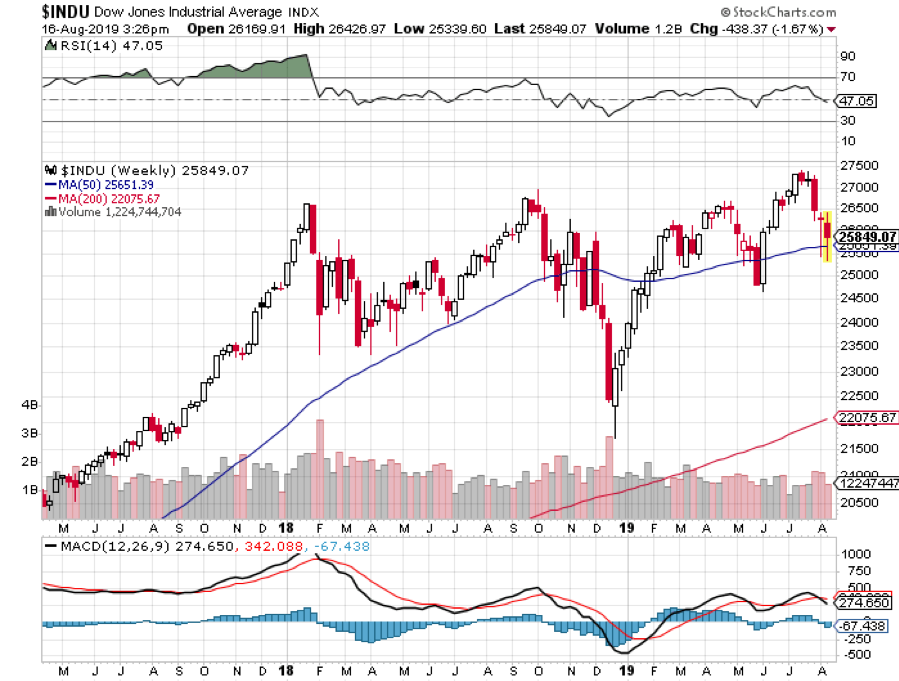
Yet the Dow Average was up only a meager 51.47 points when it should have gained 500. It is an old market nostrum that if markets can’t rally on good news, you get the hell out of Dodge. Zermatt too.

It is the slowest US growth in two years. The trade war gets the blame, with falling exports offsetting healthy consumer spending. With the $1.5 trillion tax cut now spent, nothing is left but the debt. 2020 recession fears are running rampant, so paying all-time highs for stock prices is not a great idea.

You might be celebrating last week’s budget deal which heads off a September government shutdown. But it boosts the national debt from $22 to $24 trillion, or $72,000 per American. As with everything else with this administration, a short-term gain is achieved at a very high long-term cost.

Boris Johnson, the pro-Brexit activist, was named UK prime minister. It virtually guarantees a recession there and will act as an additional drag on the US economy. Global businesses will accelerate their departure from London to Paris and Berlin.

The end result may be a disunited kingdom, with Scotland declaring independence in order to stay in the EC, and Northern Ireland splitting off to create a united emerald island. The stock market there will crater and the pound (FXB) will go to parity against the greenback.

The European economy is already in a downward spiral, with German economic data flat on its back. GDP growth has shrunk from 2.0% to 0.7%. It seems we are not buying enough Mercedes, BMWs, and Volkswagens.

Yields on ten-year German bunds hit close to an all-time low at -0.39%. The Euro (FXE) is looking at a breakdown through parity. The country’s largest financial institution, Deutsche Bank, is about to go under. No one here wants to touch equities there. It’s all about finding more bonds.

Soaring Chip Stocks took NASDAQ to new high. I have to admit I missed this one, not expecting a recovery until the China trade war ended. Chip prices are still falling, and volume is shrinking. We still love (AMD), (MU), and (NVDA) long term as obviously do current buyers.

Existing Home Sales fell off a cliff, down 1.7% in June to a seasonally adjusted 5.27 million units. Median Home Prices jumped 4.7% to $287,400. A shortage of entry-level units at decent prices get the blame. Ultra-low interest rates are having no impact.

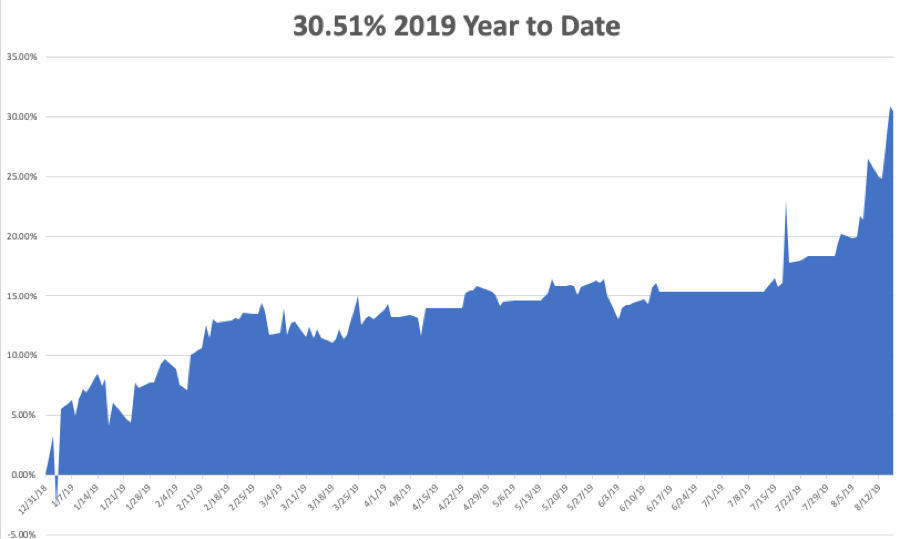
JP Morgan (JPM) expects stocks to dive in Q3, driven by earnings downgrades for 2020. Who am I to argue with Jamie Diamond? Don’t lose what you made in H1 chasing rich stocks in H2. Everyone I know is bailing on the market and I am 100% cash going into this week’s Fed meeting up 18.33% year-to-date. I made 3.06% in July in only two weeks.

Alphabet (GOOGL) beat big time, sending the shares up 8% in aftermarket trading. Q2 revenues soared 19% YOY to an eye-popping $39.7 billion. It’s the biggest gain in the stock in four years, to $1,226. The laggard FANG finally catches up. The weak first quarter is now long forgotten.

Amazon (AMZN) delivered a rare miss, as heavy investment spending on more market share offset sales growth, taking the shares down 1%. Amazon Prime membership now tops 100 million. Q3 is also looking weak.
 
Intel (INTC) surged on chip stockpiling, taking the stock up 5% to $54.70. Customers in China stockpiled chips ahead of a worsening trade war. Q3 forecasts are looking even better. Sale of its 5G modem chip business to Apple is seen as a huge positive.
 
I've finally headed home, after a peripatetic six-week, 18-flight trip around the world meeting clients. I bailed on the continent just in time to escape a record heatwave, with Paris hitting 105 degrees and London 101, where it was so hot that people were passing out on the non-air conditioned underground.

Avoid energy stocks. The outcry over global warming is about to get very loud. I’ll write a more detailed report on the trip when I get a break in the market.

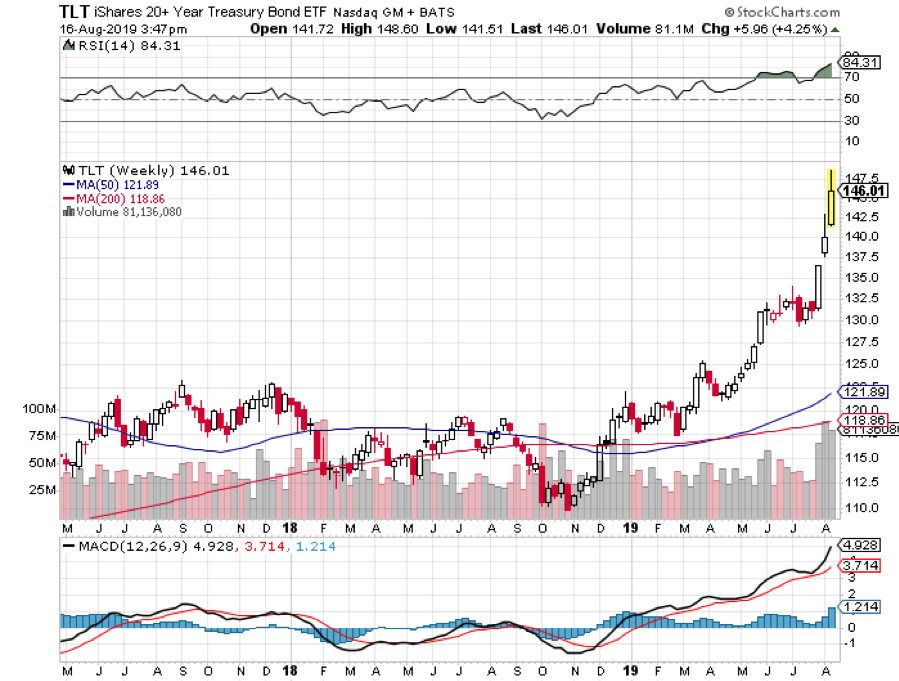
My strategy of avoiding stocks and only investing in weak dollar plays like bonds (TLT), foreign exchange (FXA), and copper (FCX) performed well. After spending a few weeks out of the market, it’s amazing how clear things become. The clouds lift and the fog disperses.

My Global Trading Dispatch has hit a new high for the year at +18.33% and has earned a robust 3.09% so far in July. Nothing like coming out of the blocks for an uncertain H2 on a hot streak. I’m inclined to stay in cash until the Fed interest rate decision on Wednesday.

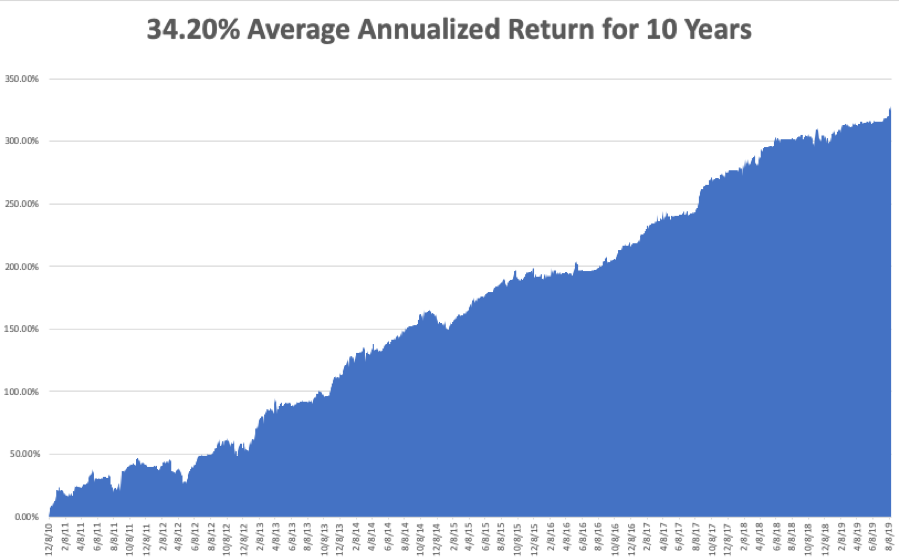
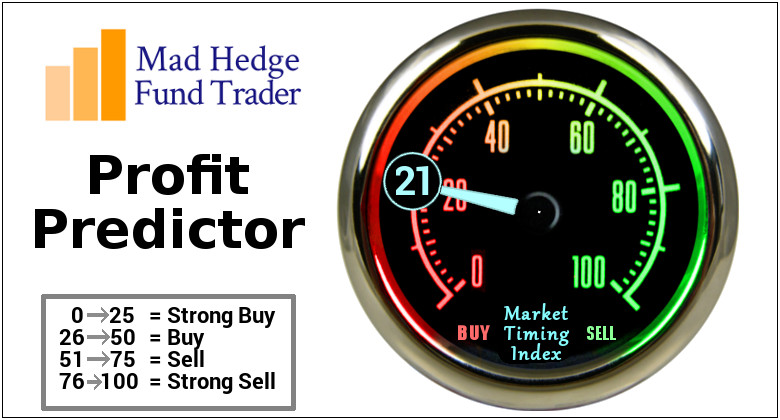
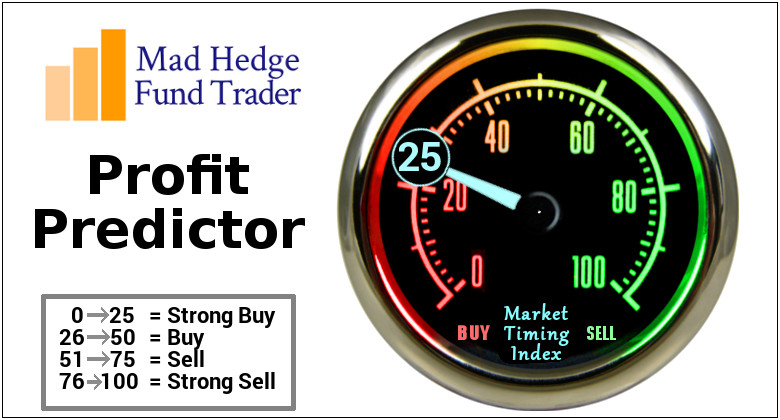
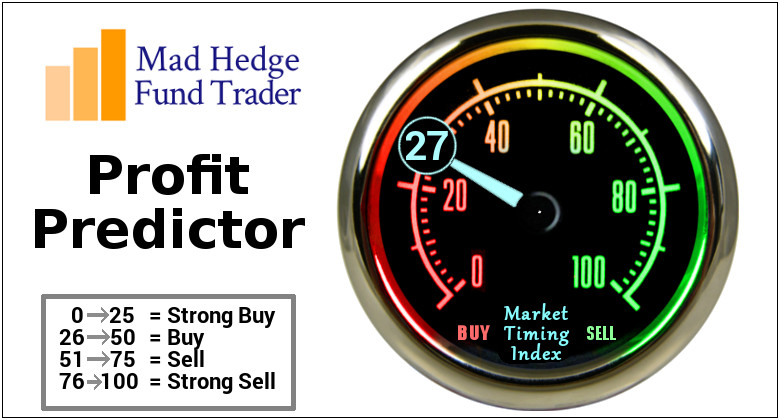
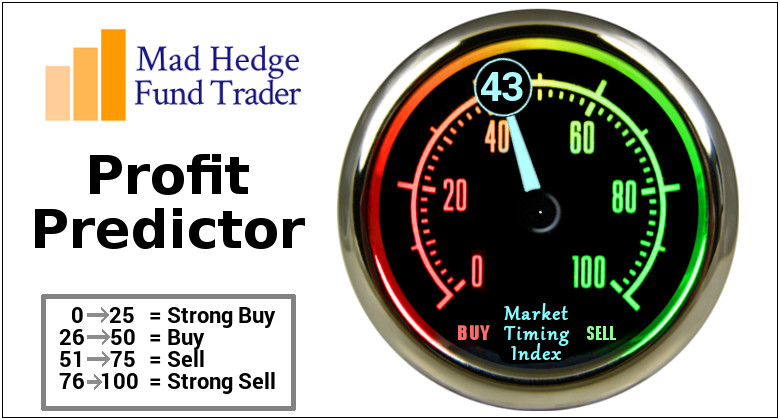
My ten-year average annualized profit bobbed up to +33.23%. With the markets now in the process of peaking out for the short term, I am now 100% in cash with Global Trading Dispatch and 100% cash in the Mad Hedge Tech Letter. If there is one thing supporting the market now, it is the fact that my Mad Hedge Market Timing Index has pulled back to a neutral 60. It’s a Goldilocks level, not too hot and not too cold.

The coming week will be a big one on the data front, with one big bombshell on Wednesday and the Payroll data on Friday.

On Monday, July 29, the Dallas Fed Manufacturing Index is out.

On Tuesday, July 30, we get June Pending Home Sales. A new Case Shiller S&P National Home Price Index is published. Look for YOY gains to shrink.

On Wednesday, July 31, at 8:30 AM, learn the ADP Private Employment Report. At 2:00 PM, the Fed interest rate decision is released and an extended press conference follows. If they don’t cut rates, there will be hell to pay.

On Thursday, August 1 at 8:30 AM, the Weekly Jobless Claims are printed.

On Friday, August 2 at 8:30 AM, we get the July Nonfarm Payroll Report. Recent numbers have been hot so that is likely to continue.

The Baker Hughes Rig Count follows at 2:00 PM.

As for me, by the time you read this, I will have walked the 25 minutes from my Alpine chalet down to the Zermatt Bahnhoff, ridden the picturesque cog railway down to Brig, and picked up an express train through the 12-mile long Simplon Tunnel to Milan, Italy.

Then I’ll spend the rest of the weekend winging my way home to San Francisco in cramped conditions on Air Italy. Yes, I had to get a few more cappuccinos and a good Italian dinner before coming home.

Now, on with the task of doubling my performance by yearend.

Good luck and good trading.

John Thomas
CEO & Publisher
The Diary of a Mad Hedge Fund Trader


https://www.madhedgefundtrader.com/wp-content/uploads/2019/07/john-thomas-13.png 414 310 Mad Hedge Fund Trader https://madhedgefundtrader.com/wp-content/uploads/2019/05/cropped-mad-hedge-logo-transparent-192x192_f9578834168ba24df3eb53916a12c882.png Mad Hedge Fund Trader2019-07-29 05:04:462019-08-27 14:39:56The Market Outlook for the Week Ahead, or The Bad Omens are There
Mad Hedge Fund Trader

July 29, 2019

Tech Letter

Mad Hedge Technology Letter
July 29, 2019
Fiat Lux

Featured Trade:

(THE RACE TO THE BOTTOM),
(SCHW), (FB), (SQ), (WMT), (AMZN), (FFIDX), (BOX)

https://madhedgefundtrader.com/wp-content/uploads/2019/05/cropped-mad-hedge-logo-transparent-192x192_f9578834168ba24df3eb53916a12c882.png 0 0 Mad Hedge Fund Trader https://madhedgefundtrader.com/wp-content/uploads/2019/05/cropped-mad-hedge-logo-transparent-192x192_f9578834168ba24df3eb53916a12c882.png Mad Hedge Fund Trader2019-07-29 04:04:392019-08-27 14:49:17July 29, 2019
Mad Hedge Fund Trader

The Race to the Bottom

Tech Letter

Gone are the days of brokers shouting from the trading pits, a bygone era where pimple-faced traders cut their teeth rubbing shoulders with the journeymen of yore.

The stock brokerage industry is at an inflection point with the revolutionary online stock brokerage Robinhood on the verge of shaking up an industry that has needed shaking up for years.

A common thread revisited by this newsletter is the phenomenon of broker apps being low-quality tech.

A broker ultimately serves little or no value to the real players among the deal, usually extracting huge commissions.

Technology and now blockchain technology vie to completely remove this exorbitant layer from the business process.

Well, for the stock brokerage industry, that time is now.

Robinhood is an online stock brokerage company based in Menlo Park, Calif., trading an assortment of asset classes including equities, options, and cryptocurrencies.

So, what's the catch?

Robinhood does not charge commission.

That's right, you can invest up until the $500,000 threshold protected by the Securities Investor Protection Corporation (SIPC) and you can go along with your merry day trading for free.

The online brokerage industry has been getting away with murder for years.

They got comfortable and stopped innovating - the death knell of any company in 2019.

Effectively, high execution costs reaping massive profits were the norm for brokers, and nobody questioned this philosophy until Robinhood exposed the ugly truth - unreasonably high rates.

Peeking at a monthly chart of brokerage costs will make your stomach churn.

For instance, a trader frequently executing trades with an account of $100,000 would hand over $1836 in commission in 2017 if their account was with Fidelity.

On the cheaper side, Interactive Brokers would charge $854 for its brokerage services to habitual traders per month.

The outlier was Tradier, a start-up brokerage founded in 2014 using the powerful tool of an Application Programming Interface (API) which charged $213 per month to trade frequently.

An API is described as a software intermediary allowing two applications to communicate with each other.

This model helped cut costs for the online brokerage because Tradier did not have to focus its funds on the trading platform that was delegated to various third-party platforms.

Tradier is largely responsible for the aggregation of data and charts thus employing an army of developers to meet their end of the business.

This model is truly the democratization of the online brokerage industry, which has been coming for years.

Costs are cut to a minimum with equity trades at Tradier costing investors $3.49 per order and options contracts costing $0.35 per contract with a $9 options assignment and exercise fee.

Technology has defeated the traditionalist again.

More than 80% of Robinhood's accounts are owned by millennials – as expected.

Trading cryptocurrencies act as a gateway asset to springboard into other asset classes such as equities and derivative contracts.

Vlad Tenev, co-CEO of Robinhood, indicated that Robinhood will have to modify its radical business model to monetize more of the business in the future, but he is comfortable with the current business model.

But Tenev has already seen fruit borne with the likes of Robinhood applying fierce pressure to the legacy brokerages' pricing models.

The traditionalists are locked in a vicious pricing war with each other slashing their commission rates to stay competitive.

The longer the likes of Charles Schwab (SCHW) feel it necessary to charge $4.95, down from the January 2017 cost of $8.95, the better the chances are that Robinhood can build its account base rapidly.

Charles Schwab has more than 10 million accounts, only double the number of Robinhood, after being founded in 1971.

The 42-year head start over Robinhood has not produced the desired effect, and it is ill-prepared to battle these tech companies that enter the fray.

Robinhood has been able to add a million new accounts per year. If Charles Schwab relatively performed at the same rate, it would have 47 million accounts open today.

It doesn't and that is a problem because the company can be caught up to.

The age of specialization is upon us with full force, and customer demand requires care and diligence that never existed before.

Robinhood continues to enhance its offerings of various products adding Litecoin and Bitcoin Cash to the crypto lineup.

Only Bitcoin and Ethereum were offered before.

And there is one more outrageous thing I forgot to tell you.

Robinhood hopes to snatch away the traditional savings account by offering checking and savings accounts with an interest rate almost 30 times larger than most brick and mortar banks – 3%.

These accounts would have no minimum balances or no fees that nickel and dime customers.

The service will conveniently sit alongside its trading app and this move into the industry led by JP Morgan could start to derail Wall Street.

As with most FinTech start-ups, the roll-out of this new service was slightly botched because Robinhood failed to get the go-ahead from regulators concerning ensuring the accounts properly.

All this does is delay the inevitable and by spring 2019, potential customers should be earning 3% in Robinhood’s checking and savings account.

Sign me up!


https://www.madhedgefundtrader.com/wp-content/uploads/2019/07/DMI-jul29.png 520 972 Mad Hedge Fund Trader https://madhedgefundtrader.com/wp-content/uploads/2019/05/cropped-mad-hedge-logo-transparent-192x192_f9578834168ba24df3eb53916a12c882.png Mad Hedge Fund Trader2019-07-29 04:02:222019-08-27 14:49:10The Race to the Bottom
Mad Hedge Fund Trader

July 26, 2019

Diary, Newsletter, Summary

Global Market Comments
July 26, 2019
Fiat Lux

Featured Trade:

(JULY 24 BIWEEKLY STRATEGY WEBINAR Q&A),
(FCX), (VIX), (VXX), (UUP), (TLT), (EEM), (ELD), (CEW), (GLD),
(FXA), (FXE), (FXC), (FXY), (FXB), (AMZN),
(TESTING TESLA’S SELF DRIVING TECHNOLOGY),
(TSLA)

https://madhedgefundtrader.com/wp-content/uploads/2019/05/cropped-mad-hedge-logo-transparent-192x192_f9578834168ba24df3eb53916a12c882.png 0 0 Mad Hedge Fund Trader https://madhedgefundtrader.com/wp-content/uploads/2019/05/cropped-mad-hedge-logo-transparent-192x192_f9578834168ba24df3eb53916a12c882.png Mad Hedge Fund Trader2019-07-26 08:06:482019-07-26 08:59:45July 26, 2019
Page 67 of 102«‹6566676869›»

tastytrade, Inc. (“tastytrade”) has entered into a Marketing Agreement with Mad Hedge Fund Trader (“Marketing Agent”) whereby tastytrade pays compensation to Marketing Agent to recommend tastytrade’s brokerage services. The existence of this Marketing Agreement should not be deemed as an endorsement or recommendation of Marketing Agent by tastytrade and/or any of its affiliated companies. Neither tastytrade nor any of its affiliated companies is responsible for the privacy practices of Marketing Agent or this website. tastytrade does not warrant the accuracy or content of the products or services offered by Marketing Agent or this website. Marketing Agent is independent and is not an affiliate of tastytrade. 

Legal Disclaimer

There is a very high degree of risk involved in trading. Past results are not indicative of future returns. MadHedgeFundTrader.com and all individuals affiliated with this site assume no responsibilities for your trading and investment results. The indicators, strategies, columns, articles and all other features are for educational purposes only and should not be construed as investment advice. Information for futures trading observations are obtained from sources believed to be reliable, but we do not warrant its completeness or accuracy, or warrant any results from the use of the information. Your use of the trading observations is entirely at your own risk and it is your sole responsibility to evaluate the accuracy, completeness and usefulness of the information. You must assess the risk of any trade with your broker and make your own independent decisions regarding any securities mentioned herein. Affiliates of MadHedgeFundTrader.com may have a position or effect transactions in the securities described herein (or options thereon) and/or otherwise employ trading strategies that may be consistent or inconsistent with the provided strategies.

Copyright © 2025. Mad Hedge Fund Trader. All Rights Reserved. support@madhedgefundtrader.com
Scroll to top